
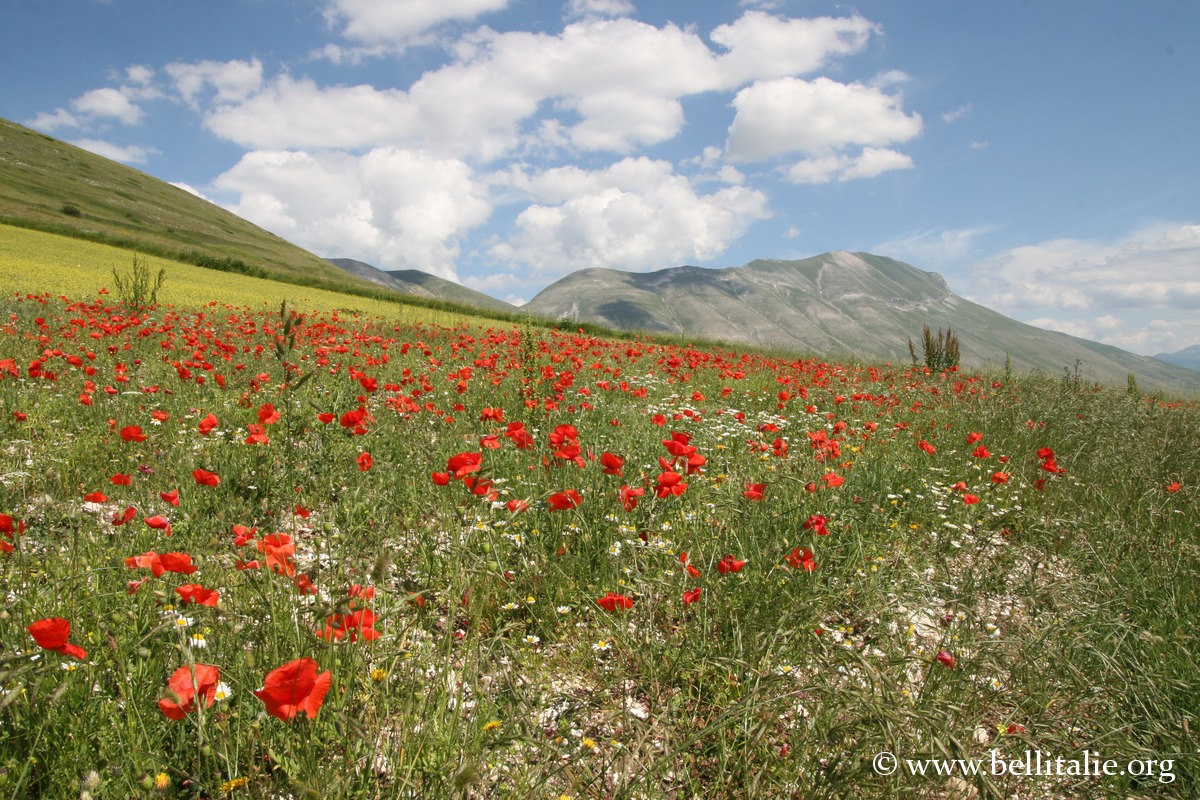
 The Umbria is rightly described as the “green heart of Italy,” where the landscapes are mostly made up of hills and medium-sized mountains, covered with meadows, fields and forests.
The region was inhabited by tribes of the Umbrian people at least as early as the 7th century BCE. Then the Etruscans conquered the region before the Roman conquest in the 3rd century BCE, and they made Orvieto one of the main cities of Etruria. They left a significant mark on this territory.
Perugia is the regional capital, with a well-preserved historic centre of medieval origin. Among the other destinations, Assisi stands out, a small medieval town where Saint Francis founded the famous abbey. Then Orvieto, perched on its tuff promontory, preserves an exceptional cathedral. Spoleto is another remarkable city of Roman origin, and Todi is no less charming, also with a fine heritage.
Mention should be made of Spello and Gubbio, which are other towns of character, or the tranquil Norcia towards the Sibylline Mountains, which enjoys a great gastronomic reputation. Near Terni, there are large waterfalls.
Thus, the charms of Umbria are diverse, thanks to its many medieval towns and its gentle hills that precede the beautiful Sibylline Mountains in the east of the region.
 Show interactive map

