

Also find at the end of the article the Interactive tourist map of Trieste
Trieste 
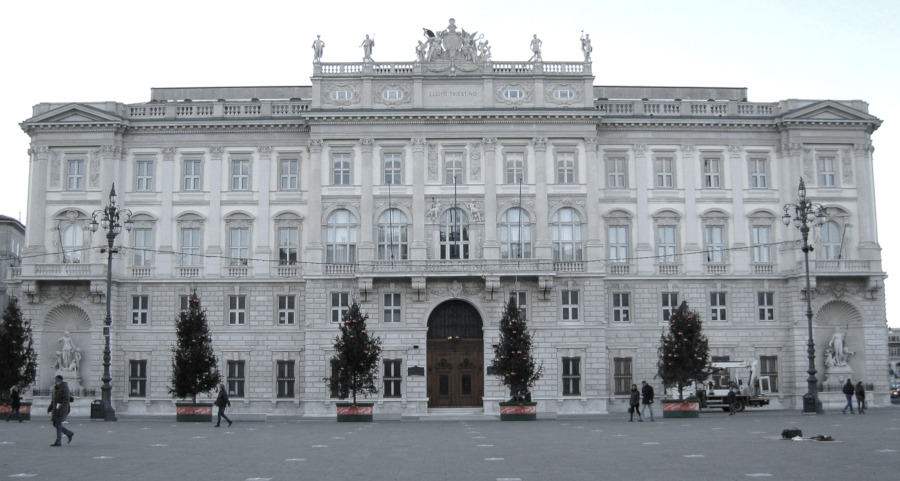
Palazzo del Lloyd Triestino
Regional capital, Trieste is almost landlocked within Slovenia, situated on the coast of the gulf of the same name. It is a city with a romantic and verdant atmosphere that stretches over several hills, whose heritage is marked by Italian, Austro-Hungarian and Slovenian influences, where Orthodox-rite churches stand alongside Catholic churches. It bears witness to a turbulent history between the West and the Balkans, with a territory disputed by empires and nations.
The historic center stretches between the San Giusto hill where the 14th-century cathedral stands, with the Roman theater at its foot, and the seafront with the elegant Piazza Unità d’Italia and its majestic palaces. It is marked by Art Nouveau, but the old quarters also preserve small squares, alleys and large houses.
To the north, the Barcola district is a beautiful seafront, with the Victory Lighthouse, built in memory of the sailors of the Great War, from whose summit the view is splendid.
A few kilometers further north, one cannot miss the neo-Gothic Miramare Castle, built in the second half of the 19th century.
Surroundings of Trieste: Karst and Val Rosandra
On the heights of Trieste, the Trieste Karst is a portion of the limestone plateau that stretches from Friuli Venezia Giulia to Slovenia and Croatia. It was the site of great battles during the First World War, of which traces can be discovered along the trails.
One can discover natural sites such as the Giant Cave (Grotta Gigante in Italian), a large karst cave, one of the most suggestive sites in the region.
Towards the Slovenian border east of Trieste, the Val Rosandra is a beautiful natural area, ideal for lovely hikes, climbing, or discovering waterfalls.
Aquileia
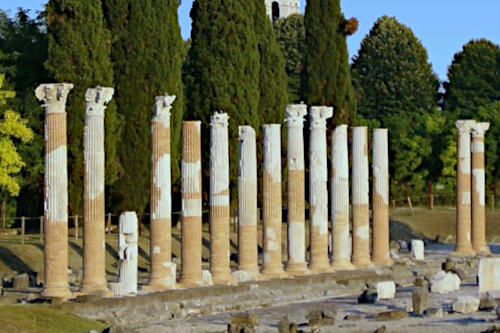 In Aquileia is one of the most important archaeological sites in northern Italy, inscribed in 1998 as a UNESCO World Heritage Site, preserving superb remains of the ancient Roman city founded in the 2nd century BCE, including mosaics, forum colonnades and paved streets, from the ancient port to the necropolises. One also discovers there the 11th-century basilica with its tall bell tower, of paleochristian origin with its superb 4th-century CE mosaics, the largest floor of this kind in the West, where scenes from the Old Testament are depicted.
Udine and surroundings
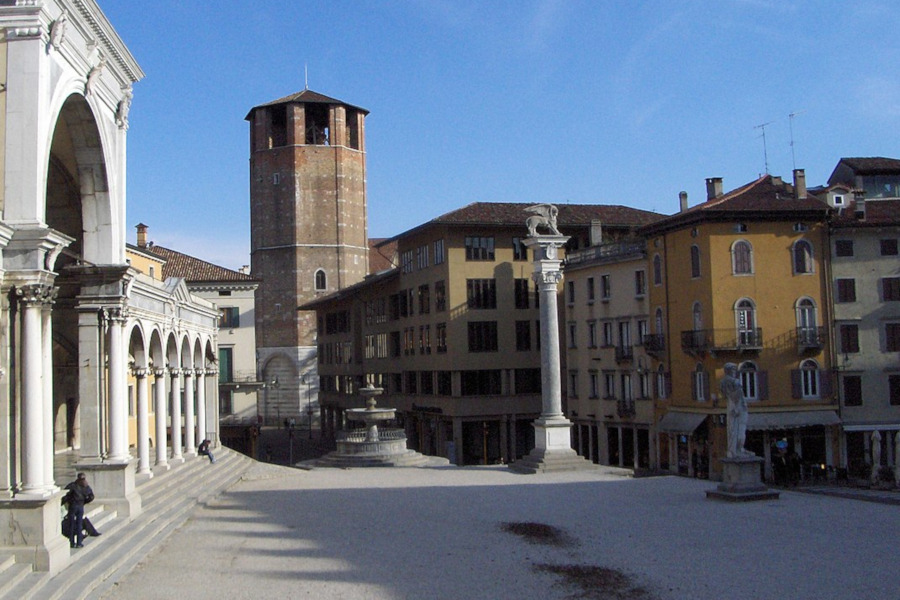 In the inland areas of the region, Udine is a small city with Venetian charm, a large part of whose architectural heritage is inherited from the rule of Venice, which conquered the city in 1420.
The castle houses the Civic Museums (Musei Civici). At its foot stretches the historic center, with its pretty squares (Piazza Libertà, Piazza Matteotto), Via Marcatovecchio, and superb monuments such as the Loggia del Lionello in the Venetian Gothic style, the Loggia San Giovanni and the 16th-century Clock Tower.
Udine is also known as the city of Tiepolo, the famous 18th-century painter, of whom it preserves a large number of works in various places, such as its civic museums, the diocesan museum, the Tiepolo galleries and the cathedral.
A few kilometers from the center, the Friuli-Cormôr botanical garden is a superb green setting of nearly 30 hectares.
In the surroundings, one can discover to the northwest the villages of Fagagna (14 km) and San Daniele (22 km). The latter is notably known for its excellent raw ham of the same name.
Not far from San Daniele, the Tagliamento river descends from the Friulian Alps over 170 km, crossing the hills, with its wide bed, its beaches and its wild banks, including protected portions such as the Cornino lakes park.
Cividale and the Natisone and Torre valleys 
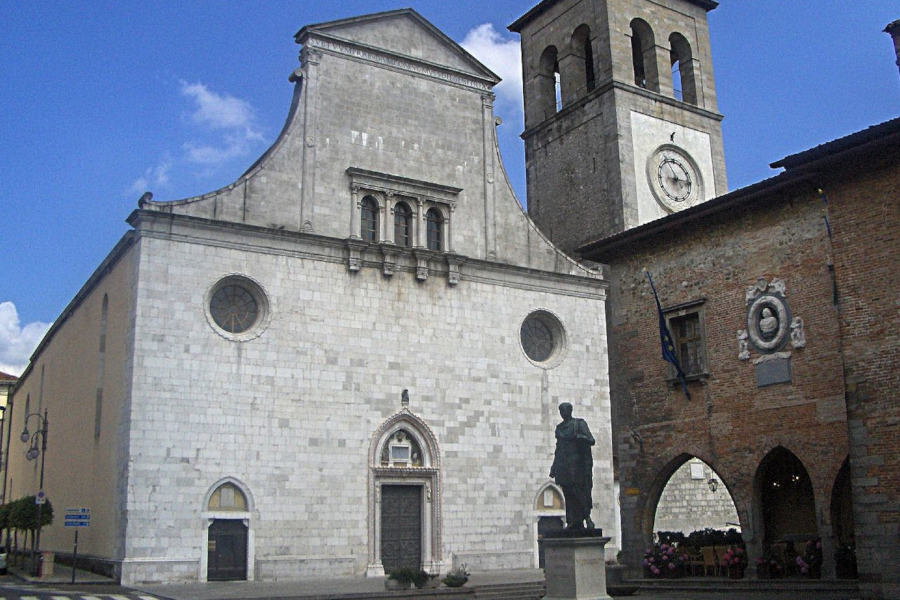
Cividale
Cividale del Friuli, 16 km east of Udine, is located along the superb Natisone valley, inscribed in 2011 as a UNESCO World Heritage Site.
The city was of great historical importance until the 18th century, first founded as a trading post as Forum Julii by Julius Caesar. It was later an important Lombard city, the first capital of the Lombard Duchy of Italy, of which the Lombard Temple (or Oratory of Santa Maria in Valle) is an important testimony. Through its alleys, one discovers monuments from different eras, as well as a Celtic Hypogeum, the Christian Museum and the National Archaeological Museum.
The Devil’s Bridge is also one of the symbols of Cividale, originating from the 15th century and rebuilt after the First World War.
In the Julian Prealps, the Natisone Valleys are an important historical and natural area, which can be explored via various themed trails, including that of 44 votive churches, or testimonies of Great War battles between Castelmonte and Monte Matajur. The Torre valleys (Valli del Torre in Italian) are dotted with beautiful localities such as Lusevera, Nimis, Cassacco, Tarcento, and Faedis.
Pordenone and surroundings
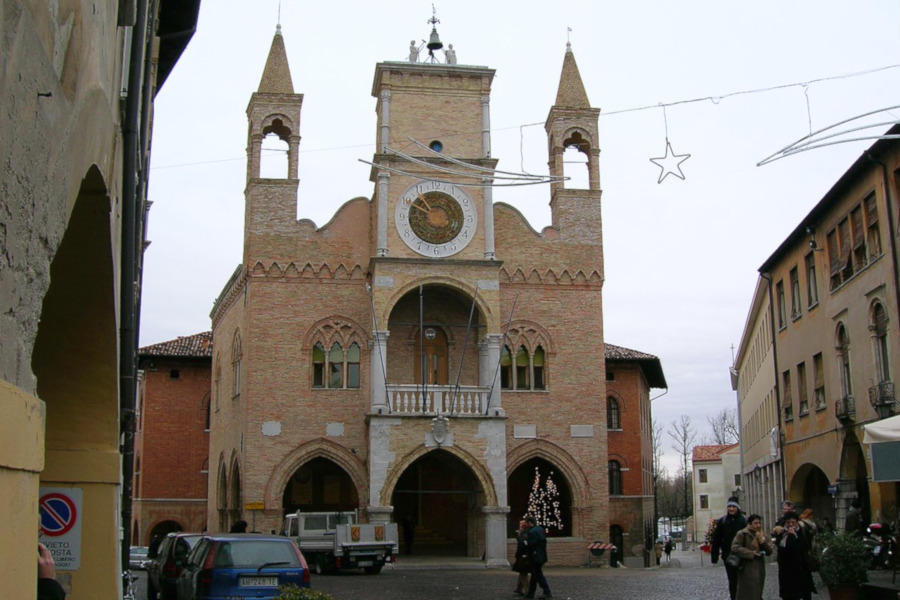
Pordenone
Pordenone, in the west of the region, took its name from Portus Naonis with its port on the Noncello.
Its historic center is remarkable with its old palaces (town hall and Ricchieri palace), the corso Vittorio Emanuele II, the Duomo with its bell tower and the Torre castle.
The surroundings are full of charm, such as the beautiful art city of Spilimbergo with its perfectly preserved medieval and Renaissance centre where an ancient mosaic-making school is located, Cordovado listed among the most beautiful villages in Italy which retains its ancient structure, Sacile with its Venetian and Renaissance architecture, the superb small medieval town of San Vito al Tagliamento, or Sesto al Reghena also listed among the most beautiful villages in Italy with its Benedictine abbey of Santa Maria in Sylvis.
Polcenigo is another of the most beautiful villages in Italy, in a green valley, of medieval origin, with ancient palaces and churches. From the site of the remains of the medieval castle, one enjoys a beautiful view of the surroundings.
Along the Livenza river one discovers several nature parks, and the very beautiful spring of Gorgazzo, with a spectacular underwater cave.
Gorizia, Collio and Monfalcone
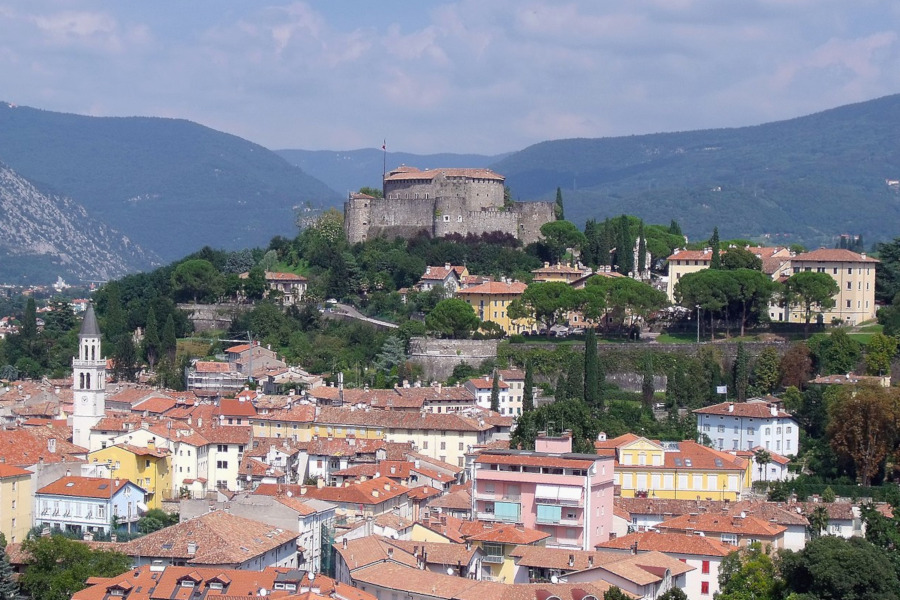 In the east of the region, between Trieste and Udine, Gorizia is a border town, facing Nova Gorica on the other side in Slovenia, half Italian and half Slavic. This atypical town is marked by Italian, Slovenian and Germanic cultures. In addition to its castle with its beautiful park, one discovers in its streets palaces and churches of different styles, including the church of Sant’Ignazio and the cathedral.
In September, festivities take place including the Gusti di Frontiera, dedicated to flavours from around the world.
In the hills of the Collio excellent Friulian white wines are produced, in particular around the town of Cormons.
Towards Monfalcone, near which many battles of the Great War were fought, one can notably visit the military cemetery of Redipuglia, built in the fascist era, with the remains of 100,000 Italian soldiers who fell during the First World War.
Palmanova
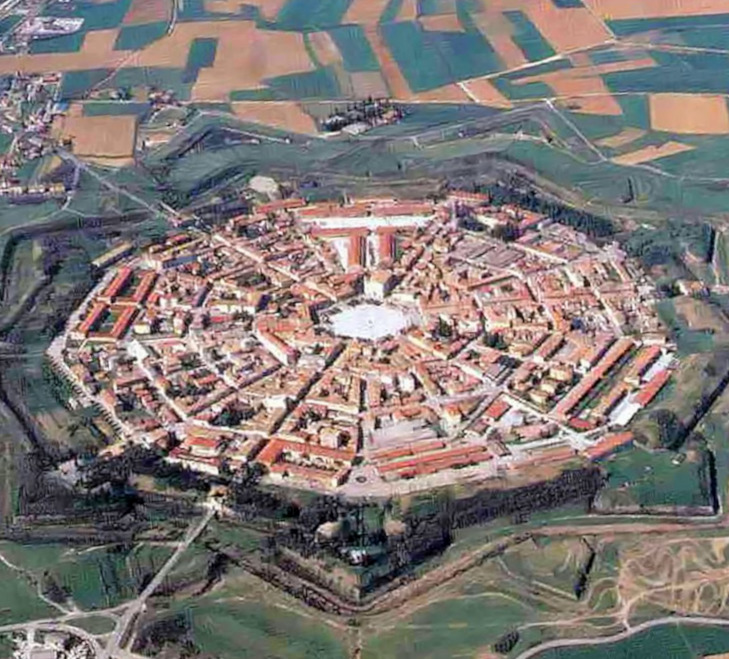
Aerial view of Palmanova
20 kilometres south of Udine, and almost as far from Aquileia, Palmanova is a town whose star-shaped urban planning follows the polygonal form of the wall that protects it with its bastions, built in 1593 by Venice. It has been inscribed on the UNESCO World Heritage list. Entering the town through one of the four gates, the star-shaped streets lead to the central square, the Piazza Grande.
Friuli coast
Lignano Sabbiadoro and lagoon
The Adriatic coast has several seaside resorts, of which Lignano Sabbiadoro is the most important, with its golden beach 8 kilometres long, to the west of the Marano lagoon, very busy in summer, with its 1960s urban planning. There are three sites, including Sabbiadoro which is suited to families, Pineta enlivened by its young people and its clubs, and Lignano Riviera which is quieter. The coast continues in Veneto with Bibione.
Not far away the nature reserve of the mouth of the Stella welcomes with its lagoon herons and marsh birds.
On the lagoon, Marano Lagunare is a charming fishing village of Roman origin.
Grado
To the east of the Grado and Marano lagoon, Grado is on its islet another popular seaside resort, retaining a Venetian-style historic centre with its canals, archaeological remains, beautiful beaches and welcoming trattorias. The town was particularly frequented in the 19th century by the Austrian bourgeoisie for its thalassotherapy.
10 km away, Aquileia is one of the most beautiful archaeological sites in northern Italy, with its Roman and early Christian remains.
Gulf of Trieste
Further east, the beach of Marina Julia-Monfalcone is an ideal destination for kitesurfing, the small bay of Sistiana has rocky and pebble beaches with Portopiccolo, a chic maritime village of the Gulf of Trieste. The rest of the coastline up to Trieste is a rocky karst section with beautiful views over the gulf.
Mountains
The mountains in the north of the region extend with the Dolomites to the west, then the Carnic Alps and the Julian Alps. One can practise winter sports in various resorts, such as Piancavallo and the Friulian Dolomites, Forni di Sopra and Sappada, Sauris and Ravascletto Zoncolan, Tarvisio and Sella Nevea.
Friulian Dolomites
In the north of the region, one enters the Alps and the Friulian Dolomites, at the foot of which Pordenone is a beautiful entry point.
Summer lends itself to beautiful hikes and winter to skiing with its resorts such as Piancavallo.
The Friulian Dolomites Natural Park, inscribed on the UNESCO World Heritage list, extends over nine municipalities with lakes, the Pradis caves, and gorges, with at its feet villages listed among the most beautiful villages in Italy, such as Frisano, Poffabro and Borgo di Toppo.
Carnia
The Carnia is the mountainous region in the north of the region, bordering Austria. It is a region of nature, alpine pastures, woods and charming villages, such as on the side of Sauris with its small lake, Pesarris, Sappada or Tolmezzao, with the highest peak in the region, Mount Coglians which reaches 2,780 metres.
In summer one can discover it thanks to beautiful hikes, and in winter practise winter sports as at Forni di Sopra at the foot of the Dolomites or at Zoncolan.
Tarvisio and Julian Alps
Tarvisio and the Julian Prealps are the border area with Austria in the north-east of the region, with an important winter sports resort. In summer one discovers there the pretty lakes of Predil and of Fusine, frozen in winter. At the summit of Mount Lussari one discovers the enchanting site of a small village with a sanctuary, reachable by cable car in winter, where it becomes a small ski resort. The Jôf di Montasio is the second highest peak in the region (2753 metres)
The Julian Prealps Regional Nature Park is endowed with natural and geological richness, forests and waterfalls, with charming localities.
Venzone was listed among the most beautiful villages in Italy in 2017. Destroyed by a terrible earthquake in 1976, it was entirely rebuilt, regaining its original medieval structure, a rare example of a 14th-century fortified town.
About 10 km away, Gemona is also one of the most beautiful destinations in the region, which was also rebuilt after the 1976 earthquake, recovering its Renaissance appearance and its medieval centre, and a beautiful Romanesque-Gothic cathedral.
Map of sites
 Show interactive map
 Information
- Wikipedia article: en.wikipedia.org
- Tourist portals: www.turismofvg.it, viaggi.corriere.it


Comments