


See below the Interactive tourist map of Milan with the city’s main sites. On this page we present the places to discover in Milan, in a preferential and of course somewhat subjective order.
1. Piazza del Duomo
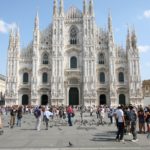
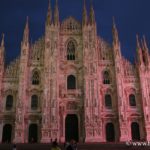
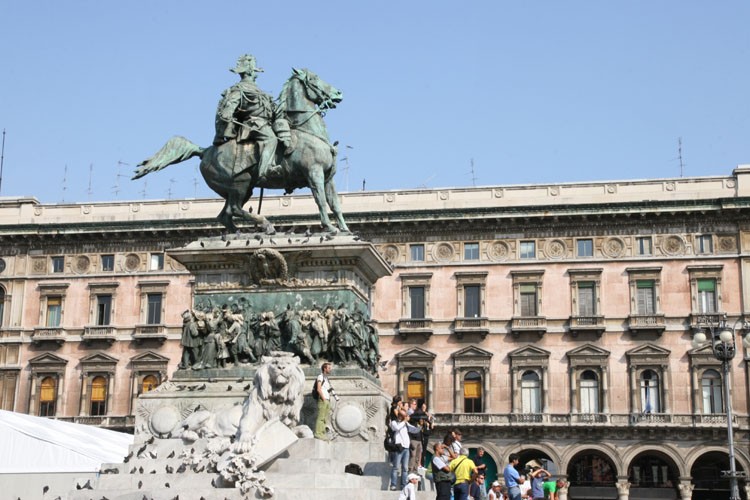 The Piazza del Duomo has been the heart of Milan for seven centuries, stretching out in front of the Duomo, the cathedral, whose large dimensions allow it to host events and gatherings. It is often the starting point for a visit to Milan. Previously, Piazza del Duomo was much smaller, surrounded by medieval buildings and narrow streets, until a vast space was laid out between 1865 and 1873.
Around the square stand first the Duomo, the majestic Gothic cathedral, but also a monumental entrance to the Galleria Vittorio Emanuele II from the 19th century leading to Piazza della Scala, with on the same side the Palazzo Carminati (19th c.), then opposite the Palazzo dell’Arengario (20th c.), the Royal Palace from the 18th c., as well as porticoes and in the centre the equestrian statue of Victor Emmanuel.
The Arengario is made up of two twin pavilions designed in the 1930s, which today house the Museum of the 20th Century.
2. Duomo
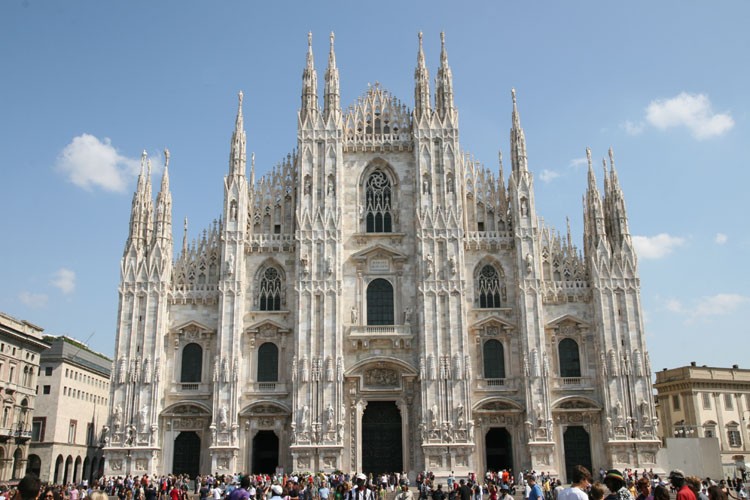 The magnificent Gothic Duomo of Milan is the cathedral and the emblematic building of the city, whose endless construction spanned more than five centuries, begun in 1386 while the Gothic-Baroque white marble façade was only completed in 1813.
It is the third largest Christian cathedral in the world, 157 metres long, whose immense marble spire reaches 108 metres in height. Its exterior splendour is linked to the 136 spires that bristle from it, but also to the 2,000 marble statues from different eras. The immense interior is no less impressive with its great Gothic verticality, whose five naves are supported by 52 gigantic columns and are lit by stained-glass windows, the oldest of which date from the 15th century. Sacred objects and works of art abound, including Leonardo da Vinci’s crucifix or the relic of a nail from the Cross.
You should not hesitate to climb up to the terrace, despite the cost and sometimes long wait, with its magnificent and unique view over the city between the great spires.
3. Galleria Vittorio Emanuele II
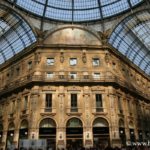
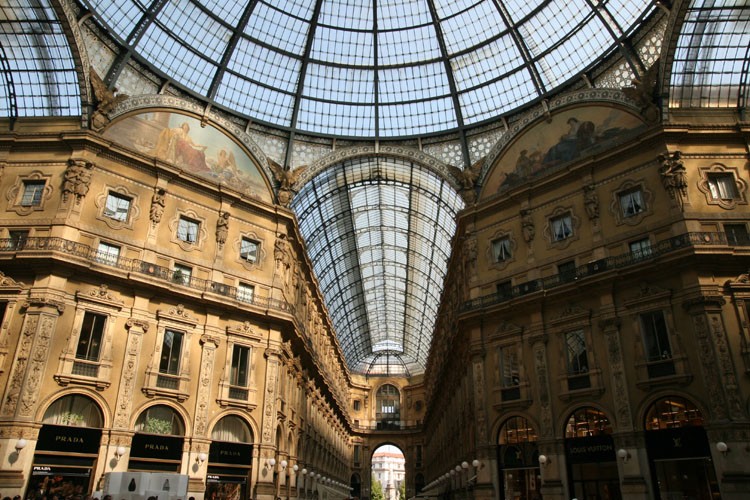 Linking the Piazza Duomo to the Piazza della Scala with vast arcades, this magnificent covered street and shopping arcade is another emblematic place in Milan. Designed by Giuseppe Mengoni, it was inaugurated in 1877 by the King of Italy Victor Emmanuel II.
It is in a neoclassical style in the shape of a cross, covered with glass roofs with a large dome in the centre rising 47 metres from the ground. Around the centre, paintings represent the four continents, and the signs of the zodiac decorate the floor.
Nicknamed the “Salon of Milan”, it is one of the hearts of bourgeois Milanese social life, housing shops, cafés and luxury restaurants.
Galleria Vittorio Emanuele II of Milan
4. Sforza Castle
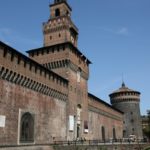
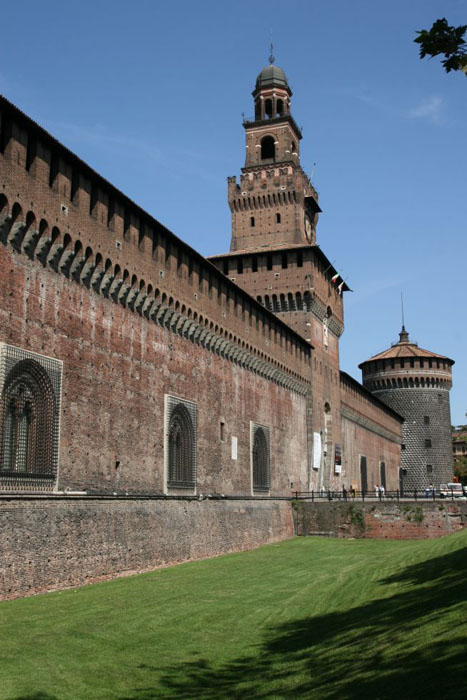 Located between the city centre and Sempione Park, the powerful Milanese fortress is one of the largest castles in Europe. It was a defensive building transformed into a lordly residence from the 14th century, under the Dukes of Milan Visconti and Sforza, embellished on occasion by artists such as Leonardo da Vinci or Bramante. In the 16th century the castle once again took on the role of a military citadel, generally controlled by foreigners, including Austrians, French, or Spanish.
The massive and imposing exterior hides graceful courtyards and elegant halls.
Today it houses several municipal museums, known as the Musei del Castello, including the Museum of Ancient Art (art from the 4th to the 16th century), the Pinacoteca (painting from the 13th to the 18th century), the Museum of Archaeology with sections on Prehistory, Protohistory and Egypt, the Museum of Musical Instruments, the Museum of Decorative Arts and a Museum of Furniture.
5. The Last Supper and the Church of Santa Maria delle Grazie
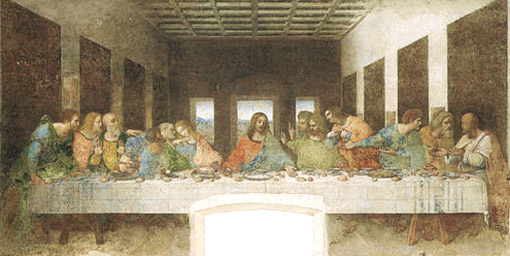 The Dominican sanctuary of Santa Maria delle Grazie is a Renaissance jewel listed as a UNESCO World Heritage Site thanks to the presence of The Last Supper by Leonardo da Vinci painted in the refectory of the convent.
Construction of the complex began in 1463, with work carried out by Solari then by Bramante until 1492, who in particular created the majestic “tribuna”.
This beautiful partly Gothic church preserves fine works and Renaissance cloisters.
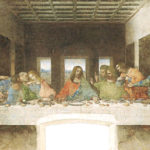
You need to book long in advance to see The Last Supper, generally several months. This large painting 8.80 metres wide was painted by Leonardo between 1494 and 1498 on a plastered wall, using an original technique. But the work required numerous and difficult restorations.
This Last Supper shows the meal where Jesus announced that he would be betrayed by one of the apostles, with Jesus at the centre and the apostles showing various reactions to these words.
The Last Supper and Santa Maria delle Grazie in Milan
6. Teatro alla Scala
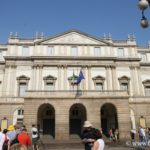
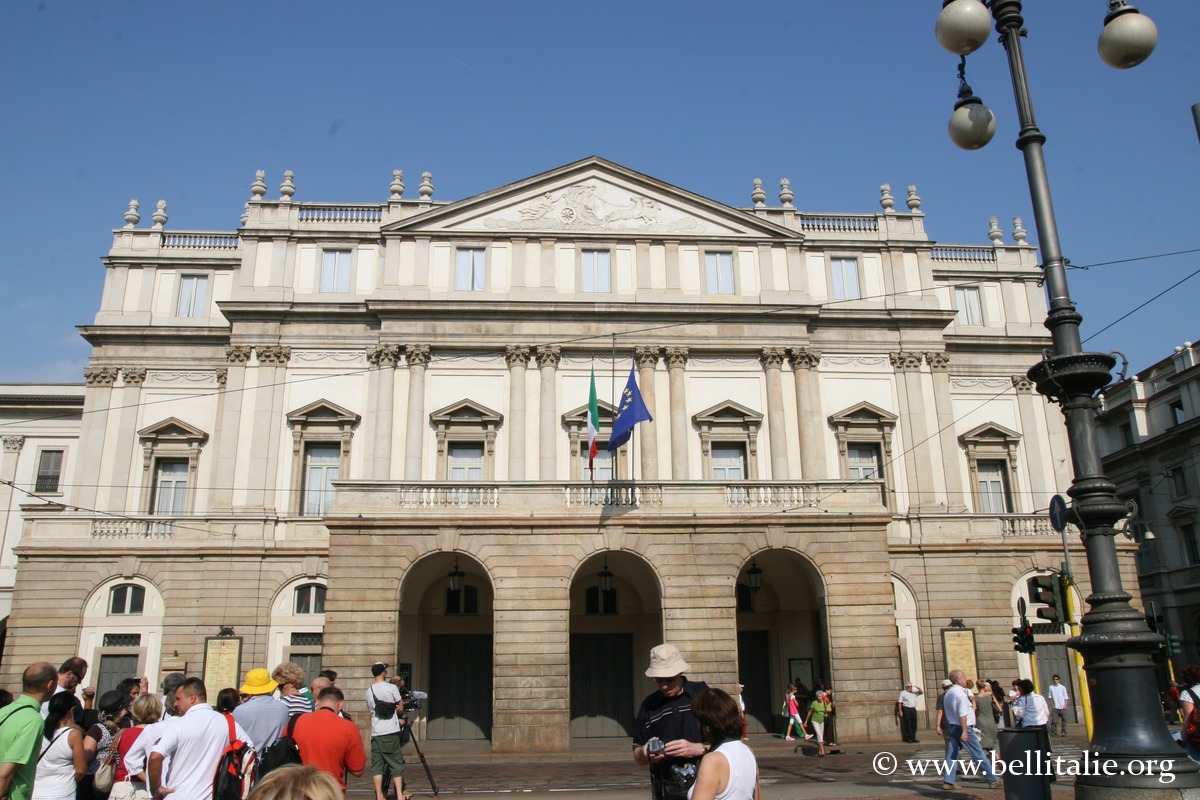 Separated from the Piazza Duomo by the Galleria Vittorio Emanuele II, the Teatro alla Scala of Milan, more simply known as La Scala, is one of the most famous theatres in the world. Its renown is linked not only to its interior beauty, but to the great artists who performed there, such as Verdi, Puccini, Bellini and Rossini.
It was built between 1776 and 1778, on the site of an old church, on the elegant square of the same name where a statue representing Leonardo da Vinci stands.
The theatre today hosts important cultural events, operas, ballets and classical concerts. The austere façade hides a sumptuous interior that is at least worth a visit, or better still attending a performance. Nearby is the Teatro alla Scala Museum with a collection of paintings, instruments and objects related to opera.
7. Basilica of Sant’Ambrogio
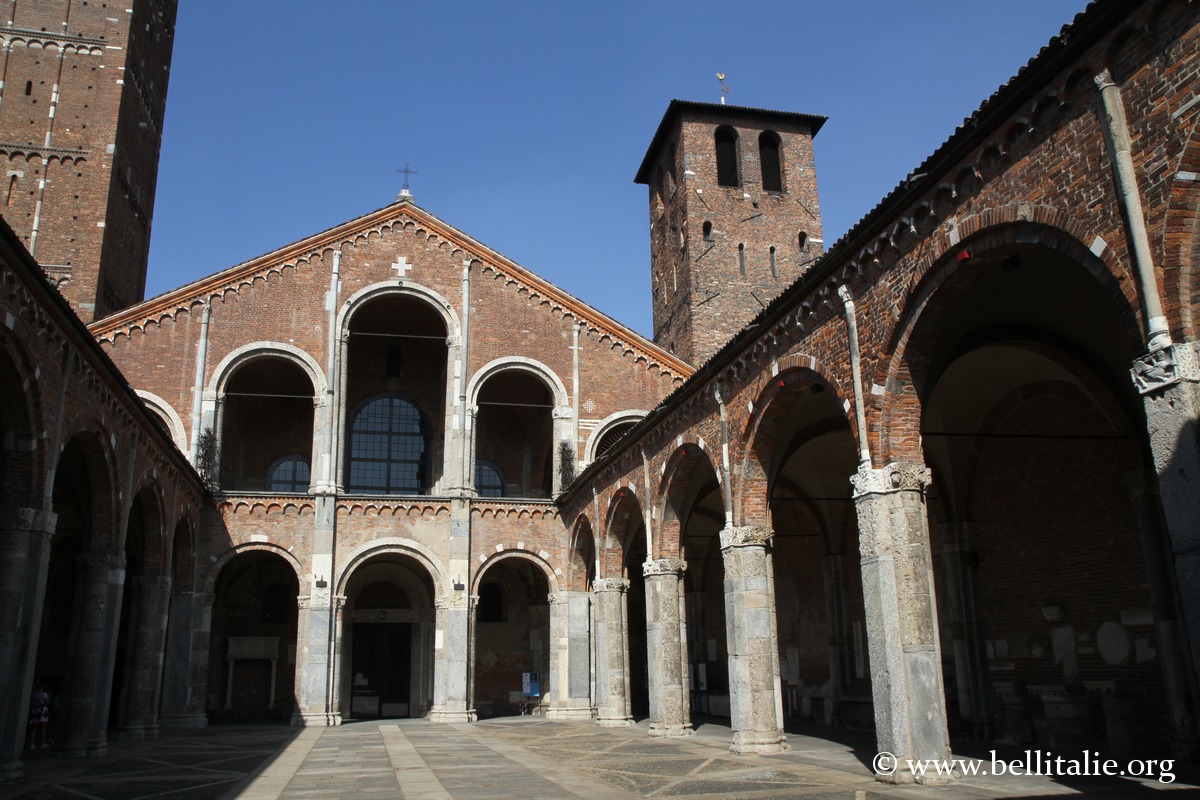 The Basilica of Sant’Ambrogio is the second most important religious building in the city, dedicated to the bishop of Milan who officiated there between 374 and 397, at the origin of the construction of a first basilica on this site. Rebuilt at the end of the 11th century, it greatly influenced Lombard Romanesque architecture.
The building was partly modified over time, but has retained great architectural value, while being one of the oldest churches in Milan. It stands out in particular for its quadriportico and its beautiful capitals, ancient mosaics, a 9th-century ciborium with the golden high altar, or the crypt which preserves the tombs of Saints Ambrose, Gervasius and Protasius.
Basilica of Sant’Ambrogio of Milan
8. Piazza dei Mercanti
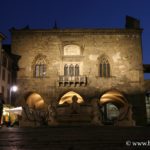
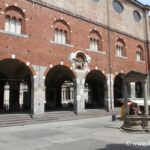
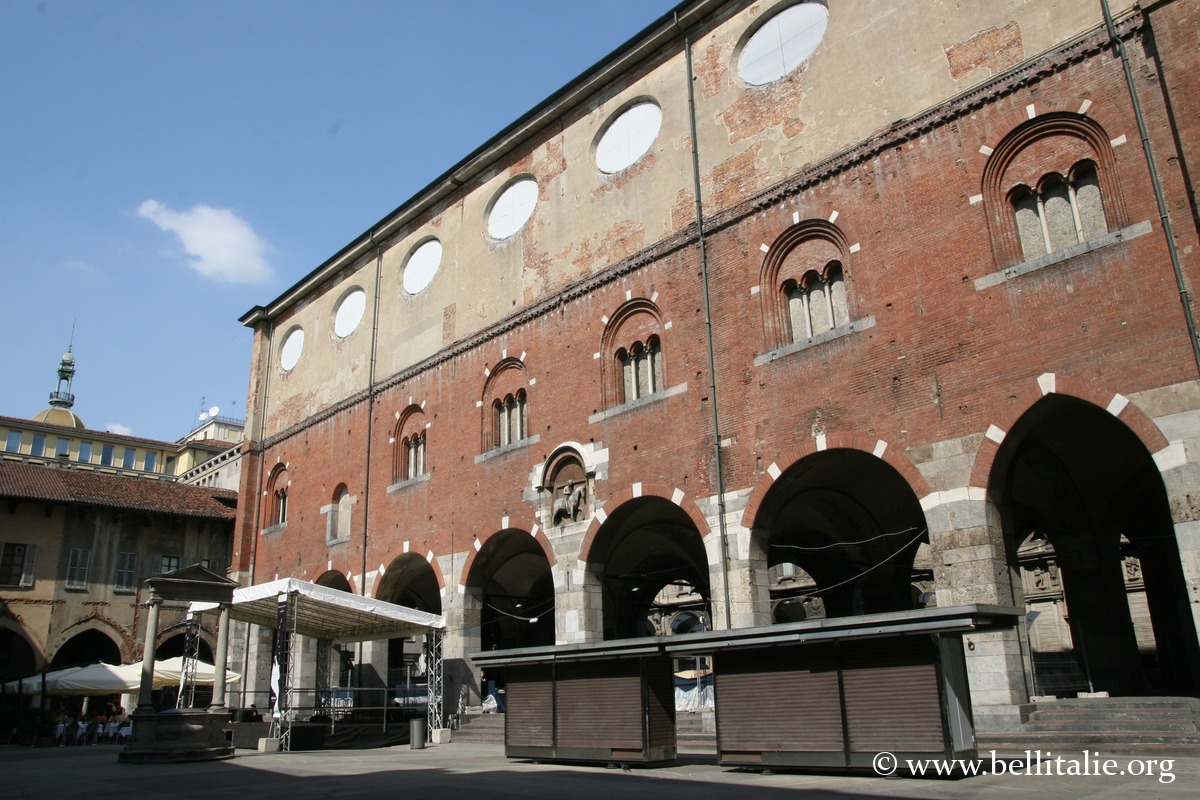 The charming Piazza dei Mercanti, the Merchants’ Square in English, is one of the few remnants of the medieval era in Milan, a stone’s throw from Piazza Duomo and part of which runs alongside the current Via Mercanti
It was laid out in the 13th century with the building of the Broletto, which became the Palazzo della Ragione, then with the Loggia degli Osii (14th c.), the Casa Panigarola (15th c.), the Palazzo delle Scuole Palatine (17th c.), or the Palazzo dei Giureconsulti (16th c.) currently located in Via Mercanti.
Sits arcades were called “gallery of whispers“ because the voice could reach the opposite side. In the centre of the square is a 16th-century well.
Piazza dei Mercanti and medieval Milan
9. Leonardo da Vinci Museum of Science and Technology
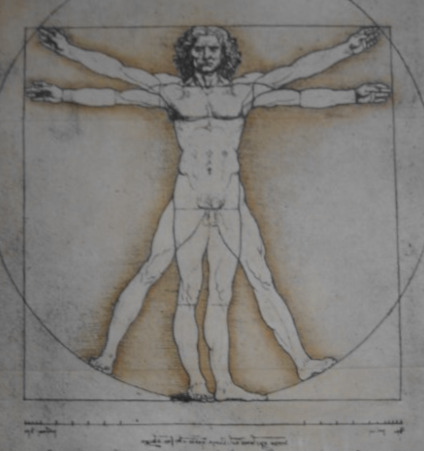 The Leonardo da Vinci National Museum of Science and Technology is the largest museum in Italy devoted to science and technology, housed in an old monastery and dedicated to the great Leonardo da Vinci who lived in Milan.
It is divided into seven major sections, including transport with aviation, navigation, railways and the automobile, telecommunications with the conquest of space, energies and the mining and metallurgical industries. One floor displays around thirty models of objects imagined by the ingenious Leonardo, such as military or flying machines.
The visit may take several days depending on one’s interests. It is generally the section devoted to Leonardo that attracts the most, then the outdoor pavilions including the Toti submarine.
Leonardo da Vinci Museum in Milan
10. Pinacoteca di Brera
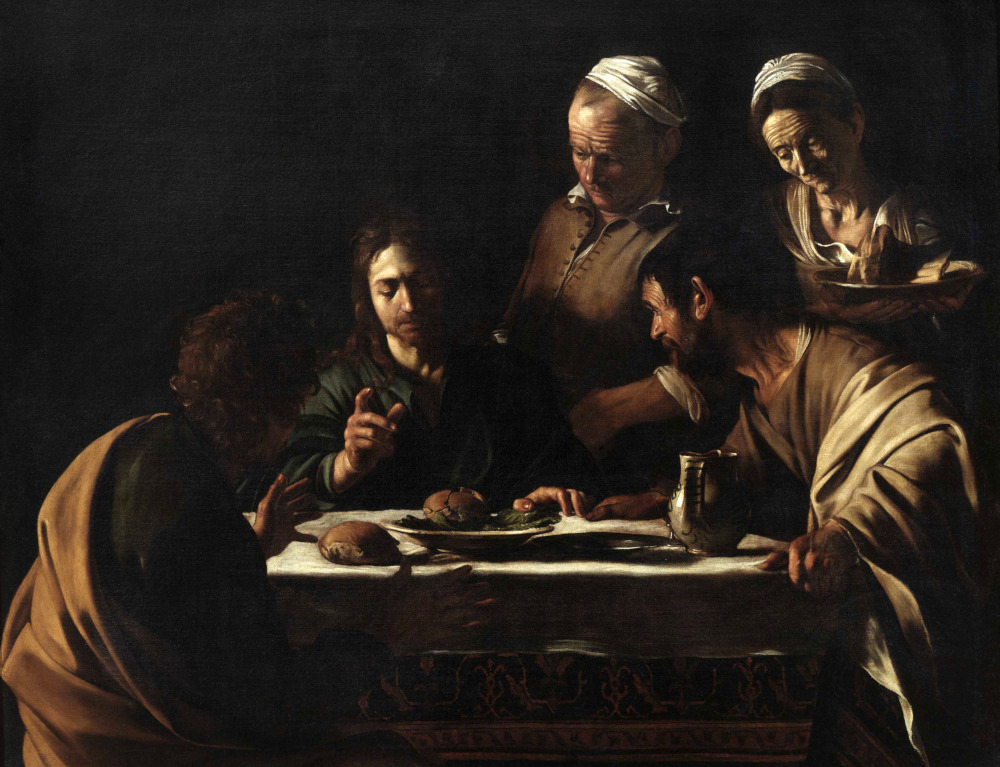 Housed in the Baroque Palazzo di Brera, the Pinacoteca di Brera preserves one of Italy’s most important art collections, with numerous masterpieces by artists such as Raphael (Marriage of the Virgin), Caravaggio (Supper at Emmaus), Mantegna (the Dead Christ), Bellini, Canaletto, Piero della Francesca (Brera Altarpiece), Rubens, and many others. The collection spans from the Middle Ages to the 20th century, passing through the Lombard, Venetian and Bolognese schools, Flemish art, up to the artists of the last century such as Braque, Picasso, de Chirico or Modigliani.
It was founded in 1776 in an old Jesuit college, then when Napoleon proclaimed Milan the capital of his Italian kingdom, he placed there works seized from churches and the nobility.
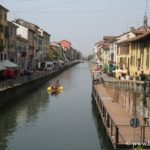
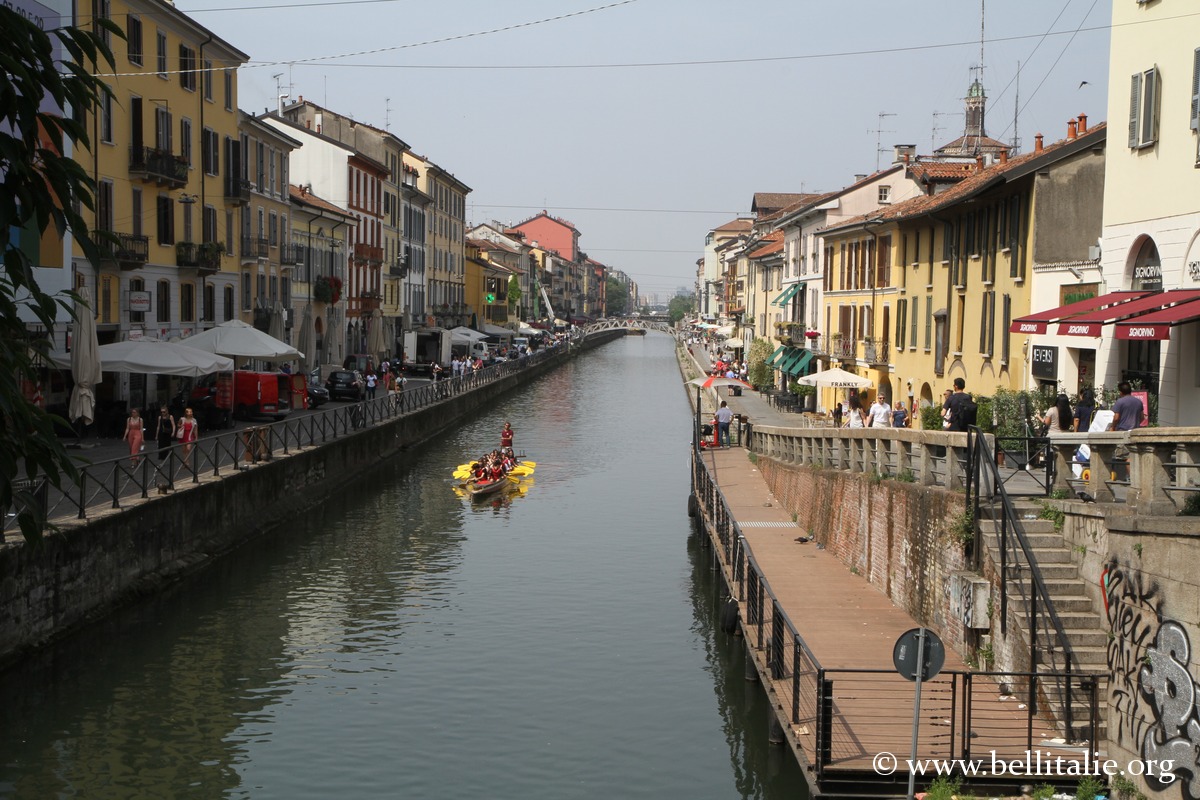 The pleasant Navigli district is located on the south-western edge of central Milan. It was regenerated in recent decades by reclaiming the old canals, the navigli which had previously been abandoned and polluted. It has become a popular and lively district, with bars, restaurants, artisans, cycle paths, and nightlife venues. A flea market is also held along the Naviglio Grande on the last Sunday of the month.
The district is structured around two navigli, the canals built from the 12th century to connect the city to the Ticino and Adda rivers, irrigate the surroundings, and communicate with the Po and the great lakes.
12. Church of San Maurizio al Monastero Maggiore
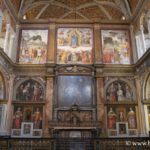
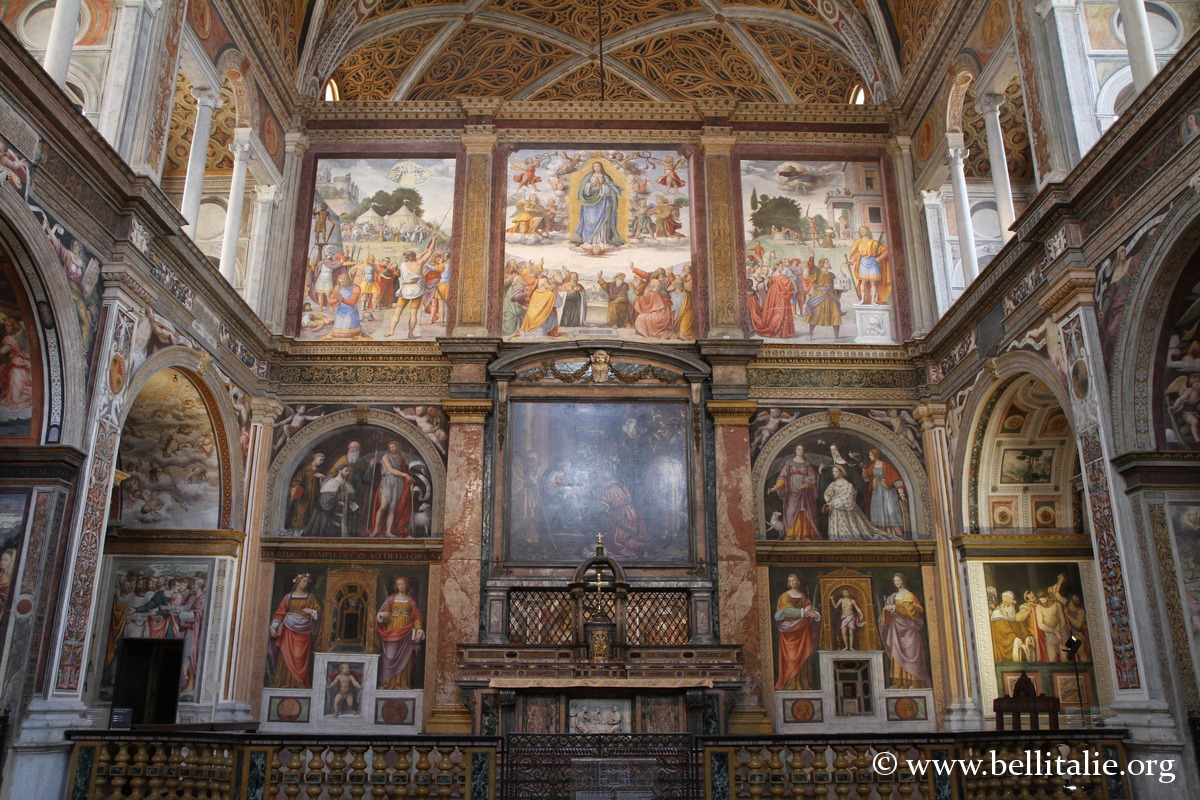 One of the most remarkable churches in Milan is certainly San Maurizio al Monastero Maggiore, known as the “Sistine Chapel” of Milan. Behind the grey and austere façade, the interior is an explosion of superb frescoes that cover all the walls of the building. They date mainly from the 16th century, created by masters of Lombard painting including Bernardino Luini.
The monastery on which it depended, partly demolished in 1799, had been run since the 11th century by the Benedictines.
San Maurizio al Monastero Maggiore in Milan
13. Civic Museum of Archaeology
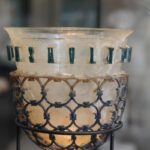
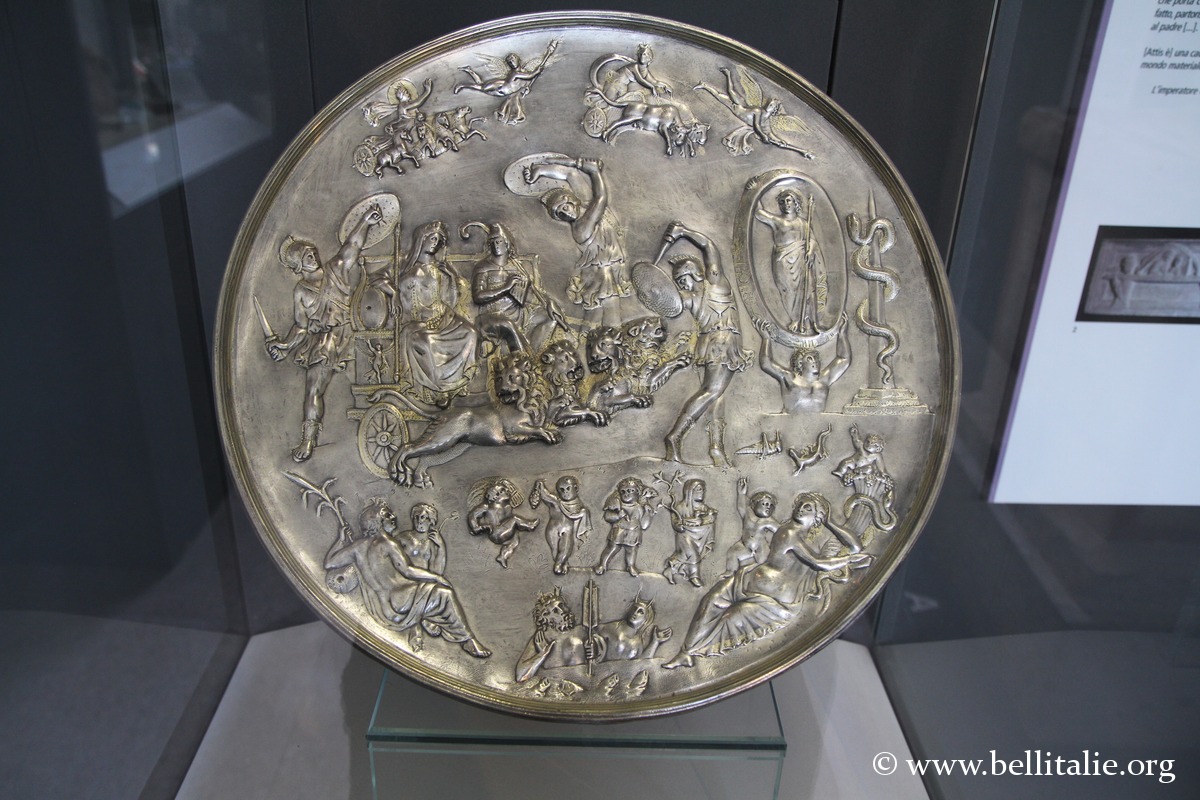 The archaeological museum is the central point for discovering Mediolanum, Roman Milan, but also other cultures, with sections devoted to local, Greek, Etruscan, Roman, early medieval and Gandhara region archaeology.
It is housed in the buildings of the former convent of the Monastero di San Maurizio and includes the remains of three monumental complexes, including the Roman walls with two towers, the Roman circus with its almost intact tower, and a domus inhabited in the 1st and 3rd centuries AD.
Archaeological Museum and Roman Milan
Other sites to discover in Milan
14. Brera district
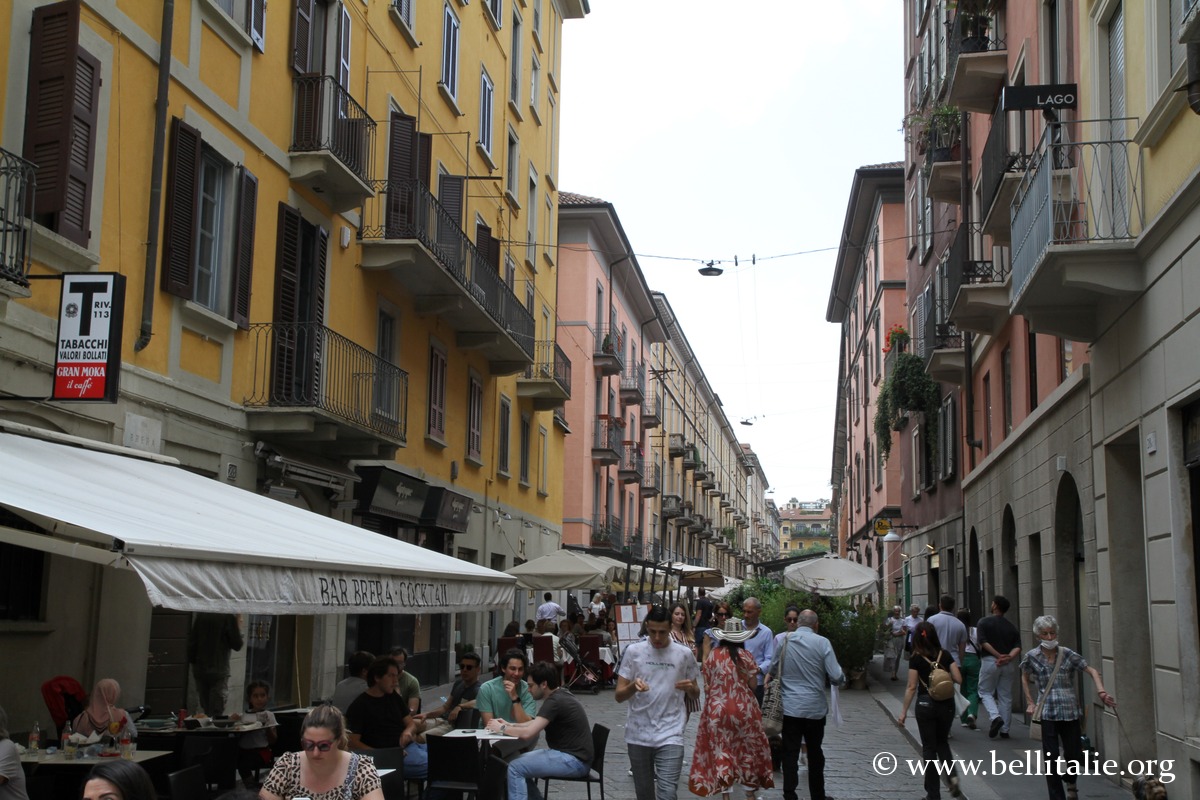 The Brera district is one of the most charming in Milan, with its pleasant paved pedestrian streets, frequented since the 19th century by artists and writers, who still find there numerous bars and restaurants, with a bourgeois-bohemian feel.
It was here that Empress Maria Theresa of Austria had the Academy of Fine Arts built in 1776 with the Palazzo di Brera. The latter also houses the famous Pinacoteca, the Braidense National Library, the INAF Astronomical Observatory and the Botanical Garden.
There are many fashion boutiques, with design venues and moreover every third Sunday of the month the craft market is held here.
The two main churches of the district are the deconsecrated church of San Carpoforo and the basilica of San Simpliciano.
15. Basilica of San Lorenzo Maggiore
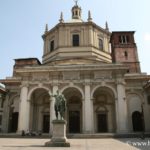
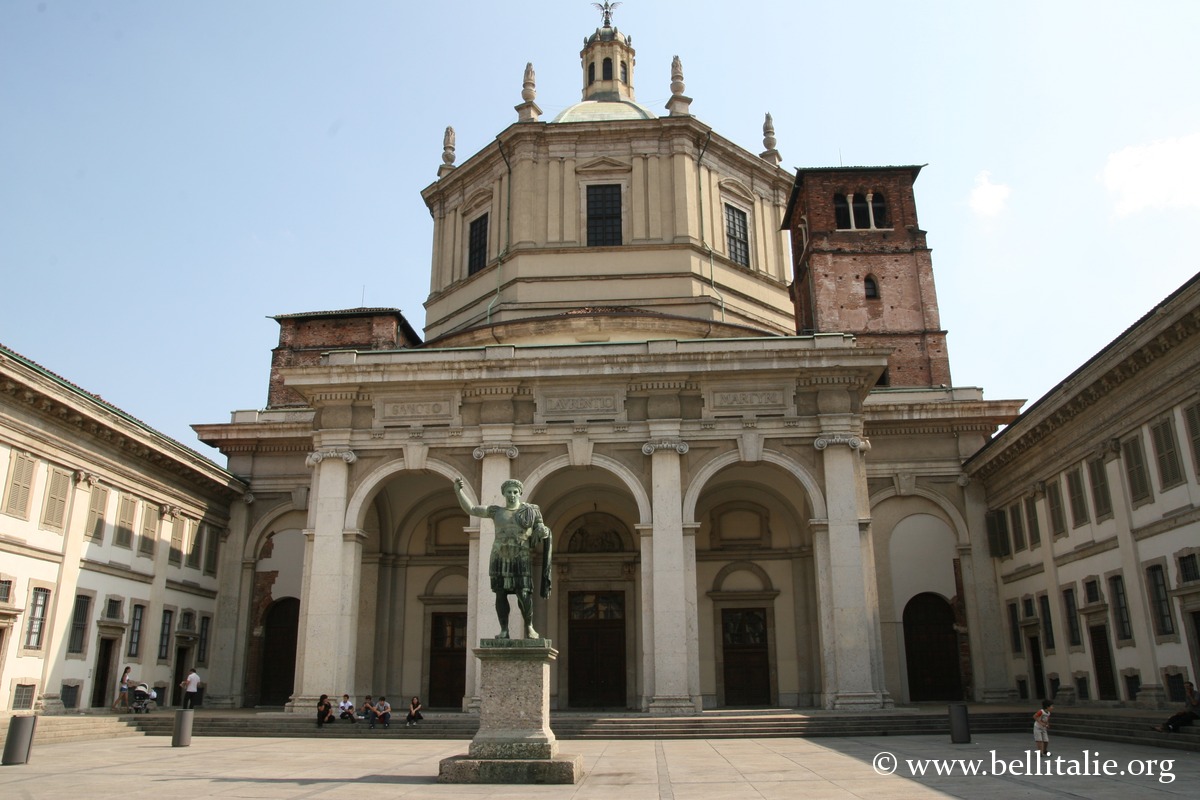 San Lorenzo Maggiore is the oldest basilica in Milan, built at the end of the 4th century AD by the bishop Ambrose, in late Roman times.
It was rebuilt in the 12th century after the collapse of the dome, and its current style is inherited from the 17th century. However, it incorporates the Roman building whose structure it has retained, and has numerous ancient and early Christian testimonies such as 4th-century mosaics in the chapel of Sant’Aquilino and in the crypt.
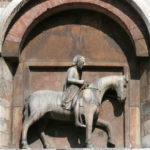
Facing the church, the colonnade of a Roman portico dating from the first basilica survives, as well as the statue of the emperor Constantine.
Basilica of San Lorenzo of Milan
16. Sempione Park and the Arch of Peace
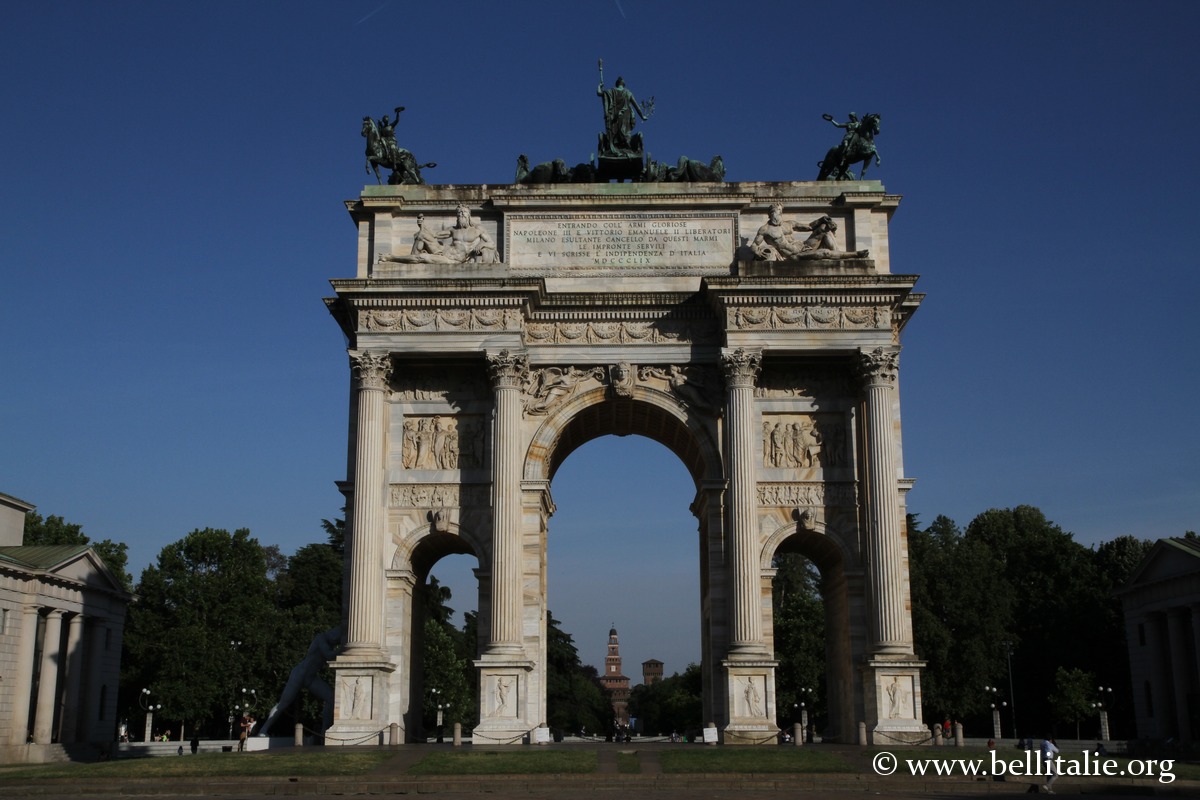 The Sempione Park is the largest green space in central Milan, ideal for strolling, relaxing and sport, where you can find fountains, statues and ponds, as well as several facilities on its perimeter, including the aquarium, the Triennale (the museum devoted to Italian architecture and art), the neoclassical athletics stadium of the Arena Civica, the Torre Branca, and the neoclassical triumphal arch Arco della Pace.
This latter Arch of Peace was erected from the Napoleonic occupation in 1807, on the north side of the park, opposite the castle. It was dedicated to the reconciliation of the great powers following the Congress of Vienna in 1815 which brought together the coalition states of Europe that defeated Napoleon. Completed in 1838, it reaches 25 metres in height, topped by a bronze group representing the sextiga of Peace and four victories on horseback.
The Torre Branca was built in 1933 for the 5th Milan Triennale. You can go up to the top of this metal tower, 108 metres above the ground, via a lift to enjoy a very beautiful view over Milan, with the castle in the foreground, and further away the Duomo.
On the eastern side, the Arena Civica Gianni Brera stadium hosted reenactments of naval battles, an ice rink, and Buffalo Bill even performed here with his circus of wagons and Indians.
17. San Siro Stadium
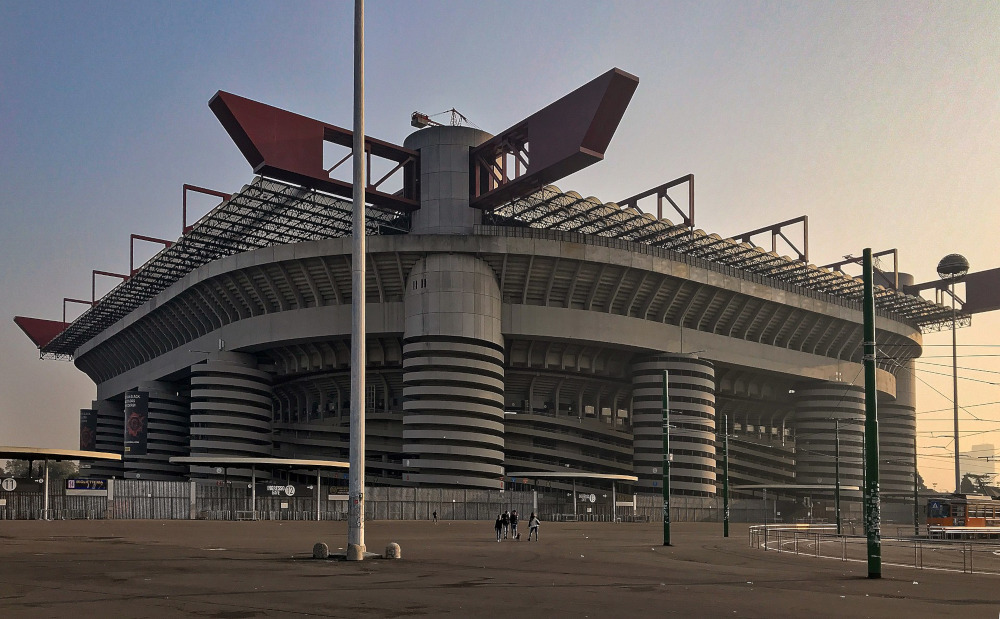 Milanese people know their football stadium as the “Scala del calcio”. It is indeed the temple where the city’s two glorious teams, Milan A.C. and Inter, face their opponents.
For a few years now, a museum and a discovery tour have been offered (with the dressing rooms, galleries, pitch, stands, etc). Obviously nothing beats the spectacle and extraordinary atmosphere of a Milan A.C. home match! The most popular team (see the official website).
18. Fashion Quadrilateral
The fashion quadrilateral is Milan’s luxury boutique district, right in the city centre. It is known worldwide, with its famous fashion, couture, design and jewellery brands (Prada, Gucci, Louis Vuitton, Ralph Lauren, Yves Saint-Laurent, Ferragamo, Dolce & Gabbana, Versace, Chanel, Moschino, etc). It is a place renowned for being the source of new fashions, notably hosting Milan Fashion Week.
It is located in the streets within the quadrilateral formed by Via Montenapoleone, Via Manzoni, Via della Spiga and Corso Venezia.
19. Monumental Cemetery of Milan
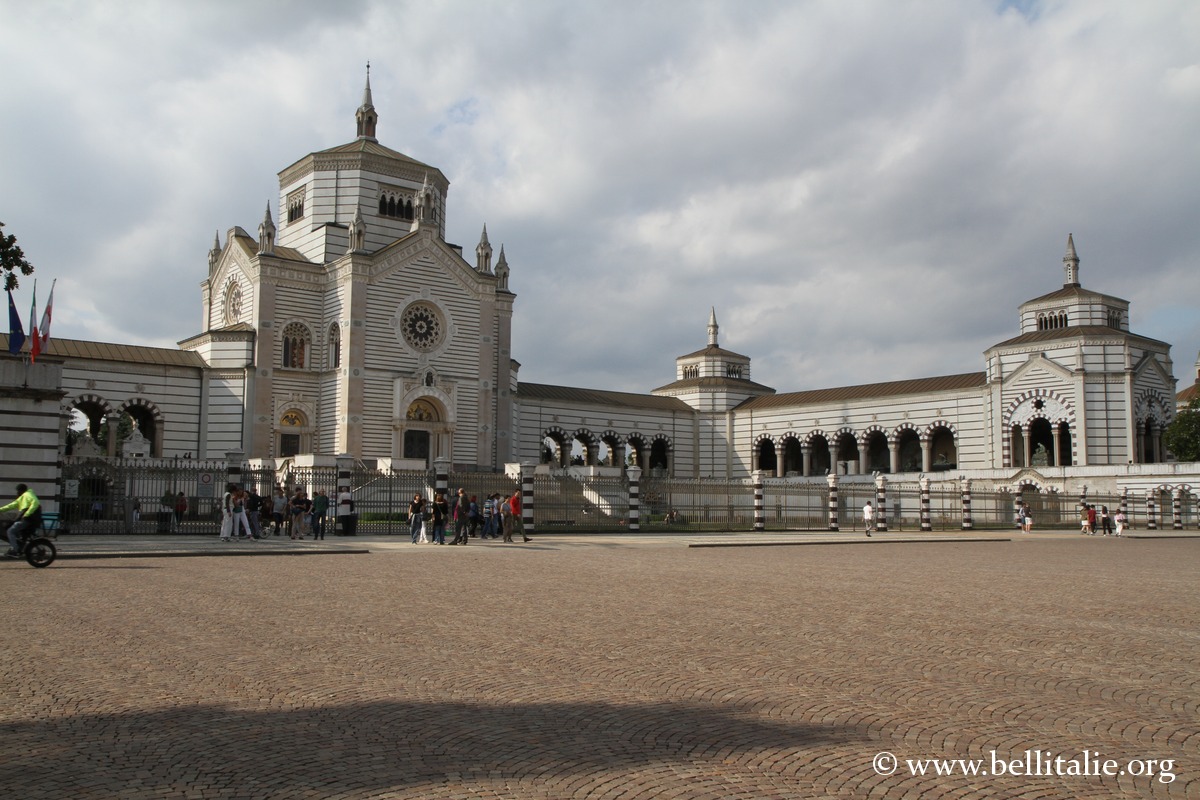 Ignored by most tourists, the Cimitero monumentale di Milano is a vast cemetery of more than 25 hectares that is nonetheless of great importance. Not only because of the personalities who found their last earthly resting place there, but also thanks to its architectural riches, with tombs and mausoleums of original shapes, the result of the desire of wealthy Milanese families to stand out, mixing Romanesque, Gothic, Art Nouveau, neoclassical styles, etc.
20. Basilica of San Nazaro
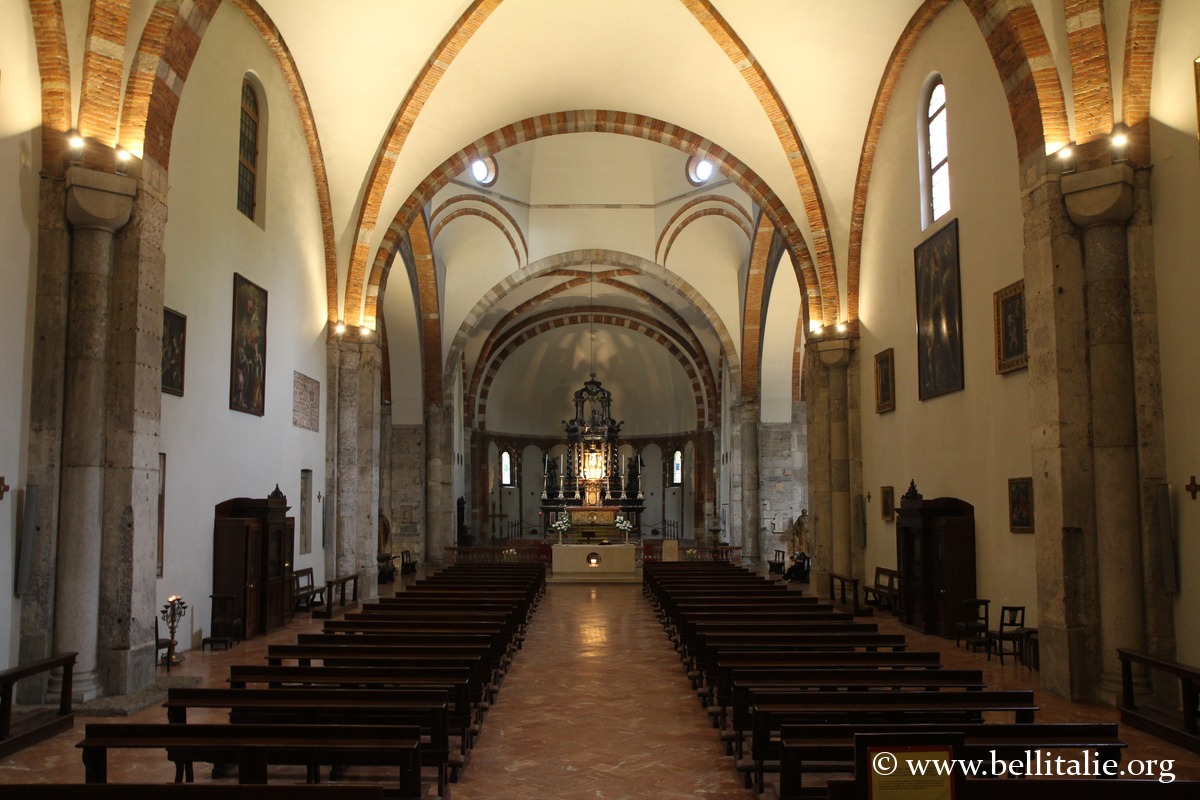 San Nazaro in Brolo is one of the four basilicas founded by Ambrose, the bishop of Milan and Doctor of the Church at the end of the 4th century, on the via Mediolanum that linked the city to Rome. It has the particularity of preserving a large part of its imposing original structure. It is one of the main early Christian testimonies in Milan, and the first Latin cross church in the West.
It is preceded by the Trivulzio Chapel, mausoleum of the 16th-century condottiere.
Basilica of San Nazaro of Milan
21. Basilica of San Simpliciano
The Basilica of San Simpliciano is the last of the four basilicas built by Ambrose, founded in the 4th century, rebuilt in the Middle Ages and remodelled in the 19th century. It preserves the fresco of the Coronation of the Virgin by Bergognone (1515), or the relics of three martyrs: Sisinnius († 397), Martyrius and Alexander, originally from Cappadocia and missionaries in Tyrol. It is often the venue for organ concerts.
22. Basilica of Sant’Eustorgio
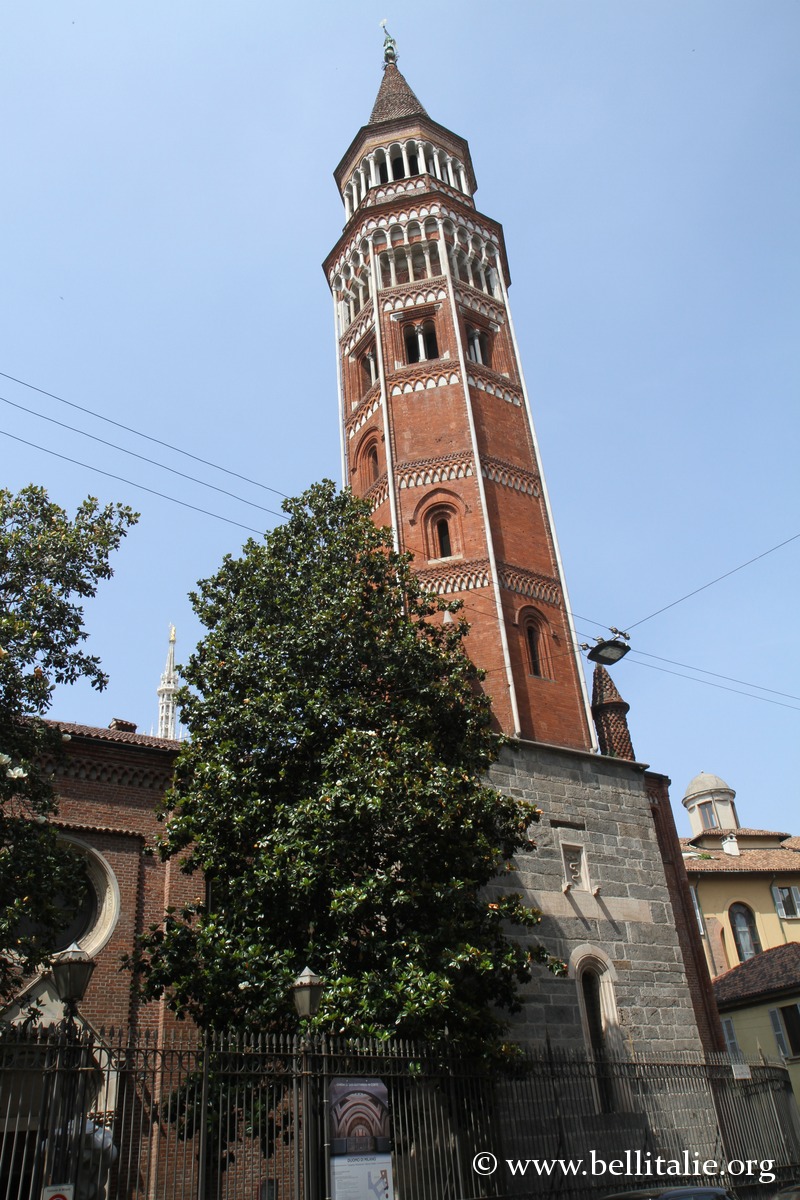
Behind the Romanesque-style façade rebuilt in the 19th century lies an ancient place of worship dedicated to the Magi, where traces dating back to the 7th, 11th or 12th centuries can be seen. The relics of the Magi are said to have been brought to Milan by Saint Eustorgius I of Milan. The bell tower is moreover topped by an 8-branched star instead of the usual cross.
Its Portinari Chapel is a remarkable Renaissance work covered with splendid frescoes by Vincenzo Foppa in 1468, which were restored in the mid-20th century, having long been hidden under several layers of plaster.
23. Other museums and palaces of Milan
Royal Palace of Milan
 Former seat of the Milanese government, the Royal Palace designed by Piermarini in the 1770s, located facing the cathedral, has become an important cultural space of the city, where important temporary exhibitions are held, often around contemporary art.
The palace museum is devoted to the history of the palace, the city and the Milanese, through 4 historical periods: neoclassical, Napoleonic, the Restoration and the Risorgimento (the unification of Italy, which was an important period in Milanese history).
The building also houses the interesting Duomo Museum. In the south wing are incorporated the remains of San Gottardo in Corte, the former palatine church, of which the 14th-century bell tower and the apse remain.
Museum of the 20th Century
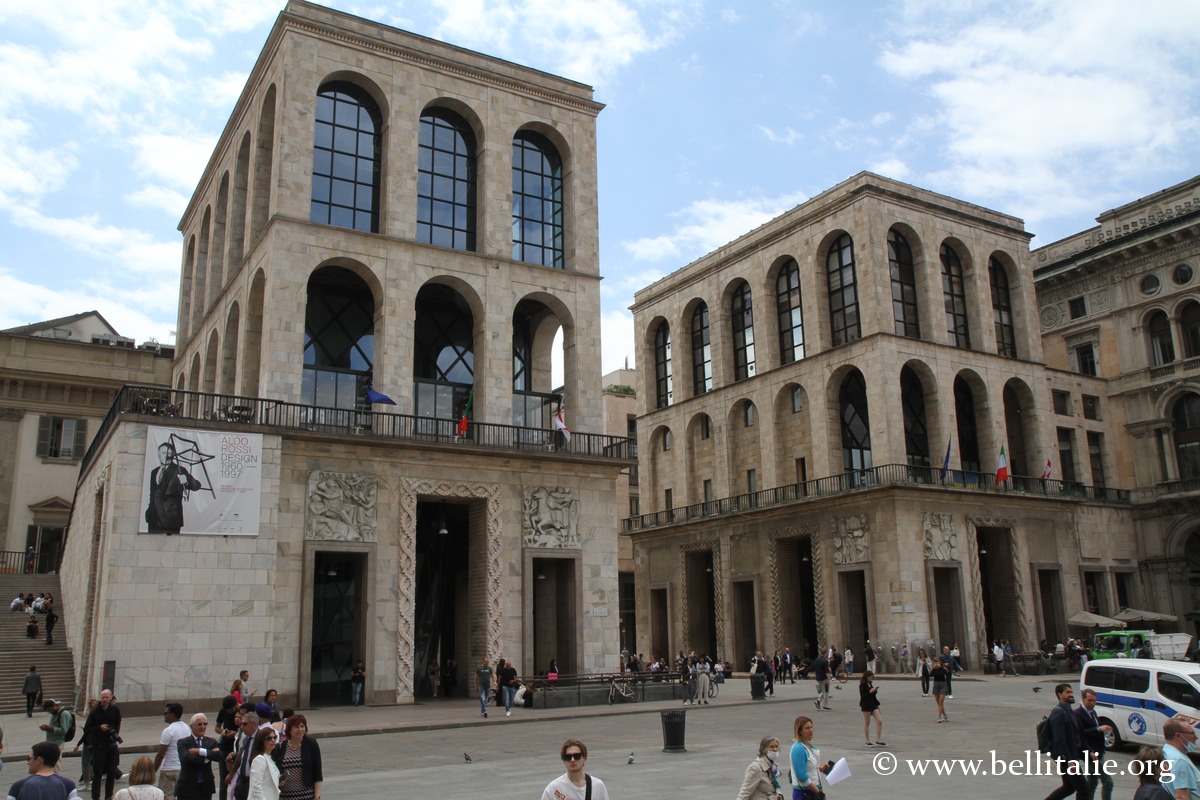 On Piazza Duomo, the Palazzo dell’Arengario built between 1936 and 1956 houses the interesting Museum of the 20th Century, with more than 400 works from the last century, to be discovered along a chronological route. The visit begins with the room devoted to the “Fourth Estate” by G.P. De Volpedo, then passes through the Avant-garde, Futurism, Abstract, Pop Art, Arte Povera movements, including works by artists such as Picasso, Kandinskij, de Chirico, Modigliani, Balla, Boccioni (see the official website).
Ambrosian Library and Pinacoteca
The Veneranda Biblioteca Ambrosiana and the Pinacoteca Ambrosiana, the first of which houses one of the largest collections of historical works in the world. They are located near the church of San Sepolcro where slabs from the Roman forum can be found in the crypt.
The pinacoteca is an important museum of the city, established in 1618 and today holding 2000 works including paintings, sculptures and art objects, as well as more than 20,000 drawings. It is linked in particular to three geniuses, including Leonardo da Vinci with the collection of sheets, the Codex Atlanticus in the Sala Federiciana, the former reading room of the Library; Raphael with the preparatory drawing for the School of Athens; and Caravaggio with the Basket of Fruit. Note also the only painting on canvas by Leonardo da Vinci in Milan, the Musician, the Madonna of the Pavilion by Botticelli, the Adoration of the Magi by Titian, Fire and Water by Brueghel. An art collection that lasted a lifetime and has grown enormously since the death of its founder (see the official website).
G.A.M. (Villa Bonaparte)
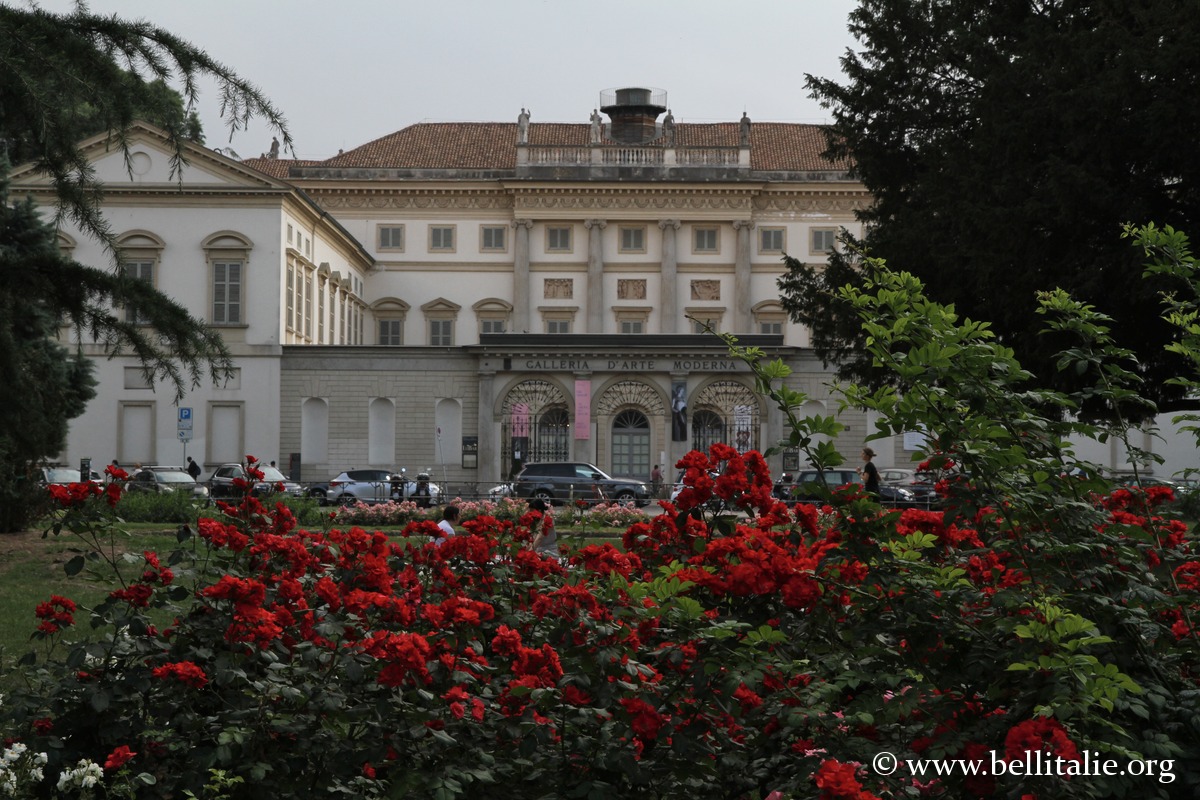 The Gallery of Modern Art is housed in the palace of the Royal Villa (or Villa Bonaparte), facing the municipal public garden. There you can discover the interiors of the palace, and hundreds of paintings from one of the most important 19th-century art collections, ranging from neoclassicism to divisionism, passing through Romanticism, Realism and the Scapigliatura. It is complemented by the Grassi collection with Italian and international works from the 19th and 20th centuries (see the official website).
Natural History Museum
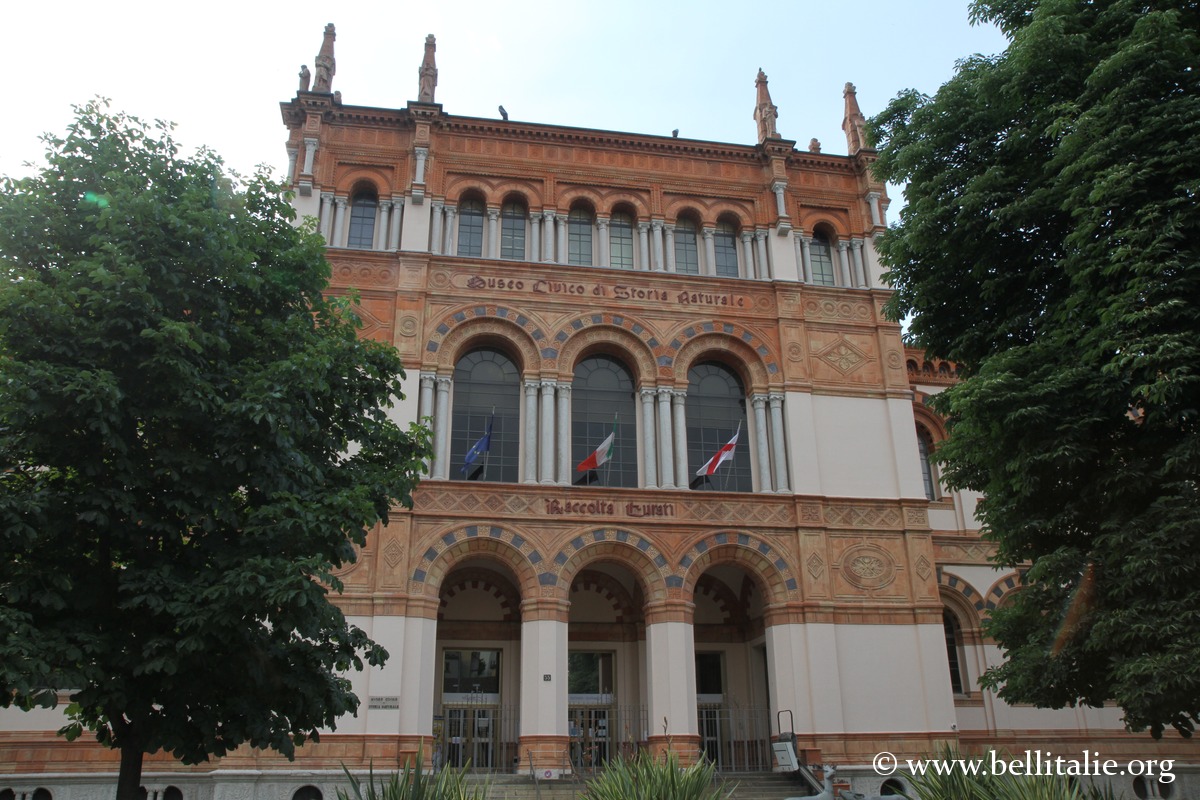
Also within the Indro Montanelli municipal garden, the Natural History Museum notably preserves collections devoted to mineralogy, zoology, palaeontology and botany, within the beautiful 19th-century palace. The permanent collection is discovered along a route of 20 rooms with more than 700 display cases and numerous faithful reconstructions of natural environments, with three thematic routes: the forms of nature, the evolution of life on Earth and the relationships between organisms and the environment. On the menu: stuffed animals, fossils, dinosaurs, reconstructions, and in particular a 20-metre whale skeleton, or a model of a flying reptile 70 million years old.
The important library, and the collections of insects, birds, rocks and minerals are intended primarily for study (see the official website).
24. Other curiosities and sites
The finger (L.O.V.E.)
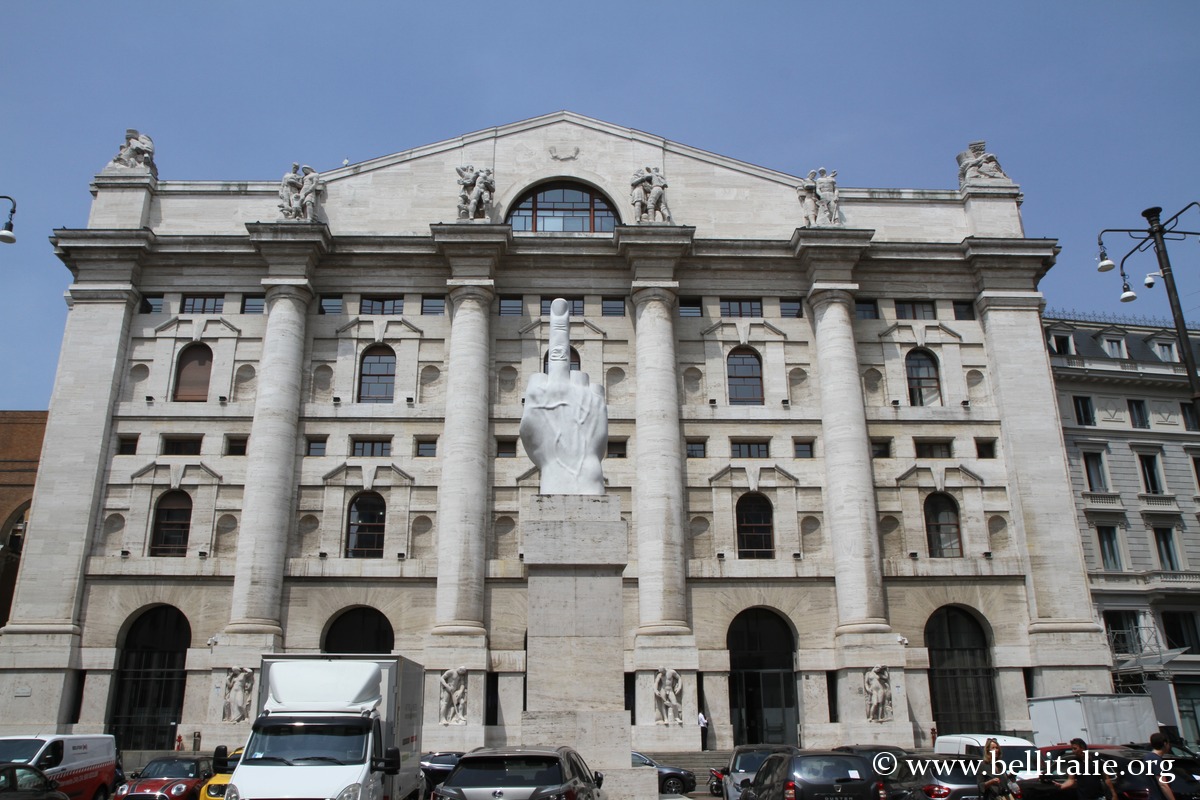
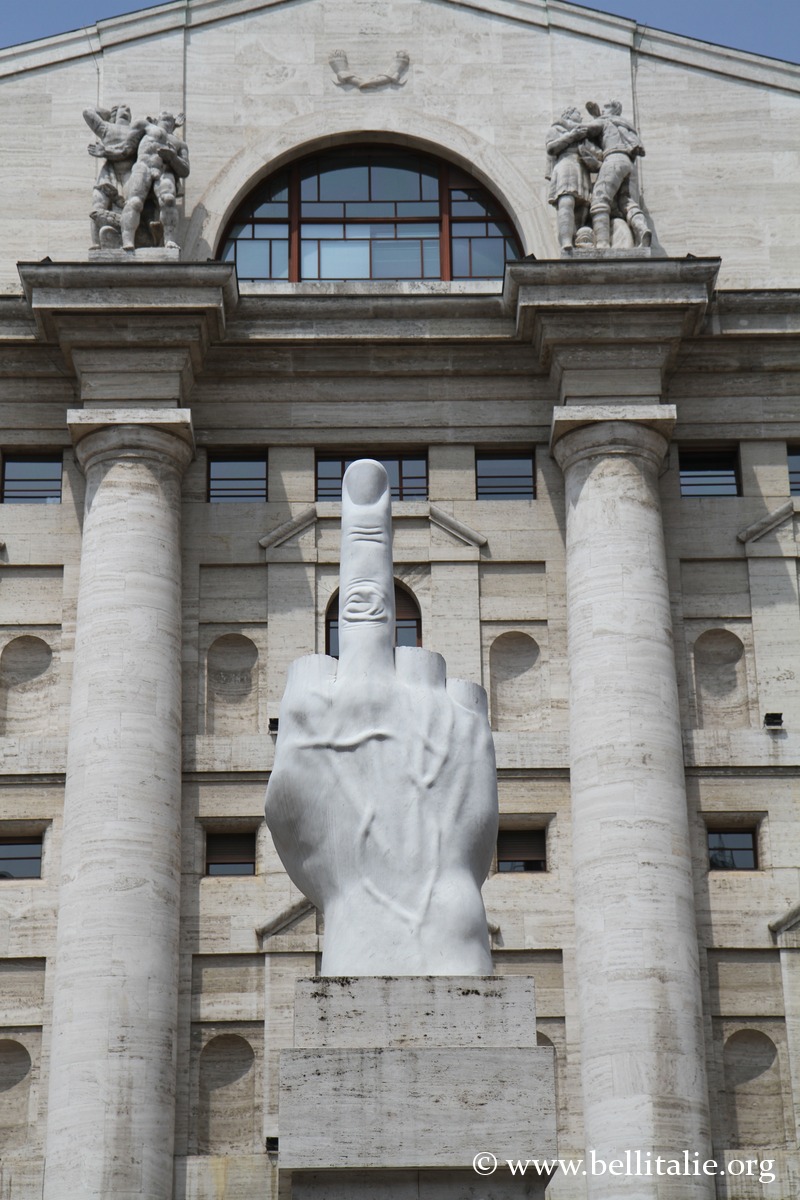
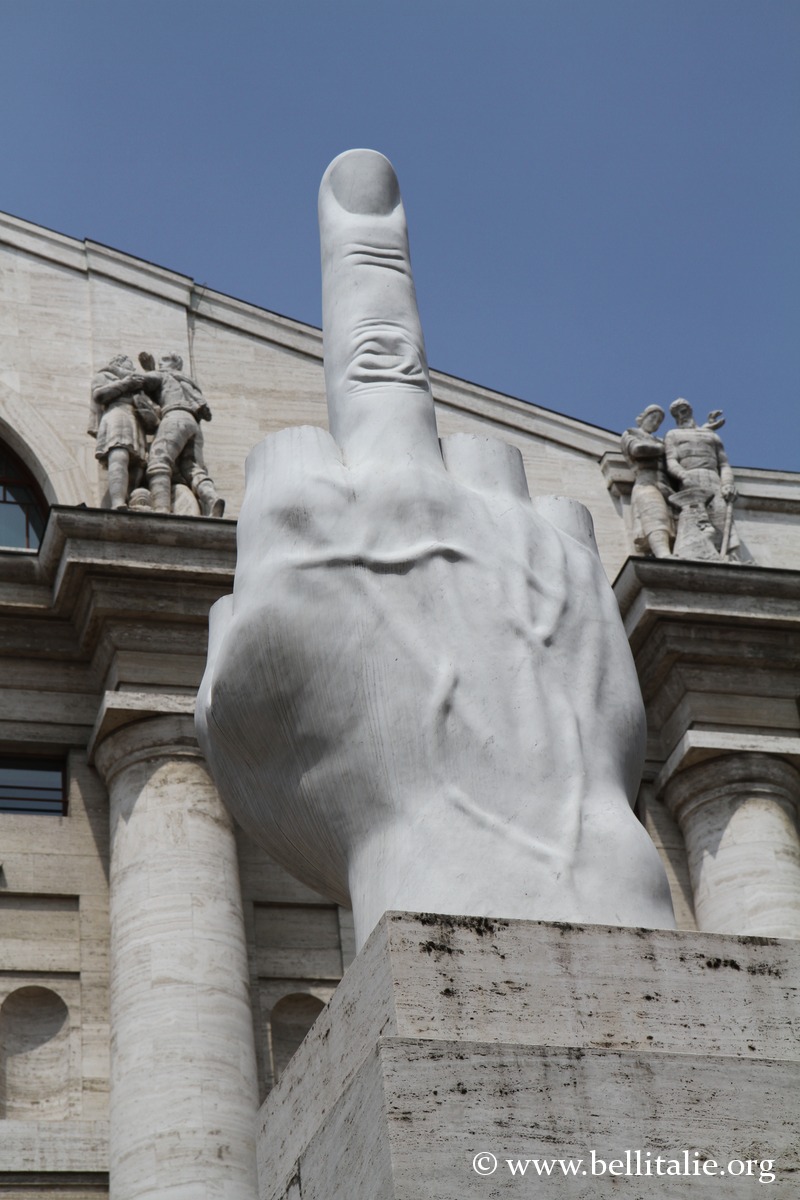
In the centre of Piazza degli Affari in Milan, “the finger” (“il dito” in Italian), is an original marble statue, named L.O.V.E (Libertà, Oddio, Vendetta, Eternità, i.e. in English Freedom, Hate, Vengeance, Eternity), in front of the Milan stock exchange. This giant 11-metre-high rude finger is the work of Maurizio Cattelan, visibly symbolising given the way it is placed a message from the financial institutions to passers-by.
The work was originally meant to be installed for a few months, but has taken up residence there since its inauguration in September 2010.
-
- Il dito davanti a la borsa di Milano
-
- Le doigt devant la bourse de Milan
-
- Il dito
Chinatown
Via Paolo Sarpi crosses the Chinatown of Milan, with its shops of imported products and grocery stores.
Piazza Gae Aulenti and skyscrapers
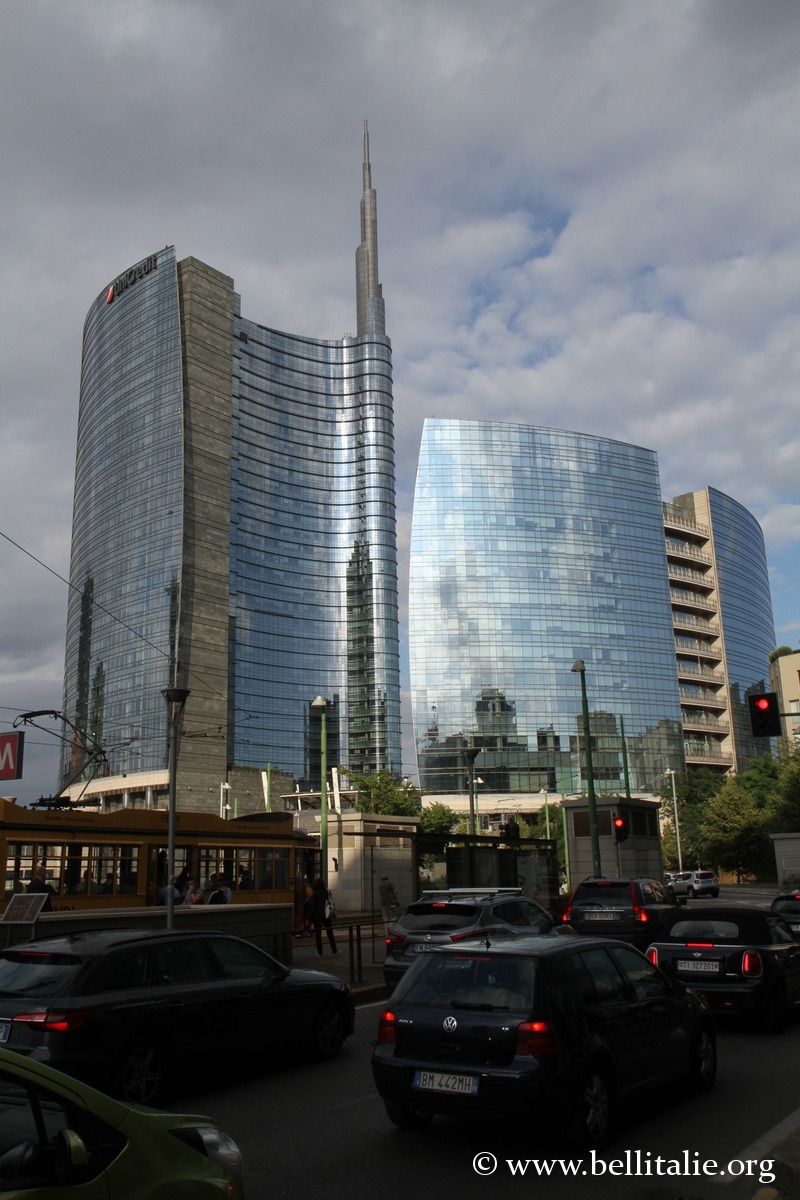
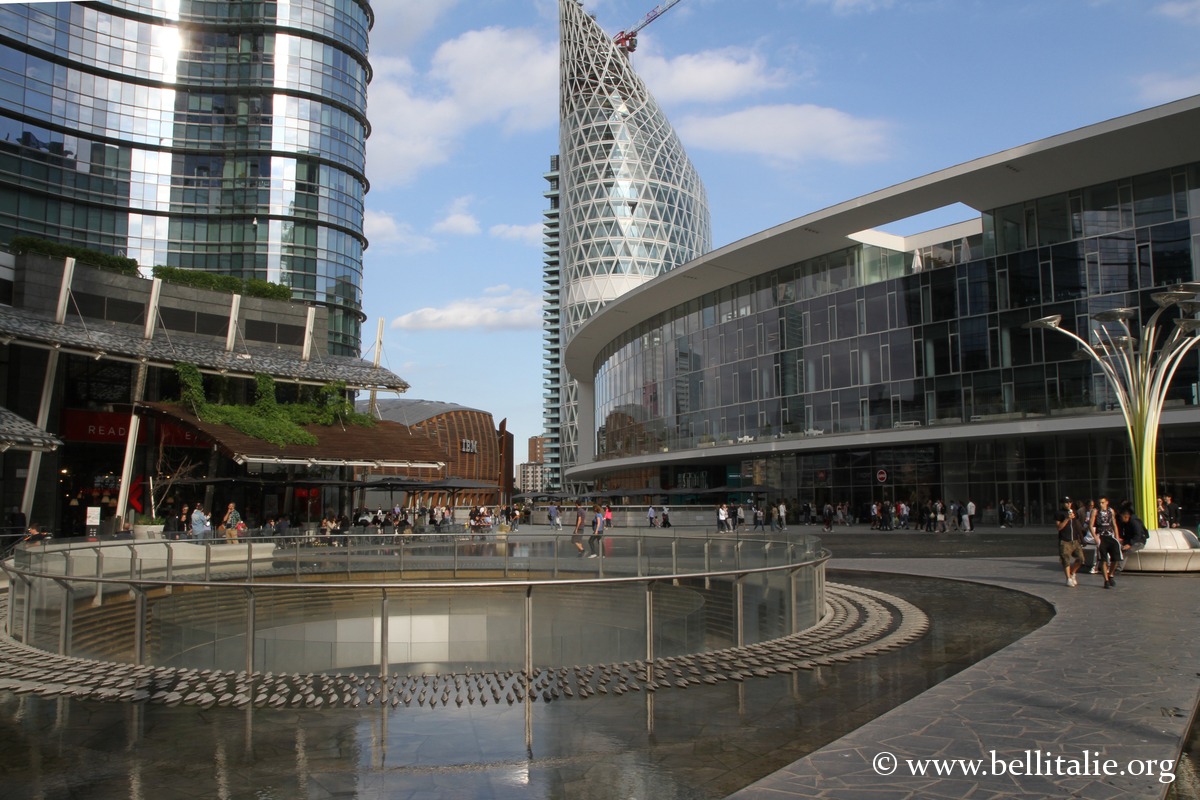
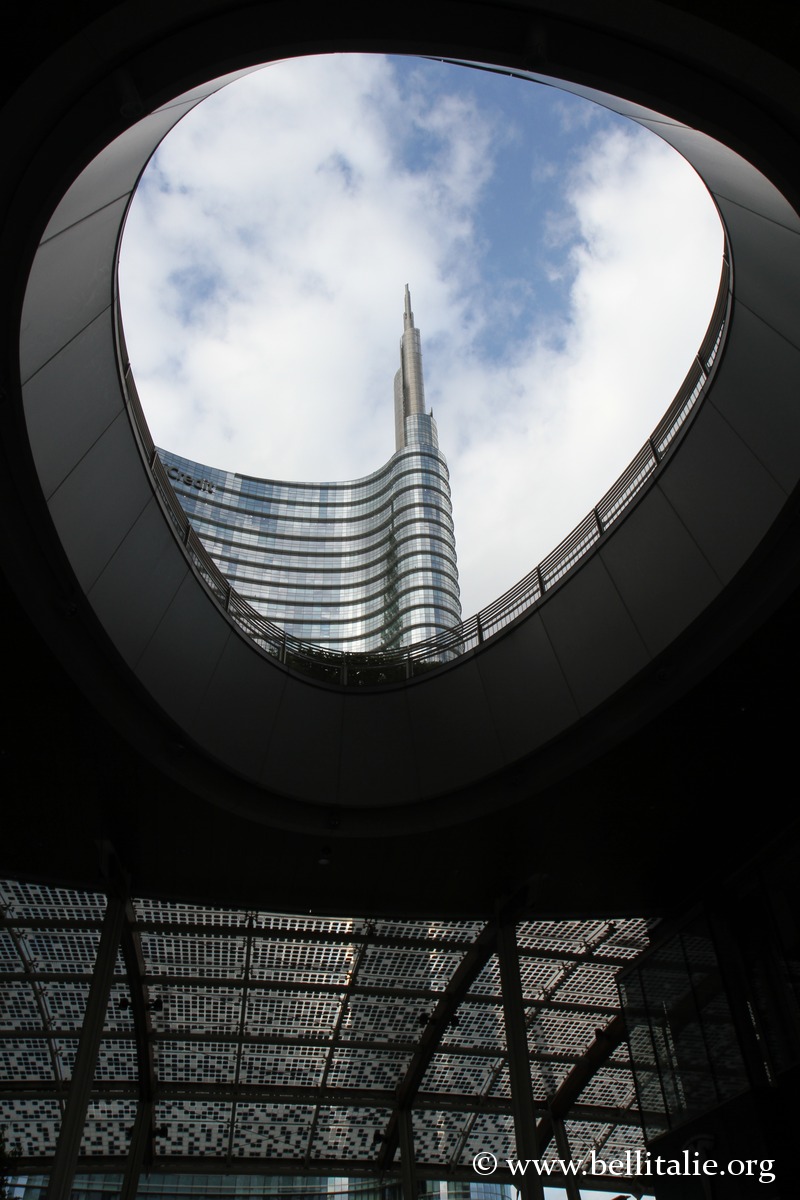
Between the historic centre and the business district, this circular square with a futuristic look is the culmination of the renovation of the district, designed by the Argentine architect César Pelli, and inaugurated in December 2012. From the city centre you can reach it via the elegant pedestrian street of Corso Como.
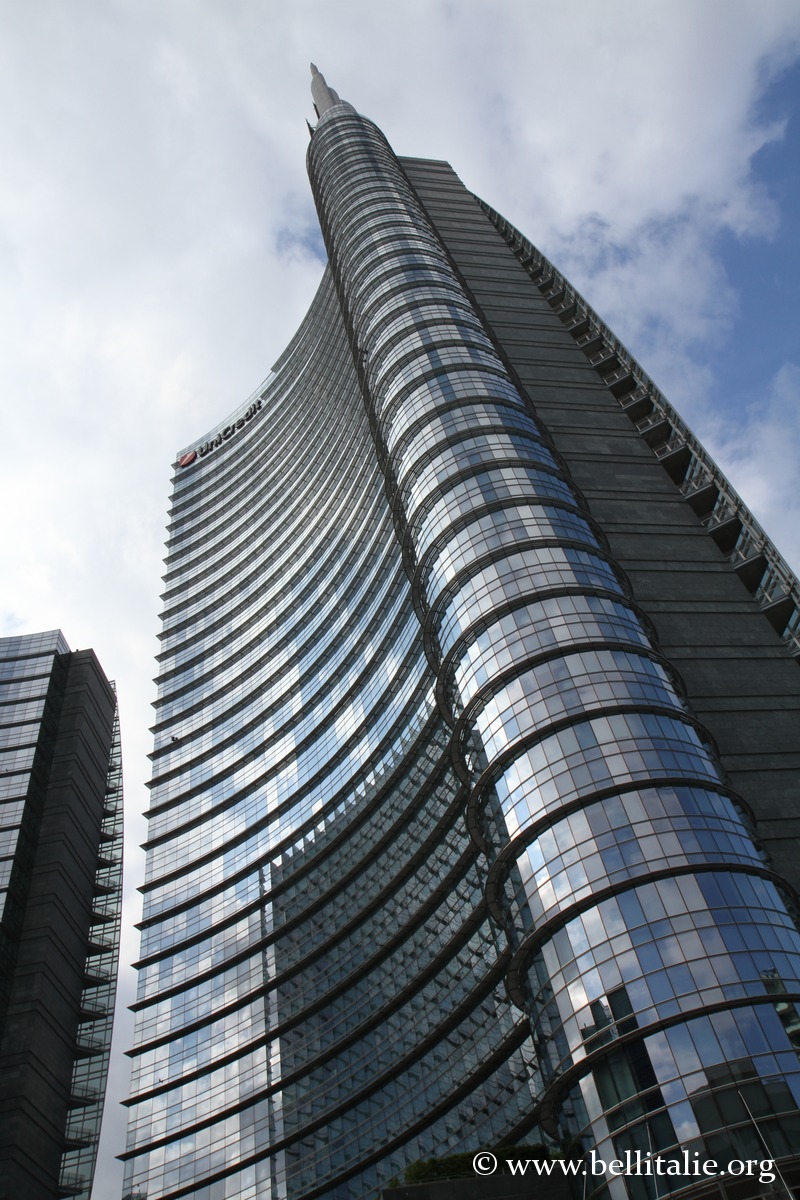
In the centre rises a podium, a circular work 6 metres above the ground. It is surrounded by “design” towers, including Italy’s tallest skyscraper, the Unicredit Tower which peaks at 231 metres, at the top of which one can go up.
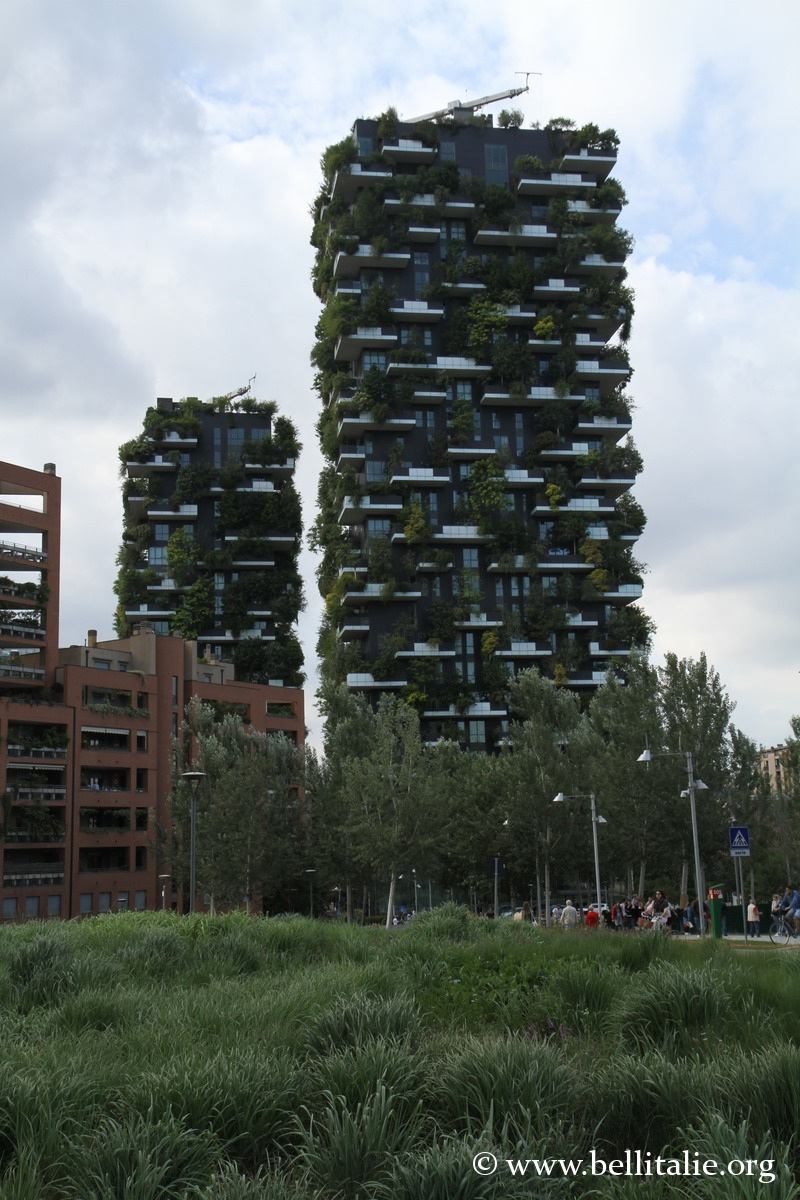
A little apart, the original vertical woods, Bosco Verticale, are two plant-covered towers with thousands of plants.
The harmony of the square is even better highlighted at sunset by a lighting system, water and sound effects. In the evening, the district is also one of the liveliest in the city, where you can find restaurants and nightclubs.
-
- Gratte-ciel à Milan
-
- Piazza Gae Aulenti
-
- Torre Unicredit
-
- Bosco verticale, Milano
Public garden and Royal Villa
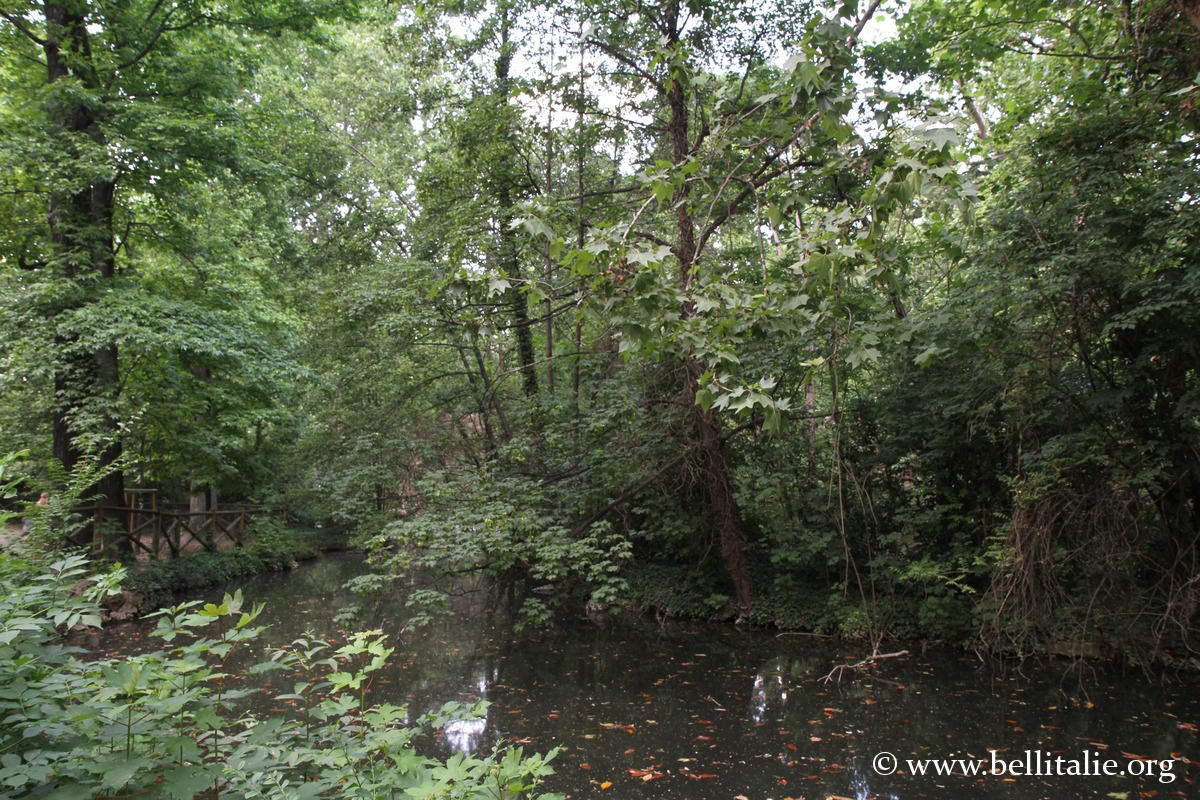
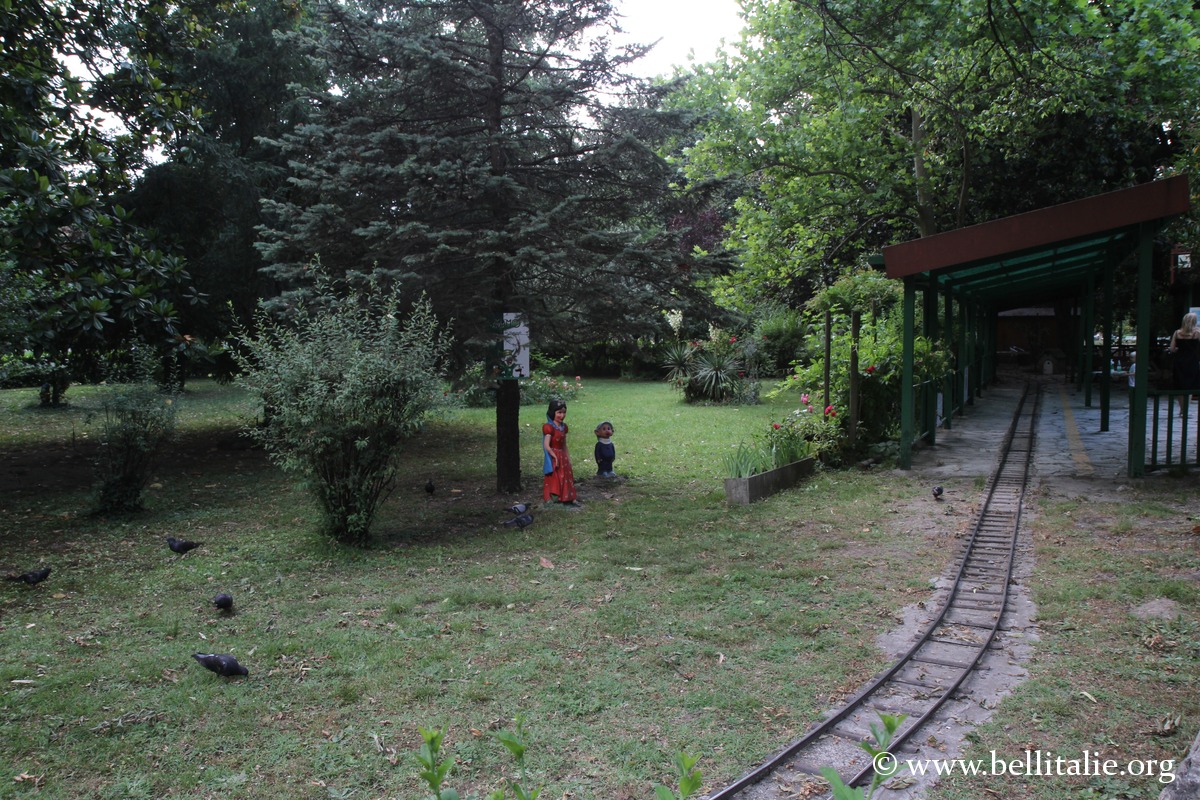
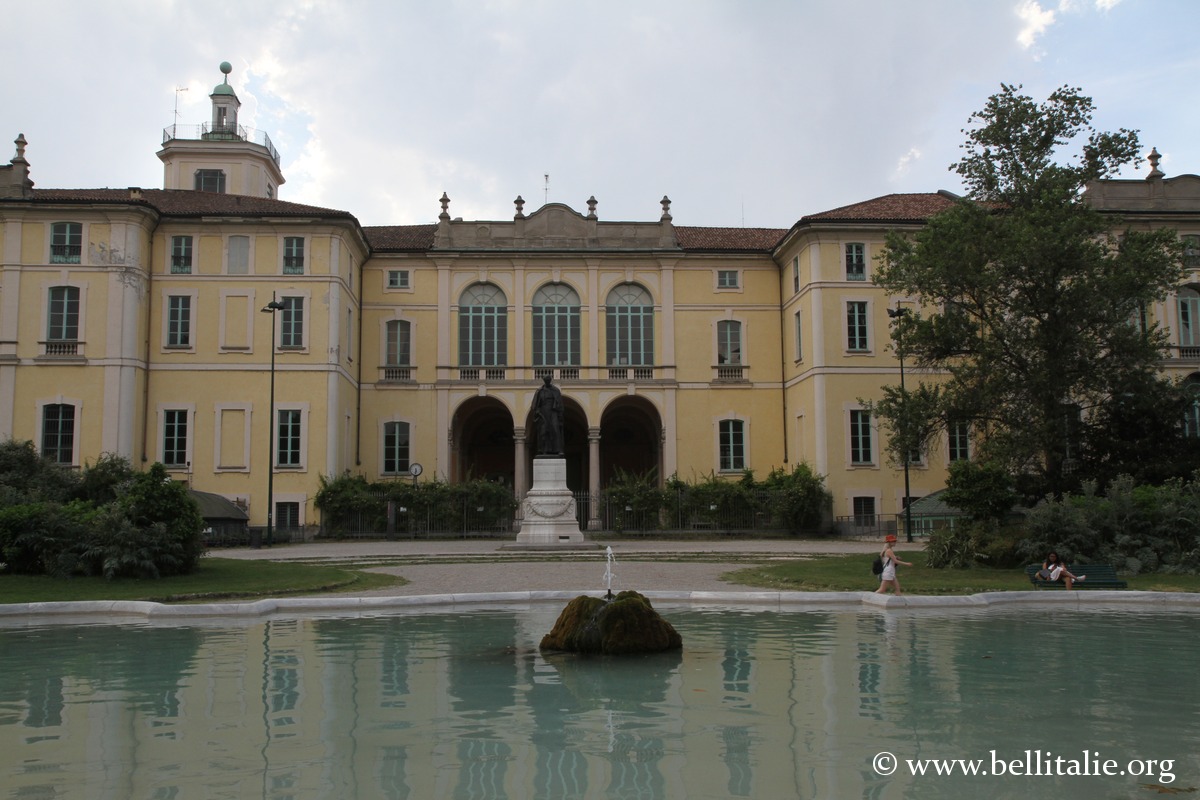
On the edge of the historic centre, the Indro Montanelli public garden is one of the rare oases of greenery and coolness in the city, with its trees, fountains and lawns, as well as buildings such as the Palazzo Dugnani from the 17th century, the Natural History Museum housing its collections devoted to mineralogy and zoology, the Gallery of Modern Art (G.A.M.) housed in the palace of the Royal Villa (or Villa Bonaparte) from the late 18th century.
-
- Villa Bonaparte (GAM)
-
- Jardin municipal
-
- Jardin municipal
-
- Musée d’Histoire Naturelle
-
- Palais Dugnani
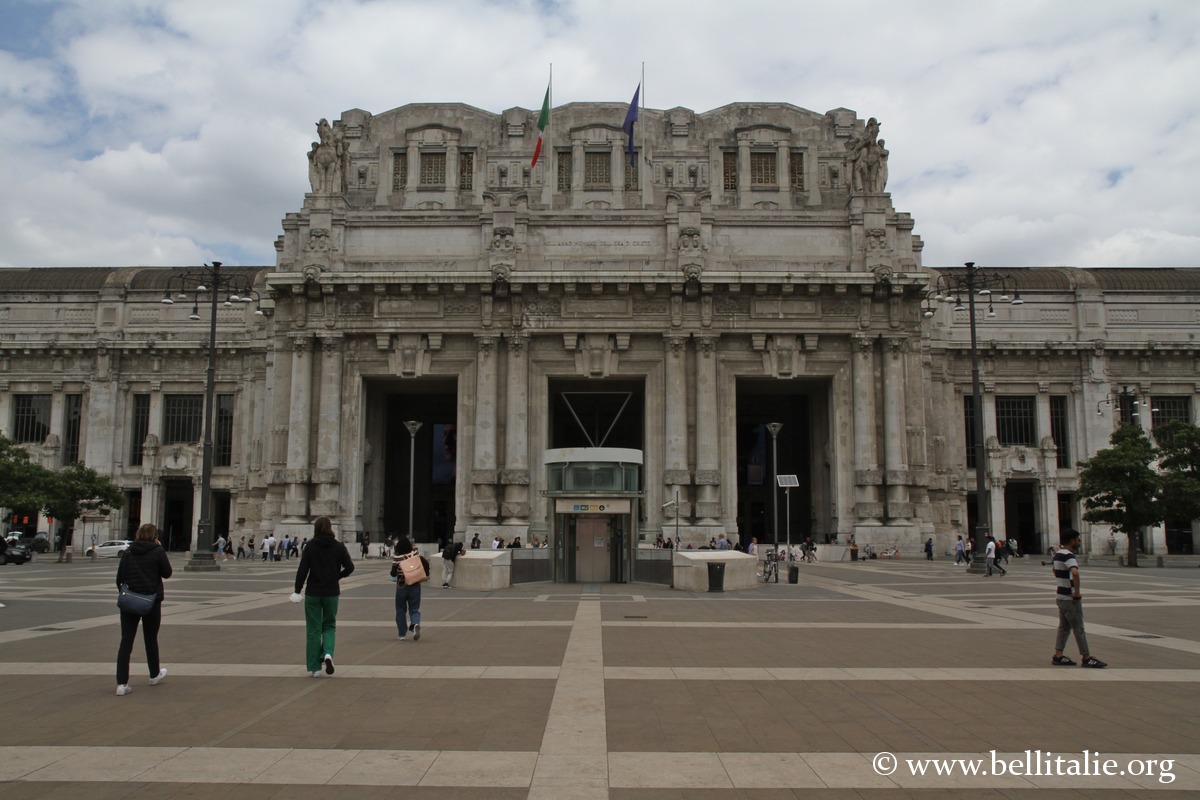
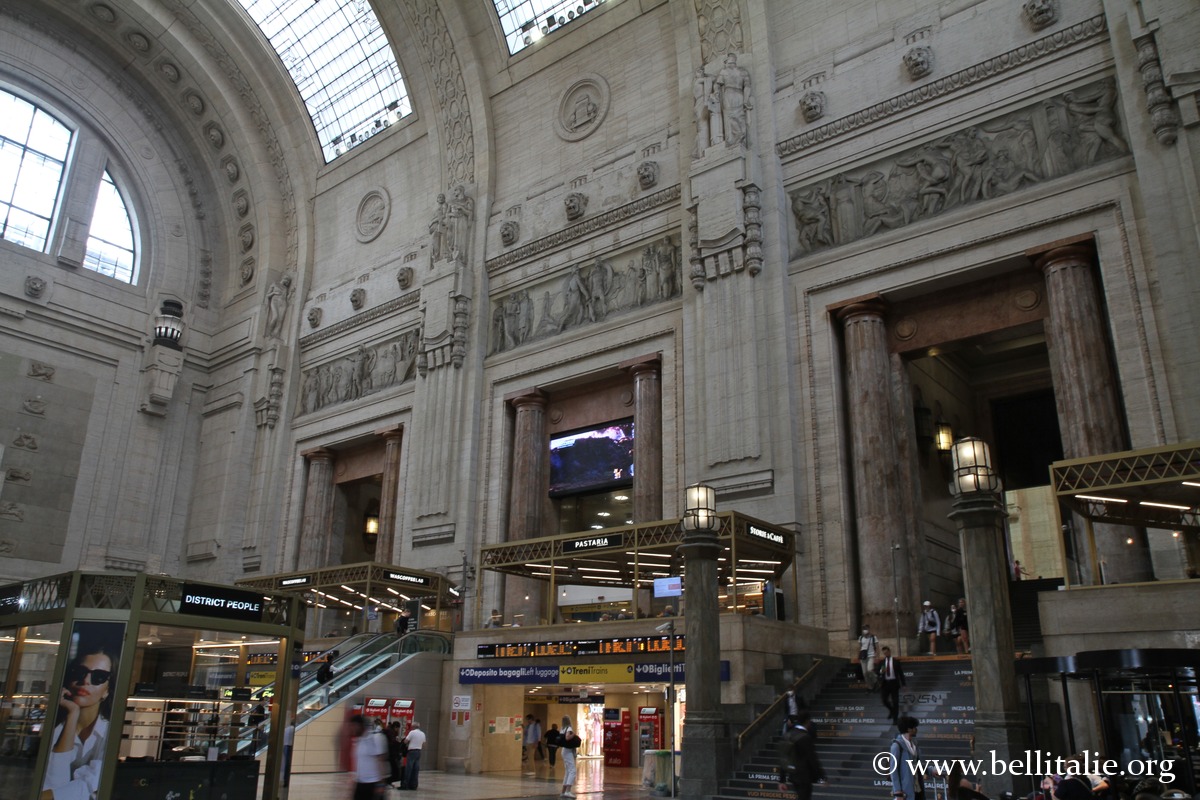
Central Station
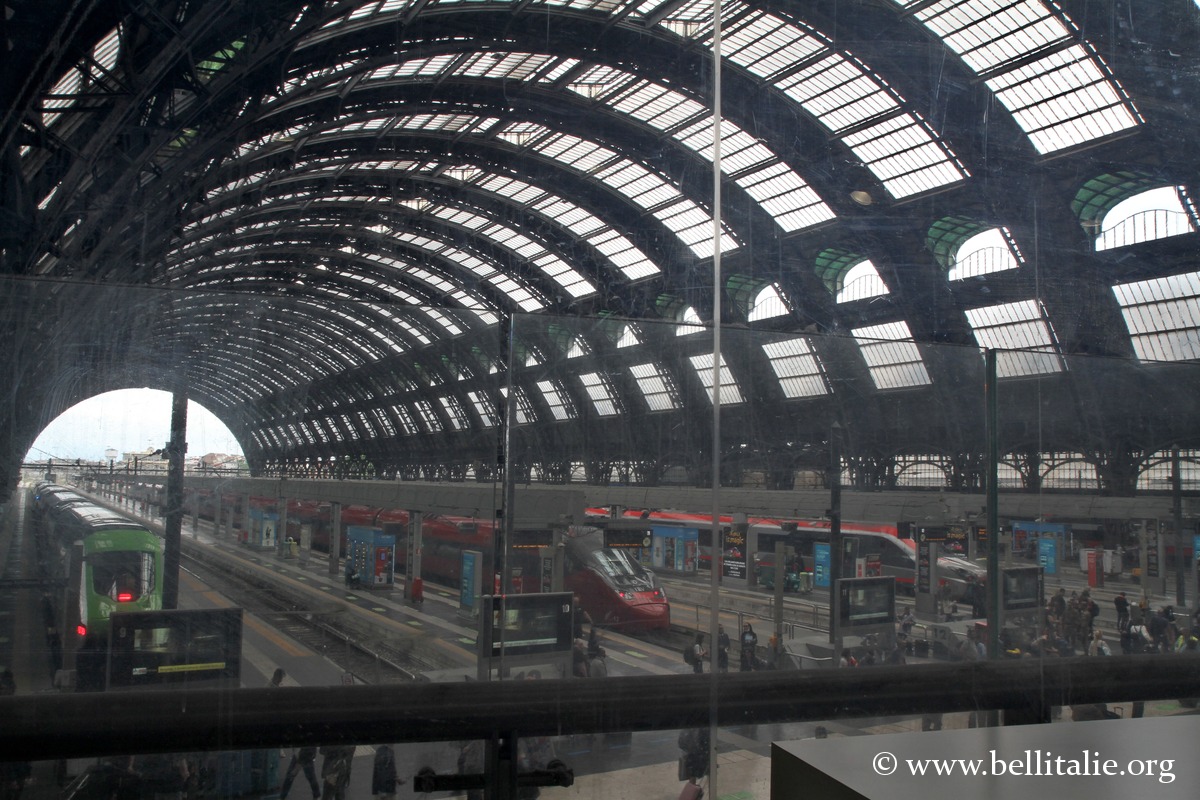
The large Milan Central Station (Stazione Centrale in Italian) was built in the early 20th century, inaugurated in 1931, with Art Nouveau and Art Deco architecture, including a beautiful circular steel roof structure.
Abbey of Clairvaux and Mirasole
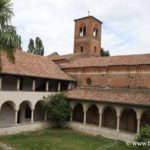
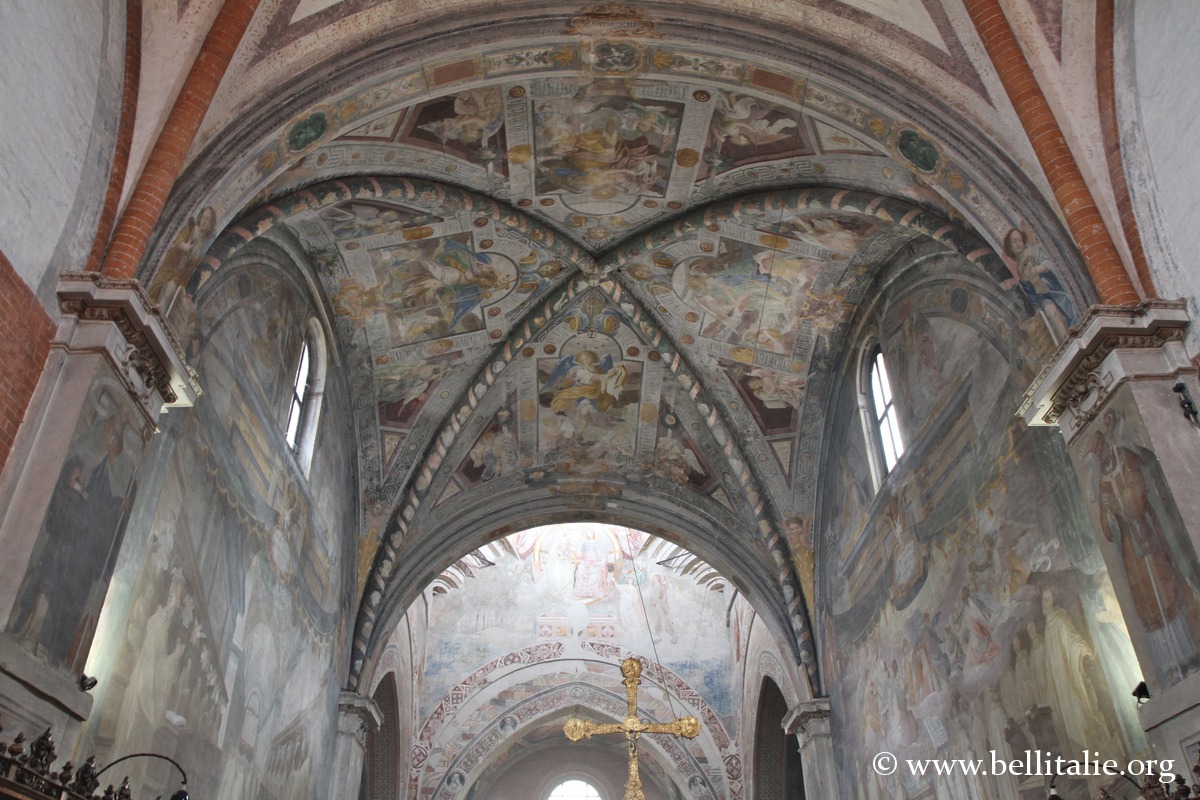 On the outskirts of Milan, the Cistercian Abbey of Clairvaux (Chiaravalle in Italian) dates from the early 12th century. It is a beautiful building, with its large lantern bell tower from the late 13th century (56 metres high), blending French Gothic and Lombard Romanesque styles.
The austere interior of the abbey church preserves portions of the original frescoes. The complex has several cloisters, including part of the original one, the monastery, a mill and the chapel of San Bernardo.
San Bernardino alle Ossa
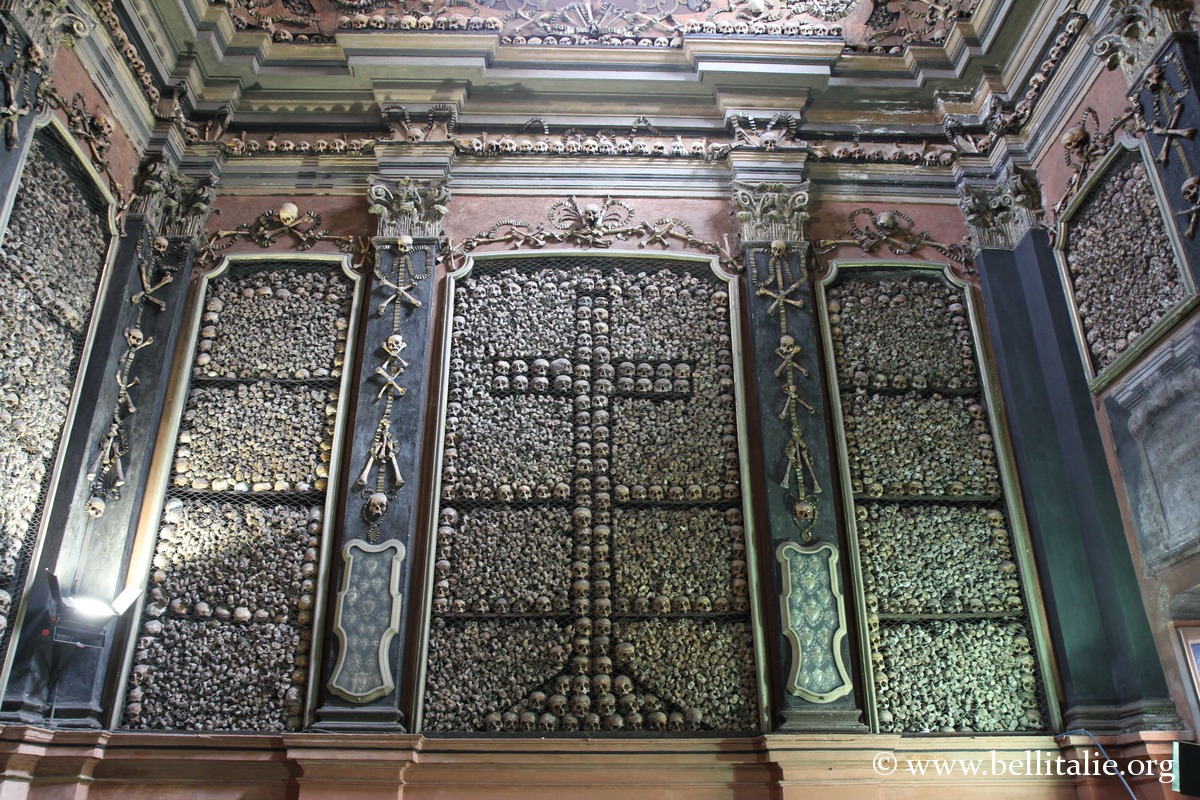 This church stands out with its macabre decorations using human bones. It was built in the 13th century near a room that preserved an ossuary associated with an old hospital.
In a Baroque Rococo style, it preserves works from the 16th-17th centuries, including the ossuary chapel.
Standing on the square of the same name, Santo Stefano was a Romanesque church remodelled in the 16th and 19th centuries.
San Sepolcro
Built in 1030 on the ancient Roman Forum, the church of San Sepolcro was rebuilt after the first crusade as an imitation of the Holy Sepulchre of Jerusalem. The sarcophagus in the centre is said to contain earth from the Holy Land. Rebuilt notably in the 19th century, the crypt is however covered with slabs from the Roman era.
Santa Maria Incoronata
This church, which dates back to the 15th century, is said to have brought together two older churches, presenting two adjoining façades (rebuilt in the 20th century) with two twin naves where remains of frescoes by Borgognone and others are present.
Santa Maria del Carmine
Reconstruction of the early 15th century of a Carmelite church dating back to the 13th, the church of Santa Maria del Carmine keeps an interior partly from the period, a 17th-century apse and a neo-Romanesque façade from the 19th century.
Close to Milan, Monza is a small town famous for its motor racing circuit, in the Brianza region, but which also has a fine heritage, starting with the beautiful Gothic cathedral, then the Villa Reale which was a Habsburg residence with its large park.
A few kilometres south of Milan, where it is already the open countryside known as the Bassa Milanese, there are several abbeys founded in the 12th-13th centuries, Gothic and Lombard Gothic: Clairvaux (Abbazia di Chiaravalle), Viboldone, Mirasole and further south-west that of Morimondo (see the abbeys of the Bassa Milanese).
The Navigli, the old canals dating back to the 12th century for the oldest, can be travelled by boat, for example from the Alzaia del Naviglio Grande.
26. Other Renaissance and Baroque monuments
From Milanese palaces and churches, from the former great hospital Ca’ Granda which became the seat of the university with Spanish walls, to churches such as Sant’Eufemia, or Renaissance palaces such as the Casa Fontana Silvestri and the Casa degli Omenoni.
Other Renaissance and Baroque monuments in Milan
27. From the 18th to the early 20th century and neoclassical architecture
Milan underwent a major urban renovation in the 18th century, when it acquired its current appearance, first thanks (or not) to the work of Giuseppe Piermarini, the court architect of Empress Maria Theresa of Austria. He remodelled the Piazza Duomo, designed the Teatro alla Scala, the new Royal Palace or the Archbishop’s Palace.
Many palaces were built, such as in the Porta Venezia area.
Neoclassical monuments, from the 18th to the early 20th century
28. Museums
Museums of MilanInteractive map
 Show interactive map
Information
- Wikipedia article: en.wikipedia.org
- Tourism portals: www.yesmilano.it, www.in-lombardia.it
- Museums: www.yesmilano.it/musei-e-gallerie
- Monuments: www.yesmilano.it/attrazioni
- Tourism pages: illbrightback.com/quartiere-brera-milano
- Itinerary ideas for visiting Milan
- Milan Cathedral
- Sforza Castle of Milan
- Victor Emmanuel II Gallery in Milan
- The Last Supper and Santa Maria delle Grazie
- Milan’s La Scala
- Basilica of Sant’Ambrogio in Milan

- Piazza dei Mercanti and Medieval Milan
- Selection of hotels and luxury hotels in Milan
- Leonardo da Vinci Museum of Science and Technology
- Brera Art Gallery
- Basilica of San Lorenzo, Milan
- Navigli District and Canals of Milan
- San Maurizio al Monastero Maggiore in Milan
- Milan Civic Archaeological Museum
- Basilica of Saint Nazarius in Milan
- Other Renaissance and Baroque monuments
- Neoclassical, 18th and 19th centuries in Milan
- The Museums of Milan
- Shopping, the Fashion Quadrilateral and Markets in Milan
- Squares and other sites of Milan
- Abbeys of the Bassa Milanese


Comments