


The 18th century was for Milan a great period of urban renovation, in which the city took on its new appearance, above all through the work of Giuseppe Piermarini, the court architect of Empress Maria Theresa of Austria. He designed in particular the Teatro alla Scala, the remodeling of the Royal Palace or of the Archbishop’s Palace.
The Porta Venezia area, which was the entrance to the city when arriving from Austria, was in particular enriched with numerous palaces.
 Palazzo Reale and Palazzo Arcivescovile
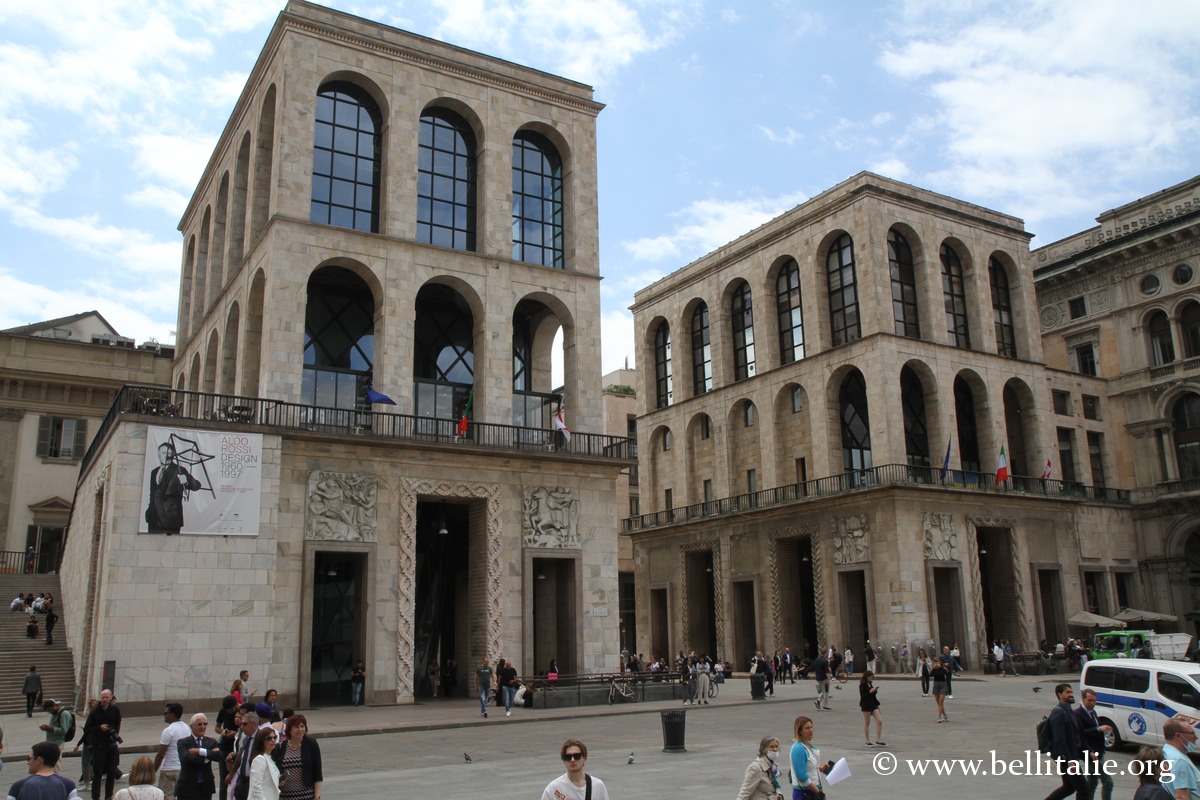
Adjacent to Piazza Duomo, the Palazzo Reale, which dated back to the 14th century, was rebuilt by Piermarini in its current forms in 1778. Rebuilt after the last world war, it lost the ornaments of its interior halls.
It has become an important exhibition venue.
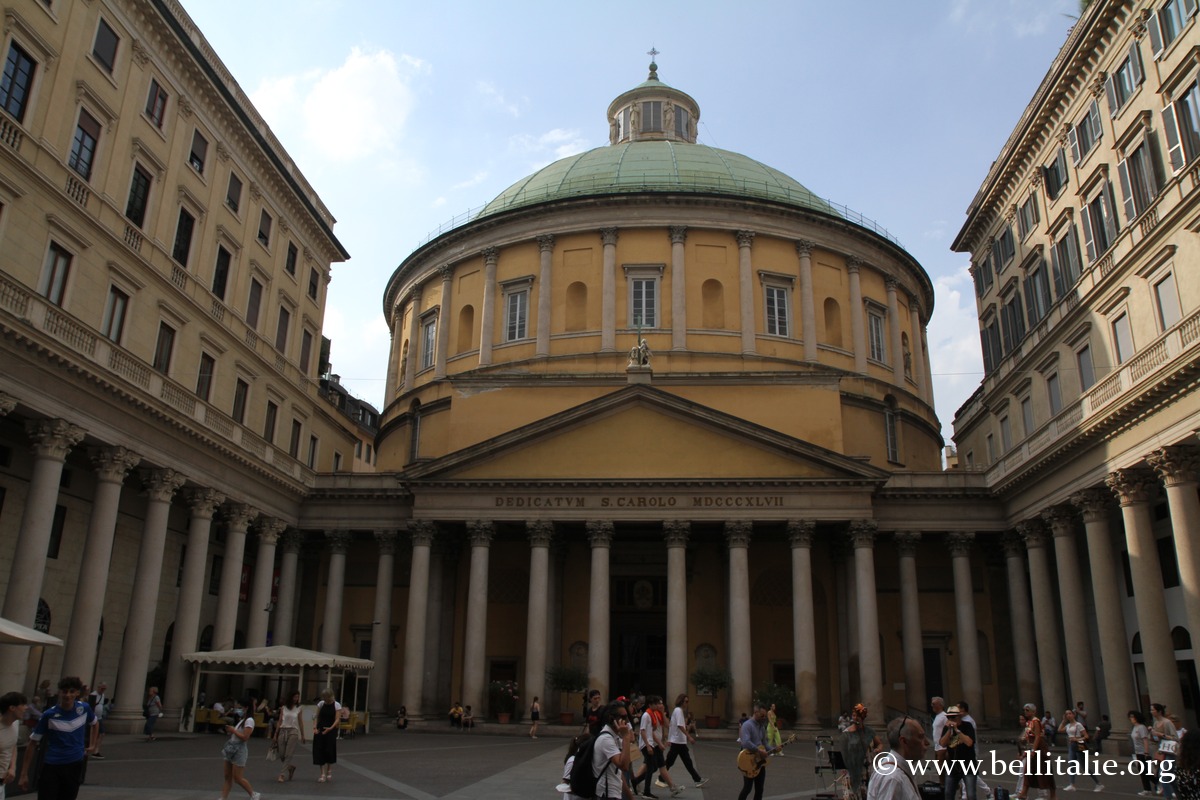
 Corso Vittorio Emanuele II & San Carlo al Corso
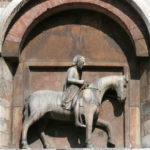
Along the Corso Vittorio Emanuele II, the shopping space Galleria del Corso has an entrance at number 22 marked by a large arch. Farther on, on the other side at number 15, the Om de Preja was, like the “talking statues” in Rome, a statue to which messages and satires were attached at the beginning of the 19th century. This statue of a Roman nobleman, however, has the head of a 10th-century bishop.
Along the aforementioned Corso, the facade of the church of San Carlo recalls a neoclassical temple, inspired by the Pantheon, with its Corinthian portico.
 San Babila
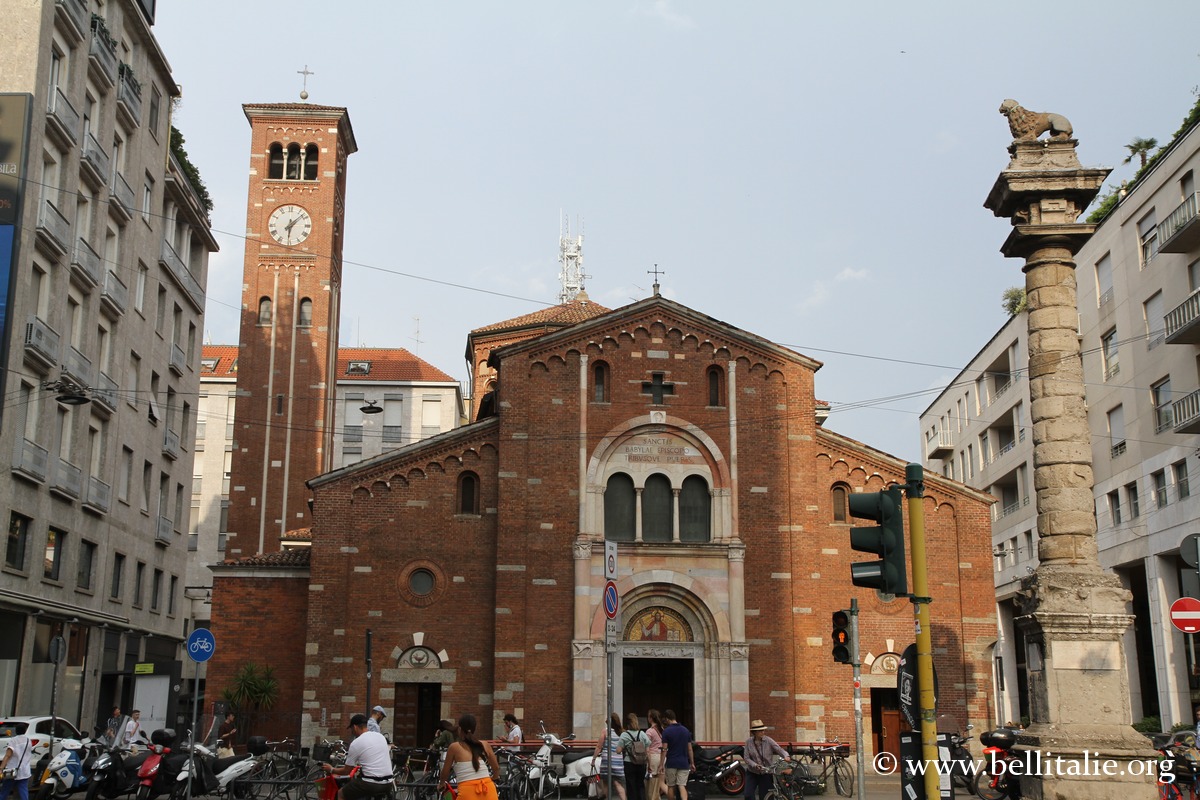
On the square where the corso ends, the church of San Babila was an important Romanesque church of the 11th century, rebuilt in neo-Romanesque style in the mid-19th century.
 Temple of Victory
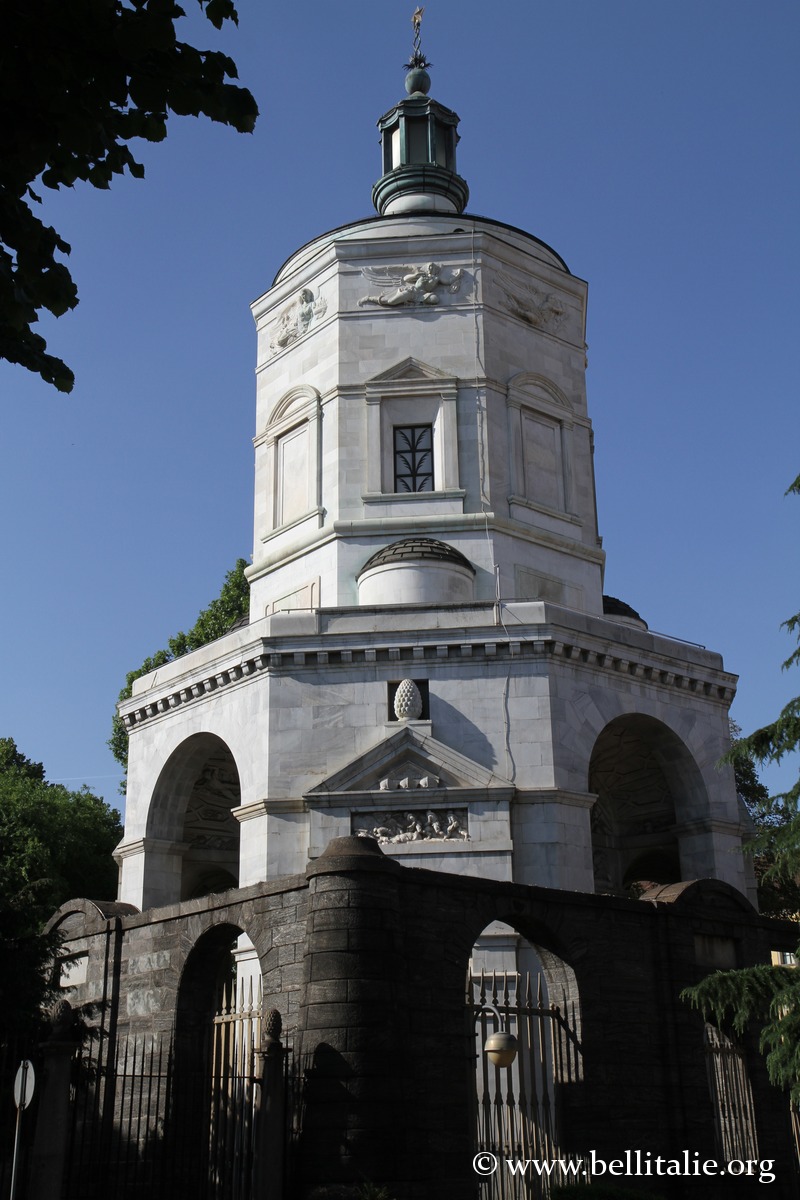
The Temple of Victory (Tempio della Vittoria in Italian) This mausoleum facing the Basilica of Saint Ambrose is inspired by the ancient Tower of the Winds in the Roman quarter of Athens. It was built between 1927 and 1930, dedicated to the memory of the Milanese who died in the Great War (First World War).
Palazzo Serbelloni
Along Via Venezia, the imposing Palazzo Serbelloni of 1793 hosted Napoleon, Victor Emmanuel II and Napoleon III. Home of the Circolo della Stampa (Press Association), it hosts congresses and events in the large Napoleon Hall.
Palazzo Castiglioni, Bovara and Saporiti
Not far away are the neoclassical Palazzo Castiglioni and Palazzo Bovara, and on the other side of Corso Venezia the Palazzo Saporiti dating from 1812.
Villa Belgiojoso Bonaparte
Also known as Villa Reale, it is one of the main neoclassical buildings in Milan, facing its charming English garden, built in 1790 by Leopold Pollack, which today houses the GAM. Facing the Indro Montanelli public garden, laid out in the Italian style by Piermarini.
Palazzo Dugnani
On the edge of the park, the Palazzo Dugnani from the 18th century, frequented by high society until the middle of the 19th century, has a ballroom decorated with frescoes by Tiepolo.
Sempione Park
From the beginning of the 18th century, on the edge of Sempione Park, stand the neoclassical monuments the Arco della Pace on Piazza Sempione, and the Arena Civica Gianni Brera stadium on the eastern side. Besides reenactments of naval battles and a skating rink, Buffalo Bill performed here with his circus of wagons and Indians (see Sempione Park).
Piazza della Scala
From Piazza Duomo, the Galleria Vittorio Emanuele II of the 19th century leads to Piazza della Scala, where the Teatro alla Scala is located, and not far away the church of San Fedele on the square of the same name, completed in 1835.
The nearby Palazzo Belgioioso is a remarkable neoclassical building from 1772-1781, also by Piermarini, inspired by the Reggia di Caserta built by Luigi Vanvitelli (see the pages on the Galleria Vittorio Emanuele II and La Scala in Milan).
Palazzo Clerici
The Palazzo Clerici from the 18th century, home of the Institute of International Political Studies, has a lovely tapestry gallery (Galleria degli Arazzi) whose vault was painted by Tiepolo in 1741 and a wall bears 17th-century tapestries (visit by reservation).
Palazzo Bagatti Valsecchi
The Palazzo Bagatti Valsecchi, built in the 19th century imitating the palaces of the 16th century, has a sumptuous interior, housing the museum of the same name preserving decorative art objects and paintings in Renaissance style.
Palazzo Litta
The Palazzo Litta from the 17th century has a charming rococo facade and a decorated courtyard of honor with a portico.
Information
- Tourist portals: www.yesmilano.it
- What to see in Milan
- Itinerary ideas for visiting Milan
- Milan Cathedral
- Sforza Castle of Milan
- Victor Emmanuel II Gallery in Milan
- The Last Supper and Santa Maria delle Grazie
- Milan’s La Scala
- Basilica of Sant’Ambrogio in Milan

- Piazza dei Mercanti and Medieval Milan
- Selection of hotels and luxury hotels in Milan
- Leonardo da Vinci Museum of Science and Technology
- Brera Art Gallery
- Basilica of San Lorenzo, Milan
- Navigli District and Canals of Milan
- San Maurizio al Monastero Maggiore in Milan
- Milan Civic Archaeological Museum
- Basilica of Saint Nazarius in Milan
- Other Renaissance and Baroque monuments
- Neoclassical, 18th and 19th centuries in Milan
- The Museums of Milan
- Shopping, the Fashion Quadrilateral and Markets in Milan
- Squares and other sites of Milan




Comments