

Also find at the end of the article the Tourist map of Veneto
Venice 
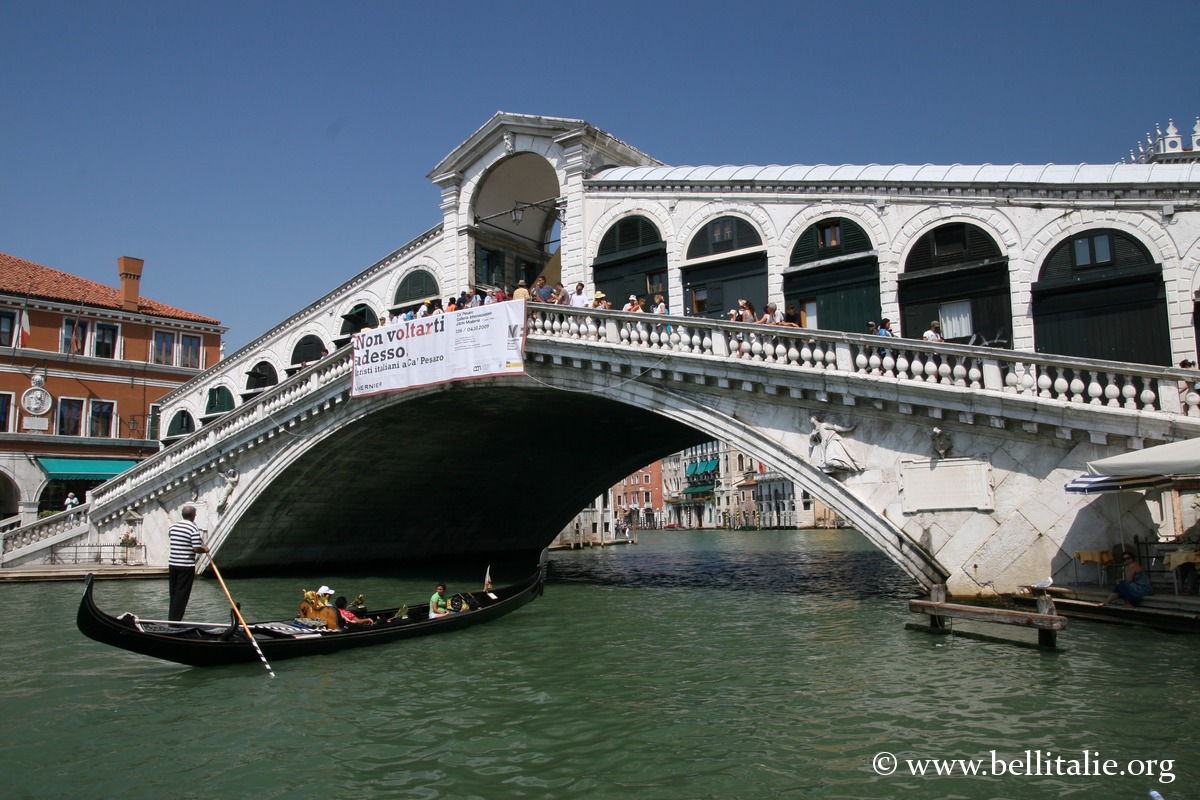
Rialto Bridge
Fascinating and unique city in the world, whose singular architecture and heritage have spanned the centuries, Venice is certainly an extraordinary destination, one of the most beautiful on Earth. Built largely on stilts, its alleys are discovered on foot, passing from one island to another by crossing the canals via one of the 400 bridges, or at the pace of gondolas. The whole city is a marvel, with enchanting places from the Rialto Bridge to St. Mark’s Square, its churches and Palaces, the culmination of Renaissance art, its prestigious museums, and outlying districts such as the ghetto or Dorsoduro which have kept a certain authenticity.
Islands of the Venice Lagoon 
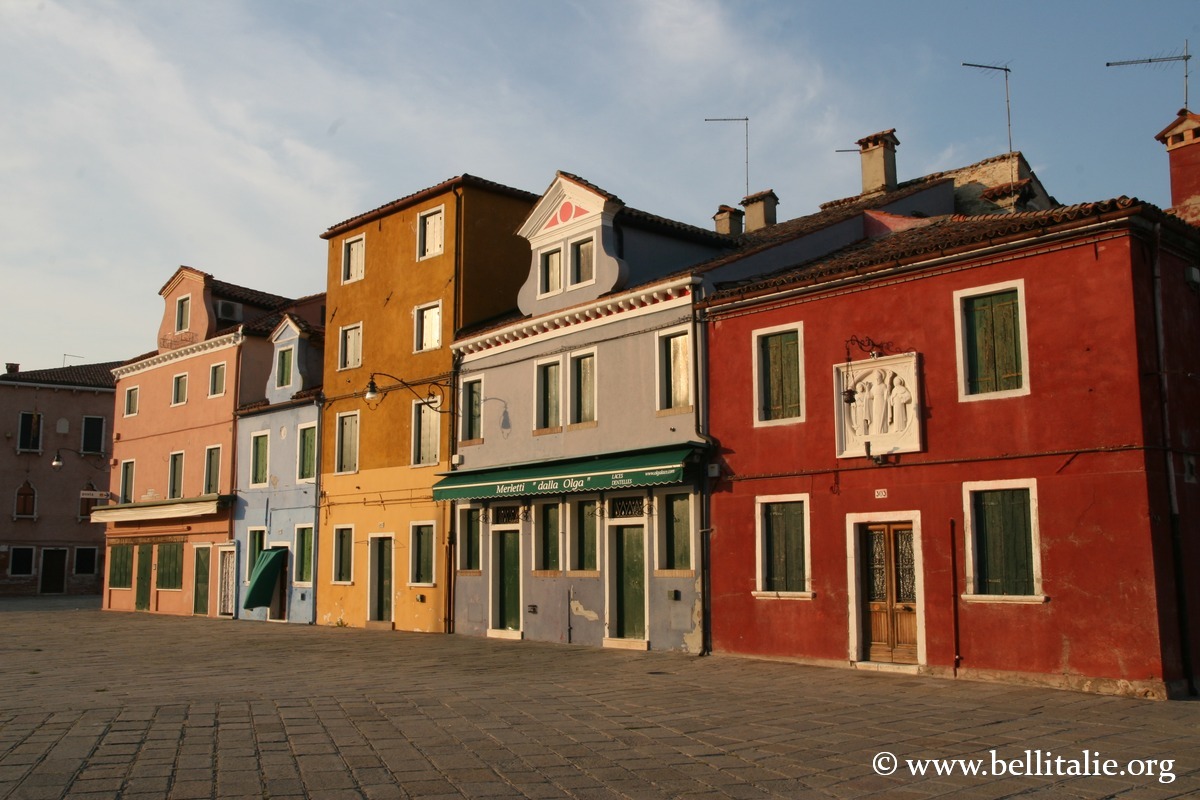
Burano
Among the many islands of the Venice lagoon, several are remarkable, easily reachable by boat, and sometimes allow you to escape the chaos of the Serenissima.
Murano, the closest, is famous for its artisanal blown glass work, while Burano with its colorful houses is known for its hand-woven lace. Torcello was the first built settlement of the lagoon where stands the basilica of Santa Maria Assunta founded in the 7th century. Mazzorbo is another pretty lesser-known island, besides the islands of San Michele, Sant’Erasmo and that of the Lido di Venezia which largely closes the lagoon. The latter, venue of the famous Venice Film Festival which celebrates the seventh art, stretches over a 12 km strip between the lagoon and the Adriatic Sea. It gained character in the “Belle Époque”, when it hosted wealthy bourgeois and nobles on holiday. Beautiful Art Nouveau villas remain.
Verona 
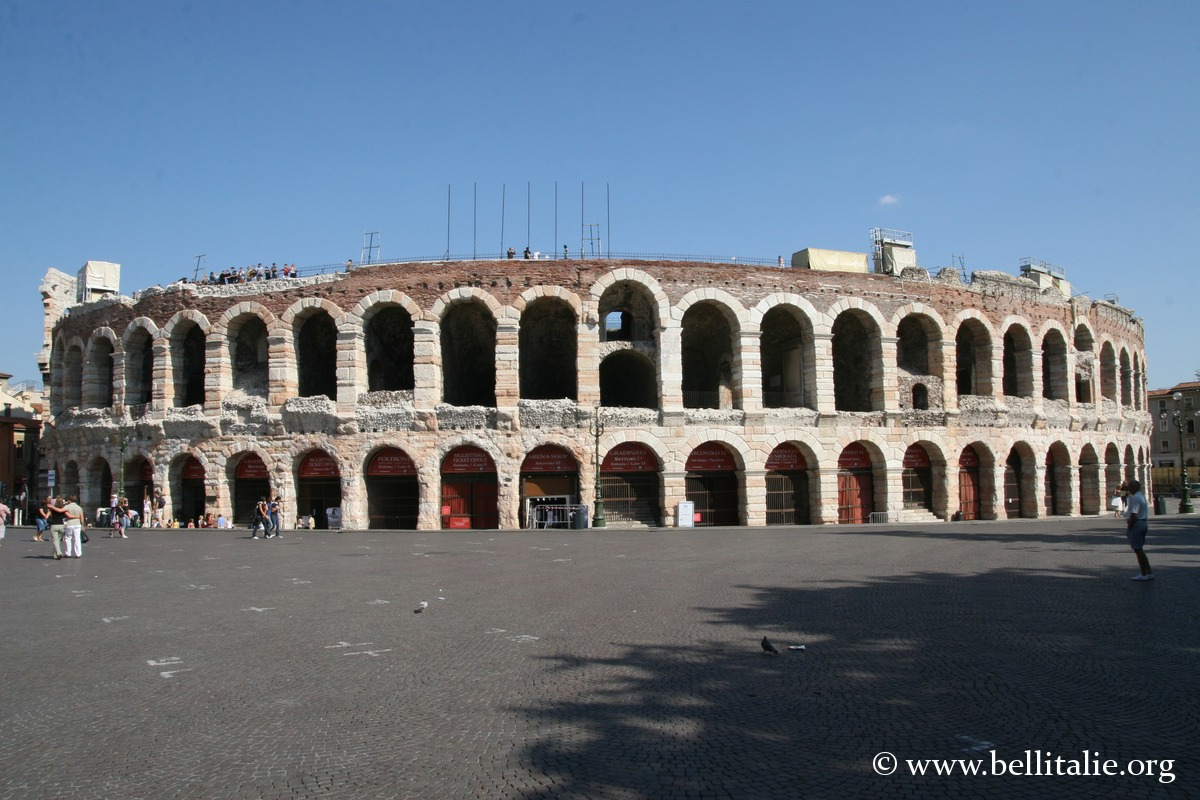
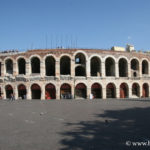
Verona Arena
Associated in the imagination with the loves of Romeo and Juliet, Verona is a magnificent city of Veneto, whose romanticism is truly embodied, thanks to its human scale and general harmony, with the charm of its historic center inherited from several eras. Venice aside, it is probably the most beautiful destination in the region. One of its emblematic places is its beautiful Roman arena, you can also discover the old Scaligero Bridge, the church of San Zeno Maggiore, the superb squares Piazza dei Signori and Piazza delle Erbe, or the old and tall Torre dei Lamberti.
Padua
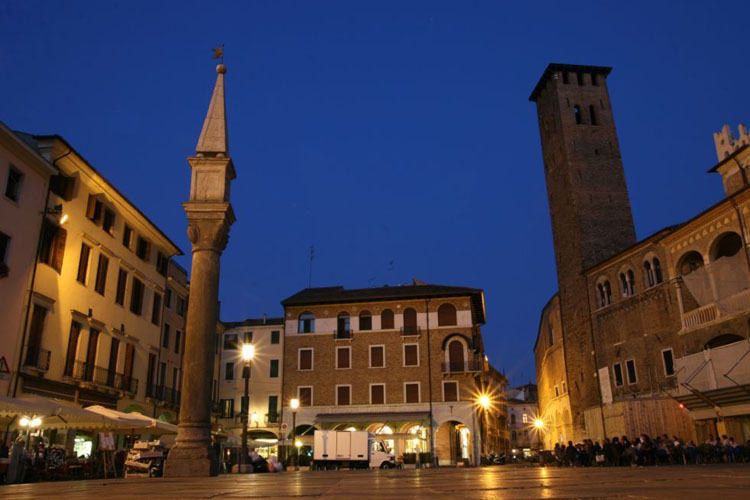
Piazza della Frutta
From the 13th century Padua was known for the importance of its university, which is still very active. It was also at the origin of an important Renaissance movement. It is a refined city with a superb historic center, where you must discover the unique fresco cycle of the Scrovegni Chapel, considered the marvel of Giotto, but also the Basilica of Sant’Antonio, the Piazza delle Erbe, the Palazzo della Ragione, its museums and the immense elliptical square of Prato della Valle.
Vicenza
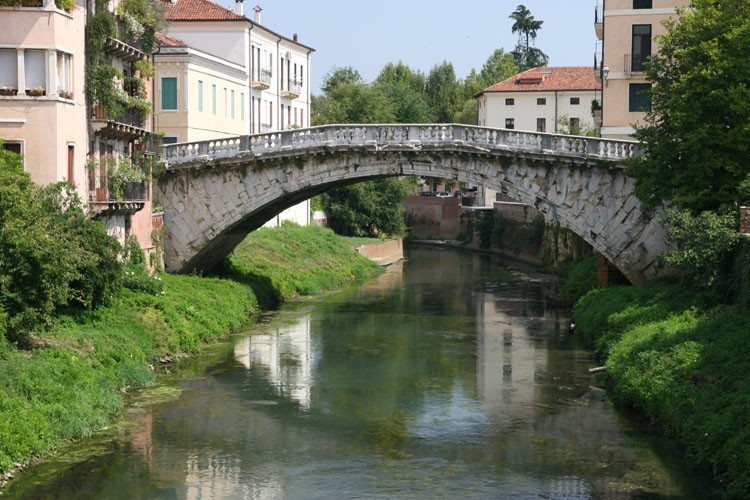
Ponte S. Michele
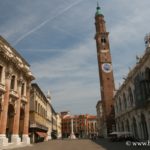
A city active in metallurgy and goldsmithing, Vicenza is often referred to as the “city of Palladio”, after the 16th-century architect who built major buildings there. You discover a harmonious heritage concentrated in its small historic center, from the Piazza dei Signori with the Palladian Basilica, the Palazzo and the tower, the Olympic Theatre, the street arcades, workshops and museums, and outside the center the Villa Rotonda or the baroque Sanctuary of Monte Berico.
Treviso 
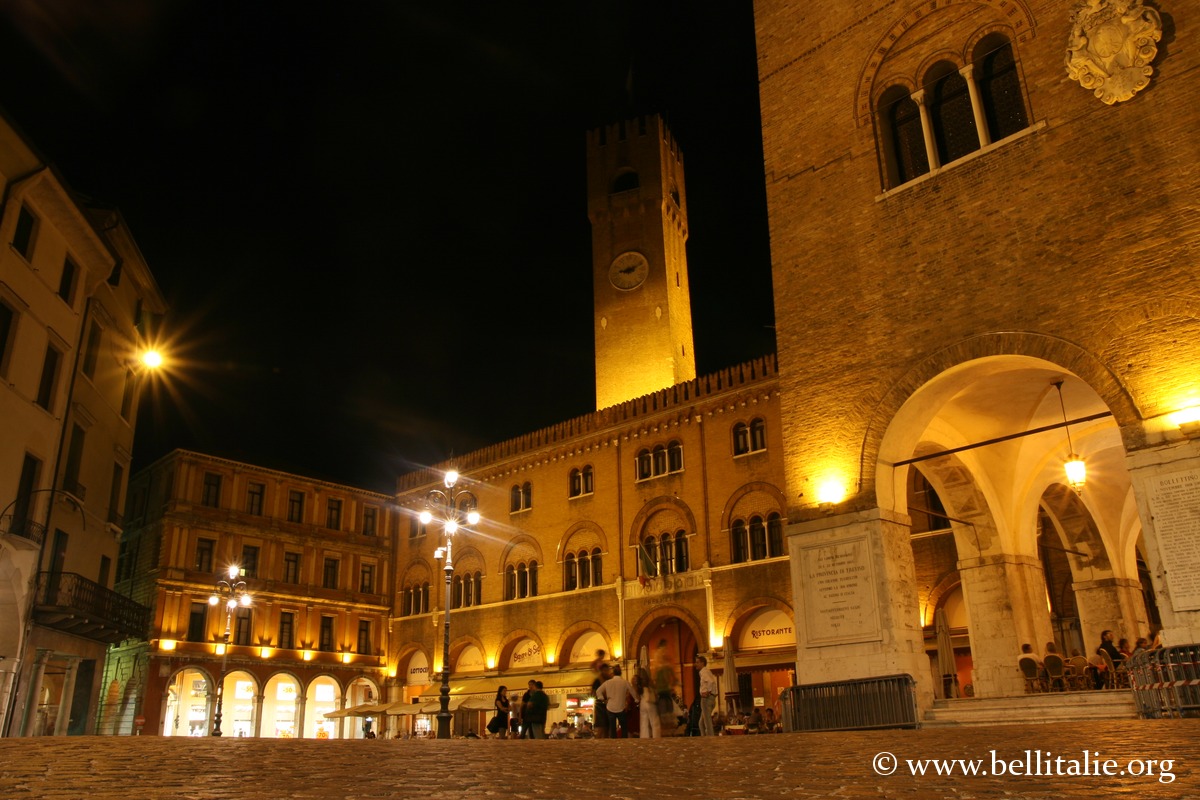
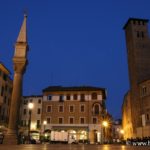
Piazza dei Signori
Close to Venice, Treviso is a pretty and pleasant city, with its river and a few canals including the beautiful Buranelli canal district. Spared by mass tourism, it preserves a beautiful historic center around the Piazza dei Signori, as well as beautiful palaces and a substantial religious heritage.
Soave
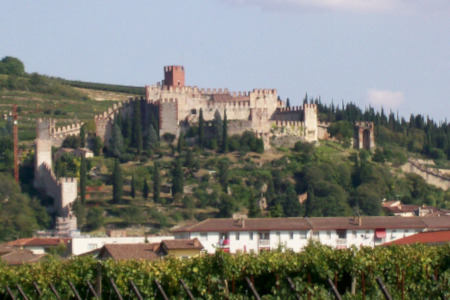
Soave Castle
Between Vicenza and Verona, in the Pedemontana Veronese, Soave is for its castle and its cellars one of the major destinations of the wine routes of Veneto. A charming fortified village of the Adige valley, its terroir is at the origin of several wines of recognized appellations (including the white Soave DOC and Recioto di Soave DOCG). Many cellars in the region offer tastings.
A visit to Soave is also and above all motivated by the magnificent medieval castle, one of the most beautiful in Veneto, whose ramparts descend from the hill to embrace the historic center.
Not far away the thermal baths of Giunone at Caldiero, of Roman origin, offer spas and pools.
Euganean Hills
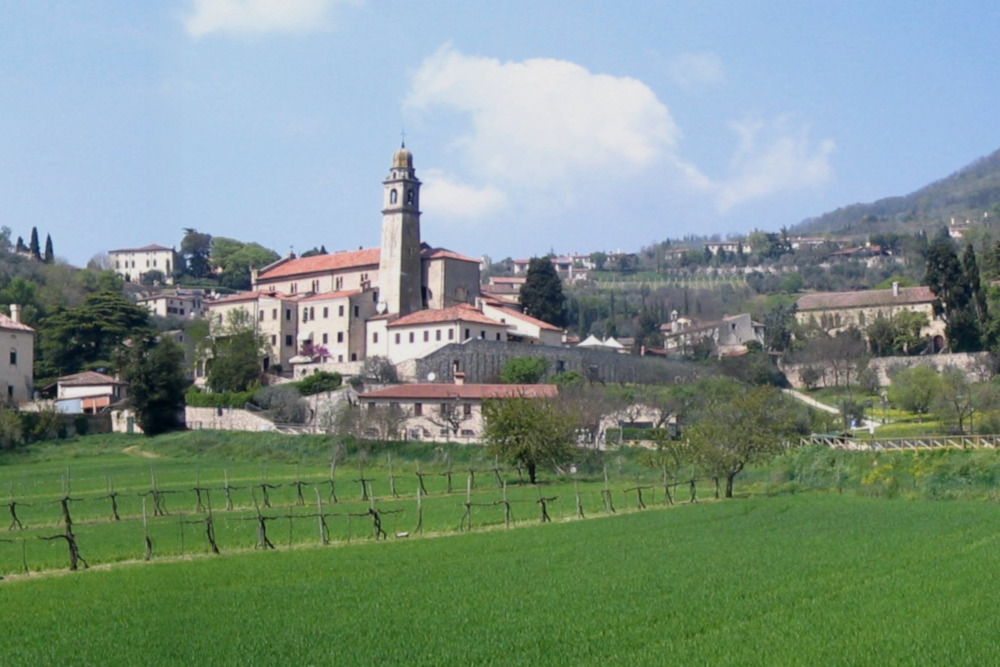
Arqua Petrarca
South of Padua, the Euganean hills with their regional park, their vineyards (from which more than ten wines are produced), their oak and chestnut forests, and their olive trees, are also renowned for their thermal baths. It is indeed an ancient volcanic region of which some phenomena remain.
Abano Terme is the main thermal center, and Montegrotto Terme is the next in importance. Galzignano and Battaglia Terme are less important centers and closer to nature.
Arquà Petrarca is a pretty medieval village, the most authentic of these hills, also known for the house of Francesco Petrarch, Italian poet.
At the foot of the hills, Monselice is a pretty small town that preserves a remarkable medieval castle, dominated by another fort, and the Sanctuary of the seven churches.
Lake Garda and surroundings
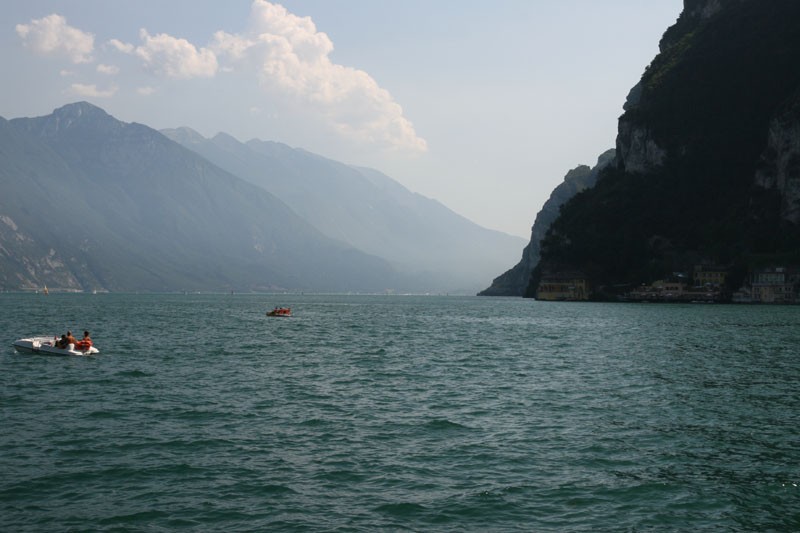
Riva del Garda
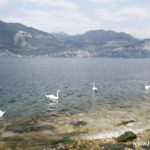
It is the largest lake in Italy and one of the major destinations of Veneto, straddling the latter region, Lombardy and Trentino-Alto Adige, and whose southern shore is halfway between Verona and Brescia.
It is the eastern shore of Lake Garda that is in Veneto, characterized by its small ports and its beaches.
In the south, Peschiera del Garda preserves a historic center and on the Mincio a remarkable 16th-century fortress. The vast and famous Giardino Sigurtà Park is a little further south, close to the picturesque village of Borghetto sul Mincio and the Scaligero castle (see below).
Going back up the shore, you discover pretty lakeside villages such as Bardolino or Lazise. At Torri del Benaco, another Scaligero castle is remarkable, with its museum. Nautical activities are numerous at Malcesine, which also keeps a very beautiful Scaliger castle peacefully perched on a rock along the lake.
Towards Trentino you discover, while walking beautiful hiking trails, superb panoramas of the lake and the Alps from Monte Baldo which exceeds 2000 meters.
Gardaland
Gardaland has become the main amusement park in Italy with its 37 attractions, for young and old, with also the Sea Life Aquarium, where a glass tunnel crosses a pool with sharks.
Parco giardino Sigurtà and Borghetto sul Mincio
Valeggio sul Mincio is a pearl of Veneto, where the Sigurtà Garden Park is located with its 60 hectares which won in 2013 the prize for the most beautiful park in Italy, and in 2015 that of second most beautiful park in Europe.
You notice there the avenue of Roses with its 30,000 plants, hundreds of thousands of tulips that bloom in early spring, a labyrinth, water features, aquatic garden and the Villa Sigurtà.
The small village of Borghetto sul Mincio was listed among the most beautiful villages in Italy, thanks to its medieval center by the river, with water mills, old constructions, or the church of San Marco Evangelista.
Lessini Mountains and Valpolicella
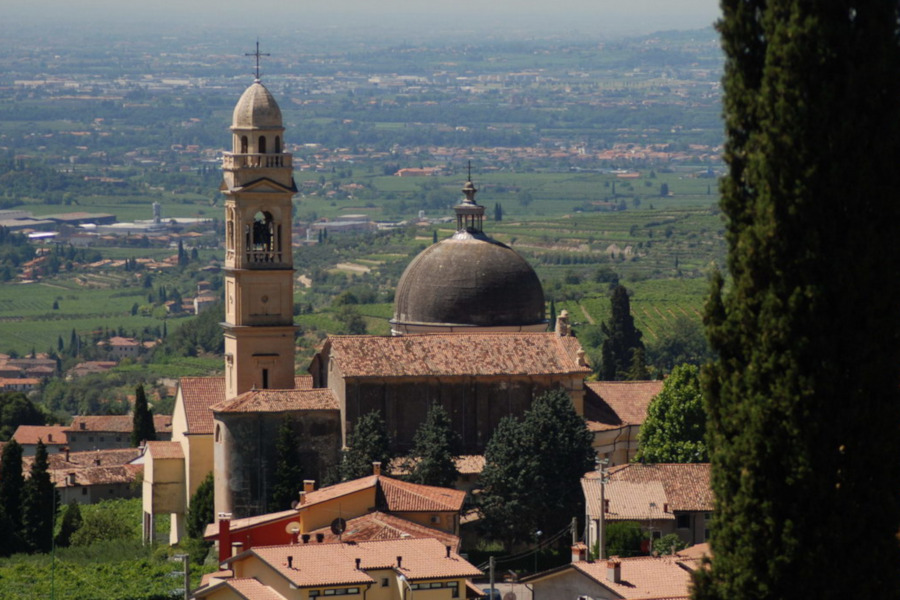
Marano
A little further east of the lake, the Lessini Mountains are as attractive in summer with their natural park, forests and rocky karst formations (Ponte di Veja, Spluga della Preta abyss, Valley of the Sphinxes), as in winter for their cross-country ski trails. Recoaro is a small spa resort, whose thermal baths are among the best known in Italy.
North of Verona, Valpolicella is a wine region (whose wines include Valpolicella DOC, Amarone della Valpolicella DOCG, Recioto DOC) and charming villages, such as San Pietro in Cariano, with its villa Serego by Palladio, Marano, and Illasi with its medieval castle.
The beautiful religious buildings are numerous, such as at Sant’Ambrogio with the beautiful Romanesque church of San Giorgio, the church of San Pietro in Arbizzano, or further east, Chiampo which is known for its “grotto of Lourdes”.
Arzingano, west of Vicenza, is protected by a beautiful fortress.
Beaches and localities north of Venice
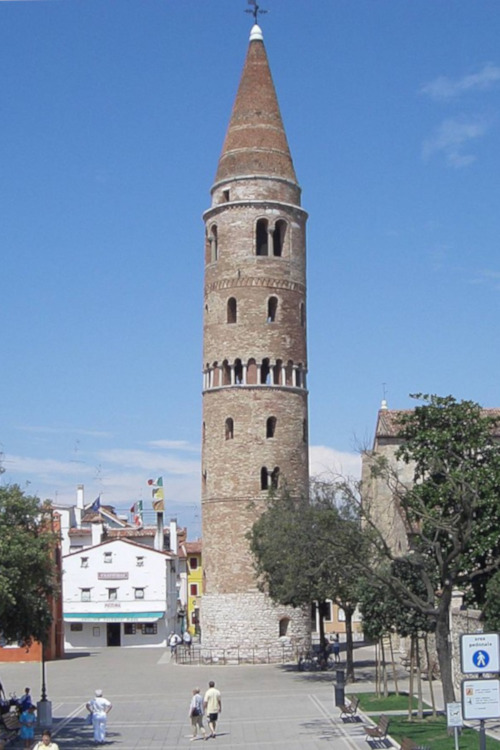
Caorle
Among the seaside resorts north of Venice, Jesolo is one of the closest and the most attractive with its equipped beaches that stretch for nearly 15 km.
At the mouths of the Livenza and the Lemene, Caorle is more picturesque, a pleasant historic maritime town where the pretty Romanesque bell tower built in 1038 stands out, with the sanctuary of the Madona dell’Angelo on the seafront, and 15 km of beaches.
Among the other seaside resorts, let us mention Bibione further north and close to the pinewoods, with its recent thermal baths, Eraclea Mare with its protected pinewood, or Cavallino Treporti with its long sandy beach, between the sea and the lagoon, suitable for campers.
Chioggia, coastline and Po Delta
Chioggia is a small maritime town south of the Venice lagoon, built on several islets, which evokes a small Venice with its canals. It also preserves beautiful buildings and a Renaissance center, including the Cathedral Santa Maria Assunta, the Porta Garibaldi, the Clock Tower and the Ponte Vigo. Its traditional fish market is held daily.
In the surroundings, the beaches of Sottomarina and Isolaverde are appreciated by families and have beautiful seabeds.
The Po Delta is protected by a natural regional park, with the largest protected wetland area in Europe, a refuge for hundreds of bird species, a suitable site for beautiful and relaxing walks.
Rosolina Mare is a seaside resort of the Po Delta Park created in the 1970s, between the sea and the delta.
Venetian Villas and Riviera del Brenta
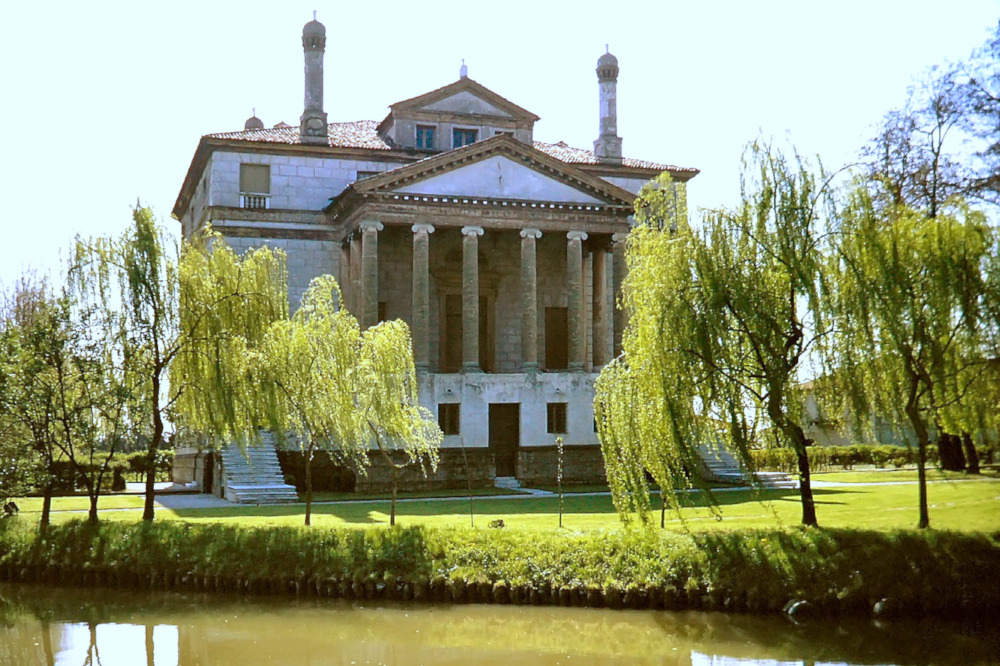
Villa Foscari
Between Venice and Padua, along the Naviglio del Brenta, a canal built from the 15th century, dozens of villas were erected between the 15th and 18th centuries as throughout Veneto, on which great architects worked. They are sometimes designated as Palladian Villas, after the name of the famous architect Palladio who worked in the 16th century. Discovering them lends itself well to a river cruise, departing from Padua or Venice.
The best known is the Villa Pisani at Stra, nicknamed la Nazionale, with its garden awarded in 2008 as “the most beautiful park in Italy”. It is close to the Villa Foscarini Rossi.
Let us also mention the villa Widmann at Mira which also has a vast elegant park, or the Villa Foscari by Palladio, also called “la Malcontenta” (the discontented one).
Among the most beautiful villas of the region, let us mention the Villa Emo at Tevelago, the Villa Valmarana near Vicenza, the Villa Contarini north of Padua, the Villa Piovene and Villa Godi Malinverni at Lugo di Vicenza for example, or the Villa Barbaro at Maser.
Vicenza Pre-Alps
Bassano del Grappa
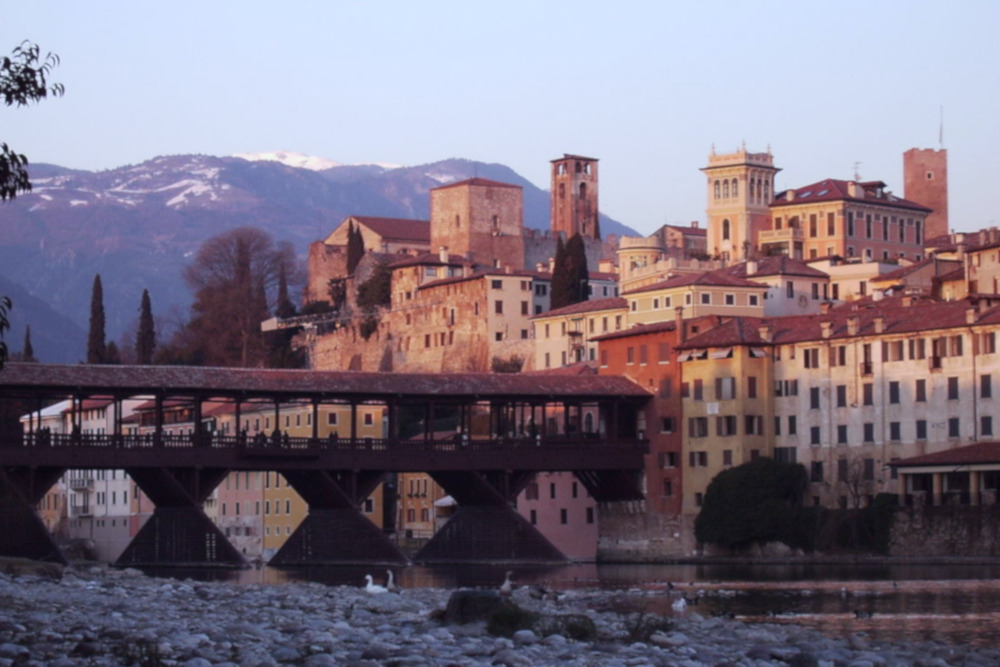
Bassano del Grappa
At the foot of the Alps, Bassano del Grappa is one of the most interesting destinations in the province of Vicenza. Its emblematic and charming covered bridge, the Ponte Vecchio, crosses the Brenta. An important site during the First World War, one can visit interesting museums there (the Hemingway museum dedicated to the Great War and the Alpine museum), the castle of the Ezzelini, or the majestic Civic Tower. It is renowned not only for its grappa, its eau-de-vie, but also for a famous risotto with local asparagus.
Marostica
The neighboring fortified town of Marostica is known as the setting for life-size chess games played on the Piazza Castello, with human pawns, and a total of 600 participants. But above all it preserves two beautiful castles: the Lower Castle on the aforementioned square, and the Upper Castle in a dominant position, with impressive walls.
Asolo
Near Bassano, but in the province of Treviso, Asolo is a charming medieval village listed among the most beautiful villages in Italy, which was embellished during the Renaissance and appreciated in particular by artists and writers. Not far away, the Villa Barbaro di Maser dates back to the 16th century.
Asiago Plateau
Not far away, the Asiago Plateau is known for its cheese (Asiago DOC), and the open-air museum of Monte Zebio commemorates the First World War. The woods of the Asiago Plateau are also one of Italy’s largest destinations for cross-country skiing, with more than 500 kilometres of trails and paths.
Prosecco Hills and Routes
In the pre-Alps of the province of Treviso, the main itineraries of the Prosecco route pass through Conegliano and Valdobbiadene, considered the two capitals of Italian sparkling wine. They pass through various towns such as Refrontolo, Vittorio Veneto, Farra di Soligo, Cison di Valmarino, Pieve di Soligo, Follina, and remarkable places such as the castle of Conegliano, the San Salvatore castle, the castle of Collato, San Pietro di Feletto, the Croda mill, the villa Brandolini, Col San Martino, the Santa Bona abbey in Vidor, Castelbrando, or in the eastern part Castello Roganzuolo, Serravalle or the Caglieron caves site (more information).
In Follina, the Cistercian abbey, founded in the 12th century, is a remarkable construction.
Not far from Conegliano and Vittorio Veneto, the lakes of Revine lie at the foot of the Venetian Alps in a wooded region where many small villages survive.
The Alps and the Dolomites
North of Belluno, the Alpine region of the Dolomites is called Cadore.
Belluno
At the foot of the Dolomites, Belluno is a historic city, remarkable for the Palazzo dei Rettori (15th – 16th century) and its cathedral.
Near Belluno, Lake Santa Croce is the second largest in the region, ideal for water sports and fishing.
Venetian Dolomites, Cadore
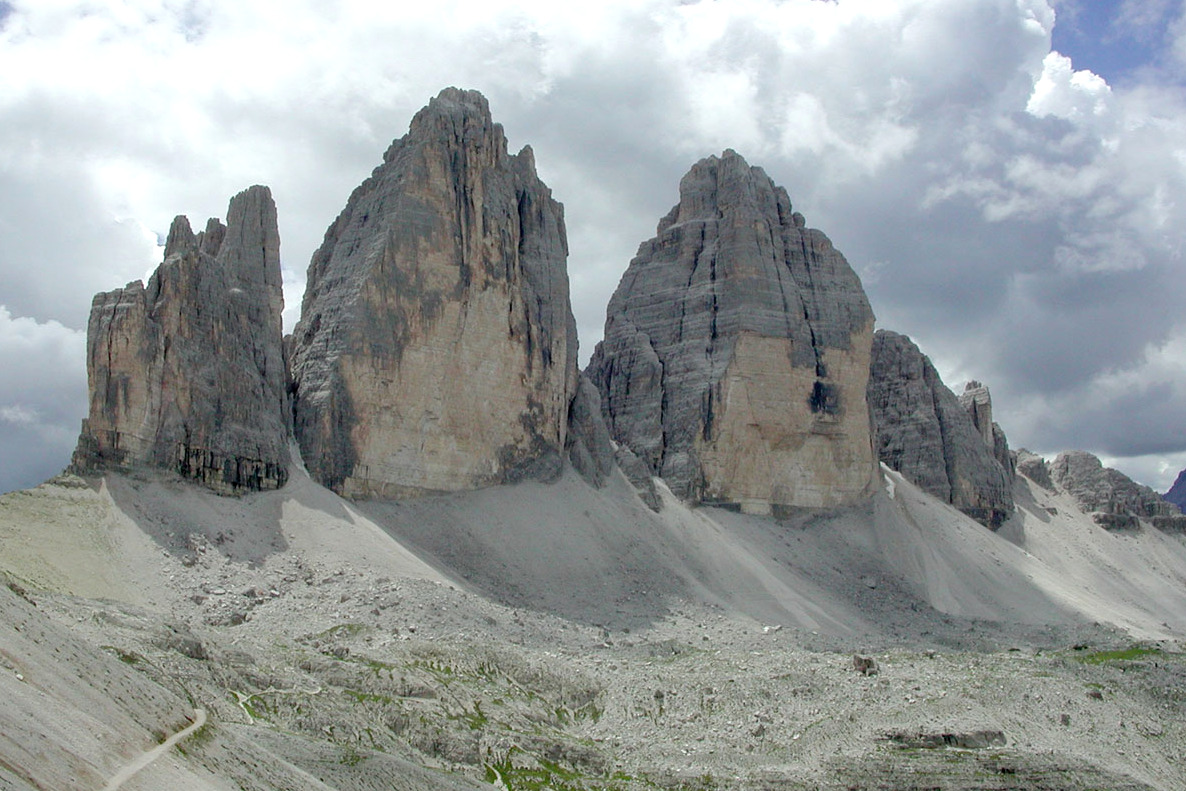
Tre cime di Lavaredo
The Dolomites with their distinctive landscapes have been inscribed as a UNESCO World Heritage Site. It is a group of mountains and rocky peaks straddling Veneto, Trentino and Friuli, with its beautiful nature, lakes, trails, small villages, but also famous resorts such as Cortina d’Ampezzo – the most fashionable of the resorts – with its basilica, luxury shops and museums (palaeontology and ethnology). The neighbouring region of Trentino, to the west, is better equipped with winter sports facilities.
Several charming lakes enhance the landscapes and hikes. Among the lakes of Cadore to the east of Cortina, Lake Misurina is the best known, located at 1,754 metres, a setting for beautiful walks, hikes and treks. Lake Sorapis is another small wonder, frozen for much of the year.
South of Cortina, Lake Federa, is a true aquatic mirror, on the flank of Monte Mondeval. Among the other Alpine lakes, Lake Alleghe, small but charming, occupies the plain of a valley near Monte Civetta.
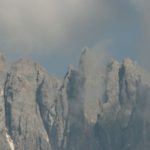
North-east of Cortina, the Tre Cime di Lavaredo are the symbol of the Dolomites, three majestic rocky peaks nearly 3,000 metres high.
The Belluno Dolomites, with the Dolomiti Bellunesi e d’Ampezzo nature park, have ski resorts, but the forests and lakes are also the setting for beautiful hikes, in summer as well as winter.
Other fortified towns
- Castefranco Veneto
Montagnana
Monselice
Feltre
- Legnago
Po Valley
Rovigo
A little-known town in Veneto, with nearly 50,000 inhabitants, it is an artistic treasure with the beautiful Piazza Vittorio Emanuele II, its Renaissance palaces, the San Marco column, and in particular the gallery of 17th-century frescoes of Our Lady of Help.
Tourist map of Veneto
 Show interactive map
Information
- Wikipedia article: en.wikipedia.org
- Tourism portals: www.veneto.eu


Comments