


This page completes the
Presentation of Lake Garda
Lake Garda is the largest of Italy’s lakes, located north of the road connecting Brescia to the west and Verona to the east.
While its southern half is suited to holidaymaking, with gentle relief bordering its shores, the northern half resembles more a fjord, often bordered by steep mountain walls.
It straddles three administrative regions: Lombardy to the west, Veneto to the east, and Trentino-Alto Adige to the north.
It is an attractive destination for a variety of reasons, from water activities thanks to the expanse of its waters to trekking with trails that reach the surrounding peaks, not to mention the inevitable cultural tourism and relaxation. The shores have historic towns whose heritage is sometimes unique, with places of great natural beauty, such as above all Sirmione and its medieval castle to the south, or Peschiera with its Venetian citadel amid the waters of the estuary, Riva del Garda to the north and its windsurfing spot, and so on.
Below, a discovery of the shores of Lake Garda, by the region concerned, from south to north.
 Show interactive map
 Lombard shore, to the west
Sirmione 
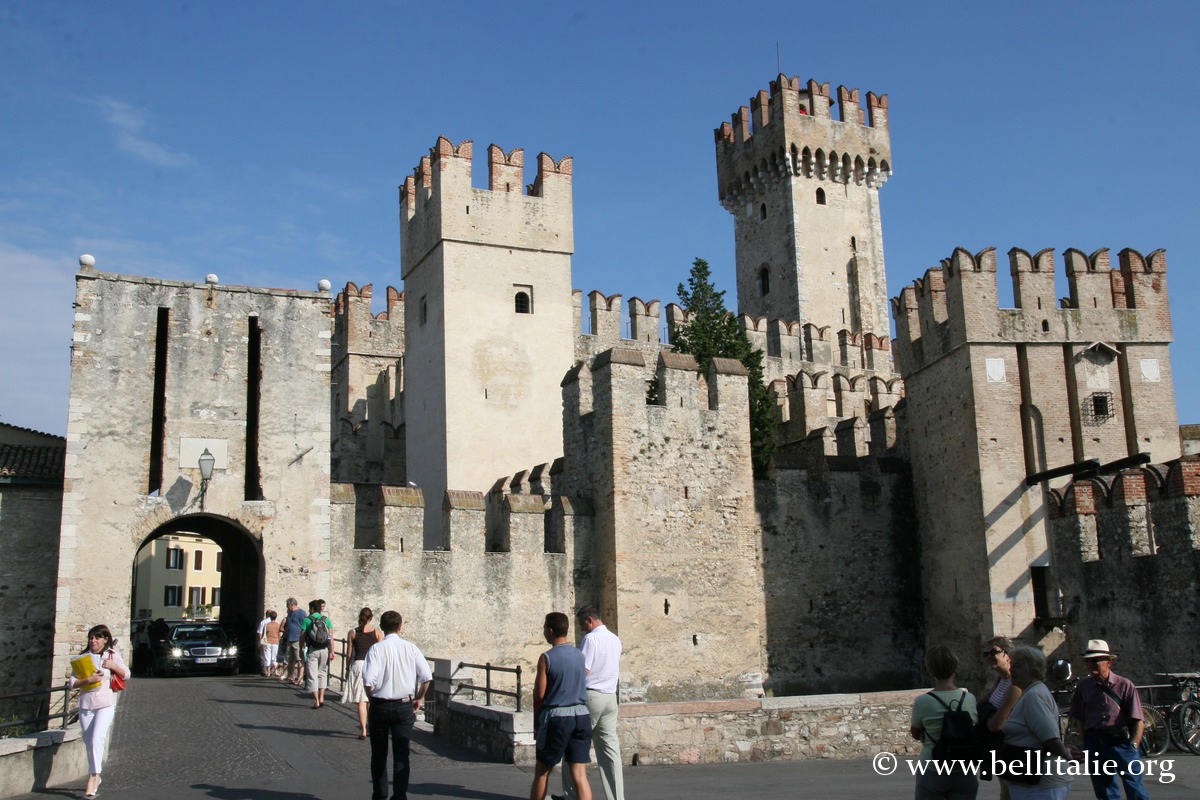 Sirmione is a splendid small town and the most visited on Lake Garda, on a peninsula to the south of the lake, nicknamed the “pearl of the lake”. You enter the historic centre by crossing the bridge leading to the gate of its superb Scaligero Castle (13th-14th centuries), equipped with fortifications dating from the Middle Ages. The charming centre occupies the narrow strip of land between the lake waters, up to the tip where the remains of an immense Roman villa known as the Grottoes of Catullus stand in a dominant position.
Many tourists tread its cobblestones, drawn by its historic charms, its alleys, its flowered promenades, medieval buildings, fashion boutiques and chic restaurants. Sirmione is also distinguished by its therapeutic thermal waters known since antiquity.
Another way to discover Sirmione, complementing the visit on foot, is by a boat tour, from the castle to the Roman villa, passing by coves.
Desenzano del Garda
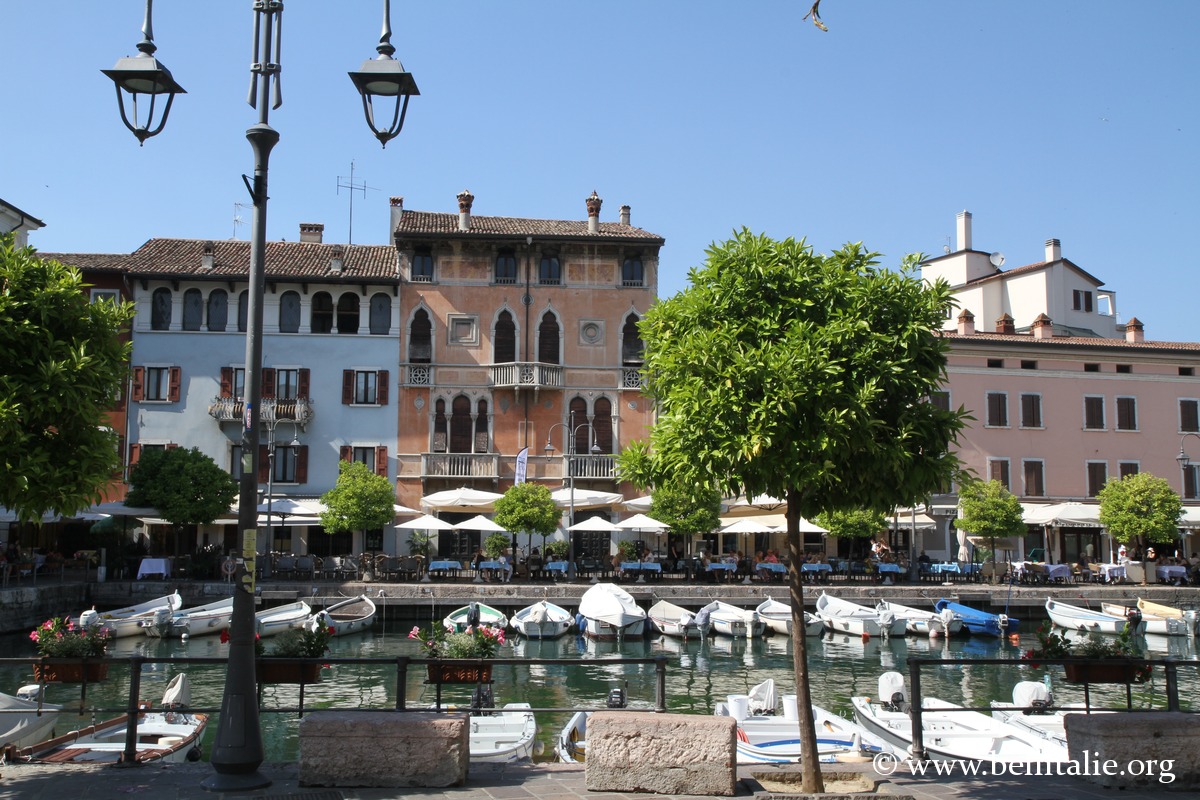 Desenzano del Garda, located to the south-west of the lake, is a pleasant, lively small town, with its old port, its old castle in a dominant position, and the remains of a Roman villa that has fine mosaic floors.
There is also an archaeological museum dedicated in particular to the Bronze Age pile-dwelling culture, with sections from other periods.
The Cathedral of Saint Mary Magdalene preserves in its Chapel of the Blessed Sacrament, The Last Supper by Giambattista Tiepolo of 1738.
A few kilometres from Desenzano, Lonato del Garda preserves a powerful fortress and the beautiful medieval Broletto palace.
Manerba, San Felice del Benaco and Isola del Garda
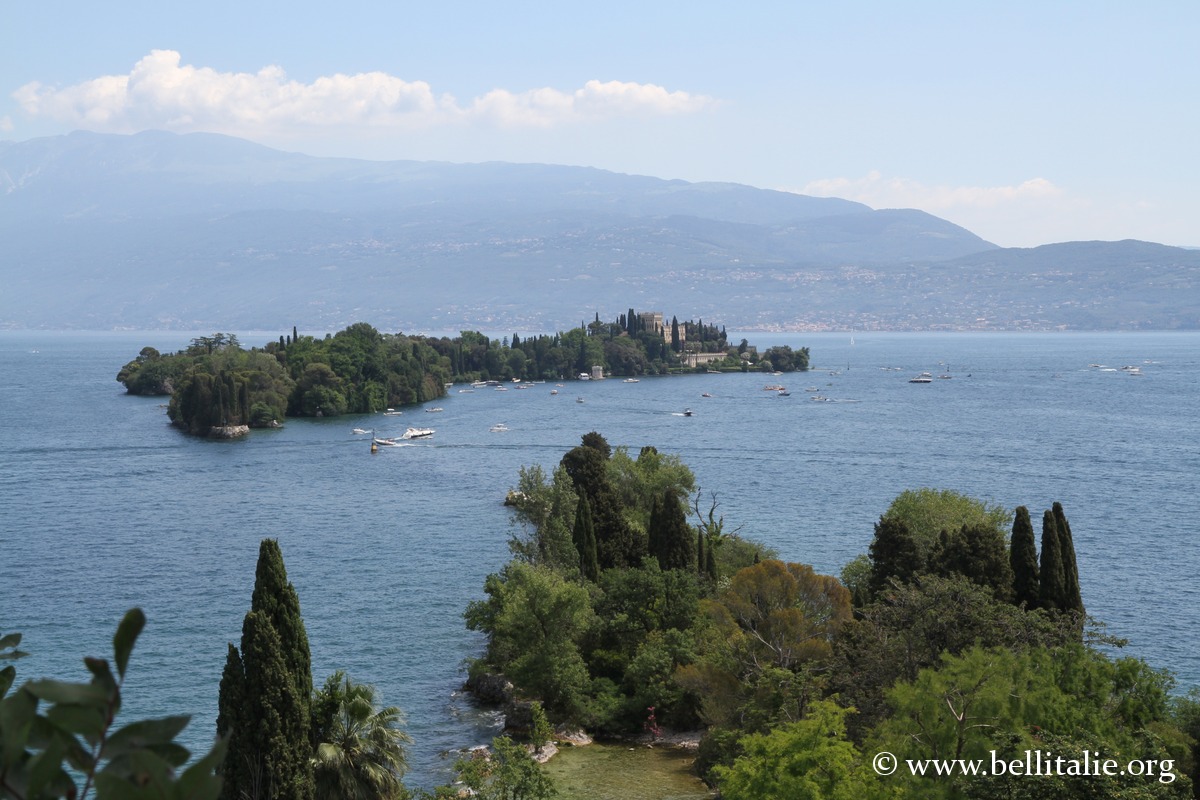 Located on the western shore to the south-west of the lake, the communes of San Felice del Benaco and Manerba del Garda are suited to relaxation, thanks to their tranquillity, the expanses of vines and olive trees on their gentle relief, as well as large beaches.
At Manerba is the culminating site of the ancient and vast Rocca di Manerba and its very beautiful panorama over the lake.
San Felice del Benaco is also away from road traffic, with the small promontory of San Felice being a very quiet place with its pretty view over the lake and the Isola di Garda, and at its feet the pebble beach of Baia del Vento. The commune also preserves the sanctuary of the Madonna del Carmine from the 15th-16th centuries.
On the islet of Isola del Garda, also called Isola Borghese, is the Villa De Ferrari from the early 20th century, in a refined Venetian neo-Gothic style, surrounded by terraces with beautiful gardens.
Salò
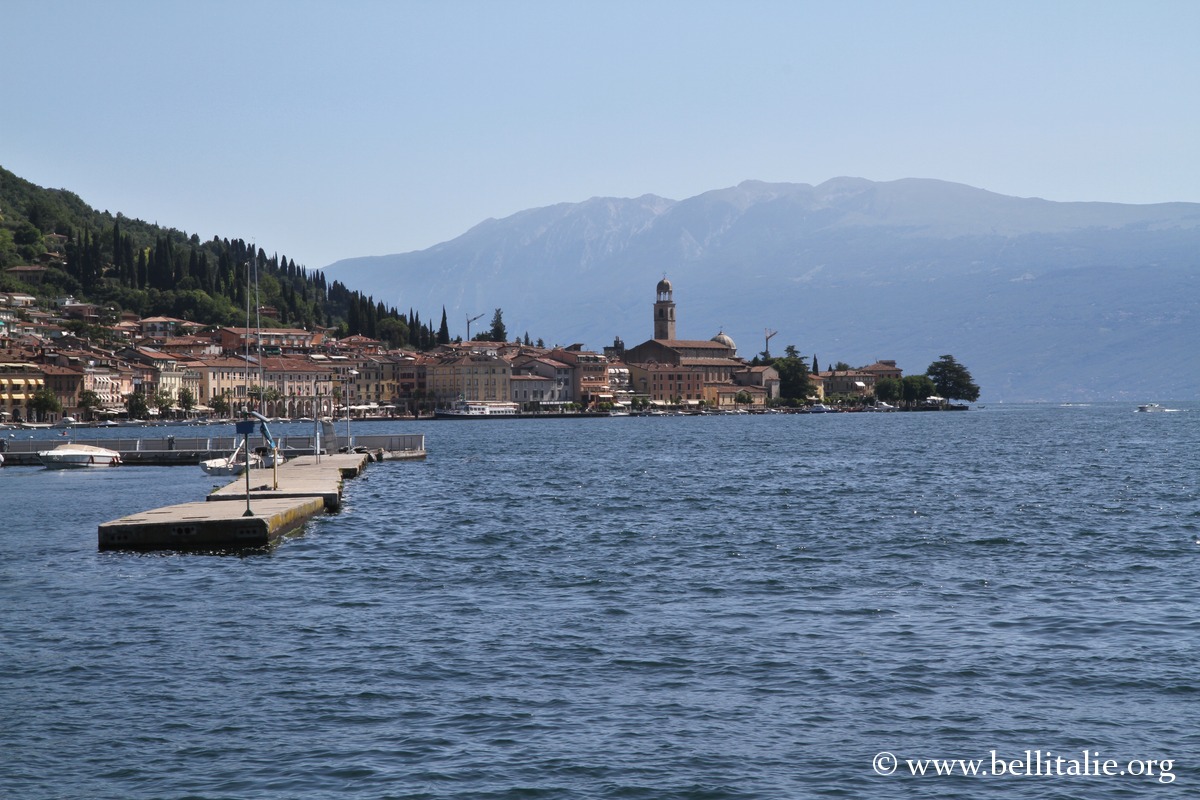 Salò was briefly the capital of the Italian Social Republic, under Mussolini’s regime, from 23 September 1943 to April 1945.
It is a pleasant seaside resort of the Riviera dei Limoni (Riviera of the Lemons in English) located on its small gulf, which preserves along its pretty shoreline Art Nouveau palaces with café and restaurant terraces. The large lakeside promenade joins Piazza della Vittoria and its Palazzo della Patria and Palazzo del Podestà.
The charming historic centre is crossed by a long pedestrian street lined with tourist shops. It also preserves a beautiful late-Gothic cathedral that has kept its 15th-century appearance. Its simple brick façade was enriched in 1509 by a Renaissance-style marble portal. The beautiful interior houses among other things works by Paolo Veneziano, Romanino and Moretto, in front of the apse a carved gilded wooden altarpiece from the 15th century, a wooden crucifix from 1493 and a remarkable organ.
Overlooking Salò, beautiful walks climb the slopes of Monte San Bartolomeo, reaching about 550 metres in altitude.
Gardone Riviera and Vittoriale degli Italiani
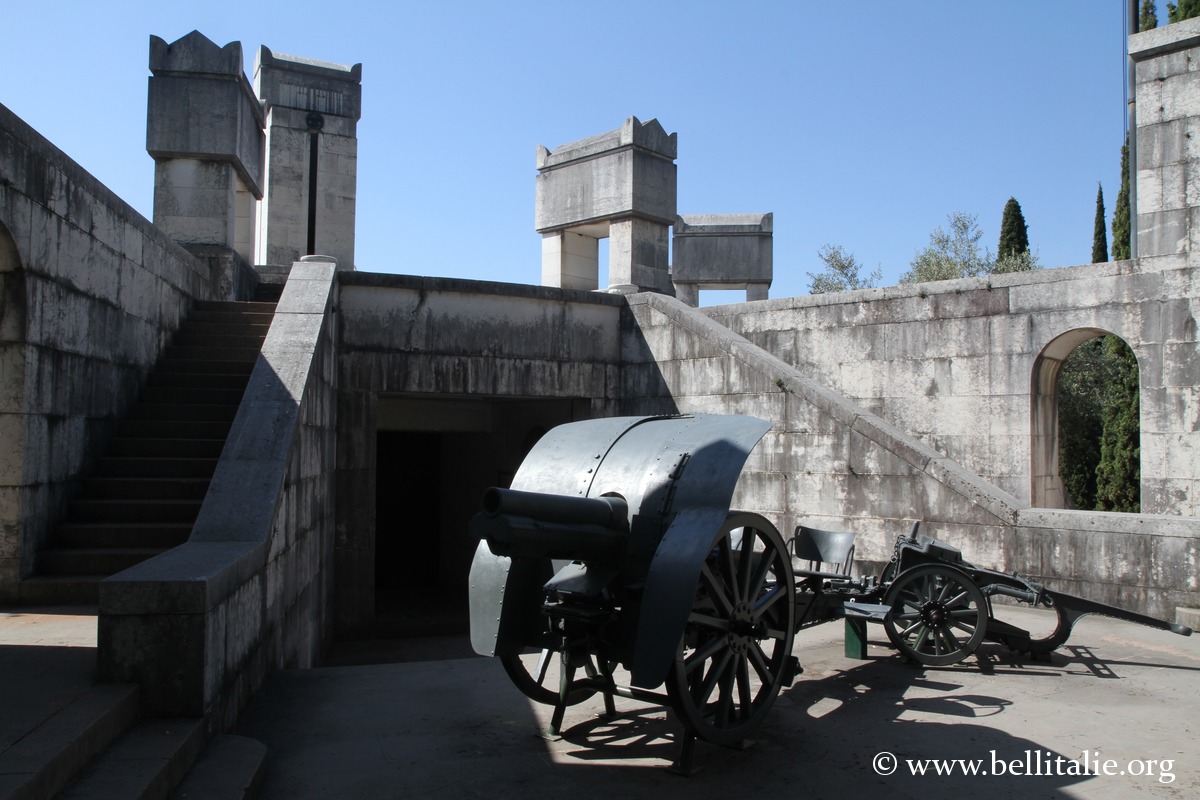 Gardone Riviera is one of the most attractive localities on the Riviera dei Limoni, at the foot of the Alto Garda Bresciano Regional Park, with its greenery and gardens, and close to the large complex of the Vittoriale degli Italiani. The latter is a veritable small town designed by the Italian poet Gabriele d’Annunzio in the 1920s, where he lived, gathering monuments and war memorabilia such as an airplane and the prow of a ship, with gardens and panoramas.
The village of Gardone retains an elegant historic center, period villas and beautiful hotels, a lovely lakeside promenade, where the André Heller Botanical Garden is also a remarkable place with its 3000 species from regions around the world.
Toscolano-Maderno
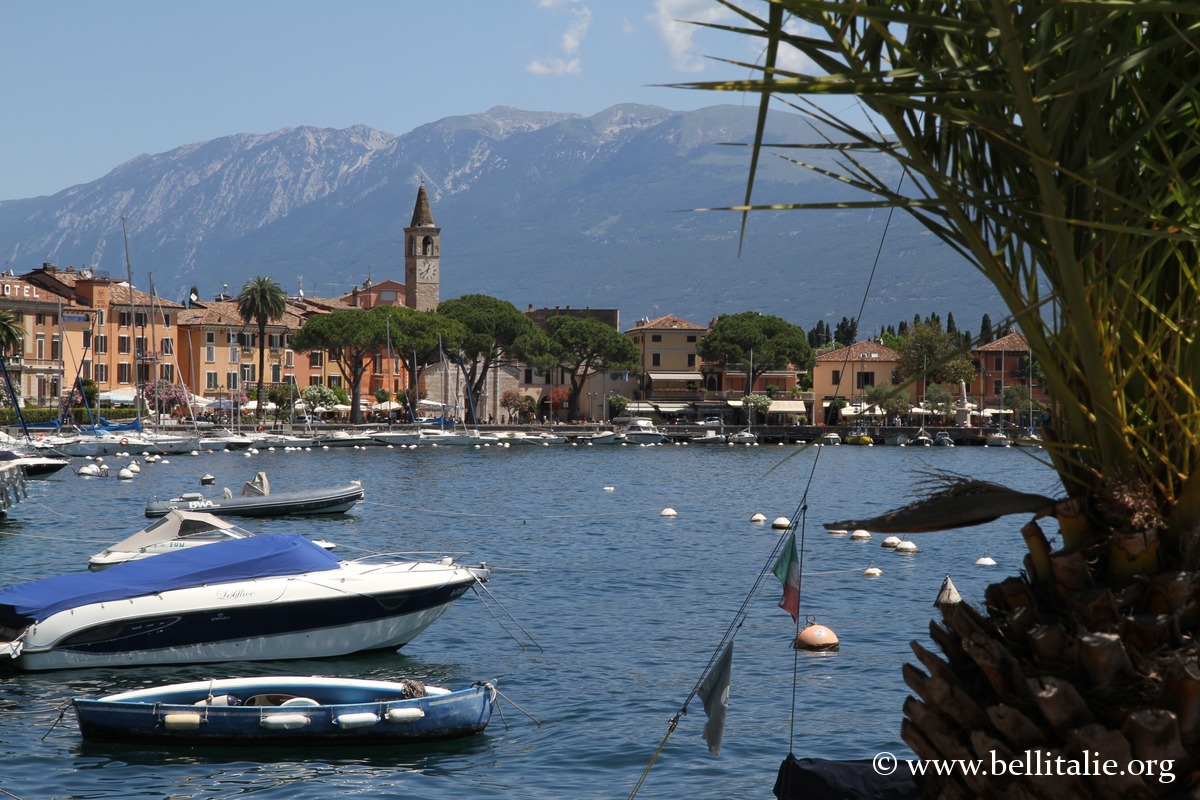 North of Salò, Toscolano-Maderno brings together two villages known for fishing and local cuisine for the first, for papermaking for the second.
They are located on either side of the delta of the Toscolano river in a beautiful position on the Riviera dei Limoni.
They were the cradle of Italian paper production, still active today. One of the old workshops in the valley has been converted into the Paper Mill Museum, with an interesting industrial archaeology route.
Maderno is a pretty village on the lakeside, with notably its beautiful Romanesque church near the shore.
The area offers many sporting activities, such as trekking, horseback riding or golf.
Gargnano
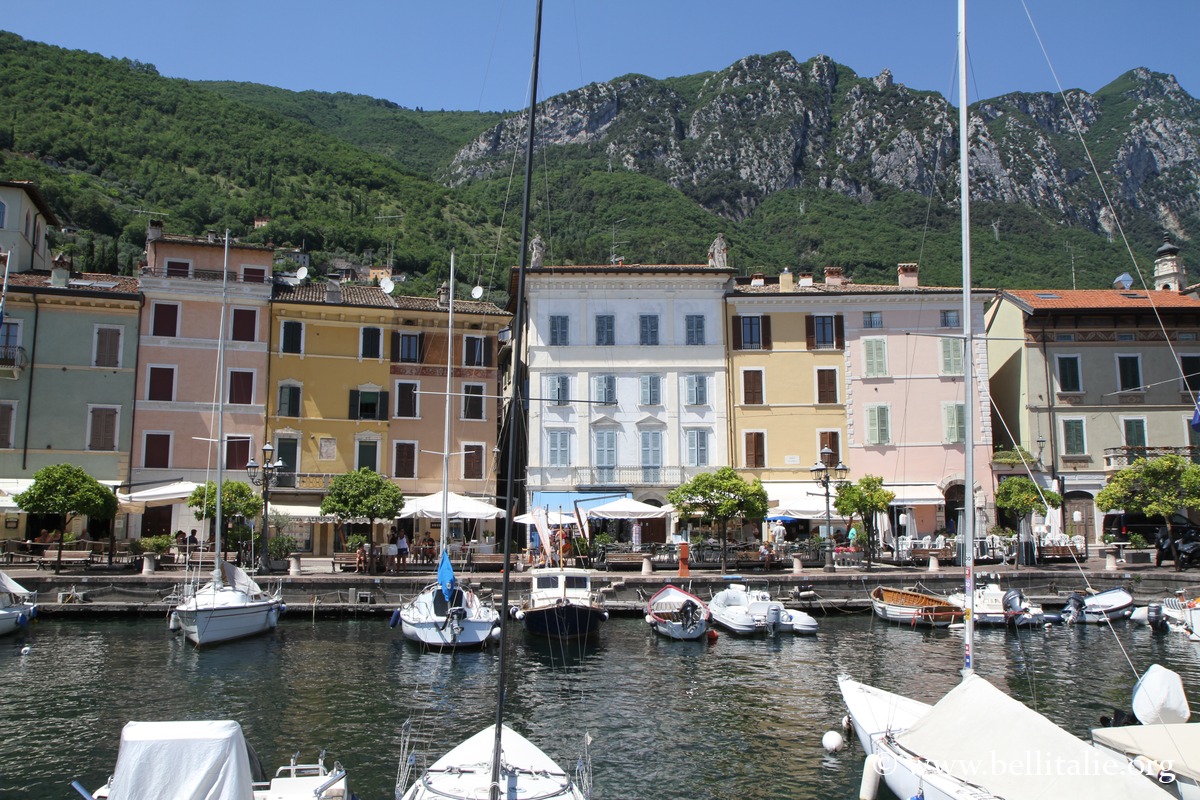 Gargnano is another charming coastal village on the Riviera, with a pleasant lakefront, narrow alleys, luxurious villas with gardens and lemon groves. The municipality extends between the shore and the heights of the Alto Garda Bresciano regional park, with its beautiful lush nature, its olive and lemon tree cultivations.
It is also a water sports resort, where the famous Centomiglia, the longest inland sailing regatta in Europe, takes place every year.
In the Bogliaco district, Villa Bettoni is an elegant Lombard villa dating back to the 18th century (visit by reservation), with its beautiful interior and monumental gardens.
Tremosine and Strada della Forra
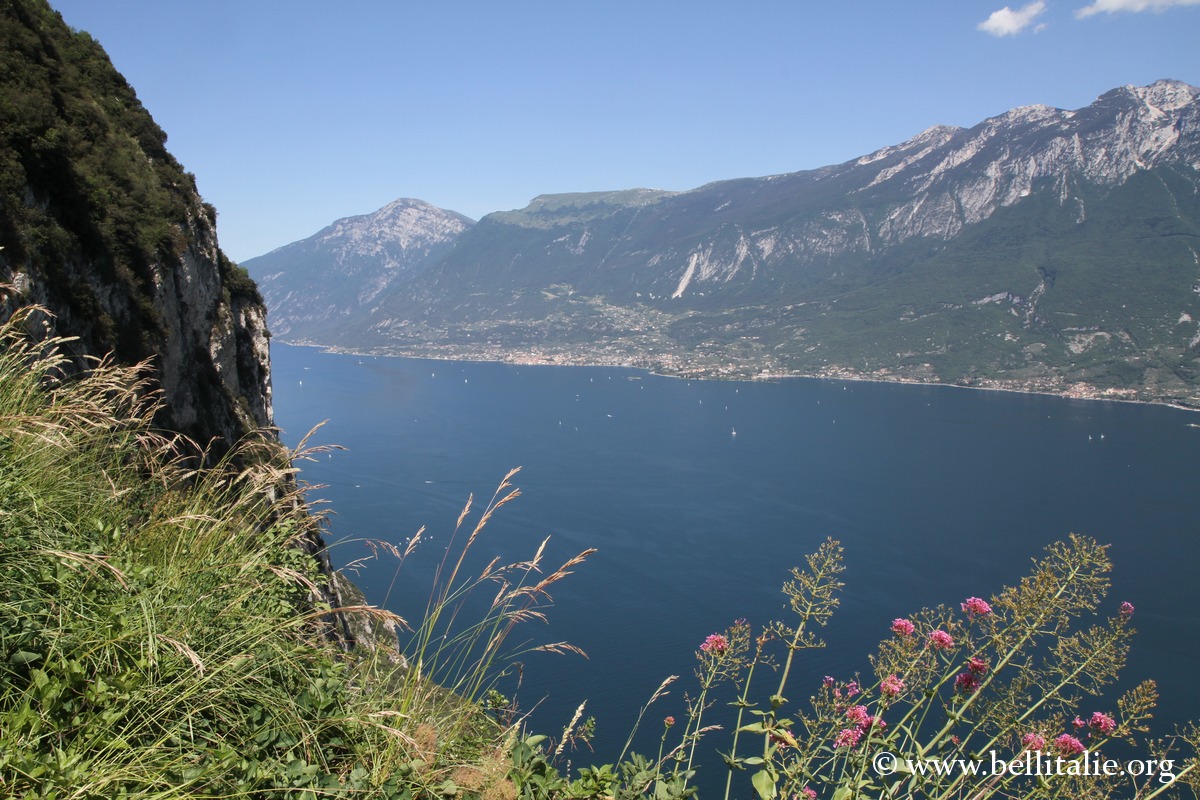 Tremosine stands on a rocky promontory overlooking Lake Garda, at 423 meters above sea level, the lake being at 65 meters.
Among the beautiful viewpoints is the panoramic terrace known as the “terrace of thrills” (terrazza del brivido in Italian) near the church of San Giovanni Battista.
In addition to numerous trekking and mountain biking trails, one can practice canyoning, sailing, etc. here.
One of the most astonishing roads in the world is located on the heights, particularly suited to motorcycles. It is the provincial road Porto-Pieve (SP38), better known as Strada della Forra. It was built by exploiting the gap in the mountain of the picturesque Brasa gorge (Forra del torrente Brasa in Italian), 6 km long, with many bends and tunnels.
Limone sul Garda
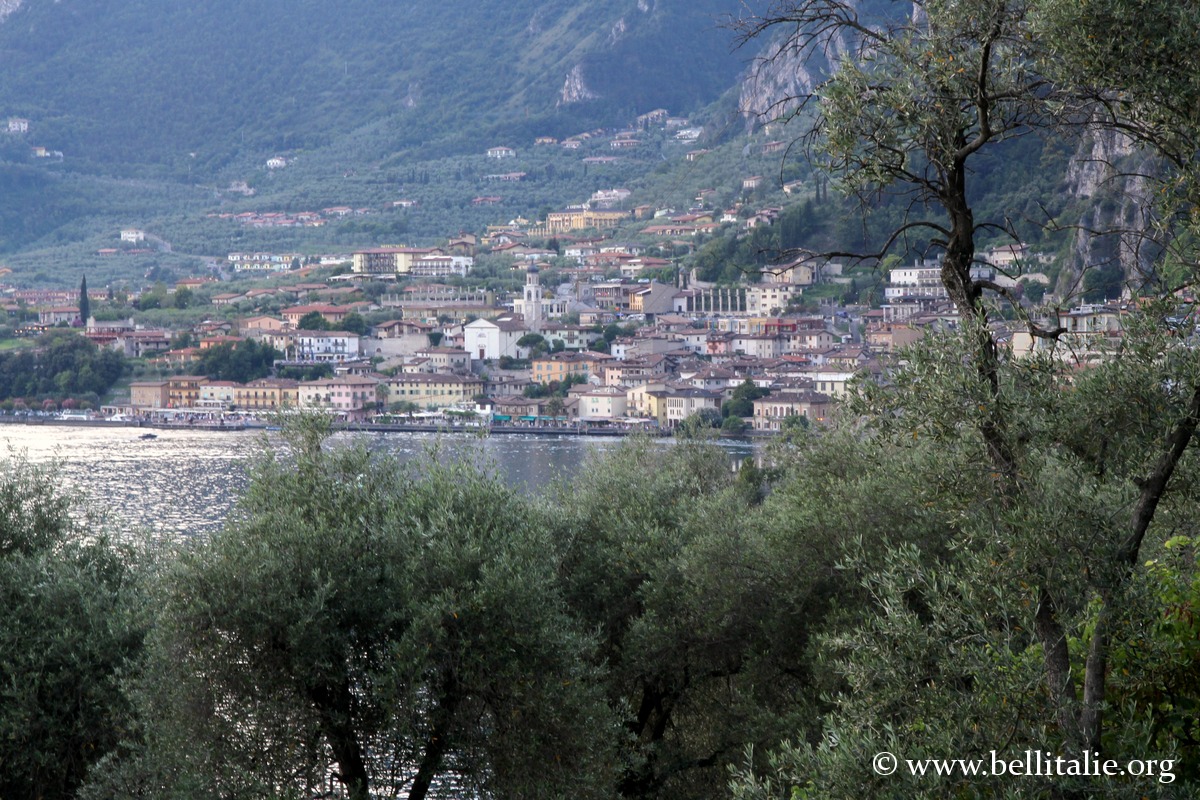 Limone sul Garda, 10 km from Riva del Garda, is one of the most beautiful villages on the lake, known for its lemon groves dating back to the 18th century with its old plantations, including that of the Limonaia del Castel in the center, which can be visited. Along with other citrus fruits, lemon trees grow on the terraces on the hillside, benefiting from the local microclimate. The limonaie are typical shelters of this shore made of stone and wood that served as greenhouses for lemons and oranges.
Limone is also a chic resort with its beautiful hotels, and above all a remarkable cycling and pedestrian path inaugurated in 2018, a panoramic route of more than 3 km, which runs along the road against the cliff from the exit of the village, in places suspended above the void.
The main road leading to Limone, on the north or south side, is also an impressive road, using a trench cut into the cliff at the edge of the lake.
The charming small historic center of Limone retains old fishermen’s houses facing the lake, with a beautiful square, a shore lined with a promenade and its beach. There are also the churches of San Rocco and San Benedetto, and less than 2 km from the center the small San Pietro which dates from the 9th century with pretty frescoes.
Lake Idro
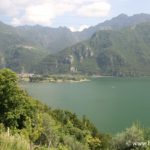
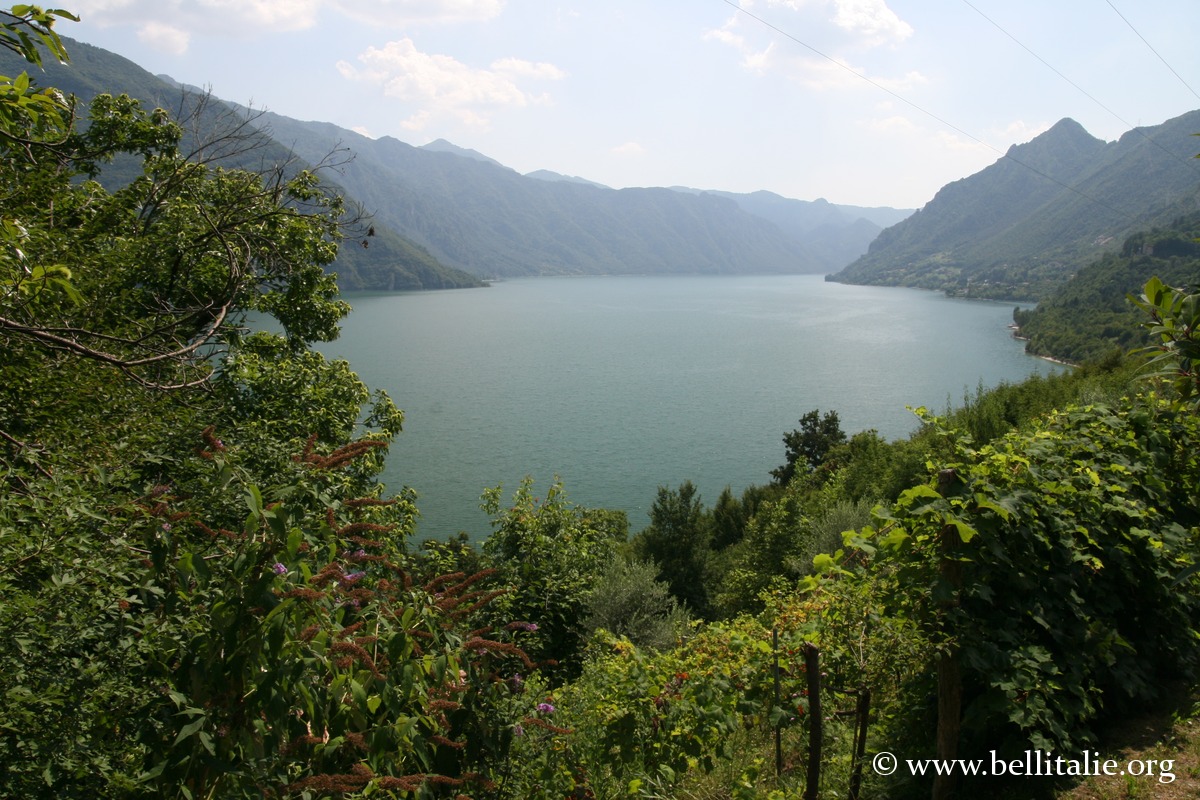 About 35 km by road from Lake Garda, Lake Idro is nestled at altitude in the greenery of the mountains, with a few sites around it, especially the fortress of the Rocca d’Anfo, bringing together buildings from several eras, and in its surroundings to the north the village of Bagolino with its beautiful heritage, and to the south the Sabbia valley which descends towards Brescia.
North of the lake, in Trentino
Riva del Garda
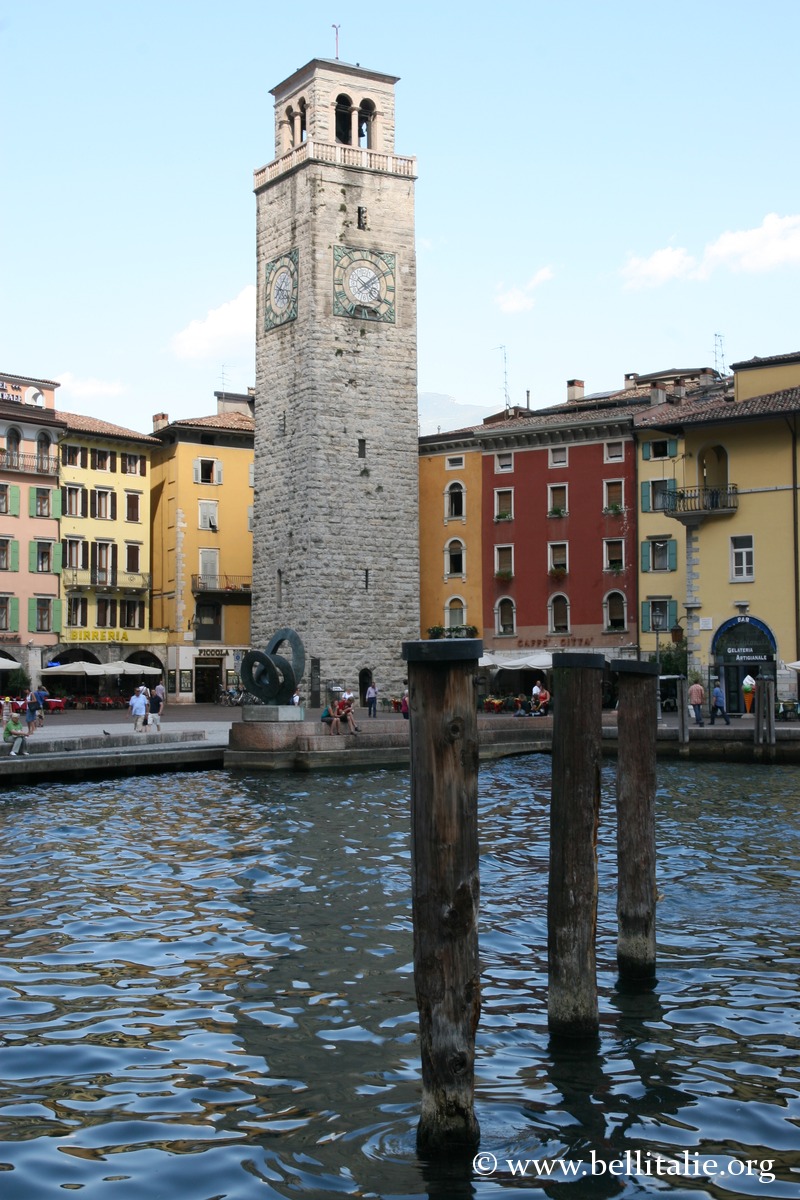 Riva del Garda, at the northern tip of Lake Garda, in the Trentino region, is a lively town, frequented by windsurfers for its windy situation, and as a starting base for excursions in the surrounding mountains. The lake is narrower here than in the south, with colder waters and a deep blue color.
The small historic center is pedestrianized, protected by the old walls, with a part facing the lake, its café and restaurant terraces. Several monuments stand out there, such as
the Apponale Tower from the 13th century, the palaces of the 14th-15th centuries, or the Rocca, the medieval castle on its islet which houses the historical and archaeological museum.
The surroundings include beautiful natural and historical sites: Varon waterfalls, Arco castle, panoramic roads and paths, Lake Ledro, or the medieval village of Canale di Teno.
Arco Castle
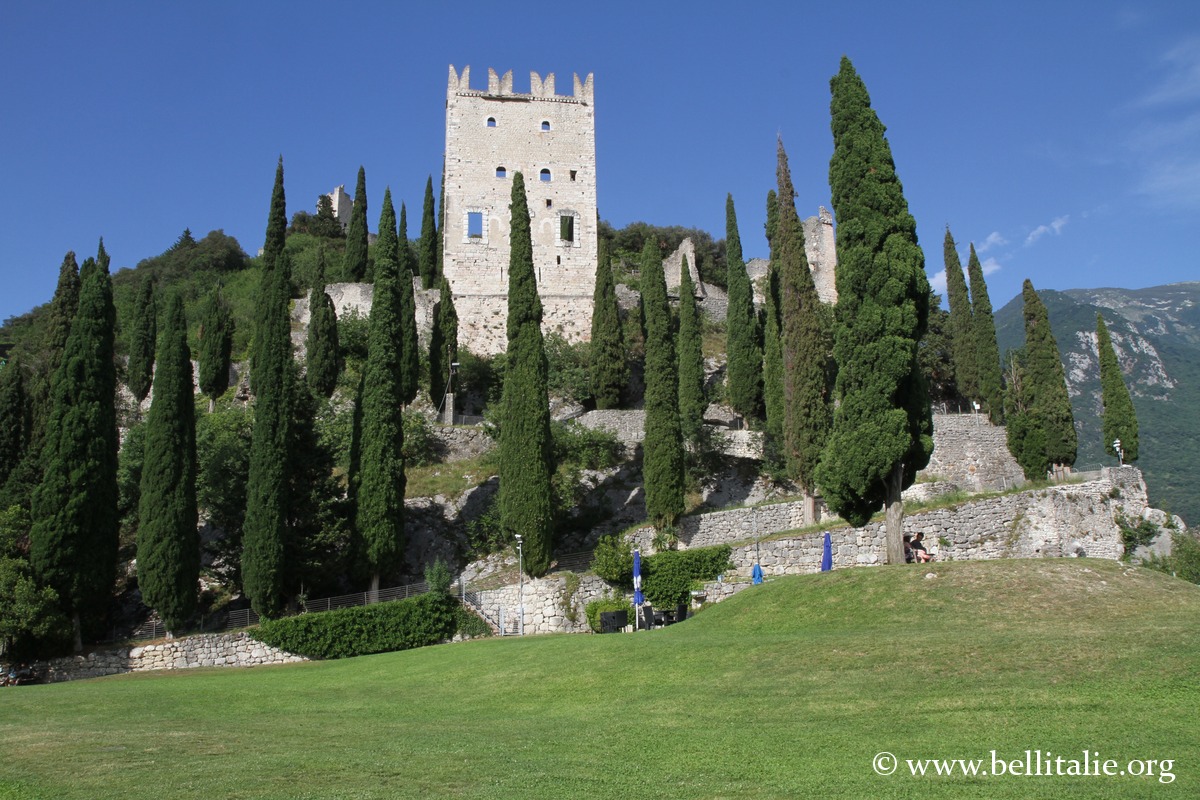 6 km north of Riva and the lake, the Arco Castle and the remains of its fortifications dominate an impressive rocky spur above the Sarca valley. The site is superb, both for the beautiful view over the plain and for its vestiges.
It is reached by climbing from the fortified village of Arco, via a road crossing beautiful olive groves.
Site of a Cenomanian oppidum around 300 BCE, the current castle is documented since the 12th century. One can visit the old prison, the great tower and halls, with in particular the splendid cycle of 14th-century secular frescoes depicting court scenes: ladies and gentlemen playing chess, Saint George killing a dragon, the dubbing of a knight, etc.
Strada del Ponale and Ledro Valley
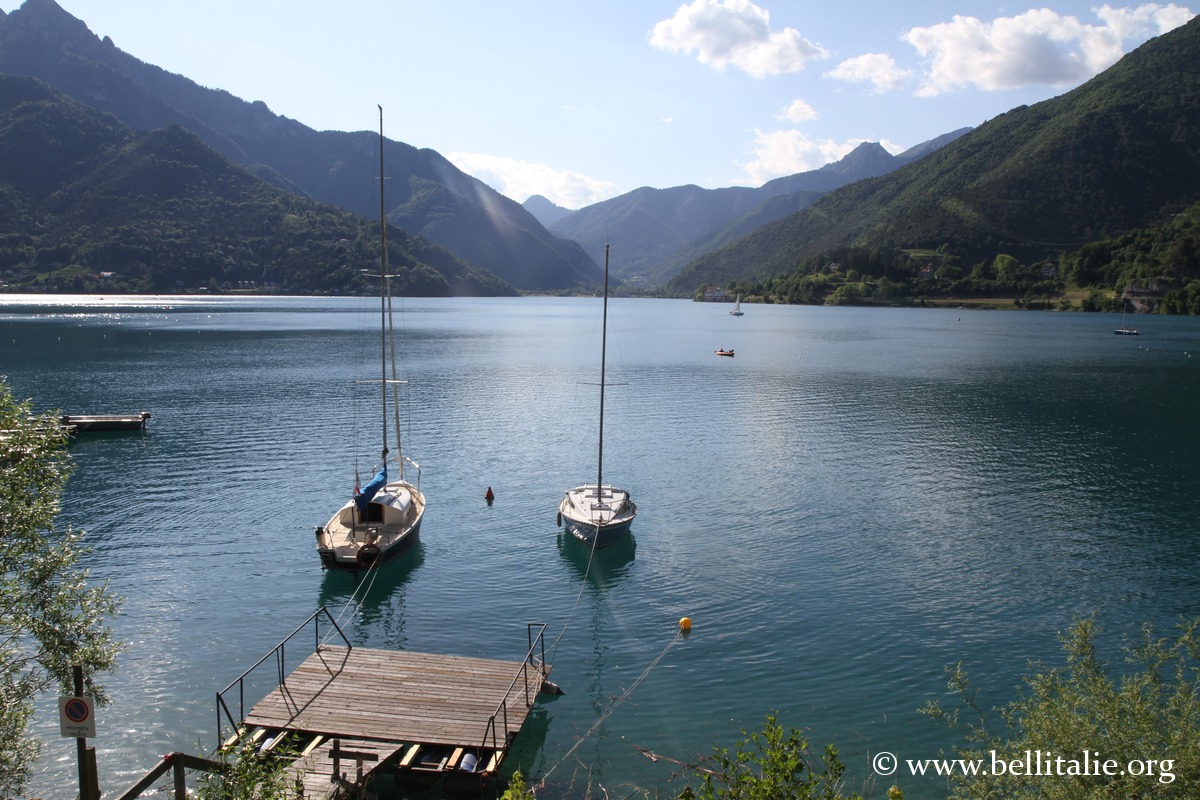 The Ponale Road is an old road that follows the valley of the Ponale river, connecting Riva del Garda to Lake Ledro since 1851. Closed in 1995, it was converted into a cycle path and a panoramic hiking trail in 2004.
The green Ledro Valley, passing through gorges and wider expanses, is classified for its biosphere. It reaches the very charming little Lake Ledro, a bathing site with its turquoise-coloured waters. It is well equipped, with campsites, beaches, mountain bike and hiking trails, very popular especially with Germans.
You can also take beautiful walks in the surroundings, for example up to the Cascata del Gorg d’Abiss, or climb the beautiful surrounding peaks.
Canale di Tenno
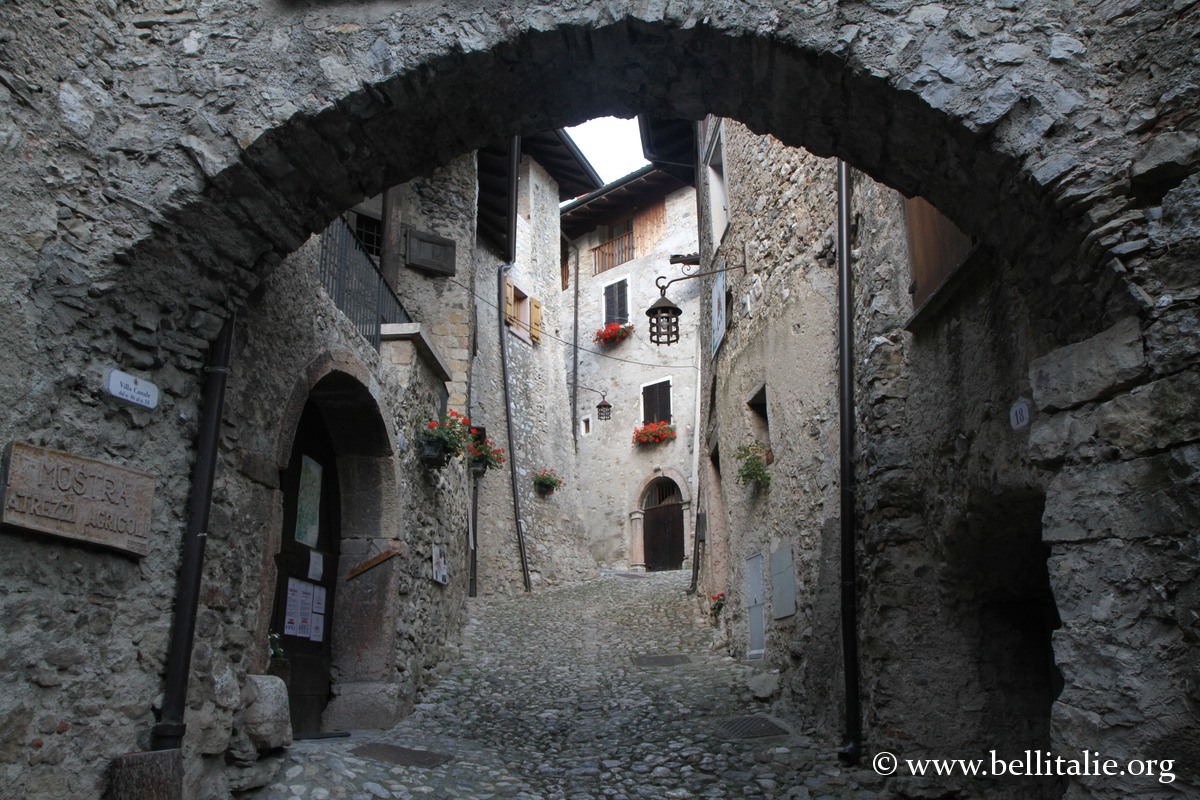 The small village of Canale di Tenno is a medieval gem, located in the province of Trento, listed among the most beautiful villages in Italy for the quality of its conservation. It is a wonderful place a few kilometres from Lake Garda, an immersion in a medieval village, among its old stone houses, a maze of paved alleys, stone arches, turrets, etc.
The charming little Lake Tenno with its green and azure waters is equipped with beaches and walking trails. You can reach it for example from Canale via a trail in nearly 15 minutes.
The village of Frapporta is perched on the rock dominating the Sarca valley on its western side, with its pretty private castle from the 12th century. A street leads to the tip of the spur up to the Romanesque church of San Lorenzo, from the 11th century and well preserved. Open only in summer, the interior preserves frescoes with the Martyrdom of Saint Lawrence and the Last Judgment.
Torbole and surroundings
At the foot of the mountain on the edge of the northern shore of the lake, Torbole is, like its neighbour Riva, located in a windy passage, which has become a spot for windsurfers. It is a relaxed and lively locality around a small harbour. A pretty flowered house is surrounded by the waters, the Casa del Dazio, which was once the seat of the Austrian customs. You can connect Torbole and Riva by a pretty cycle path.
North of Torbole towards Nago, the Giant’s Kettles (Marmitte dei Giganti in Italian) are remarkable natural formations. This strange canyon indeed has enormous holes nearly 5 metres wide and up to 12 metres deep, often filled with water. They were shaped during the glaciation more than 130,000 years ago by waterfalls and rocks created in summer. The trail leading there requires less than half an hour of walking.
The road south of Torbole towards Malcesine is very suggestive, running alongside the lake at the foot of the wall. Above, passes the beautiful panoramic Busatte – Tempesta trail from which the panorama is even more impressive, with suspended passages on steel staircases, above woods and olive groves.
Venetian side, to the east
Peschiera del Garda
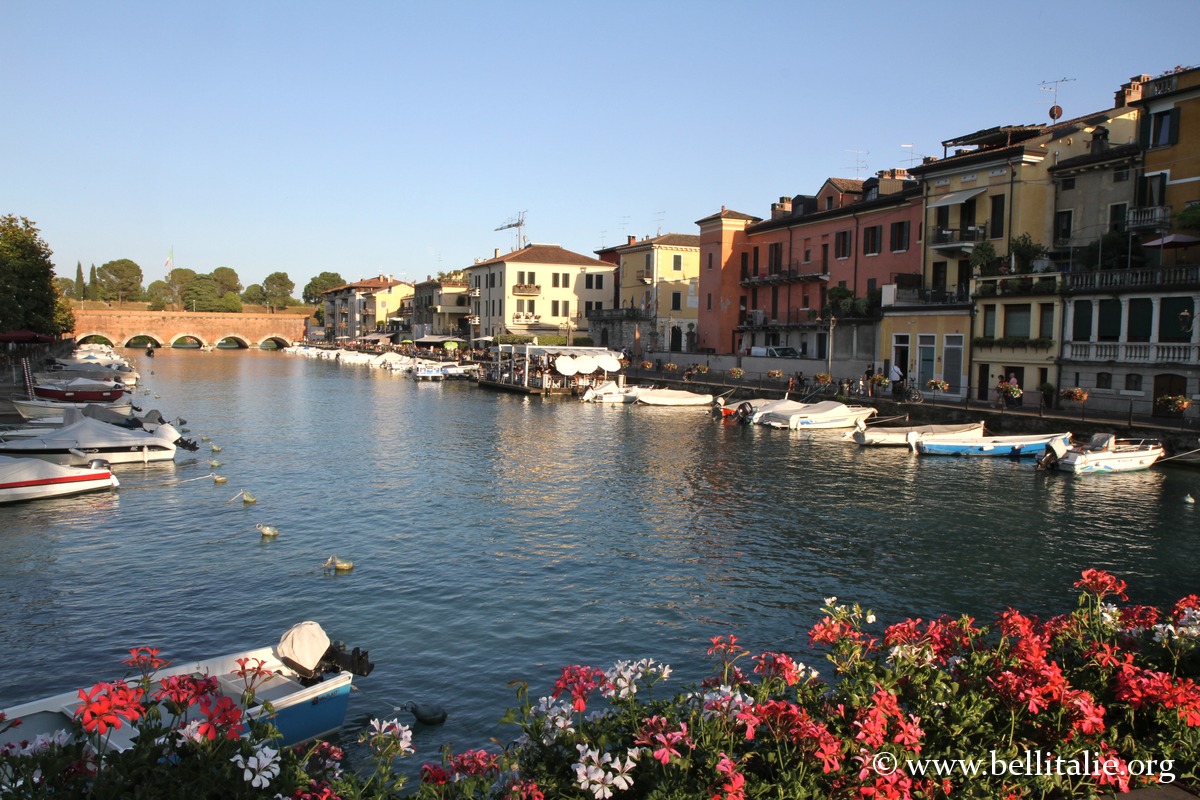 On the southern shore of Lake Garda, Peschiera del Garda is a fortress town surrounded by water, rightly inscribed on the UNESCO World Heritage list. Its pleasant historic centre is protected by the remarkable Venetian citadel of the 16th century built in the middle of the Mincio estuary, whose defence lines form with the five bastions a pentagon.
The centre is built on islets connected by bridges, including the beautiful Ponte dei Voltoni, and the canals are lined with houses overlooking the water, with their restaurants and small shops, which earned Peschiera the title of “Piccola Venezia sul Garda”.
Outside the centre, the Madonna del Frassino is a pretty Franciscan sanctuary dating back to the 16th century.
It is recommended to tour the walls by boat, and why not a half-day cruise or more from Pescheria on the southern part of the lake, with for example stops at Isola del Garda, Catullus’ Grottoes and Jamaica Beach (more information below).
Lazise
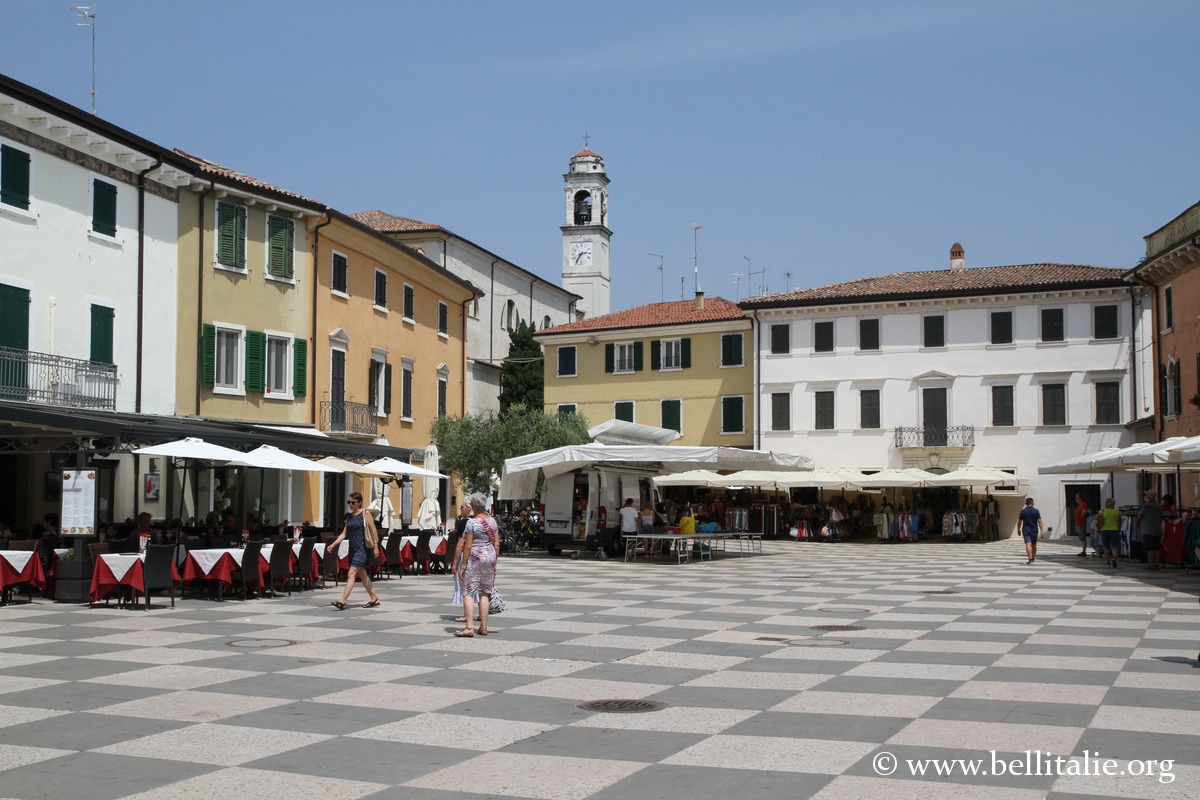 Lazise is a charming fortified village located southeast of Lake Garda, with its old walls and its powerful Scaligero Castle built between the 9th and 14th centuries, mainly in the Veronese period. Its lakeside front is nice, as is its small historic centre no less charming.
The long history of Lazise dates back to Roman times when it was flourishing, then was marked by the passage of peoples, including Lombards, then the dukes of Verona (Della Scala, Visconti, Gonzaga), and then the domination of the Republic of Venice.
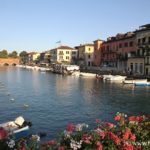
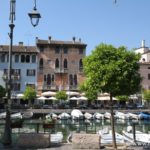
Evidence of this history can be found in the architecture. The Piazza del Comune has a beautiful checkerboard paving, and the small harbour is surrounded by pretty colourful houses.
Bardolino
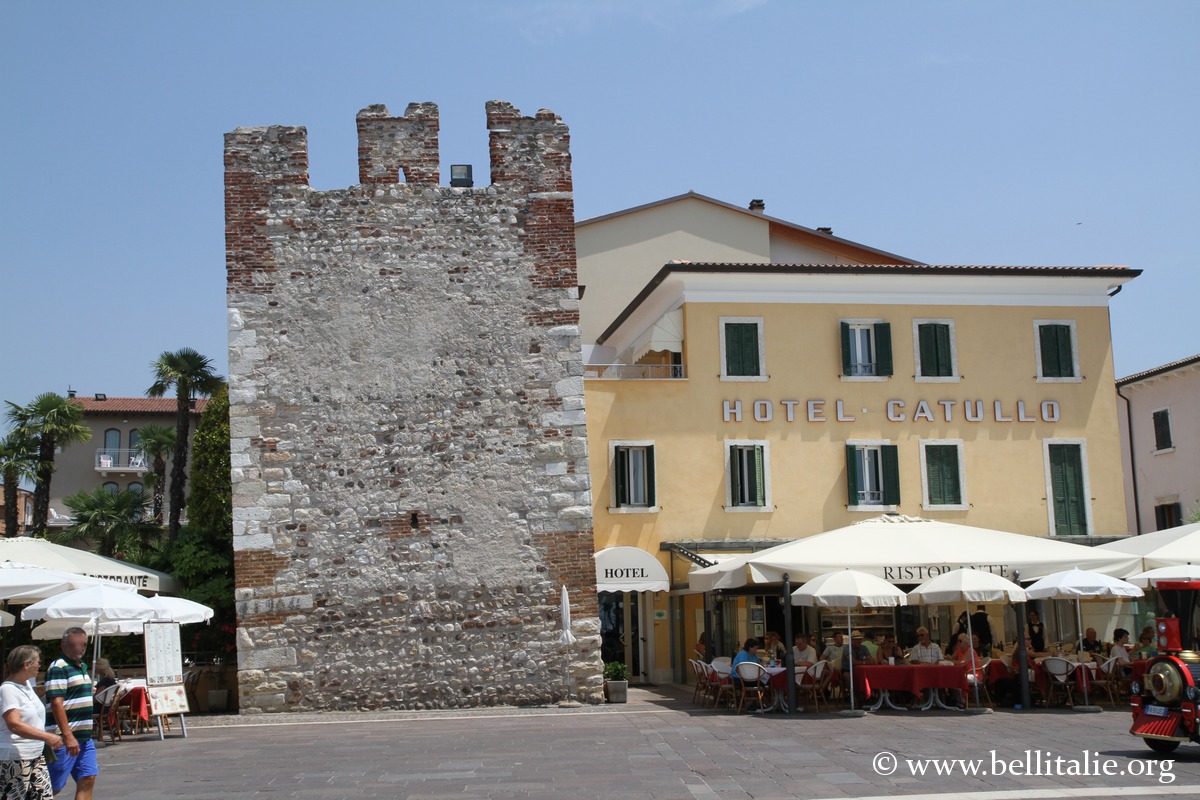 On the eastern coast of the lake 5 km north of Lazise, Bardolino, which produces the wine of the same name, is a village with quite a bit of charm, historic buildings and a very large lakeside promenade.
Its historic centre is very pleasant with the pretty Piazza Catullo and the district of fishermen’s houses shaped like a fishbone, with streets perpendicular to the shore to easily access the lake.
The pretty Romanesque church of San Severo built at the beginning of the 12th century on a 9th-century building, preserves pretty frescoes, with a more recent façade.
TICKETS. Bardolino is also known for its wine. You can take a wine tour there: cellar, wine and typical products tasting.
Garda
Garda is a seaside resort on the eastern shore of Lake Garda, 4 km north of Bardolino, located between two public beaches, with its harbor, its lakeside promenade, and its historic center.
In addition, in the surroundings there are several well-marked hiking or cycling trails, including the one that leads to the summit of the Rocca with its view over the bay, or others in the plain.
The Lake Garda Museum, whose entrance is free, exhibits objects and tools used in the past in agriculture, crafts, or daily life.
Its church of the Pieve di Garda dates back to the 10th century and has a Baroque facade. In the center, the Palazzo dei Capitani is in the Venetian Gothic style of the 19th century, on the Piazza Catullo near the harbor.
Baia delle Sirene and Punta San Vigilio
The Bay of the Sirens (Baia delle Sirene in Italian), is a lovely site with one of the most beautiful beaches of the lake, whose access is paying (until 6 pm) with their facilities, bars and others.
The Punta San Vigilio is also one of the most beautiful and most romantic places of the lake. On this small peninsula is the Villa Guarienti which is a 16th-century residence that has hosted personalities such as Marie-Louise of Austria, Winston Churchill or Alexander II. It has a beautiful 18th-century Italian garden, a small harbor, and a small church.
There is also the restaurant, the luxury hotel, the old marina tavern, and a lovely stone bridge.
You can come there from the center of Garda by a 2 km hiking trail.
Torri del Benaco
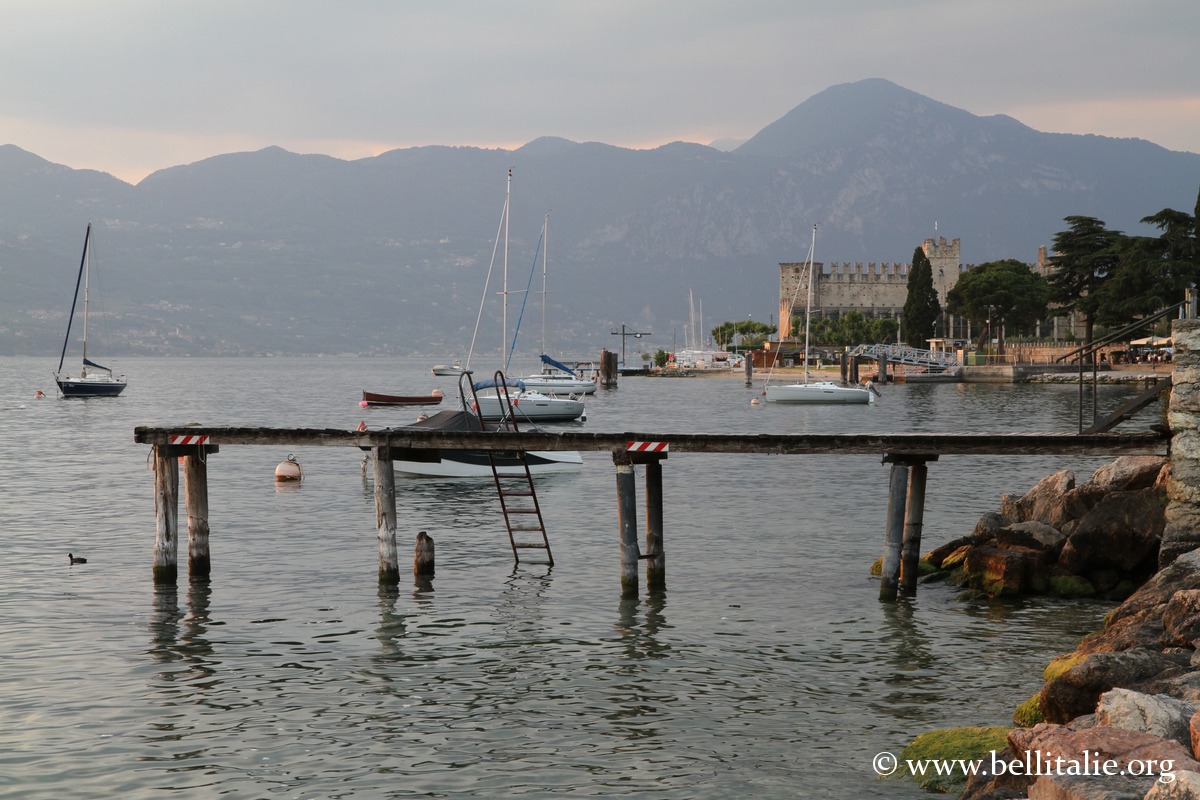 Torri del Benaco, from where a regular ferry departs to Toscolano-Maderno on the other shore of Lake Garda, has kept a splendid Scaliger Castle from the 14th-15th centuries which houses the ethnographic museum on the fishing culture of Lake Garda.
It is also a very nice little village, besides the castle that borders the lovely shore, with its small harbor. The view over the lake is very open and pleasant, the lungolago being laid out with numerous terraces.
Malcesine and surroundings
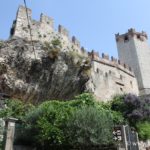
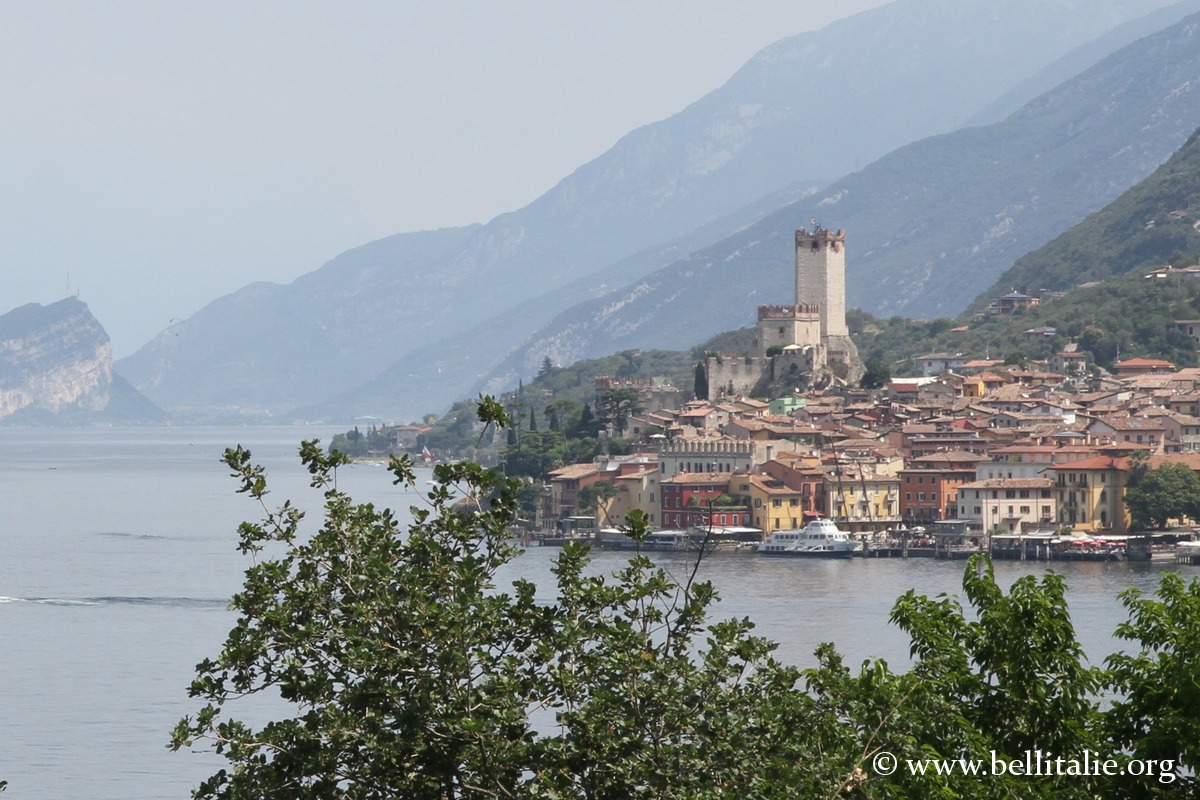 Malcesine is a tourist village, with especially its very beautiful Scaliger Castle which stands proudly with its great tower on its rock at the edge of the lake.
The historic center of medieval origin, very touristy, has a small harbor, and the lovely Palazzo dei Capitani in Venetian Gothic style.
South of the village, the shore is formed by numerous beaches of small pebbles, easily accessible, bordered by a beautiful cycle path over several kilometers.
A cable car reaches Mount Baldo with its 1760 meters of altitude, where the view embraces the whole lake, a good starting point for hiking in the fresh air.
Towards the south, Campo di Brenzone is a small medieval village half abandoned in the midst of the greenery of the slope.
Other sites nearby in Veneto
Valeggio sul Mincio
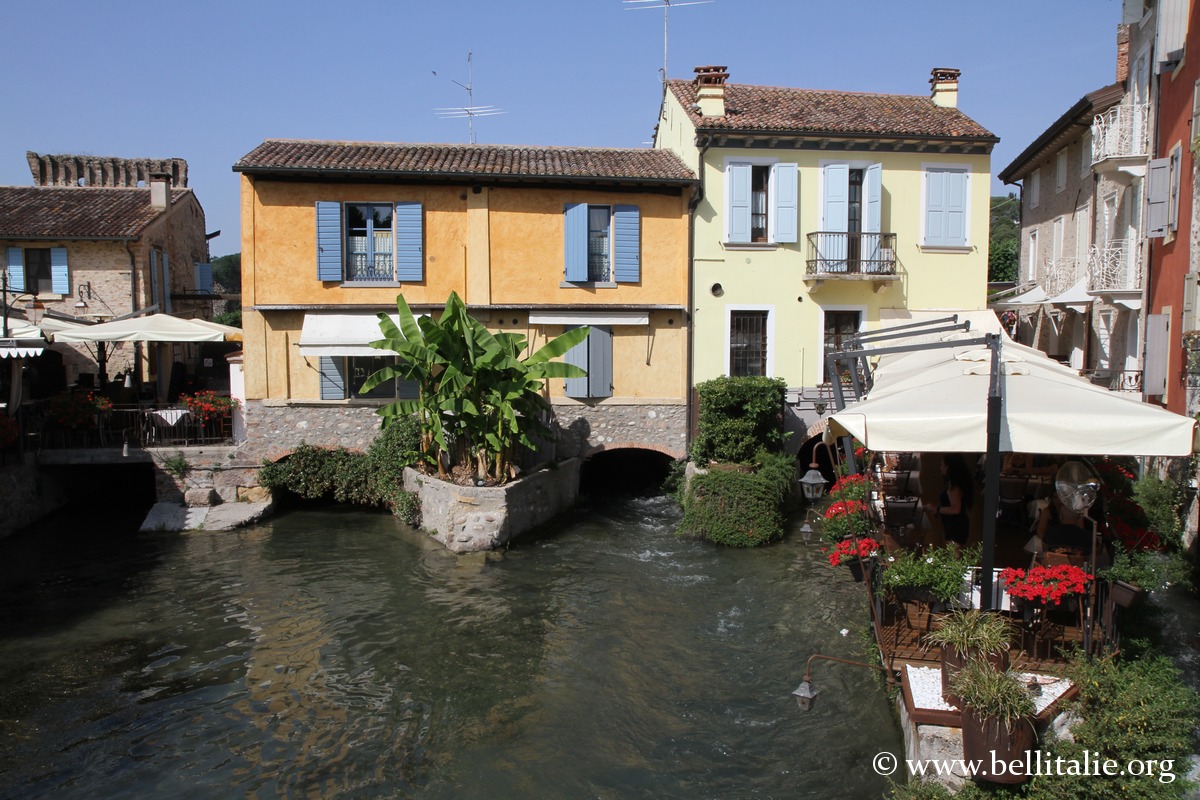 In the surroundings of the lake to the south, one can discover south of Pescheria at Valeggio sul Mincio the elegant Parco Giardino Sigurtà, the picturesque Borghetto sul Mincio and the Scaliger Castle of Valeggio.
Borghetto sul Mincio is a very nice little village built on the water, in the municipality of Valeggio, listed among the “Most Beautiful Villages of Italy”. It is located in the valley of the Mincio river, at the foot of the great Visconti Bridge. Some of its mills have been restored with their water wheels.
The disused railway line has been converted into a cycle path, part of the path linking Mantua to Peschiera del Garda along the Mincio.
Nearby, the Parco Giardino Sigurtà is a spectacular natural park, among the most beautiful parks in Europe (paying).
Madonna della Corona
A few kilometers from Lake Garda, the sanctuary of the Madonna della Corona which is located in a remarkable site, is one of the most impressive in the region. It is reached by a steep path along a rock wall that overlooks the valley.
The church is literally set into the rock, displaying a pink Baroque facade.
Gardaland and other amusement parks
Gardaland is a large amusement park, known throughout Italy, in Castelnuovo del Garda, among other parks near Lake Garda (most are open from April to the end of October, and certain holidays).
Gardaland has more than 35 themed attractions for young and old.
Other parks:
- Theme parks at Lazise of Caneva World with Movieland dedicated to the world of cinema with shows, animations and reconstructions of sets; and the Caneva Acqua Park, water park with pools for young and old, slides, attractions.
- Parc Natura Viva in Pastrengo, large zoo with more than 1500 animals of 200 different species from around the world, with a Safari park, a terrarium and an area dedicated to dinosaurs.
Other sites on the Lombardy side
Tower and museum of San Martino della Battaglia
A few kilometers from Desenzano and Sirmione, there is a place of remembrance for the dead for the independence and unity of Italy. It was indeed near here on June 24, 1859 that the battle of Solferino took place, bloody and fierce, where the Franco-Piedmontese army defeated the Austrians.
The great tower 64 meters high was erected in a vast park between 1880 and 1893, with rooms dedicated to the Risorgimento, and next to it the museum and the ossuary church.
Solferino
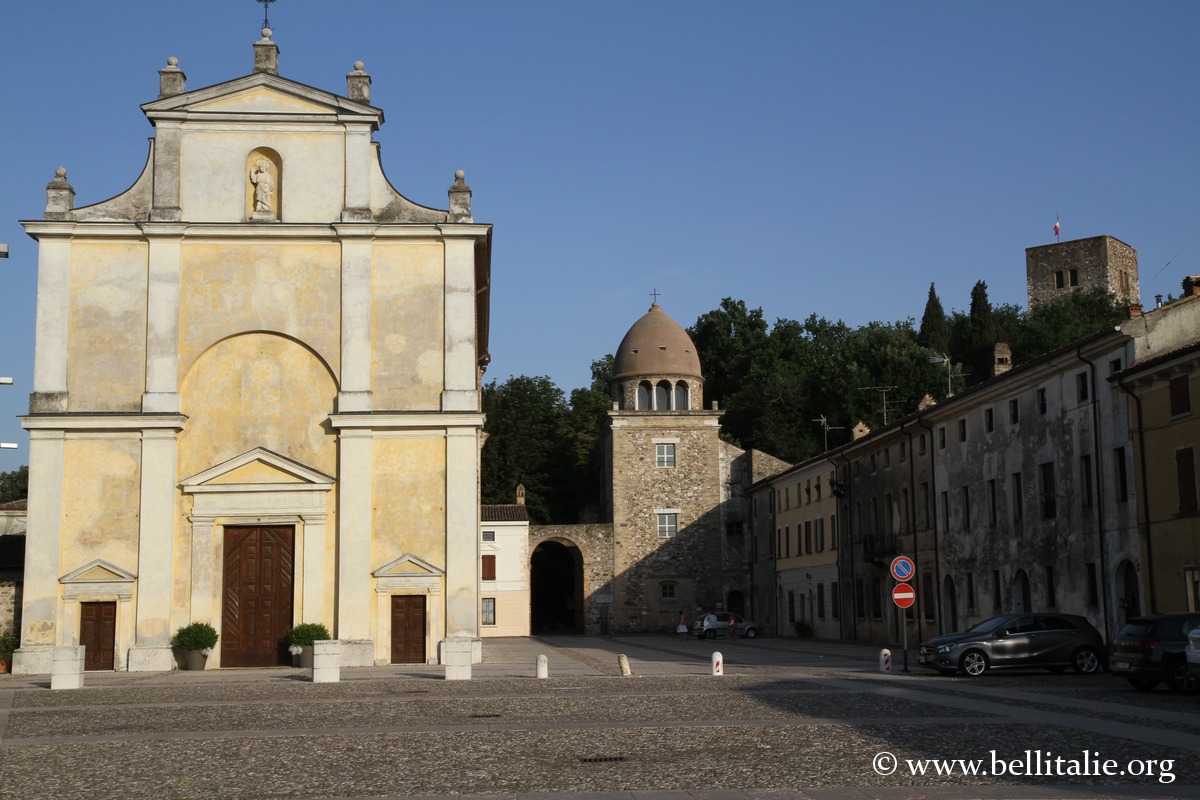 Solferino is a village and an important place of Italian memory, for the great battle that took place there on June 24, 1859 between the French army commanded by Napoleon III aided by the Piedmontese army, and the Austrian army commanded by Franz Joseph.
The village is pleasant, with its Piazza Castello and a beautiful view towards Lake Garda, the castle tower and the church, and above the Rocca of 1022.
There is a Red Cross Memorial, recalling the humanitarian commitment of the Swiss Henry Dunant after the bloody battle that led him to create the institution.
The Ossuary Church preserves thousands of skulls of the victims of the battle, from each camp.
Map of the places of the lake
 Show interactive map
 Information
- Wikipedia page: en.wikipedia.org
- Tourist portals: www.in-lombardia.it, www.lombardiafacile.regione.lombardia.it


Comments