


Venice is divided into neighborhoods called Sestieri, each with its own personality: Cannaregio, Castello, Dorsoduro, San Polo, Santa Croce and San Marco. Of course, there are unforgettable places to discover, such as St. Mark’s Square, the Grand Canal or the Rialto Bridge, but it is good not to limit yourself to the must-sees, or even to get lost in the alleys. For on the one hand crowds often invade the main tourist sites, and on the other hand the charm and soul of the city can still be felt in these old palaces, churches and more popular neighborhoods such as the Ghetto or Cannaregio. Moreover, remarkable museums, palaces and basilicas are plentiful, from the Accademia Gallery to the Scuola San Rocco, from the Ca d’Oro palace to the Ca Rezzonico palace, from the great basilica of the Frari to the small Santa Maria dei Miracoli.
It is also interesting to diversify one’s visit, if it lasts more than a day, with the islands of the lagoon, first the formidable Murano and Burano, but also other lesser-known ones, from Torcello to the Lido di Venezia.
It is preferable to go there in autumn or spring, to avoid the winter risk of Acqua Alta in winter, or the high crowds mixed with heat in summer.
A boat or gondola tour greatly enriches the experience, giving another point of view of the Serenissima.
Here is a list of the main places of interest to discover in Venice, with the Interactive tourist map of Venice further below.
1. St. Mark’s Square
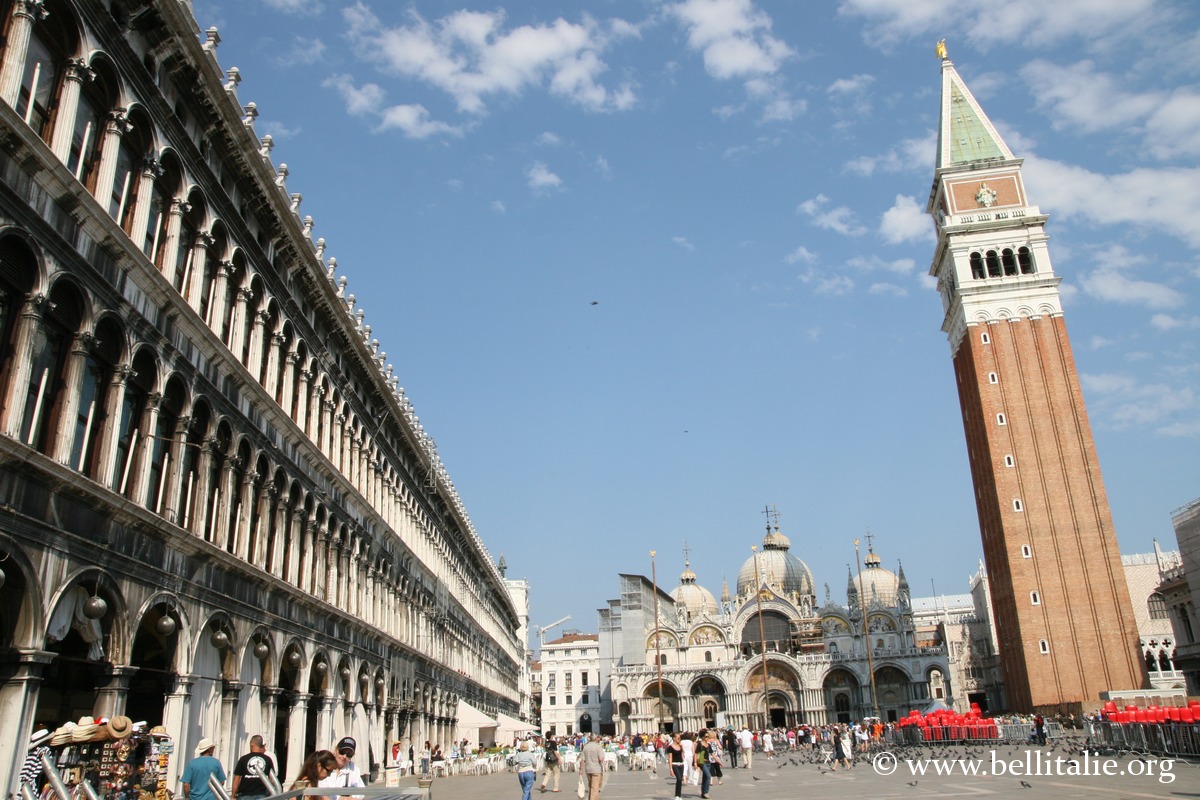
St. Mark’s Square
The cultural and historical center of Venice, the famous St. Mark’s Square was originally a vegetable garden, laid out on the occasion of the construction of St. Mark’s Basilica in the 11th century. There stand the great historical buildings of the city: the Doge’s Palace, the Clock Tower from the late 15th century, the great St. Mark’s Campanile, or the San Marco library. It is surrounded by its elegant arcades with the terraces of chic cafes.
It is also a place of life, which in the past hosted fairs and tournaments, a must-see during a visit to the Serenissima, and a meeting place for pigeons in search of crumbs.
2. St. Mark’s Basilica
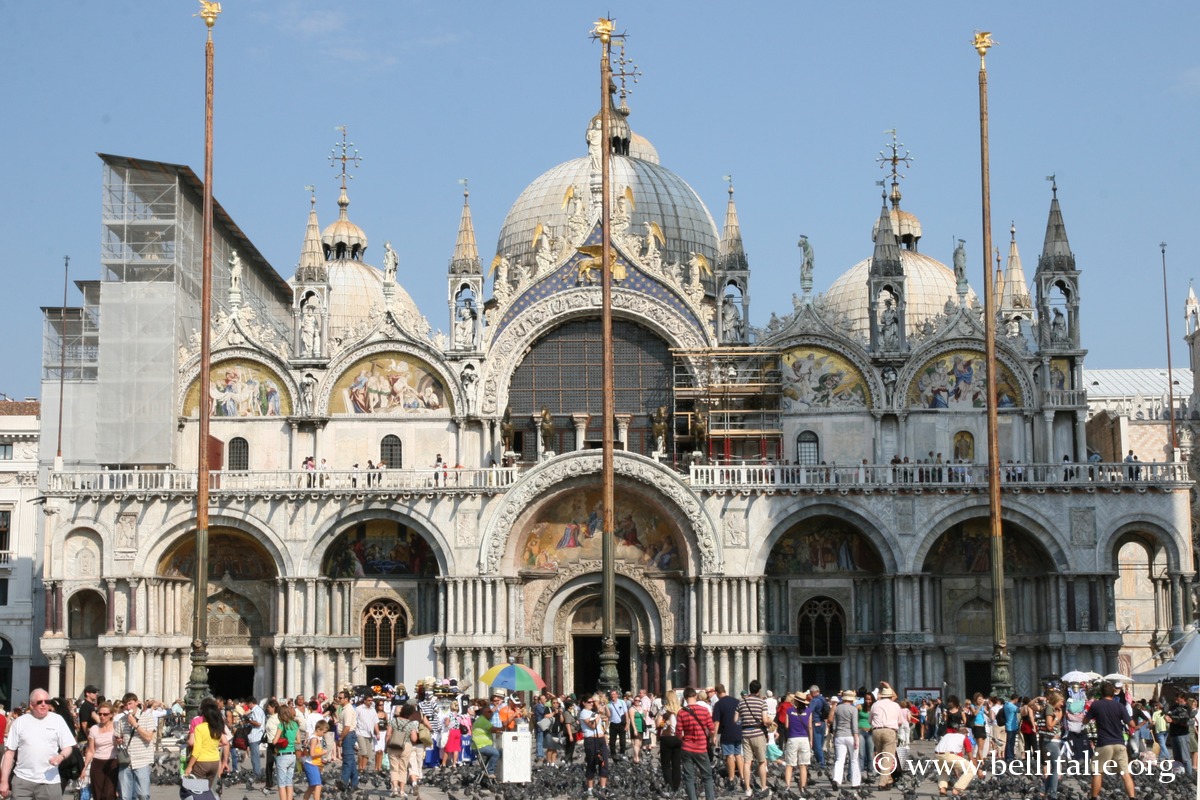
St. Mark’s Basilica
This basilica is the pride of the Venetians, a heritage of Byzantine, Romanesque and Venetian cultures, a blend of Western and Eastern art, embellished over the centuries thanks to the prosperity of the maritime Republic of Venice, notably with many works brought back from the East by merchants.
Its artistic abundance is so eclectic that it does not lack esoteric aspects and symbols, sometimes fantasized in literature. The building is 76 meters long, with 5 domes (the central one rising to 43 meters), covered with sublime golden mosaics, and preserving extraordinary works of art such as the golden altarpiece, icons, or the Four Horses of St. Mark from the museum, etc.
3. St. Mark’s Campanile
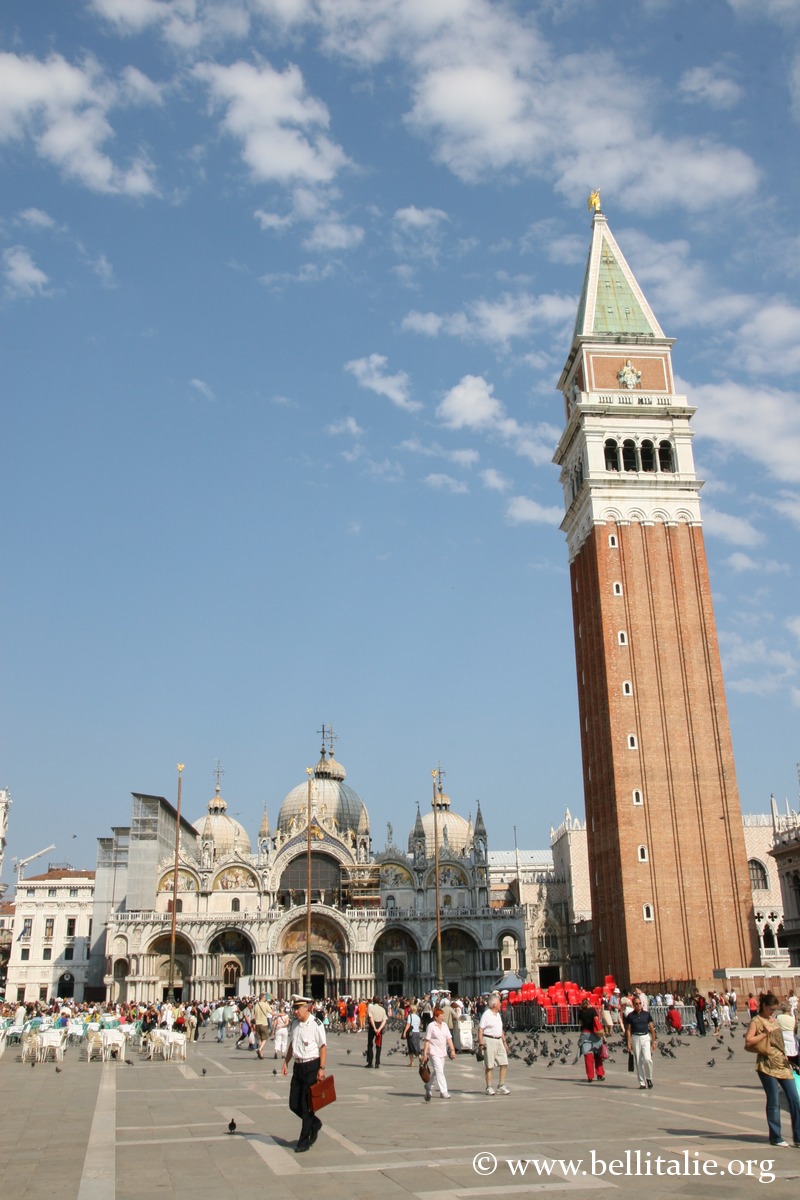
Campanile
One of the emblems of Venice, affectionately called “El parón de casa” (the owner of the house) by the Venetians, the campanile of the basilica rises 99 meters from the ground. A first tower already existed in the 9th century, which was modified several times over the centuries, such as with a marble loggia added by Jacopo Sansovino (16th century). It suddenly collapsed in 1902, without injuring anyone.
Since 1962 an elevator helps visitors reach the top, to enjoy a superb view over the domes of the basilica, the rest of Venice and the lagoon.
On the opening day of the Venice Carnival, with the “flight of the angel” a celebrity reaches the square from the top of the bell tower by means of a cable.
4. Doge’s Palace
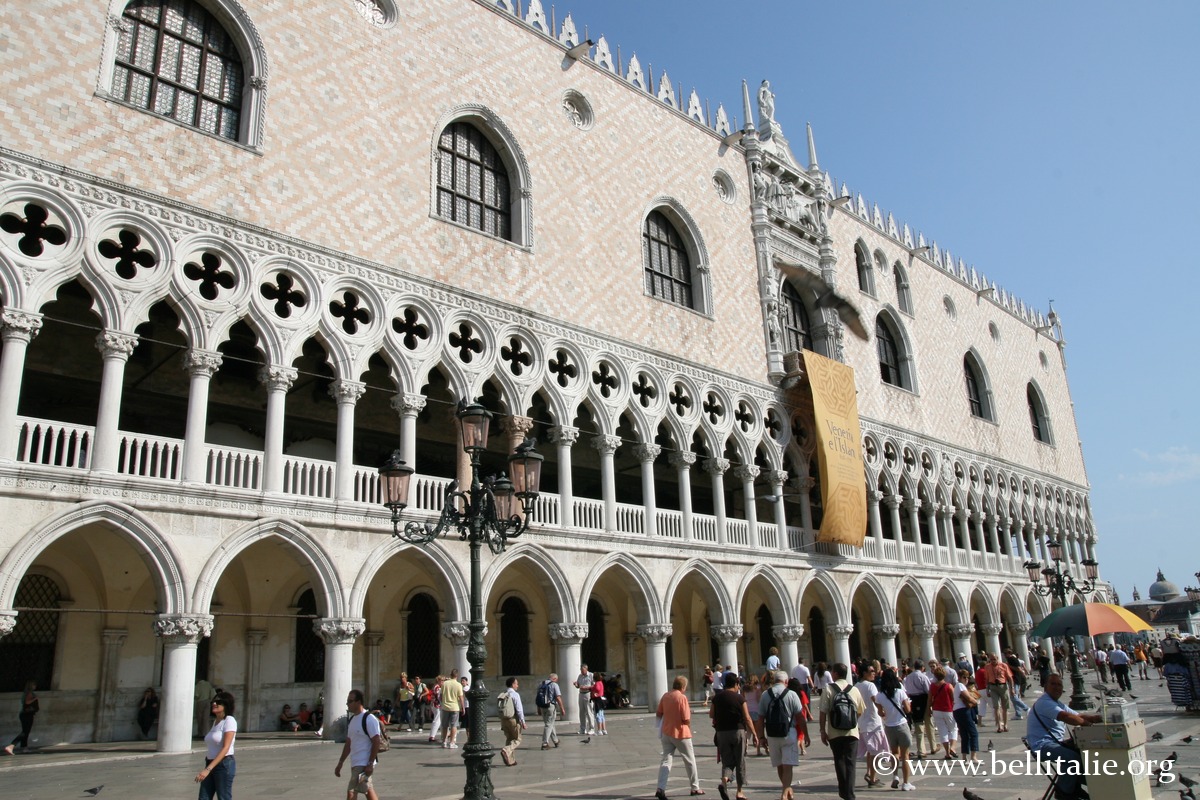
Doge’s Palace
It was the Doge’s Palace, dating back to the 10th century and which was the seat of the government of the Serenissima. This place of historical, political and cultural importance has witnessed the great events of the city. Rebuilt several times, its typically Venetian Baroque facade, with arcades and richly ornate, runs along part of the square.
The interior preserves a large quantity of works of art. Besides the great halls decorated by great masters such as Titian or Veronese, in addition to the sumptuous apartments of the Doge, it also includes historically gloomy prisons.
One of the most famous bridges in the city is the beautiful Bridge of Sighs, just behind the palace, which connects the Doge’s Palace to the old prisons, and whose name is attributed to the imagination of 19th-century poets, in reference to the last sigh of those condemned to death.
5. Rialto Bridge and Grand Canal
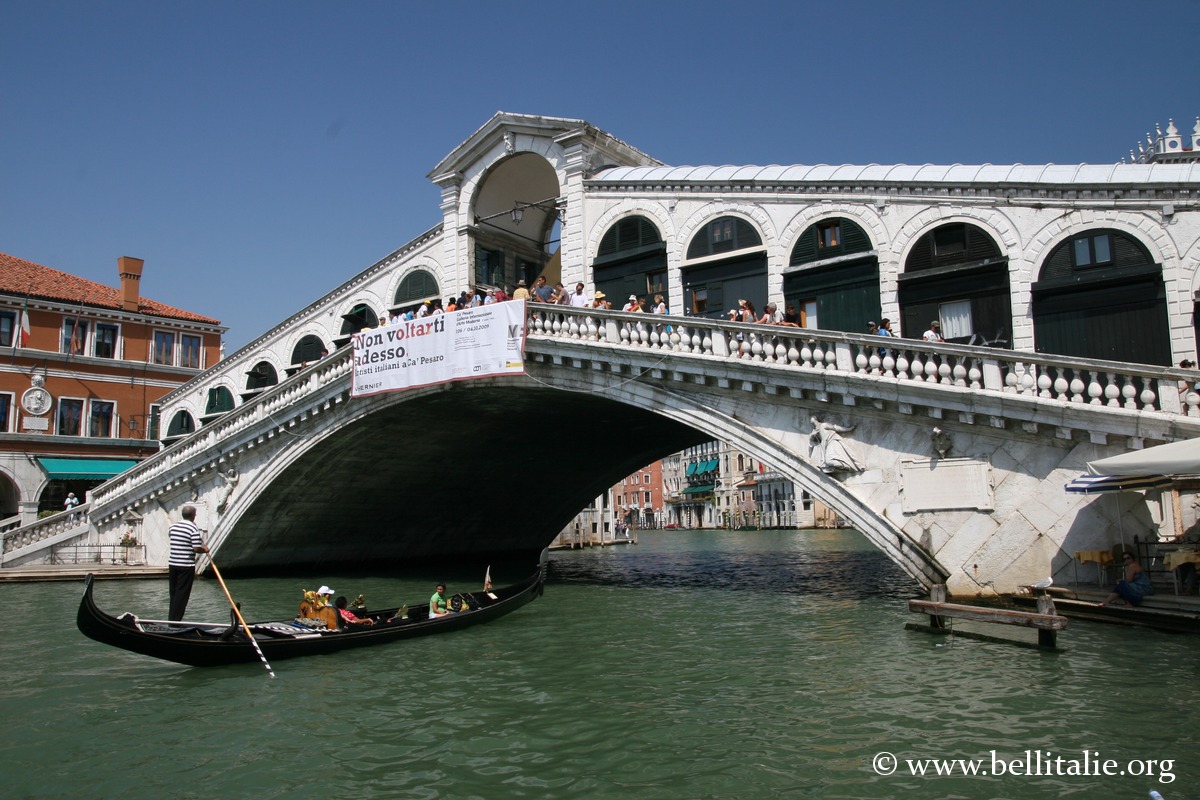
Rialto Bridge
Originally a natural separation between two islands of the lagoon, the Grand Canal of Venice splits the historic centre over almost 4 km with its S shape, from Santa Lucia station to St Mark’s Square. Its marvellous banks see Venetian palaces with their feet in the water. It is by boat, vaporetto or gondola, that one can discover it with an ideal point of view, by day as well as by night when the perspective and the lights create another picture.
From the Rialto Bridge, an icon of Venice, the most famous of the Venetian bridges, one can enjoy a beautiful view over the canal. It is one of the four bridges that cross the Grand Canal, a work of art immortalised by painting or cinema, which has kept its 16th-century appearance. It replaced an old wooden bridge that collapsed in 1524, now supported by 12,000 wooden posts, covered with arcades, and very often packed with tourists.
6. Getting lost in the streets of Venice
Venice is vast; besides the great tourist sites, one of the most fascinating things to do is to explore its maze of alleys entirely without cars, cross its canals by taking one of the 354 bridges, etc.
In this unusual and labyrinthine conformation, it is easy to get lost, to confuse one alley with another, or one canal with another. Sometimes, the best landmark is to find the flow of tourists, which invariably links the great places of the city.
7. Academy Gallery
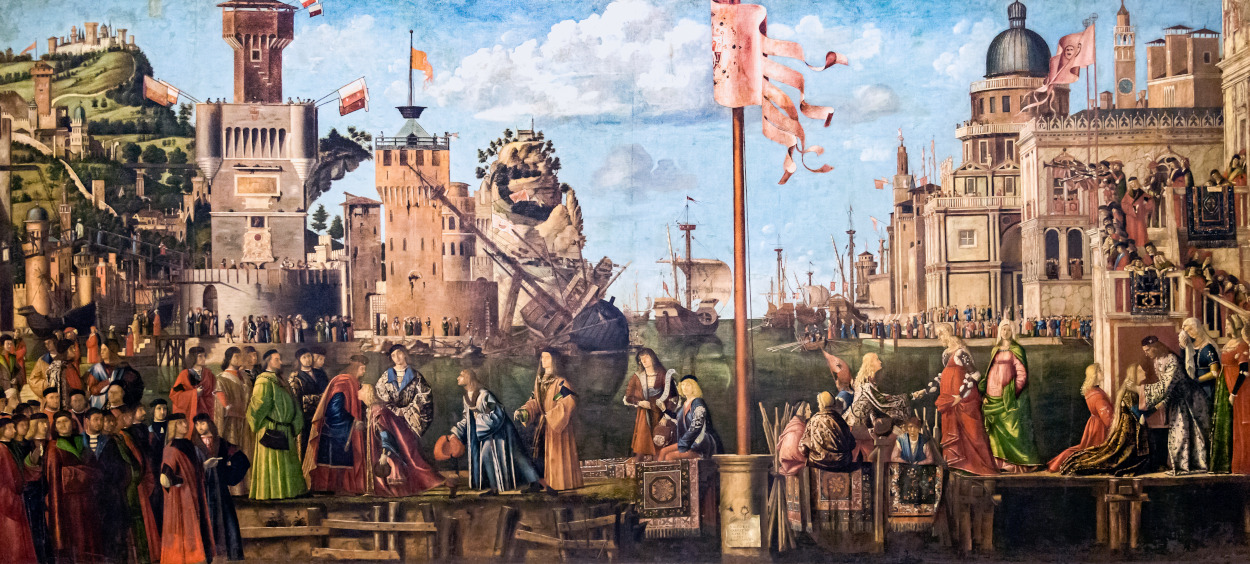
Work by Carpaccio (late 15th century)
The Academy Gallery of Venice is the most important Venetian museum dedicated to painting, covering the period from the 14th to the 18th century, with works by artists such as Tintoretto, Titian, Tiepolo, Bellini, Veronese, Bellotto and Longhi. It is housed in a vast complex that includes the church and the scuola Santa Maria della Carità (keeping the Vitruvian Man by Leonardo da Vinci, exhibited only on rare occasions), or the convent of the Lateran canons.
8. Ghetto
In the sestiere of Canareggio, the ghetto is a neighbourhood spared by the crowds and remarkable in many respects, such as for its large family houses called casetorri, its synagogues, churches and others, as well as for its local and multicultural life that has kept a little of its popular aspect and a culinary tradition. The neighbourhood was “reserved” for the Jews of the city from the beginning of the 16th century until the end of the 18th century. It is still today the heart of a community.
It is moreover from here that the name “ghetto” comes, derived from the verb “ghetar” which means to throw. Indeed in 1516, 700 Jews were forced to settle in the north-western part of Venice, then abandoned. It was Napoleon who dissolved the ghetto in 1797, again allowing Jews to settle freely.
9. Scuola Grande di San Rocco
It was on the occasion of the transfer to Venice from Montpellier of the relics of Saint Roch that the Scuola and a church dedicated to the saint were erected.
This Scuola was the seat of a brotherhood of wealthy Venetians, founded in 1477, which was devoted to charitable works. In 1564 it entrusted the decoration of the recently built palace to Tintoretto. The master and his pupils spent more than 20 years creating a great cycle of frescoes, the highlight of the visit to the Scuola. The paintings are found in the salla Terrena of the main floor and in the sala dell’Albergo of the upper floor, with episodes from the Bible and the Gospel.
10. La Fenice Theatre
La Fenice is the famous Venetian theatre, a sublime opera hall with a magical interior. It is compared to the phoenix, having been rebuilt several times.
11. Peggy Guggenheim Museum
The Gugghenheim museum is the culmination of the project and passion of the American millionaire Peggy Guggenheim, opened in 1951, and has become a temple of Western art from the early 20th century. It is housed in the Palazzo Venier dei Leoni, the only palace in Venice left unfinished. It is the largest Italian collection dedicated to European and American art of that period, with works by artists such as Picasso, Dali, Kandinsky, Magritte, Braque, De Chirico, Boccioni, Duchamp, Modigliani, Chagall, Miró, Mondrian, and many others, not to mention temporary exhibitions.
12. Rialto Market
This is the great daily market, the oldest in the city, held every day except Sunday, with a popular atmosphere where locals and tourists mix. Everything is sold there, being composed of a fish market, a fruit and vegetable market, spices and clothes.
13. Murano, Burano and Torcello
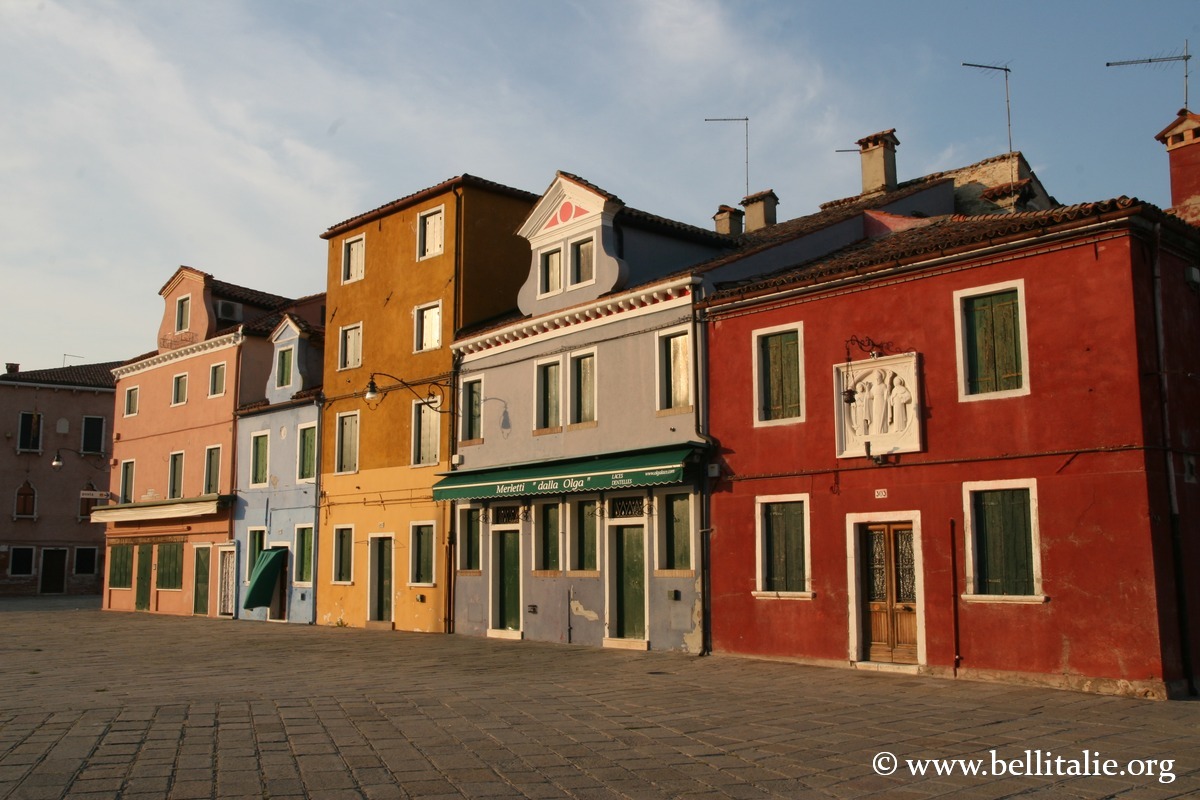
Burano
Several islands in the lagoon are remarkable and easily reachable from Venice. The pleasant island of Murano is the closest, famous for its craftwork of blown glass to which a museum is dedicated, while Burano with its colorful houses is known for its embroidery. Torcello, less known, is worth a visit with the Basilica of Santa Maria Assunta founded in the 7th century, the Devil’s Bridge and the stone Throne of Attila.
14. Venice Arsenal
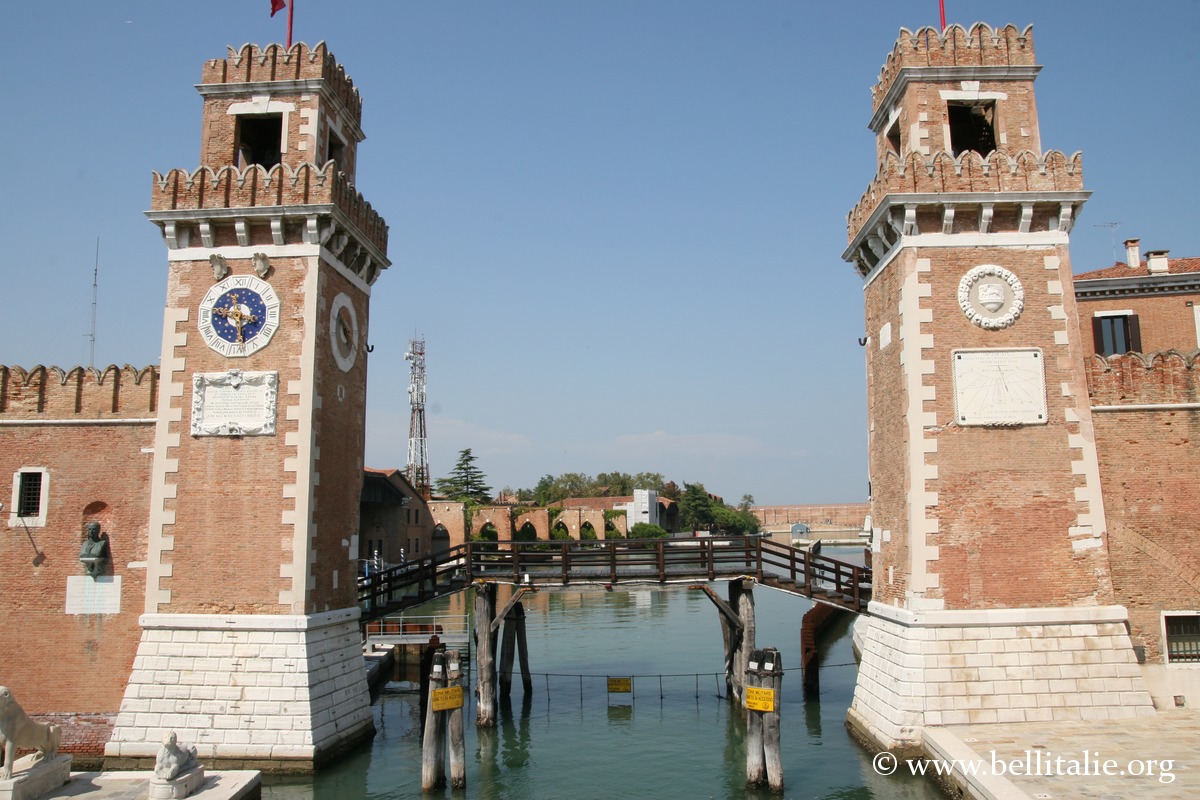
The arsenal
The Venice Arsenal occupies a large part of the east of the city, protected by a 3 km long wall. It was the former shipyards, where ships were built for centuries, one of the largest arsenals in the world, where up to 15,000 people worked at the height of its activity.
The interior is inaccessible to the public (except for a vaporetto route), except for a few rooms during exhibitions, but the exterior is interesting for the extent of its wall, the land gate with the great lions, or the canal entrance framed by its two towers.
15. Great basilicas
The Frari Basilica
The church of Santa Maria Gloriosa dei Frari is a large basilica 102 meters long, which preserves numerous works of art, 17 monumental altars and a very beautiful wooden choir.
Many illustrious Venetians are buried there, such as Antonio Canova and Titian, doges, condottieri, musicians, etc.
Particularly remarkable are the Assumption by Titian in the apse and the Pesaro Altarpiece, works by Bellini such as the Frari Triptych and a Madonna.
Basilica of Santa Maria della Salute
It was to thank the Virgin for the end of the terrible plague of 1630 that killed thousands of Venetians that the building was erected, by Baldassarre Longhena between 1631 and 1687. The basilica can be seen from afar with its characteristic large dome. It is octagonal in shape, the internal walls being occupied by chapels, and it preserves some works including paintings by Titian and Tintoretto.
On November 21 an important ceremony takes place there with one of the most important festivals in Venice, the Feast of the Madonna della Salute, where a temporary bridge is used by the faithful.
Square and Church of San Giovanni e Paolo
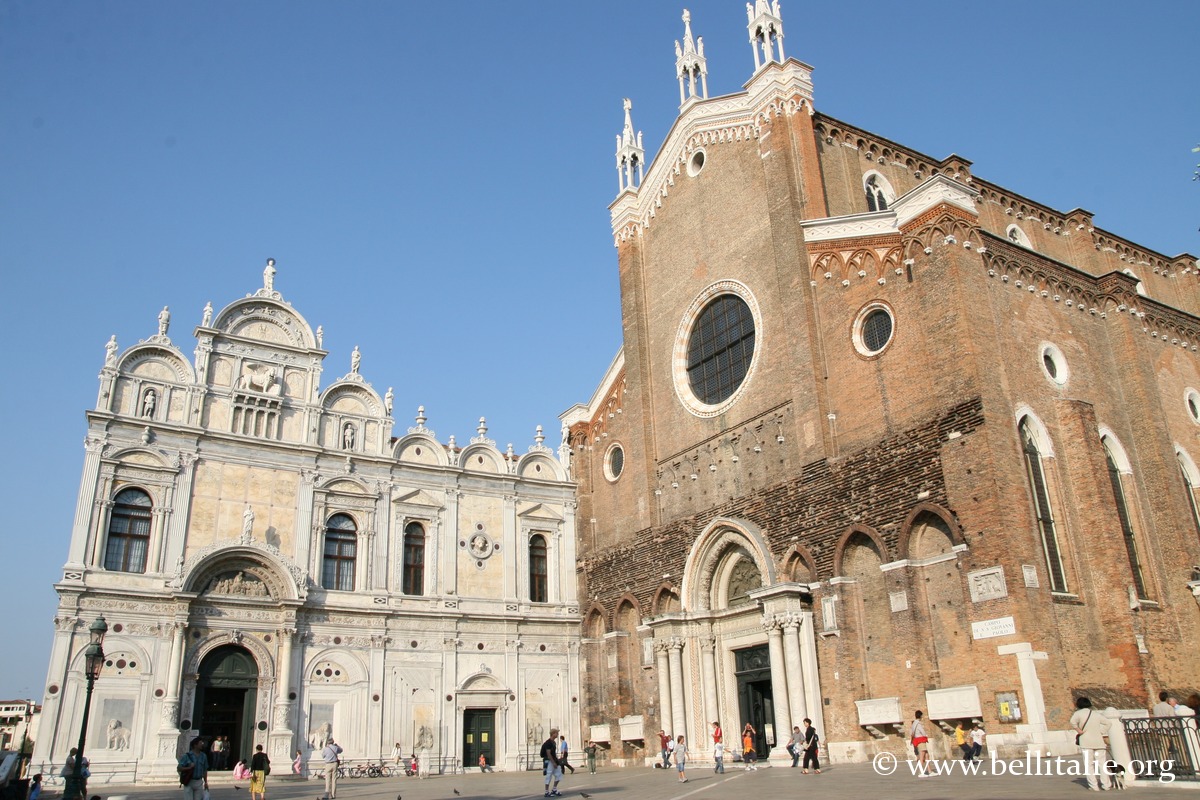
Campo San Giovanni e Paolo
On the square of Campo Santi Giovanni e Paolo stand the refined palace of the Scuola San Marco, the equestrian statue of the condottiere Bartolomeo Colleoni, and the vast Dominican basilica of San Giovanni e Paolo, built between the 13th and 15th centuries.
This large church, one of the three largest in Venice, is a Gothic building housing the funeral monuments of former doges of Venice and consequent works of art, by Veronese, Lorenzo Lotto, etc.
Past its elegant 14th-century portal, one discovers the three high naves 100 meters long and 32 meters high.
The equestrian statue was erected in honor of the famous condottiere Bartolomeo Colleoni (mercenary who died in 1475), former captain general of the land forces of the Republic of Venice, who left rich donations to the State of Venice, in exchange for the erection of an equestrian monument in his honor on St. Mark’s Square, although Venice had always followed the rule of not erecting statues of figures on that square. The Republic accepted the donation, but ultimately decided to place the monument on the Campo of Santi Giovanni e Paolo.
16. Other museums and palaces
Correr Museum
In the historic buildings of the Procuratie Nuovissime on St. Mark’s Square, the Correr Museum is dedicated to discovering the rich history of Venice, through themes such as art, culture and the history of the Serenissima. The rooms also house ancient works, a collection of sculptures by Antonio Canova, and a gallery of Venetian art.
National Archaeological Museum
On the upper floor of the Procuratie Nuove on St. Mark’s Square, the Archaeological Museum displays Greek and Roman sculptures, ceramics, bronzes, coins, and some Egyptian and Assyro-Babylonian works. Its collections were formed mainly by donations from the collections of prestigious families.
Ca’ Pesaro
Former grand palace of the late Renaissance, Ca’ Pesaro stands along the Grand Canal, housing two great museums of Venice: the Museum of Modern Art and the Museum of Oriental Art.
The building was made during the 17th century on a design by Baldassare Longhena, for the wealthy Pesaro family, with a remarkable facade decorated with zoomorphic heads at the base, diamond-cut stones and large windows in the form of arcades.
Ca’ Rezzonico
This 18th-century Palace, which became the museum of 18th-century Venice, the last period of the end of the Republic of Venice, was begun by the architect Baldassare Longhena. It preserves period furniture, paintings, tapestries, porcelain and objects, as well as a picture gallery.
A marble staircase leads to the vast gilded ballroom and the sumptuous salons, with decorations by Tiepolo and works by Longhi, Guardi, Canaletto or Tintoretto.
Ca’ d’Oro
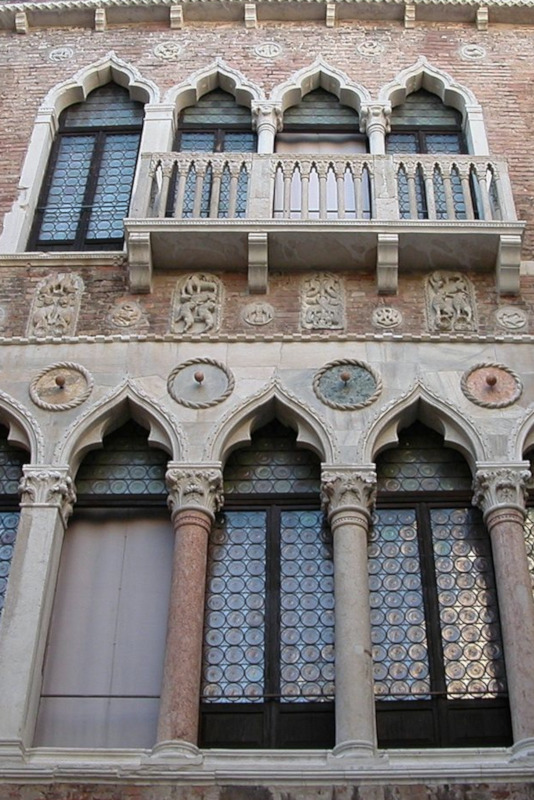
Ca d’Oro
Along the Grand Canal, the Ca’ d’Oro palace built in the 15th century, is one of the best preserved and one of the most beautiful in Venice, representative together with the Doge’s Palace of Venetian Gothic.
Its name comes from its facade which was originally gilded.
It houses the collection of the Giorgio Franchetti gallery, in its rooms with wooden coffered ceilings, etc. AND also preserves a beautiful cosmatesque floor on the ground floor.
Palazzo Contarini del Bovolo
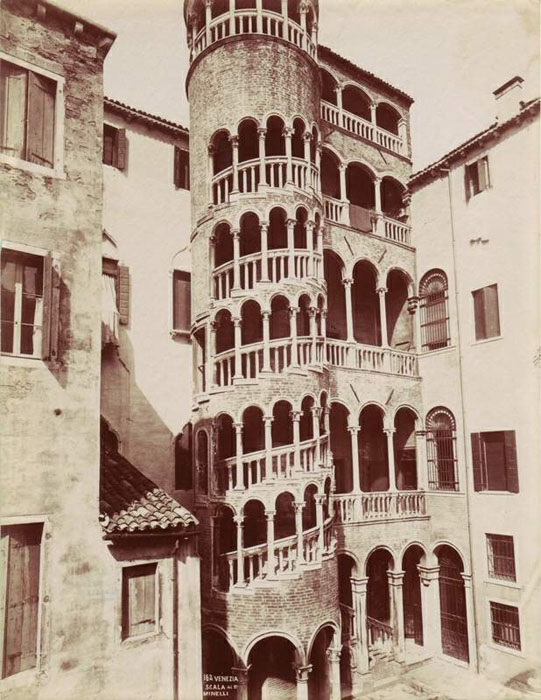
Palazzo Contarini del Bovolo
The small Palazzo Contarini del Bovolo (14th-15th century) is remarkable for its external spiral staircase with its small arcades (Scala Contarini del Bovolo).
Natural History Museum
Scuola di San Giorgio degli Schiavoni
17. Other places and churches
Campo Santo Stefano
The Campo Santo Stefano is one of the largest squares in Venice and a little off the tourist circuits, although interesting palaces stand there, with a statue and cafes, and the homonymous church of Santo Stefano. The interior is a fine example of Venetian Gothic, whose sacristy preserves major canvases by Tintoretto (The Last Supper, Washing of the Feet, The Resurrection, Prayer in the Garden).
Church of Santa Maria di Nazareth
This majestic Baroque church whose facade stands facing the Grand Canal, Santa Maria di Nazareth or degli Scalzi, was erected for the Fathers of the Discalced Carmelites by Baldassarre Longhena between 1670 and 1705. The facade by Giuseppe Sardi is a singular example of Venetian Baroque.
Campo San Polo
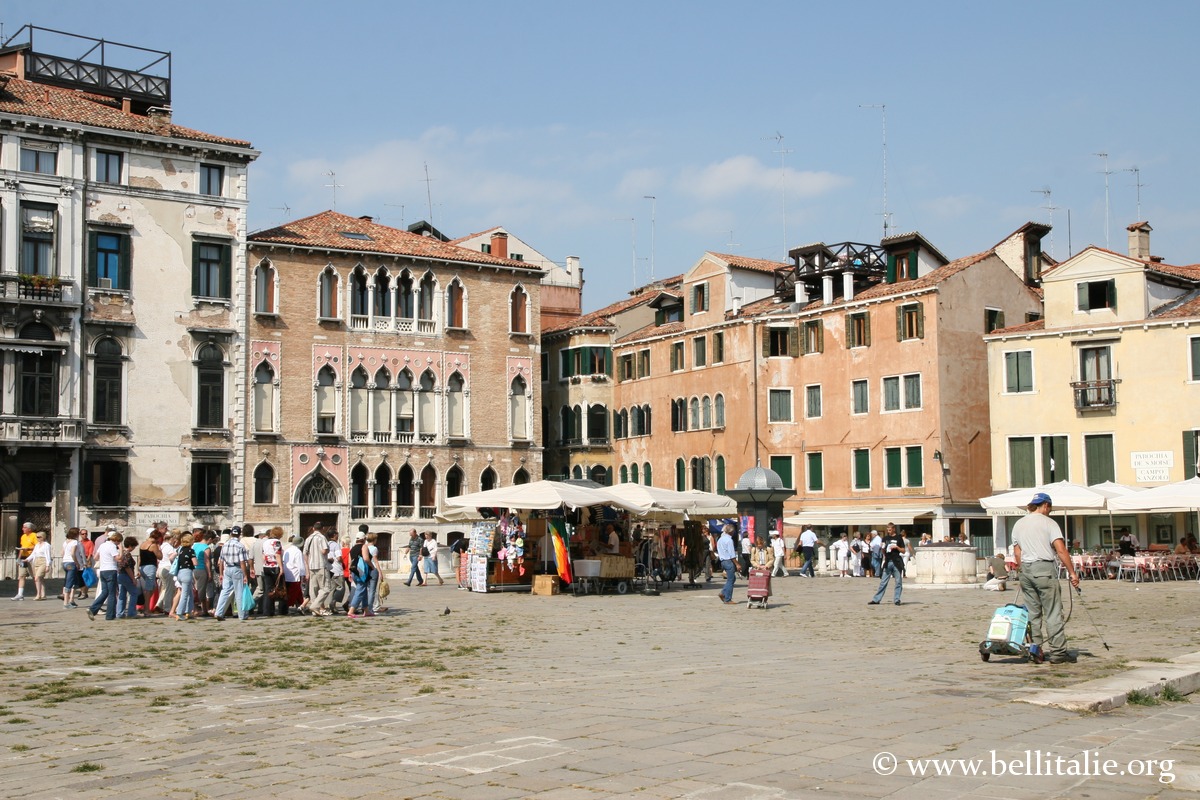
Campo San Polo
Campo San Polo is one of the largest squares in Venice after St. Mark’s Square, located behind the homonymous church, where an important market was once held, with old palaces with 15th-century Gothic facades.
Fondeto dei Tedeschi
The Fondeto dei Tedeschi is one of the largest buildings in Venice, erected for the first time in the 13th century, which served mainly as a dock and storage of goods that came from the north, from the Germanic area in particular.
Punta della Dogana
The Punta della Dogana is a triangular point separating the Grand Canal and the Giudecca Canal, where the maritime customs house was located, with today the Basilica of Santa Maria della Salute, the Duoane da Mar, and the Patriarchal Seminary. The “Customs of the Sea” is a complex with a high tower, warehouses with crenellated walls.
Santa Maria dei Miracoli
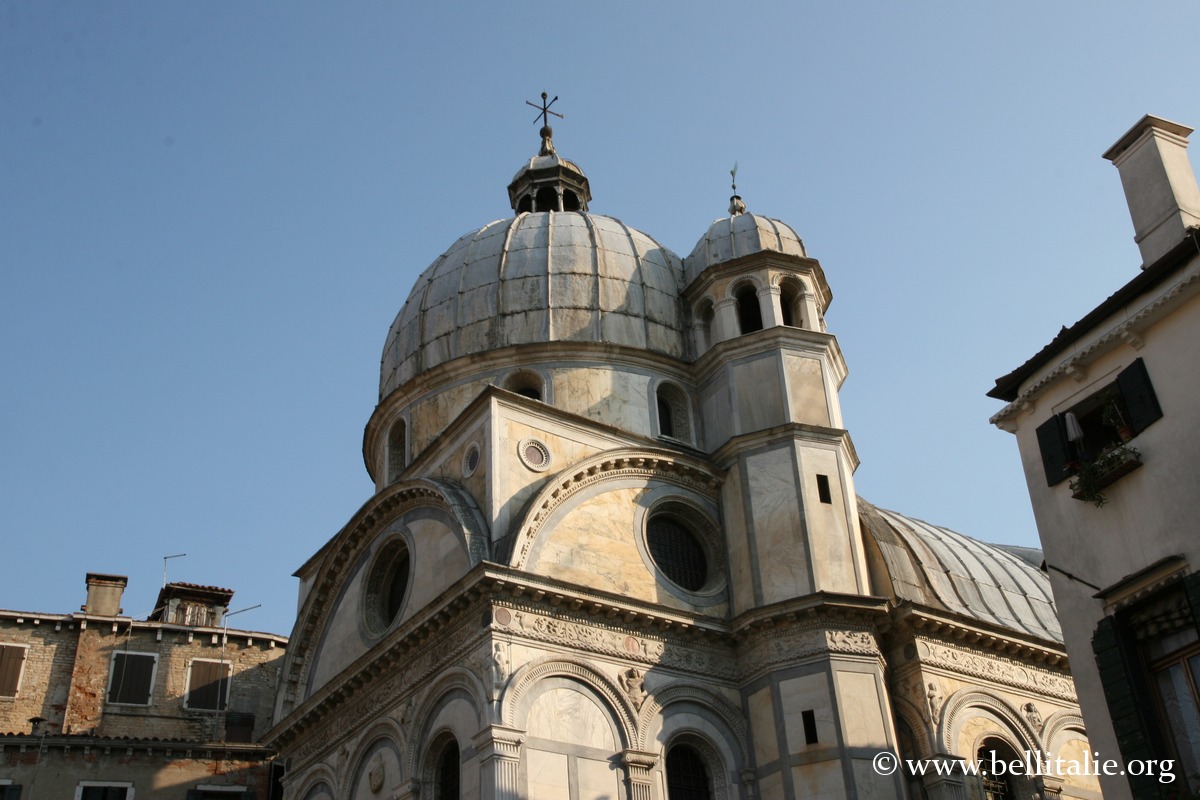
Santa Maria dei Miracoli
Sublime little church of the sestiere Canareggio, built at the end of the 15th century. It stands out with its rectangular shape, covered with polychrome marbles on the outside and on its interior walls, with a vaulted coffered ceiling.
San Zaccaria
One of the very beautiful churches near St. Mark’s, sestiere Castello, from the 14th and 15th centuries, with an original facade, beautiful works (painting by Bellini, polyptych, etc), a 9th-century crypt often half flooded.
Madonna dell’Orto and Campo dei Mori
The Campo dei Mori square is remarkable for its statues. The madonna dell’Orto, on the homonymous campo, is a pretty Gothic church in exposed brick, from the 14th and 15th centuries, with a beautiful campanile and an elegant cloister.
San Pantalon
Remarkable church for the impressive fresco on its vault, made by Gian Antonio Fumiani , which represents The Martyrdom and Glory of Saint Pantaleon (1684-1704)
19. Other islands of the lagoon
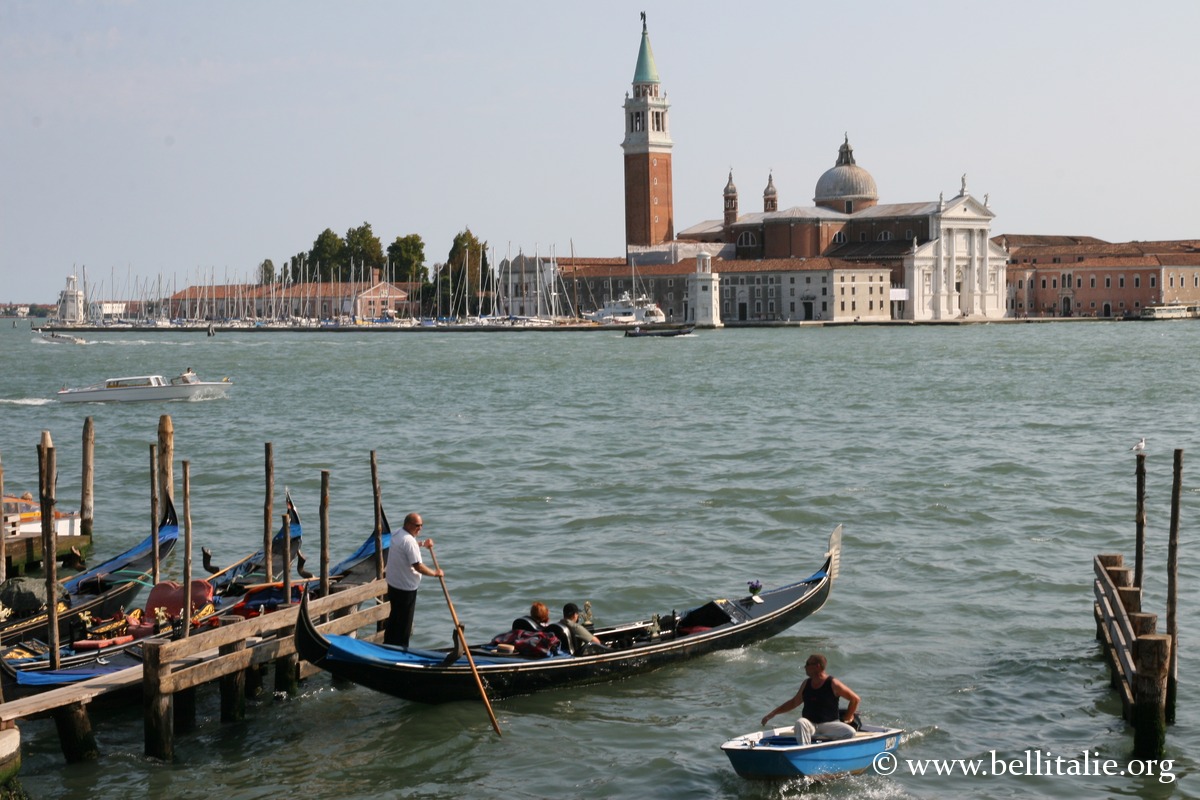
San Giorgio Maggiore
San Giorgio Maggiore
Sant’Andrea, island with the ancient homonymous fort.
Mazzorbo is another pretty lesser-known island, besides the islands of San Michele, Sant’Erasmo
Lido di Venezia which largely closes the lagoon. The latter, venue of the famous Venice Film Festival which celebrates the seventh art, stretches over a 12 km strip between the lagoon and the Adriatic Sea. It gained character in the “Belle Epoque”, when it welcomed wealthy bourgeois and nobles on holiday. Beautiful Art Nouveau villas remain.
Links
- Wikipedia page: en.wikipedia.org
- Tourist portals: www.informagiovani-italia.com
- Blogs: www.viaggiarevenezia.it
Map
 Show interactive map




Comments