
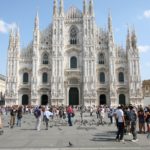
 Milan
Milan 
Milan, the Lombard capital, is the economic and financial centre of Italy, home to numerous companies. A large and busy metropolis, it is not a city of great refinement or authenticity, having been largely rebuilt throughout its history. However, its long and rich history has left it with exceptional sites, starting with its magnificent Duomo, which is an extraordinary cathedral known as the “marble hedgehog”, then the Galleria Vittorio Emanuele II and Art Nouveau buildings, or the Sforza Castle. It also has a large number of rich museums, an active nightlife, its international fashion centre associated with shopping, and religious buildings inherited from Saint Ambrose, including wonders such as the famous Last Supper by Leonardo da Vinci.
MilanArt cities of the Po Plain
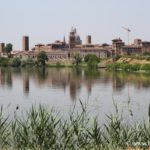 Mantua
Mantua is one of the main cities of the Italian Renaissance, listed by UNESCO as a World Heritage Site since 2008. This city has many charms inherited from the Middle Ages and especially from the Renaissance when it flourished under the Duchy of Gonzaga. Its jewel is the immense Ducal Palace of the Gonzagas with the Castle of Saint George, which hide unique works of art. The historic centre of Mantua lies between two charming lakes formed on the course of the Mincio river, close to a nature reserve.
Mantua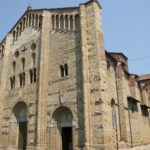 Pavia
Pavia 
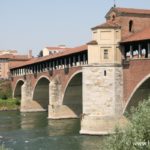
Former capital of the medieval Lombard kingdom, Pavia, 40 km south of Milan, preserves charming buildings, from the covered bridge crossing the Ticino, to the Visconti Castle, via the historic centre with Piazza della Vittoria and the cathedral. Nearby, the Certosa di Pavia, built in the 14th century, is one of the most important monasteries in Italy.
PaviaCremona
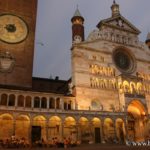
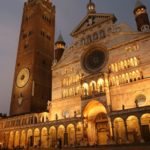 Cremona preserves, with the Piazza del Comune, a splendid square, emblematic of Lombard art, surrounded by Renaissance palaces with its superb cathedral. It is primarily famous as the birthplace of musicians and luthiers, including Antonio Stradivari, who made his famous violins there in the 17th and 18th centuries.
Monza
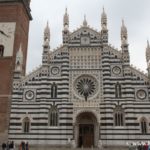
Beyond the Formula 1 Grand Prix, Monza, located 15 km north of Milan, is remarkable for two exceptional buildings: the Royal Palace built by the Habsburgs of Austria in the 18th century on the edge of a vast park, and the Gothic Duomo preserving the chapel of Queen Theodelinda, a masterpiece of 15th-century Gothic painting.
MonzaVigevano
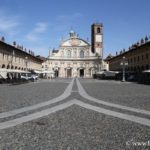
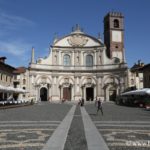 40 km south-west of Milan, Vigevano is a city imagined by Bramante and Leonardo da Vinci, built at the end of the 15th century. It has kept a superb Renaissance square, the Piazza Ducale with its decorated arcades, next to the beautiful and massive Sforza Castle.
Lodi
Lodi, 40 km south-east of Milan, is a small town with an Art Nouveau town centre, two pretty squares, an old Romanesque cathedral, and the temple of the crowned Holy Virgin, which is a masterpiece of Lombard Renaissance.
Sabbioneta
Listed with Mantua as a UNESCO World Heritage Site, Sabbioneta is a Renaissance creation, founded in the 16th century by the condottiere Vespasiano Gonzaga to create a “little Rome”, with in particular its extraordinary Theatre in the antique style.
Cities of the Alpine foothills
 Bergamo
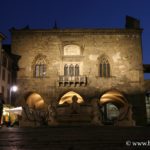
The upper town of Bergamo, known as Città alta, is protected by a large 16th-century Venetian wall. It preserves one of the most beautiful medieval centres in the region around its Piazza Vecchia, with its Renaissance buildings, including the Colleoni Chapel, palaces, and above all the Basilica of Santa Maria Maggiore.
BergamoBrescia
Brescia, the second most populous city in Lombardy, is a dynamic city of Roman origin, of which it preserves interesting remains. 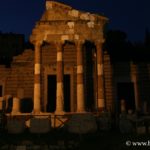 It is a very pleasant city with many faces, whose streets retain traces of every era, with its churches, its medieval quarter or its magnificent Lombard Monastery of Santa Giulia.
Como
Como is a beautiful city south of the western arm of Lake Como , with medieval, Gothic and Renaissance buildings such as arcades and squares, including its old walls, the Piazza San Fedele, the Broletto Palace, its cathedral in late Gothic style, or the neoclassical Volta Temple and the 18th-century Villa Olmo. You can enjoy beautiful walks along the shore, and discover beautiful surroundings, including the Lake Como Poetry Way trail.
Varese
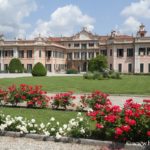
Varese is a charming garden city spread over seven hills, just upstream of the lake of the same name. It attracts as much for its lake and villas as for its heritage, such as the Palace of Este and its park, the Masnago Castle, or the sanctuary of the Sacred Mount where the Via Sacra has 14 chapels.
VareseLakes of Lombardy
The three large lakes located in the north of the Lombardy region are fed by water descending from the mountains: Lake Garda to the east (shared with Veneto and Trentino), Lake Maggiore to the west (shared with Piedmont and Switzerland), and Lake Como north of Milan.
In addition, between Bergamo and Brescia lies the more modest but no less charming Lake Iseo, near Lake Garda is the small and cold Lake Idro, or the Lake Lugano near Como, which is shared with Switzerland.
 Lake Garda
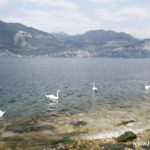
The very beautiful Lake Garda is the largest in Italy, straddling three administrative regions. Its southern part is a holiday resort, while the north is more like a fjord, a destination with many aspects, between small villages, castles, beaches, water sports, lemon groves and olive groves, trekking in the surrounding mountains, and its own gastronomy.
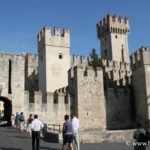
Historic villages are to be discovered, the pearl of which is Sirmione on its strip of land protected by a medieval castle, not far from the water fortress of Peschiera del Garda , to the north Riva del Garda and its windsurfing spot, several small ports and beautiful castles, and even amusement parks such as Gardaland.
Lake Maggiore 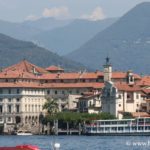
Lake Maggiore charms the traveller with its beautiful islands, villas, villages, landscapes and micro-climate, straddling Piedmont, Lombardy and Switzerland to the north. It also attracts hikers and cyclists who come to enjoy its nature and landscapes. A good way to discover the lake is by boat linking its islands and several remarkable sites.
On the western side, in Piedmont, the Borromean Islands transformed into true works of art with their palaces and lush gardens, the gardens of the Villa Taranto in Verbania, Stresa with the park of the Villa Pallavicino or the Mount Mottarone.
On the eastern side in Lombardy, let us mention the Hermitage of Santa Caterina del Sasso, and the castle of the Rocca d’Angera which houses the largest toy museum in Europe.
 Lake Como
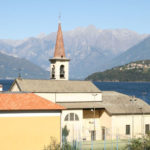
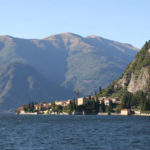
Lake Como is the deepest lake in Italy, and the one with the longest perimeter, with its two southern arms giving it an inverted Y shape. It is probably the most beautiful of the great lakes, also appreciated for its elegant villas and old villages, and frequented by the international jet set. The peaks framing its northern part quickly exceed 2,500 metres. Many itineraries allow you to discover its treasures, both on foot and by boat.
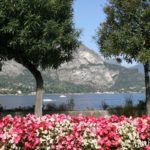
Como is a beautiful city south of the western arm, with its Roman, medieval, Gothic and Renaissance heritage, including the Broletto Palace, the late Gothic cathedral and the neoclassical Volta Temple. Other emblematic sites of the lake are the cinematic Villa Balbianello and the charming village of Bellagio at the tip of the two southern arms, and on the eastern shore Varenna and its surroundings.
 Lake Iseo and Franciacorta
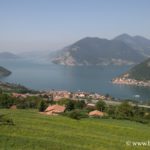
Between Lake Como and Lake Maggiore, between Bergamo and Brescia, the smaller Lake Iseo is an enchanting and peaceful site, ideal for a short stay, between its preserved natural surroundings, its Franciacorta cellars near Iseo, its beautiful villages such as Lovere, Pisogne and Iseo, its good food, or Monte Isola, which is the largest lake island in Europe.
Lovere is listed among the most beautiful villages in Italy, with its picturesque streets and beautiful walks along the lake.
 Lake Idro
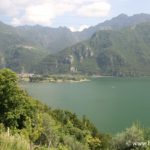
At an altitude of 400 metres, the small Lake Idro is little known and enjoys few visitors. In a beautiful wooded natural setting, at the foot of the Little Dolomites, it is close to Lake Maggiore, 15 km as the crow flies, in the province of Brescia.
Lake IdroLake Lugano
Although Lake Lugano is mainly in Switzerland, a good part upstream is in the province of Como, not far from Lake Como, and its south-western shores are in the province of Varese.
Northern Alps of Lombardy
Stelvio National Park
The vast area of Stelvio National Park, straddling Lombardy, Trentino and South Tyrol, is a destination for holidays in the heart of nature, with peaks approaching 4,000 metres and hundreds of trails to explore on foot or by mountain bike.
Bormio is a ski and spa resort, in the Alta Valtellina area, and the gateway to Stelvio Park.
From Valfurva, you can discover the coniferous forests and the beautiful valleys of the surroundings.Close to the Swiss border, Livigno is one of the highest municipalities in Italy, known for its winter sports facilities where slopes reach 3,000 metres in altitude.
Valtellina
Valtellina (Valtellina in Italian) is a large area crossing the whole of northern Lombardy, where Stelvio Park occupies the north-east. Activities and discoveries there are varied, between skiing in winter and summer tourism, with its charming villages, hiking, horse riding or mountain bike trails, its cheeses and other local products such as bresaola, .
Sondrio is the main town of Valtellina, occupying a territory located between mountains and vineyards. It is an ancient town, preserving a historic centre with manor houses and palaces.
The Bernina Express, is an old railway line, mainly in Switzerland, linking Tirano in Italy to Chur in the Grisons in Switzerland. It is the highest railway in the Alps, with grandiose structures, crossing passes and beautiful landscapes.
With the Albula line, it has been listed as a UNESCO World Heritage Site since 2008.
Tirano, the starting point of the red train of the Bernina, keeps a borgo vecchio, monuments and Art Nouveau palaces, as well as the Sanctuary of the Madonna di Tirano.Chiavenna, to the west of the valley, preserves a beautiful historic centre with medieval palaces and its famous “crotti”, caves where you can taste local products: cheeses and charcuterie such as bresaola.
 Valcamonica
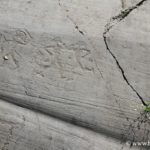
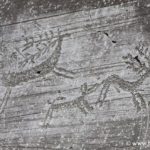
Val Camonica is crossed by the Oglio river, which descends from the Alpine foothills to Lake Iseo. It is also called the “valley of signs” (valle dei segni in Italian), being indeed famous for its prehistoric petroglyphs, rock engravings on stones. They are found in many places, including eight theme parks and itineraries that have been listed by UNESCO as World Heritage, as the first Italian site to be listed there in 1979.
The valley also contains several charming villages such as Bienno and its historic forges, or the medieval castle of Breno, and in the upper valley Ponte di Legno and its winter sports resorts.
Other sites, parks and paths
Rivers to discover in Lombardy
- Along the Po, the border with Emilia-Romagna, Corte Sant’Andrea is a stage of the ancient Via Francigena, where the river was crossed.
- The Adda river descends the Valtellina to flow into the Po, near Castelnuovo Bocca d’Adda. On its banks, Crespi d’Adda is an old workers’ town distinguished by UNESCO for its industrial heritage, and Lodi is a very pretty town. The shore is at its most charming around Trezzo.
- The Ticino valley has been protected for several years by a nature park. Its river flows from Lake Maggiore to its confluence with the Po. It was distinguished in 2002 for its environmental qualities and its heritage. A beautiful 120 km cycle path links Sesto Calende to Pavia.
- The Oglio descends from the Alps, passing through Lake Iseo, then continues on a long winding route before flowing into the Po. On its banks, Soncino is a pretty medieval village that preserves a splendid Sforza fortress, the Rocca Sforzesca. Its cycle path is one of the most beautiful in Italy, descending from the Passo del Tonale to San Matteo delle Chiaviche (at 1,883 metres altitude), 280 km long.
Paths
- Among other paths, the section of the Via Francisca del Lucomagno crosses Switzerland before entering Italy at Bellinzona, before joining the Via Francigena at Pavia, passing through Ponte Tresa, Ganna, Varese, Castiglione Olona, Castellanza, Cuggiono, Abbiategrasso, Bereguardo, then Pavia.
- The Via Francigena crosses Lombardy, coming from Piedmont from Vercelli, passing through Palestro, Robbio, Mortara, Tromello, Garlasco, Gropello Cairoli, Pavia, Belgioioso, Santa Cristina and Bissone, Chignolo Po, Lambrinia, Orio Litta, up to Corte Sant’Andrea.
Information
- Wikipedia article: it.wikipedia.org
- Tourism portals: www.luoghidiinteresse.it, viaggi.corriere.it
- Via Francigena and via Francisca del Lucomagno: www.italia.it, www.lombardia.viefrancigene.org, www.in-lombardia.it, www.laviafrancisca.org, viaggi.corriere.it
- Valcamonica: www.italia.it, whc.unesco.org
- UNESCO sites in Lombardy: www.in-lombardia.it
- Lake Lugano: luoghidavedere.it, www.lombardiafacile.regione.lombardia.it


Comments