


Vigevano is a beautiful, yet little-known art city, between Milan, Pavia and Novara, at about 40 km for the first two, 25 km for the third.
Presentation
The city is a little jewel of architectural harmony, designed as an “ideal city” at the end of the 15th century by Leonardo da Vinci and Bramante, protected by the powerful walls of the Dukes of Sforza and Visconti.
It is located in the historical region of the Po plain called Lomellina, a territory west of the Ticino and north of the Po that was heavily wooded until the Renaissance, where the lords came to hunt.
Vigevano is a lively city near the Ticino, hosting festivals and music, whose charming historic centre has pretty shops, pedestrian alleys, cafés and peaceful terraces.
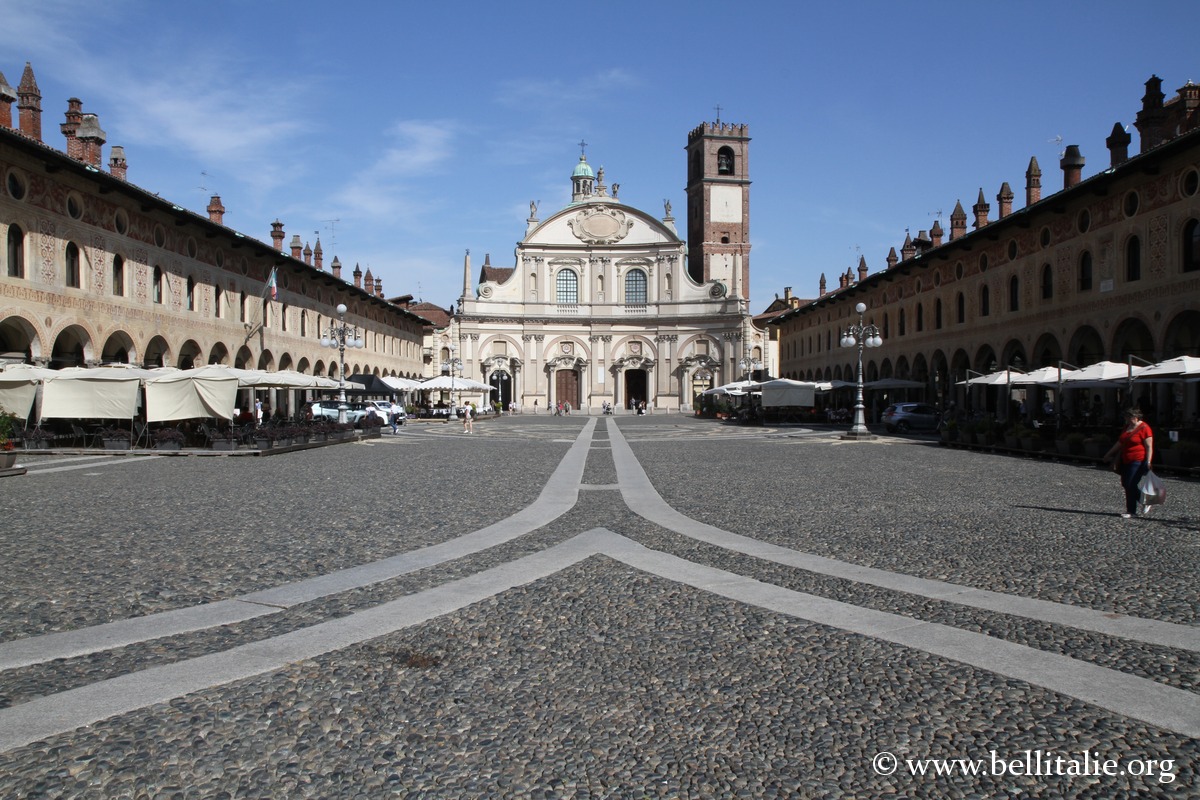
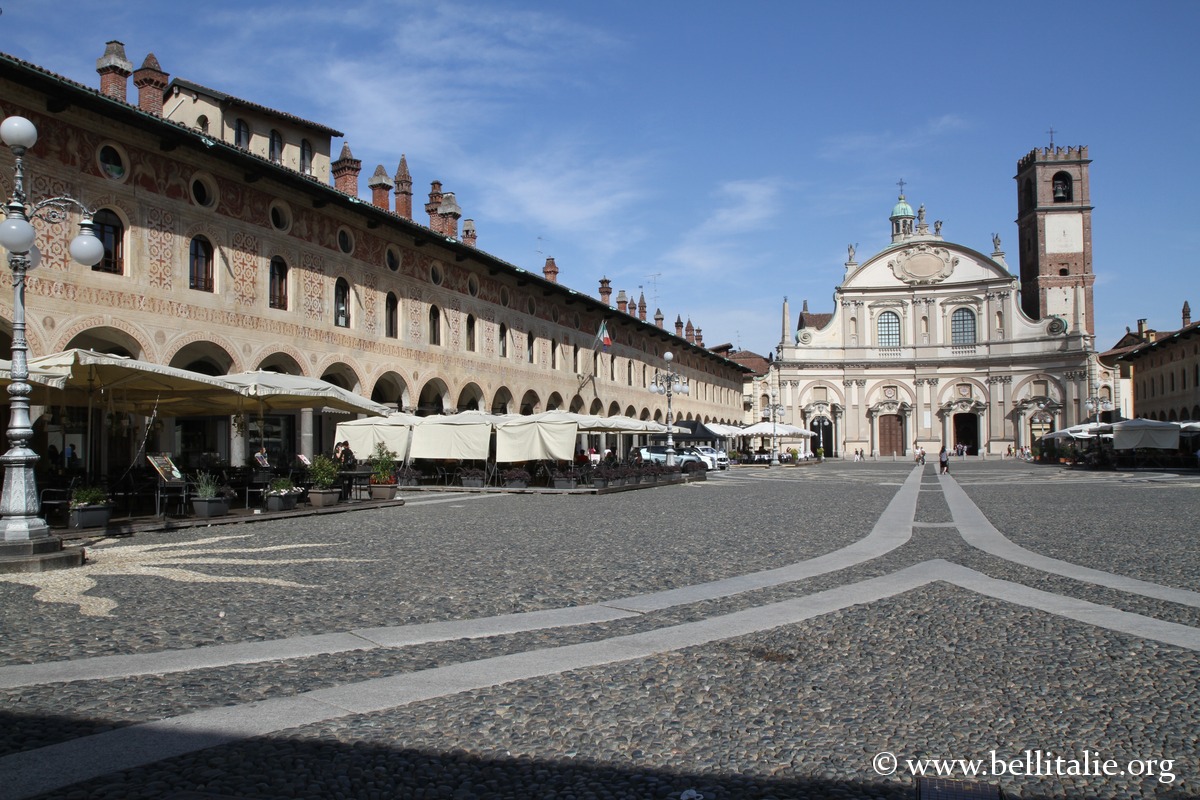
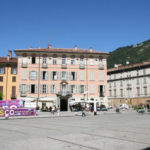
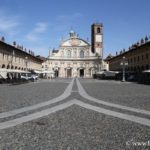
Its Piazza Ducale is one of the most beautiful squares in Italy, for its harmony, its style and its perspectives, surrounded by the Ducal Palace with the Visconti Sforzesco Castle, the Bramante Tower and the Sant’Ambrogio Cathedral.
The castle houses interesting museums, including the Museum dedicated to Leonardo, the Shoe Museum and the Archaeological Museum of Lomellina.
Let’s discover below the most beautiful and remarkable places of Vigevano …
1. Piazza Ducale in Vigevano
It was Ludovico Sforza il Moro who wished for this square at the end of the 15th century, by redeveloping the Piazza dei Mercanti to create a majestic entrance to his Castle. It was designed by Bramante and perhaps also Leonardo da Vinci, the latter having above all channelled the surrounding waterways.
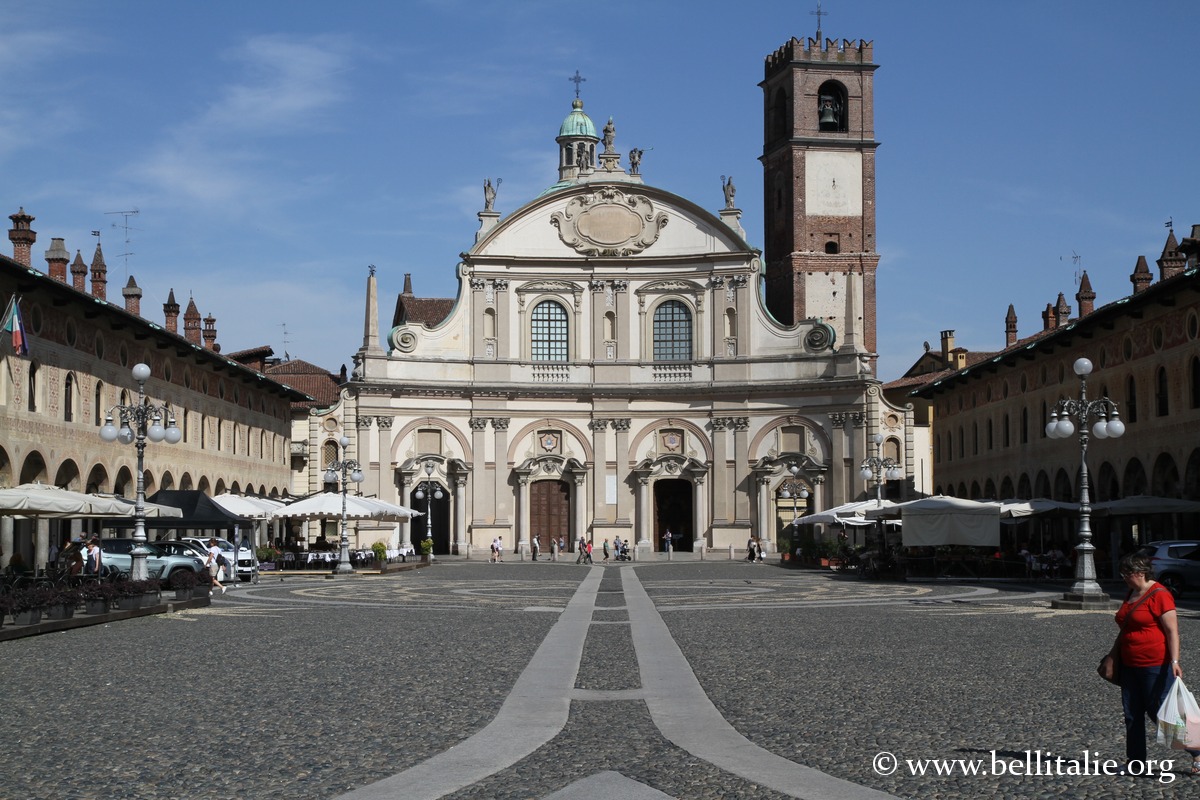
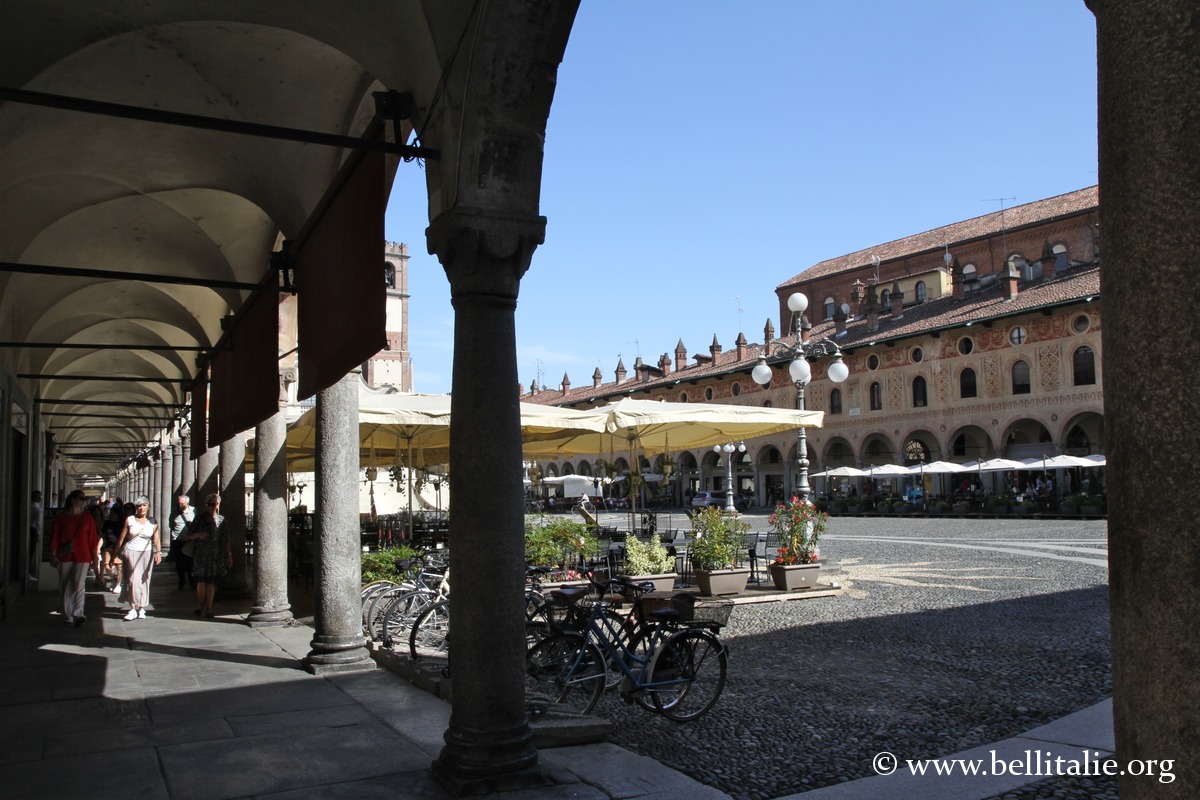
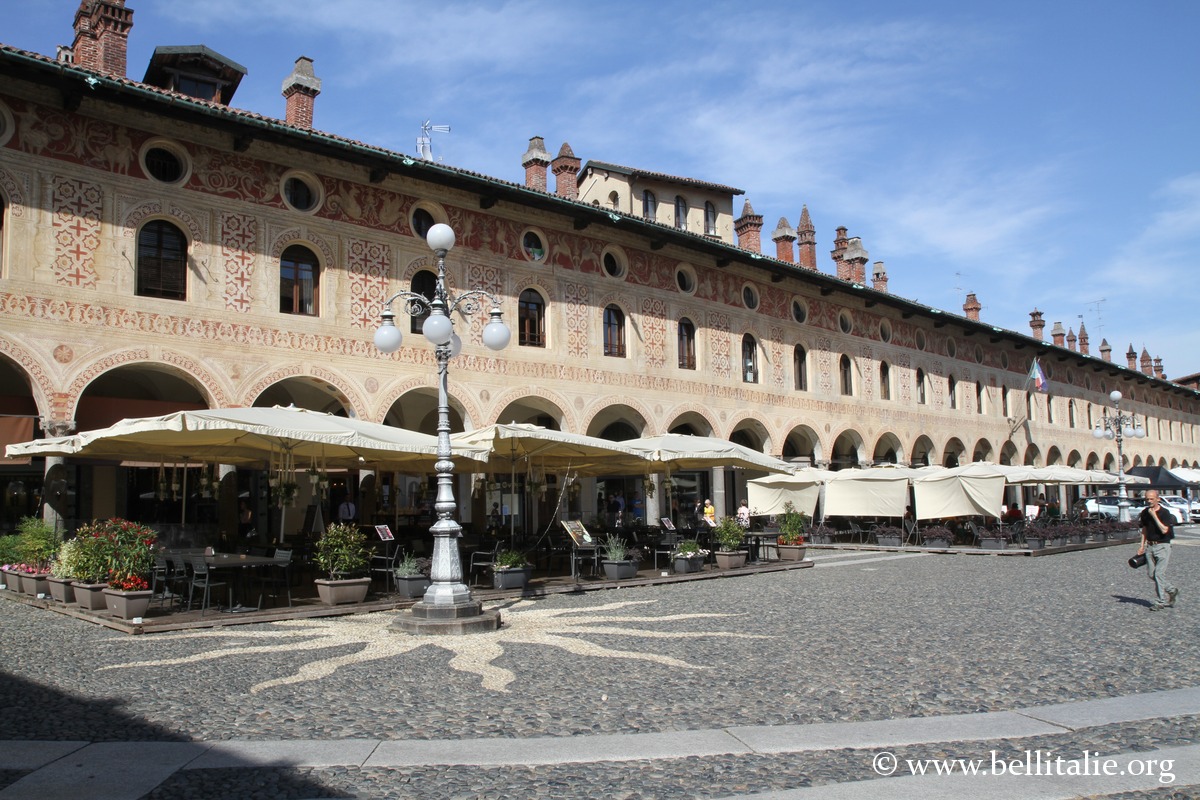
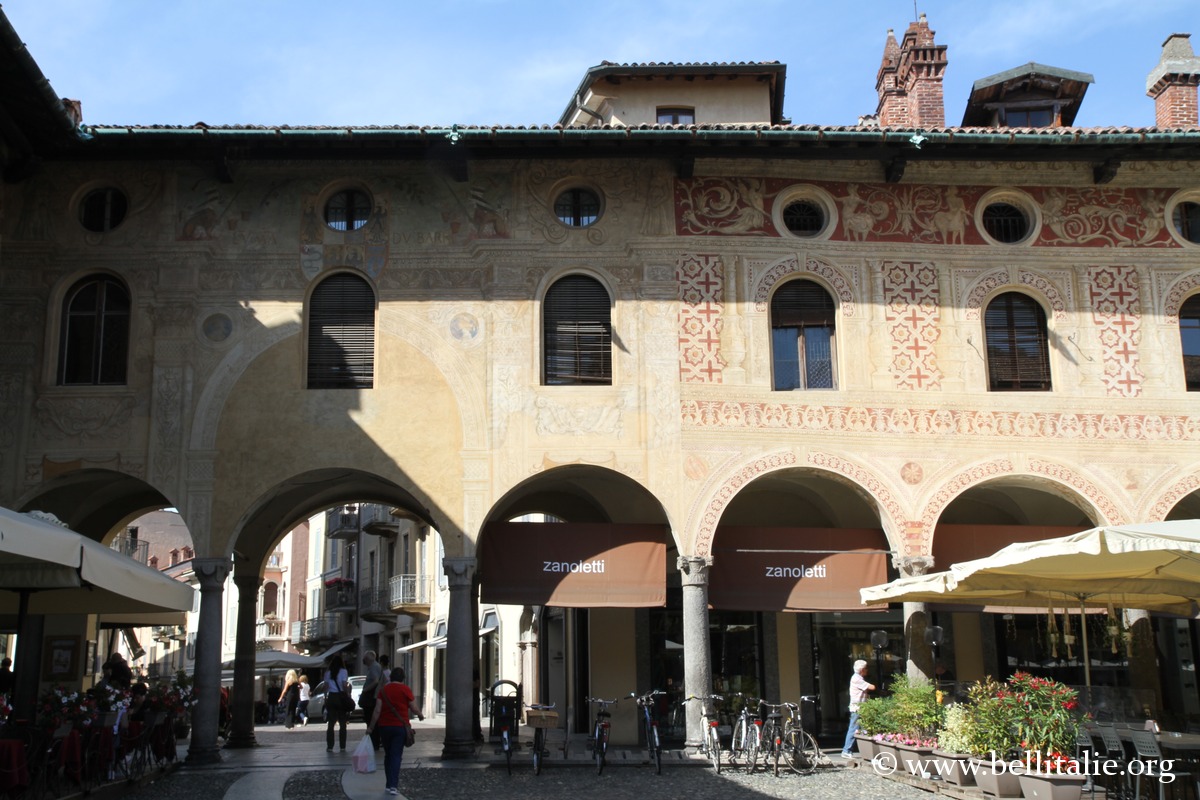
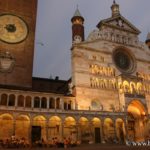
The effect is indeed majestic, with its arcades, the Bramante Tower and the façade of the Saint Ambrose Cathedral, as well as pretty frescoes on the façades. It is one of the most beautiful urban works of the Renaissance, harmonious and endowed with a superb perspective. The conductor Toscanini, who relaxed there on the terrace, called the square a “musical symphony”. Before being named Piazza Ducale, it was also called Piazza Duomo.
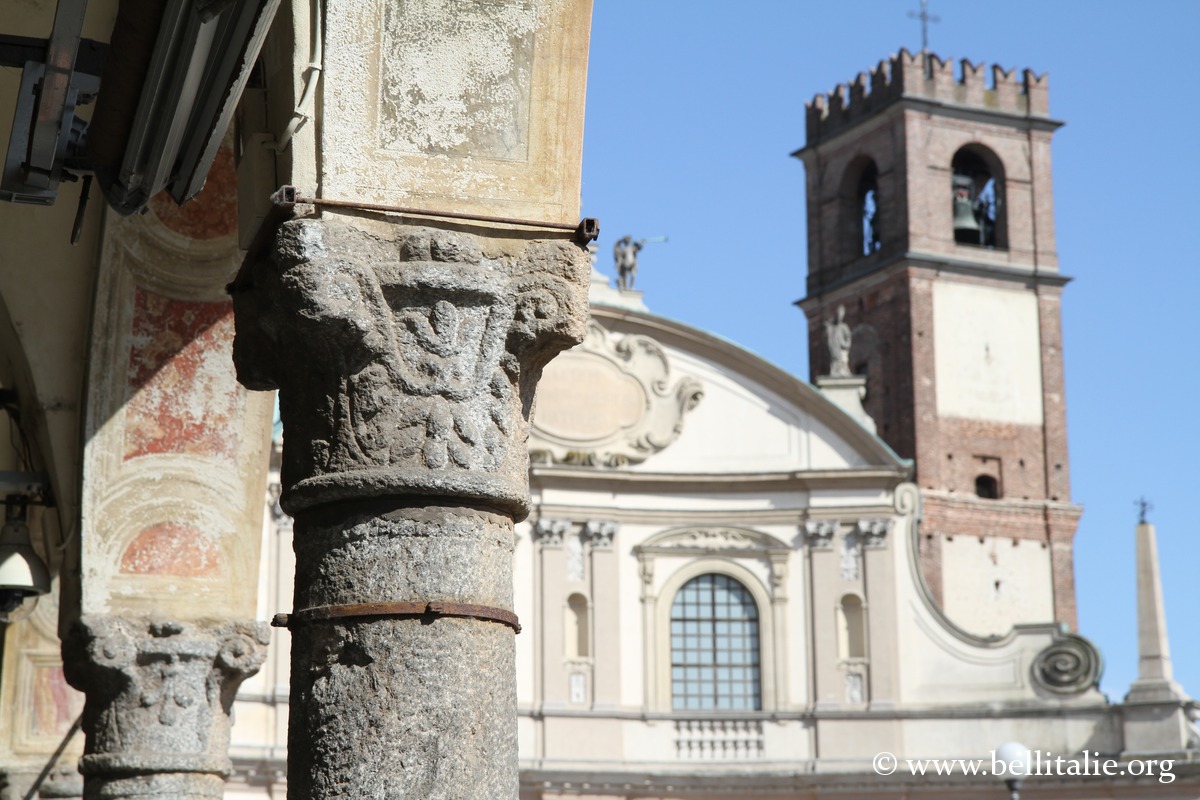
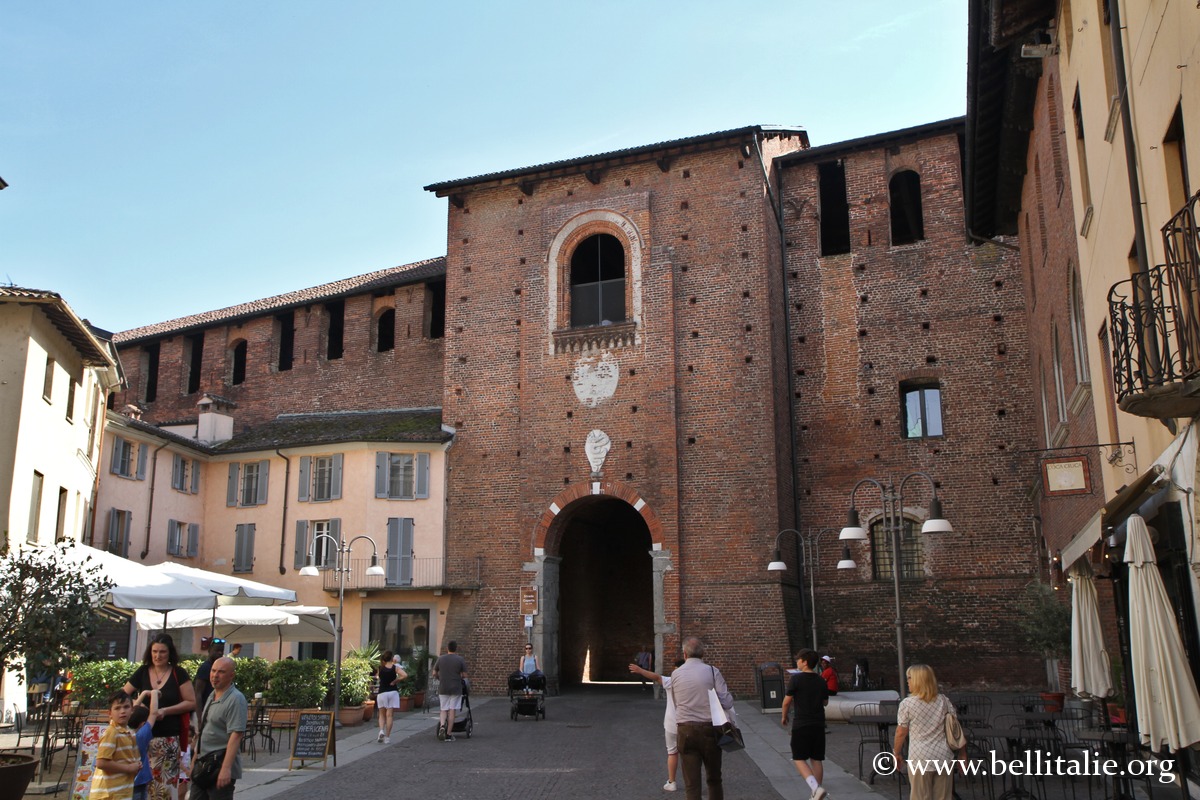
The current appearance, breaking with the “access gate” of the castle, however dates from 1680, when the fourth side was closed with the astonishingly concave new façade of the cathedral, on the initiative of the bishop, also an architect and mathematician Juan Caramuel y Lobkowitz. Previously, there were two triumphal arches on the western side to enter the castle, with a long stone ramp passing through the entrance under the tower.
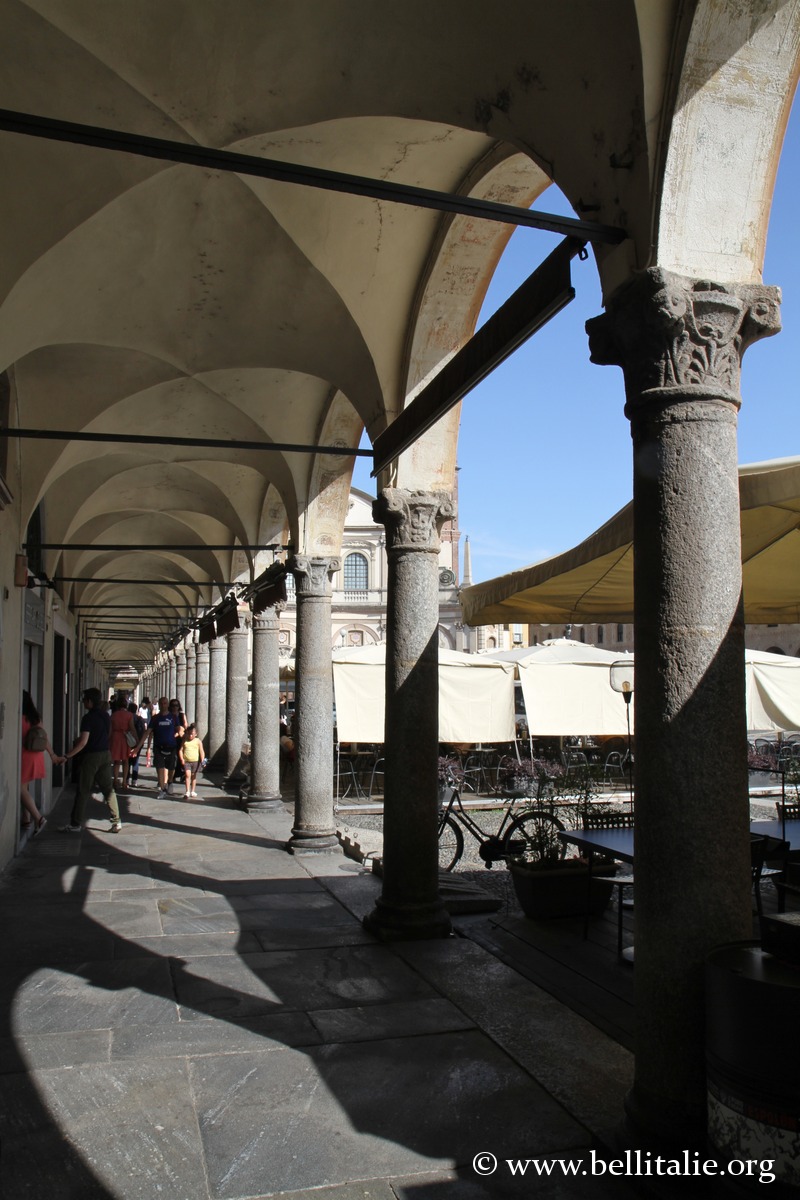
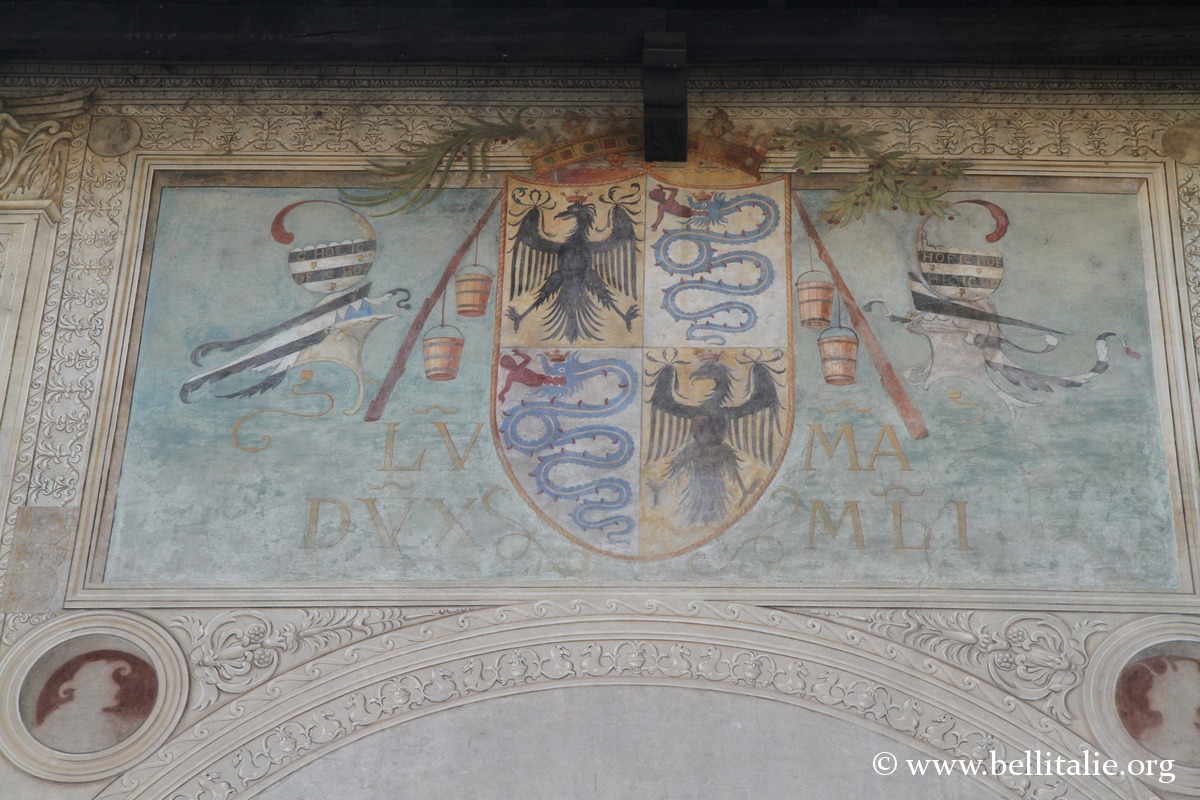
Under the arcades with their cafés and shaded terraces, the 84 columns with all different capitals and above them the medallions depicting historical figures and proverbs. The ornaments include frescoes, mullioned windows and friezes attributed to Bramante.
On the second floor of the bar Largo 34, is the Hall of the Fresco whose beautiful frescoes have come down to us almost intact.
2. Visconti-Sforzesco Ducal Castle
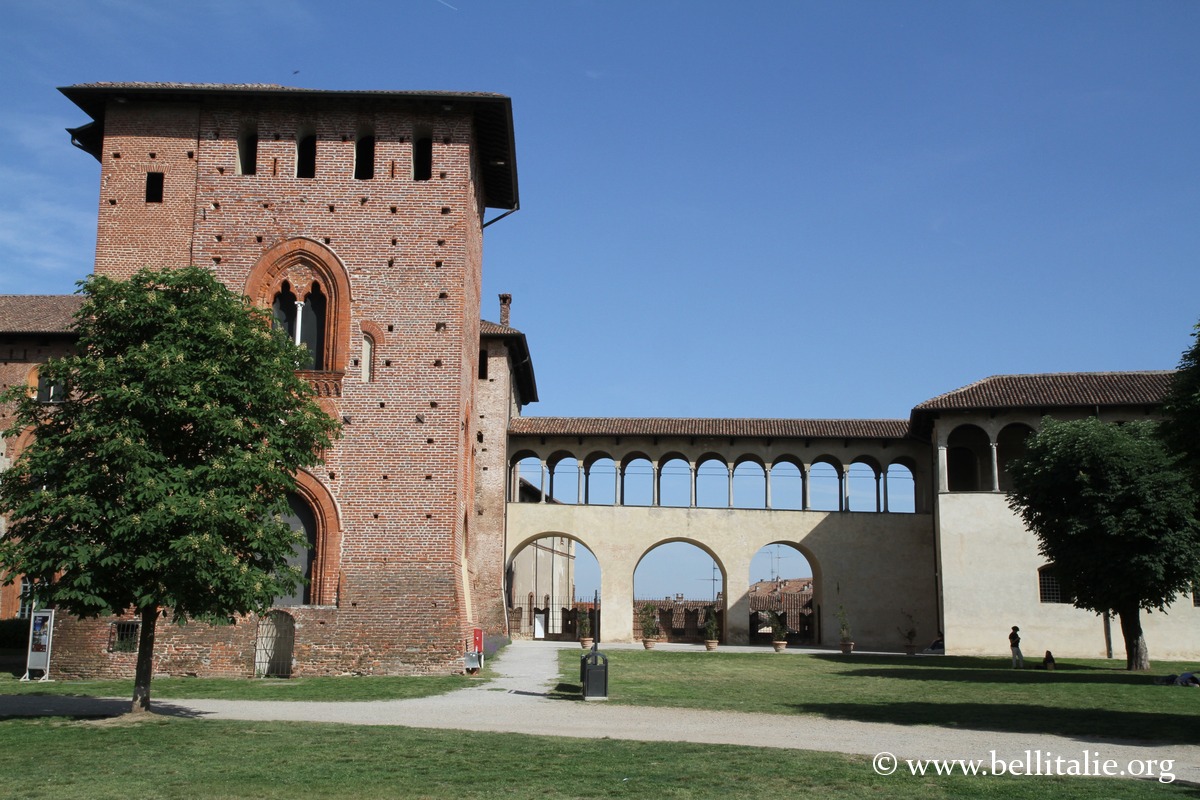
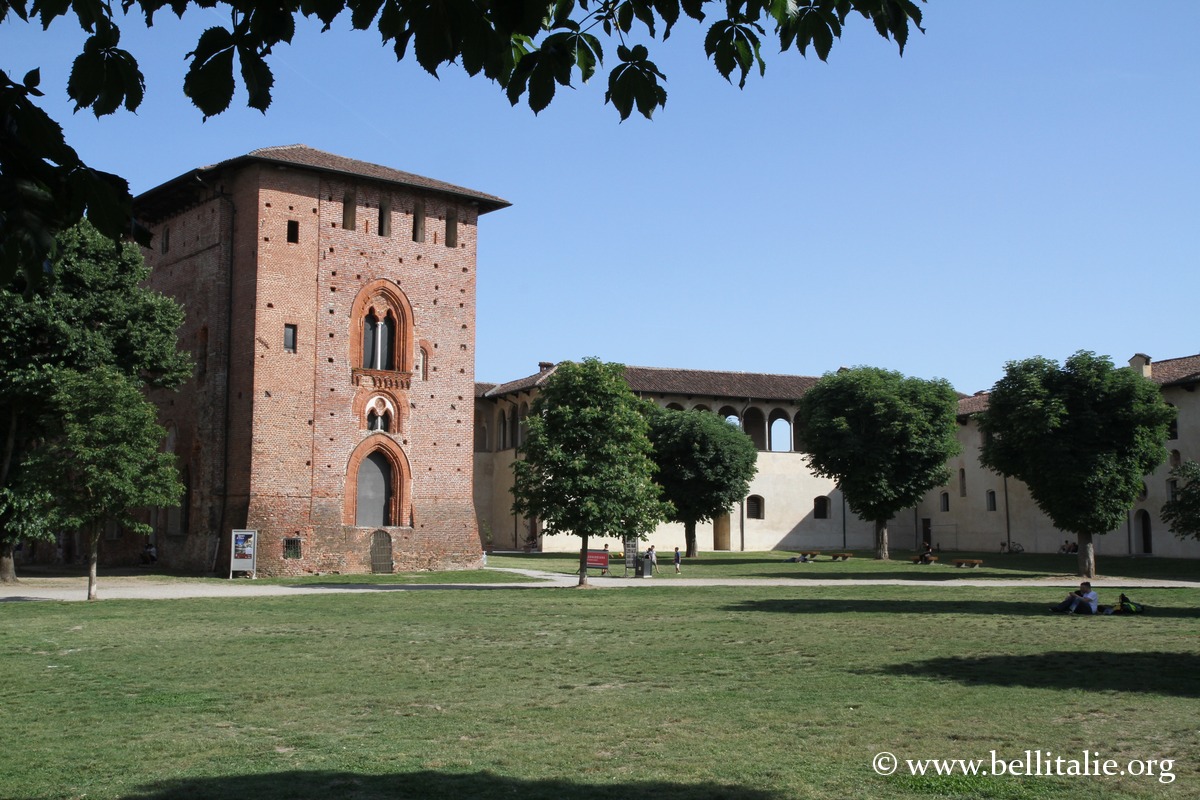
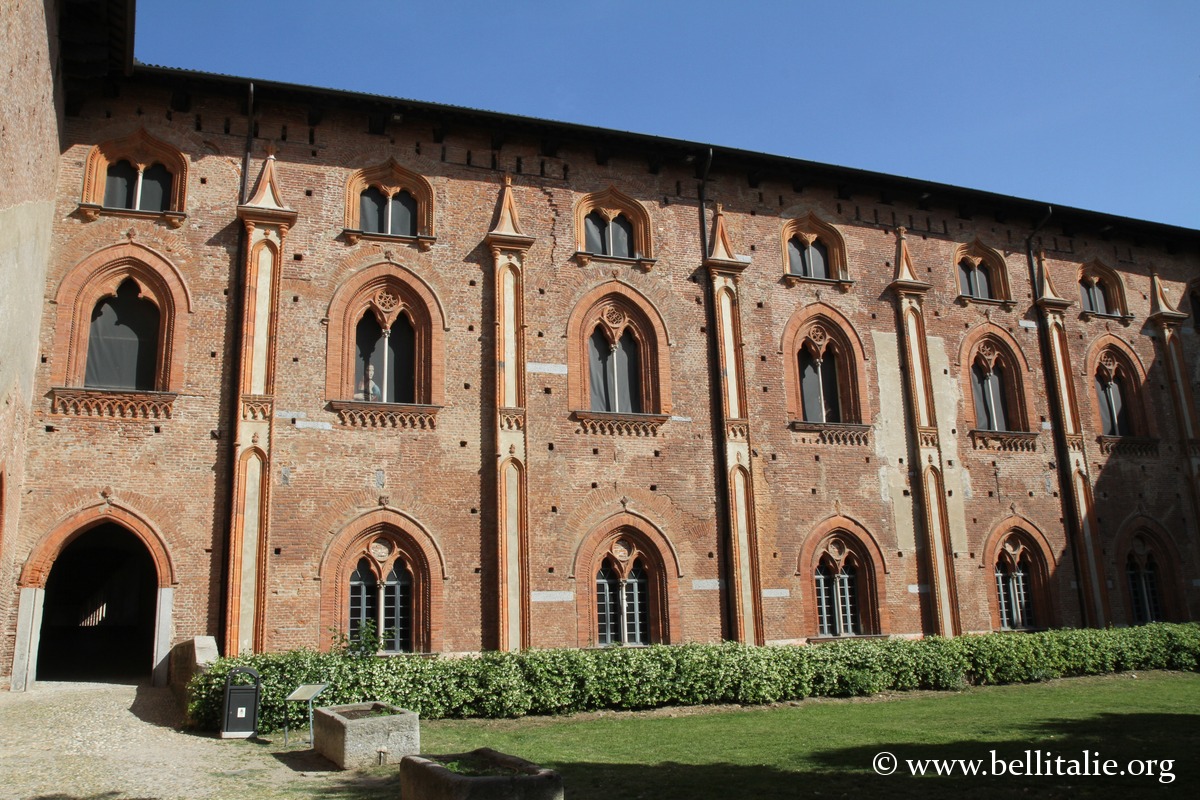
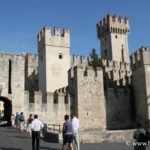
The fortified complex of Vigevano is one of the largest of its kind in Europe, built in the second half of the 14th century by the Visconti. From a military building it was transformed into a ducal palace under the Sforza of Ludovico il Moro by Bramante and perhaps even Leonardo da Vinci, in order to create a grandiose building.
Its area exceeds 7 hectares, of which 2.5 are covered, with five floors, a large and fascinating part of which can be explored by taking one of the numerous accesses. Its lawns host events and concerts.
From the former Ducal Palace, the Maschio Castle, one can visit with a guide the Hall of the Fresco with hunting scenes, a pastime of the Sforza, and the old prisons.
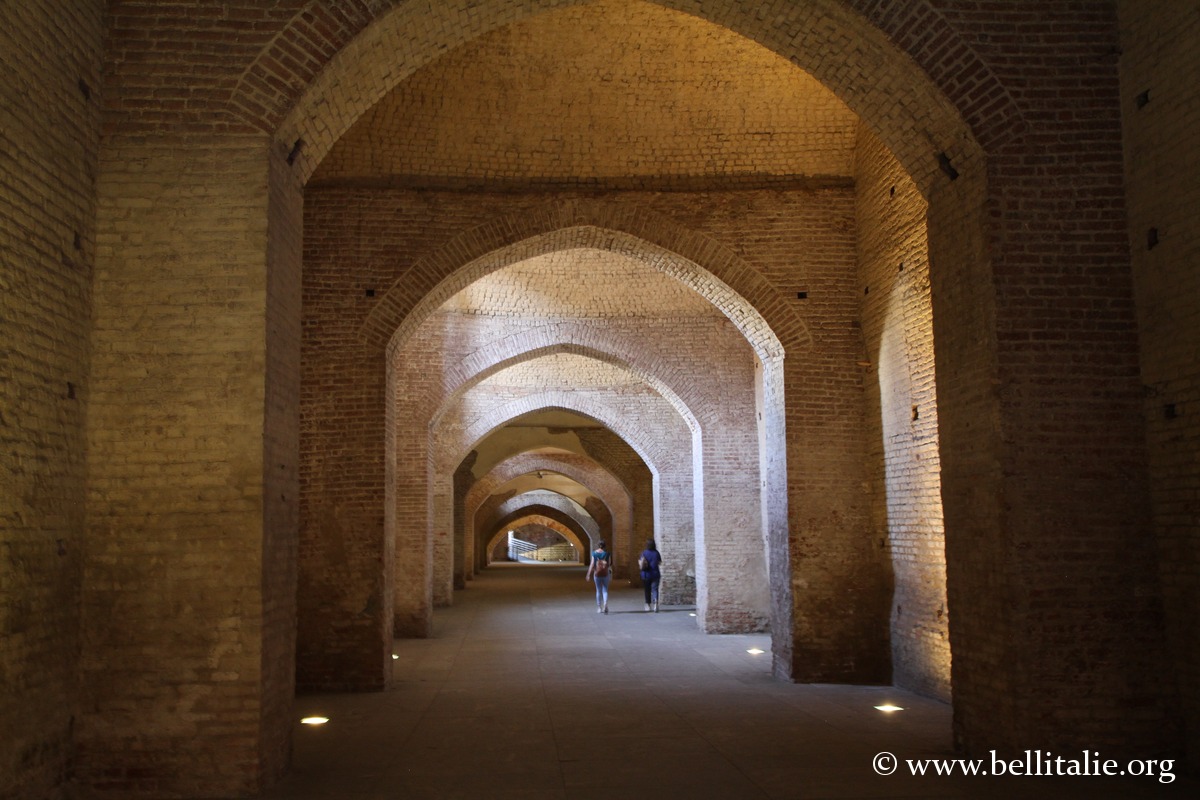
One also discovers the climb up the Torre del Bramante, the falconry, the Loggia delle Dame, or rooms of Beatrice d’Este, created by Bramante. The Cavallerizza are grandiose Stables with art exhibitions.
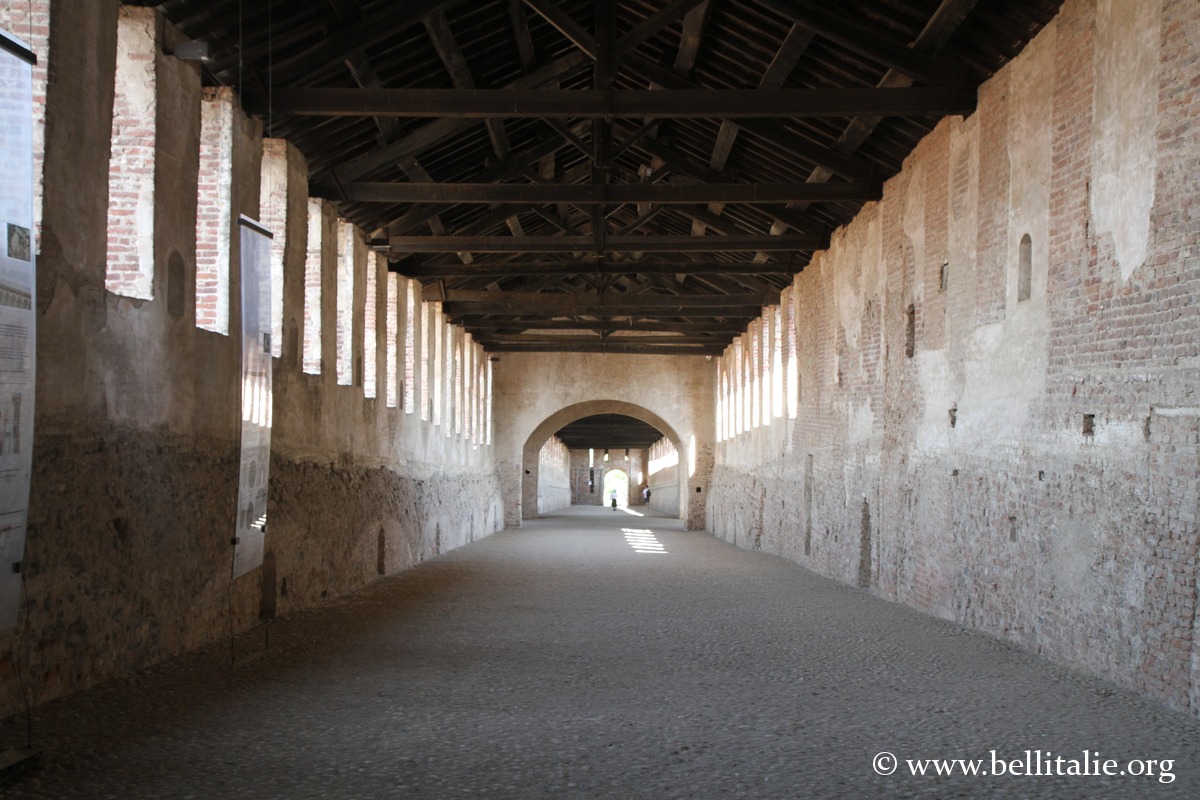
A large “covered road” (Strada Coperta in Italian) also called “upper level”, is a true masterpiece of medieval military engineering, 167 metres long and 7 wide, built in 1347, allowing the lords to reach the castle incognito, or even to flee if needed.
The castle houses several museums (see below), including the Leonardiana dedicated to Leonardo da Vinci, preserving copies of important manuscripts or models of water machines and others, the International Shoe Museum, and the Archaeological Museum.
3. Bramante Tower
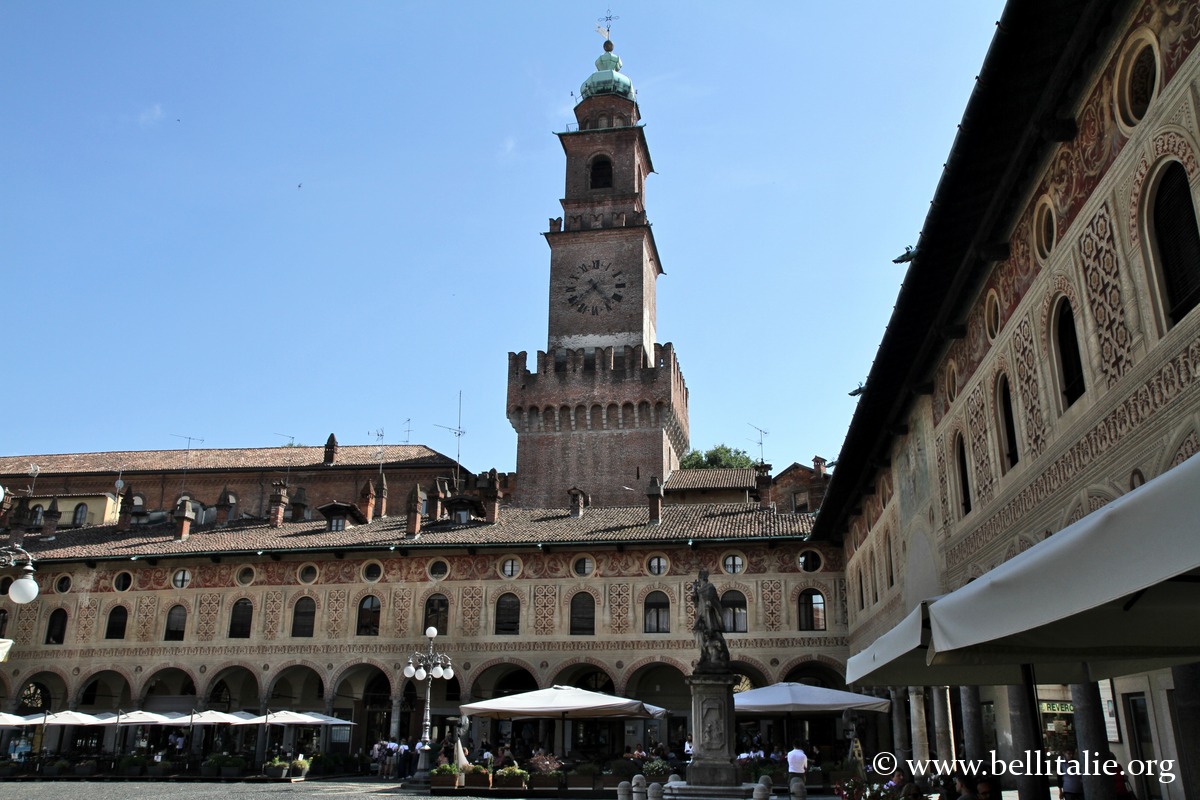
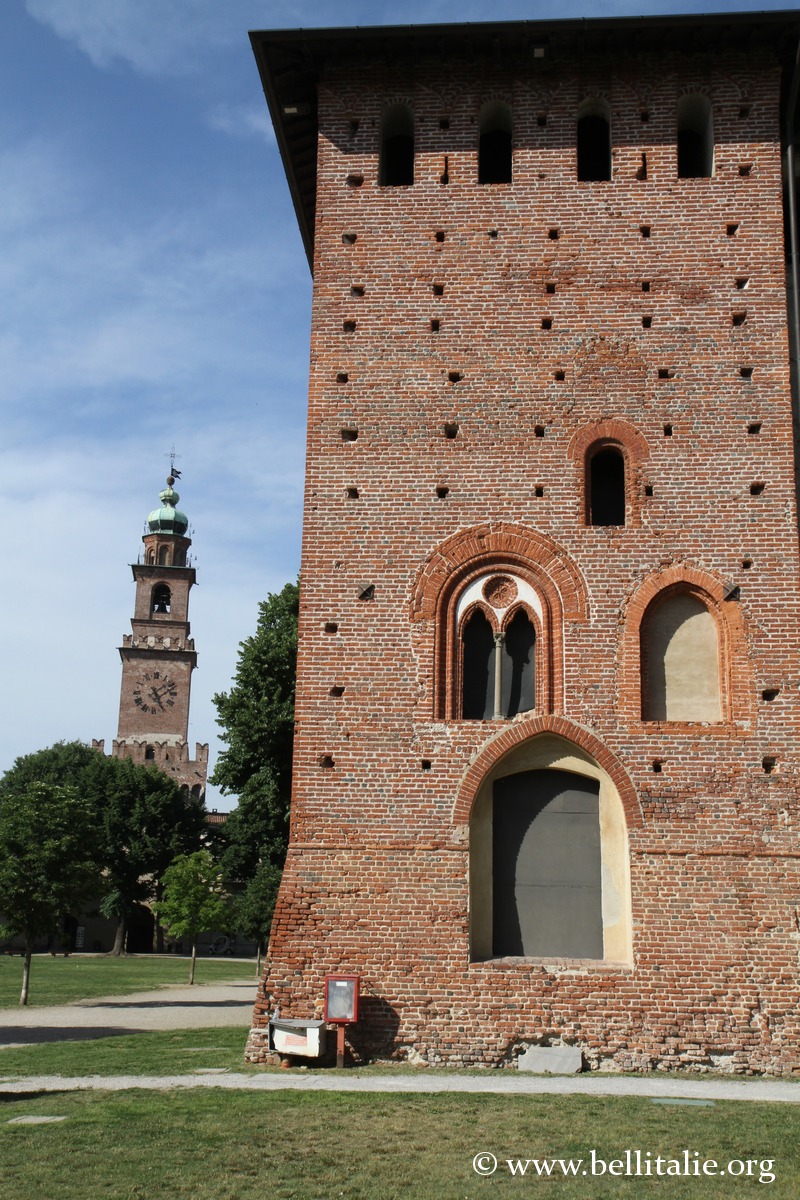
This tower is a symbol of Vigevano, the highest point of the city with its 56 metres, but only part of it can be climbed, up to the first terrace with its battlements at 31 metres high, from where one still has a lovely view over the rooftops and the castle. The carillon is closed to the public.
Its first construction as a communal tower began in 1198, but it took its current appearance under Ludovico il Moro with the work of Bramante at the end of the 15th century to build the upper part, inspired by the Filarete Tower of the Sforza Castle in Milan built a few years earlier. Its form has three superimposed square bodies of decreasing section
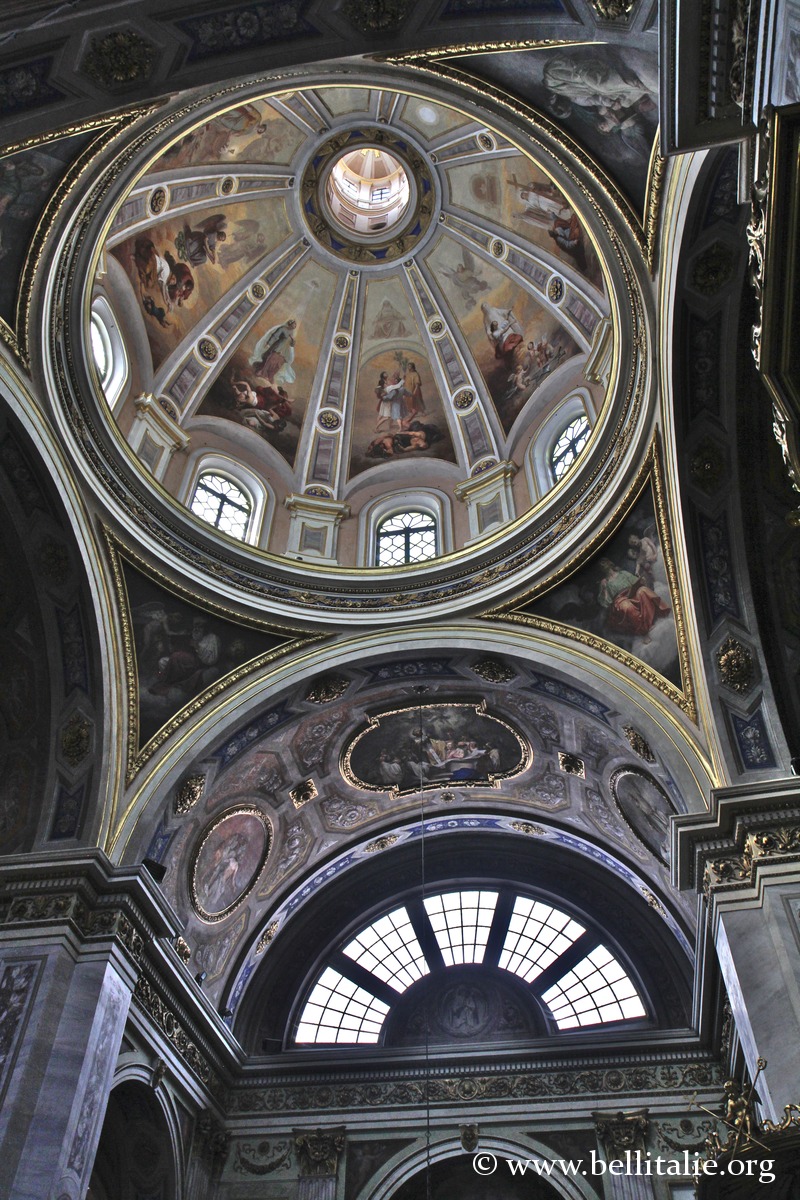
4. Sant’Ambrogio Cathedral and Treasure Museum
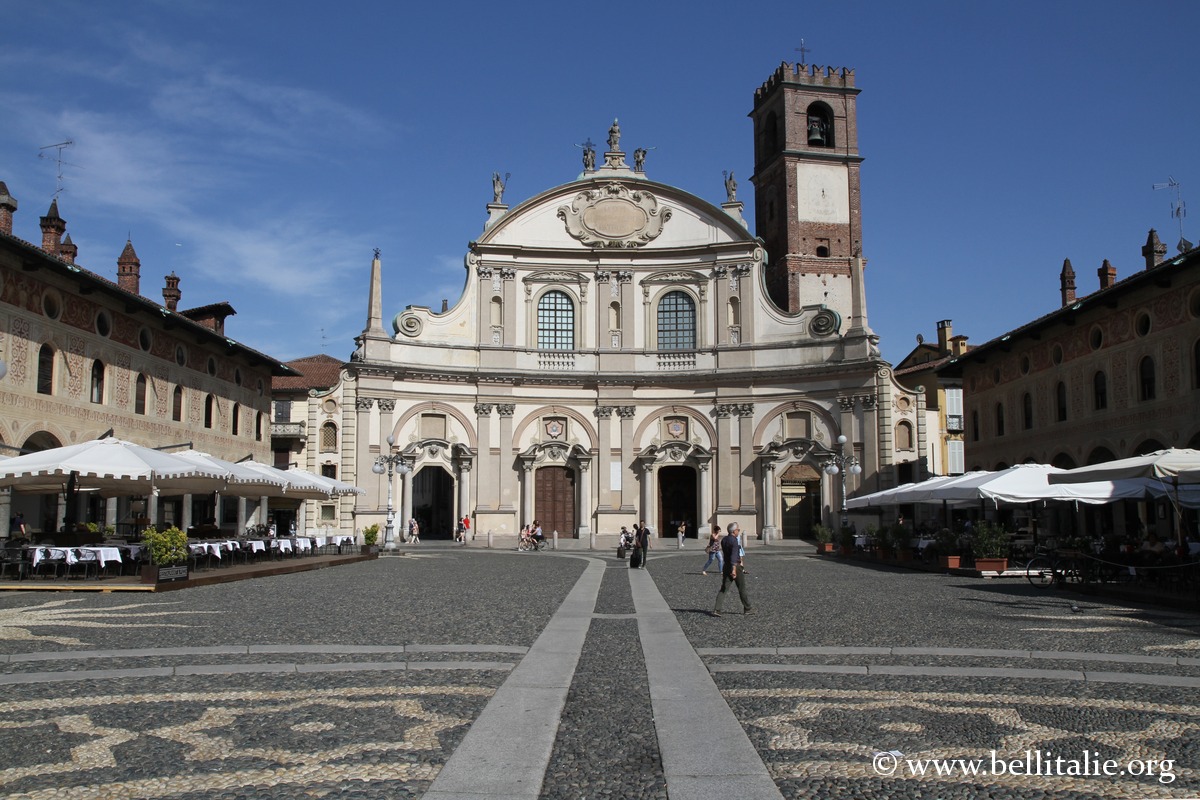
Closing the Piazza Ducale with its astonishing 17th-century concave façade, the Sant’Ambrogio Cathedral dates back to the 16th century in the era of Francesco II Sforza.
Its façade was replaced in 1680, notably to give the square more symmetry, by closing the fourth side. It is astonishingly concave, made on the initiative of the bishop, architect and mathematician Juan Caramuel y Lobkowitz. The large adjacent bell tower dates from the 15th century, but was completed in the 19th century.
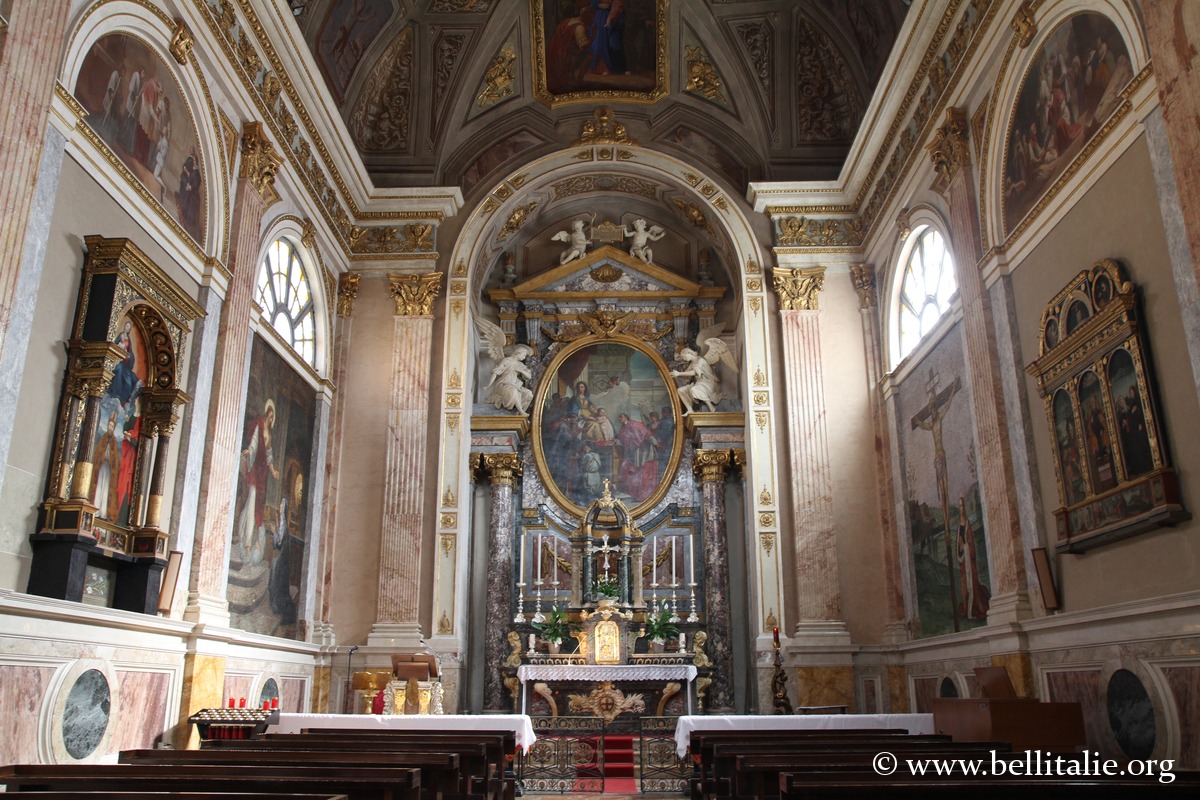
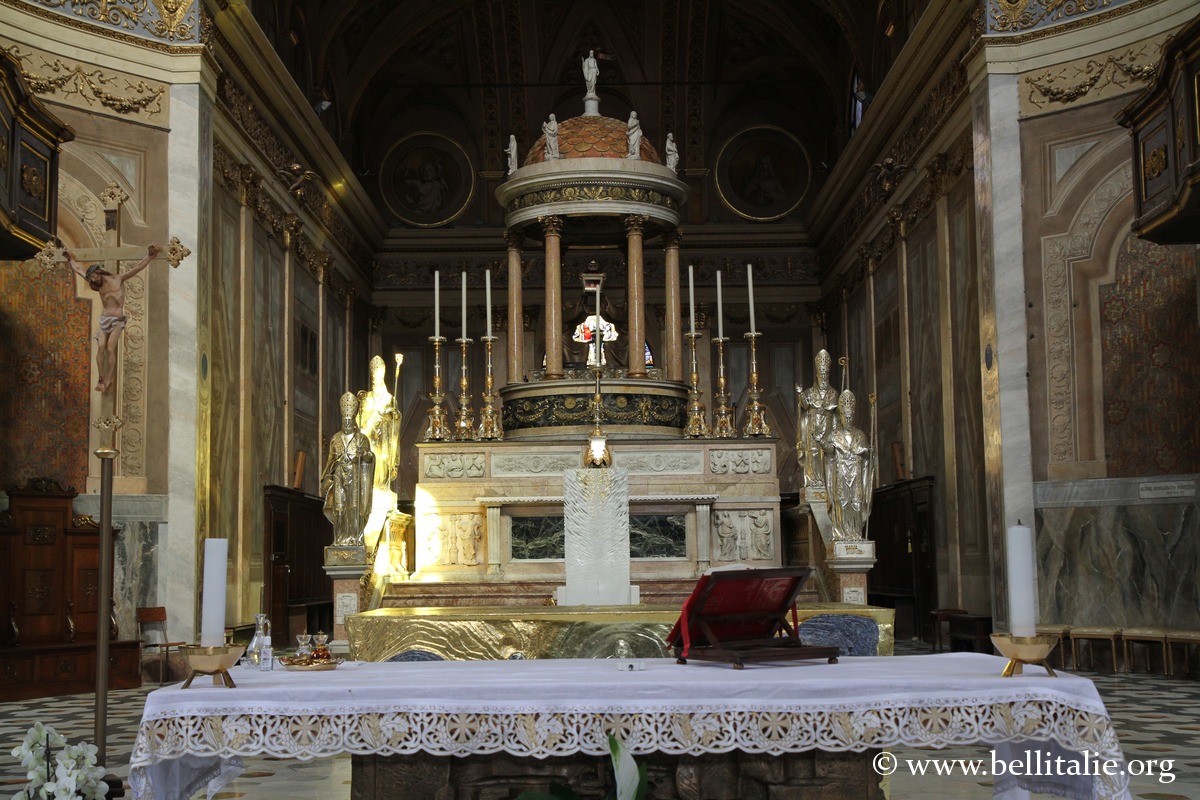
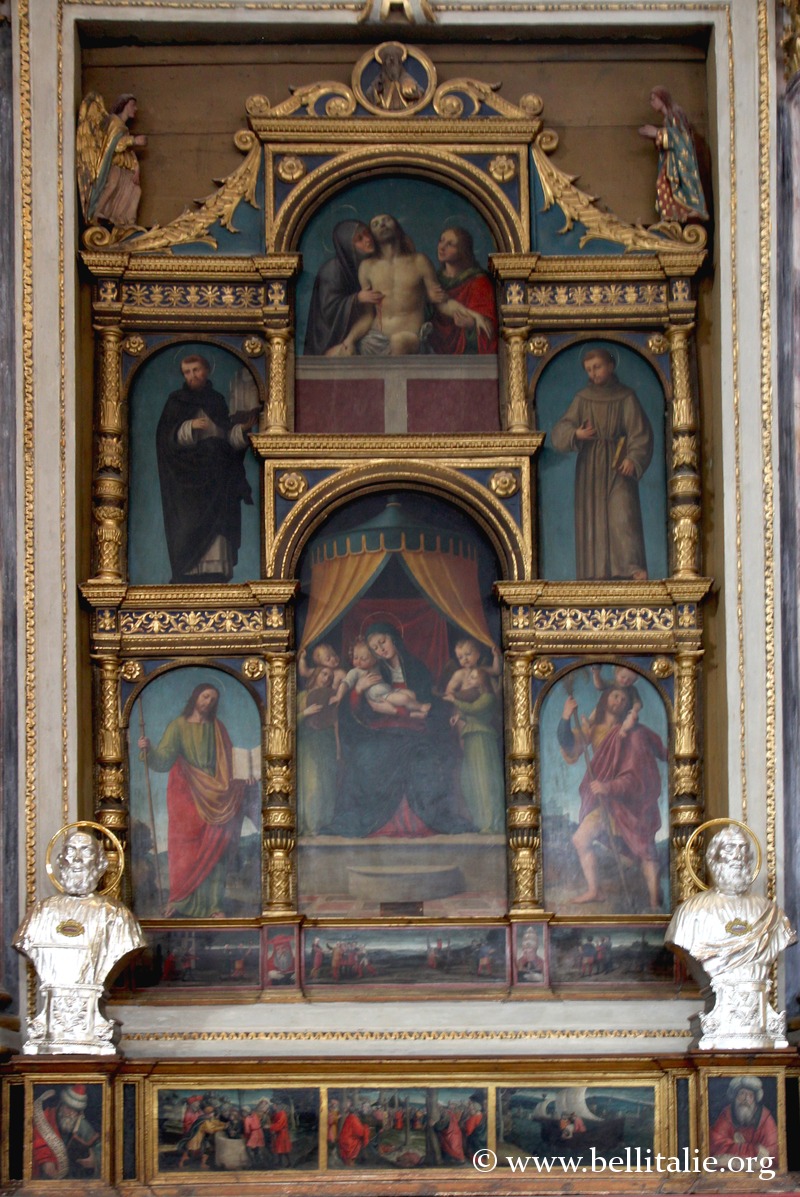
It preserves artworks, including 16th-century paintings of the local school, a polyptych attributed to the school of Leonardo and an 18th-century antependium.
The Cathedral Treasure Museum, accessible from Piazza Sant’Ambrogio, is housed in the loggia of the Palazzo Vescovile. Its collection is remarkable, adorning beautiful rooms including the Sala degli Argenti with sacred and precious objects from different eras, such as goldsmith works, strongboxes, vestments, unique Gospels, the tables of the Passion of Christ by Ferrari from the 16th century, or the Flemish tapestries from Brussels on the upper floor.
5. Pietro Bertolini Shoe Museum
Housed on the first floor of the Castle Stables, the Pietro Bertolini International Shoe Museum houses an important permanent collection of shoes, a historic craft in Vigevano, which is even said to have invented the stiletto heel (disputed with Paris however). It notably describes the fashion associated from the 15th century to the 1970s, basic or improbable. Unique pieces are exhibited, and personalities illustrate this fashion, with their shoes: from the pianella of Beatrice d’Este to the heel of Marilyn Monroe, through the papal babouche, the shoes of NBA stars, ceremonial sandals of Arctic peoples, satin slippers, ankle boots of the Belle Époque, etc
6. Leonardiana Museum
Housed in beautiful rooms of the ducal castle, the Leonardiana Museum is dedicated to Leonardo da Vinci, exhibiting models of several of his works and multimedia reproductions. There are no original creations present, but carefully made copies. It also deals with anecdotes and curiosities related to the life of Leonardo da Vinci and his relationship with Vigevano where he was employed at the court of the Sforza.
One sees in particular the reproductions of the drawings and notebooks written by Leonardo during his studies, in the multimedia picture gallery of full-scale reproductions of the master’s most famous paintings, and a room dedicated to Da Vinci’s Codex.
7. Archaeological Museum of Lomellina
With free admission, the National Archaeological Museum of Lomellina presents in a relevant way a rich collection of objects from archaeological discoveries in the territory. The exhibition is organised by historical periods, including the Prehistory section (from Protohistory to the Mesolithic), the section dedicated to the necropolises of the Celtic and Roman era, or the room dedicated to daily life at the end of the Middle Ages.
8. Ecomuseum of the Mulino di Mora Bassa
2 km from the centre, the Ecomuseo Mulino di Mora Bassa at Roggia Mora is part of the itinerary focusing on Leonardo da Vinci. On the Ticino river, it is a mill dating back to the 15th century, which Ludovico Sforza il Moro gave as a wedding gift to his wife Beatrice d’Este.
It now houses a didactic museum with 50 miniature reproductions of the machines designed by Leonardo da Vinci, taken from the Codex, all in working order. Outside is the water regulation system designed by Leonardo.
The history of irrigation and agriculture of the region is also documented here with panels.
About 1.5 km to the north-east is the Enel hydroelectric power station “Ludovico Il Moro”, still in operation.
Other places in Vigevano
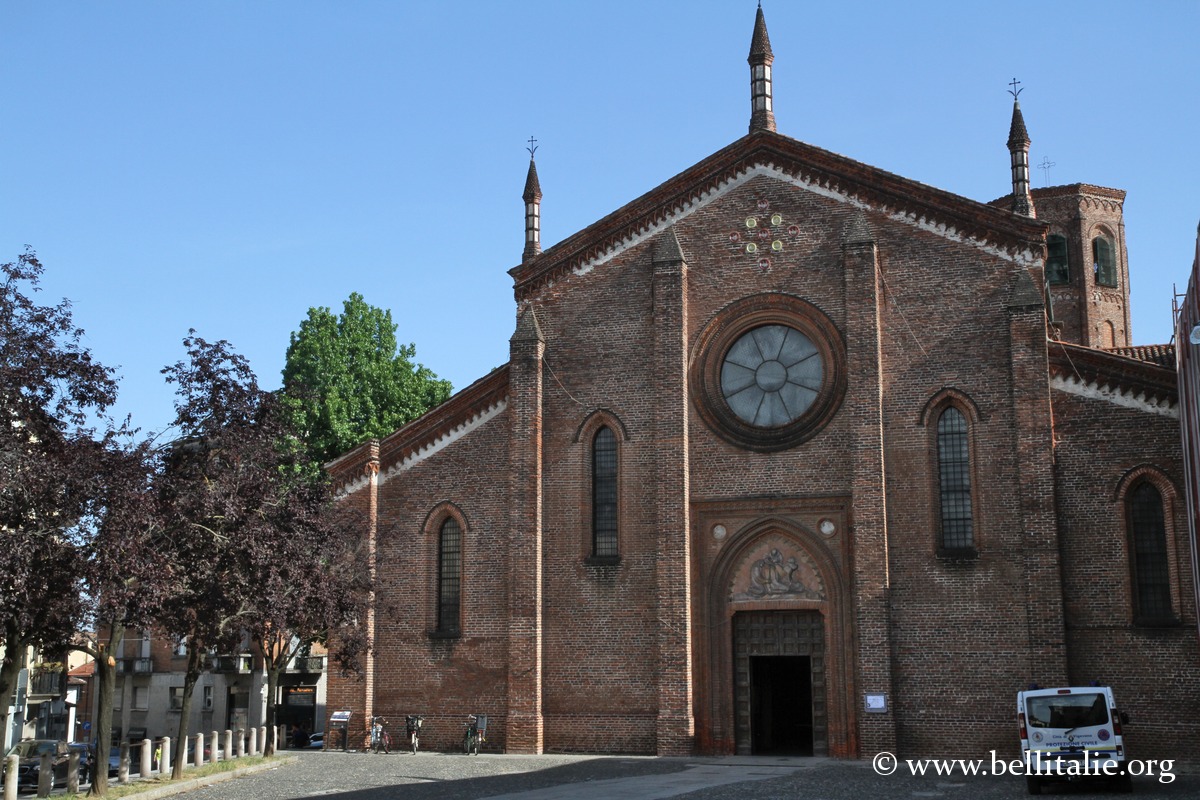
Church of Saint Peter Martyr
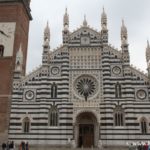
Built in the middle of the 15th century, San Pietro Martire was associated with the Dominican convent. It is in the Lombard Gothic style with a bell tower with an octagonal base, a polygonal choir and a crypt.
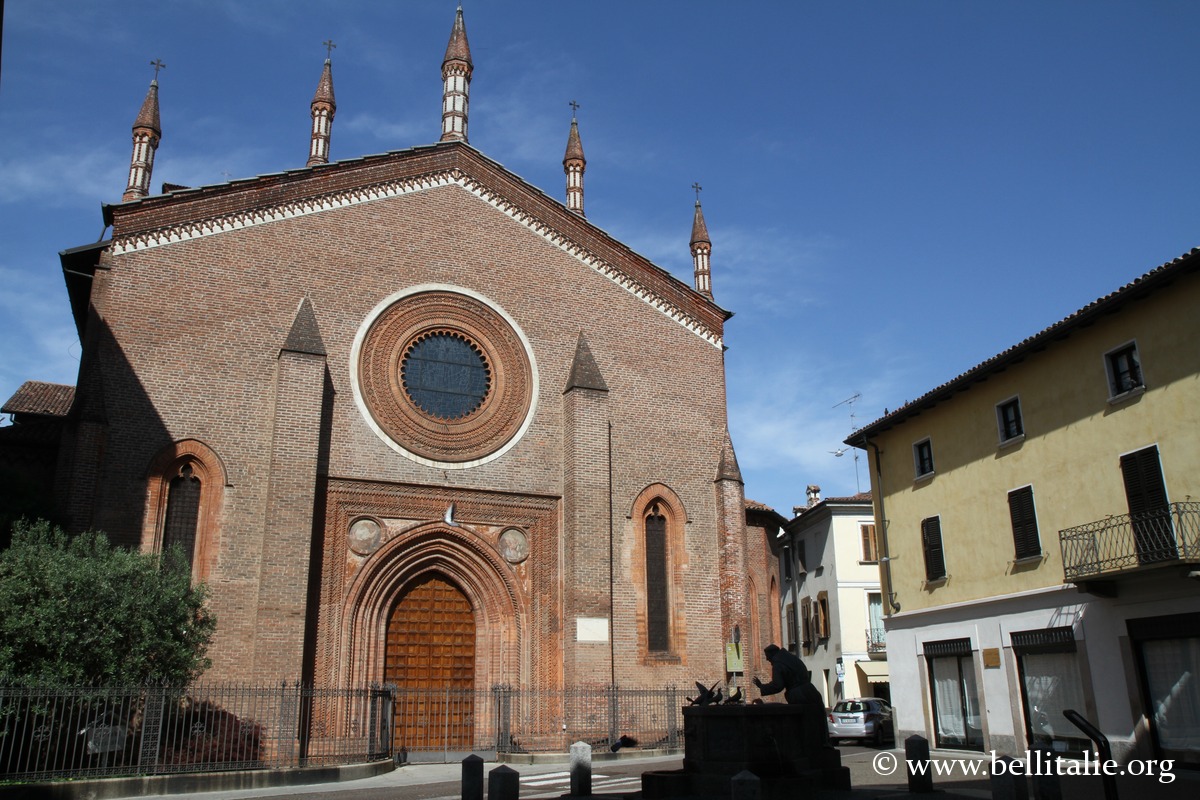
Church of San Francesco
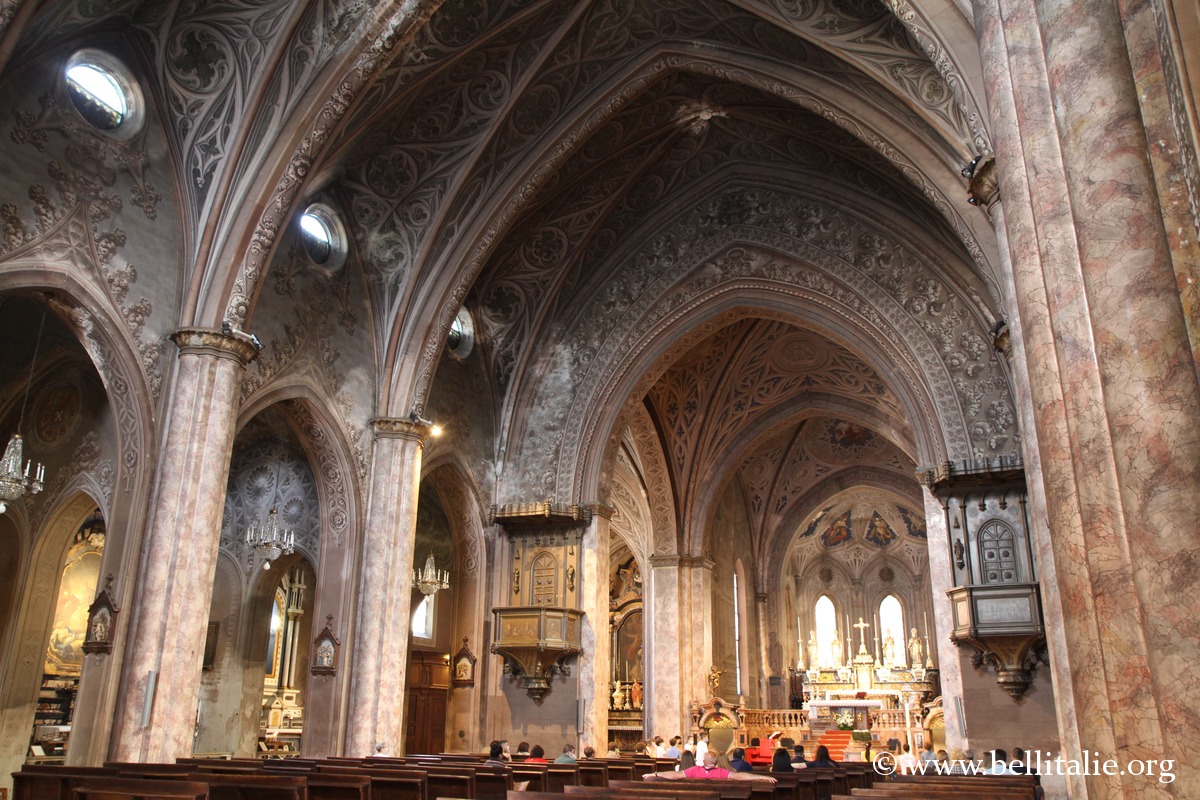
The church of San Francesco was built outside the walls from 1379, with the Franciscan convent. It was enlarged and oriented differently in the middle of the 15th century with a radical reconstruction. It was heavily renovated in the 19th century with a neo-Gothic style inside, raised and covered with vaults.
Gastronomy
Vigevano and the Lomellina traditionally produce charcuterie with above all salamis, including goose charcuterie, but also cheeses and rice-based dishes, widely grown in the surroundings.
Thus among the dishes let us mention for example the minestrones and risottos obtained by sautéing the rice with lard, onion and salami; asparagus ravioli; dishes with pork, beef, goose and fish from the Ticino; and, on the cheese side, the local taleggio.
In Vigevano, a cake called Dolceriso del Moro is produced, which is said to have been created for the guests of Beatrice d’Este in the kitchens of the Sforza castle in 1491, made of rice, scented with rose water, candied cedar and almonds.
Information
- Wikipedia article: en.wikipedia.org
- Tourist portals: www.comune.vigevano.pv.it
Map
If you see this after your page is loaded completely, leafletJS files are missing.


Comments