


Como is, along with Lecco, the most important city on Lake Como, with nearly 84,000 inhabitants, located at the southern end of the western branch. It is also the most pleasant and the one with the most important heritage.
The urban center and its surroundings were occupied by the Celtic tribe of the Orobii, whose main oppidum was Bergamo. From the 1st century BC, the Romans developed the city.
It preserves beautiful buildings such as the medieval Broletto palace, the late Gothic cathedral from the end of the 14th century, basilicas, neoclassical buildings such as the Temple of Volta, arcades and Renaissance houses on Piazza San Fedele, several beautiful villas including the neoclassical Villa Olmo from the 18th century, as well as the remains of Baradello Castle perched on the heights.
In Como one can also enjoy beautiful walks along the shore, or excursions such as the 16 km Lake Como Poetry Way along the coast, or take the funicular up to Brunate to enjoy the panorama and its unique view over Como and the Alps.
Visiting Como
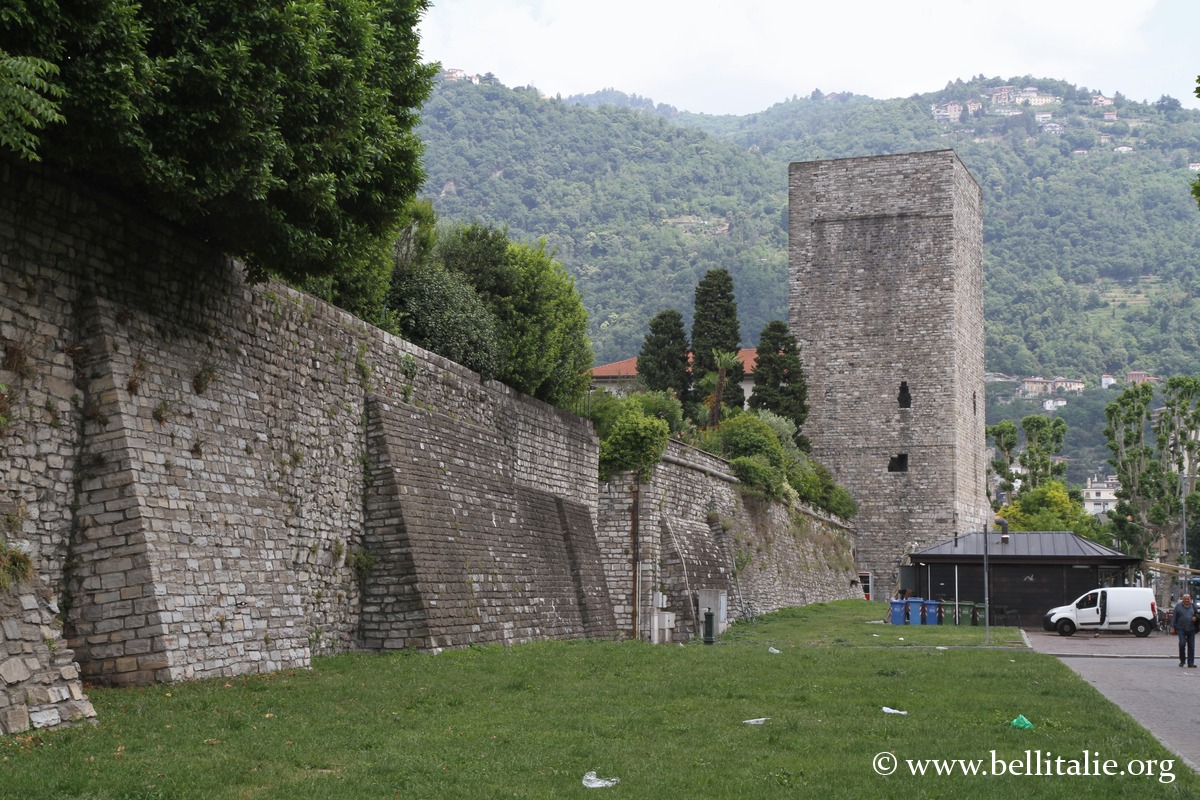
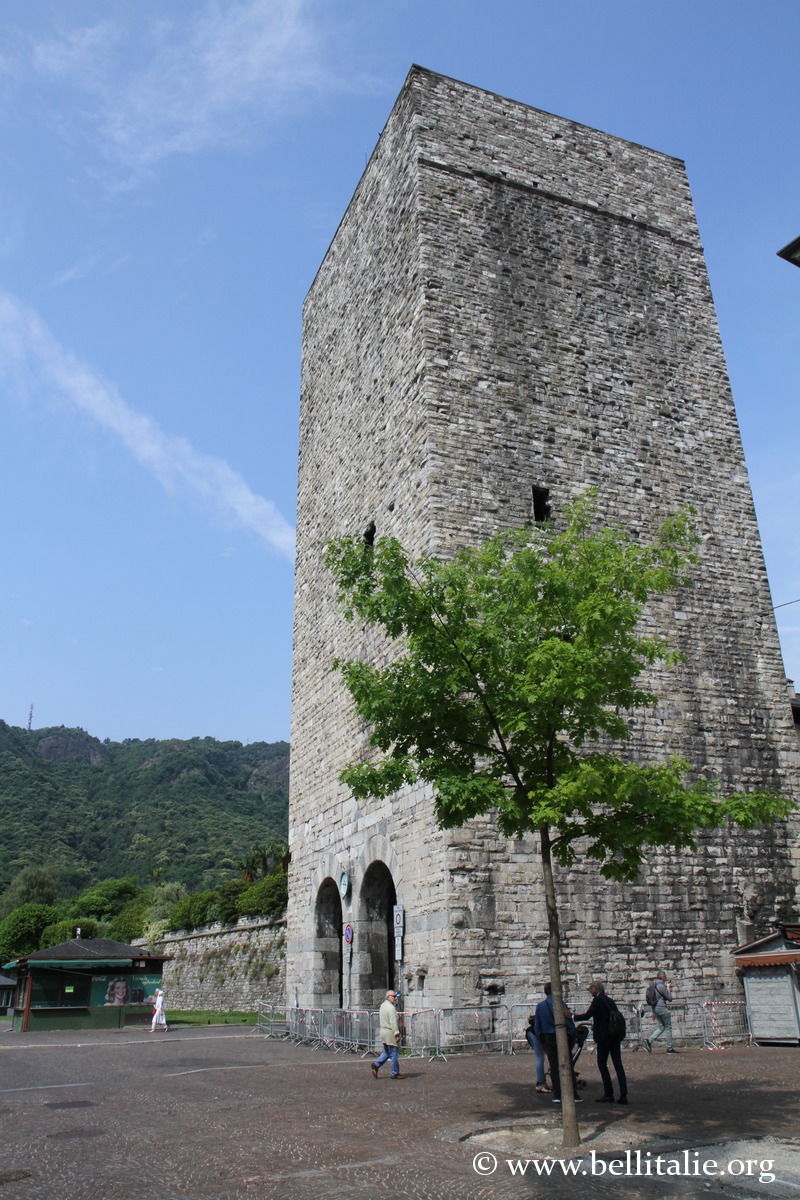
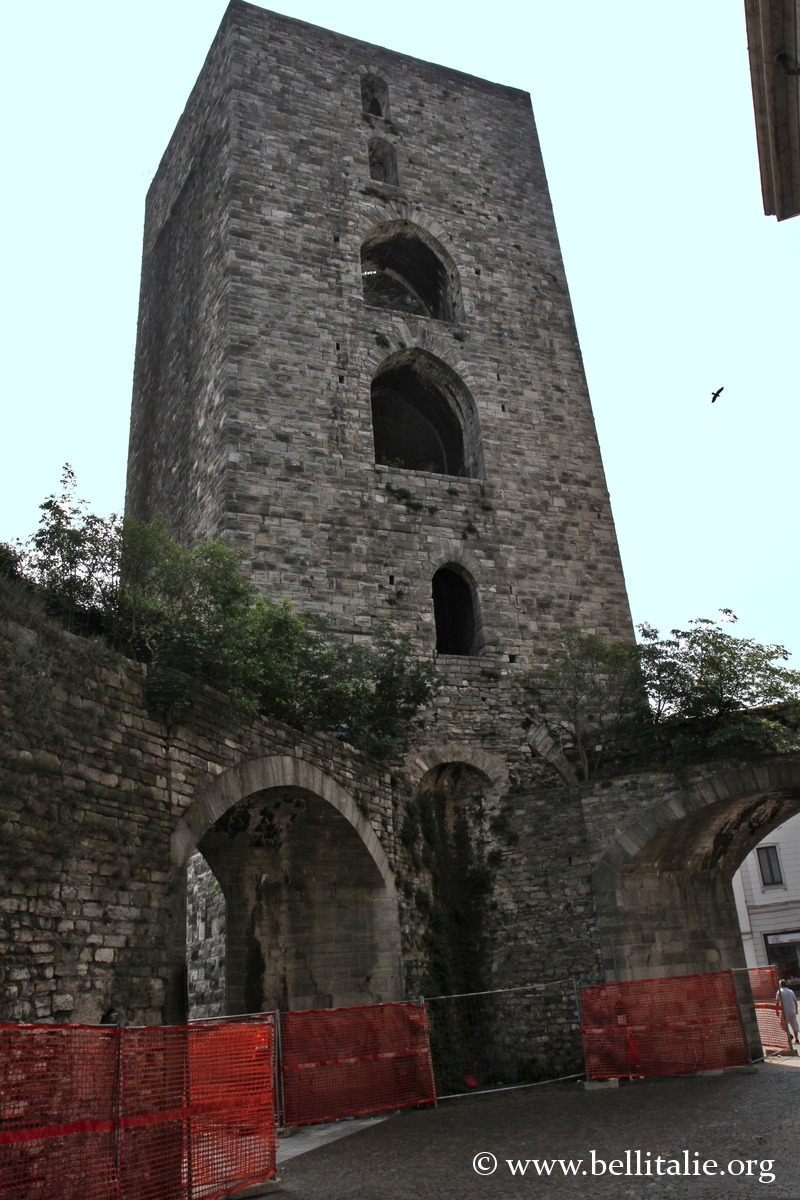
The historic center of Como has a square shape closed on three sides, with its northern side bordering the lake shore. Well-preserved portions of the ramparts remain, and to the south the Porta Torre dating from 1192, which is the main access point when coming from Milan. Along Viale Cattaneo, two other ancient towers can be seen: the Torre Gattoni and the Torre San Vitale.
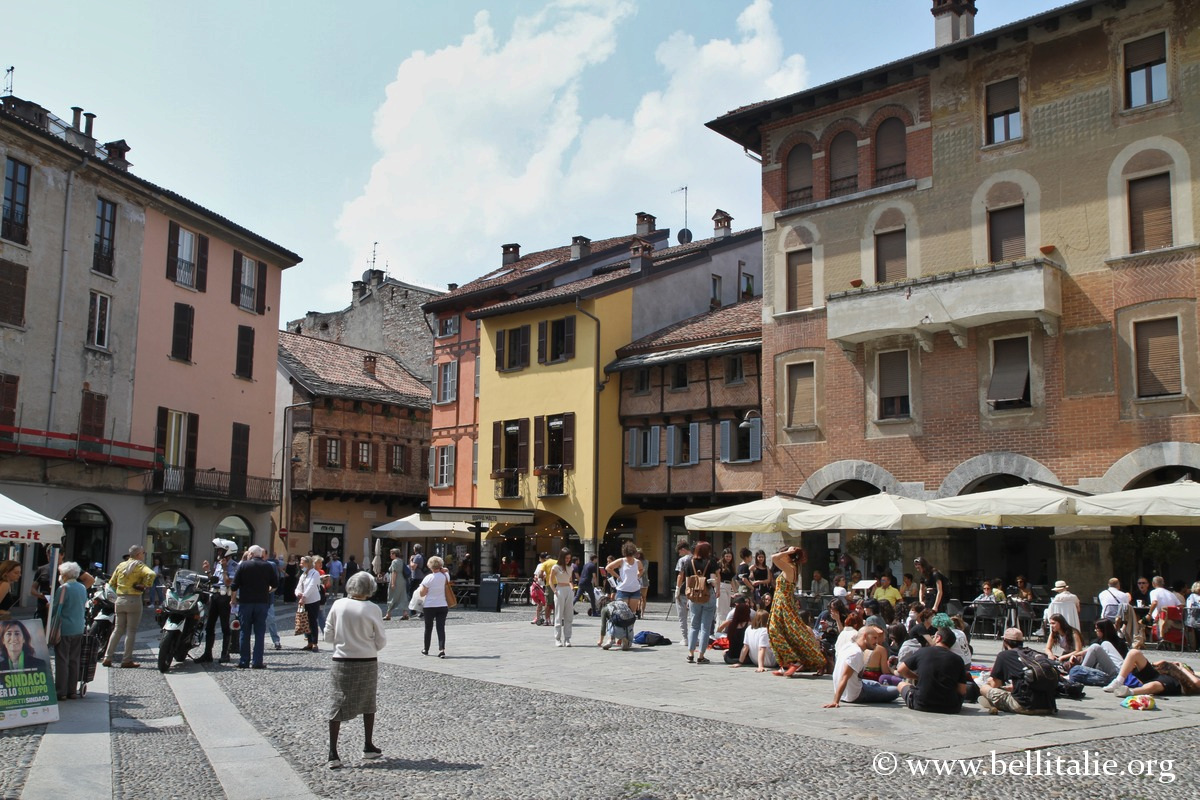
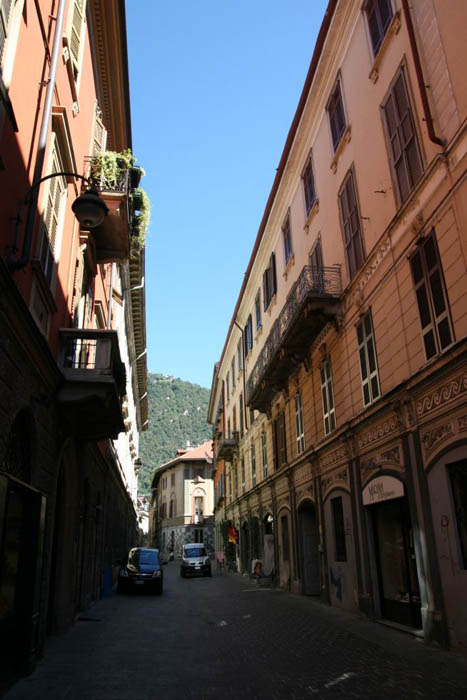
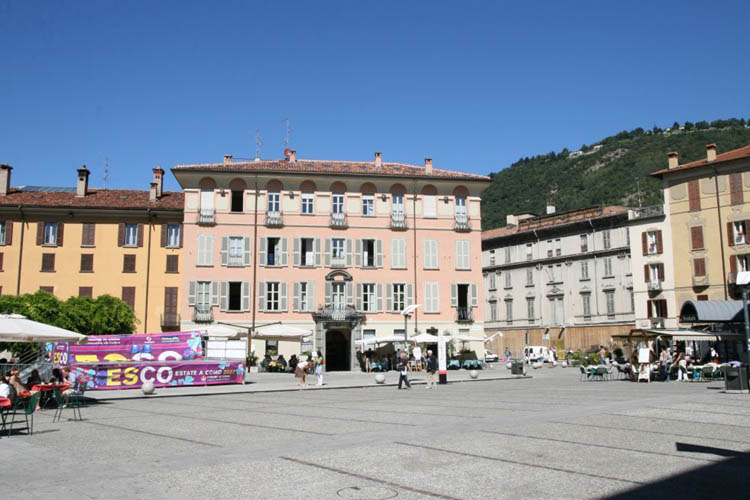 Inside this historic square, one wanders through paved alleys with their many shops, but also and above all ancient palaces and buildings from the Middle Ages and the Renaissance.
One of the main squares of Como is Piazza Cavour facing the lake, lively all year round, with its hotels, bars and restaurants, and especially during Advent with the Christmas market and the ice rink.
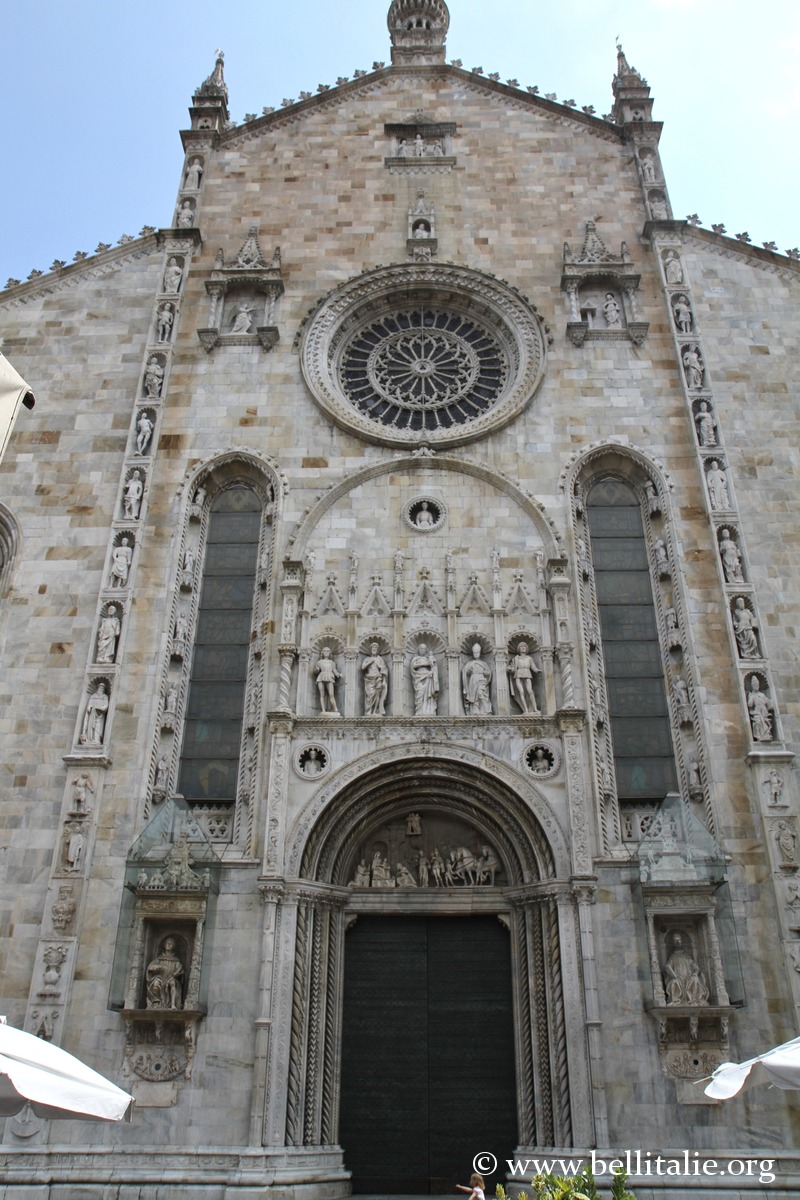
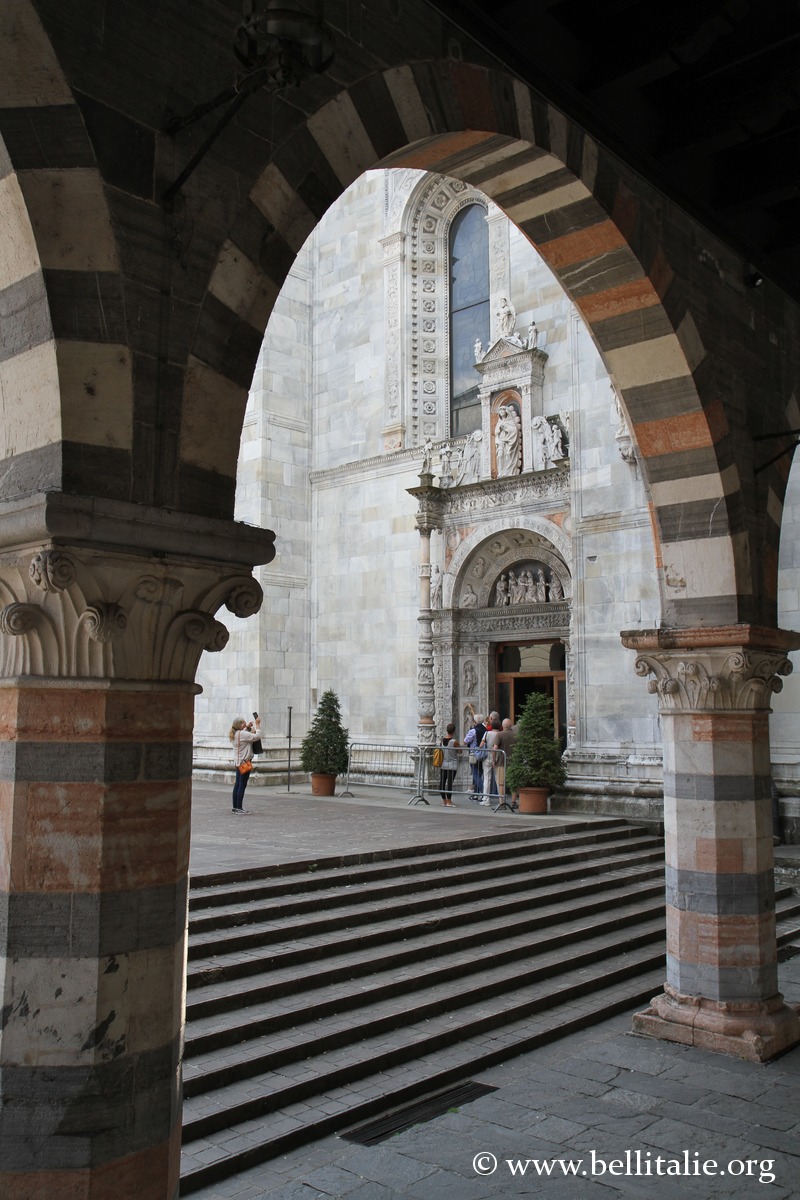
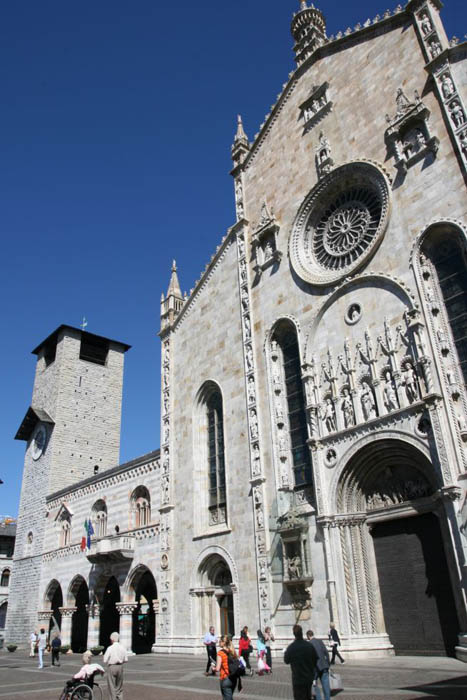
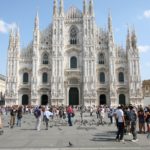
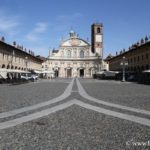
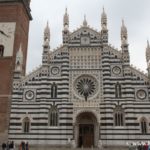
The Piazza del Duomo is located further inland, with the Cathedral of Santa Maria Assunta (the duomo), which is a very beautiful architectural work whose late Gothic facade dates back to the 15th century. Next to it, the very beautiful Broletto Palace was in the Middle Ages the seat of the municipality. Behind the duomo, the Social Theatre dates back to 1813, and opposite is a cubic building in the rationalist style from the fascist era. The latter was built in 1936 and was the seat of the party, known as the “Casa del Fascio”.
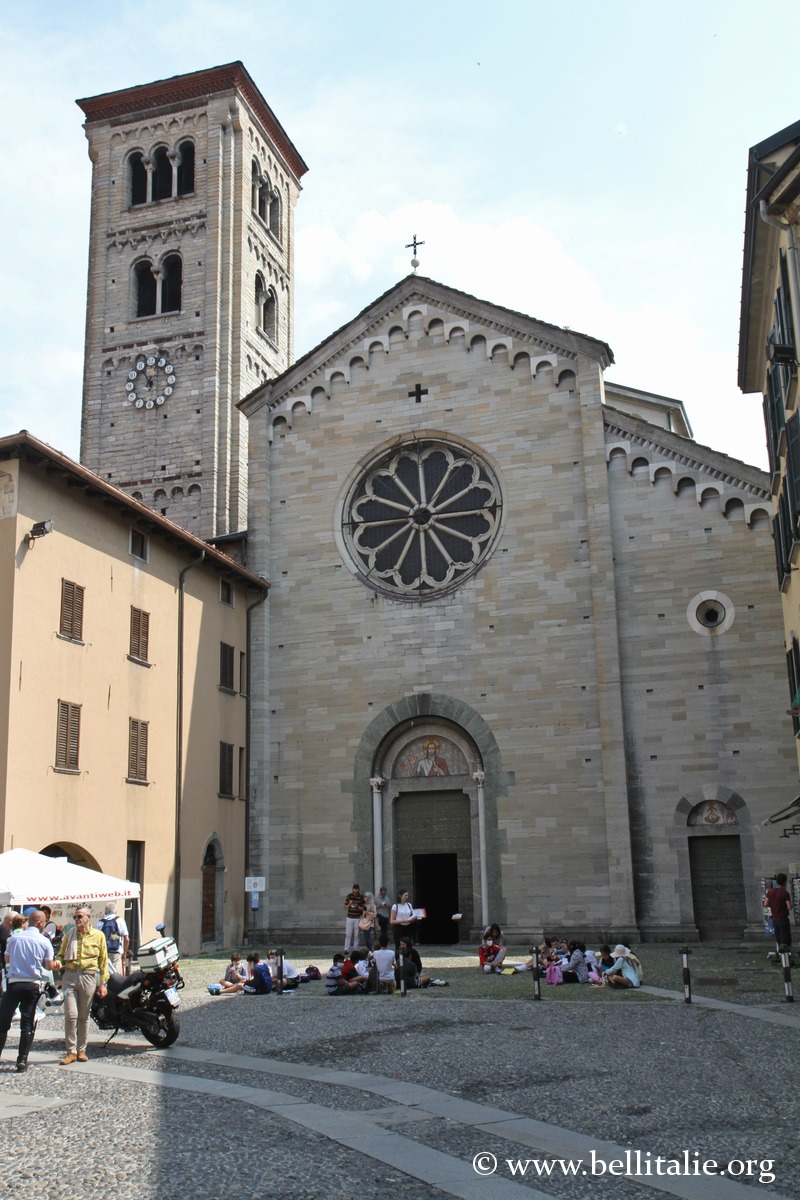
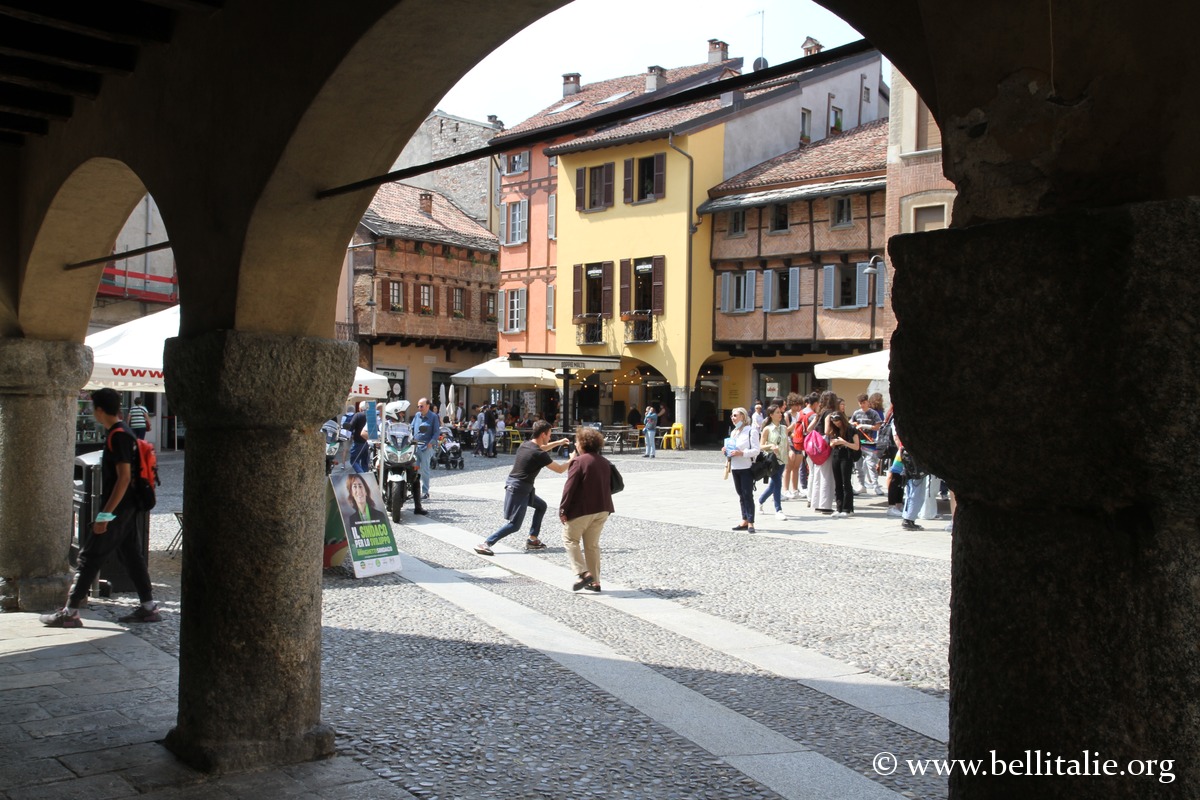
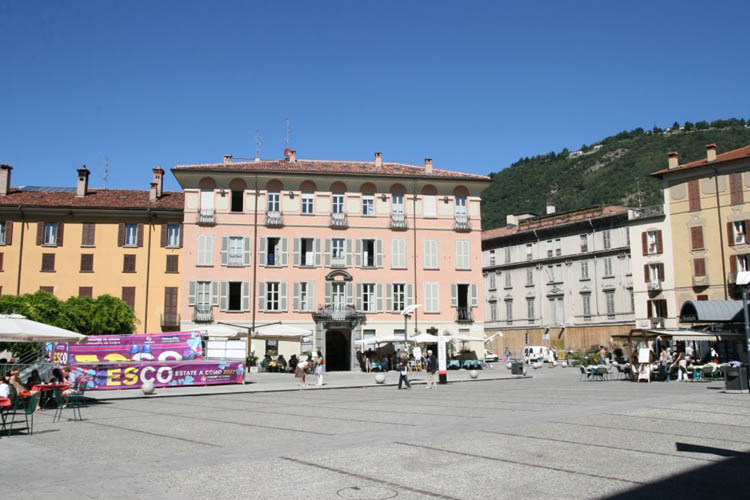
The Piazza San Fedele is the other most beautiful square in the city, the most picturesque with its Renaissance arcades and the beautiful Romanesque Basilica of San Fedele of medieval origin.
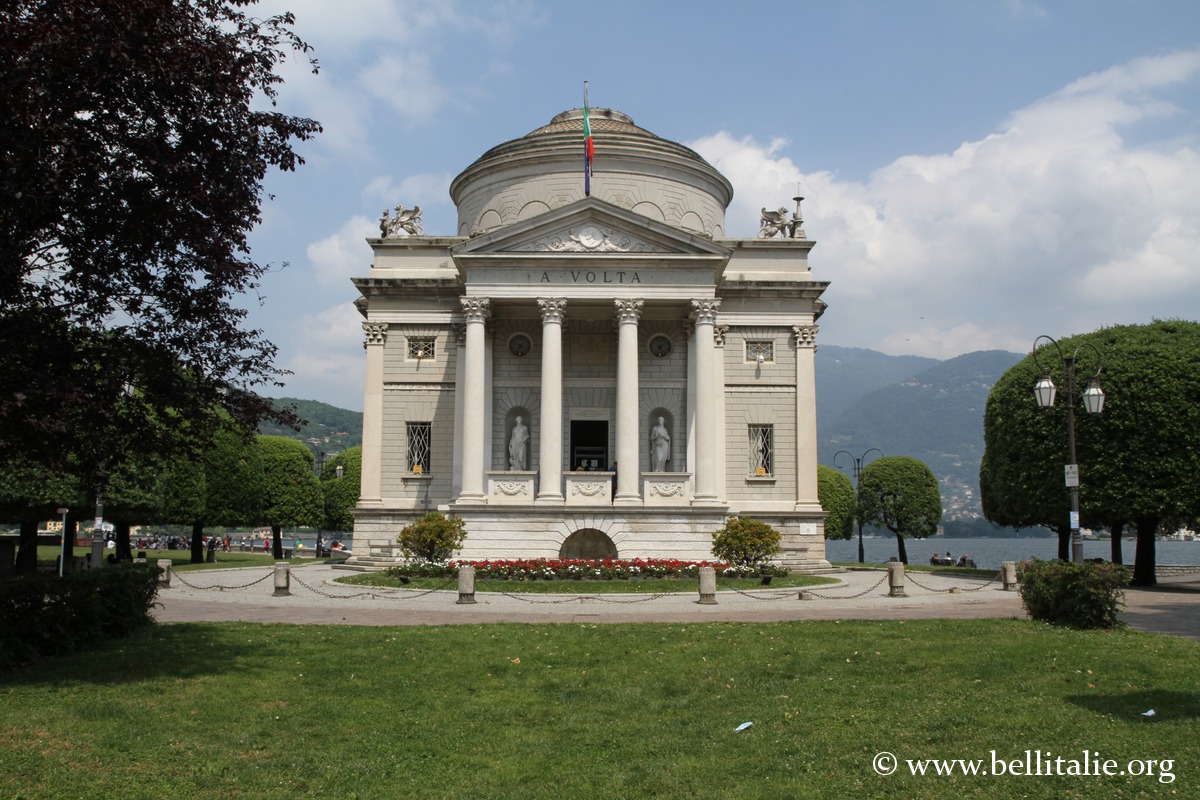
Temple of Volta
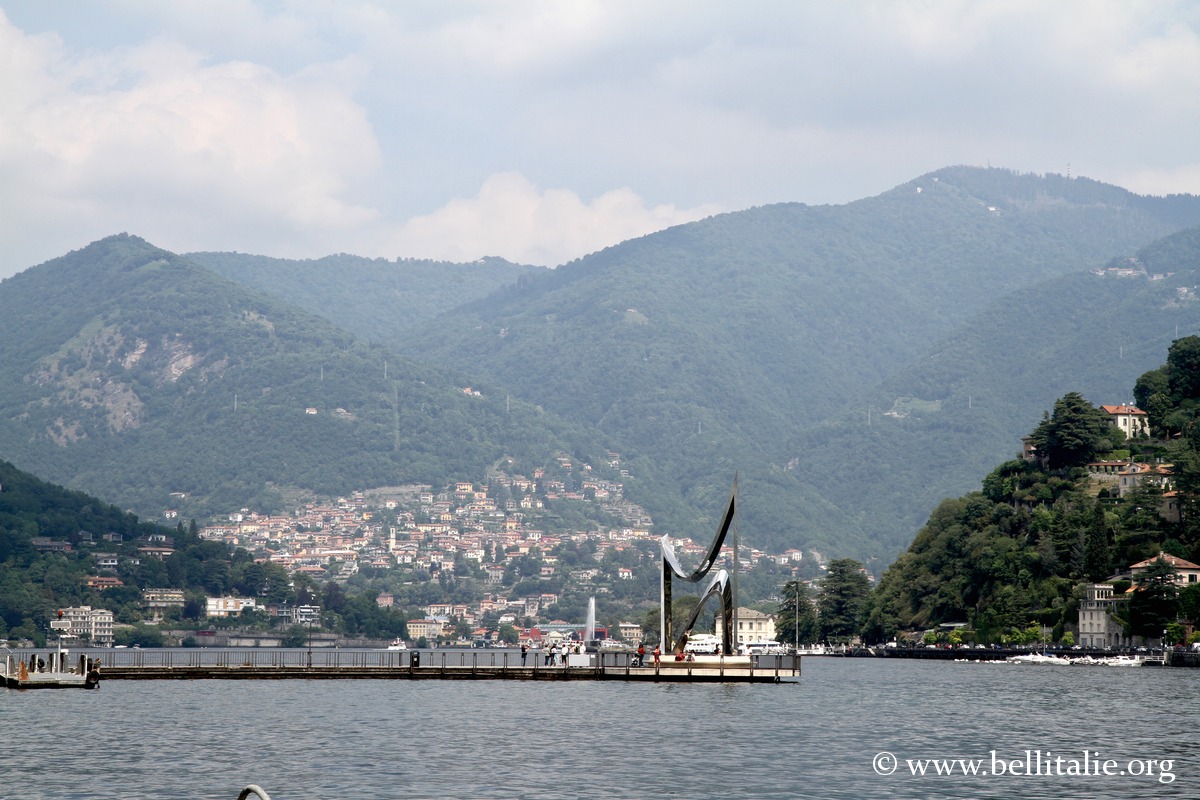
Outside the historic center, one can take beautiful walks along the lake. One of them, the Mafalda Promenade, starts from Piazza Cavour towards the west, where a footbridge leads to the controversial sculpture named Life Electric, 16 meters high, created by Daniel Libeskind in honor of Alessandro Volta and his invention of the electric battery. Near the footbridge, a monument is dedicated to European resistance fighters, with plaques of those sentenced to death during the Second World War. Further on, the Temple of Volta in neoclassical style was built in 1928. It houses a museum with Volta’s scientific instruments, both originals and reproductions, as well as documents on the life of the famous scientist. A little further on, a Monument to the Dead (of the First World War), 30 meters high, dates from the 1930s, with its fascist rationalist style.
One can continue the walk along the lake with the Lino Gelpo Promenade, passing in front of several splendid private villas, and above all the most majestic one that can also be visited, the Villa Olmo, with its beautiful Italian garden, adorned with statues and fountains.
Another walk starts from Piazza Cavour towards the east, passing along the quay, and in front of the funicular station going up to Brunate, then continuing with Viale Geno, crossing green spaces along the lake, and ending at the charming site of the Villa Geno from the end of the 18th century and its pretty park.
Main places
Duomo of Como
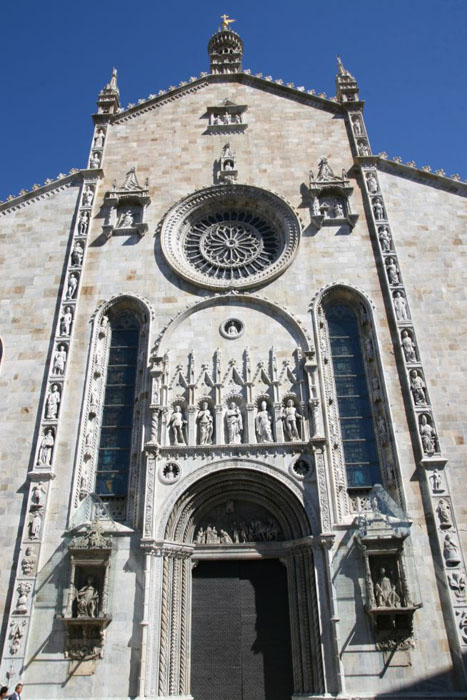
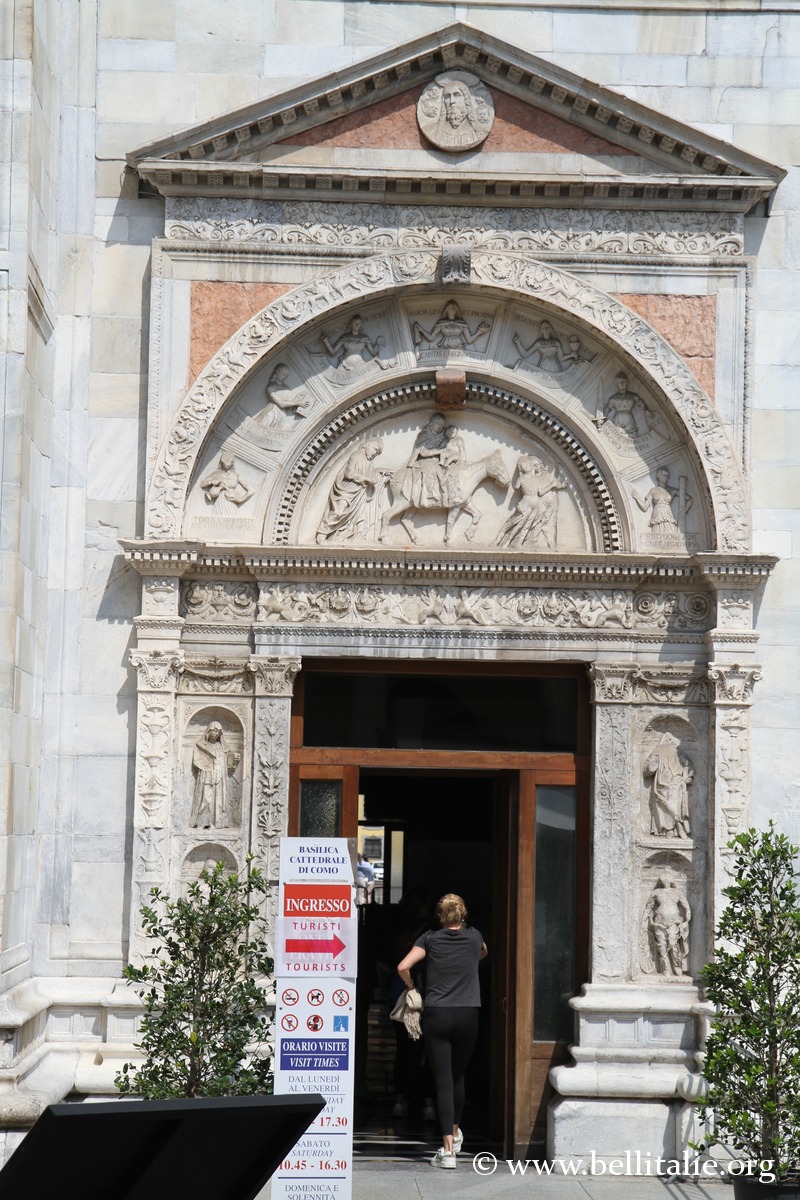
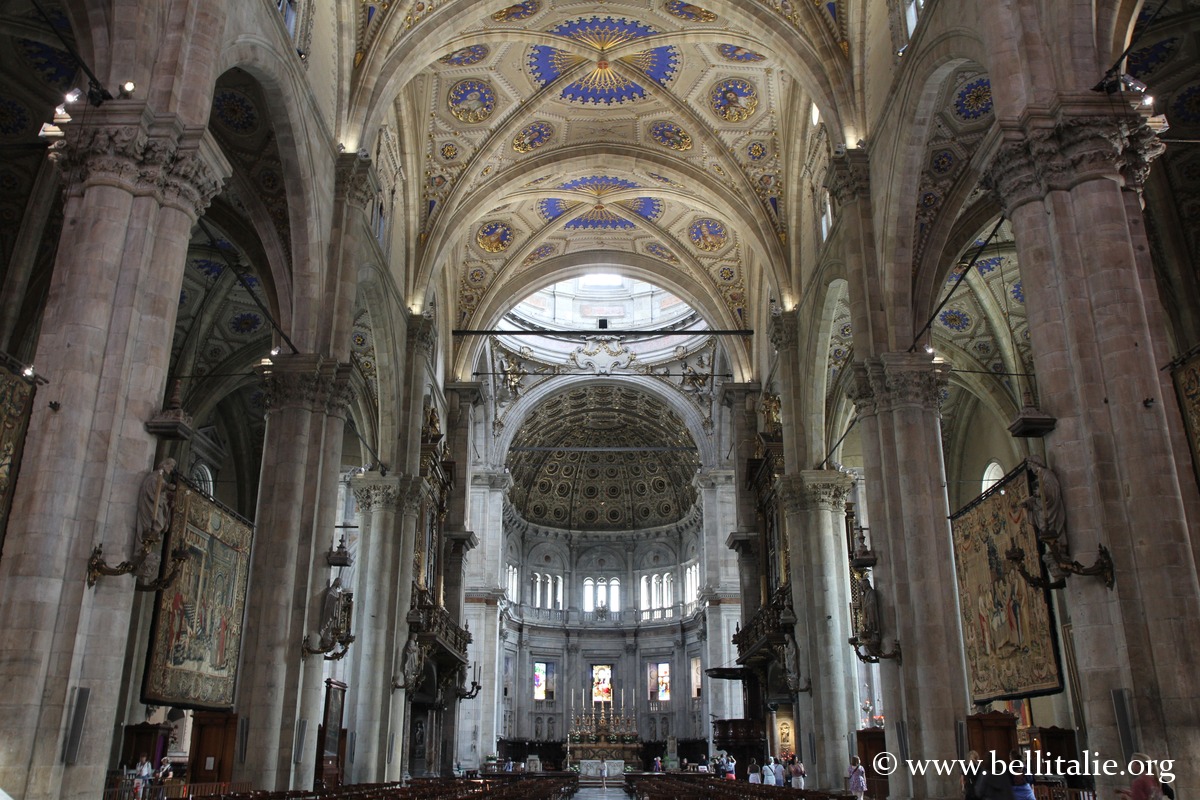
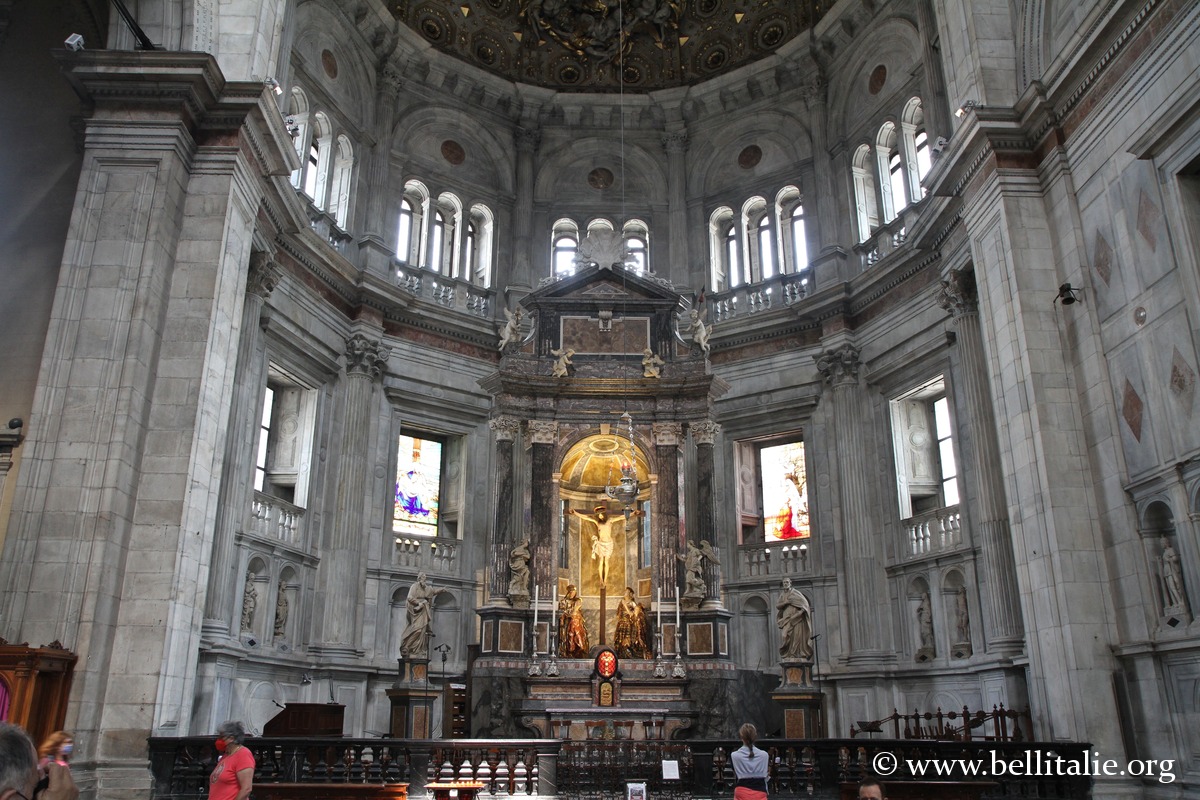
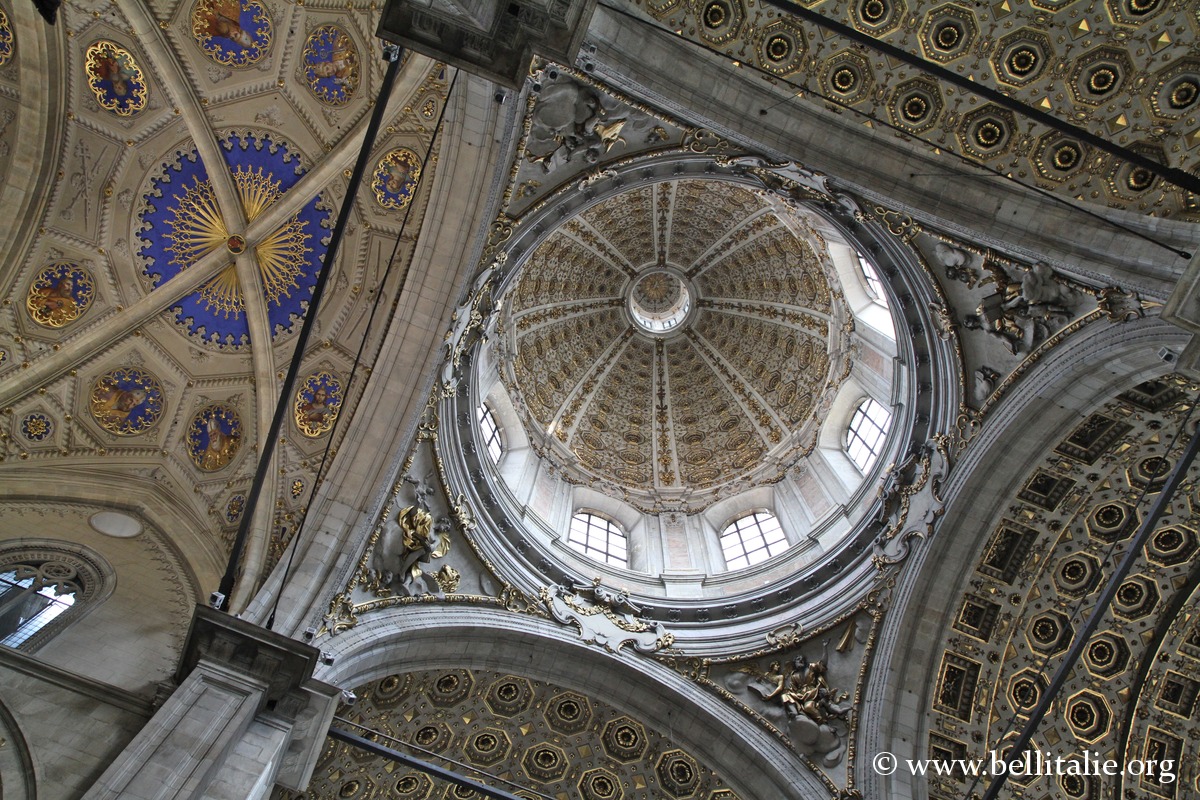
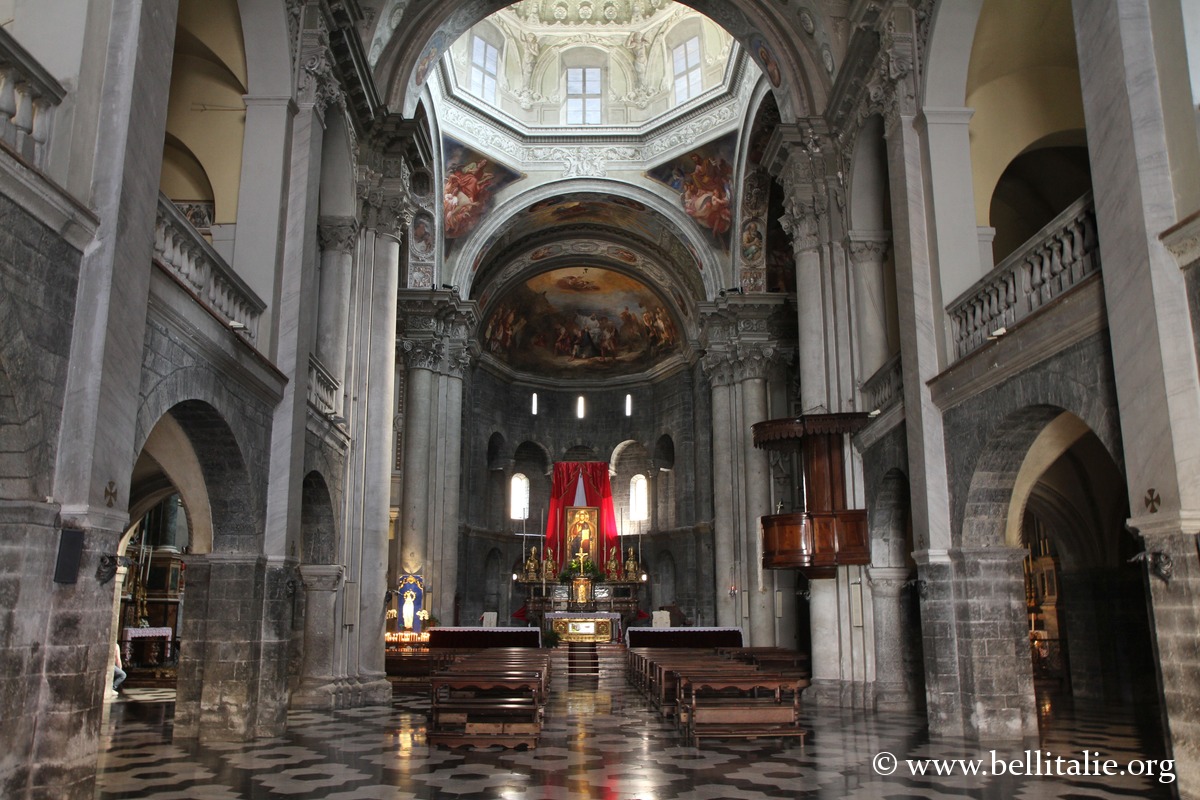
The Duomo of Como is a building with a majestic and complex architecture, built from the end of the 14th century to the 18th century, whose dome was created in 1740 by Filippo Juvara, the architect of the King of Sardinia. It replaced the old Romanesque cathedral of the 11th century.
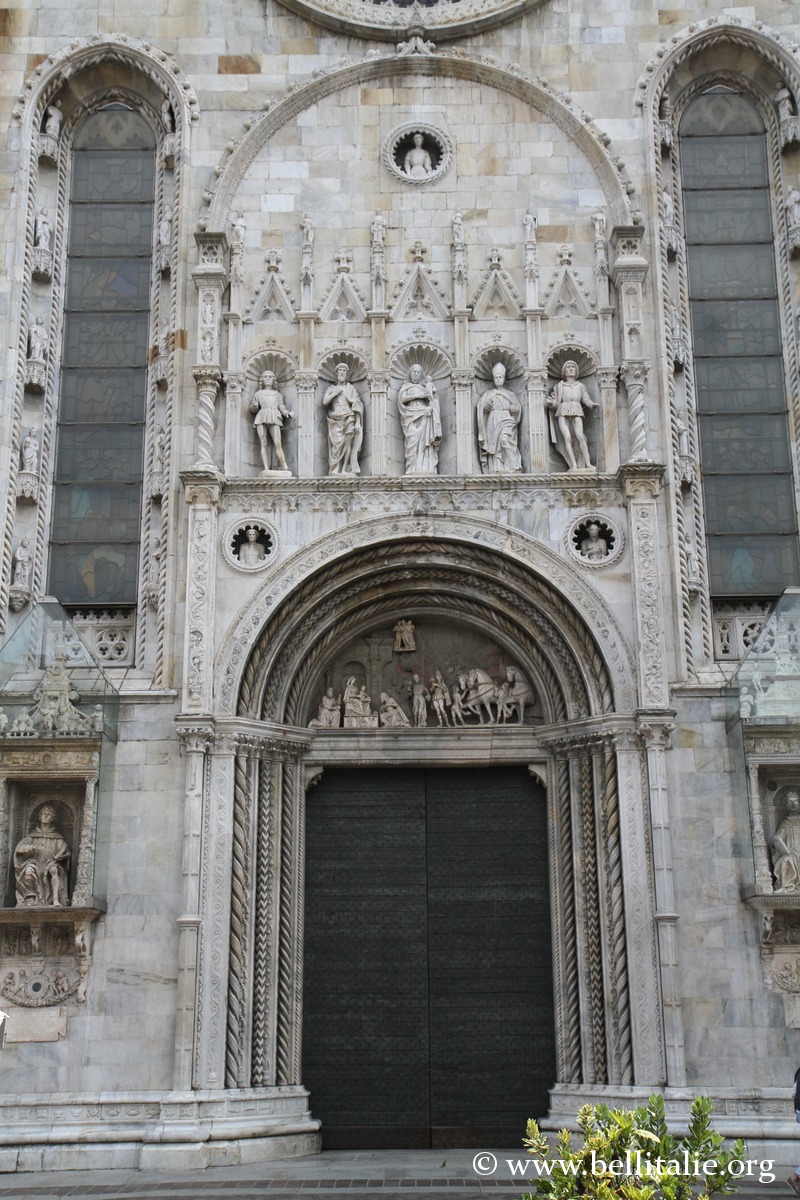
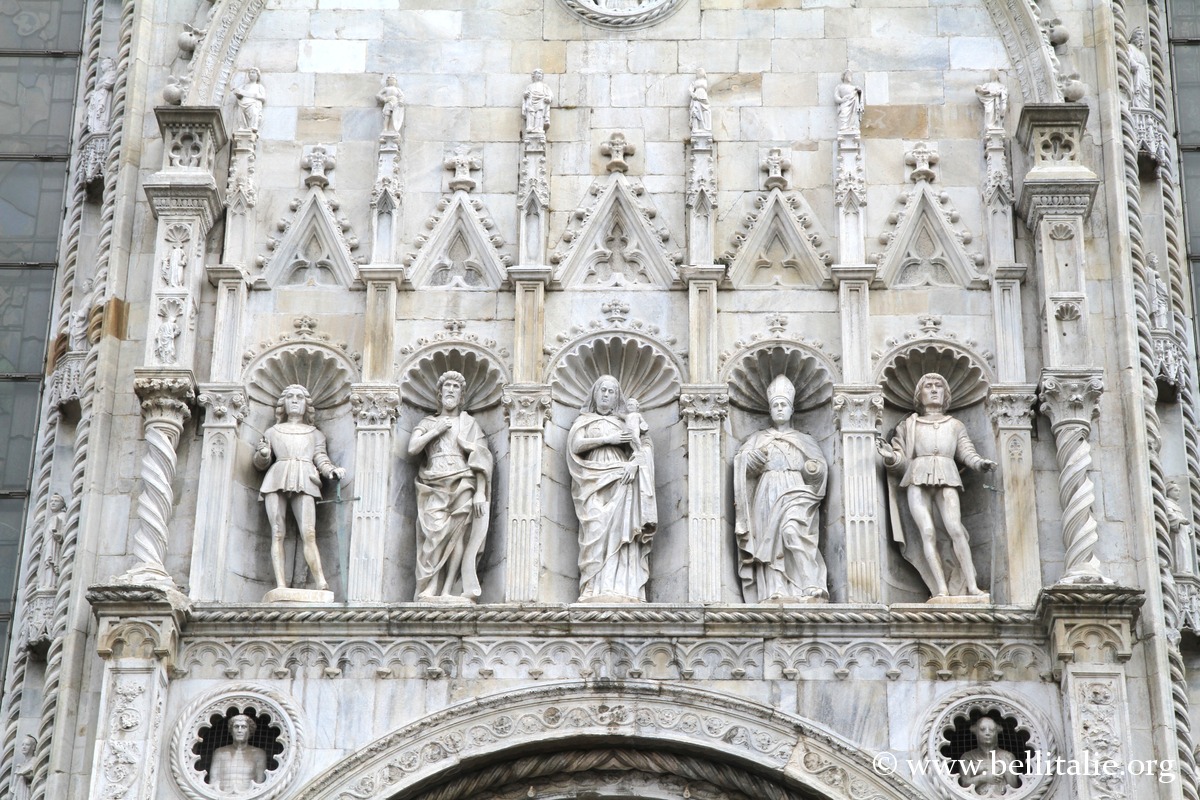
It mixes various architectural styles, including a Gothic facade with its pretty spires, its many sculptures, and Renaissance side portals.
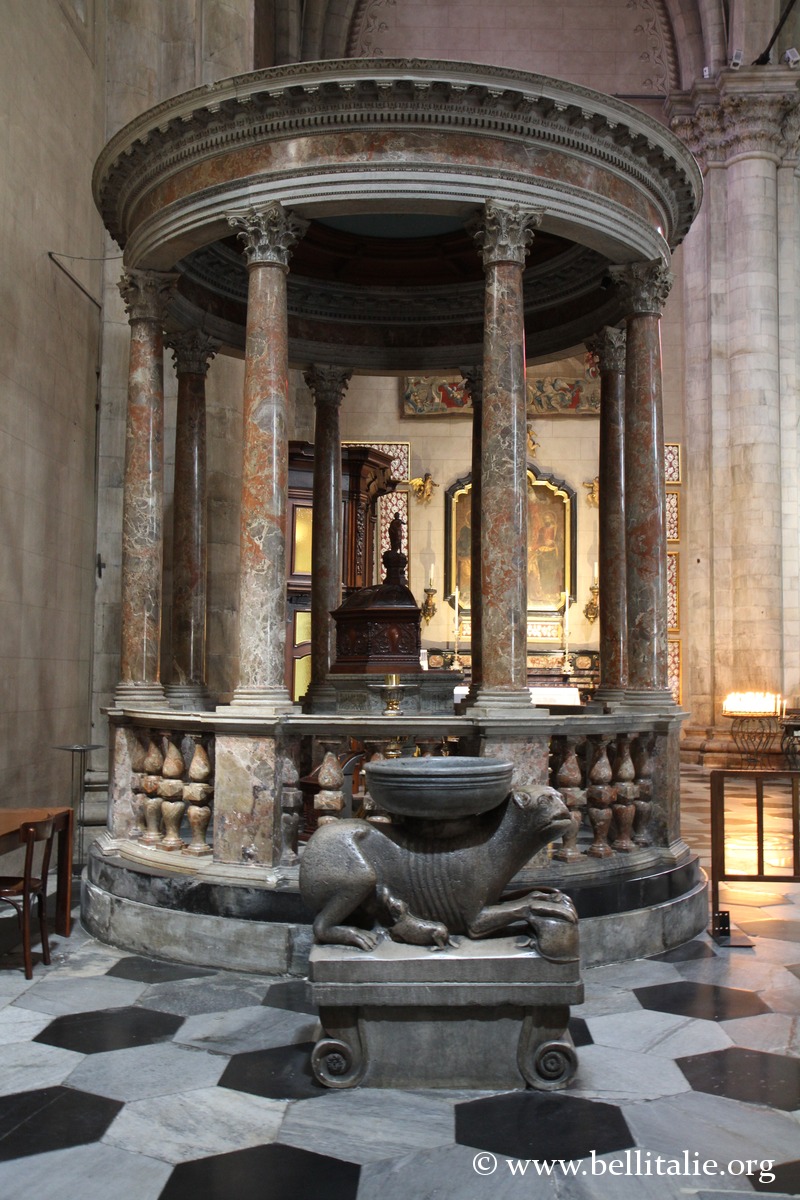
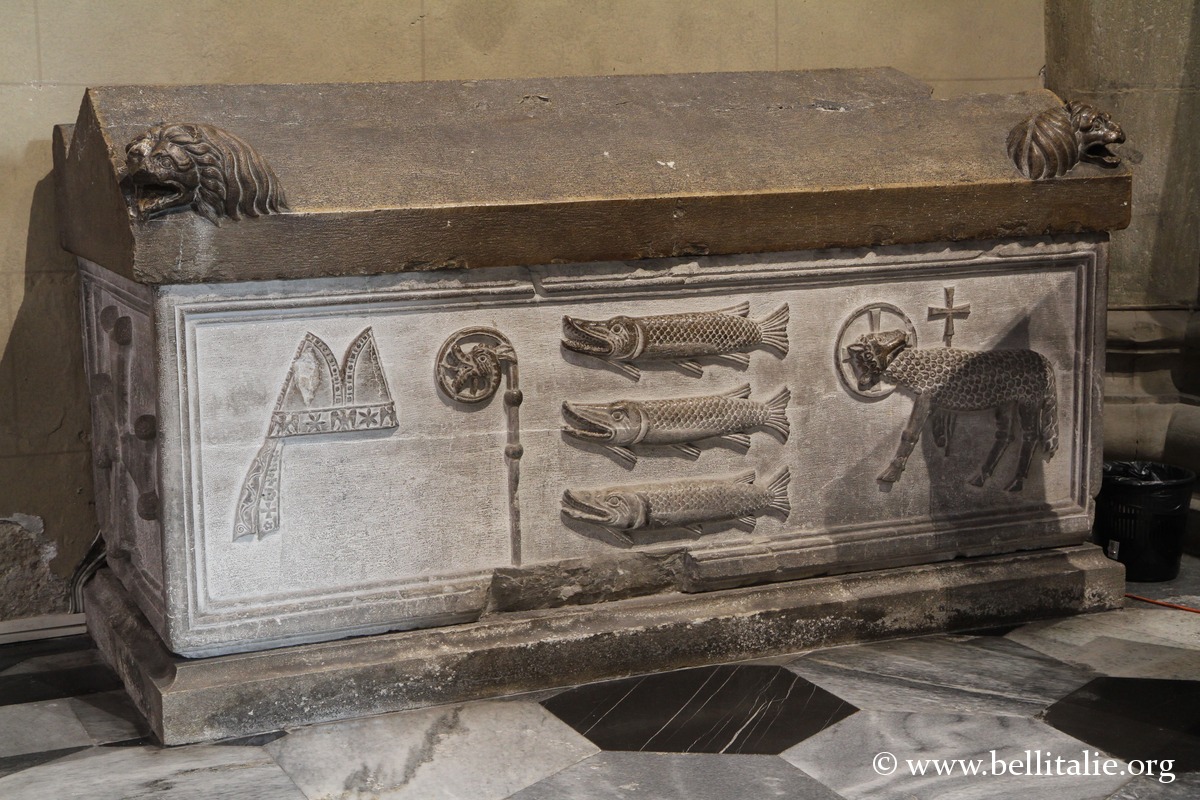
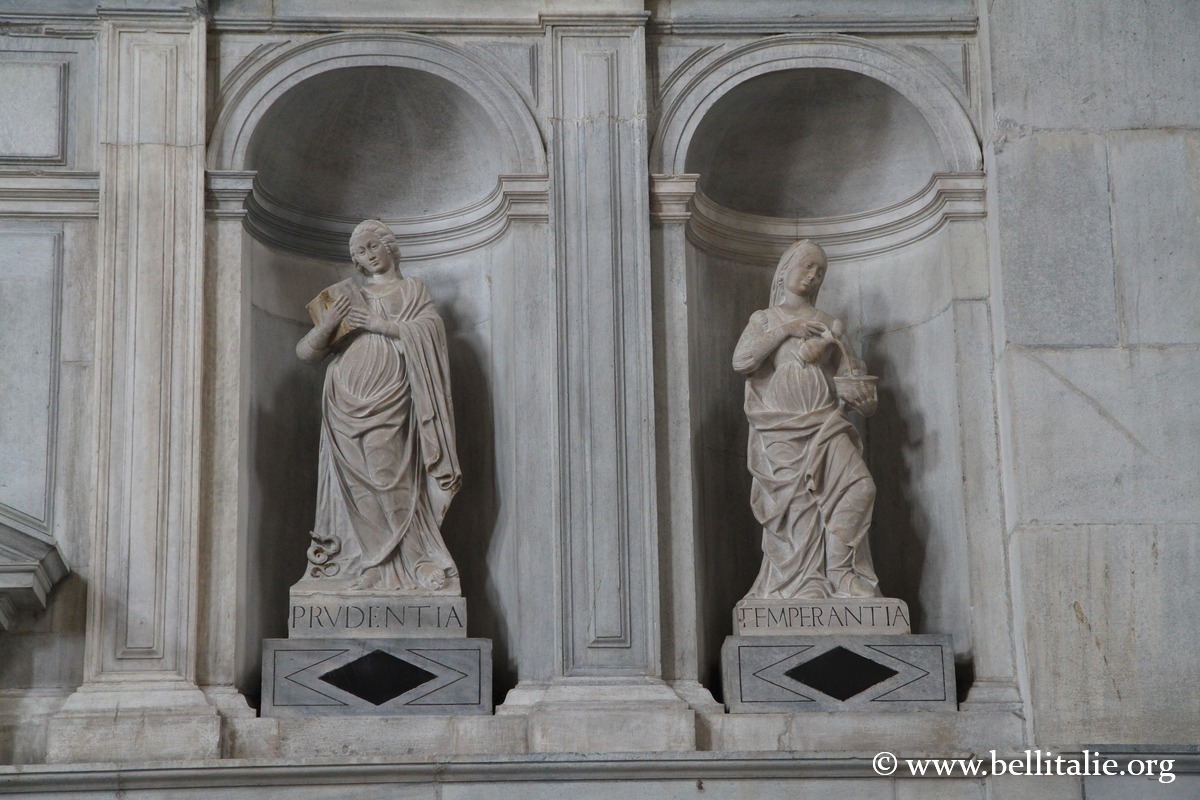
The Gothic interior is divided into three naves separated by two rows of 5 pillars, preserving canvases, Renaissance tapestries, a 16th-century altarpiece, two beautiful Romanesque lions, the Adoration of the Magi by Bernardino Luini, the Marriage of the Virgin and the Flight into Egypt by Gaudenzio Ferrari.
Broletto Palace
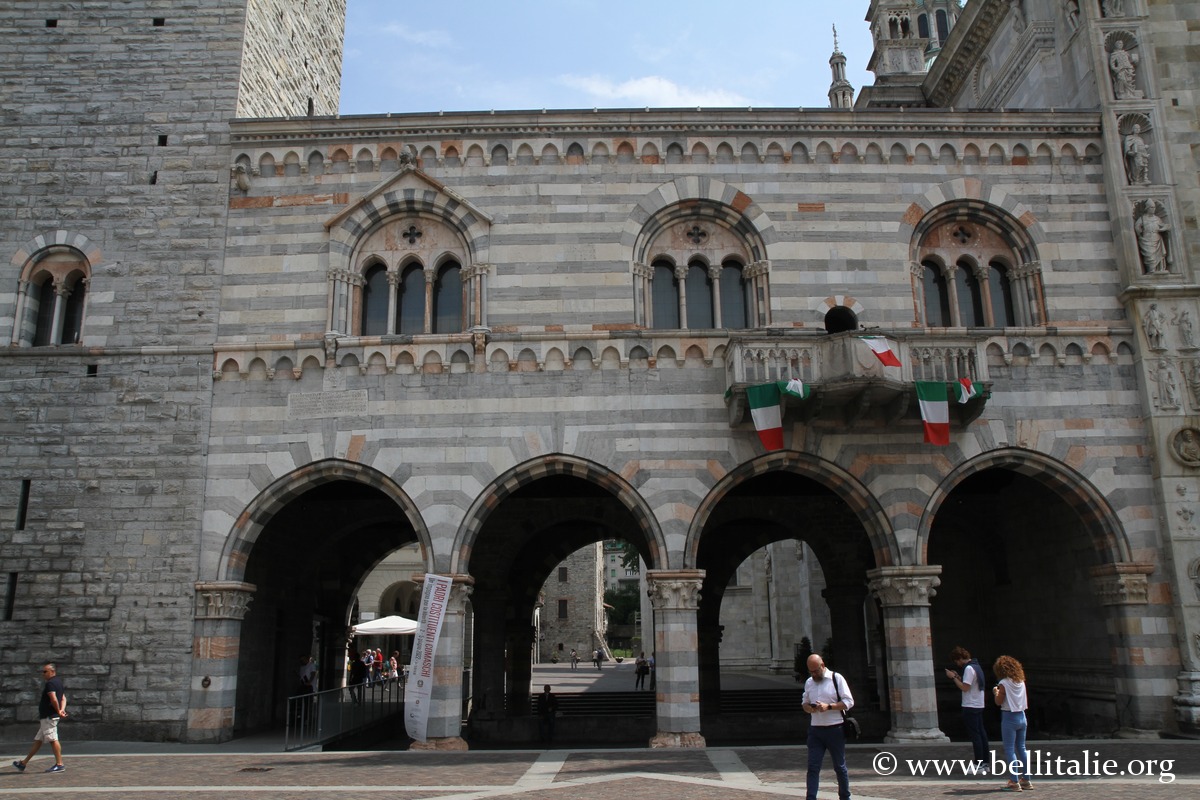
The former communal palace, called Broletto, was built in 1215. It consists of two levels with multicolored marbles, and is accompanied by a tower. It was substantially modified over time, turned into a theatre or used as archives.
Basilica and Piazza San Fedele
In the heart of the medieval area of Como, standing on the pretty Renaissance square with porticoes, the Basilica of San Fedele is a church of early Christian origin from the 6th century.
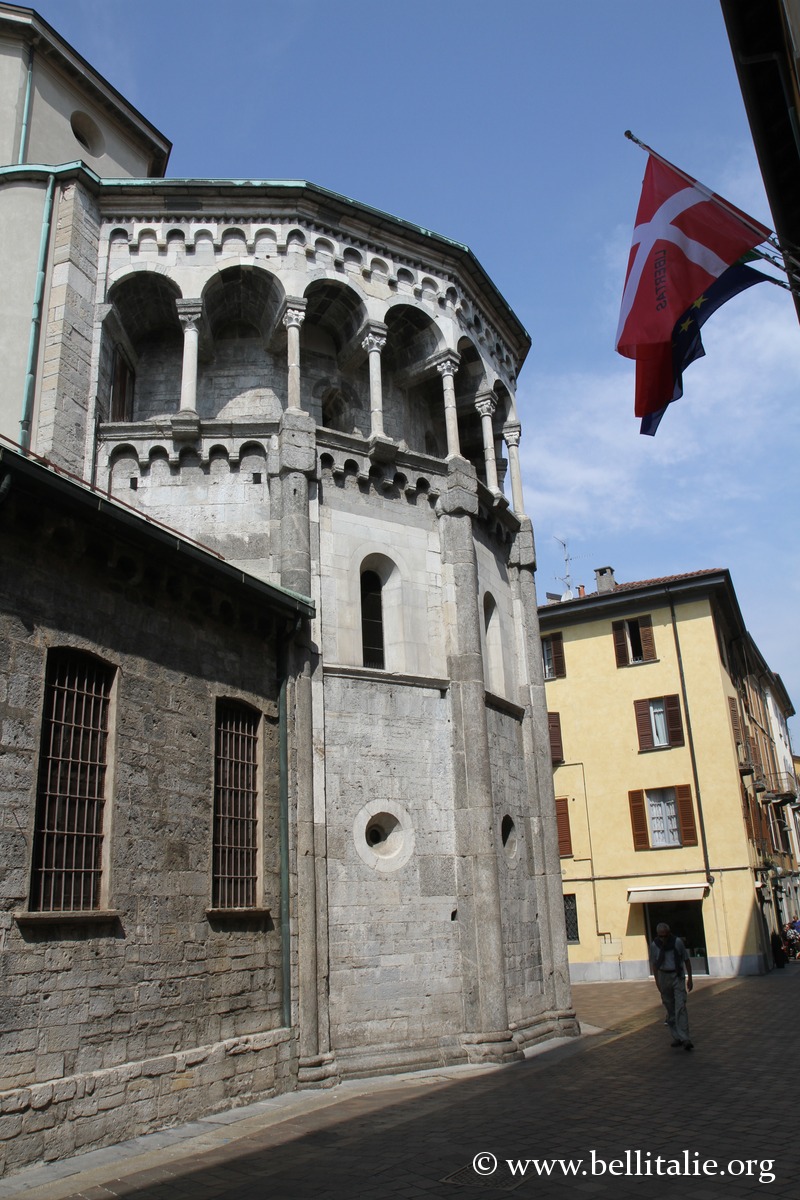
The building is Romanesque in style, with an irregular plan, a choir finely decorated with zoomorphic figures, monsters and griffins.
Walls and gates of Como
The current walls of Como mainly date back to the Middle Ages. They protect three sides of the historic center’s square, with the other facing the lake. Several towers remain, such as the Gattoni tower where Alessandro Volta conducted his first scientific experiments around 1765.
The Porta Torre reaches 40 meters, with its strange 8 windows opening on the inner side.
Archaeological Museum and Historical Museum
Near Porta Torre, two beautiful palaces house these two museums. The Paolo Giovio Archaeological Museum is dedicated in particular to the archaeology of the region, and also displays an Egyptian sarcophagus of the mummy Isiuret, a lapidary and the remains of a beautiful Roman mosaic.
The Giuseppe Garibaldi Historical Museum is dedicated to the memory of the Risorgimento and the wars of the 20th century, with also an ethnographic section.
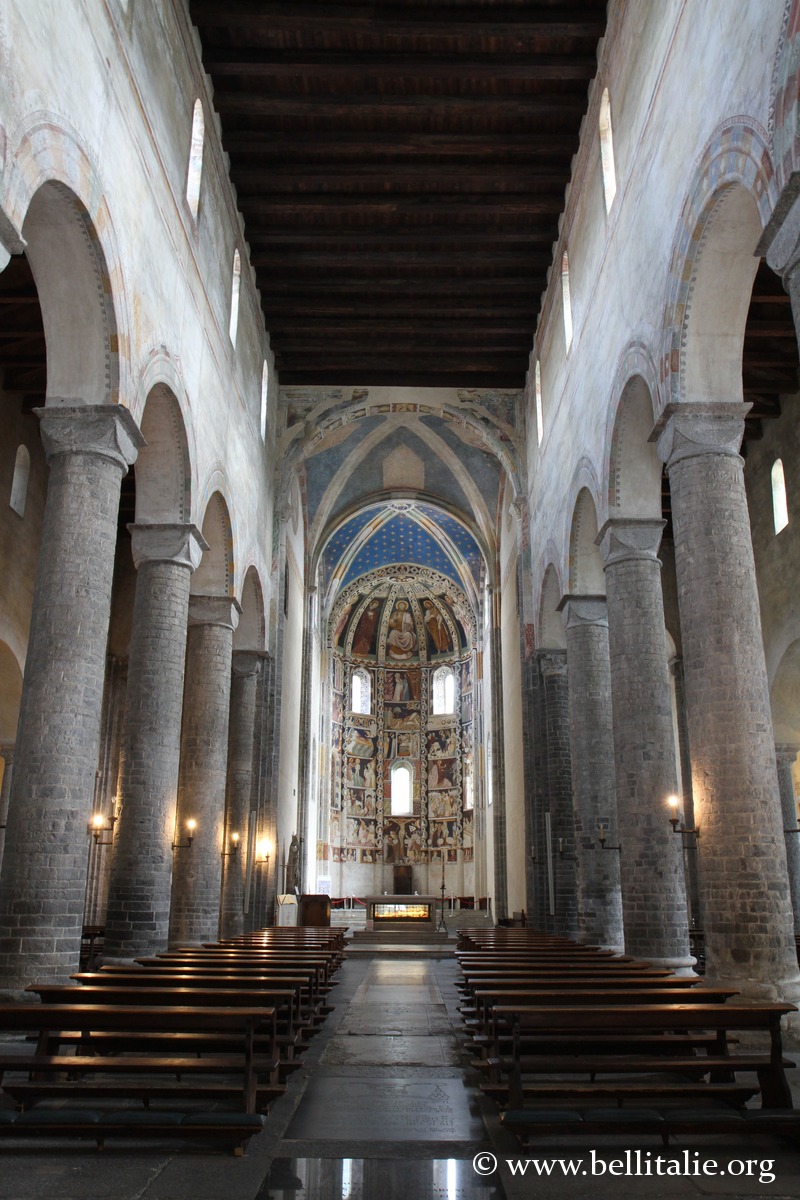
Basilica of Sant’Abbondio
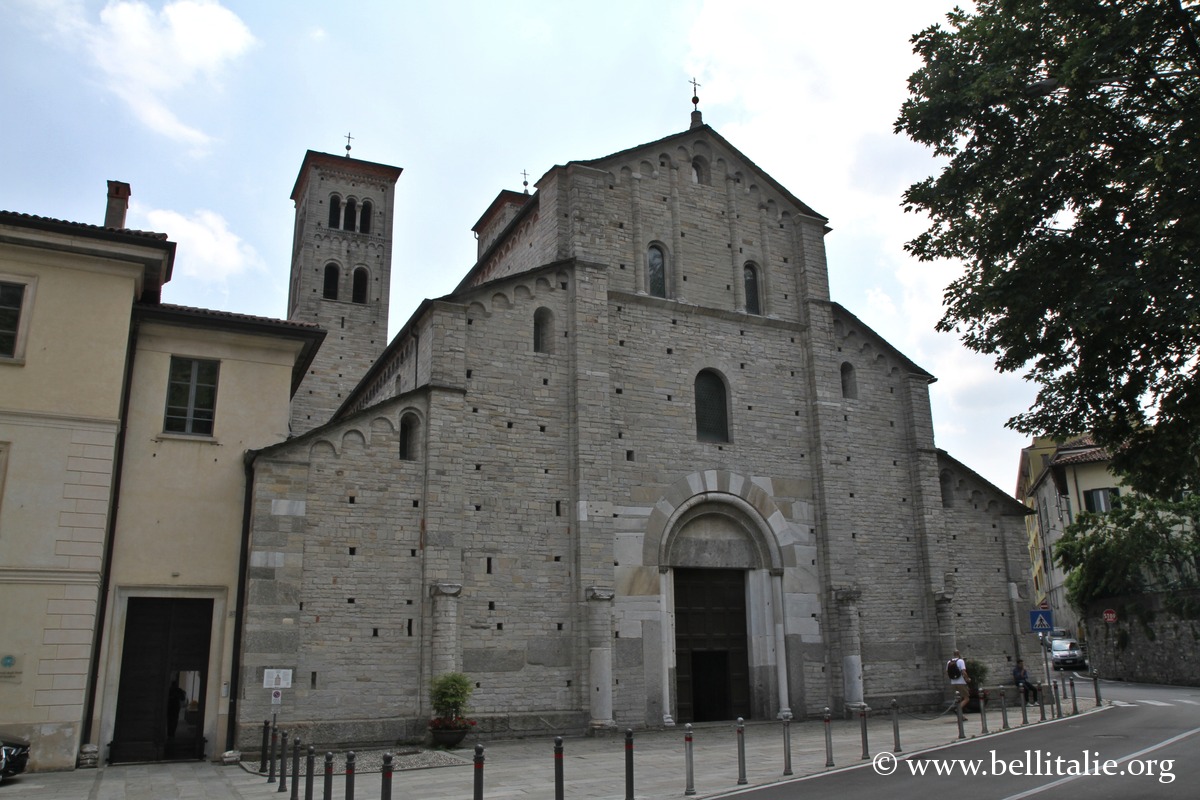
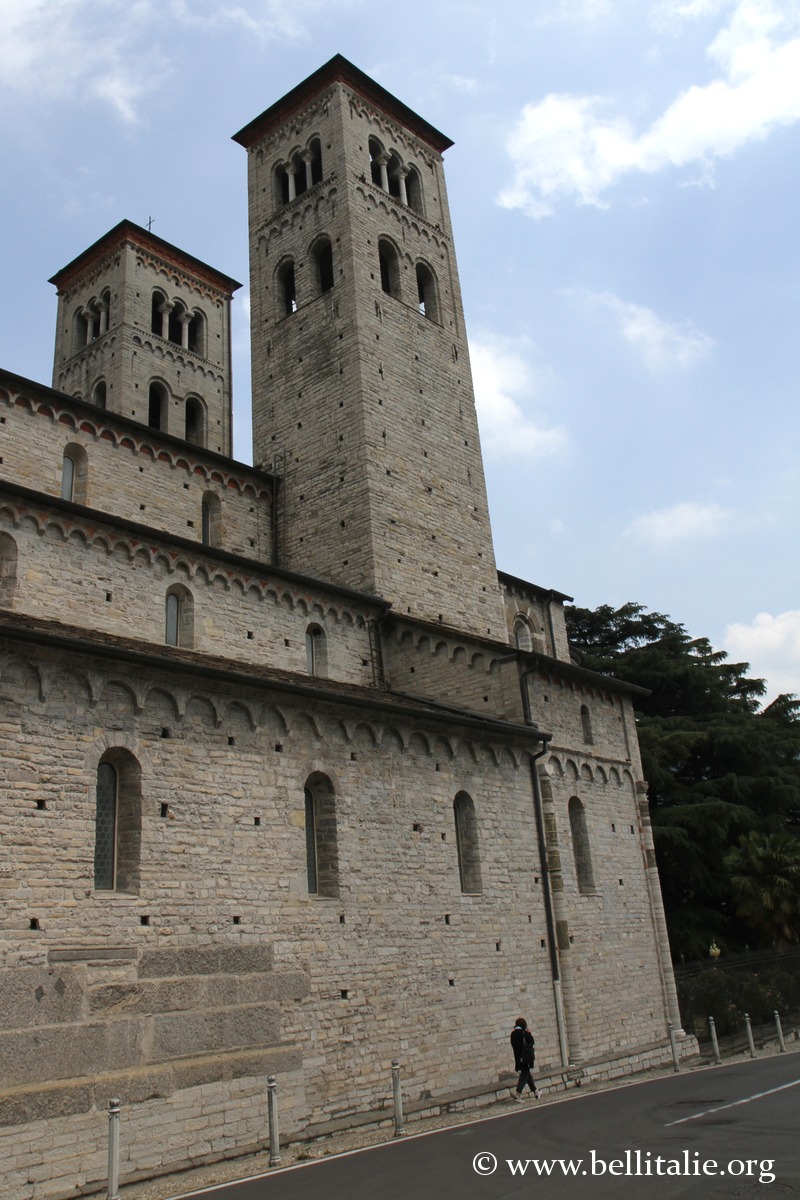
Outside the old historic center, the Basilica of Sant’Abbondio, with its Lombard Romanesque architecture, was erected along the Via Regina by the Benedictines at the end of the 11th century in place of an early Christian church
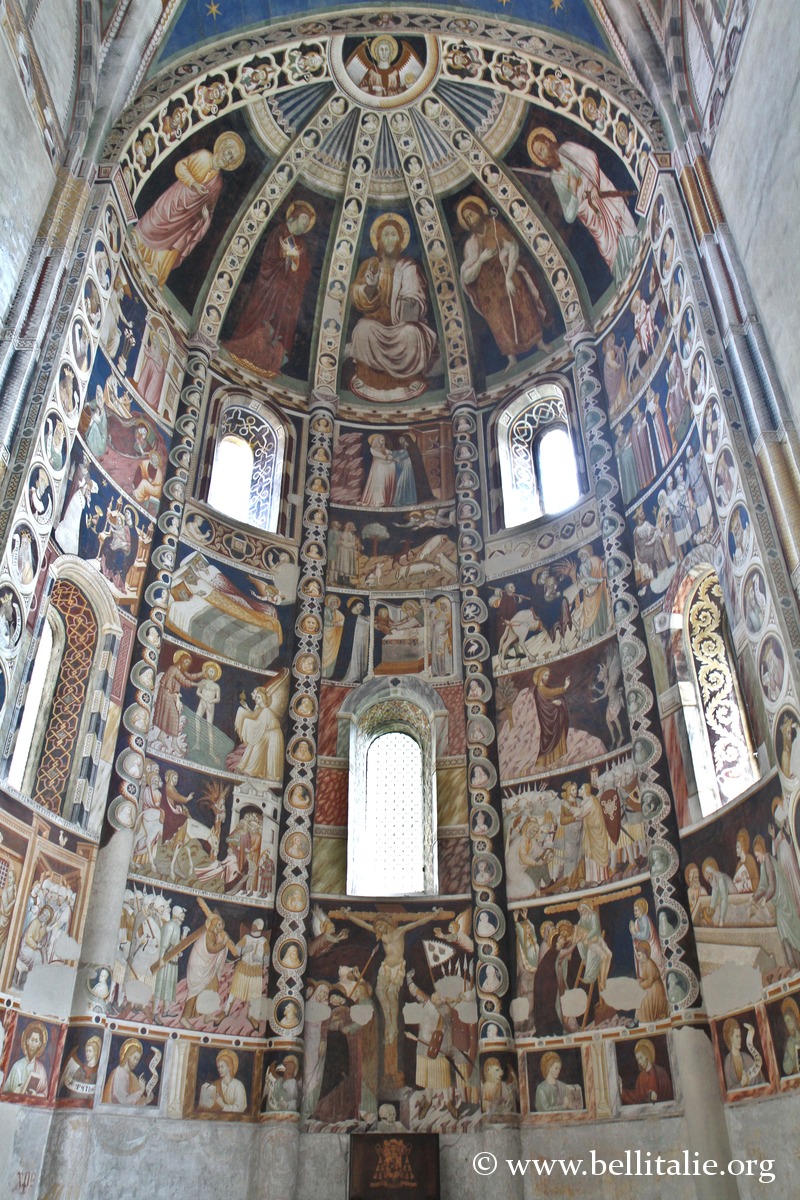
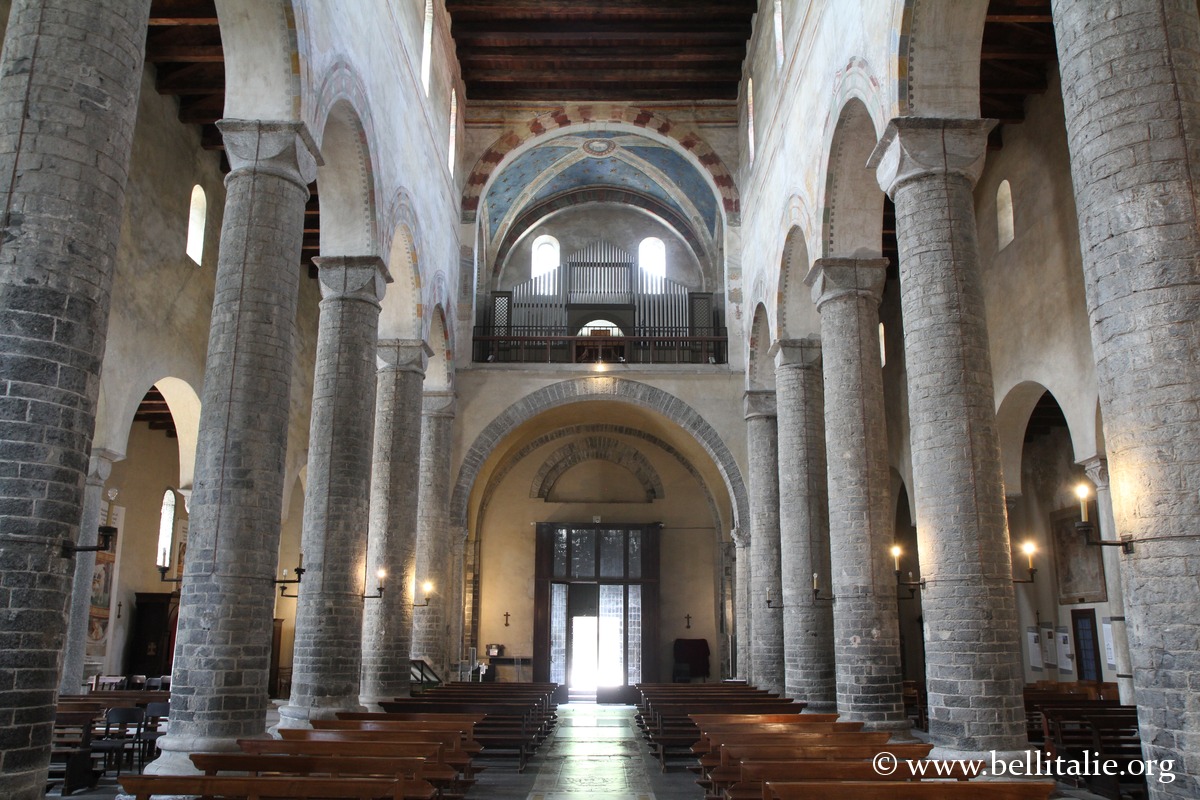
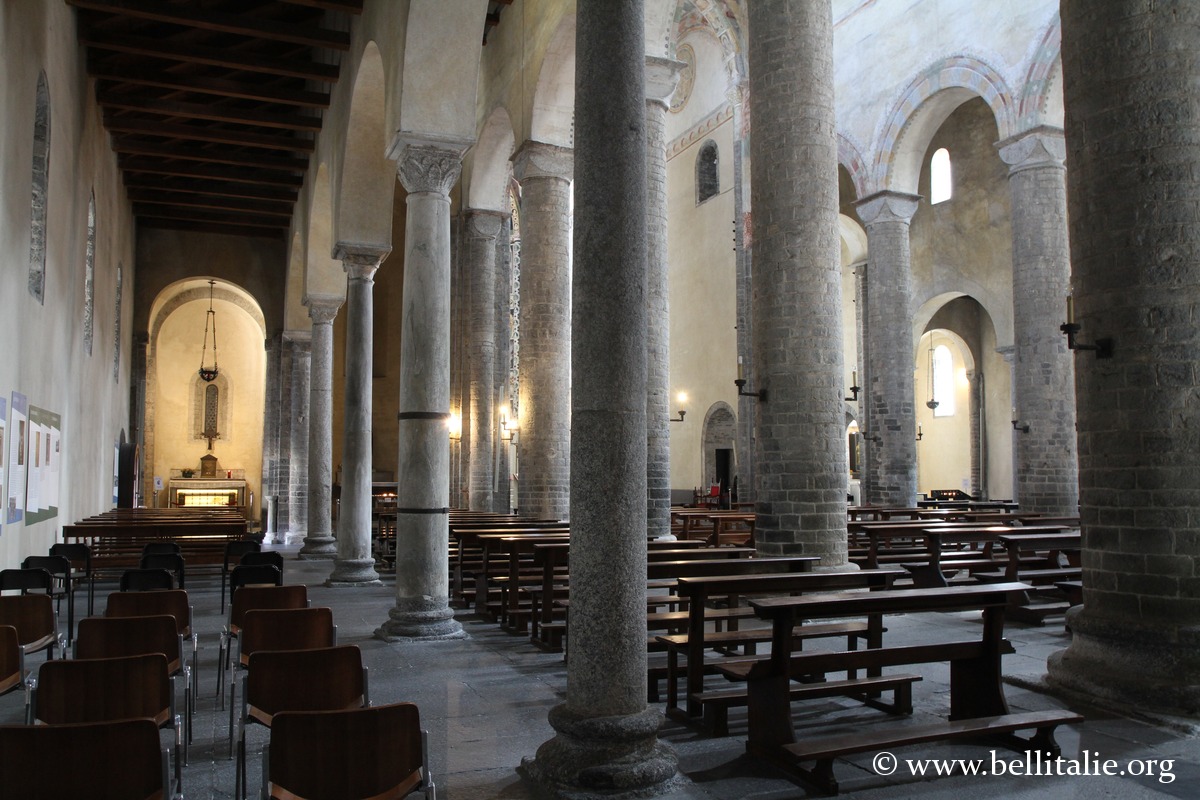
The facade is marked by powerful pillars and two bell towers. The interior consists of five naves separated by large columns adorned with sculpted capitals. The apse preserves beautiful 14th-century frescoes with stories from the life of Christ.
It is also distinguished by its two twin bell towers framing the apse. The monastery houses the law faculty of the University of Insubria.
Temple of Volta and shore
This neoclassical temple was erected in 1927 for the centenary of the death of Alessandro Volta. It houses a small museum that displays various objects, busts of Volta, letters, documents, portraits, medals and scientific equipment.
It is decorated with beautiful ornamentation, including a mosaic floor.
Brunate and Funicular
A funicular connects Como to Brunate, covering a difference in altitude of 500 meters on a 55% slope. From the summit located at nearly 800 meters above sea level, the view extends over the city of Como, the Po plain, the lake and the entire western Alps. This is why Brunate is designated as “the balcony of the Alps”.
This district was originally developed for the wealthy Milanese bourgeoisie who built prestigious villas there, including Art Nouveau style houses, which the visitor can discover by following a pedestrian route. The center has small churches and narrow streets.
At the end of Via Giacomo Scalini is the Volta Lighthouse, 30 meters high.
Baradello Castle
The remains of the old Baradello Castle dominate a hill south of Como, on a site occupied at least since antiquity.
Villa Olmo and lungolago walks
- From Piazza Cavour one can reach, following the shore, the footbridge leading to the sculpture Life Electric. This controversial work by Daniel Libeskind celebrates Alessandro Volta and the invention of the battery. 16 meters high, it aims to represent the electrical tension between two poles of a battery.
It is placed in a location with a beautiful viewpoint over the city.
In the park bordering the lake, a Monument to European Resistance was erected, then the Temple of Volta (Tempio Voltiano), and the tower of the Monument to the Dead, 30 meters high. Built in the 1930s in rationalist style, it is dedicated to the fallen of Como in the First World War. - Further along the shore, the Lino Gelpo pedestrian promenade is also called Riva delle Ville. It is a beautiful walk, with flower beds and the gardens of the villas, small bridges and views over the lake.
It passes in front of beautiful villas, first the Villa Saporiti which was built in 1793, with a semicircular part on the facade, in neoclassical style, and its statues of river and Roman divinities; then the Villa Gallia which is the oldest of these villas, built in 1615; then the Villa Parravicini Revel with its rich garden; and the Villa Volonté built in 1861 in neoclassical style, consisting of two buildings connected by a portico with a veranda.
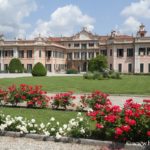
The Villa Olmo is the most majestic and also the only one that can be visited. Its facade faces the lake with beautiful views from the Italian garden which is adorned with statues and fountains. The garden at the rear is less landscaped, in the English style. - Another walk starts from Piazza Cavour towards the east, passing along the quay, the funicular station going up to Brunate, then the Viale Geno, crossing green spaces along the lake, and ending at the charming site of the Villa Geno from the end of the 18th century and its pretty park adorned with a large fountain, now housing a restaurant.
Other places and surroundings of Como
Lake Como Poetry
The Lake Como Poetry Way is a famous 16 km pedestrian route that skirts the south of the lake passing through Como, from the heights of Brunate to the east to Cernobbio to the northwest.
Spina Verde Park
Between Como and Switzerland, the Spina Verde Park is a protected natural area crossed by hiking trails, traversing nature and with panoramic viewpoints.
Remains of the fortifications of the Cadorna line, a complex defensive system of trenches that reached as far as Lake Maggiore, including the forts of Colico at the northeast of the lake, remain.
Silk Museum
The educational Silk Museum is a place of historical memory dedicated to an important historic industry of Como.
Gallery
Information
- Como municipality website: www.visitcomo.eu
- Article Wikipedia
- Tourist portals: www.in-lombardia.it
- Blogs: www.secondastellaadovest.com, www.tastingtheworld.it
Map
If you see this after your page is loaded completely, leafletJS files are missing.


Comments