


This page complements the
General presentation of Lake Maggiore
If you had to choose a single site to discover during a trip around Lake Maggiore, it would be the archipelago of the small Borromean Islands, for their superb gardens set in a unique setting. Off the seaside village of Stresa, they can be reached in a few minutes by boat.
To describe the lake roughly, let us say that the western shore is the densest in attractions, monumental gardens and villas, where beaches are rare and often private. However, towards the north the crowds decrease and tranquillity increases accordingly, and swimming spots are less rare.
Boats regularly connect towns and places on the same shore or located on the opposite shore.
As for it, the eastern shore is seemingly less dense and less chic. From a general viewpoint, its architectural heritage is less prestigious, and it has more beaches. One can however discover grandiose monuments there, with the largest castle on the lake, the Rocca d’Angera, and the evocative Hermitage of Santa Caterina del Sasso.
 Show interactive map
 Western shore
Stresa
Stresa
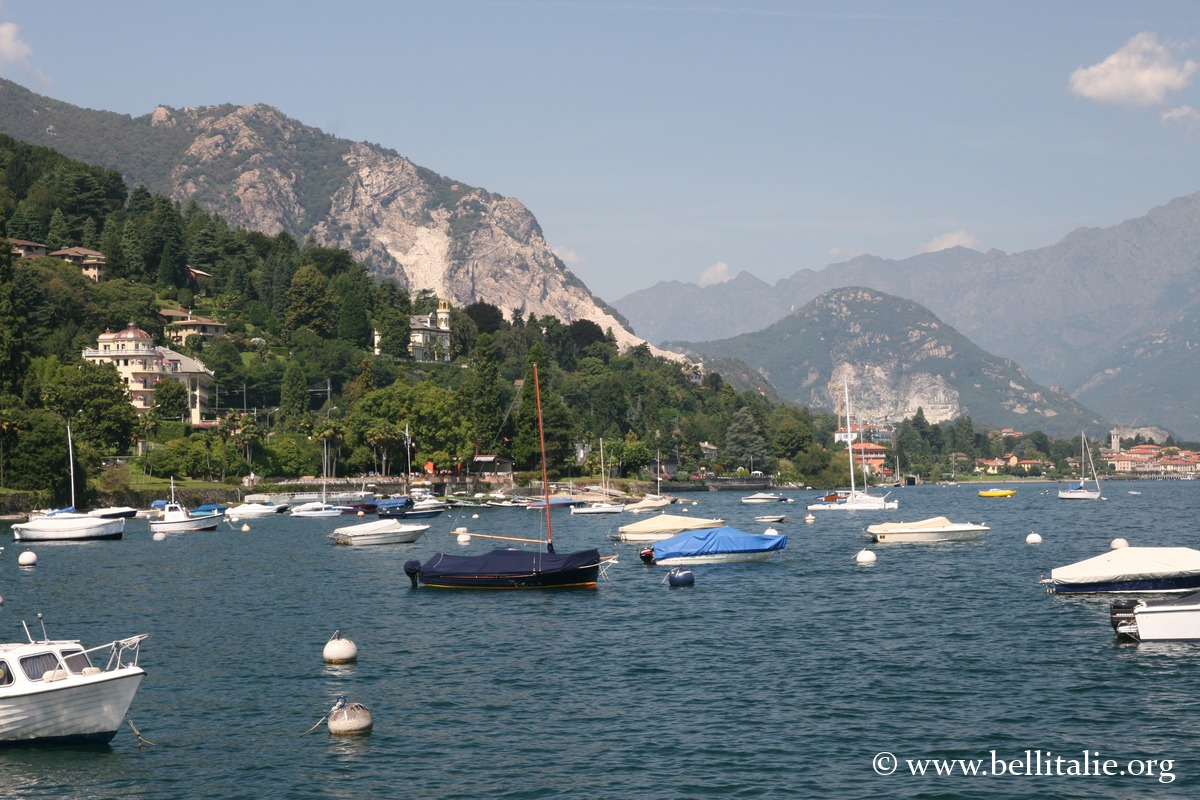
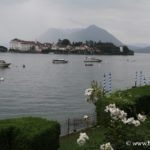
Stresa  is an elegant and chic seaside resort, the main one on the lake, located on the western shore facing the beautiful Borromean Islands, with villas, restaurants and luxury hotels, parks and gardens. A lovely promenade runs along the shore, and paths crisscross the heights.
Besides the Borromean Islands, one can discover the Villa Ducale, and especially nearby the Villa Pallavicino with its vast garden and animals, or even reach by cable car the Mount Mottarone and its panorama, with possibly on the way the Alpinia botanical garden.
The town also hosts the Festival of Musical Weeks in summer, the National Choral Singing Competition, or the Midsummer Jazz Concerts.
Borromean Islands
Isola dei Pescatori
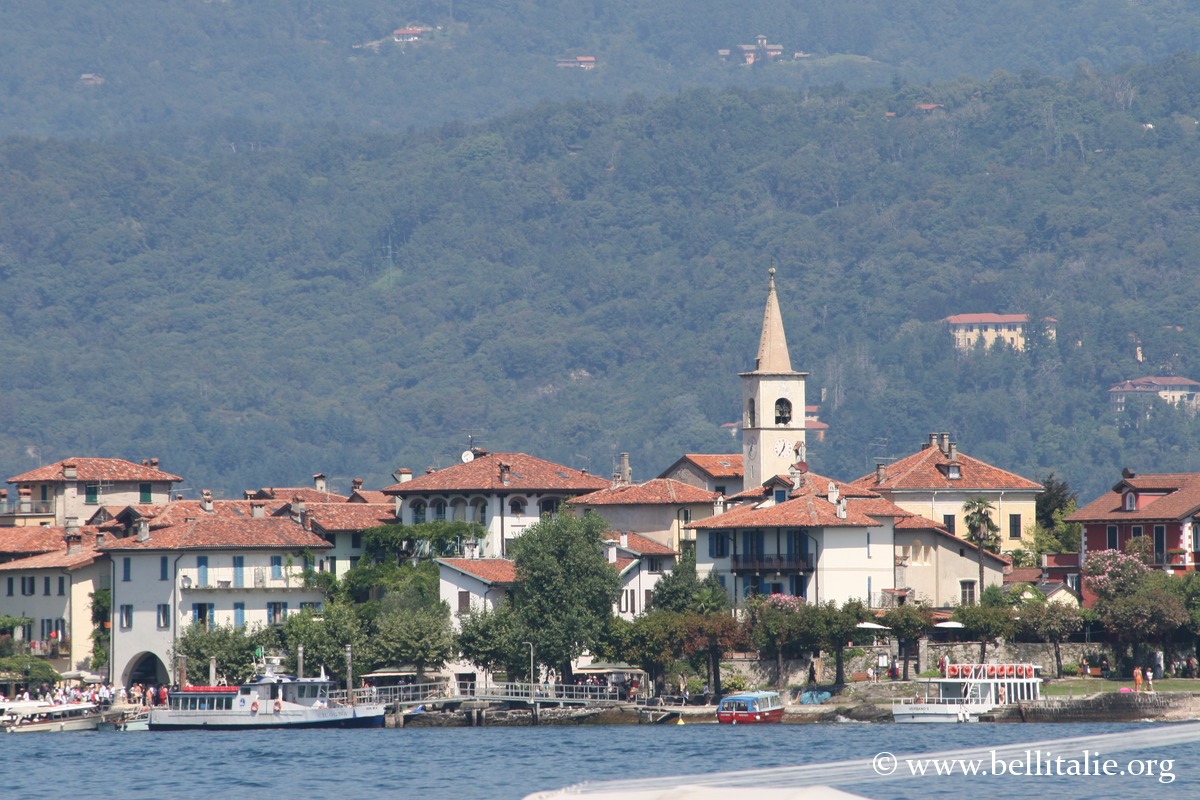
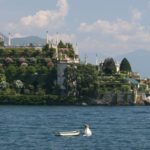
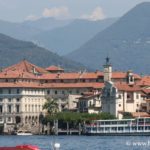
The Borromean Islands  are an archipelago of three main lake islands that have long charmed travellers, including the Isola Bella with the 17th-century Borromeo palace and its pyramid-shaped terraces planted with gardens adorned with sculptures, the Isola Madre which is the largest with its peaceful and splendid English-style botanical garden where rare plants grow, and the Isola dei Pescatori with its excellent trattorias which is inhabited all year round.
The first two can be reached by boat every day from late March to late October.
Villa Pallavicino
At the southern exit of Stresa and facing the lake, the Villa Pallavicino is a neoclassical-style building with a superb park, an English-style garden with its zoo covering 18 hectares. It was built in 1855 by the Neapolitan statesman Ruggiero Bonghi, later bought by the marquis Ludovico Pallavicino of Genoa who transformed it to give it its current appearance. It was his descendants who created the zoo, before the park was later adorned.
It also nowadays houses a refuge for around forty species of animals, mammals and tropical birds, such as flamingos, swans, parrots, fallow deer, llamas, Tibetan goats, hares and the macaques that roam free in the so-called Lombardina area.
The garden has rich vegetation, multiple flowers and plants, such as magnolias, a centuries-old sequoia, or an old cedar of Lebanon, as well as greenhouses that also protect exotic species.
The interior of the villa cannot be visited, but one can admire its neoclassical exterior facades and its roof terrace with balustrades adorned with statues.
Villa Taranto
Located in Verbania 15 km north of Stresa, the park of Villa Taranto with its botanical garden overlooking the lake is one of the most beautiful sites on Lake Maggiore, especially in spring with its tulips, in summer with its lotus flowers and the dahlias from July to October.
It was created from 1931 when Neil McEacharn, a retired Scottish army captain, bought the land from the Marquise de Saint-Élie after reading the advertisement of its sale in the Times during a stopover in Venice of the Orient Express. A botany enthusiast, he gathered plants from all over the world to grow them in his English-style landscaped park. He named it in honour of his ancestor Étienne Jacques Joseph Alexandre Macdonald, who was made Duke of Taranto by Napoleon.
On its 16 hectares grow more than 20,000 varieties of plants, flowers, trees, shrubs and aquatic plants, partly from the local region, but also from all over the planet, in particular from the Amazon rainforests. Let us mention a few places: the Dahlia labyrinth with more than 1,700 flowering plants, the Paraguayan water lilies that can reach two metres wide, the lotus flowers rising on the pond, the avenue of Conifers with very rare species, the Fontana dei Putti, the Mausoleum where McEacham is buried, but also the greenhouses and the terraces with their water jets.
The villa was built in 1875 but cannot be visited as since 1996 it has been the seat of the provincial prefecture. On the other hand, one can discover the former concierge’s lodge which houses the Herbarium.
Mount Mottarone
Mount Mottarone
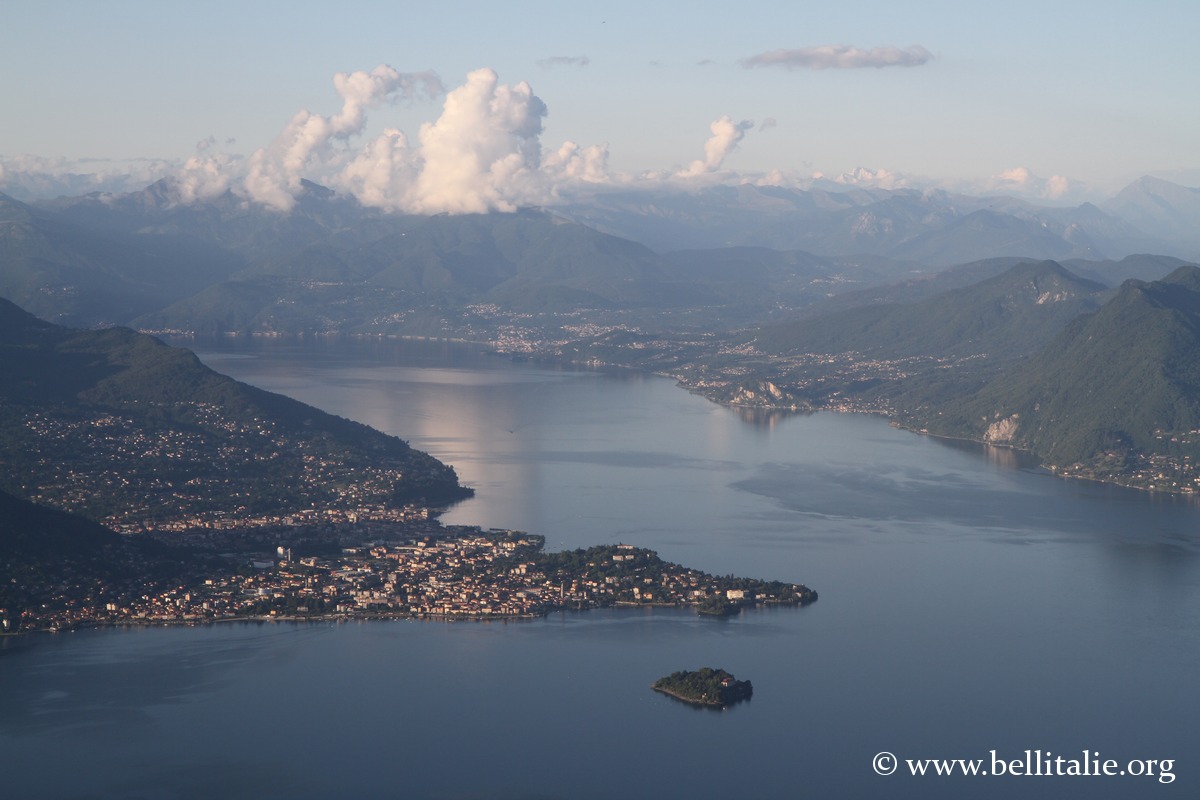
The summit of the Mottarone , located at 1,419 metres altitude, can be reached by road (toll in season) or more pleasantly and more simply by cable car from the shore of Lake Maggiore at Stresa (Lido Stresa Station).
The route ends with a chairlift to reach the summit, from where the view is spectacular over Lake Maggiore on one side, and on the other Lake Orta and the Alpine chain from Mont Viso to Mont Rose, but also the other small lakes.
Halfway up, the cable car stops at the Alpinia Botanical Garden station with nearly 2,000 species of mountain plants.
Arona and the Colossus of Saint Charles Borromeo
Arona
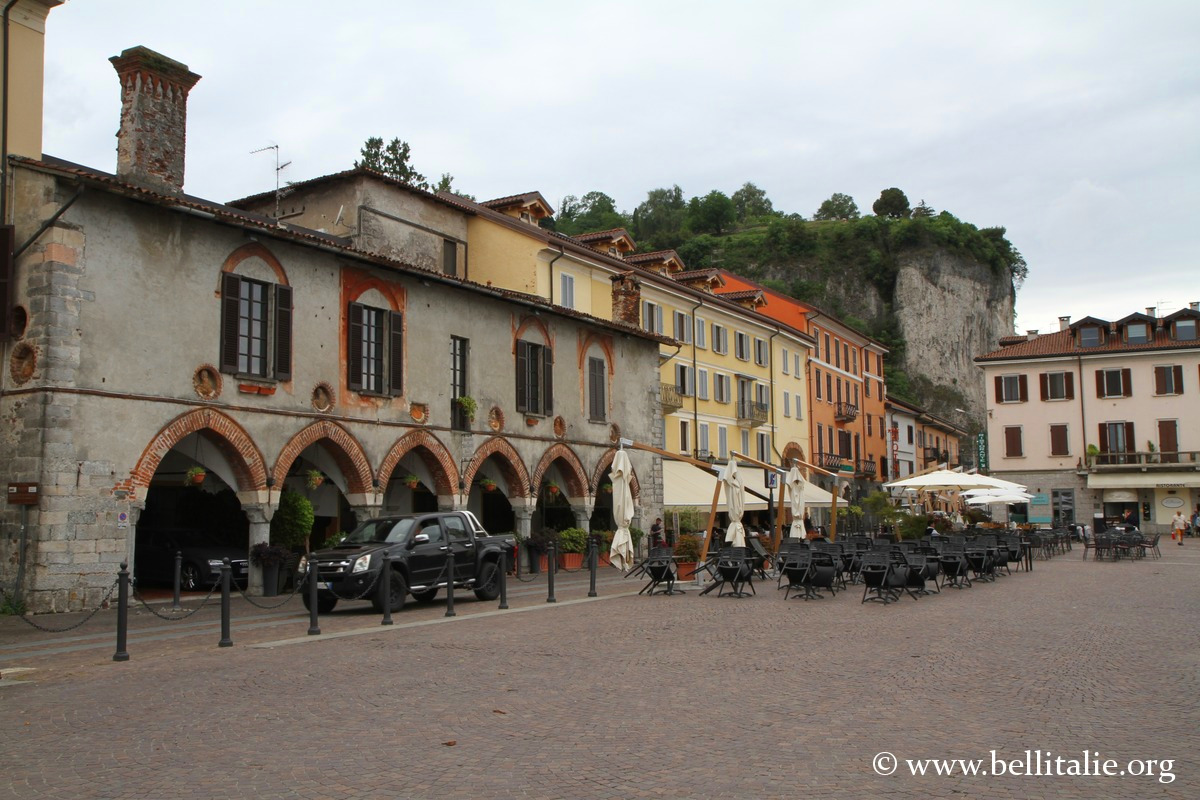
On the western shore south of the lake, Arona is one of the first towns on the lake when arriving from Milan, to which it is well connected by motorway or train. Its municipality includes the Mercurago Lagoons Nature Park.
It has one of the oldest historic centres on the shores of the lake, with the Palazzo del Broletto or Palace of Justice in its medieval quarter, as well as the Church of the Holy Martyrs.
2 km north of the centre, on a small hill, the Colossal Statue of Charles Borromeo (1538-1584) reaches 35 metres in height (of which 23.40 metres for the statue without the base), erected in homage to the saint native to Arona who was cardinal archbishop of Milan and one of the main architects of the Catholic Counter-Reformation. He was quickly canonised by Paul V in 1610. The statue was inaugurated in 1698, a little more than a century after Borromeo’s death, and remained for nearly two centuries the tallest statue in the world, surpassed in 1886 by the Statue of Liberty. Moreover, in order to build the latter with the help of Eiffel, Bartholdi came beforehand to study the colossus.
It was shortly after Charles’s death that it was commissioned by his cousin Federico Borromeo. Designed by Giovanni Battista Crespi, its construction begun in 1624 took nearly 74 years. It is covered with hammered copper plates joined by bolts and nails.
Inside, a spiral staircase reaches the head of the colossus, where three holes are found near the eyes, nostrils and ears through which one discovers a superb view over the lake. It is an interesting experience.
Giardino Alpinia
The Alpinia Garden is located at 800 metres altitude, halfway between Stresa on the shores of Lake Maggiore and the summit of Mottarone, accessible notably by cable car.
It gathers nearly 2,000 mountain species, with also a superb panoramic view over Lake Maggiore and the Borromean Islands.
Verbania
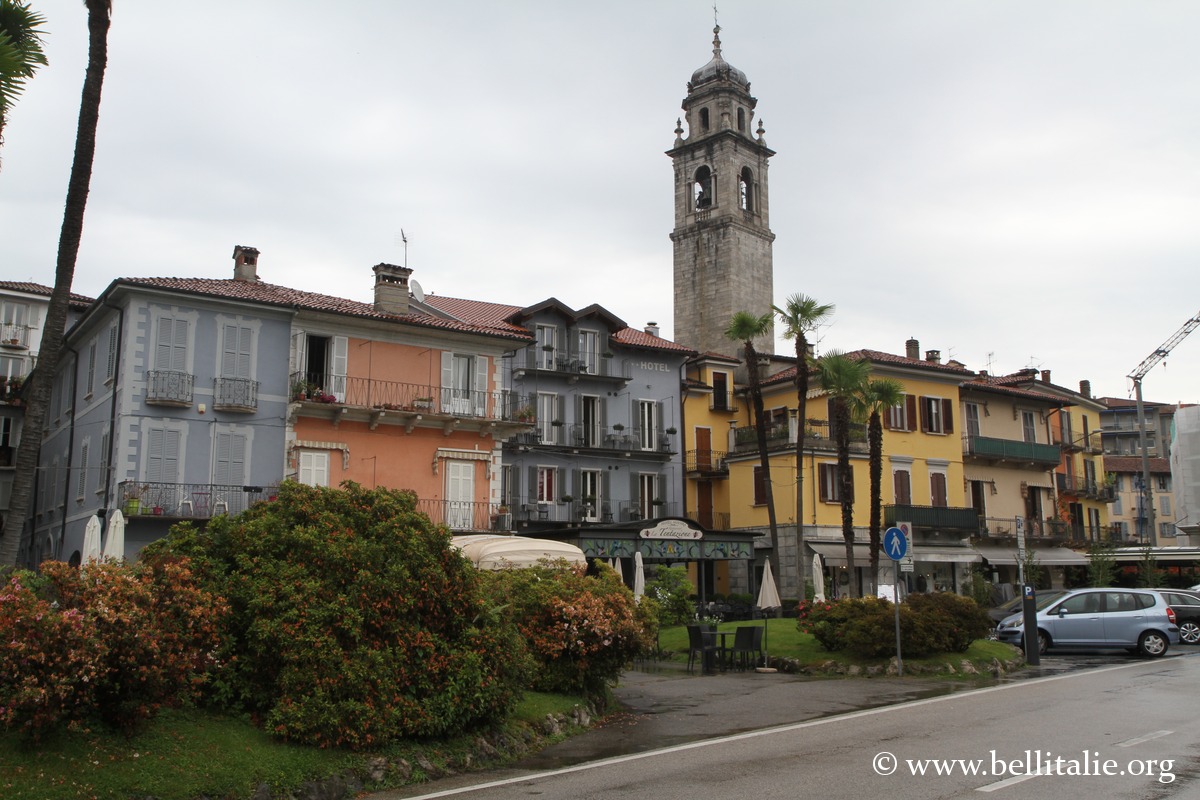 Facing Stresa on the other side of the small Borromean gulf, on the western shore, Verbania in fact brings together the two villages of Intra and Pallanza. Its main attraction is the Villa Taranto with its botanical gardens among the most beautiful in the world.
One can see in the historic quarter of Intra the Basilica San Vittore, and along the charming Lungolago of Pallanza beautiful palaces such as the Villa Giulia and the Villa San Remigio on the other side of the cape.
Mergozzo
Mergozzo is not exactly on Lake Maggiore, but a few kilometres away, with its pretty little lake, quieter than Lake Maggiore with its sometimes choppy and congested shores, which also has several beaches.
An emblematic centuries-old elm stands in the centre of the village’s main square, and there is the pretty portico of the chapels.
Cannobio and Cannero
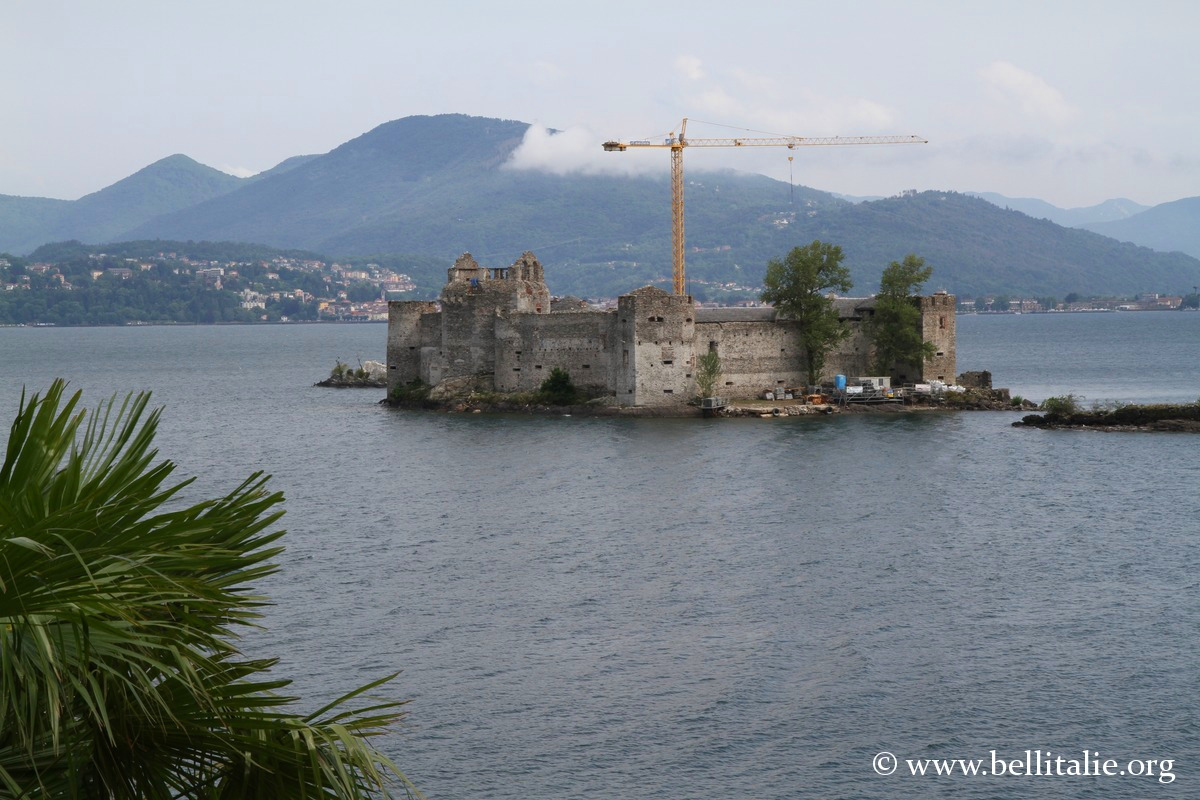
Cannero Castles
The village of Cannobio, classified with Blue Flag and Orange Flag, is the last municipality before Swiss territory, on the western shore of the lake.
It preserves a very pretty historic centre, from the Lungolago, with alleys lined with palaces including the Palazzo della Raggione from 1291, its monuments, churches and small squares, including the sanctuary of the Pietà, a Renaissance church near the shore. The river that crosses the town is spanned at the edge of the town by an old stone bridge, and overlooked by a pretty chapel.
The heights of the Cannobina Valley are well suited to hiking with their paths and summits, and in the gorge of the Orido Sant’Anna there is a small natural pool.
A few kilometres south of Cannobio, Cannero Riviera is a pleasant village thanks to its pretty little beach and its promenade, located at the foot of lemon and orange trees. Opposite, emerging offshore, are the two fascinating Cannero Castles, built at the beginning of the 16th century on rocky islets where the castles were occupied in the Middle Ages by lake pirates.
Between Cannobio and Cannero, a charming little medieval hamlet lies on the heights with its small church of San Gottardo.
Sacred Mount of Ghiffa
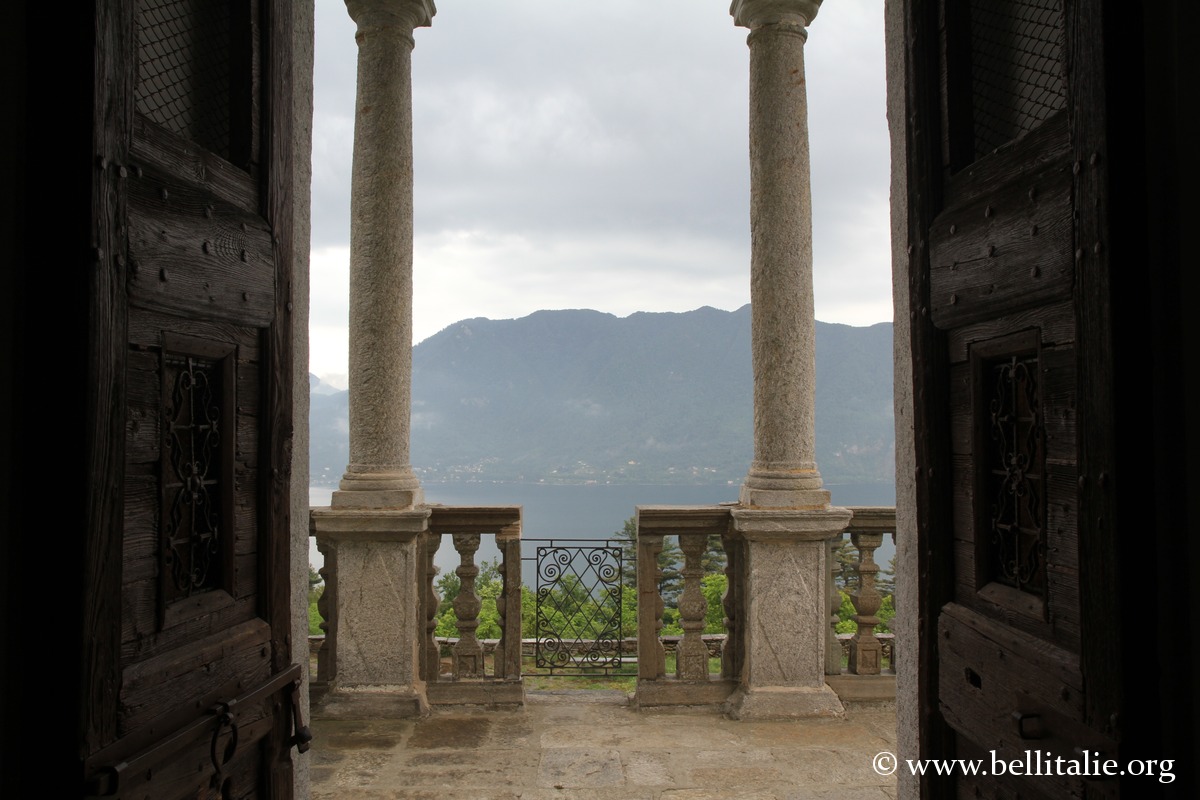
Sacred Mount of Ghiffa
From its charming panorama overlooking Lake Maggiore, the Sacred Mount of Ghiffa is the smallest of the Piedmontese sacred mounts, at the foot of Mount Carciago. This unfinished Baroque complex is inspired by the sacred mounts of Orta and Varèse.
Its heart is the Sanctuary of the Trinity, built between the end of the 16th century and 1617 by enlarging a medieval sacred building.
There are also three chapels with beautiful porticoes and polychrome terracotta statues, built between 1647 and the beginning of the 18th century, and the 18th-century portico of the Way of the Cross decorated with paintings from 1824.
The Chapel of the Coronation of Mary is from 1647, that of Saint John the Baptist from 1659, and that dedicated to Abraham from 1703.
The surrounding environment is beautiful nature with its chestnut forests, with a 200-hectare nature reserve crossed by themed paths including archaeological remains.
Locarno
Locarno is a Swiss town straddling the Lugano and Lepontine Alps, the third largest city in the canton of Ticino after Lugano and Bellinzona. It is an important tourist destination that also hosts a famous Film Festival. It develops around the pretty Piazza Grande with its palaces and arcades, surrounded by the alleys of the old town with its pastel-coloured houses. One can also see there the Chiesa Nuova, the Visconti Castle, the Camellia Park, the Madonna del Sasso accessible by funicular, or one can relax at the Salini Thermal Baths.
Ascona just south of Locarno has a charming shore, a centre provided with shops and art galleries.
Baveno
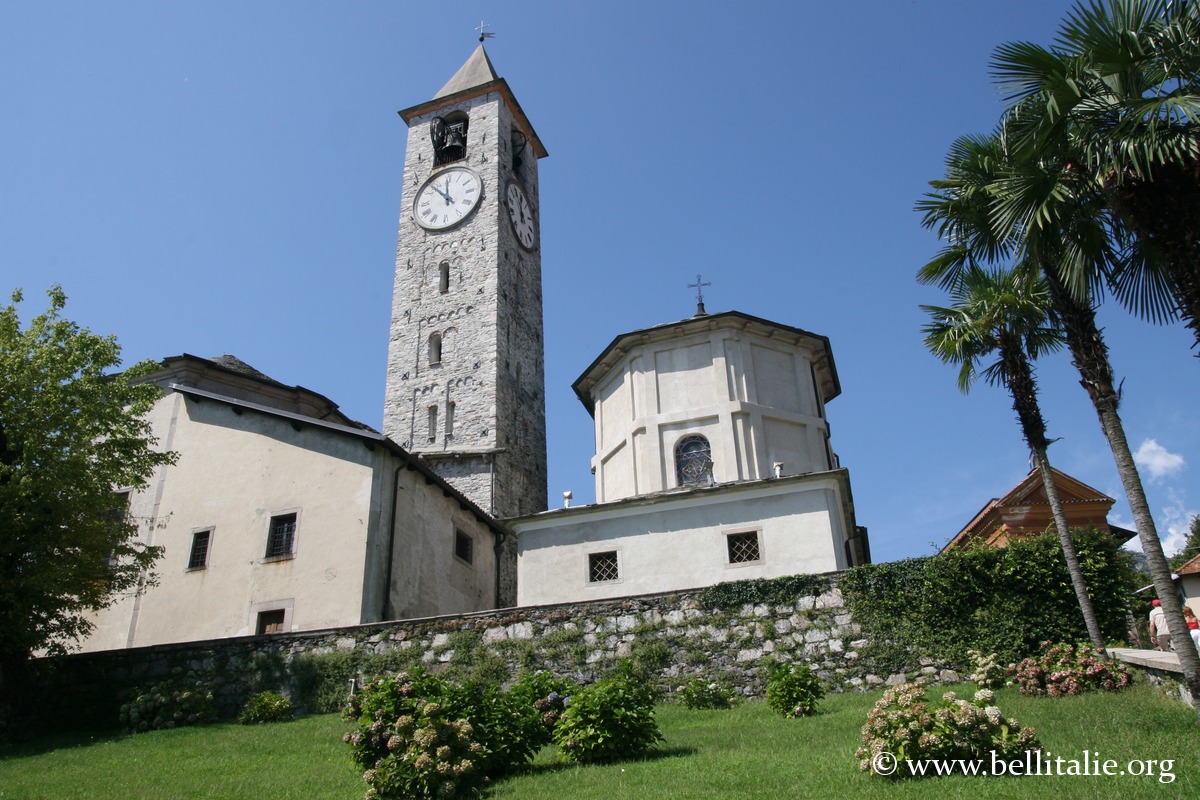
Santi Gervaso e Protaso
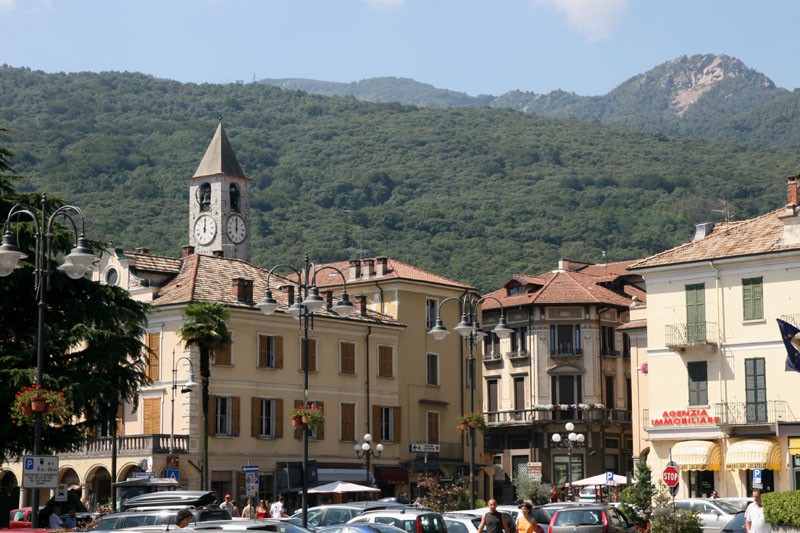
North of Stresa, Baveno is a village facing the Borromeo Gulf, from where one has from the shore promenade pretty views of the Isola Madre, which is also a stop to take a boat to the Borromean Islands or other places on Lake Maggiore.
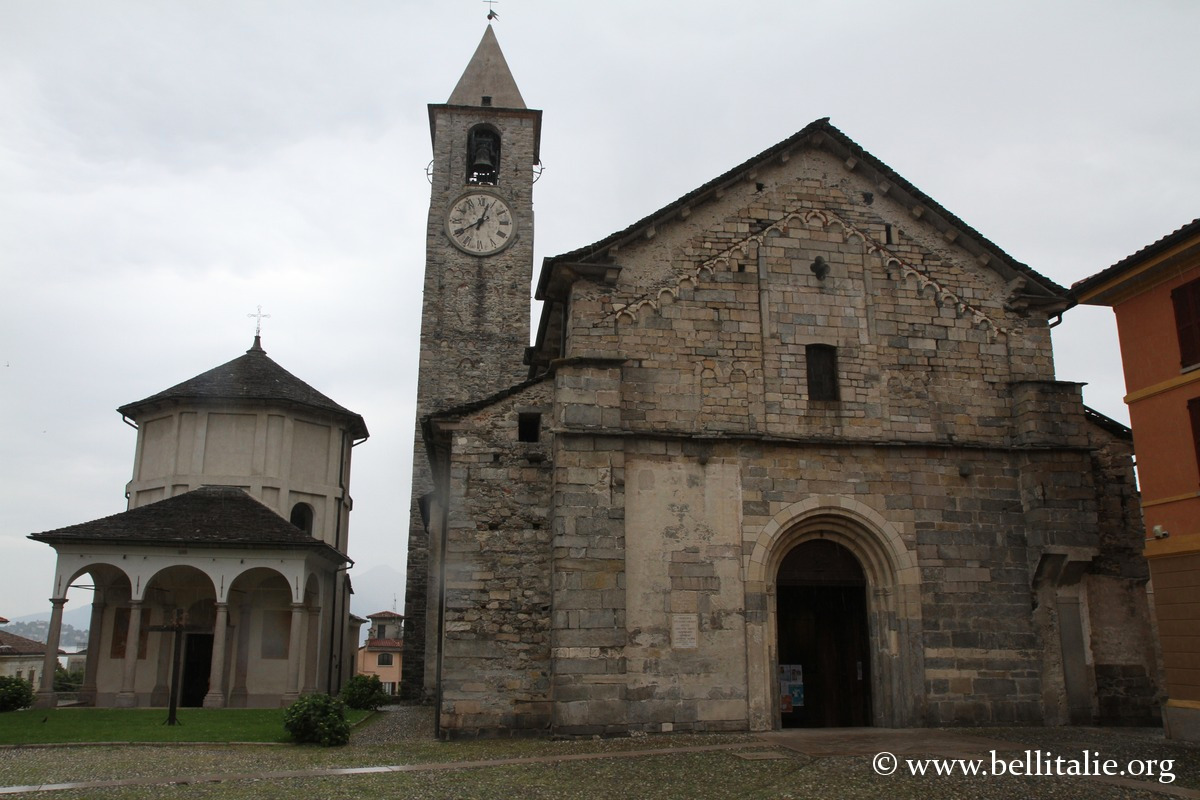
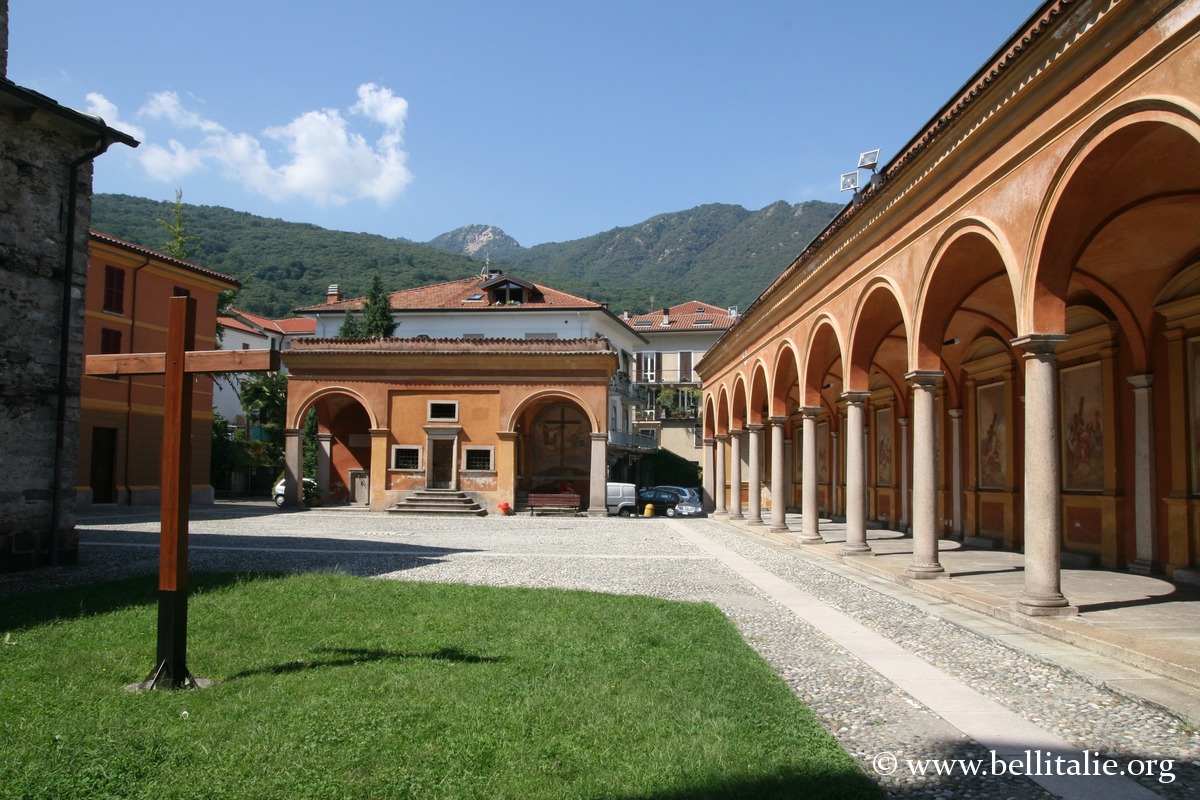
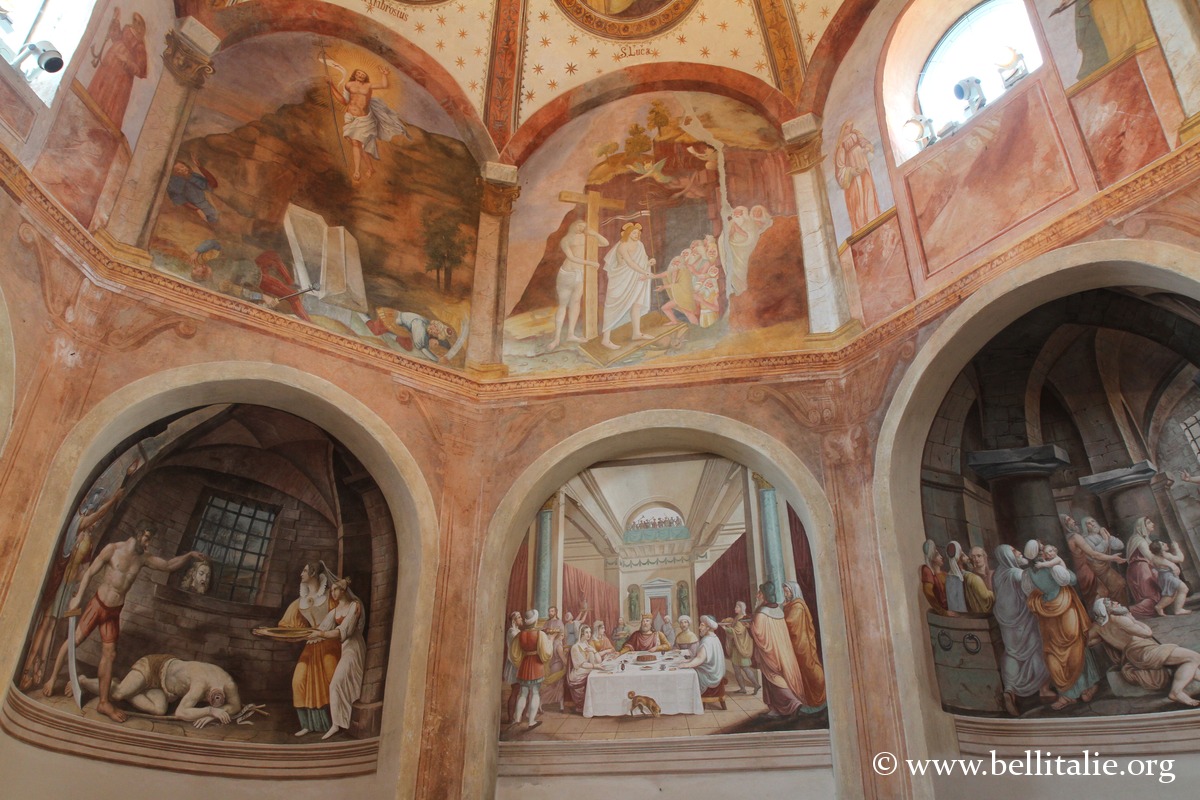
Regarding heritage, there is in particular a charming religious complex with the San Giovanni baptistery that dates back to the Renaissance, the pretty church of Saints Gervaso and Protaso, as well as the beautiful Portico of the Way of the Cross.
-
- Baveno
-
- Santi Gervaso e Protaso
-
- Santi Gervaso e Protaso
-
- Baptistère
Eastern shore
Rocca Borromea di Angera
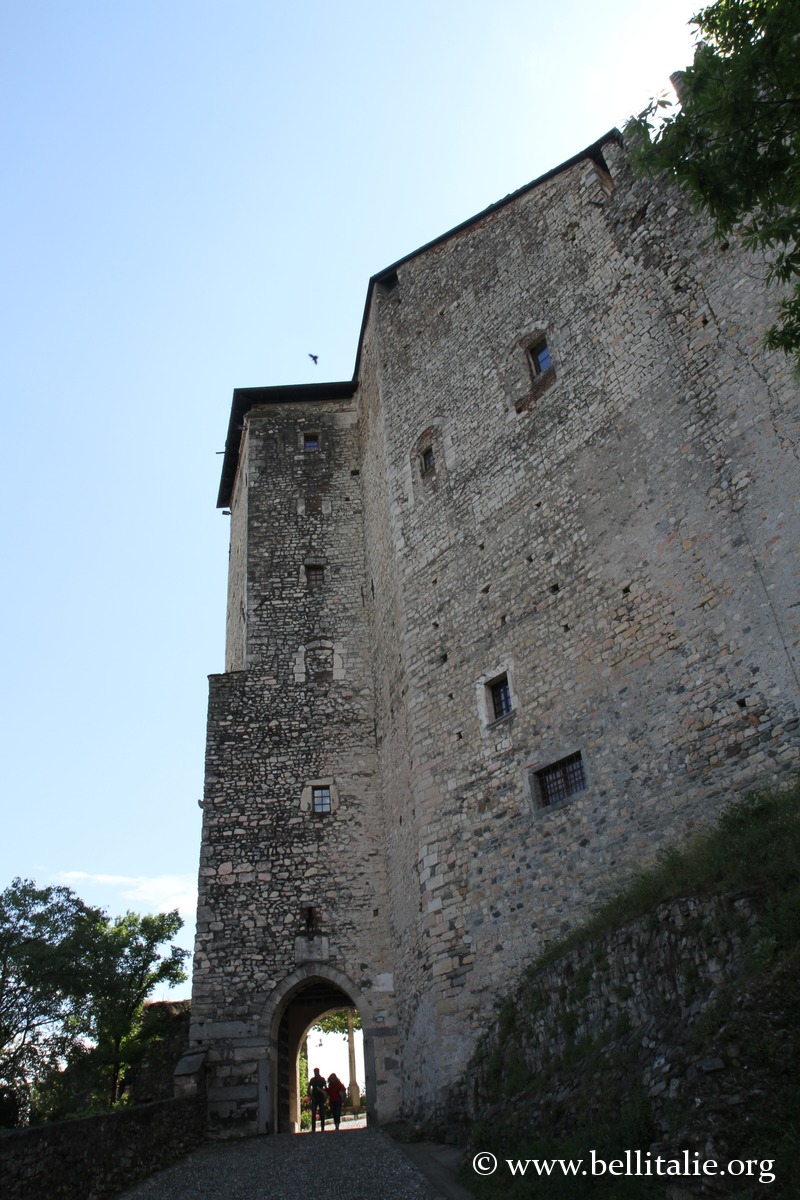
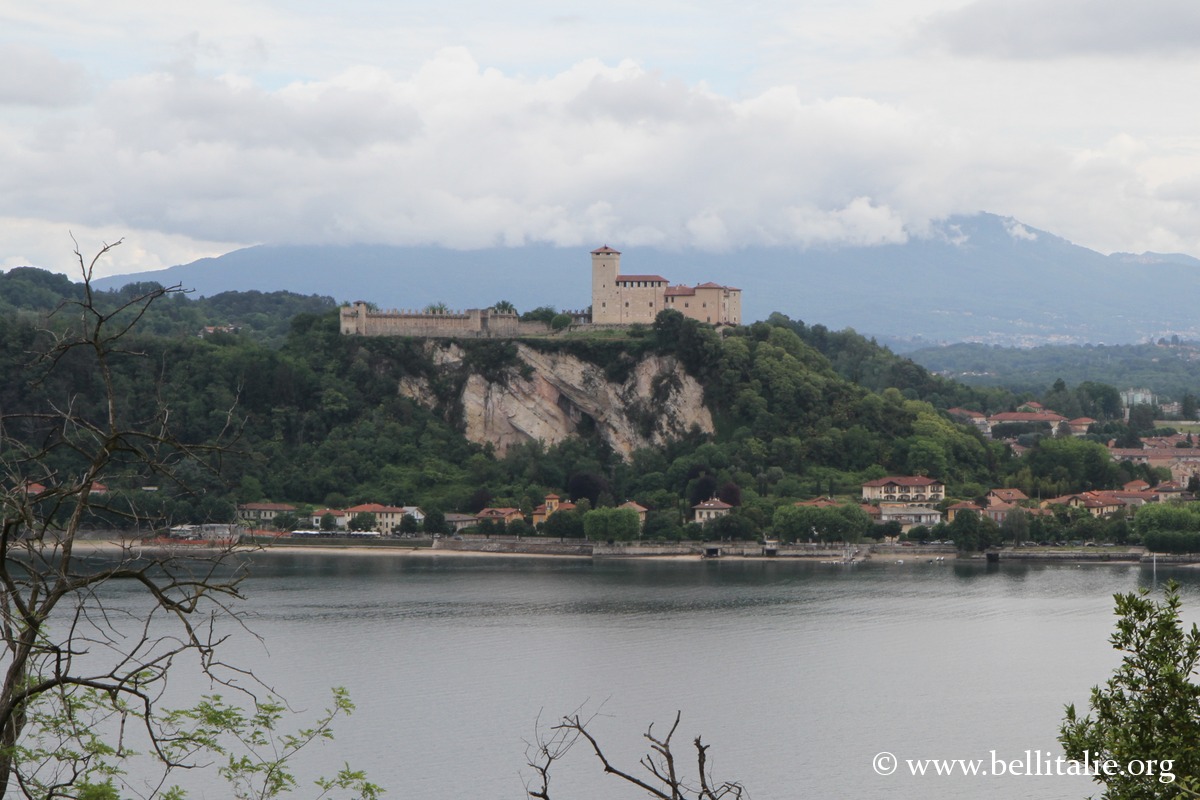
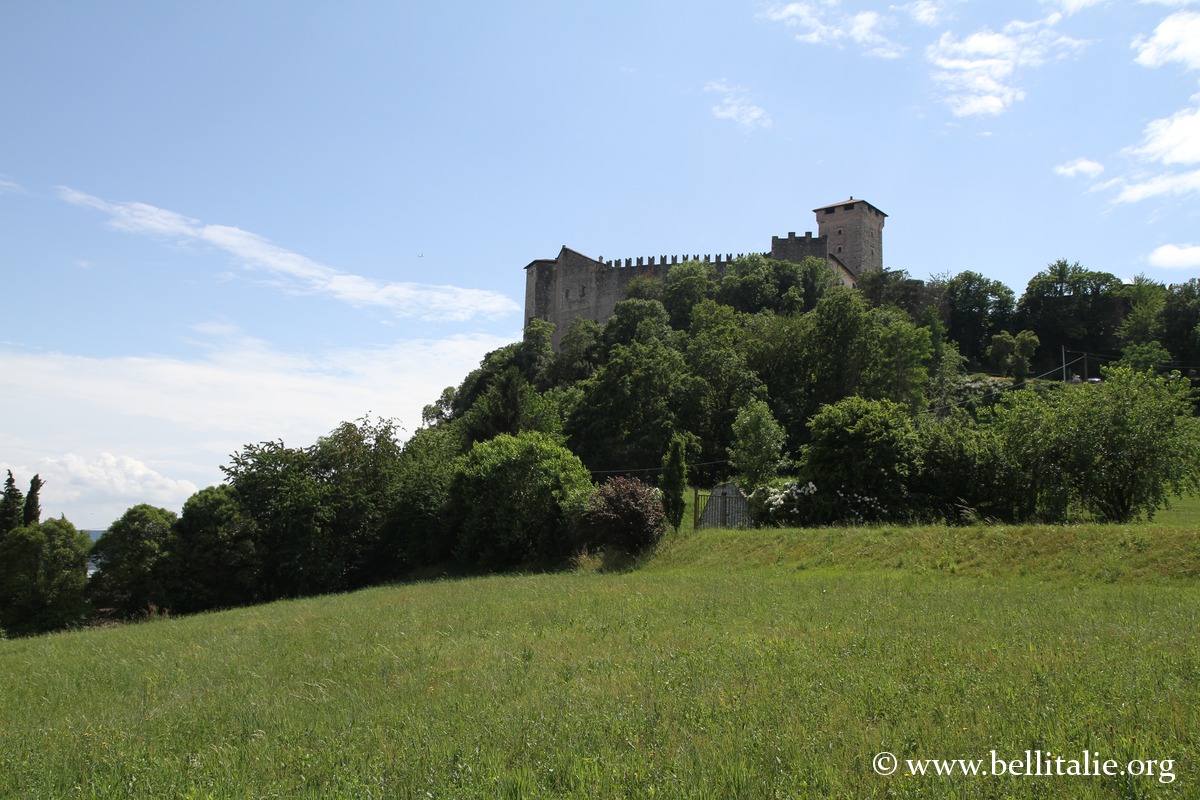
Rocca d’Angera
The historic centre of Angera preserves characteristic alleys, period palaces and varied shops, as well as a pedestrian lungolago with its small harbours.
On a rock dominating the eastern shore and near the southern end of Lake Maggiore, the Rocca Borromea d’Angera is imposing. It is the largest castle on the lake, which has preserved its medieval structure and in reality brings together five portions built between the 11th and 17th centuries. The historic halls preserve precious decorations and frescoes, as well as old canvases. It houses the doll and toy museum, one of the most important of its kind, recounting the history of games from the 18th century to the present day.
Its construction dates back to the 12th century and the current structure keeps a mainly medieval appearance. First property of the bishopric, it was acquired in 1384 by the Visconti family. Later the Borromeo bought it, and they are still its owners.
From the top of the Castellana Tower built towards the end of the 13th century, one has a lovely view over the lake and the surroundings. The bodies designated Visconti Wing and Borromeo Wing are palaces built by the Visconti, respectively by the Borromeos. The other two bodies are the Scaligera palace of the 12th century between the walls and the tower, and the Tower of Giovanni Visconti at the end of the Visconti Wing.
Inside, a historical route allows one to discover the medieval halls, with for example the very beautiful Hall of Justice where the original frescoes of the “Master of Angera” narrate stories related to the life of archbishop Ottone Visconti, such as his victory over Napo Torriani in 1277.
The museum’s collections, with nearly 1,000 objects spread over 12 rooms, include dolls whose materials range from wax to plastic, period toys, as well as books and board games from the 18th century.
A recent room exhibits a collection of Faïences from all over Europe and even Persia and China, which belonged to Madame Gisèle Brault-Pesché who kept it in her house-museum in Tours.
The medieval garden can be visited since 2008, with grove, rose garden, flowers and medicinal herbs, created by studying manuscripts and period documents to evoke a garden as it may have been.
The Hermitage of Santa Caterina del Sasso
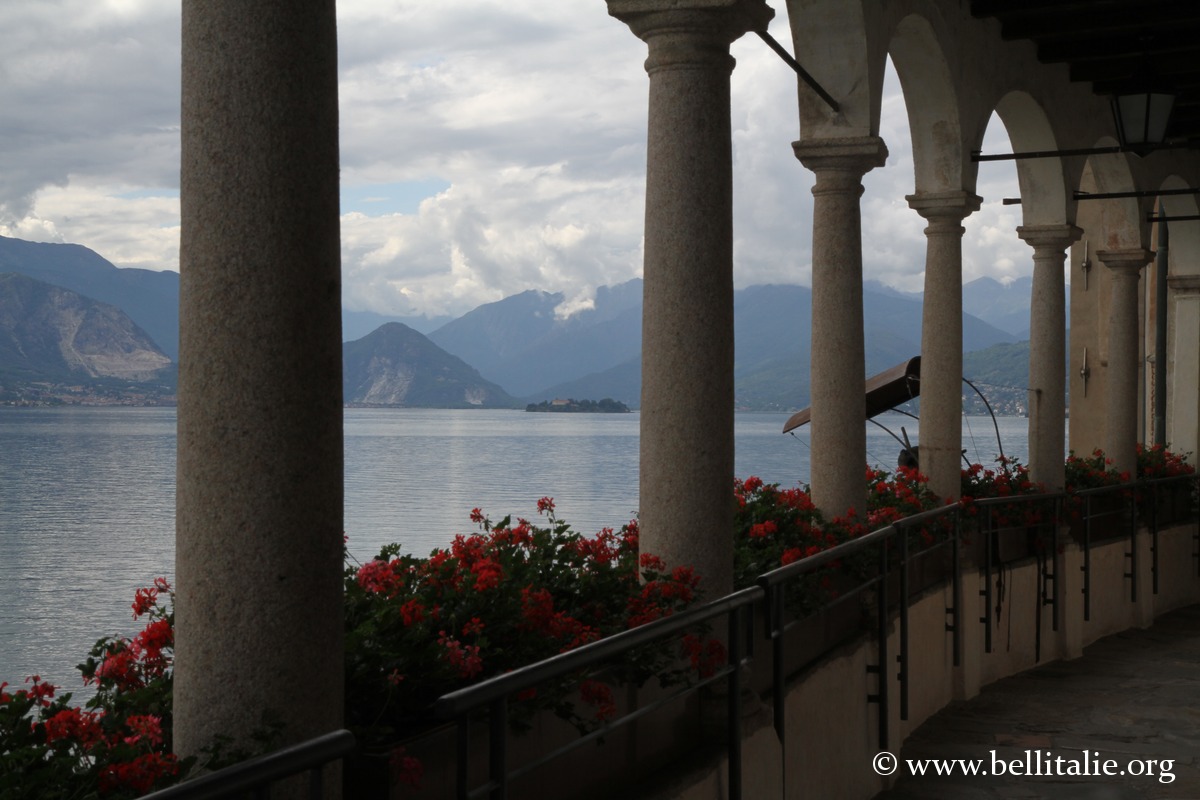
Santa Caterina del Sasso
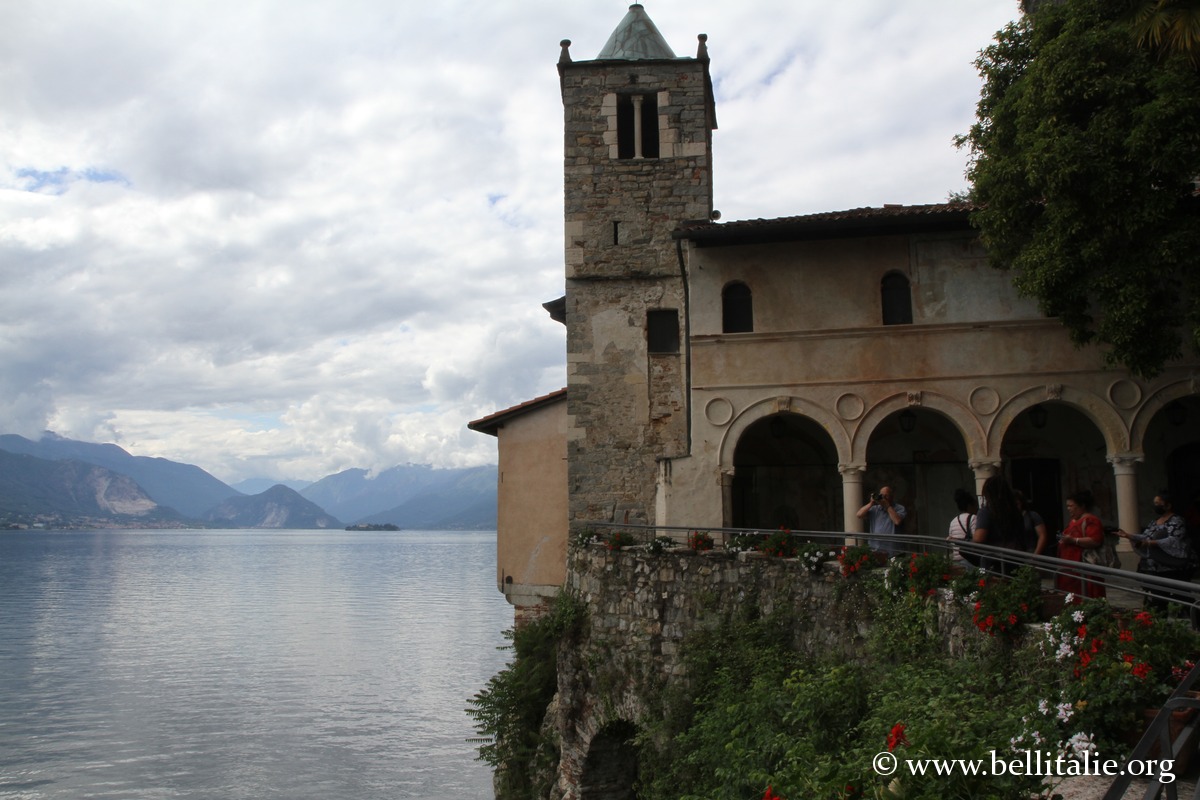
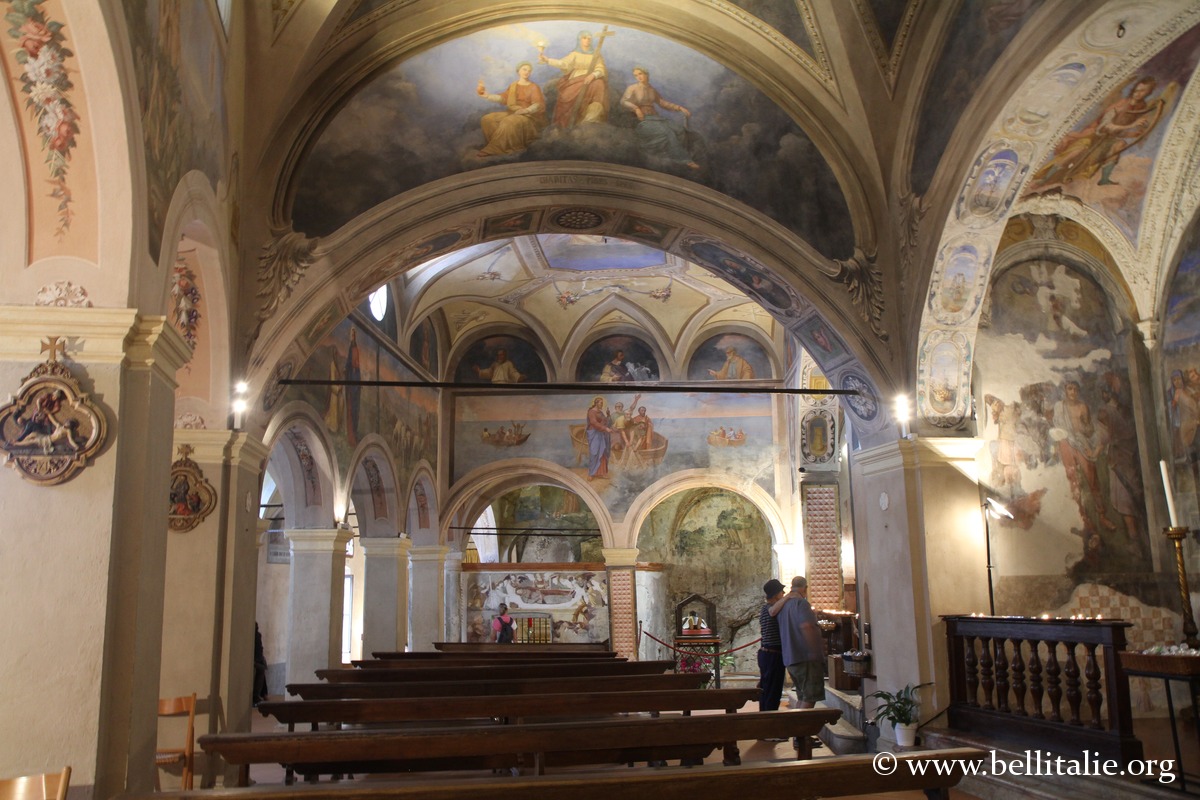
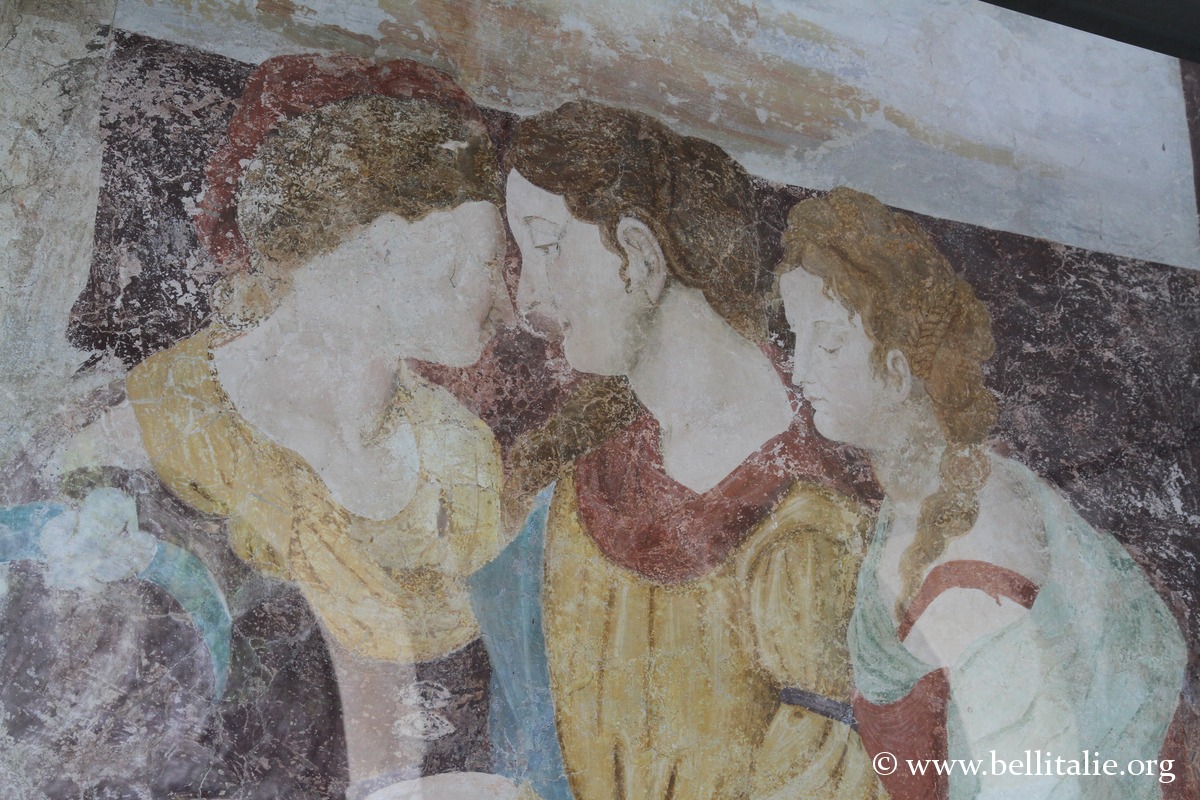
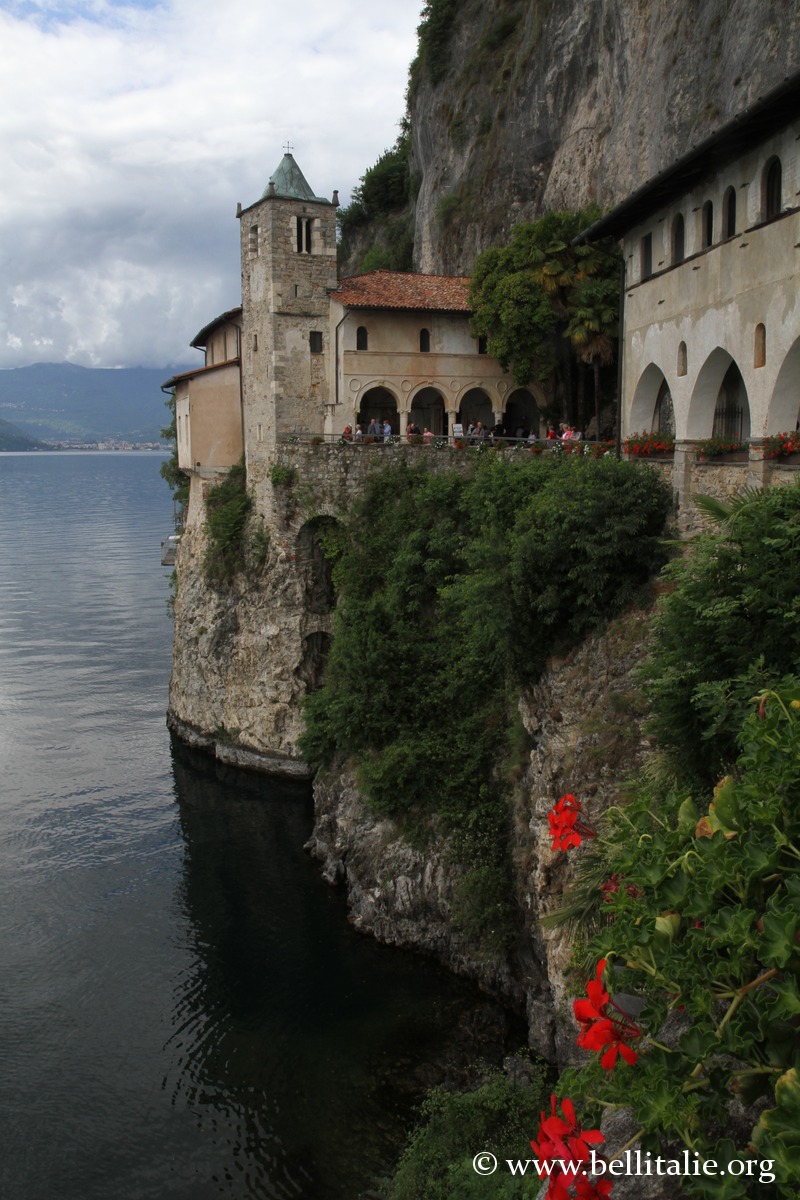
The Hermitage of Santa Caterina del Sasso is one of the most evocative sites on Lake Maggiore, a monastery clinging to a steep cliff on the eastern shore, in the municipality of Leggiuno. Its construction dates back to the second half of the 12th century. Besides its beautiful location and the view over the lake, it preserves architectural and artistic beauties.
It can notably be reached from Stresa by boat, then climbing the 80 steps. By road, from the car park one can go down the 240 steps or take the lift (€).
The three buildings were arranged on a narrow terrace on the steep cliff.
The complex originated from an act of thanks by a merchant who was shipwrecked here during a storm and took refuge in a cave. Having survived, he made a vow to build a church for Saint Catherine. The small church saw the light in 1195.
Nowadays, the oldest part dates back to the time of the Augustinian monks who occupied it in the 14th and 15th centuries. The bell tower dating from the 14th century falls directly into the lake.
-
- Santa Caterina del Sasso
Laveno and surroundings
A little north of the Hermitage of Saint Catherine, Laveno offers a cable car to reach almost the summit of the Sasso del Ferro at 1,000 metres altitude.
A few kilometres inland, the Villa della Porta Bozzolo is an aristocratic palace from the 16th century, preserving a sumptuous interior and its original furniture, with its terraced gardens, provided with fountains.
Luino
Luino is a village located on the eastern shore of the lake near Swiss territory, known above all for hosting every Wednesday the famous international market that attracts many people. Its beaches are also appreciated.
Boat excursion on the lake
There are several types of boat services, with steamboats, hydrofoils for fast travel, ferries to transport cars, and which frequently connect the Italian coastal localities of the lake. From late March to mid-October, there are regular tourist services, connecting Laveno to Verbania, via the three Borromean Islands.
One can also take a cruise to discover the north of the lake where it narrows between increasingly steep mountains, in the Swiss Ticino. There are three daily boats connecting the main towns of the south of the lake up to Locarno, but more from Luino on the eastern shore.
Other sites and towns
Sesto Calende
Sesto Calende is located at the southern end of the lake, where the bridge allows crossing the Ticino river fed by the lake.
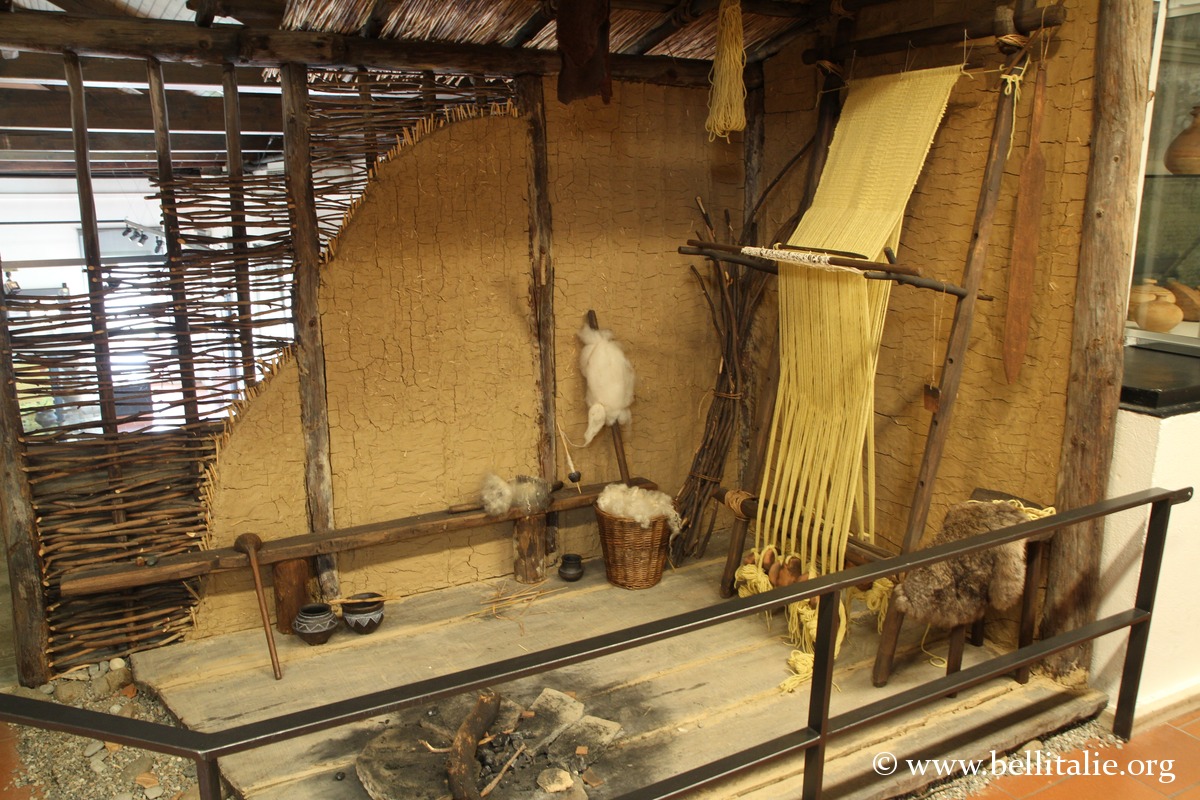
This particular position favoured settlement since the Neolithic period when the Golasecca culture developed, documented at the town’s small archaeological museum.
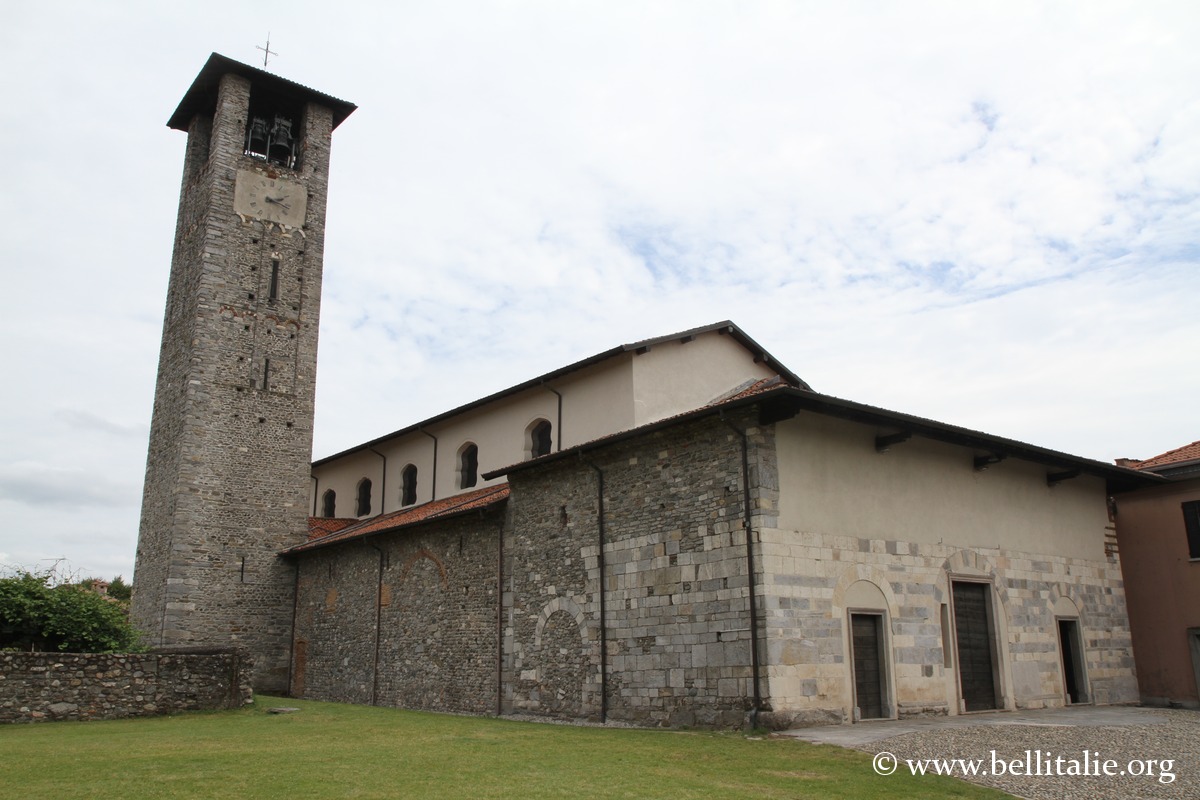
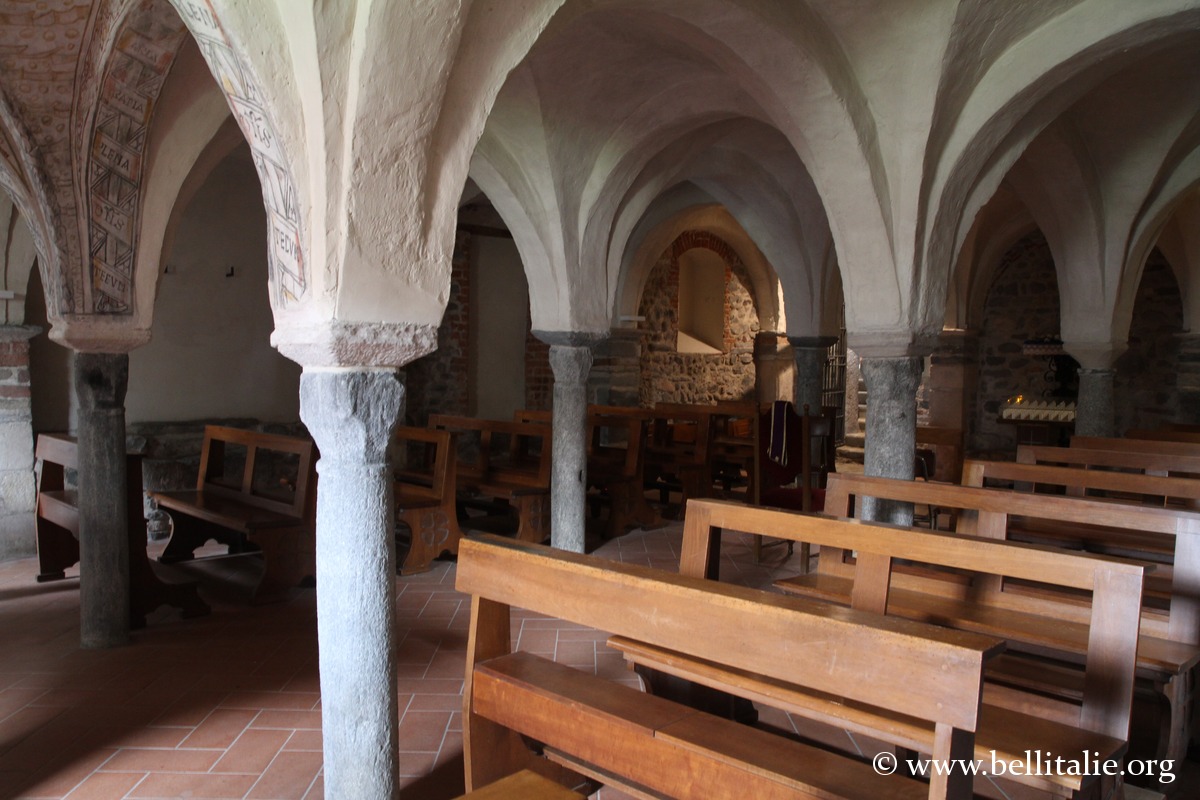
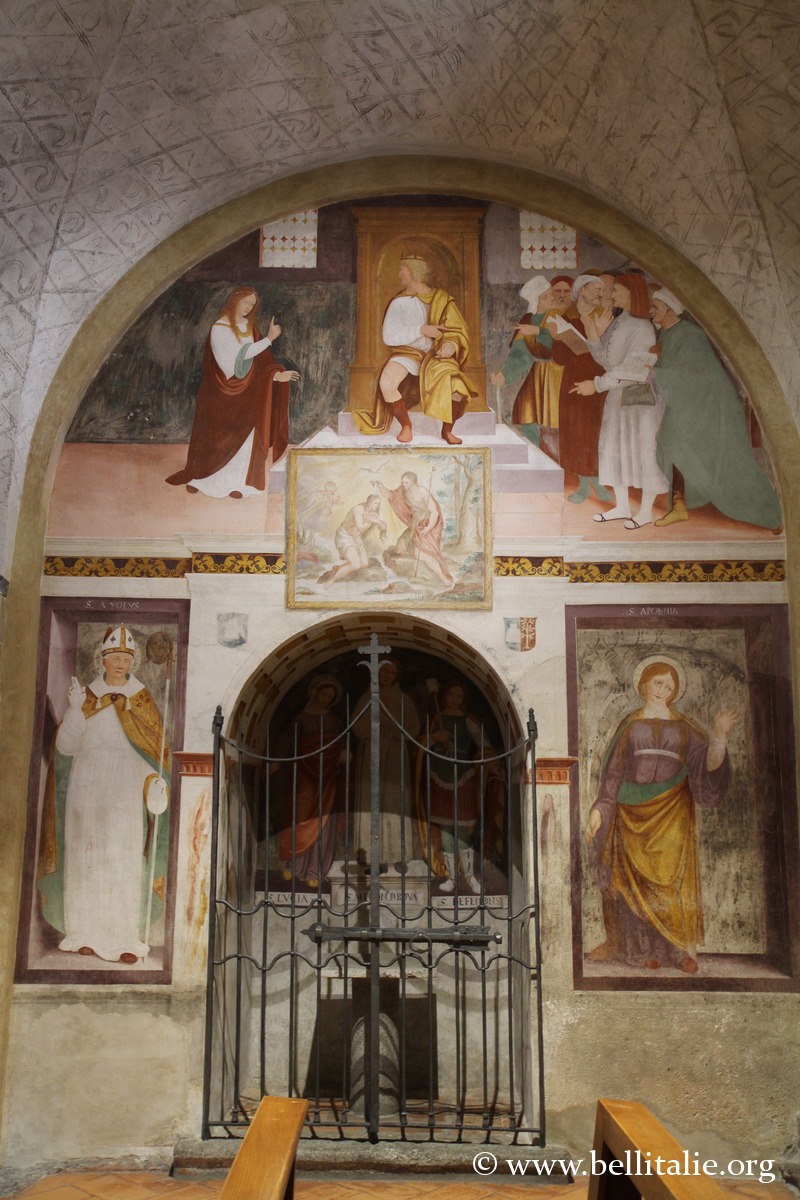
In the municipality also stands the Romanesque abbey of San Donato from the 11th century, as well as the small Oratory San Vicenzo which dates back to the end of the 11th century.
-
- Musée archéologique
-
- San Donato
-
- San Donato
Western shore
- Meina
4 km north of Arona, this former village has pretty charming villas, including the Villa Farraggiana, the Villa Quinti, or the Villa Galli from the second half of the 19th century. - Lesa
About 4.5 km north of Meina, one km south of Belgirate, the village of Lesa dates back to the Middle Ages, and has several small beaches in the surroundings. - Belgirate
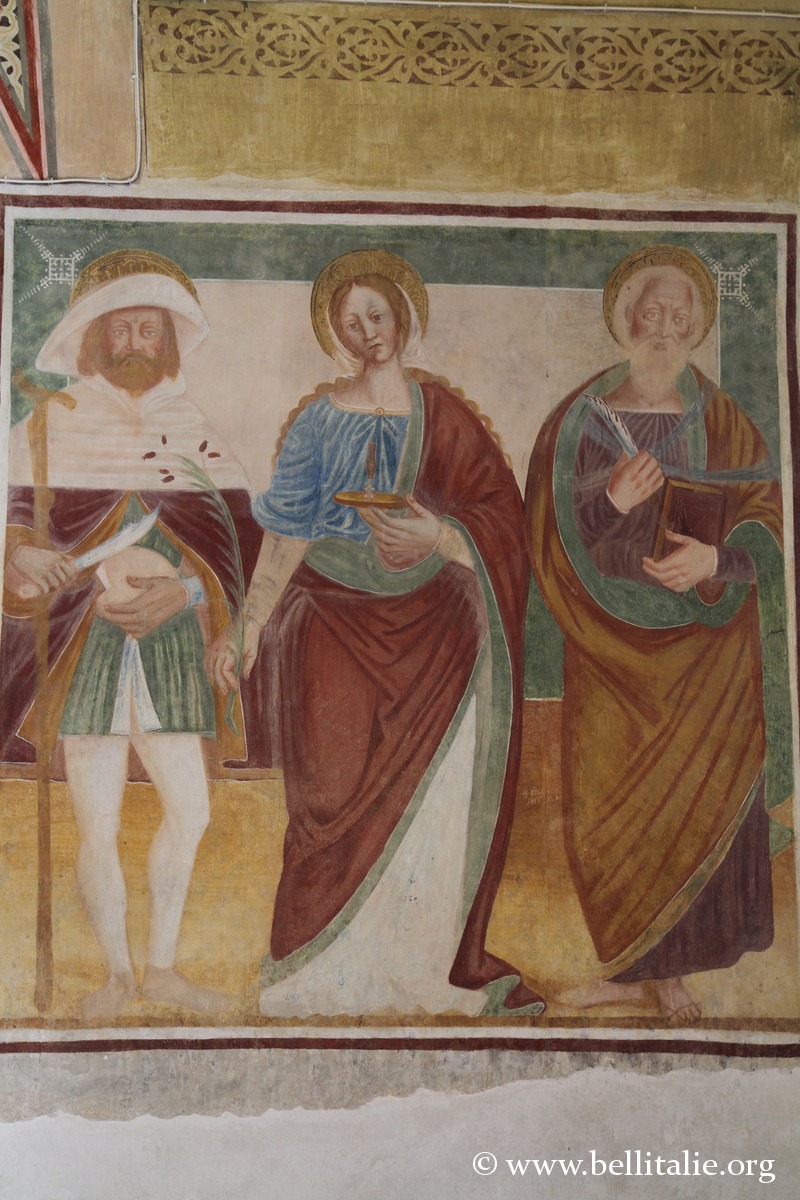
In this coastal village about 8 km south of Stresa, there is the beautiful Chiesa Vecchia, or Santa Maria, which preserves in its 16th-century interior beautiful frescoes of the Piedmontese and Lombard school, accompanied by a beautiful Romanesque bell tower from the 11th century and an elegant 17th-century portico and remains of 15th-century frescoes on the facade. - Lake Orta
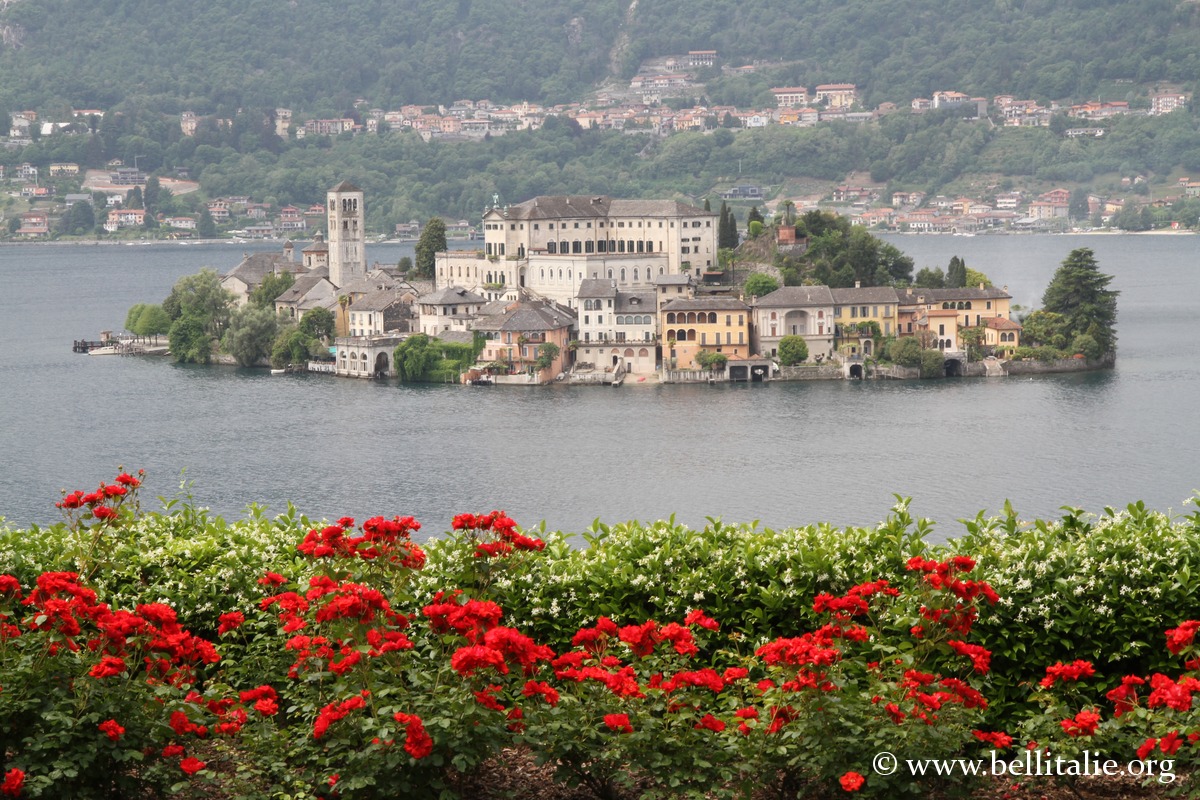
This pretty little lake on the other side of Mount Mottarone is a real destination, first of all with the picturesque medieval village of Orta San Giulio, at the foot of a Sacred Mount, from where one can take a boat to reach the tranquil and pious Islet San Giulio with its 12th-century basilica having marbles and frescoes.
-
- Îlot d’Orta San Giulio
-
- Chiesa Vecchia à Belgirate
Eastern shore
- Ranco
4 km north of Angera, this locality is provided with quiet and intimate beaches towards the east of the village, at the foot of a large rock at Sasso Cavallazzo and the gulf towards Ispra. - Ispra
5 km from Angera, the village of Ispra preserves old lime kilns and a pretty promenade on the shore called “lovers’ promenade”, as well as beaches and swimming spots. - Laveno-Mombello
About 18 km north of Angera, and 7 km from the Hermitage of Saint Catherine, this small town has a tourist port but also the vehicle pier leading to Verbania near Stresa.
A cable car goes up to the Sasso del Ferro, a summit offering a view over the Prealps and as far as Milan. There are several beautiful paths, villas, and 3 km south of the centre the Ceramic Design Museum in the Palazzo Perabò. - Porto Valtravaglia
30 km north of Angera, 8 km south of Luino, this quiet village is partly on the heights, with the pretty church of Santa Maria Assunta - Maccagno con Pino e Veddasca
This municipality attracts for its beaches, its water activities, sports facilities and for the panoramic paths of the surroundings
Map
 Show interactive map
 Information
- Wikipedia page: en.wikipedia.org
- Tourist portals: www.in-lombardia.it, www.lelacmajeur.com, visit-lakemaggiore.com
- Borromean Islands: www.isoleborromee.it


Comments