

A pleasant and welcoming small town, Cuneo is located at the foot of the Alps at the confluence of two waterways. Between the mountains and the plains of the valley, it is also a hybrid town that can even seem strange when you cross it from one end to the other. To the west you pass through a modern, at times futuristic kitsch center, with excessively wide avenues that incongruously prolong the eastern part cut by the old medieval artery with its palaces decorated with centuries-old paintings. Between the two, the central square reduces all surrounding proportions to dwarfishness.
Some pretty sanctuaries can be found in the immediate surroundings, such as Santa Maria dei Boschi in Boves and on a hill the Virgin of the Alpine Hunters, in one of the valleys towards Monviso, in the middle of the alpine pastures, lies the fascinating sanctuary of Castelmagno, a beautiful charterhouse in the green Pesio valley, or in the plain the gigantic church with its elliptical dome at Vicoforte.
The ducal castle of Fossano is not very far on the road to the Langhe, near the historic village of Bene Vagienna, while the medieval town of Mondovì is on the road to Liguria. On the other hand, in a valley towards the Ligurian Alps hides the royal castle of Valcasotto, in the same region as the beautiful limestone caves of Bossea.
Several valleys reach high altitudes to the west, including the Sutra valley where the Fort Albertino keeps watch, while the Maritime Alps Park, adjacent to the French Mercantour, is located to the south, with its trails, lakes, and preserved wildlife.
To see in Cuneo and the region
 Show interactive map
 Cuneo 
Founded in 1198, it is today the capital of its province in the south-west of Piedmont.
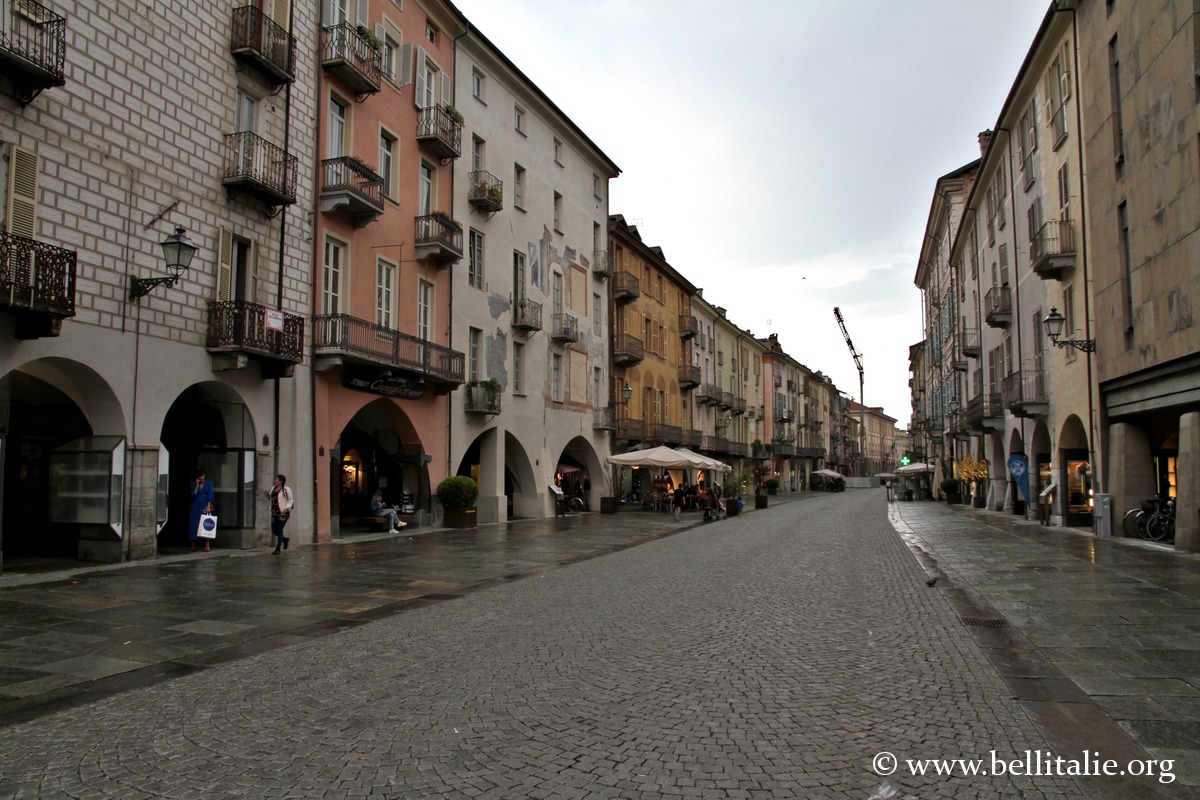
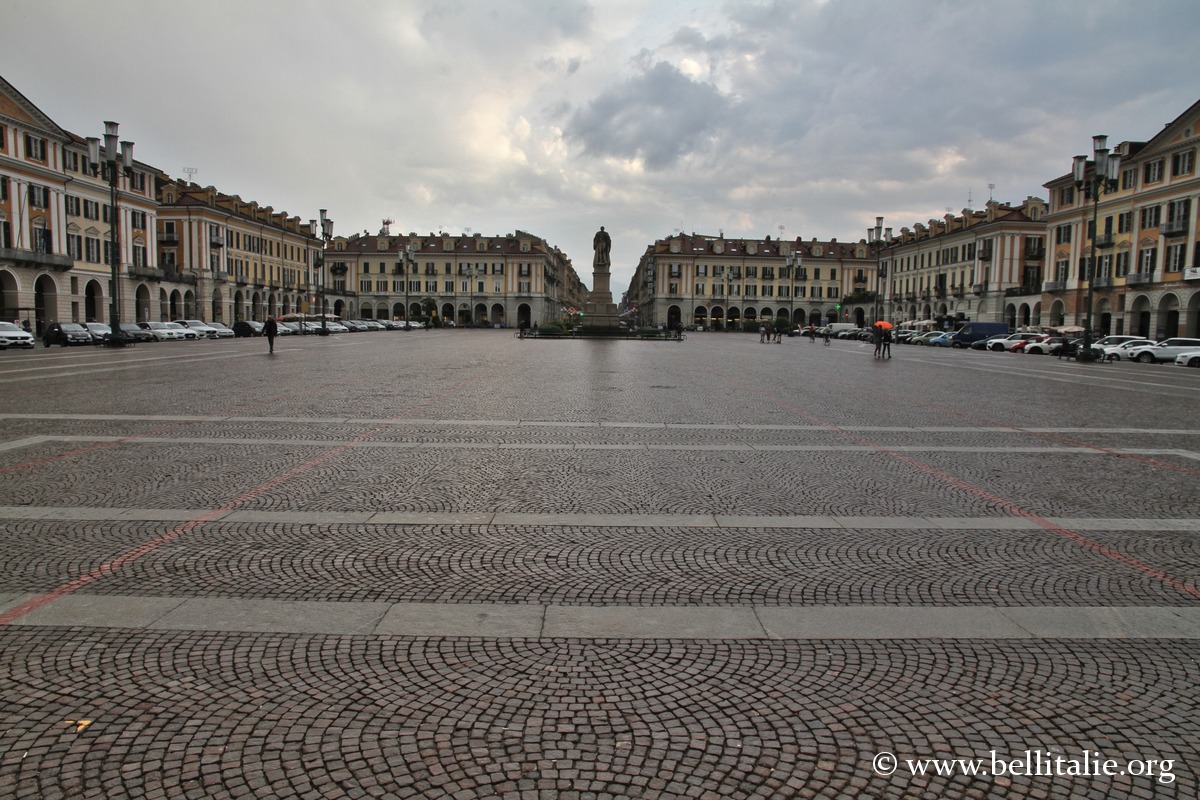
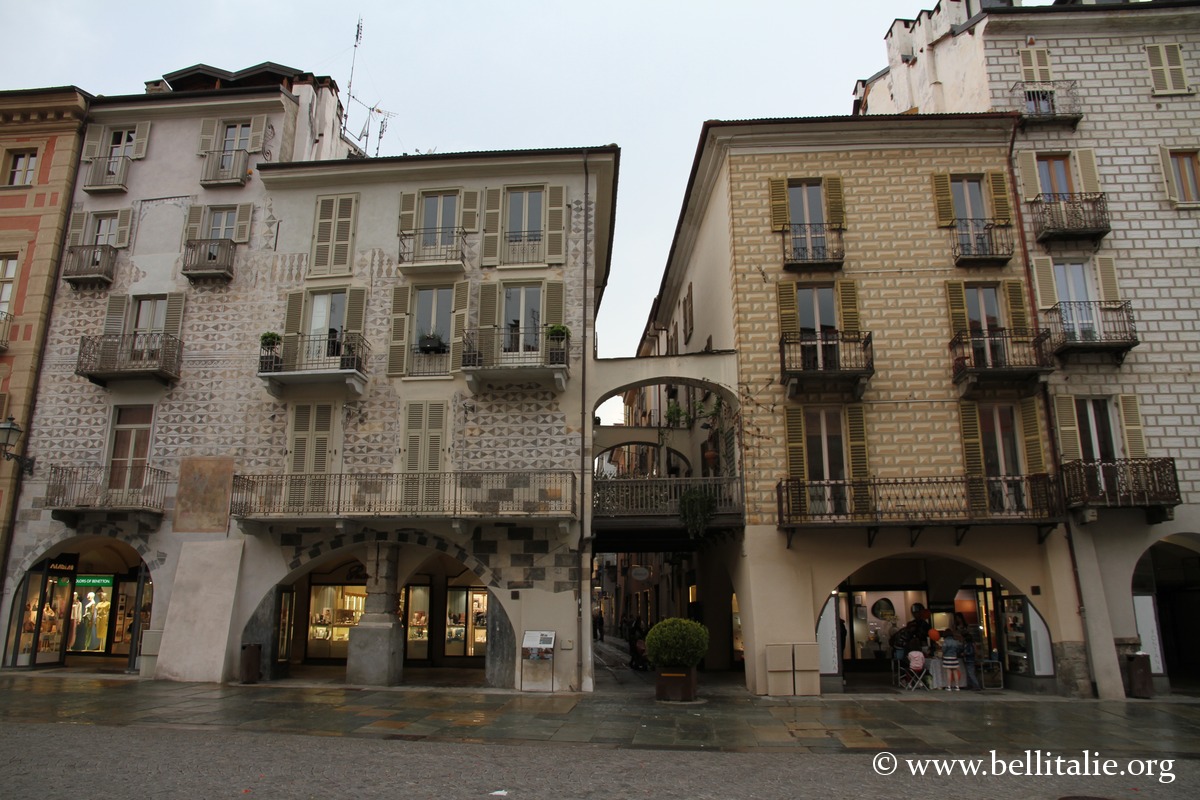
The heart is the large Piazza Galimberti, a modern square, but of dimensions that would lack modesty, between the old town and the new districts. Via Roma is the historic artery of the old town, a pedestrian street with medieval arcades beneath the old palaces, hosting shops and cafés.
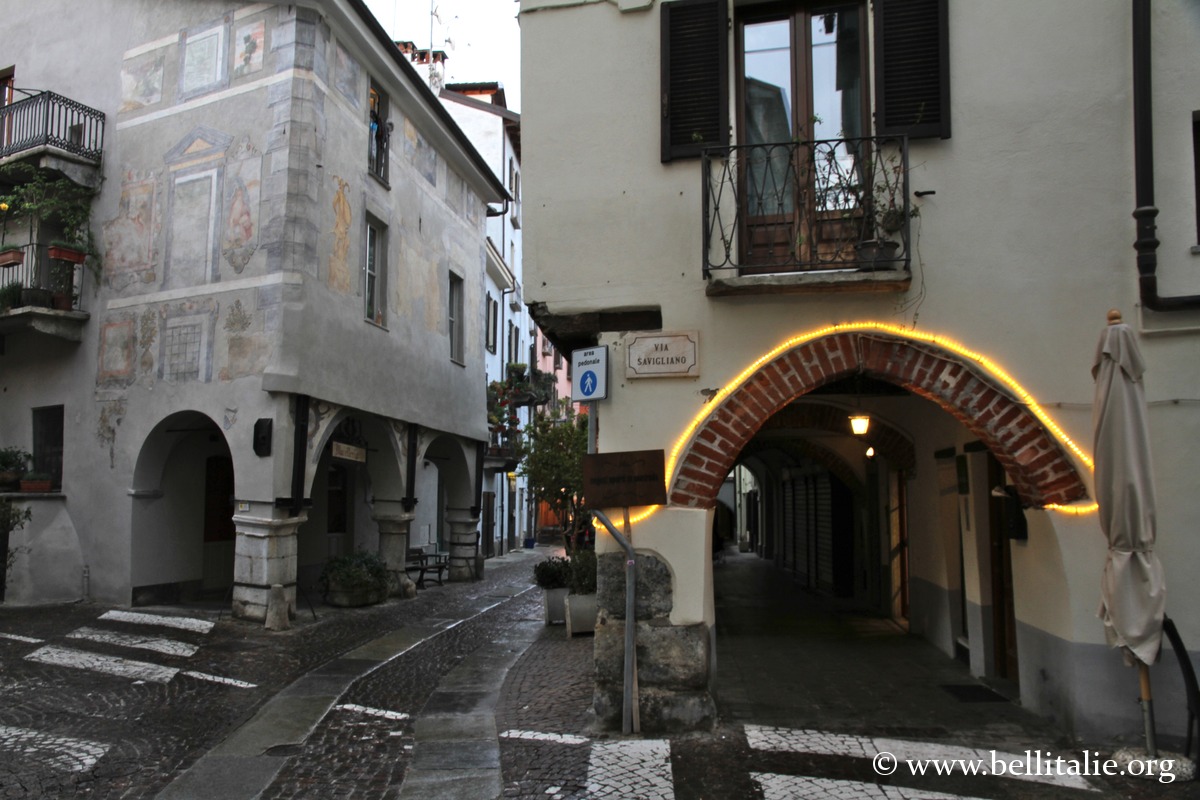
The town preserves an old quarter that grew out of the Jewish ghetto, the Contrada Mondovì, the diocesan museum, or the main building with the monumental Gothic complex of the former church of San Francesco which houses the Civic Museum.
 Piazza Galimberti
Dedicated to the Resistance hero Duccio Galimberti, this central square, very vast with 24,000 m², dates back to the Napoleonic era, when the old defensive walls were destroyed. It is surrounded by neoclassical buildings with arcades, and in the center stands the very solitary statue of Giuseppe Barbaroux.- Cathedral of Santa Maria del Bosco
At the beginning of Via Roma, the cathedral had to be built in the 19th century in place of the previous building, mixing Baroque and neoclassical styles, with a dome decorated with frescoes by Toselli, and which preserves the baptismal font from the old church. - Via Roma
This is the artery of the historic center, 750 meters long, and the most beautiful street in Cuneo, with numerous painted palaces recently restored, essentially from the 15th to the 17th century, which still bear the old paintings. - Palazzo della Torre
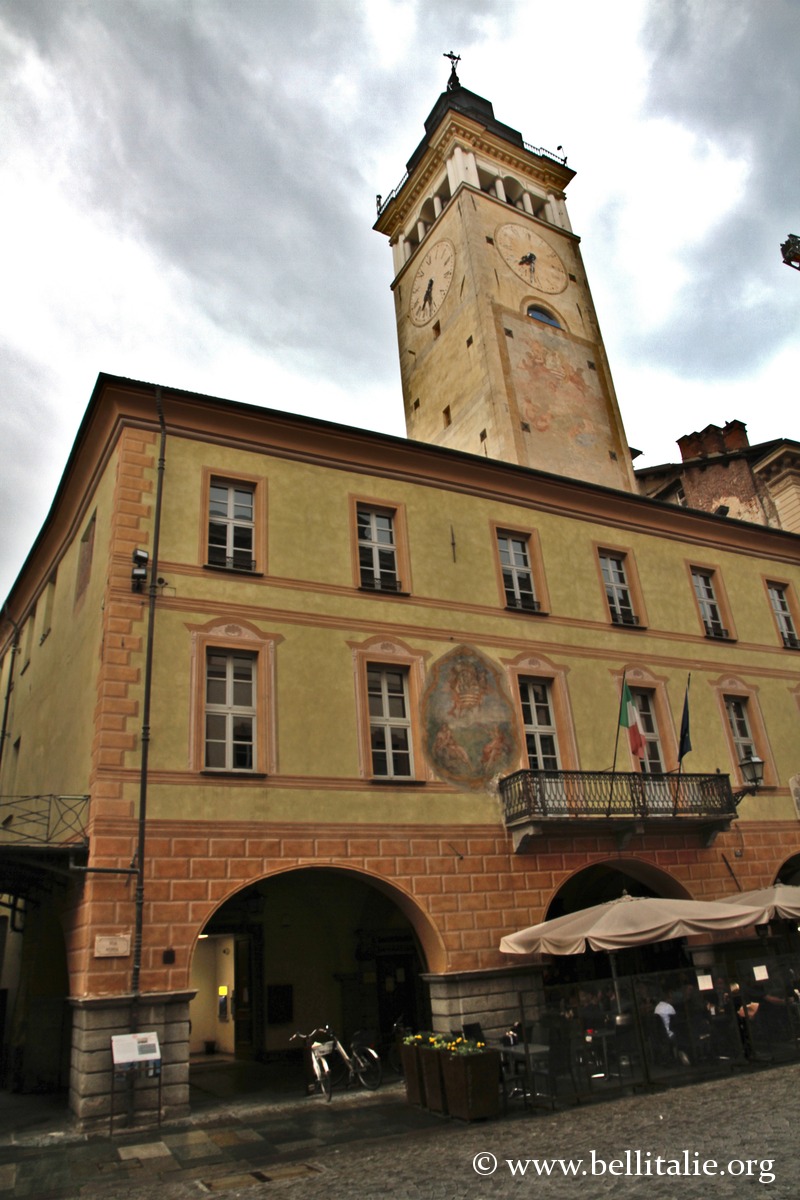
Facing Via Roma, the Palazzo della Torre dates back to the early 13th century, topped by the beautiful Torre Civica with its height of 52 meters, which offers a beautiful panorama from its top. - Monumental complex of San Francesco and Civic Museum
The complex which includes the former Franciscan convent and a church dates back to the 13th century. It served as a barracks for the Napoleonic troops. In the church and the convent are exhibited remains from recent archaeological excavations. The Civic Museum tells the history of the territory from prehistory to the modern era. - Sanctuary of the Virgin of the Angels
Dating from the 15th century and enlarged later, it was a Franciscan convent and the interior of the church is adorned with a cycle of frescoes on the life of Saint Francis. A tree-lined avenue from the 18th century, 3 kilometers long, connects it directly to the central square of the town, which was intended for processions, and is lined with pretty houses for the part near the center. - Immediate surroundings of Cuneo
The Villa Oldofredi Tadini, was built between the 14th and 15th centuries, housing a museum of family collections, and a large park.
The Caraglio spinning mill (Filatoio Rosso) is an industrial archaeology site among the most important spinning mills in all of Europe. With its castle-like appearance, it dates back to the 17th century, displaying the equipment of the time.
Madonna dei Boschi
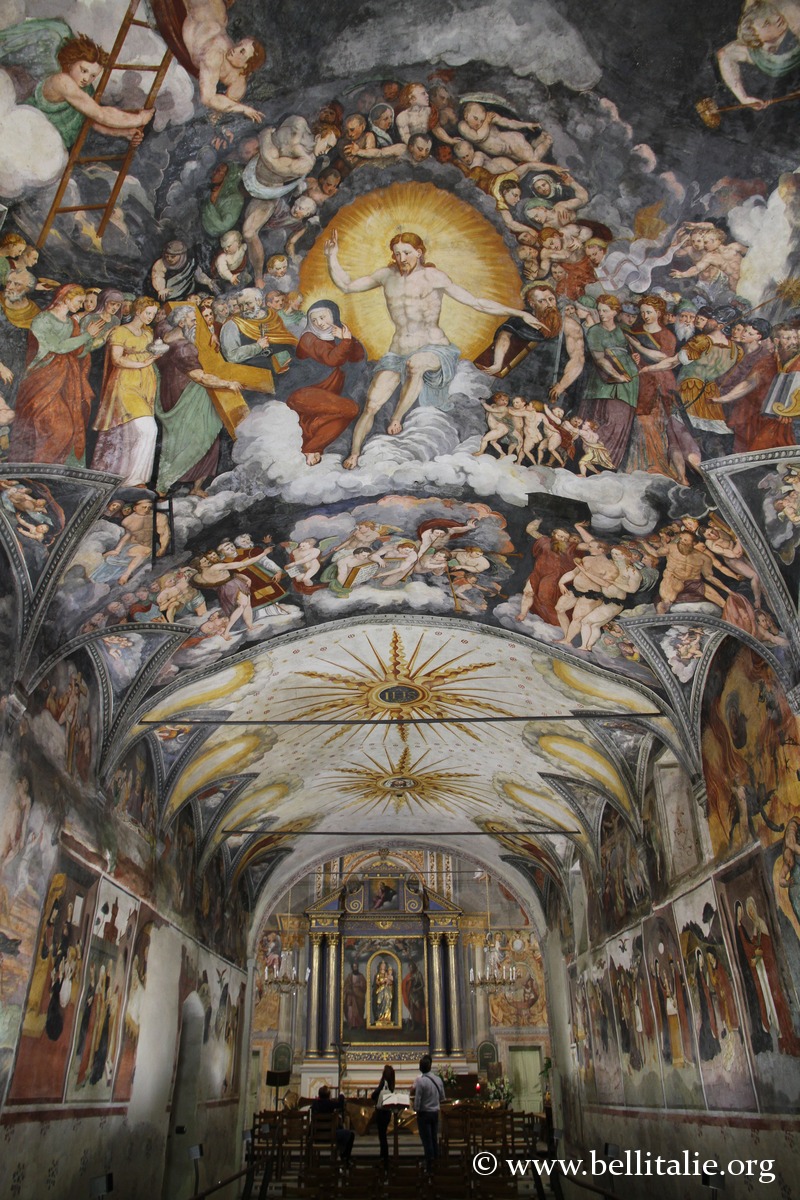
The sanctuary of the Madonna dei Boschi in Boves preserves striking frescoes, which notably depict the Story of Mary and the child Jesus from the 15th century, or two 16th-century cycles that contrast with the pretenders depicting the Last Judgment (where scenes borrowed from Michelangelo’s masterpiece in the Sistine Chapel can be noted) and the Narrative of the Passion, attributed to the anonymous artist known as the “Master of Cigliè”.
The sanctuary of the Madonna degli Alpini is located on the San Maurizio hill in Cervasca about 10 km from Cuneo, where a thousand-year-old fort existed. A 13th-century church was already dedicated to Saint Maurice, rebuilt in the 15th century and then completed by the current church in the 17th century.
Since the Second World War it has become a place of remembrance of the alpine hunters of the province, as well as of the veterans of the Russian campaign who brought back with them a Madonna in 1946, the Virgin of the Alpini.
Mondovì
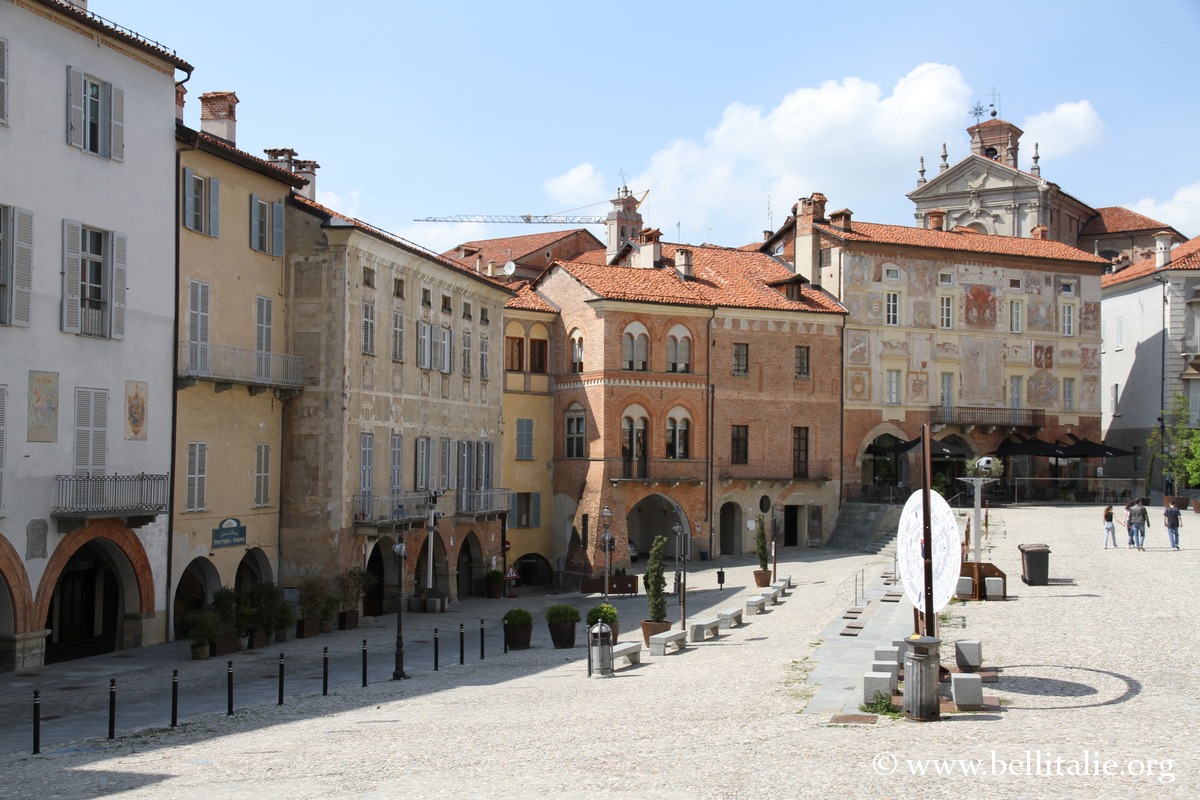
Piazza Maggiore
Mondovì is a charming medieval village a few kilometres from Cuneo, dating back to the end of the 12th century. The historic town sits on a hill overlooking the lower town, which is more recent and industrial, and accessible among other things by a funicular.
Its heart is the beautiful Piazza Maggiore, surrounded by palaces and arcades, including the Palazzo dei Bressani from the 13th century, the palaces of the Governor and of the Commune, and the Baroque Jesuit church of San Francesco Saverio (Francis Xavier) with beautiful trompe-l’œil paintings by Andrea Pozzo.
The Palazzo Fauzone di Germagnano houses the Ceramics Museum.
The San Donato Cathedral is a work by Francesco Gallo, an 18th-century architect born in Mondovì. In the garden of the belvedere stands the mighty tower of the Bressani from the 14th century. Outside the centre, the church of San Fiorenzo preserves remarkable 15th-century frescoes.
Sanctuary of San Magno
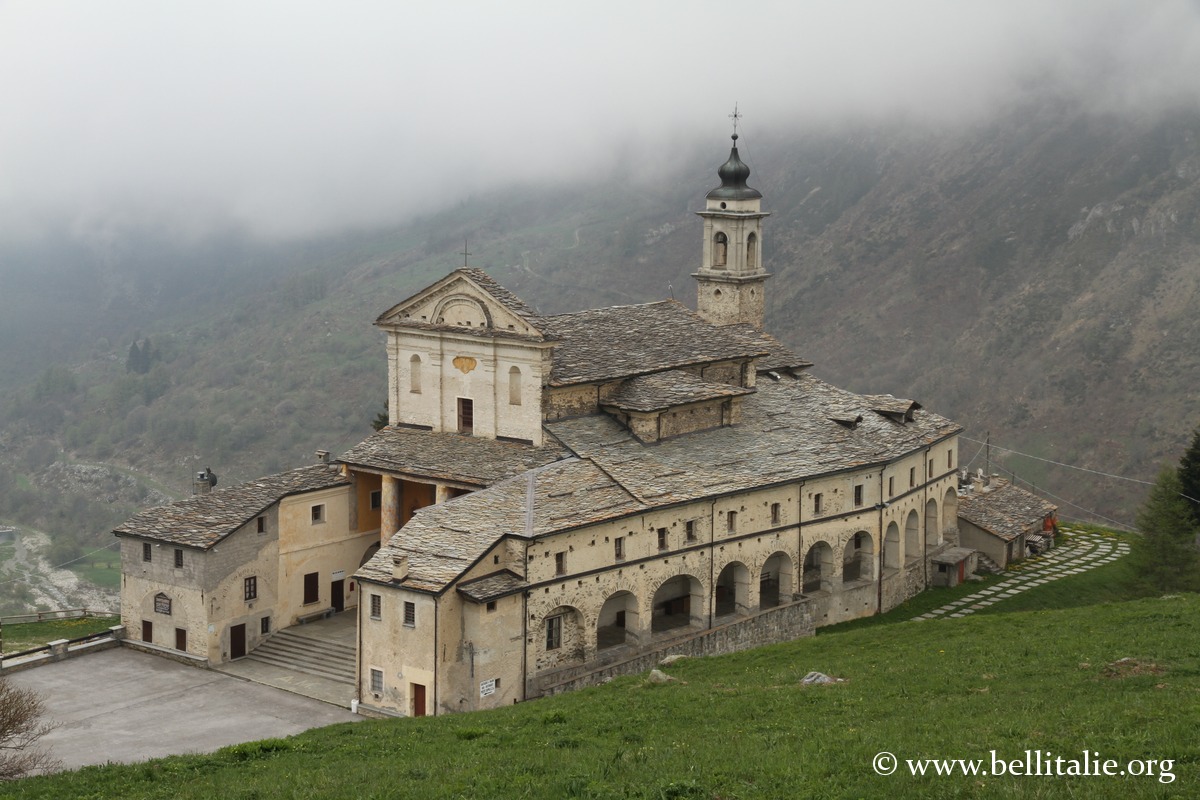
Sanctuary of Saint Magnus
In the Grana valley, at Castelmagno, the Sanctuary of San Magno (Saint Magnus) is an enchanting site amid the alpine pastures, which was long a refuge for travellers linking the Stura valley to the Maira valley, already frequented by the Romans.
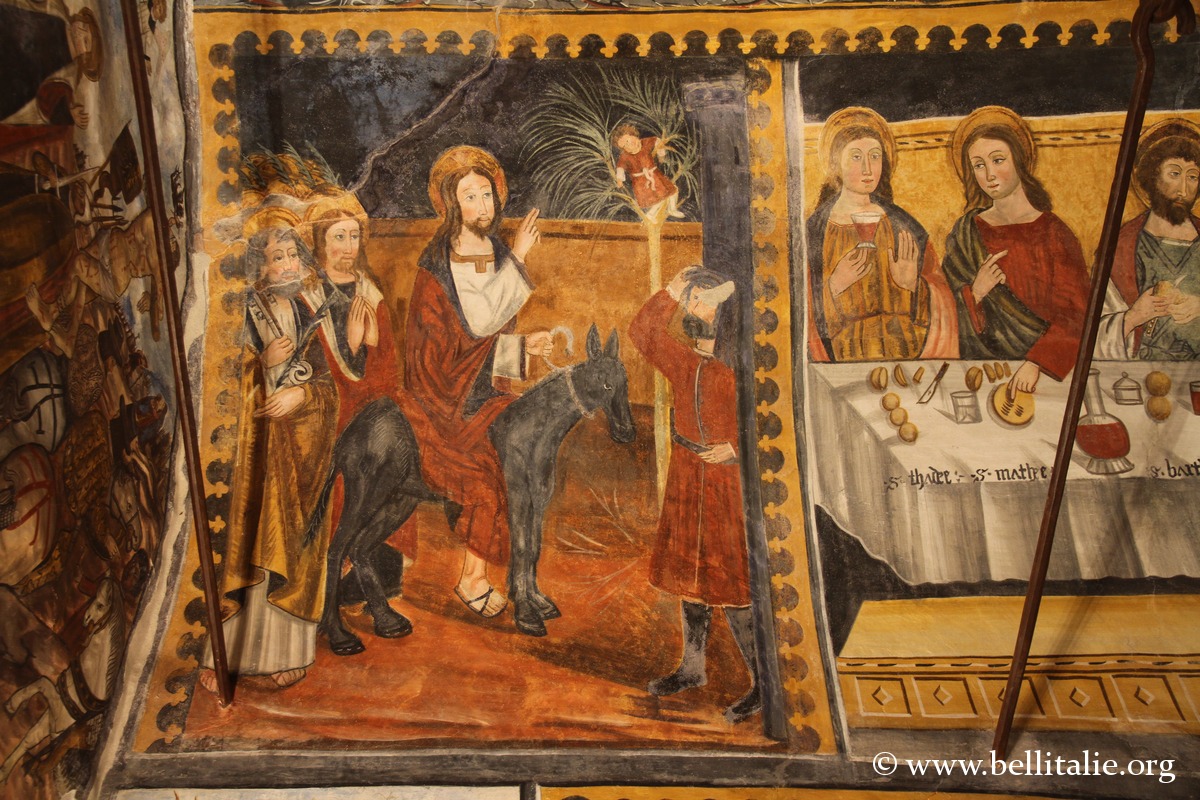
Existing in the 14th century, a chapel preserves the striking 15th-century frescoes by Pocapaglia da Saluzzo in the Allemandi chapel of 1475 flanked by the bell tower and which is today the oldest element of the church, behind the main altar. Depicted there are the evangelists, the doctors of the church, and stories of Saint Magnus. The new church was built perpendicular to the chapel at the beginning of the 18th century, then the rooms and the arcades in 1861. The Allemandi chapel was completed by the so-called Botoneri Chapel, painted in 1514, with episodes of the Passion of Christ, other martyr saints, and on the Theban Legion.
Note that the Castelmagno D.O.P. is produced in the municipality.
Pesio Charterhouse and valley
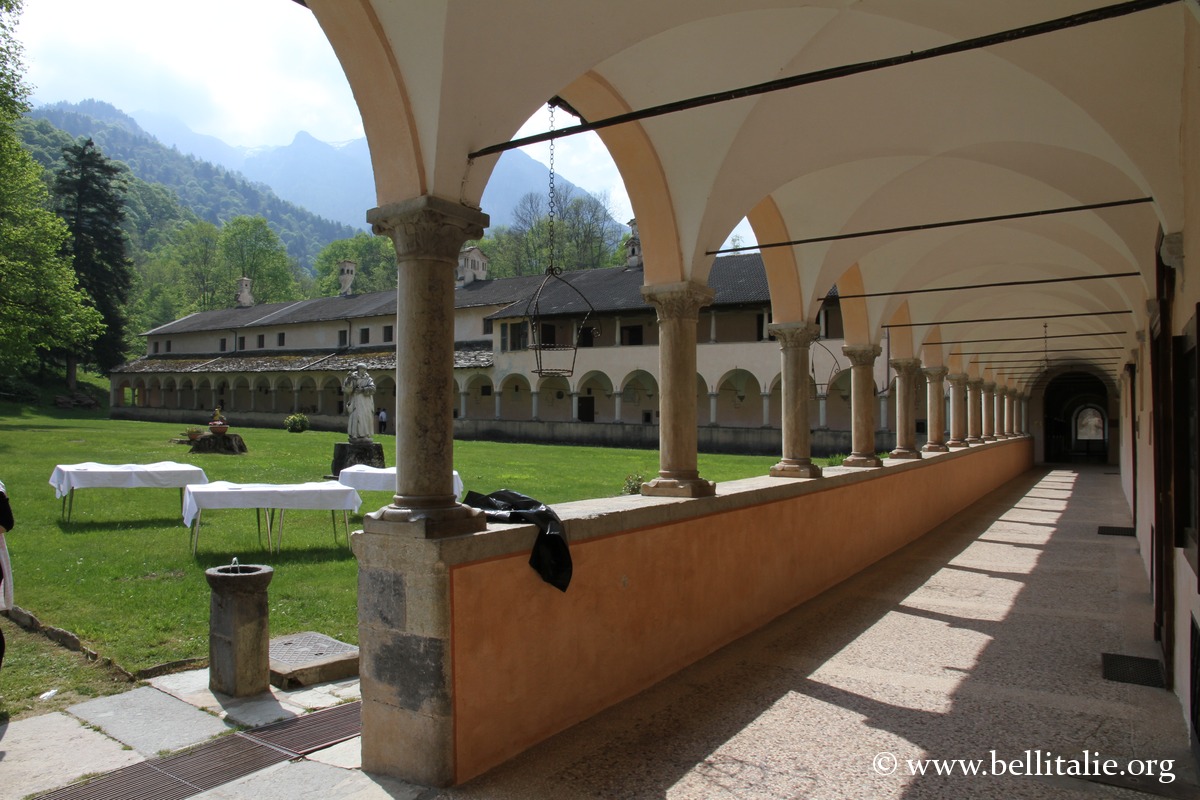
Pesio Charterhouse
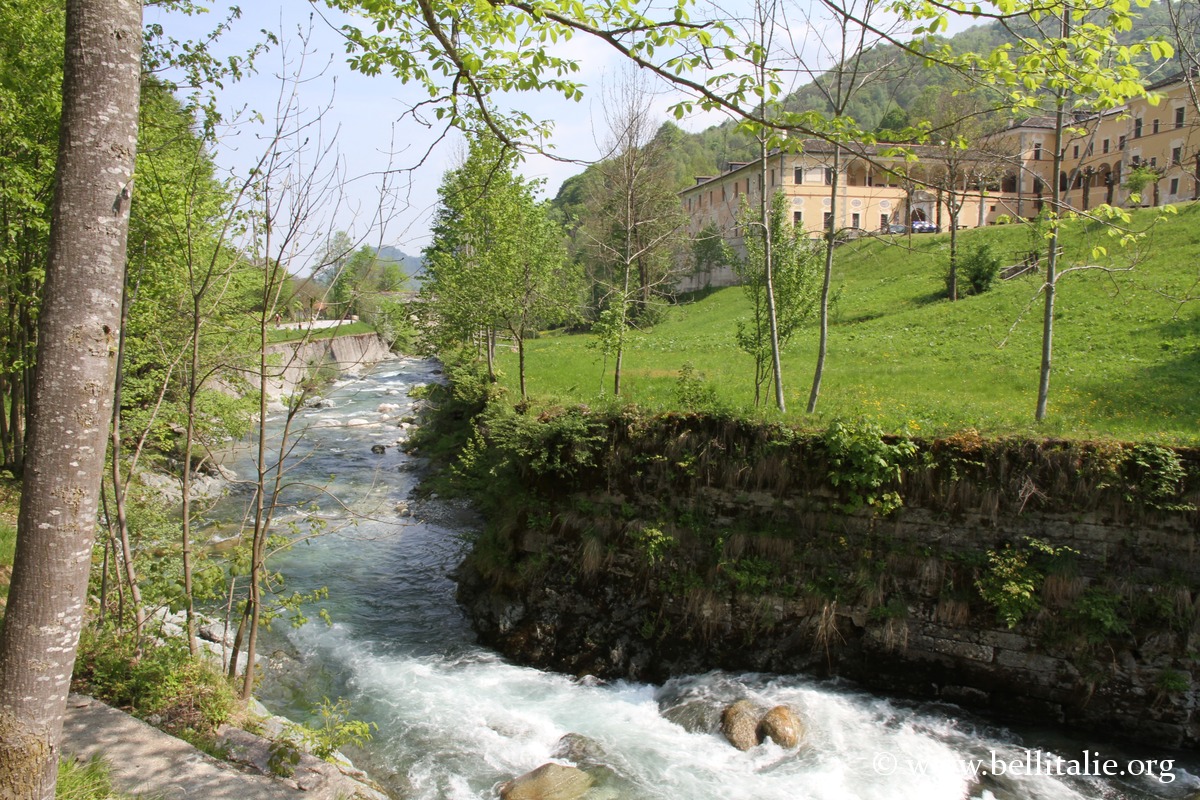
In the Pesio valley, which descends from the Marguareis massif (2,651 m), overlooking the torrent and surrounded by forests of chestnut, beech and fir trees, there is a large charterhouse founded by the monk Uldéric in 1173, of the Carthusian order of Saint Bruno. It was long one of the most important spiritual and cultural centres of Piedmont, until its pillaging in 1802 by Napoleonic troops. It was restored in 1934. A 17th-century bridge leads to it, near a mill. It preserves Renaissance elements only in the cloister, the Prior’s Chapel decorated with 18th-century frescoes. The abbey church was built on the 12th-century one.
A little further upstream in the valley, there is a walk called the “Waterfalls Tour”.
Sanctuary of Vicoforte
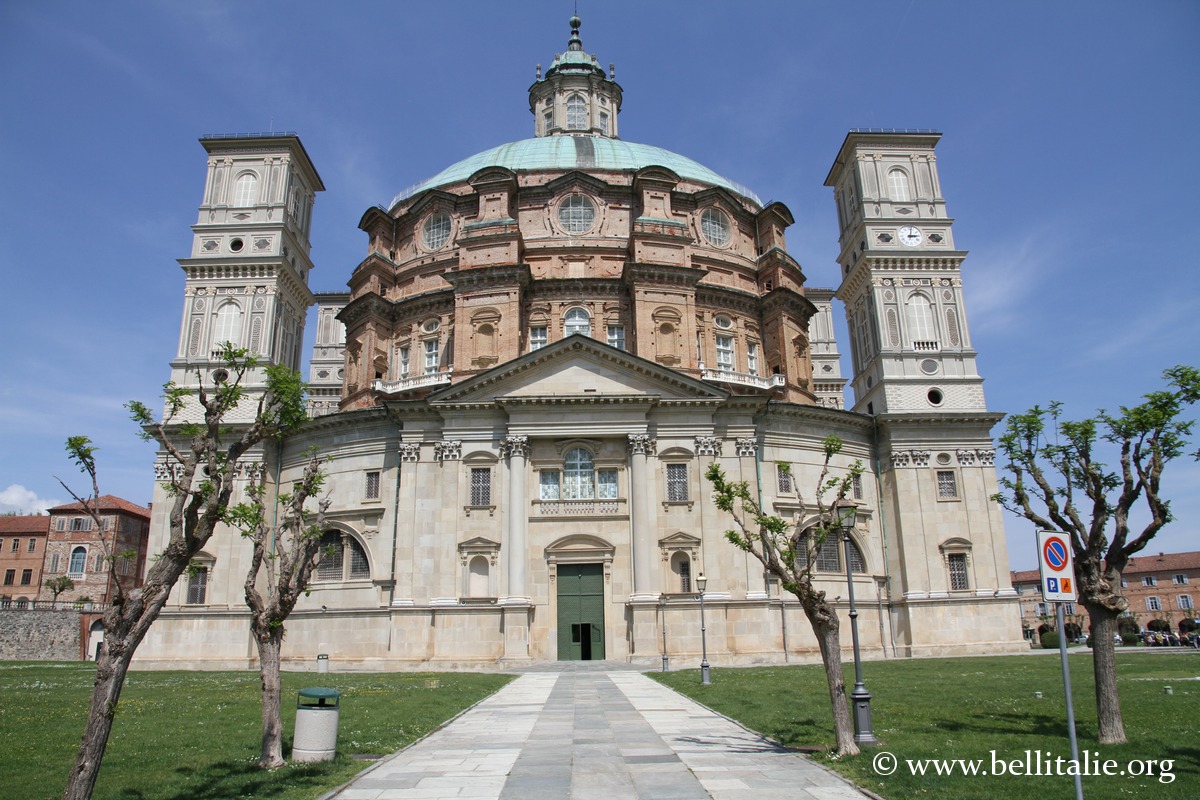
Sanctuary of Vicoforte
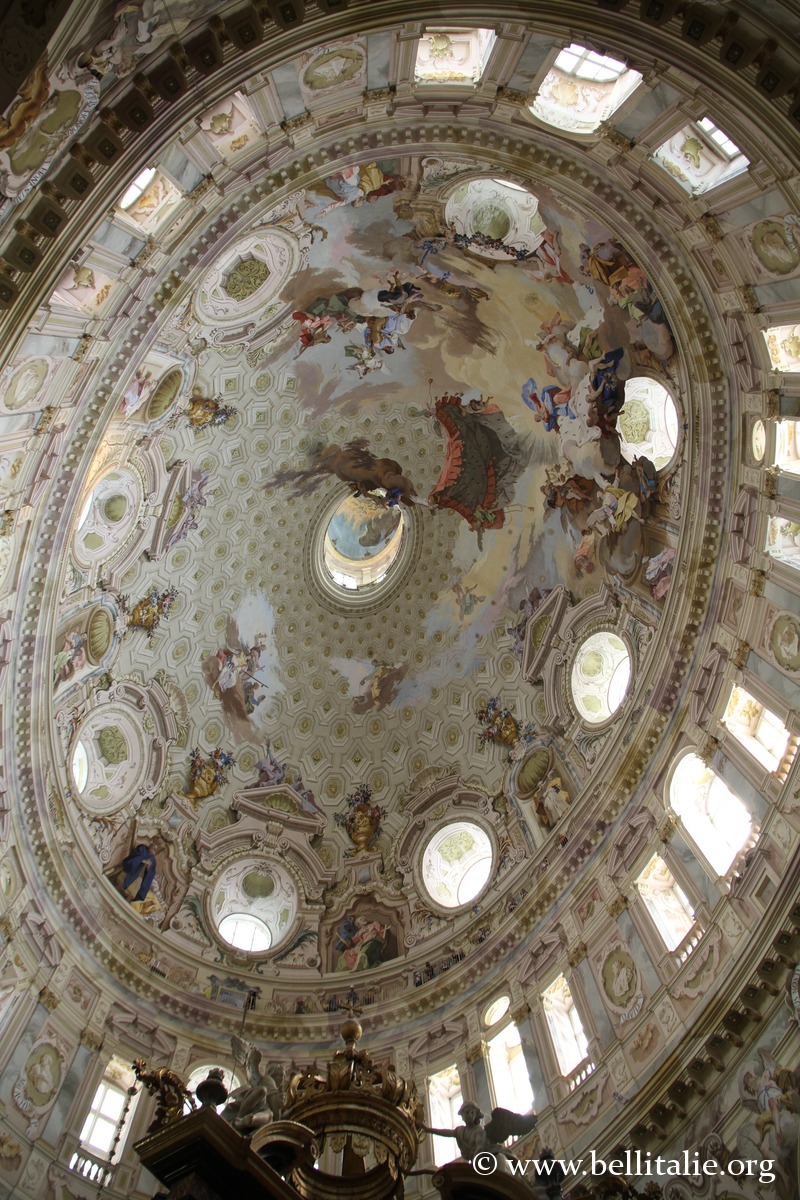
This gigantic sanctuary is one of the best-known monuments of Piedmont, crowned by the largest elliptical dome in the world, measuring 37.15 by 24.80 metres.
Construction began at the initiative of Charles Emmanuel I at the end of the 16th century by Ascanio Vitozzi, and was completed only in the 18th century by Francesco Gallo. The interior is provided with Baroque decorations, and the frescoes adorning the dome cover nearly 6,000 m². At the centre is the small temple of the Pylon (linked to the story of a column with an image of the Virgin damaged by a hunter in 1592, after which the Virgin bled) designed by Gallo.
Since the end of 2017 it has housed the body of the last king of Italy, Victor Emmanuel III, and of his wife, Queen Helen.
The convent has a beautiful Renaissance cloister.
Royal Palace of Valcasotto
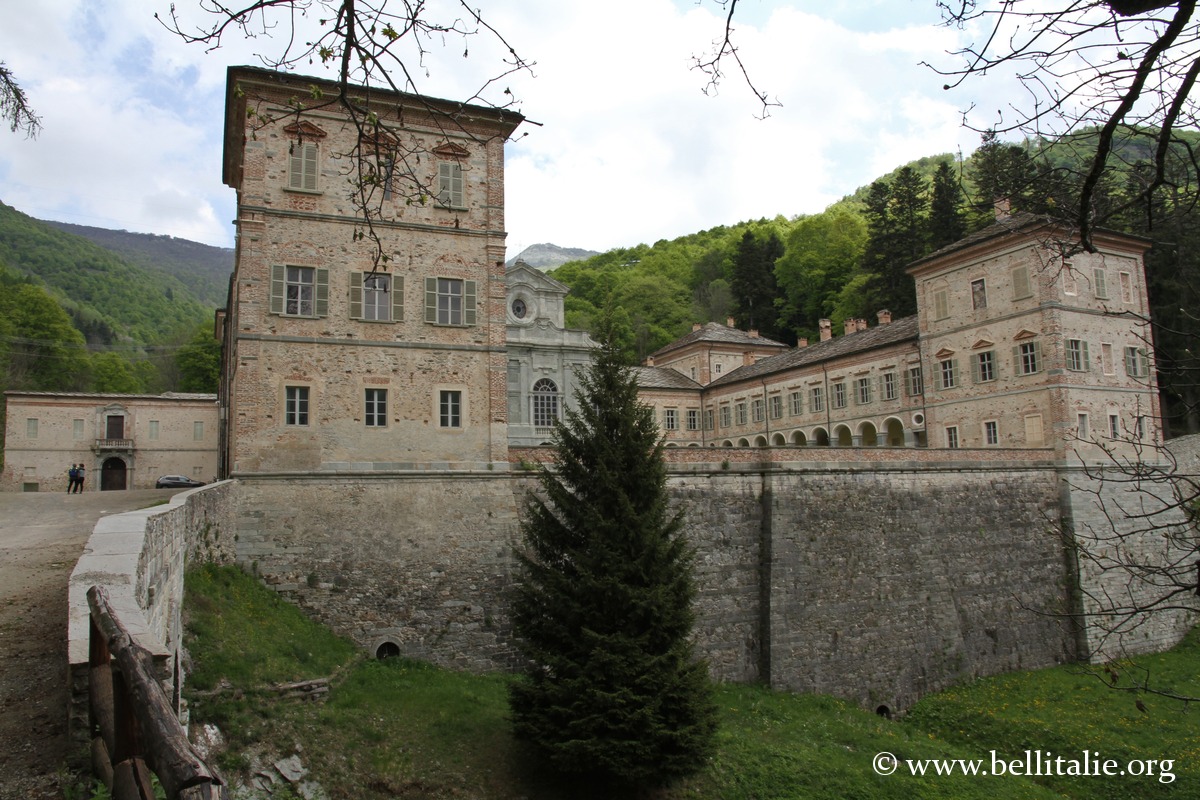
Royal Palace of Val Casotto
Located in the heart of the greenery of the valley, surrounded by centuries-old pines and beech trees, the Royal Castle of Valcasotto was originally a charterhouse of the 12th century following the precepts of Saint Bruno the Carthusian, a native of Cologne, where the monks sought isolation.
It was rebuilt and remodelled from the 16th to the 18th century, then became a possession of the Savoy in the 19th century. Charles Albert and then his son Victor Emmanuel II used it as a hunting lodge, and the building was then renovated to serve this function and accommodate the court.
There nevertheless remains from the Middle Ages a church preserved in the correrie.
Fossano Castle
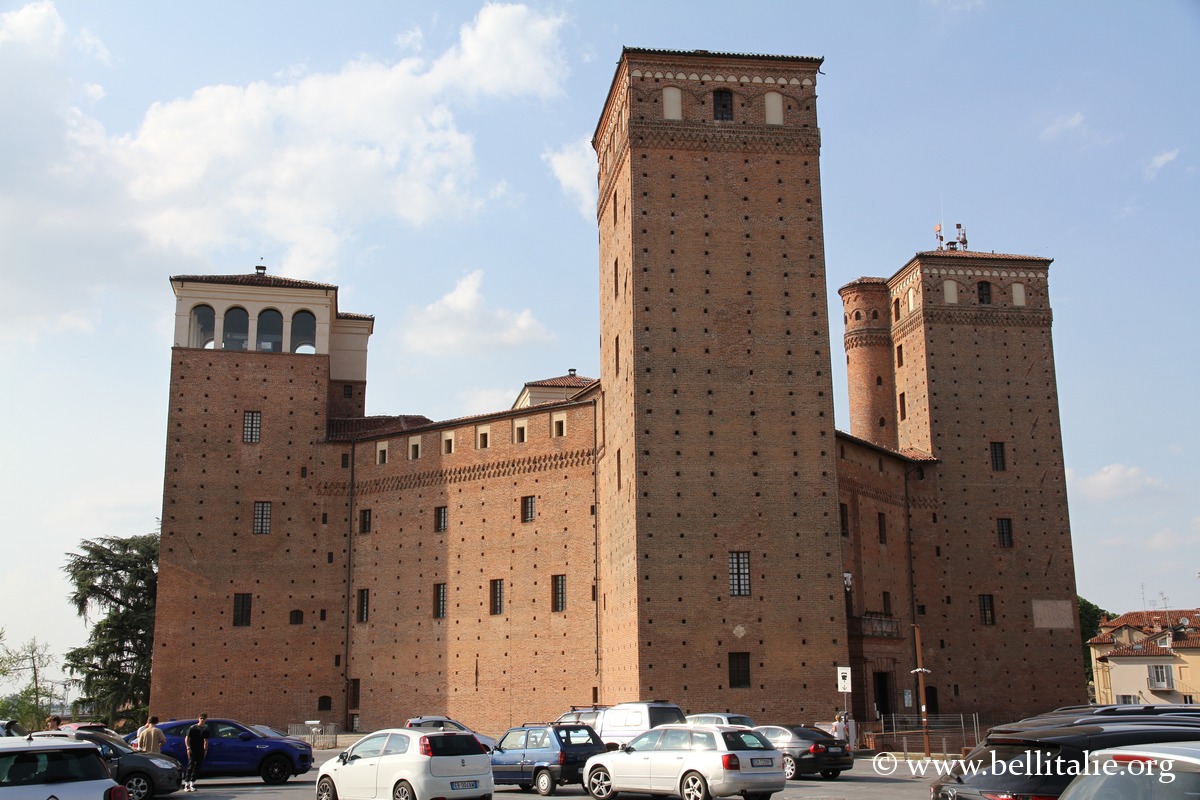
Fossano Castle
Fossano Castle is a fortress built by Philip I of Acaja between 1324 and 1332, subsequently transformed by the Savoy into a seigneurial residence, then into a prison for the Waldensians between 1686 and 1687, before also serving as a barracks.
The 16th-century halls now house the town library, including a historical collection. It regularly hosts exhibitions.
One can notably visit the tower with its panorama and multimedia installations.
Bene Vagienna
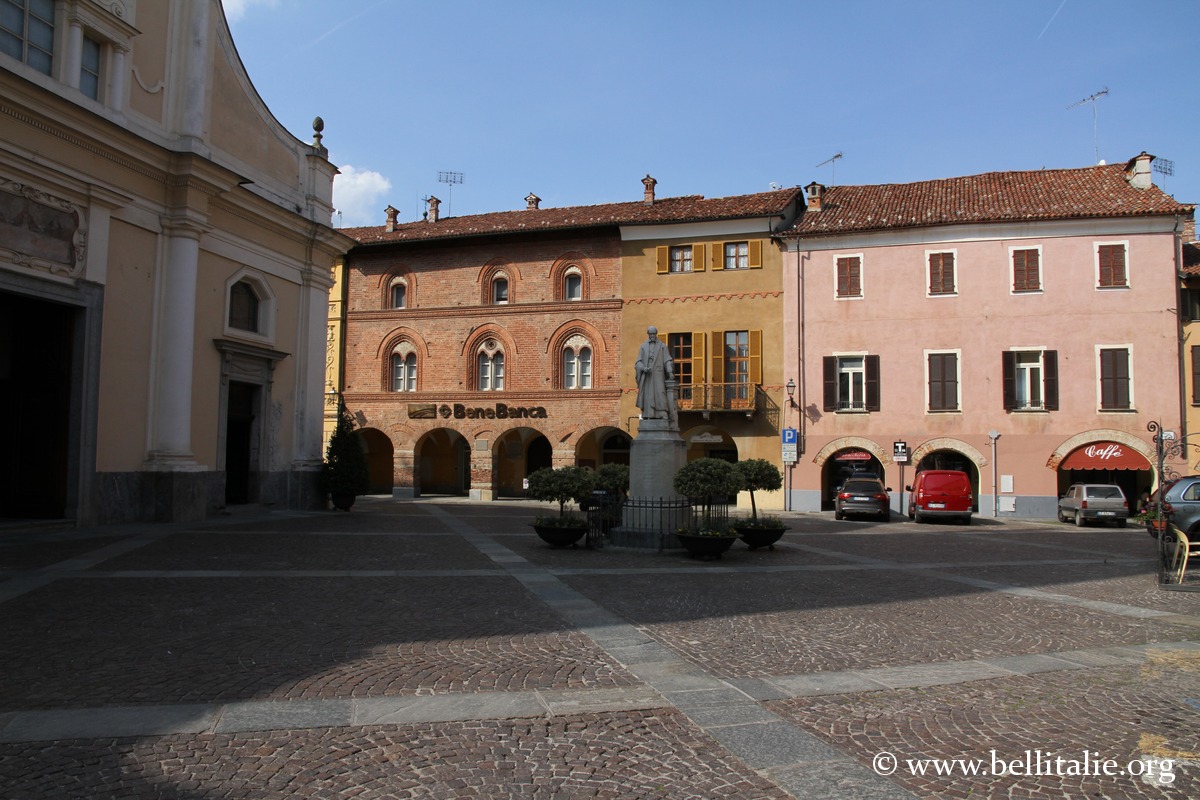
Bene Viagenna
A small town with history and heritage, Botero was born here in 1544. He was a famous philosopher and adviser to the Savoy, inventor of the phrase “reason of state”, who sought to reconcile the art of good governance with the Catholicism of the Counter-Reformation. A statue is dedicated to him on the main square.
The Roman Augusta Bagiennorum was founded by veteran legionaries in the last quarter of the 1st century BC. Remains survive such as the bases of the theatre, and one can also visit the interesting archaeological museum.
It was a possession of the bishops of Asti until 1388, then of the marquises of Monferrato, of the counts Costa, was occupied and fortified by the French in the 16th century, before becoming a possession of the Savoy. Under the latter, palaces and Baroque churches were built in the 16th and 17th centuries.
Bossea Caves
This cave located at an altitude of 829 metres is formed of large rocky chambers with beautiful limestone concretions, traversed by a river and also preserving skeletal remains of the prehistoric cave bear.
Stura Valley
At Vinadio, in the Stura valley, stands the mighty Albertine Fort at Vinadio, built under the reign of Charles Albert of Savoy, which was converted into a prison.
Near the green Stura valley, Bagni di Vinadio has sulphur springs and the sanctuary of Saint Anne of Vinadio, which is at 2,035 m, the highest in Europe, 1 km from the border with France.
The Alps
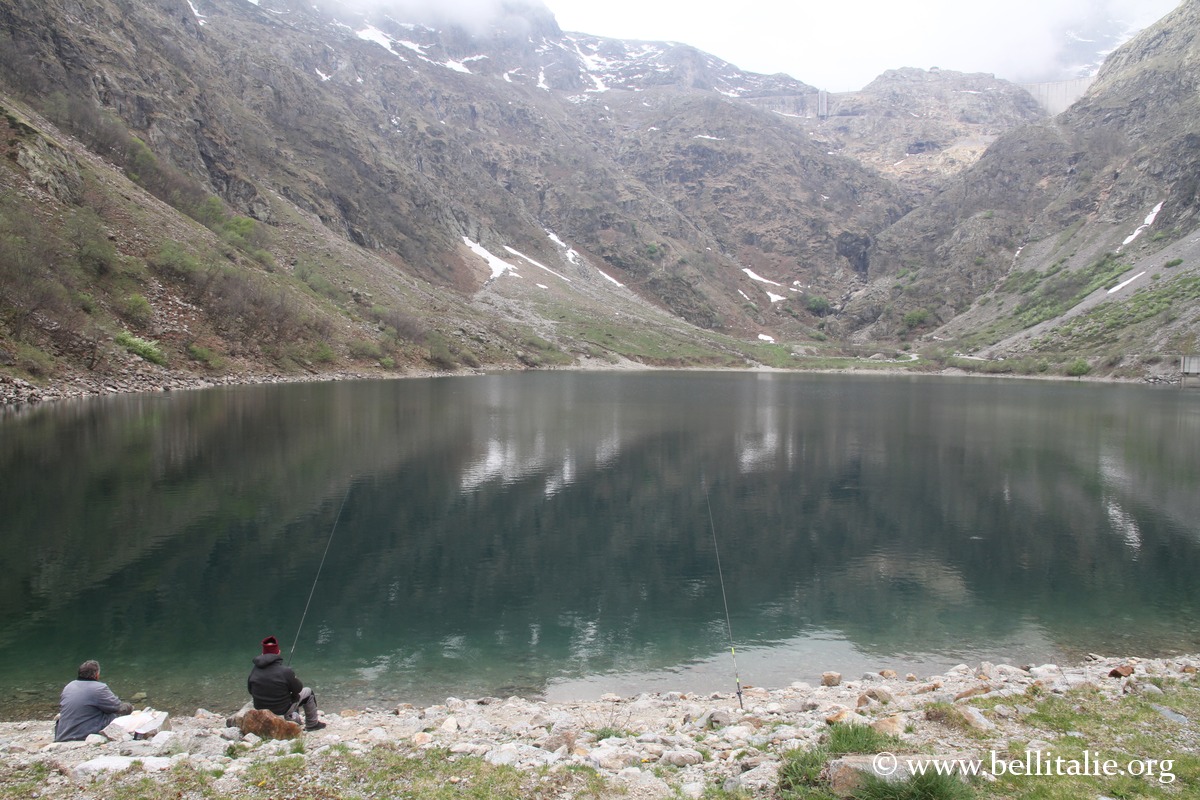
Lago della Rovina
Natural Parks of the Alps
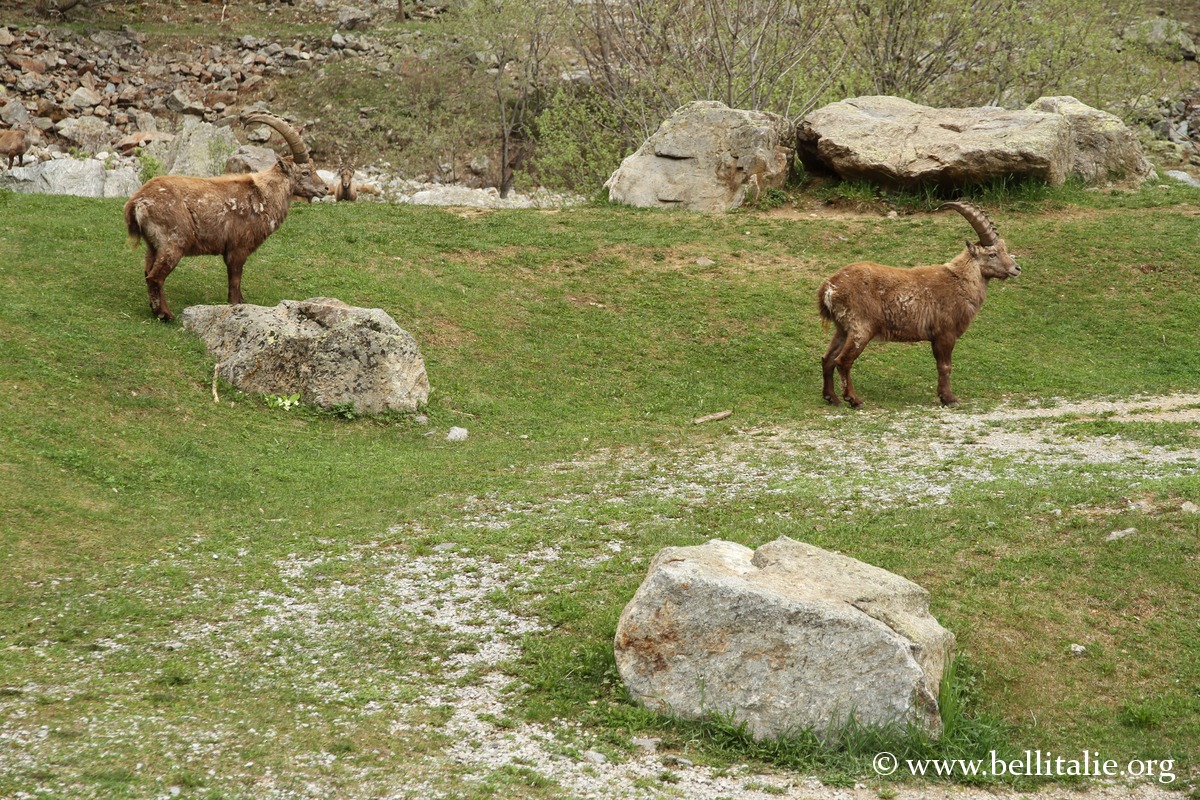
The Maritime Alps Natural Park, twinned with the contiguous French Mercantour park, is another beautiful part of the Alps, with peaks over 3,000 metres such as the Argentera (3,297 m), many lakes, alpine pastures, and small glaciers, a rich fauna and flora, where mouflons are frequent. Many trails make it accessible. An enclosed area of 8 hectares is dedicated to wolves in convalescence.
Ski resorts
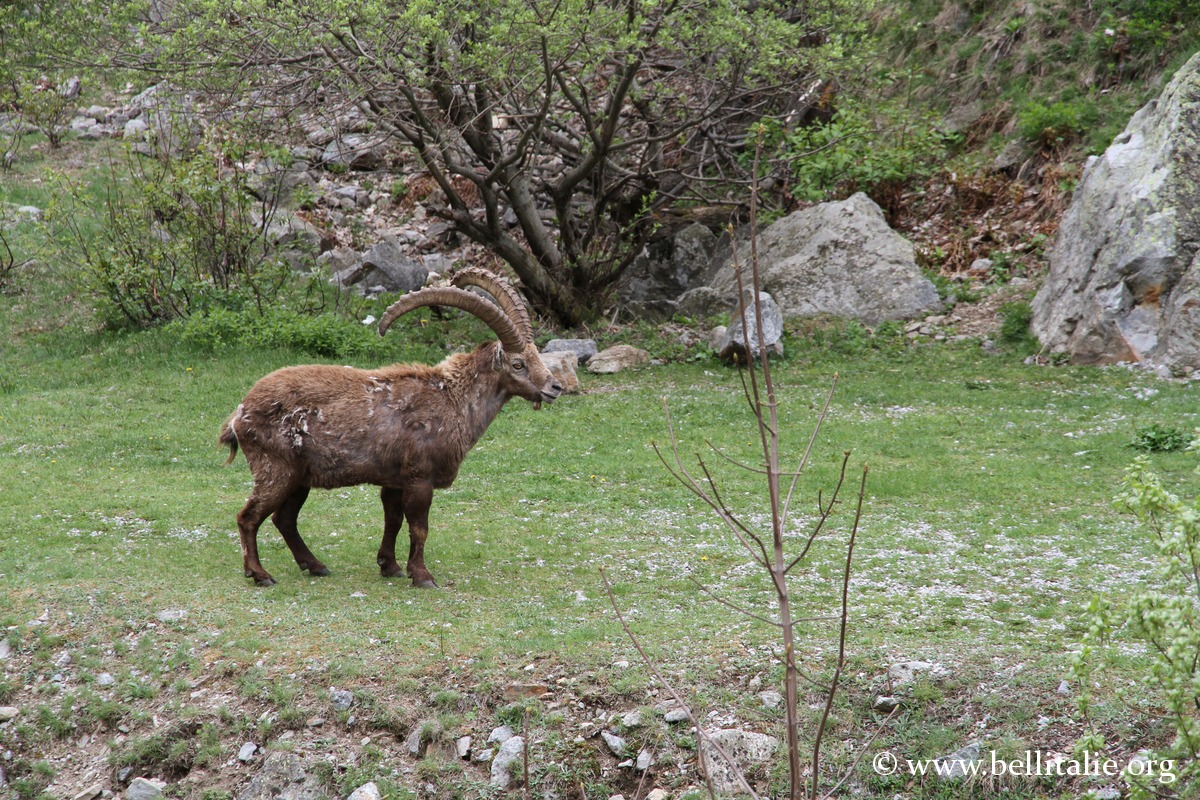
Mouflon at the LAgo della Rovina
To the south, the Vermenagna valley leads to the ski resorts of Limone Piemonte and Vernante with its houses in the colours of Pinocchio, open since 1907. The area has 80 km of downhill slopes. In summer it offers hikes, horse riding and mountain biking. One of the discoveries are the “salt roads” built by the Romans, or the beech forests.
Thermal baths
The thermal baths: at Vinadio, in the Upper Stura Valley, with natural caves and waters of different temperatures; the royal thermal baths of Valdieri, in the Argentera Natural Park; at Lurisia is the main radioactive spring in Europe.
Sources and information
- Tourism portals: www.visitcuneese.it
- Municipality website: iet.comune.cuneo.it
- Wikipedia page: en.wikipedia.org
- What to see in Piedmont
- Turin
- Saint Michael’s Abbey, La Clusa
- Lake Maggiore
- Susa Valley and Chisone Valley
- Susa
- Lake Orta
- Cuneo and Surroundings
- The Langhe
- Montferrat
- Roero and surroundings
- Asti
- Alba
- Domodossola and Val d’Ossola
- Valsesia
- Sanctuary of Mount Oropa
- Saluzzo and surroundings
- Usseaux and Fenestrelle Fort
- Casale Monferrato
- Vercelli
- Ivrea, Canavese and Biellese
- Novara


Comments