


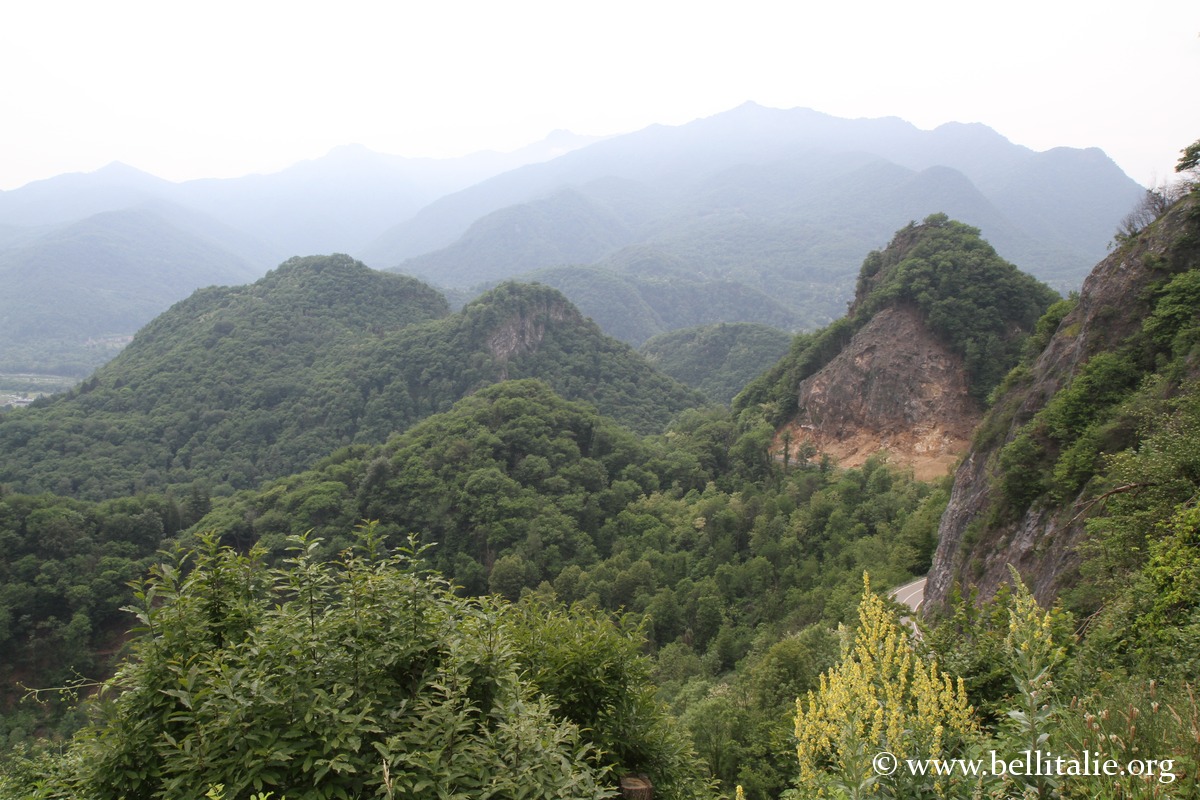
Val Sesia towards Civiasco
Less visited than the neighbouring Alpine valleys, the Valsesia nevertheless has interesting natural and cultural riches. It descends from the slopes of Monte Rosa, with several tributary valleys off the beaten track.
Its upper part is wild and marked by the Walser (who were a German-speaking people of Burgundian origin) where pastoral traditions and centuries-old wine production survive, partly within a nature park. The lower part has more artistic sites.
This region offers many hikes or mountain bike trails, with small Walser villages, and whose main town Varallo, lies at the boundary between the upper and lower valleys. The latter preserves a fine historical and artistic heritage, above all its famous Sacred Mount, but also the beautiful church of Santa Maria delle Grazie.
Sacred Mount of Varallo 
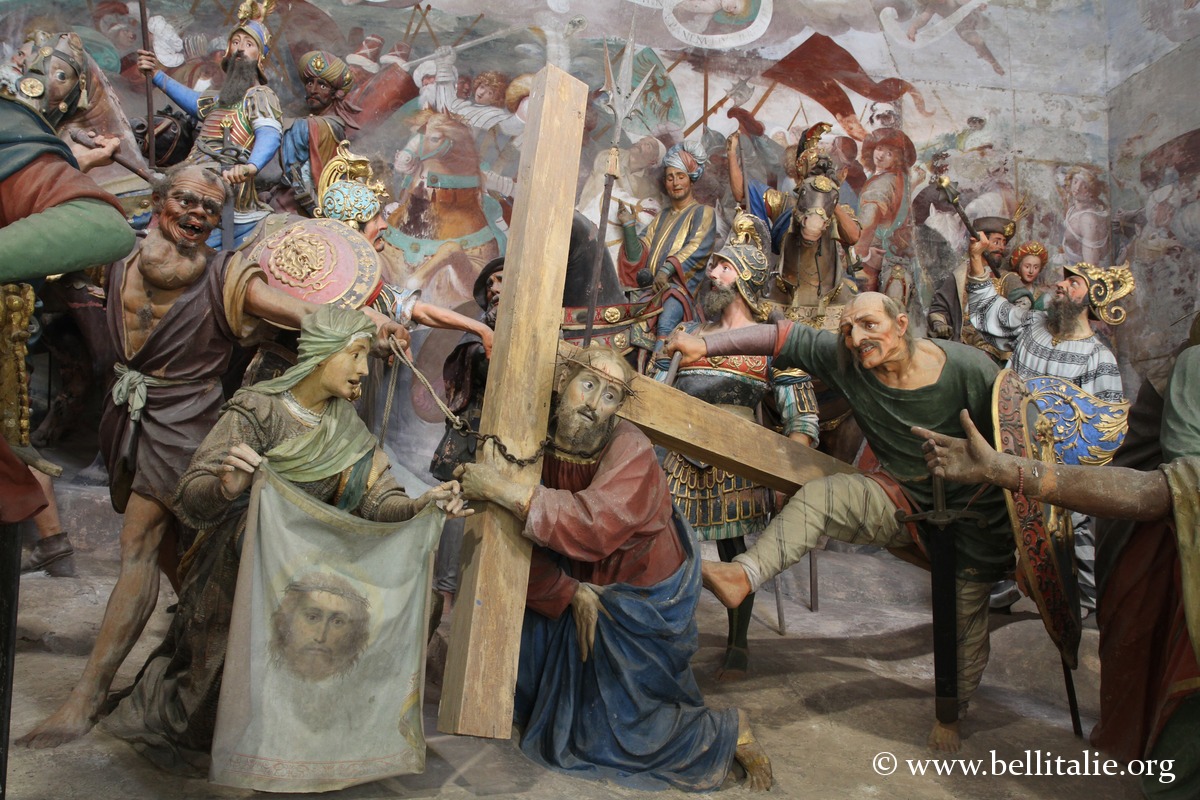
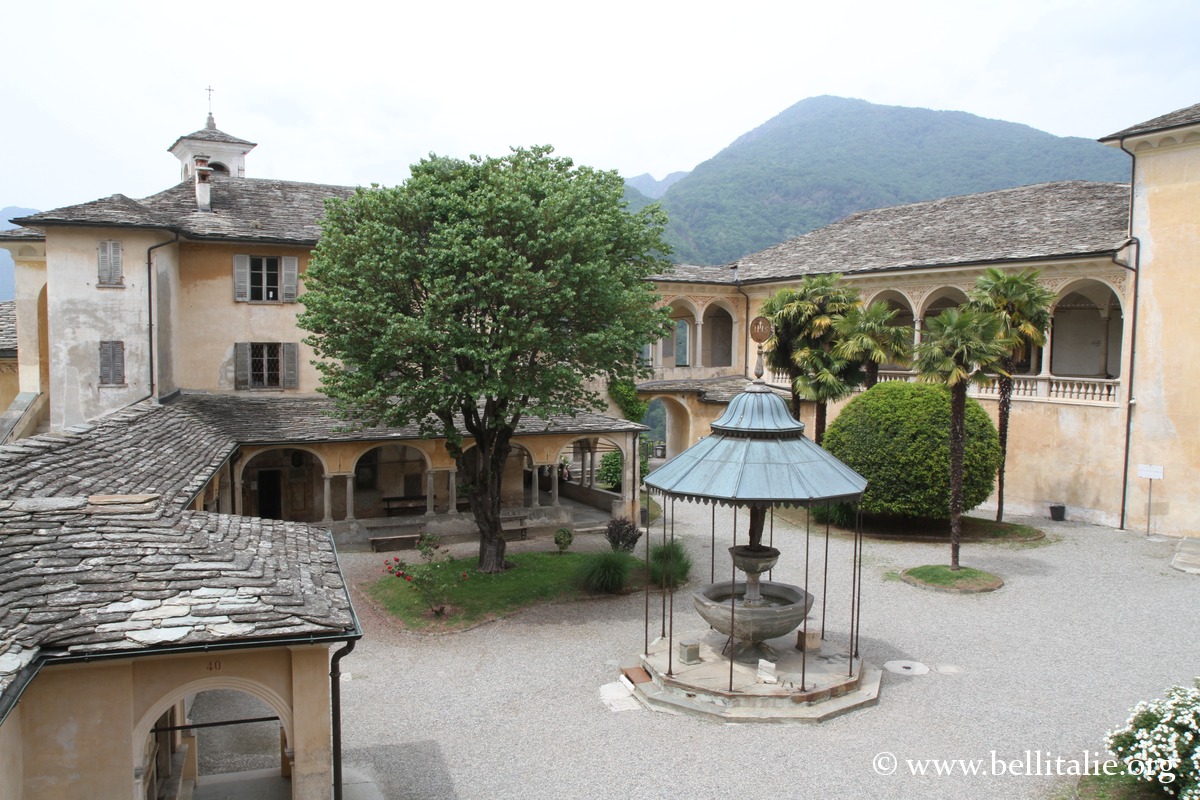
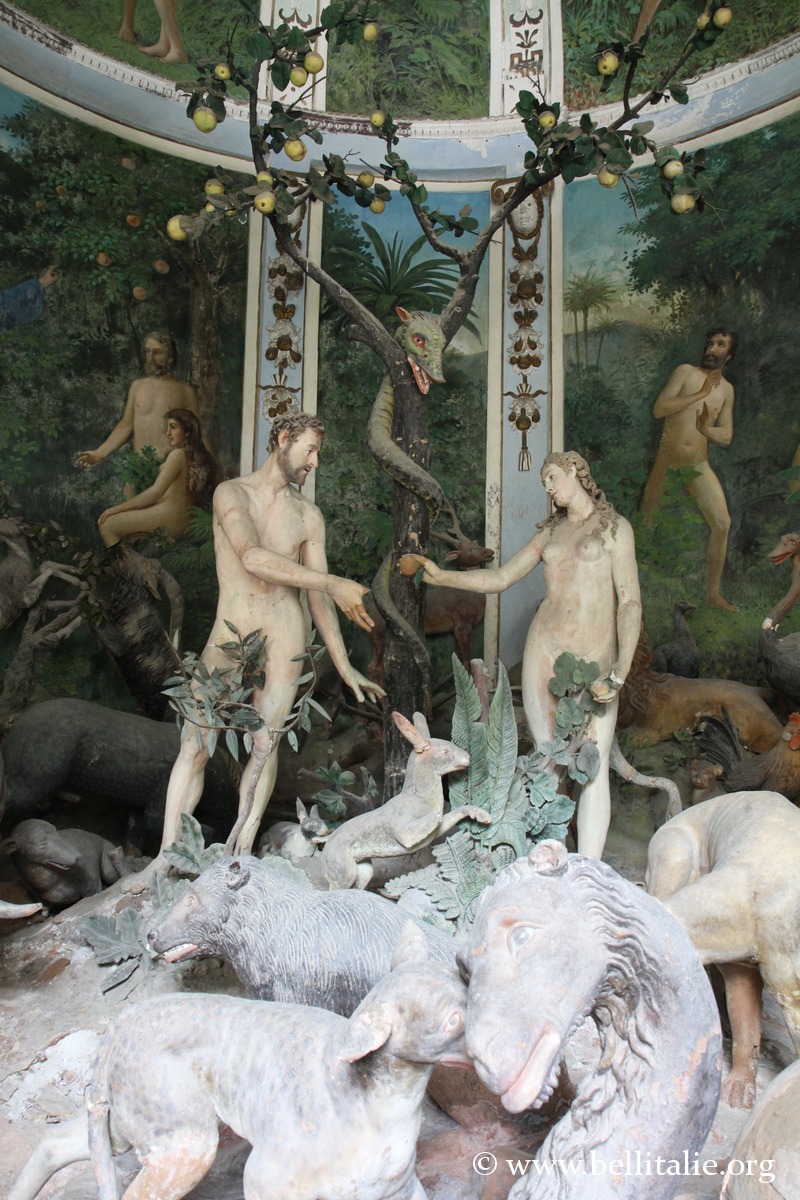
The oldest of the Sacred Mounts is that of Varallo, founded in 1491, among the 9 Sacred Mounts of northern Italy inscribed as a UNESCO World Heritage Site in 2003, designed by the Milanese Franciscan Bernardino Caimi on his return from the Holy Land. The holy places of Palestine are symbolically recreated there, with 44 chapels decorated with frescoes and statues, as well as the basilica of the Assumption built from 1814, which is discovered along a path crossing the nature park with beautiful views over the valley. There are nearly 4,000 painted figures and nearly 800 very expressive painted wooden or terracotta statues representing scenes from the Gospels and from the life and Passion of Christ, made by local artists such as Gaudenzio Ferrari (early 16th century) or Francesco Mazzucchetti.
It can be reached by a path from Varallo, passing along the Way of the Cross, by car or by funicular.
Chapels 1 to 19 are at the heart of the reserve, while the following ones occupy the summit of the mount, which is designed like a small town with its squares, arcades and palaces.
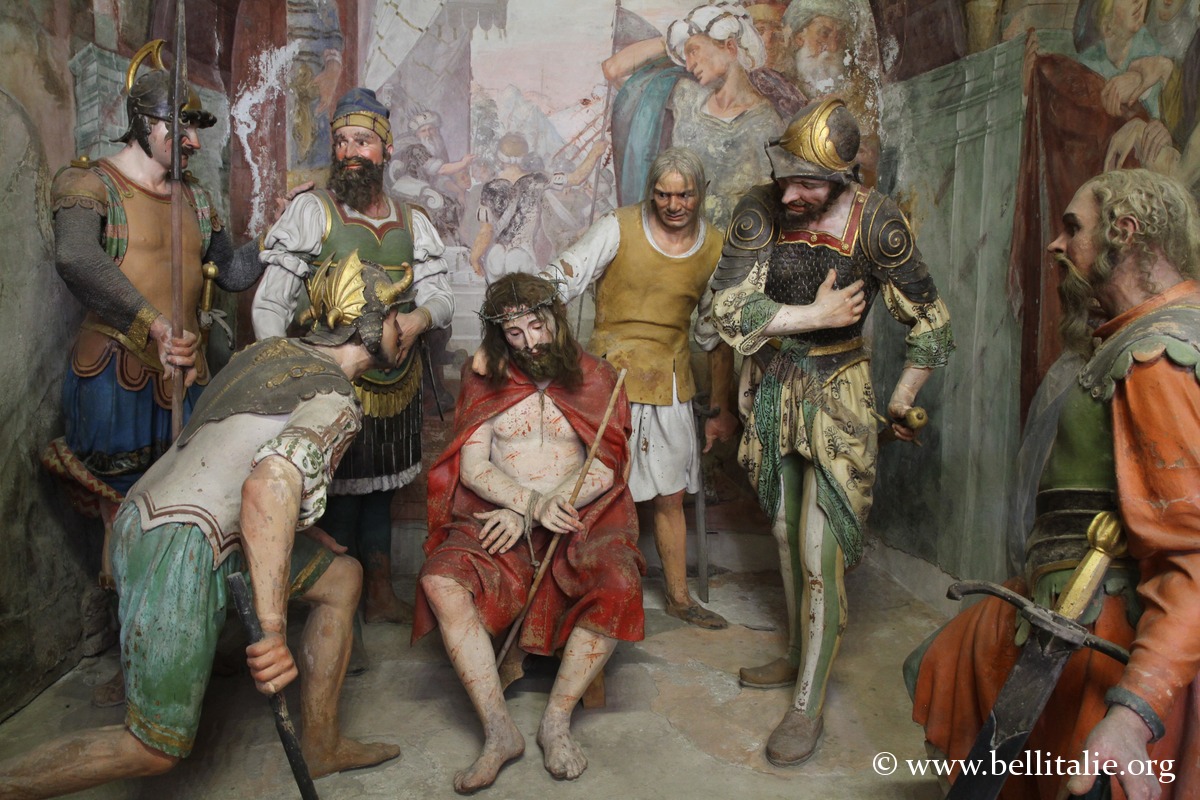
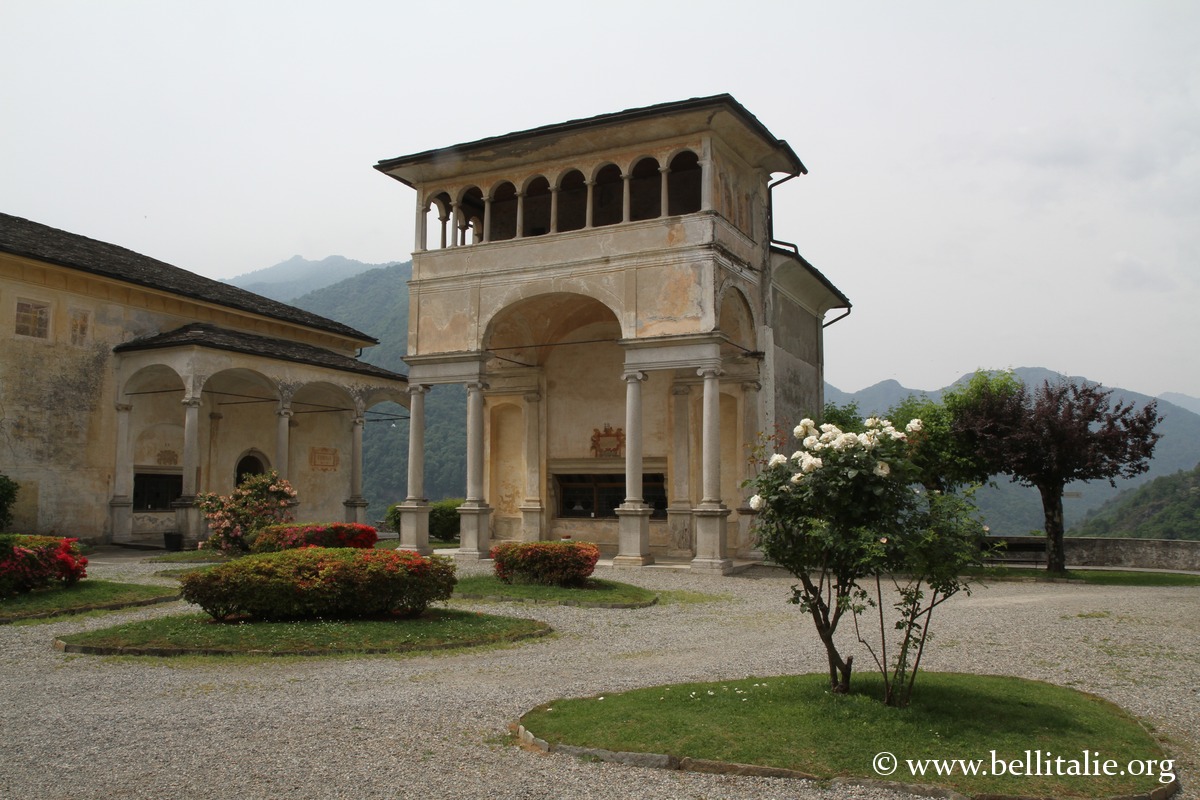
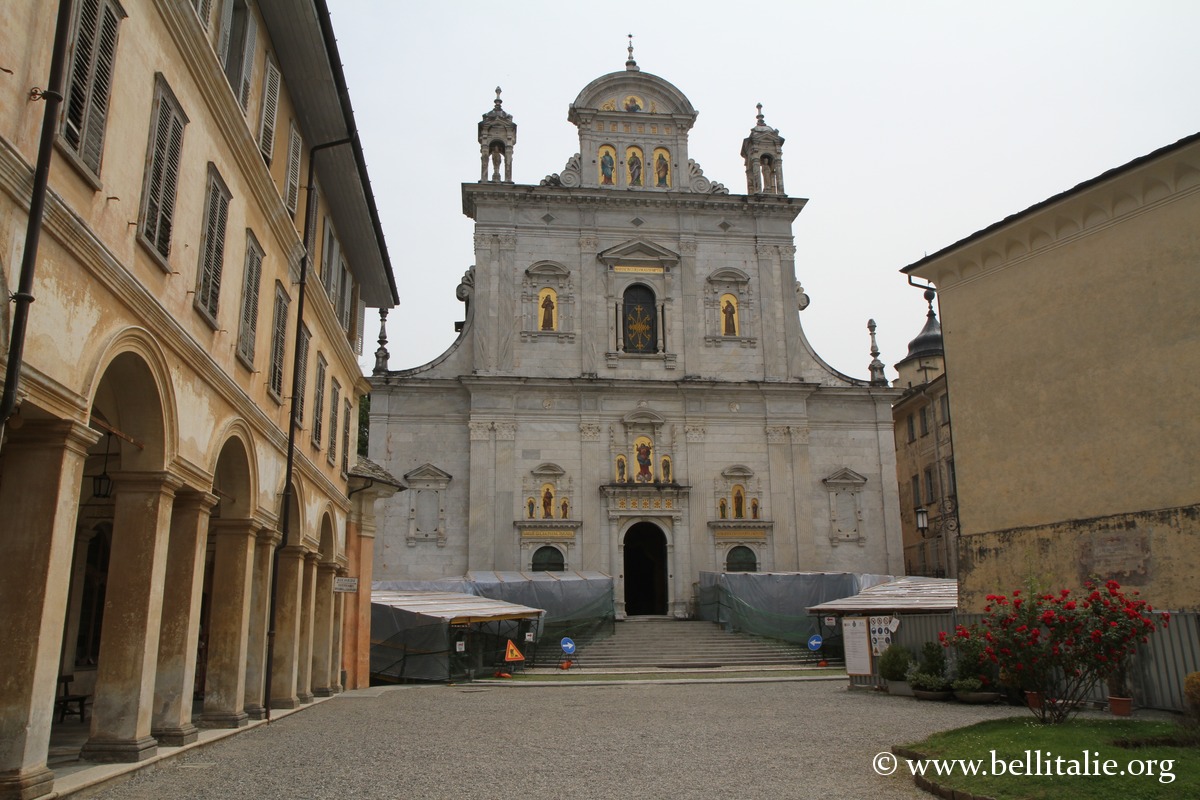
Sites in Varallo
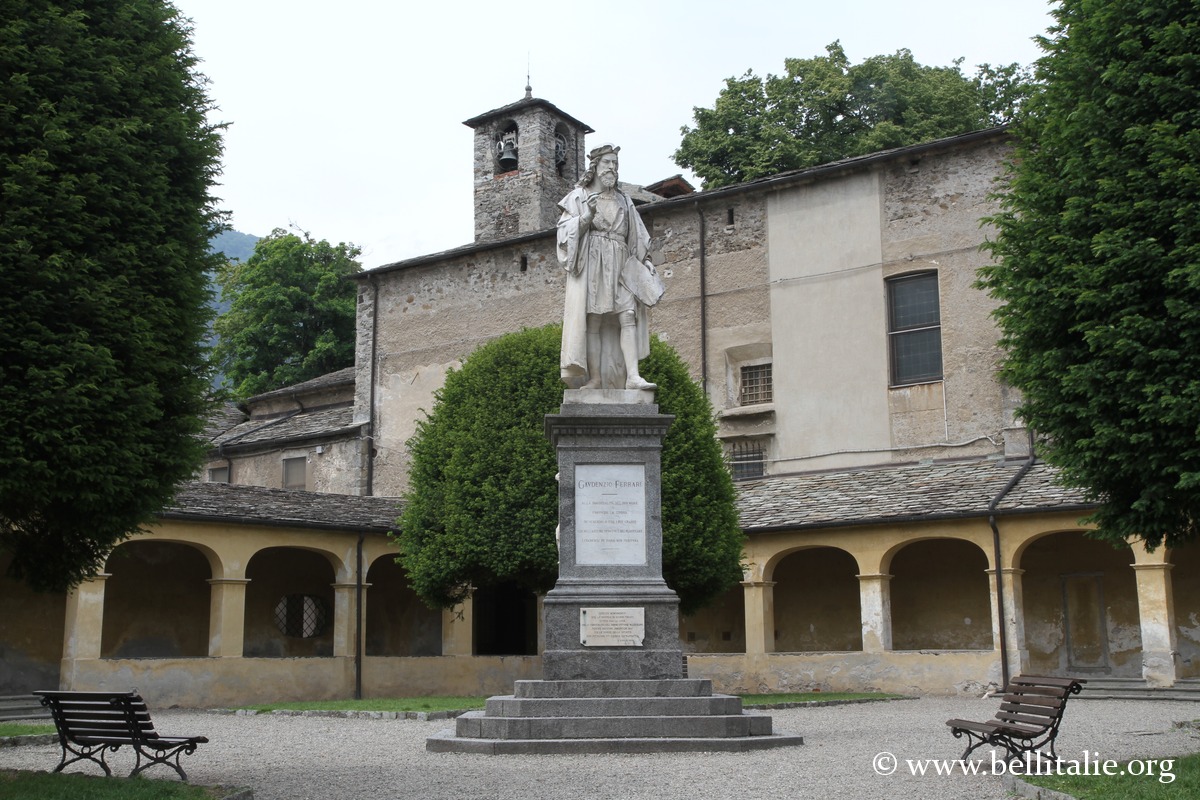
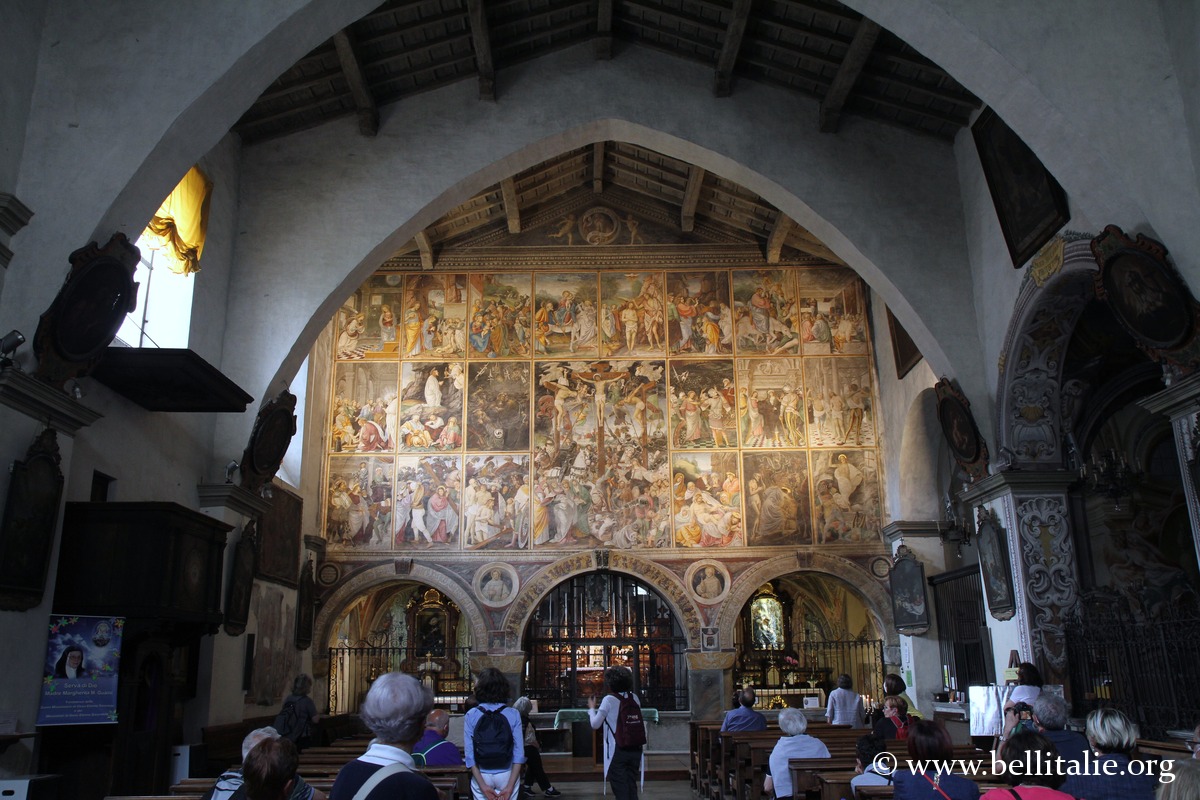
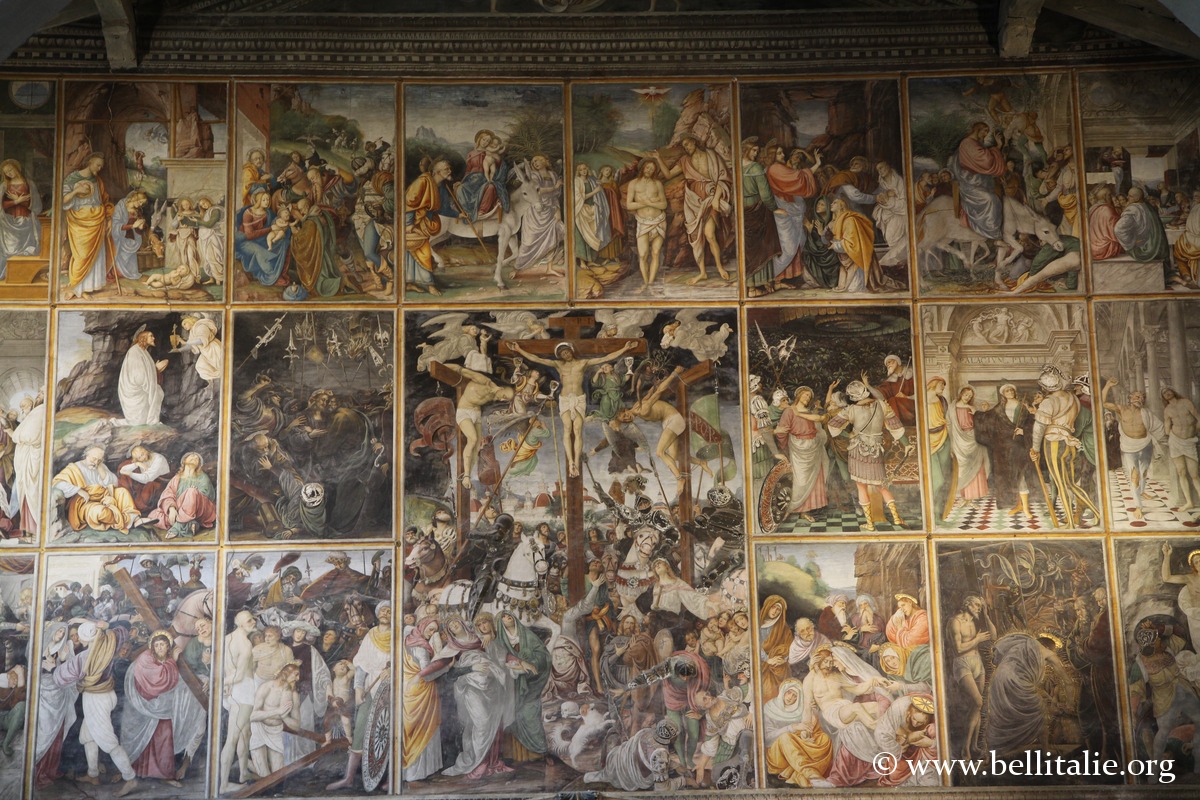
- At the foot of the mount, on Piazza Gaudenzio Ferrari flanked by the convent of the order of Missionary Sisters, the church of Santa Maria delle Grazie was founded with a Franciscan convent by Father Bernardino Caimi between 1486 and 1493, in connection with the construction and the route of the Sacred Mount. It has a simple late Gothic architecture, characteristic of Franciscan convent churches with a large wall separating the space reserved for the friars from that of the faithful. This wall was painted in 1513 by Gaudenzio Ferrari, constituting with this great fresco a major work of the Renaissance in Piedmont and Lombardy.
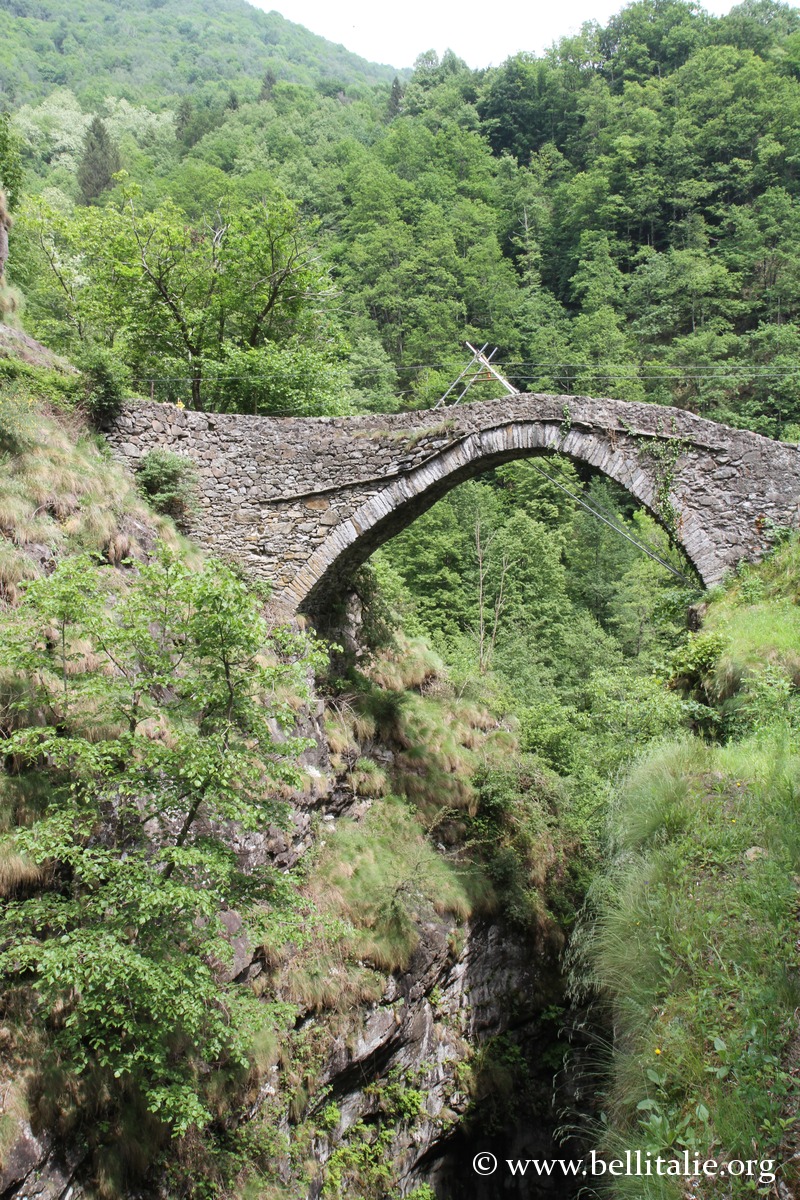
The 21 panels represent scenes drawn from the life and passion of Jesus, from the Annunciation to the Resurrection, over 8 metres in height and 10 in width. The scenes recall those depicted in the chapels leading to the Sacred Mount, being here a “prologue”. - Near Varallo in the Val Mastallone, the river and the ravine are spanned by the Ponte della Gula, an old narrow stone bridge, in a bend at 30 metres in height. For centuries it was the obligatory crossing to go down the valley.
- The Oratory of the Virgin of Loreto, at the foot of the rocky and wooded walls, dates from the Renaissance, and preserves beautiful decorations and architecture with a 16th-century loggia, paintings by Gaudenzio Ferrari including a Nativity, and inside frescoes dedicated to the life of the Virgin.
Upper Valsesia
- The main valley of Val Sesia is the Val Grande, with the main historic villages of Varallo with its Sacred Mount and Alagna Valsesia at the foot of Monte Rosa, visited as much for winter sports as in summer. There are also many Walser hamlets (German-speaking peasants of Burgundian origin), preserving their heritage and traditional wooden houses.
- The Monte Rosa and its glaciers, the border between Switzerland and Italy, constitute the second highest massif of the Alps, one of whose summits culminates at the Dufourspitze at 4,634 metres.
- The Val Sermenza is a narrow, wooded valley with its lonely mountain villages, immersed in the beautiful landscapes of the Alta Valsesia Nature Park, as at Carcoforo and Alto Sermenza located in natural sites, or from Boccioleto and Rossa where paths dotted with small chapels start.
- The Val Mastallone is one of the wildest valleys of the Valsesia, with gorges to the south and alpine meadows and forests to the north, with villages that bear witness to the bourgeois tourism of the past at Cervatto and Fobello, or the picturesque Ribera of Walser origin.
Lower Valsesia
- In the lower Valsesia, several historic villages are discovered, including Borgosesia with its Carlo Conti Museum of Archaeology and Palaeontology, the “museum-village” of Guardabosone.
- The churches and sanctuaries are numerous, including Santa Maria di Naula at Serravalle Sesia, San Giovanni al Monte at Quarona and the sanctuary of Sant’Anna at Borgosesia. The remains of the medieval castle of Vintebbio dominate a hill near Serravalle Sesia.
- The Monte Fenera presents natural and historical attractions, associated with a nature park, with beautiful entire, caves, having been frequented by Neanderthal.
- Pretty landscapes are also discovered in the Strona valley towards Postua, as well as the valleys of Breia and Civiasco.
Weather in Varallo
Map
If you see this after your page is loaded completely, leafletJS files are missing.
Sources and information
- Tourist portals: visitvalsesiavercelli.it, invalsesia.it, www.consorziovalsesia.it
- What to see in Piedmont
- Turin
- Saint Michael’s Abbey, La Clusa
- Lake Maggiore
- Susa Valley and Chisone Valley
- Susa
- Lake Orta
- Cuneo and Surroundings
- The Langhe
- Montferrat
- Roero and surroundings
- Asti
- Alba
- Domodossola and Val d’Ossola
- Valsesia
- Sanctuary of Mount Oropa
- Saluzzo and surroundings
- Usseaux and Fenestrelle Fort
- Casale Monferrato
- Vercelli
- Ivrea, Canavese and Biellese
- Novara


Comments