


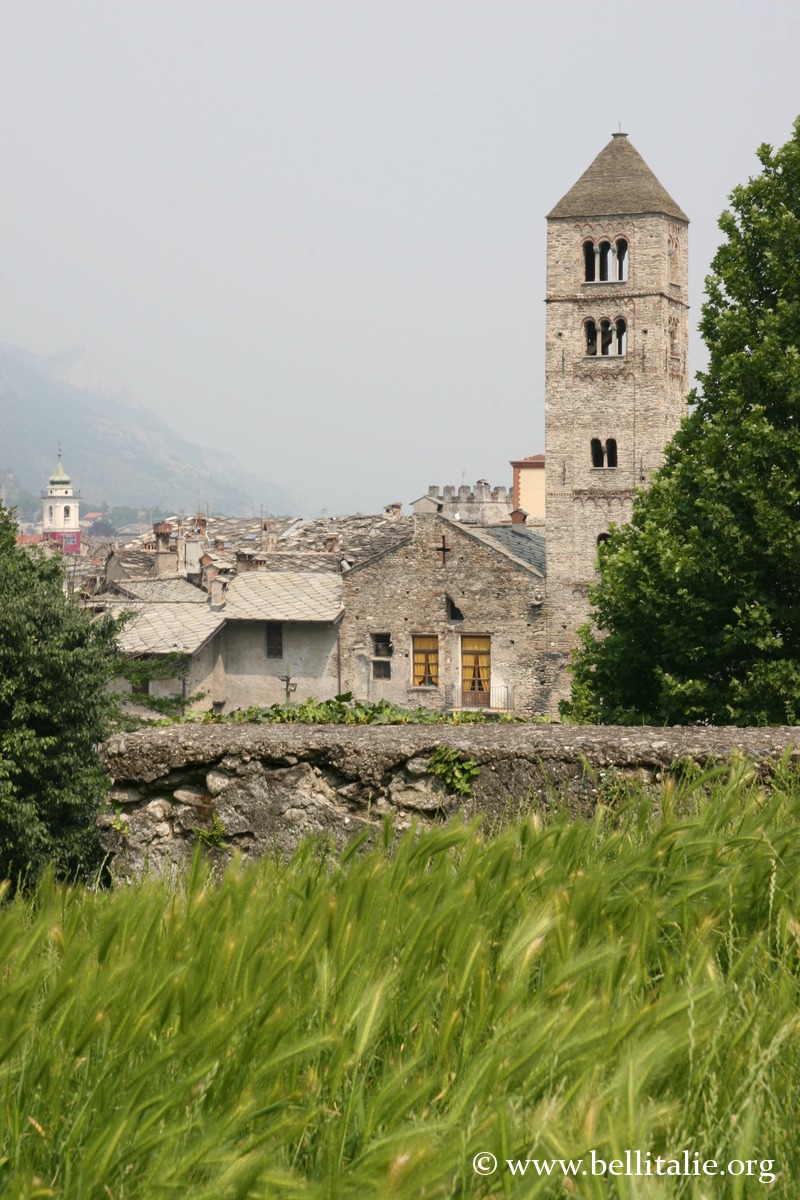
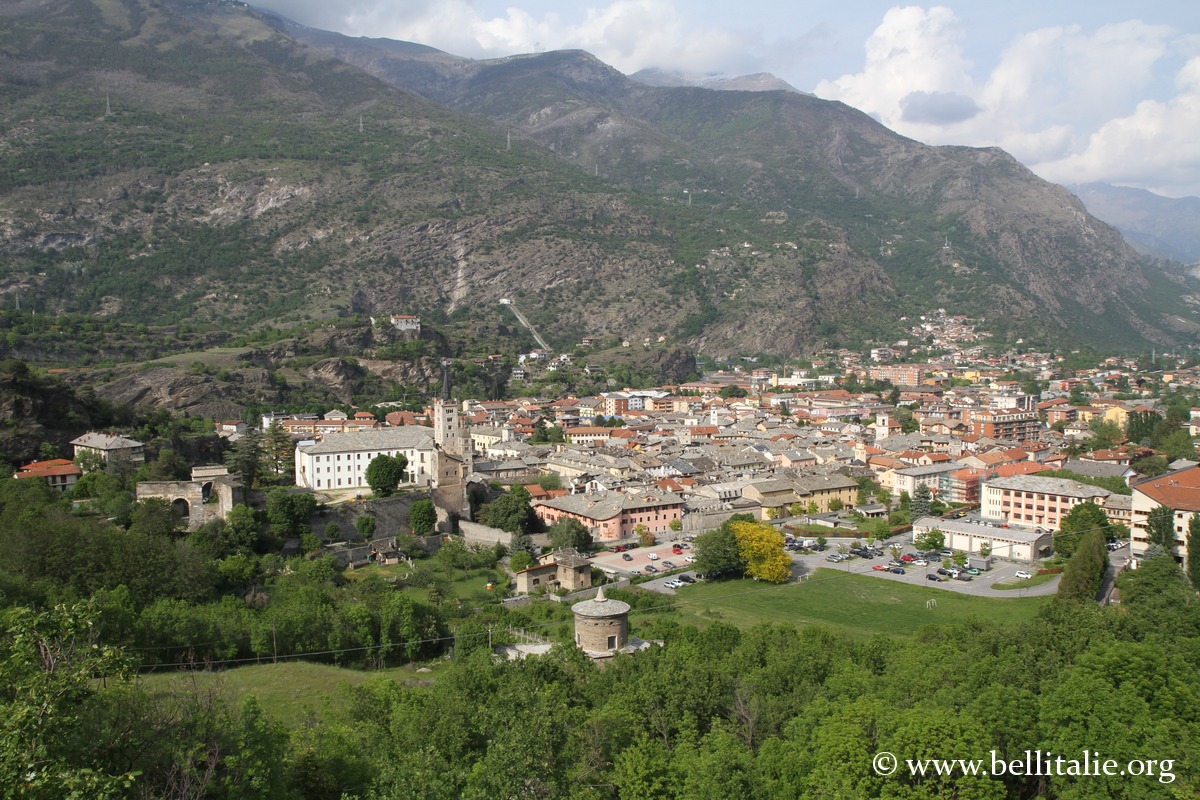
 Susa (Susa in Italian) is a small town in the Val di Susa Valley, which from its long history preserves remains from antiquity and the Middle Ages, a time when it was one of the main centers of power in the region, and was shaped by trade and communications with the neighboring French regions. Today about 6,200 people live there (in 2019).
Brief history and description
The territory of Susa was already inhabited before the Romans, by the Ligurians, then by the Celts. In the first century BCE, Donnus, a Celto-Ligurian king of the region, allied with Julius Caesar, opening for him and his legions a safe passage to Gaul.
Later, the city named Segusium by the Romans was annexed to the empire and developed by taking advantage of its position along one of the major axes linking Italy to Gaul, the Via Cozia (or Way of the Gauls), being the starting point of the Via Domitia, passing through the Mont Genèvre pass.
From that era, several ancient monuments and remains survive, such as the Arch of Augustus (8 BCE), an amphitheater, and the Savoie Gate which was modified in the Middle Ages. All around Piazza Savoia, the main square, numerous Roman remains were found.
Susa is mentioned in the 4th century by the Anonymous of Bordeaux as a stop on his pilgrimage route from Bordeaux to Jerusalem. Indeed, for centuries it was traveled by pilgrims following a variant of the Via Francigena, to Rome and beyond.
The cathedral, which dates back to the 11th century, was remodeled many times. It was originally a Benedictine abbey founded in the time of Ulric Manfred II, the Marquis of Susa and Turin. The latter’s daughter, Adelaide of Susa, married around 1045 in her third marriage Otto I of Savoy, linking her fief to the House of Savoy (hereditary family of the Humbertians, lords of the Maurienne valley).
Monuments in Susa
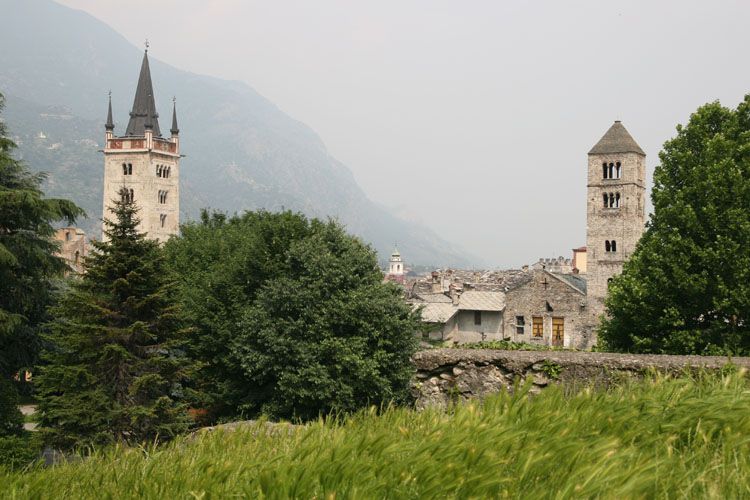
Cathedral of Saint-Just of Susa
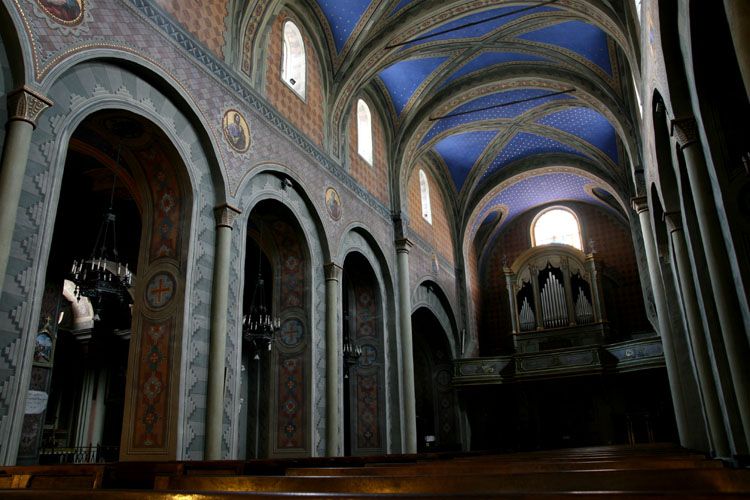
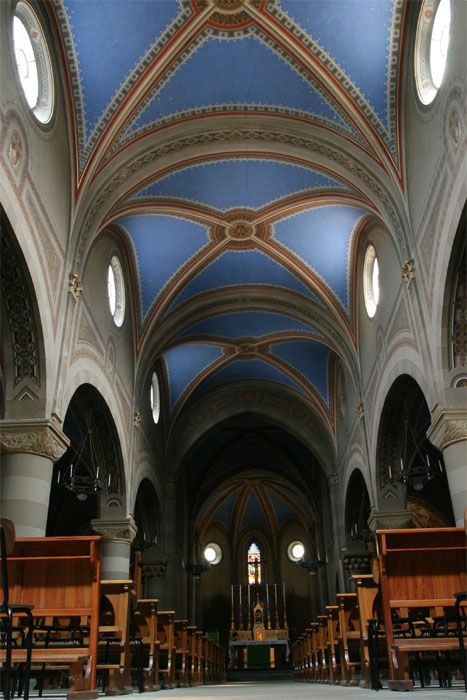
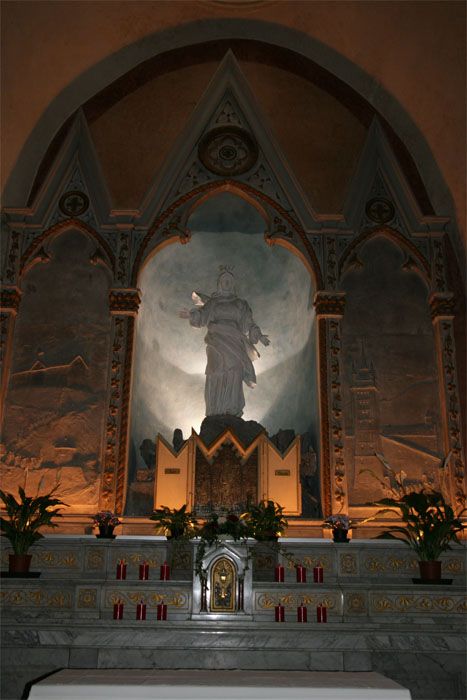
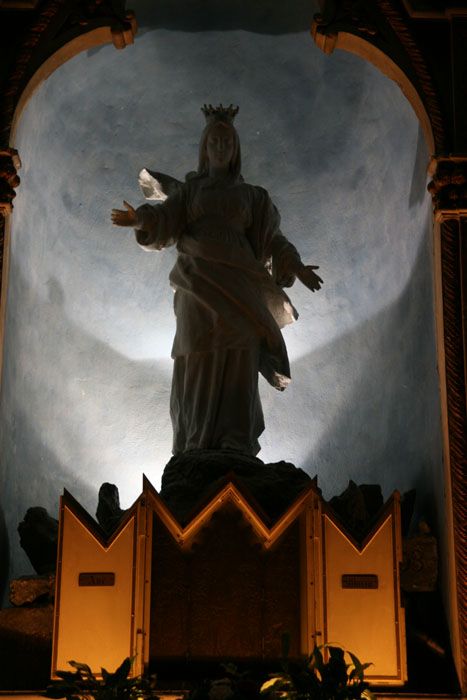
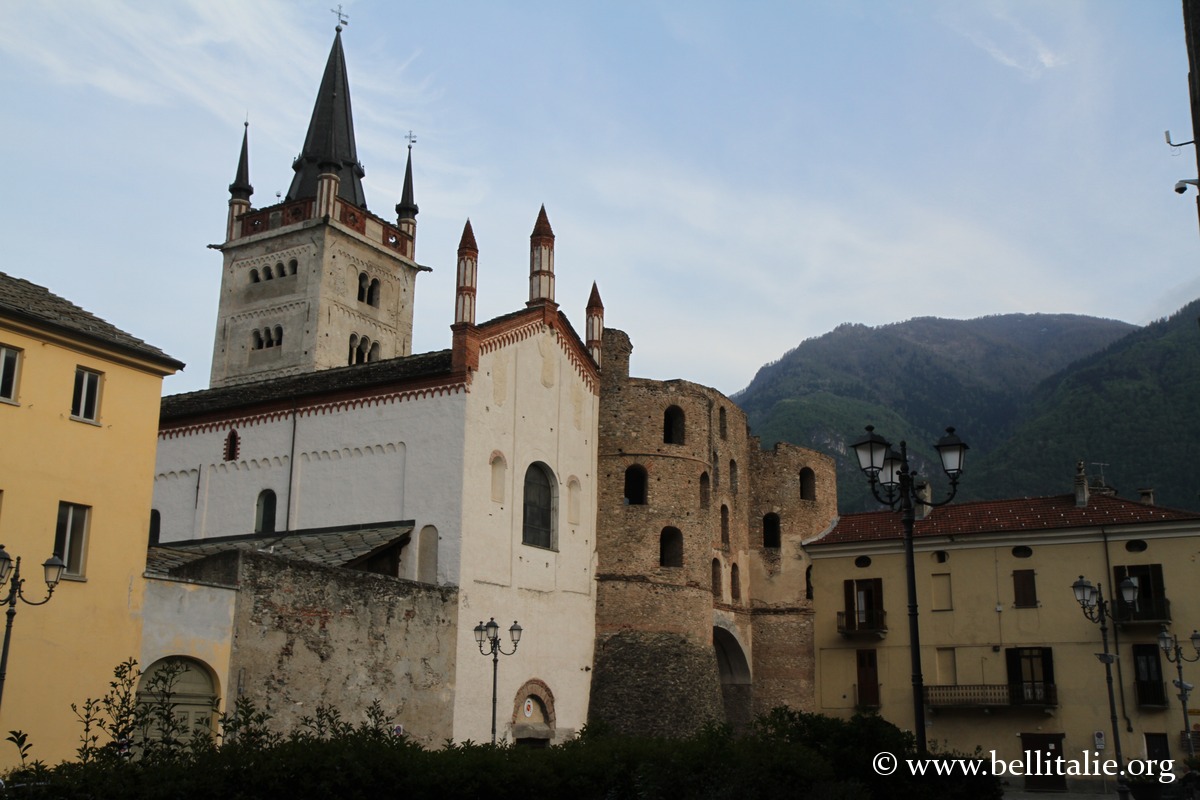
At the origin of the cathedral of San Giusto (Saint-Just of Susa in French), was a Benedictine monastery founded in 1027. It was modified and completed several times, until the 19th century.
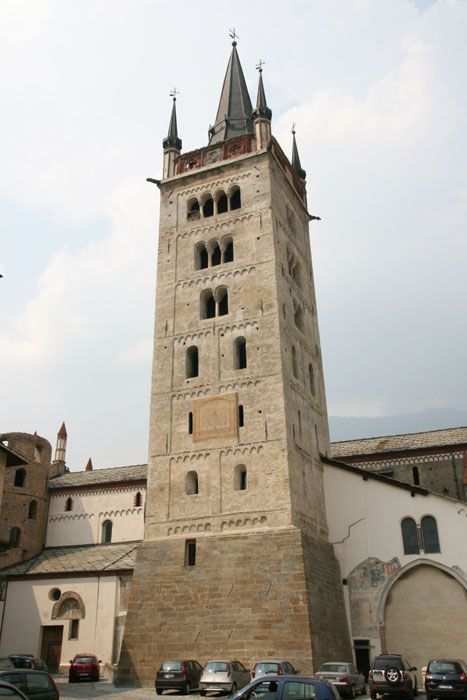
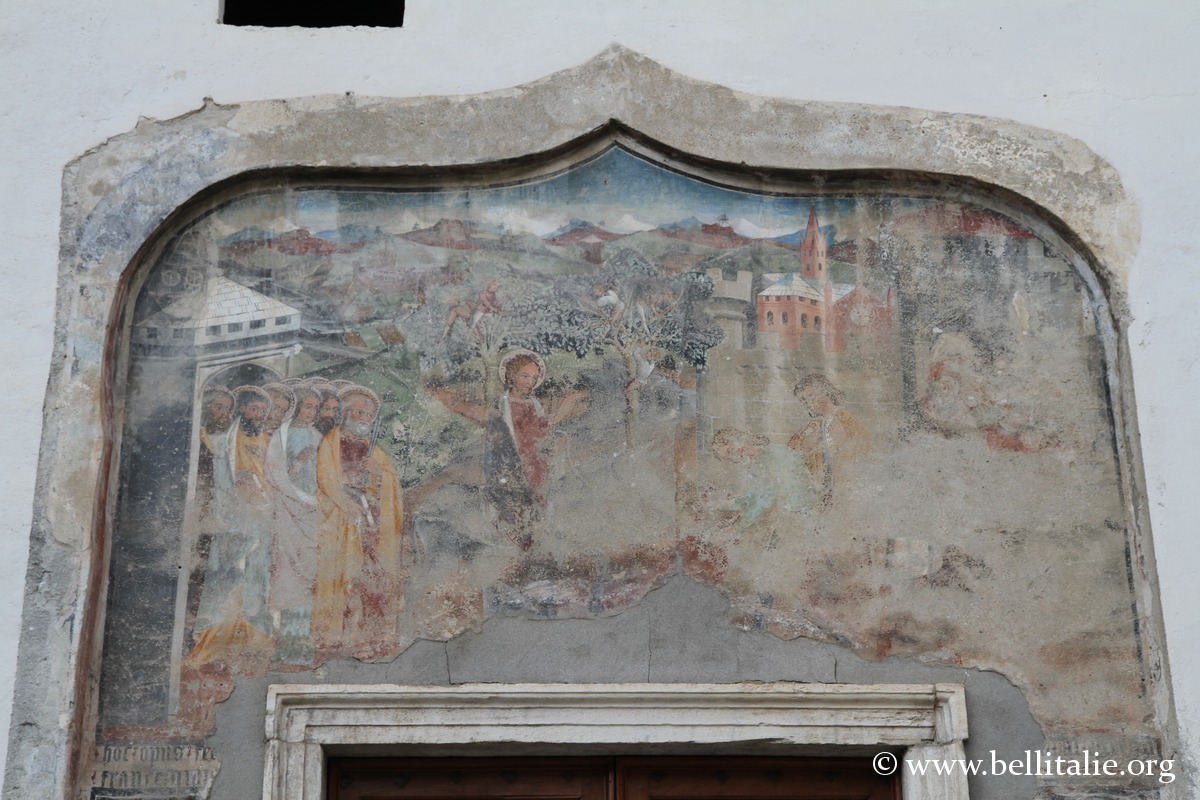
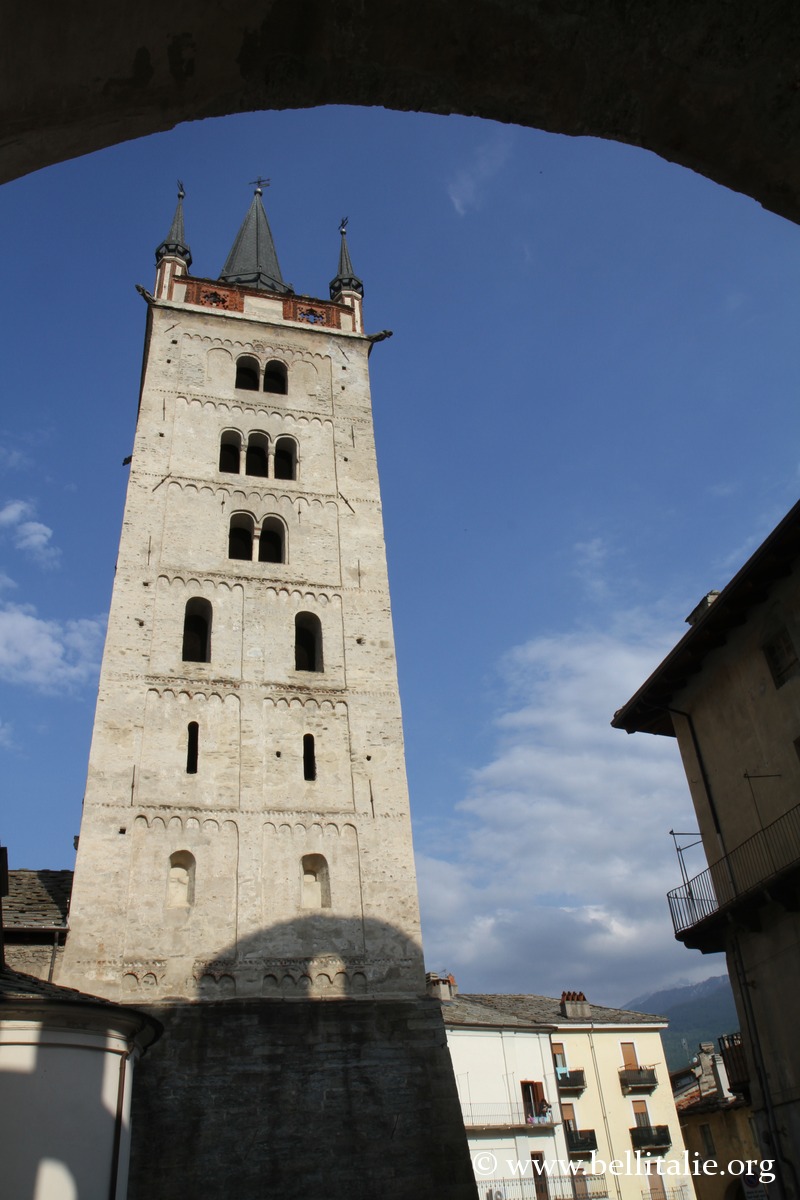
It is a Latin-cross building with three naves and a transept, whose facade is included in the wall of the Roman and medieval enclosure, adjacent to the Savoie Gate. The beautiful Romanesque bell tower reaches 51 meters in height. It was completed with Gothic elements in the 15th century.
-
- Campanile
-
- Clocher
Arch of Augustus and aqueduct
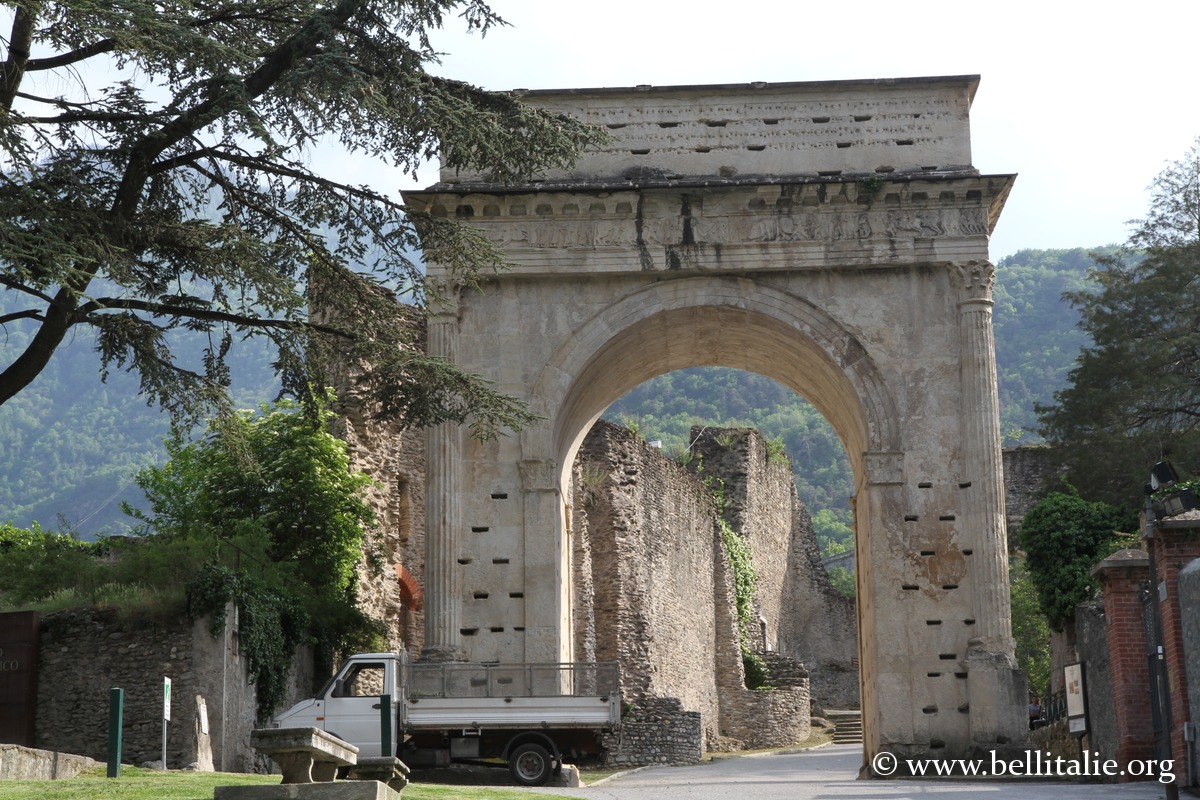
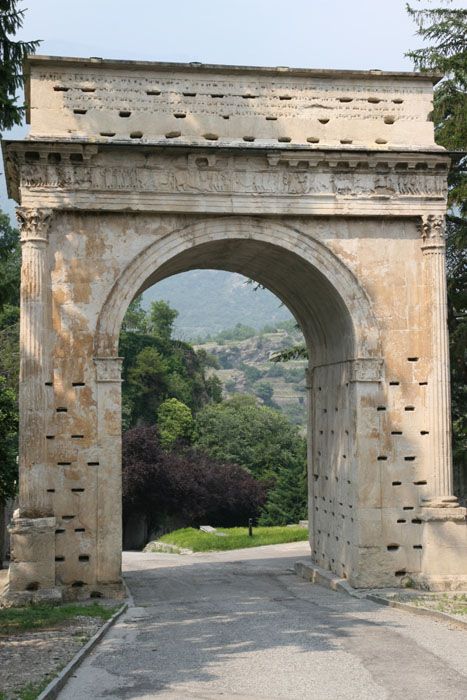
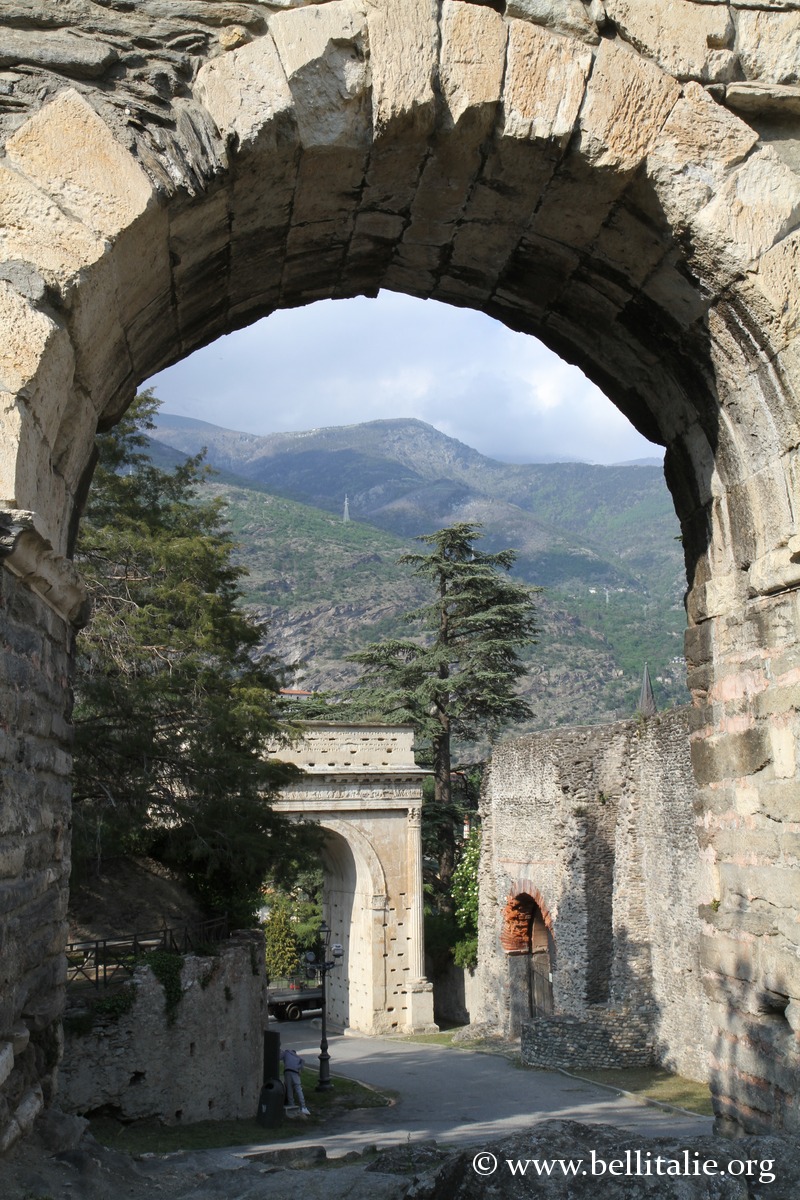
This Roman arch is one of the best preserved in northern Italy, built around 8 BCE by King Cottius (Cozio in Italian) in honor of Emperor Augustus. It has only a single arch, framed by half-columns that support an architrave with a frieze and the attic (the upper part) where the inscription recalls the pact (“foedus”) between Cottius, king of the Celts, and Augustus, the first Roman emperor. It is a passage of the Via Cozia (known today as the Way of the Gauls), which continues as the Via Domitia from Mont Genèvre.
-
- Arc d’Auguste (côté nord)
-
- Arc d’Auguste (côté sud)
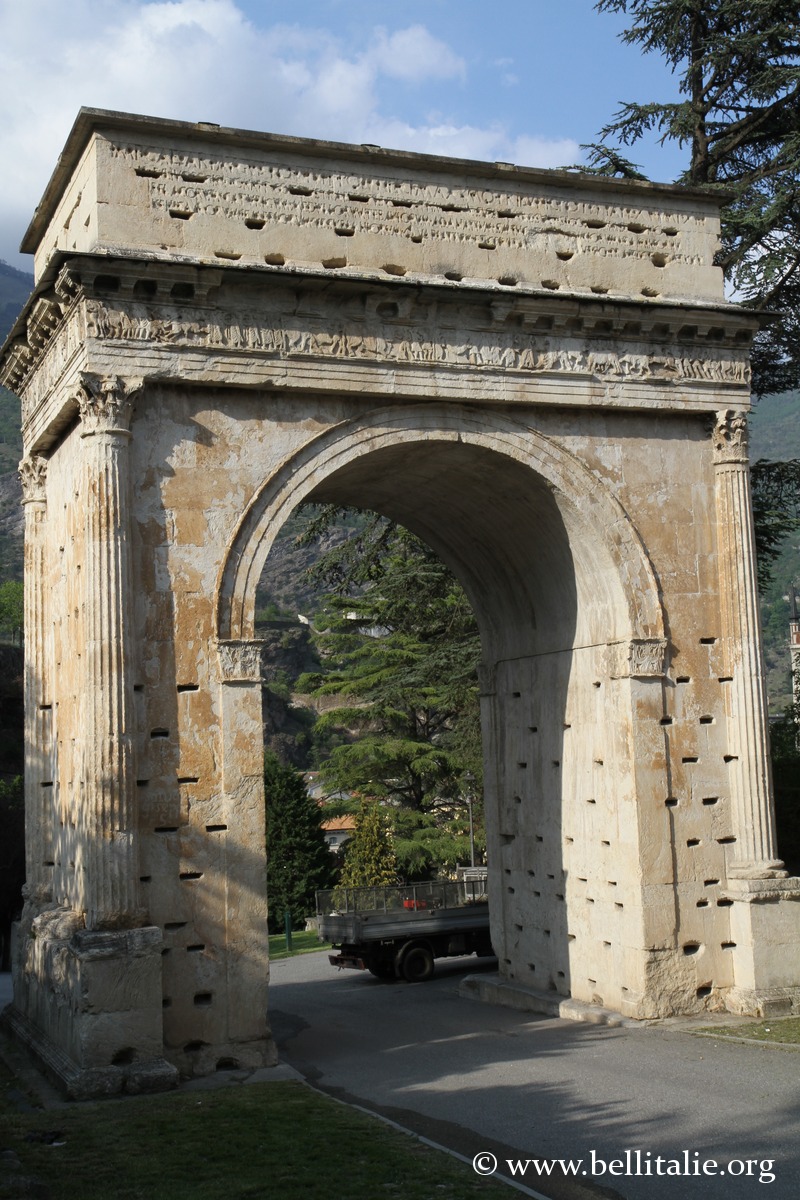
-
- Arc d’Auguste
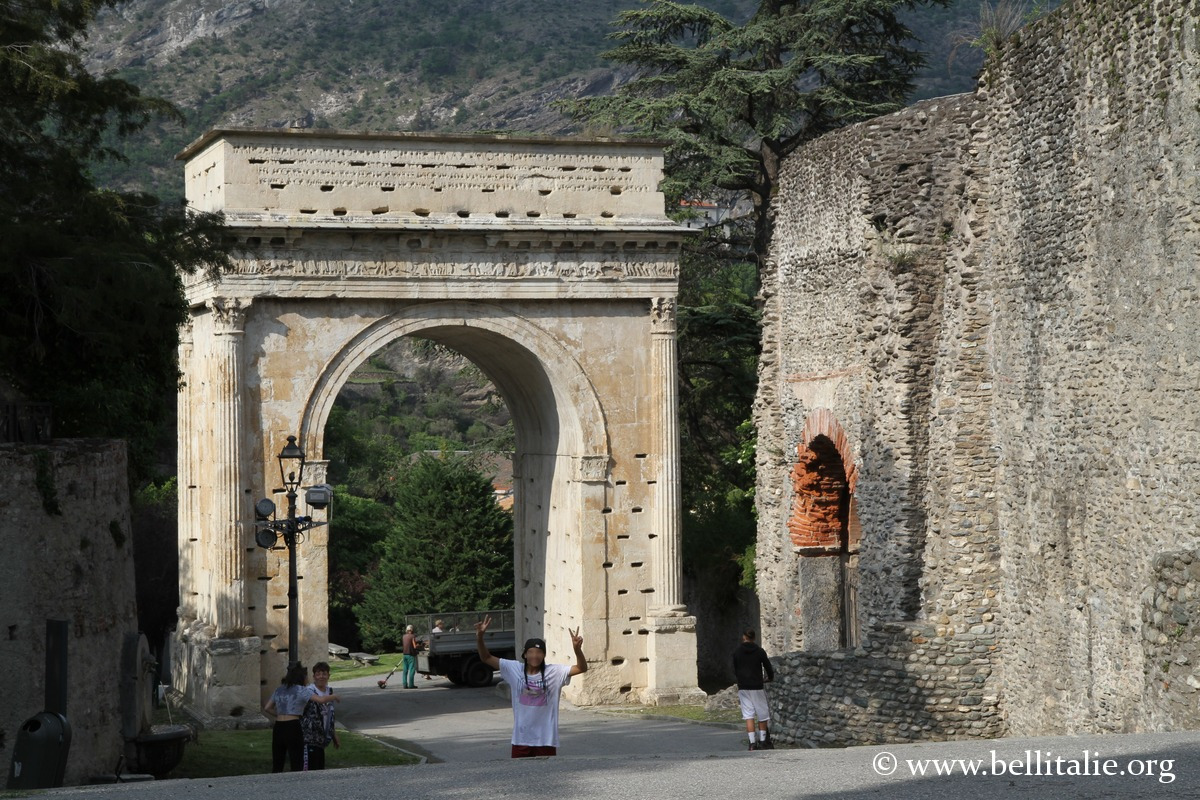
-
- Arc d’Auguste (an 8 avant J.-C.)
Celtic altar and aqueduct
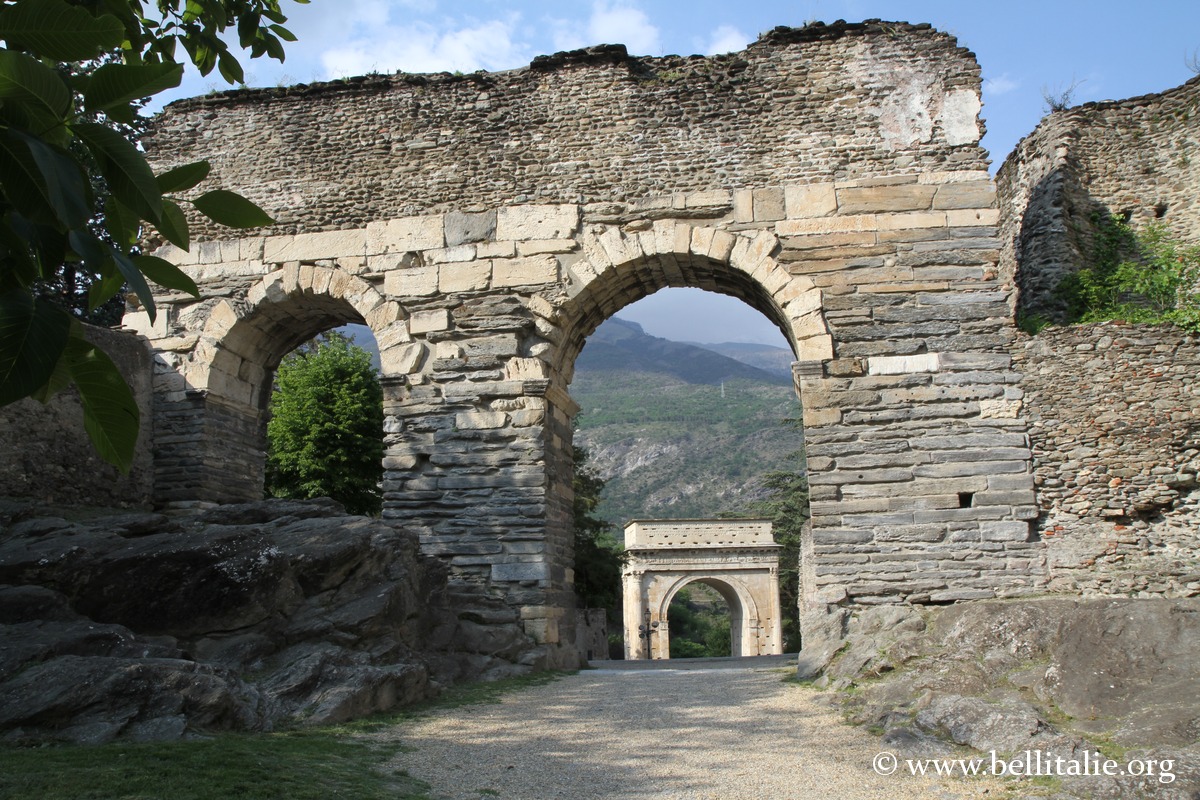
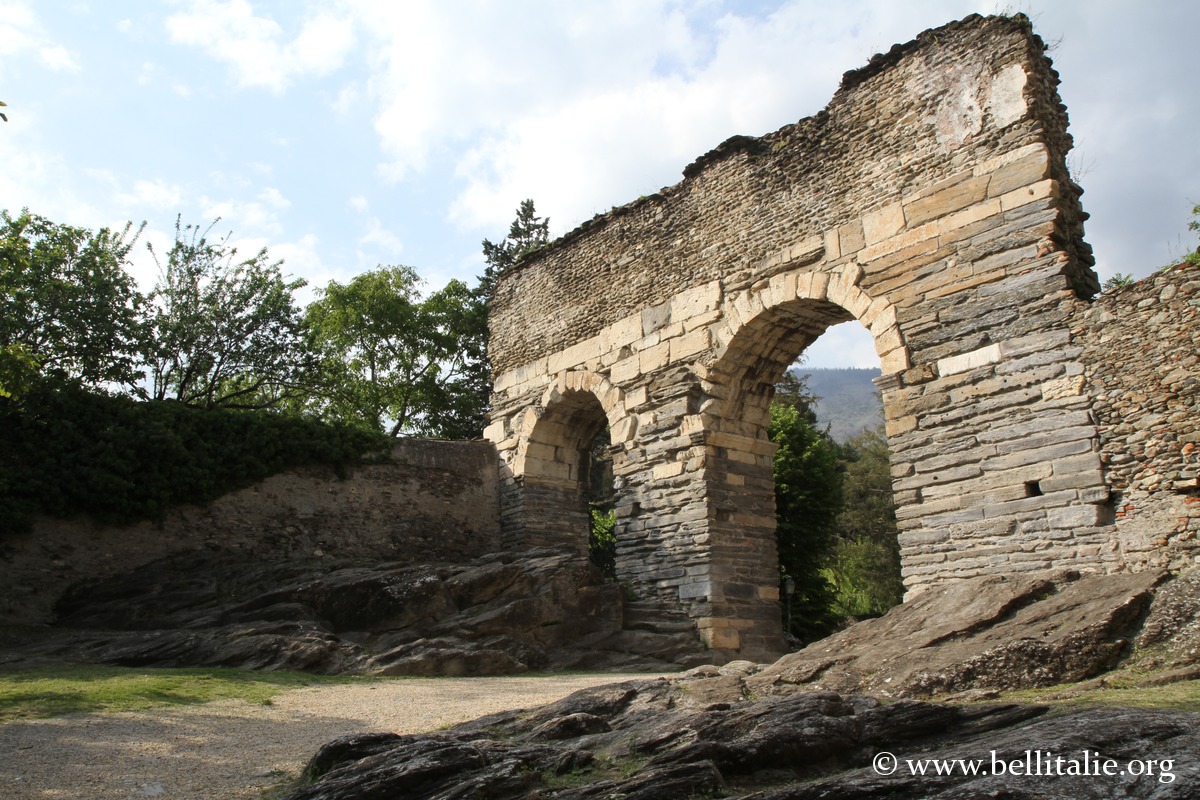
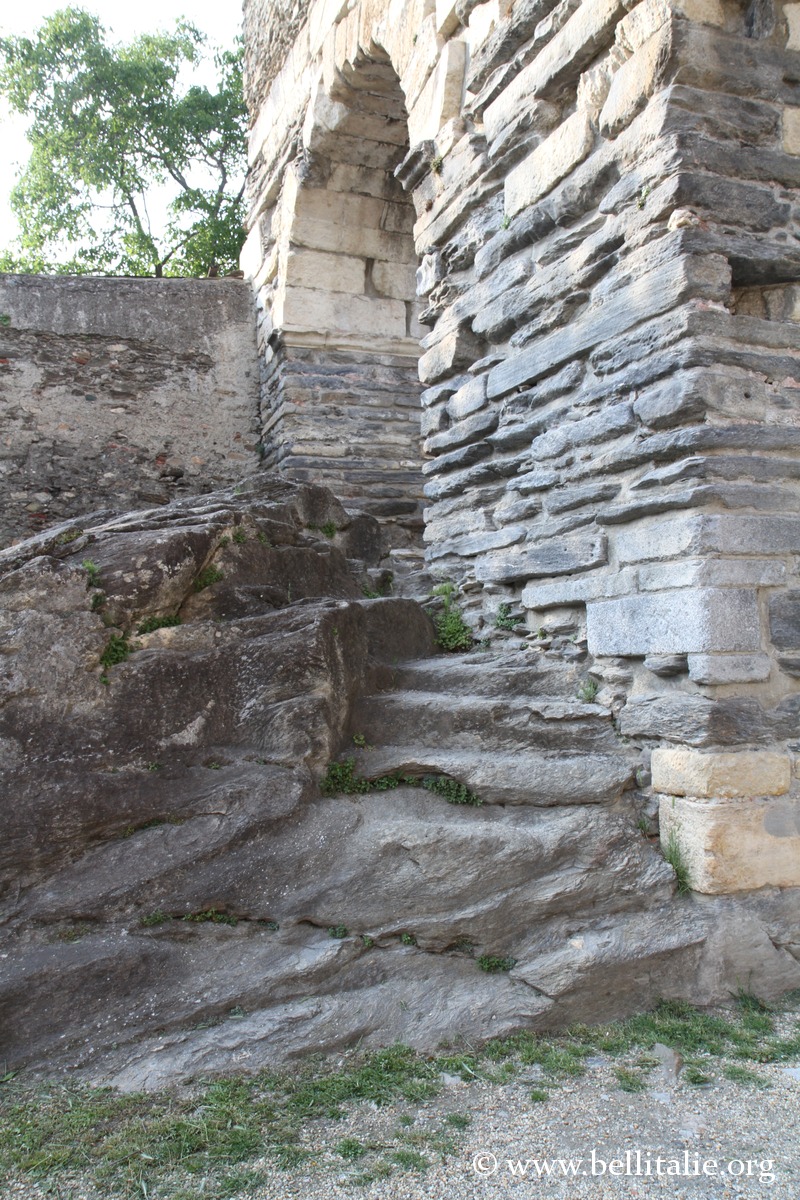
The Roman aqueduct which dates back to the 4th century CE rests partly on a Celtic altar with basins, one of the main Celtic testimonies of the Susa Valley, which would date back to the 7th century BCE.
-
- Aqueduc romain et autel celtique à gauche
-
- Aqueduc romain et autel celtique
-
- Autel celtique
-
- Aqueduc et arc romain
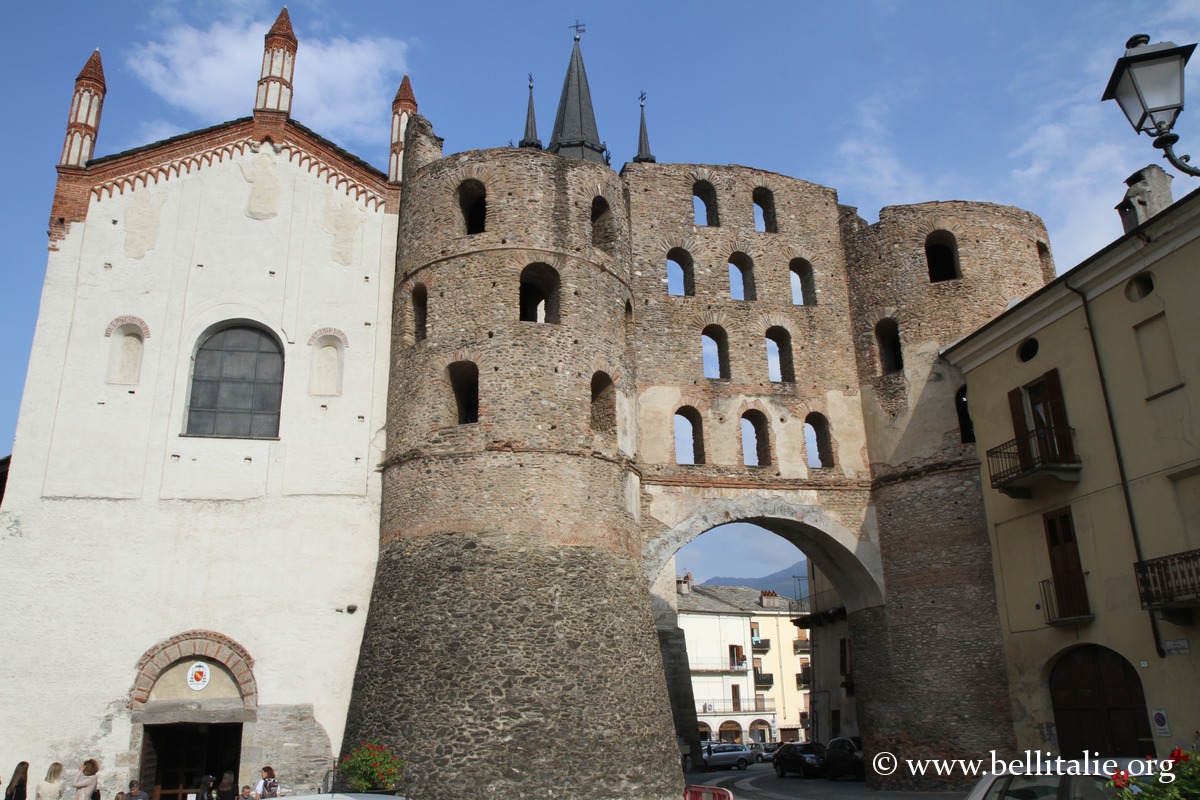
Savoie Gate
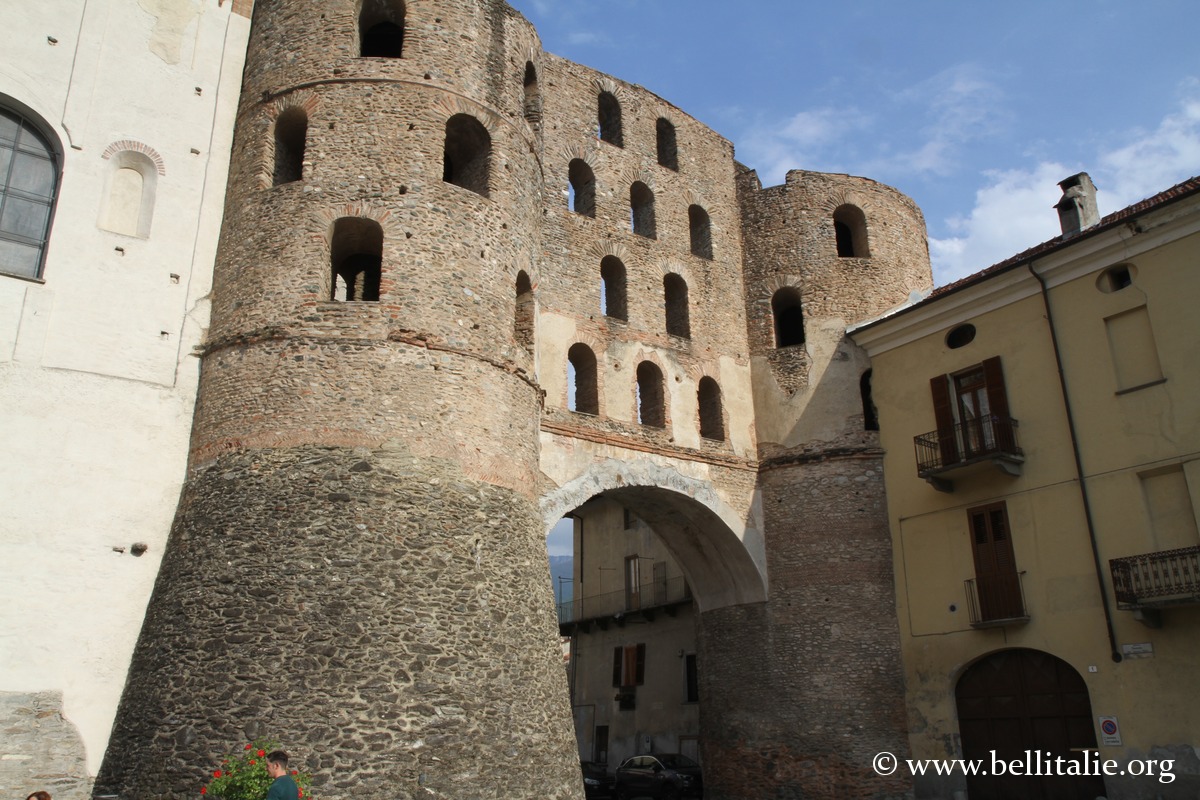
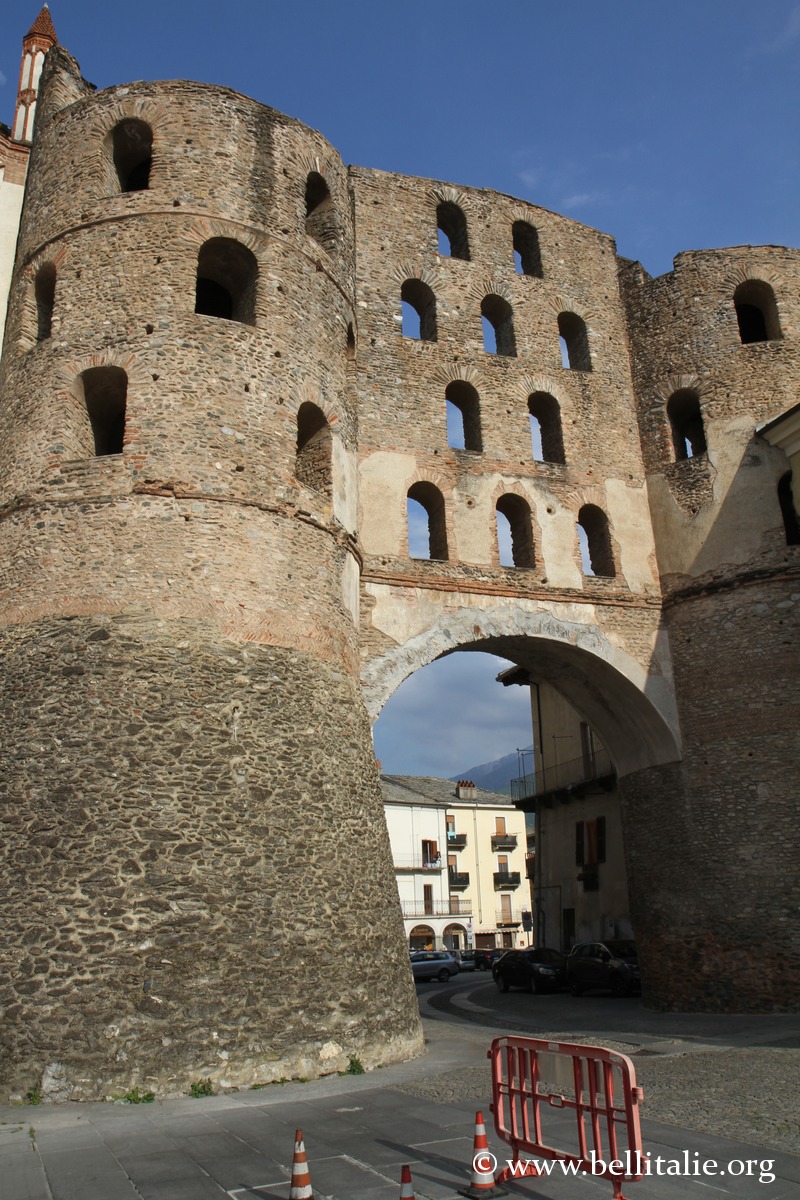
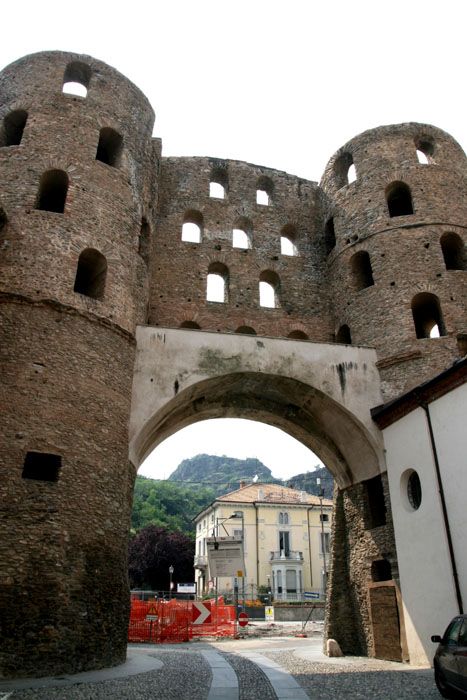
The beautiful Roman gate of the Savoie Gate (Porta Savoia in Italian), is a fortified passage within the ancient walls of the city, built in the 3rd century CE.
-
- Porte de Savoie (de l’extérieur, côté occidental)
-
- Porte de Savoie (côté occidental)
-
- Porte de Savoie (côté occidental)
-
- Porte de Savoie (de l’intérieur, côté oriental)
Roman amphitheater
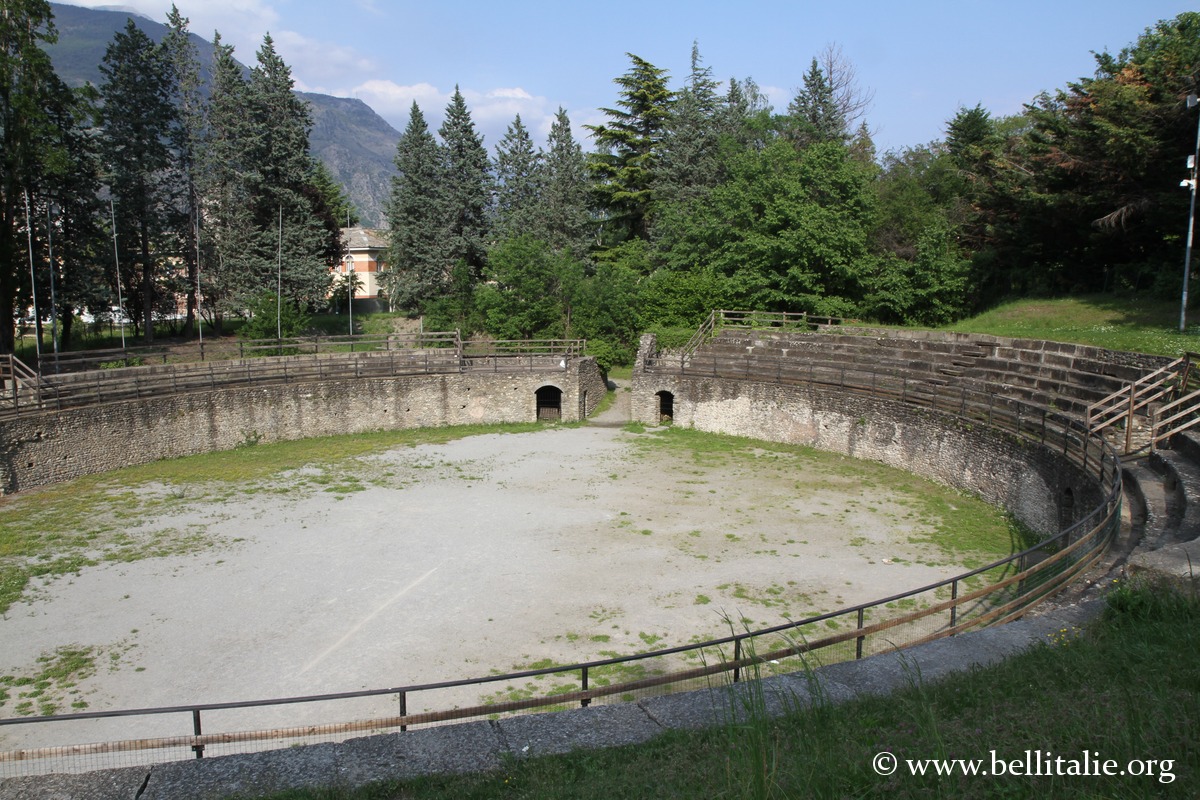
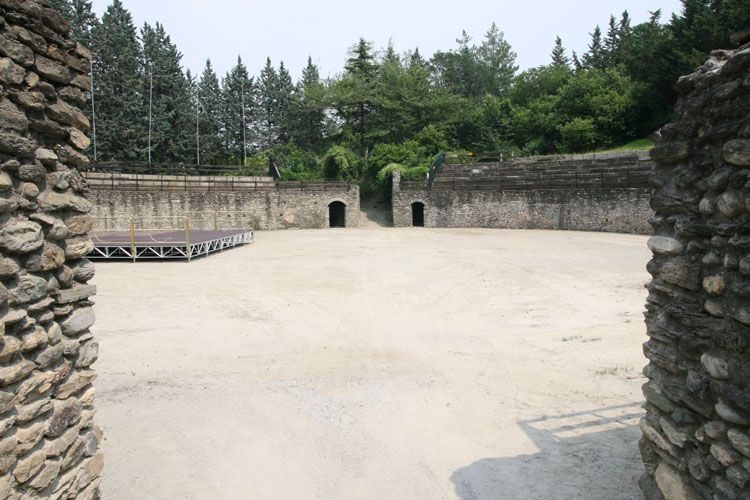
The Roman amphitheater, a little outside the center of Susa, dates back to the 2nd century CE and was only rediscovered in the 1960s.
-
- Amphithéâtre romain
-
- Amphithéâtre romain
Baptismal church of Santa-Maria Maggiore of Susa
The ancient baptismal church of Santa Maria Maggiore di Susa was an important Catholic center of the Susa Valley in the Middle Ages, still recognizable in its main forms, but reduced today to secular dwellings.
-
- Ex Santa-Maria Maggiore
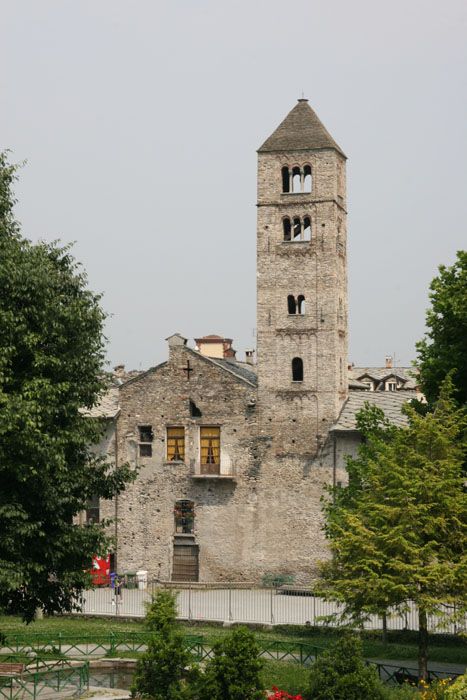
Photo gallery of Susa
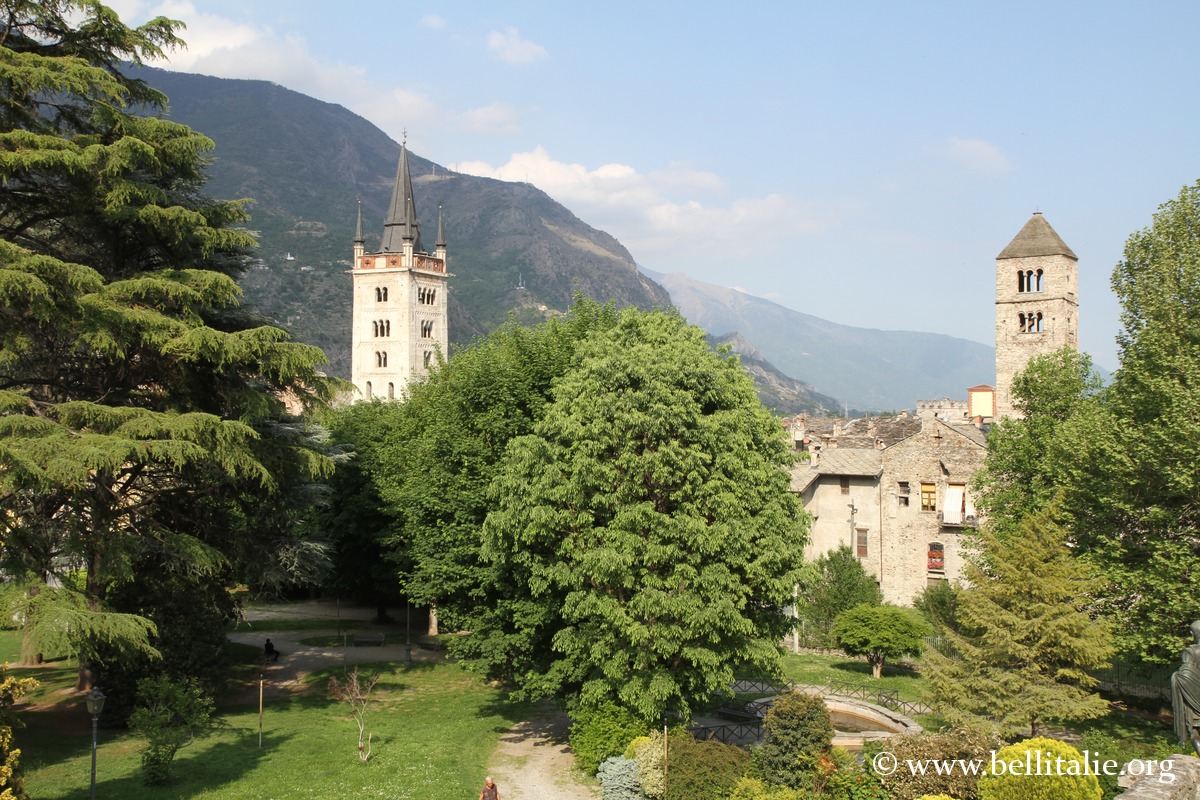
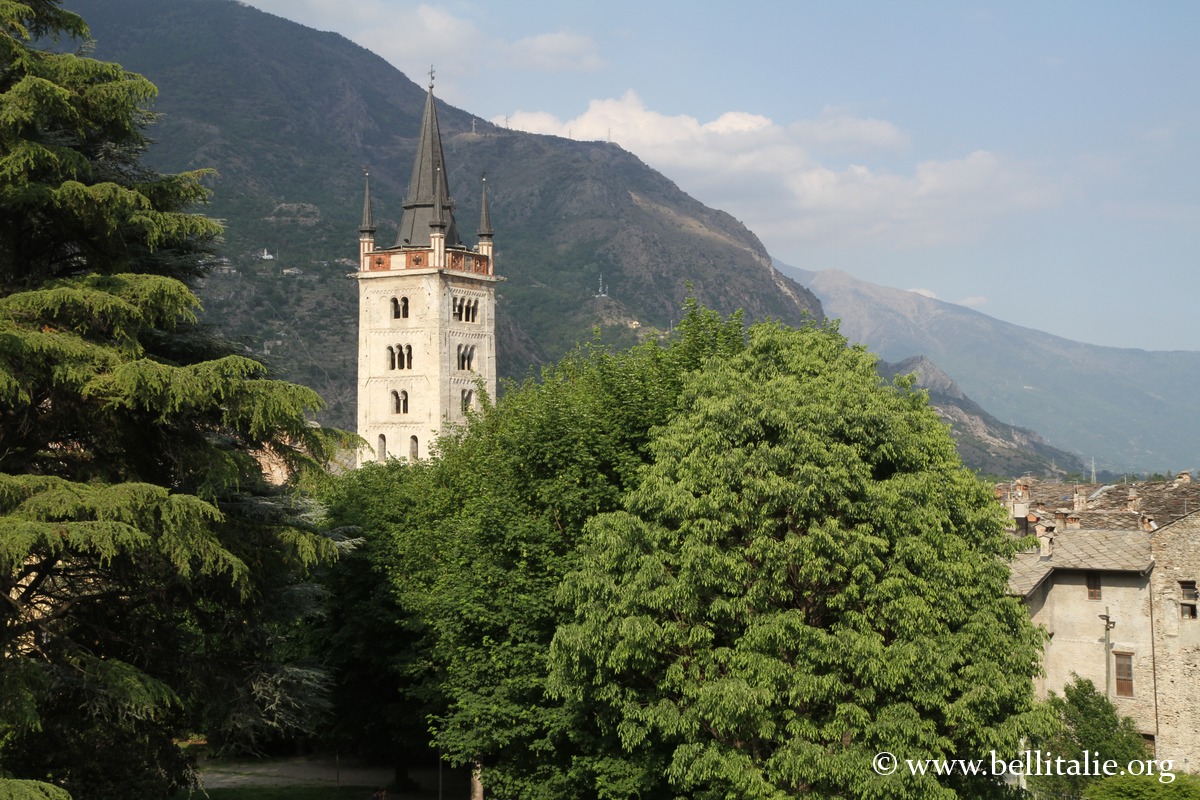
-
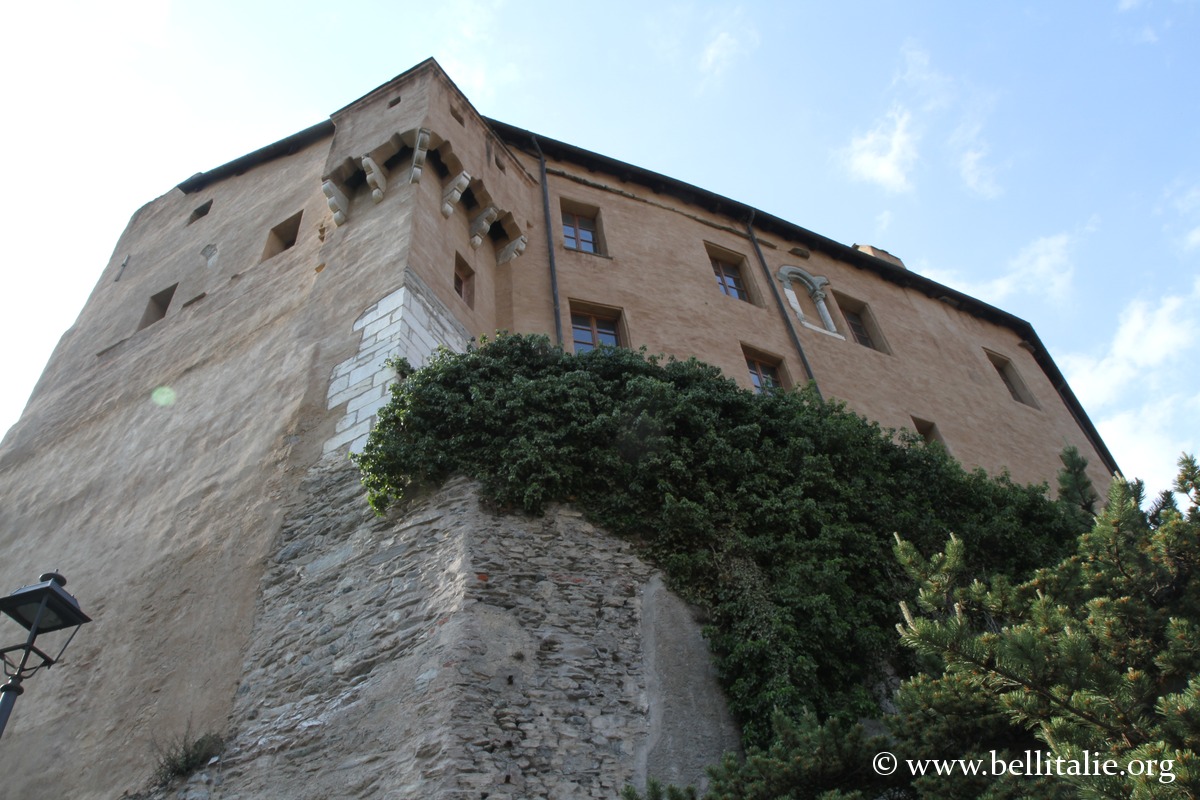
- Château de la Comtesse Adélaïde
-
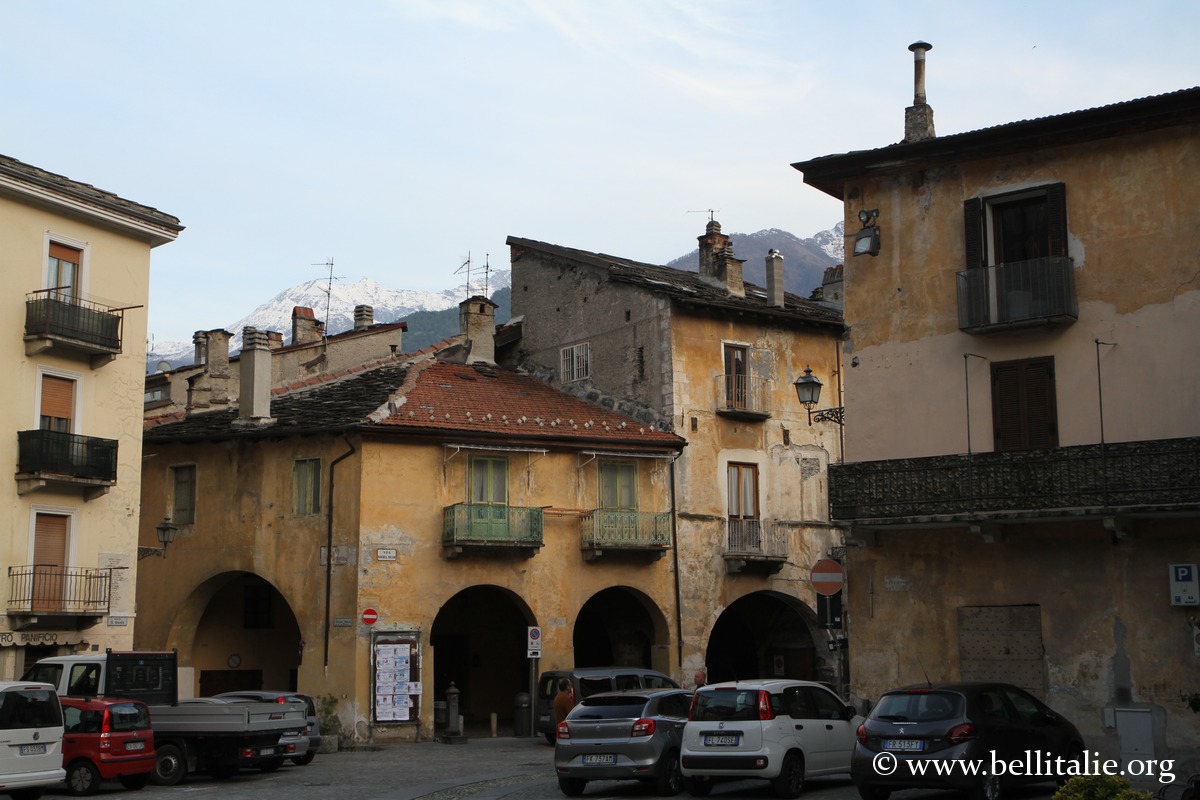
- Centre historique
-
- Centre historique
-
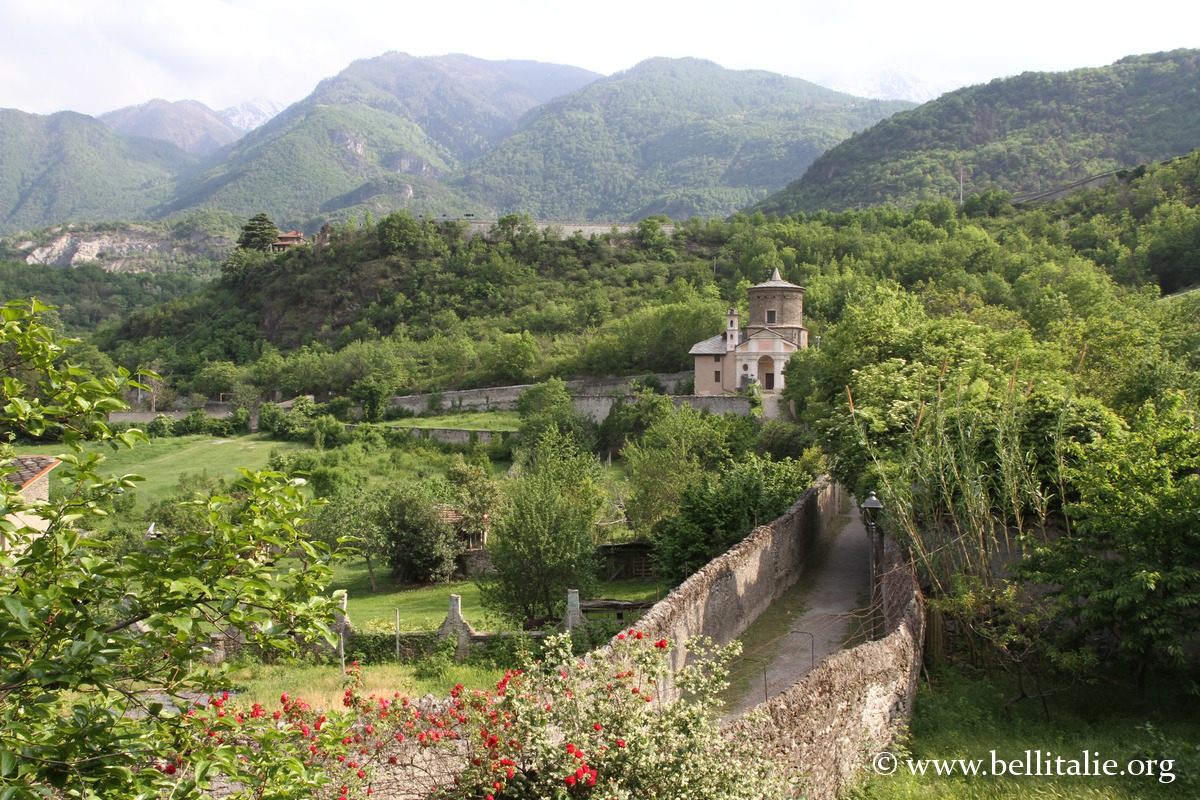
- Sentier muré menant à l’amfithéâtre
-
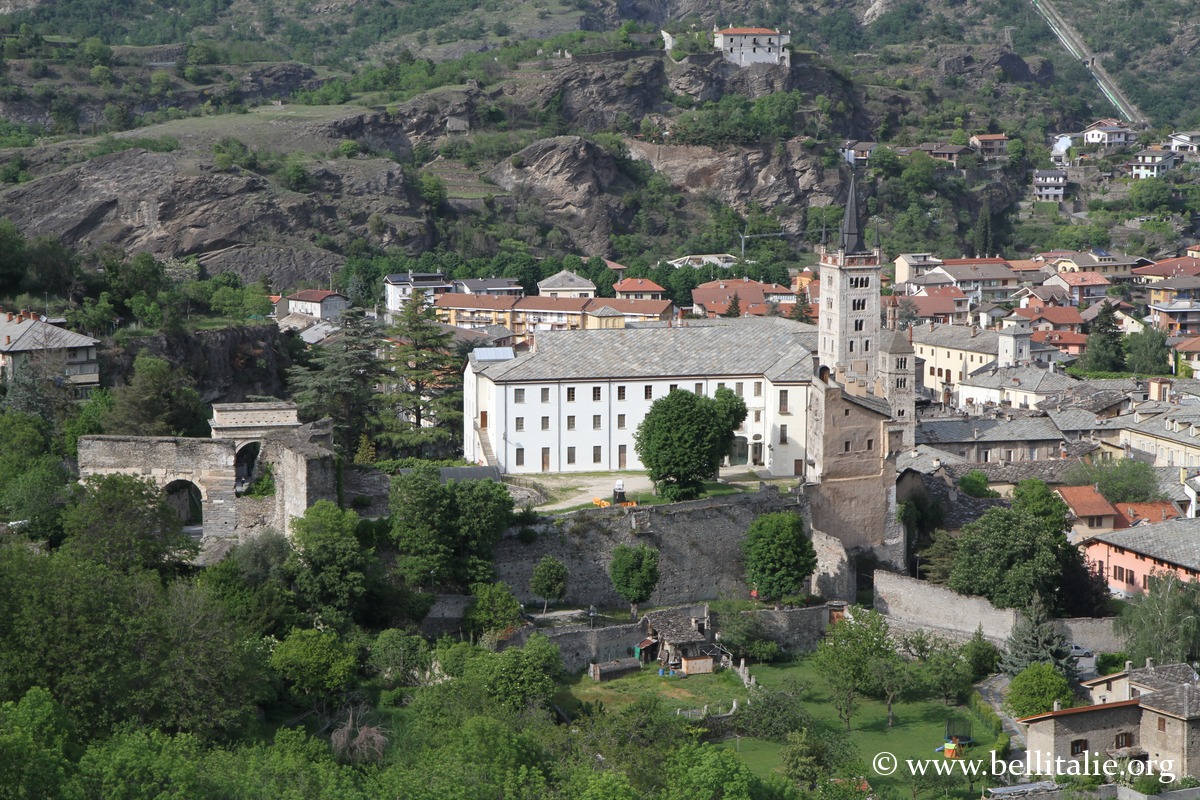
- Panorama
-
- Panorama
Other monuments
The castle of Countess Adelaide, with the remains of the castle dating back to the 10th century, built on an ancient Celtic and Roman fort whose vestiges can be seen. It also houses the main museum of Susa.
The convent of Saint Francis of Assisi built in the first quarter of the 13th century.
- The rustic church of San Saturnino, dating from the 11th century, is located outside the center, near the Roman amphitheater
- Church of the Madonna del Ponte (13th-16th centuries), with an art museum
Information
- Wikipedia article: en.wikipedia.org
- Official website of the municipality: www.comune.susa.to.it
- Tourism portals: www.visitasusa.it, www.valdisusaturismo.it
Weather in Susa
Map
If you see this after your page is loaded completely, leafletJS files are missing.
- What to see in Piedmont
- Turin
- Saint Michael’s Abbey, La Clusa
- Lake Maggiore
- Susa Valley and Chisone Valley
- Susa
- Lake Orta
- Cuneo and Surroundings
- The Langhe
- Montferrat
- Roero and surroundings
- Asti
- Alba
- Domodossola and Val d’Ossola
- Valsesia
- Sanctuary of Mount Oropa
- Saluzzo and surroundings
- Usseaux and Fenestrelle Fort
- Casale Monferrato
- Vercelli
- Ivrea, Canavese and Biellese
- Novara



Comments