


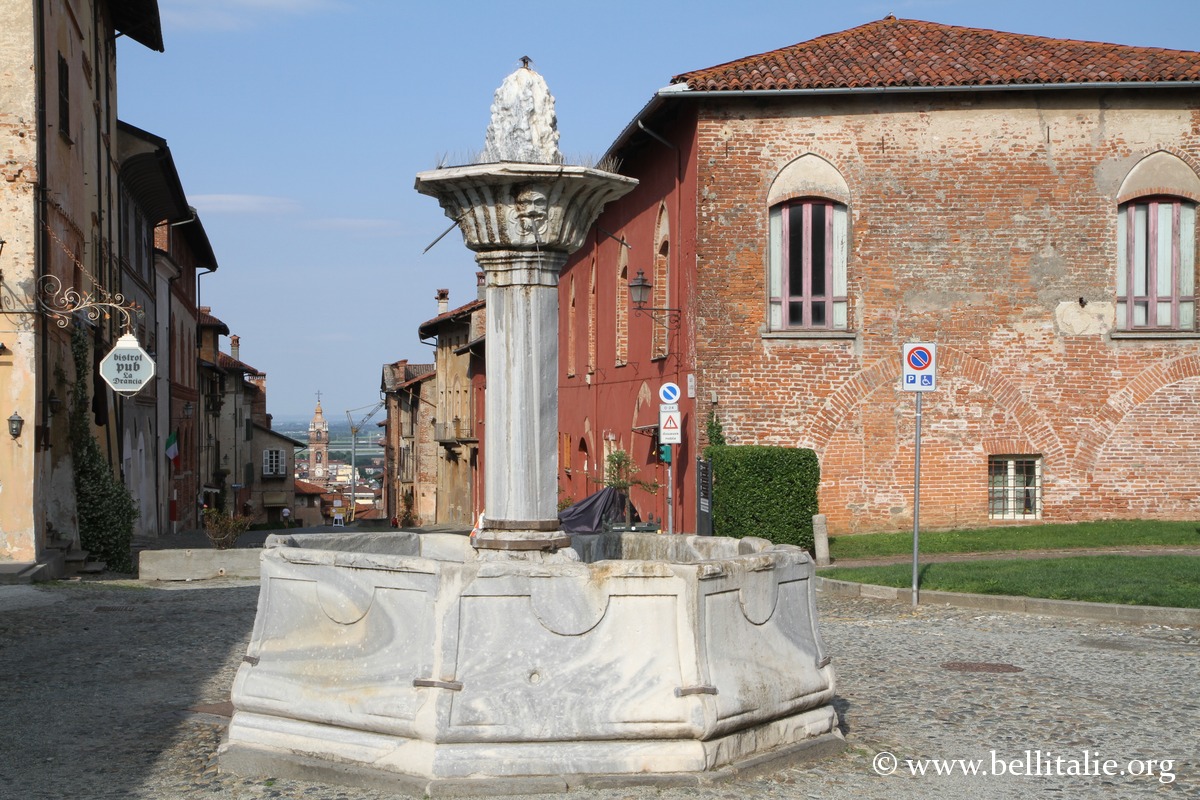
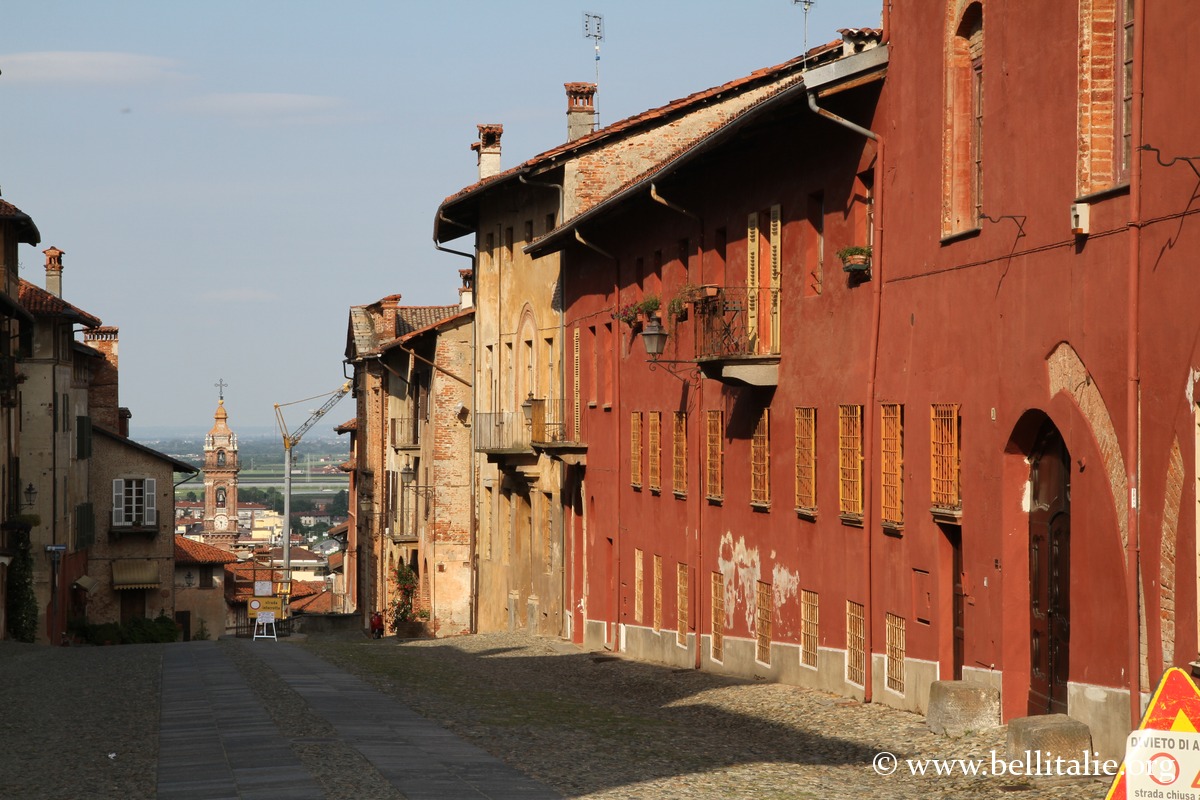
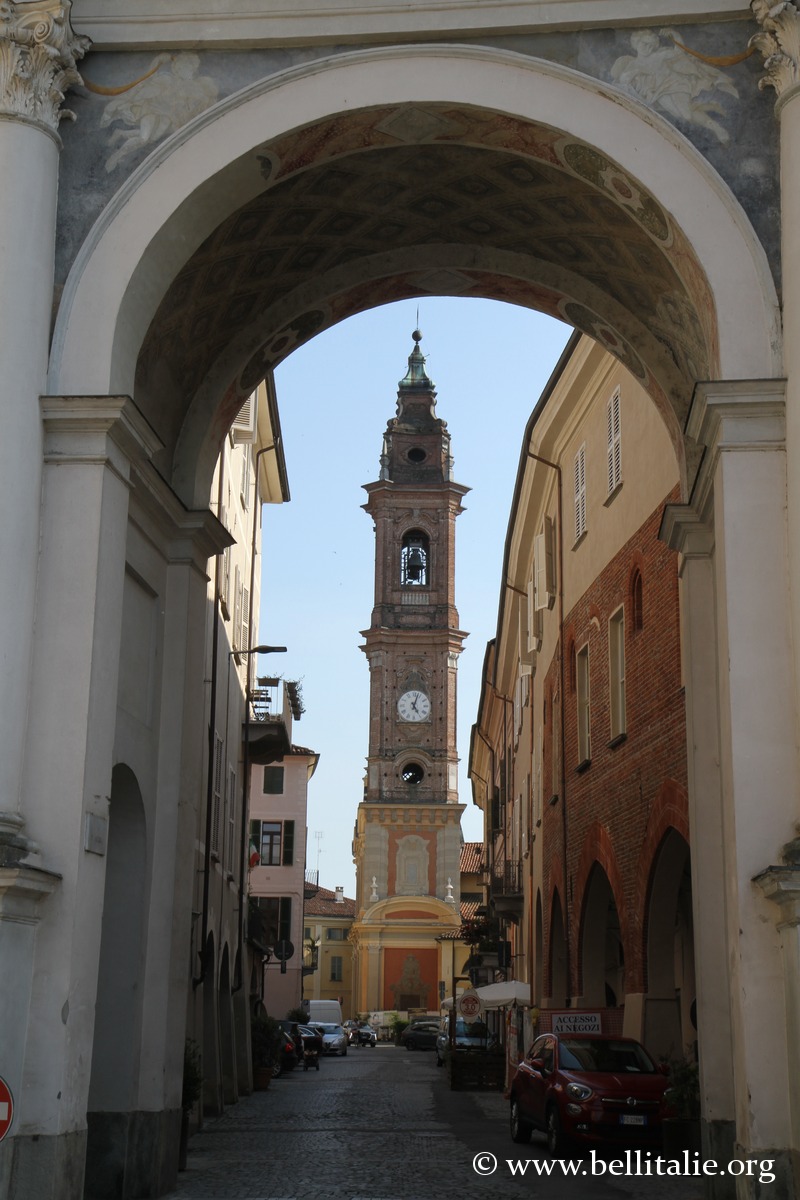
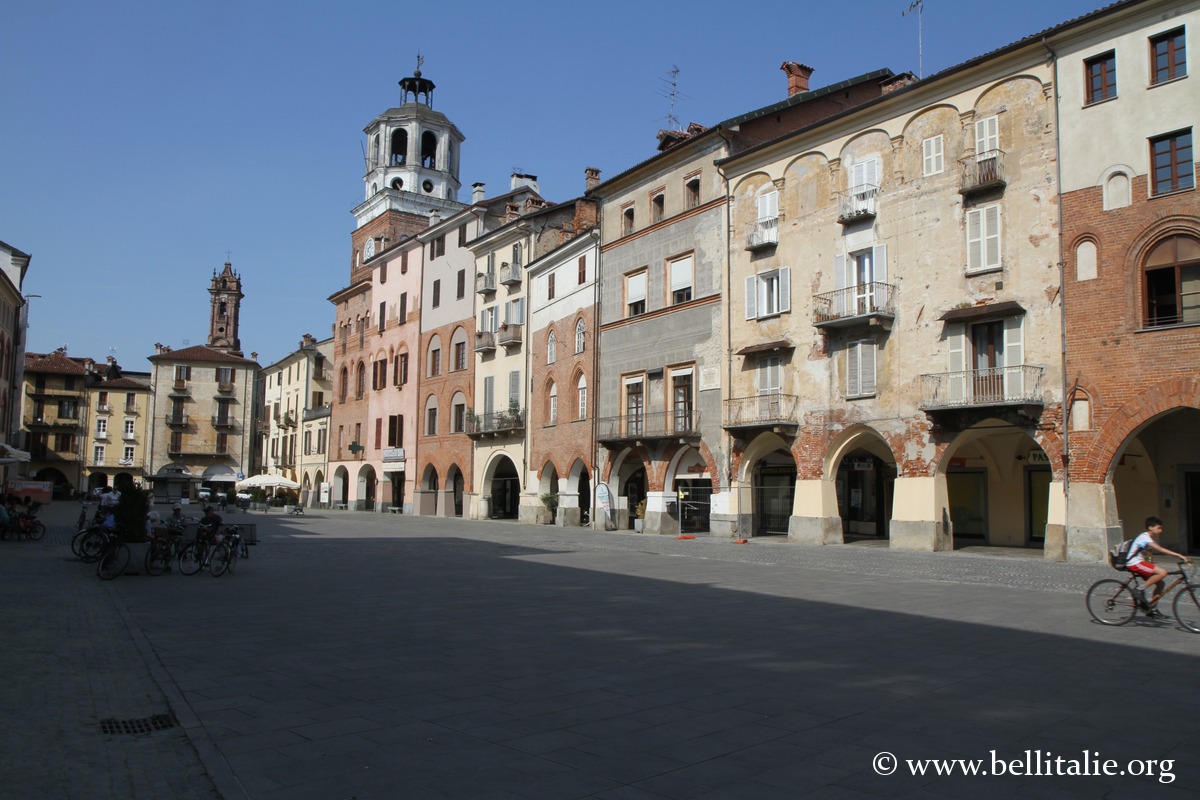
At the foot of the Alpine foothills of Monte Viso, Saluzzo (Saluces in French) is a small town of nearly 17,000 inhabitants. It has inherited the history of the Marquisate of Saluzzo, independent for three centuries, a medieval and Renaissance historic centre, whose cobbled alleys climb up to the fortress at the top of the hill. Its heritage earned it a place among the “most beautiful villages in Italy”, with its remarkable buildings such as the beautiful civic tower, the 14th-century gates and ramparts, the church of San Giovanni or the late Gothic cathedral.
It is renowned for its wrought iron and woodworking crafts, as well as for its products linked to chestnuts and hazelnuts, including its pastries, in particular the gianduia made from chocolate and hazelnuts. Among the local dishes are risotto with Barolo or chestnuts, and stracotto (beef roast).
Monuments and places of Saluzzo
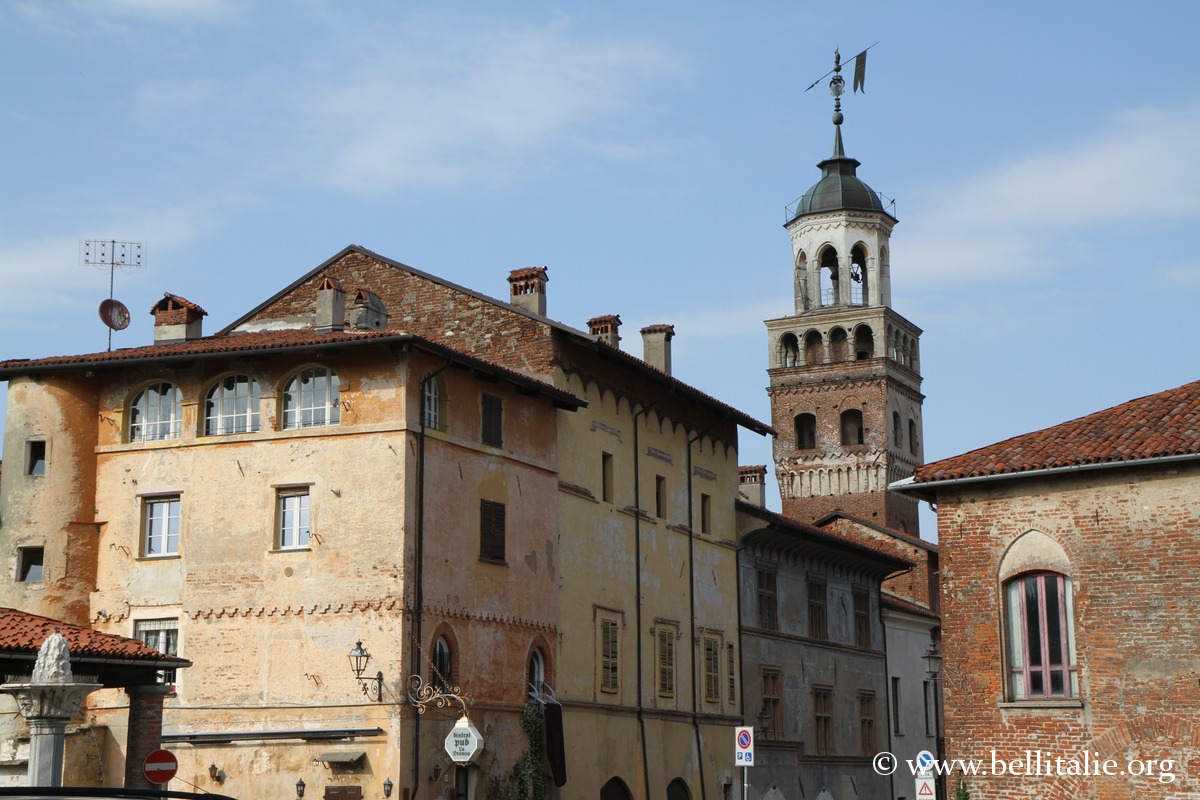
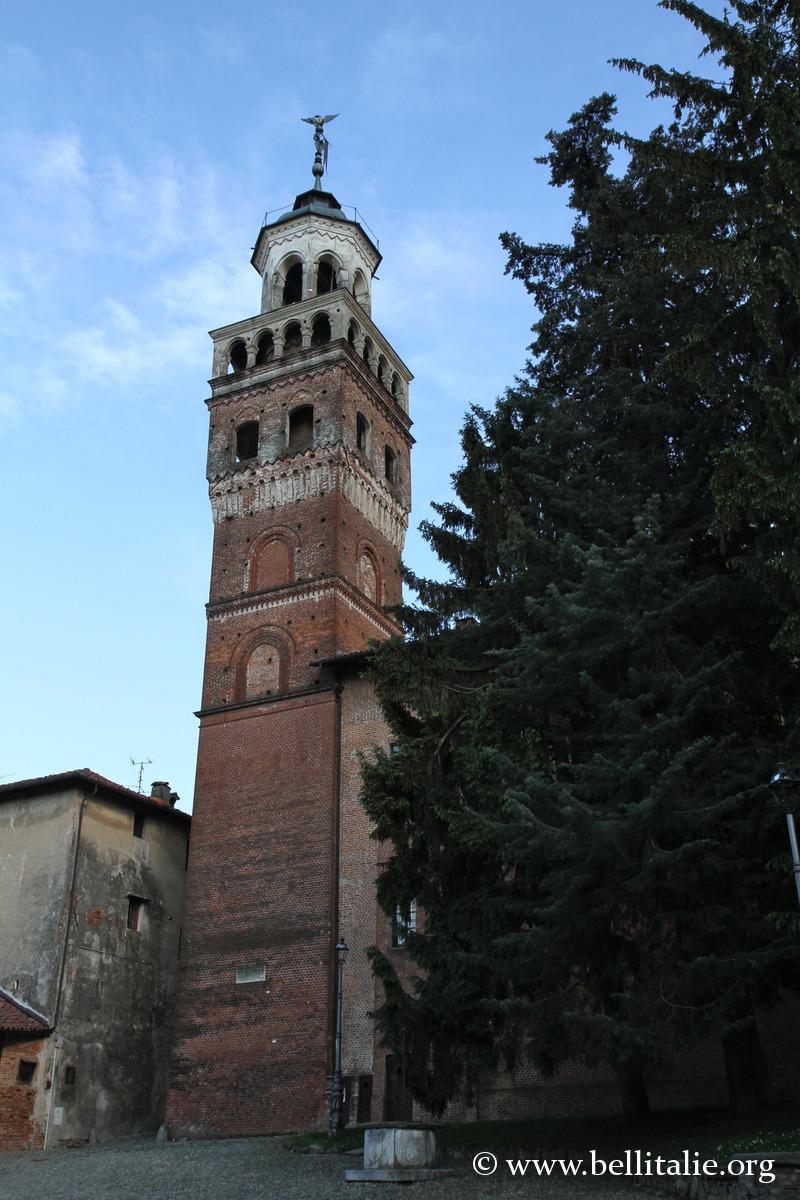
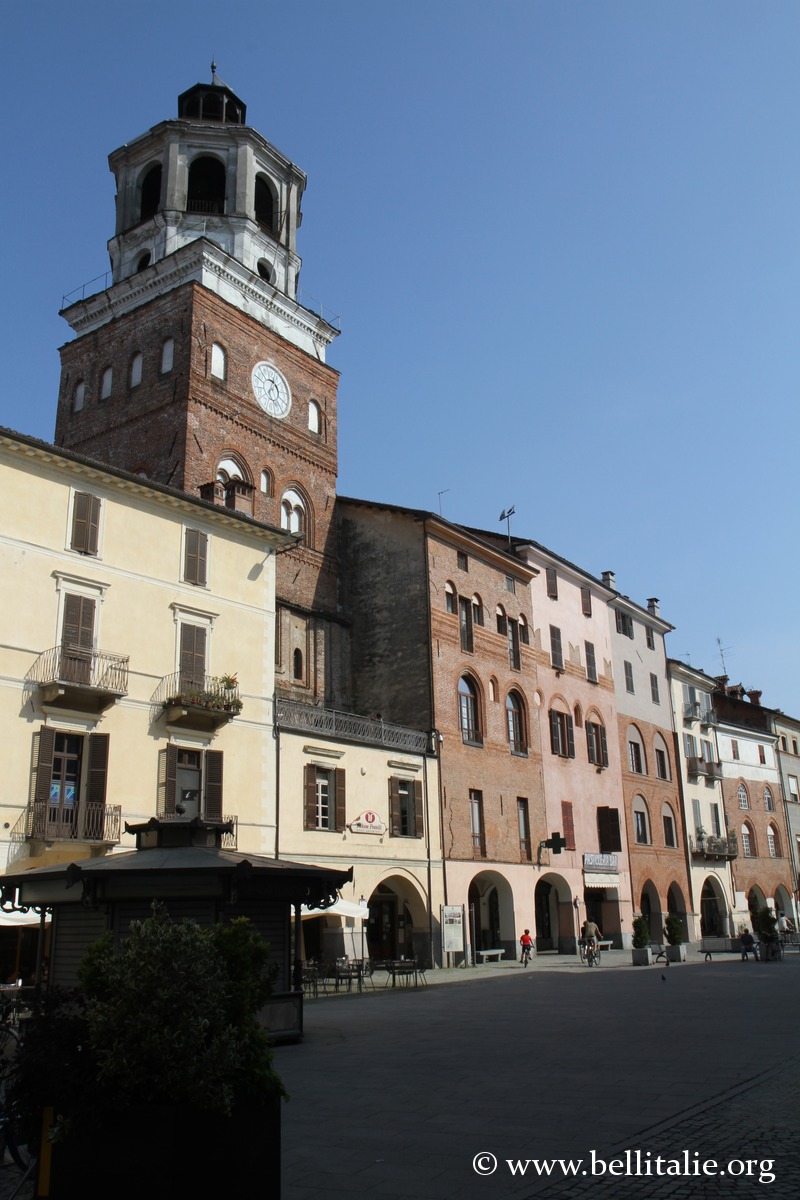
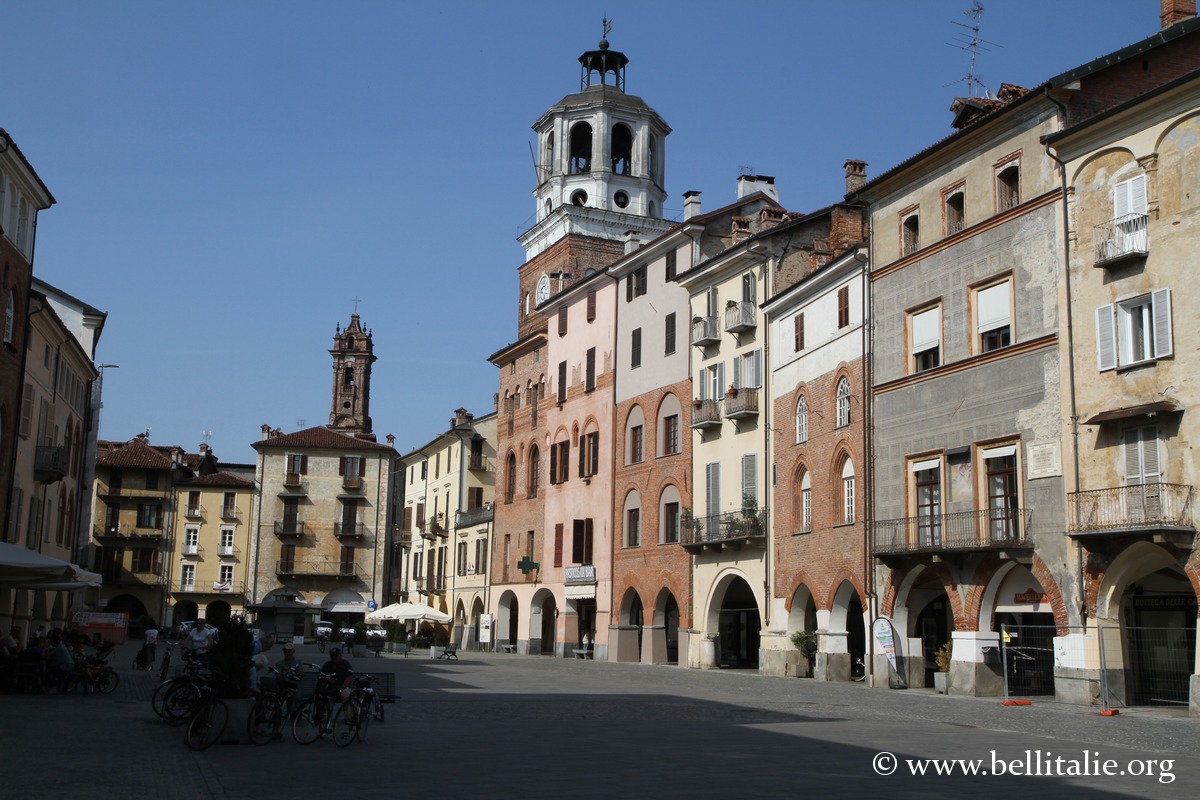
- The Civic Tower and the former town hall on the street leading to the castle were built by Marquis Louis I in 1440-1442. Standing 48 metres high, you can climb it and enjoy a panoramic view over the town and the Alps.
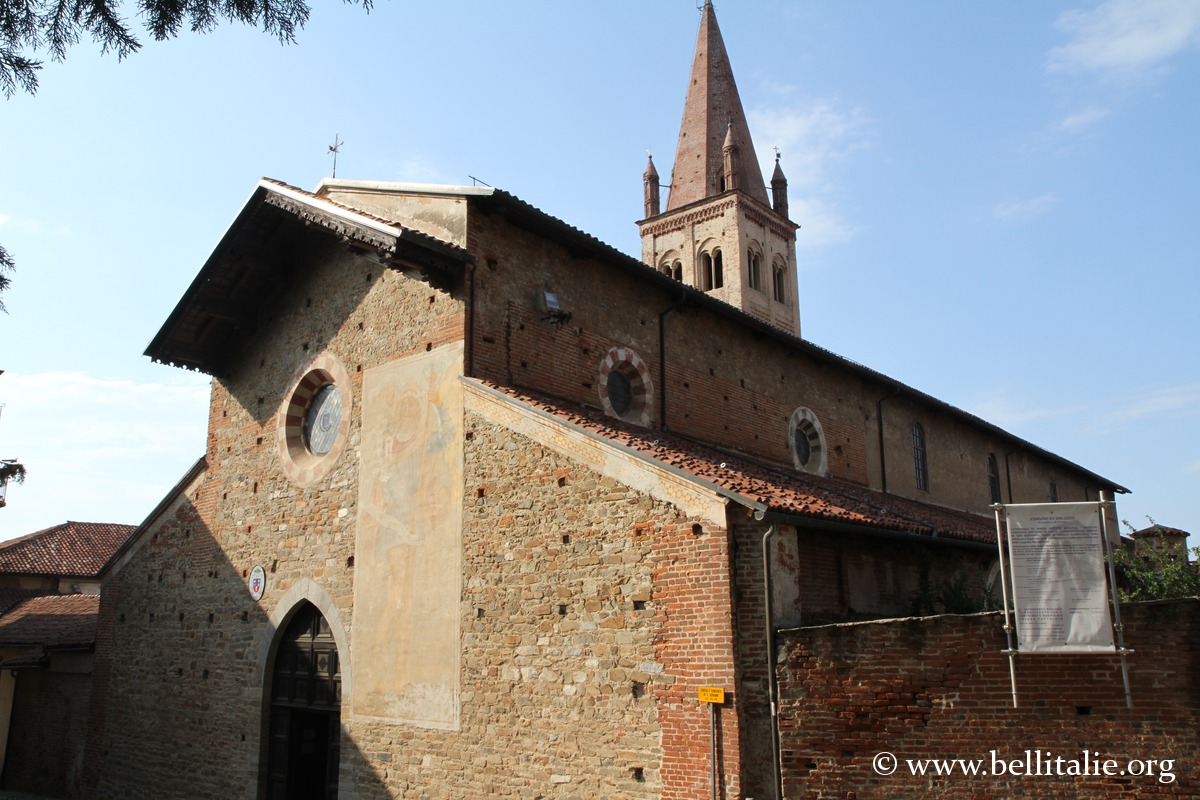
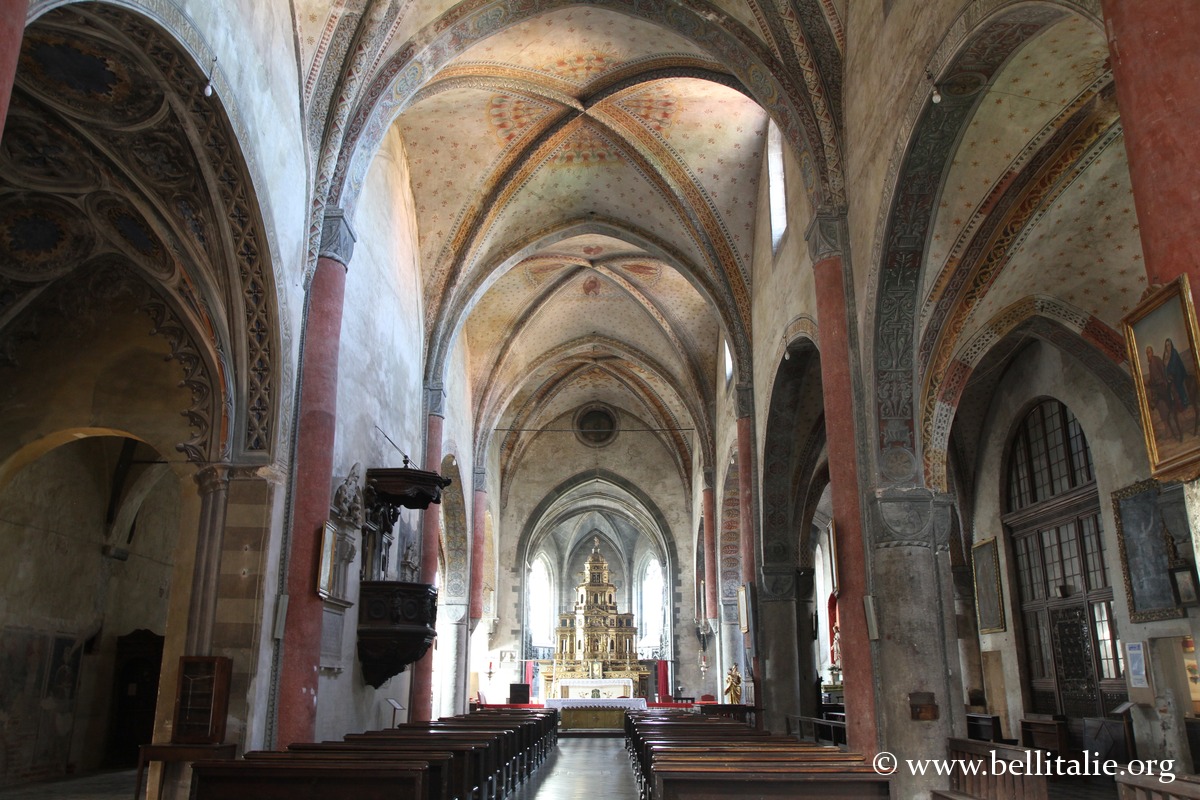
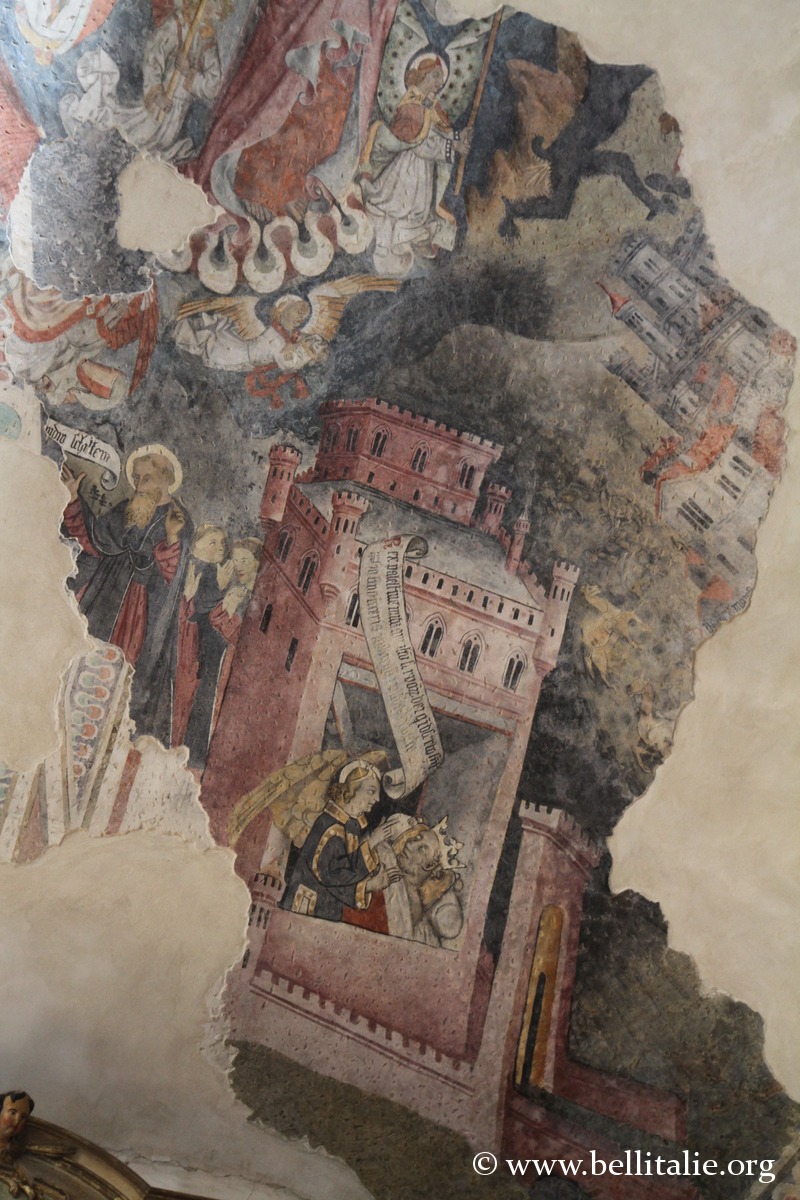
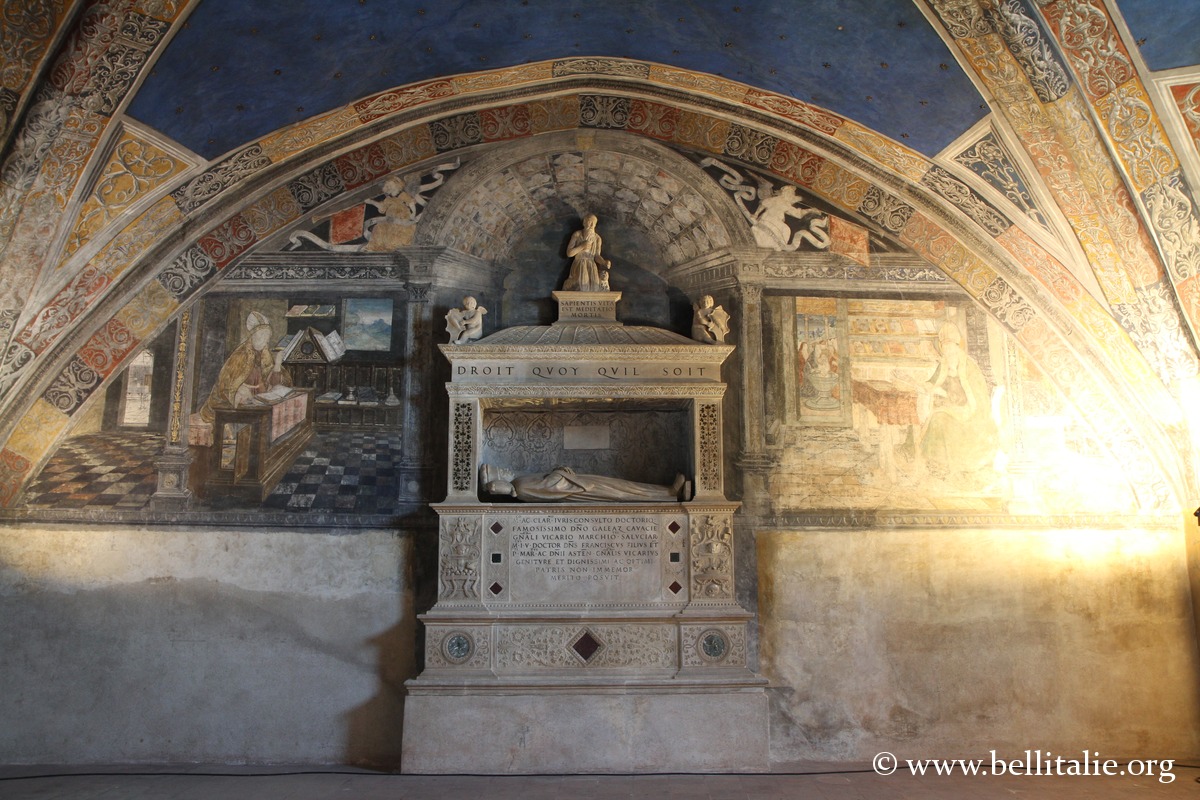
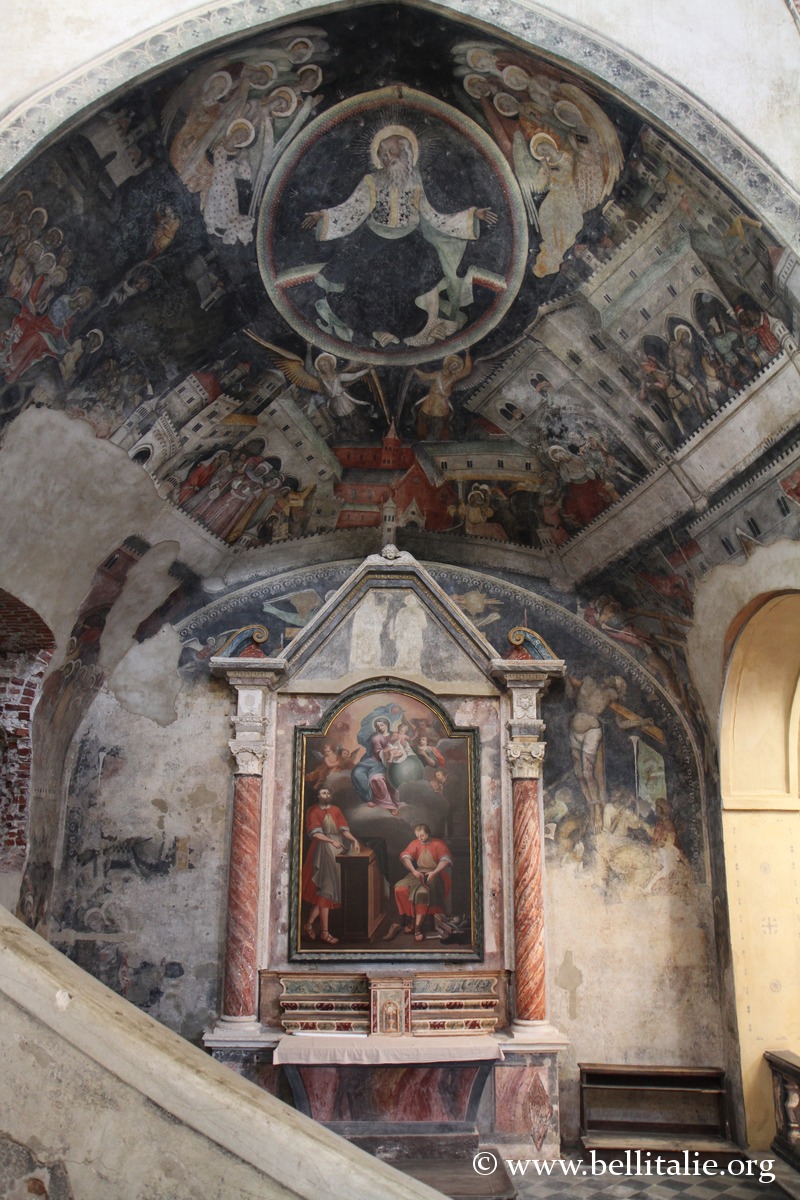
- Next to it, the superb Gothic church of San Giovanni, which dates back to the 11th century, has numerous frescoes from the Baroque period, was rebuilt with a Romanesque bell tower in the 14th century, with a charming cloister and beautiful chapels, including the mausoleum of Galeazzo Cavassa. The large apse was the funeral chapel of the marquises, and is an example of Burgundian Gothic art, designed by the architect Antoine Le Moiturier.
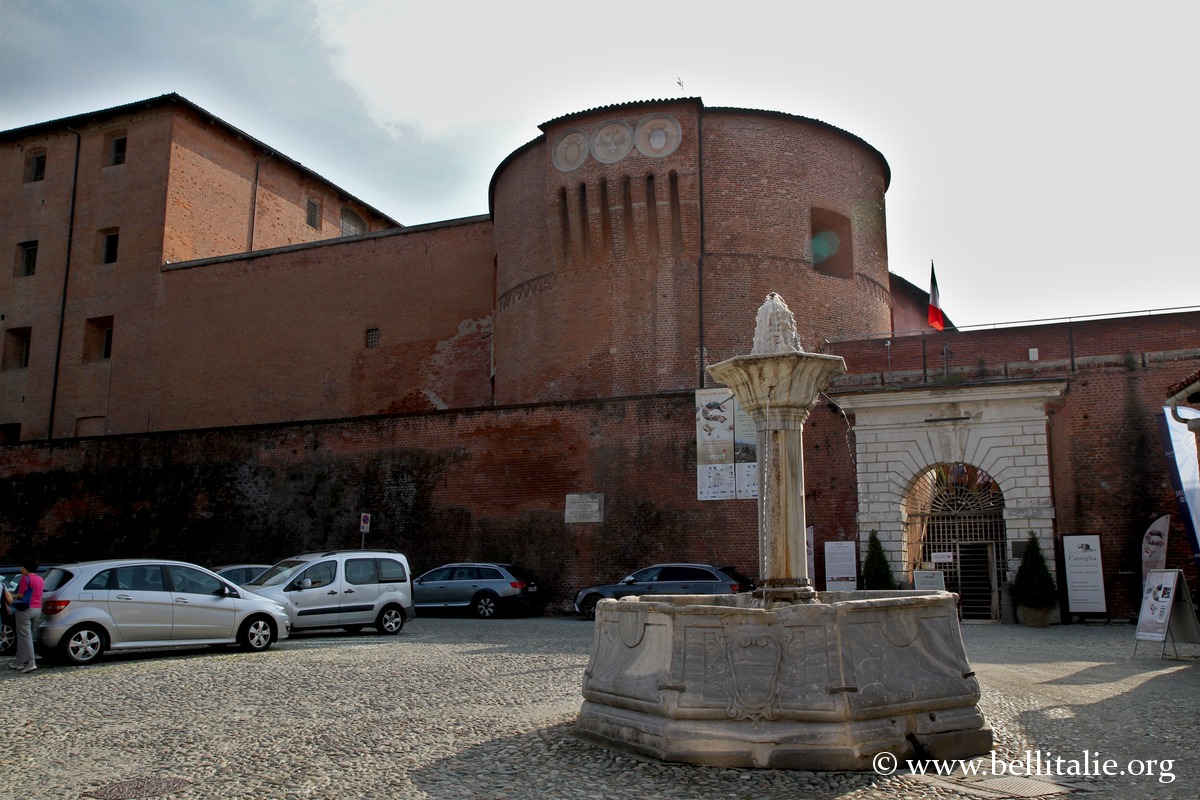
- La Castiglia. This is the castle of Saluzzo, located at the top of the town, with a beautiful panorama. This fortress built towards the end of the 11th century was also the residence of the marquises. It is a complex of towers and walls, converted into a prison in the 18th century, which today houses an interesting civic museum with exhibitions.
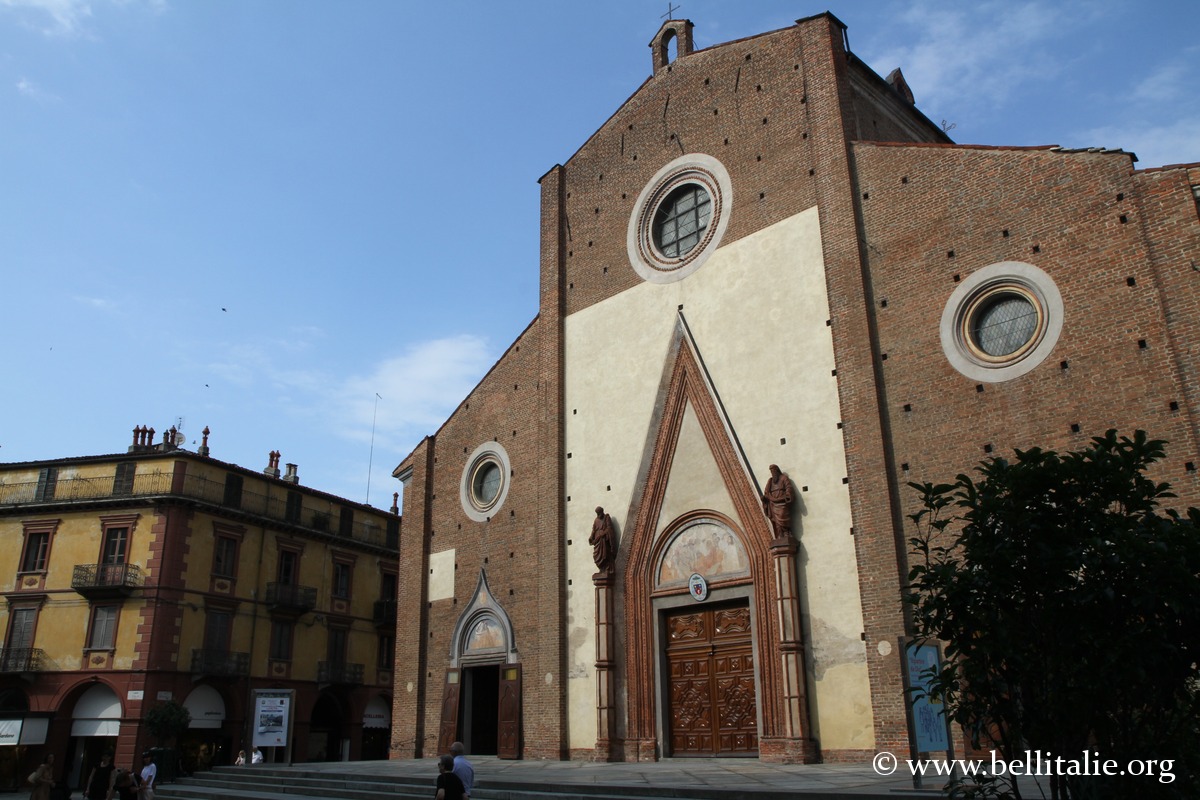
- The cathedral in late Gothic style, located in the lower town, dates from the end of the 15th and the 19th centuries. It notably preserves a polyptych by Hans Clemens.
- The Renaissance manor house Casa Cavassa, from the 15th century, also houses a civic museum, with frescoes and paintings. It has superb rooms, as well as works of art such as the Labours of Hercules or the altarpiece of the Madonna of Mercy by Hans Clemens.
- The house-museum of the Italian writer Silvio Pellico, born here in 1789, between the upper and lower town.
- Gates and walls of the historic centre
- The church of the Misericordia preserves beautiful ceilings
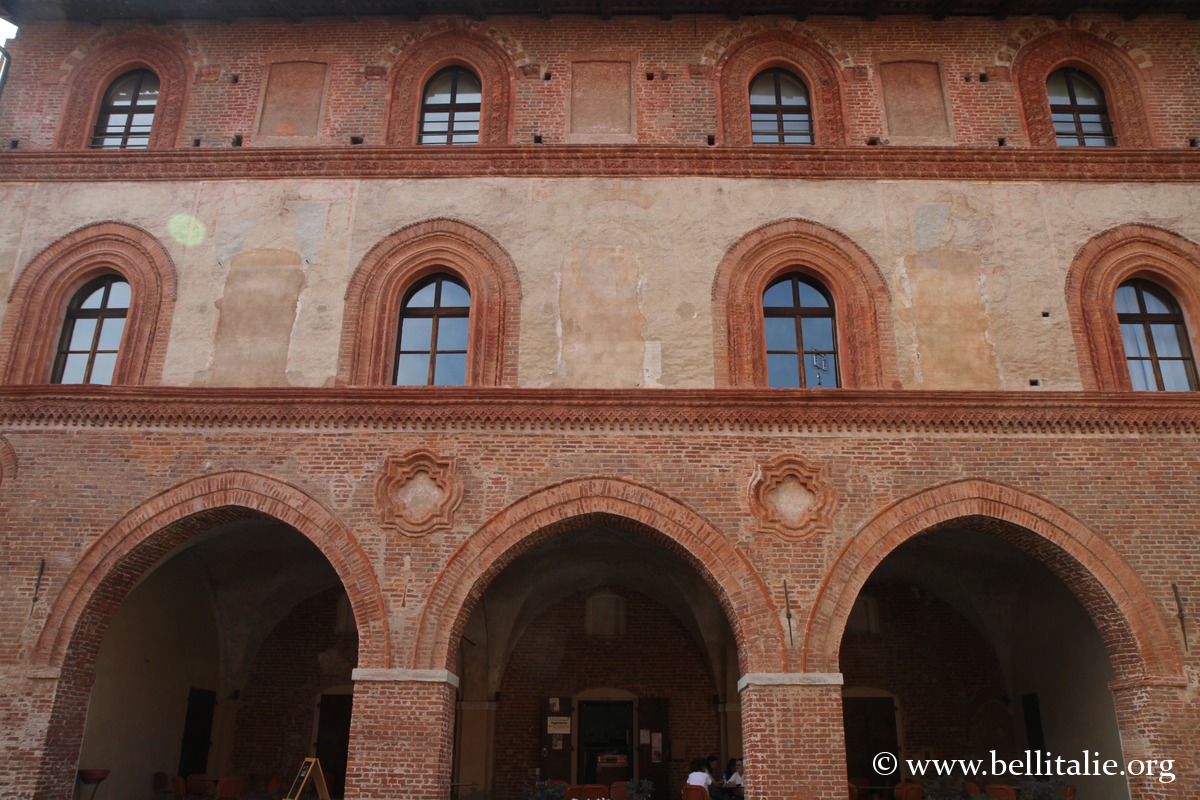
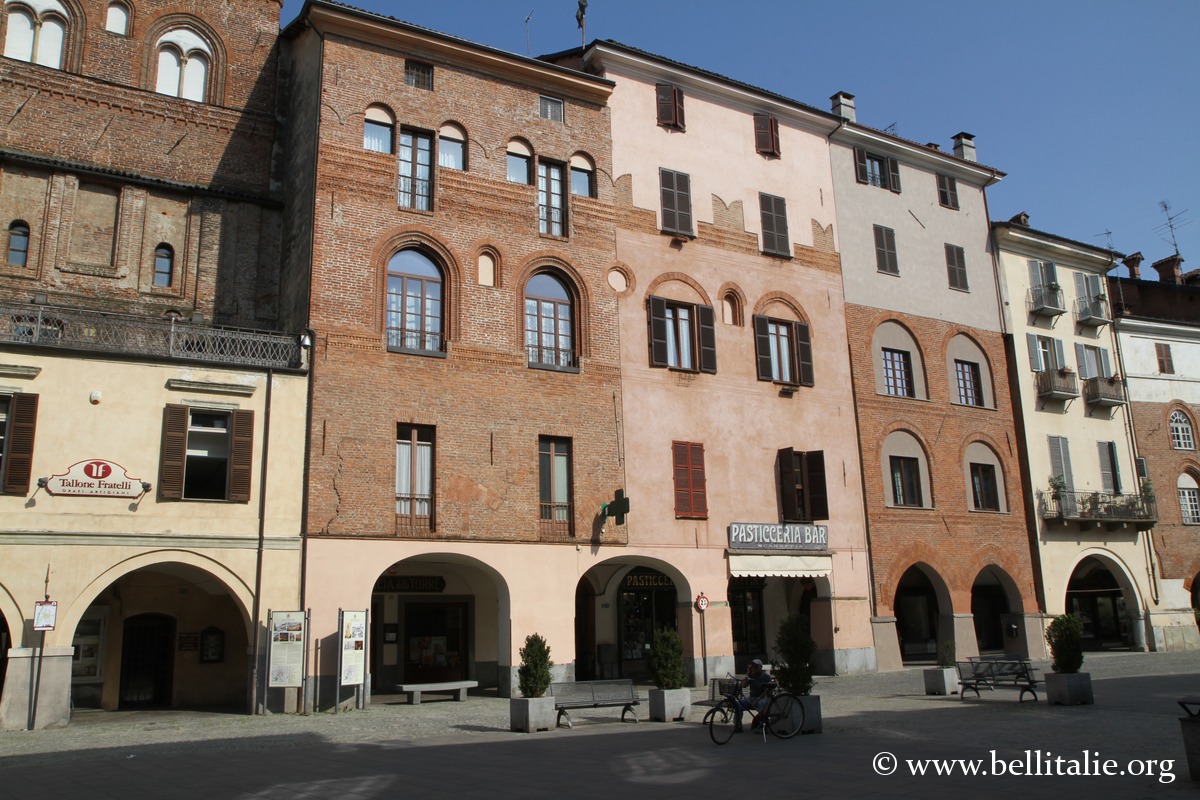
- The centre of the lower part of Saluzzo, around the cathedral, is equipped with cafés and shops under the arcades, from Piazza Cavour, which hosts the market, to Piazza Risorgimento.
- The immediate surroundings of Saluzzo: the giant bench (Big Bench) of Costigliole Saluzzo, and the Botanical Garden of Villa Bricherasio 3 km from the centre
Castle of La Manta
About 5 km from Saluzzo, the Castle of the Manta of medieval origin is famous for its exceptional, unique and well-preserved frescoes.
Its origin dates back to the 13th century as a military outpost, before being converted into a sumptuous residence by the feudal lords of the Manta around the 15th century.
An exceptional room was created with the Baronial Hall, covered with a pictorial cycle that represents heroes of the era. Its frescoes are one of the greatest testimonies of late Gothic painting in Piedmont, with its secular representations of the 15th century that pleased the aristocracy, figures of chivalric culture, its myths, the ideals of honor and love, or its codes of conduct.
Thus on the south wall is represented the myth of eternal youth inspired by the Roman de Fauvel, a chivalric novel, with the Fountain of Youth.
Another room is painted with grotesque illustrations of 16th-century Mannerism.
A small adjoining church also preserves frescoes from the 15th and 16th centuries, and the Chapel of the Resurrection from the 16th century.
The castle is surrounded by a vast park.
Staffarda Abbey
One of the most important medieval edifices in Piedmont, the Santa Maria Staffarda Abbey is located 9 kilometers from Saluzzo, at the foot of an amphitheater of mountains dominated by Monviso.
This Benedictine abbey was founded between 1122 and 1138 by Cistercians from France on lands given to the monks by Marquis Manfred I of Saluzzo.
The abbey had an important social and economic role in this area, for the cultivation of land and the production of goods.
On July 31, 1690, the territory of the abbey was the scene of the bloody Battle of Staffarda, between the Piedmontese troops of Victor Amadeus II of Savoy and the French troops led by General Nicolas de Catinat de La Fauconnerie. The abbey suffered much damage, but was restored between 1715 and 1734, somewhat altering the original building.
The complex includes the abbey church with its three Romanesque-Gothic naves, where a polyptych by Pascale Oddone is preserved, along with a 16th-century wooden group of the Crucifixion. The beautiful original cloister is largely preserved. The refectory retains traces of a fresco of “The Last Supper,” and the chapter house has ogival vaults supported by marble columns.
Royal Castle of Racconigi
Between Cuneo and Turin, 40 km from the latter, the former 11th-century palace owned by local nobles became a property of the Savoys in the 14th century, having since been remodeled several times. After vicissitudes and confiscations, the Castle of Racconigi was purchased by the Italian State in 1980.
It is the most recent of the royal residences of the Savoys and one of the best preserved, whose interior is exceptional, notably equipped with antique furniture. One can discover the beautiful Hall of Hercules in neoclassical style with sculptures of the demigod’s labors, the Room of Diana, the Etruscan cabinet, the Chinese apartment and the reception room.
The castle is surrounded by a magnificent French-style park with a lake and canals.
Castle of Lagnasco
The superb Tapparelli d’Azeglio Castle-Museums in Lagnasco, which comprise several buildings, built between the end of the 11th century for the marquises of Busca, and up to the 18th century.
In the Monviso valleys
- Varaita Valley: Sarvanot trail
- In the upper Po Valley, the small village of Balma Boves built under an enormous rocky ledge that was inhabited until the 1950s.
- Excursions to Monviso
Savigliano
Savigliano is in the middle of an agricultural (semi-industrial) plain planted with orchards. There one can discover a pretty central square:
- The large Piazza Santorre di Santarosa, dedicated to the revolutionary who was born in Savigliano, a beautiful rectangular square from the 12th century, where the market also takes place, surrounded by ancient palaces and arcades. A monumental arch marks the entrance to the square and the historic center.
- Collegiate Church of Sant’Andrea,
- Taffini d’Acceglio Palace,
- Santa Maria della Pieve
- Civic Museum.
- The Jewish quarter where the old synagogue was also located
Map
 Show interactive map
 Sources and information
- Tourist portals: www.komoot.com
- Castle of the Manta: fondoambiente.it
- Castle of Lagnasco: www.castellidilagnasco.it
- Monviso, upper Po Valley, Varaita Valley: www.vallidelmonviso.it, www.visitmove.it
- Wikipedia: en.wikipedia.org
- What to see in Piedmont
- Turin
- Saint Michael’s Abbey, La Clusa
- Lake Maggiore
- Susa Valley and Chisone Valley
- Susa
- Lake Orta
- Cuneo and Surroundings
- The Langhe
- Montferrat
- Roero and surroundings
- Asti
- Alba
- Domodossola and Val d’Ossola
- Valsesia
- Sanctuary of Mount Oropa
- Saluzzo and surroundings
- Usseaux and Fenestrelle Fort
- Casale Monferrato
- Vercelli
- Ivrea, Canavese and Biellese
- Novara


Comments