


On the southern shore of Lake Garda, Peschiera del Garda is a fortress-town surrounded by water, rightly inscribed on the UNESCO World Heritage list along with other Venetian defensive works of the 16th and 17th centuries. It stands in fact in a strategic location, between the Alpine chain and the Po plain, serving as a defense to protect the mainland territory of Venice and the trade routes.
It was a Roman colony called Arilica, later fortified by the Scaligeri of Verona, then by the Venetians who created its pentagonal citadel, and by the Habsburgs of Austria.
The town also has the museum of fishing and lake traditions.
Historic centre
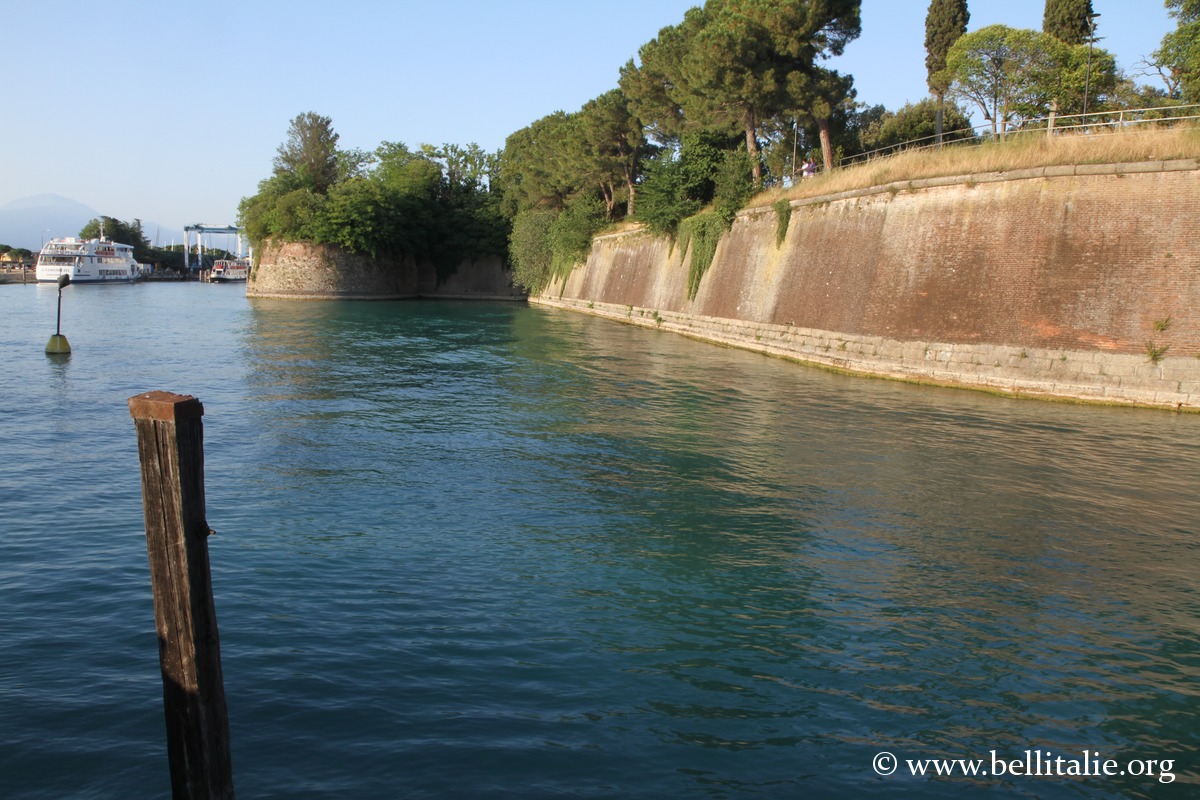
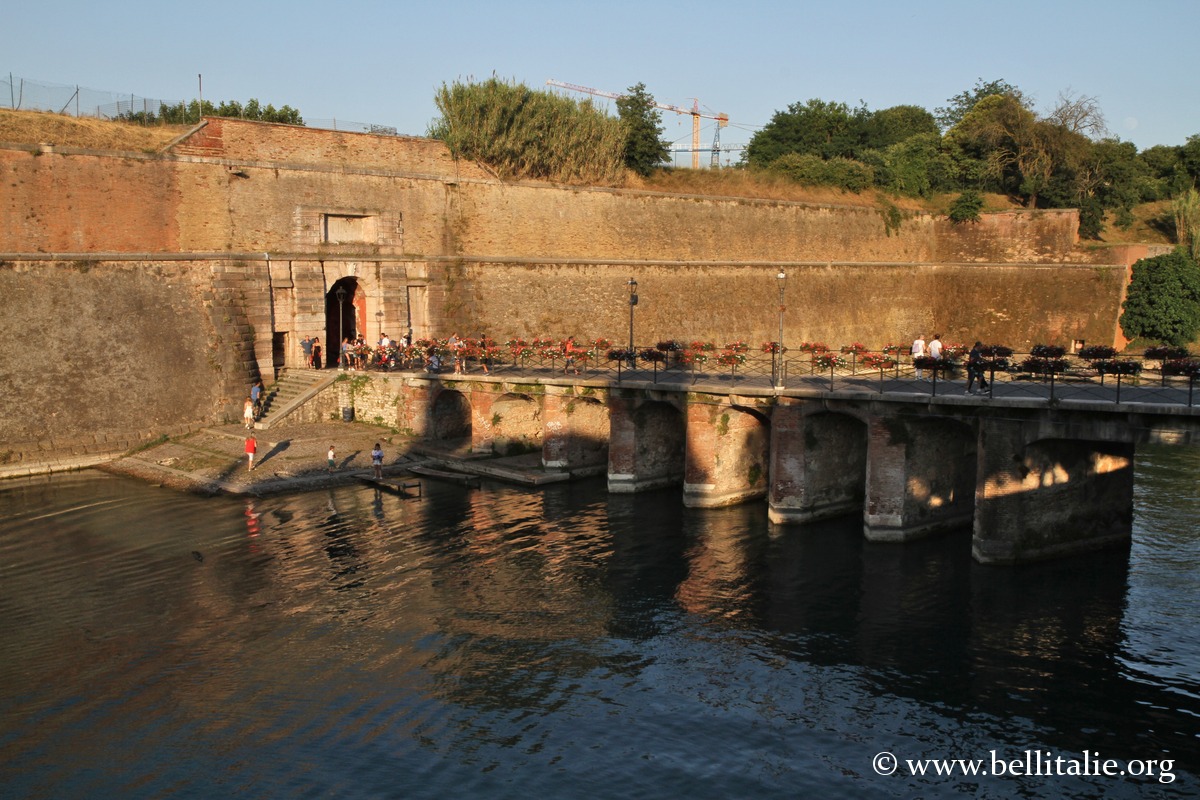
The pleasant historic centre is protected by the remarkable 16th-century Venetian citadel, erected in the middle of the Mincio estuary. It consists of two lines of defense, with bastions and counter-bastions, the Venetians having restructured old fortifications by adding terraces and ramparts to the five corners of the medieval pentagon-shaped enceinte.
A walkway runs along the top of the walls and bastions.
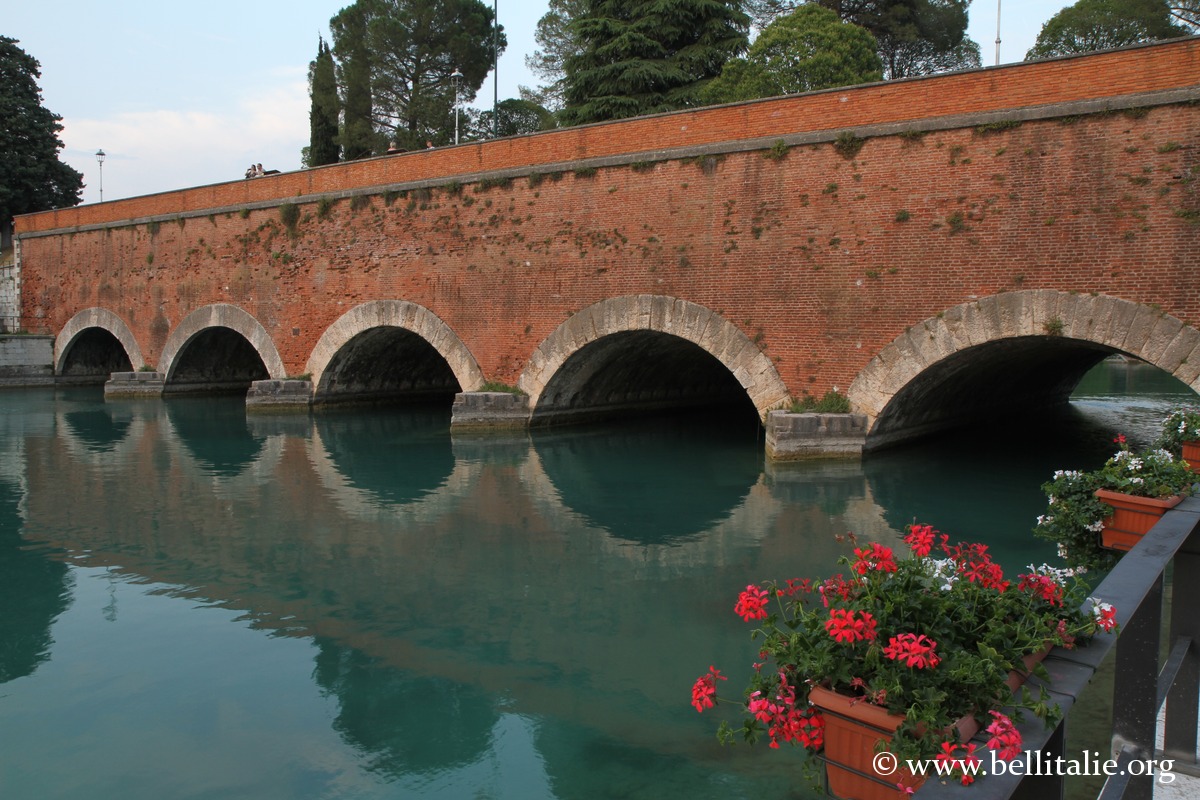
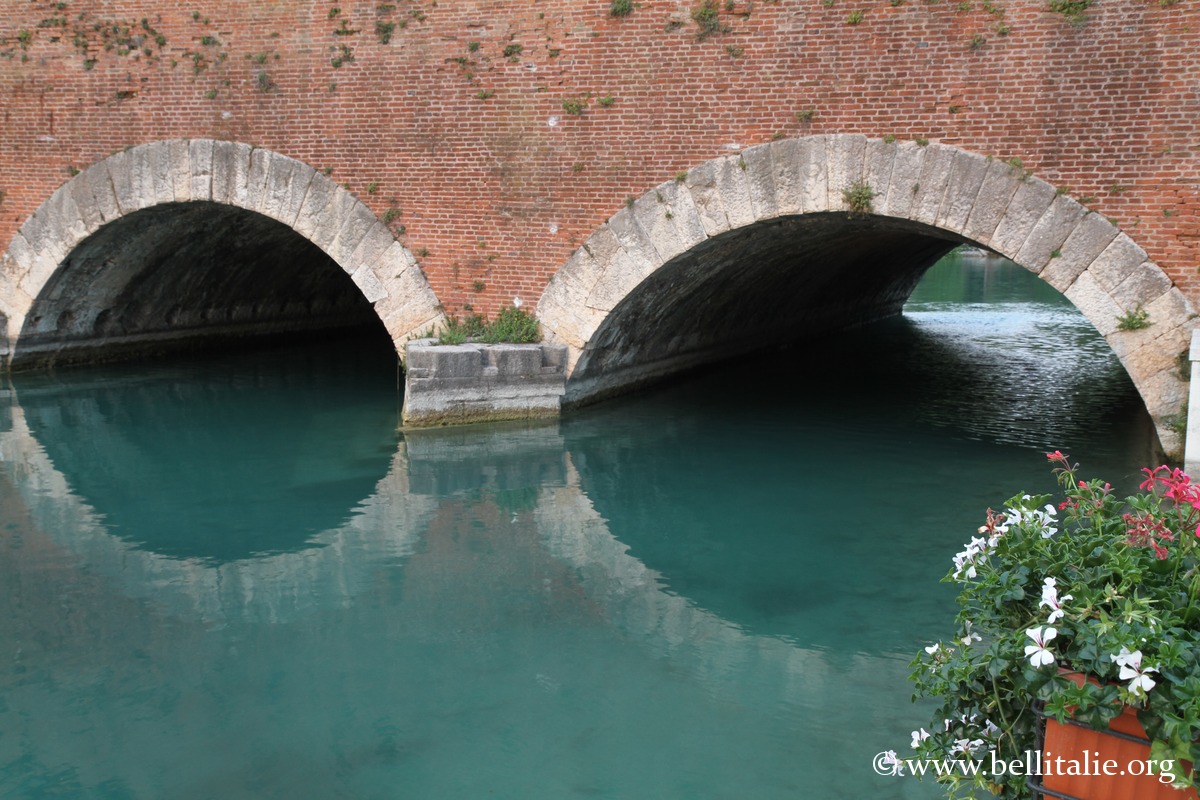
The historic centre is entered through the monumental gates, built on islets connected by bridges, including the beautiful Ponte dei Voltoni. The town has seven bridges.
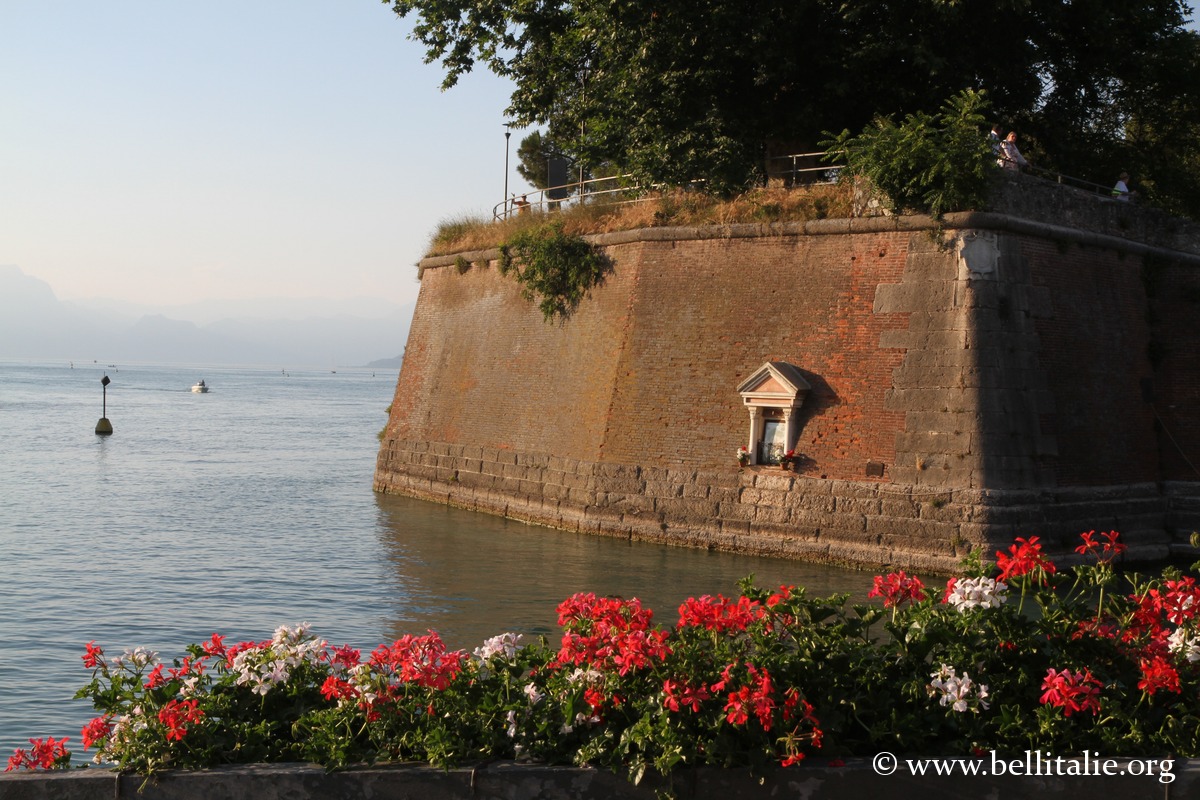
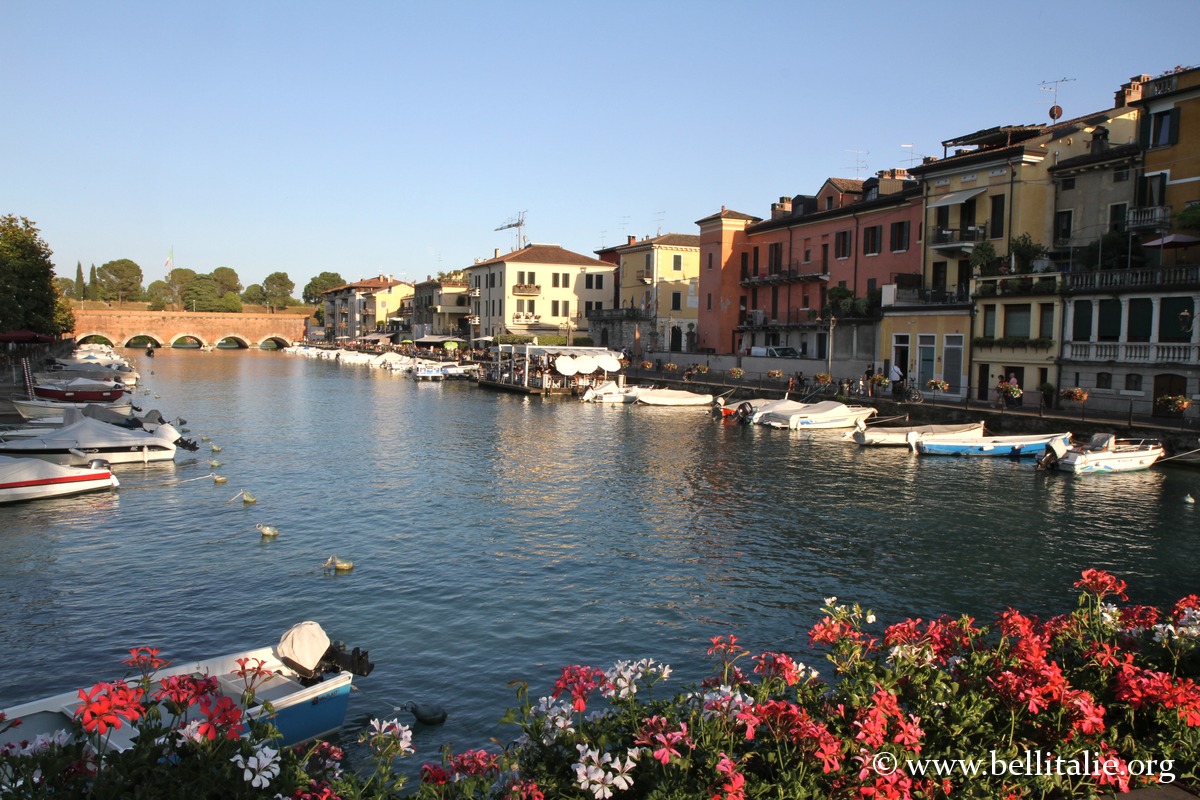
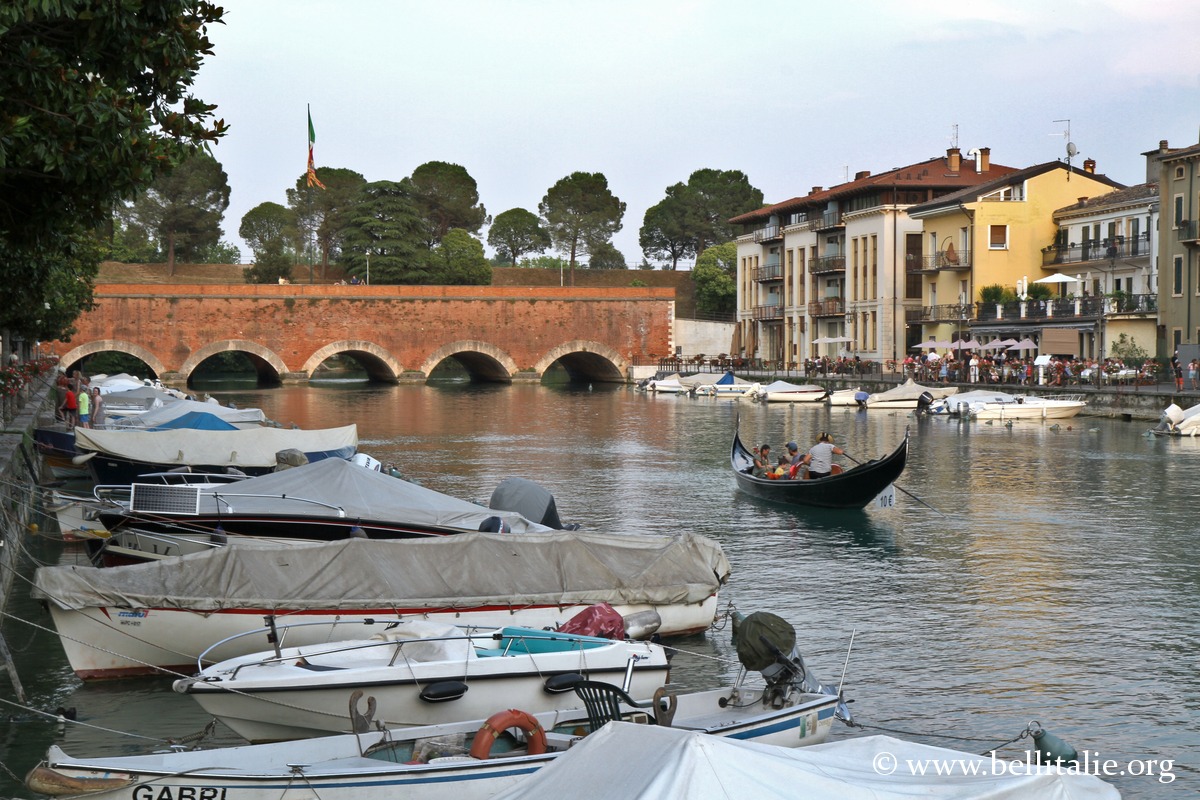
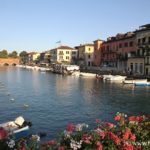
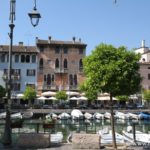
The canals are lined with houses overlooking the water, with romantic restaurants and small shops, which earned Peschiera the title of “Piccola Venezia sul Garda”.
In the centre one can see the foundations of a medieval tower and some Roman remains.
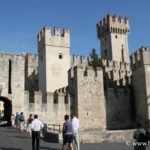
Citadel tower
To the south, the Ponte Royal leads to the 16th-century Porta Brescia, which regularly hosts exhibitions. Past the gate, on the right you pass at the foot of the Bastion Feltrin, which was the first bastion built and which housed the Austrian powder magazine. Further on, there is the old barracks, the military hospital and the fortress where the old Scaligeri Castle was located inside the walls, and the Bastion Cantarane of 1551 at the inaccessible tip.
Then, towards the north-east, the pretty Ponte dei Voltoni is the most emblematic of Peschiera, also from the 16th century, from the top of which one has a view of the historic heart.
After the bridge is the 19th-century Artillery Barracks, then the Bastion San Marco, which housed the cannonballs, and today from its courtyard one accesses the Museum of Local Traditions.
After passing the beautiful Porta Verona built in 1553, further west the small park is surrounded by the Francesco I Barracks and the former officers’ pavilion, to reach the Bastion Querini of 1552, from the top of which one has a beautiful view of the lake. At its base, the 19th-century building is a palace opened on the occasion of exhibitions.
After the bridge, one reaches on the right the Bastion Tognon, connected to the Bastion Feltrin by a panoramic path.
Particularly recommended is the “tour of the walls” by boat or gondola, a beautiful way to see the citadel (departure towards the Pont Royal for gondolas or from Piazza San Marco, about 30 min).
One can also take a day trip from Pescheria, on the southern part of the lake, with Rocca di Garda, the Villa Canossa, Punta San Vigilio, the Isola del Garda and Sirmione.
Gallery
Madonna del Frassino
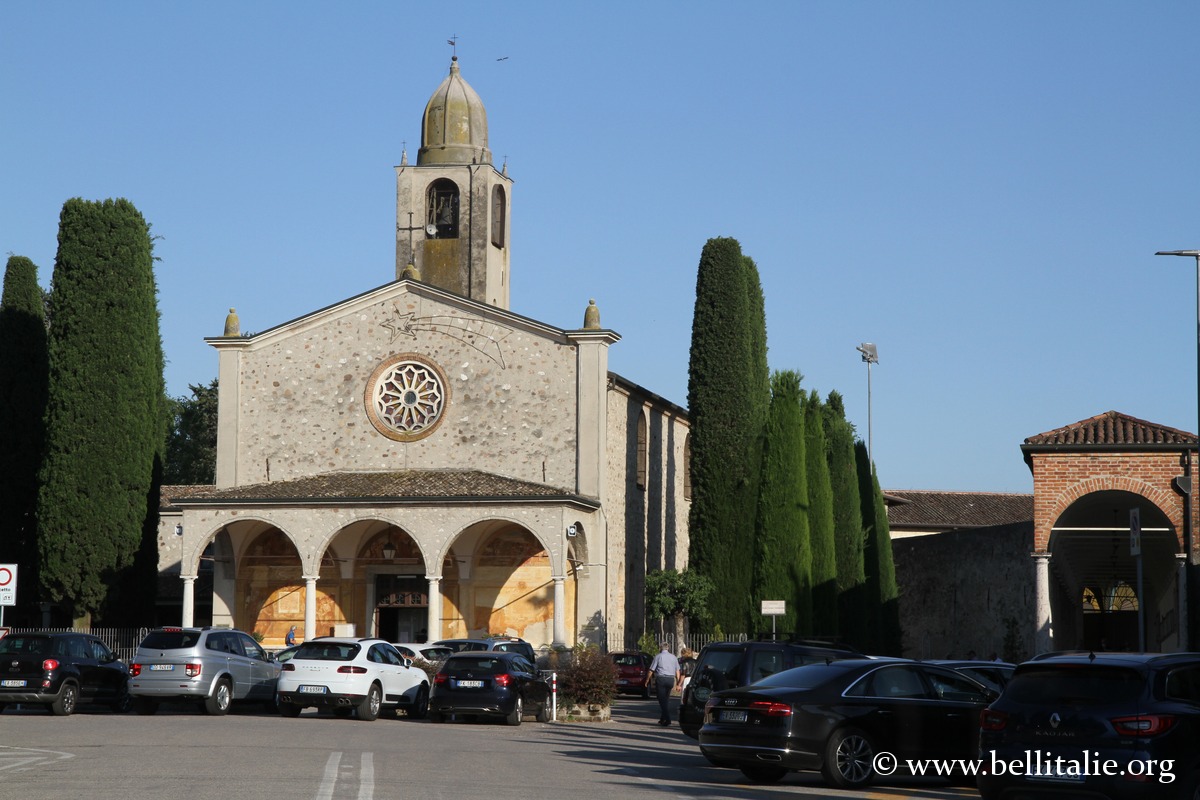
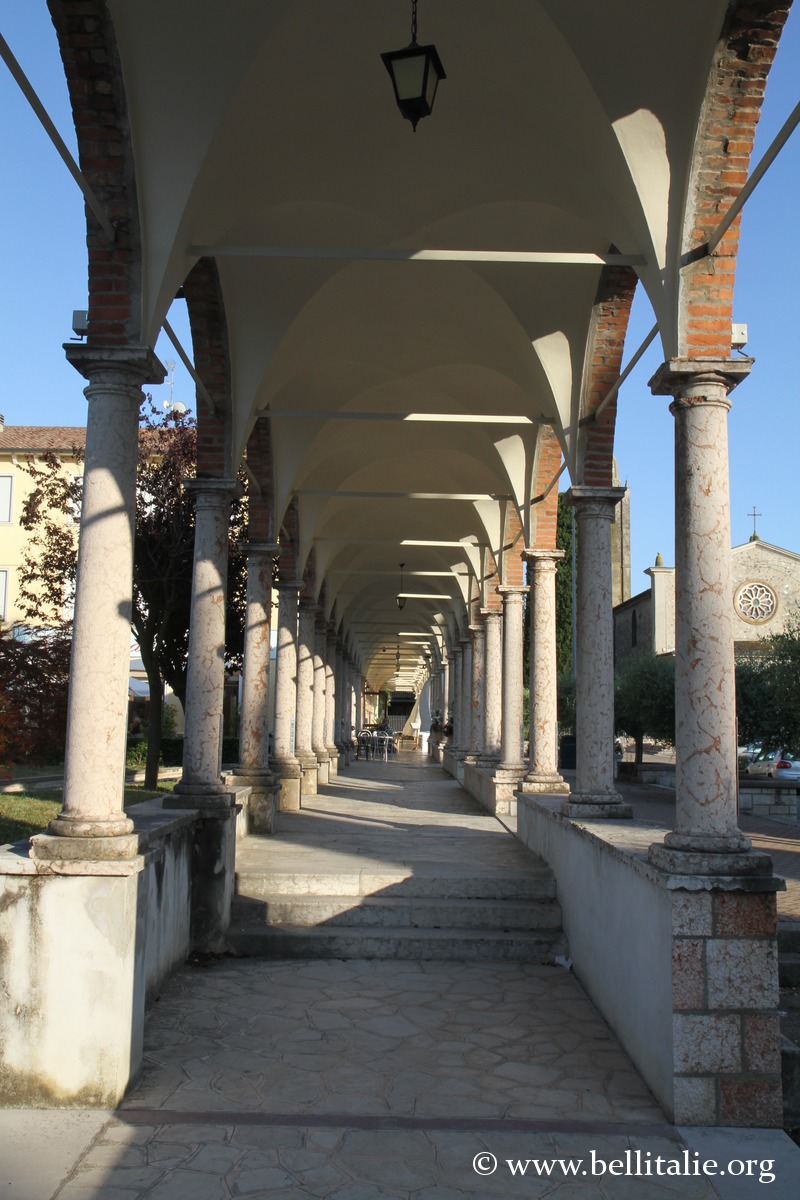
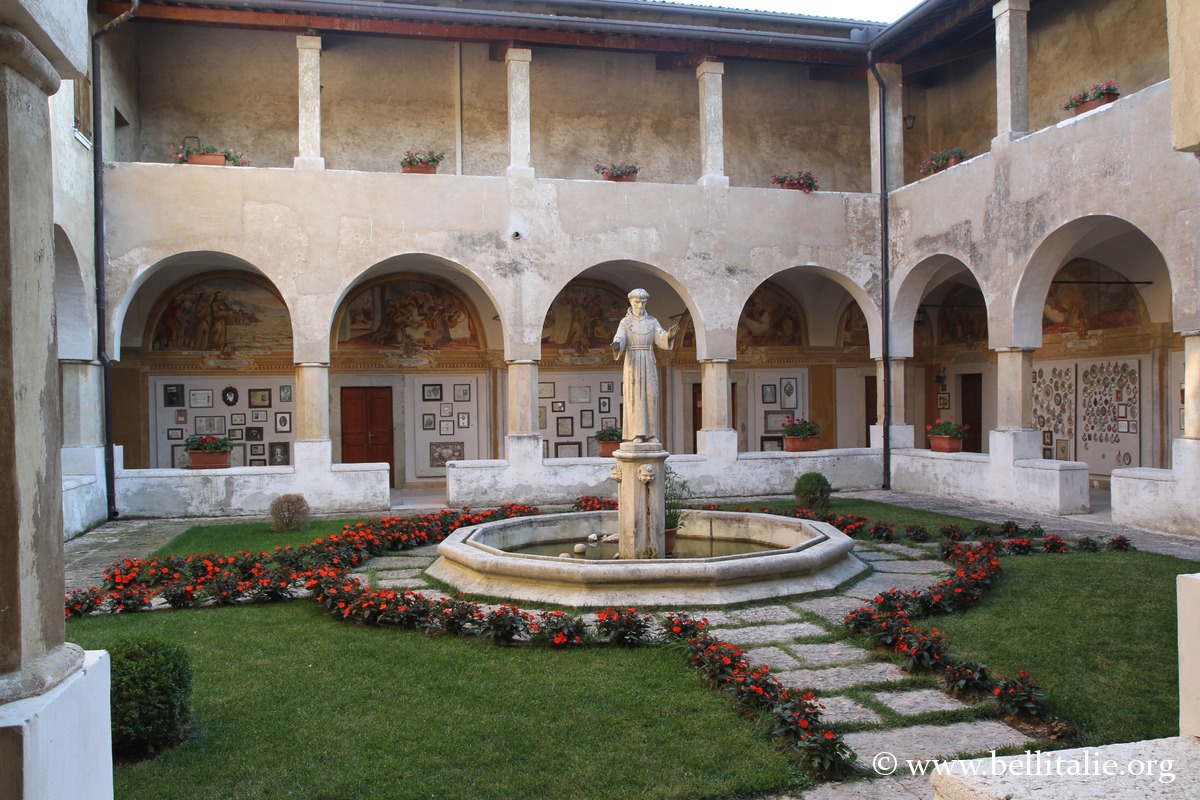
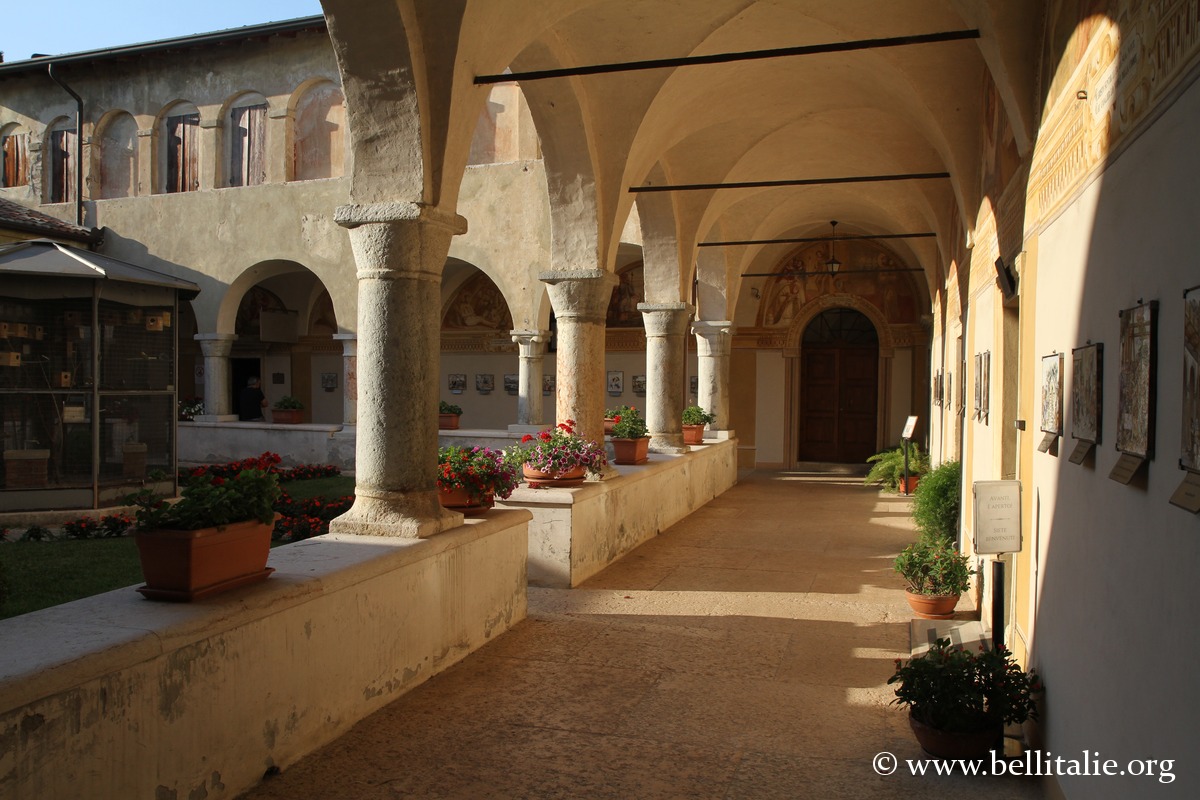
Outside the centre, the Madonna del Frassino is a pretty Franciscan sanctuary dating back to the 16th century. A tree-lined avenue leads to the Renaissance-style building constructed between 1511 and 1514. The church preserves works of art, such as canvases by Paolo Farinati, or a charming cloister.
Information
- Tourist website of the municipality: www.tourismpeschiera.it
- Wikipedia article: en.wikipedia.org (in Italian)
Map
If you see this after your page is loaded completely, leafletJS files are missing.


Comments