


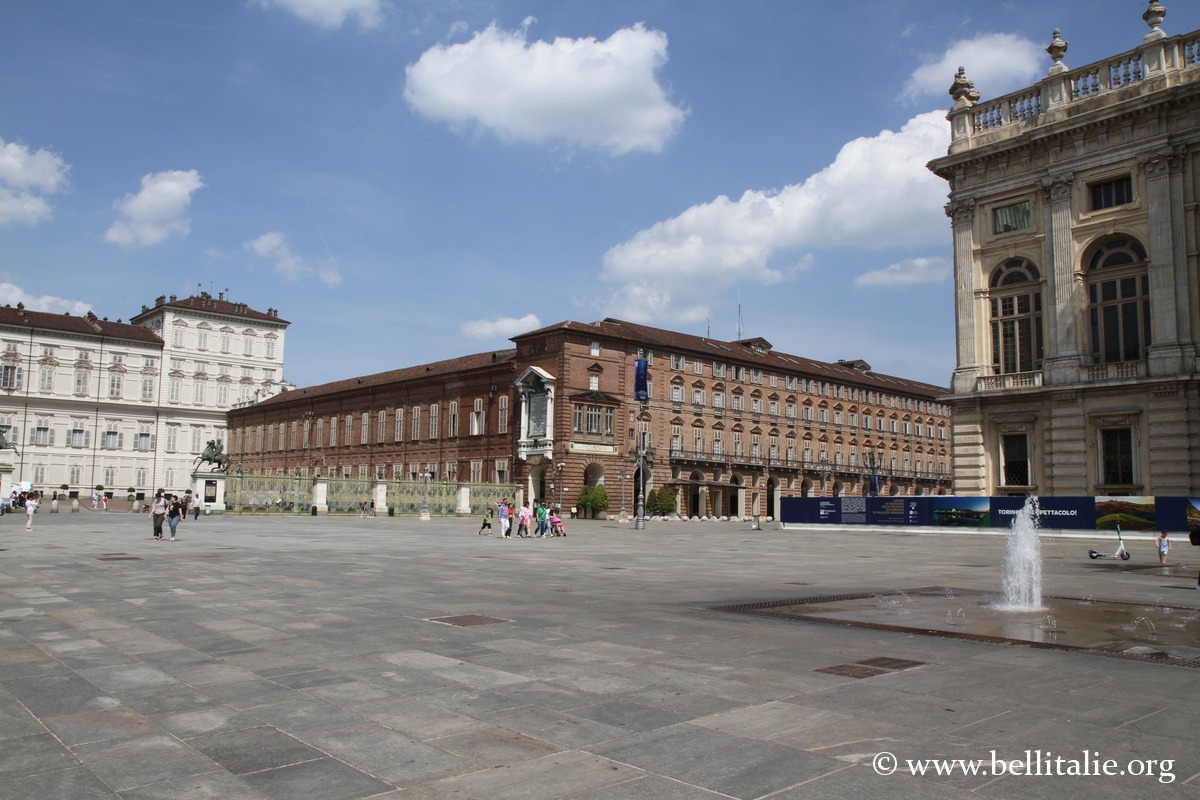
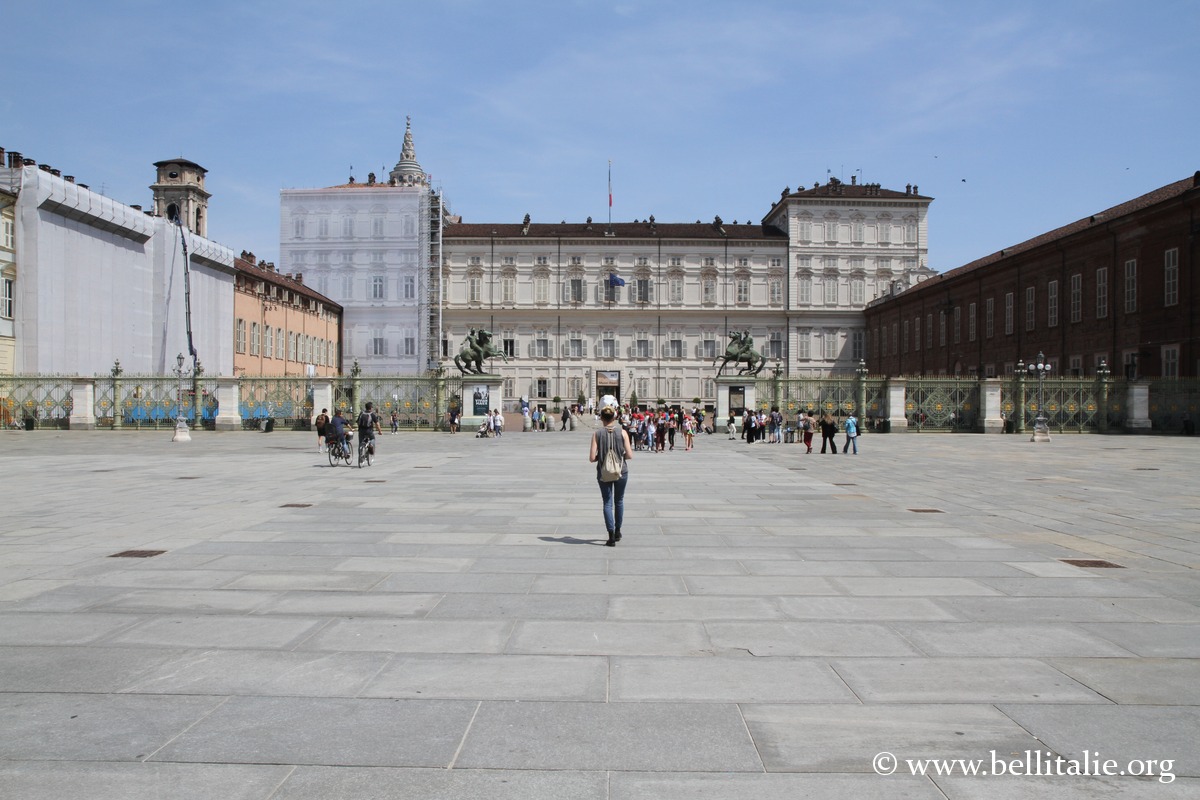
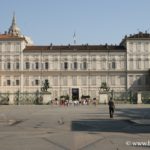
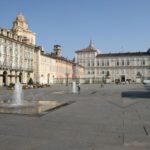
View from the square towards the Royal Palace
The Piazza Castello is a pedestrian square and the second largest in Turin. For centuries it has been at the heart of the city, as the historic centre of the power of the Dukes of Savoy. Renovated in 2006, it was designed by the architect Ascanio Vitozzi in 1584 under the impetus of Charles Emmanuel I of Savoy.
Description
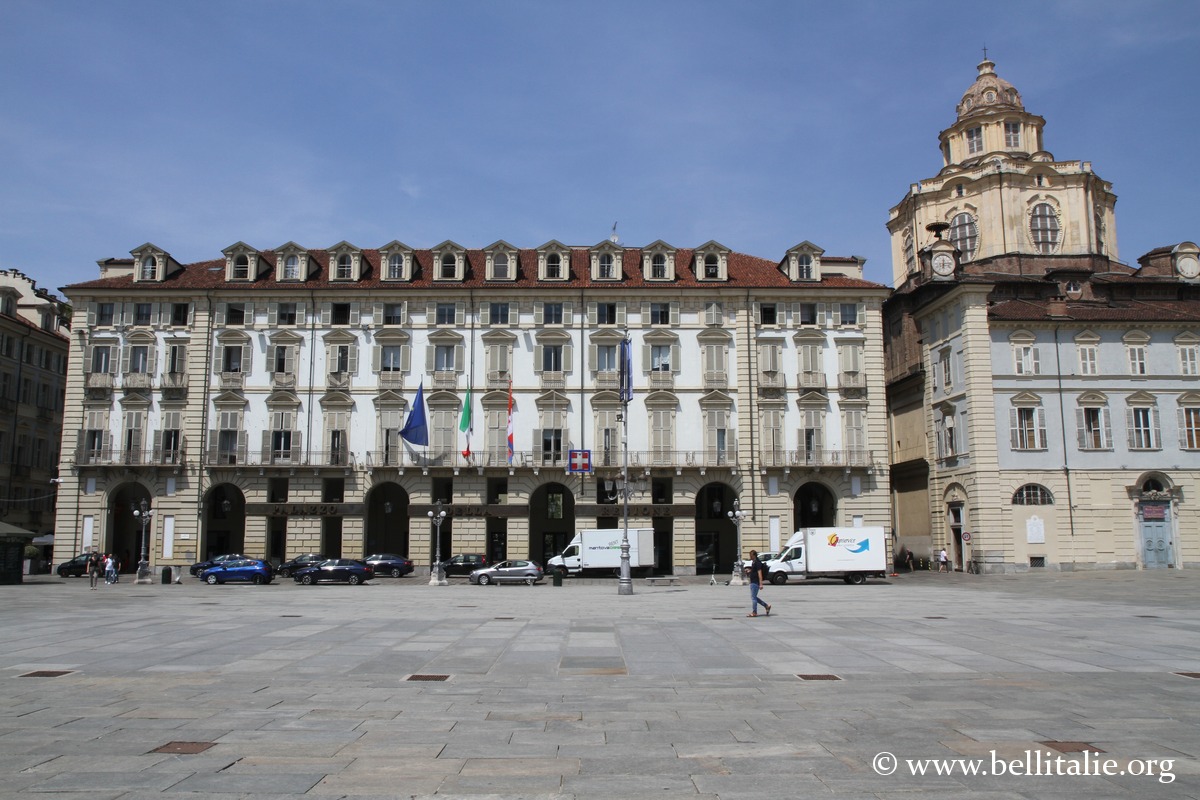
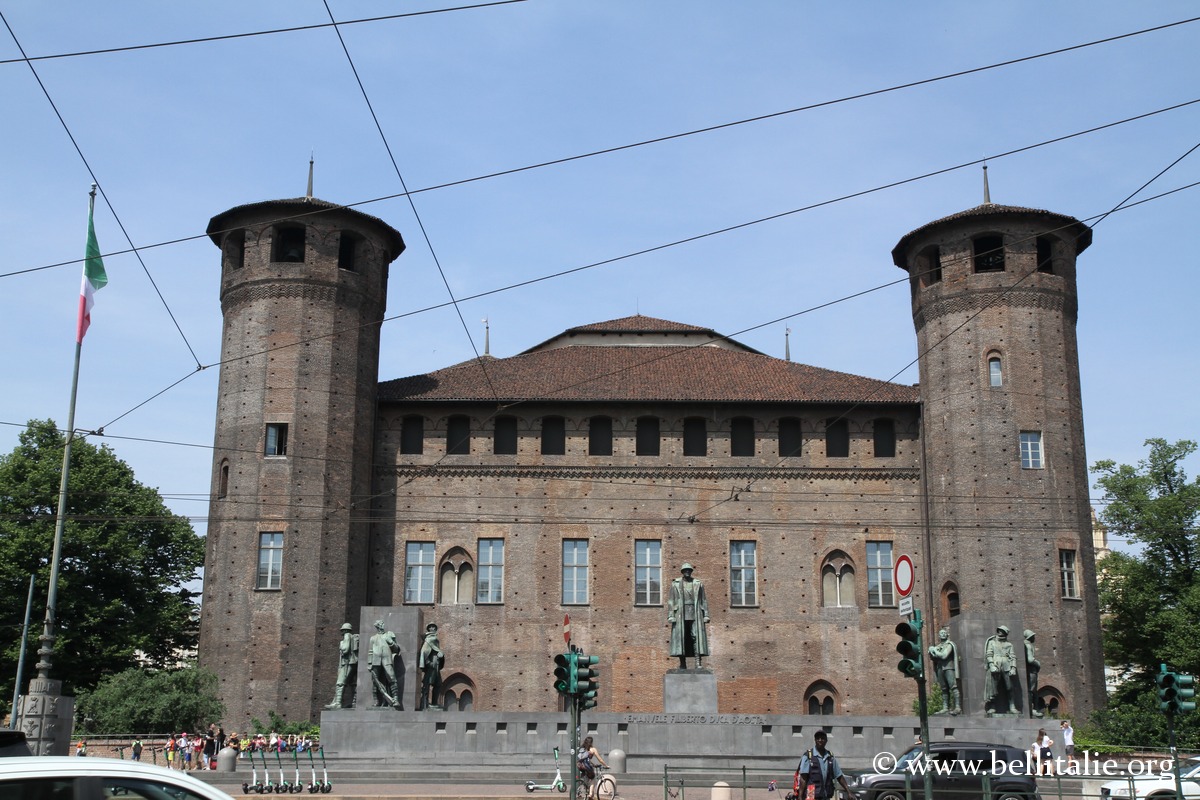
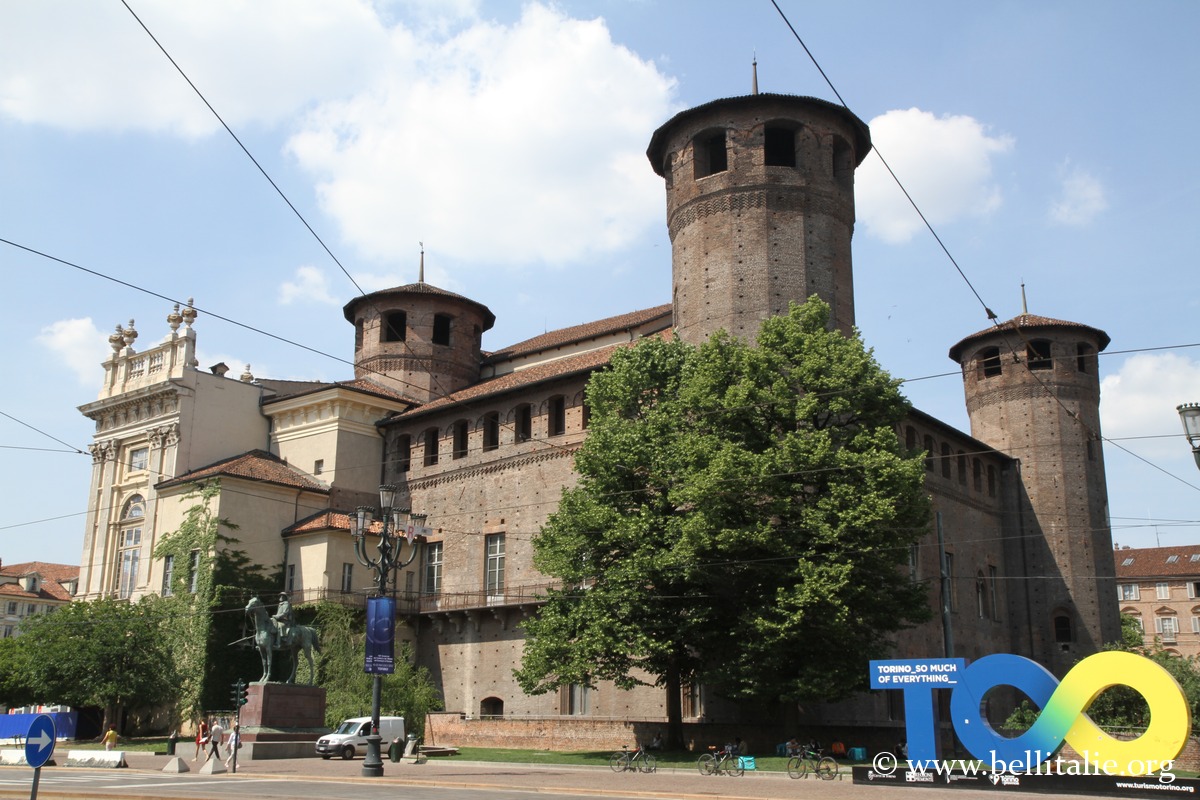
On its three main sides the square is lined with arcades, and among the most important monuments of Turin are to be found there. An extension of the square with the Piazzetta Reale thus leads to the Royal Palace (Palazzo Reale), while in the centre stands the Palazzo Madama which was originally a castle to which the square owes its name. Also around it are the Royal Theatre (Teatro Regio), the Royal Church of San Lorenzo, the government palace and other public buildings. The Royal Museums occupy the buildings of the Royal Palace, including in particular the royal library, the armoury, and the picture gallery.
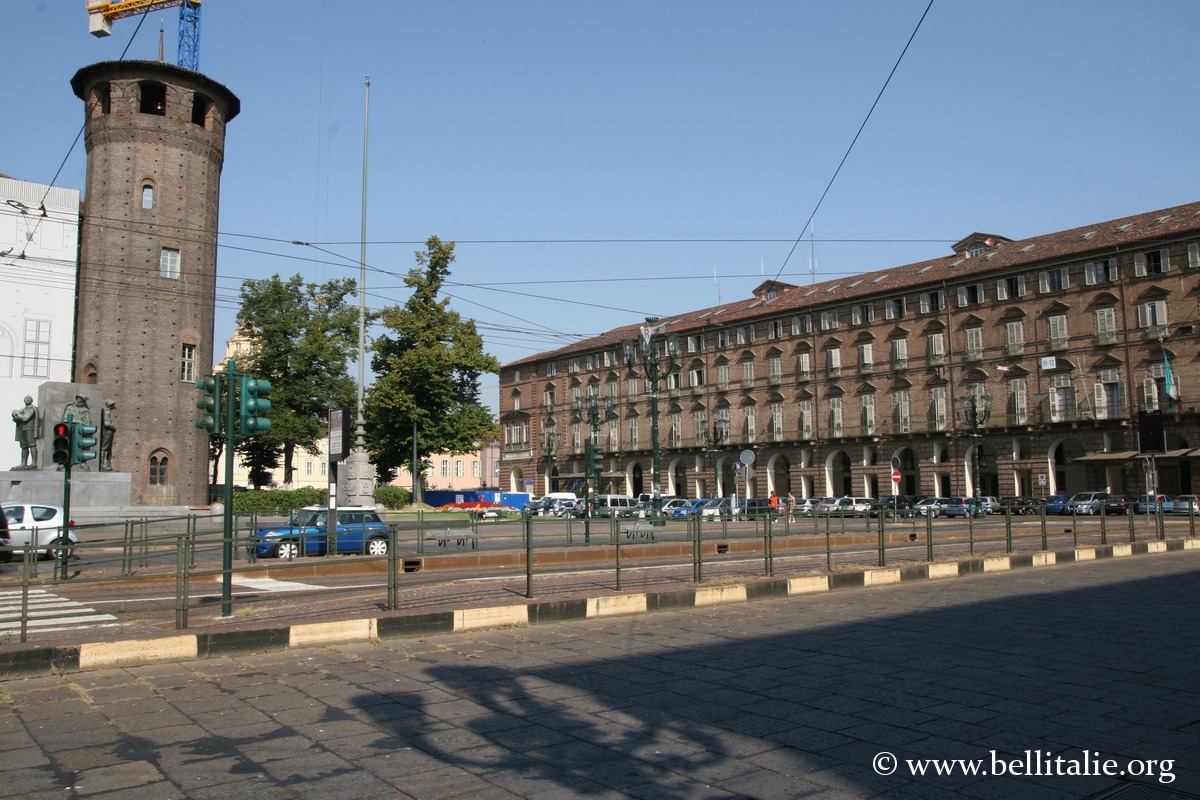
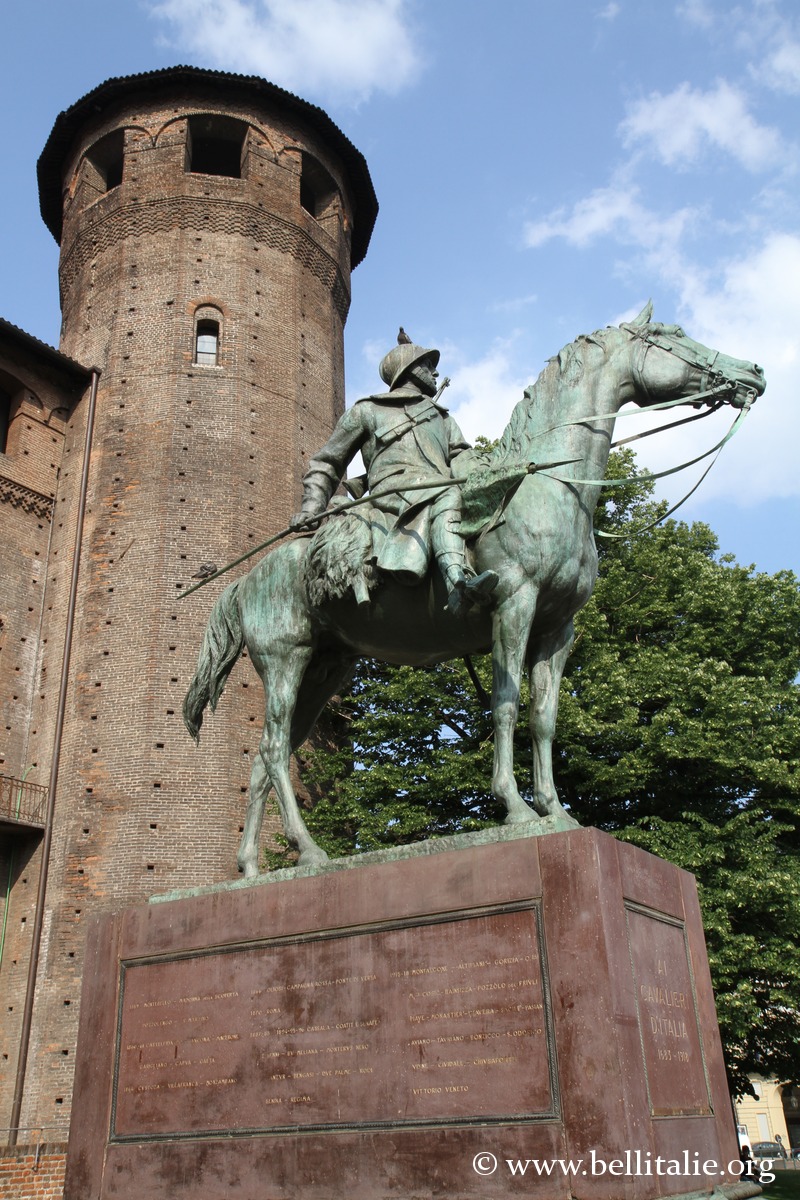
Around the Palazzo Madama are three military monuments: the Statue of the standard-bearer of the Sardinian army dating from 1859, the Monument to the Knights of Italy created by Piero Canonica in 1923, and the statue representing the Duke of Savoy Emmanuel Philibert.
Several major thoroughfares of the city converge here, including Via Garibaldi, which is one of the longest pedestrian streets in Europe, Via Po, and Via Pietro Micca and Via Roma.
In the 19th century, the arcades of the square were vigorously enlivened by intellectuals, politicians and writers. It was neglected after the destruction of the Second World War, but regained its former splendour on the occasion of the 2006 Winter Olympic Games.
Buildings on the square
Royal Palace and museums
The sumptuous Royal Palace of Turin, residence of the Savoys, is nowadays integrated into the Royal Museums, where one can in particular access the Chapel of the Holy Shroud, the Royal Armoury, the Royal Library, the Museum of Antiquities, the picture gallery and the gardens.
→ Read Royal Palace and museums
The Palazzo Madama
The Palazzo Madama was the seat of the Subalpine Senate and previously a residence of the Savoys. It preserves one of the facades of the original castle. In its place in the 1st century AD was one of the access gates to the city of Turin, the Porta Preatoria. The latter was later enlarged and fortified, until it became a castle and the residence of the Savoy-Acaja.
It was in the 16th century that the square was laid out, along with the Royal Palace; previously there were other structures linking the castle to the palace.
→ Read also: Palazzo Madama and Museo Civico di Arte Antica
The Royal Theatre
This theatre (Teatro Regio) was among the most important opera houses in Turin.
Church of San Lorenzo in Turin
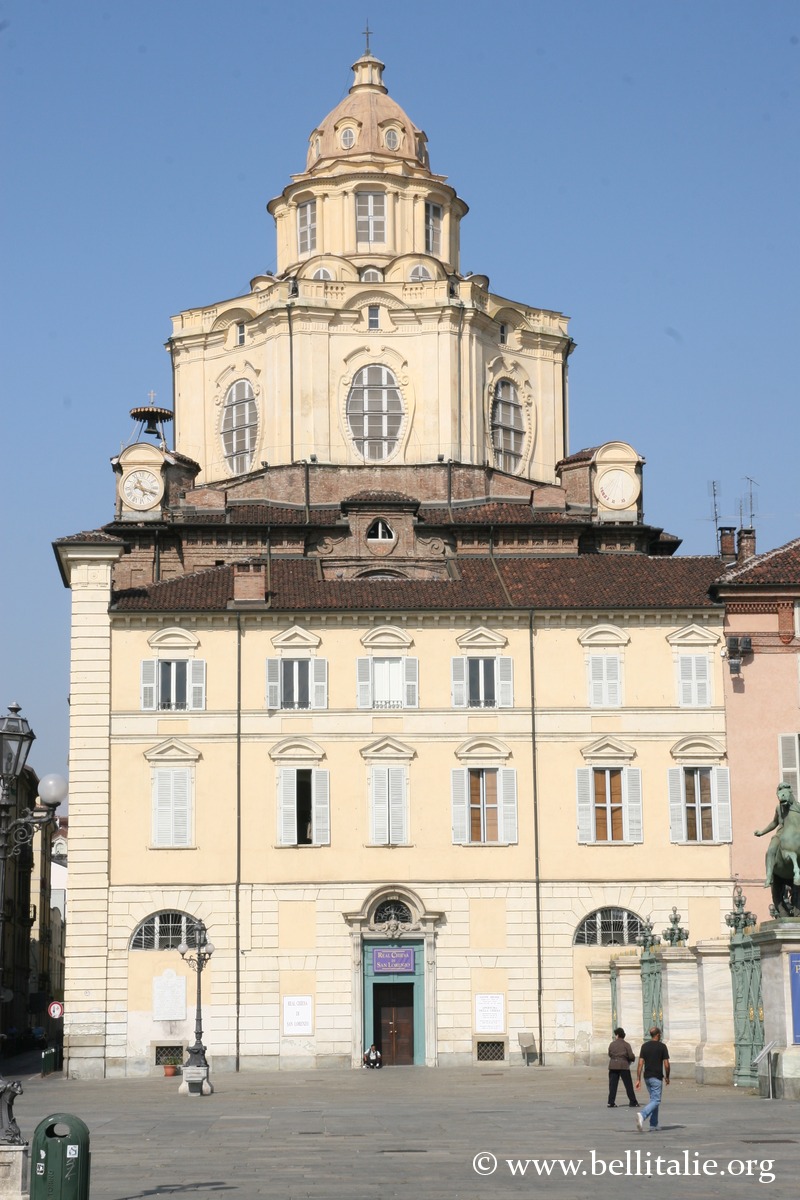
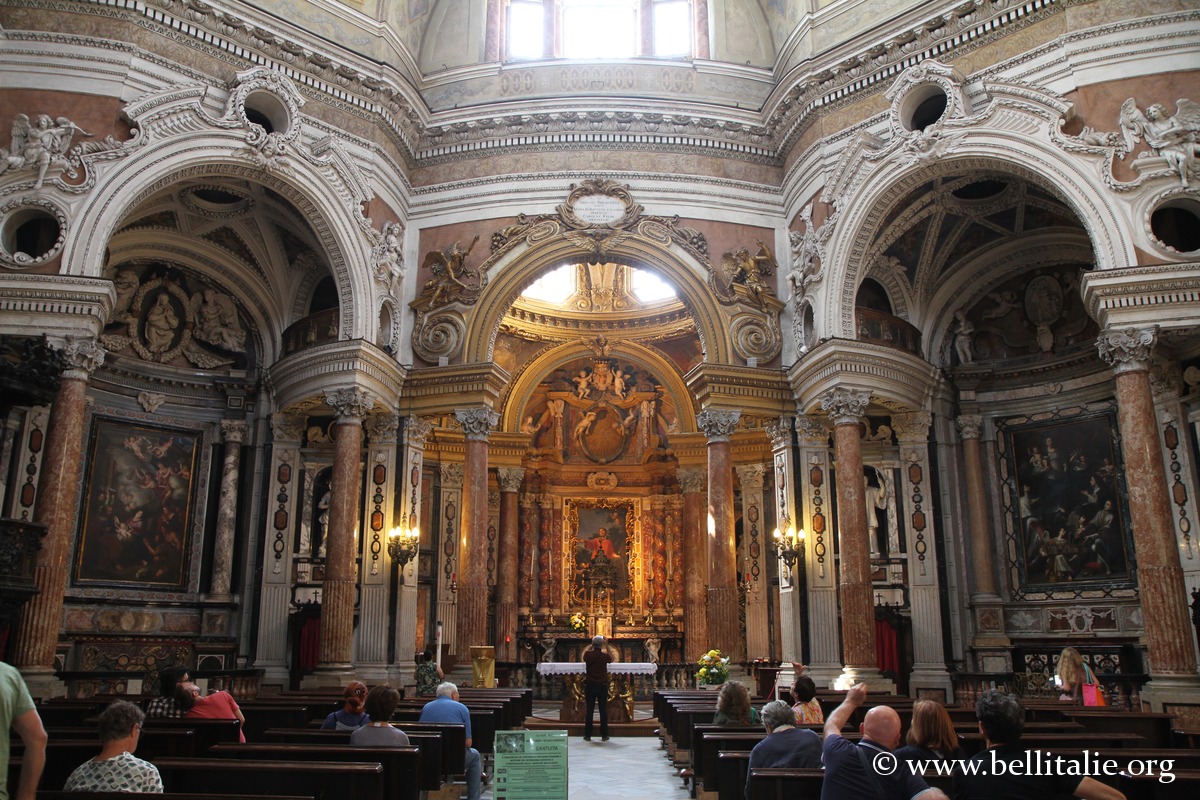
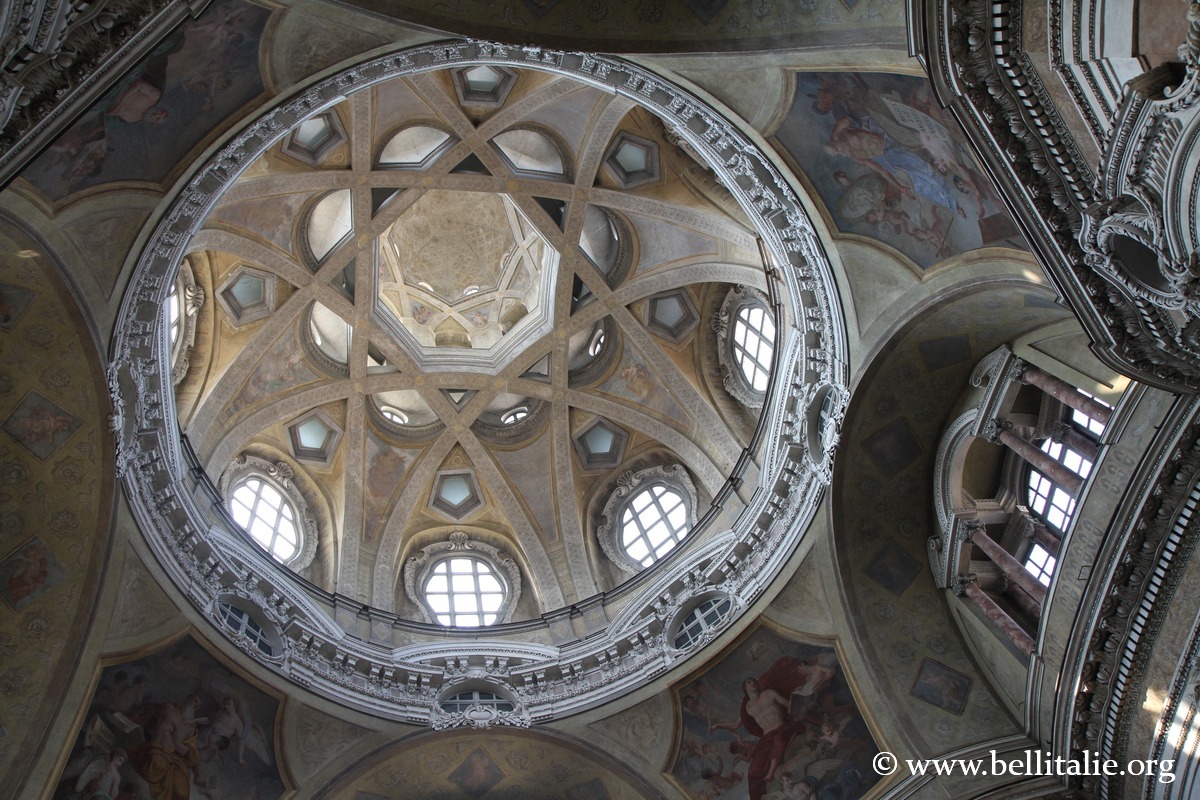
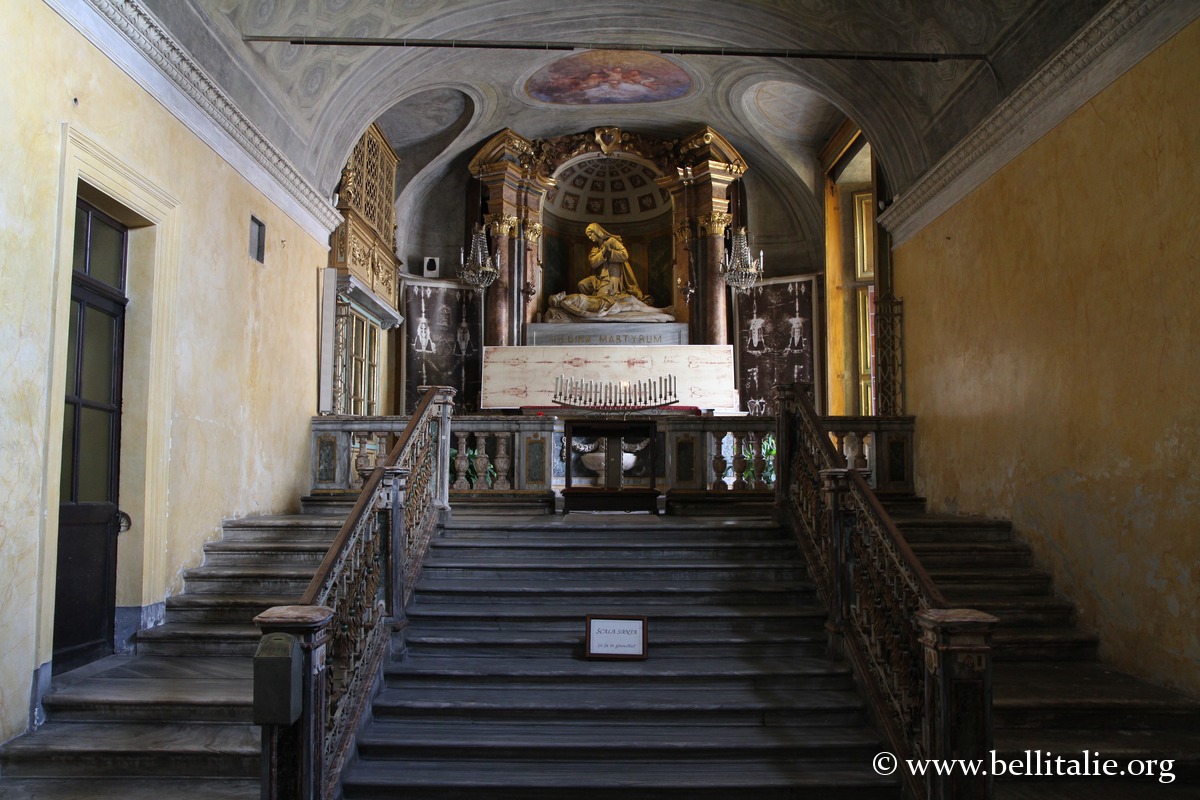
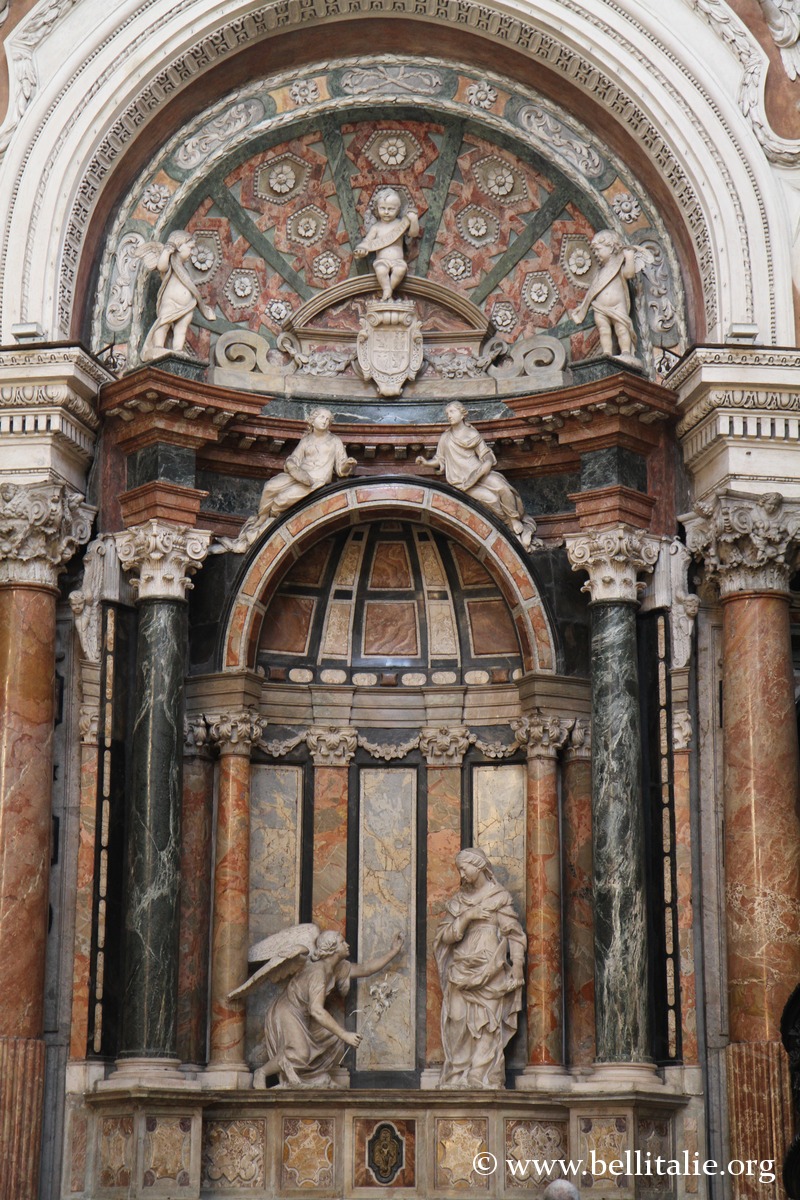
The Church of San Lorenzo in Turin (Real Chiesa di San Lorenzo) was used as a royal chapel and housed the Holy Shroud for a time when it was brought to Turin, today replaced by a copy of the sacred cloth.
Its origin dates back to 10 August 1557, when Emmanuel Philibert I of Savoy and Philip II of Spain promised to build a church if they won the battle against the French, and to dedicate it to the saint of the day.
Arcades, Galleria Subalpina and historic cafés
The arcades are an integral part of everyday life in Turin, present along several thoroughfares and squares such as around the Piazza Castello with historic cafés present in the Galleria Subalpina.
Thus the Caffè Mulassano founded in 1907, at the corner with Via Po, was the meeting point of artists, nobles and writers. It is also known because the tramezzino, the triangular sandwich popular in Italy, is said to have been invented there, according to the plaque inside dedicated to its creator Angela Demichelis Nebiolo.
Next to it the Caffè Confetteria Baratti & Milano was founded in 1785, then frequented by many celebrities such as Cavour or Giolitti.
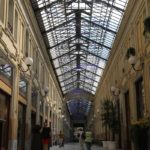
This Galleria Subalpina links Piazza Castello to Piazza Carlo Alberto, built in 1873 inspired by the Parisian passages. 50 metres long, its structure is in wrought iron with Baroque-style glass roofs. Besides the historic cafés, there is also the oldest cinema in Turin, the Cinema Nuovo Romano, antique dealers, bookshops and boutiques.
Other buildings
On the side of Via Garibaldi was the Hotel Universo which was famous and hosted in particular Honoré de Balzac, who met Hermann Melville there, but also Bonaparte, Eiffel, Hugo, Garibaldi, etc.
The Torre Littorio built in 1933, opposite the Royal Palace, symbolised a power “diametrically opposed to the monarchy”, originally created to house the headquarters of the Fascist Party.
It is 87 metres high and marked by its rationalist style.
Map and address
P.za Castello, 10122 Torino
If you see this after your page is loaded completely, leafletJS files are missing.
Information
- Wikipedia article: fr.wikipedia.org/wiki/Place_Castello
- What to see in Piedmont
- Turin
- Saint Michael’s Abbey, La Clusa
- Lake Maggiore
- Susa Valley and Chisone Valley
- Susa
- Lake Orta
- Cuneo and Surroundings
- The Langhe
- Montferrat
- Roero and surroundings
- Asti
- Alba
- Domodossola and Val d’Ossola
- Valsesia
- Sanctuary of Mount Oropa
- Saluzzo and surroundings
- Usseaux and Fenestrelle Fort
- Casale Monferrato
- Vercelli
- Ivrea, Canavese and Biellese
- Novara
- What to see and do in Turin
- Turin in 1 day, 2 days and more
- Royal Palaces and Museums of Turin
- Egyptian Museum of Turin
- Mole Antonelliana
- Turin Cathedral of Saint John the Baptist
- Piazza San Carlo in Turin
- Palazzo Madama, Turin
- Palatine Gate of Turin
- Royal Palace of Venaria
- Other monuments and places in Turin
- Stupinigi Hunting Lodge
- Rivoli Castle
- Moncalieri Royal Castle
- Turin Hills


Comments