


The Museum of Egyptian Antiquities of Turin is the second largest museum in the world dedicated to the world of ancient Egypt, after the Cairo Museum. It was founded in 1826 with the purchase of a vast collection from the French consul in Egypt by King Charles Felix. It is housed in the Palace of the Academy of Sciences, built in the 17th century, displaying nearly 6,500 objects out of the 30,000 stored, such as statues, sarcophagi, mummies, stelae, amulets, papyri, jewels, etc.
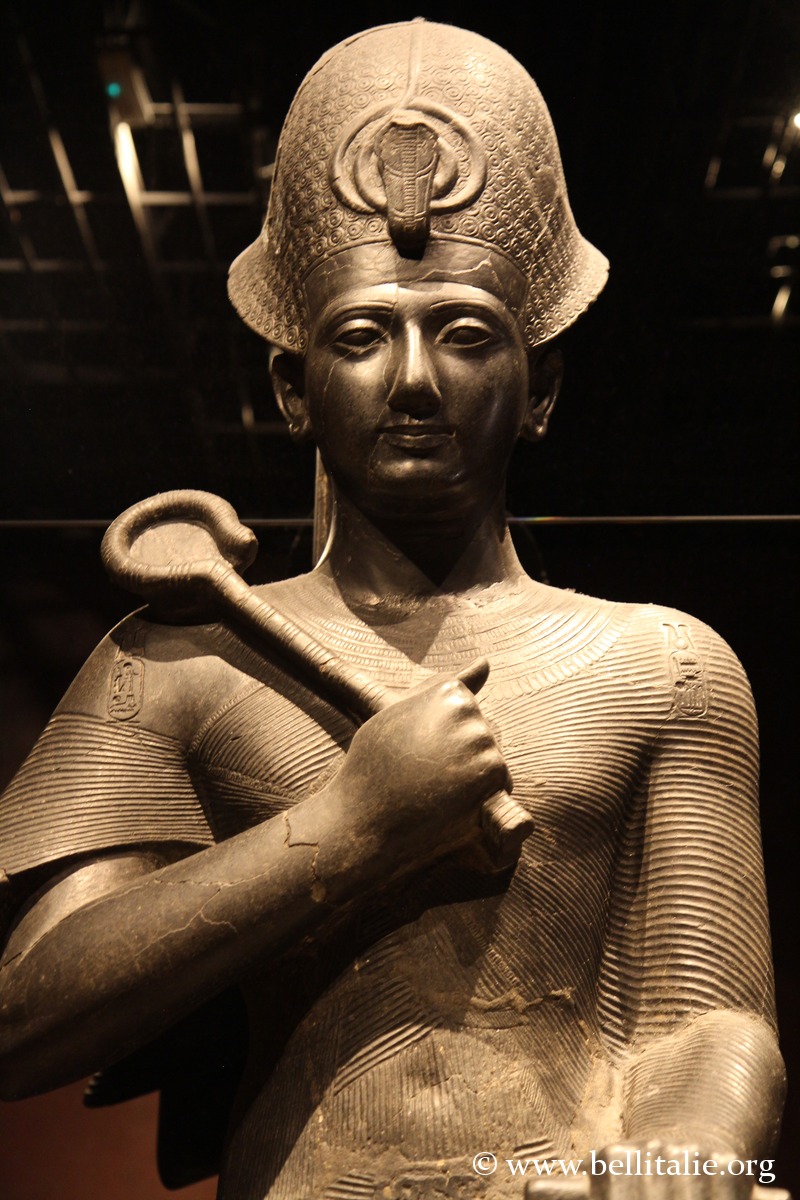
Among the many masterpieces, let us mention the statue of Ramesses II, the tombs of Kha and Merit, or the rock-cut temple of Thutmose III.
Tour of the museum
Here is a tour of the museum, mentioning some of the notable objects seen through the various rooms, starting from the entrance level, the basement, and following the “itinerary” that continues on the second floor, then the first, with sections that are sometimes chronological, sometimes thematic (sarcophagi, mummies) or dedicated to specific Egyptian sites. Then the visit ends in apotheosis on the ground floor with the monumental statues of kings and gods.
Basement level
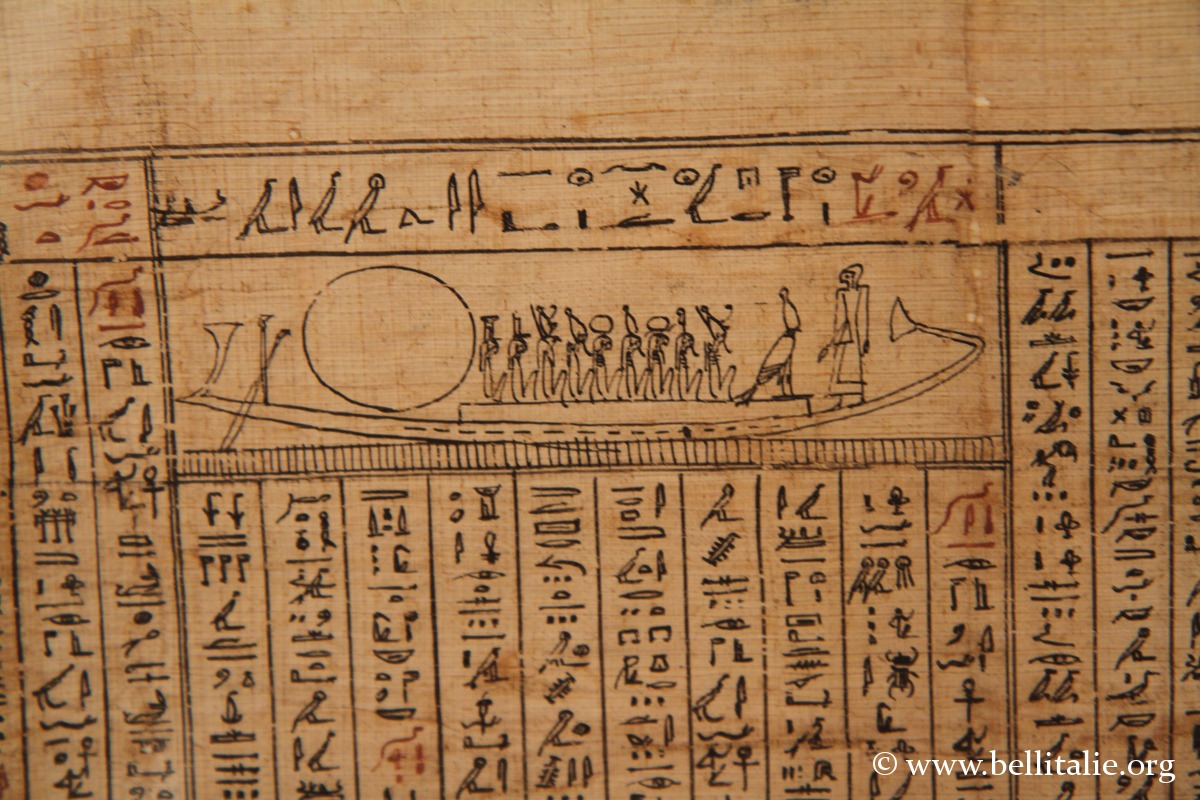
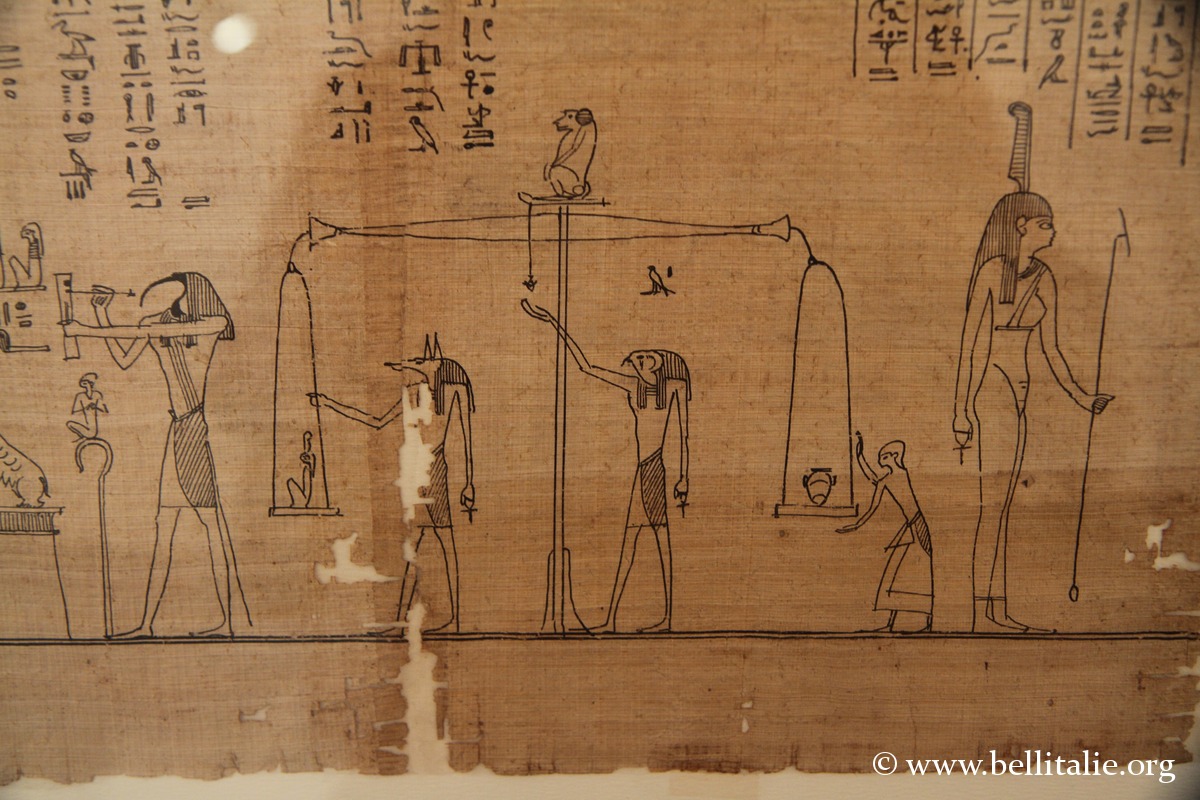
This small-sized level is an introduction to the museum by displaying its history and the Egyptian discoveries, exhibiting in particular the long papyrus known as the Book of the Dead of Iouefankh. It was the first papyrus to bear this title, when it was translated in 1842, dating back to the Ptolemaic period, between the 4th and 1st centuries BC. These “books of the dead”, actually called by their contemporaries “books for coming forth by day”, were papyrus scrolls placed near the mummies in the tombs of Egyptian nobles. They describe the passage of the soul of the deceased to escape darkness and oblivion and enter into “the day”, the afterlife, with the various stages such as the journey in the barque of Ra the sun god, the crossing of the kingdom of Osiris with the “weighing of the hearts” by Maat, etc.
Funerary formulas, varying according to the deceased, serve to guide the latter in his journey toward the other world.
This fascinating papyrus is accompanied by exhaustive translations.
Second floor
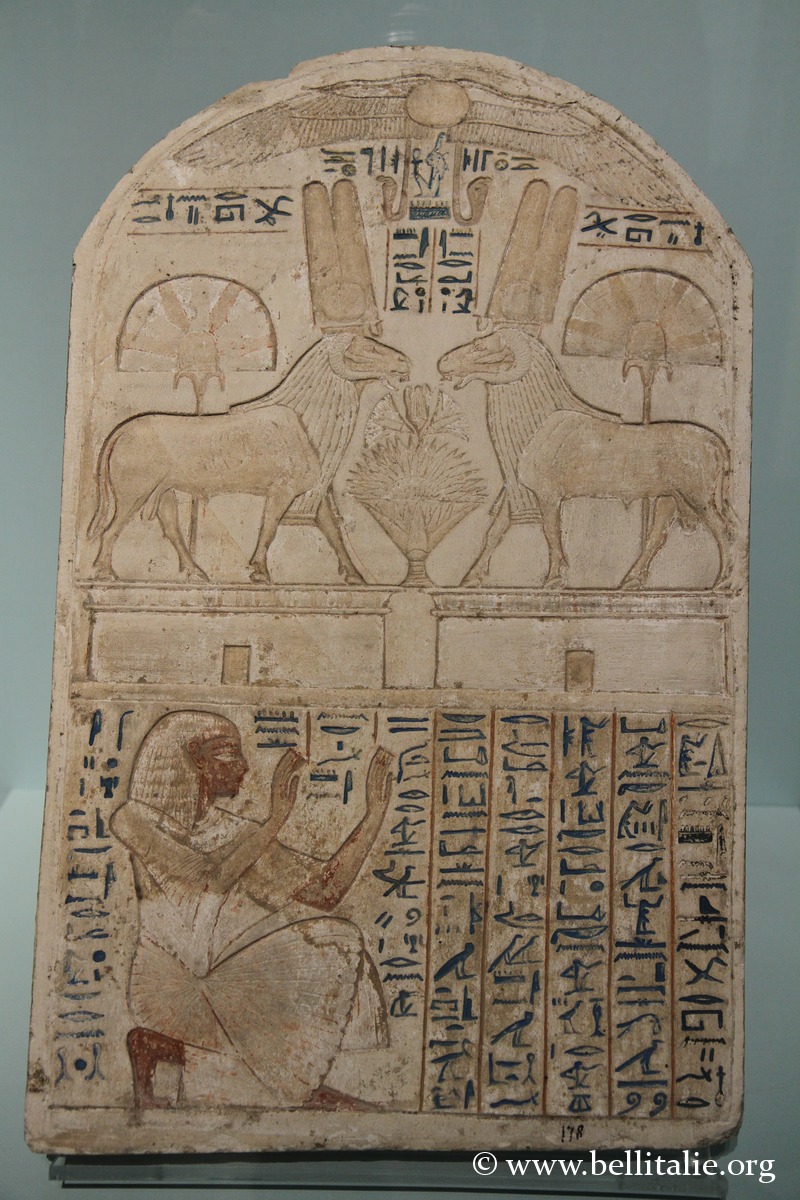
Superb stelae, statues and sarcophagi are notably housed in the rooms of this floor, with several reconstituted tombs that date back to the first dynasties and even burials prior to the dynastic period.
- Room 2: Pre- and Proto-dynastic (Thinite)
- Room 3: Tomb of the Unknowns and Tomb of Iti and Neferu
- Room 4: Middle Kingdom
- Room 5: Middle and New Kingdom
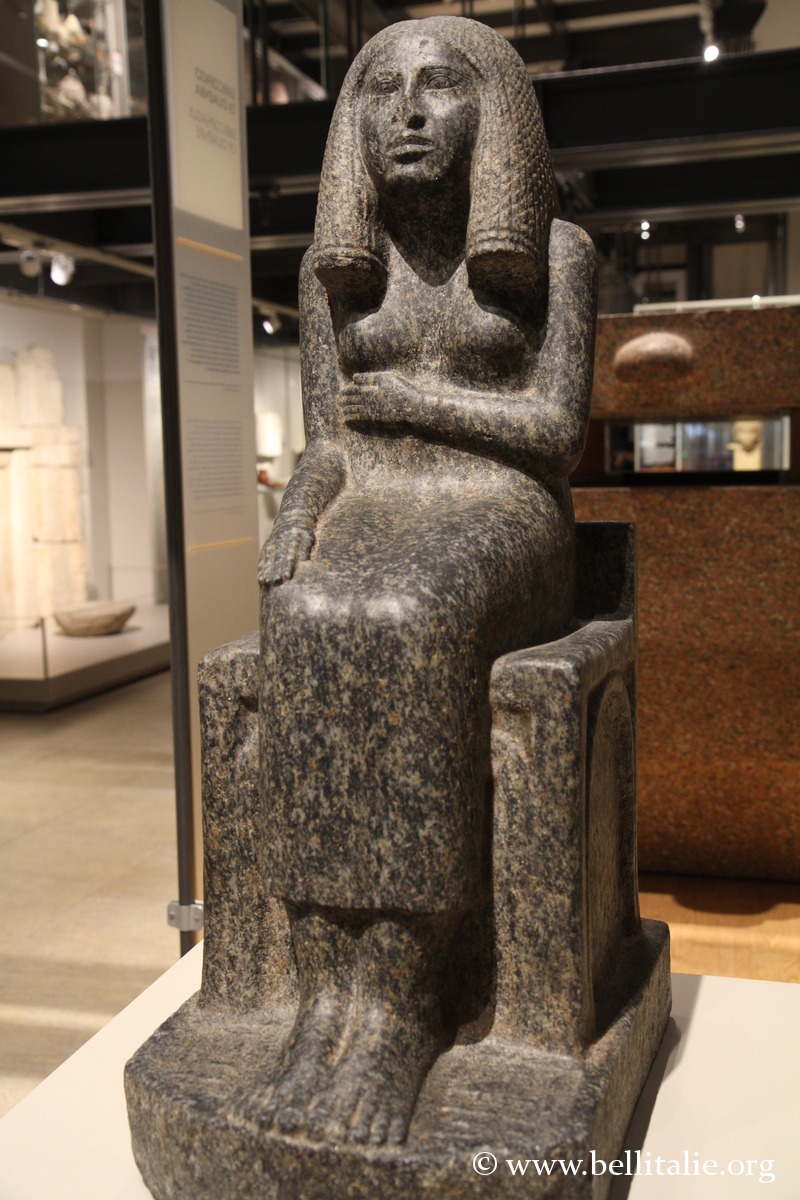
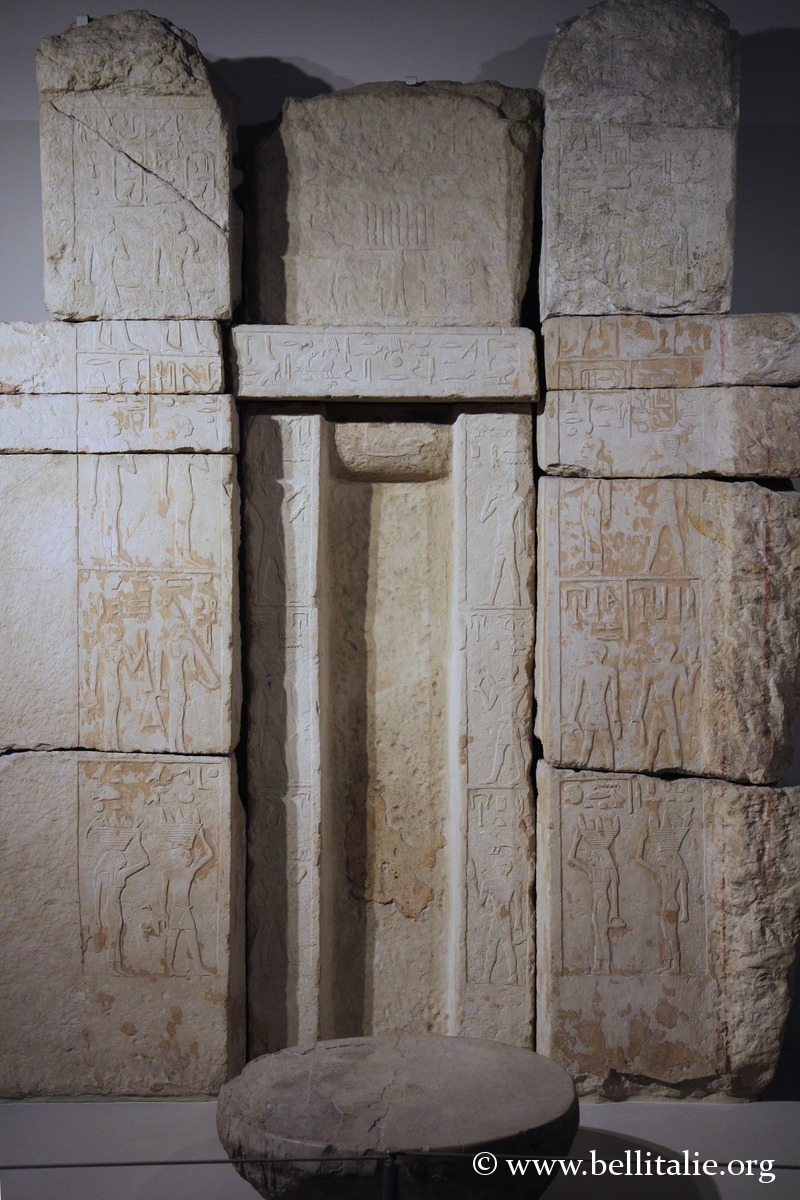
An astonishing mummy in fetal position dates back to the pre-dynastic period, from the site of Gebelein, dating to around 3600-3500 BC. One also discovers for example the lovely statue of Princess Redji who would be the daughter of a king of the Old Kingdom (2592-2544 BC), the false door of the tomb of Princess Uhemnefret (2543-2435 BC) which allowed passage to the afterlife.
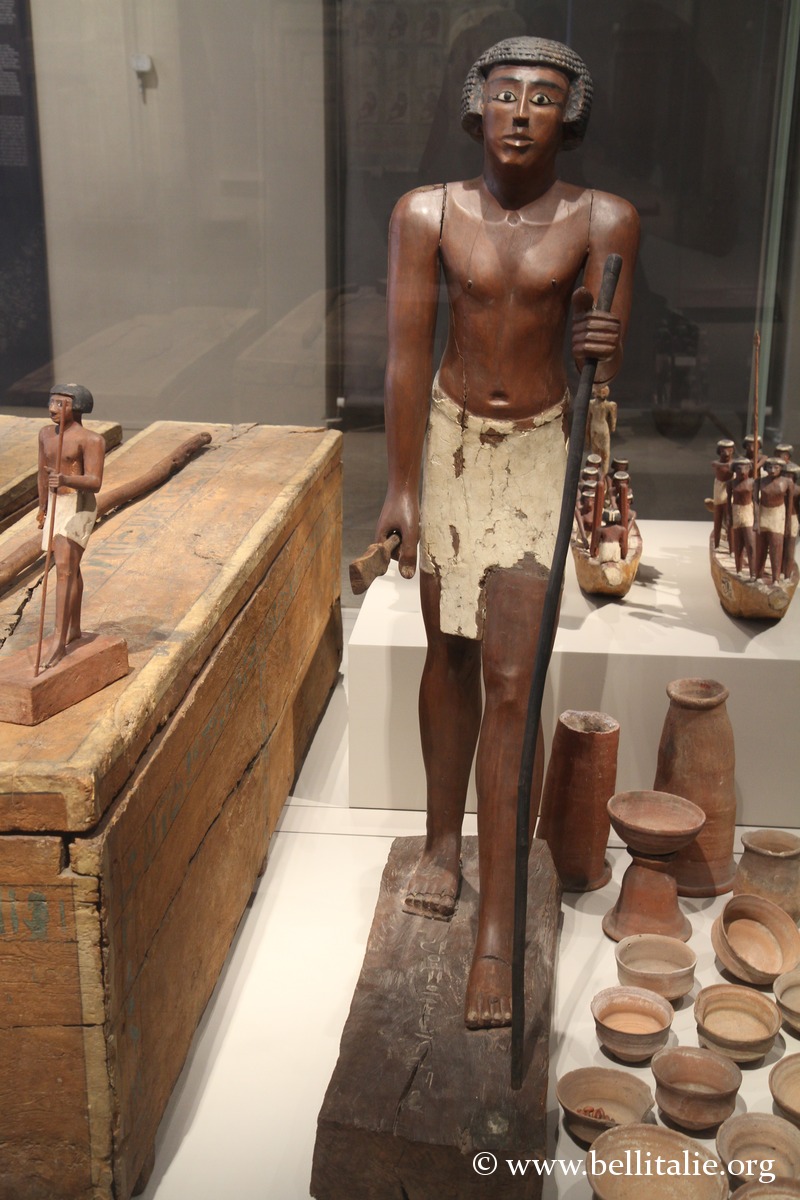
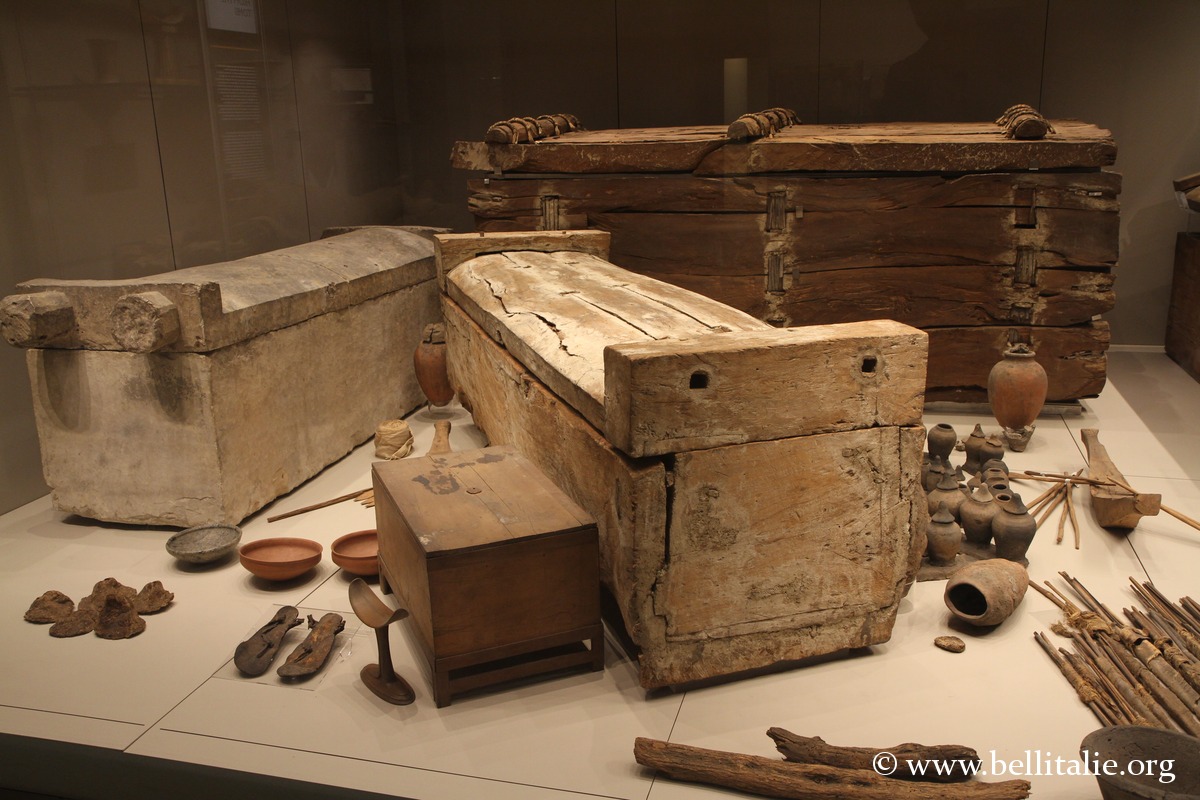
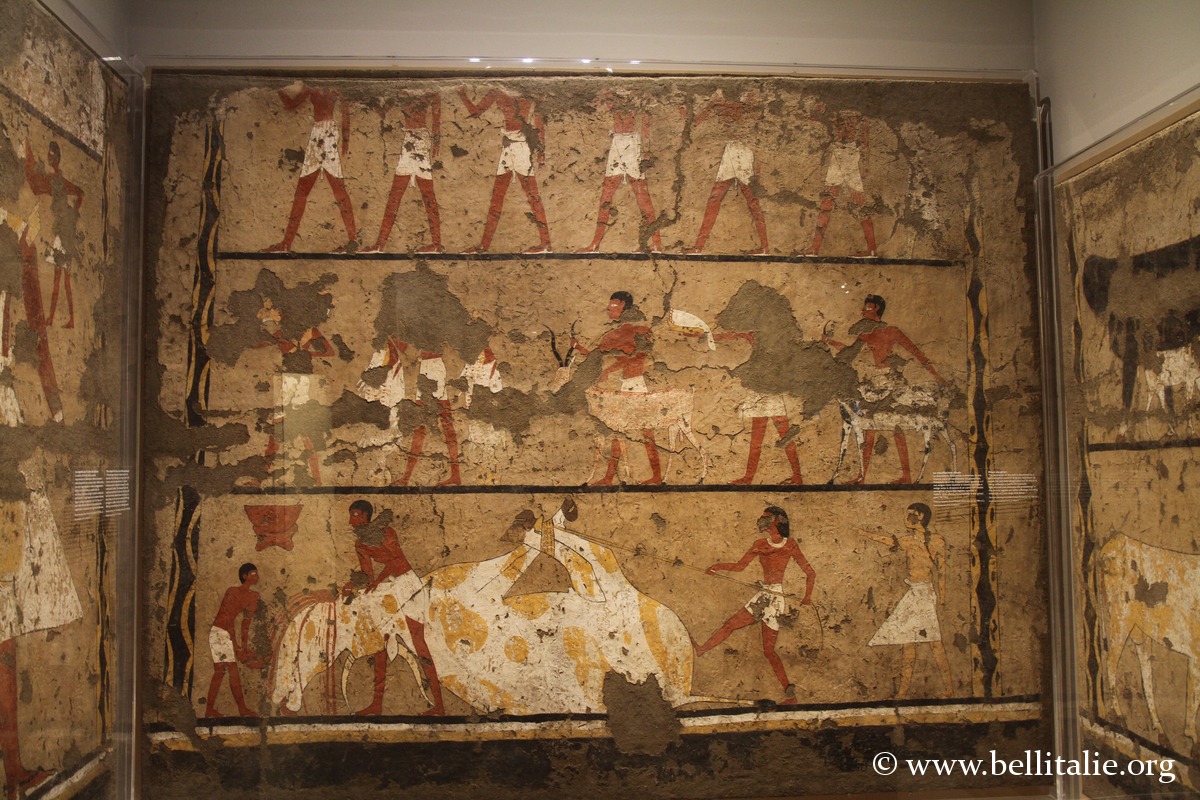
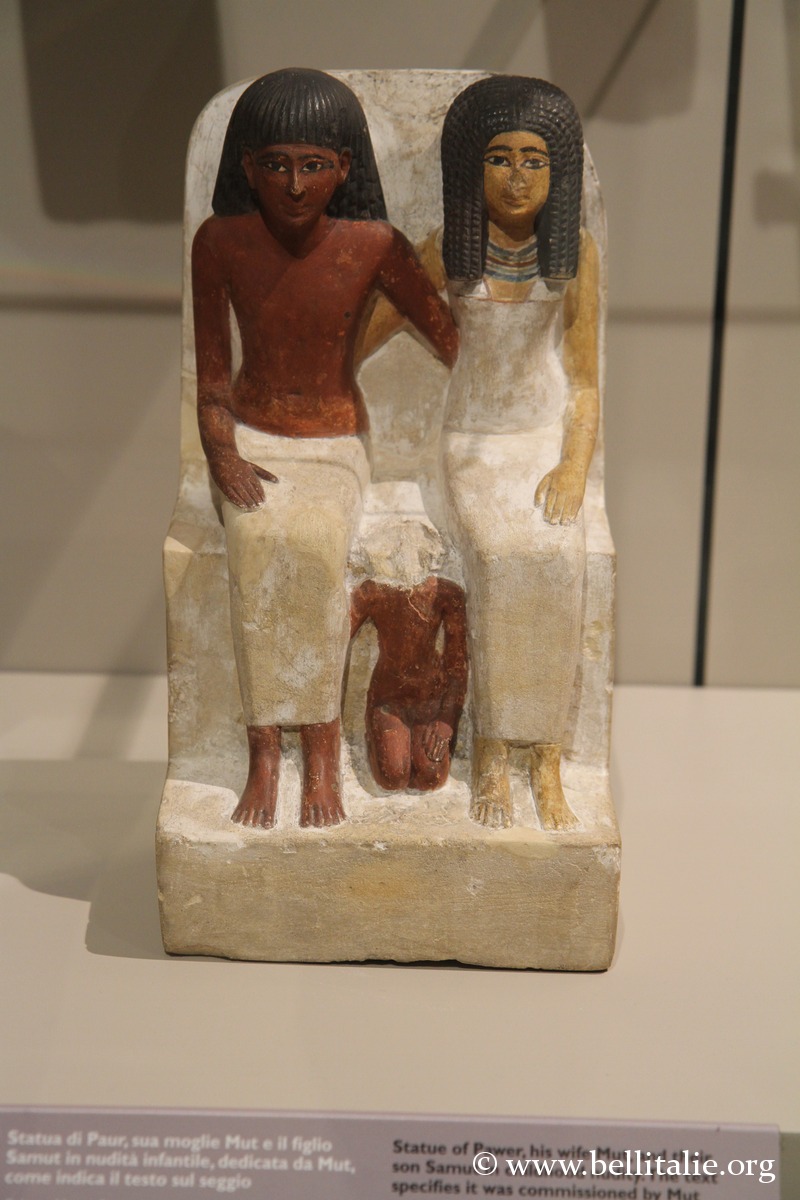
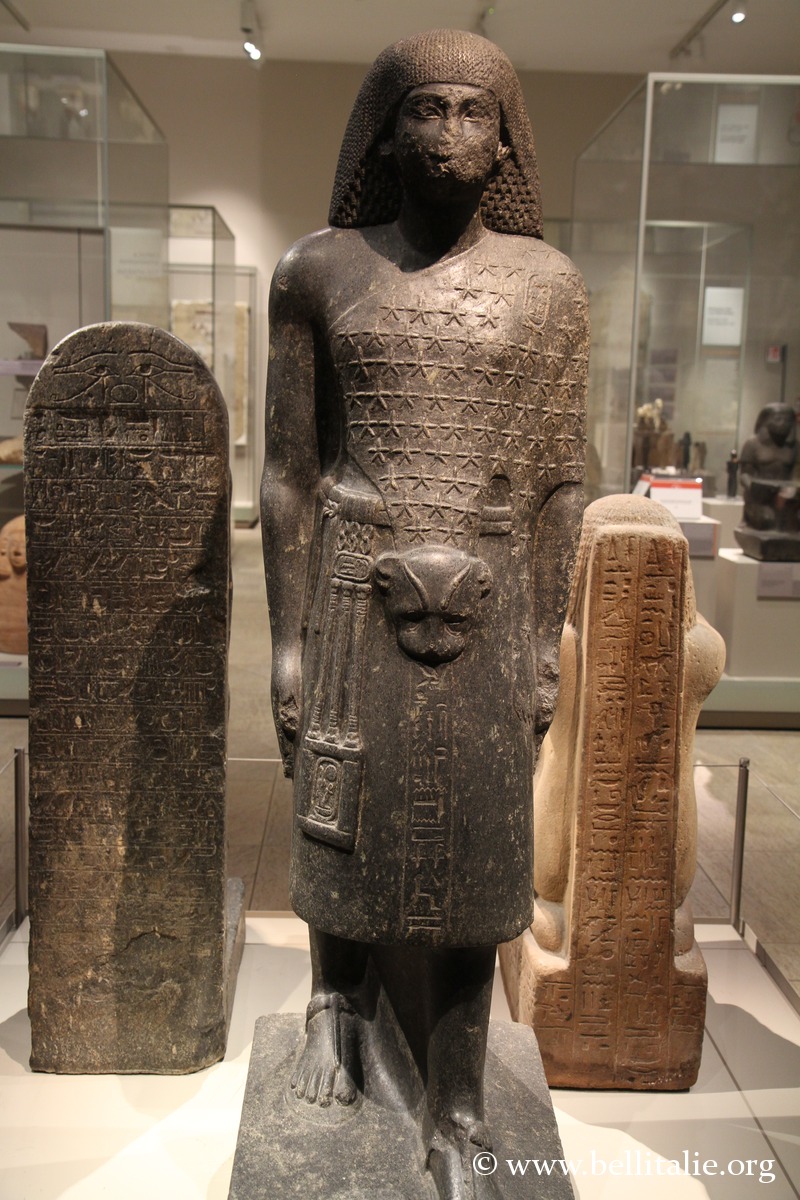
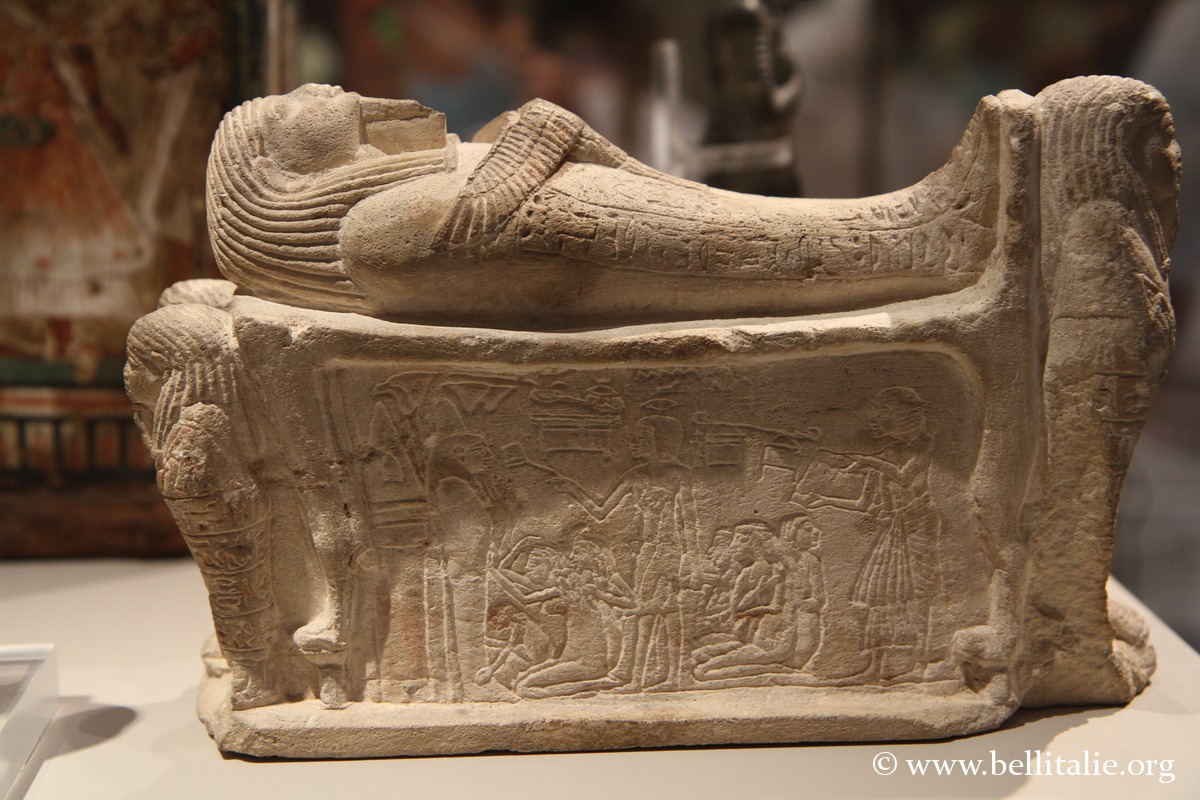
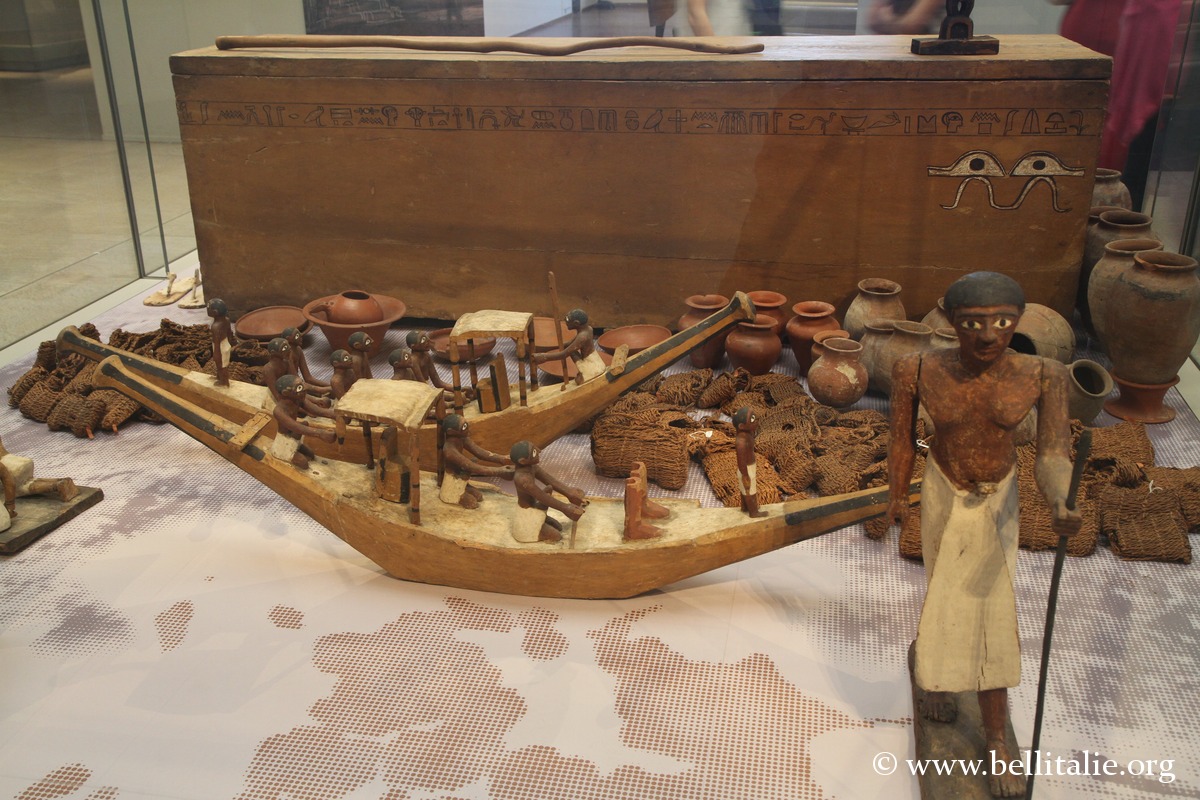
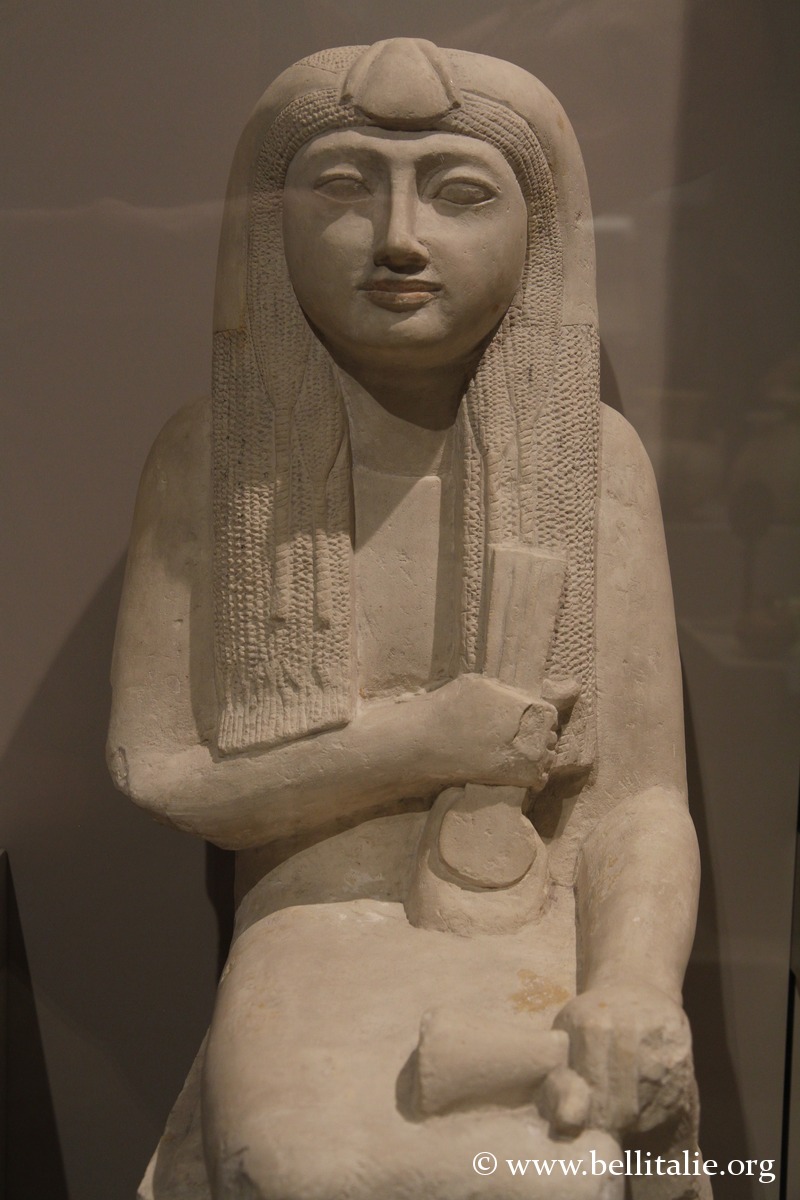
Among the tombs of the site of Gebelin, one finds the superb pictorial walls of the walls of the tomb of Iti and Neferu (2118-1980 BC), which represent in particular scenes linked to the life of the deceased such as rituals of animal offerings and hunting scenes. The tomb of the unknowns (2435-2305 BC) is reconstituted with its mummies and all its material. One finds ancient tombs with boats and rowers such as the Tomb of Ini (2090 BC) or the Tomb of Shemes (1980-1700 BC). Also exhibited are thousands of objects of the daily and cultural life of the ancient Egyptians, the limestone statue of Ouahka seated (1976-1794 BC) and the sarcophagi of the New Kingdom (from the site of Puia).
First floor
- Room 6: Site of Deir el-Medina
- Room 7: Tomb of Kha
- Room 8: Gallery of Sarcophagi
- Room 10: Site of the Valley of the Queens
- Room 11: Late Period
- Room 12: Ptolemaic Period
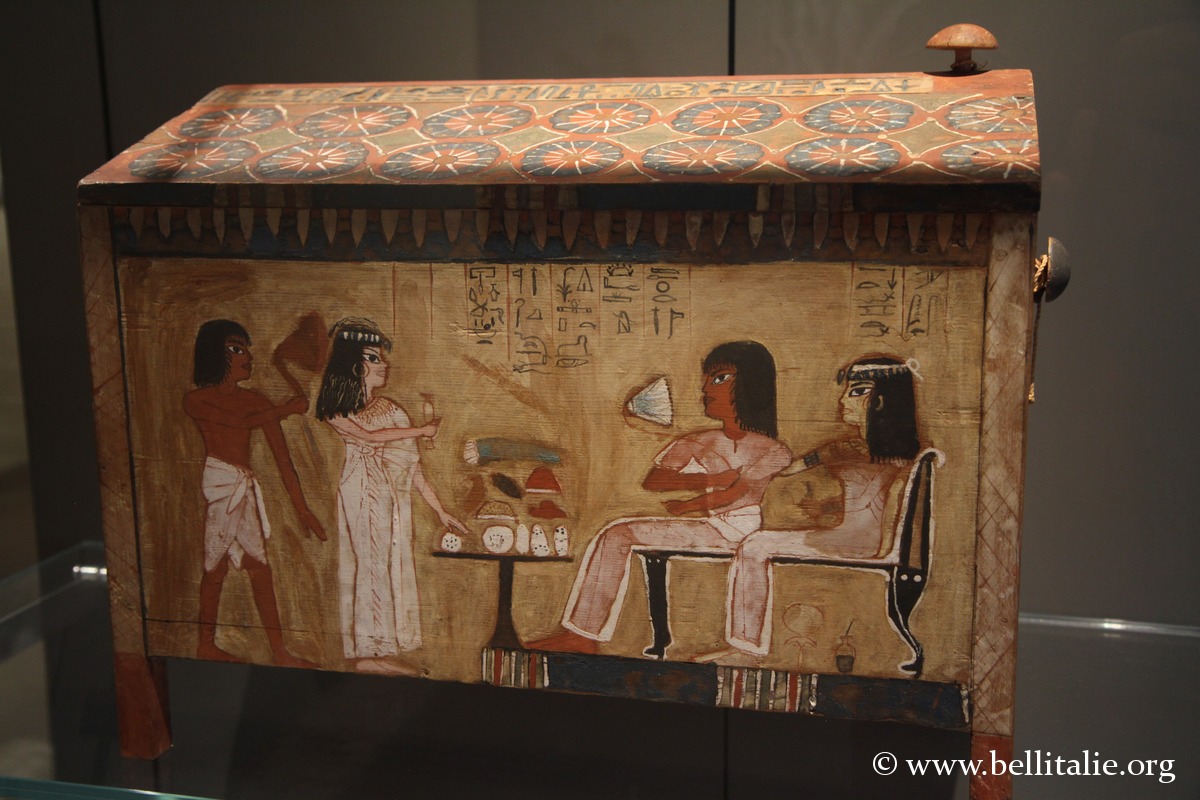
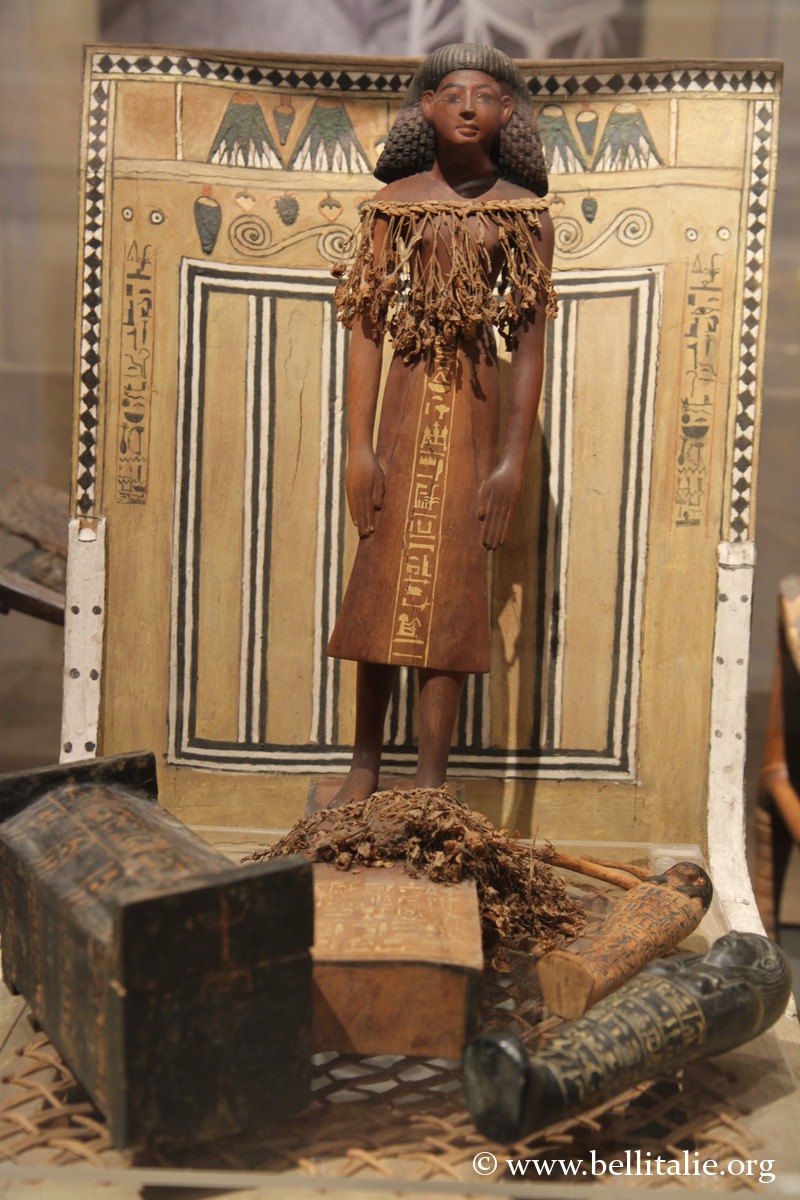
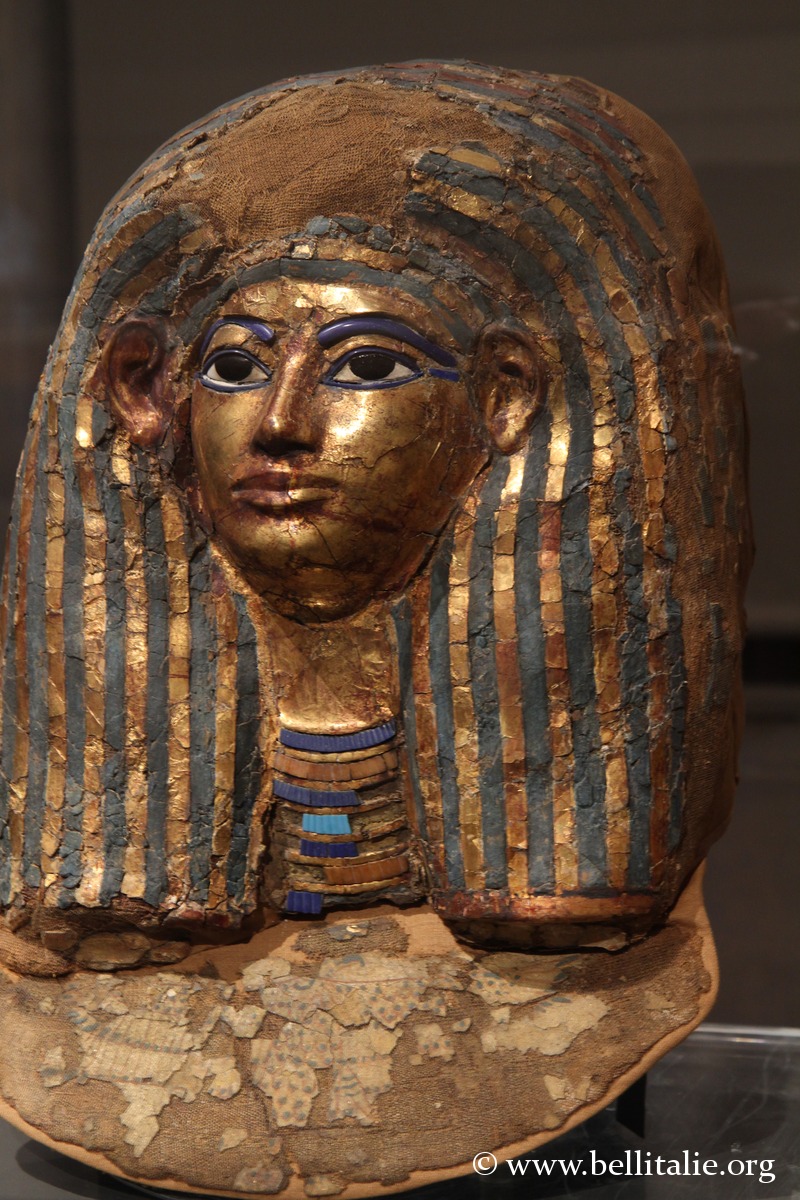
This floor is no less rich, with the superb Gallery of Sarcophagi, and the rooms dedicated to the necropolis of Deir el Medina or that of the Valley of the Queens. Among the objects from the tomb of Merit and Kha, one can discover the very beautiful mask of Merit (1425–1353 BCE) or her sarcophagus, as well as that of her husband Kha, and all the fascinating objects related to the deceased.
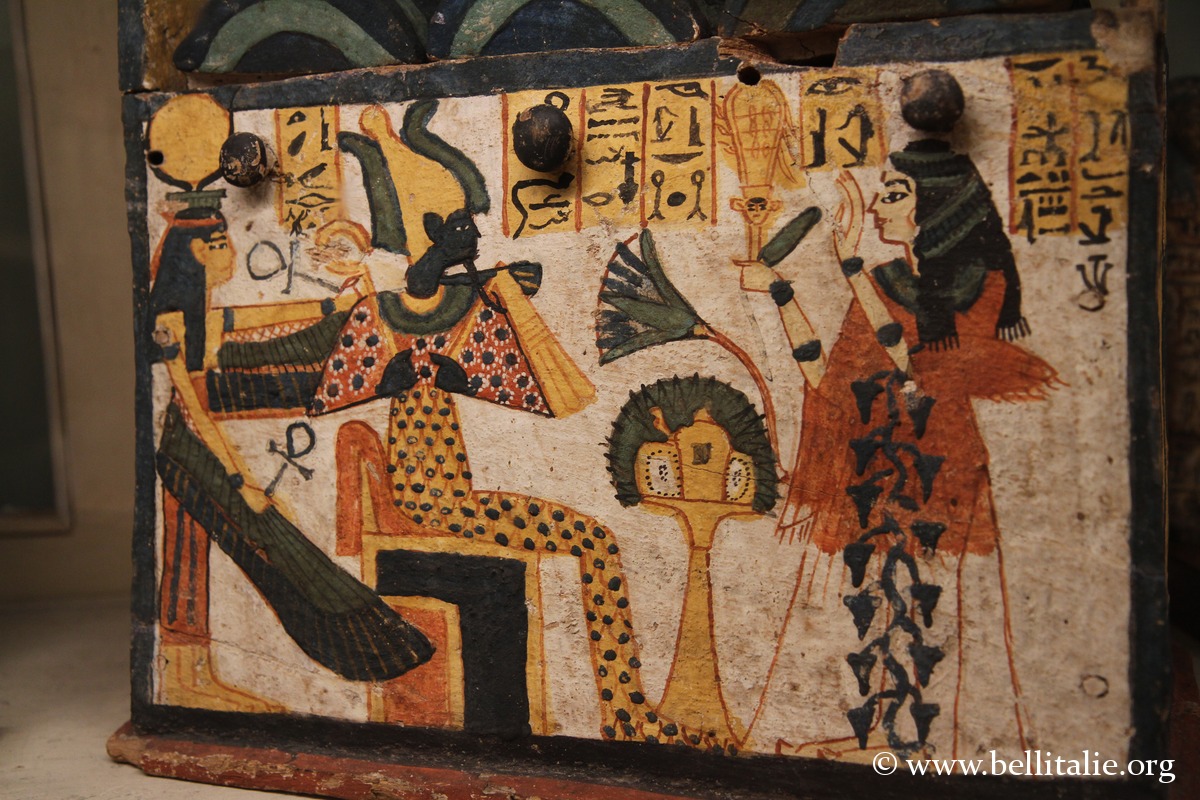
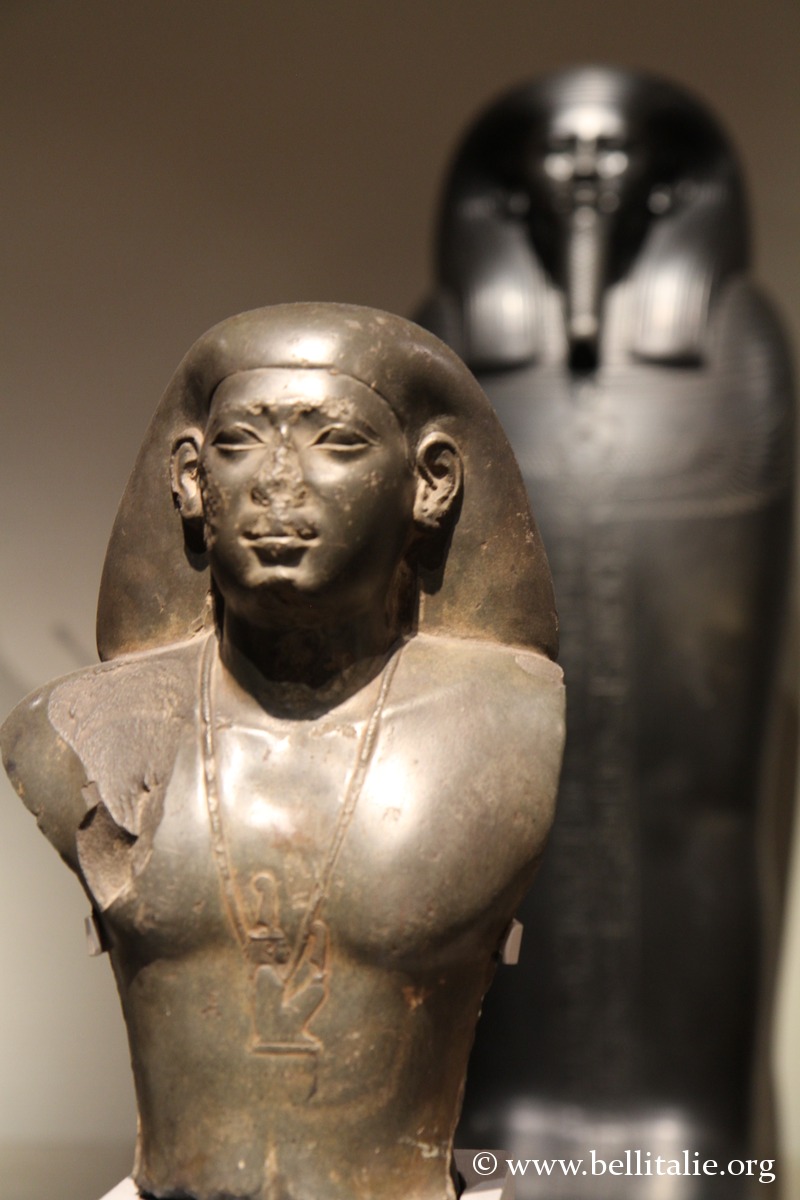
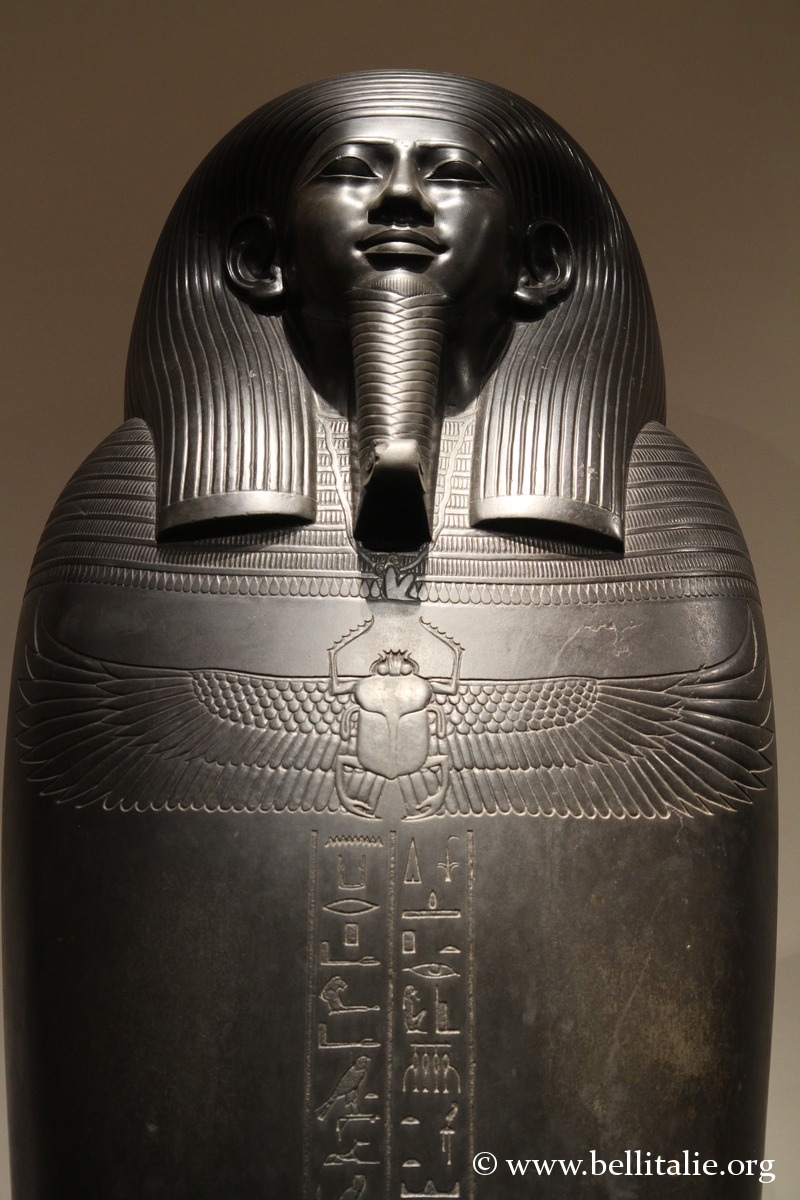
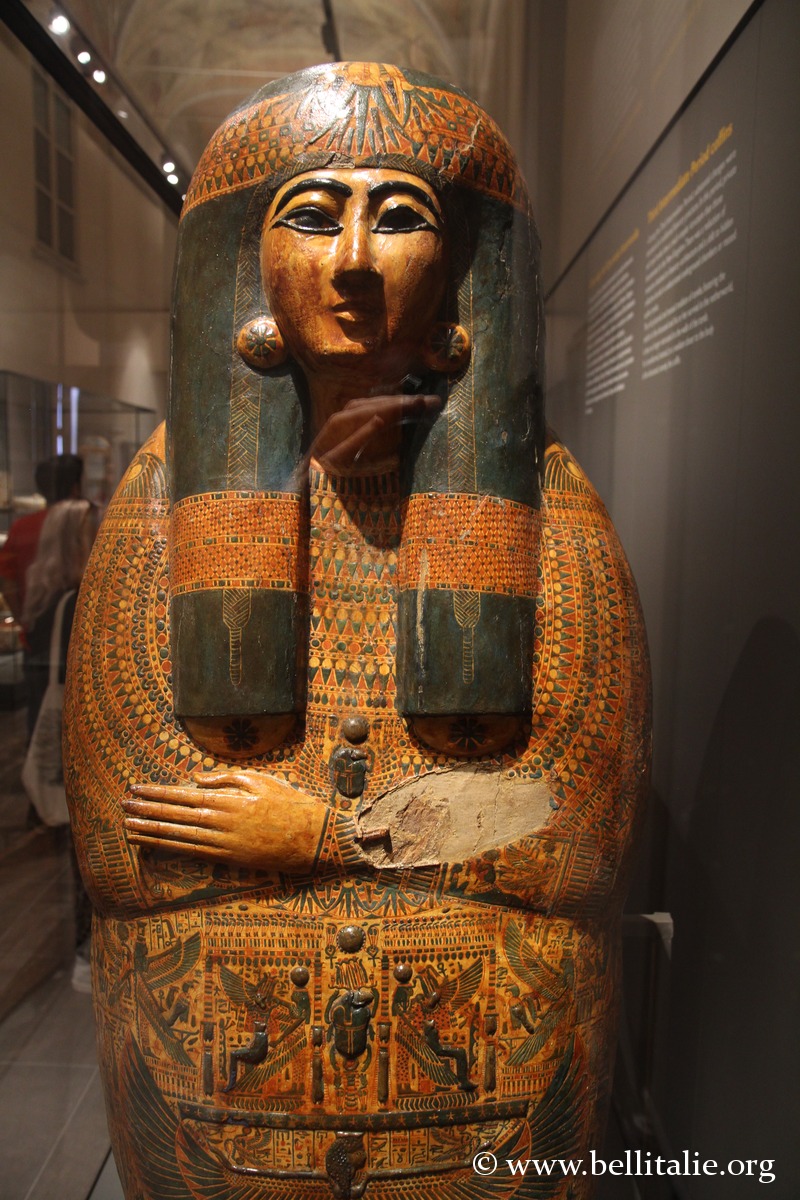
The sarcophagi of the gallery are very richly decorated and painted with a multitude of details and texts, such as for example that of Tabakenkhonsu (1076–944 BCE) singer of Amun, that of the scribe Butehamon (1076–944 BCE), or the large sarcophagi of the Late Period in black stone of Gemenefherbak (664–525 BCE) and of Ibi (664–610 BCE)
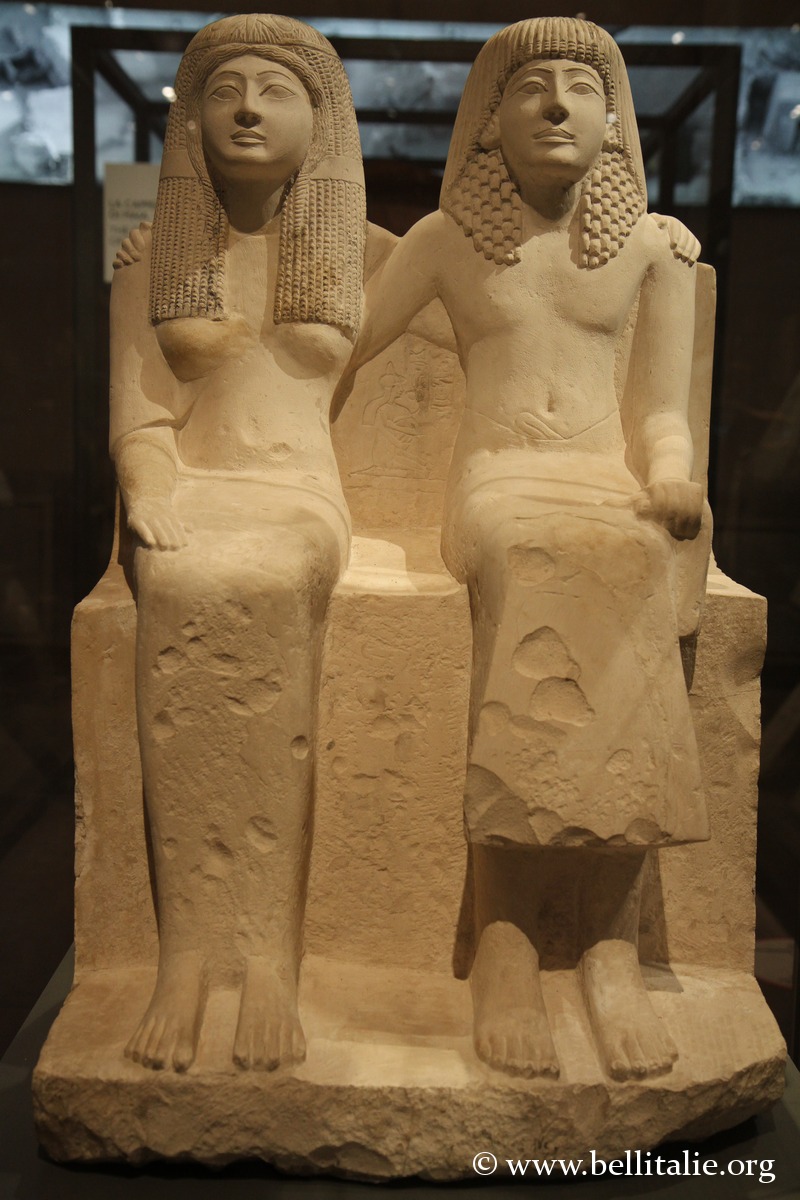
Among the objects, the very beautiful pyramidion of Ramose (1292–1190 BCE) dates back to the New Kingdom, the limestone Statue of Pendua and Nefertari (1292–1190 BCE) where the spouses embrace, the chapel of Maia and Tamit with its wall paintings, the Ostrakon of the Dancer (1292–1076 BCE) in a particular pose.
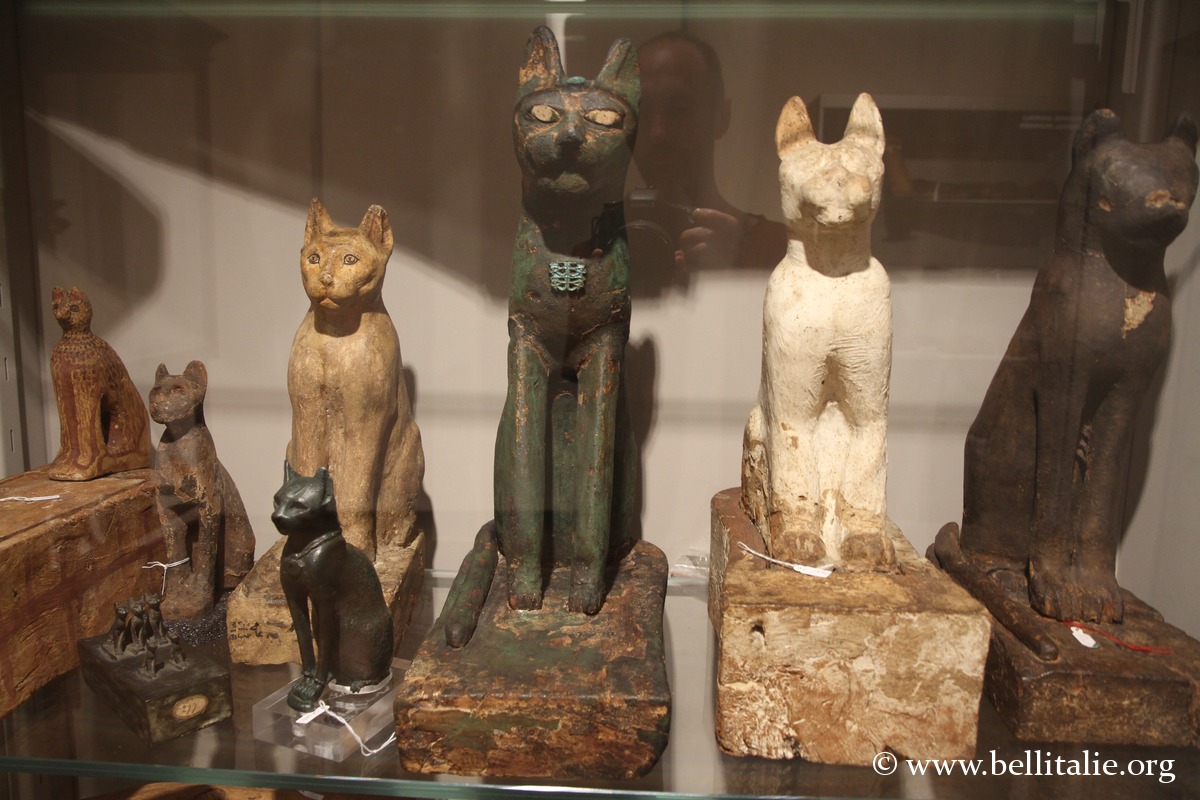
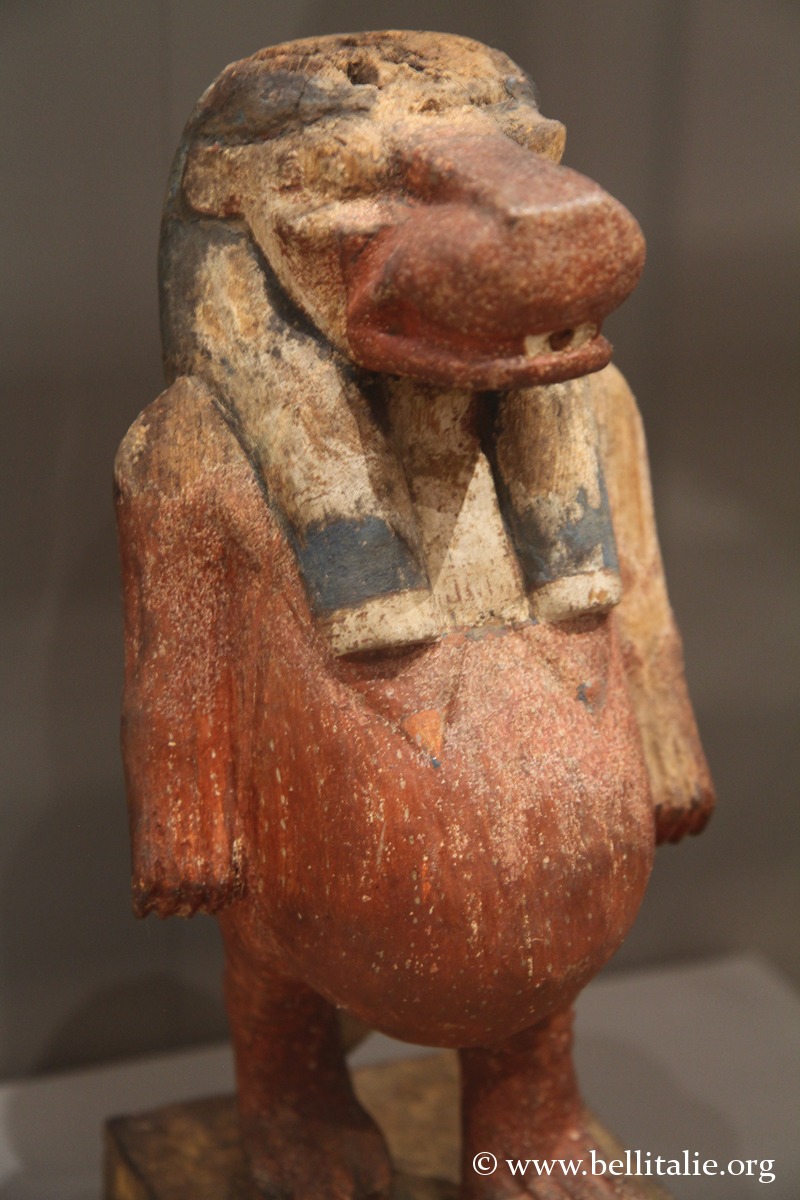
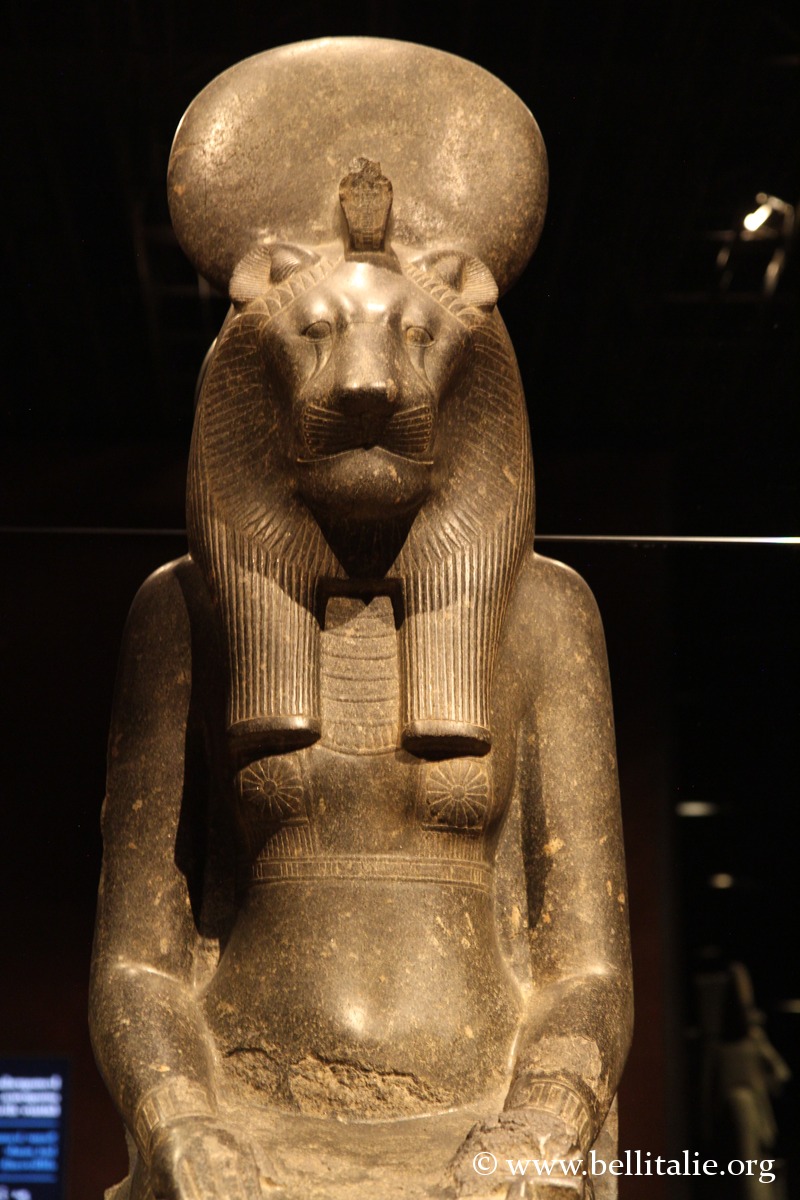
A lovely series of statuettes represents gathers the Egyptian deities.
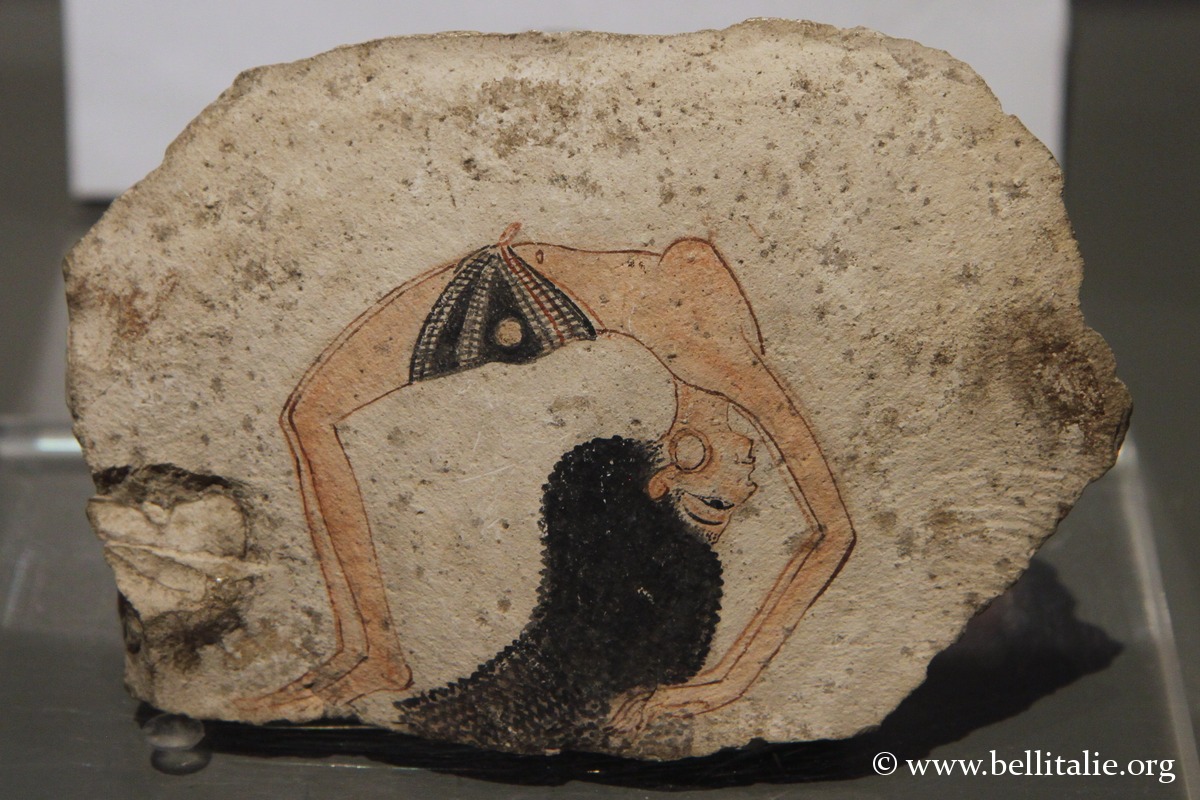
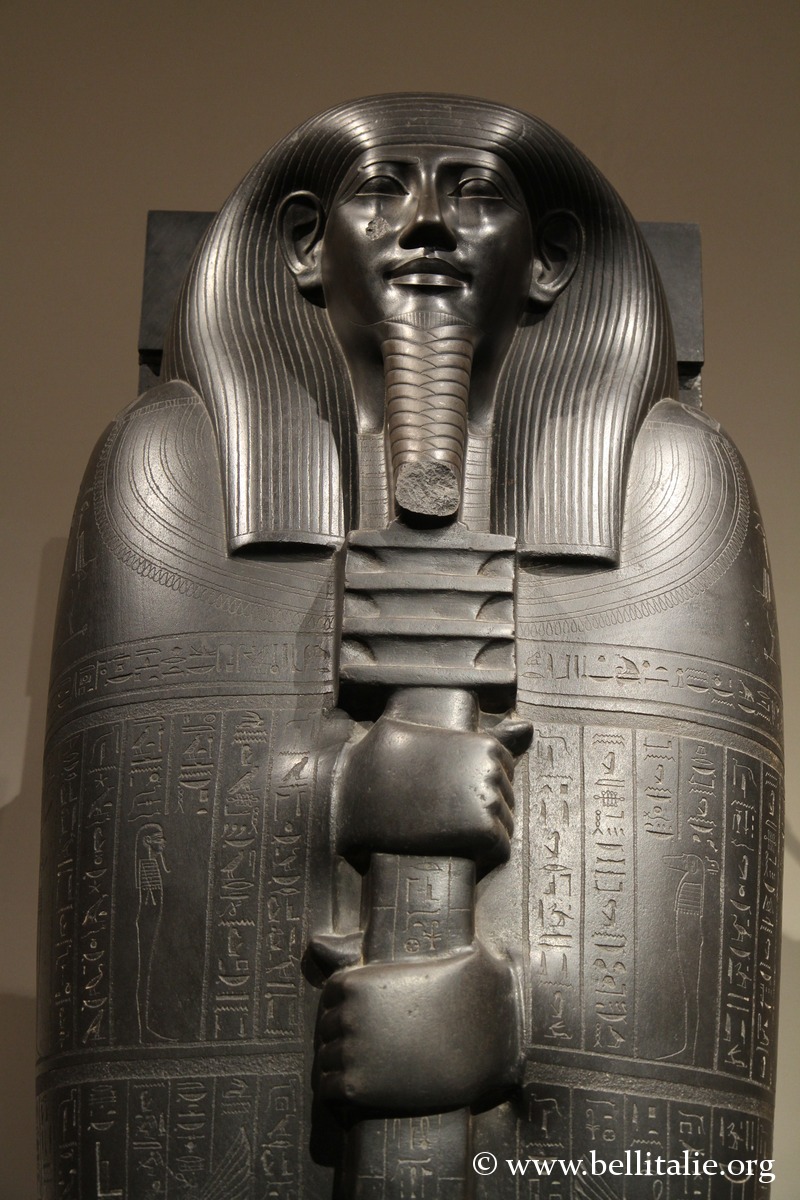
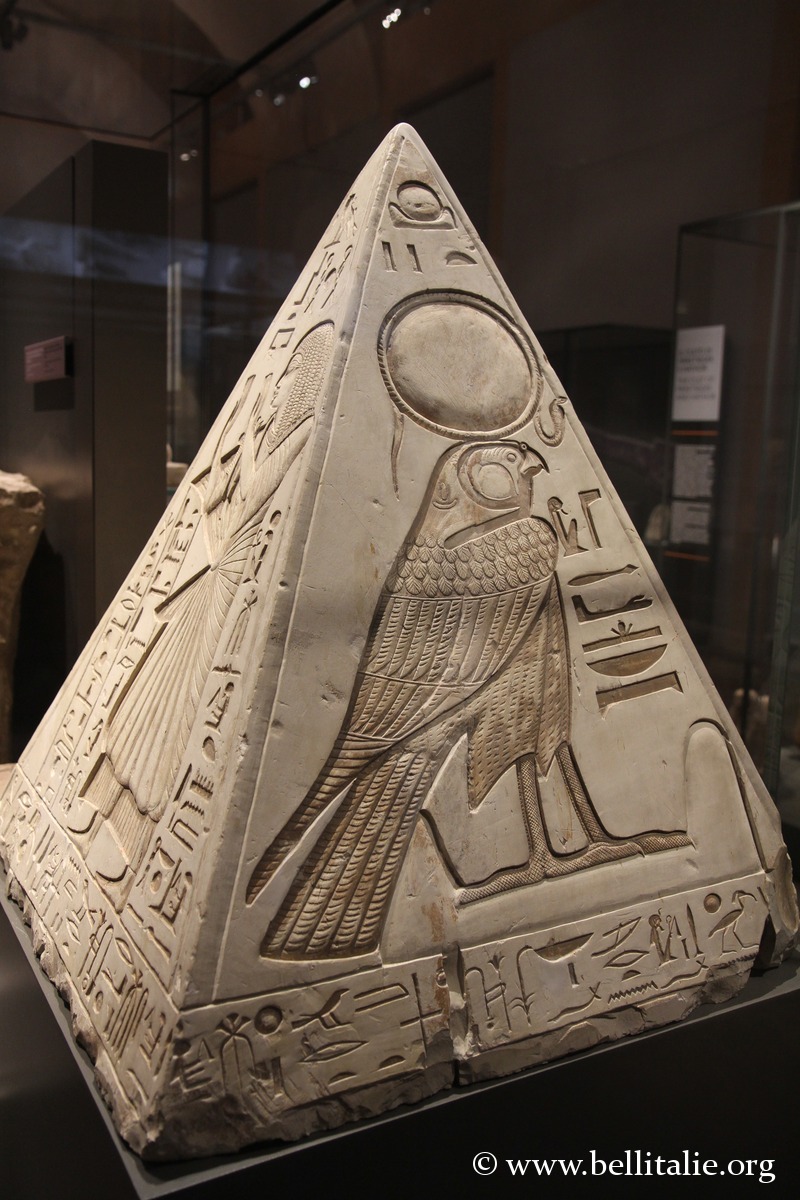
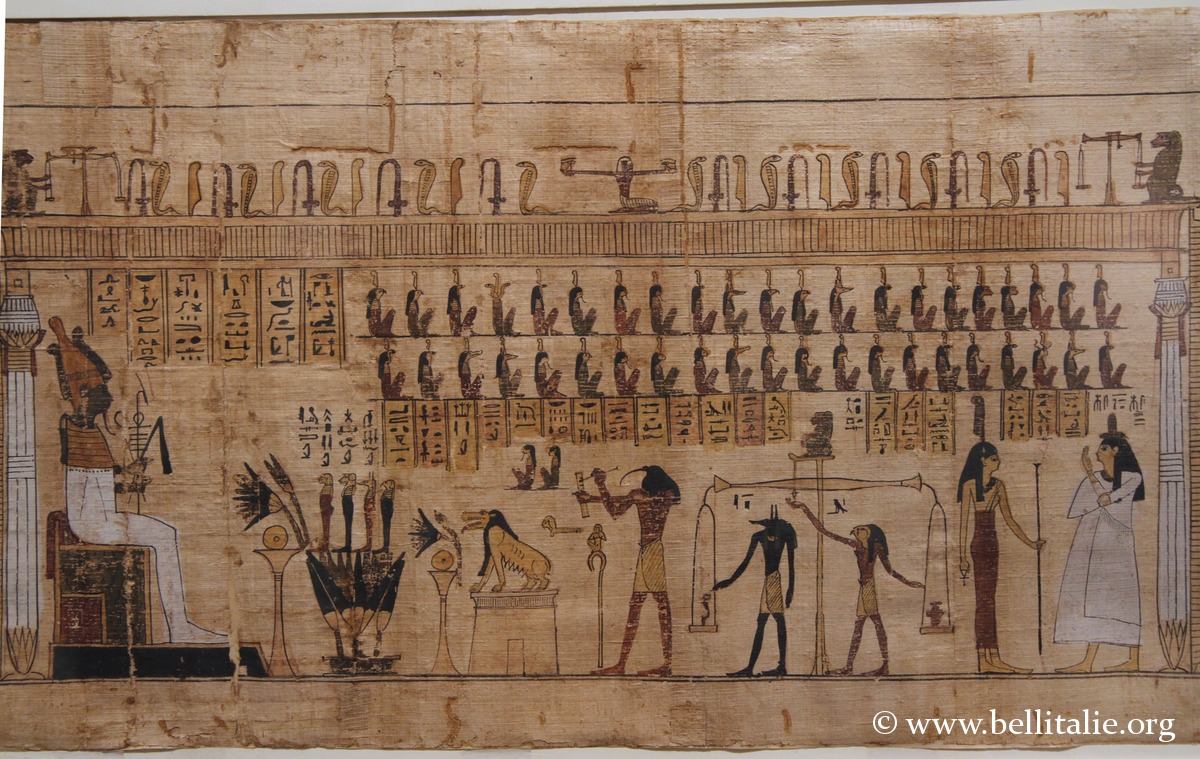
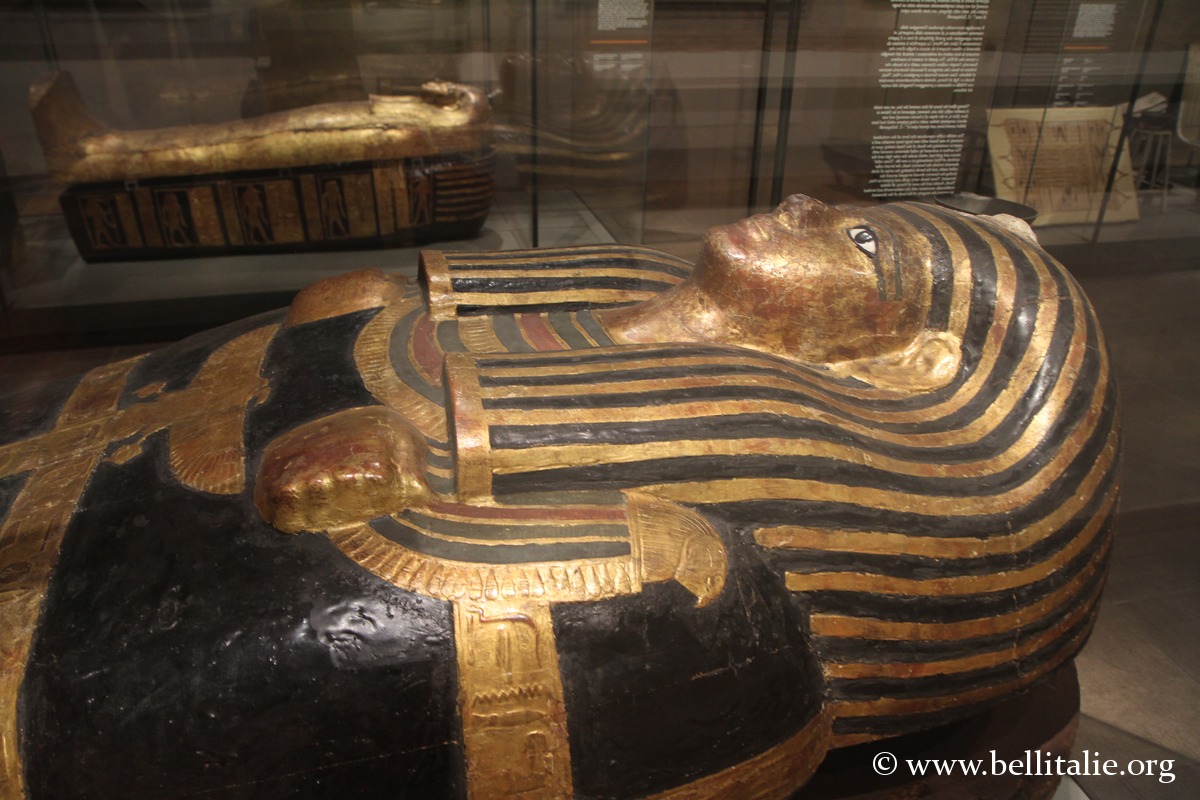
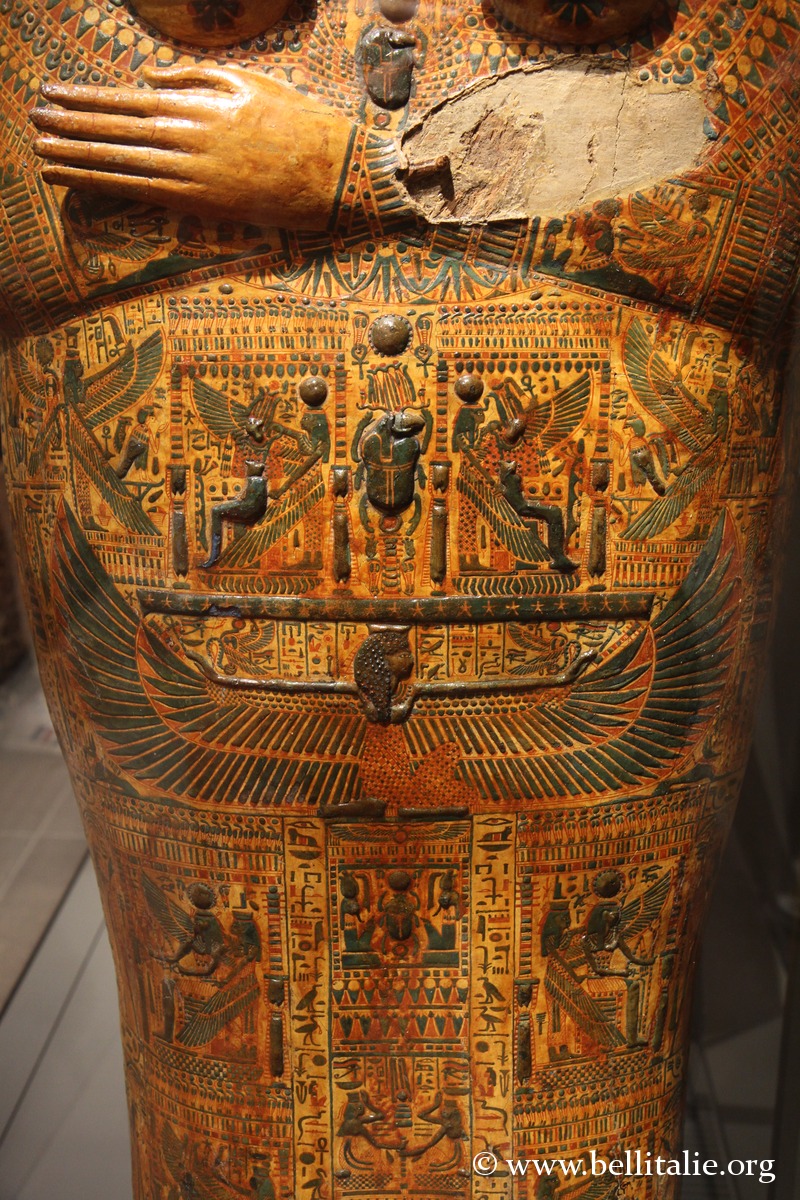
(1076–944 BCE)
Ground floor
- Room 14a/b – Gallery of the Kings
- Room 15: Temple of Ellesiya/Nubian Hall
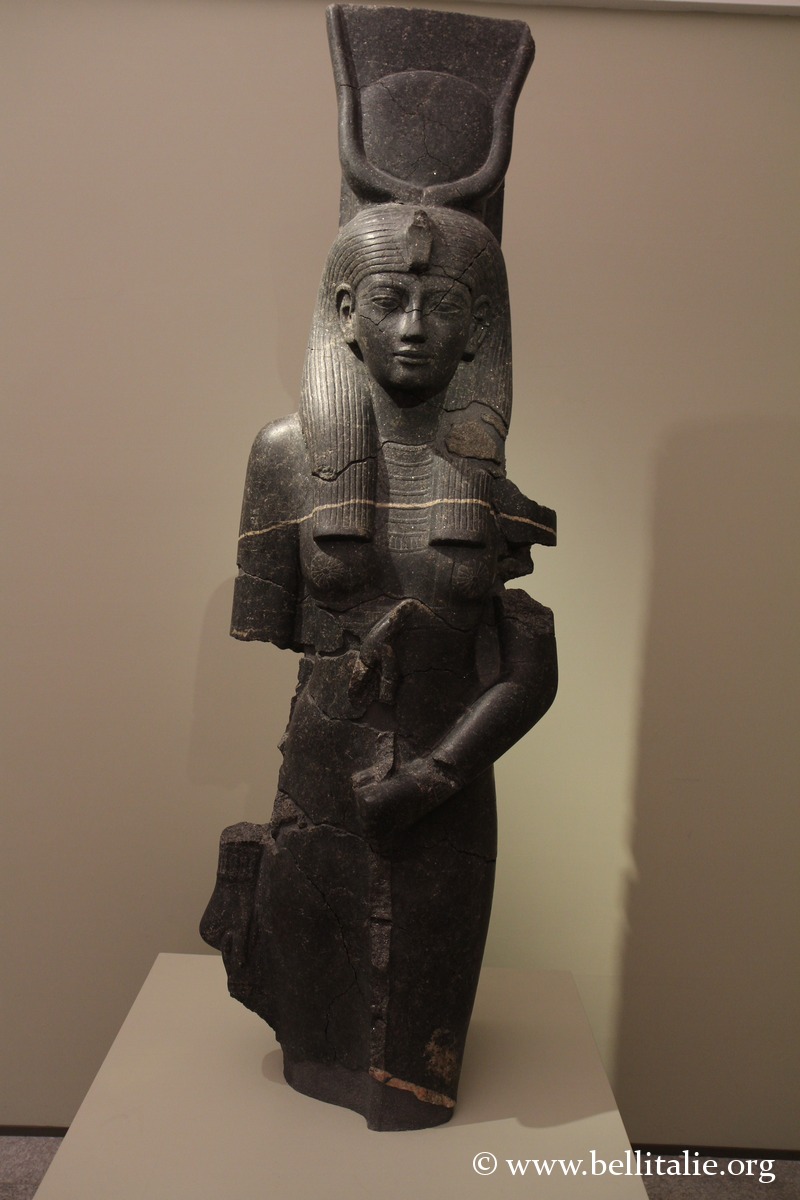
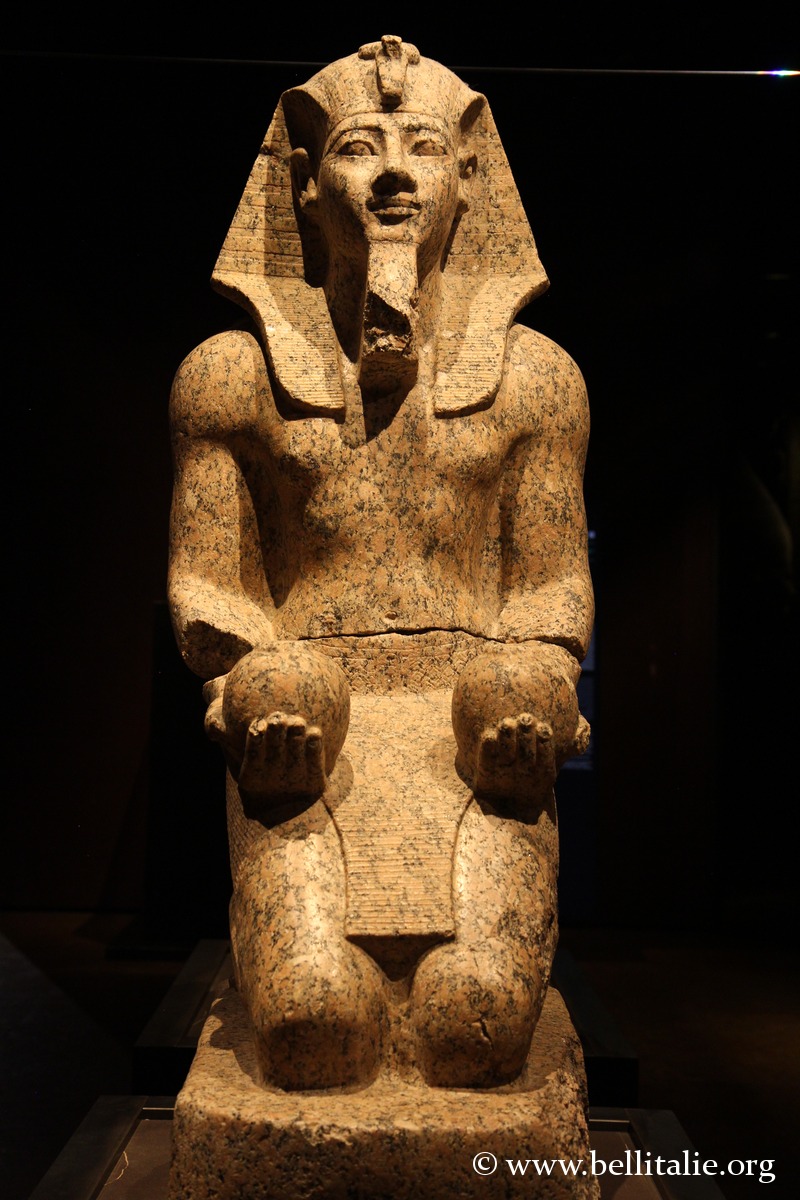
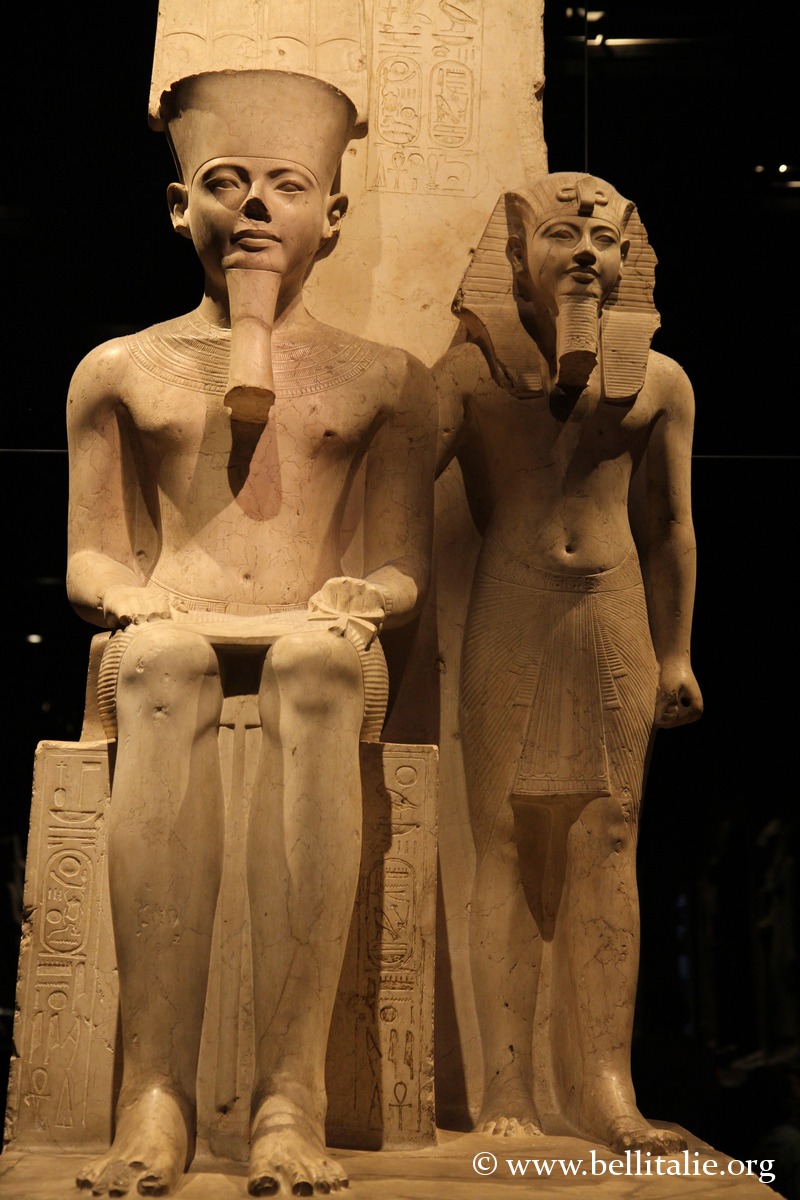
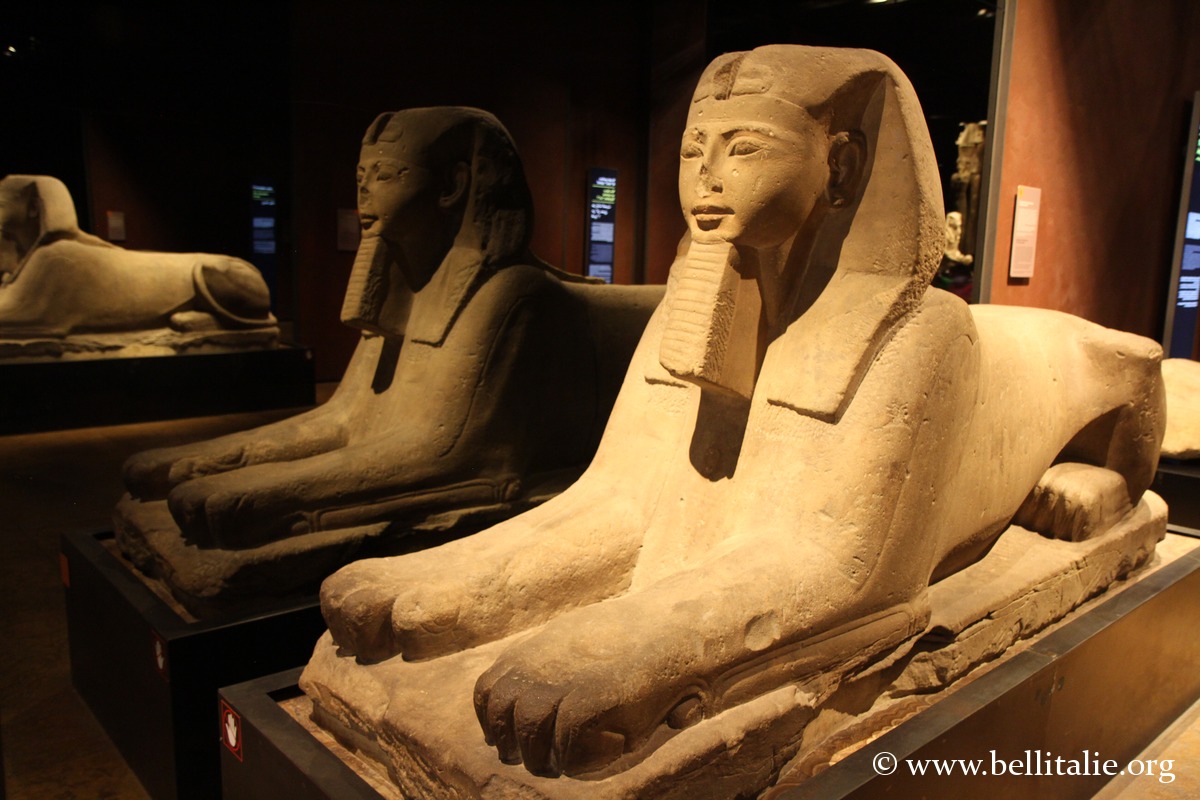
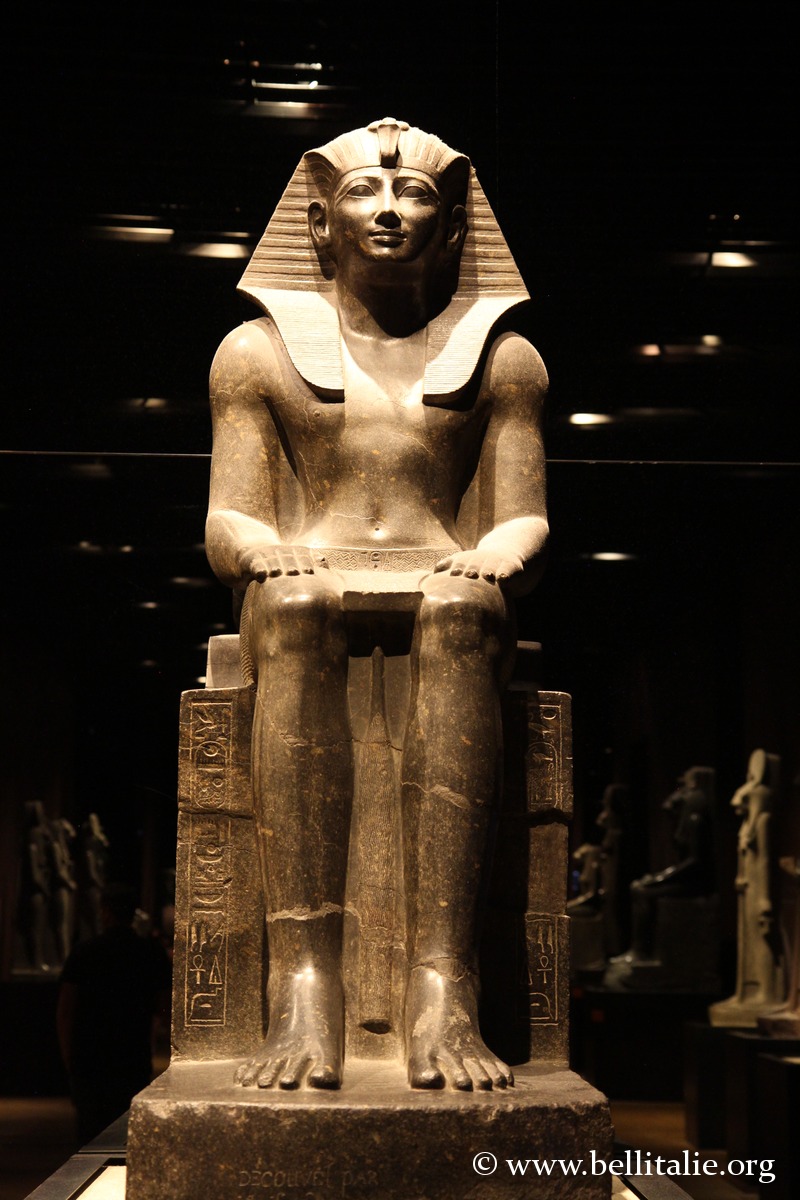
In the large hall of the ground floor, from the general semi-darkness emerge and reveal themselves the large statues of the Gallery of the Egyptian kings, with the large sphinxes, immense pharaohs and deities highlighted by careful lighting, including Tutankhamun, Horemheb, Thutmose III, Seti II, Ramesses II (1279/1213 BCE), Amun.
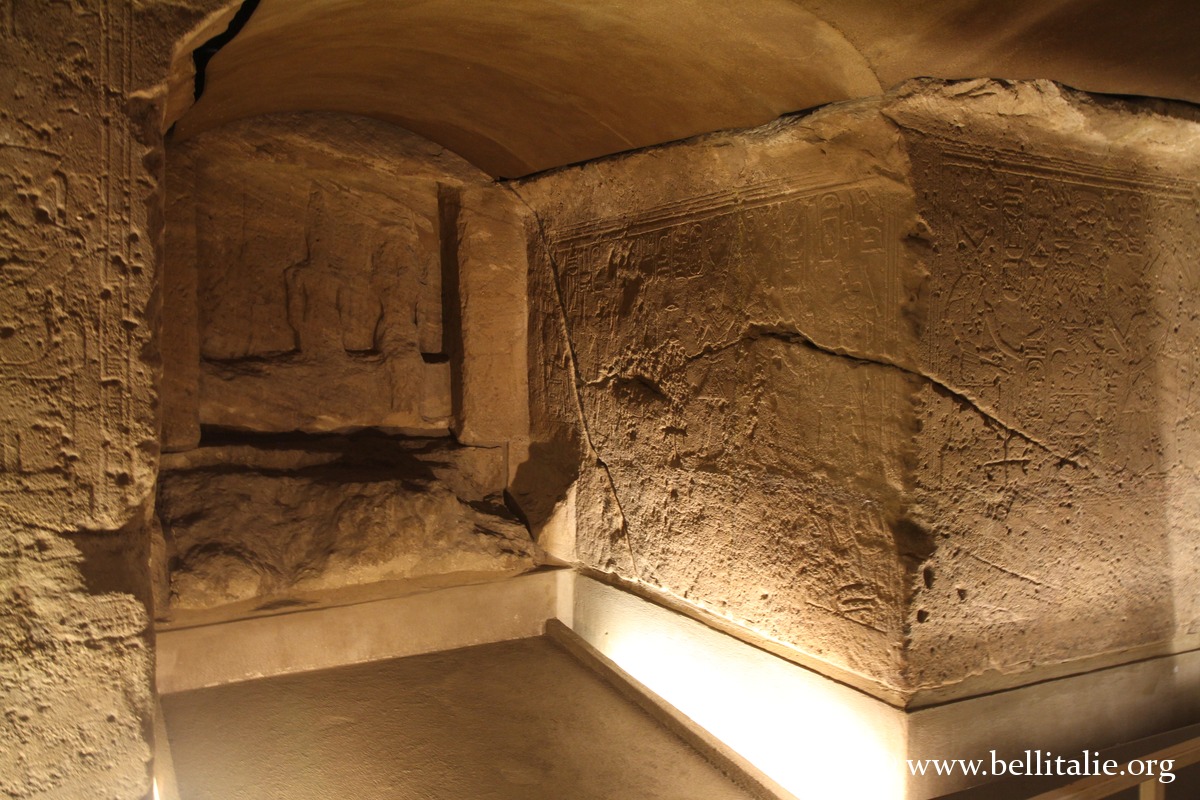
Concluding the visit is the Temple of Ellesiya built by Thutmose III and then embellished by the pharaohs Akhenaten and Ramesses II, which was offered to Italy by Egypt for its contribution to the relocation of the sites of the upper Nile valley such as Abu Simbel which were to be submerged by the reservoir of the Aswan Dam.
Map and address
Via Accademia delle Scienze, 6, 10123 Torino
If you see this after your page is loaded completely, leafletJS files are missing.
Information
- Official website: www.museoegizio.it
- Wikipedia article: en.wikipedia.org
- What to see in Piedmont
- Turin
- Saint Michael’s Abbey, La Clusa
- Lake Maggiore

- Susa Valley and Chisone Valley
- Susa
- Lake Orta
- Cuneo and Surroundings
- The Langhe
- Montferrat
- Roero and surroundings
- Asti
- Alba
- Domodossola and Val d’Ossola
- Valsesia
- Sanctuary of Mount Oropa
- Saluzzo and surroundings
- Usseaux and Fenestrelle Fort
- Casale Monferrato
- Vercelli
- Ivrea, Canavese and Biellese
- Novara

- What to see and do in Turin
- Turin in 1 day, 2 days and more
- Piazza Castello in Turin
- Royal Palaces and Museums of Turin
- Mole Antonelliana
- Turin Cathedral of Saint John the Baptist
- Piazza San Carlo in Turin
- Palazzo Madama, Turin
- Palatine Gate of Turin
- Royal Palace of Venaria
- Other monuments and places in Turin
- Stupinigi Hunting Lodge
- Rivoli Castle
- Moncalieri Royal Castle
- Turin Hills


Comments
Comments in other languages
Bien d'accord
This museum is very rich and well documented; it is easy to spend at least 3 or 4 hours there, so numerous are the curiosities to discover, unless one limits the visit to the rooms displaying the most prestigious objects