


Saint-Germain Castle (12th-13th century)
While travelling through the Aosta Valley, one cannot help but notice the abundance of medieval castles, often perched on rocky outcrops, from whose watchful gaze one cannot escape.
Most were fortified residences, built by feudal lords to control the transit through the valley, a mandatory passage towards the Alpine passes, to establish their control and collect tolls, which could be an important source of income.
The first Aosta Valley castles were built at the beginning of the 11th century on rocks overlooking the valley. They consisted of a square keep surrounded by ramparts, with rather spartan comfort. Among the representative remains of these, let us mention Graines Castle, Cly Castle or Châtel-Argent.
Over the following centuries, these dwellings were further adapted to improve the comfort of their guests, as can be discovered with Ussel Castle or Verrès Castle. Then some castles evolved into seigneurial palaces, particularly from the Renaissance onwards, as with the splendid Fénis Castle or Issogne Castle.
The castles on the map
From the west to the south-east of the valley. Some castles are closed to the public, others are freely accessible, others have an entrance fee, some with guided tours and exhibitions.
 Show interactive map
 Review of the castles along the valley from upstream to downstream:
Blonay Castle
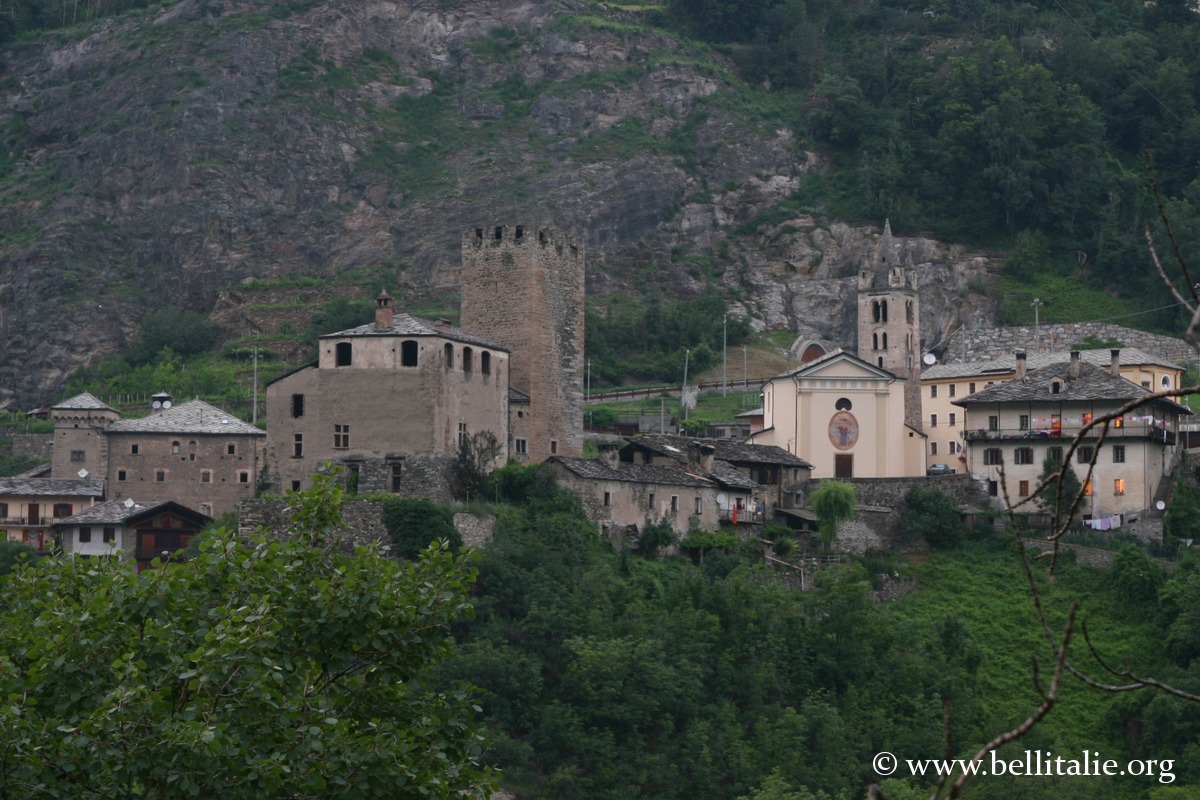
Blonay Castle (12th-15th century)
Near the church of Blonay, this castle consists of a square tower dating from the 12th century accompanied by a more recent building from the 15th century with its remarkable mullioned windows. It was the residence of the powerful Avise family before becoming the property of the brothers of Blonay in 1645. The tower served as a prison, notably in the 18th century.
Châtel-Argent
The shape of the current Châtel-Argent Castle dates back to 1275, although it is older, on a promontory already occupied by the Romans and even before.
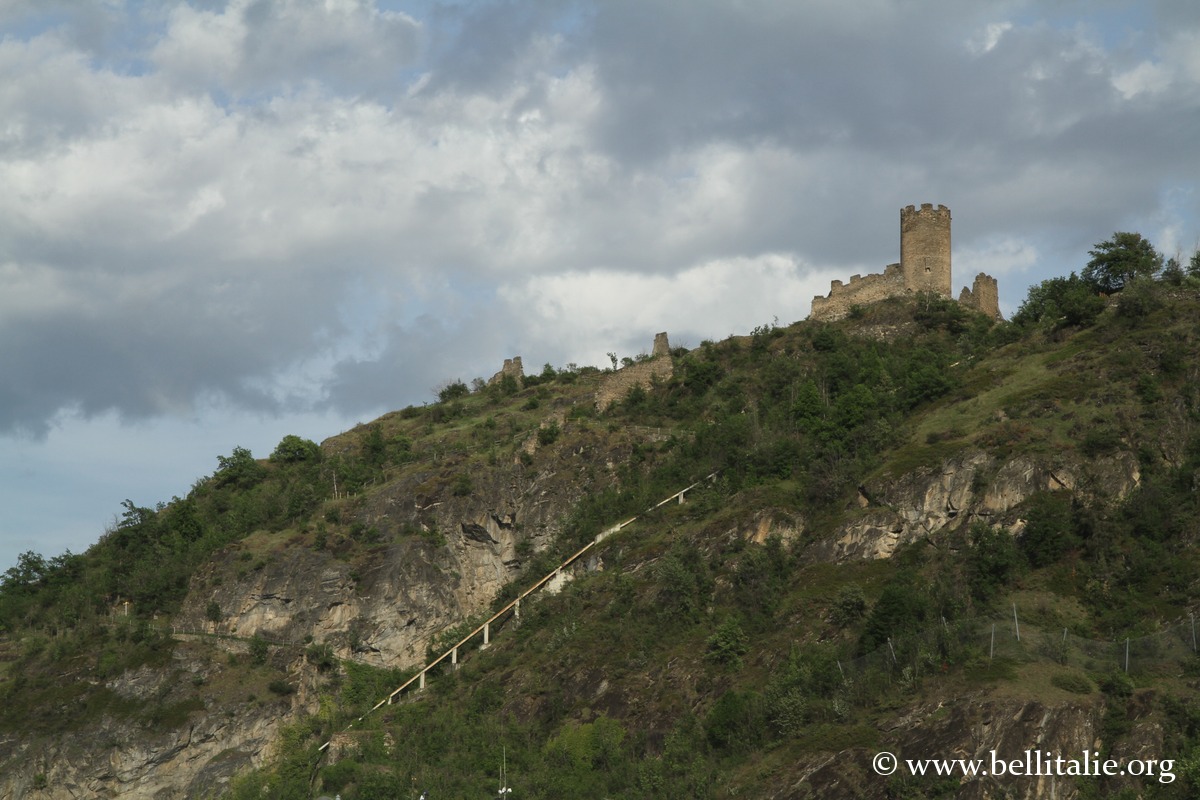
Châtel-Argent (13th century)
It was probably built by Jacques de Saint-Georges, the architect of Peter II of Savoy, who was behind numerous castles as far as Wales. Being in a strategic position, it was always in the possession of the Count of Savoy.
It consists of a large fortified enclosure and a watchtower on the outside, the east wing from the 11th and 12th centuries with a chapel, the portal being on the west side with a second enclosure inside which was the now-vanished dwelling, as well as the vaulted cistern and the circular keep. There were no openings in the walls other than arrow slits.
Sarriod de la Tour
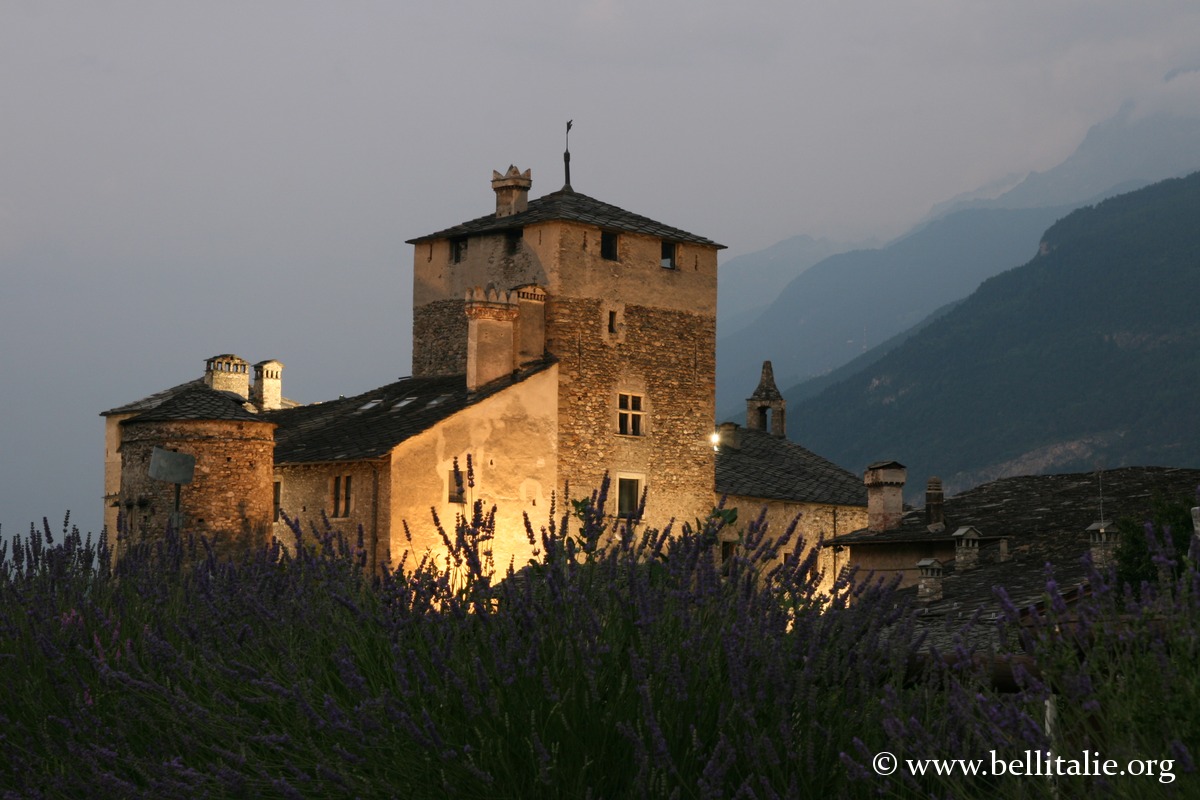
Sarriod de la Tour Castle (14th century)
Sarriod de la Tour Castle has the particularity of being located in the plain of the valley. It was transformed on several occasions, the oldest part having the chapel and the central square keep surrounded by ramparts, typical of the Aosta Valley castles of the 10th-12th centuries.
A true castle was erected from 1420 as an extension of the tower by Jean Sarriod, with the spiral staircase of the tower and the cross windows typical of the 15th century in the Aosta Valley. In 1478, his son Antoine Sarriod de la Tour renovated the chapel with external frescoes and the erection of the small bell tower.
The interior has beautiful rooms, including on the upper floor the Hall of Heads with its decorations on the wooden ceiling. Defensive towers were erected towards the end of the 15th century on the enclosing wall, as well as a new entrance. The east wing dates from the 16th century, the tower at the north corner dates back to the 17th century. It has belonged to the Aosta Valley region since 1970.
Visits to the castle-museum: valledaostaheritage.com
Saint-Pierre Castle
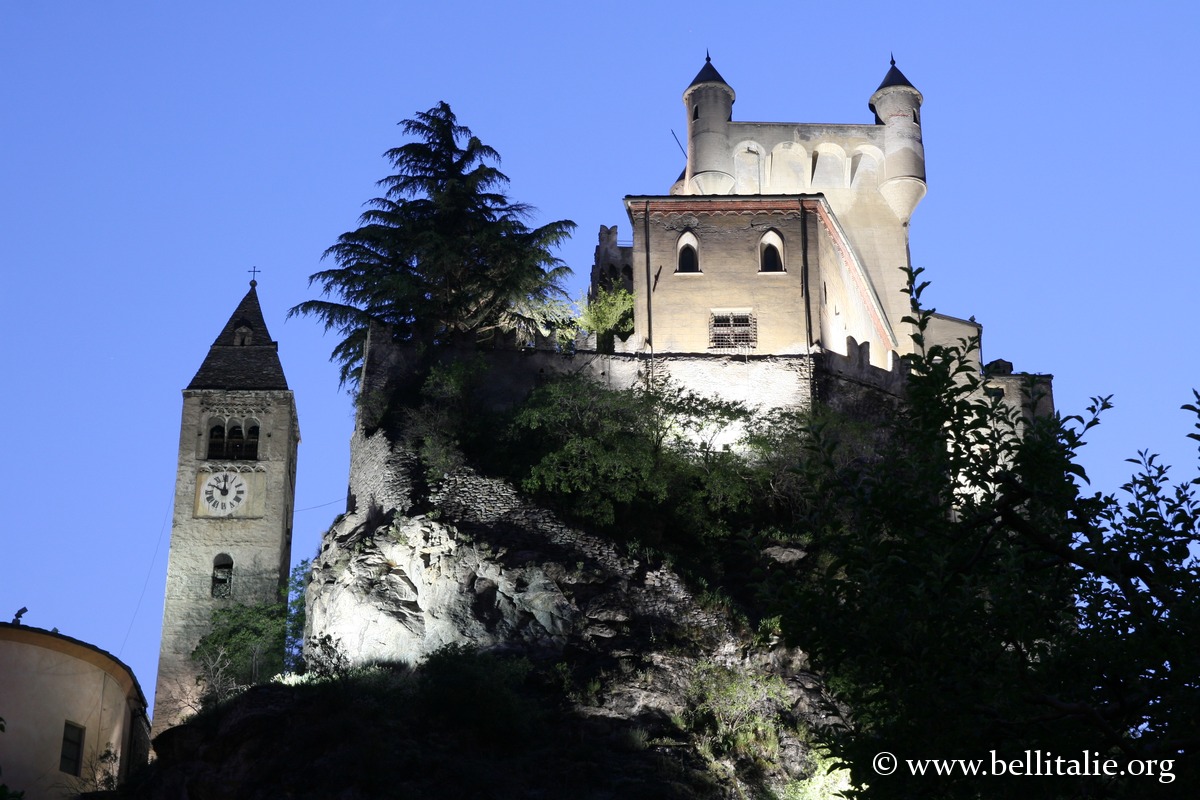
Saint-Pierre Castle (12th-19th century)
On a rocky spur overlooking the road, Saint-Pierre Castle  looks as if it came out of a fairy tale with its particular style created by the four small towers that were added in the 19th century.
It is also one of the oldest in the valley, at least from the 12th century when the brothers of castro Sancti Petri were co-owners. Pietro Filiberto Roncas enlarged the castle in the 17th century.
The Regional Museum of Natural Sciences was installed there in 1985, but the castle is under restoration to reopen at the end of 2022.
Castle-museum visits: www.museoscienze.vda.it
Aymavilles Castle
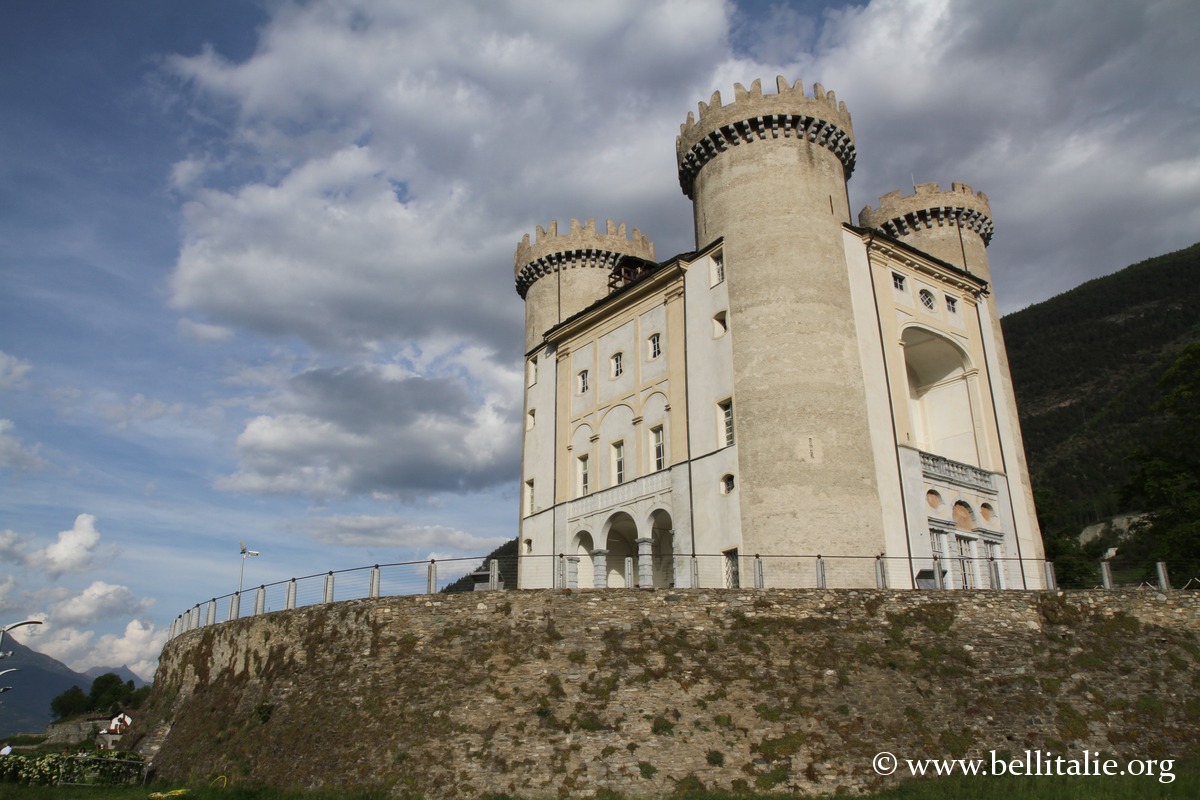
Aymavilles Castle
On a hill on the road to Cogne, Aymavilles Castle is another unique monument, with its exterior blending medieval and baroque, the result of the architectural initiatives of the Challant family over the centuries and the tastes of the eras.
It underwent a major renovation in the 2000s, an opportunity to discover the history of the monument, displayed today in a visitor route.
It has been known at least since 1207, transformed in the 14th century by the Challant family, embellished in the 15th century with four corner towers, a double enclosing wall and the top floor.
In the 18th century, in the time of Joseph-Félix de Challant, elegant loggias were built between the towers, and the castle became more of a seigneurial residence. It was converted into a house-museum in the 19th and 20th centuries, and has been owned by the Aosta Valley region since 1970.
The interior houses a museum route over 4 levels, with the history of the castle and the families who lived there.
Castle-museum visits: valledaostaheritage.com
Royal Castle of Sarre
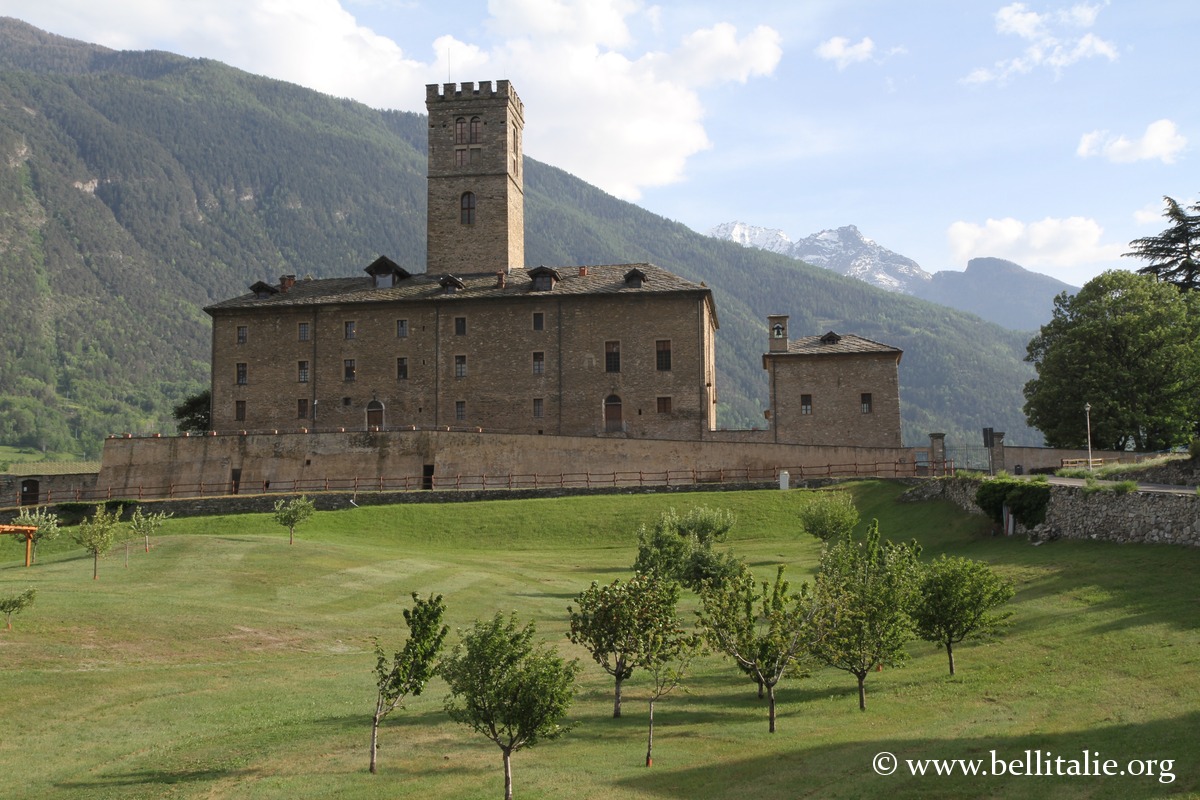
Royal Castle of Sarre
On a promontory of the Aosta plain, the Royal Castle of Sarre was built in 1710 by Jean François Ferrod de Arvier on the remains of a fortified house dating from before 1242. It was bought by the King of Italy Victor Emmanuel II who restructured it as a hunting lodge. On that occasion it was renovated, the tower raised, refurbished and furnished. Umberto I also contributed to its renovation, including the ibex and chamois heads. It was bought back in 1989 by the Aosta Valley Region.
It consists of a longitudinal body with a square tower in the centre.
A museum route has been installed over its three floors, including ground-floor rooms dedicated to the theme of hunting, and on the other floors period furniture, etc.
Castle-museum visits: valledaostaheritage.com
Fénis Castle
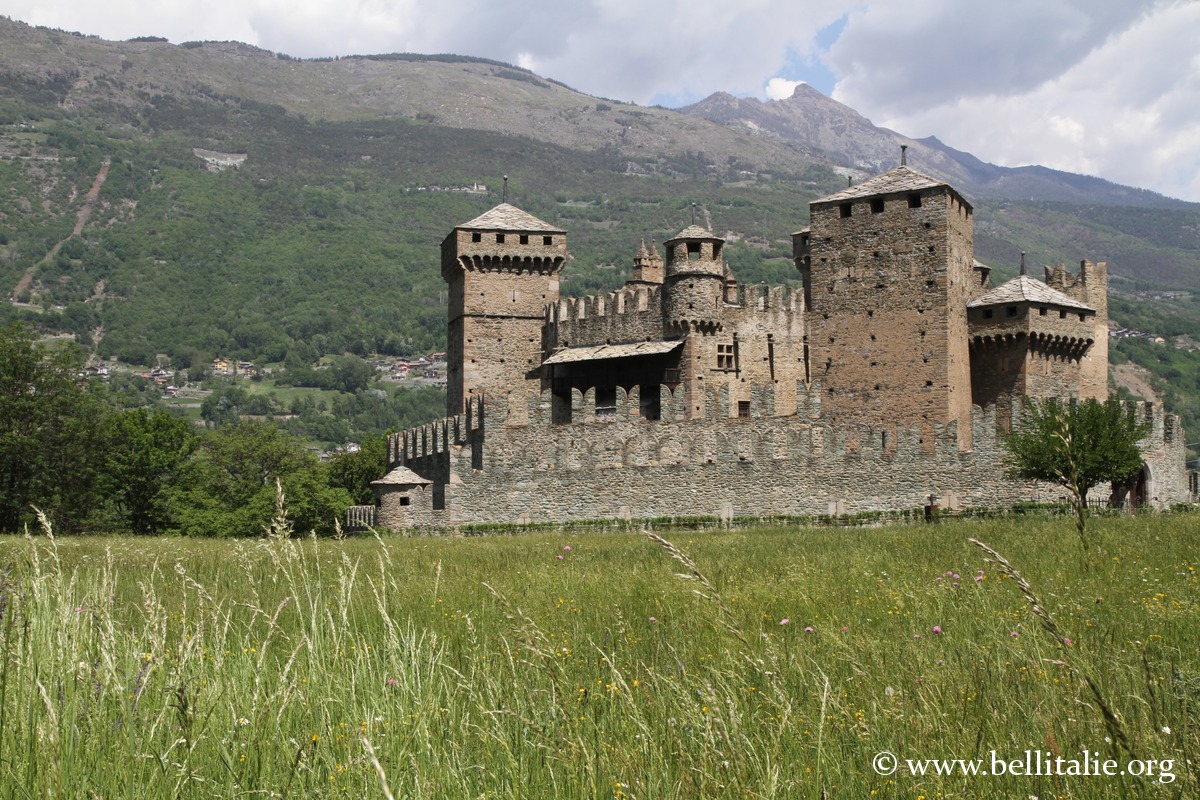
Fénis Castle
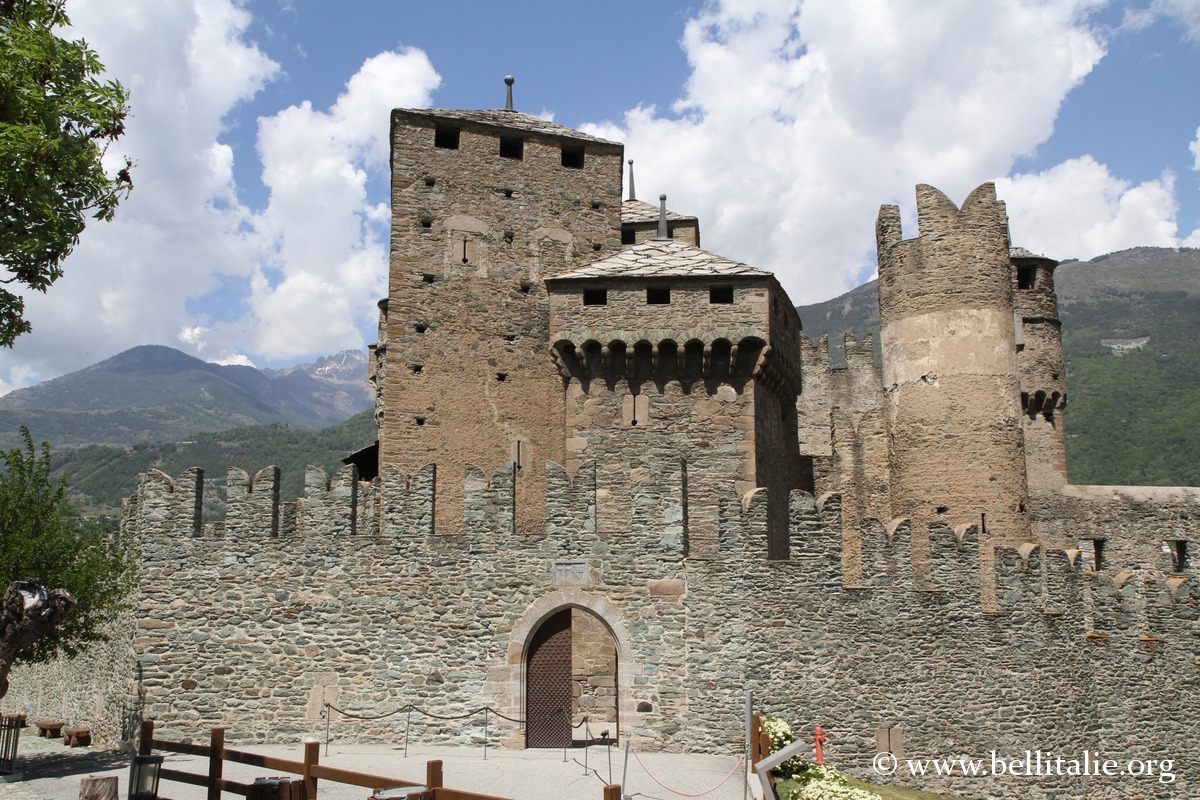
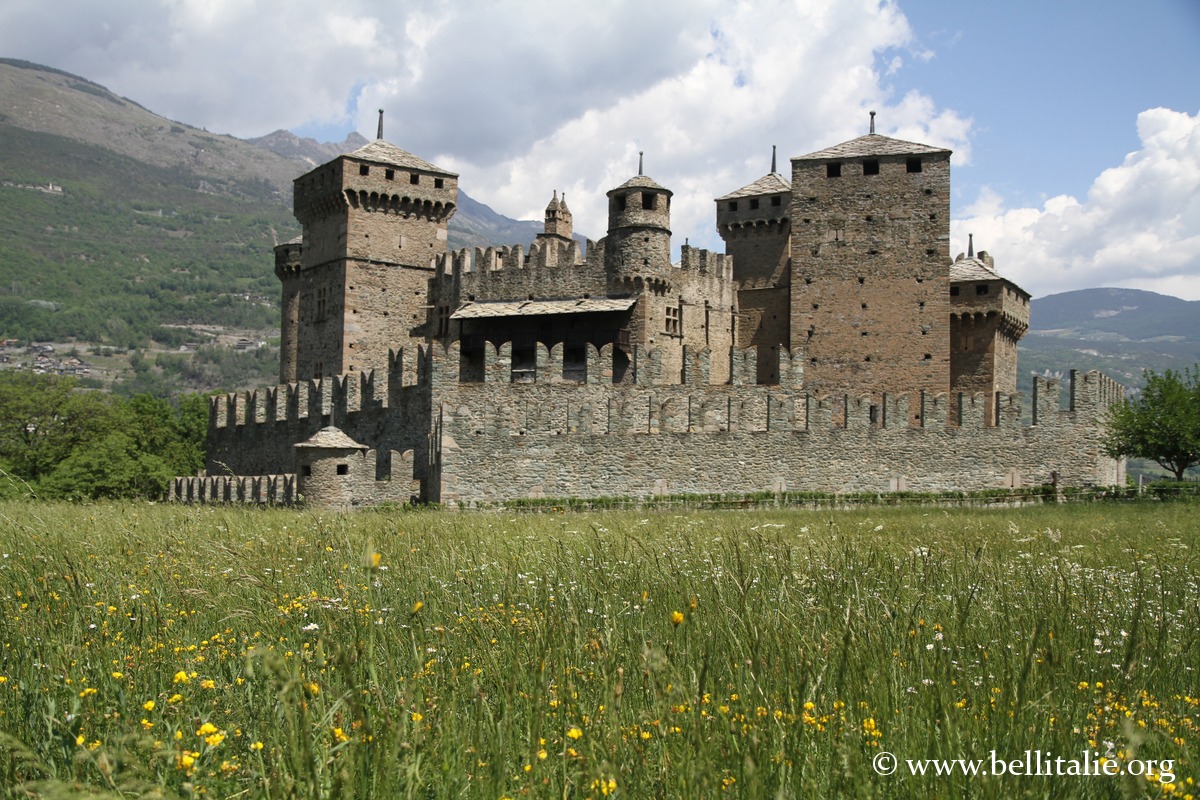
With its towers and battlements, Fénis Castle with its fantastic appearance is one of the most famous in the Aosta Valley. Its location is unusual, built on a low hillside of the plain, and not on a high point of the valley, therefore without natural defences. But it has superb fortifications, and also served as a seigneurial residence for the members of the Challant family.
It is the result of several architectural campaigns. Residence of Viscount Godefroy II, then its crenellated towers were added in the 14th century by Aimone de Challant to the pre-existing keep.
From the 18th century its condition deteriorated, it was turned into a farm, and was restored from 1895 onwards.
The castle has a pentagonal plan with circular corner towers, except at the south-west corner with its massive tower and to the south with the square tower.
A double enclosure protects the keep, with watchtowers. The manor is accessed through the square tower,
The visitor route begins on the ground floor with the armoury, the refectory for soldiers and servants, the kitchen; on the upper floor the chapel, the reception hall, bedroom, kitchen, the counts’ dining room and the hall of justice; then in the inner courtyard, with the staircase topped by the fresco of Saint George slaying the dragon, the decorated balconies, etc.
Castle-museum visits: valledaostaheritage.com
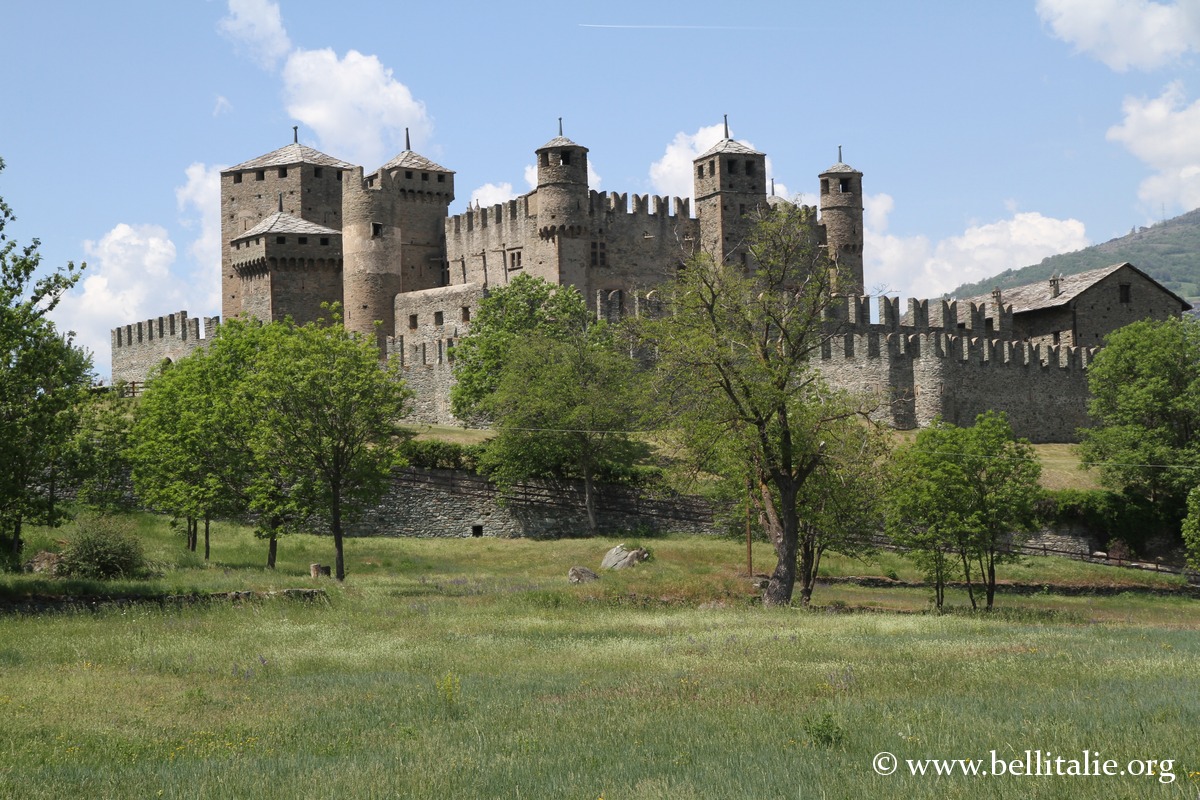
Cly Castle
Cly Castle
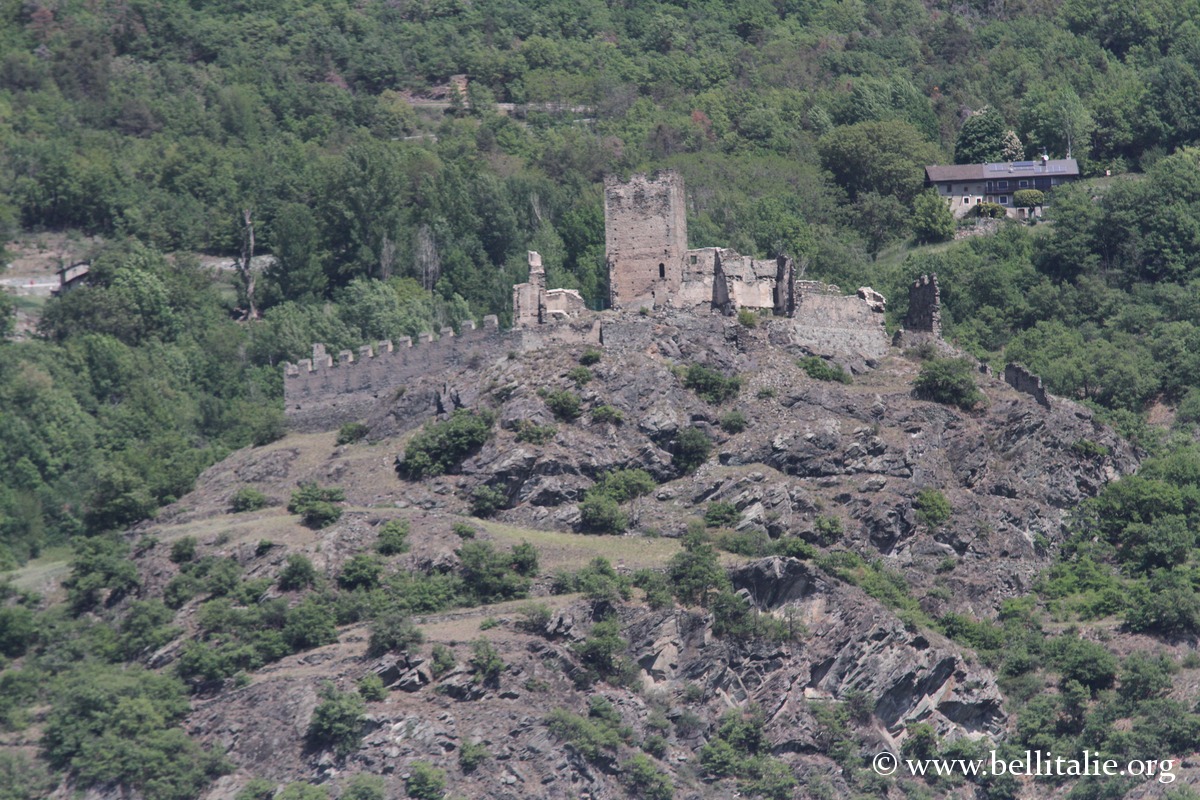
Perched on a rock overlooking the valley, the Cly Castle occupies a site frequented since the Bronze Age. It is described as a “primitive castle” with its keep built in the early 11th century and its beautiful Romanesque chapel dedicated to Saint Maurice.
The Cly were a branch of the Challant family, who had here the seat of a vast fiefdom. The Savoys owned it until 1550, and in the 17th century the Roncas bought it and demolished part of it to build their palace in Chambave near Aosta.
In summer, guided tours are organized: www.comune.saintdenis.ao.it
Gamba Castle
The Gamba Castle built in the early 20th century on the initiative of Engineer Carlo Saroldi for Charles Maurice Gamba, husband of the daughter of the Count of Entrèves.
It is surrounded by an English-style park with nearly 150 trees of different species, including 3 monumental trees, one of which is a giant California sequoia.
Since 1982 the building has been owned by the Autonomous Region of Aosta Valley. It now houses a collection of modern and contemporary art, with more than 150 paintings, sculptures, installations, graphic and photographic collections. These works come from a regional collection that has been added to since the 19th century.
In addition to works by 20th-century masters, including sculptures by Martini, Mastroianni, Manzù, paintings by Casorati, Guttuso, and others, Italian figurative art is documented there (second half of the 20th century), as well as contemporary production (Schifano, Baruchello, Rama, Mainolfi), including Geometric Abstract Art or Pop Art, with a focus on Aosta Valley artists.
Castle-museum visits: www.castellogamba.vda.it
Ussel Castle
Ussel Castle
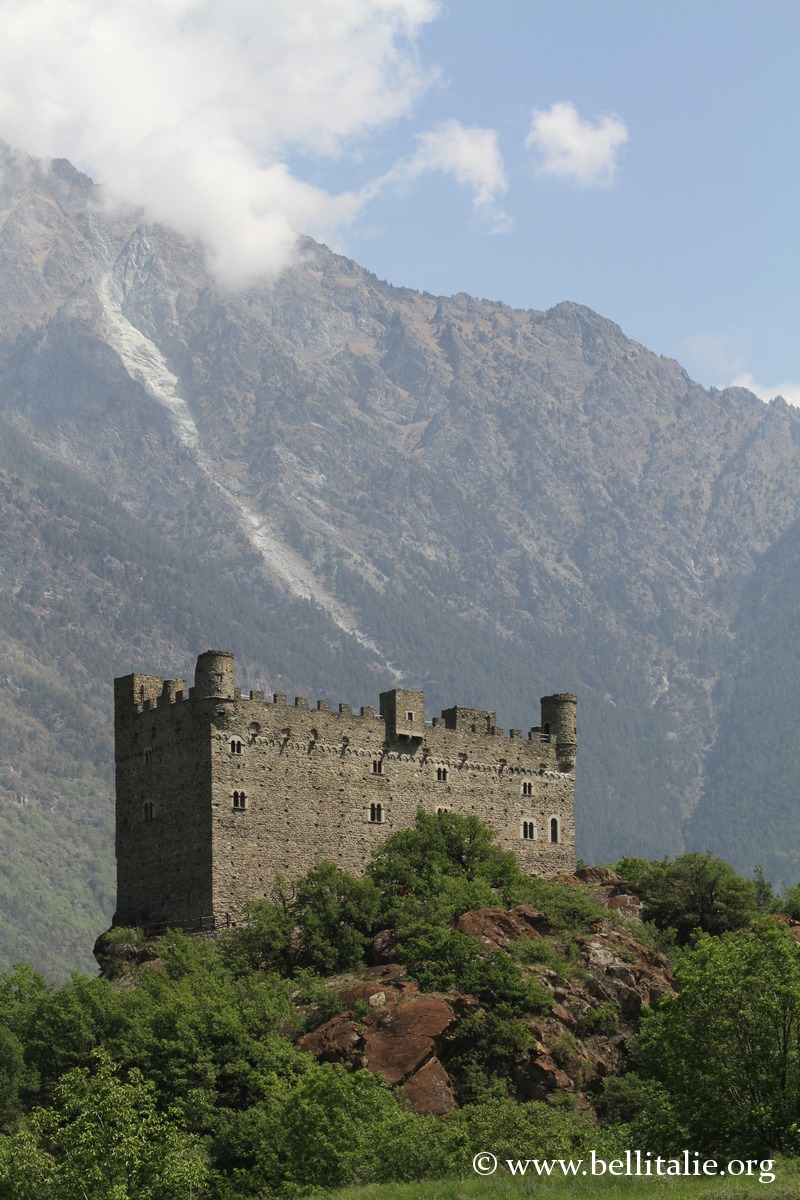
On a steep promontory at the end of a ridge, the Ussel Castle dominates the town of Châtillon.
It was built by Ebalo de Challant in the middle of the 14th century, and marked an evolution in Aosta Valley military architecture, being the first example of a castle consisting of a single body in the Aosta Valley. These castles were the last phase of evolution of the medieval castle, succeeding castles of the type of Fénis.
It was owned by the Challant alternately with the Savoys then served as a prison before being abandoned. It was given to the region in 1983 by Baron Marcel Bich, who had bought it from the Passerin d’Entrèves family, heirs of the Challant. Since then it has been restored with the installation of an exhibition space.
With powerful walls, the castle is rectangular and of large dimensions, with beautiful twin windows all different, two small cylindrical towers on the south side that were previously connected by a walkway. On the same side the entrance is topped by a machicolation. On the north side, there are two quadrangular towers and in the middle the keep. Inside, monumental fireplaces are notably preserved.
Castle-museum visits: www.lovevda.it
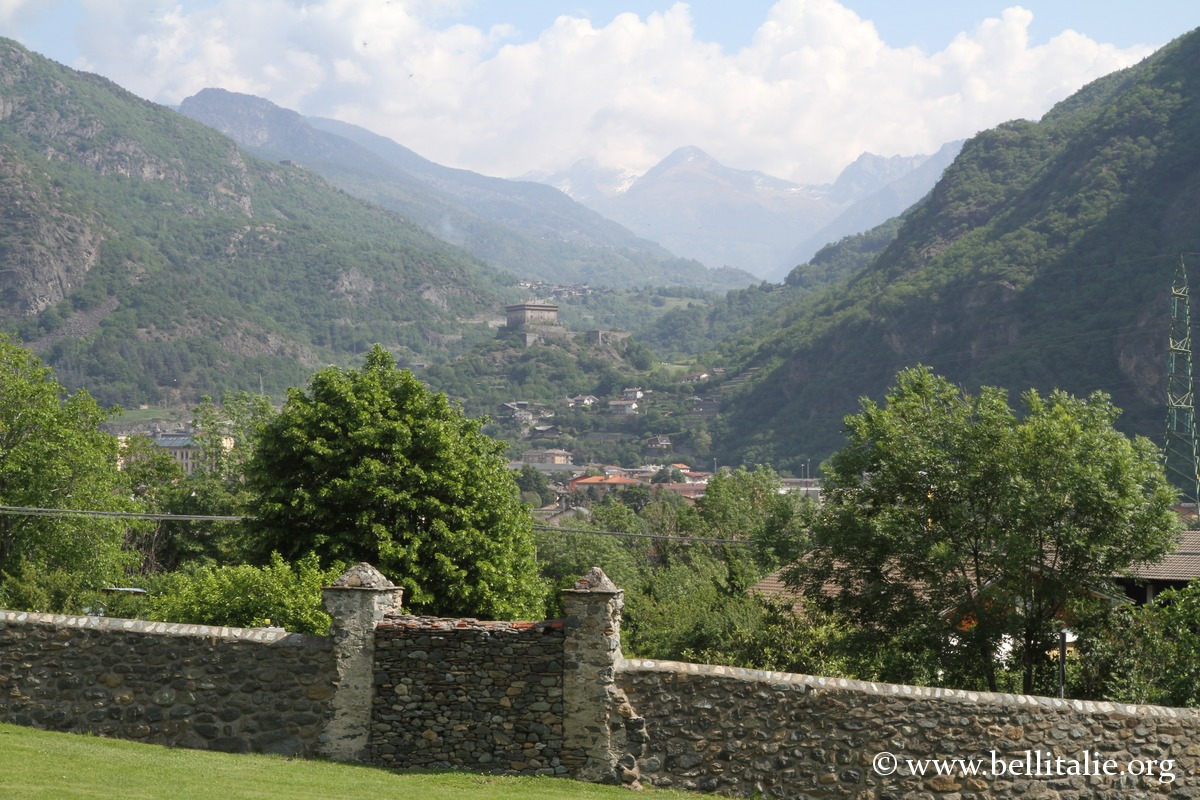
Saint-Germain Castle
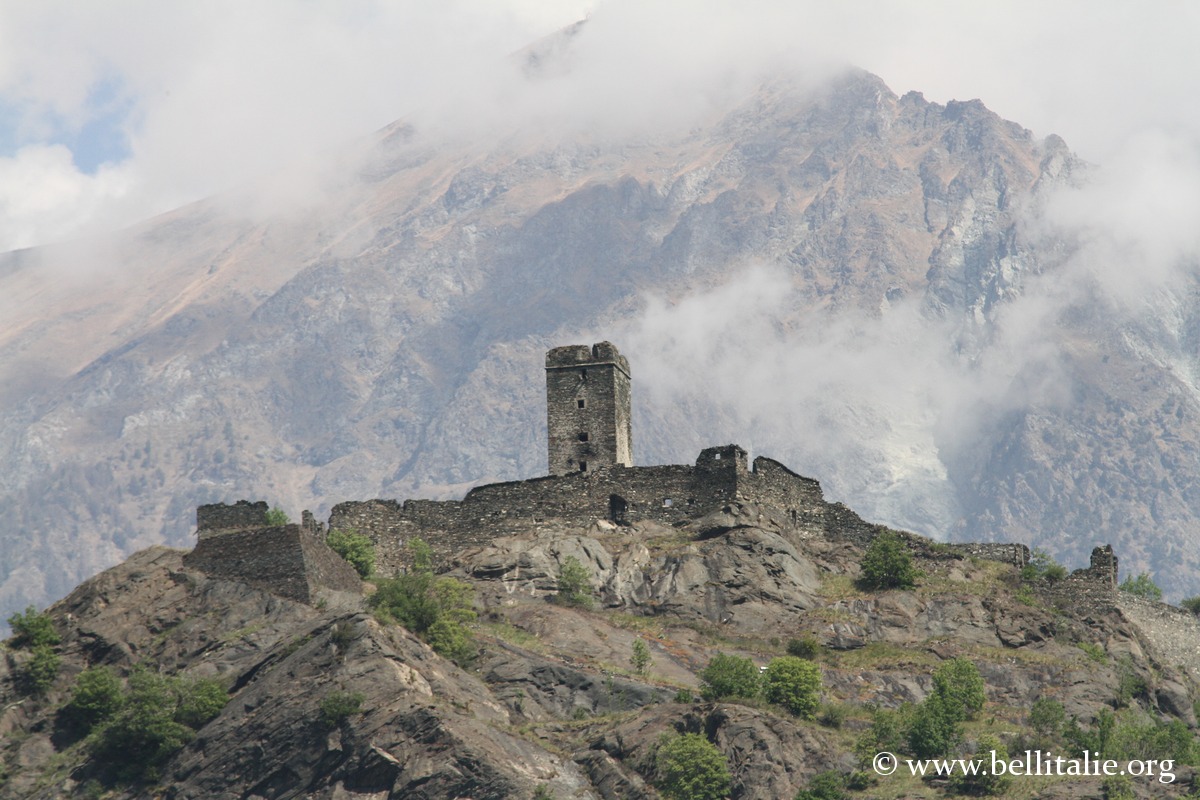
Saint-Germain Castle
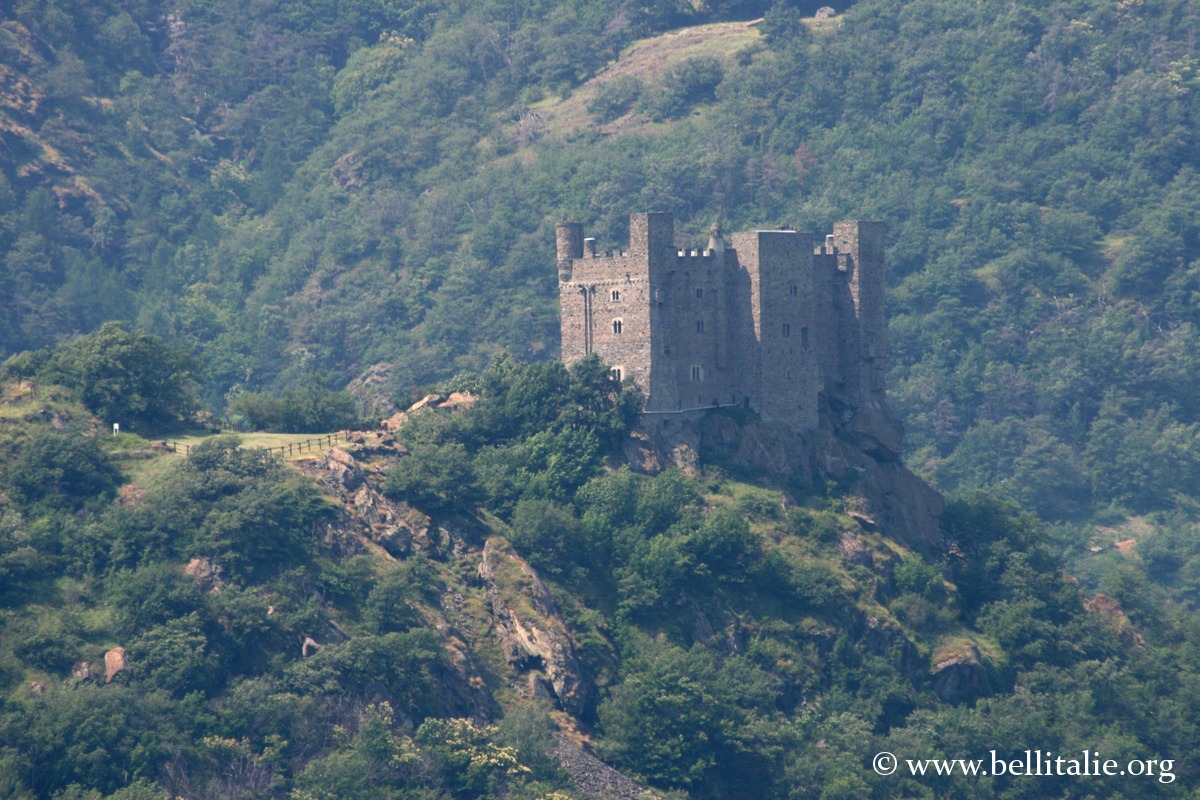
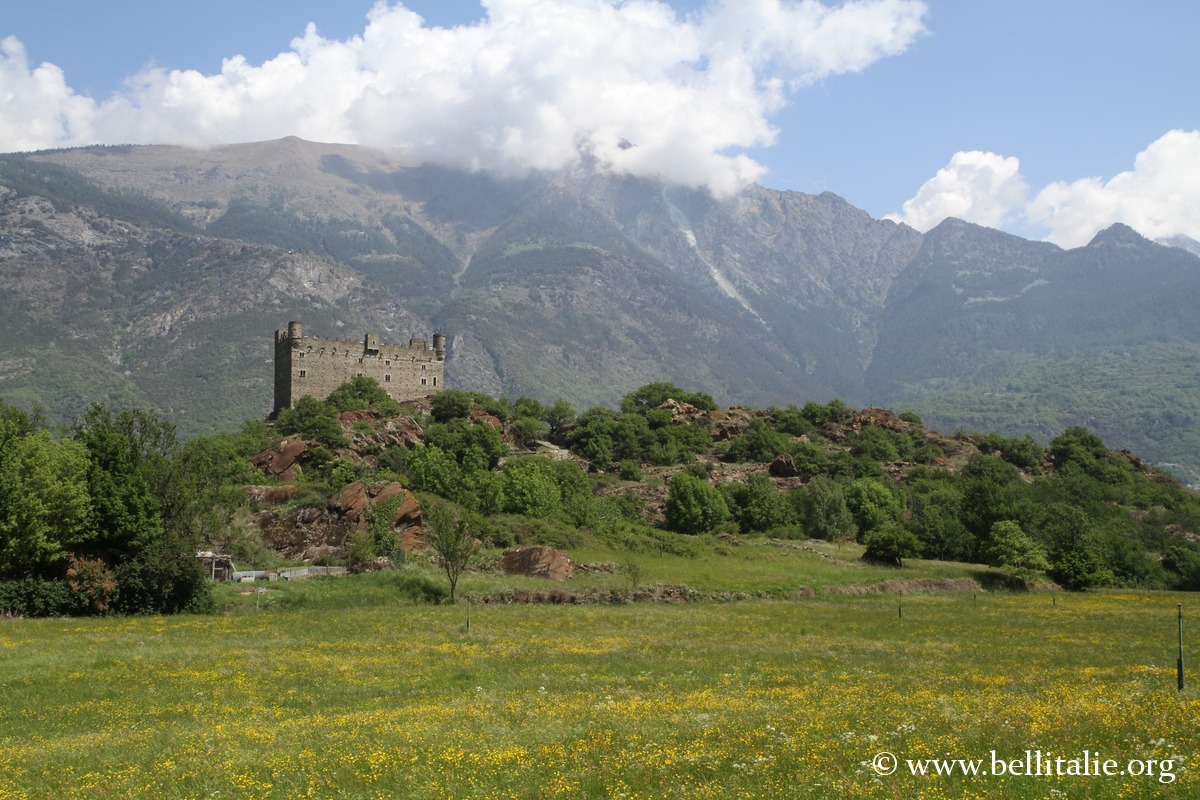
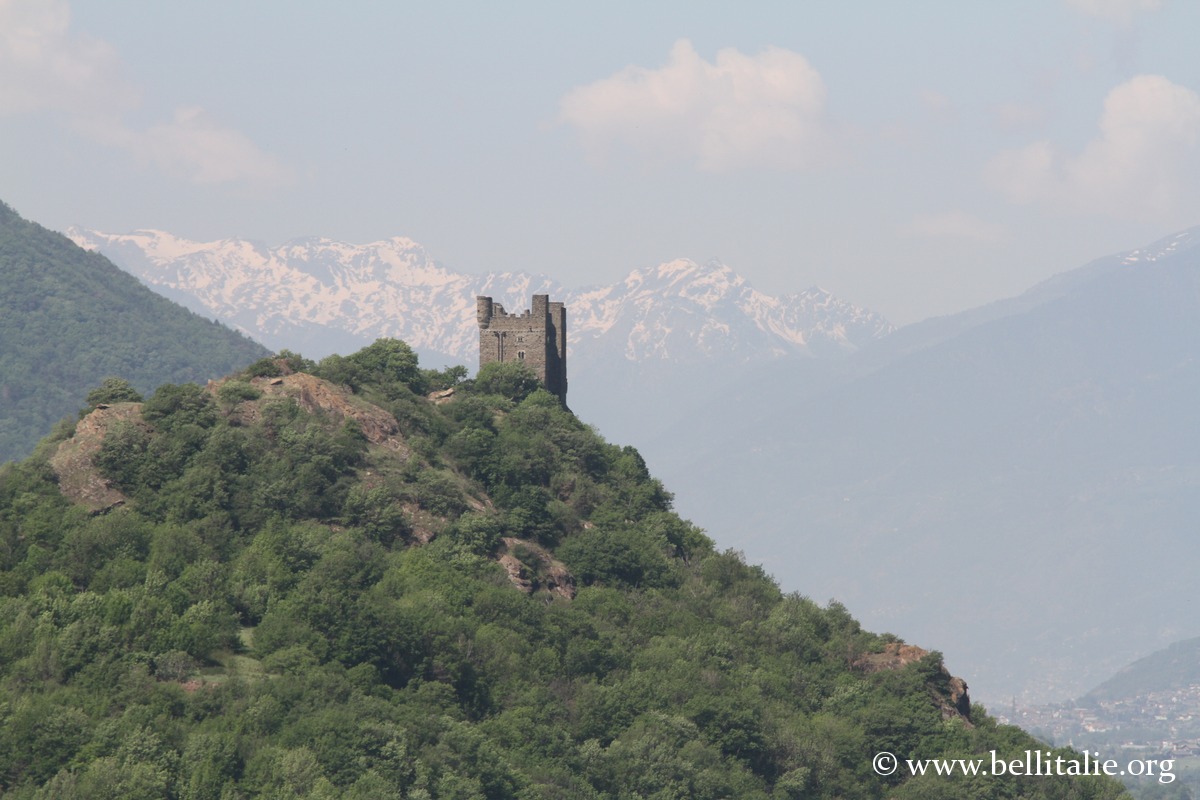
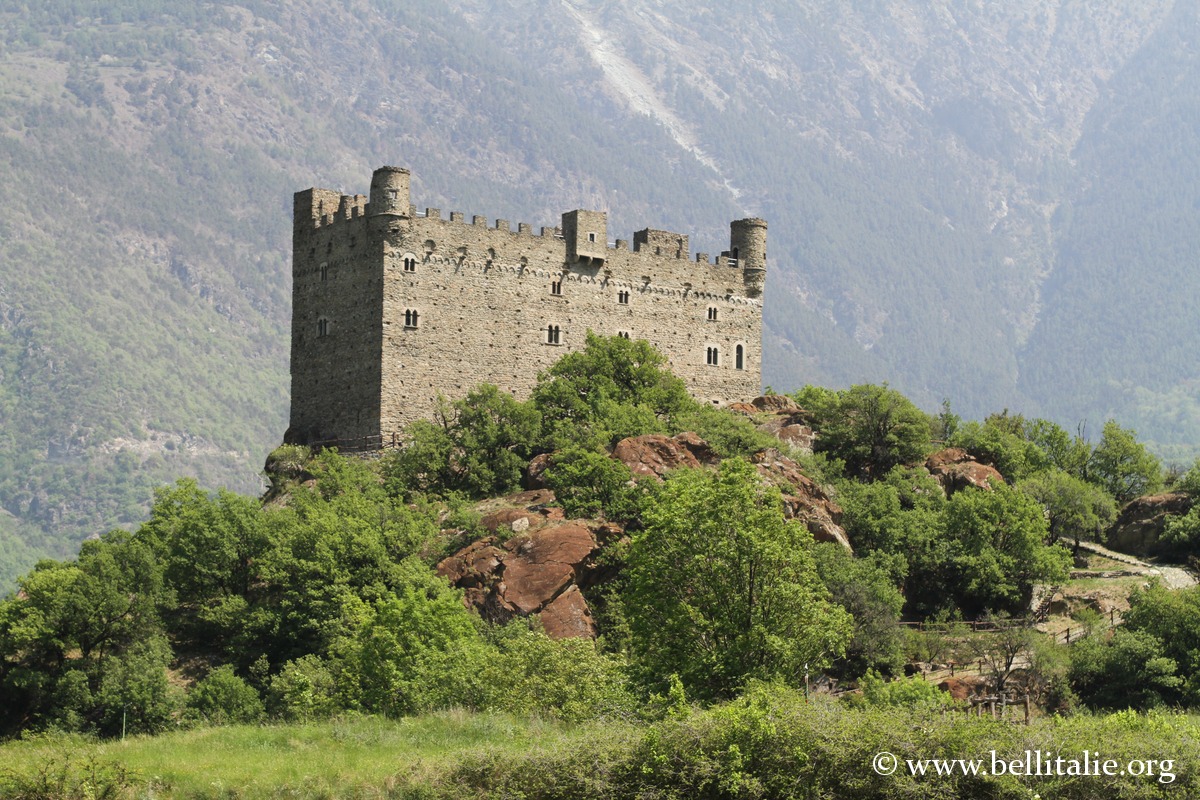
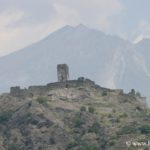
Of the old and powerful Saint-Germain Castle located in Montjovet, few original elements remain and the date of its initial construction is unknown. After the Montjovet, it was owned by the Savoys from the end of the 13th century, then by the Challant, and again by the Savoys in 1438 when Amadeus VII installed a garrison there that remained active until 1661 when it was transferred to the Bard fort. Since then the Saint-Germain Castle was abandoned and fell into disrepair.
Graines Castle
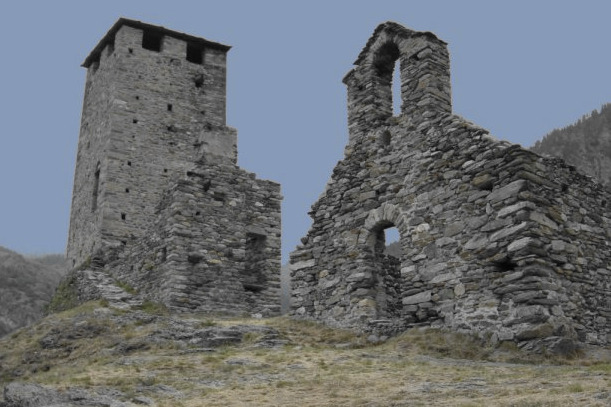
Graines Castle (11th century)
The Graines Castle is a defensive castle of the primitive type that has kept an appearance dating back to the 11th century, with its large crenellated square tower, the chapel and an enclosing wall that follows the curvature of the terrain, inside which dwellings were once located. There one can see the remains of the Romanesque church and its remarkable stone facing.
Savoie Castle
The Savoie Castle was built between 1899 and 1904 at the wish of Queen Marguerite of Savoy. It stands at the foot of the Ranzola Pass in a site called “Belvedere” with a view over the valley. Purchased by the Milanese industrialist Moretti in 1936, it became the property of the Aosta Valley Region in 1981.
It consists of a rectangular central core flanked by five towers topped with spires, all different, in neo-medieval style, known as the 15th-century Lombard style, common in France and Savoy.
It is adorned with rich ornamental paintings, coffered ceilings, tapestries, woodwork and furniture, with three floors, including on the ground floor the common rooms, on the first floor the royal apartments, and the second floor (not visitable) reserved for the gentlemen of the court.
The botanical garden in the park at the foot of the manor was inaugurated in 1990.
Castle-museum visits: valledaostaheritage.com
Verrès Castle
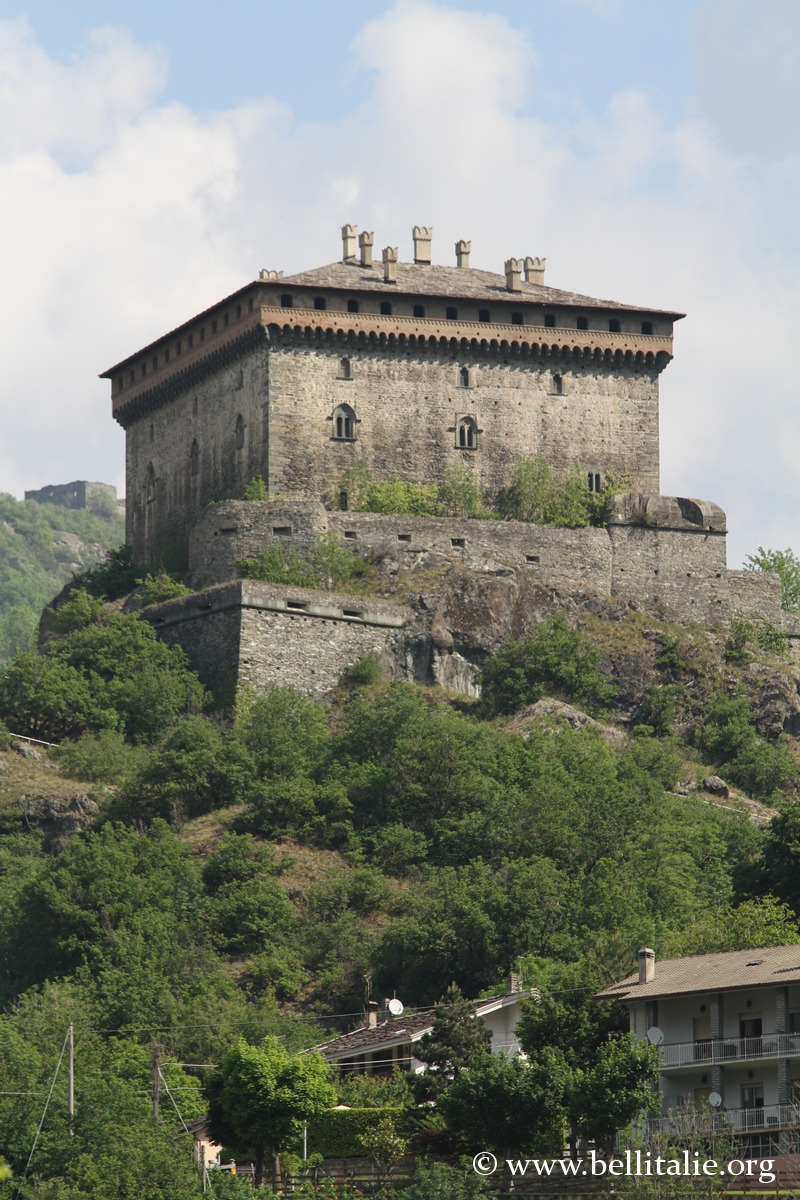
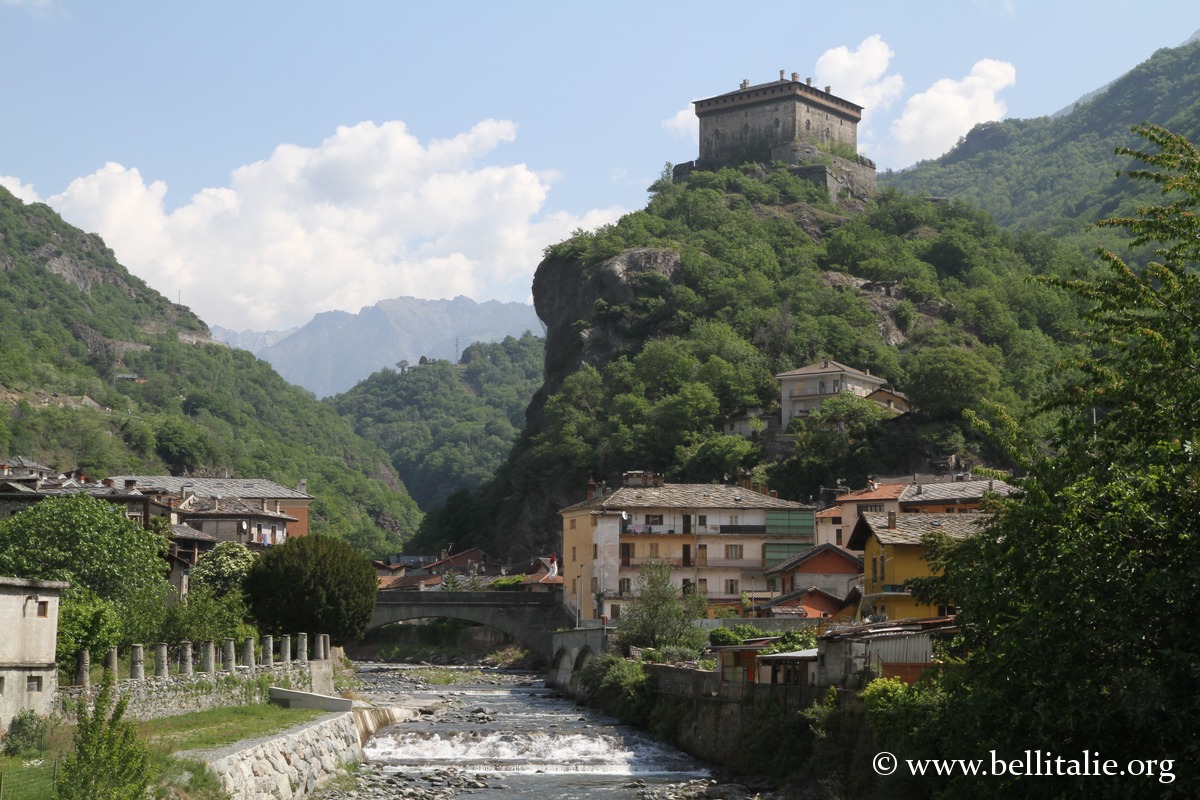
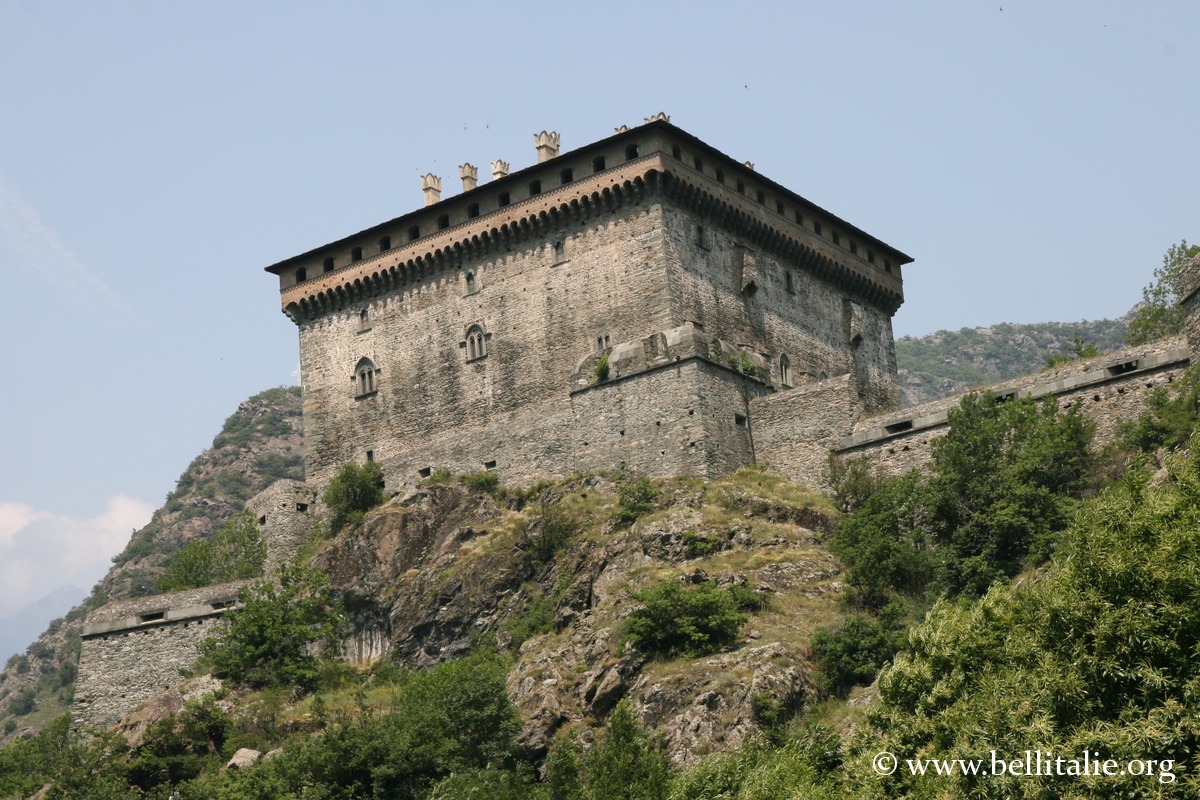
Verrès Castle
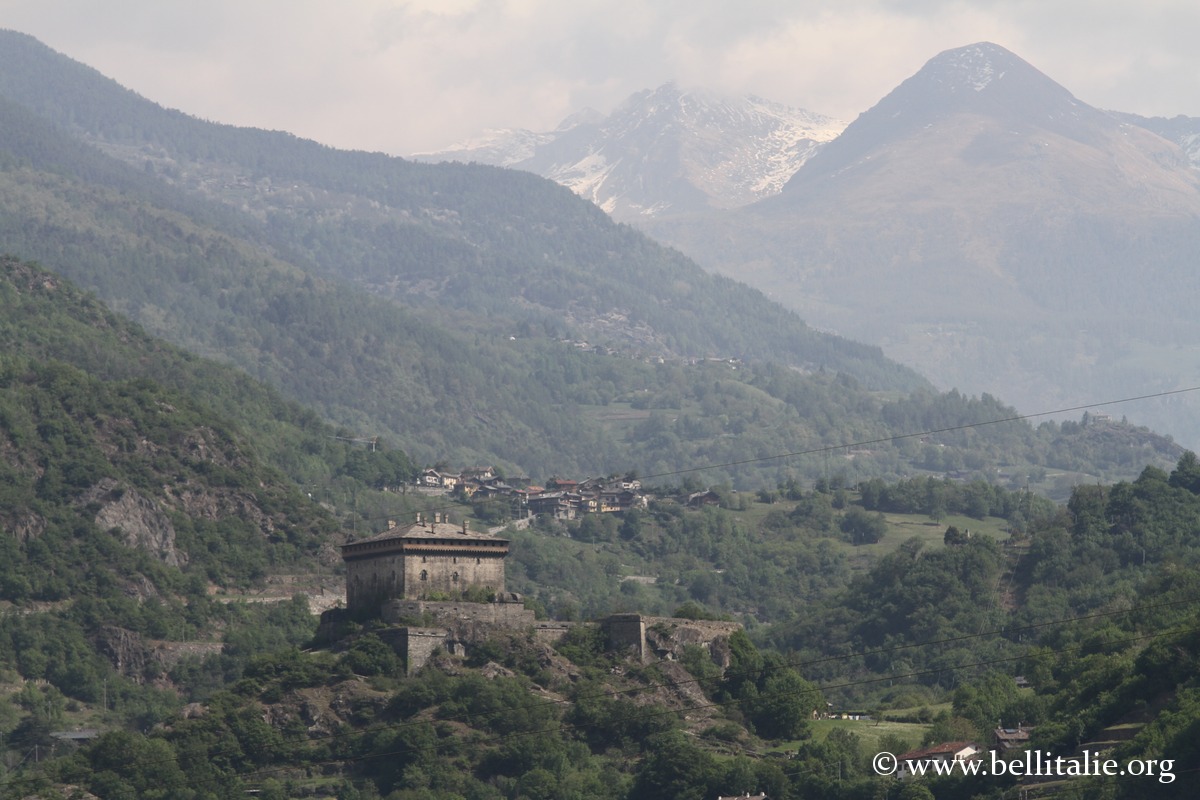
On a rocky outcrop above the village, the Verrès Castle has been known since the 13th century as the property of the lords De Verretio. Iblet de Challant began works in 1390 that gave it its current appearance. It was renovated in 1536 by René de Challant to adapt it to modern firearms, with the surrounding wall equipped with gun ports, spur buttresses, and small polygonal towers where the cannons were installed. New openings completed the Gothic windows, and new Moorish-arch doors.
It passed to the Savoy in 1565, and its armament was transferred in 1661 to the fort of Bard. It was again in the possession of the Challant in the 18th century. It was then abandoned for nearly two centuries before being renovated.
The visit allows you to discover its well-renovated interior of this military structure, the castle courtyard with the three-storey building, including salons and kitchens, the armoury with two monumental fireplaces, the dining room whose stone vault is original.
Castle-museum visits: valledaostaheritage.com
Issogne Castle
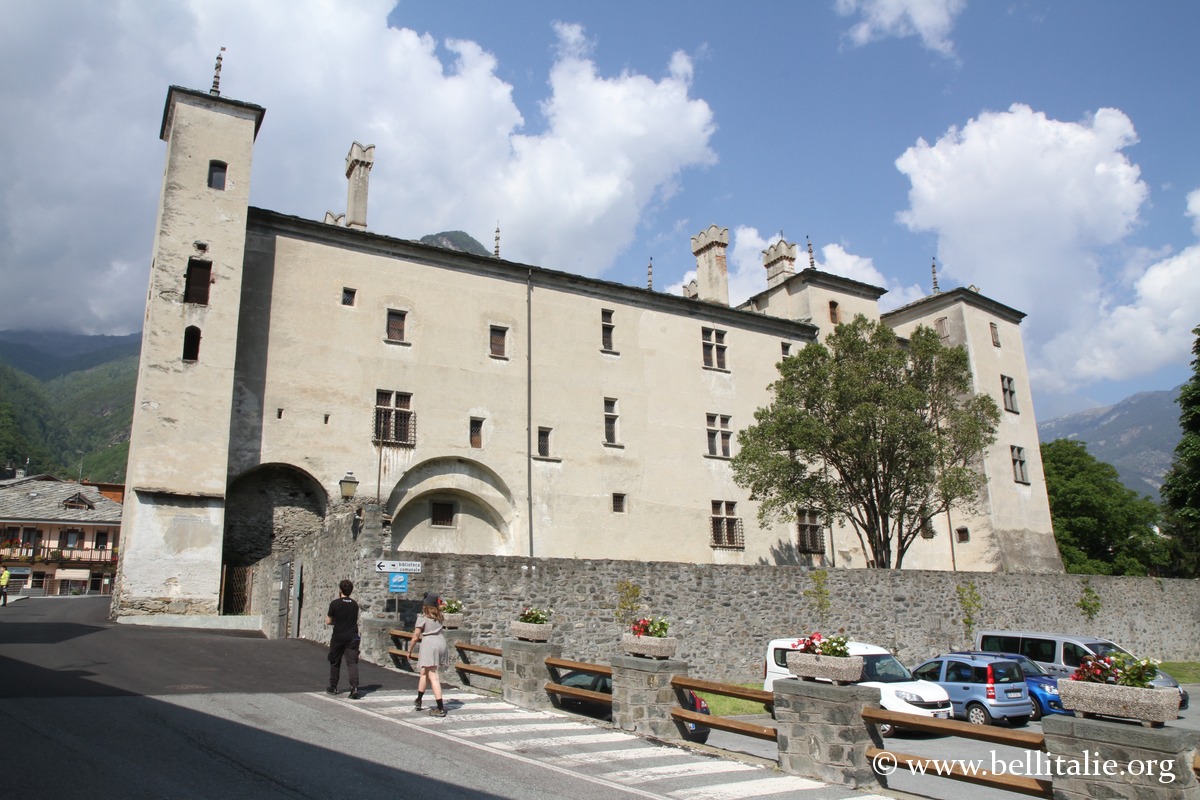
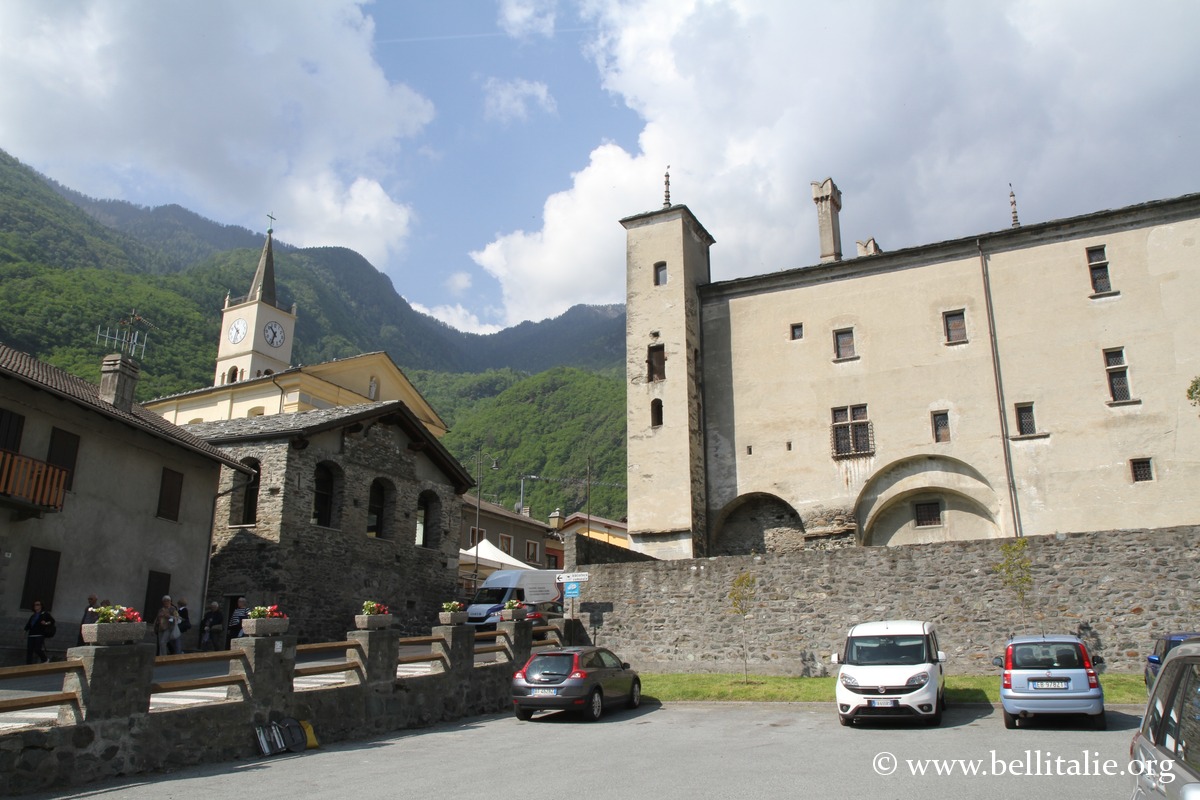
Issogne Castle
Having been the property of the bishops of Aosta, the Issogne Castle was renovated at the beginning of the 15th century by Iblet de Challant, then took its current appearance around 1500 with Georges de Challant, the prior of Sant’Orso, who made it a sumptuous Renaissance-style residence for his cousin Marguerite de La Chambre and her son Philibert. It now belongs to the Aosta Valley Region.
The visit explores the courtyard with its famous pomegranate fountain, the passage with its frescoes, then on the ground floor, the dining room, the kitchen and the barons’ hall with fireplace, beams and frescoes; on the first floor the Gothic chapel with the frescoes; on the second floor the rich salons including the hall of the King of France, or that of the Knights of Saint Maurice, etc.
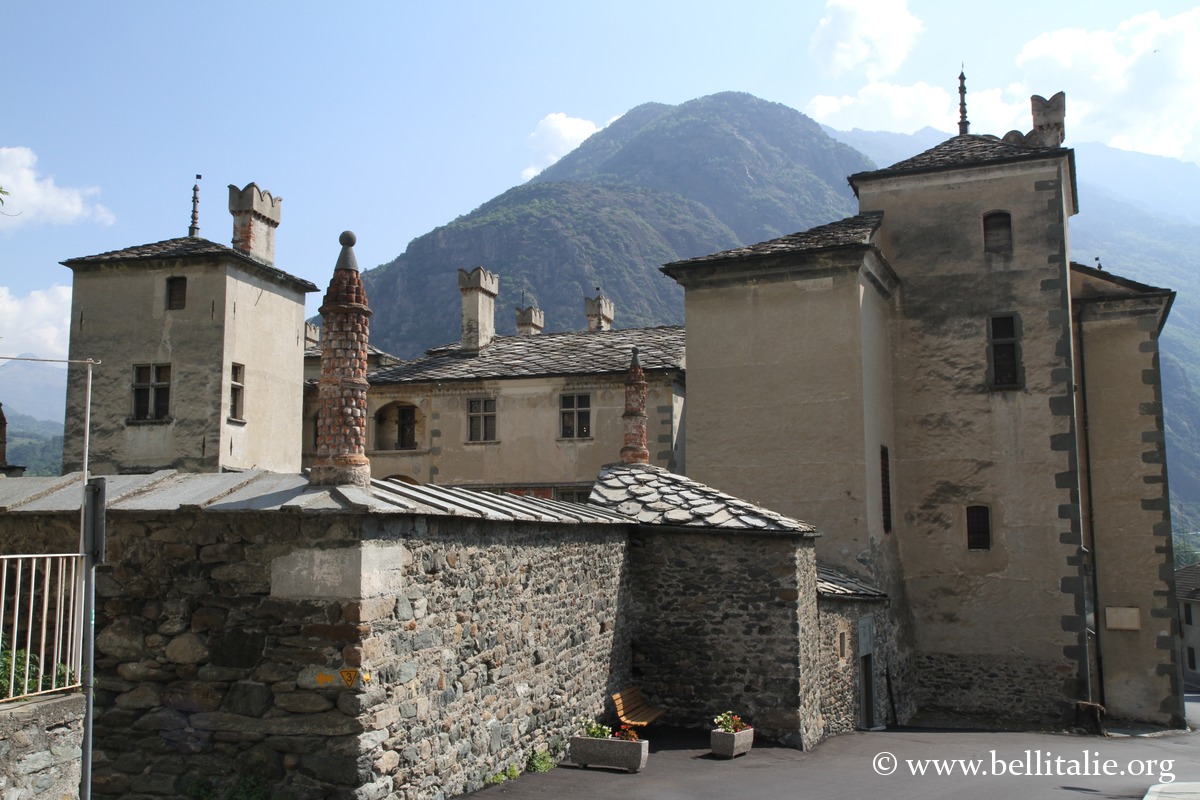
Bard Fort
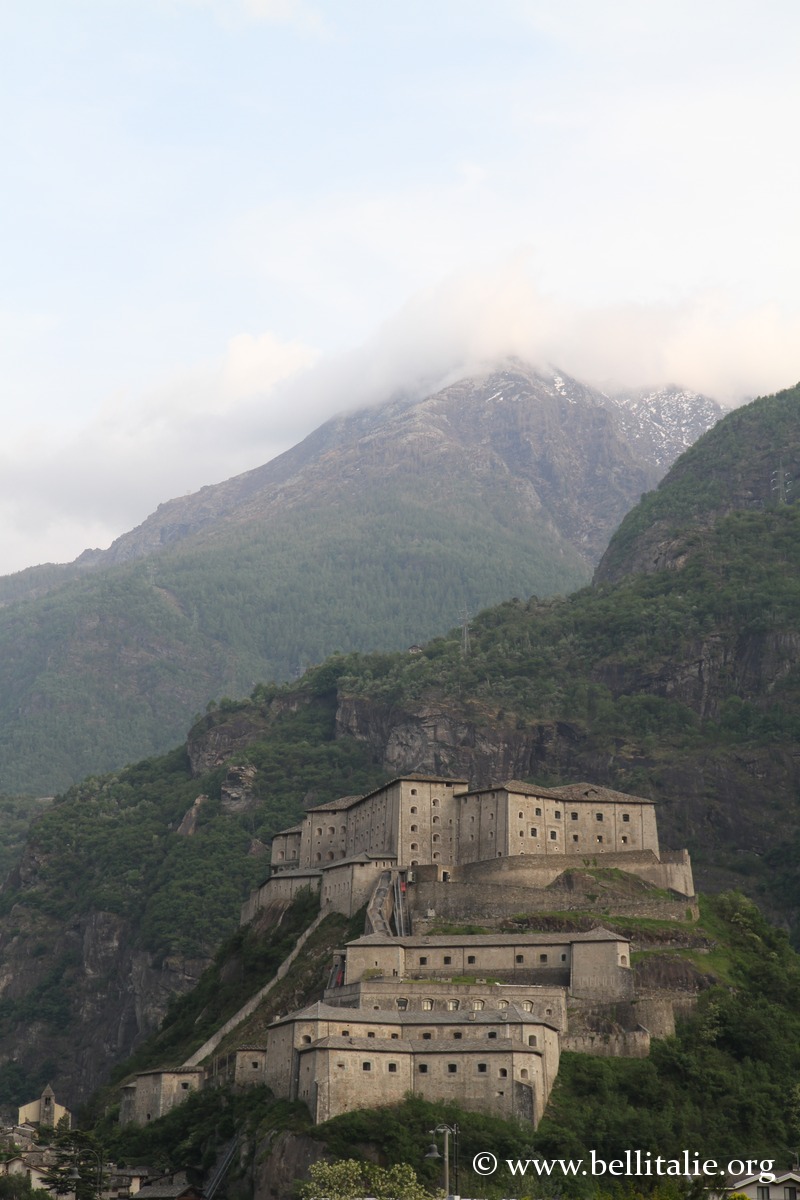
Bard Fort
The Bard Fort is located on a heights that has controlled a narrow passage of the valley since at least the 6th century, under Theodoric, when a garrison was present.
The lordship of Bard came into the possession of the Savoy in 1242 with Amadeus IV, under pressure from the population because Hugo de Bard used a castle to crush travelers and merchants with taxes.
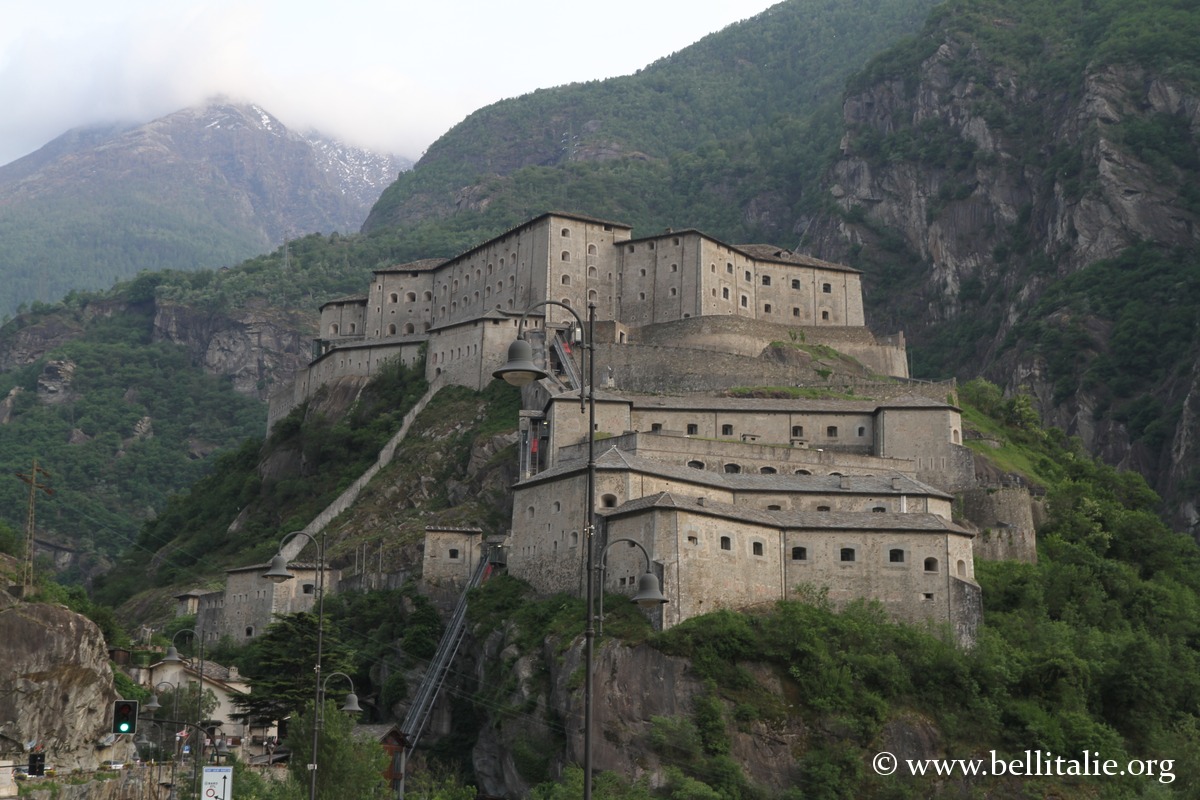
In 1661, the weapons of other Aosta Valley fortresses were transferred there. The castle has since had an important role. In May 1800, Napoleon encountered a garrison of 400 Austrians there, and it took him two weeks of siege to capture it. Following this, he had the fortress dismantled to avoid such inconveniences. The current fort dates from the 1830s, becoming one of the most massive military structures in the Aosta Valley. At the end of the 19th century, it was used as a prison, then as an ammunition depot, before being removed from the military domain in 1975, and repurchased by the Aosta Valley region in 1990.
Renovated and reopened in 2006, the Fort houses the Museum of the Alps, the Alps of Children (temporarily closed), the Prisons, the Museum of Fortifications and Borders, as well as exhibitions.
Information and sources
- Wikipedia article: fr.wikipedia.org
- Tourist portals: www.lovevda.it


Comments