


Aosta was founded in 25 BC by the Romans under the name Augusta Praetoria. It lies at the crossroads of routes leading to France (via the Mont Blanc tunnel or the Little St Bernard Pass) and to Switzerland (via the Great St Bernard Pass).
Today it is a pleasant, lively little town with nearly 40,000 inhabitants. Thanks to its geographical position, at the centre of the valley, you can stay there to explore the Alpine region and its mountains.
Heritage
In Aosta you can discover important Roman remains, including the Porta Praetoria, the Arch of Augustus, the remains of the theatre and the forum. The town and its territory also preserve medieval buildings, defensive towers and walls, fountains and courtyards, and even prehistoric remains with an area of megaliths.
The historic centre is made up of pretty pedestrian streets around Piazza Chanoux, the heart of the town. The cathedral dates from the 12th century, but only the two Romanesque bell towers remain from that period.
In the surroundings there are numerous evocative castles, the oldest fortresses dating back to the Middle Ages.
Skiers can also find convenient accommodation in Aosta, as it is connected by a 17-minute cable car ride to the Pila ski area located at 1,800 metres above sea level. This area may also appeal to hikers and mountain bikers in summer with its many dedicated trails.
Places and monuments of Aosta
Arch of Augustus and Roman bridge
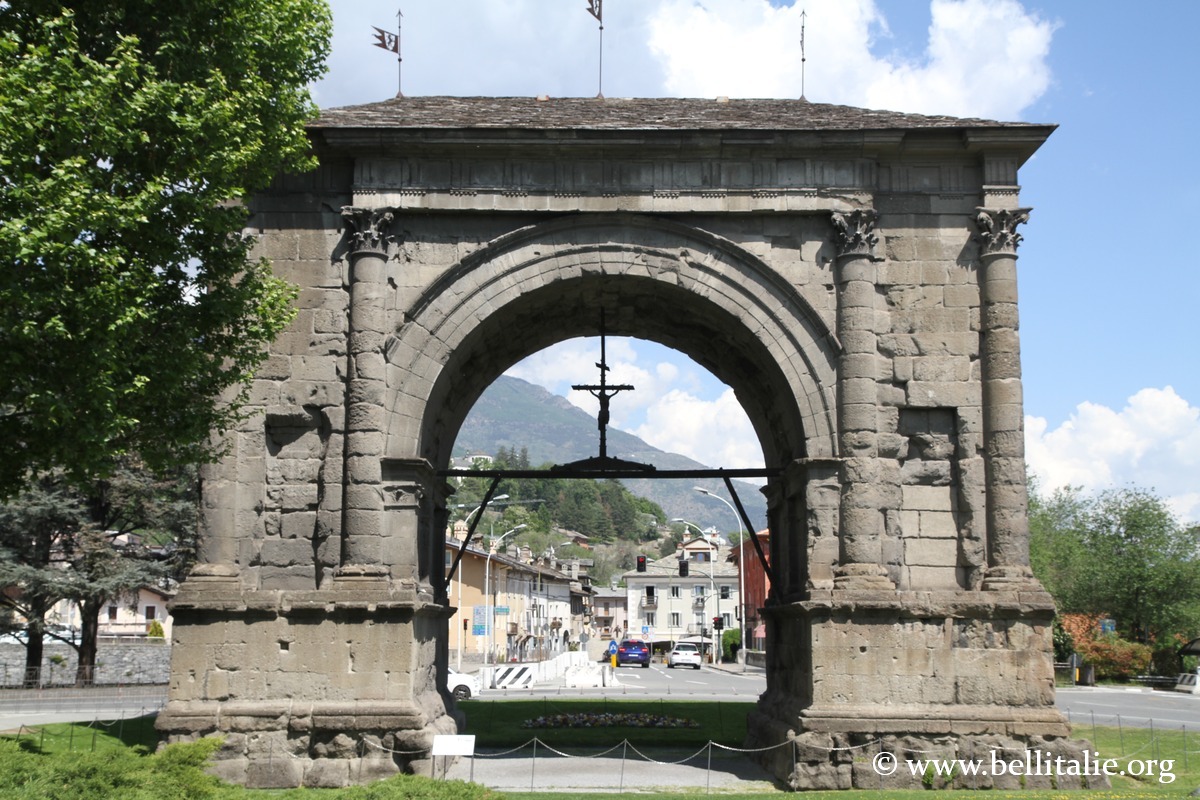
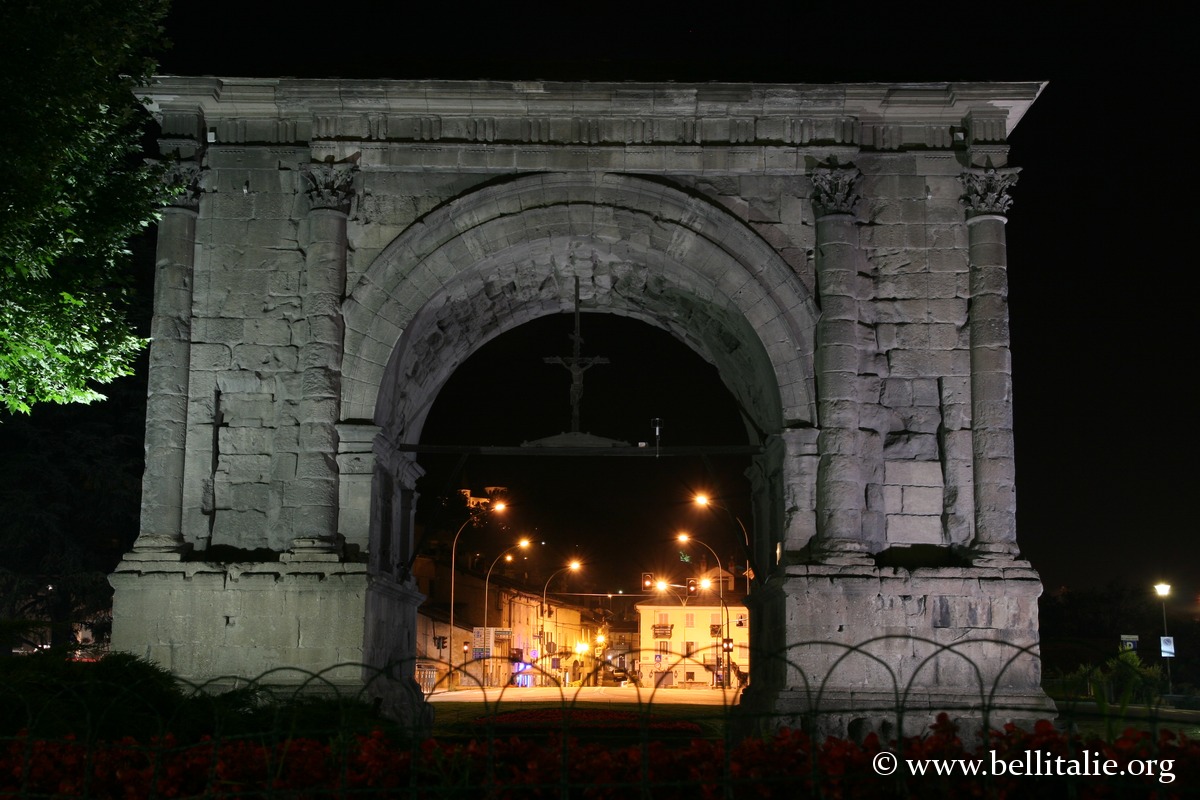
The Arch of Augustus was built at the entrance to the Roman city after the founding of the town in 25 BC, when the Salassi people were definitively defeated.
It is located shortly before the passage of the Porta Praetoria along the main access road. Nearby the Stone Bridge, of Roman origin, crossed the Buthier river, which now flows further west.
Under the arch there is a crucifix dating from the 15th century. On the facade, the empty niches probably originally housed trophies.
Porta Praetoria
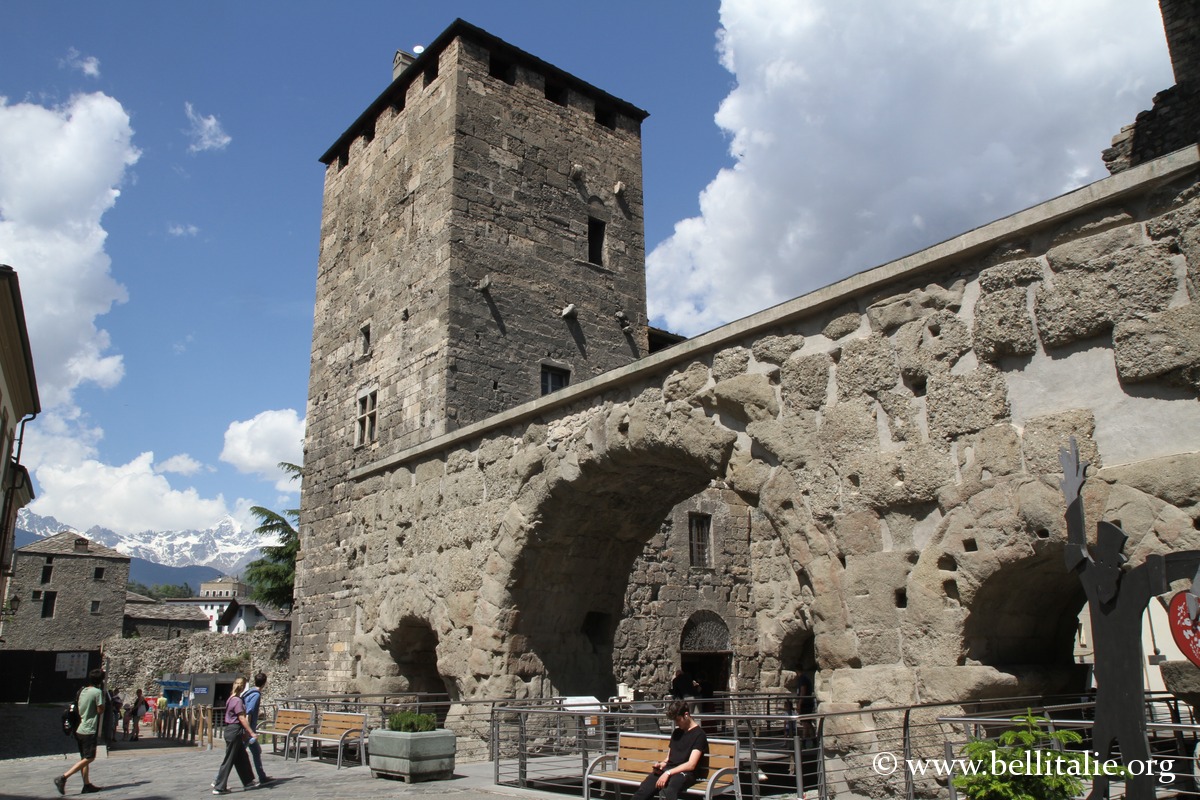
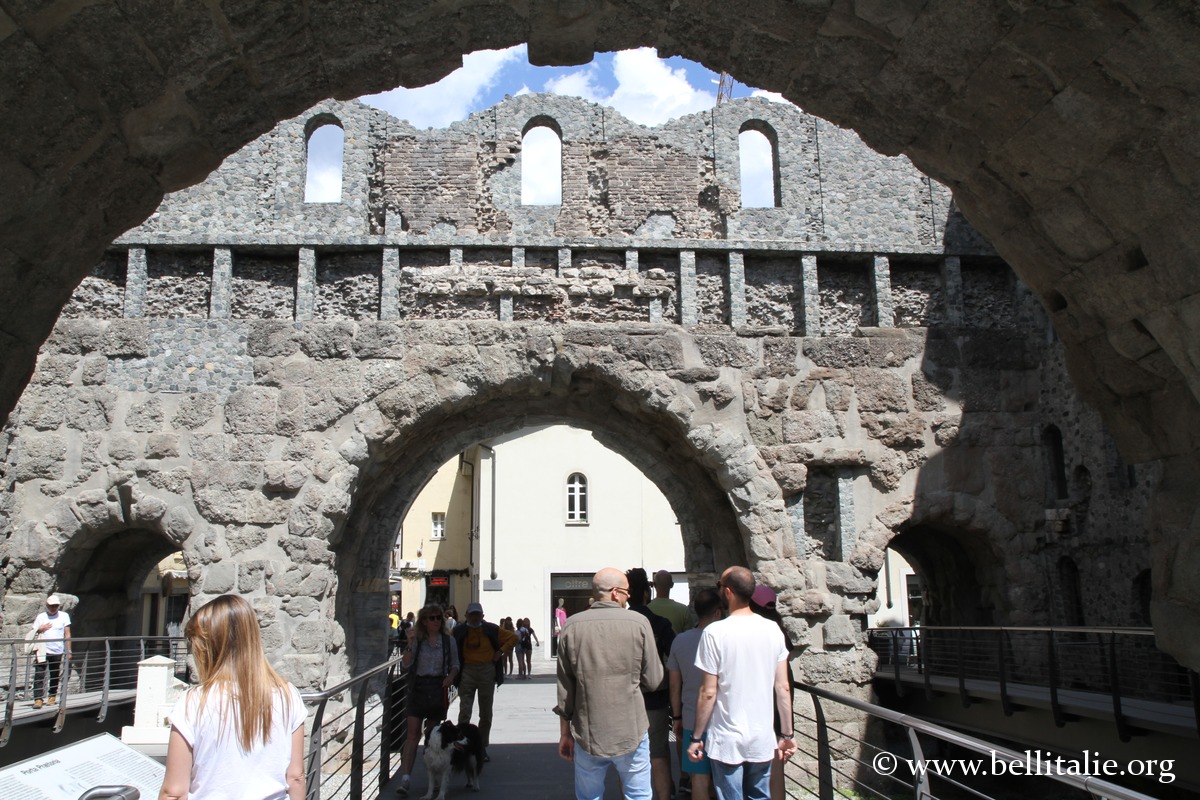
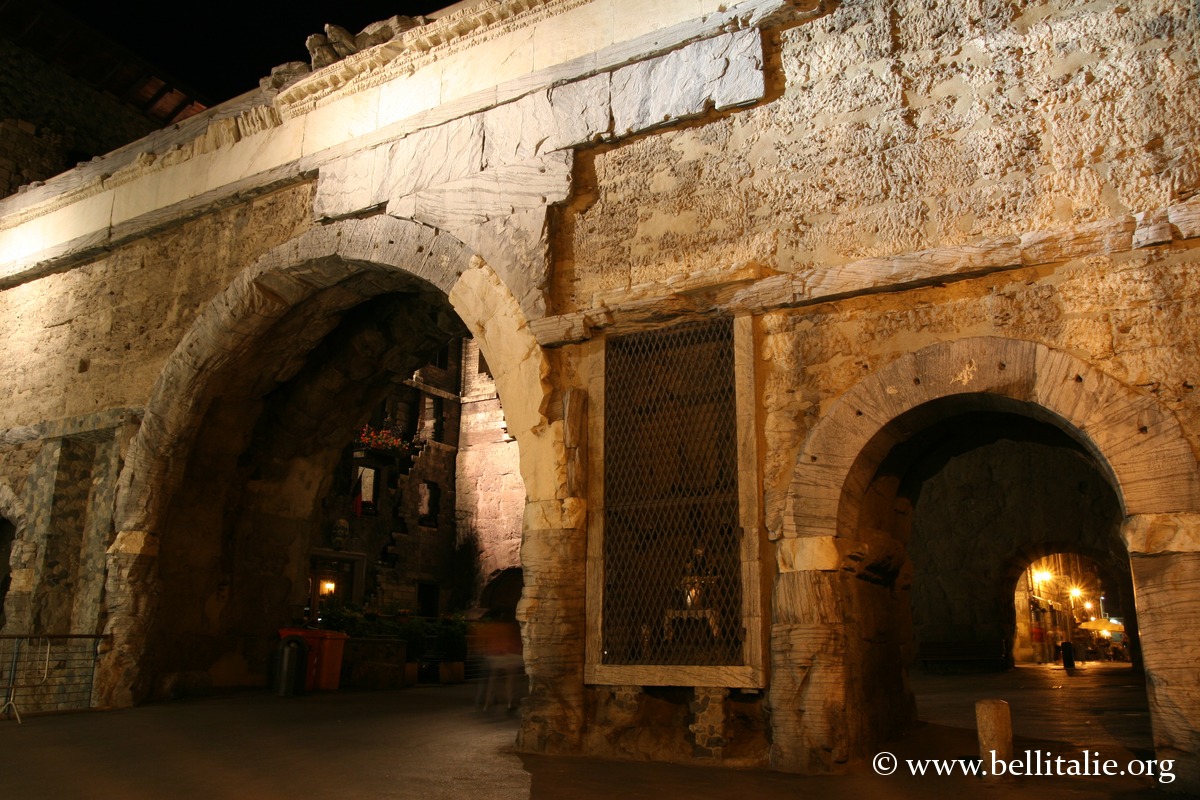
In the ancient Roman walls, the Porta Praetoria was the eastern entrance to the city and its main access point, built in 25 BC. It consists of three arches, the central one being the largest and allowing the passage of chariots, while the two side ones were reserved for pedestrians.
Between the openings a parade ground was installed. The ground level was two metres lower in Roman times.
On the outer side you can still see the grooves made by the grilles that were lowered at night. A few marble slabs remain on the facade which originally covered the whole structure. A chapel was added in the Middle Ages, of which only a niche remains today.
Roman theatre and Forum
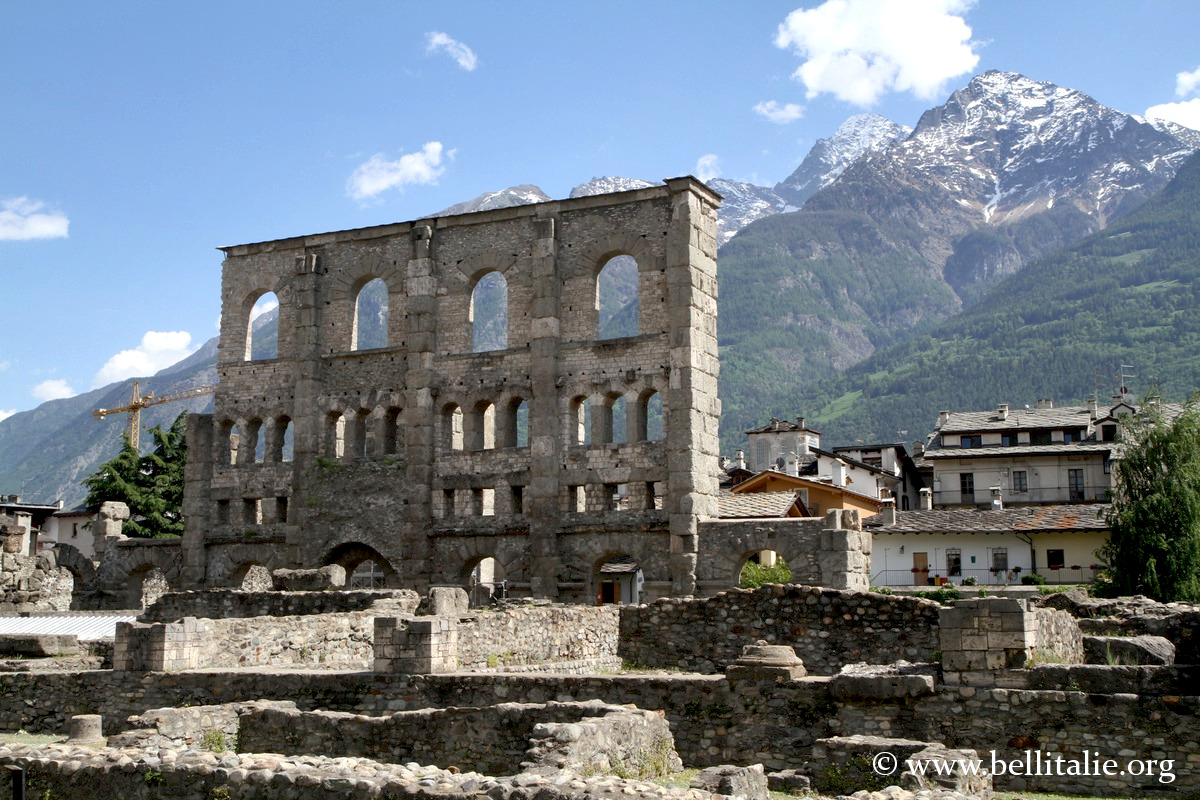
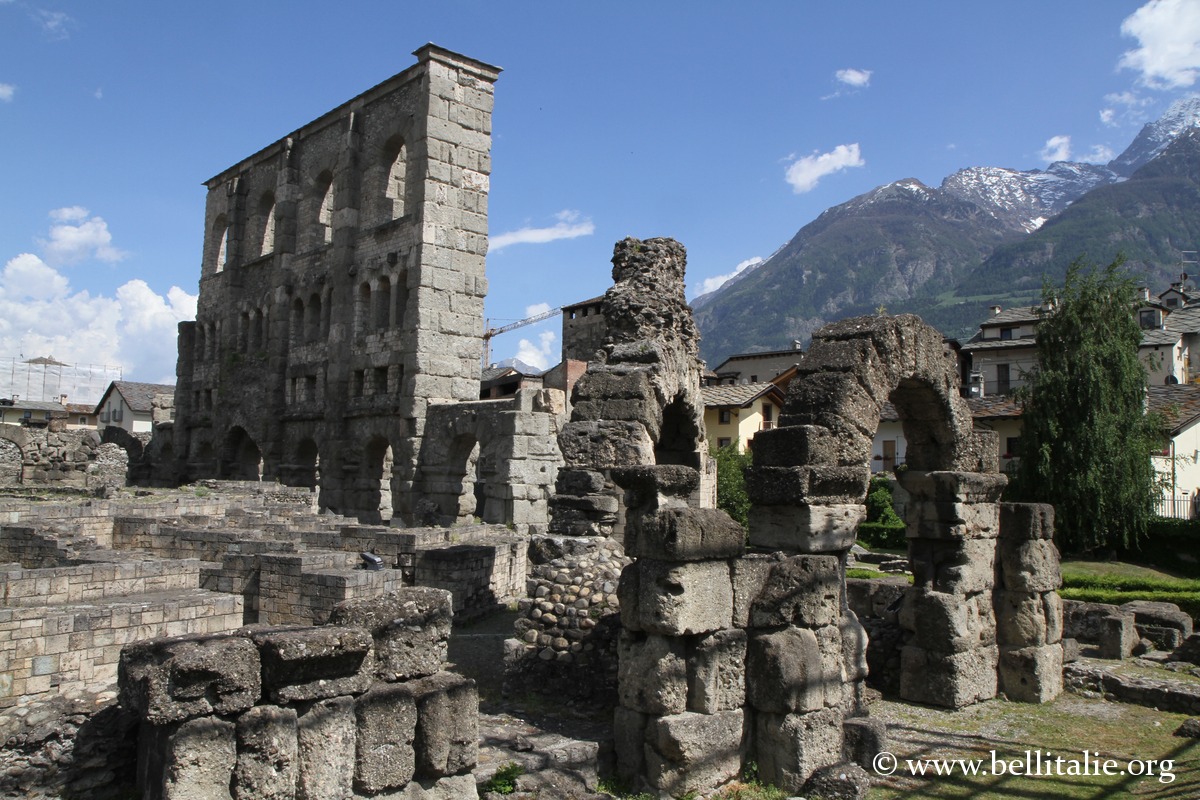
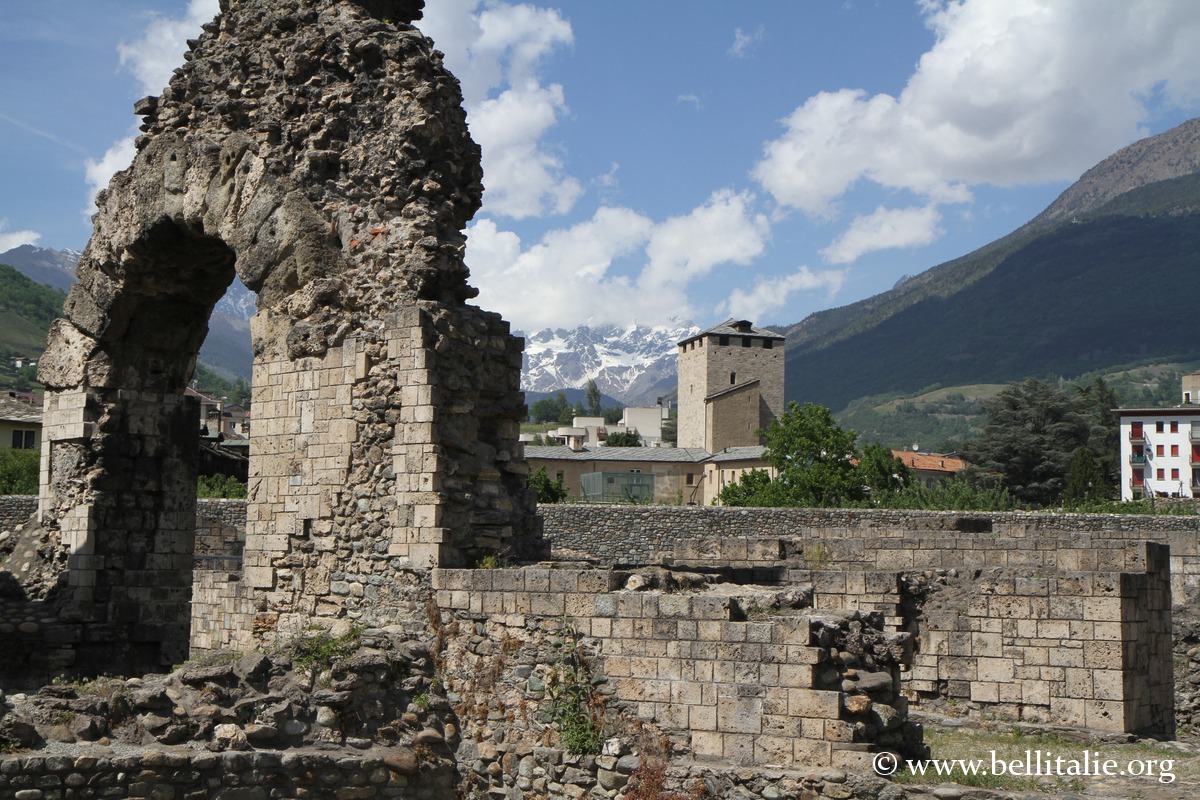
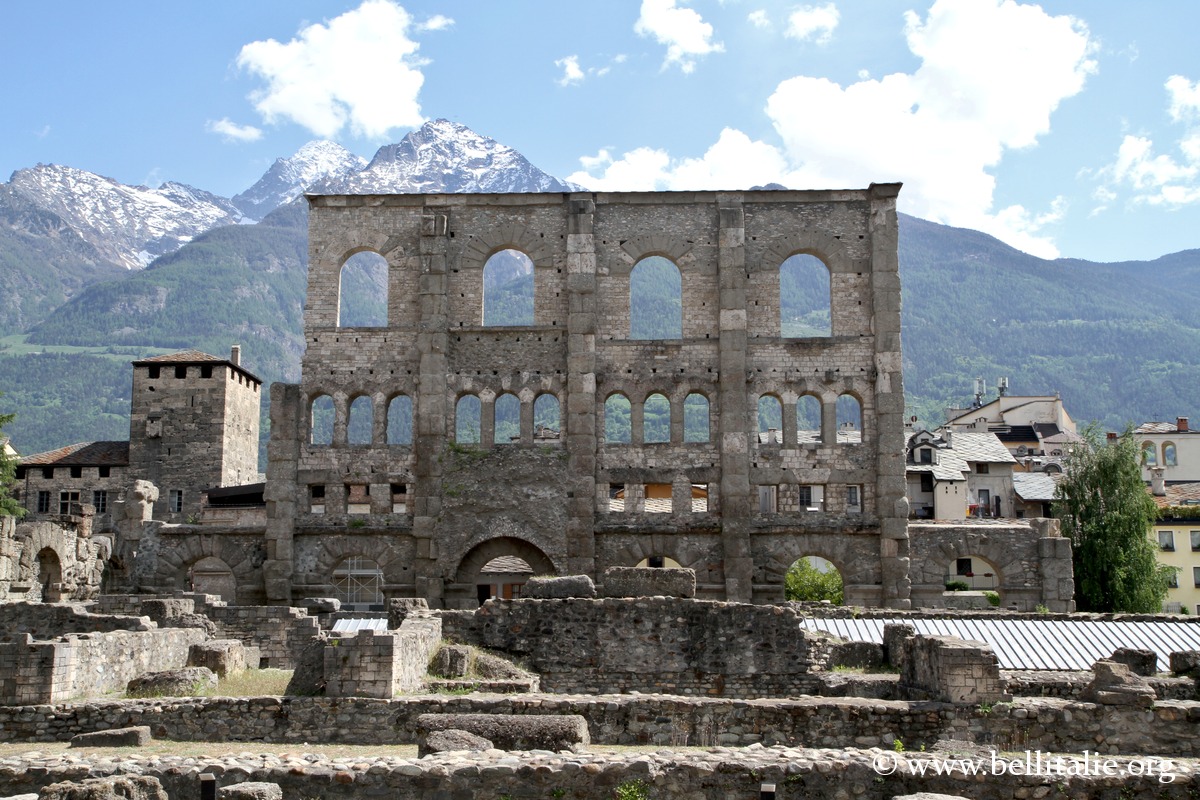
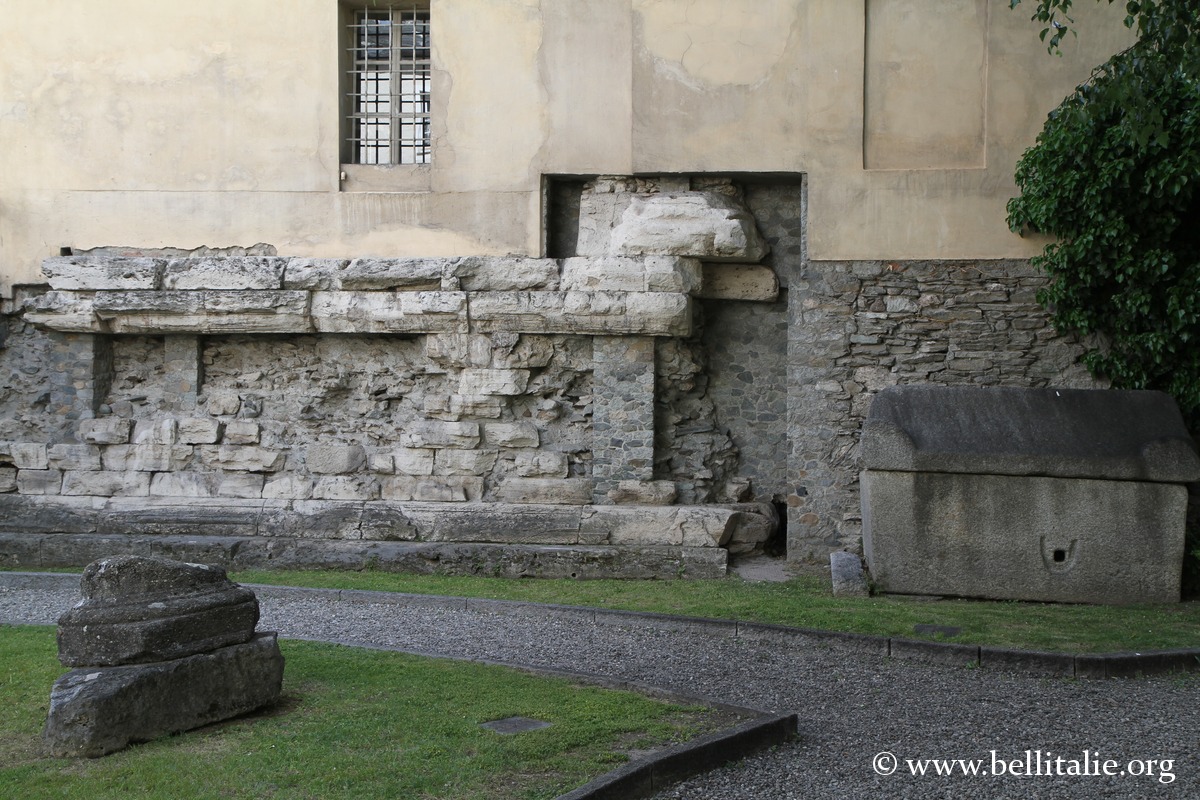
Not far from the Porta Praetoria you can discover the beautiful remains of the Roman theatre (inside the archaeological park), built at the founding of the town around 24 BC, adjacent to the amphitheatre built probably under the reign of the Emperor Claudius (around 50 AD), as well as the remains of the Roman forum in the surroundings.
The southern facade of the theatre remains, 22 metres high, with its arcades and its irregular windows. The lower part of the cavea steps also remains, as do the foundations of the backstage wall.
In the Middle Ages, many buildings were built against it, which were later destroyed during modern restoration work.
Collegiate Church of Saint-Ours
The monumental complex of Saint-Ours is the most important religious site in the town, comprising the church built from the 11th century, the medieval bell tower of the 12th century, the 12th-century cloister with its capitals carved with biblical scenes, the 15th-century priory buildings, the Treasury museum and the 11th-century frescoes. The church was built in the 9th century, on an early Christian building of the 5th and 6th centuries where a vast necropolis had previously stood, then the Romanesque church built in the 11th century. On the church facade, over 15 metres, the remains of a bell tower built in 989 can still be seen.
The 12th-century bell tower was originally included within the defensive walls along with another tower.
The church preserves a very beautiful 15th-century wooden choir, an ancient crypt and the important cycle of 11th-century frescoes on the ceiling.
In the choir, excavations revealed an unknown square mosaic pavement, including an elegant depiction of Samson killing the lion in the central medallion.
The Romanesque cloister is remarkable, probably from 1133, the work of Provençal or Lombard craftsmen, with irregular twin columns, carved capitals, with symbols of the Old and New Testaments, of the life of Saint Ours, fantastic beings, etc.
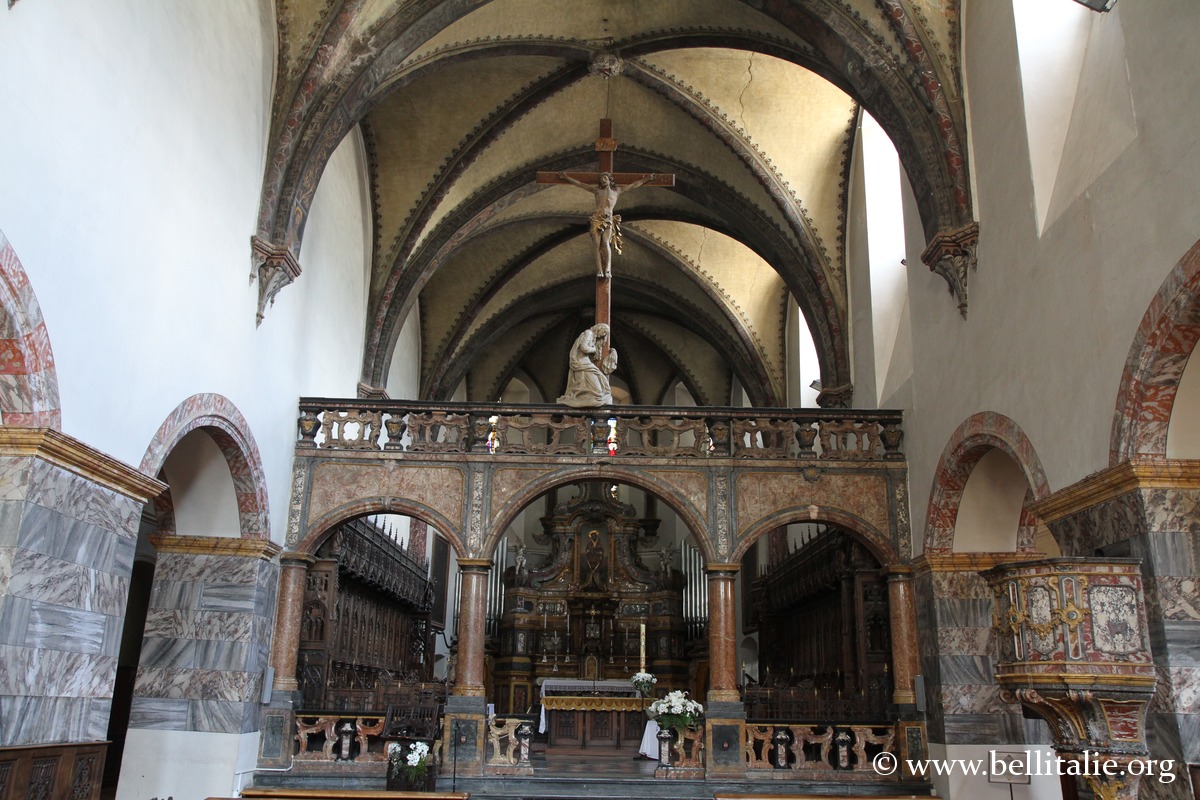
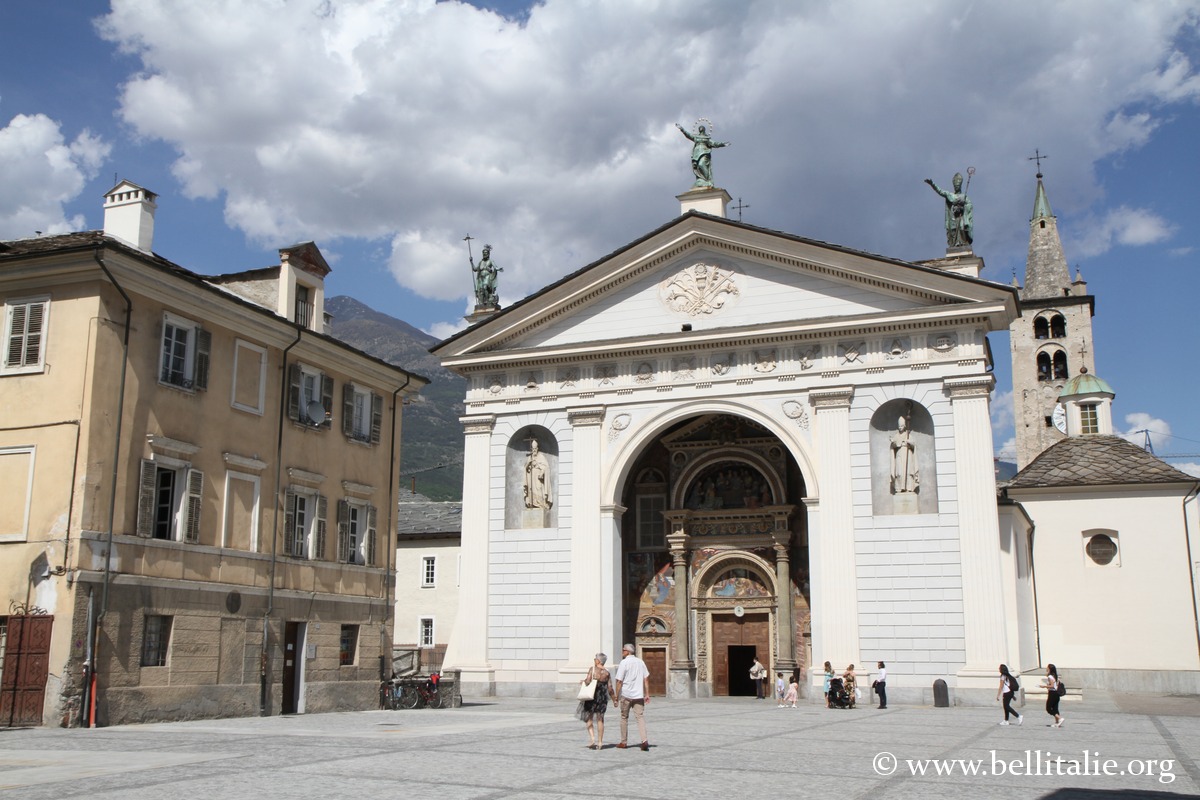
Cathedral of Aosta
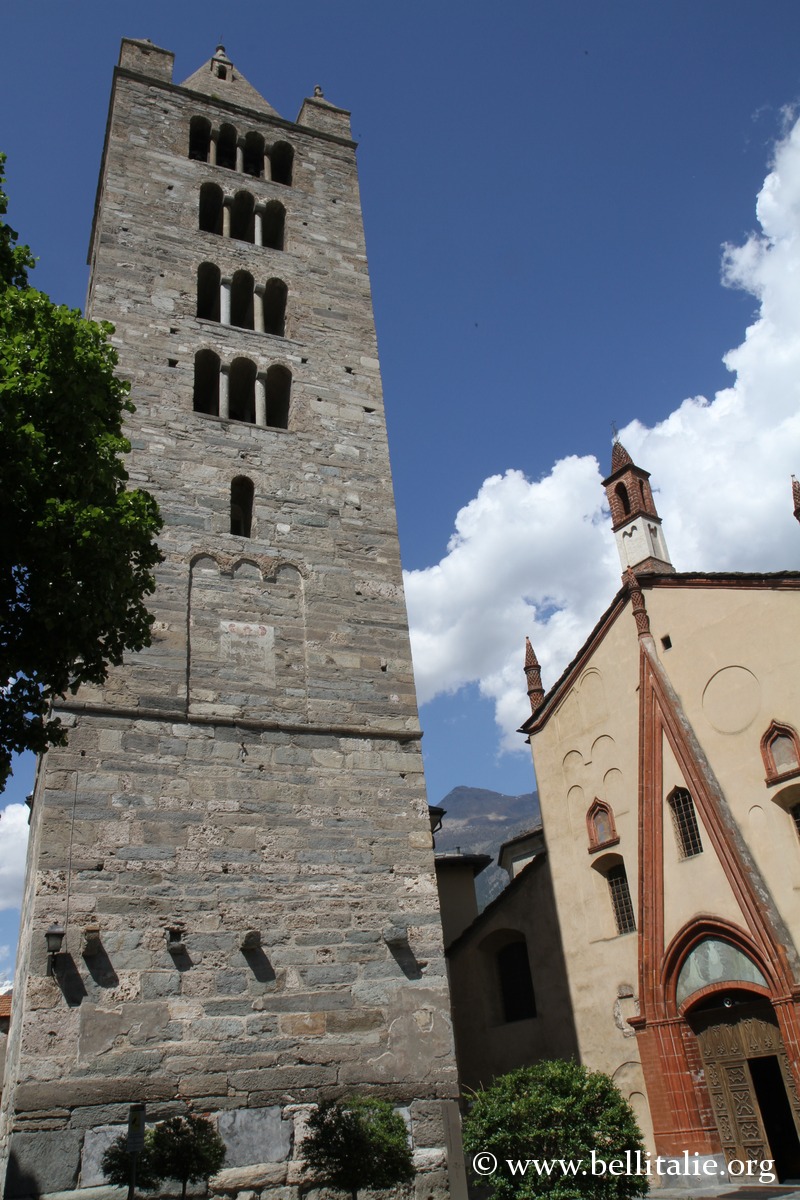
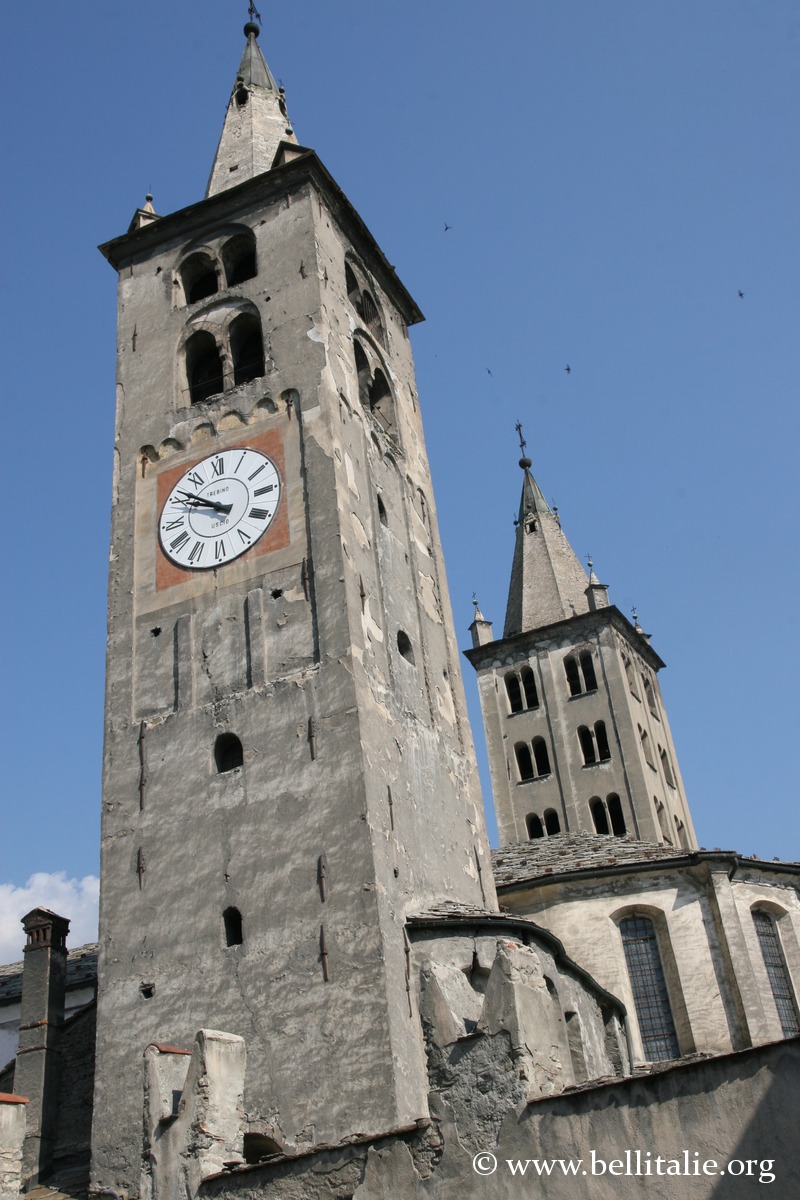
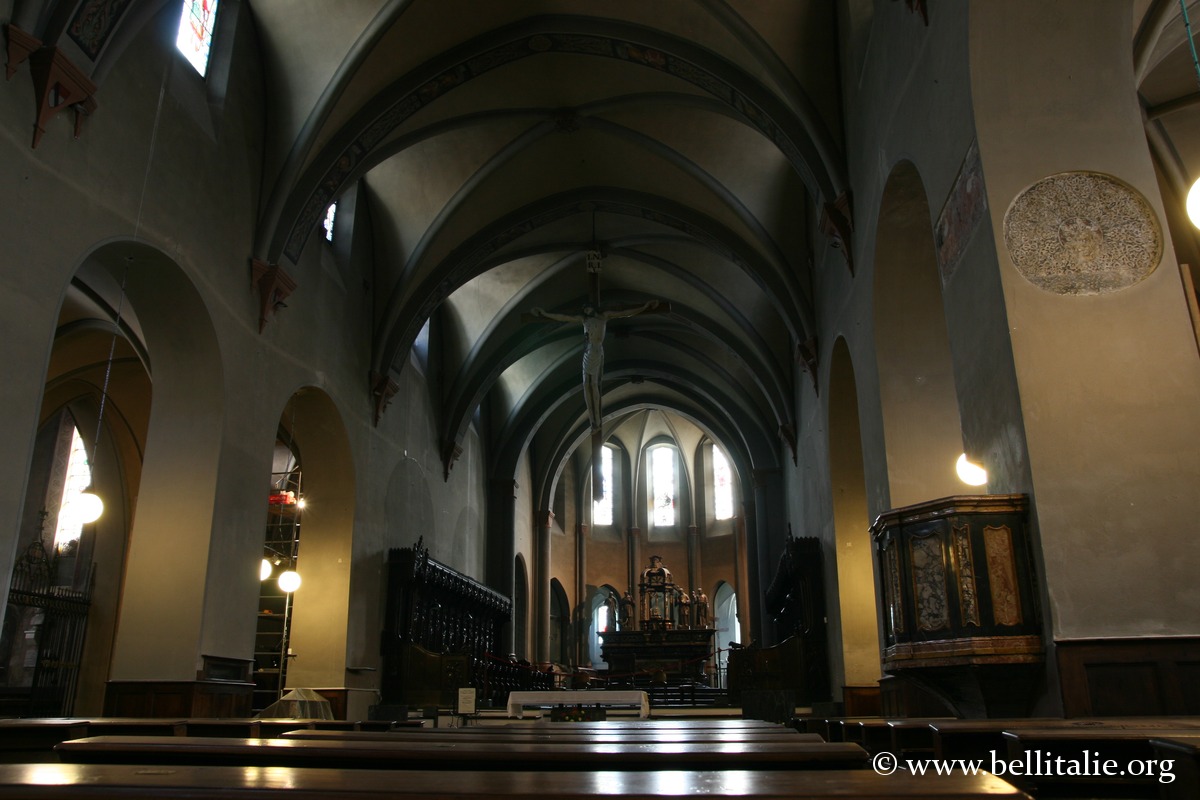
The Cathedral of Aosta, Santa Maria Assunta, was founded in the 12th century, but of that Romanesque era it retains only its two bell towers. It stands on the current Place Jean XIII, where there was once a sacred space of the Roman Forum, surrounded by the Cryptoporticus, large well-preserved portions of which are found beneath the cathedral. It was near this portico that the first Christian building was constructed toward the end of the 4th century. The vast complex survived until the Middle Ages and the great Romanesque reconstruction.
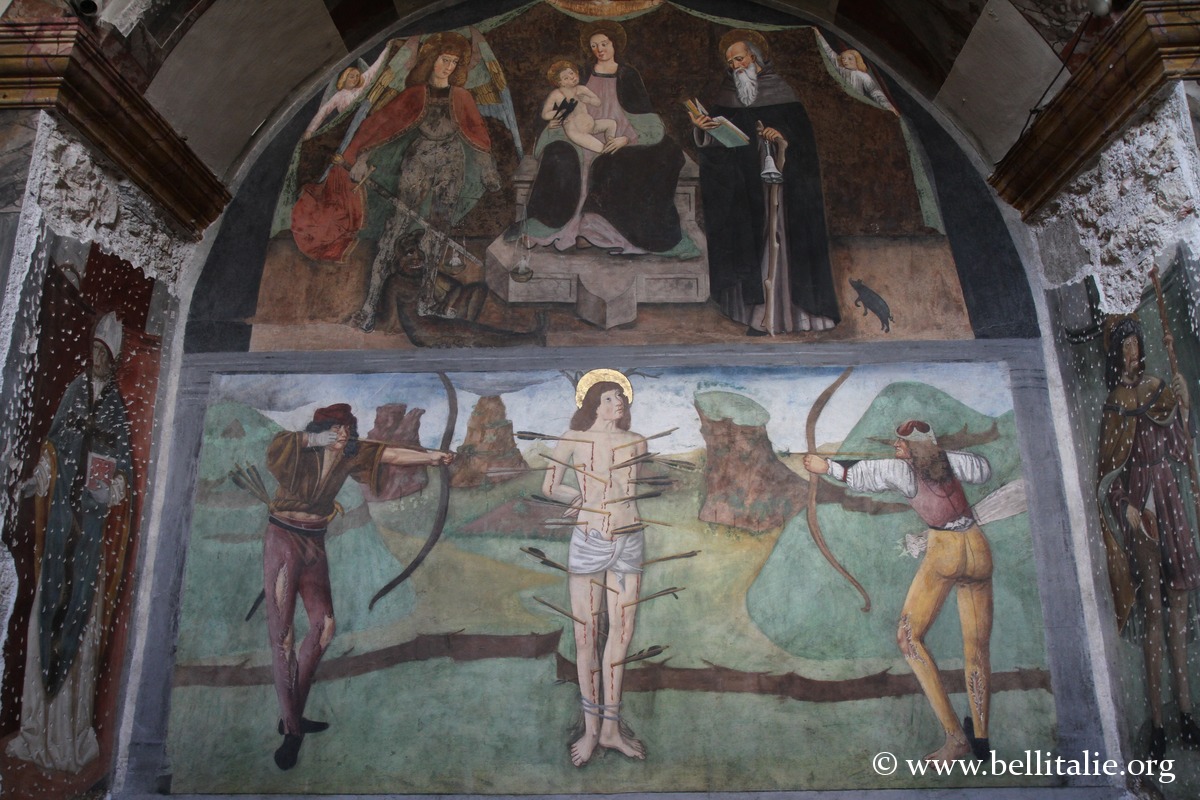
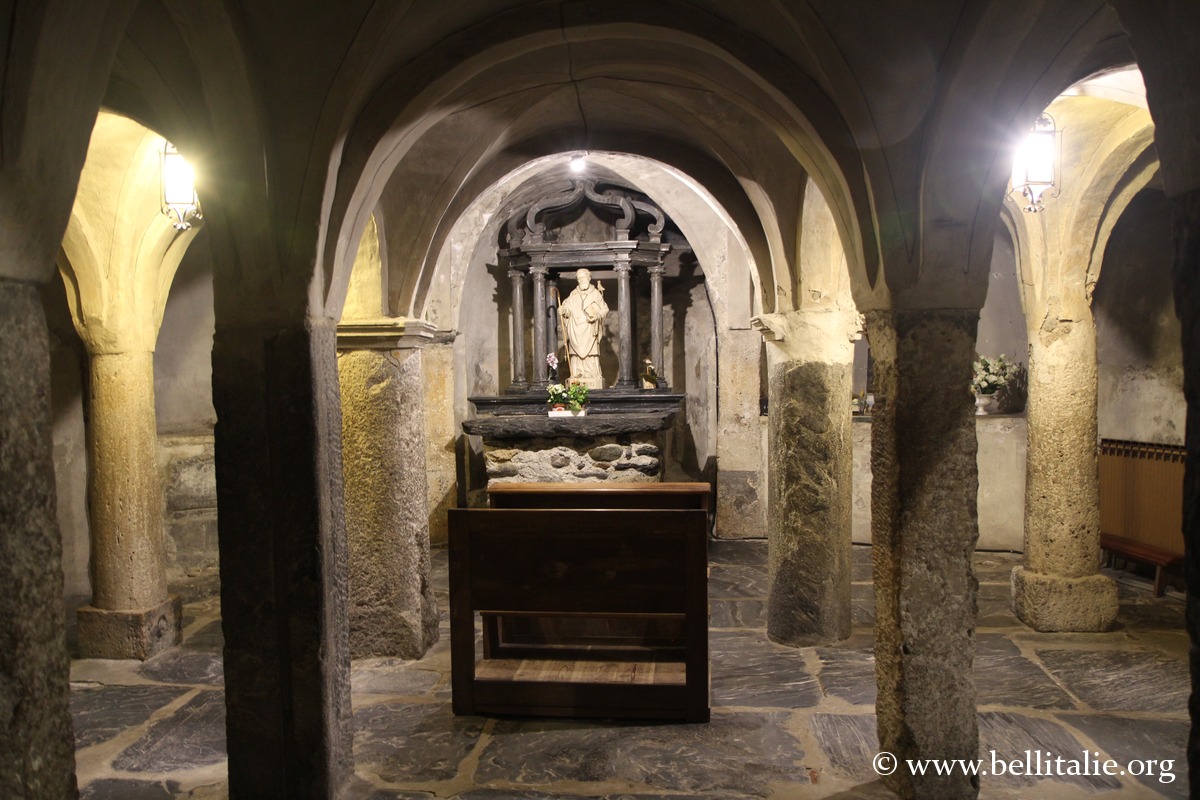
The interior is essentially Gothic, radically renovated in the 15th and 16th centuries, but retains 11th-century ceiling frescoes. On the floor, in the choir, two floor mosaics from the 12th and 14th centuries depict the months of the year, fantastic animals, and the Tigris and Euphrates. The crypt dates from the 11th century with three naves separated by slender medieval columns and Roman columns.
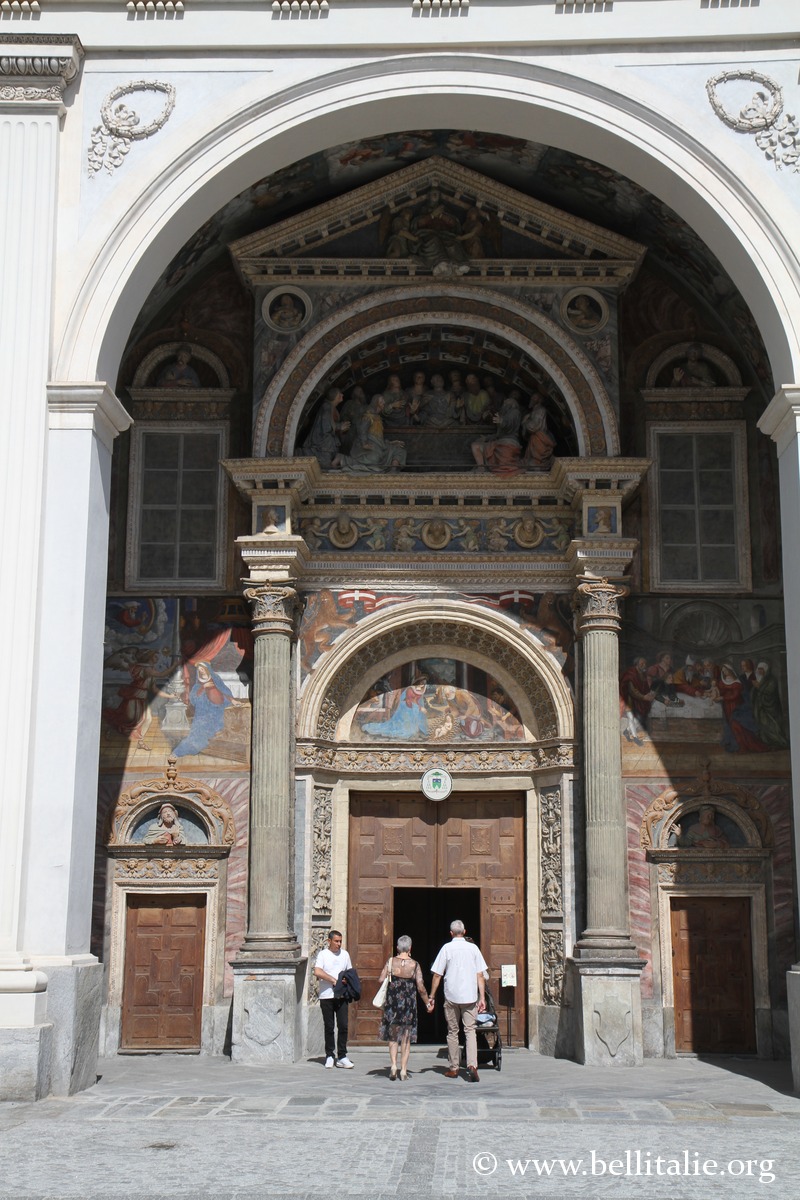
The cathedral’s facade consists of a 16th-century atrium with remarkable terracotta sculptures and frescoes, and a neoclassical facade from 1848. The trapezoid-shaped cloister dates back to 1460, mixing different materials such as gray marble for the columns, limestone and plaster for the decorated capitals
Roman cryptoporticus
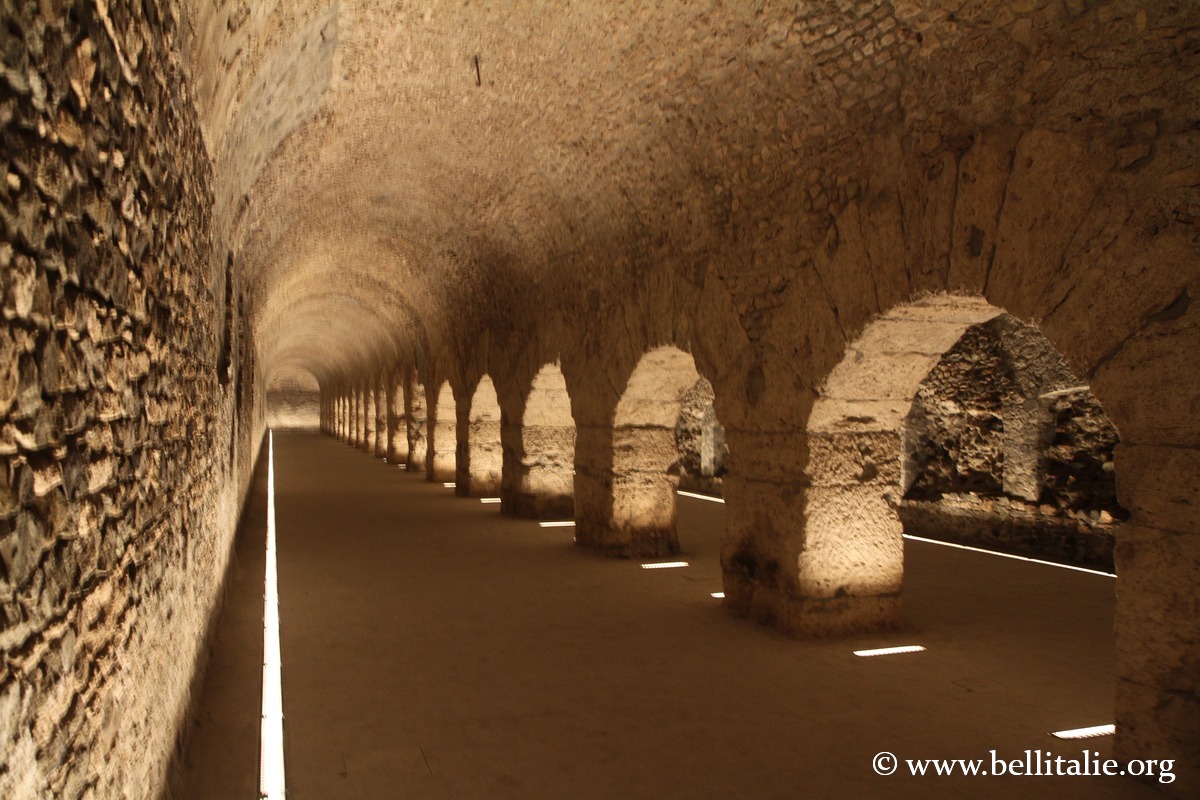
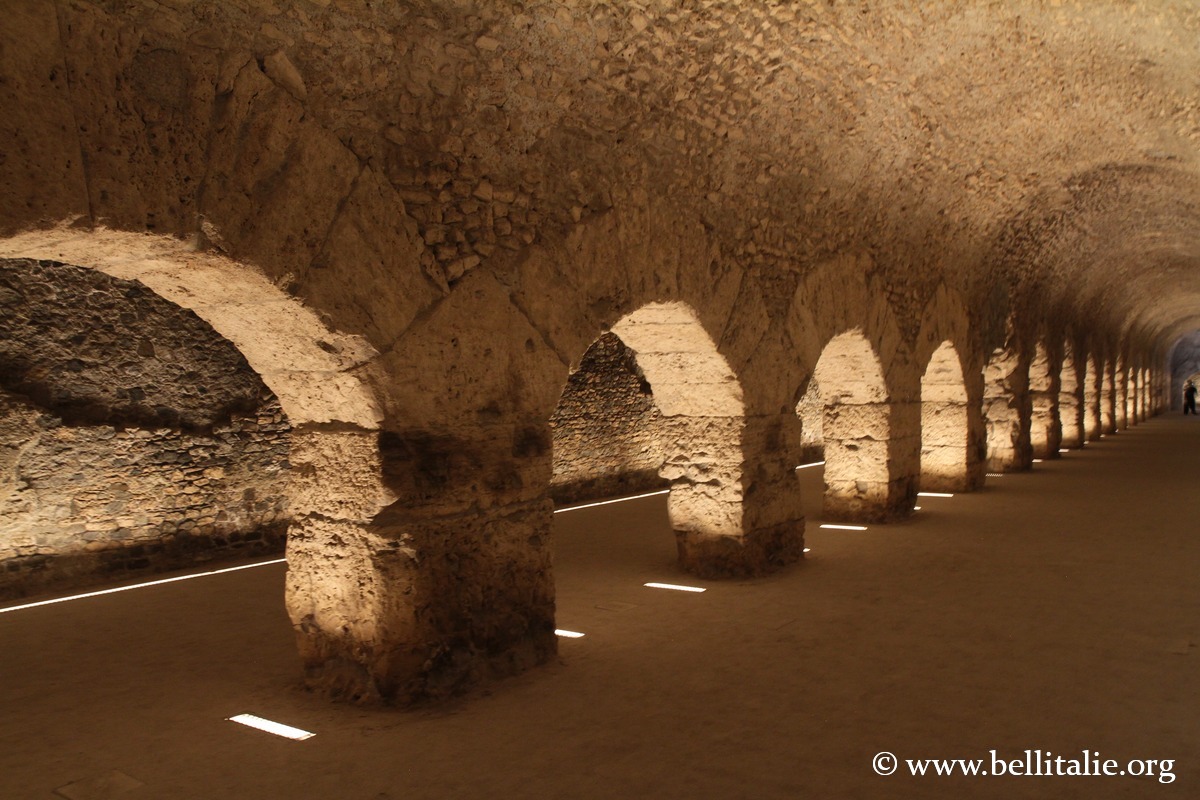
This monument dating from the time of Augustus served in particular to level the ground between the Forum and the sacred area. Underground, it was originally surmounted by a marble colonnade that has completely disappeared, north of the forum, framing the two primitive temples.
It is formed of three horseshoe-shaped arms, with two naves covered by barrel vaults, including a central arm of 87 meters and the lateral ones of 72 meters.
Used as cellars from the Middle Ages onward, the temperature inside is constant.
Place Chanoux
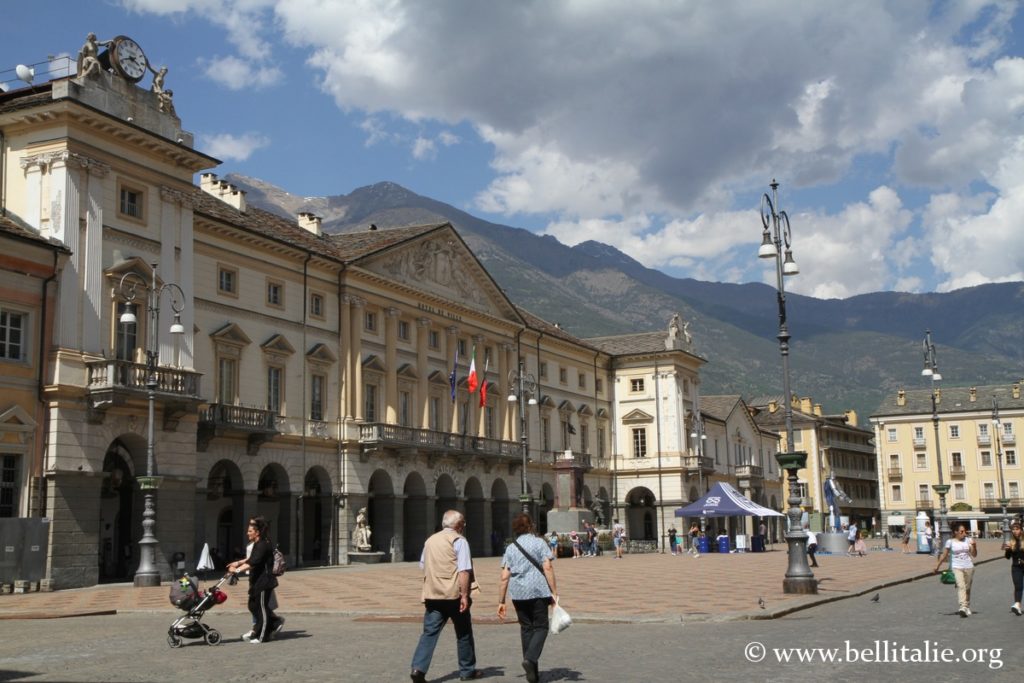
The central square of Aosta is the vast Place Émile Chanoux, a venue for cultural and sporting events, dominated by the Town Hall, a neoclassical building constructed in 1839, and by the Hôtel des États built in 1724, home to temporary exhibitions
Via Croce di Città and historic center
The Via Croce di Città (Croix-de-Ville) is the liveliest pedestrian street in the historic center, which took its name from a cross erected in 1541 in memory of the expulsion of the Calvinists from the Aosta Valley.
Another lively street, perpendicular to the previous one, is Via di Porta Pretoria, from the Porta Pretoria, preceded from the Arch of Augustus by Rue Sant’Anselmo.
-
- Via Sant’Anselmo
Regional archaeological museum
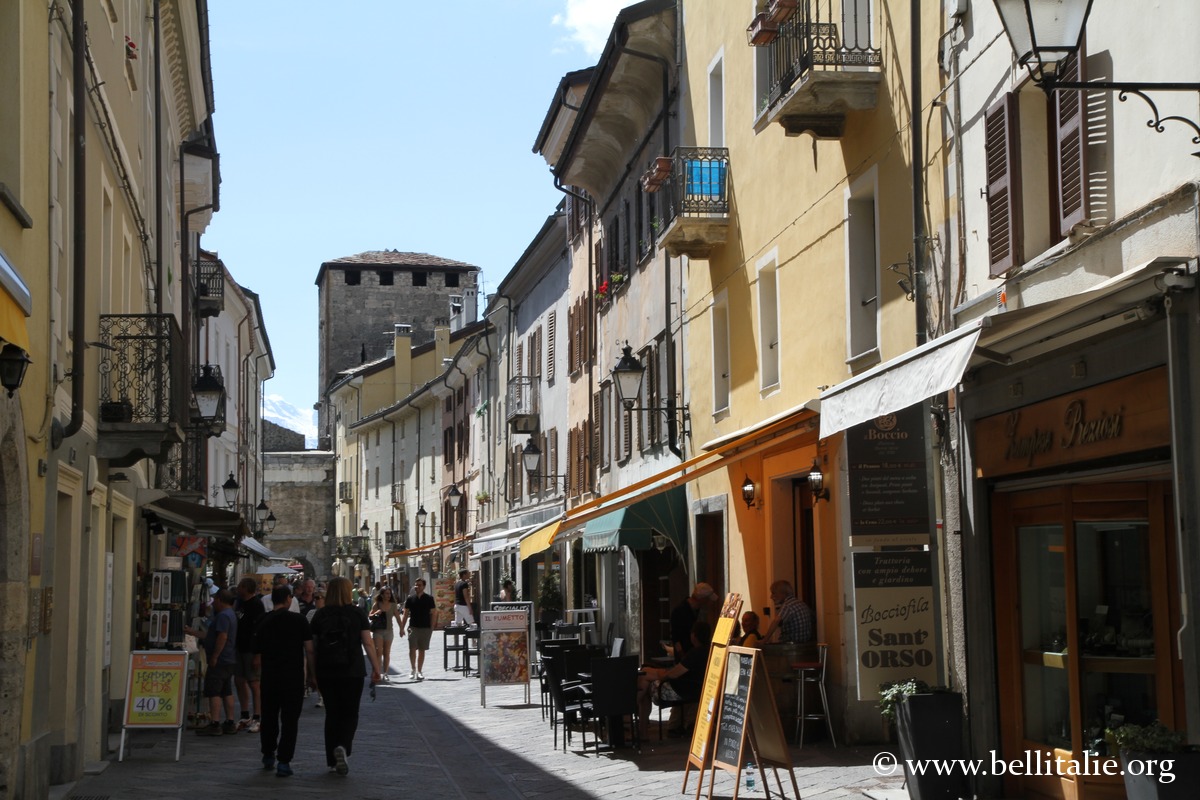
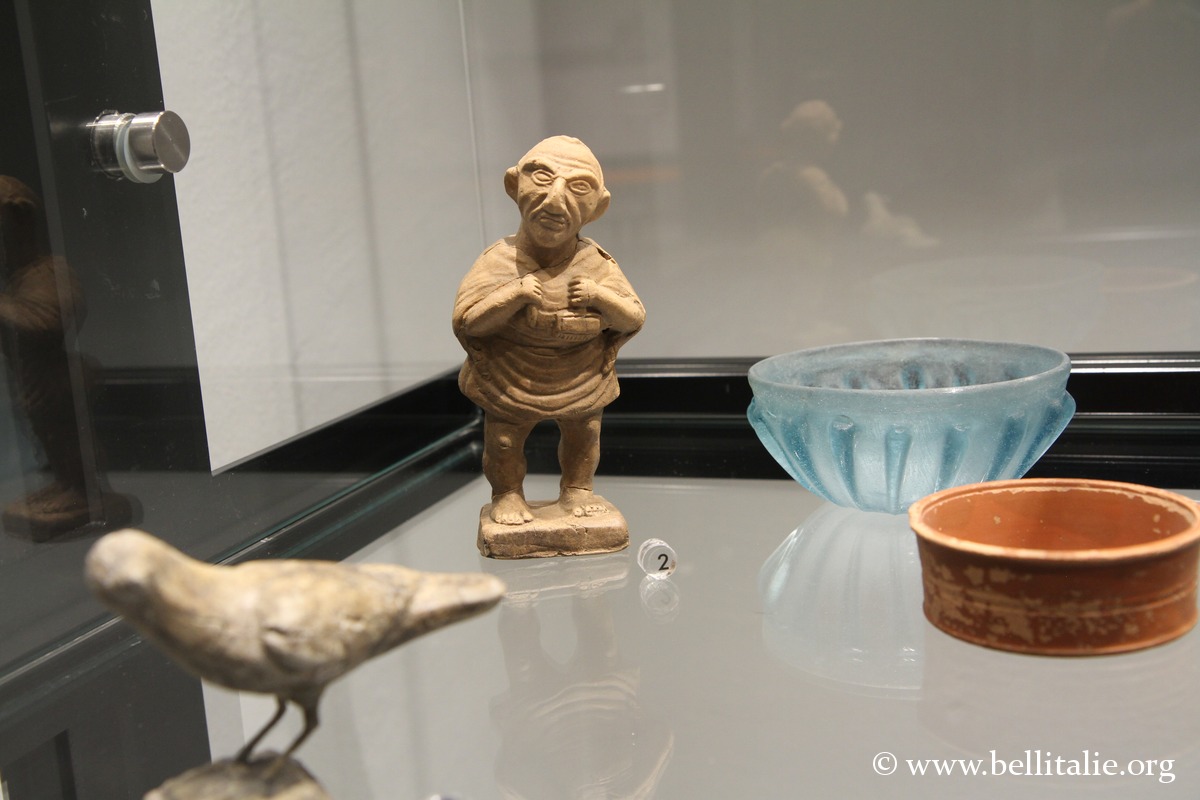
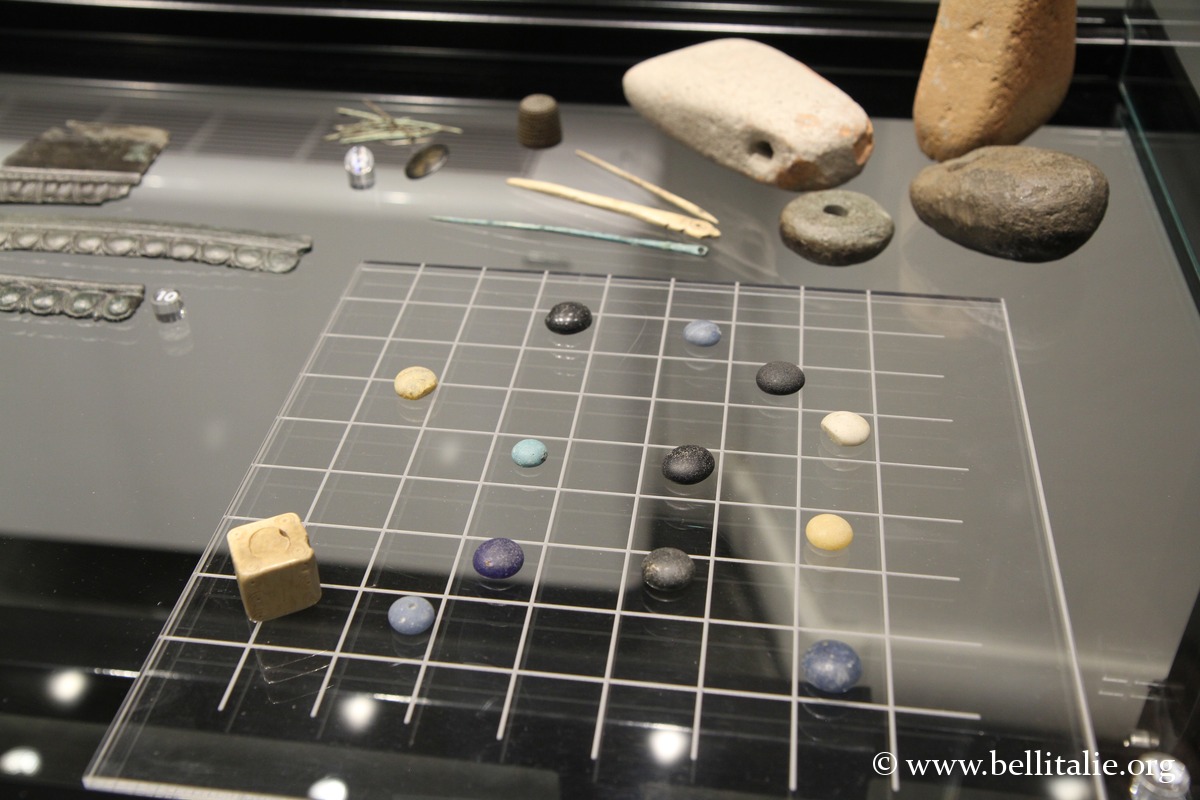
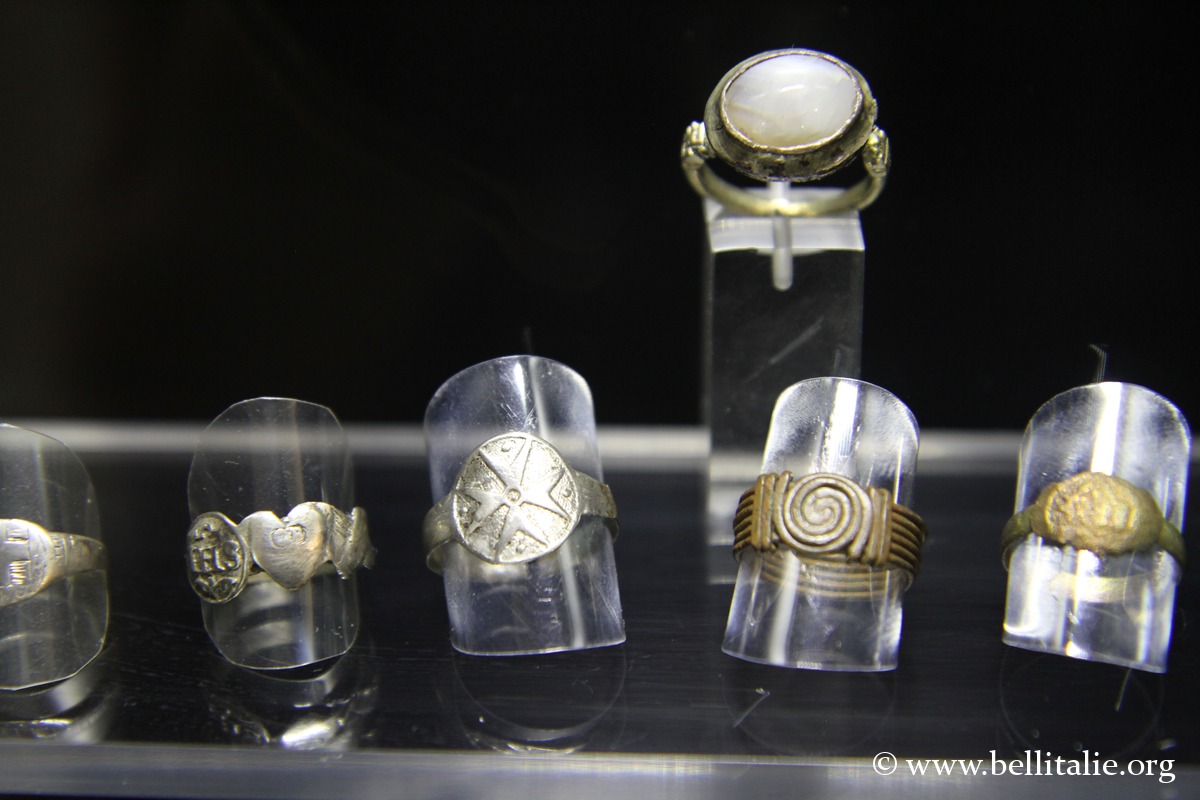
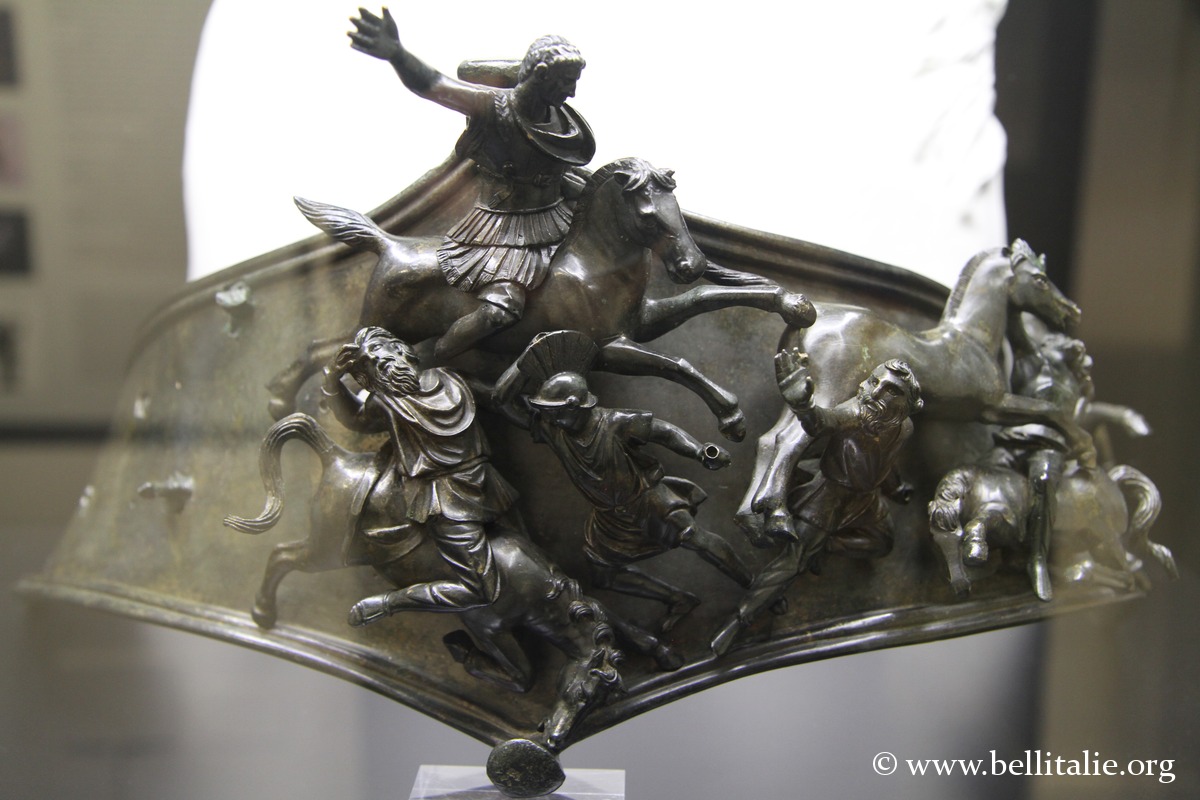
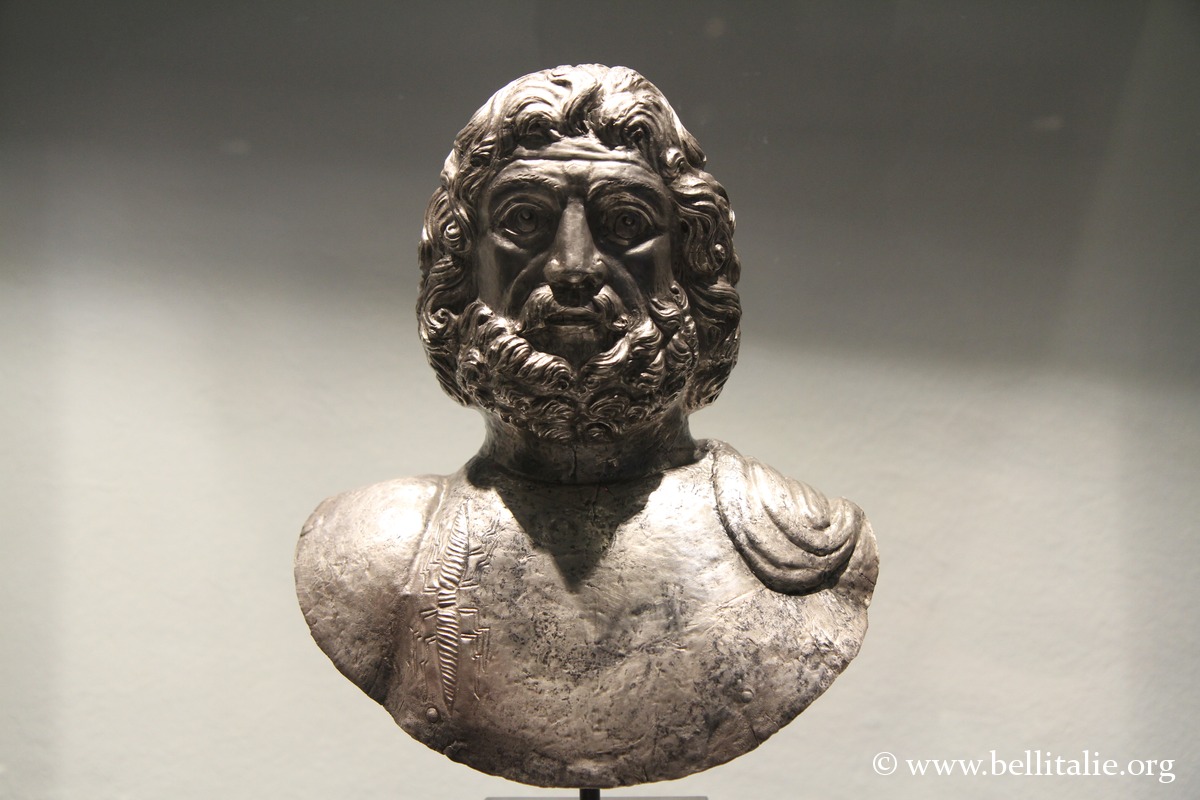
The archaeological museum displays finds from several cultures: ancient Egypt, Etruscan, Roman, Christian and medieval, notably with an important numismatic section with coins ranging from the Greek era to the Savoy, passing through the Celts, Gauls and Romans.
In the basements are preserved the remains of the southwest corner of the eastern tower of the Porta Principalis Sinistra, one of the four ancient access gates of the city of Augusta Prætoria.
The megalithic area
A megalithic area was discovered in 1969 on the western outskirts of the city. It contains elements dating back more than 6000 years, such as ritual Neolithic ploughing, anthropomorphic steles from the Copper Age and Iron Age burials.
It is now a covered excavation area of 10,000 square meters, the largest covered archaeological site in Europe.
Roman and medieval walls
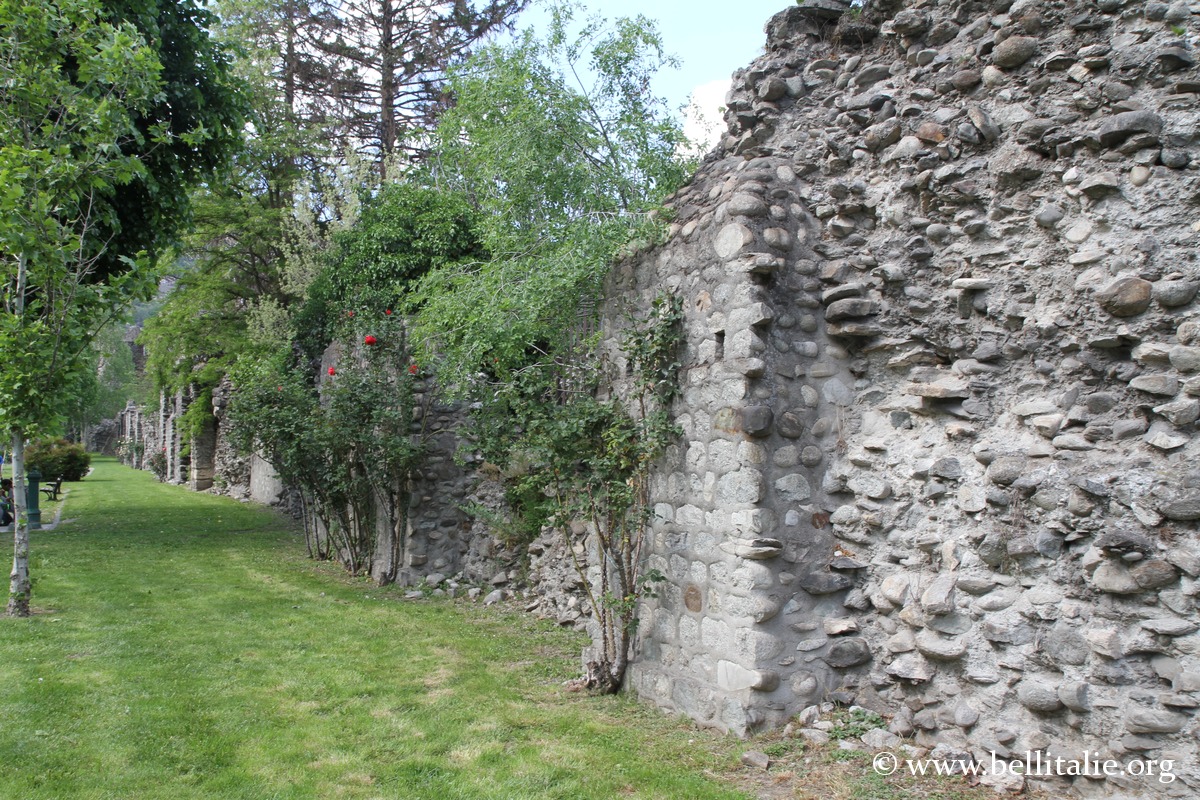
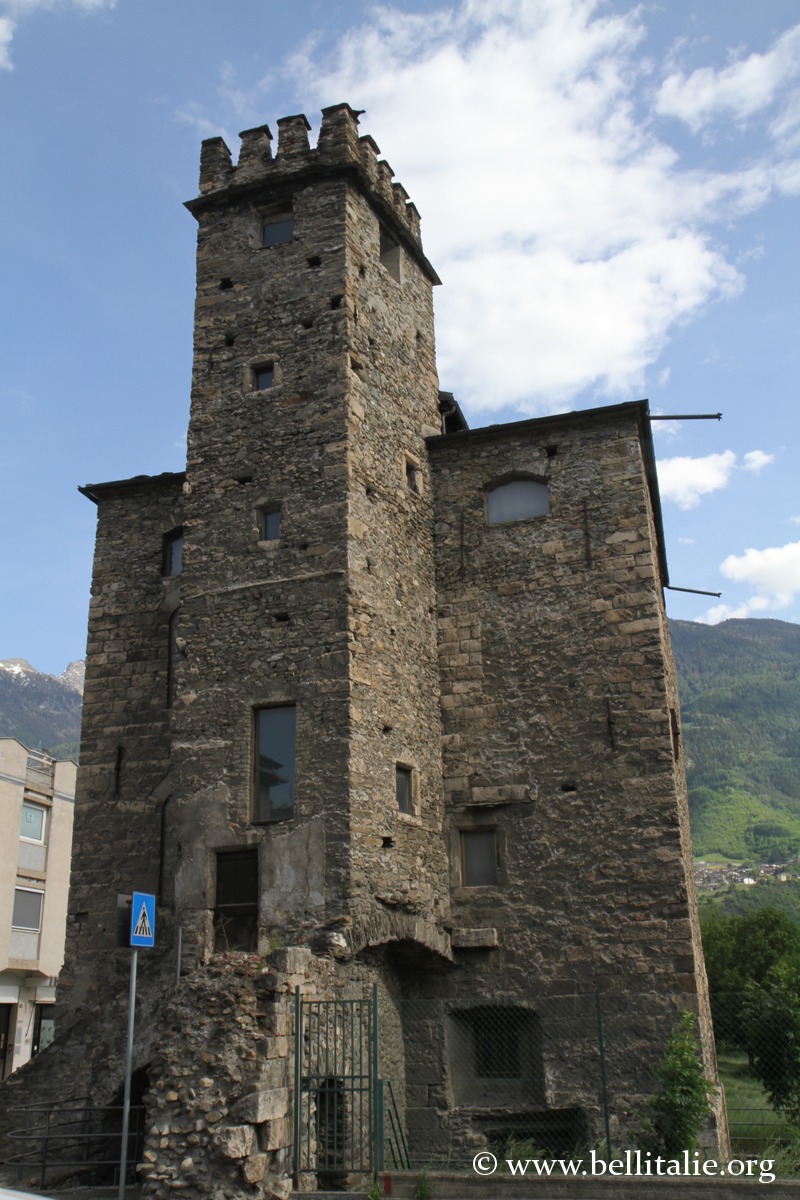
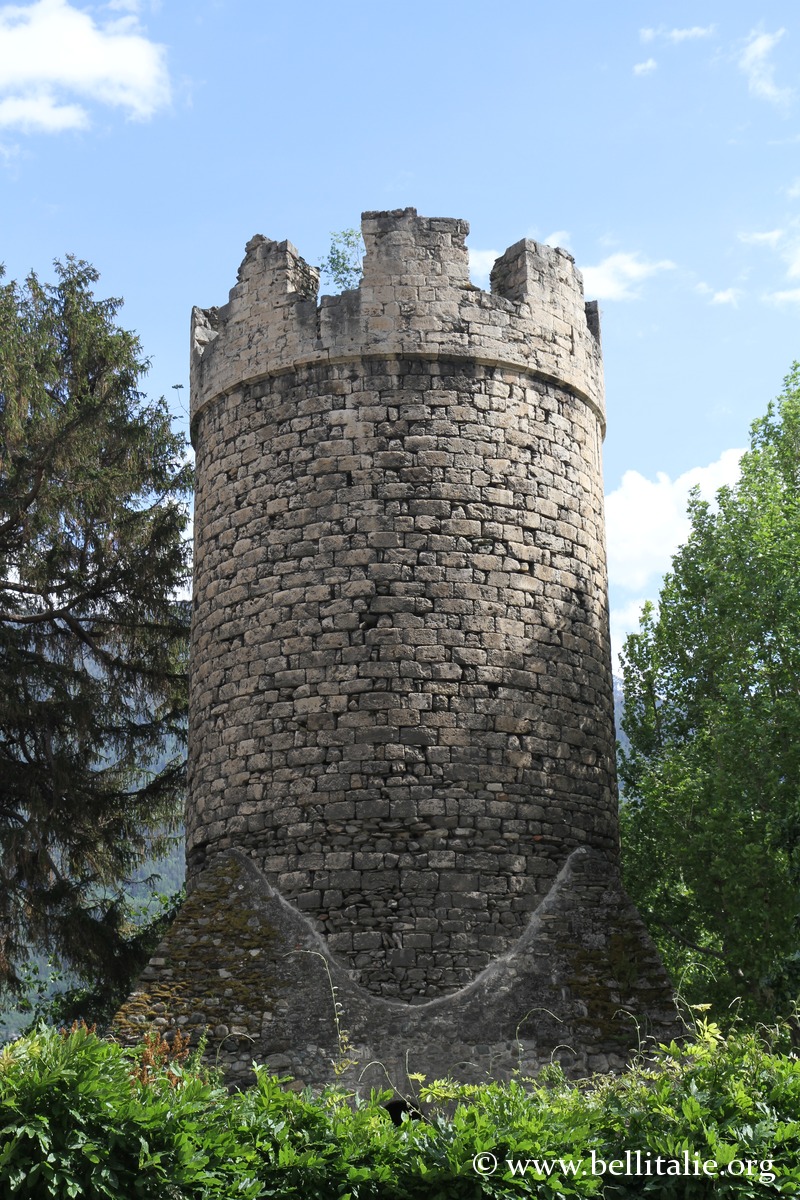
Beautiful portions remain of the ancient and medieval walls in Aosta, with towers more or less preserved and transformed.
In Roman times, the wall measured 724 by 572 meters, reaching a height of 7 meters, covered with travertine blocks on the outside, and equipped with 20 towers. In the Middle Ages, fortified houses and bastions leaned against the walls and the travertine was reused.
A good part of the walls remains, including the Porta Pretoria (read above) the largest of the four gates of the original Roman city. The Tour Fromage (or De Casei) dates from the 12th-14th centuries, the Tour du Baillage at the northeastern end of the wall was Romanesque then rebuilt in the Middle Ages. On the north side, there is the Tour Perthuis. To the west, the Tour neuve is from the mid-13th century, the Tour du Lépreux was an ancient Roman bastion transformed into a feudal residence by the Friour nobles around the 12th century. The Tour de Bramafam, on the north side and equipped with a 12th-13th century circular-plan bastion with remains of towers at its base. Finally, the Tour du Pailleron is the only one, along with the Tour du Lépreux, to have kept its Roman appearance.
Other places and churches
- The Hermitage of Saint-Grat is located 15 km up the slopes to the south, at 1772 meters altitude, dating back to the 13th century, enlarged in the 18th, with a statue of the saint from 1853, three meters high, on the bell tower.
- Piazza San Severino laid out in the ancient Roman Forum
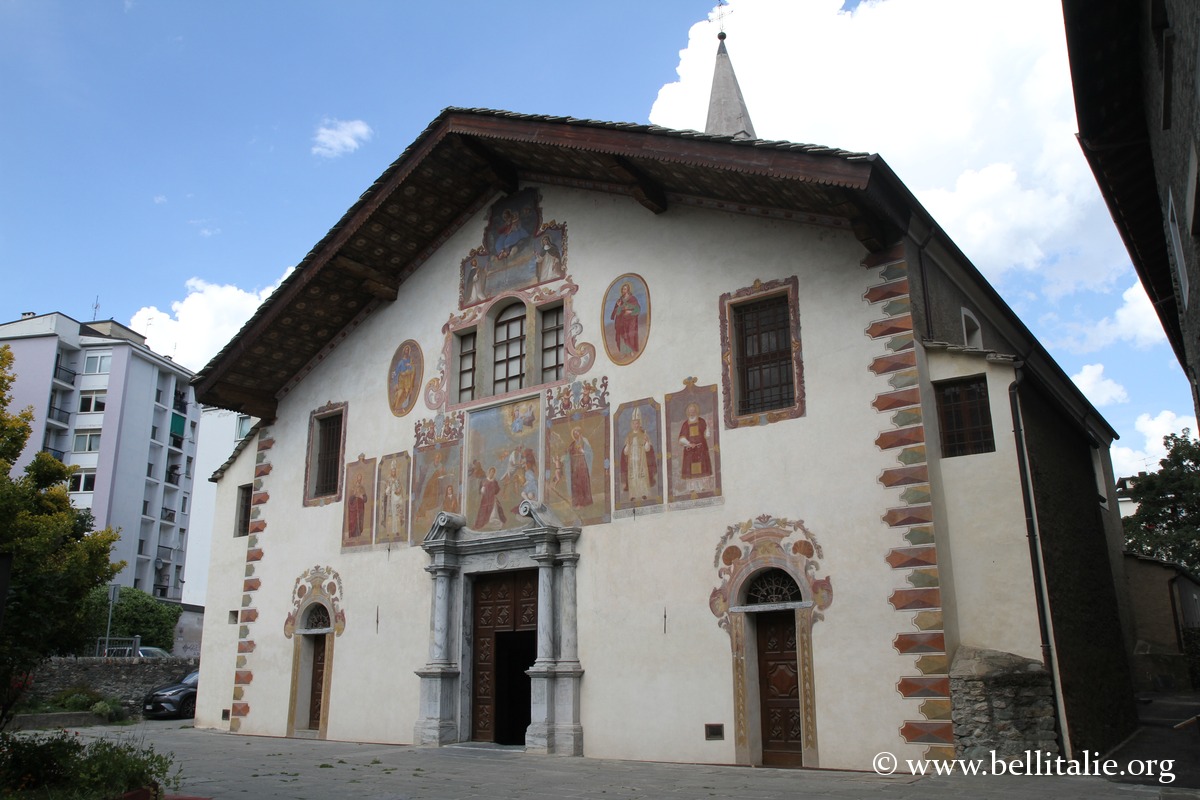
- The Church of Saint-Étienne, just outside the walls, dates back to the Middle Ages, rebuilt in the 15th then in the 18th century, whose facade frescoes date from 1729-1735.
- Saint-Bénin Center. Founded around the year 1000 by Benedictines, the priory of Saint-Bénin was transformed into a College of Higher Studies by Pope Clement VIII in 1597. The chapel was rebuilt in the 17th century near the Romanesque bell tower of the 12th century. It is now adapted to host contemporary art exhibitions.
-
- Place de la cathédrale (Jean XIII)
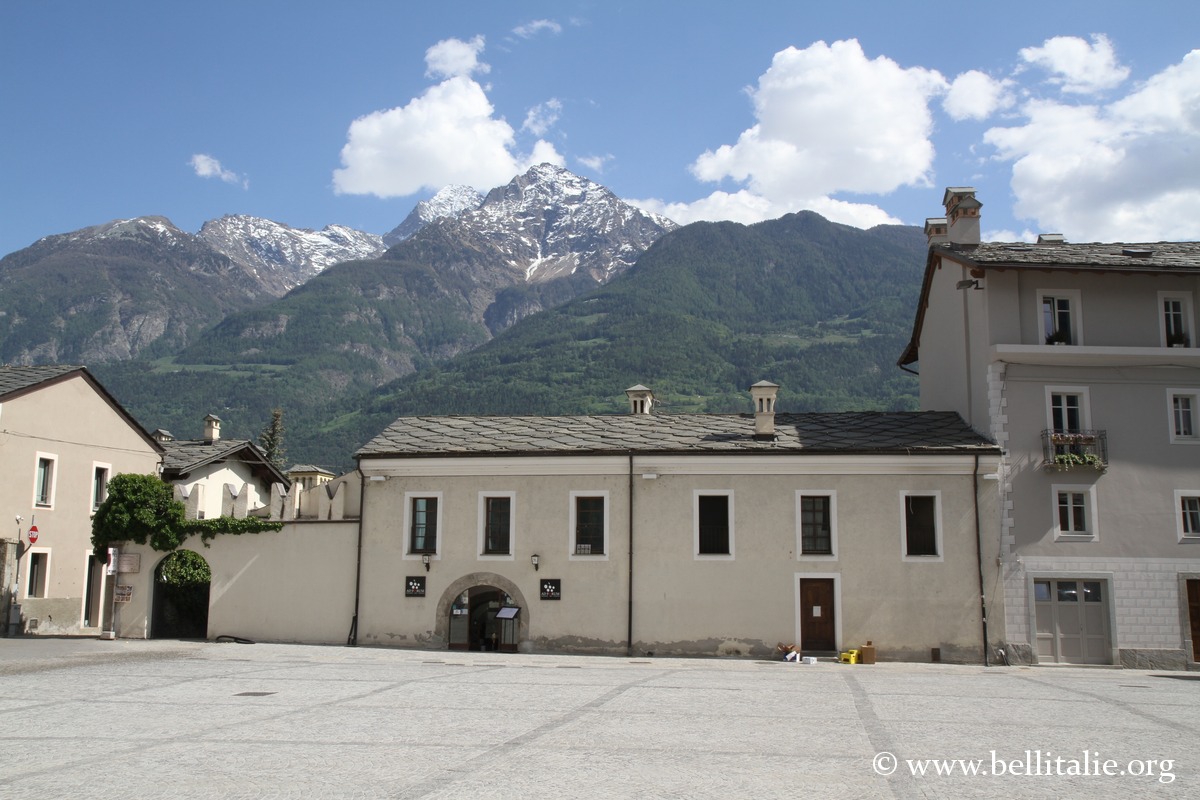
-
- Centre Saint-Bénin
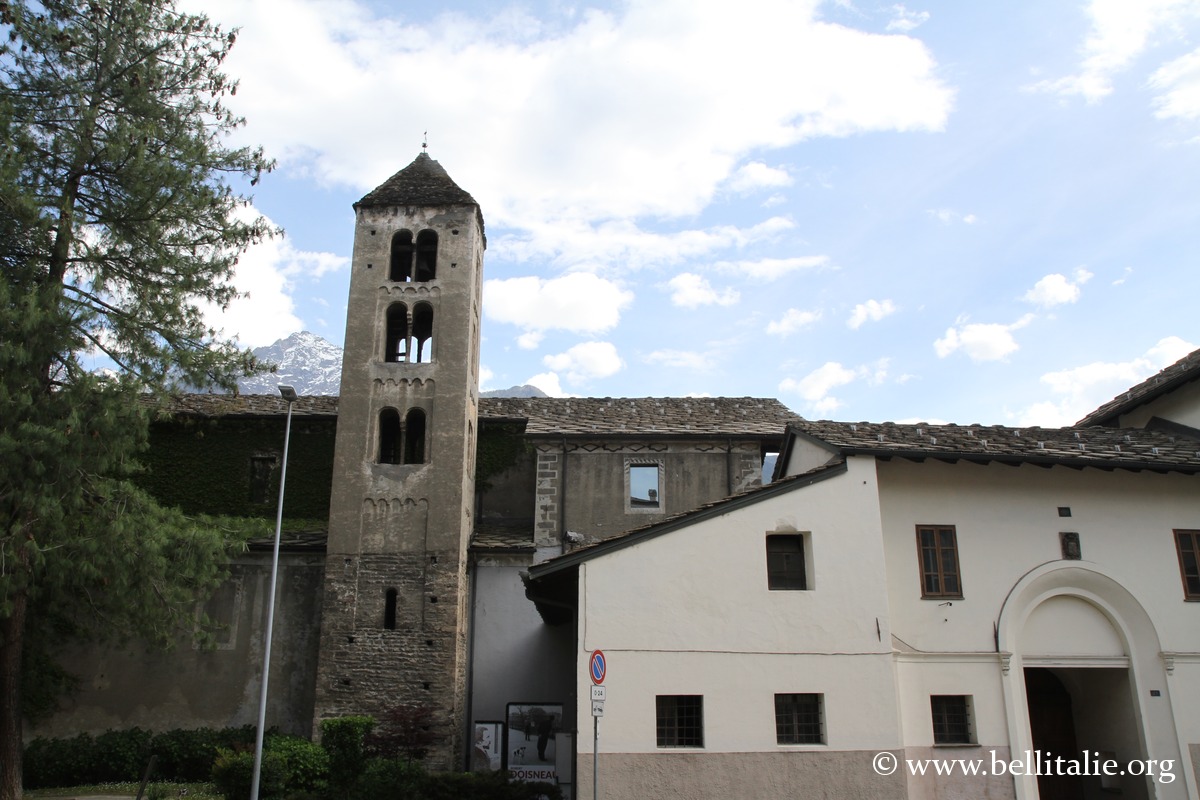
-
- Saint-Stéphane
Weather in Aosta
Map
If you see this after your page is loaded completely, leafletJS files are missing.
Information
- Wikipedia article: en.wikipedia.org
- Tourist site about Aosta and its surroundings: www.aostainfo.it
- Aosta Valley tourist portals: www.lovevda.it


Comments