


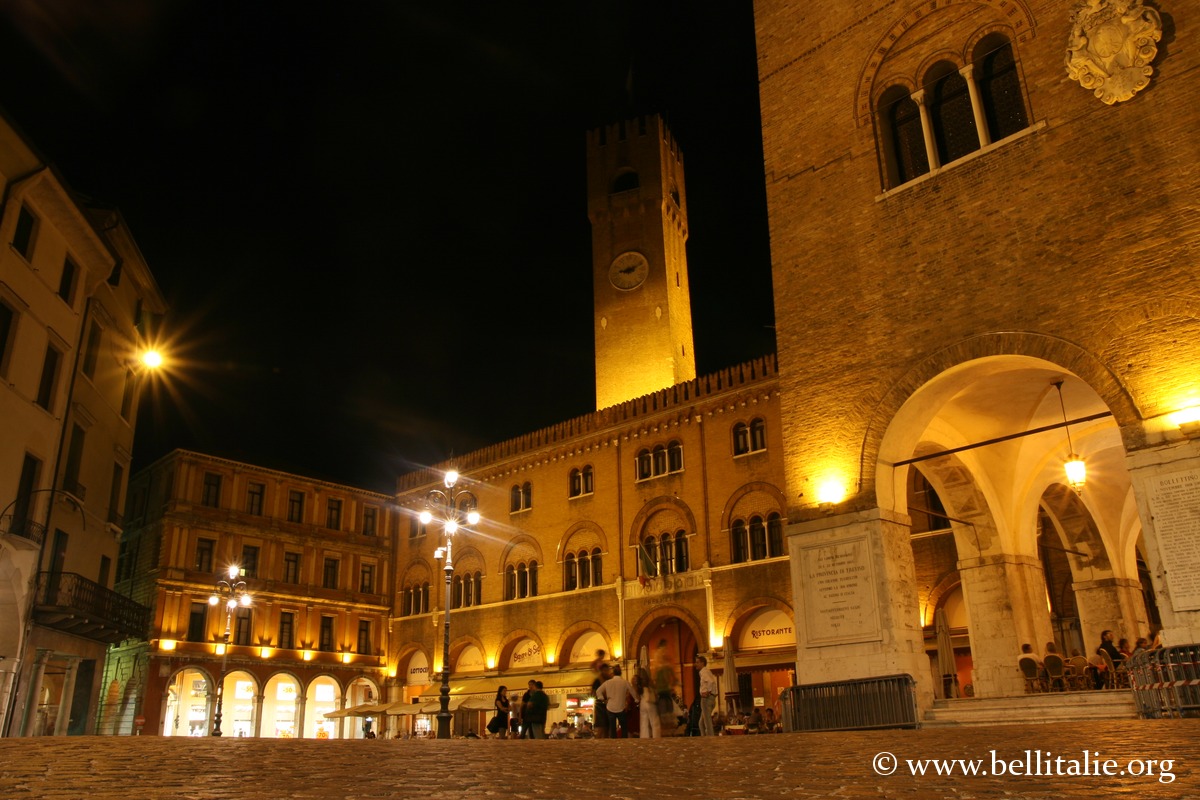
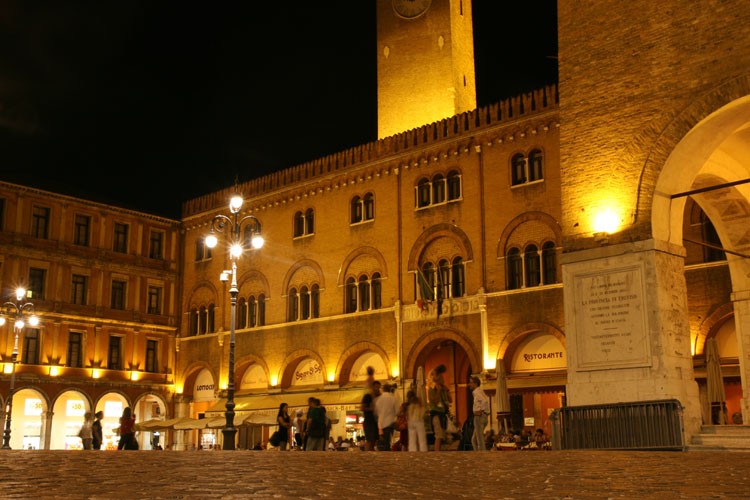
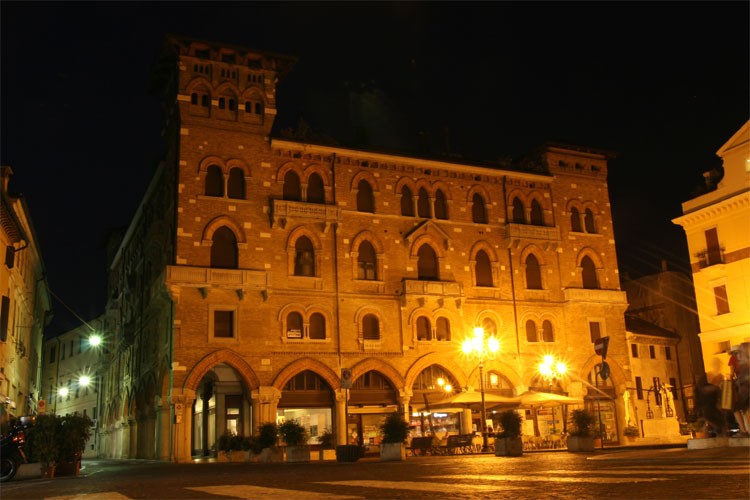
 Forty kilometres north of Venice, Treviso is a small town of nearly 85,000 inhabitants (in 2021). It is a charming, walled city crisscrossed by several canals, whose historic heart centres on the Piazza dei Signori with its medieval Palazzo del Trecento (13th century), the bars and arcades, the charming Buranelli canal district, and a substantial religious heritage including the cathedral and several churches (San Nicolò, Santa Caterina).
Its history dates back to the Romans, who named it Tarvisium. After the turmoil that followed the fall of Rome and the invasions, it was conquered by the Lombards. Treviso became an independent commune-republic from 1183 to 1339, the year from which Venice began to rule there for several centuries.
What to see in Treviso
1. Piazza dei Signori
Piazza dei Signori
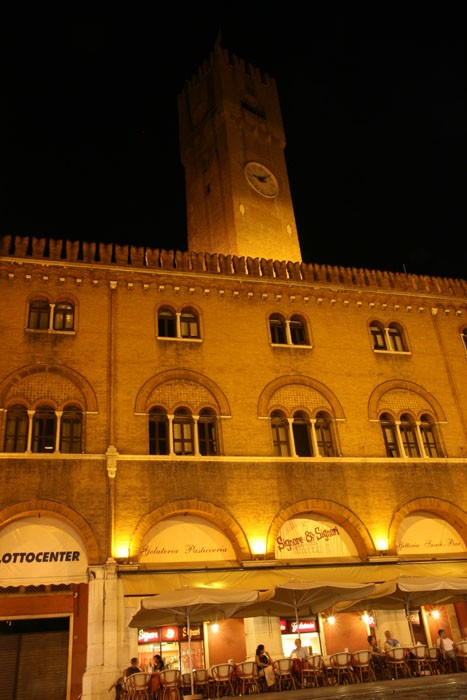
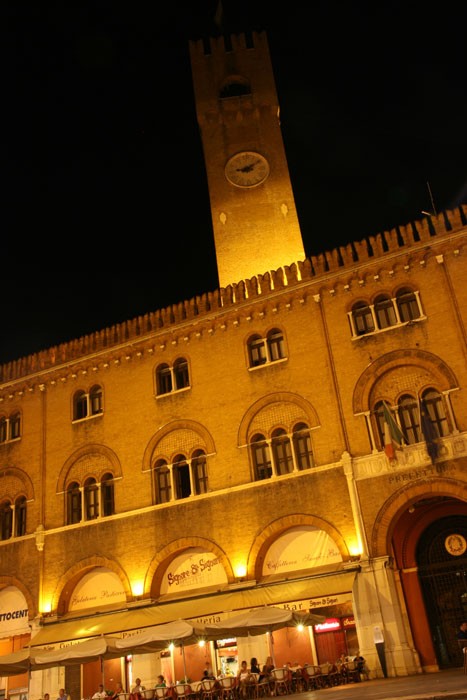
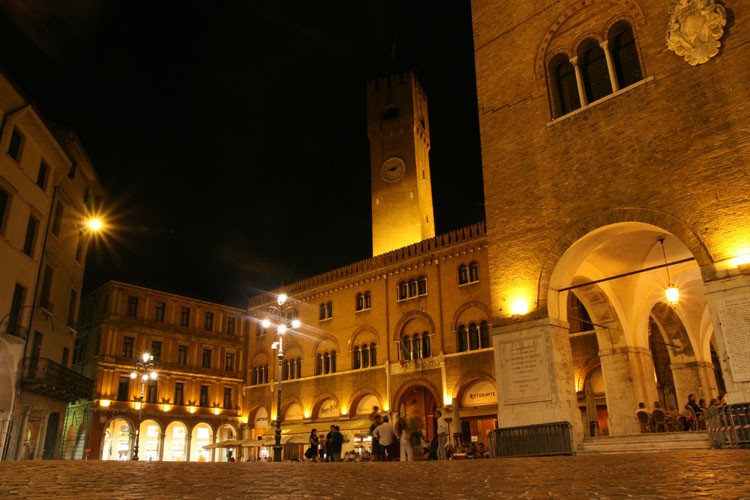
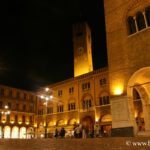
The heart of the city since the time of the Roman forum, the square also served as a market place. It is lined with elegant arcades, bars and restaurants, but above all three important buildings: the Palazzo del Podestà (13th-15th century), the Torre Civica tower and the Palazzo dei Trecento (13th century).
2. Palazzo dei Trecento
Built in 1210, this beautiful medieval palace of Romanesque architecture with its brick arcades owes its name to the 300 members of the Council of the Commune. It still hosts the meetings of the municipal council. It was restored after the bombings of 7 April 1944, of which a clearly visible restoration line remains on the structure.
Its 13th-century frescoes can be discovered during events or exhibitions.
3. Palazzo del Podestà and Torre Civica
The Palazzo del Podestà, today the Prefecture building, dominates the Piazza dei Signori with its handsome brick facade, built in the 13th century and subsequently rebuilt. The Torre Civica tower was erected in the 13th century and largely rebuilt in the 19th century.
4. Calmaggiore and the Fountain of the Breasts
The Calmaggiore is the main street of the historic centre, inherited from the Cardo Maggiore of Roman times, today linking the Piazza dei Signori, the political centre, to the Piazza Duomo, the religious centre.
It is paved and lined with arcades, with its shops, painted facades, courtyards and remnants of the past such as the ancient Roman road visible in some basements.
In the courtyard between Palazzo Zignolli and Palazzo Pretorio, the fountain of the breasts (Fontana delle Tette in Italian) is a small fountain with the bust of a woman from whose breasts water gushes. It is a copy of the original built in 1559 (kept in the Palazzo dei Trecento). On great occasions, it dispensed white wine from one breast and red wine from the other.
5. Church of San Nicolò
San Nicolò is the largest church in the city, built in the 12th century by the Dominican friars thanks to Benedict XI. This important, austere Gothic building was restored several times, notably after the bombings of 1944. The frescoes of Tomasa da Modena and his pupils decorate the pillars separating the three naves of the interior, executed in the 14th century.
6. Walls and gates
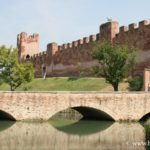
Since Roman antiquity, Treviso has been protected by walls. The current 16th-century enceinte is associated with a water-filled moat. Today one can discover several portions of it and three gates: the Porta San Tommaso being the most majestic, the Porta Santi Quaranta and the Porta Altinia. On these, the winged lion of Venice bears witness to the era of the Republic of Venice.
7. Canals and Isola della Pescheria
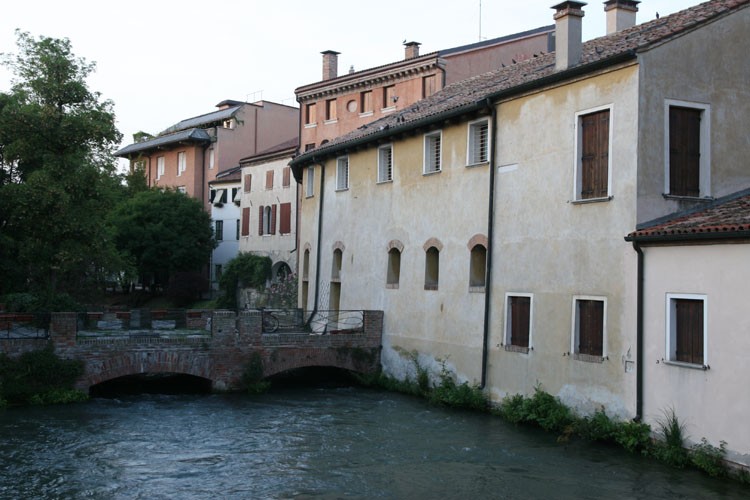
The canals and waterways that cross Treviso are accompanied by wash-houses, gardens, and small bridges such as the Ponte di Dante.
The island of the Pescheria (Island of the Fish Market in English) takes its name from the fish market, on the Cagnan Grando canal. In the second half of June, the Buranelli Festival is held in the district, with concerts, puppet shows and tastings.
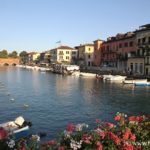
The Buranelli canal is one of the most beautiful spots in the city, with lovely scenes of houses with their feet in the water.
The other two canals are the Cagnan Grande, the largest, and the Cagnan della Roggia (called Siletto).
8. Santa Caterina complex
The Santa Caterina complex, with the church, the convent and its two cloisters, has become the main hub of the municipal museums of Treviso (Musei Civici), with several museums. The church of Santa Caterina is a Gothic building that has retained frescoes from the 14th and 15th centuries.
The rich archaeological section bears witness to human presence in the region since prehistory.
9. Treviso Cathedral
On the site of an ancient early Christian temple, of which only the crypt remains, the current cathedral dates back to the 18th century, with a 19th-century neoclassical facade adorned with six Ionic columns and a triangular pediment.
Behind the dome, the Canoniche Vecchie palace dating back to the 12th century houses the diocesan museum, which mainly displays works by Venetian artists.
10. Loggia dei Cavalieri
The Loggia dei Cavalieri (Loggia dei Cavalieri in Italian) is a historic building constructed around 1267 during the period of the independent Commune, where nobles met or played parlour games.
What to eat in Treviso
Treviso is known for its red radicchio (cooked in risotto: risotto al radicchio in Italian) and Prosecco, a sparkling wine. But it would be reductive to stop there; chicory with rice, sausages, even pigeon and freshwater fish are also cooked there. Not to mention tiramisu, which was born in Treviso.
Photos of Treviso
Links
- Website of the comune di Treviso
- Tourist portals: www.veneto.eu, www.travel365.it
- Blogs: www.montagnadiviaggi.it
Weather in Treviso
Map
If you see this after your page is loaded completely, leafletJS files are missing.




Comments