


Presentation
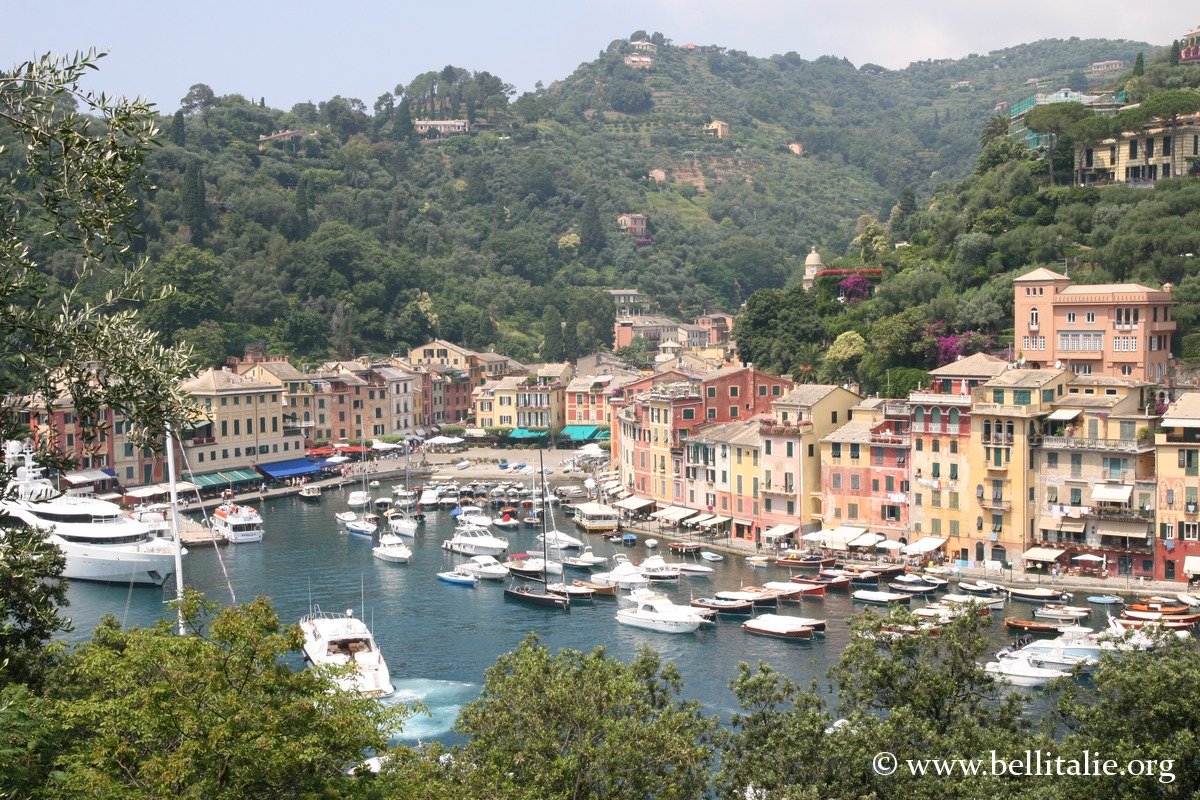
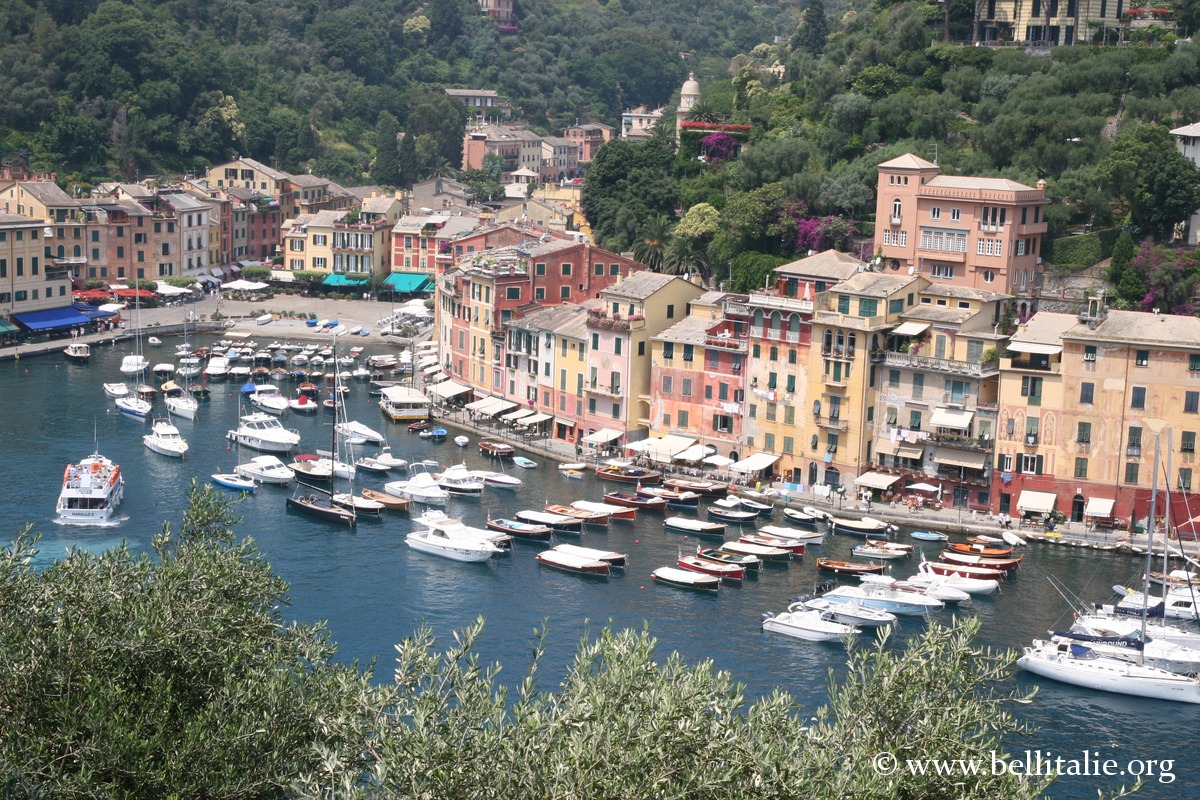
On the western edge of the Gulf of Tigullio, Portofino is world-famous, its postcards having travelled the globe for a long time. It is a sought-after and chic destination, fashionable and glamorous, where celebrities come to spend their holidays.
It is expensive for accommodation, with its small harbour often “crushed” by yachts. Only 500 people live there year-round as permanent residents.
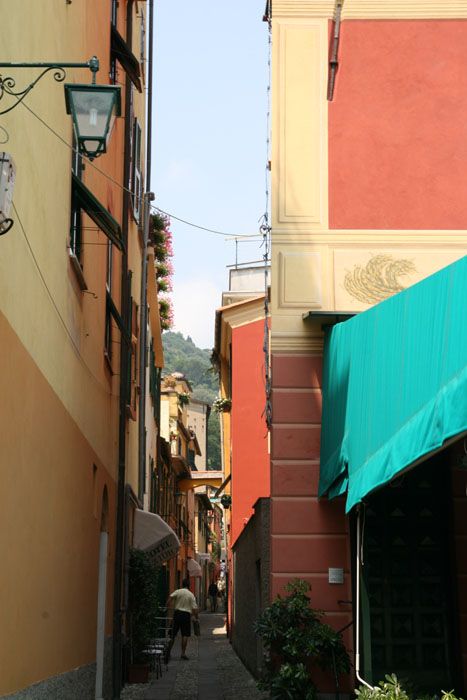
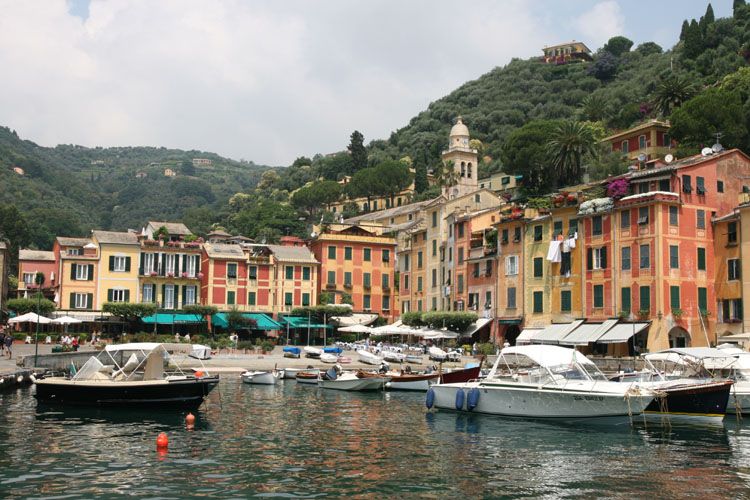
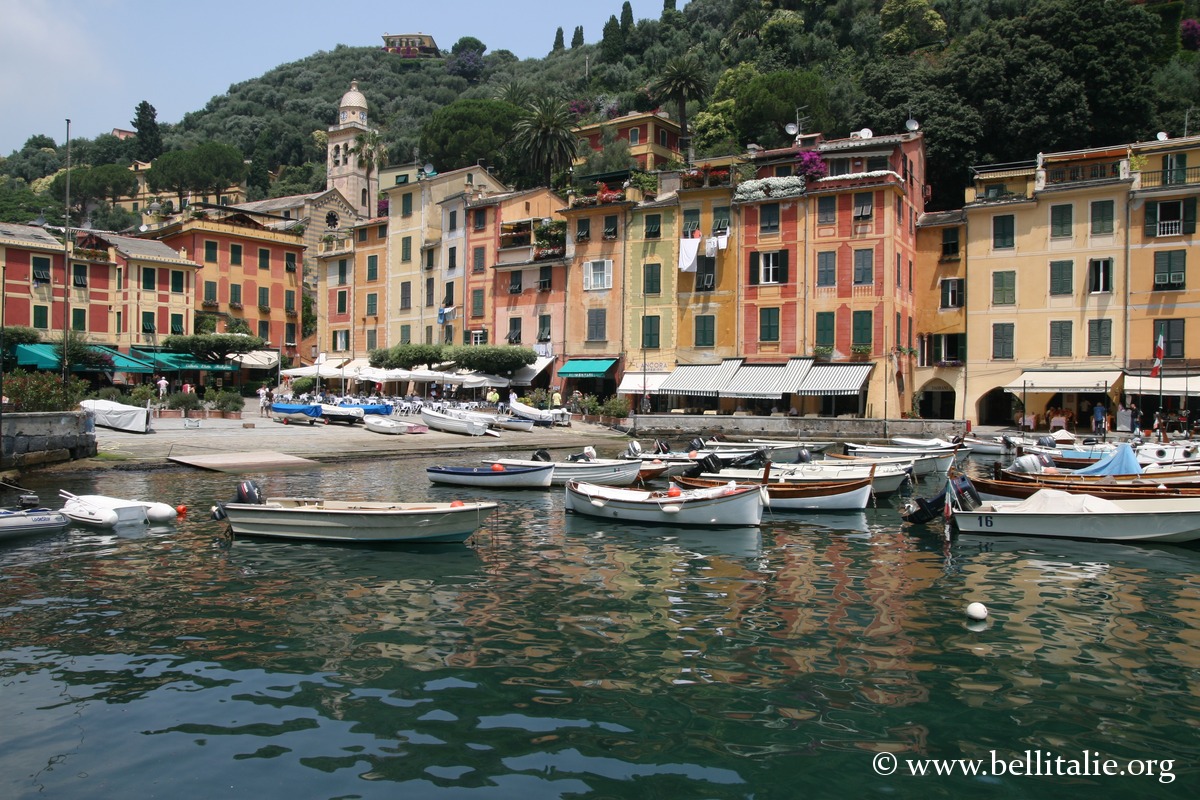
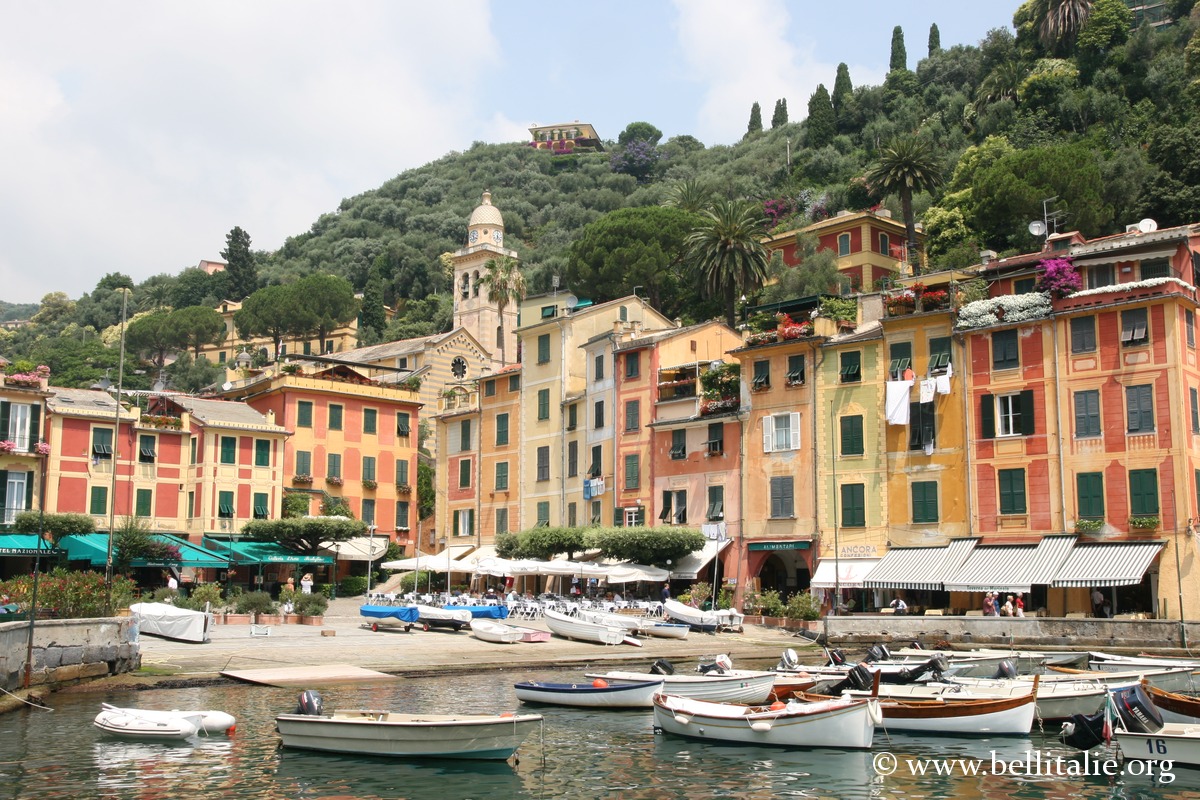
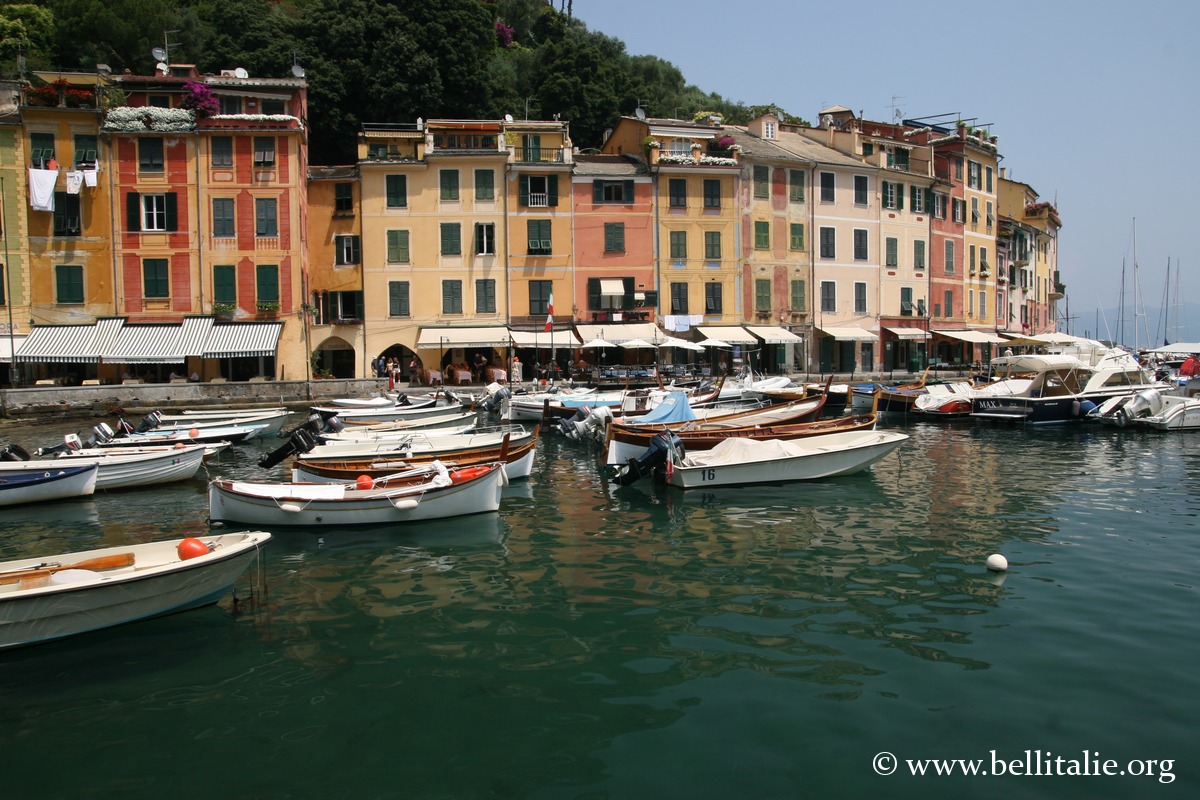
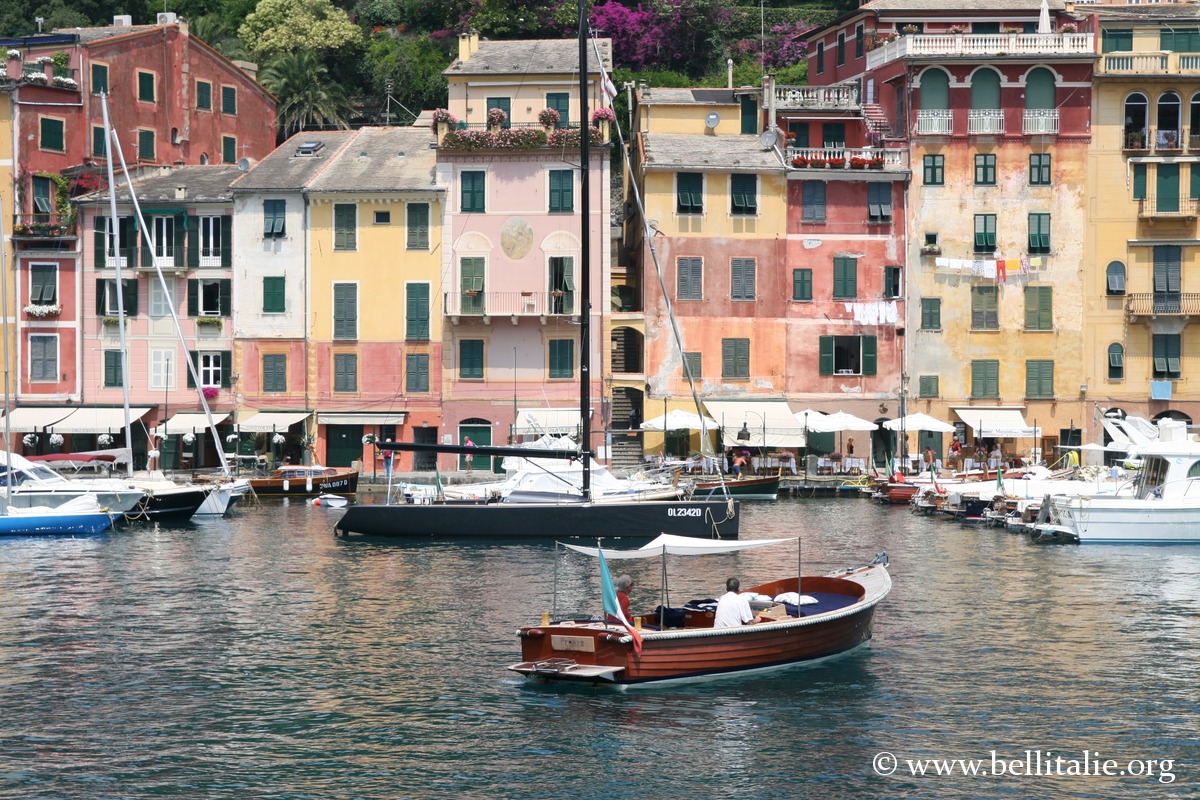
Beyond the luxurious aspect, it is still a charming place nestled in a bay between lovely wooded hills, where its colourful houses line the shore forming a pretty curve. Moreover, in his day Maupassant compared its marina to a crescent moon.
The village and its surroundings have interesting monuments and sites, in particular the small promontory dominated by Castello Brown and the lighthouse at the tip of which there is a lovely view over Portofino, then the Portofino Promontory Natural Park and its marine reserve.
Brief history
Until the 20th century, Portofino was a fishing village. At the beginning of the 20th century, it welcomed foreign visitors, wealthy English and then Germans. But it was especially from the 1950s that Portofino’s fame soared, when Hollywood stars and successful singers came to spend their holidays there, from Liz Taylor to Madonna and then Leonardo Di Caprio.
Under the Roman Empire Portofino was known as Portus Delphini and part of the heart of the village has kept the straight urban layout of that era. In the 12th century, succeeding its possession by the abbey of S. Fruttuoso, Portofino came under the control of the Republic of Genoa.
The fortress of Manarola was built in the 12th century to defend Portofino from the Barbary corsairs, largely disappeared or embedded in the houses.
There is no shortage of chic restaurants and art and luxury boutiques, such as around the Piazzetta in the heart of the village, with its arcades and facing the small harbour.
The hotels are mostly luxurious and expensive.
Visiting Portofino
A few buildings and sites are worth a visit, such as the church of San Martino in the historic centre, the church of San Giorgio on the path to the promontory dominated by Castello Brown (16th century), or the hermitage of Sant’Antonio de Niasca (13th century). At the tip of the Portofino Cape, the lighthouse has been active since 1910. To the north is the equipped beach of Paraggi.
Heritage
- The piazzetta is the heart of Portofino, with its terraces and restaurants, framed by the marina and the tall colourful houses.
- The Castello Brown, previously called Castello San Giorgio, dominates the rocky spur from its defensive position with a fine view, built in the 15th and 16th centuries, owned in the 19th century by a British consul.
It is now a museum belonging to the town, with a lovely garden and a beautiful view over the harbour and the gulf. - The Punta del Capo lighthouse is located at the end of the southern tip of Portofino at a height of 40 metres, the western tip of the Gulf of Tigullio, reachable from the village by a lovely one-kilometre walk, passing by the church of Saint George and Castello Brown. There you discover a superb view and a small bar.
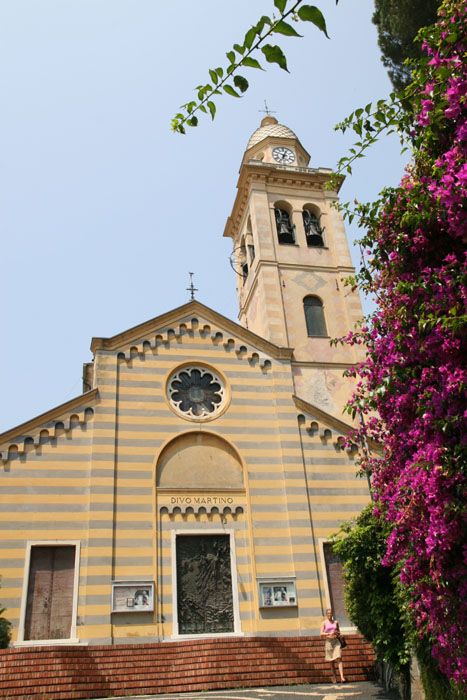
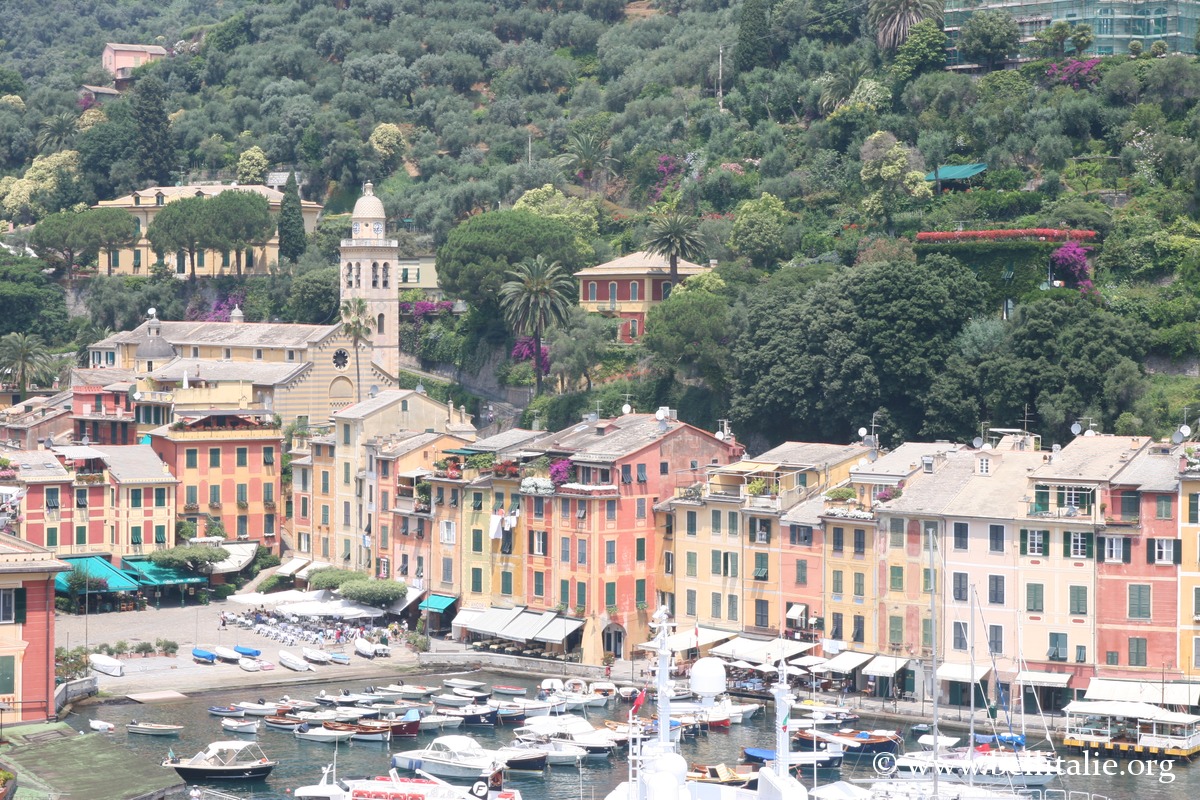
- There are several churches in Portofino, the largest of which is San Martino, near the piazzetta, which in its Lombard Romanesque style dates from the 12th century, and has a Baroque interior decoration. Remodelled in the 19th century.
The church of San Giorgio located on the promontory south of the village, enjoys a beautiful view. It dates back to the 12th century.
In the village, at the end of Via Roma, the oratory of Our Lady of the Assumption (14th-15th centuries) has a 16th-century portal.
Climbing westward, about one kilometre from the piazzetta, is the hamlet and the small chapel of San Sebastiano in a bucolic site, among the olive trees and with a beautiful view over Portofino. - The park museum is an open-air museum displaying 120 modern and contemporary sculptures of various origins.
- The Portofino marine reserve was created in 1988 around the cape. The fauna and flora there are therefore very rich. Activities there are therefore strictly regulated, but diving is possible. Canoes can be rented. Boat trips are possible around the promontory, as the boats can reach a few landing stages.
Beaches of Portofino
No real beaches in Portofino itself, except to go to San Fruttuoso (by boat or on foot) or to Paraggi towards Santa Margherita. There are also two swimming spots at Niasca and Baia Cannone
- The bay of Paraggi is considered one of the 10 most beautiful beaches in Liguria and consists of two beaches, occupied by comfortable beach clubs.
- At Niasca, there is a small swimming spot
- Not far away at Baia Cannone. There is another access to the sea
How to get to Portofino
There is a paid car park in Portofino, often congested at weekends or in summer. Free spaces can be found coming from Santa Margherita, but it is difficult when there are crowds.
The most practical way is to come from Santa Maria Liguria, by bus (every 20 minutes until 8 pm in summer), by bike, by taxi, on foot (about 35 min), or by boat.
You can also reach Portofino by sea, from Genoa or other nearby coastal towns (Santa Margherita Ligure, Recco or Camogli)
Gallery
-
- San Martino
-
- Centre historique
-
- Vue depuis le promontoire
-
- Depuis le promontoire
-
- Depuis le promontoire
Weather in Portofino
Map
If you see this after your page is loaded completely, leafletJS files are missing.
Information
- Wikipedia page: en.wikipedia.org
- Tourist portals: www.parcoportofino.com, genovaturismo.it
- What to see in Liguria
- Genoa
- Cinque Terre
- Portofino
- Sestri Levante
- Lerici, Tellaro and Montemarcello
- Portofino Natural Park
- Portovenere
- Albenga
- Noli
- Rapallo
- Ventimiglia and Bordighera
- Other places of the Riviera di Levante
- Dolceacqua and Apricale
- From Savona to Arenzano
- Imperia and Cervo
- Finale Ligure and Finalborgo
- Gulf of Paradise – From Bogliasco to Camogli
- Sanremo, Bussana and Taggia
- Seborga, Pigna and Rocchetta Nervina
- Levanto
- From Moneglia to Bonassola


Comments