


There are two main areas of Genoa to discover. They are the old port, with the Aquarium and the maritime museum, and the historic centre, whose old town is one of the largest in Europe.
Consult the map with the location of the sites at the end of the article.
1. Historic centre and carruggi
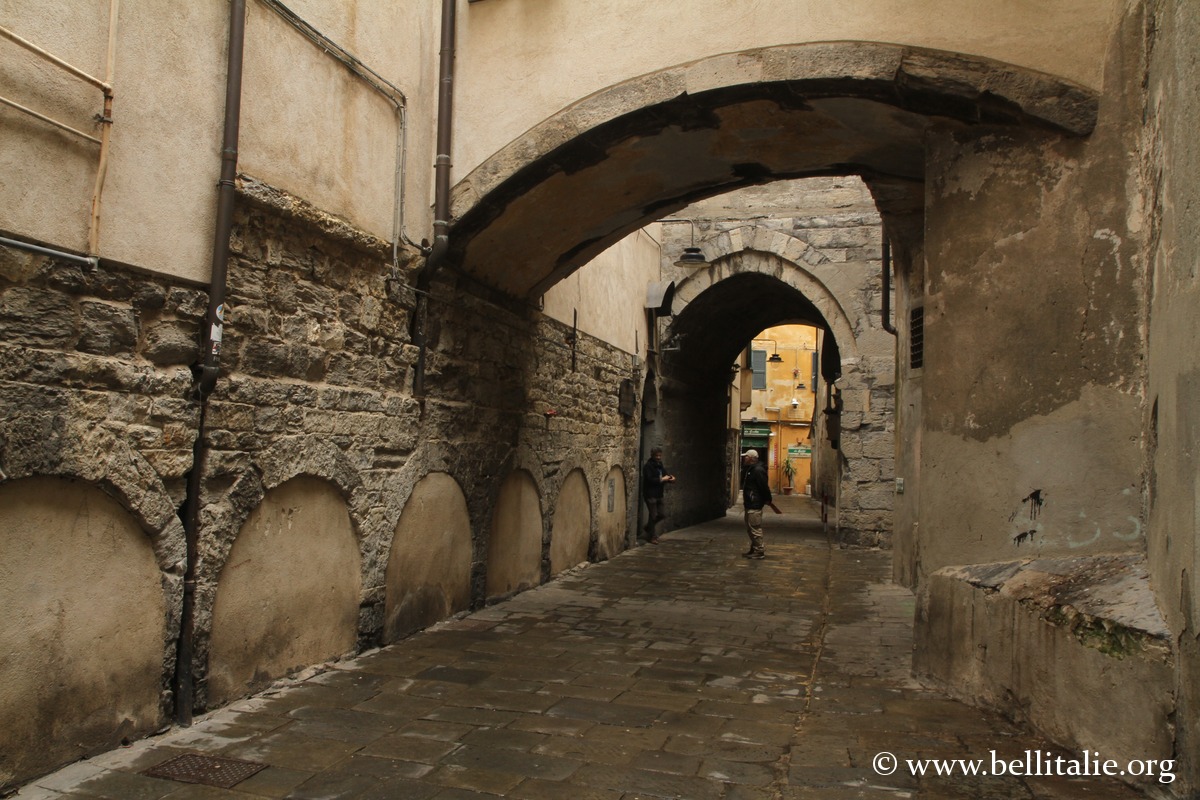
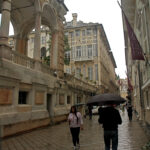
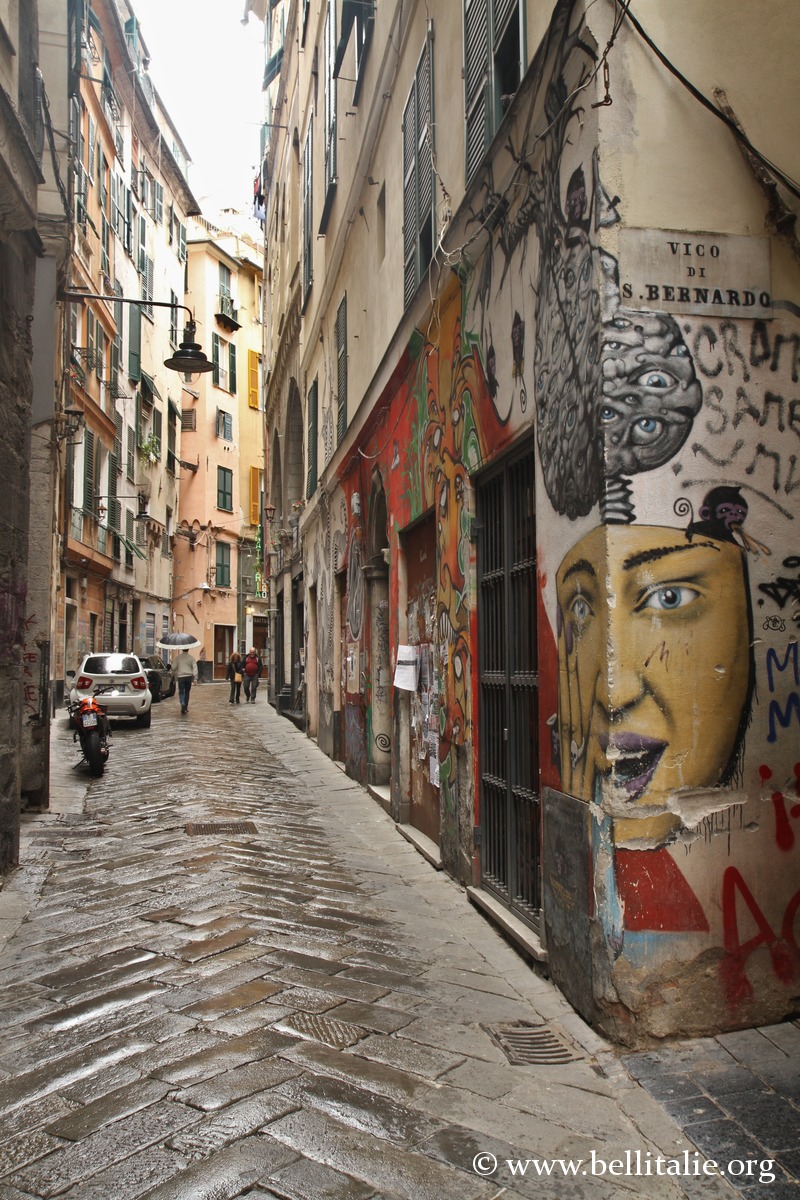 The old town of Genoa is one of the largest historic centres in Europe, a fascinating neighbourhood full of history, recently revitalised after decades of neglect. Its winding alleys of medieval origin are called carruggi, leading to many small squares and passing by lordly palaces and historic churches. This lively neighbourhood also has no shortage of bars, small shops, craftsmen and workshops.
2. The old port
 The old port of Genoa, the Porto Antico, was for centuries the lung of the city with its important trading activity.
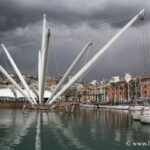
It was redeveloped by Renzo Piano in the 1990s to become a vast space devoted to tourism and culture, with shops, a swimming pool, cinemas and restaurants in the former Cotton warehouses, and above all the important Aquarium of Genoa. Beside it, the Biosphere protects an exotic biotope, the Galata museum, is the largest in the Mediterranean dedicated to the sea, the Bigo is an original structure with a panoramic gondola, a galleon is usually anchored. Opposite, along the historic centre, are old houses and the Sottoripa gallery
3. Aquarium
The aquarium is for many the main attraction of Genoa, being the largest in Italy and the second in Europe after the one in Valencia, located on the Old Port. It houses nearly 10,000 specimens of 800 species, 70 tanks, with reconstituted natural habitats, from various places on the planet. Besides the many marine species and fish of all kinds, there are also land creatures from rivers, marshes, lakes and coastlines, including for example sharks, seals, dolphins, turtles, penguins.
A recent pavilion allows you to cross the dolphin tank through a tunnel.
4. Via Garibaldi and museums of the Strada Nuova
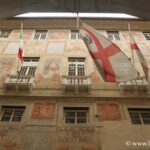
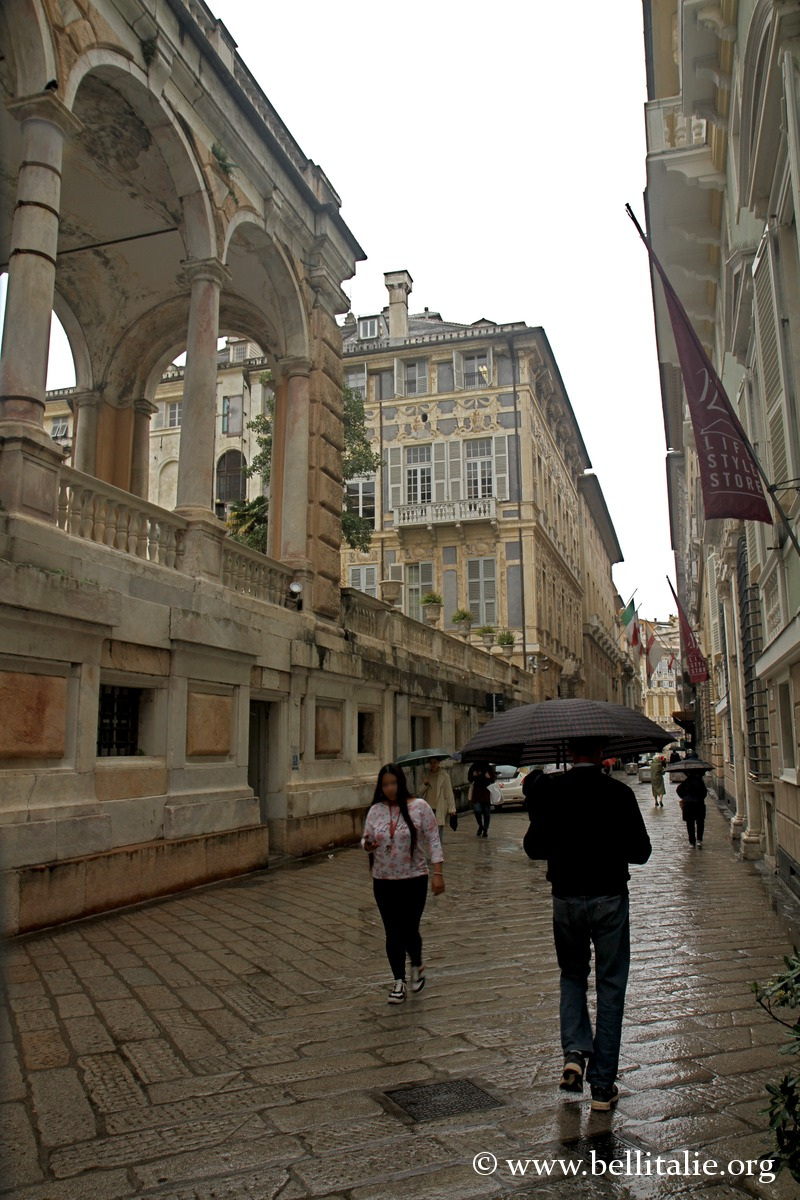 Today’s Via Garibaldi was called “Strada Nuova” – the new road – in the mid-16th century, and even “Via Aurea” – golden street – for its sumptuous palaces, twelve in number, such as the Cambioso palace, Carrega Cataldi palace, Podestà palace or Dorio-Spinola palace. A museum route (Musei di Strada Nuova), which has become the largest in Genoa, links the Rosso Palace, Bianco Palace and Doria Tursi Palace. Besides the decorated rooms and their furniture, several art collections are kept here, such as that of Brignole and Sale in the first palace. The second houses a collection of Italian and European painting from the 16th to the 18th centuries, and the Tursi palace a collection of decorative art, Paganini’s violins, etc.
5. Palazzi dei Rolli
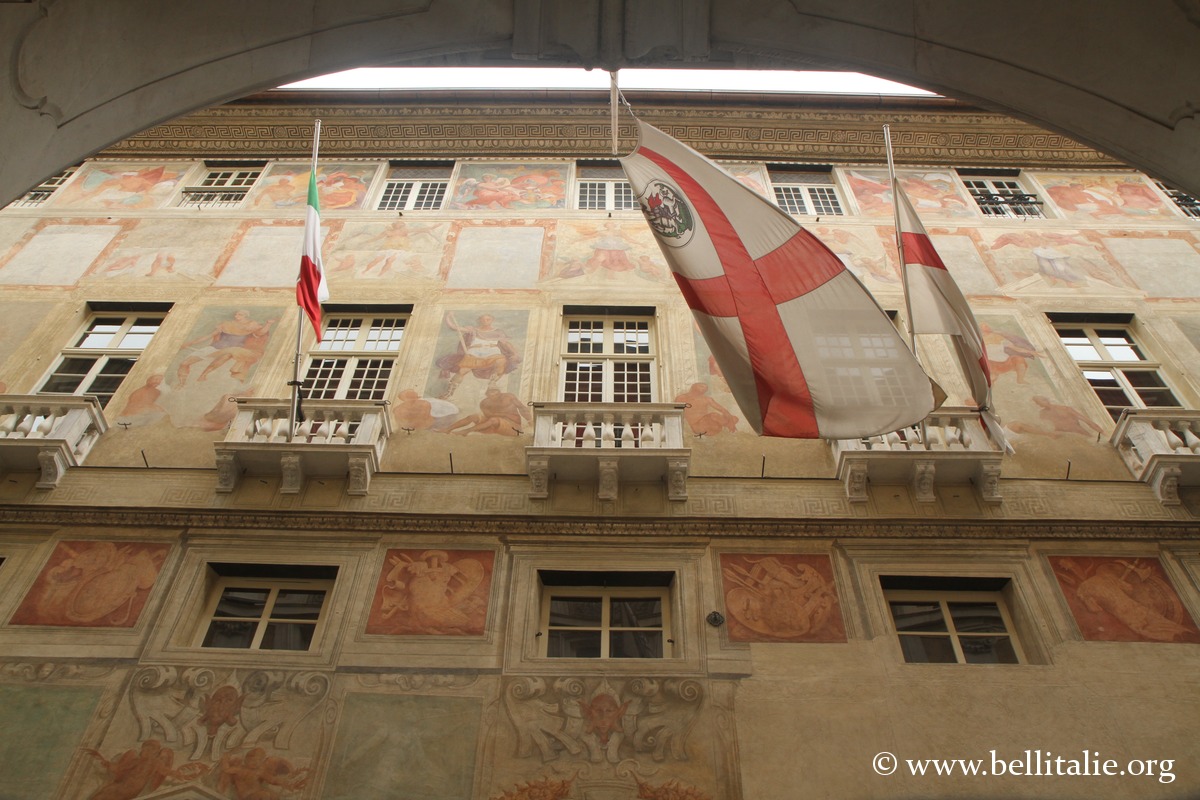 At the height of the power of the Republic of Genoa, the aristocracy built between the 16th and 17th centuries sumptuous palaces along via Garibaldi for the most important one, as well as via Bensa, via Balbi and via Cairoli.
They formed the Palazzi dei Rolli, late Renaissance and Baroque, which were intended by decree of the city senate to host illustrious figures passing through Genoa. In 2006, 42 of these palaces were inscribed as a World Heritage Site by UNESCO. Some can be visited at weekends or during the Rolli Days. With three or four storeys, they generally have monumental open staircases, courtyards and gardens, and the interiors have preserved their decorations.
6. Galata Sea Museum
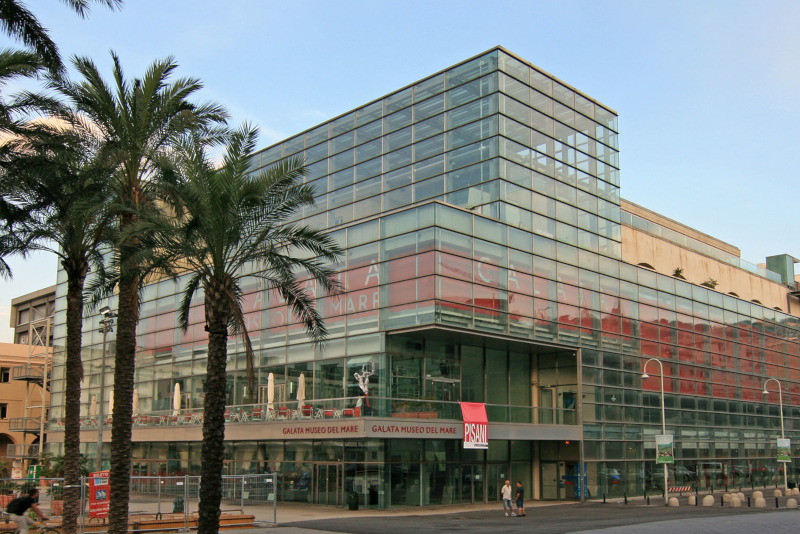 The Galata Sea Museum is the largest museum in the Mediterranean dedicated to the maritime world. The visitor is immersed in the world of navigation, its history and its sailors, thanks to the reproduction of boats of all sizes and all eras, instruments and nautical charts, accompanied by multimedia supports. Thus one can see rowing boats, sailing ships, steamships, ocean liners; maritime explorations, including those of Christopher Columbus, or migrations. In particular, one can walk inside a galley and a real military submarine.
7. The Lanterna
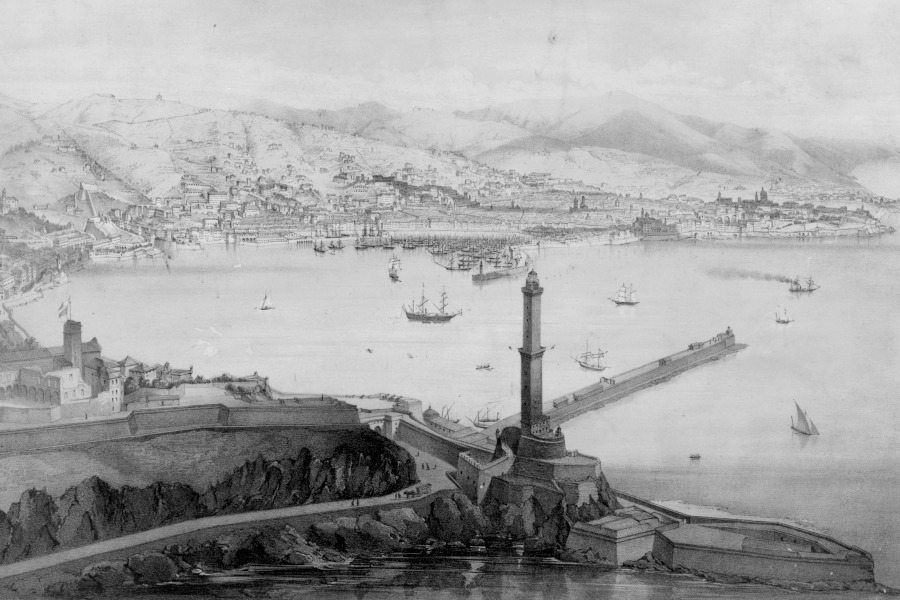
View from the 19th century
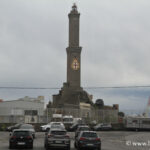
The Lanterna designates the lighthouse of Genoa, the guardian of the port that has become the symbol of the city, 77 metres tall on its hill 40 metres above sea level. It is the largest lighthouse in the Mediterranean. Built in the 14th century, it was rebuilt in the 16th century. Its staircase has 172 steps and an educational trail of nearly one kilometre allows you to reach it on foot.
Lanterna of Genoa8. San Lorenzo Cathedral and diocesan museum
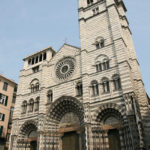
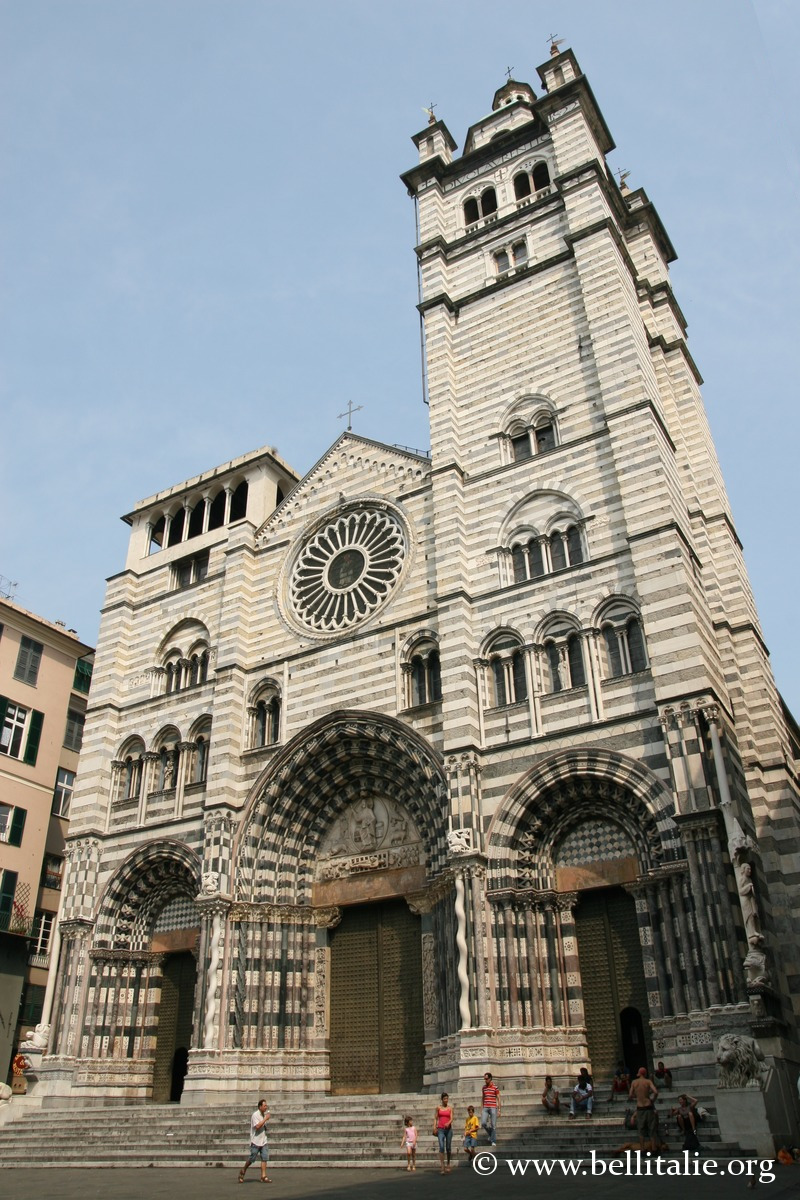 Erected in the 9th century, the majestic Saint Lawrence Cathedral (San Lorenzo) was erected in the 9th century, remodelled several times until the 16th century. It mixes different architectural styles, both outside and inside. Its beautiful Romanesque façade with black and white bands is essentially from the 13th century, with Gothic elements such as the rose window and the portals.
The interior preserves numerous sculptures, frescoes, paintings, relics including the beautiful Chapel of Saint John the Baptist from the 14th-15th centuries, or the treasury museum.
The nearby Diocesan museum preserves archaeological remains, sacred objects, a collection of hangings including the first jeans of the sailors.
9. Basilica Santissima Annunziata del Vastato
The basilica Santissima Annunziata del Vastato is one of the most important religious buildings in Genoa, a Baroque jewel of Genoese art built in the 16th century, characteristic of late Mannerism and 17th-century Baroque.
The sumptuous interior is indeed supported by large marble columns, with polychrome marble inlays, and a profusion of gilding and frescoes on the vaults. It preserves very beautiful works, trompe-l’œil in the dome. The neoclassical façade is a creation of the early 19th century.
10. Porta Soprana, Sant’Andrea and Columbus’s house
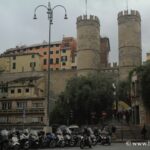
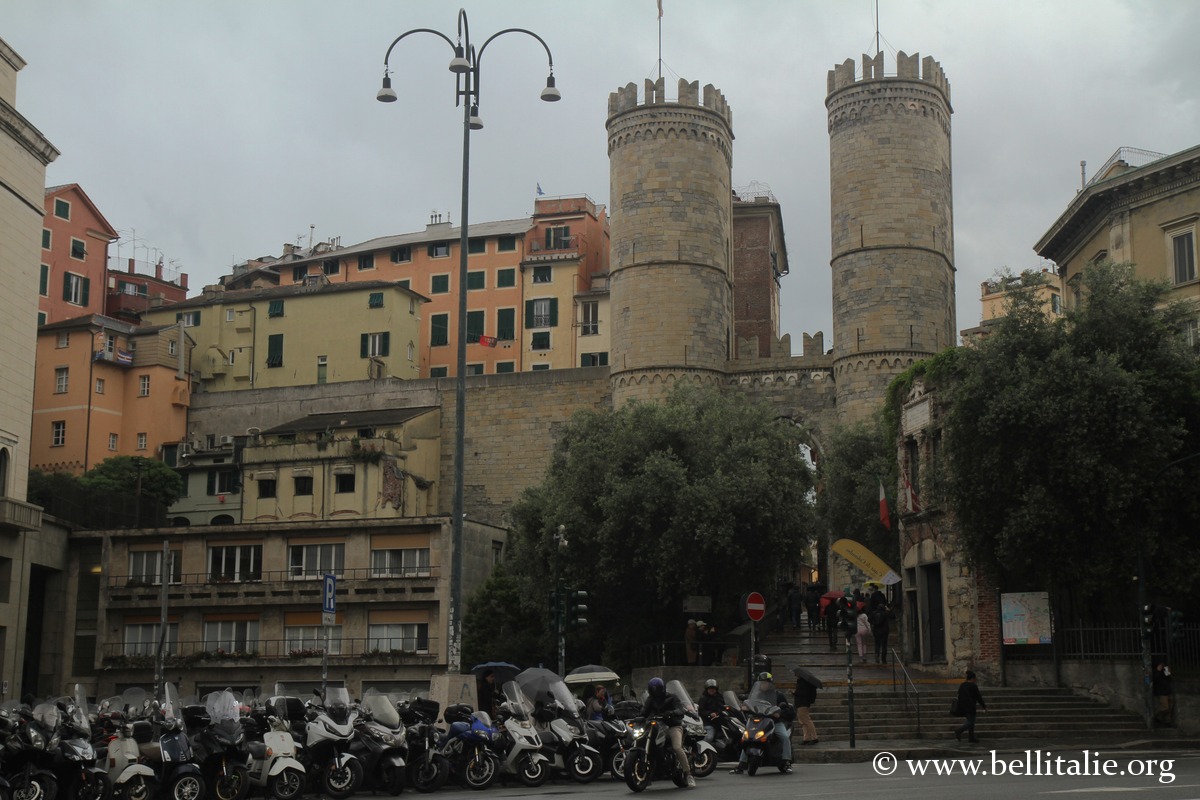 The historic neighbourhood known as Piano di Sant’Andrea, is the remainder of this medieval neighbourhood, where the pretty Sant’Andrea cloister is found, dating back to the 12th century near the old medieval walls. The Porta Soprana, is one of the two beautiful gate-towers of Genoa.
Nearby, the House of Christopher Columbus is a house-museum dedicated to the discoverer of the Americas where he is said to have lived as a child, rebuilt in the 18th century.
11. Doge’s Palace
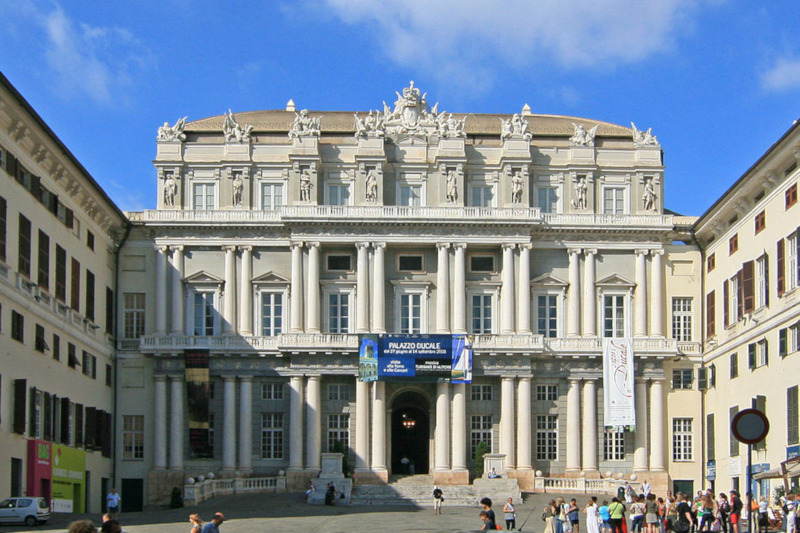
Doge’s Palace
Near the basilica of San Lorenzo and Piazza de Ferrari, the Palace of the Doges (or Ducal Palace) was built at the end of the 13th century, incorporating an older palace. It was largely rebuilt at the end of the 18th century in a neoclassical style.
Nowadays, it houses exhibition spaces and preserves beautiful decorated halls, courtyards, some works of art, the old prisons, and medieval elements from the old palace such as the Grimaldina tower.
12. Piazza de Ferrari and Carlo Felice Theatre
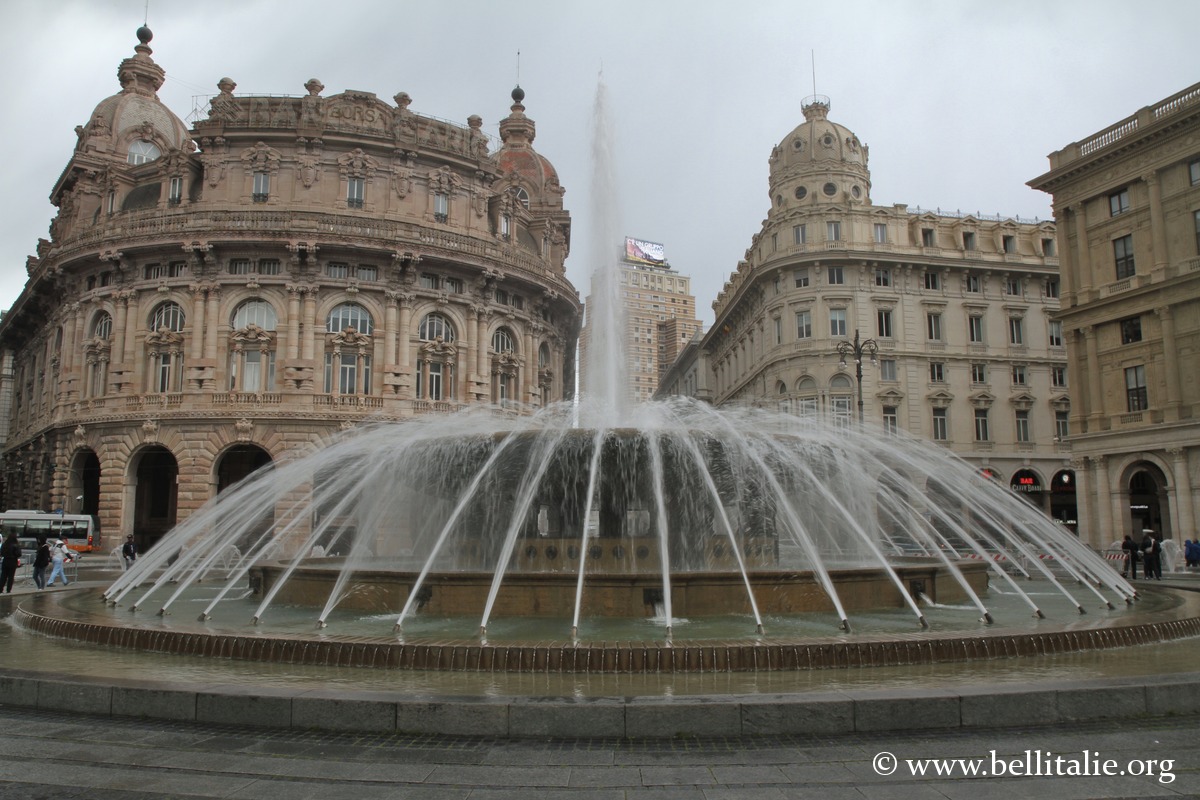 The Piazza de Ferrari is one of the most famous in the city, the heart of the business district, separating the historic and modern neighbourhoods, with its large fountain in the middle located opposite the Doge’s Palace.
Nearby, the Carlo Felice Opera Theatre is one of the most important opera houses in Italy, inaugurated in 1828, but rebuilt with a modern interior after the destruction of the Second World War.
13. Basilica and convent of Santa Maria di Castello
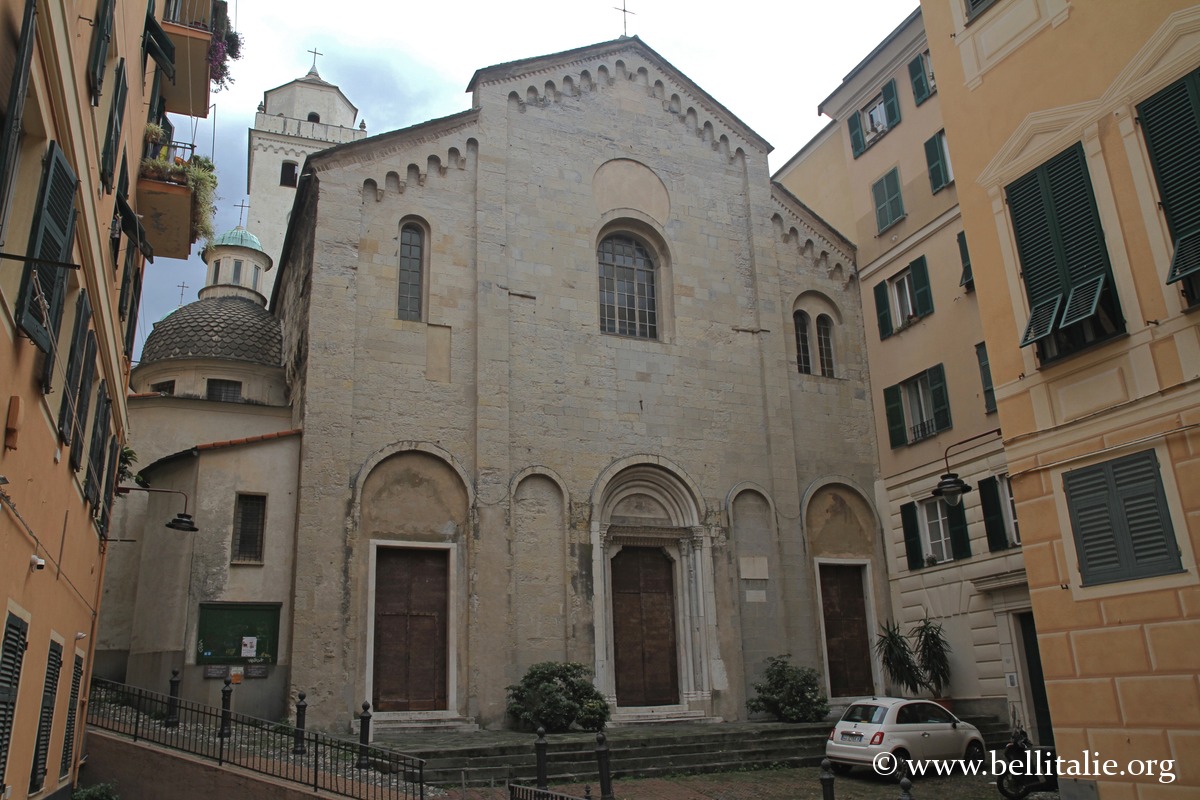 Located in one of the oldest neighbourhoods on the site of an ancient Lombard temple, Santa Maria di Castello is one of the most interesting religious complexes in Genoa. It comprises the Romanesque basilica, the convent and an adjacent museum.
The façade and the bell tower are typically Romanesque, with an architrave above the portal. The Romanesque interior is supported by beautiful columns with decorated capitals. The chapels and vaults preserve beautiful works by artists of the Genoese school, and one of the cloisters is decorated with frescoes.
The adjacent museum around the three cloisters preserves art objects, paintings, manuscripts, 15th-century frescoesth and a superb collection of Russian icons.
14. Panorama from the Spianata Castelletto
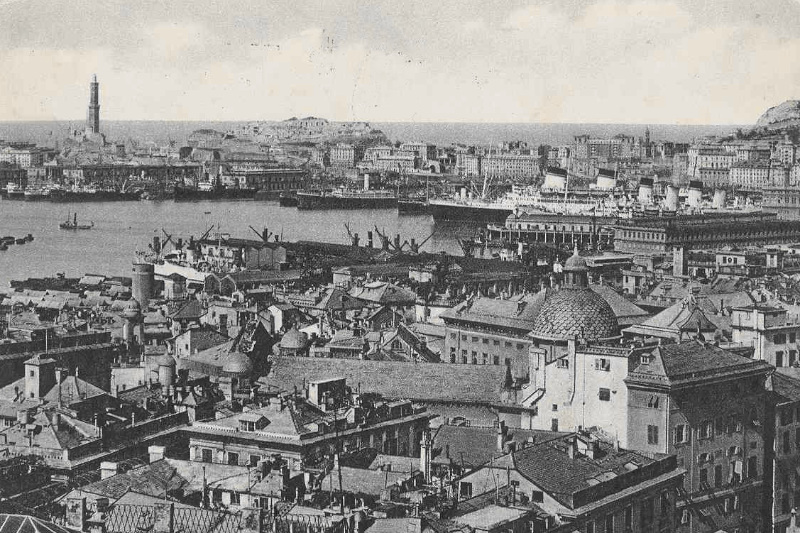
View of Castelletto in 1941
It is possible to reach the viewpoint of Spianata Castelletto from a lift on Piazza Portello, with its beautiful general view over the city.
15. Other places in Genoa
Church of Saint Stephen
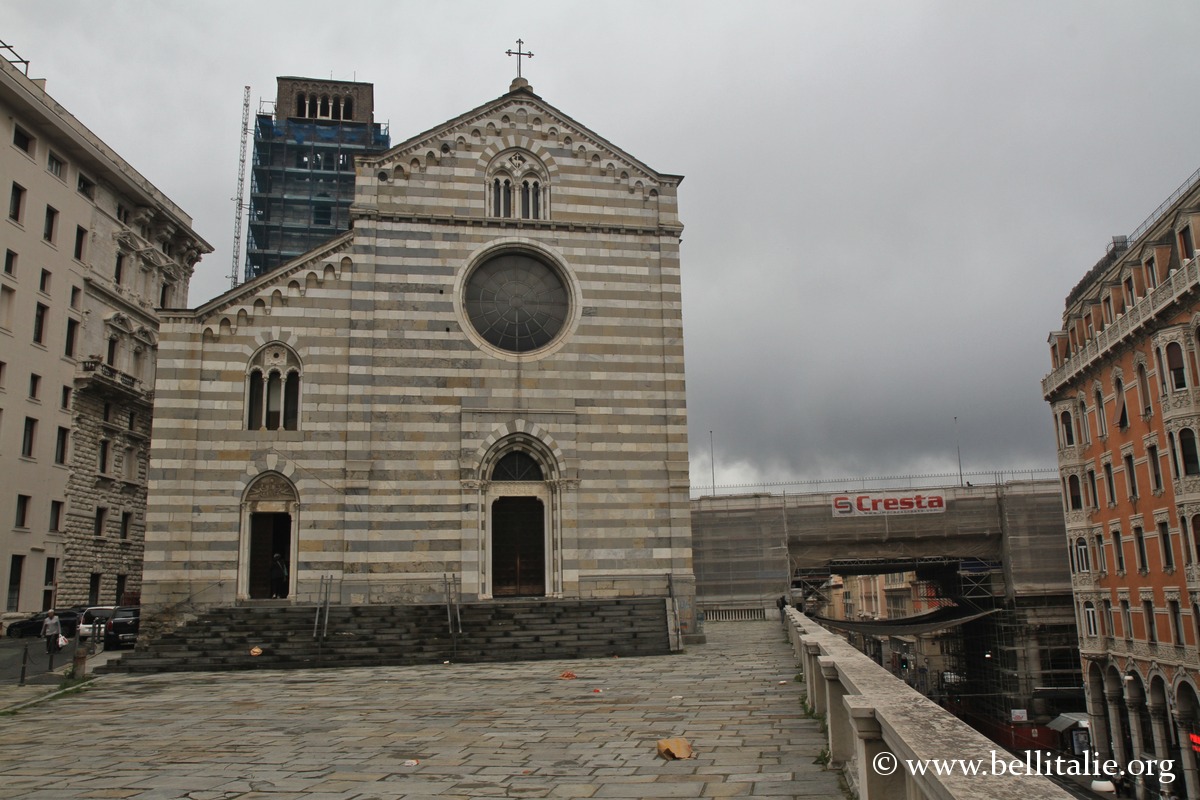
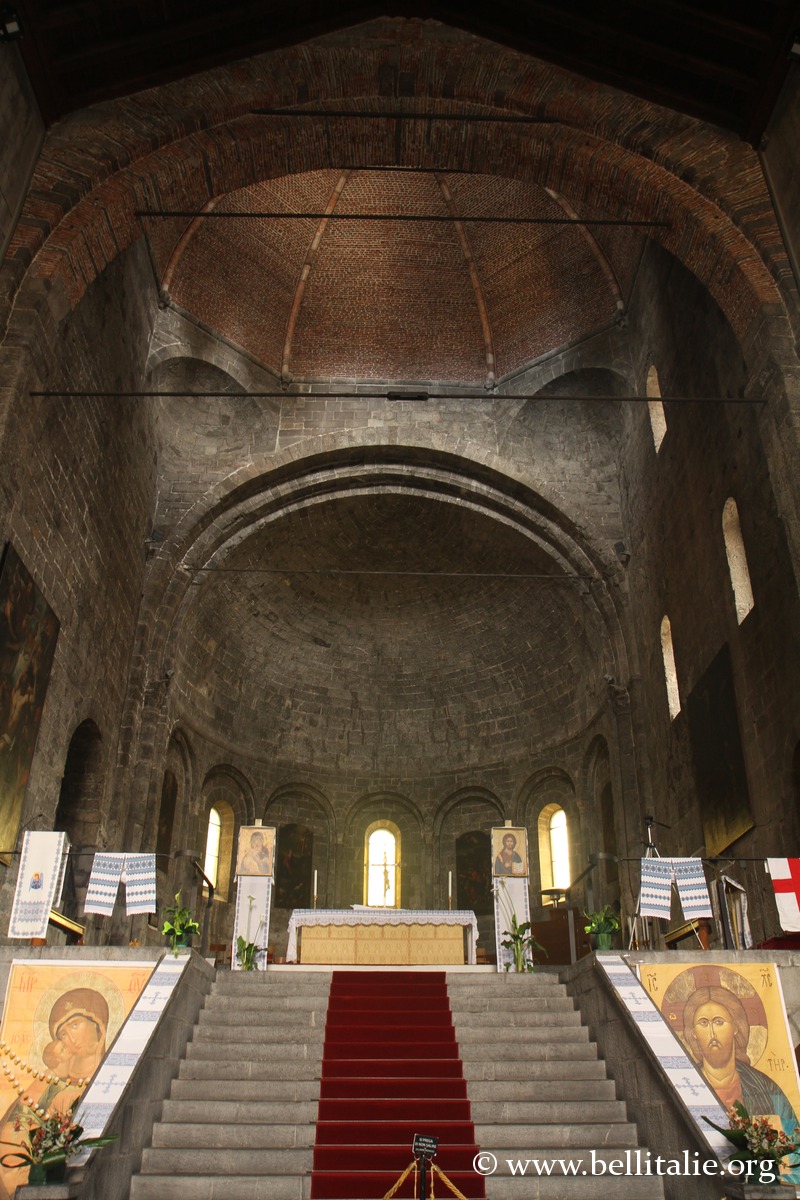
Built on the ruins of a small 5th-century church, today overlooking Via XX Settembre, Saint Stephen (Santo Stefano in Italian) is one of the most beautiful churches in Genoa, consecrated in 972.
Heavily remodelled in the 19th century, it preserves an old bell tower, an austere nave, an octagonal dome made in the 14th century and a crypt.
-
- Façade de Santo Stefano
-
- Intérieur
Church and square of Saint Matthew
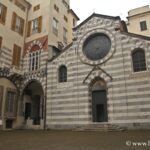
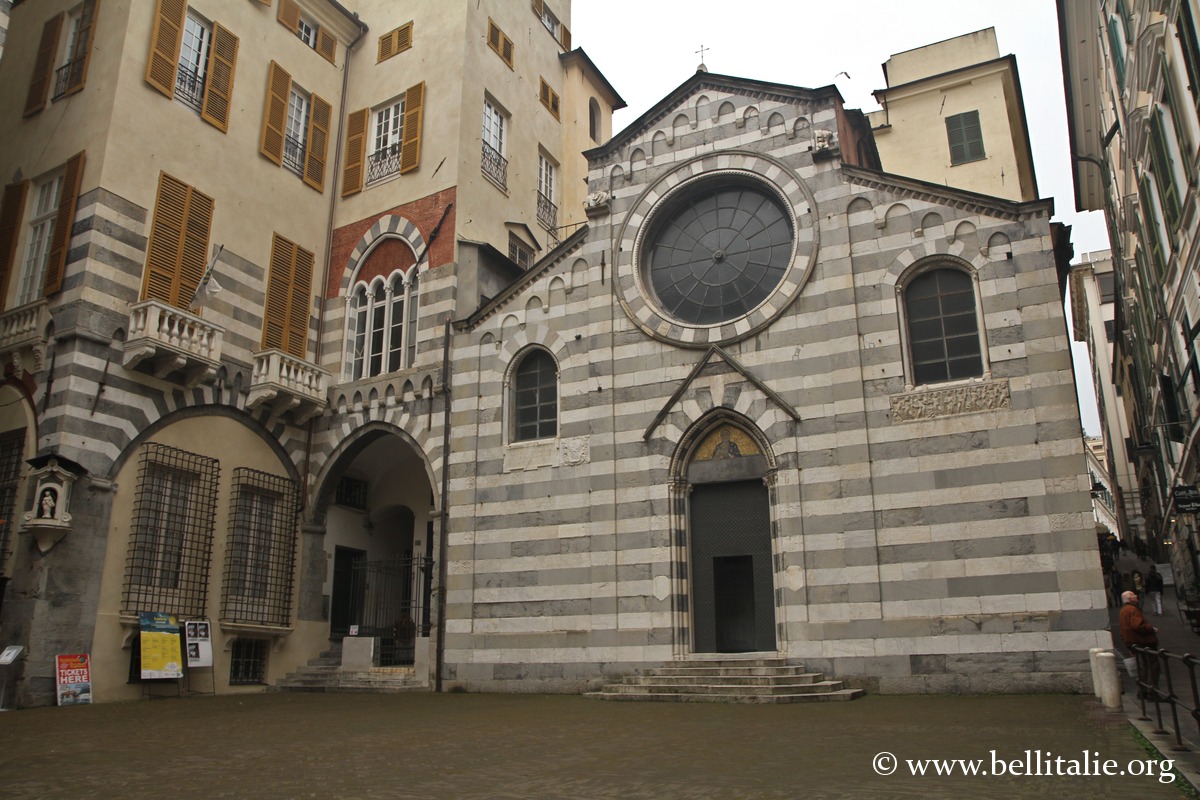
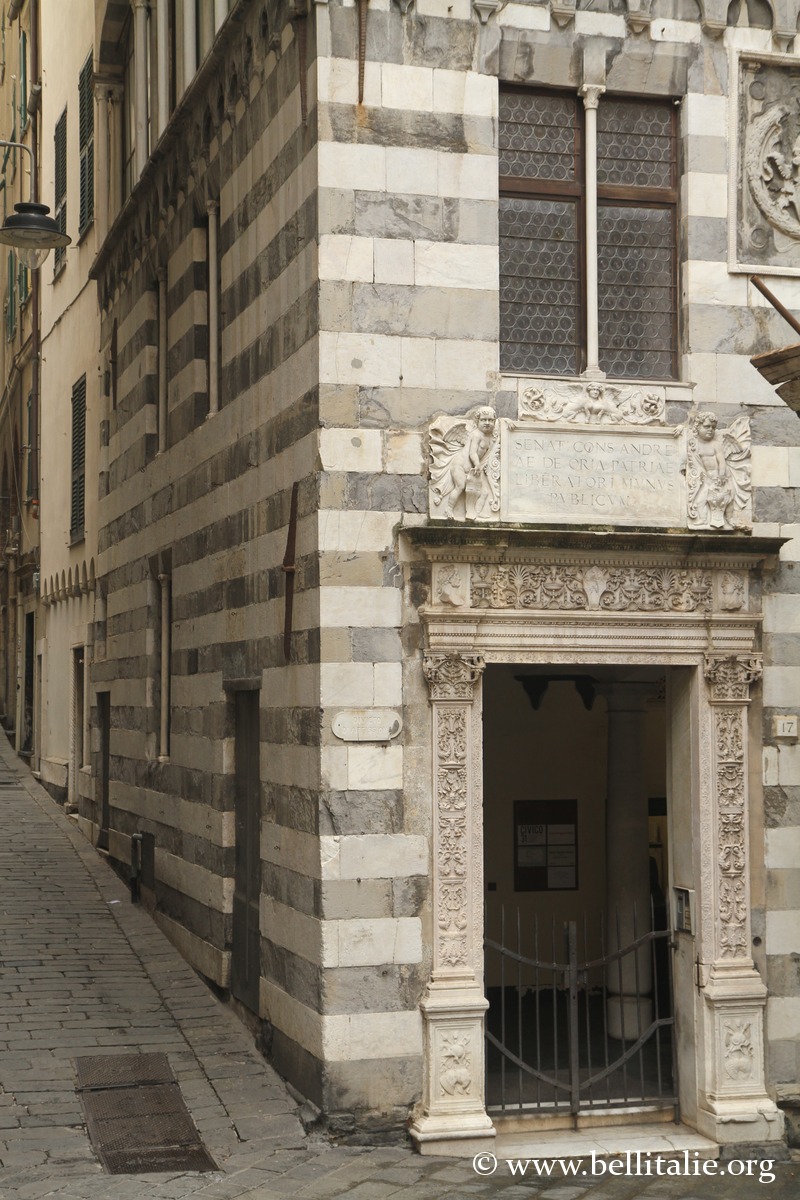
The Piazza San Matteo is one of the nicest in Genoa, with the pretty medieval palaces and the Church of Saint Matthew founded in the 12th century, with Gothic and two-coloured elements.
Above the church portal, a golden mosaic depicts Saint Matthew in the lunette, higher up the large rose window can be seen, and on the side a late-antiquity sarcophagus is embedded in the wall.
The interior has 16th-century works, renovated in Renaissance style, frescoes and stuccoes from the 16th century.
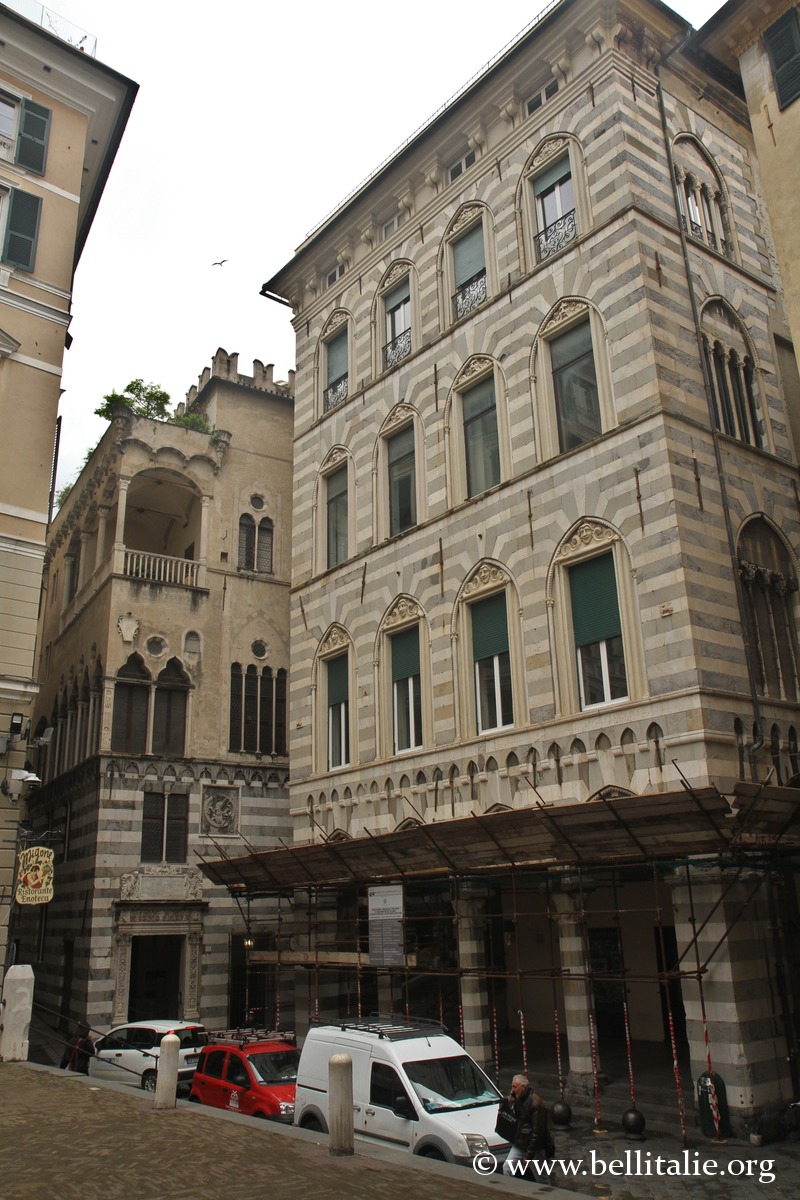
The square is surrounded by the superb Doria palaces, renovated in the 16th century, but retaining the original style with the paintings and the original Gothic structure: the Branca Doria palace with the beautiful cloister linked to the church, and four other palaces. This neighbourhood is indeed designated as Borgo dei Doria.
-
- San Matteo
-
- Piazza San Matteo
-
- Piazza San Matteo
-
- Piazza San Matteo
Church of Jesus
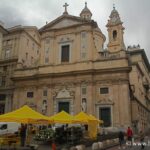
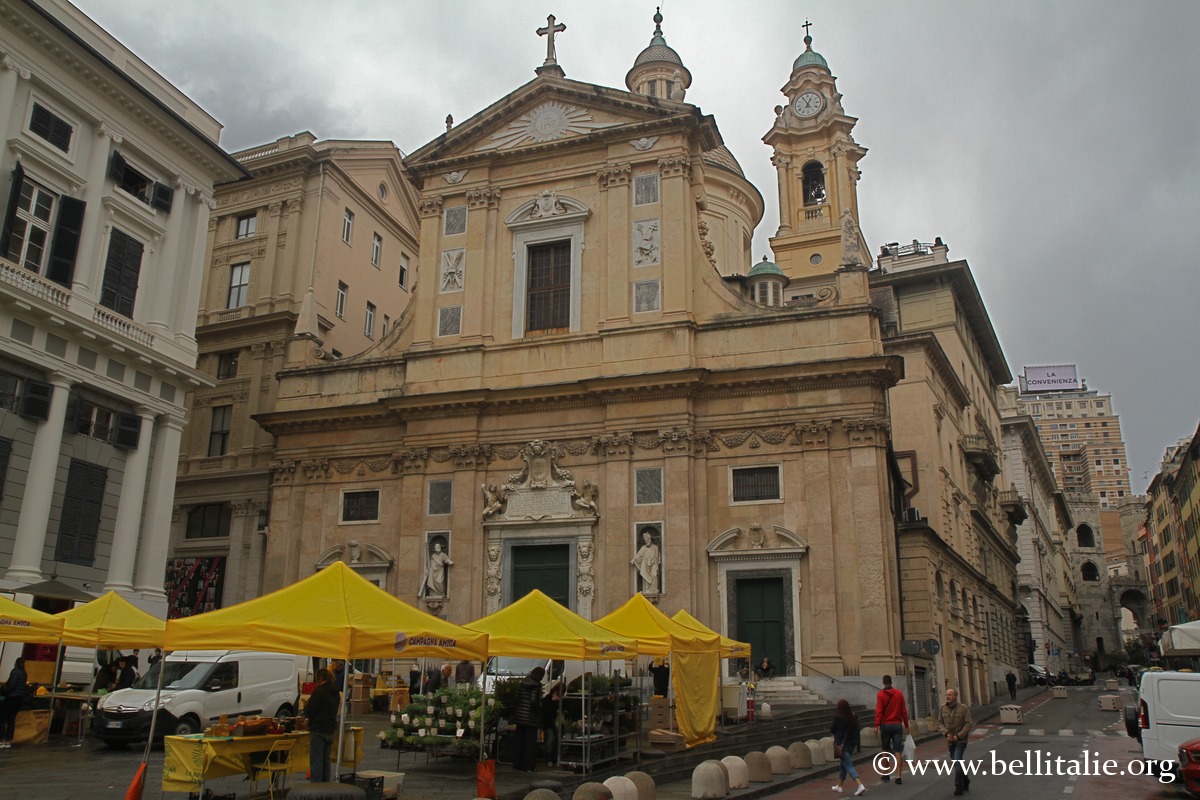
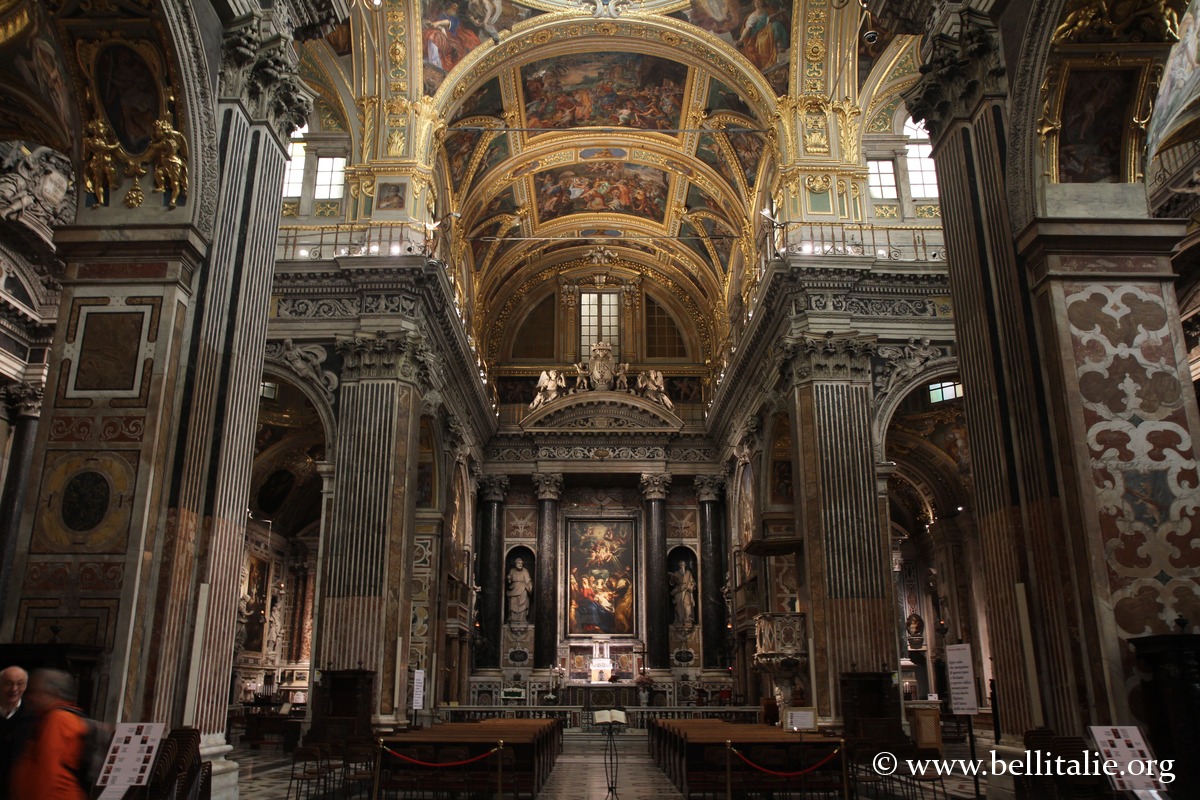
The Church of Jesus (chiesa del Gesù in Italian), also called the church of Saints Ambrose and Andrew, is an important expression of Baroque art in Genoa, the result of a 16th-century reconstruction, preserving works by Rubens (Circumcision and the Miracle of Saint Ignatius), Vouet (A Crucifixion), Guido Reni (Assumption of Mary) and statues from the school of the Carlone, amid a splendour of gilding, marbles and stuccoes, decorated vaults and domes, and chapels of the great families of the city richly decorated.
-
- Façade
-
- Intérieur
National Gallery of the Spinola Palace
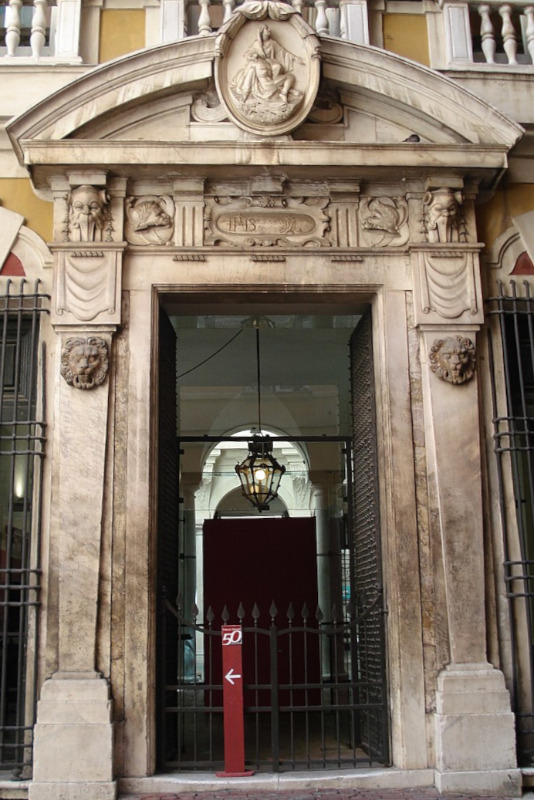
Portal of the Spinola Palace
The beautiful Spinola Palace from the 16th century, one of the Palazzi dei Rolli, which has preserved its decorations from the 17th and 18th centuries, houses a collection of paintings, ceramics and works by great Genoese, Flemish and European artists, including Rubens, Van Dyck, il Grechetto, Guido Reni, Luca Giordano or Valerio Castello. In particular, the masterpiece Ecce Homo by Antonello da Messina is found there.
The two floors are adorned with refined frescoes, and furthermore furnished with precious consoles, mirrors, embroidered doors, etc. One can visit a historic 19th-century kitchen.
Villa del Principe Andrea Doria
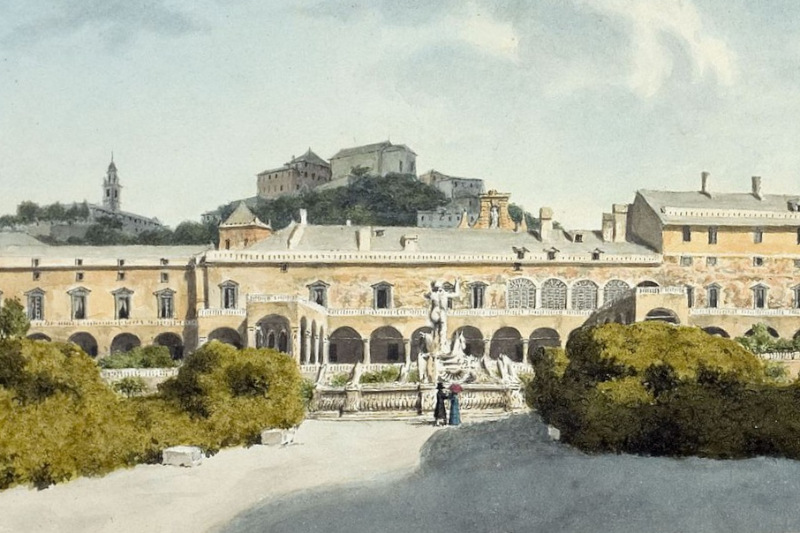
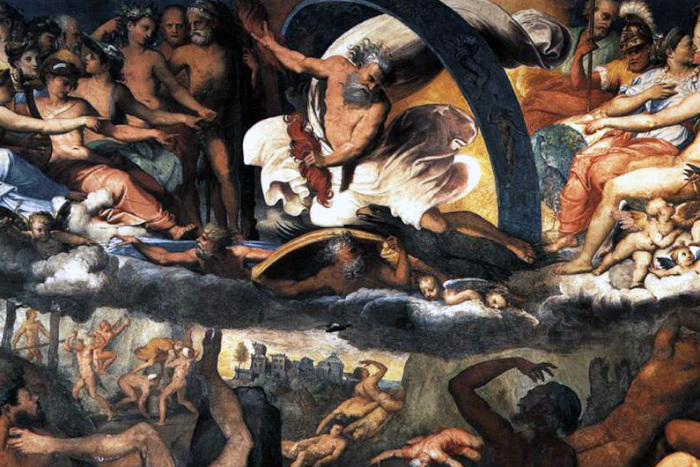
The Villa del Principe, or Palazzo di Andrea Doria, is the largest noble residence in the city built in the 16th century, today a veritable museum with its rooms and apartments, furnished with numerous works of art and decorations, including frescoes (Perin del Vaga, etc.) and hangings. Facing the sea, the beautiful garden is adorned with beautiful fountains.
-
- Vue du XIXe siècle de la Villa del Principe
-
- Chute des Géants (Perin del Vaga)
Royal Palace Stefano Balbi
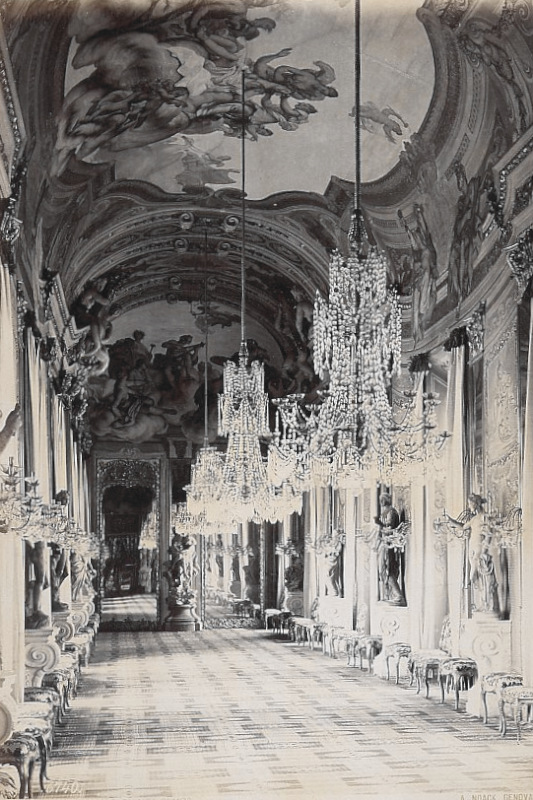
The Hall of Mirrors around 1880
This Royal Palace is one of the most important palaces in Genoa, built by the Balbi family in the 17th century, included in the Palazzi dei Rolli, today a museum with its salons, frescoes, paintings (including Van Dyck, Tintoretto, Guercino, Giordano, Voetet), antique furniture. Its magnificence is embodied in the grandiose Hall of Mirrors, decorated with frescoes, gilded stuccoes, mirrors, etc.
Built and decorated by the Balbi at the beginning of the 17th century, the Durazzo enlarged it with terraces and gardens. Purchased in 1824 by the Savoy, it was then designated “Royal Palace”.
Piazza delle Vigne and Santa Maria delle Vigne
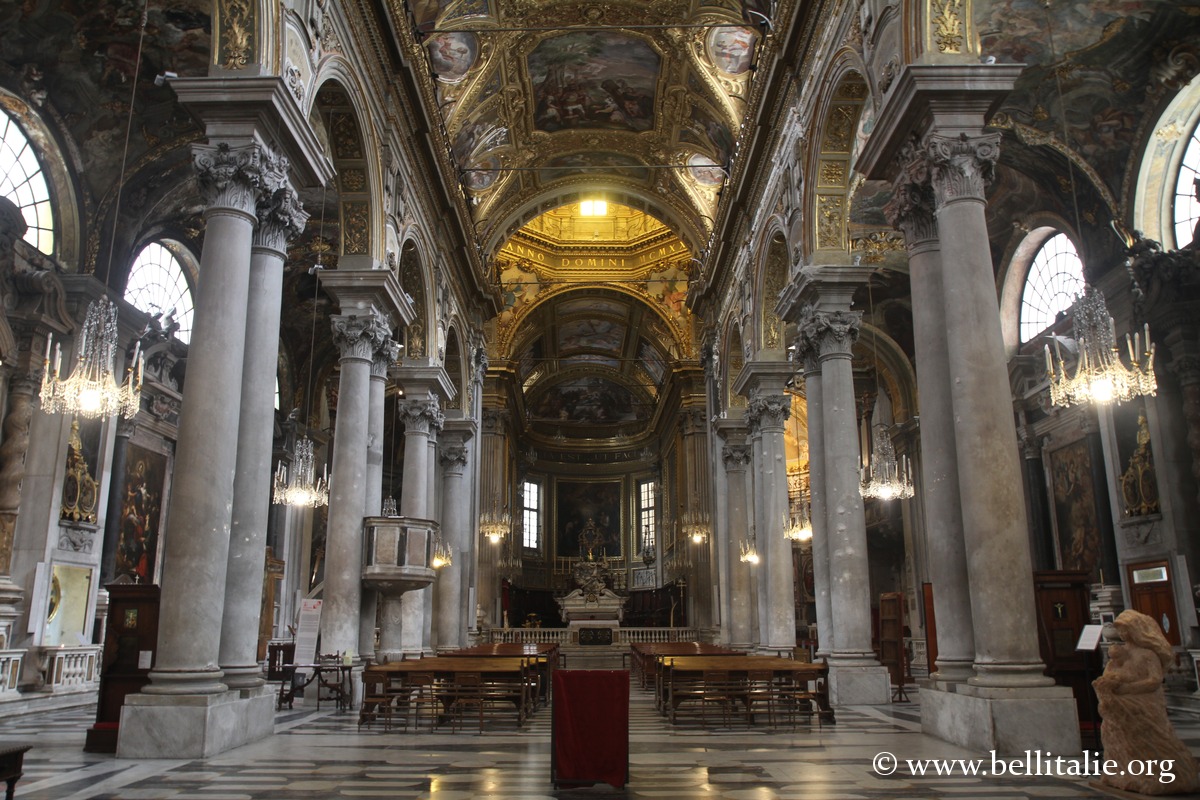
The charming Piazza delle Vigne, surrounded by beautiful lordly palaces, is dominated by one of the oldest churches in Genoa, the basilica Santa Maria delle Vigne.
In the 11th century, there were still vineyards in this area, until the Grillo family urbanised it and built palaces.
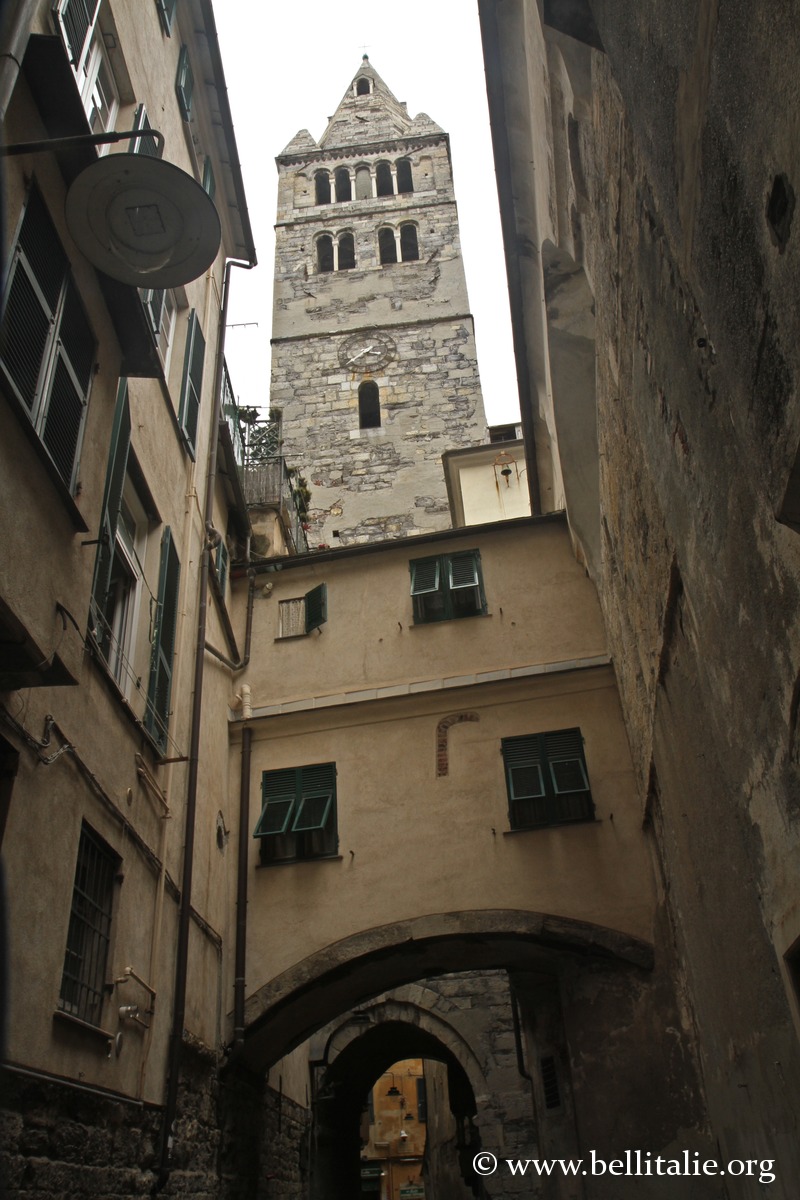
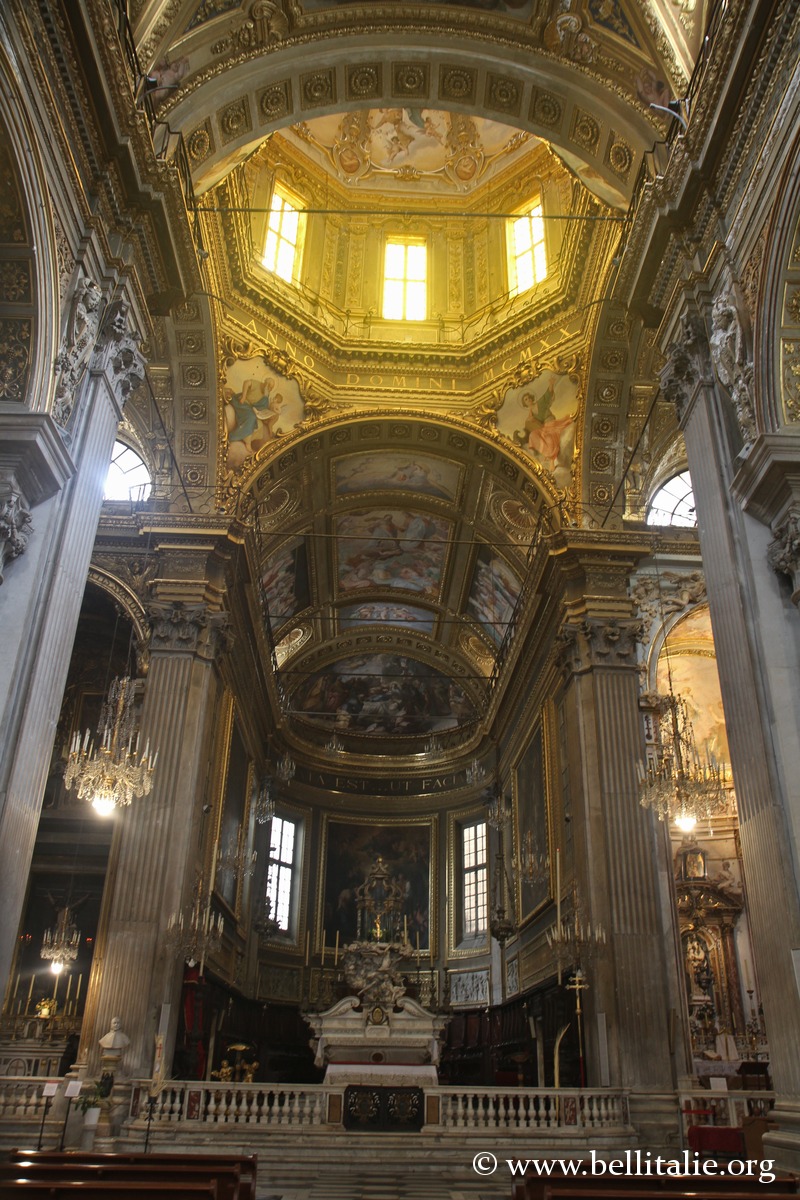
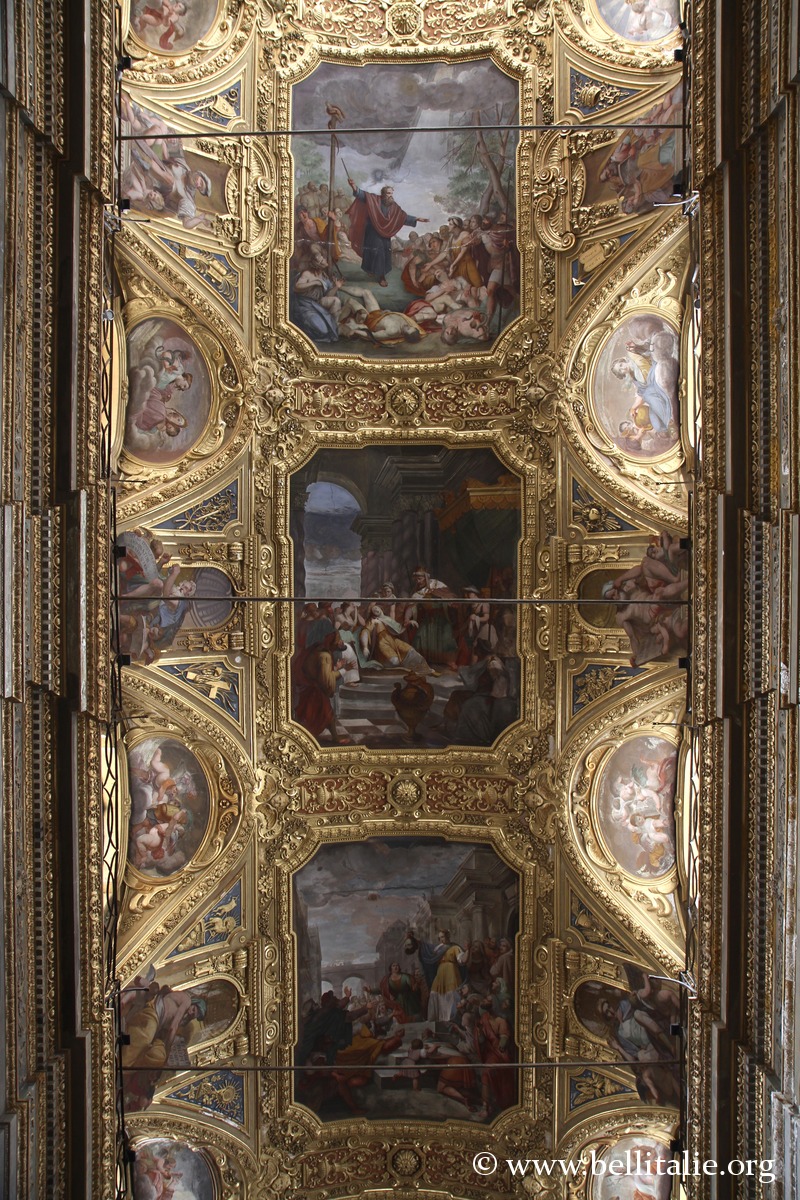
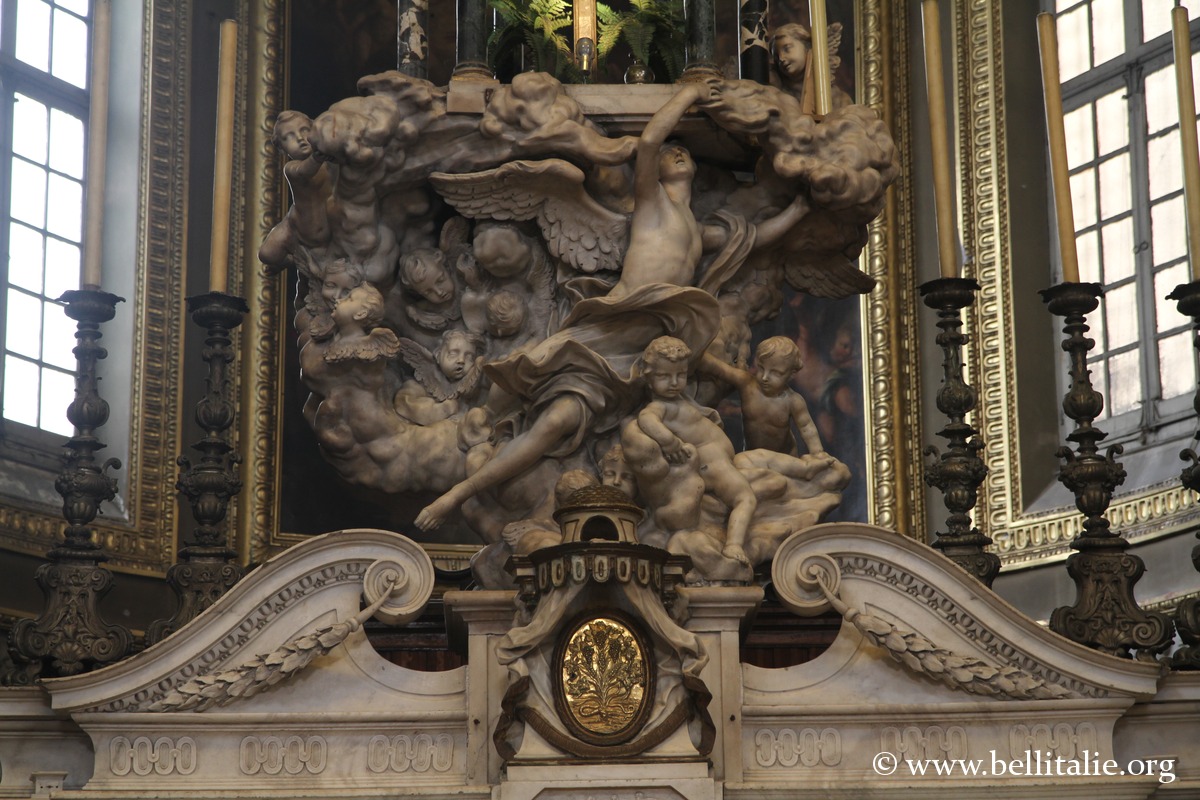
The church dates back to the late 10th century and of its Romanesque structure it keeps only the beautiful and tall bell tower with its mullioned windows, pentaflores, octagonal spire, etc. The neoclassical façade of the church dates from 1842, replacing that of the 17th century. The interior is a treasure of Genoese Baroque of the 17th century, with decorations from the 17th-19th centuries. One can admire the 15th-century portal with a lunette painted by Piola.
-
- Clocher
-
- Intérieur
-
- Intérieur
-
- Intérieur
-
- Intérieur
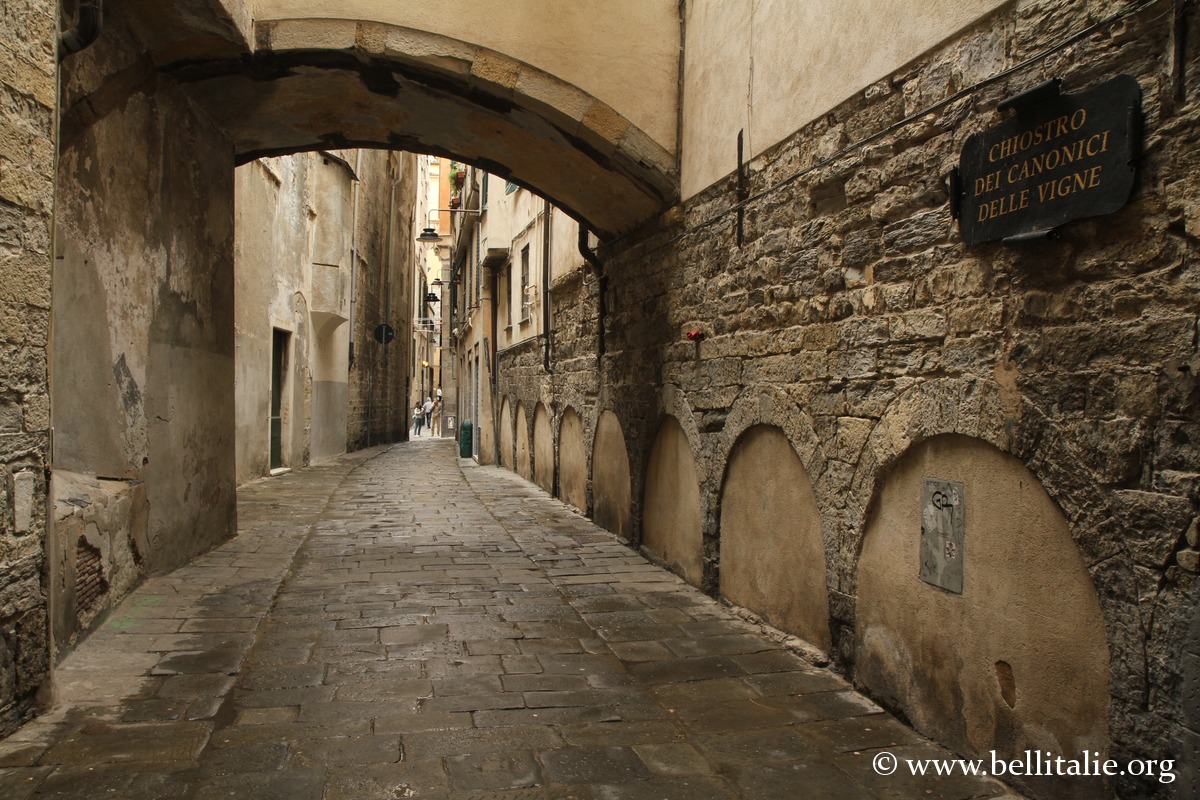
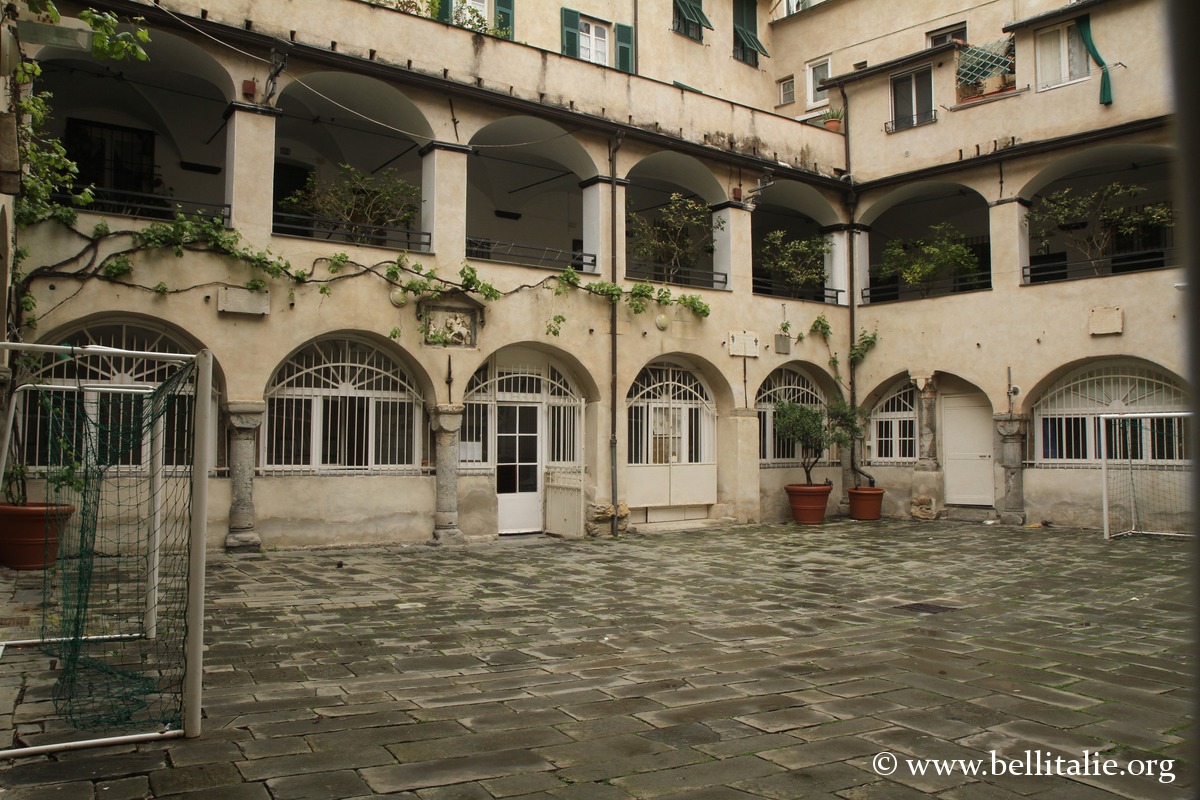
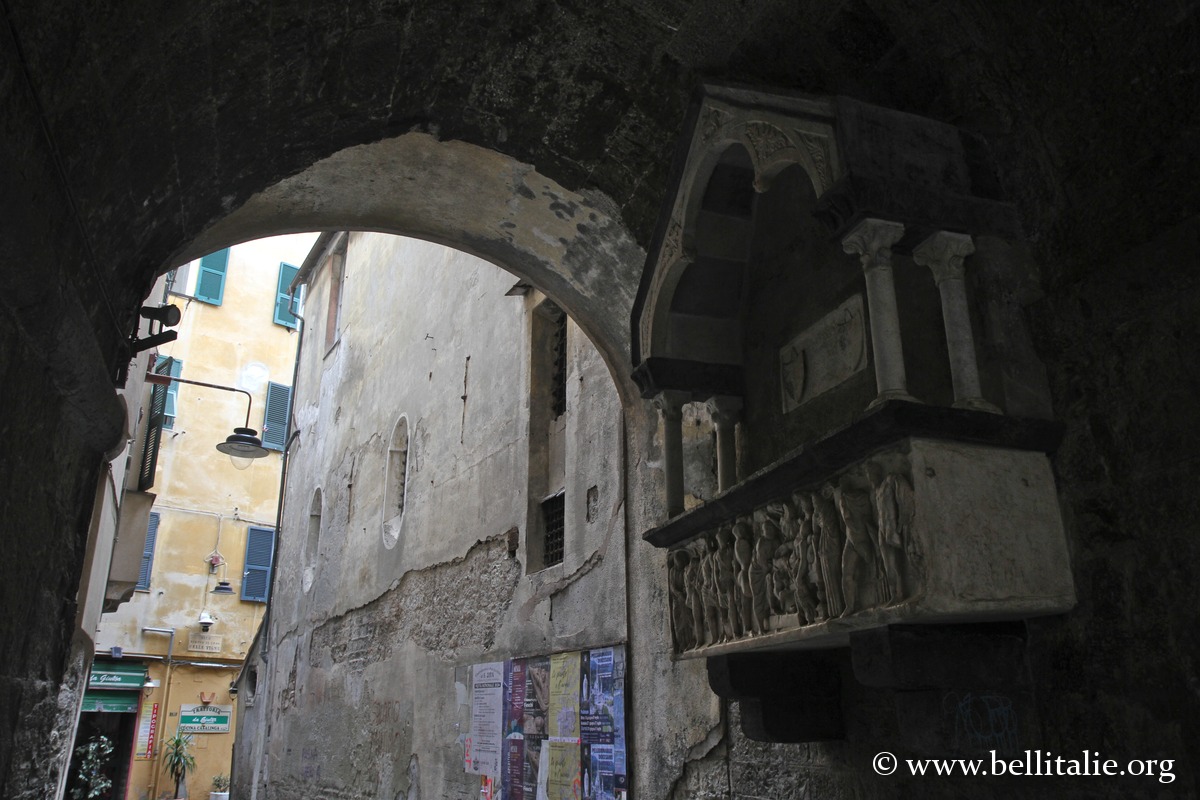
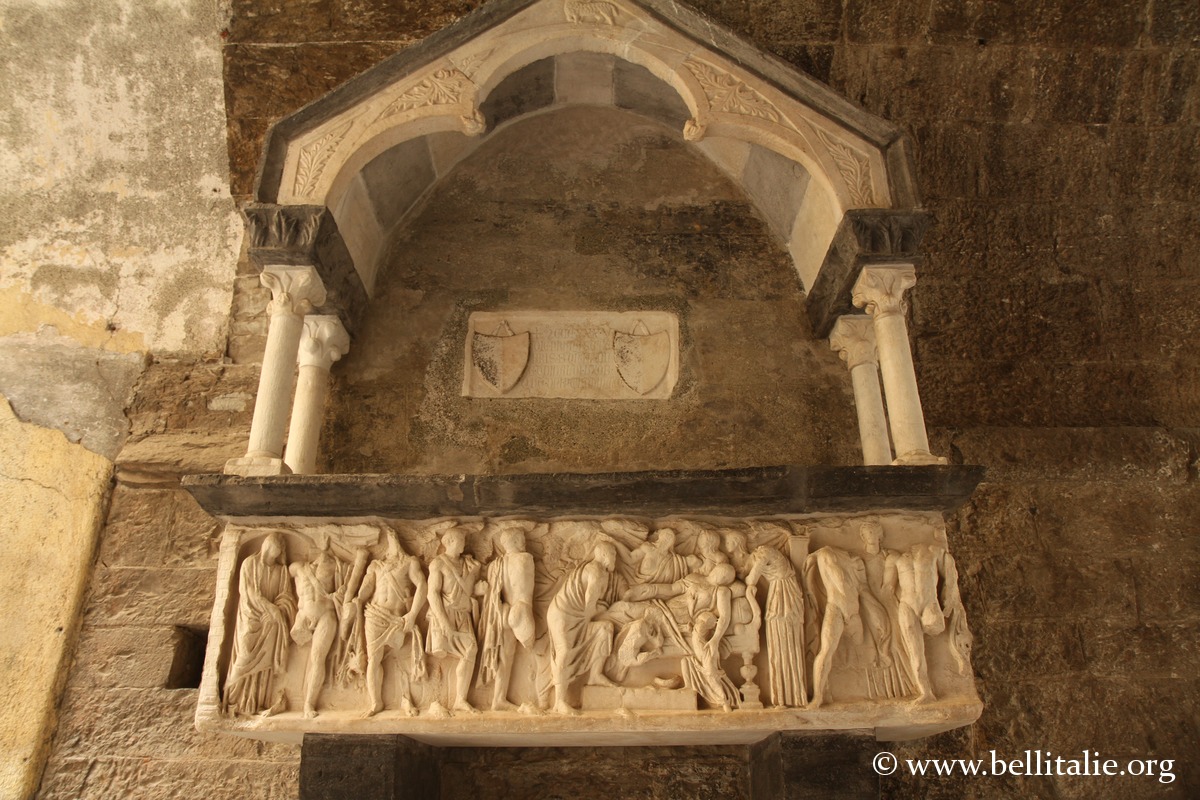
In the suggestive vico del Campanile delle Vigne, the alley running alongside the church, one can see the old cloister of the Canonici delle Vigne (12th century) and the suspended tomb of Incisa Vivaldi from 1304, adorned with a façade of a Roman sarcophagus from the 2nd century which represents The Death of Phaedra.
-
- Vico del campanile delle Vigne
-
- Ancien cloitre
-
- Tombe du XIVe
-
- Tombe du XIVe
-
- Vico del campanile delle Vigne
Via XX Settembre and oriental market
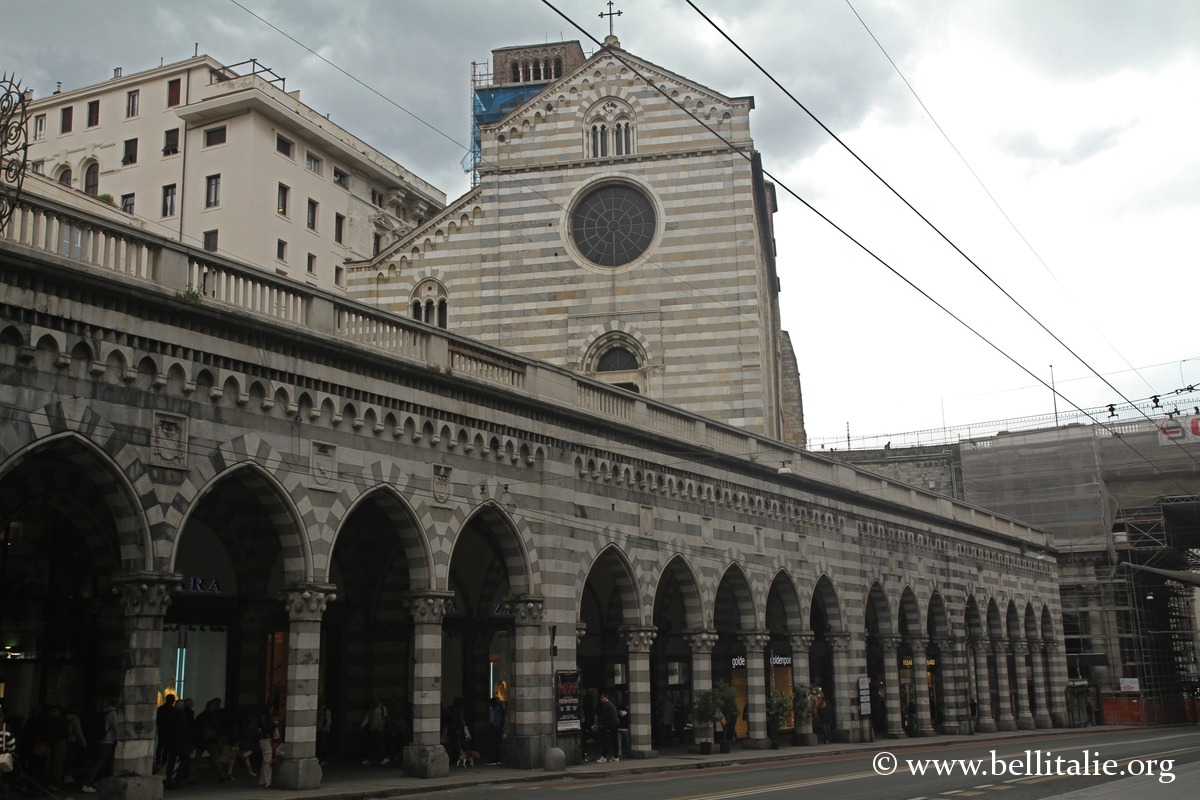
Santo Stefano above Via XX Settembre
The via XX Settembre is the main street of the modern centre of Genoa, dedicated to shopping, with large chains but also some artisan shops. It is lined with beautiful decorated porticoes and crossed by a monumental bridge.
Towards the middle of this avenue, the MOG is the Oriental Market where many flavours and culinary specialities can be found.
D’Albertis Castle
In a western corner of the Castelletto neighbourhood, the D’Albertis castle is located on the hill of Monte Galletto with a superb view over the city.
It is a historic palace built at the end of the 19th century in a neo-Gothic style by Captain Enrico Alberto D’Albertis (1846-1932) on 16th-century fortifications. It is the venue for events and two museums (Museum of World Cultures and Popular Music), based on the collections of objects gathered by D’Albertis during his travels, enriched by donations.
Surroundings
Villa Durazzo Pallavicini
To the west of the city, about 10 km away, the Villa Pallavicini with its beautiful romantic 19th-century style park, also includes the Museum of Ligurian Archaeology.
The garden paths are lined with neoclassical or neo-Gothic monuments, among palms, exotic plants, oaks, laurels, camellias, and various oriental trees.
Coastline and Boccadasse
Boccadasse is on the outskirts of Genoa one of the most pleasant places to relax. It is an old small fishing village at the end of the long seafront of Corso Italia, with its old colourful fishermen’s houses, a small beach and a few boats.
Nervi promenade
Nervi
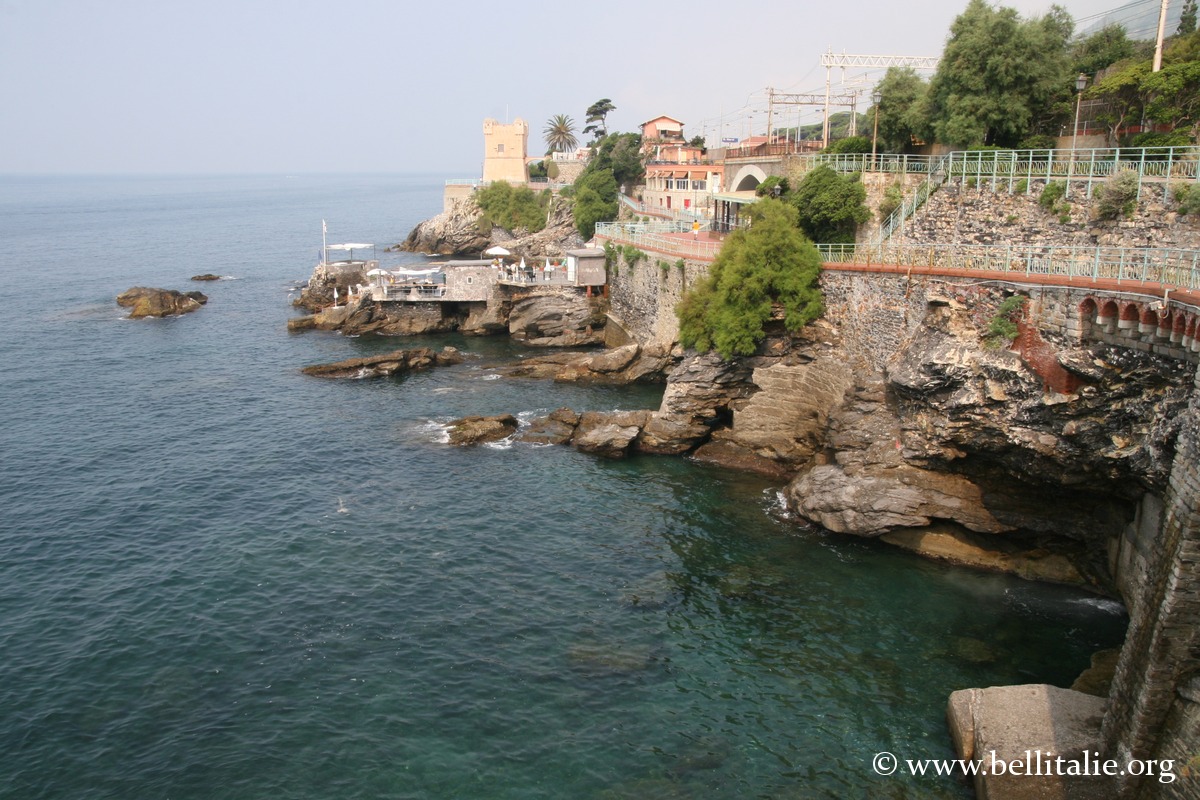
This two-kilometre-long pedestrian promenade, called the Anita Garibaldi promenade or Nervi promenade, overlooks the sea, starting from the small marina of the Nervi neighbourhood, with a few restaurants and a Genoese tower.
Walls Park
Just north of Genoa, the Parco delle Mura is a Protected Natural Area of local interest covering 616 hectares of hills between the two main valleys, val Bisgno and val Polcevera, with meadows, pastures and woods, populated by animal and plant species.
Its name comes from the New Walls erected in the 17th century to strengthen the defence of the city and its port basin. This 12 km long enclosure is the longest in Europe and is well preserved.
The park also includes 16 military forts, built between the end of the 18th and the beginning of the 19th century.
The main route starts at the upper terminus of the funicular (Righi) and continues towards the Castellaccio and Sperone Forts, then the 19th-century Fort Begato, up to Fort Diamante, which dominates the area from 600 metres above sea level.
Monumental Cemetery of Staglieno
In this large cemetery are monumental tombs and illustrious Genoese figures, including chapels of various styles.
Map of the sites
 Show interactive map
 Information
- Wikipedia article: en.wikipedia.org
- Tourist portals: www.visitgenoa.it, www.luoghidiinteresse.it
- Palazzi dei Rolli: www.palazzideirolli.it
- What to see in Liguria
- Genoa
- Cinque Terre
- Sestri Levante
- Lerici, Tellaro and Montemarcello
- Portovenere
- Albenga
- Noli
- Rapallo
- Ventimiglia and Bordighera
- Other places of the Riviera di Levante
- Dolceacqua and Apricale
- From Savona to Arenzano
- Imperia and Cervo
- Finale Ligure and Finalborgo
- Gulf of Paradise – From Bogliasco to Camogli
- Sanremo, Bussana and Taggia
- Seborga, Pigna and Rocchetta Nervina
- Levanto
- From Moneglia to Bonassola
- Santa Margherita Ligure
- Triora, Argentina Valley and Ligurian Alps


Comments