


Triora
A village at the foot of the Ligurian Alps perched at 900 metres above sea level, Triora remains sadly known as “the town of witches”, because one of the largest witch hunts in Italy took place there at the end of the 16th century. The women, tried and tortured, were accused of witchcraft that was said to have caused a persistent famine.
Dating back to the 9th century, Triora was for centuries an impregnable fortress of the Republic of Genoa. Today it is a charming little village in the beautiful Valle Argentina valley, ideal for hiking. In the middle of the 20th century, it was revived after the devastating earthquake of 1887 that left it abandoned for decades. Artists have since made it their home.
Triora is located 30km upstream in the Argentina Valley. The village on the hillside is equipped with 16th-century walls.
Triora preserves palaces, beautiful stone houses with remarkable portals and porticoes.
The ethnographic museum is dedicated to local traditions and its history, including a section on witchcraft.
At the Cabotina, which was a small farm, are the vestiges of the hamlet where many women accused of witchcraft lived, many of them more or less marginalized women, elderly widows or poor young women, who practiced traditional herbal medicine.
Worth mentioning is the charming church of San Bernardino da Siena with interesting frescoes, Gothic-Renaissance elements, or the collegiate church of Our Lady of the Assumption with the Gothic portal and masterpieces inside.
Triora Castle is reduced to a state of ruins. It was an important piece erected by the Republic of Genoa to defend its borders.
Also worth mentioning are the ancient ramparts, the old oven, the cistern, the Sottana Fountain, the Borelli Palace, or the Lourdes Grotto. A route leads to the ruins of Santa Caterina, to the viewpoint of Poggio della Croce, passing through the Soprana fountain, the Cabotina hamlet and the fort of San Dalmazzo.
The Witches of Triora
Triora is designated as the “town of witches” because of the dramatic events between 1587 and 1589 with the trials of women accused of witchcraft. The origin of this persecution was a drought that considerably reduced the wheat harvest, causing scarcity and famine.
From a few women charged at the beginning of the persecution, their number exceeded 2000. They were subjected to torture to force them to confess. The trial continued in Genoa in 1589. In the end, the condemnation of the women to the stake was annulled, and the survivors were transferred to Rome.
Valle Argentina
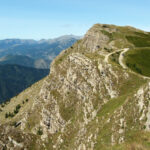
From Mount Saccarello (2201 m) to the beaches of Arma di Taggia, the Argentina Valley is a pleasant destination, benefiting from natural landscapes, forests and historic villages.
Its nature can be admired by walking the magnificent trails, with rich wildlife: Alpine chamois, marmots, roe deer, wild boars, squirrels, etc.
It is an ideal territory for mountain biking, trekking, canyoning, or swimming with many small swimming spots.
Downstream, near the mouth of the valley, the medieval town of Taggia, with its old castle and beautiful churches, preserves the monumental Ponte Antico 275 metres long supported by 15 arches.
Ligurian Alps Park
Triora is located within the Ligurian Alps Park, spanning nearly 6000 hectares with three valleys : Nervia Valley, Roia Valley and Argentina Valley.
Weather in Triora
Map
If you see this after your page is loaded completely, leafletJS files are missing.
Information
- Triora: en.wikipedia.org, www.trioradascoprire.it, www.agriturismolegirandole.com
- Valle Argentina: it.wikipedia.org, www.inviaggioconselena.it
- Ligurian Alps Park: parconaturalealpiliguri.it, en.wikipedia.org, lamialiguria.it, mondointasca.it
- What to see in Liguria
- Genoa
- Cinque Terre
- Sestri Levante
- Lerici, Tellaro and Montemarcello
- Portovenere
- Albenga
- Noli
- Rapallo
- Ventimiglia and Bordighera
- Other places of the Riviera di Levante
- Dolceacqua and Apricale
- From Savona to Arenzano
- Imperia and Cervo
- Finale Ligure and Finalborgo
- Gulf of Paradise – From Bogliasco to Camogli
- Sanremo, Bussana and Taggia
- Seborga, Pigna and Rocchetta Nervina
- Levanto
- From Moneglia to Bonassola
- Santa Margherita Ligure
- Triora, Argentina Valley and Ligurian Alps


Comments