


In the hinterland of Ventimiglia and the Nerva valley, the two nearby villages of Dolceacqua and Apricale are well worth the detour. The first is a medieval village with its pretty Roman bridge and the remains of its old Doria castle, which was immortalised by Monet.
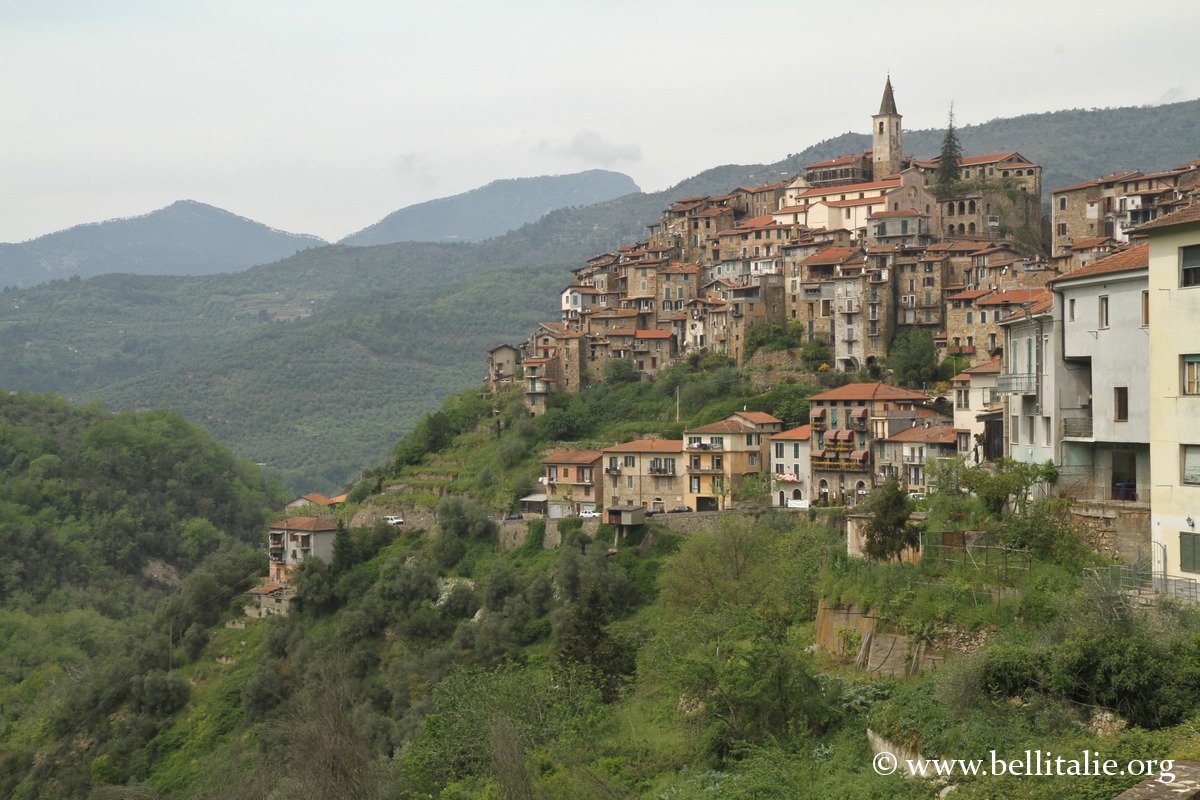
Apricale is another medieval village perched on a hill in the green valley, with a charming central square, stone houses and an old castle.
Dolceacqua
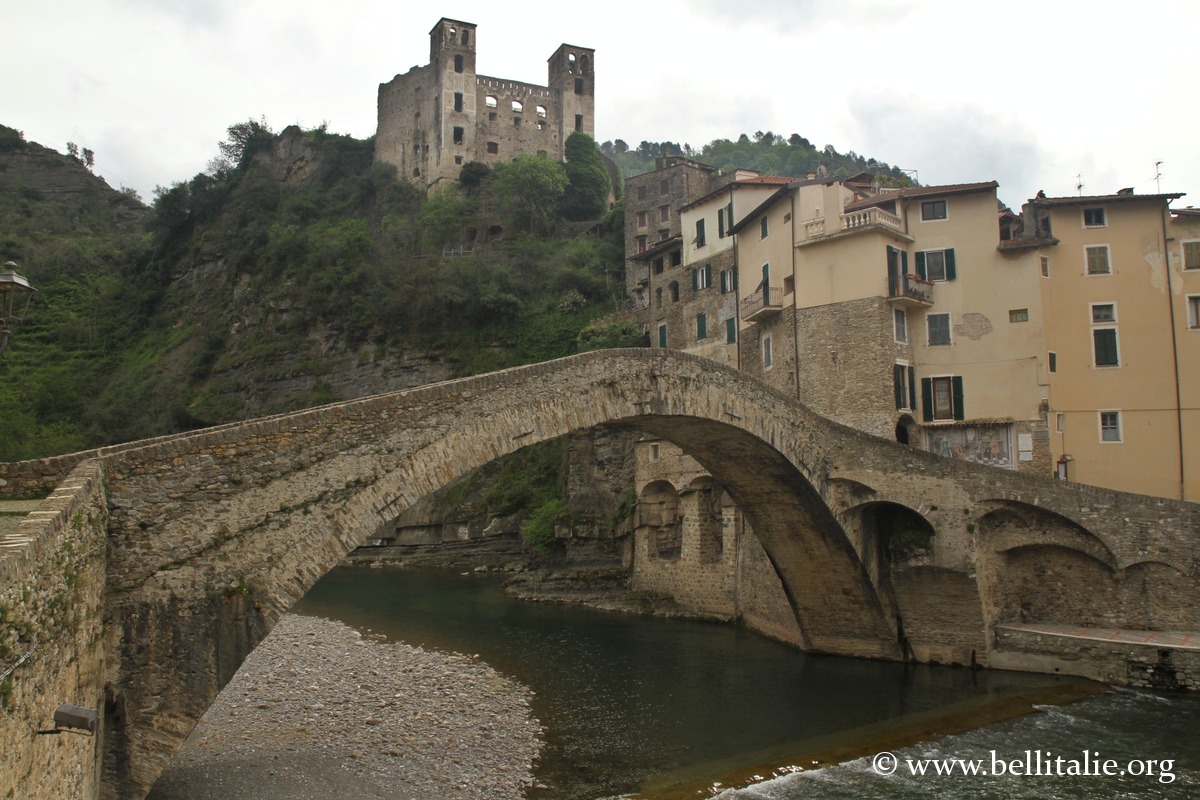
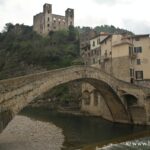
A few kilometres from the coast, Dolceacqua is one of the most charming Ligurian villages of the Ponente, crossed by the Nervia valley river. In 1884 Claude Monet immortalised the Roman bridge and the Doria castle that dominates the medieval village, which has remained unchanged to this day.
The village benefits from its inclusion among the “most beautiful villages in Italy” and holds the “orange flag”, a tourism and environmental quality label awarded to barely more than 100 villages in Italy.
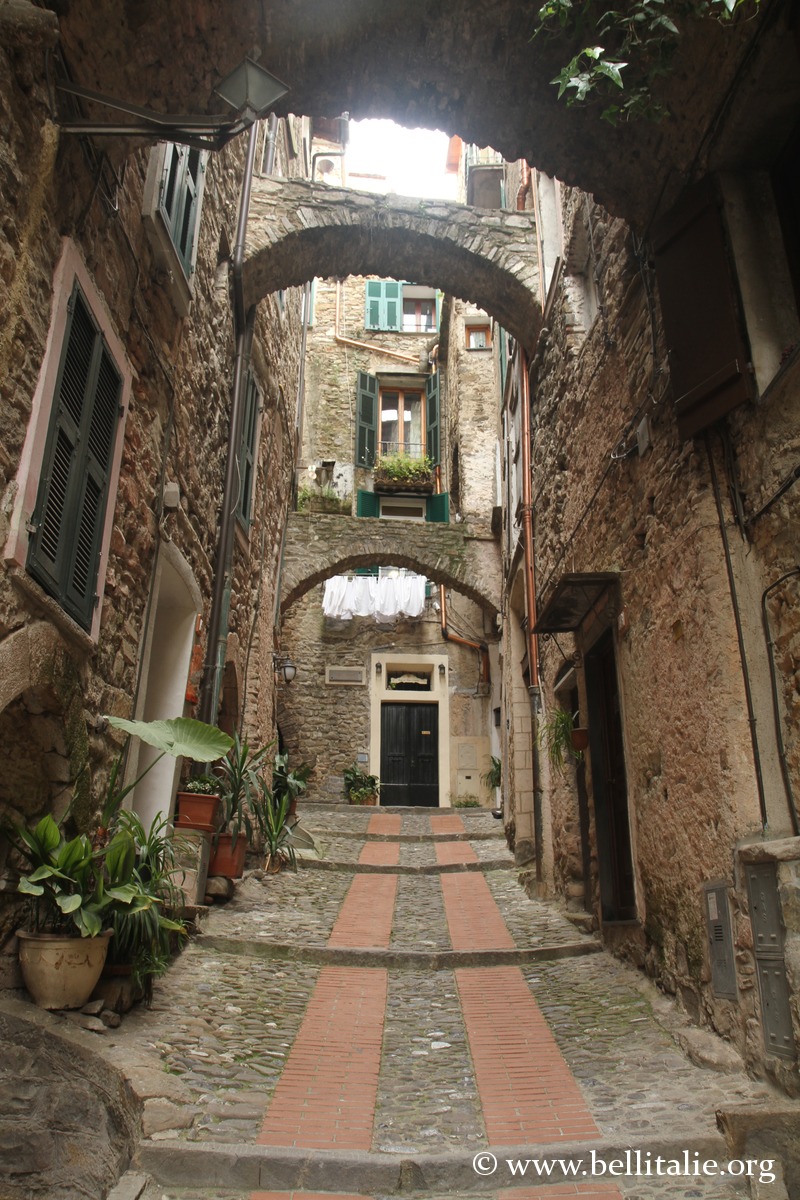
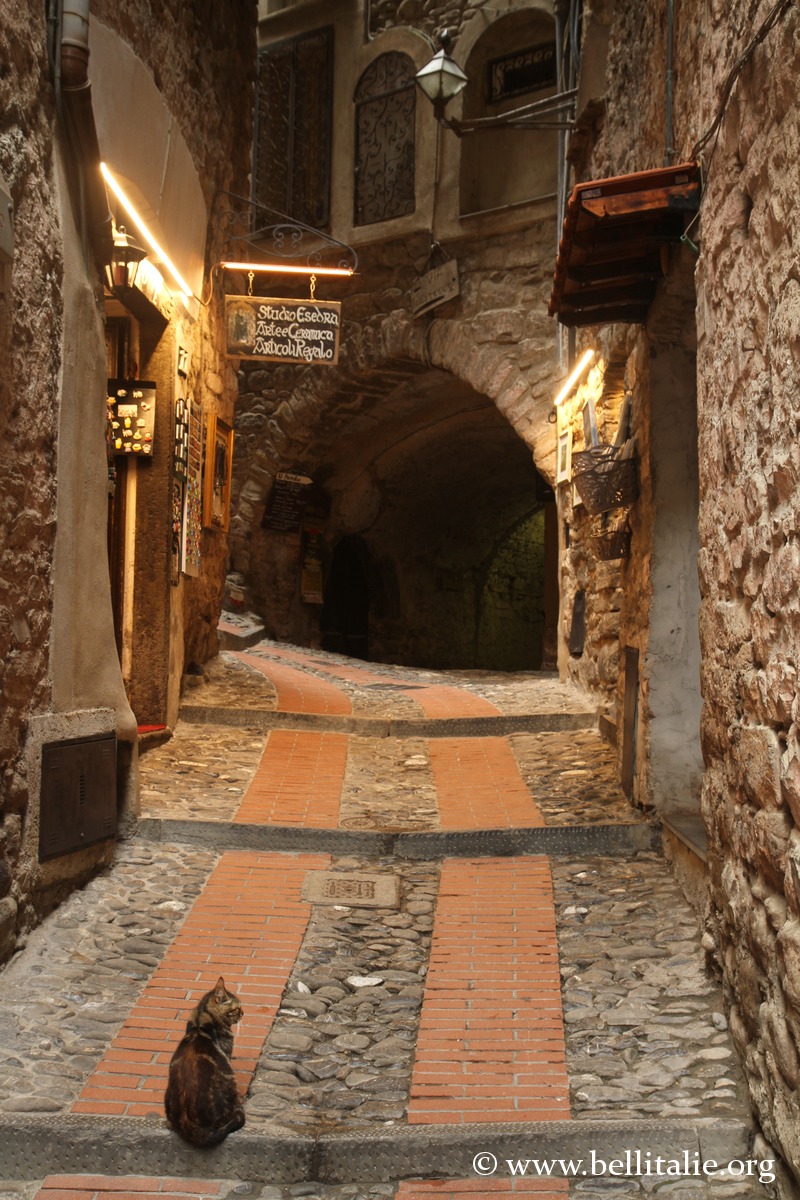
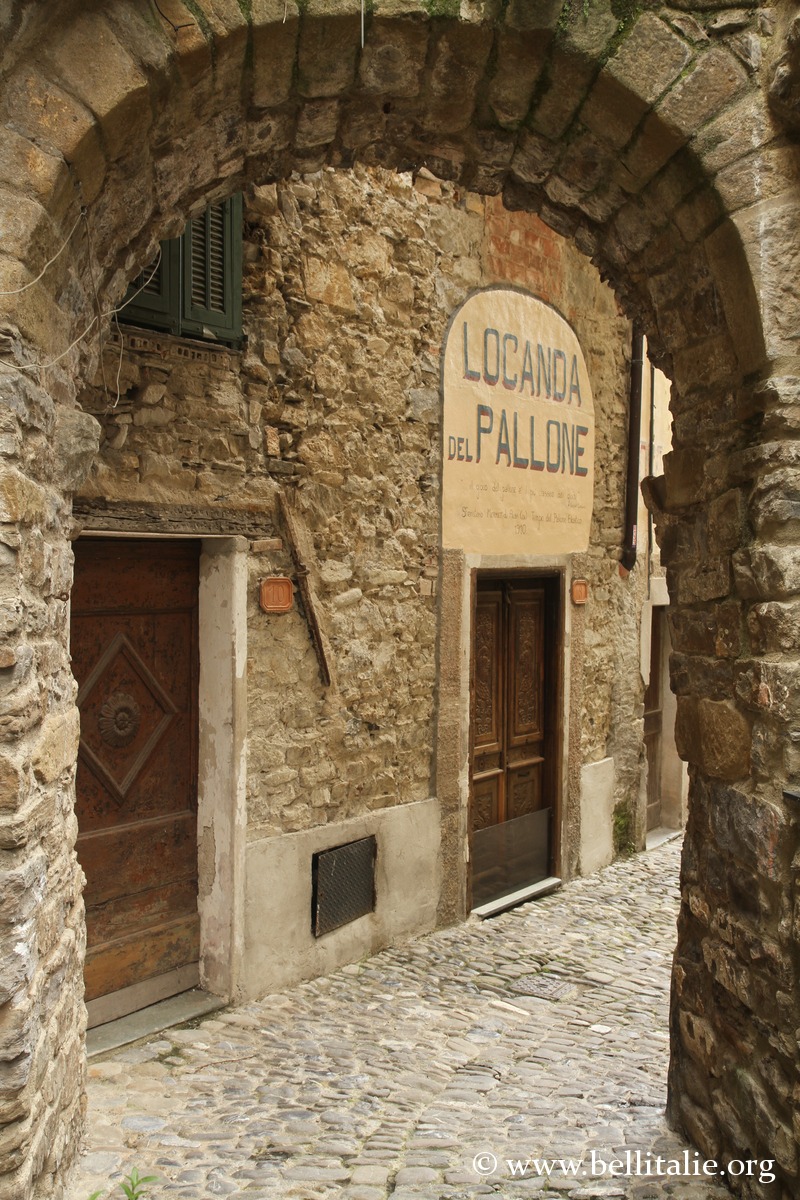
Its historic centre is surely among the most suggestive and immersive in the region. The medieval atmosphere is indeed everywhere, with its vaulted passages, arches, portals, etc.
Beyond, on the hill, vineyards and olive trees stretch out, from which a fragrant wine is produced, the Rossese.
Brief history
The Counts of Ventimiglia built the first castle at Dolceacqua around 1151, on the rocky spur between the Roya valley and the Nervia valley. In 1270, the fief was acquired by the Doria of Genoa, who controlled the region from this castle, and then the village gradually developed.
From the 15th century the town also developed on the other side of the river with the ” borgo ” district.
It was disputed for centuries between the Grimaldi of Monaco, the Savoys and the Doria themselves.
In 1746, the castle was almost destroyed by the French and Spanish armies. The Doria settled in the village palace, the same palace that hosted Napoleon in 1794.
Visit
Dolceacqua consists of two parts : the Terra which is the oldest core, built on the slopes below the castle, and the Borgo on the right bank of the Nervia which is flat instead.
Terra is reached via the beautiful Ponte Vecchio, the emblem of Dolceacqua. In the 15th century it replaced an older structure, with its single donkey-back arch. At the top, the Doria Castle was transformed over the centuries.
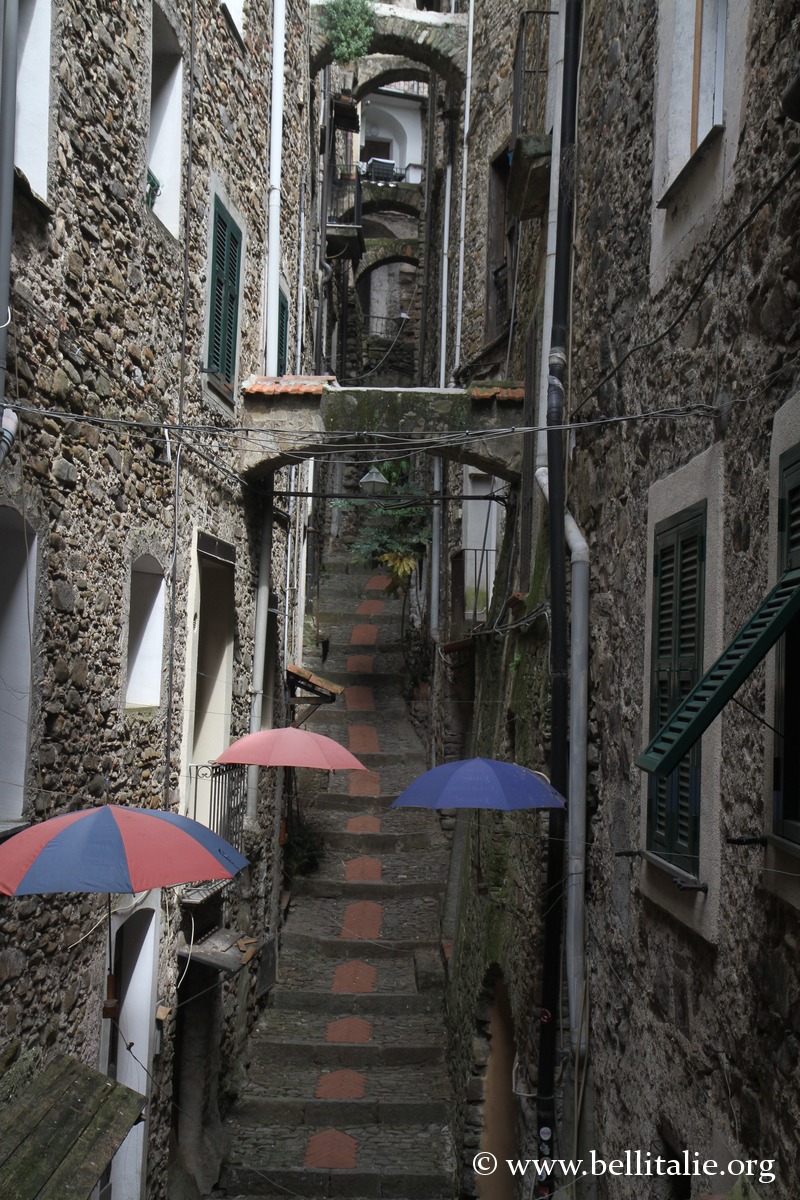
The village is a superb example of medieval town planning, with its lanes concentric to the castle, arches, and covered passages: the caruggi which in themselves constituted a defence of the medieval village.
The most curious lanes are the scasasse between the bridge and the parish square. Along the main street that leads up to the castle, the old workshops are occupied by art galleries, artisan workshops, shops and cellars.
On the parish square near the river, the church of Saint Anthony preserves a rich Baroque interior and the beautiful polyptych of Saint Devota from 1515 by Ludovico Brea. Next to it, the 16th-century palace hosted the Doria. In the Borgo district is the oratory of San Sebastiano.
The michetta
The villagers of Dolceacqua cook a traditional pastry, the michetta, whose history is linked to a legend. It tells that in the 13th century, a lord of the Doria family ruling over Dolceacqua, a notoriously cruel individual, allegedly claimed his privilege of jus primae noctis at the wedding of a beautiful Lucrezia who preferred to take her own life rather than offer her body to the lord on the wedding night.
There followed a revolt of the inhabitants who forced the lord to renounce this privilege forever. Since then, this victory is celebrated on 16 August with the preparation of the michetta, a sort of brioche covered with sugar. The women who prepared the michetta realised that the brioche had the shape of the female sex. So they carried it to the village shouting “Omi, au, a michetta a damu à chi remu nui” (Men! from now on, the michetta we offer to whomever we want!). Since then, on the morning of 16 August, the young men tour the village accompanied by an orchestra, stopping under the windows of the young girls and asking them for the michetta.
The michetta is still the typical dessert of Dolceacqua, accompanied during festivals by the Rossese, the wine produced here, which was particularly appreciated by Pope Paul III Farnese and by Napoleon.
It was the first DOC (controlled origin) wine of Liguria, produced by 14 villages.
Apricale
Apricale is also among the ” most beautiful villages in Italy “, both for its beautiful position in the heart of the Val Nervia valley, among its oak and chestnut woods, and for the charms of the village.
The centre is a true labyrinth of lanes, passages and stairways, with tightly packed houses separated by the typical caruggi.
The founding of the castle by the Counts of Ventimiglia dates back to around the year one thousand. In the 13th century Apricale was a free commune, then it entered the fief of the Doria of Dolceacqua for the five centuries that followed before passing under the domination of the Republic of Genoa. Agostino Grimaldi destroyed the castle in 1523.
There were three gates of access to the village, protected by rows of stone houses serving as walls. Today one can see paintings on the walls of the houses, depicting moments of local daily life and of the fields, created by many passing artists.
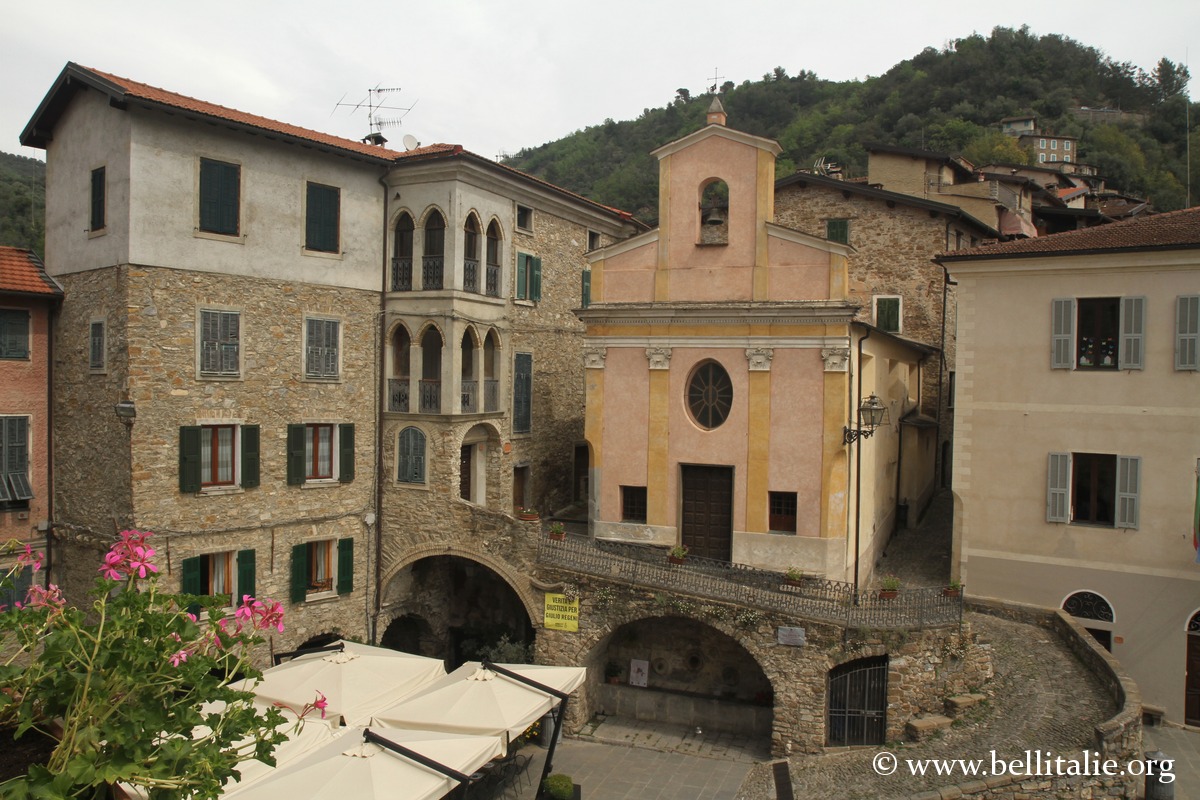
The heart of Apricale is the suggestive Piazza Vittorio Emanuele II, open onto the valley, with a Gothic fountain, arches and beautiful palaces. Behind it, the 16th-century oratory of San Bartolomeo underwent a Baroque embellishment in the 18th century. Higher up, the church of the Nativity of medieval origin was rebuilt in the 19th century, near the remains of the castle and the 12th-century tower. The “castle” houses the museum dedicated to Apricale.
The pansarole accompanied by eggnog is a local sweet, and good olive oils are produced here with the olive trees growing on the surrounding terraces.
Weather in Dolceacqua
Map
If you see this after your page is loaded completely, leafletJS files are missing.
Information
- Dolceacqua : en.wikipedia.org, www.visitdolceacqua.it, www.liguria.info
- Apricale : en.wikipedia.org, www.touringclub.it, www.liguria.info
- What to see in Liguria
- Genoa
- Cinque Terre
- Sestri Levante
- Lerici, Tellaro and Montemarcello
- Portovenere
- Albenga
- Noli
- Rapallo
- Ventimiglia and Bordighera
- Other places of the Riviera di Levante
- Dolceacqua and Apricale
- From Savona to Arenzano
- Imperia and Cervo
- Finale Ligure and Finalborgo
- Gulf of Paradise – From Bogliasco to Camogli
- Sanremo, Bussana and Taggia
- Seborga, Pigna and Rocchetta Nervina
- Levanto
- From Moneglia to Bonassola
- Santa Margherita Ligure
- Triora, Argentina Valley and Ligurian Alps


Comments