

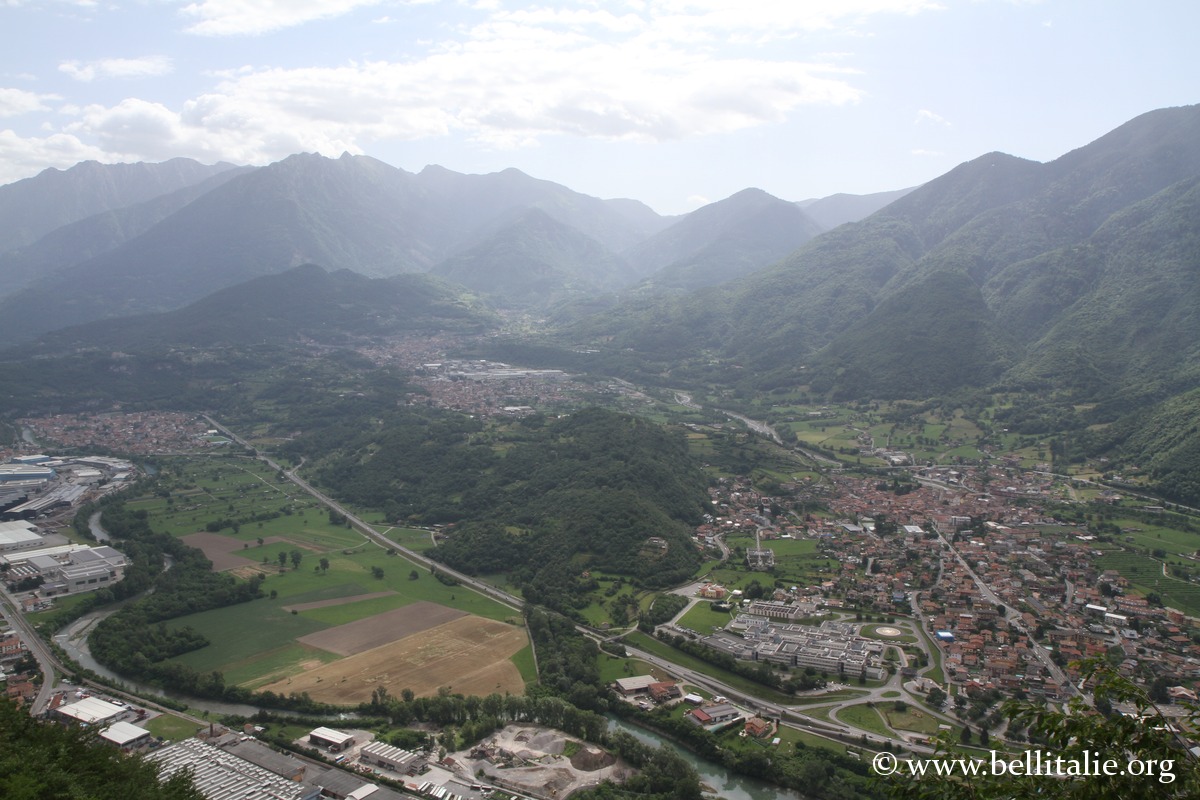
The Oglio river flows down the Val Camonica for nearly 80 km, from the Tonale Pass between the southern peaks of the Alps, to Lake Iseo near the village of Pissogne.
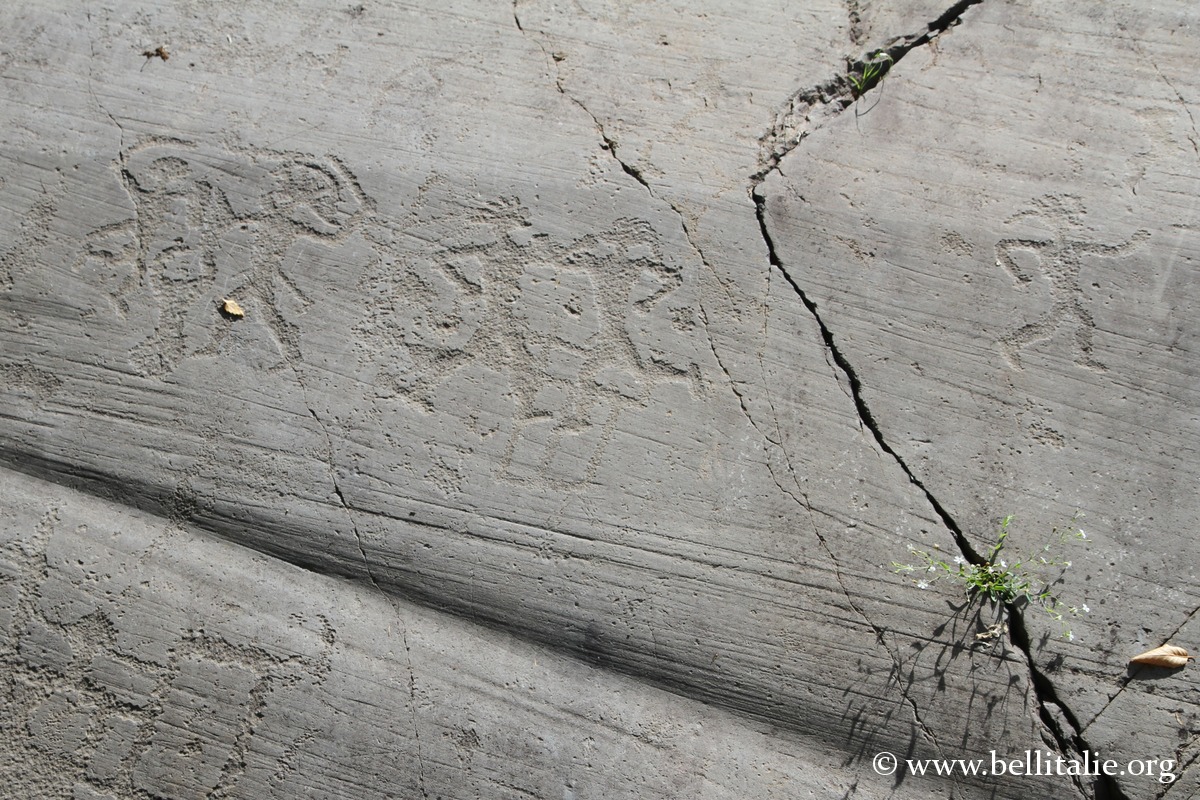
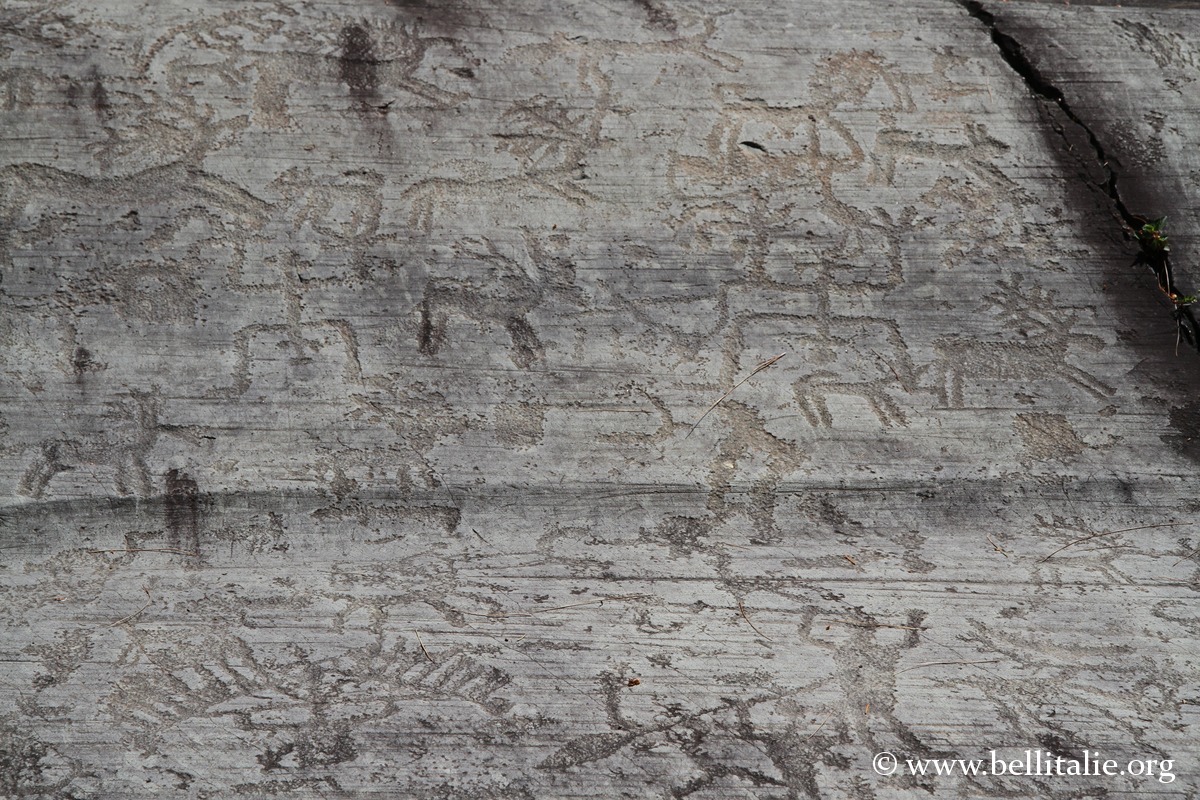
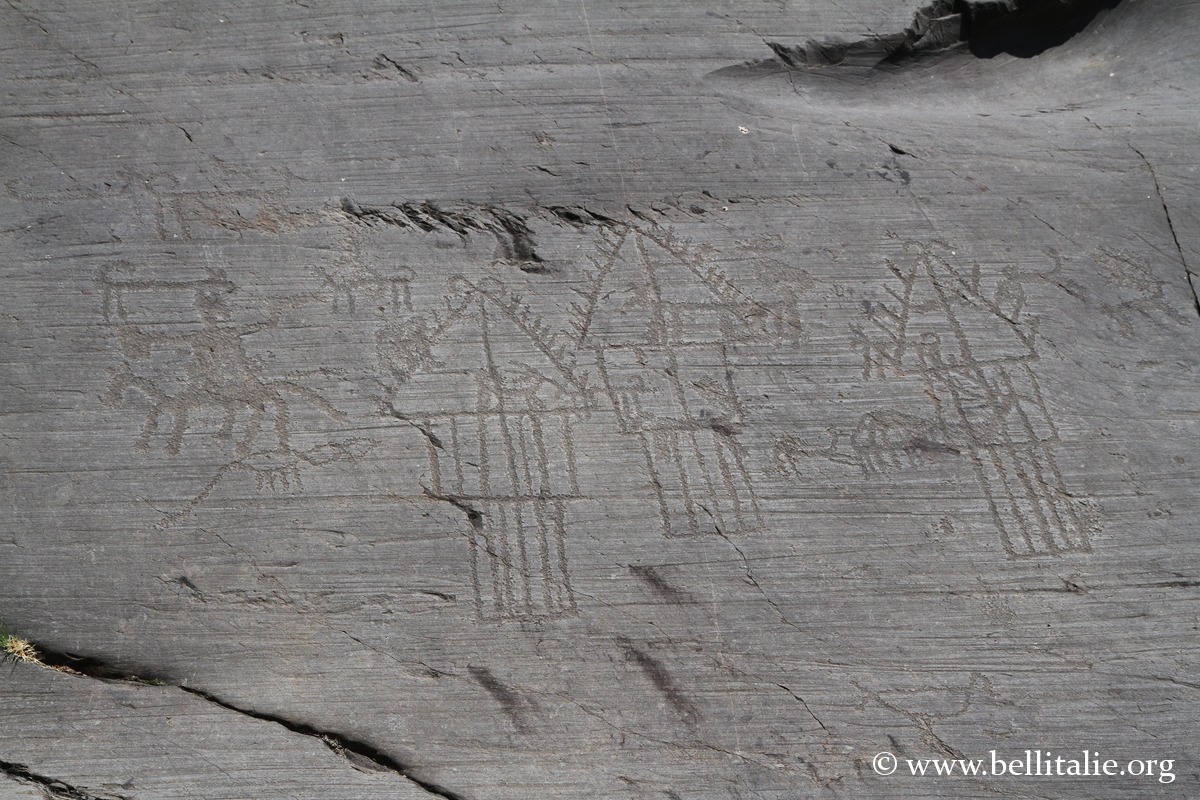
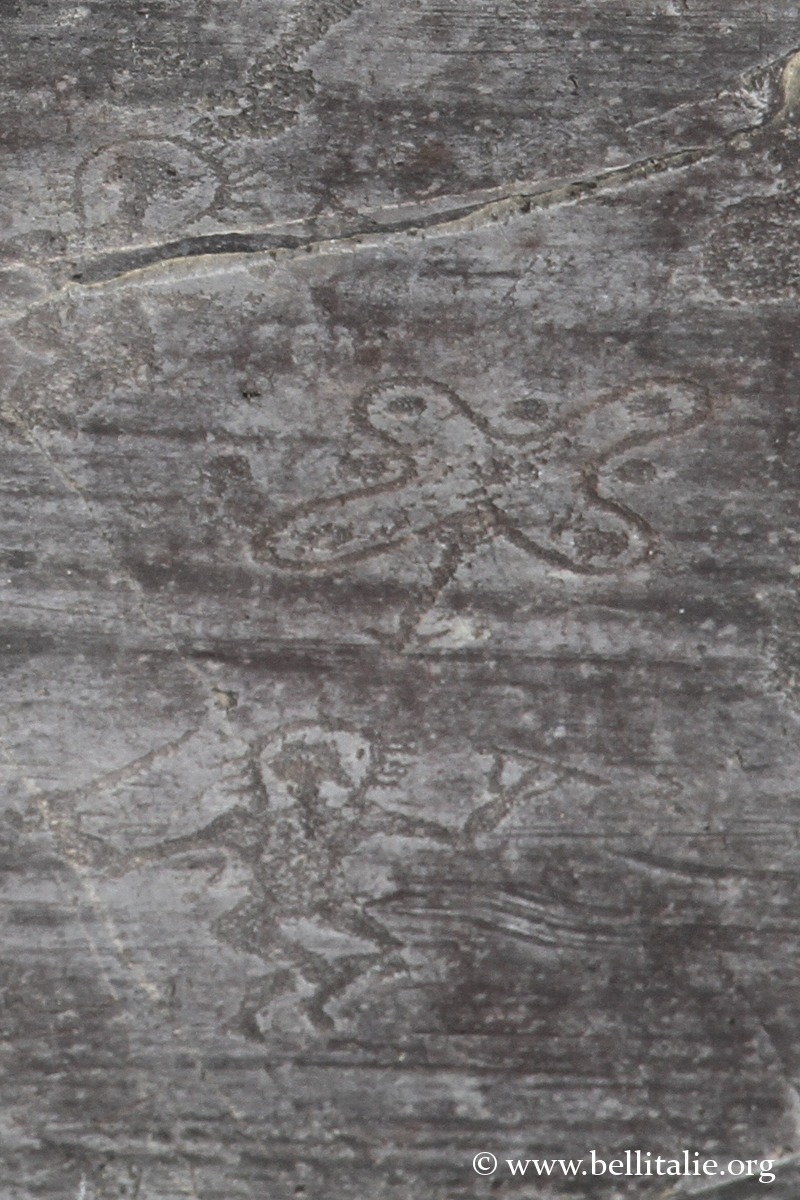
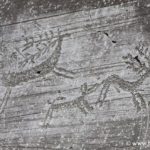
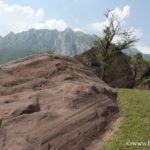
This land inhabited for millennia is known as the « valley of signs » (valle dei segni in Italian), famous indeed for its prehistoric petroglyphs, engravings on rocks, spread along the itineraries of eight more or less thematic parks. This ensemble is the first Italian site inscribed by Unesco on the World Heritage list, in 1979. It has nearly 300,000 symbols, signs and images. The main park is that of the Rock Engravings of Naquane  , at Capo di Ponte (read the page on the rock archaeological sites of Valcamonica).
Introduction
On its heights, the Camonica valley is separated from the valley del Sole by the Passo del Tonale, between the alpine peaks of the Gavia, the Adamello or the Pizzo dei Tre Signori. Besides its legendary passes for cyclists, this area has several ski resorts, with a territory partly in the Adamello and Stelvio nature parks.
The valley descends for nearly 80 km to Lake Iseo near the villages of Lovere and Pisogne.
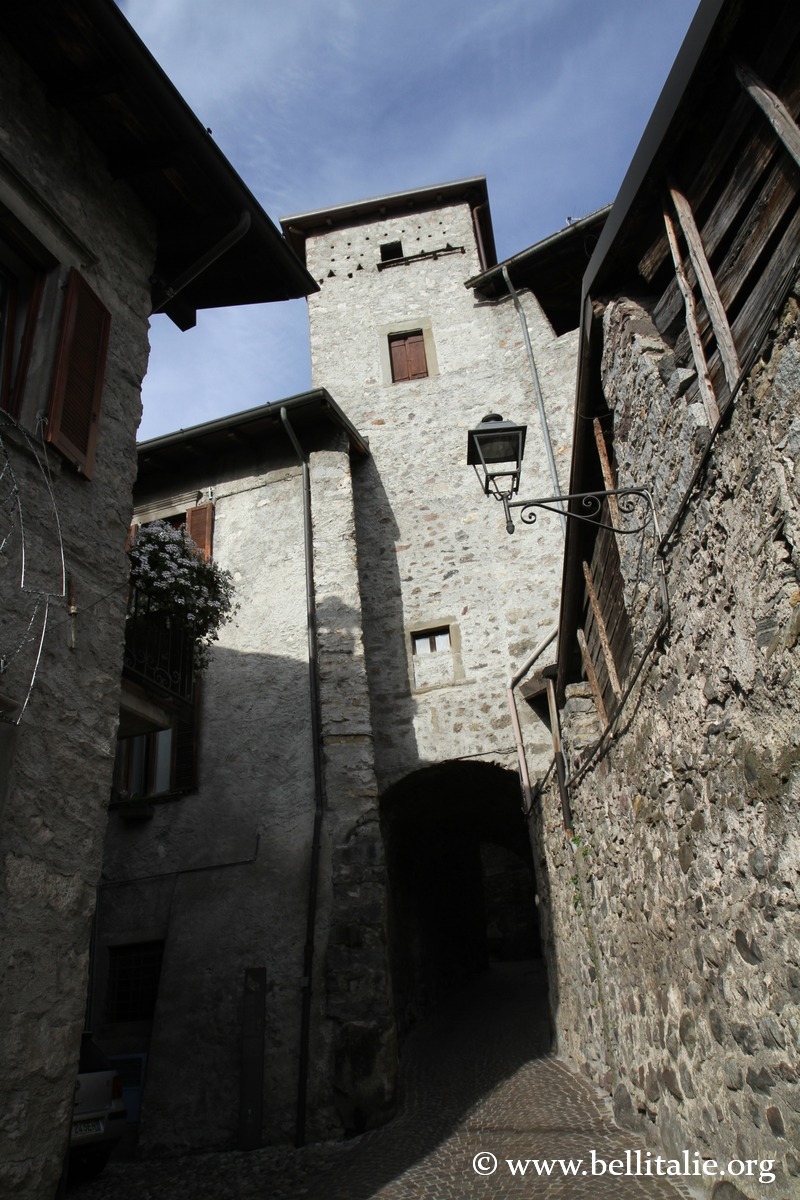
Among its medieval testimonies, Bienno is among “the most beautiful villages in Italy” which developed thanks to ironworking, and the castle of Breno is the most beautiful in the valley.
It is also a spa destination with several resorts including Darfo Boario Terme and Angolo Terme, and a cultural one with, besides the rock engravings that distinguish the valley, a Romanesque heritage, from Roman antiquity at Cividate Camuno in particular, or from the Renaissance with pictorial works in several churches.
The main towns of the valley are Darfo Boario Terme in the lower valley, and Ponte di Legno in the upper valley, which is the main ski resort. The other resorts are those of Aprica, Montecampione and Borno. Ponte di Legno is also a summer destination, for trekking and mountain biking, and even for road cycling with the passes or the track that descends the valley from Ponte to Lake Iseo.
Below are presented the various places from south to north going up the valley, read the page What to see in Val Camonica for more information.
Places of the lower valley
- Lake Iseo Lovere and Pisogne
Lovere is one of the most beautiful villages of Lake Iseo, at the mouth of Val Camonica, with its beautiful harbour with lovely palaces, square and alleys.
Read the page on Lovere, Pisogne and Lake Iseo - Darfo Boario Terme and surroundings
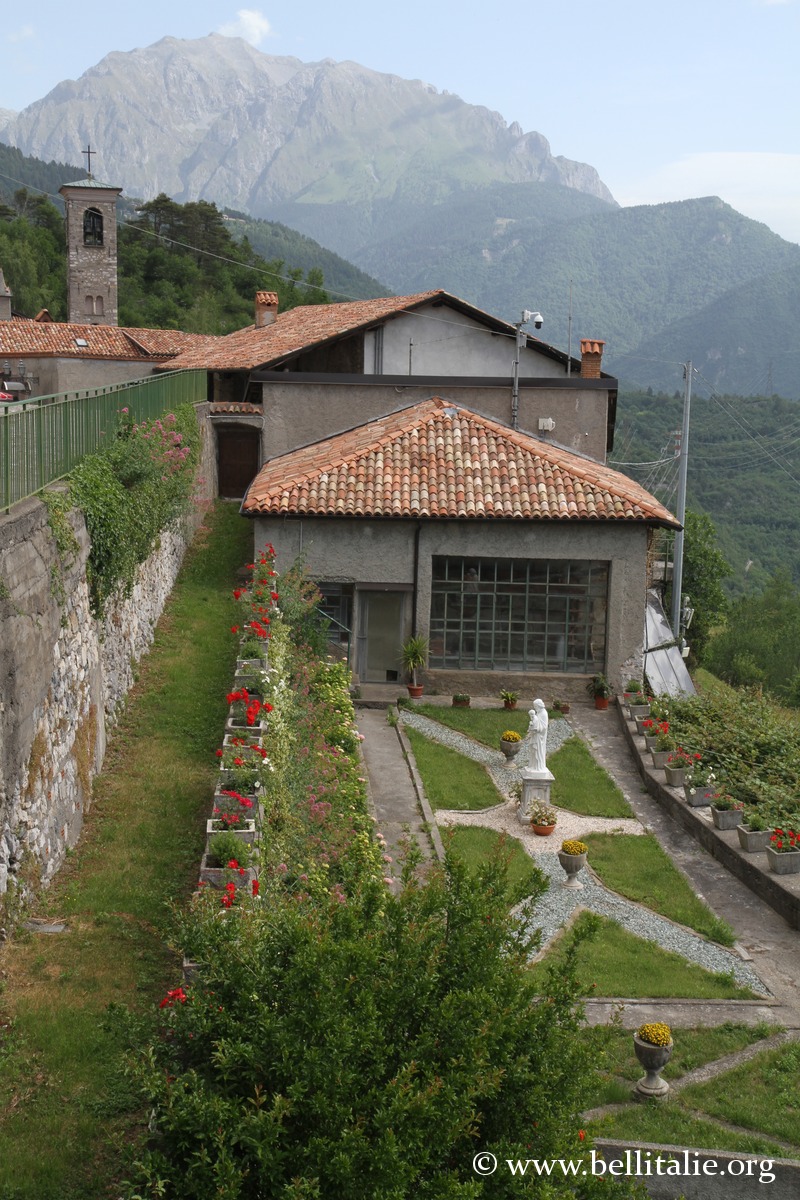
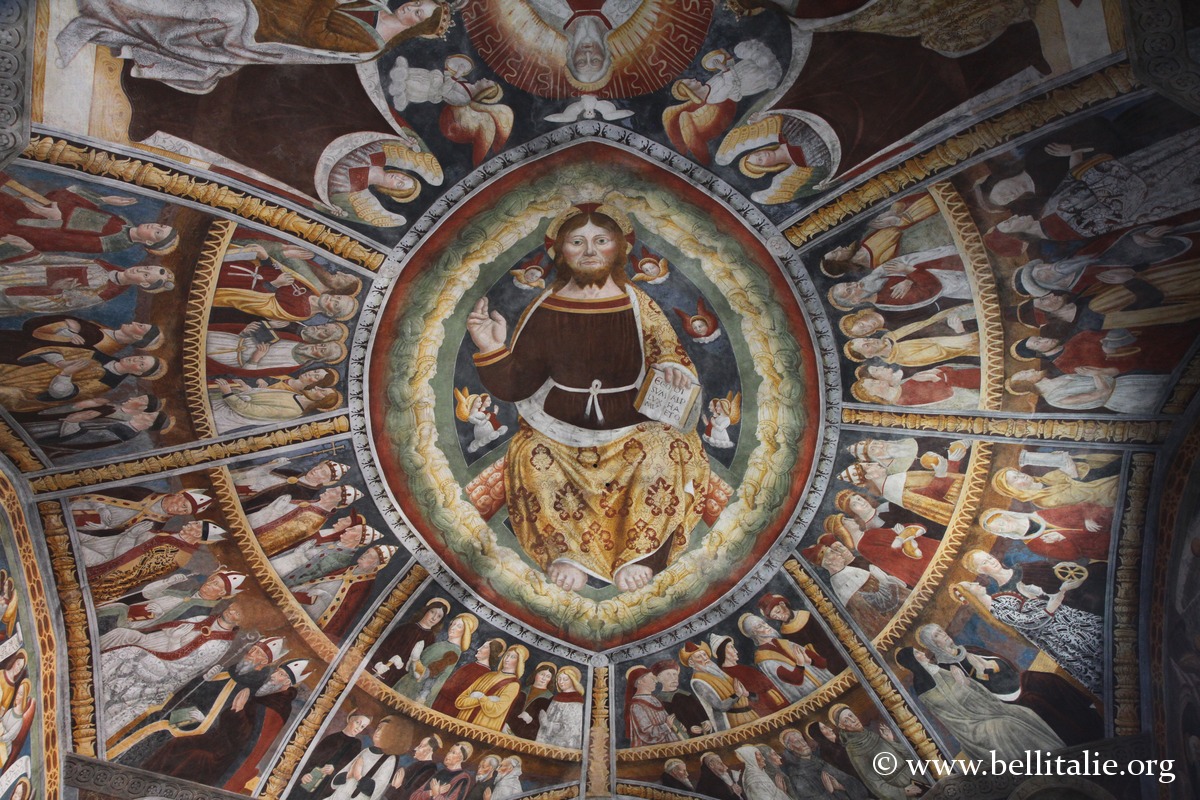
It is the main town of the lower Val Camonica, industrially active, frequented for its spas, with a heritage including the church of the Oratory or of the dead from the late 14th century with remarkable frescoes; the archaeological park of rock engravings of Luine which is one of the most interesting in the valley with the oldest engravings of the valley numbering nearly 100 rocks; or in the surroundings the beautiful park of the small Lake Moro.
Erbano has a church with frescoes and an old cemetery
Old Castle of Gorzone - At Piancogno and Esine : Sanctuary of the Annunciation at Piancognode Lombard Gothic style with frescoes by Pietro da Cemmo, the church of Santa Maria Assunta of Esine, decorated with magnificent frescoes by Pietro da Cemmo.
Places of the middle valley
- Bienno is a historic village with its Renaissance centre, listed among « the most beautiful villages in Italy », whose ancient forges, the village having lived from iron since the Romans.
- Cividate Camuno preserves the most important Roman remains of the valley, with theatre, baths, etc, and the Archaeological Museum of the Camonica Valley.
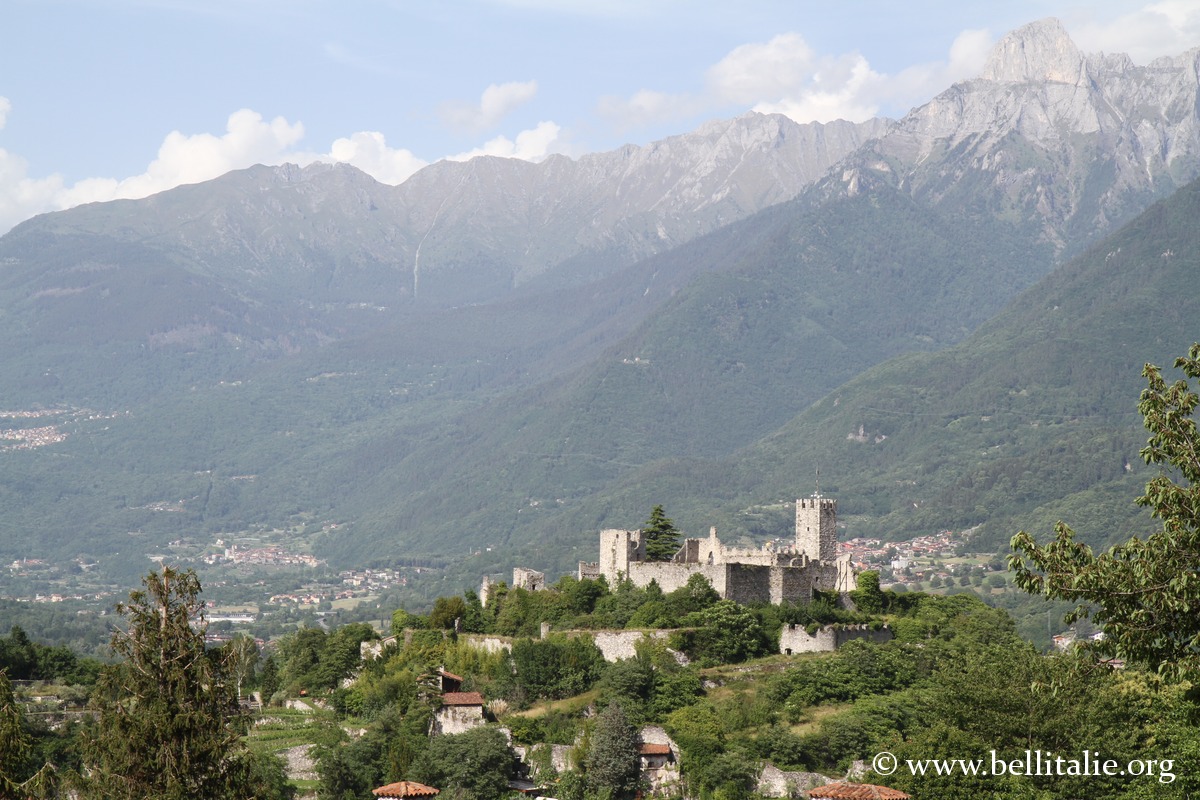
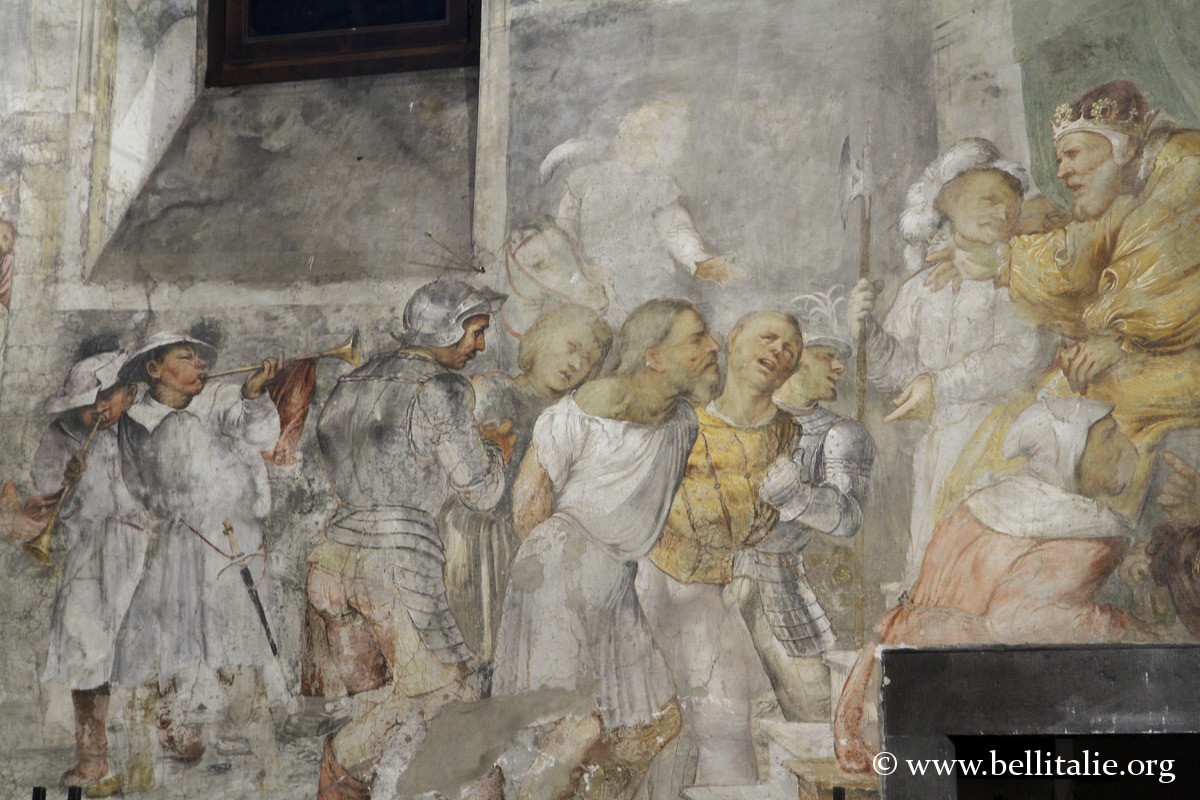
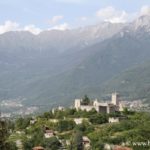
- Breno has a substantial heritage, with the remains of the Roman Sanctuary of Minerva, the beautiful medieval and modern castle of Breno on a hill, or the church of Sant’Antonio Abate with its frescoes by Romanino and Pietro da Cemmo.
- The Sanctuary of the Via Crucis of Cerveno, which has 14 chapels in a single building.
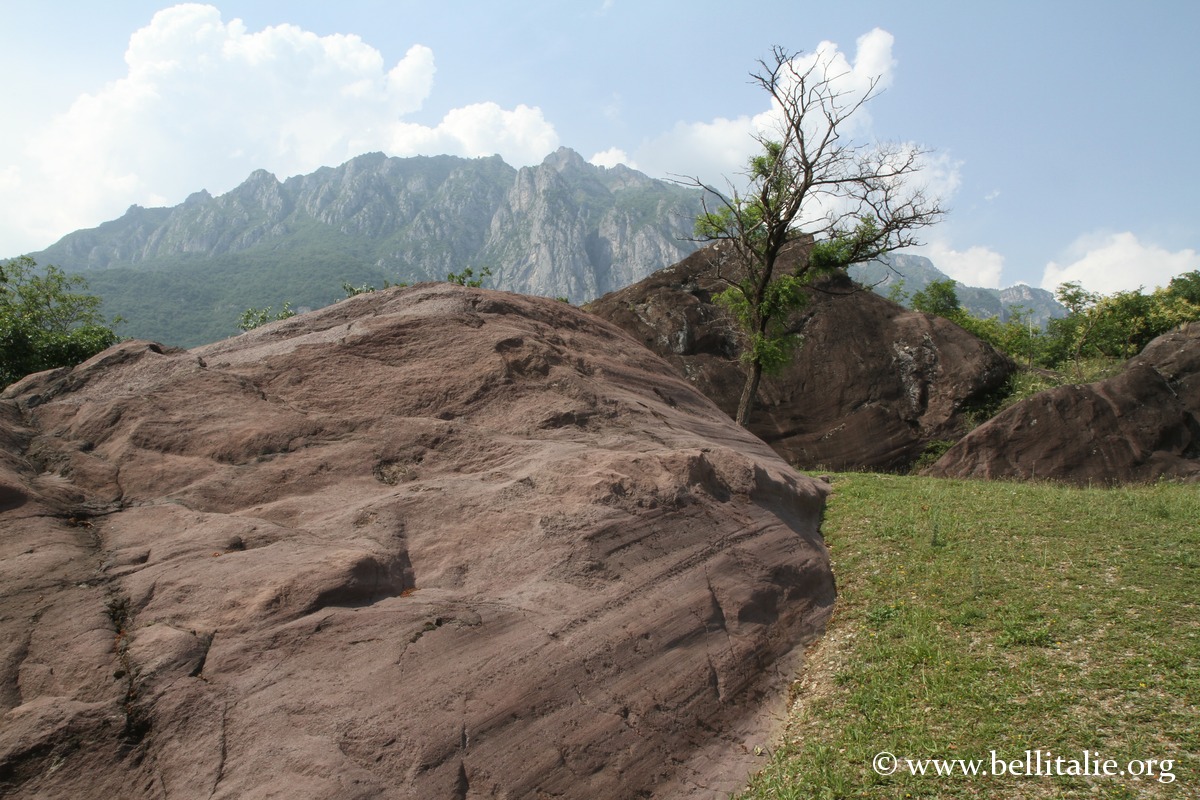
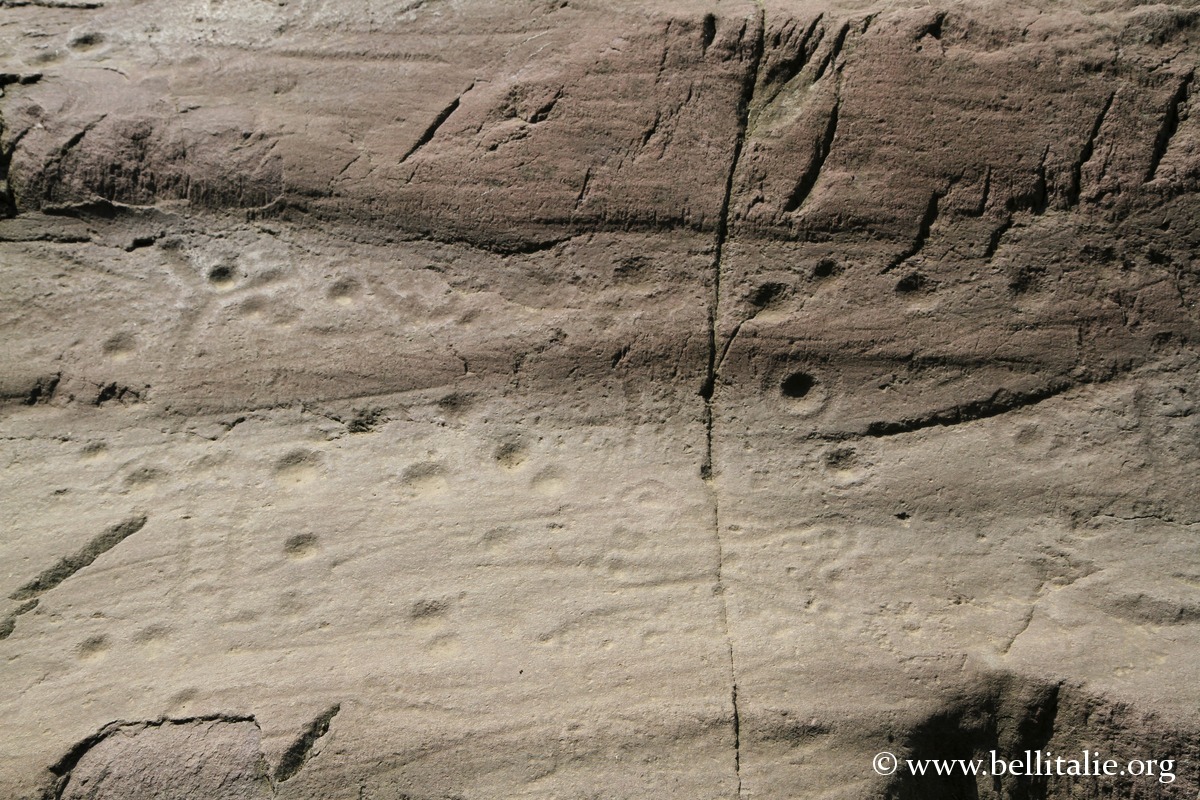
- At Capo di Ponte is the National Park of Rock Engravings of Naquane , the main of the eight parks inscribed by Unesco as “Rock art in the Camonica valley”, with its 104 rocks engraved with thousands of signs and symbols, from the Neolithic (4th millennium BC) to the Iron Age (1st millennium BC) and medieval.
The Mupre, National Museum of Prehistory of the Camonica Valley, gathers emblematic testimonies of the valley, prehistoric and protohistoric, such as some engraved rocks and menhirs.
The Park of the rocks of Cemmo includes several engraved menhirs in a sacred enclosure.
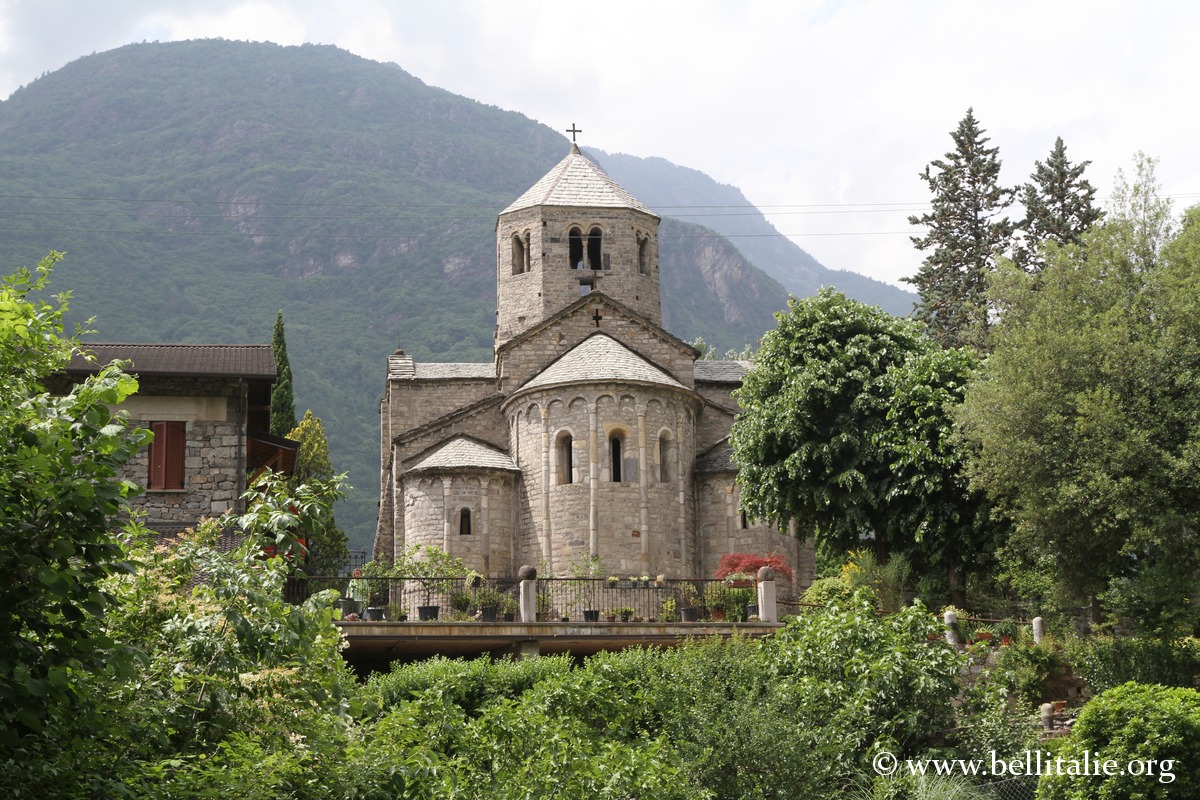
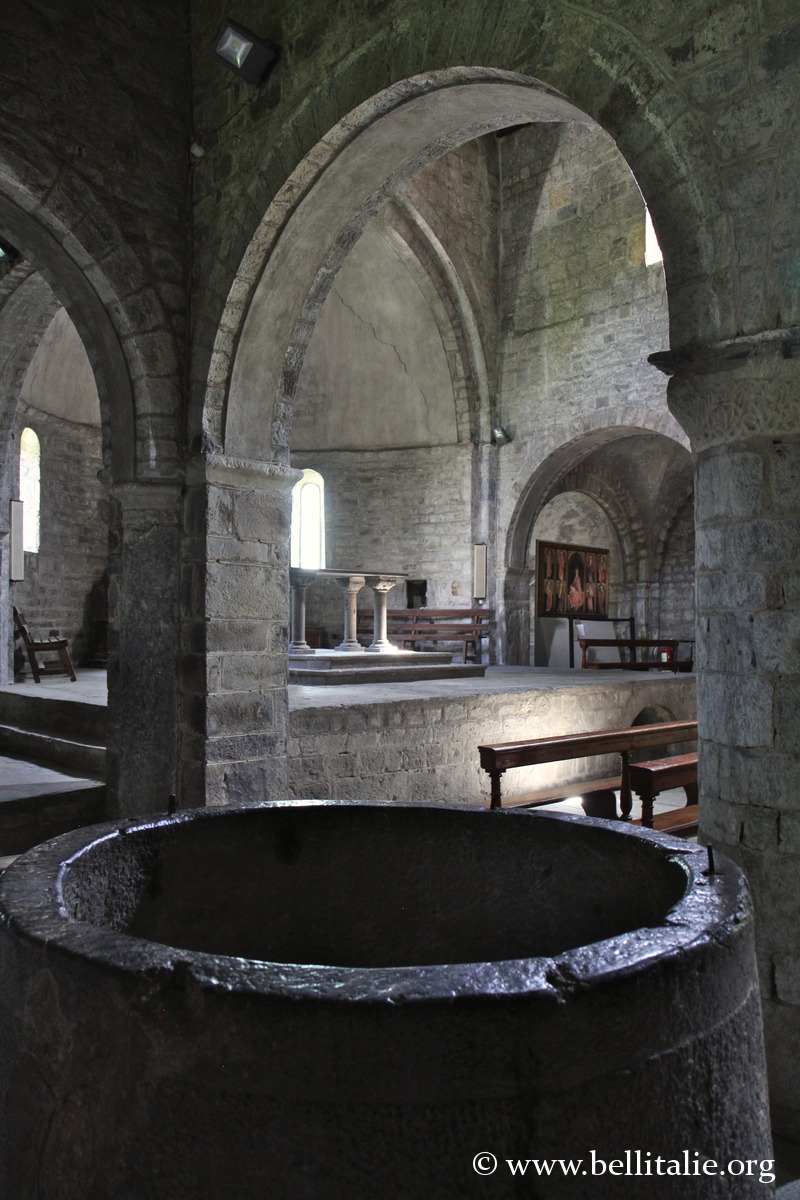
The Romanesque church of San Siro is one of the most beautiful Romanesque testimonies of the valley, like the one found near the woods of the Romanesque church of the monastery San Salvatore, the only Cluniac testimony of the valley. - One of the most beautiful parks of rock engravings is the one that groups several sites in the municipalities of Ceto, Cimbergo and Paspardo, especially the itineraries of Foppe di Nardo and of Cimbergo with the remains of its castle.
Valley of Borno
- At the foot of Mount Altissimo, Borno is a pleasant winter sports resort.
Places of the upper valley
- The church of Saint John the Baptist in Edolo preserves a superb cycle of frescoes attributed to Paolo da Cailina il Giovane.
- At Temù is the Museum of the White War on the First World War in the valley.
- At Ponte di Legno, a well-known winter and summer sports destination, one can also see the church of the Holy Trinity
- In a small valley, from the hamlet of Case di Viso are beautiful alpine hikes.
Museums of local traditions
Iron museums in Bienno and Malegno
House museum of Corteno Golgi, with the history of the village and scientific and medical culture
Ecomuseum of Ossimo, on mountain life, with work tools.
Museum of the White War in Temù
Museum of Hydroelectric Energy of Cedegolo.
Map
If you see this after your page is loaded completely, leafletJS files are missing.
Information
- Wikipedia page: en.wikipedia.org
- Tourism portals: www.youvallecamonica.it, www.turismovallecamonica.it, www.in-lombardia.it


Comments