


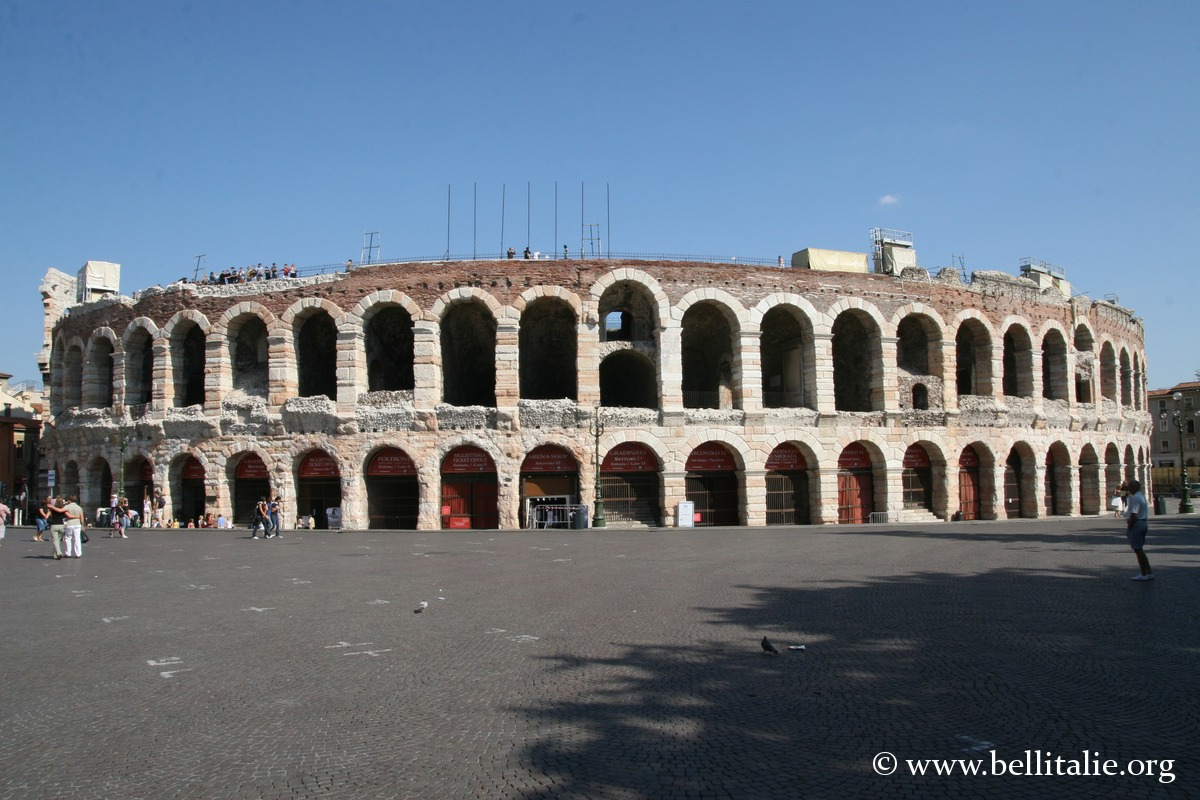
The Arena
Verona is not limited to the tragic love of Romeo and Juliet told by Shakespeare, far from it. It is certainly one of the most beautiful Italian cities, which was already an important city in antiquity.
For the rich heritage of its historic centre, the city was inscribed in 2000 on the Unesco list. Indeed, one discovers there traces of all eras: Roman, medieval, Renaissance, Venetian and Habsburg. Today it is the second largest city in Veneto, after Venice, with around 260,000 inhabitants (in 2021), which lends itself very well to a weekend visit. Furthermore, Verona is also a short distance from Venice, as well as from Vicenza and Lake Garda.
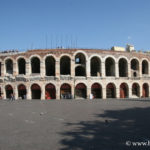
The Romans developed it substantially. They bequeathed to us its beautiful arena and other edifices such as a theatre. The Middle Ages and the Renaissance were no less lavish and prosperous eras, as attested by numerous monuments such as the superb churches like San Zeno Maggiore, the cathedral complex and Sant’Anastasia.
After an obscure period of civil strife, the Scaligeri, a dynasty of merchants who had placed themselves at the head of the merchants’ guild, imposed their political power and dominated Verona from 1267 to 1387. Subsequently the city was long controlled by Venice (read history of Verona), then by the Habsburgs.
Read also:
Visiting Verona
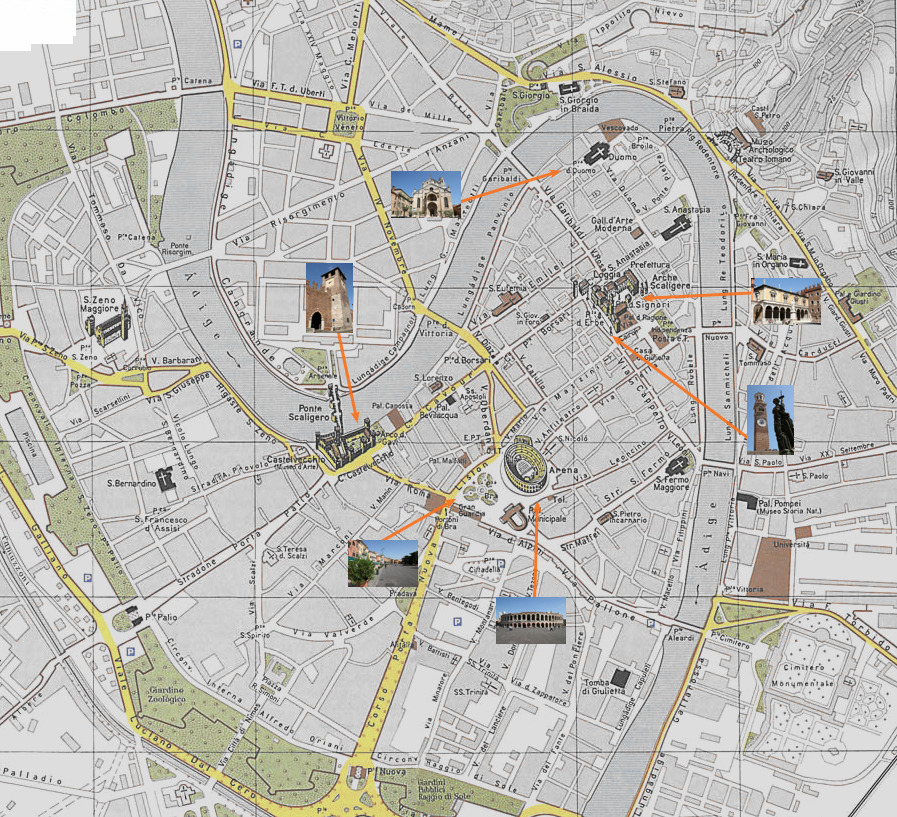
Verona is easily visited on foot, its historic centre being relatively compact and the main sites grouped on either side of the Adige. One day allows you to discover a good part of it, but two days are a recommended minimum to visit the monuments without rushing and to enjoy the atmosphere of the city more.
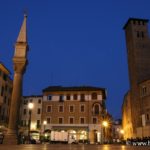
The route naturally passes through the Arena and the Piazza Bra, then the Piazza delle Erbe and the Piazza dei Signori, at the heart of the old centre. Further west, the Castelvecchio and its bridge are among the major stops, while the Ponte Pietra leads towards the Roman theatre and the heights overlooking the city.
The main churches, such as San Zeno, Santa Anastasia or the cathedral complex, are a little more scattered but remain accessible on foot.
Please add some markers to your posts before using this shortcode.
Weather in Verona
Information
- Website of the municipality of Verona on the internet
- Wikipedia article on Verona
- Page on veneto.eu
Maps
If you see this after your page is loaded completely, leafletJS files are missing.


Comments