


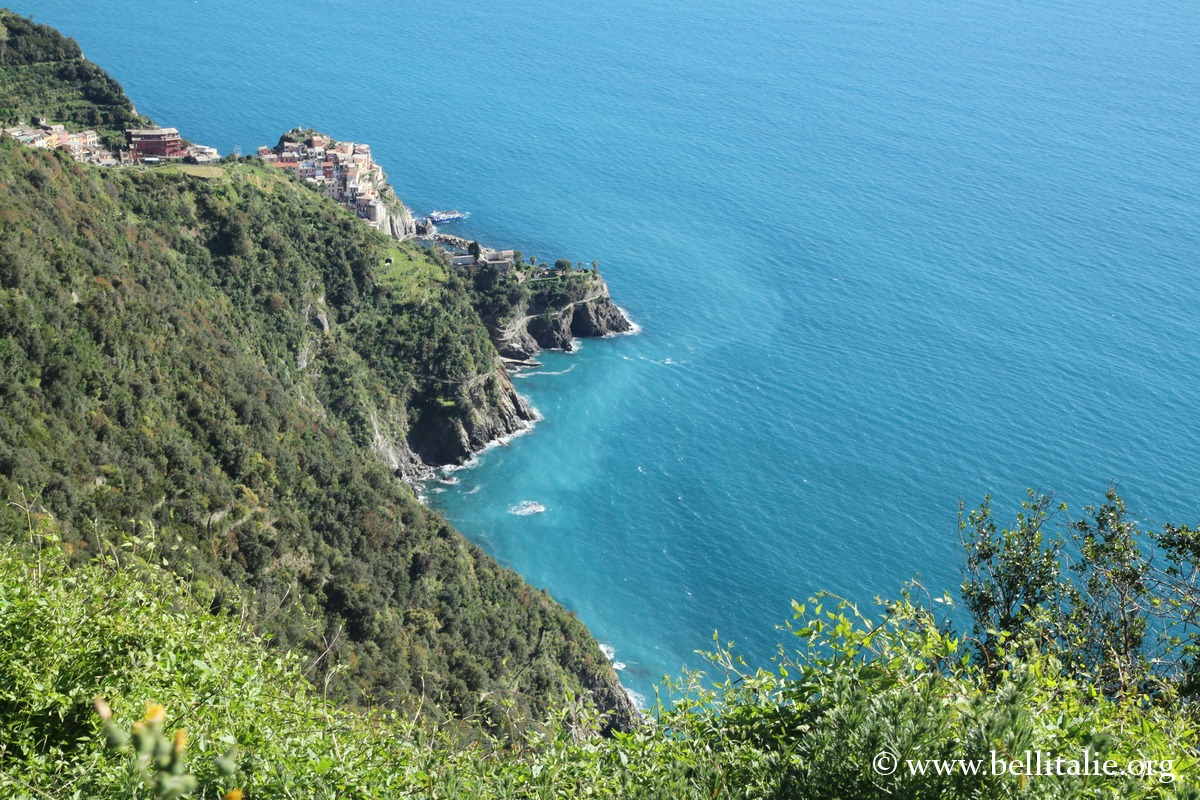
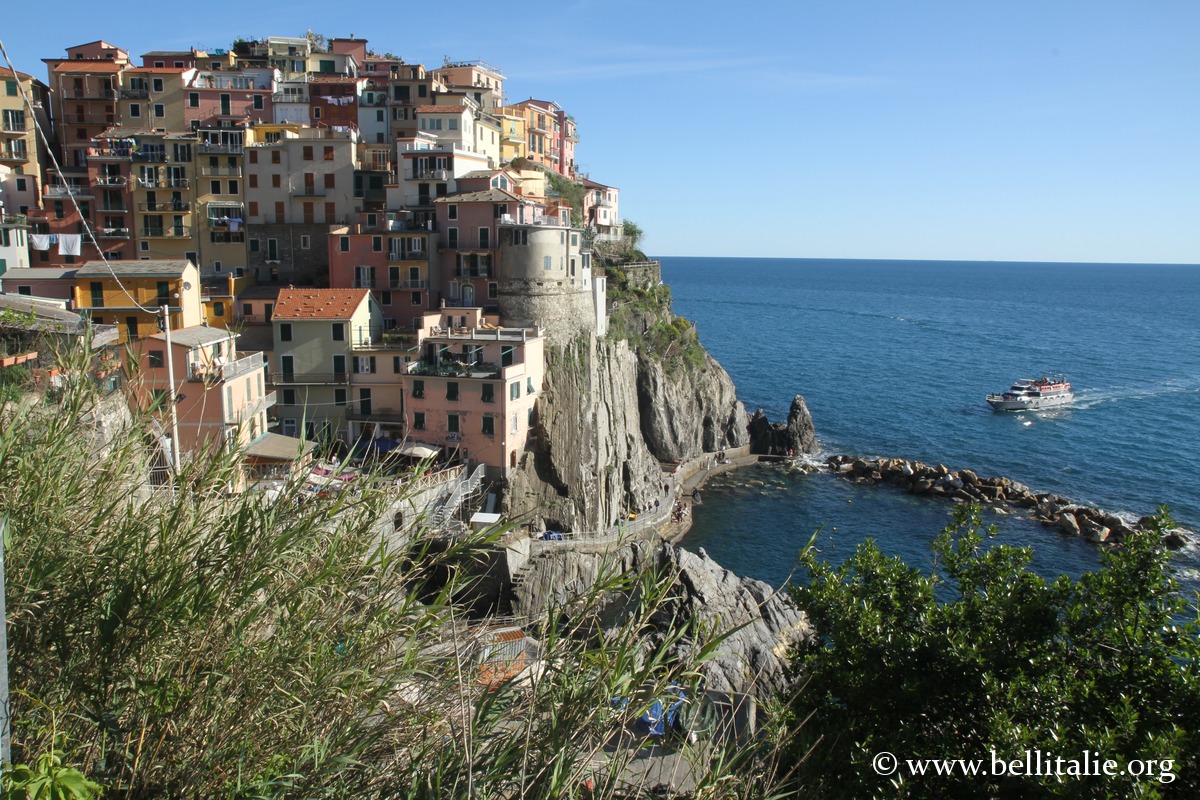
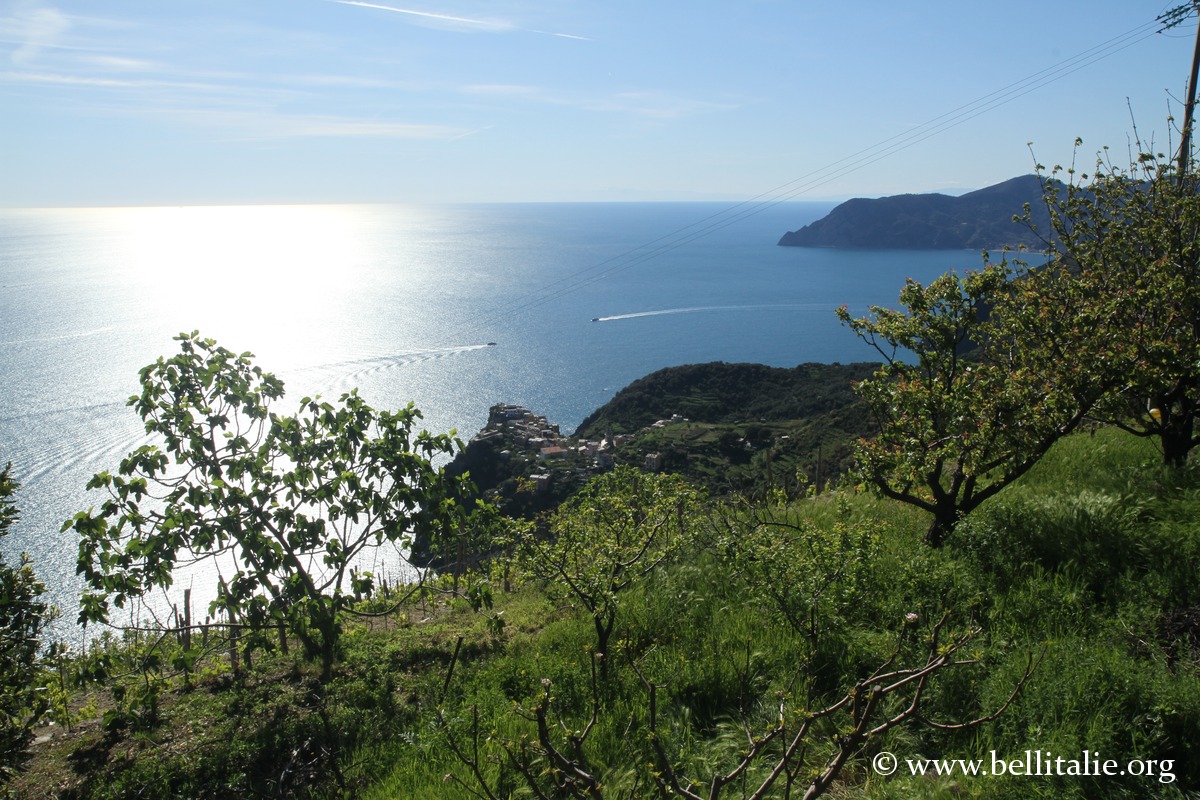
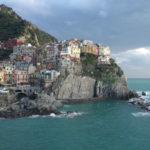
Manarola stands with its colourful houses on a cliff overlooking the sea and the small harbour, in a landscape of olive trees and vines.
The name of the village may derive from Manium Arula (temple of the Manes), or from magna Roea, after the large wheel of a water mill. In any case, an old mill can be found in the lower part of the village.
Before the 13th century, it was the site of Volastra that was inhabited, an ancient Roman colony. Under the Genoese republic, it was one of the main centres of wine and oil production on the coast, a period during which the many cultivation terraces were gradually built. There were many bridges before, but the stream was covered over during the 19th and 20th centuries.
Visiting Manarola
The village is made up of typical tower-houses. To the west a path leads to a panoramic terrace, near the cemetery with a view of the coast.
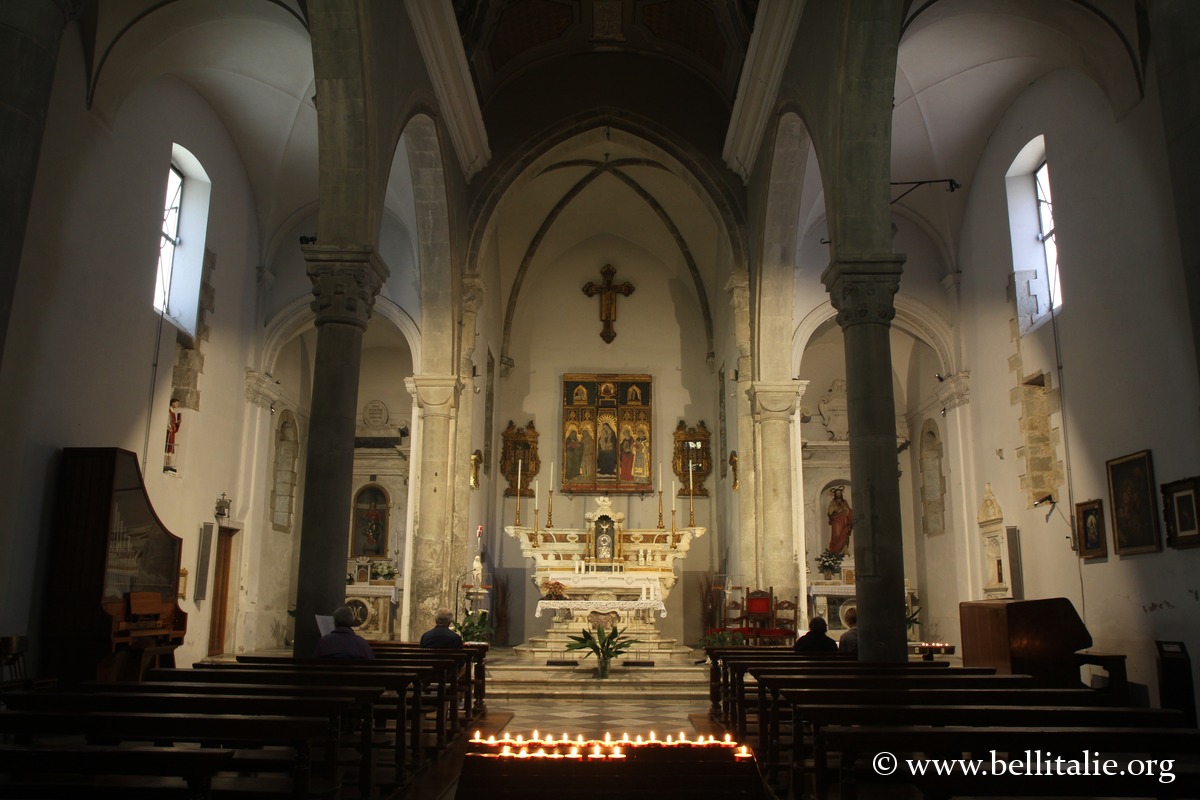
In the upper town, there is another panoramic terrace. The church of the Nativity or of San Lorenzo, is Gothic, dating from the 14th century, with a rose window and an interior preserving Baroque works such as the 14th-century triptych. The Bianco bell tower is an old watchtower. The lunette on the façade depicts the martyrdom of San Lorenzo.
On the parish square stands the oratory of SS. Annunziata or Azzurri and, on the corner with the main street, the former Hospital San Rocco.
The castle of Manarola has now disappeared, apart from a 13th-century bastion, the rest having been incorporated into the retaining walls of the houses overlooking the cliff.
The small harbour of Manarola is a beautiful spot, with deep waters.
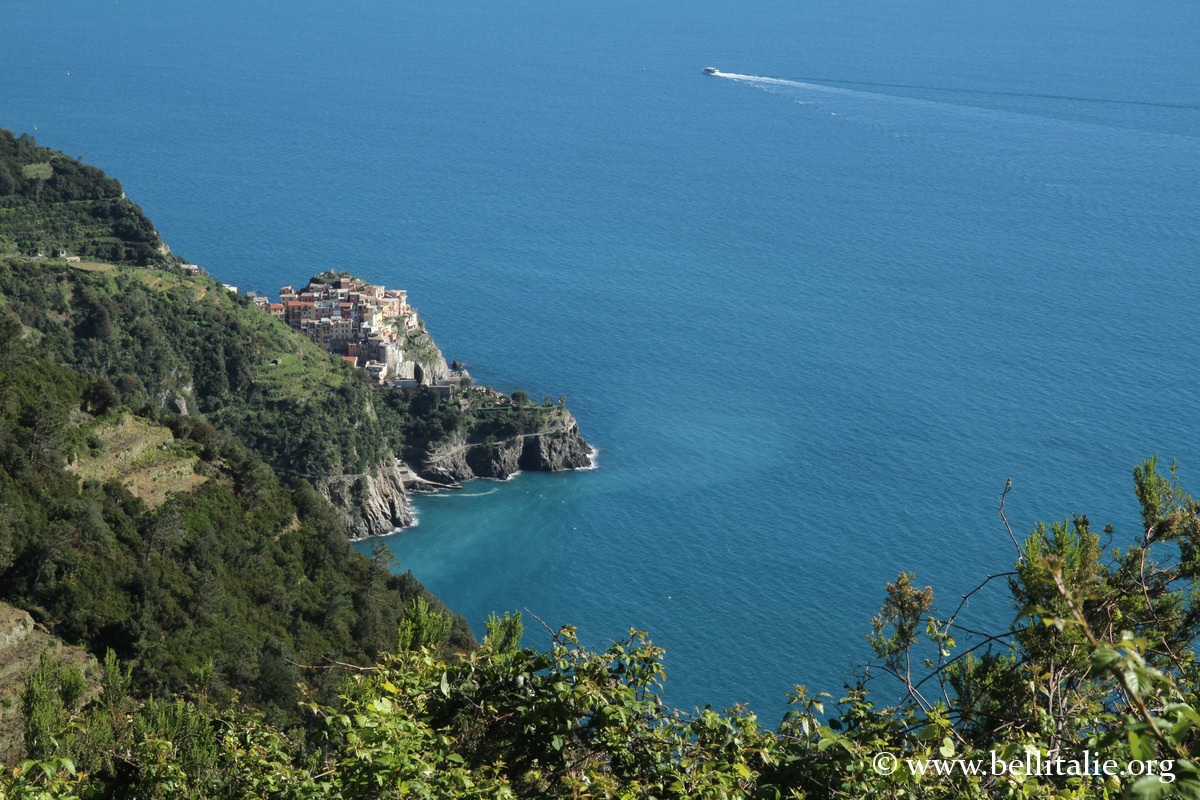
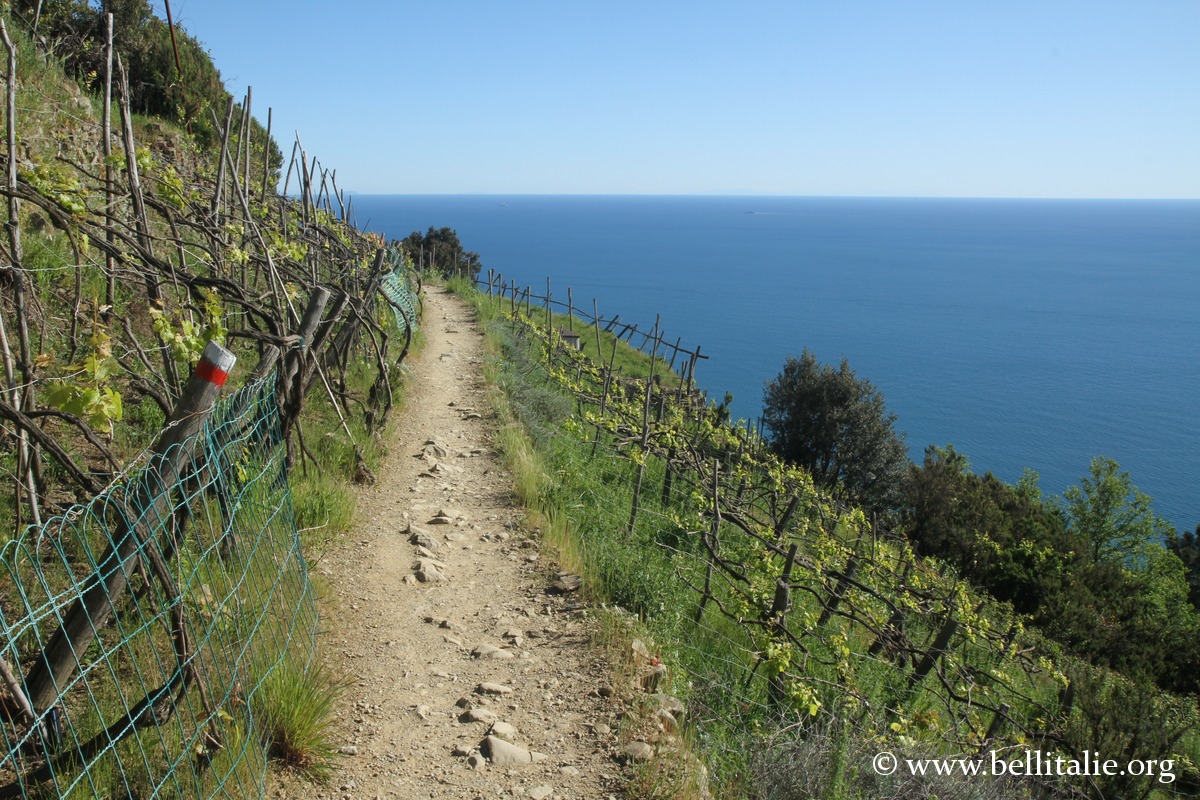
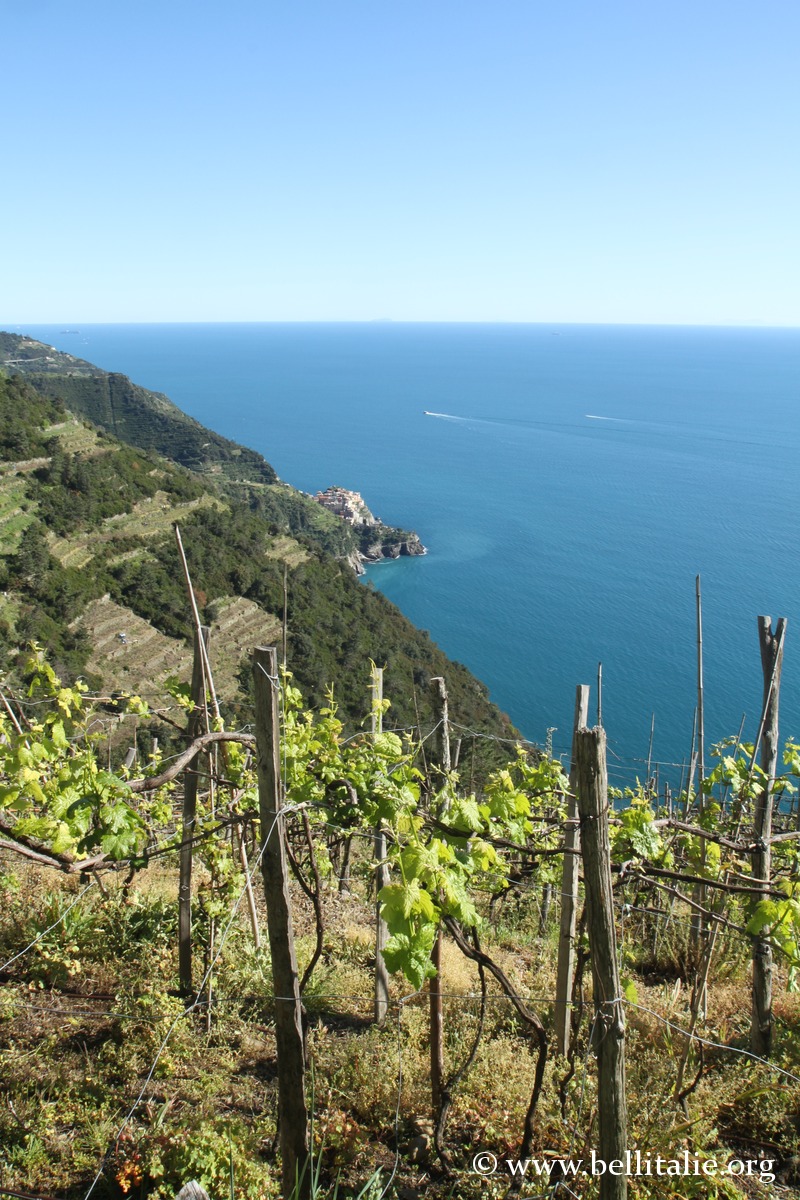
The path linking Manarola – Volastra – Corniglia is an opportunity for a very beautiful excursion, crossing the lovely vineyards cultivated on terraces with a view of the sea. For centuries the winegrowers have produced the well-known sciacchetrà, a typical local sweet wine.
Volastra
On the heights less than 2 km inland, Volastra was the original Roman colony, perhaps Etruscan before that, whose name would derive from Vicus Oleaster (village of oil). Today there is one of the Cinque Terre sanctuaries dedicated to Mary, which can be reached by a picturesque path from Manarola, or by road. It dates back to the 10th century, with its Romanesque style and Gothic additions.
Weather in Manarola
Map
If you see this after your page is loaded completely, leafletJS files are missing.
Information
- Wikipedia page: en.wikipedia.org
- Tourist portals: www.lecinqueterre.org
- What to see in Liguria
- Genoa
- Cinque Terre
- Sestri Levante
- Lerici, Tellaro and Montemarcello
- Portovenere
- Albenga
- Noli
- Rapallo
- Ventimiglia and Bordighera
- Dolceacqua and Apricale
- From Savona to Arenzano
- Imperia and Cervo
- Gulf of Paradise – From Bogliasco to Camogli
- Sanremo, Bussana and Taggia
- Seborga, Pigna and Rocchetta Nervina
- Levanto
- From Moneglia to Bonassola
- Santa Margherita Ligure
- Chiavari and Lavagna
- Millesimo, Campo Ligure and Beigua
- Brugnato, Varese Ligure and the Antola


Comments