


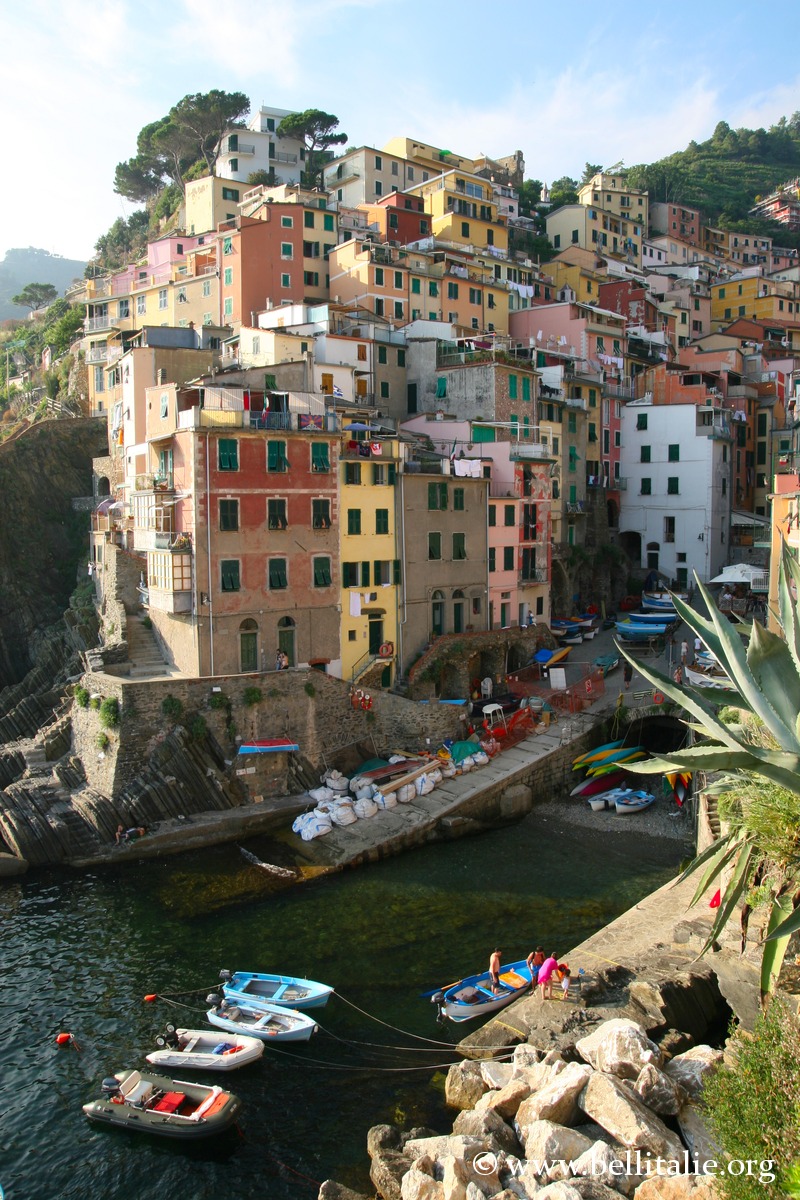
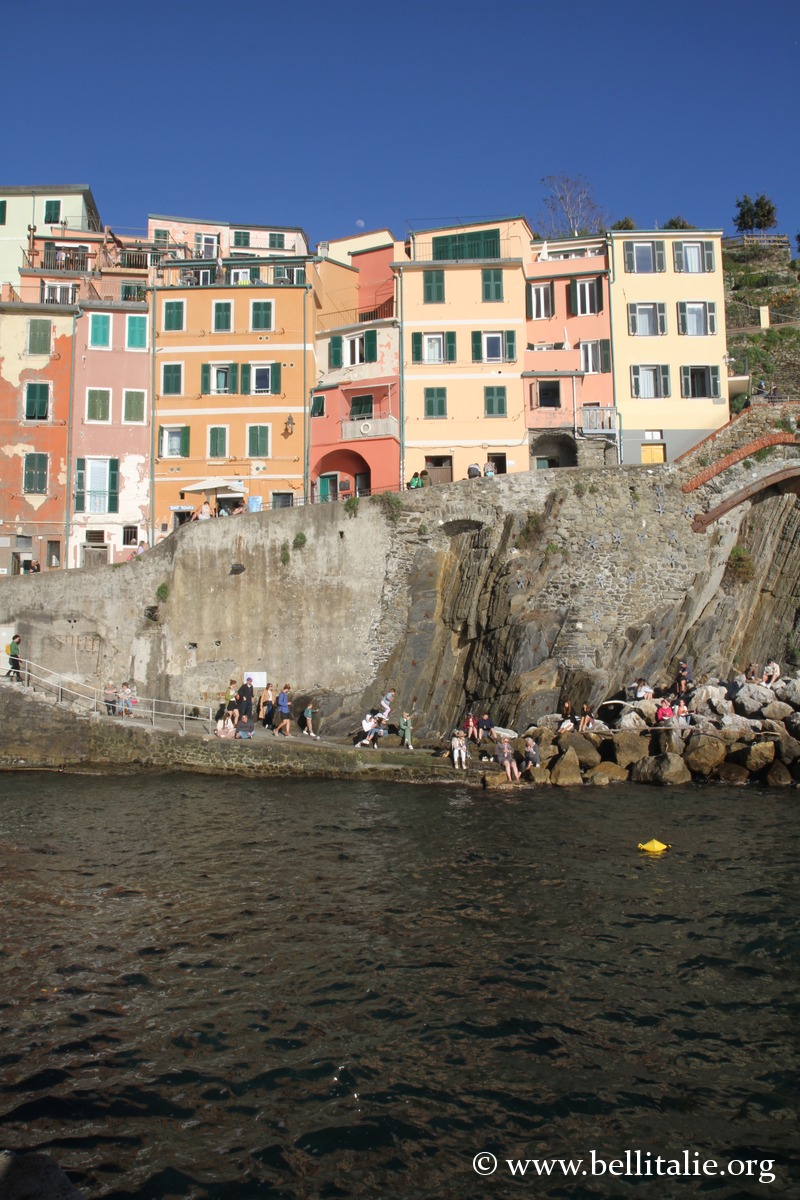
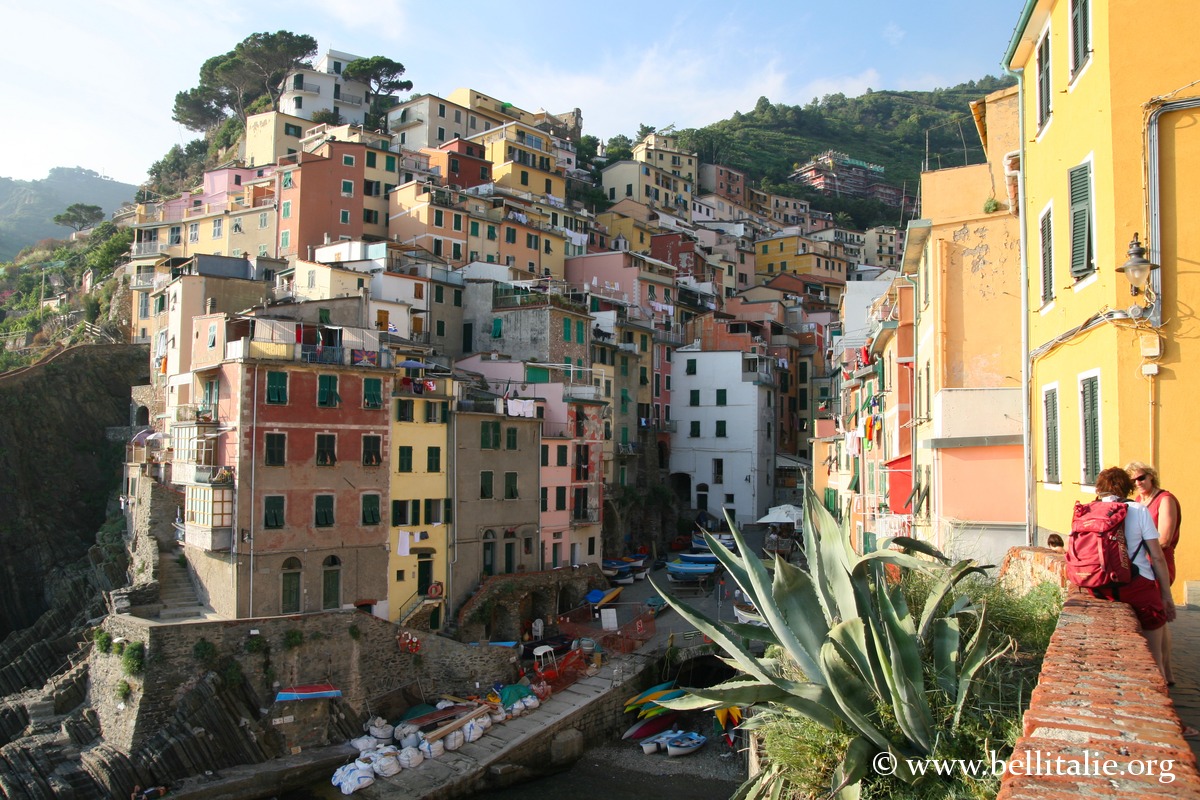
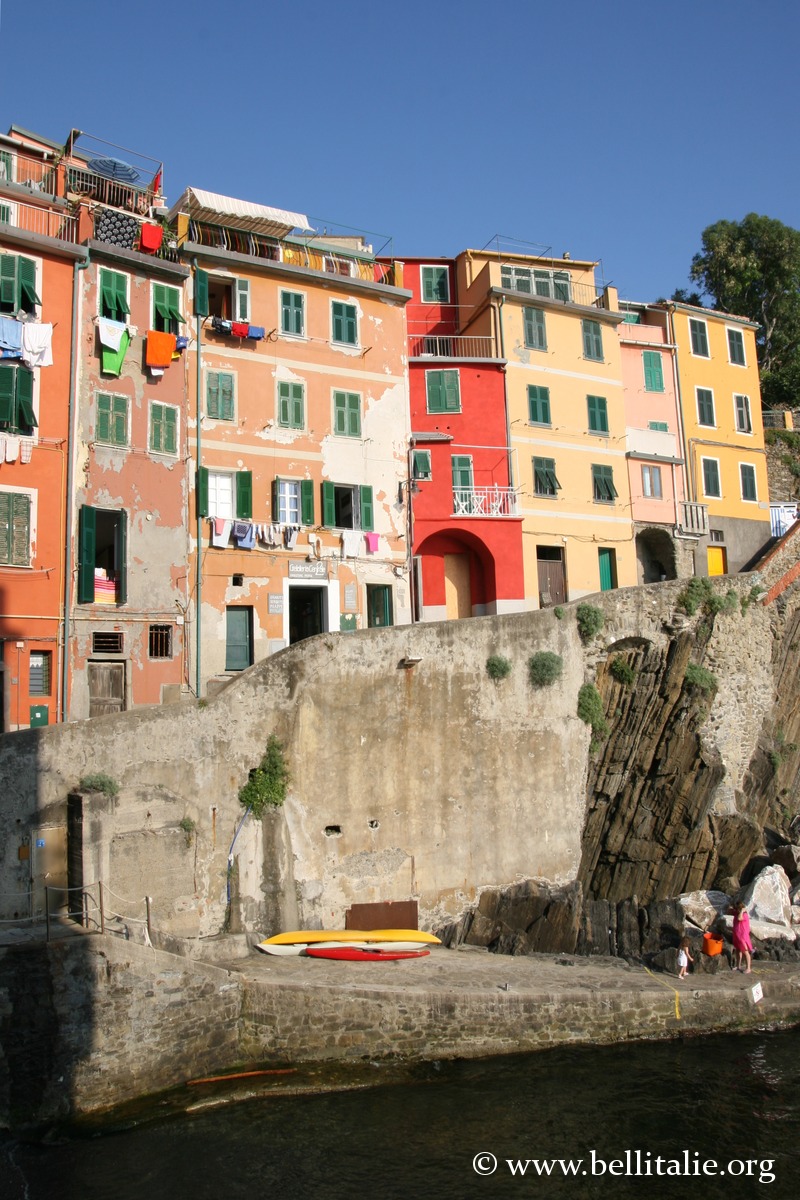
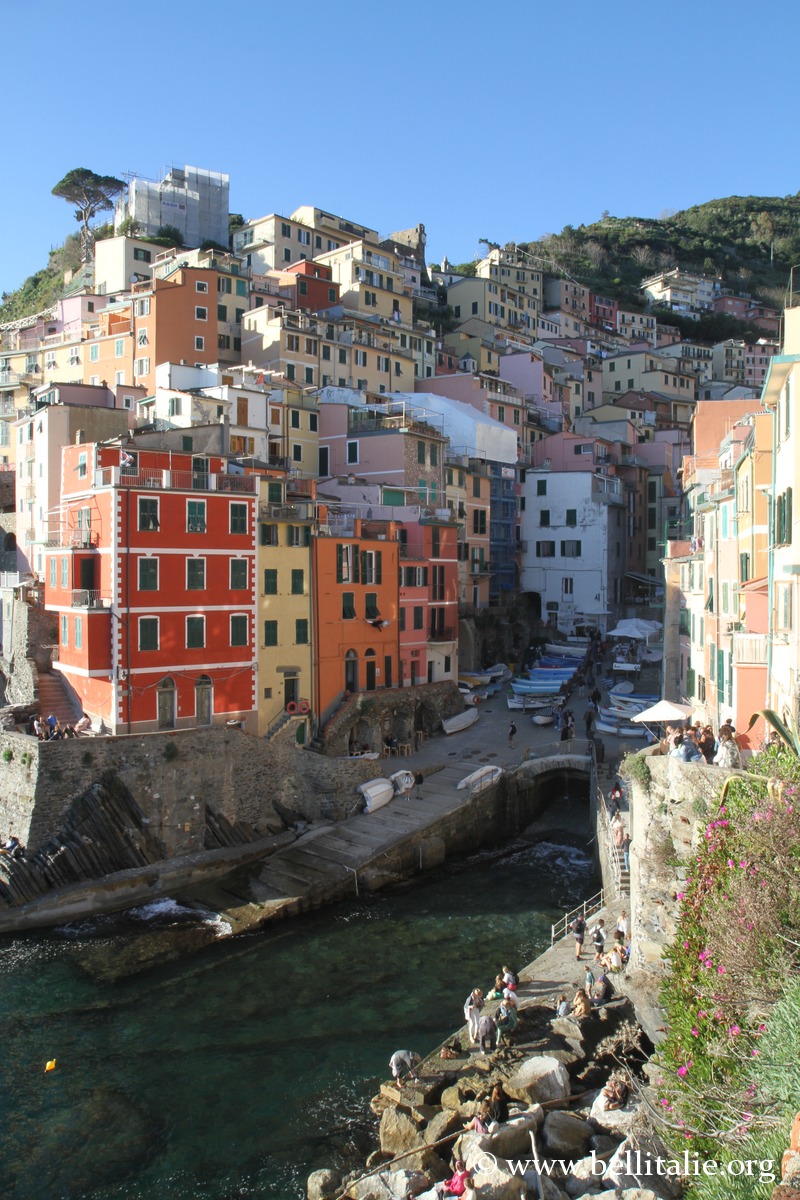
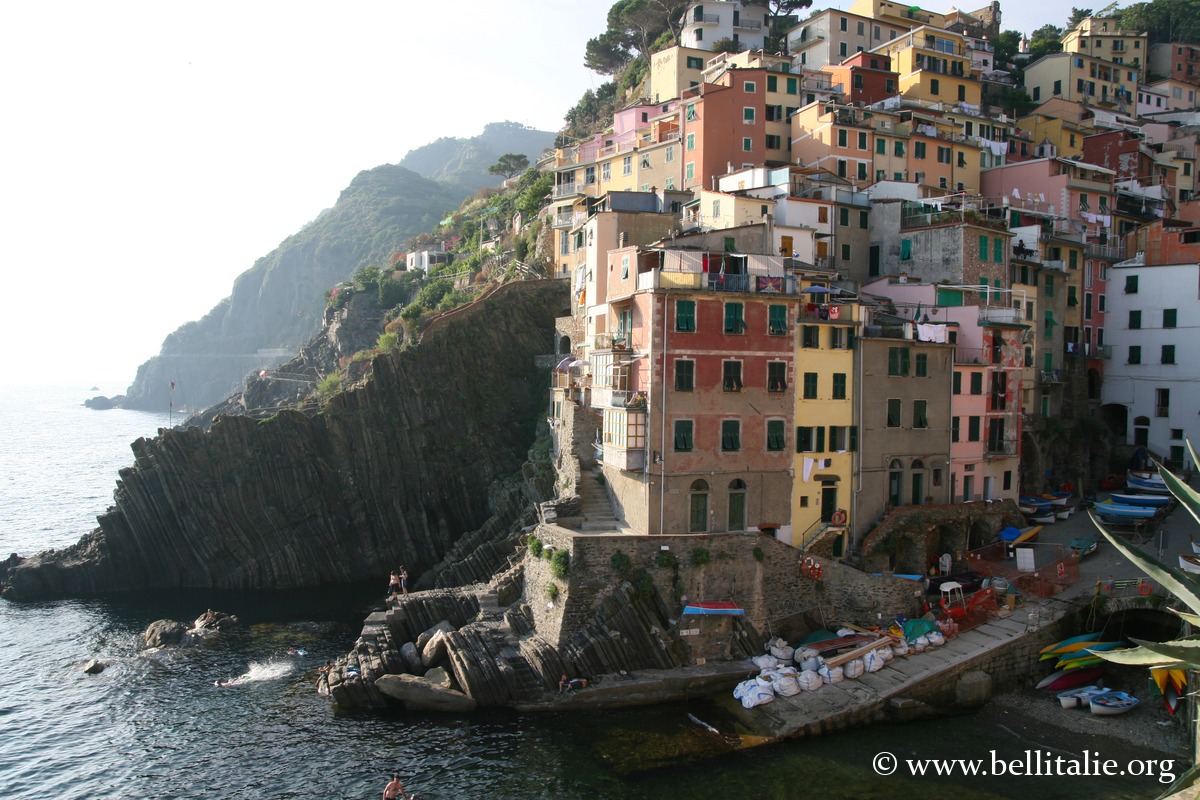
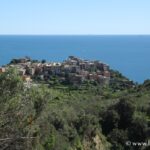
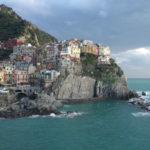
The village of Riomaggiore is the easternmost of the 5 localities of the Cinque Terre, and typical of this region with its colorful 3- or 4-story houses, built one on top of another from the edge of the cliffs that frame its small harbor.
The inland area had been inhabited since antiquity, and the coast developed toward the 11th century under the expansion of the Republic of Genoa. The current historic center dates back to the 13th century, characterized by its medieval alleys and the remains of the old castle.
Nearly 1,400 inhabitants live here (in 2021), with an economy now turned essentially toward tourism.
The train station is located in the small valley north of the old town where the neighborhood developed in the 19th century. It connects with the historic center through a long pedestrian tunnel.
As for all the Cinque Terre, it is not advisable to go to Riomaggiore by car, although out of season it is less difficult to park here than in the other villages.
The best is to come by train, for example from La Spezia to the south, or from the other villages or Levanto to the north. One can also reach Riomaggiore by sea.
What to see in Riomaggiore
Village and harbor
The historic town is built around two valleys, dating back to the 13th century for its oldest part along the Rio Maggiore, and to the 19th century for the one along the Rio Finale.
The remains of the walls of the 13th-century castle, the Castellazzo di Cerricò, rebuilt in the early 16th century by the Genoese, stand at the top of a hill, next to a small oratory. It is reached by the path starting near the church of San Giovanni Battista. One enjoys a beautiful view here.
The interior was turned into a cemetery in the Napoleonic era, then converted in the 20th century into a cultural center with a garden. Just outside the castle, the chapel of Saints Rocco and Sebastiano is a small oratory.
The church of San Giovanni Battista (Saint John the Baptist in English) is located in the upper part of Riomaggiore. It is the main church of the village, dating from the 14th century, largely rebuilt in the 19th century. It preserves some beautiful works, with a rose window, a wooden crucifix by Maragliano, a triptych attributed to the master Benedetto Antelami, 16th-century reliefs, etc.
The Riomaggiore town hall, in a panoramic position, has a wall decorated with a large fresco by the Argentine Silvio Benedetto from the late 1990s.
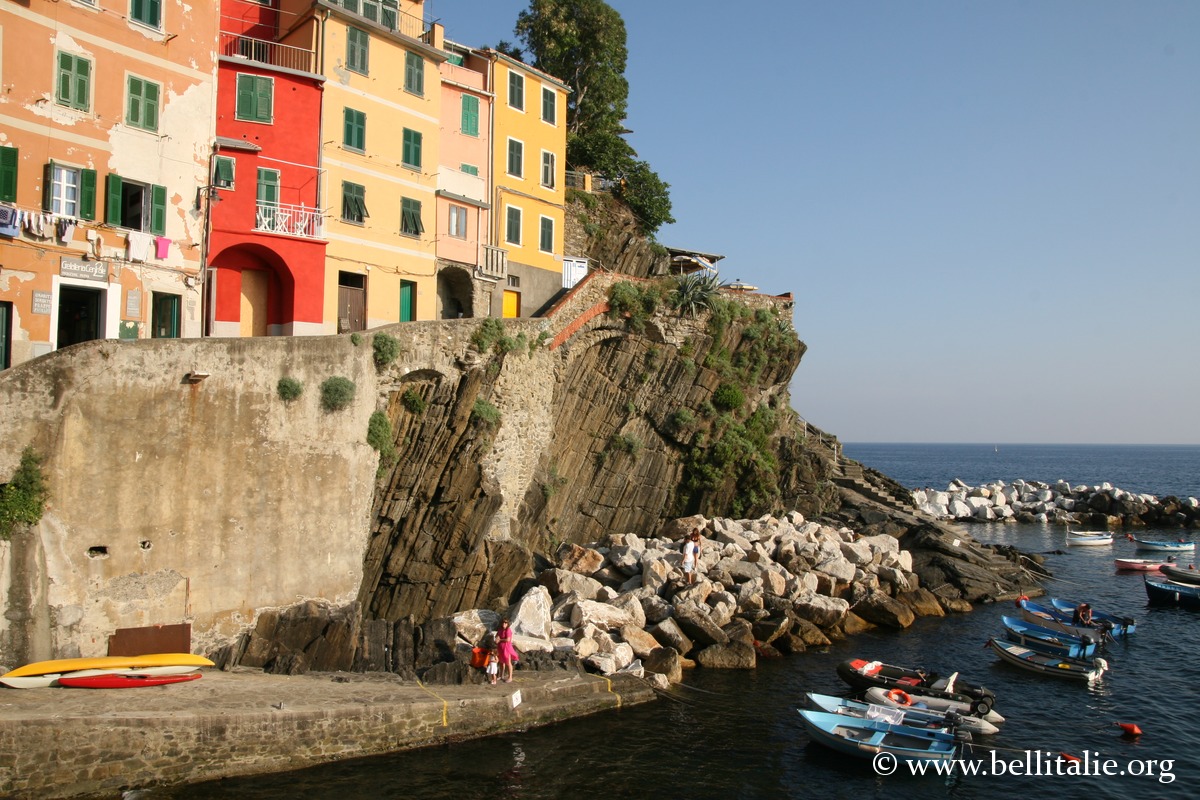
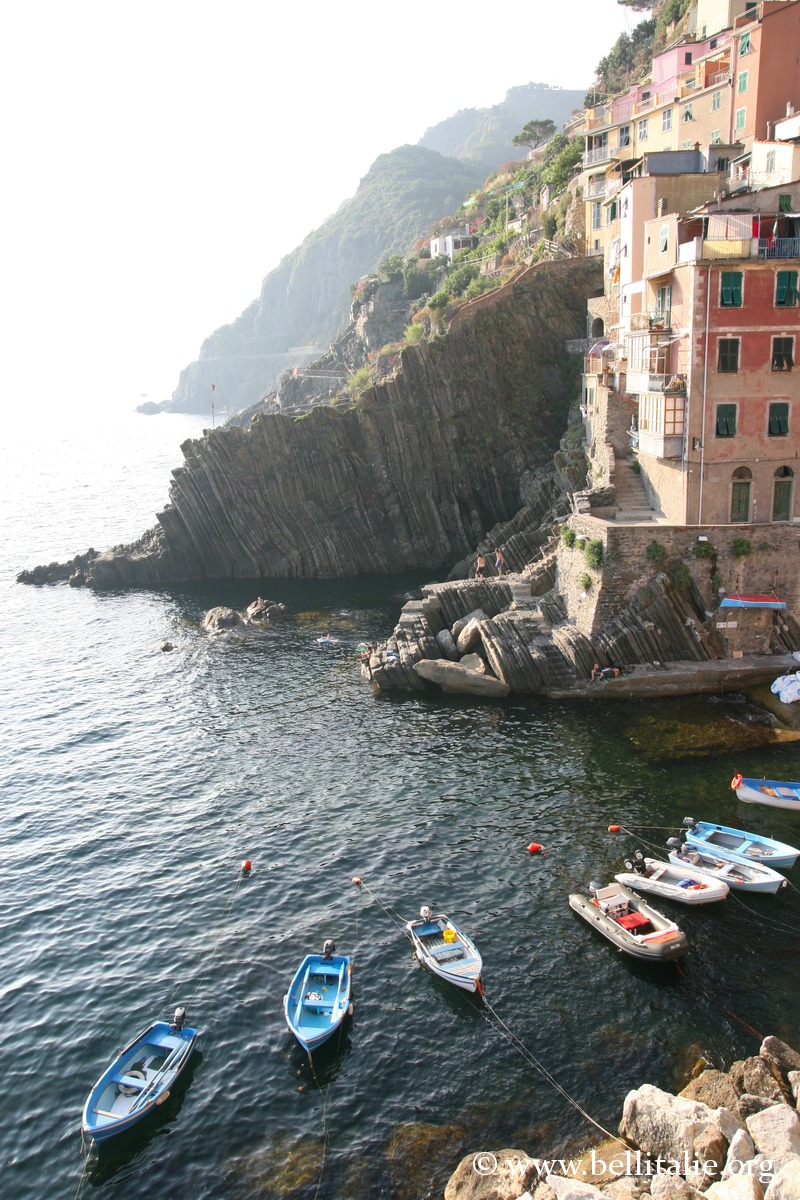
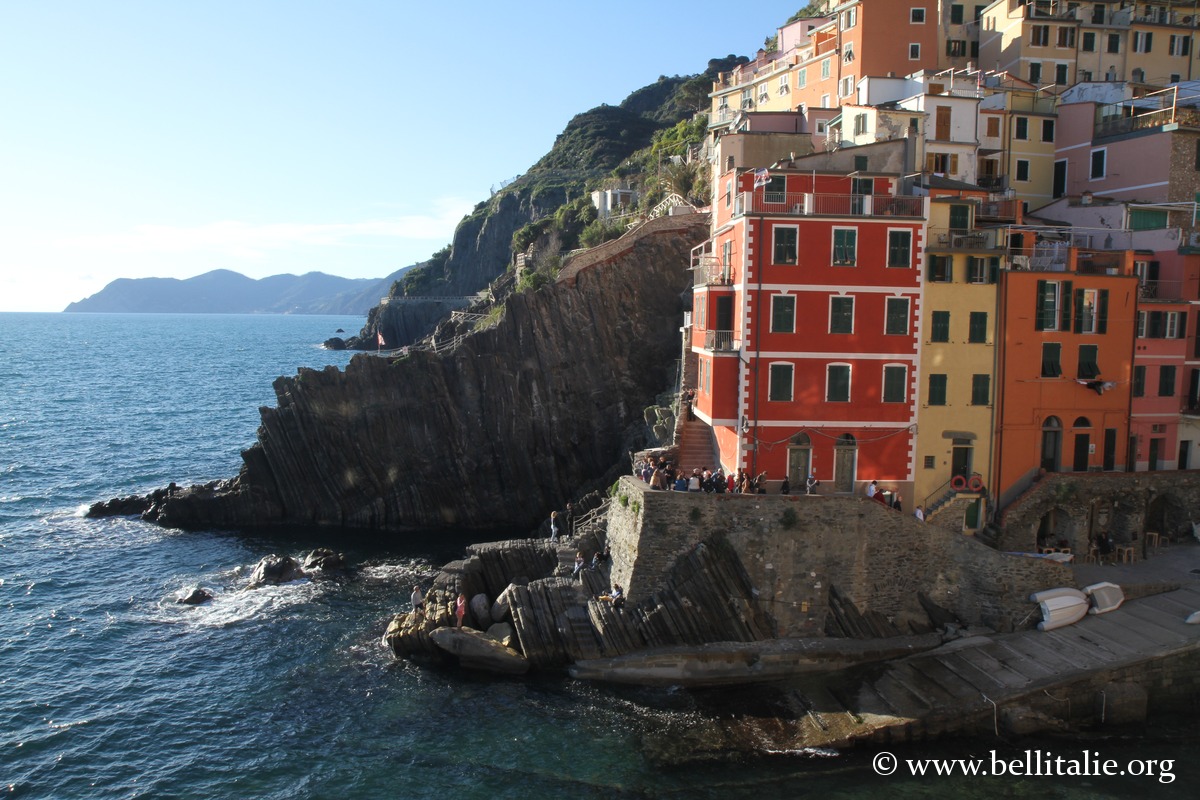
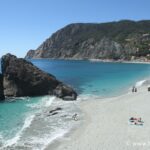
The harbor protected by a natural cove is the most beautiful spot in the village, with its small moored boats. Two descents lead to the sea and to the beach of pebbles and its clear waters, protected by a small cove, toward the left to the east of the harbor. This path offers a beautiful view of the town. The beach is rocky and not secured.
A path beyond the beach runs along the coast to the Guardiola Tower with its viewpoint, named after an old watchtower, at the Punta Montenero.
Further along the coast is the small Pescecane cave, a small but suggestive crevice, accessible only by sea. The Canneto beach, beyond the Punta Vagno and Punta Castagna, has a solitary beach accessible by sea.
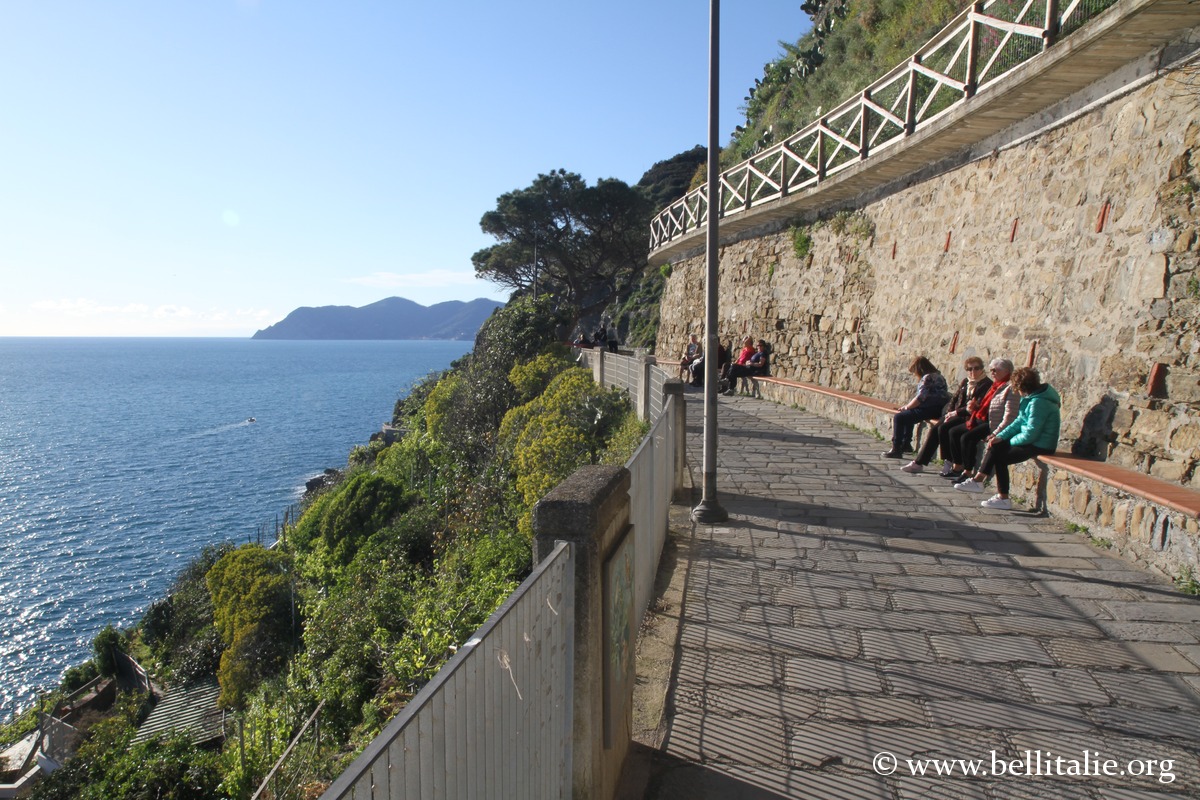
The Via dell’Amore (the Path of Love in English) is the pedestrian path, flat and quiet, connecting Riomaggiore to Manarola, running along and through the cliffs. It was dug between 1926 and 1928. However, it has been closed since 2012 due to a collapse. Reopening is planned for July 2024. To reach Manarola, there is an alternative with the via Beccara, much more strenuous, which climbs to 250 meters in altitude before descending again.
The 16th-century church of Santa Maria Assunta, or oratory, is at the start of the descent toward the Riomaggiore beach, preserving a wooden virgin recalling the sufferings of the inhabitants during the Saracen raids.
Surroundings
The sanctuary of Our Lady of Montenero is located on a balcony at more than 320 meters in altitude, from which the view is superb, accessible via stairs from the center of the village.
The Via Beccara is an old mule path leading to Manarola, with a steep elevation gain but pretty views, reaching 200 meters in altitude.
Other discoveries
Among the other things to discover in Riomaggiore, there is of course, as in the whole region, the focaccia (filled white pizza) typical of Liguria and the local DOC wine, or boat excursions along the coast and the other Cinque Terre.
Gallery
Weather in Riomaggiore
Map
If you see this after your page is loaded completely, leafletJS files are missing.
Information
- Wikipedia page: en.wikipedia.org
- Tourism portals: www.cinqueterre.it, www.lorenzotaccioli.it
- What to see in Liguria
- Genoa
- Cinque Terre
- Sestri Levante
- Lerici, Tellaro and Montemarcello
- Portovenere
- Albenga
- Noli
- Rapallo
- Ventimiglia and Bordighera
- Other places of the Riviera di Levante
- Dolceacqua and Apricale
- From Savona to Arenzano
- Imperia and Cervo
- Finale Ligure and Finalborgo
- Gulf of Paradise – From Bogliasco to Camogli
- Sanremo, Bussana and Taggia
- Seborga, Pigna and Rocchetta Nervina
- Levanto
- From Moneglia to Bonassola
- Santa Margherita Ligure
- Triora, Argentina Valley and Ligurian Alps


Comments