


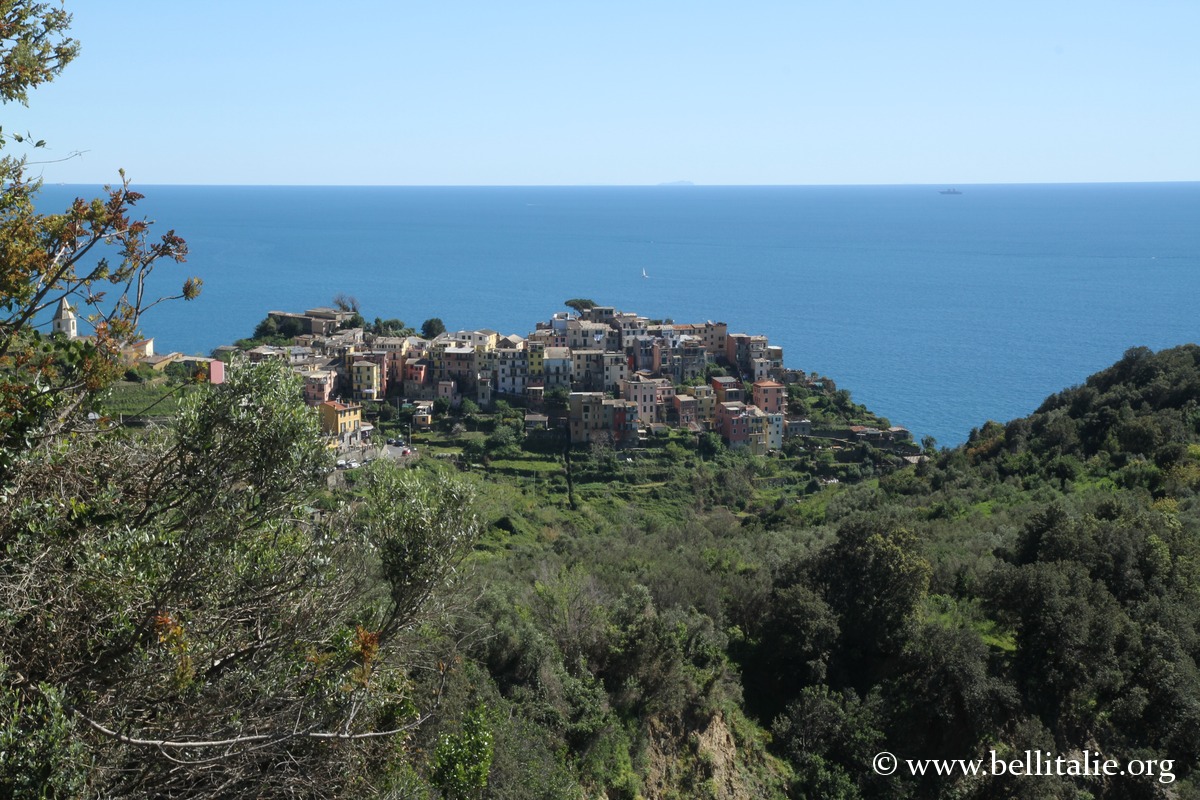
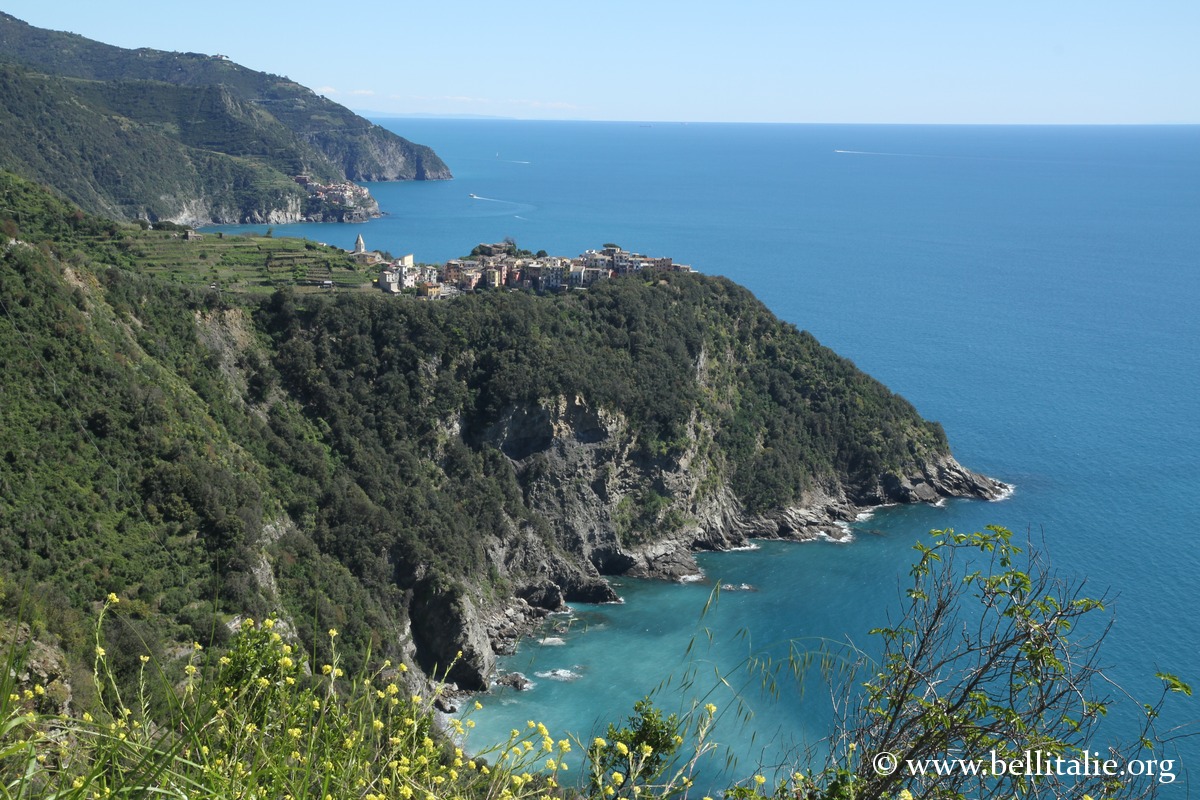
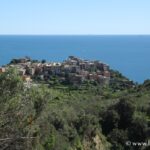
Corniglia, which is the smallest and the central village of the Cinque Terre, distinguished by its lack of access to the sea, perched on an imposing cliff nearly 100 metres high, and reached by a long staircase. Beyond it stretch the terraced slopes planted with vines and olive trees. Having no port, agriculture was the main local activity.
There was a Roman settlement here, probably named after the Gens Cornelia, the family that dominated it, and which produced a white wine, amphorae of which have even been found in Pompeii. In the 14th century, Boccaccio also praised the Vernaccia di Corniglia in the Decameron.
The staircase, called the Lardarina, links the village to the station with its 377 steps. It can also be reached by following the road or by minibus. This inconvenient access explains why Corniglia is the least visited village of the Cinque Terre.
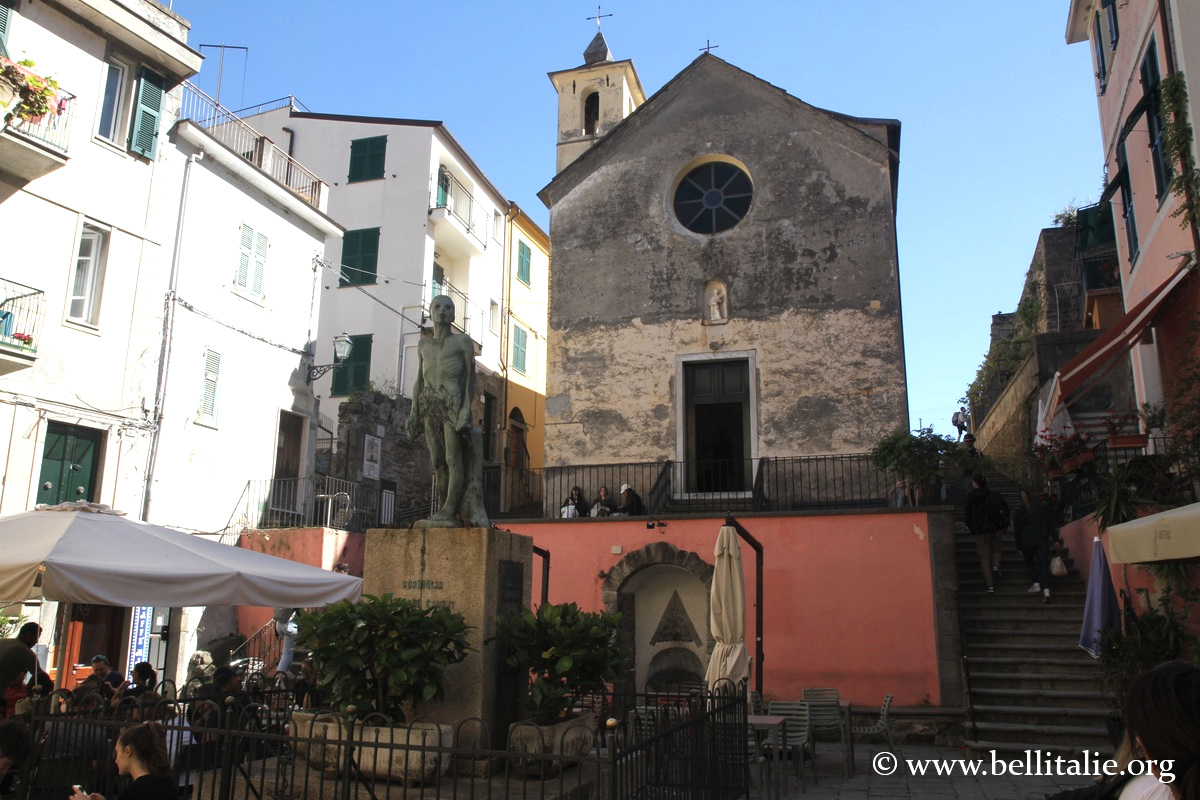
The village consists of narrow lanes, with lovely viewpoints, and you can visit the interesting Gothic church of San Pietro from the 14th century and the 18th-century Largo Taragio square with the Oratory of Santa Caterina and an esplanade. The Santa Maria panoramic terrace is located on another pretty square. Below it there is a long and narrow pebble beach.
Visiting Corniglia
The village of Corniglia is the least crowded by tourists of the Cinque Terre, probably because of its distance from the station. The centre has its pretty typical houses. Via Freschi links the centre with the Largo Taragio and the 18th-century Oratory of Saint Catherine.
The street then leads to the Santa Maria terrace offering a very beautiful panorama of the Cinque Terre.
The Church of Saint Peter (the village’s patron saint) on the heights of the village has Gothic elements, including a beautiful marble rose window.
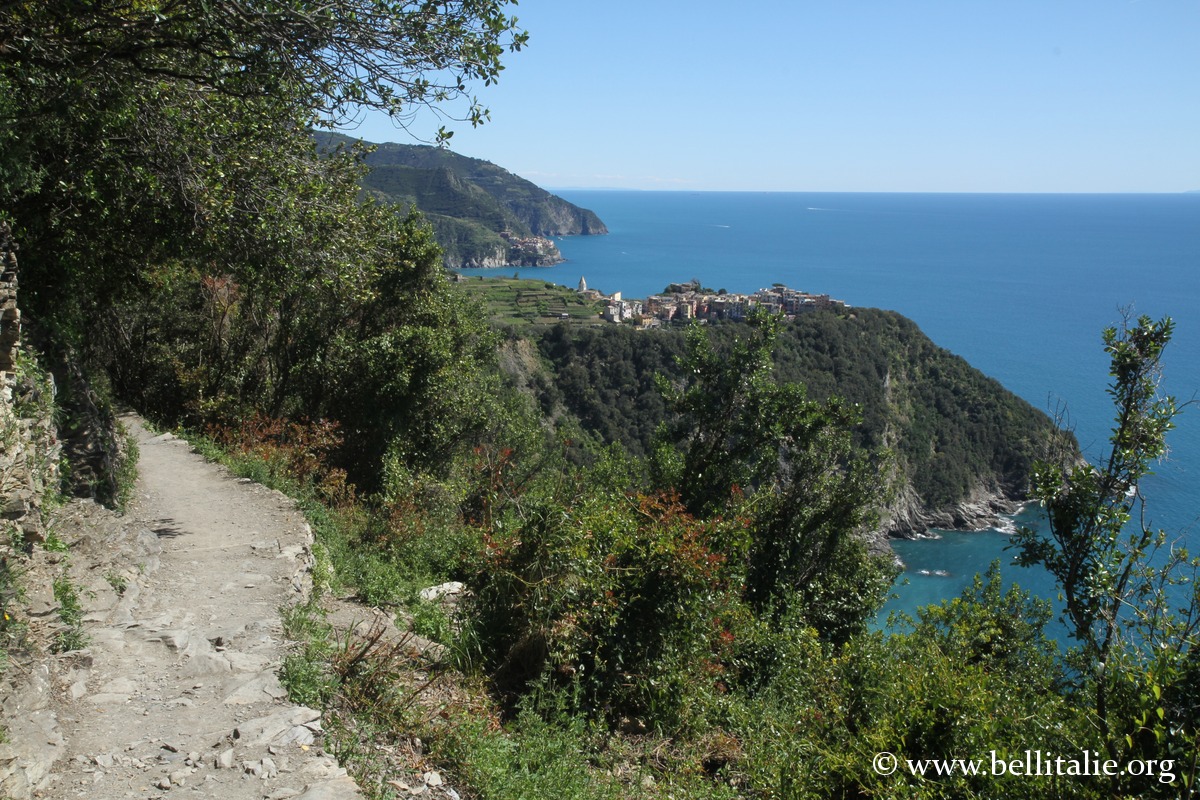
The Azzuro trail coming from Vernazza has very beautiful views over the coast. It is included in the park’s paid trails (7.50 euros for the whole park or with the Cinque Terre Card). On the other side, there is the portion of the Azzuro trail towards Manarola (closed since 2023 due to landslides, should reopen during 2024, replaced by another much longer path climbing inland via Volastra).
Other beautiful paths roam the hills, passing through Volastra for example on the heights of Manarola, crossing vineyards, woods and crops.
Among the beaches in the surroundings of Corniglia, there is that of Guvano 1 km to the west, whose access is currently very difficult.
Near the station, Spiaggione is a long pebble beach, but very narrow and sometimes inaccessible at “high tide”.
Weather in Corniglia
Map
If you see this after your page is loaded completely, leafletJS files are missing.
Information
- Wikipedia page: en.wikipedia.org
- Tourist portals: www.lecinqueterre.org
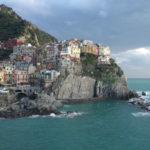
- What to see in Liguria
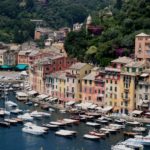
- Genoa
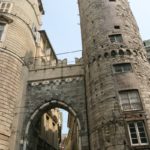
- Cinque Terre
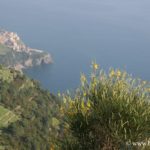
- Sestri Levante
- Lerici, Tellaro and Montemarcello
- Portovenere
- Albenga
- Noli
- Rapallo
- Ventimiglia and Bordighera
- Other places of the Riviera di Levante
- Dolceacqua and Apricale
- From Savona to Arenzano
- Imperia and Cervo
- Finale Ligure and Finalborgo
- Gulf of Paradise – From Bogliasco to Camogli
- Sanremo, Bussana and Taggia
- Seborga, Pigna and Rocchetta Nervina
- Levanto
- From Moneglia to Bonassola
- Santa Margherita Ligure
- Triora, Argentina Valley and Ligurian Alps


Comments