


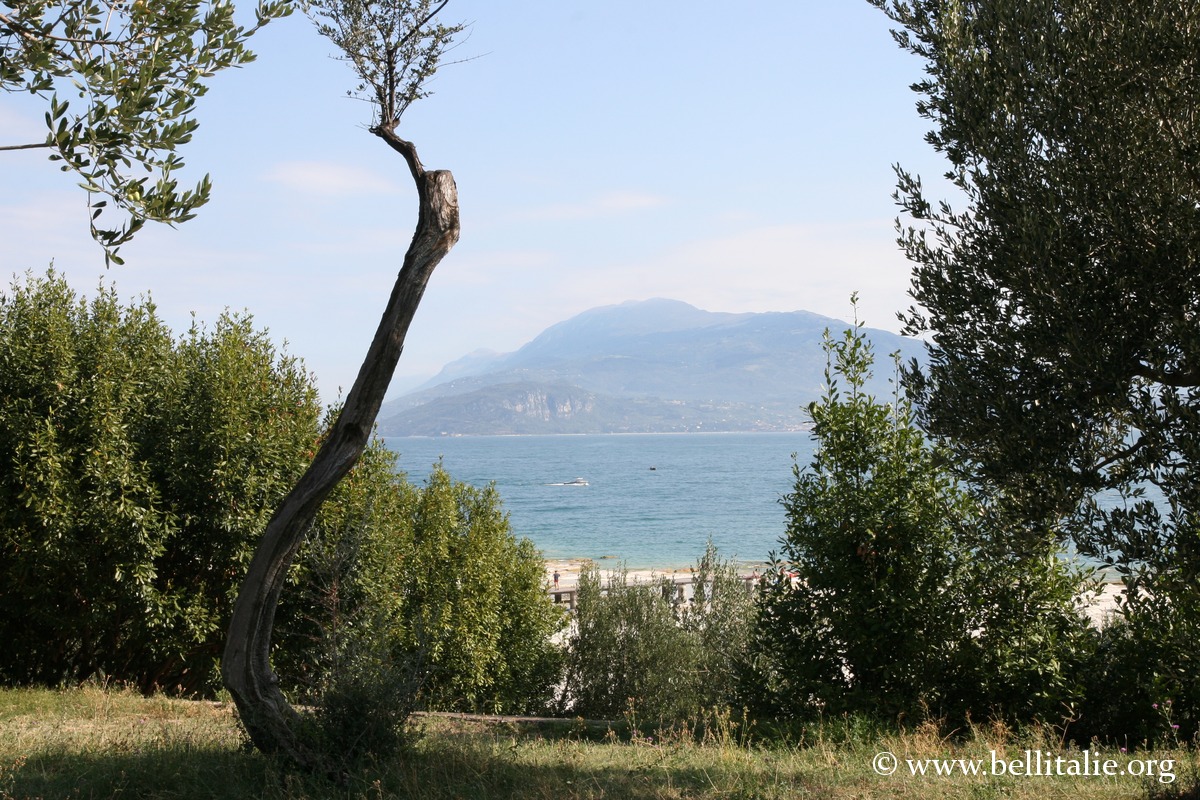
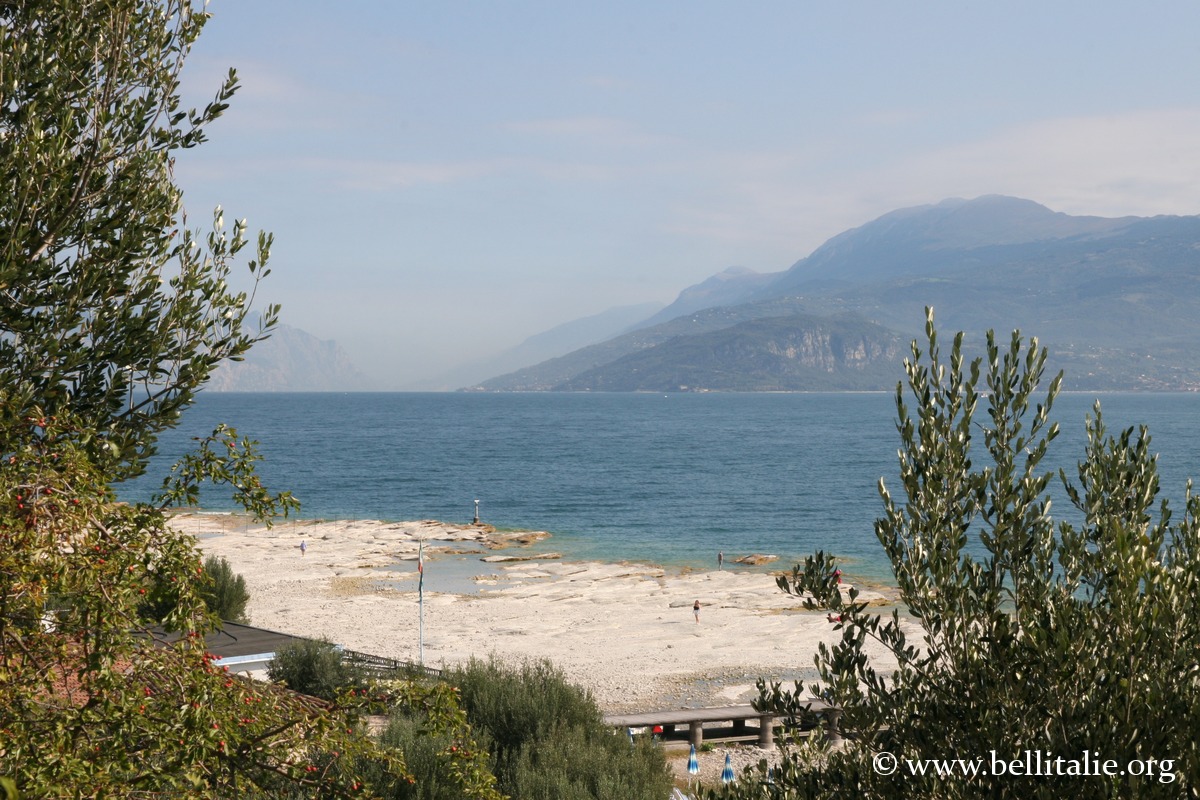
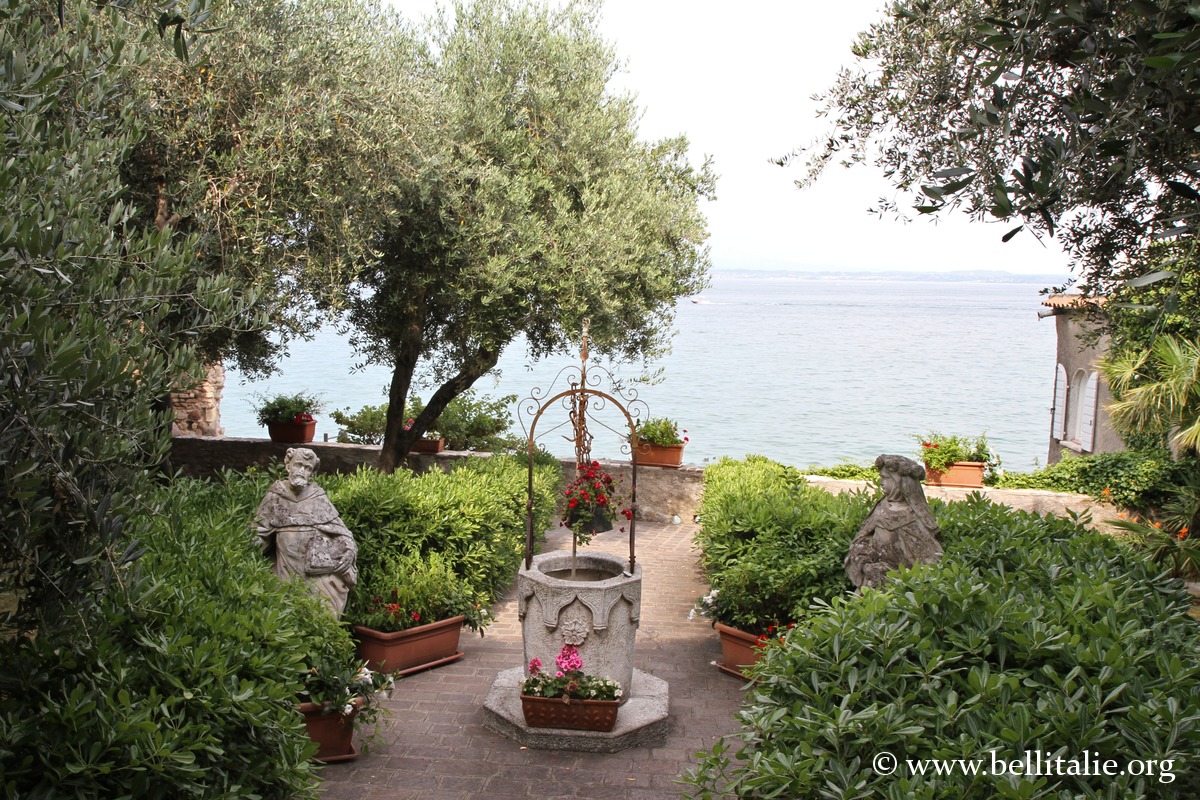
Sirmione is the emblematic town of Lake Garda, one of the most charming destinations in the region, located on a peninsula in the south of the lake. It is also nicknamed the “pearl of the lake”.
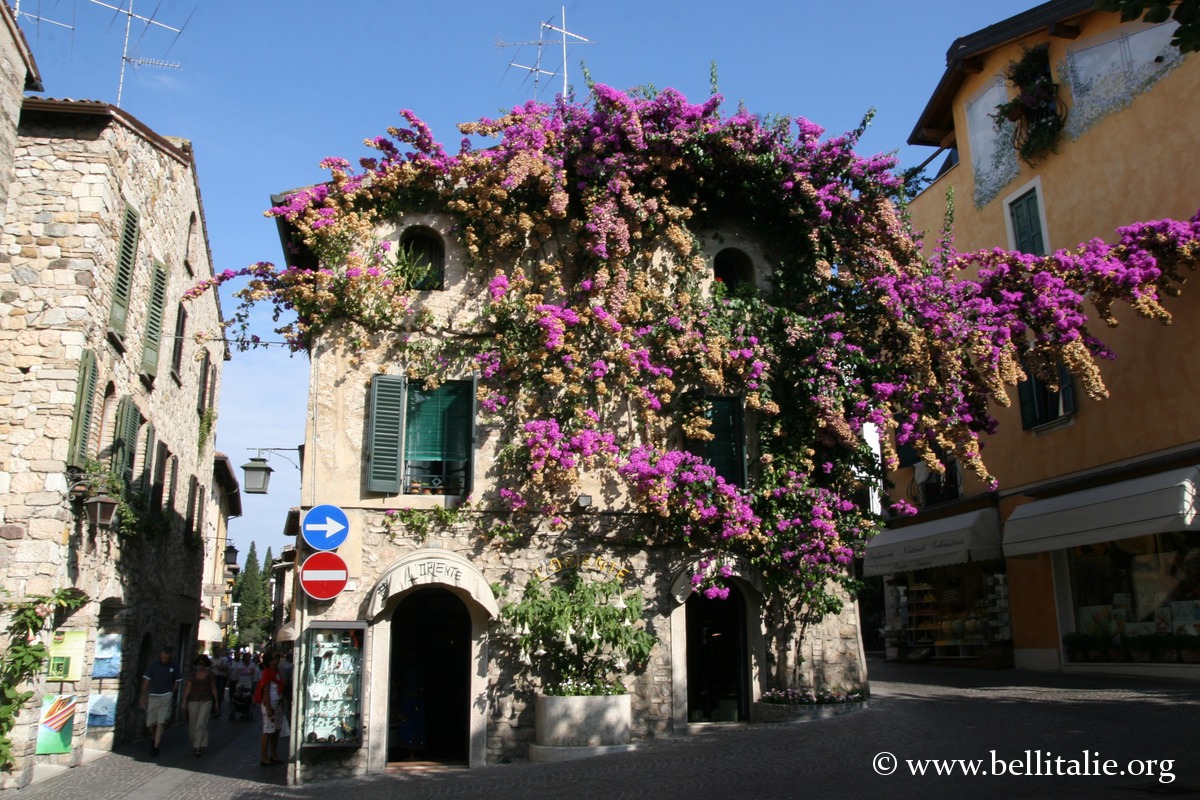
Many tourists are attracted by the charms of its castle, its distinctive historic centre, medieval buildings, narrow streets, flowered promenades, fashion boutiques and chic restaurants. But part of its popularity is also linked to its therapeutic thermal waters, known since antiquity.
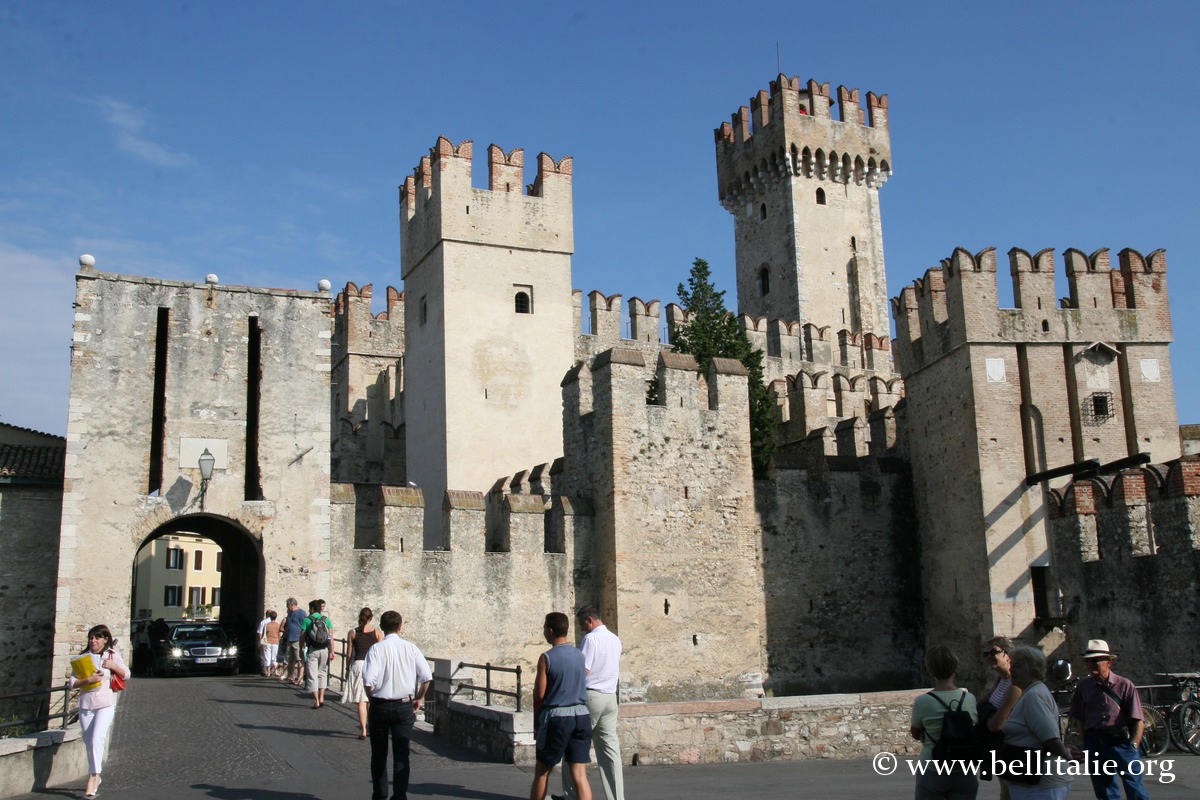
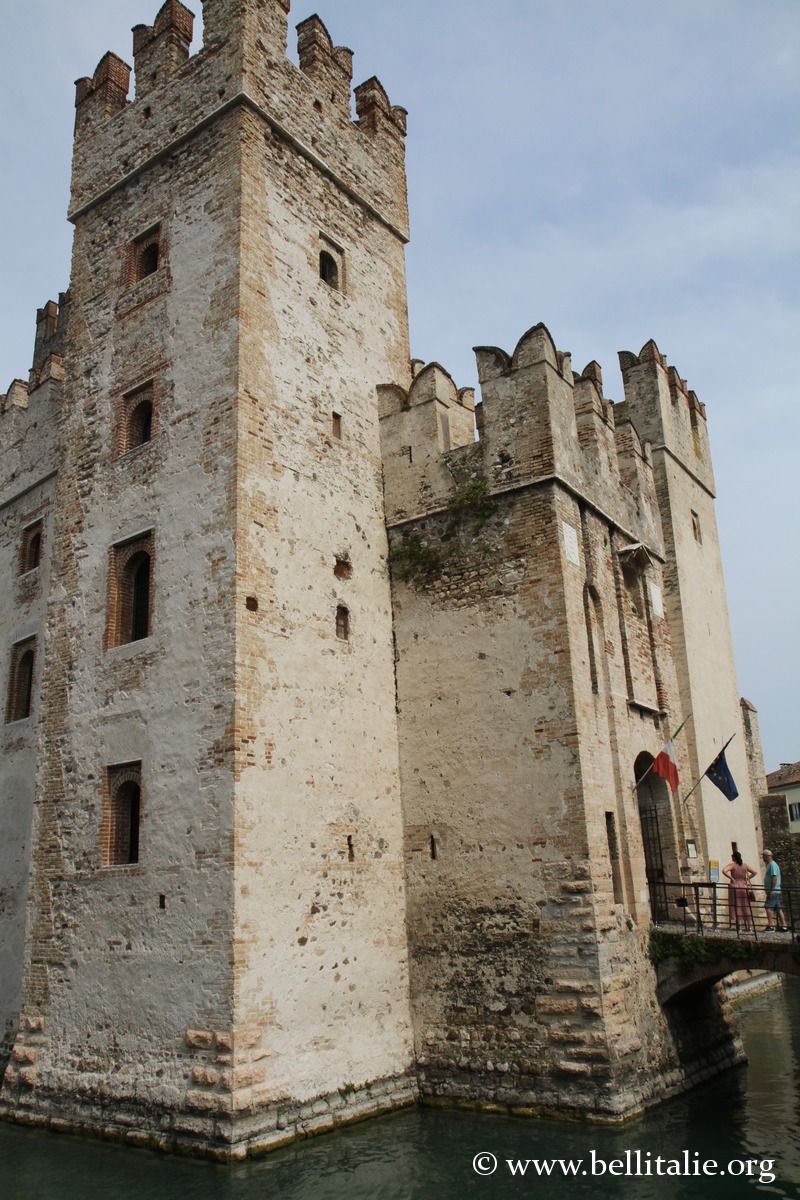
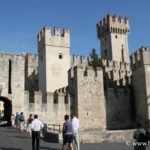
You enter the historic centre by crossing the bridge leading to the gate of its superb Scaligero Castle (13th-14th centuries), equipped with fortifications dating from the Middle Ages and an inner harbour.
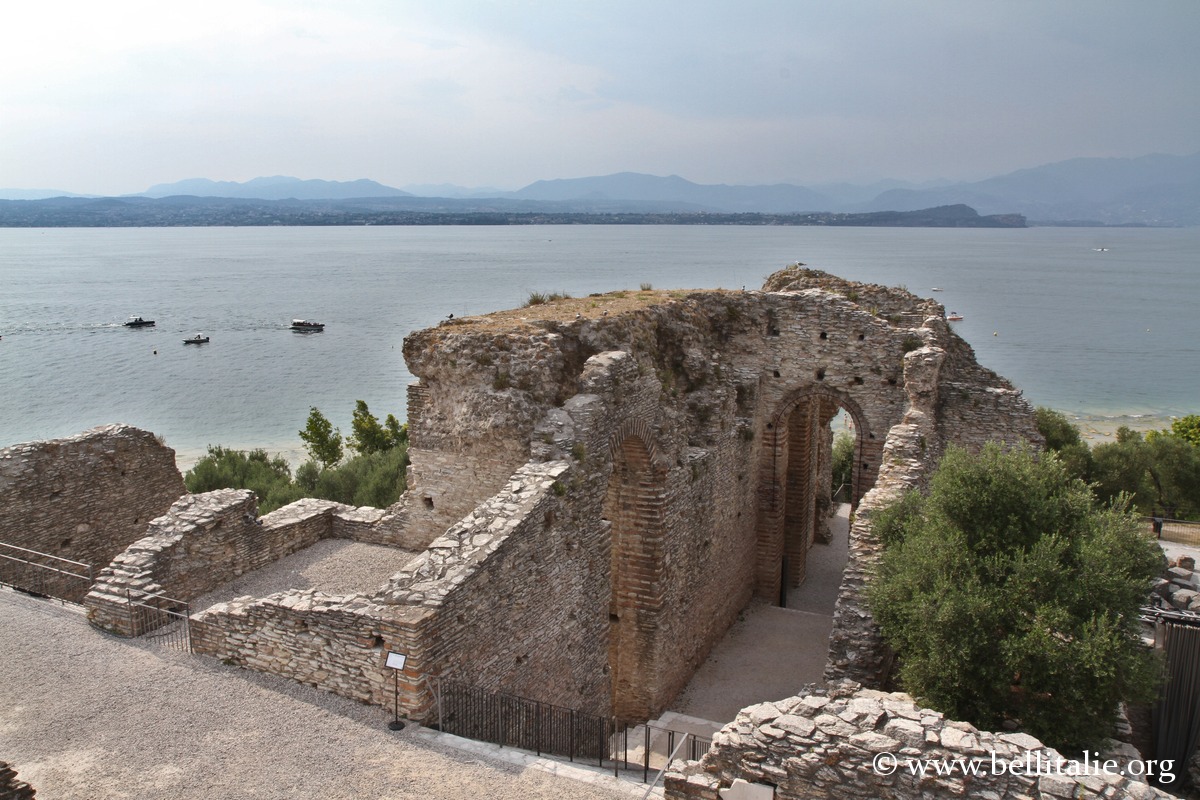
This charming centre occupies the narrow strip of land between the lake waters, up to the tip where the remains of an immense Roman villa known as the Grottoes of Catullus stand in a dominant position.
Another way to discover Sirmione, complementing the walking tour, is by a boat trip, from the castle to the Roman villa, passing by coves (see the offers in the right-hand column).
Brief history
Originally an active Roman town near the via Galica, Sirmione became in the Middle Ages a strategic trading post on the route between Verona and Brescia.
It was close to battles during the 3rd to 5th centuries, including the Battle of Lake Benacus against the Alemanni in 268, or the confrontation in 312 between Constantine and Maxentius. At the beginning of the 5th century, the island was created by cutting off part of the isthmus, then fortified.
In the early Middle Ages, the town was under the control of the monastery of Santa Giulia in Verona and in the 12th century came under the influence of the Holy Roman Empire with its feudal privileges..
In 1197, the podestà of Sirmione swore fidelity to the commune of Verona while keeping its privileges.
In the 13th century, the Scaligeri imposed themselves in Verona, notably by purging the town of the Patarini, Cathar believers. They besieged Sirmione, and in the end nearly 200 inhabitants were burned at the stake in 1278 in Verona. Supported by the Inquisition, the conquerors thus secured power with the blessing of the Papacy.
In 1378, Sirmione came under the domination of Gian Galeazzo Visconti and in 1405 it came under the control of the Republic of Venice, within the district of Verona.
With the building of the Pescheria citadel, the fortress of Sirmione lost its importance.
Rocca Scaligeri
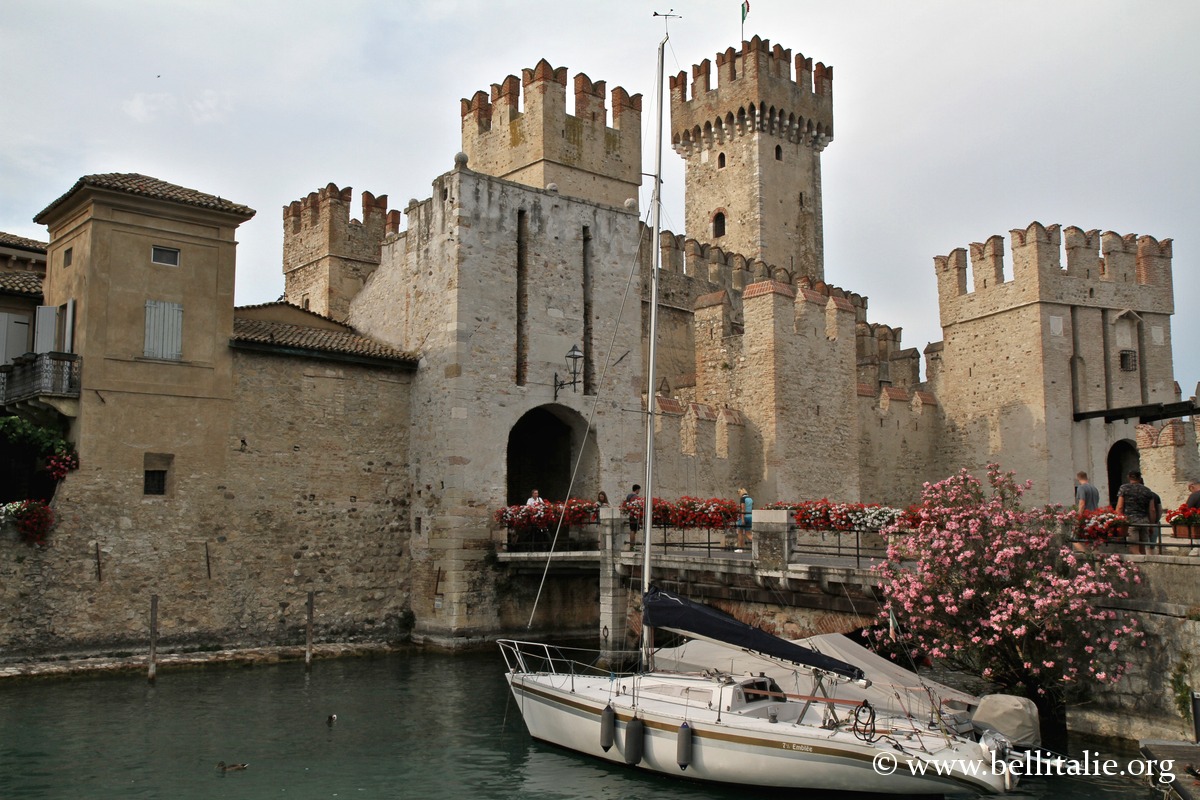
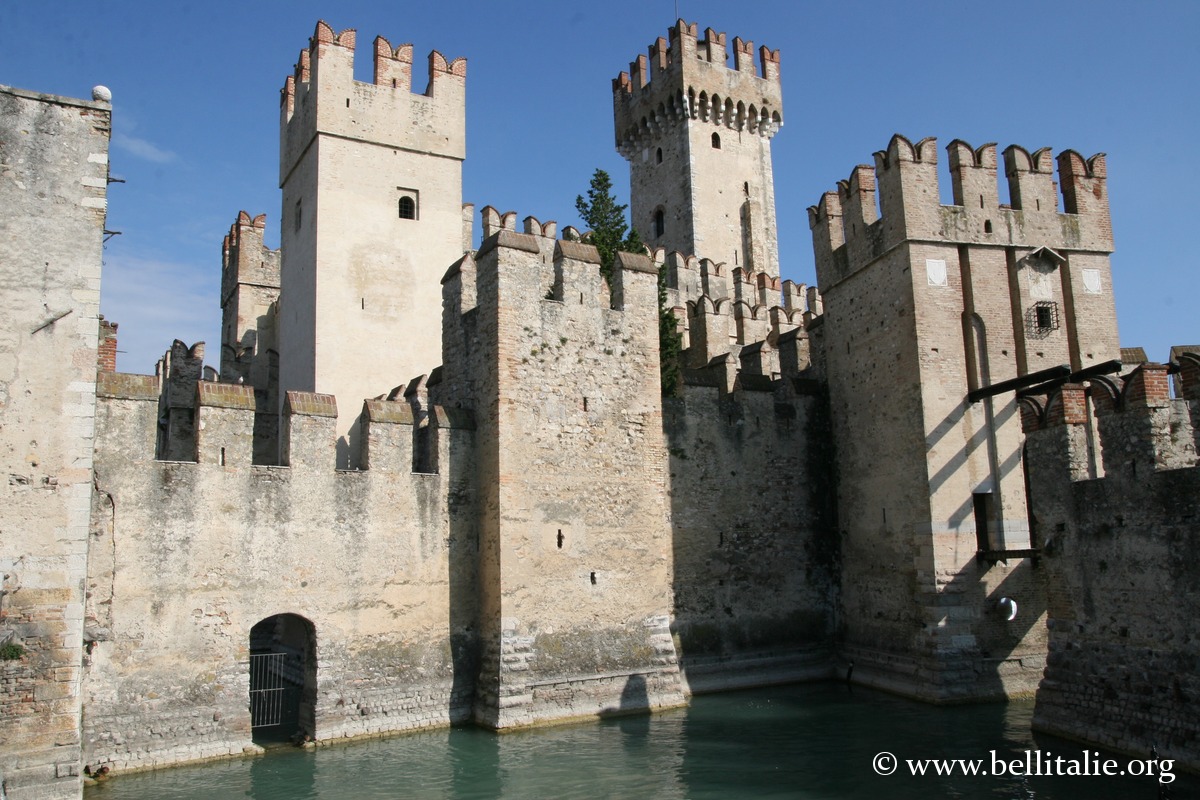
The medieval fortress of Sirmione, the Rocca Scaligeri, built in the 13th and 14th centuries by the Scaligeri, is one of the best-preserved medieval castles in Italy, restored during the 20th century. The inner docks are the only surviving example of a fortified 14th-century harbour.
The entrance to the castle is also the only entrance to the historic centre of Sirmione.
Three crenellated towers and its 47-metre-high keep dominate the lake and its former drawbridge. It can be visited, preserving a collection of Roman-era stonework and its wall walk.
It was built at the initiative of the Della Scala family of Verona, known as the Scaligeri. Then it was controlled by the Republic of Venice from 1405 when the Della Scala submitted to the Most Serene Republic.
Its defensive role diminished with the completion of the nearby fortress of Peschiera del Garda in the 16th century.
Grottoes of Catullus
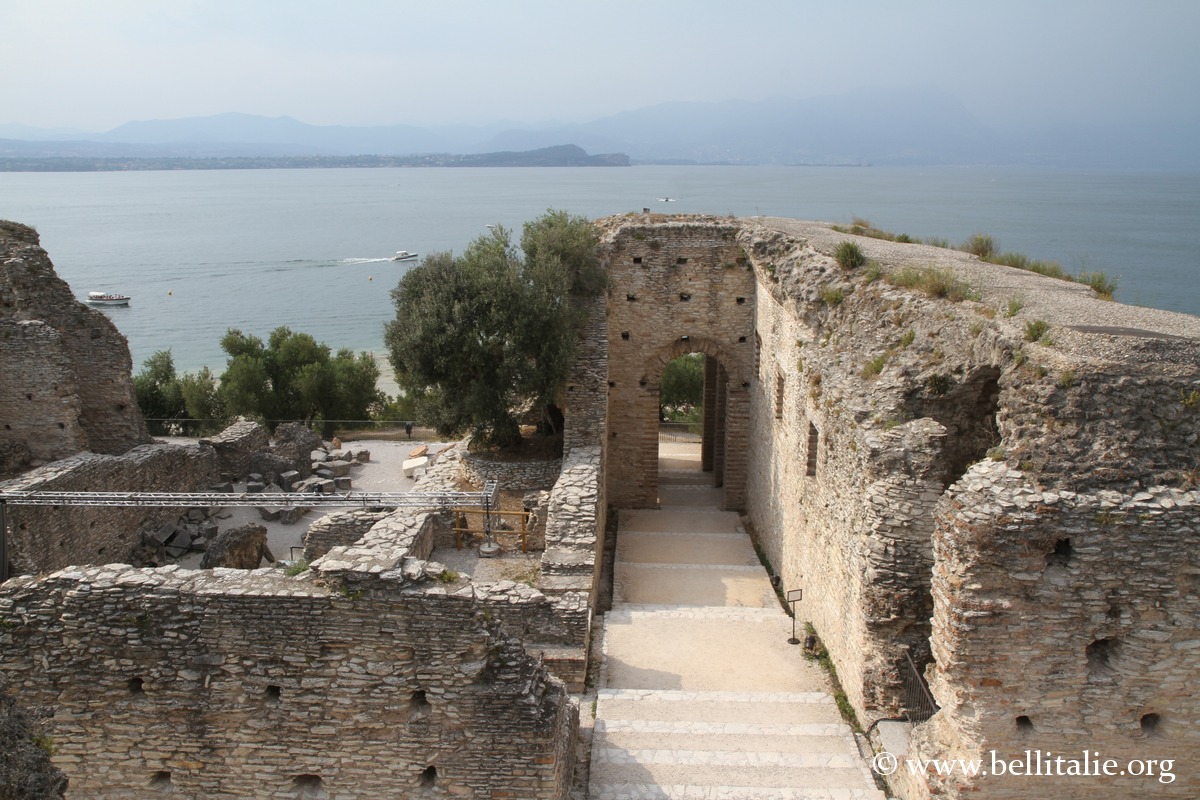
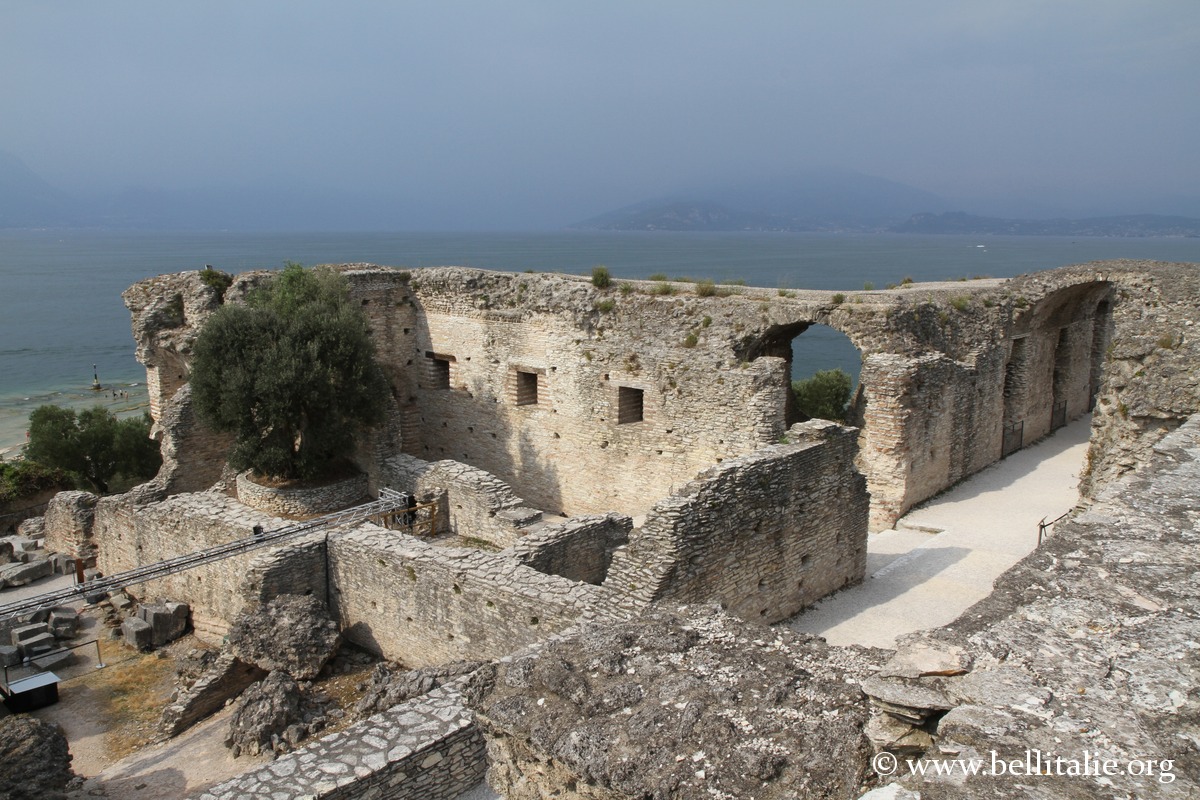
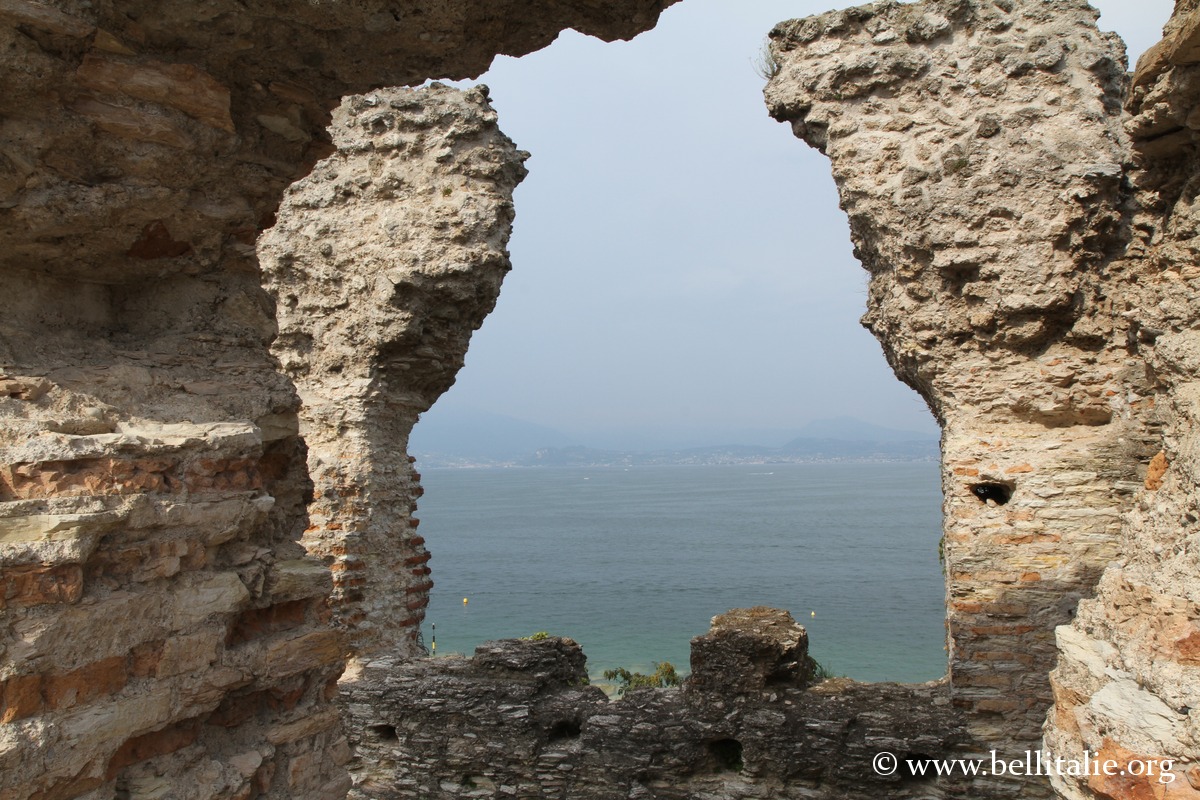
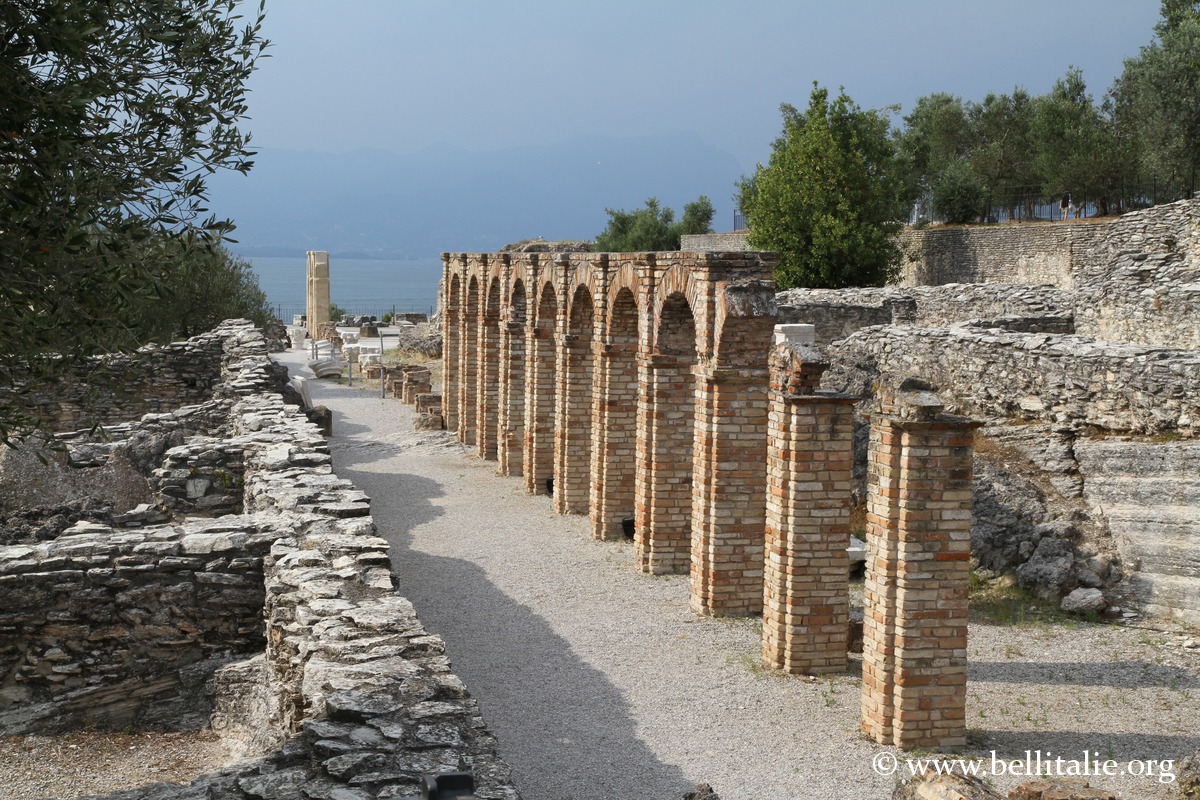
At the tip of the strip of land of Sirmione, to the north, on a promontory the Grottoes of Catullus (Grotte di Catullo) constitute the largest of the Roman villas in northern Italy, built around the beginning of the 1st century AD by the wealthy Veronese family of the Valerii. It was probably a residence of the famous poet Catullus, and it is certain that Julius Caesar regularly stayed there.
The term “Grottoes” dates back to the 15th century, when the ruins appeared in the form of caverns, the site not having been cleared.
The remains extend over nearly two hectares. The original structure had three levels and an immense panoramic terrace.
It had an efficient thermal installation, Sirmione being appreciated by the Romans for its waters. An underground cistern allowed the collection of water.
Nowadays, this villa is largely covered by a large olive grove, from which an oil is extracted.
It has a museum containing archaeological pieces found here and in other Roman villas in the surroundings.
Other monuments
- The Maria Callas Palace is a 17th-century palace located on the central square Giosuè Carducci, and the Villa Meneghini-Callas originally belonged to the Giannantoni family, Lombard bourgeois industrialists, of which Maria Callas was a wife and lived there in the 1950s.
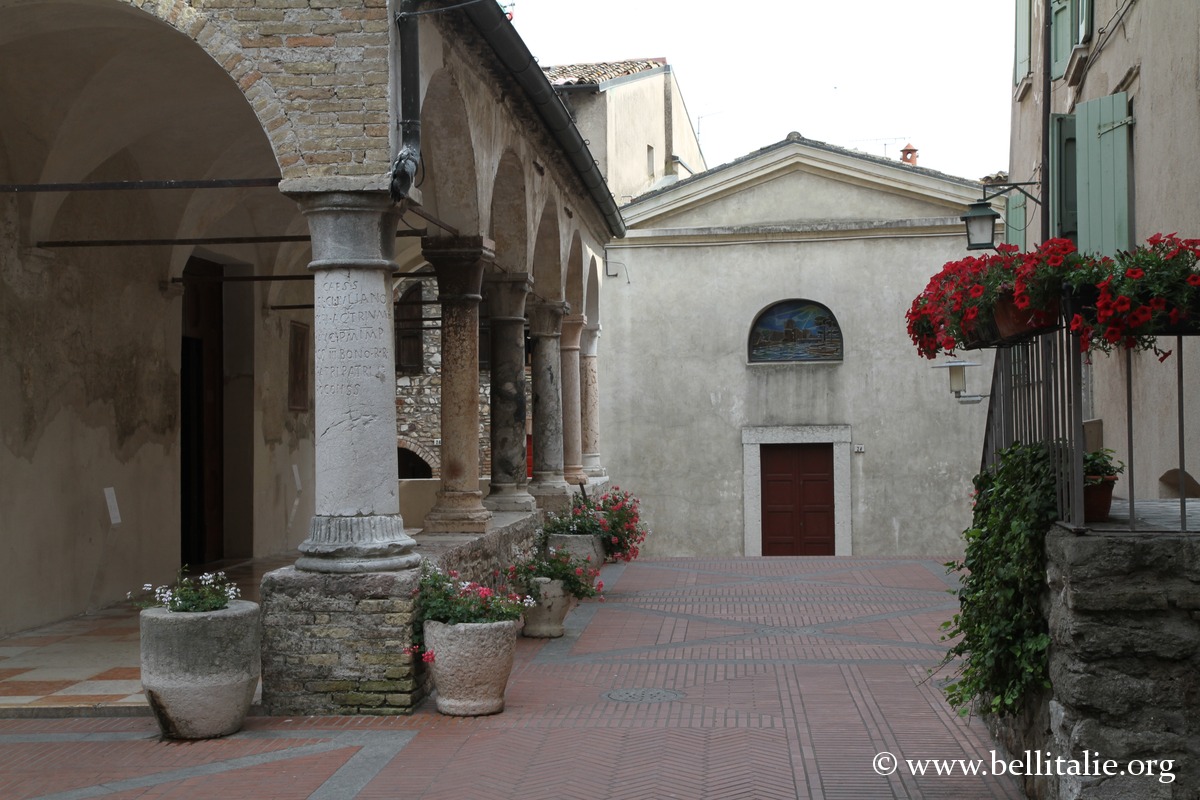
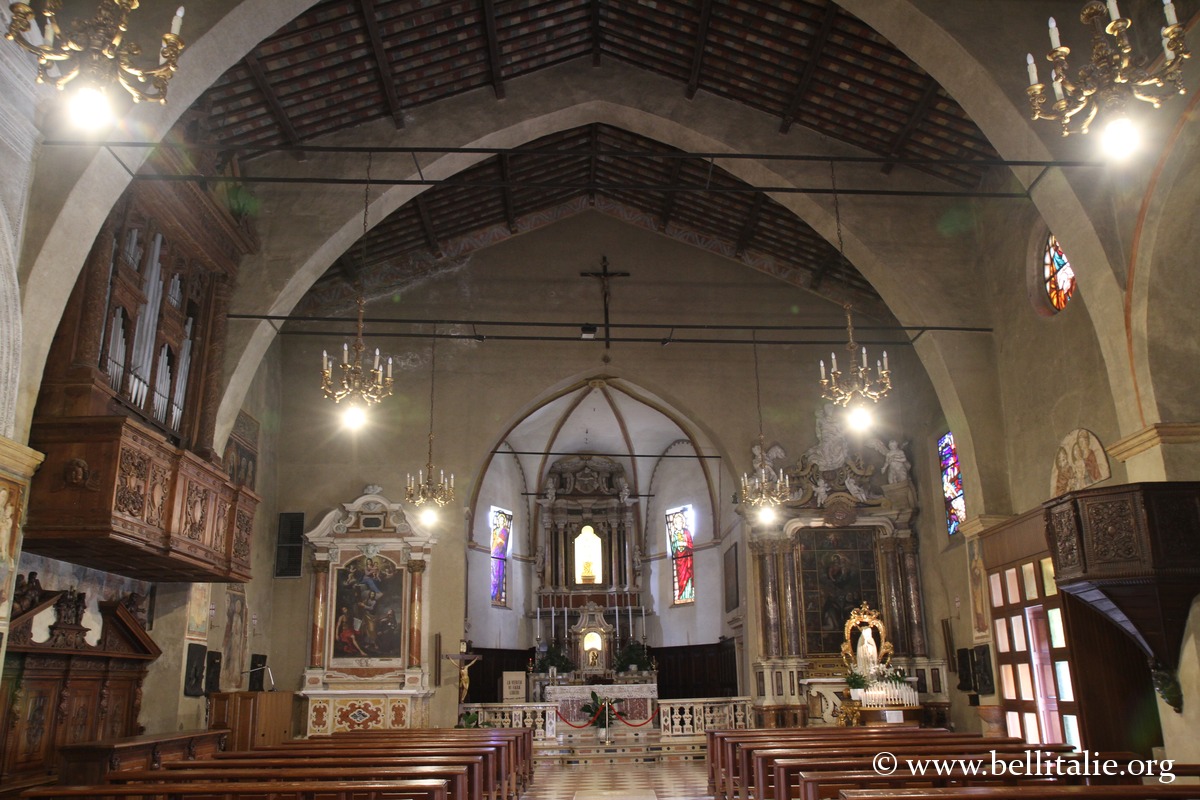
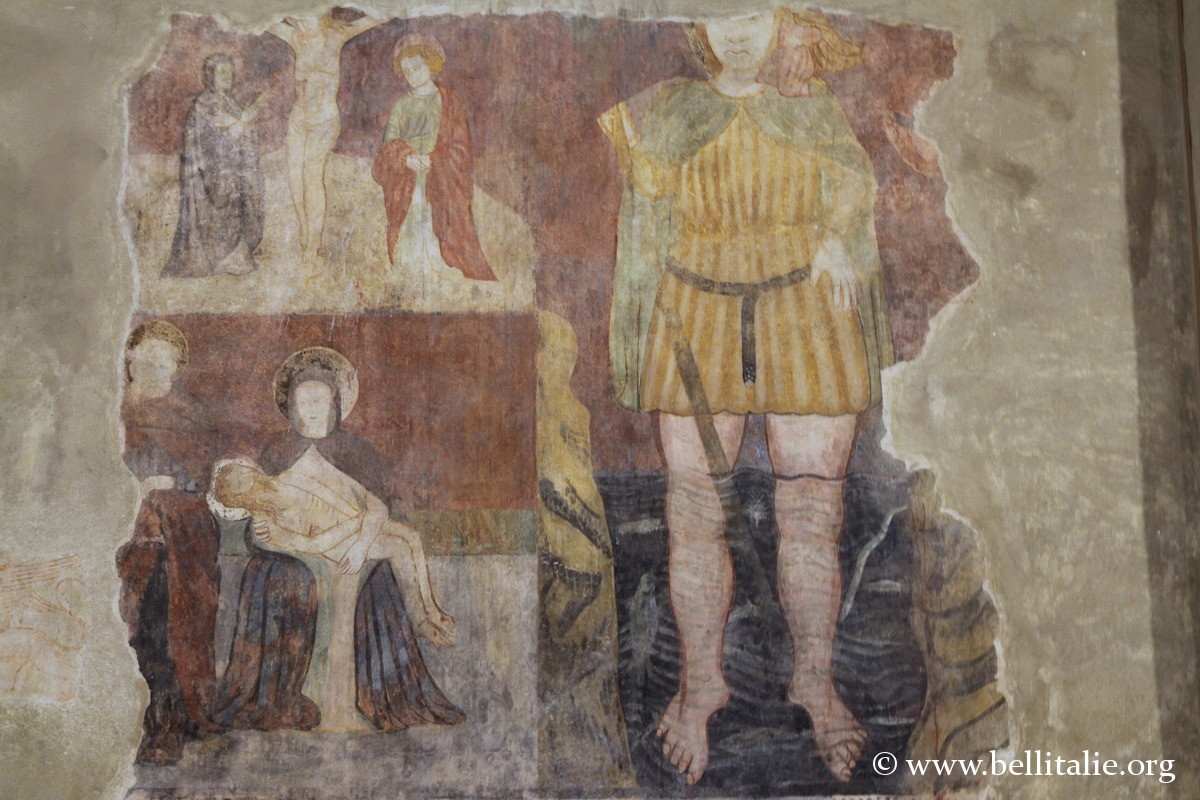
- The small church of Sant’Anna, near the Scaliger castle, dedicated to the mother of the Virgin, was built in the 15th century for the Venetian garrison. The interior preserves 16th-century votive frescoes
- The church of Santa Maria della Neve was built in the 15th century on an older church. The north facade rests on the old wall that surrounded the town, while the main facade has a portico – with Roman elements – with five arches that was part of a cemetery. The interior preserves 15th-century frescoes, a 15th-century wooden “Madonna on the throne”, etc.
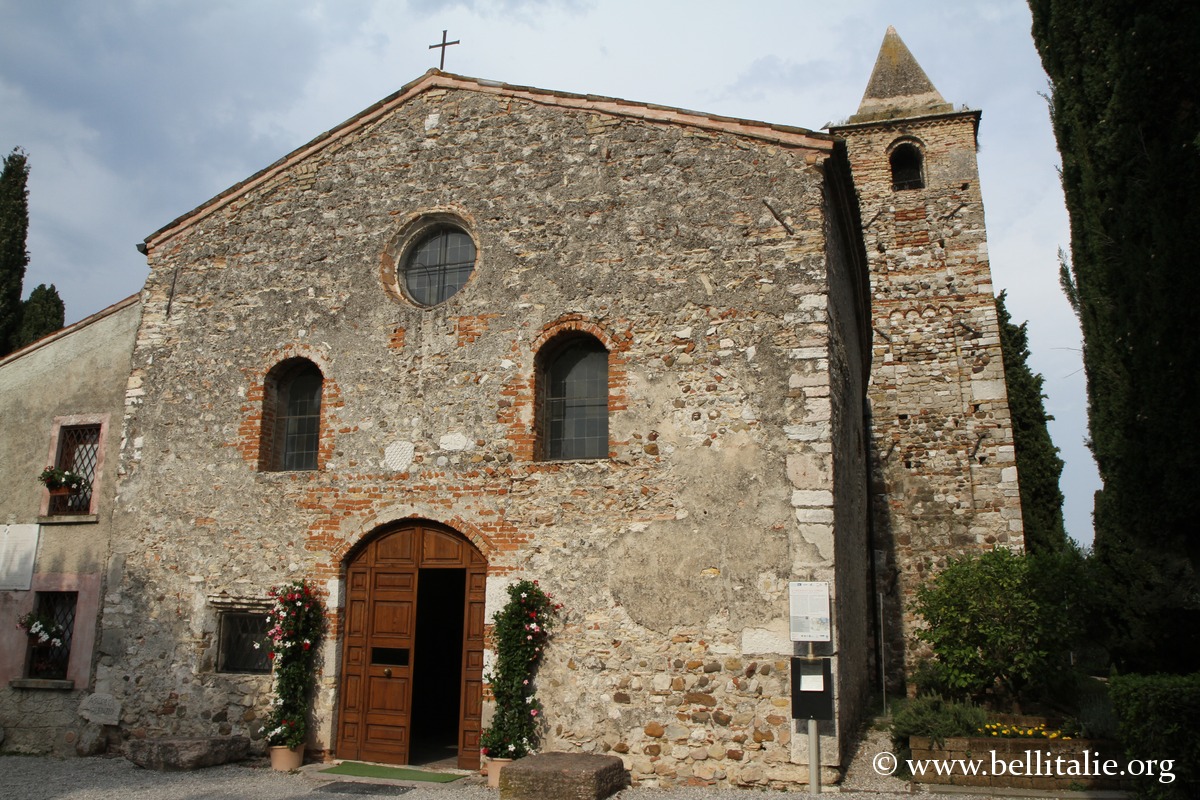
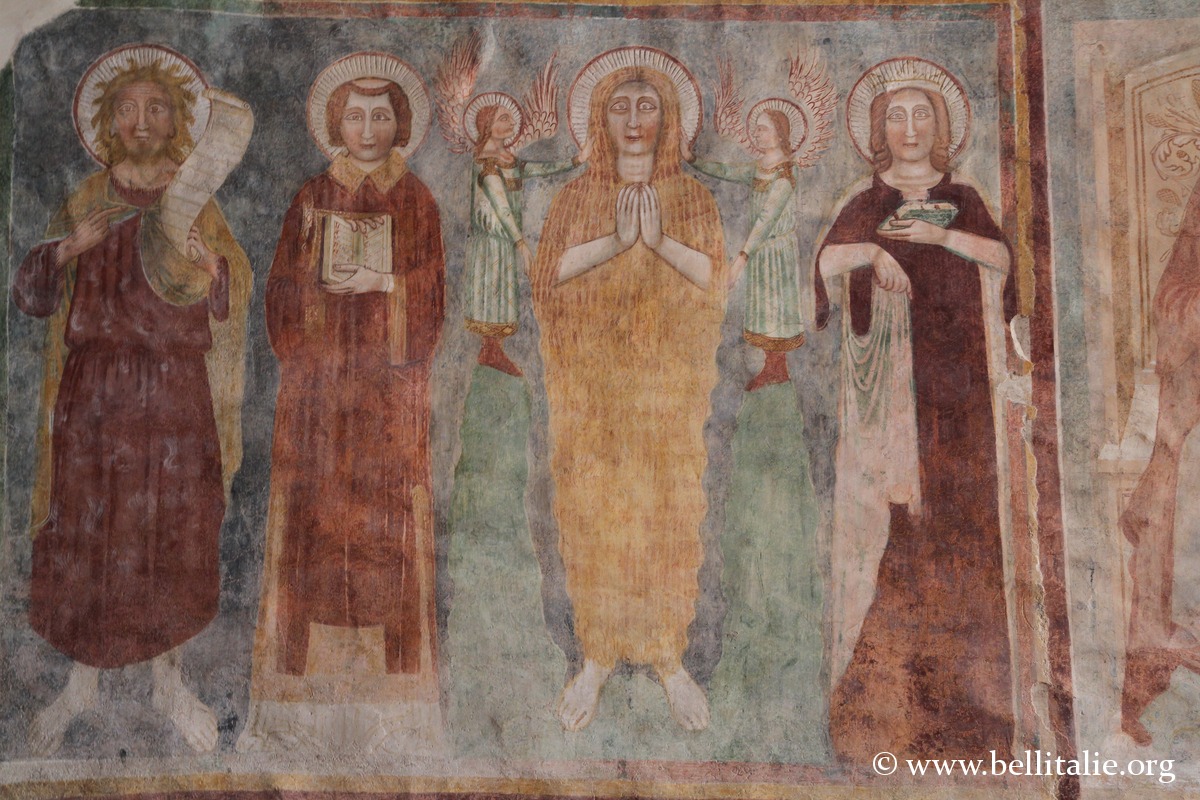
- The church of San Pietro in Mavino already existed in the 8th century, located at the highest point of the peninsula. The Romanesque building was rebuilt around 1320, and the bell tower dates from 1070. The interior frescoes of the apses date from the 12th century, those of the walls from the 16th.
Information
- Website of the commune of Sirmione: www.comune.sirmione.bs.it
- Article Wikipedia
- Tourist portals: sirmionebs.it, www.in-lombardia.it
Map
If you see this after your page is loaded completely, leafletJS files are missing.


Comments