


Presentation
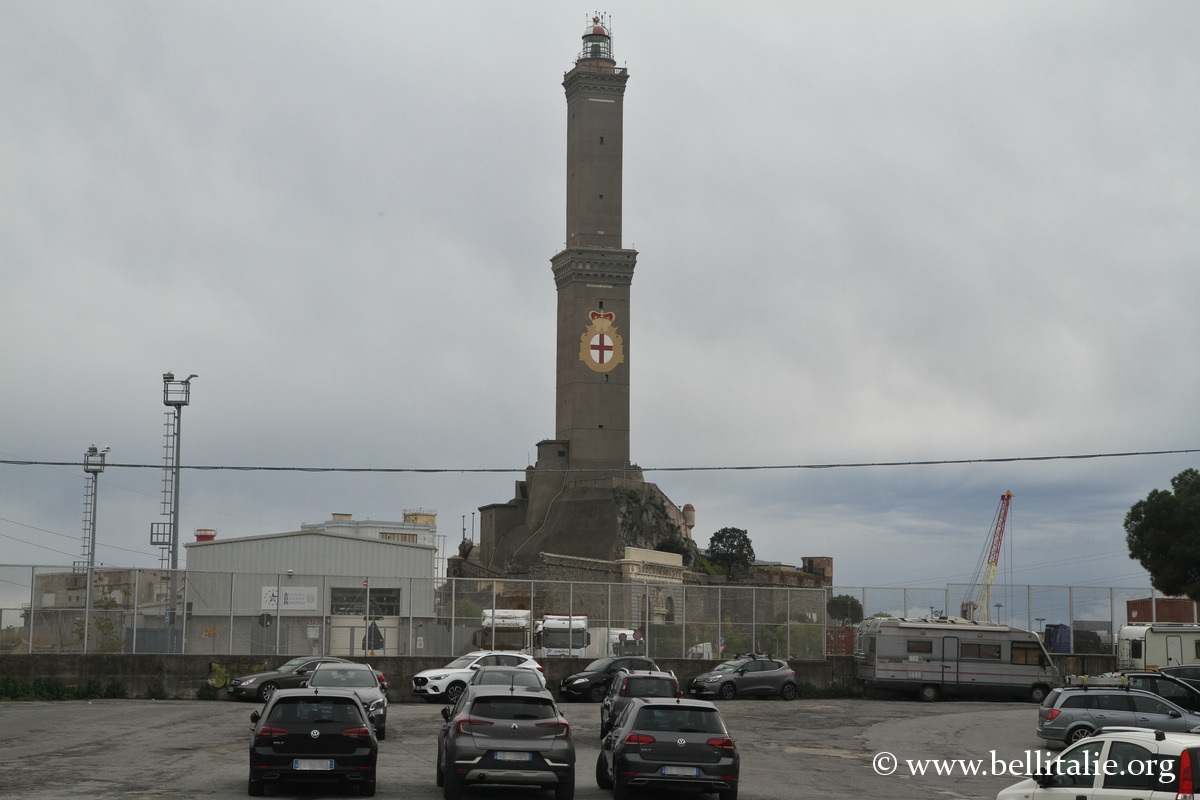
The lighthouse of Genoa is called the “Lanterna“. It is the symbol of the city and guardian of the port from its height of 76 metres, to which are added the 40 metres of the hill. It is thus the tallest lighthouse in the Mediterranean and the second tallest in Europe.
It was built in 1128 and rebuilt in 1543. It was connected to the historic centre by the walls in the 17th century. The first lantern was installed in 1326.
The interior staircase has 172 steps leading to the top with a superb panorama over the port and the city of Genoa.
It can be reached from the surroundings of the Terminal Traghetti with a walk of less than one kilometre along the old city walls of the 17th-19th centuries, where informative panels describe its history.
The Lanterna museum has been set up inside the old Savoy fortifications of 1830. It is dedicated to Genoa and its province.
History
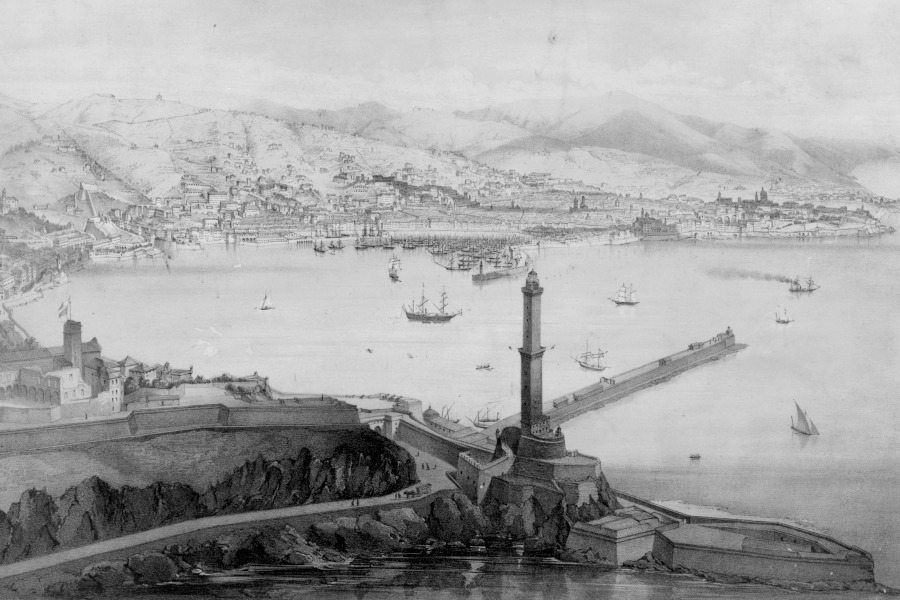
View of Genoa, lithograph from the mid-19th century
The lighthouse was built in 1128 and the first lantern was installed in 1326.
Around 1400, King James I of Cyprus and his wife were imprisoned there for 5 years as hostages. At the end of the 15th century, it suffered significant damage from the bombards of the Genoese insurgents against the French invaders.
Its current appearance dates from the reconstruction of 1543, with at the time a copper dome. During the 17th century, it was connected to the historic centre by the walls.
It was bombarded and damaged in 1684 on the orders of King Louis XIV. A first lightning rod was installed in 1778, putting an end to the frequent damage caused by lightning. A rotating optic was installed in 1840 with a Fresnel lens placed on wagon wheels. Its range in 1841 was 15 miles. Electricity was installed in 1936.
After the damage during the Second World War, the last works were completed in 1956.
Information
- Information: en.wikipedia.org
- Official website: www.lanternadigenova.com
Map
If you see this after your page is loaded completely, leafletJS files are missing.


Comments