


The majestic St. Lawrence Cathedral of Genoa (San Lorenzo di Genova in Italian) already existed in the 9th century, rebuilt at the beginning of the 12th century on a basilica that probably dated back to the 6th century and was dedicated to Saint Syrus, the first bishop of Genoa († June 29, 381).
Modified several times until the 16th century, it is the main religious building in Genoa, dedicated to Saint Lawrence of Rome († ).
Description
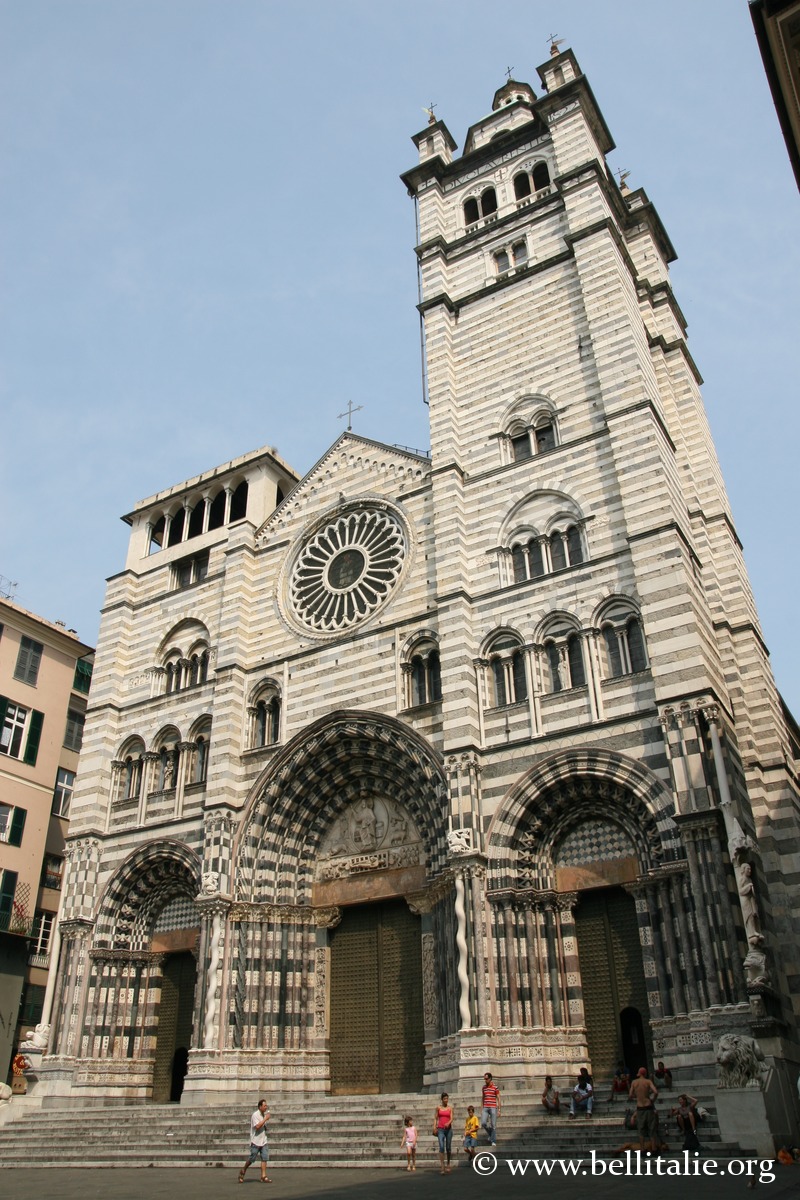
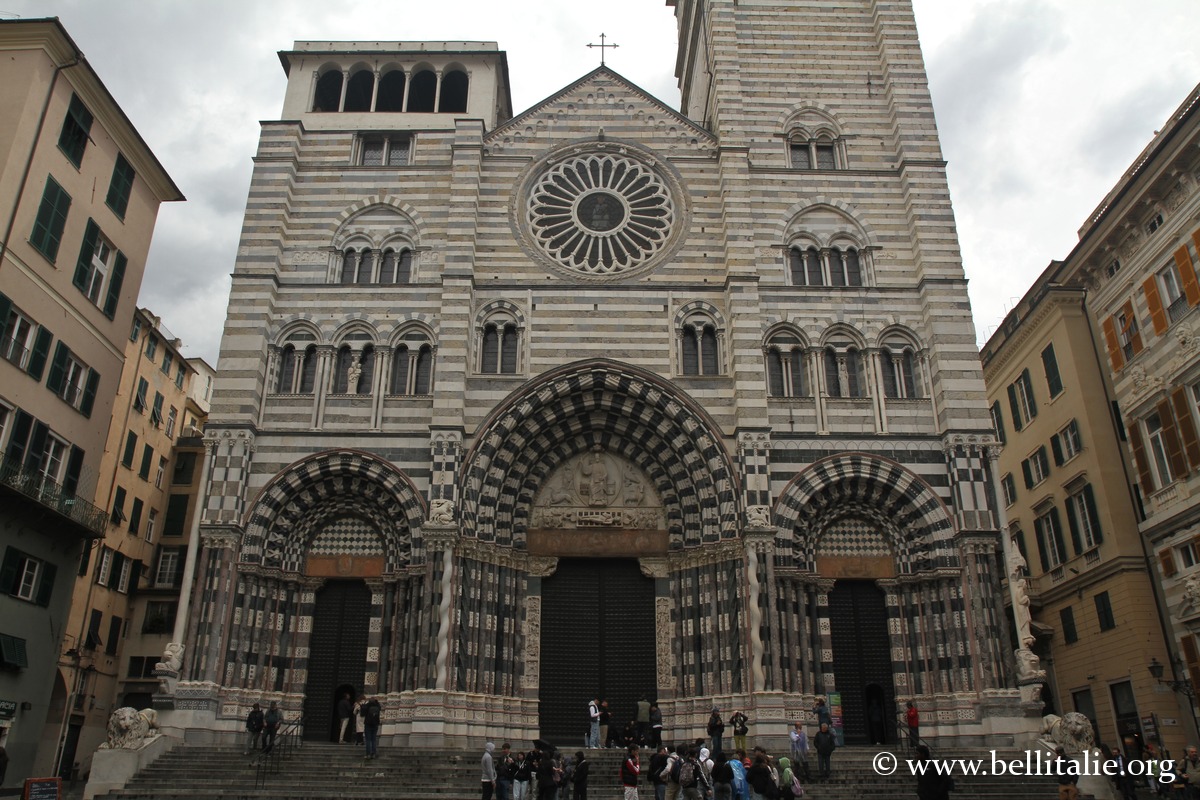
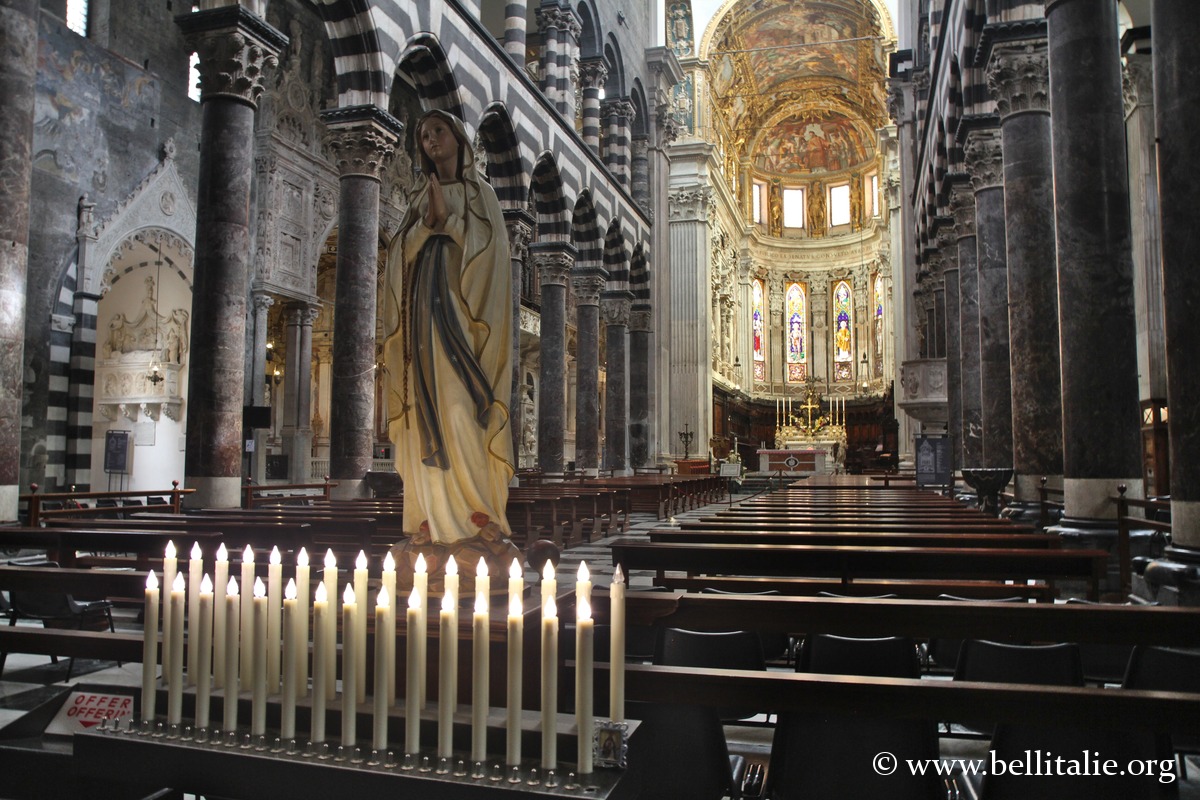
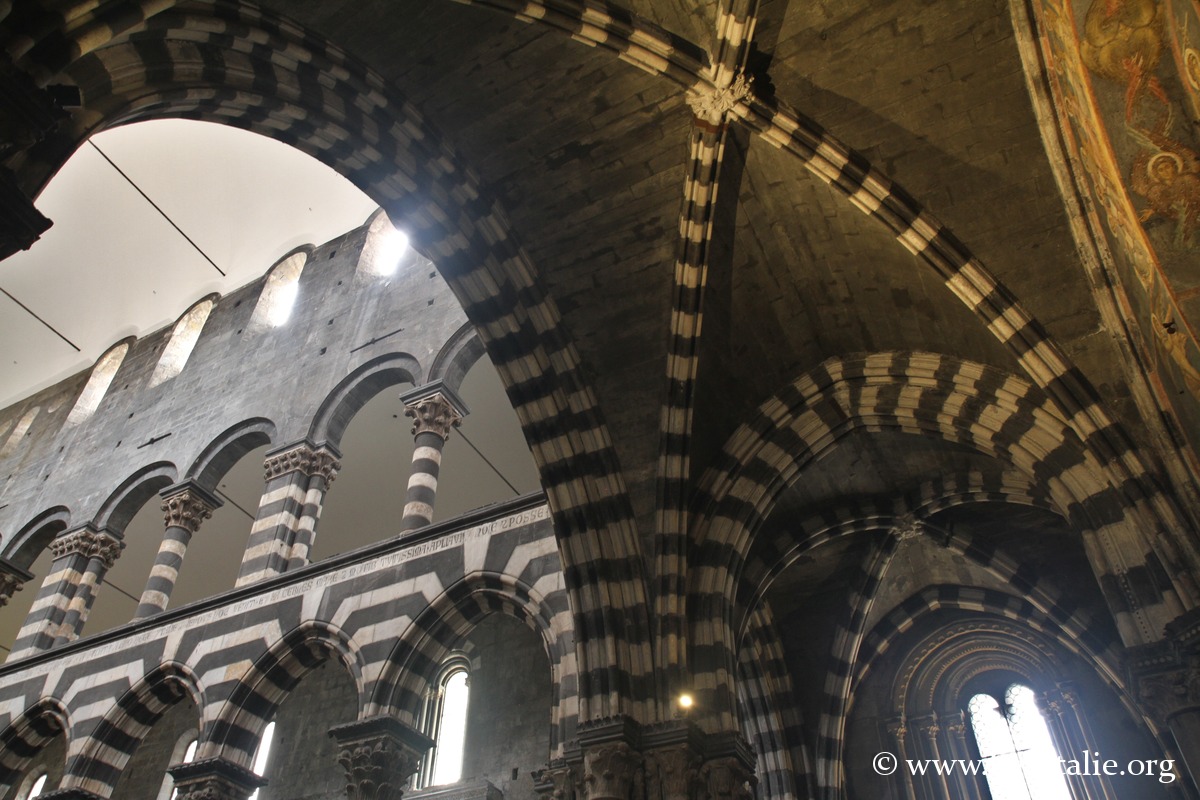
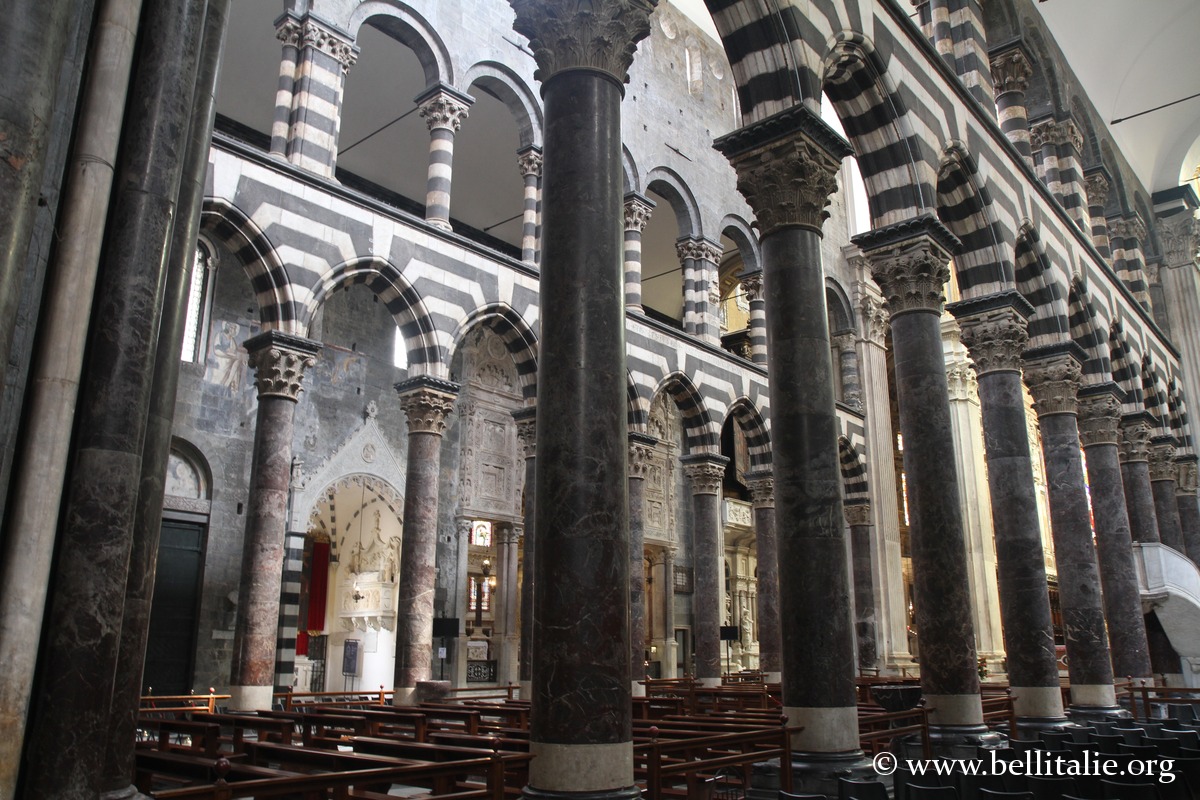
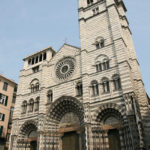
The cathedral combines different architectural styles, both outside and inside. The Romanesque structure is generally well preserved.
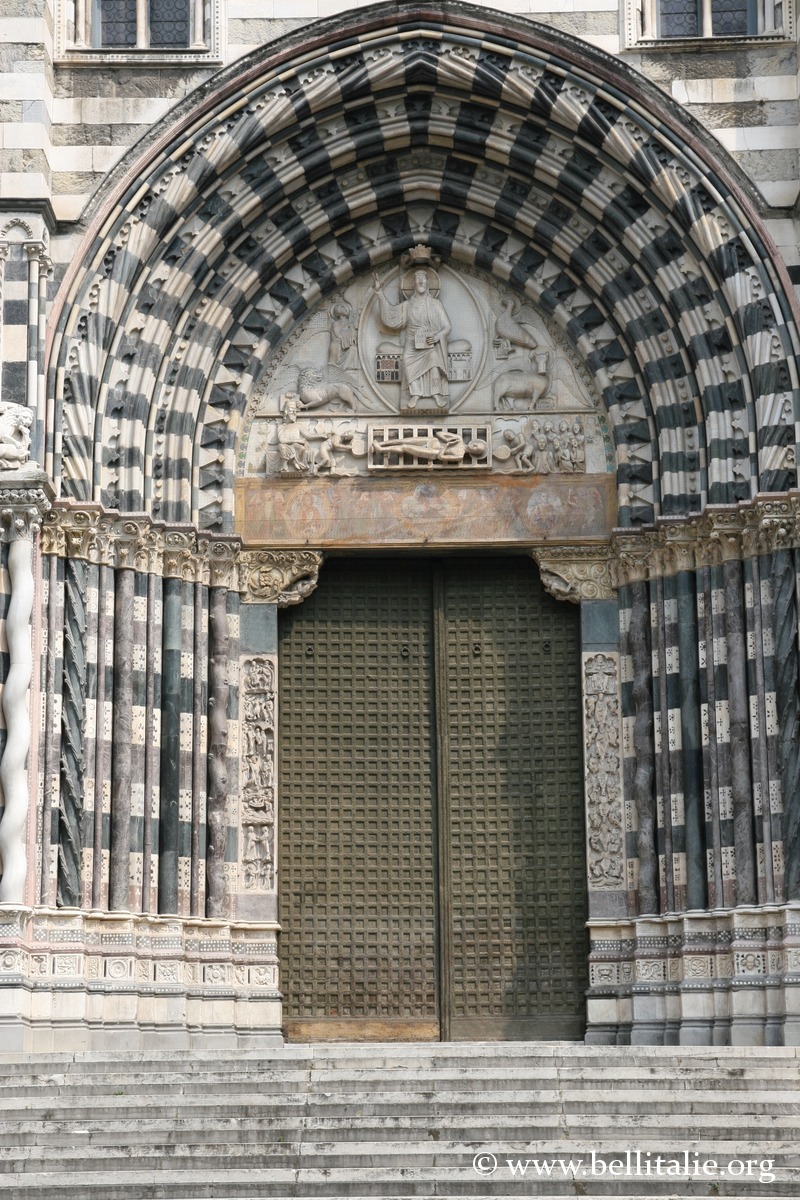
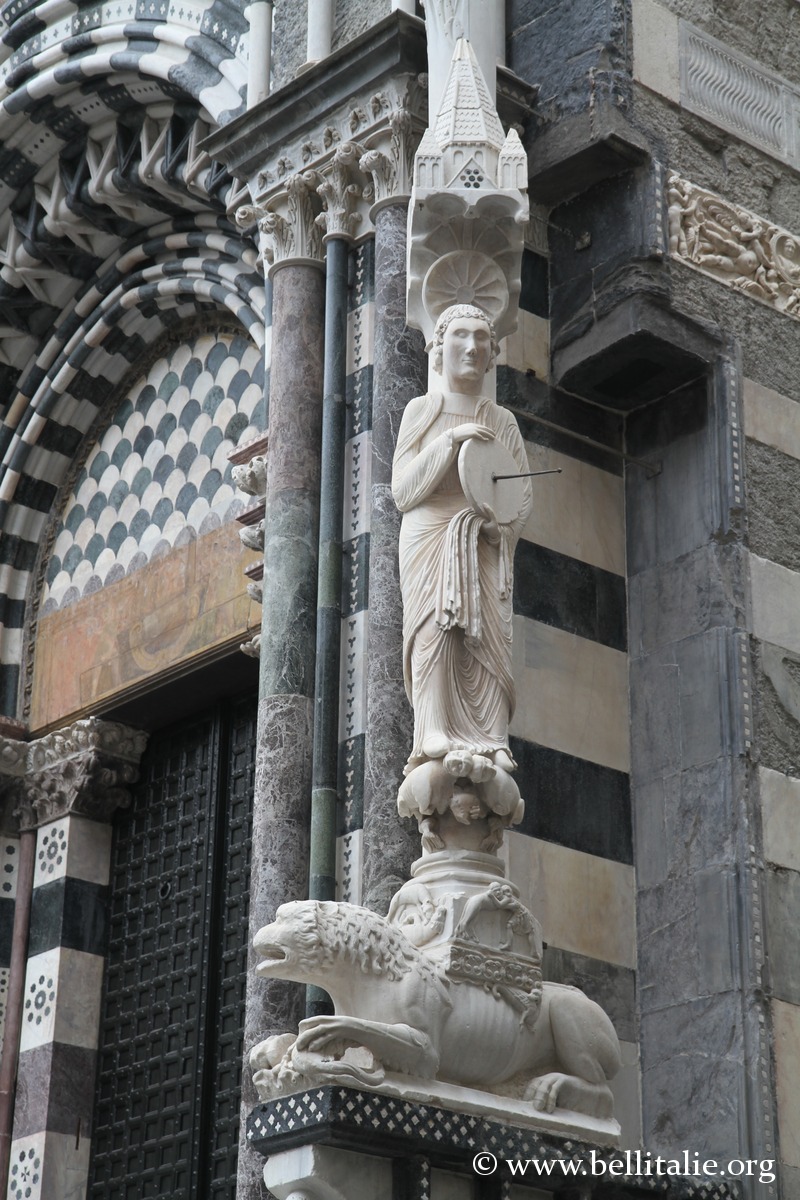
The beautiful Romanesque facade with black and white bands dates from the 13th century, with a rose window and Gothic portals that bear witness to a Gothic transformation (never completed) that took place after a fire beginning in the early 14th century. The small loggia on the northeast side of the tower dates from 1455, the other from 1522, typically in the Mannerist style.
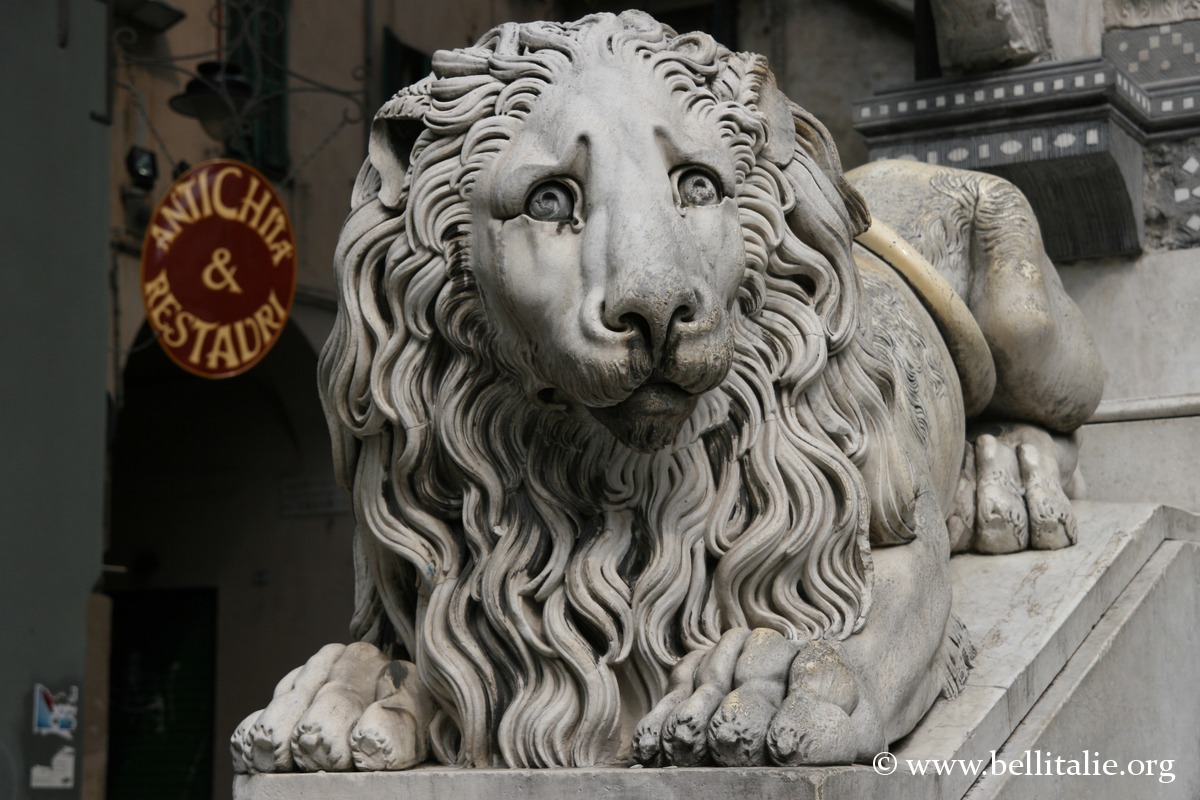
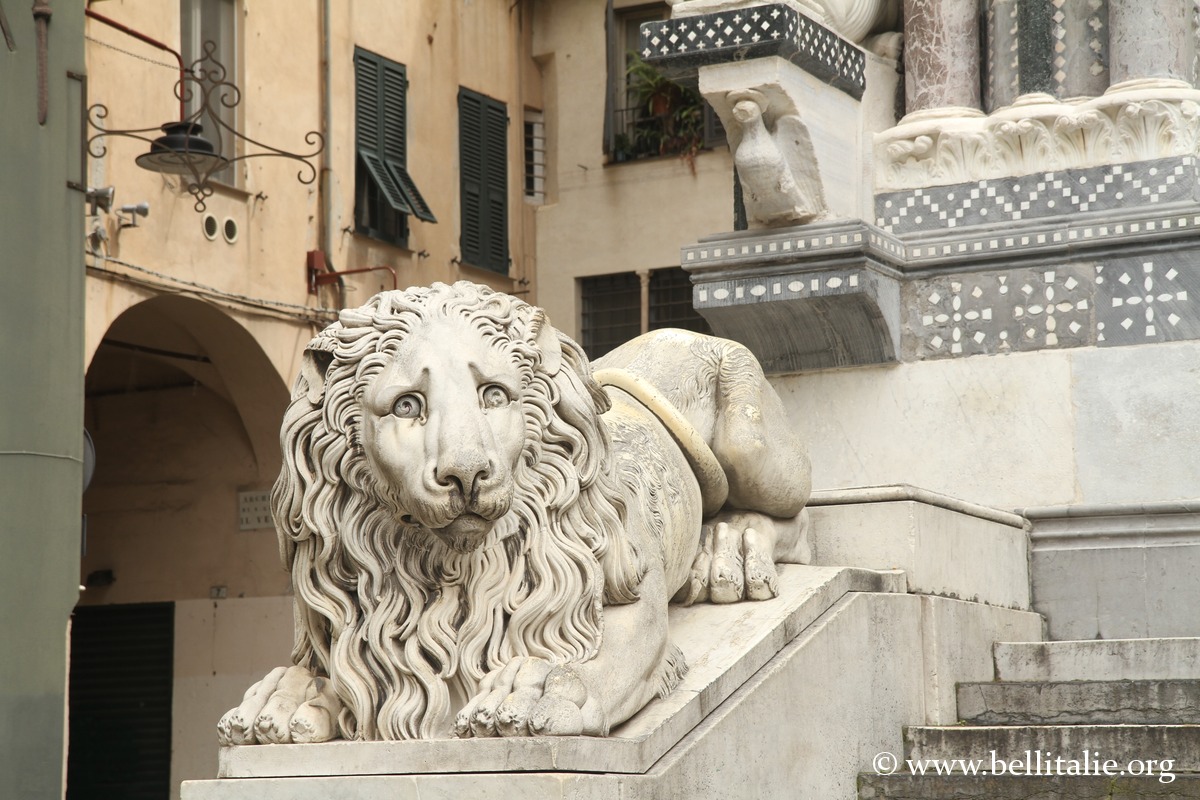
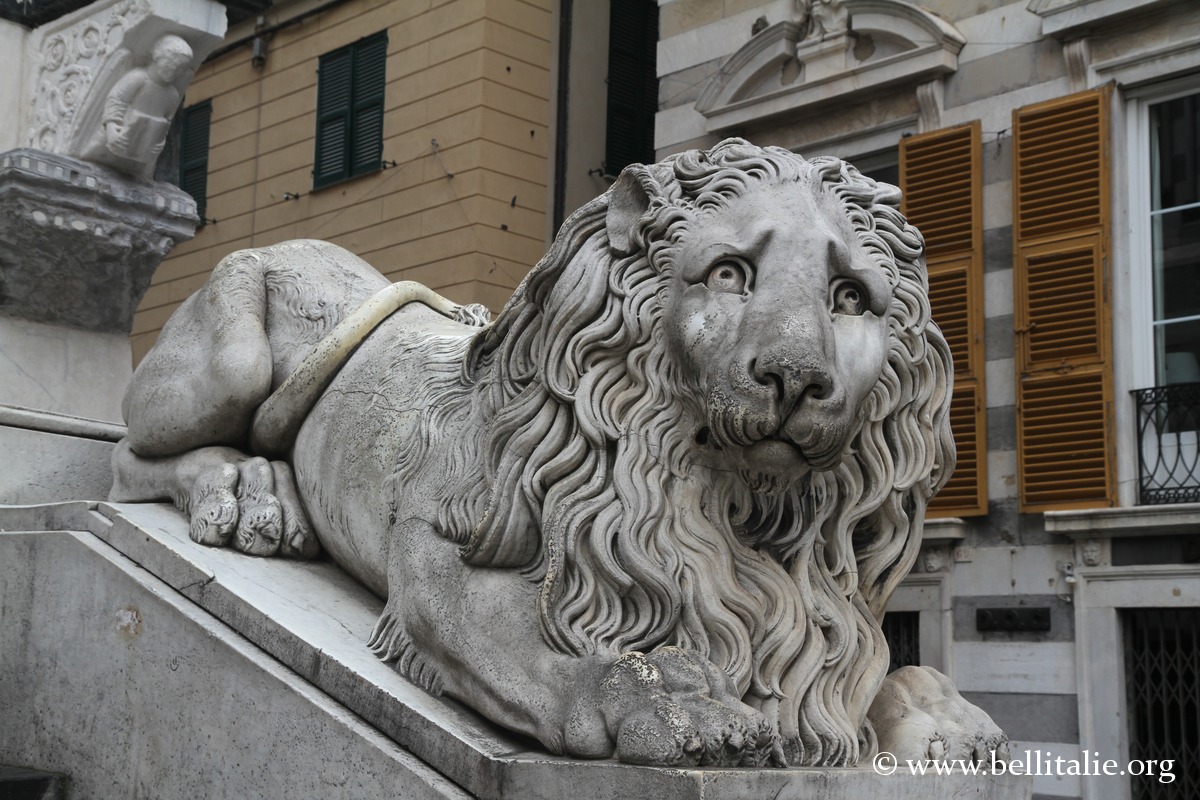
The dome and the bell tower date from the 16th century, as does the covering of the nave, the floor and the apse. The two lions at the foot of the portal that seem to protect the entrance to the sanctuary are from the 19th century.
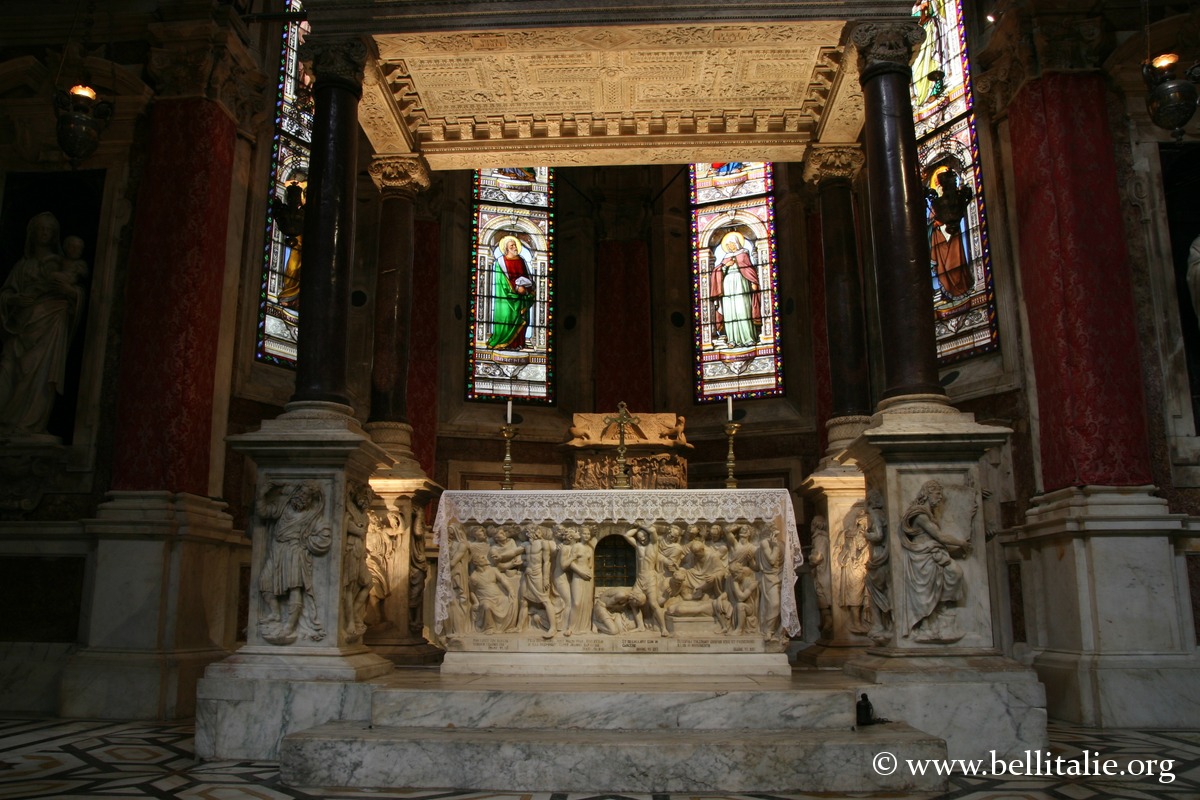
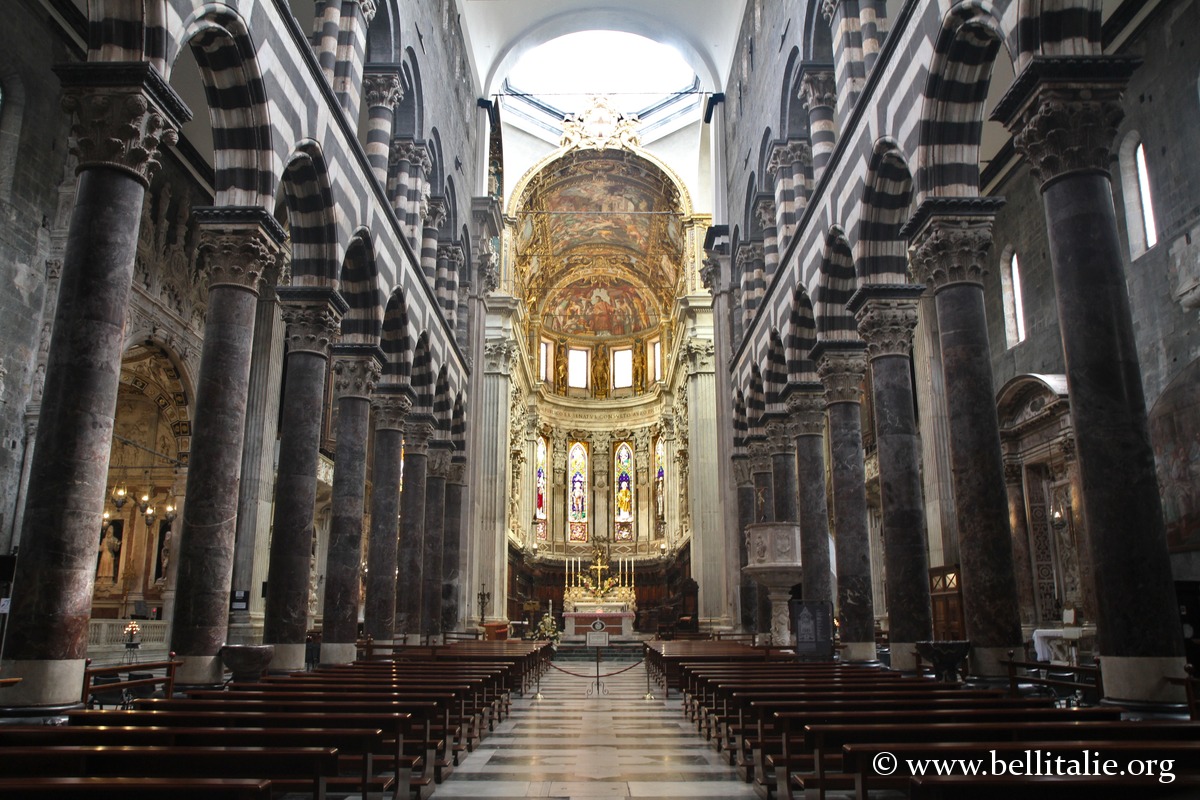
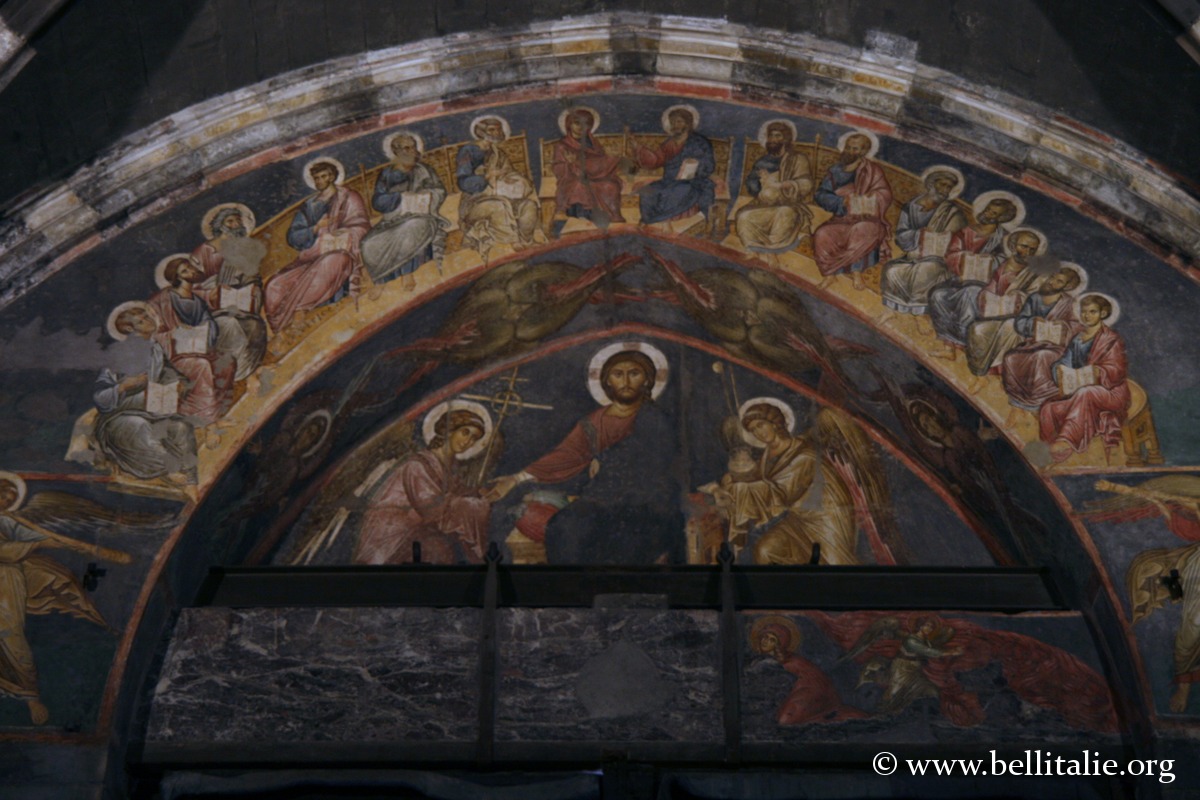
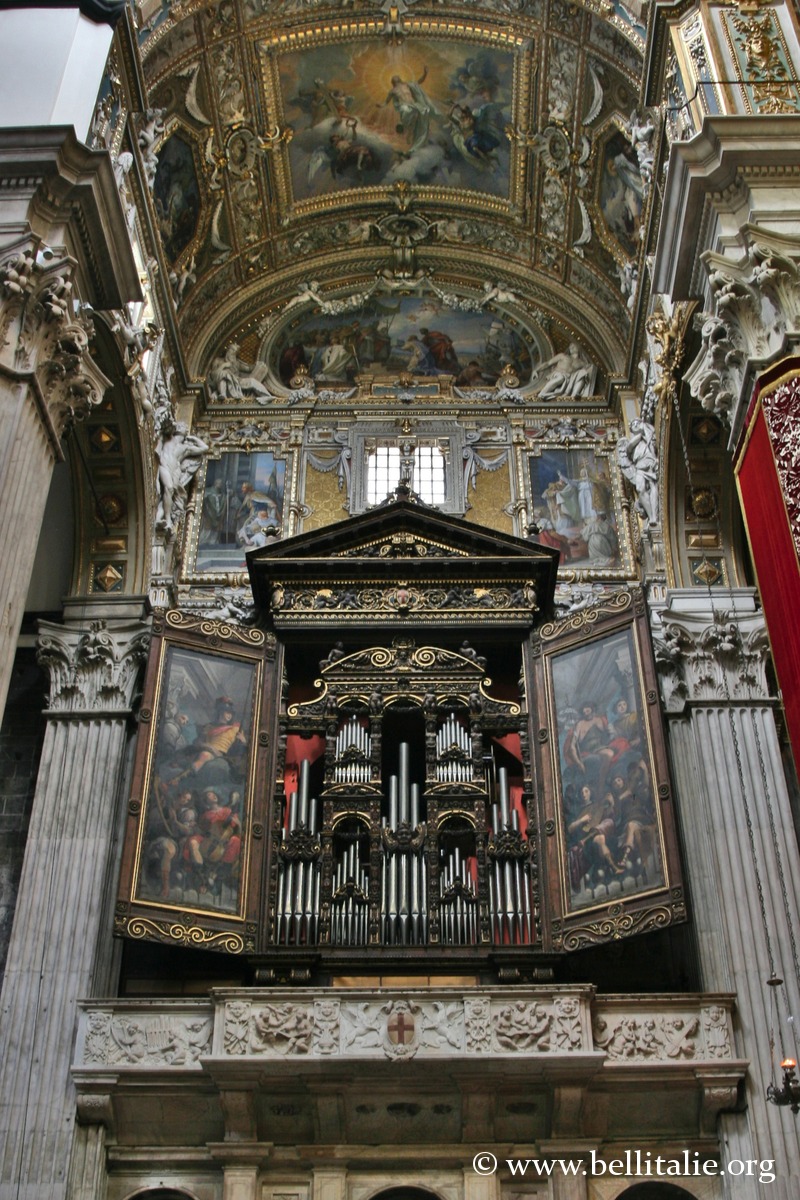
The interior preserves numerous sculptures, frescoes, paintings and relics. Mention should be made in particular, in the left nave, of the splendid Chapel of Saint John the Baptist from the 14th and 15th centuries with relics of the saint, including ashes brought to Genoa at the end of the First Crusade.
In the 17th century the gilded stuccoes of the apse were installed, along with late Mannerist frescoes of the Stories of San Lorenzo by Lazzaro Tavarone.
In the basement, the treasury museum houses other masterpieces including the Sacro Catino (the sacred bowl).
Diocesan Museum
The Diocesan Museum, accessible via Via Tommaso Reggio, preserves archaeological remains, sacred objects, and an important section of hangings (a production for which Genoa was long famous), including canvases of the Passion made in 1538 on linen fabric dyed with indigo blue. This fabric produced in Genoa, of cotton and linen dyed blue, was also the first jean, with which sailors were clothed.
Gallery
Information
- Official website: en.wikipedia.org
- Tourism portals: www.visitgenoa.it
Map
If you see this after your page is loaded completely, leafletJS files are missing.
- What to see in Liguria
- Genoa
- Cinque Terre
- Portofino
- Sestri Levante
- Lerici, Tellaro and Montemarcello
- Portofino Natural Park
- Portovenere
- Albenga
- Noli
- Rapallo
- Ventimiglia and Bordighera
- Other places of the Riviera di Levante
- Dolceacqua and Apricale
- From Savona to Arenzano
- Imperia and Cervo
- Finale Ligure and Finalborgo
- Gulf of Paradise – From Bogliasco to Camogli
- Sanremo, Bussana and Taggia
- Seborga, Pigna and Rocchetta Nervina
- Levanto
- From Moneglia to Bonassola


Comments