


Mantua is a wonderful city on the Po plain, inscribed by Unesco as a world heritage site in 2008. Its pleasant historic and pedestrian centre is an immersion in the past, in the Renaissance in particular, with palaces, squares and streets that are both peaceful and lively. It is in an inlet of the Mincio river that the city of Mantua developed, bordered by water on three sides, where the river forms several lakes that are covered with lotus flowers in summer. The landward side, to the south and south-west, was closed by powerful walls and a canal cut the city right through.
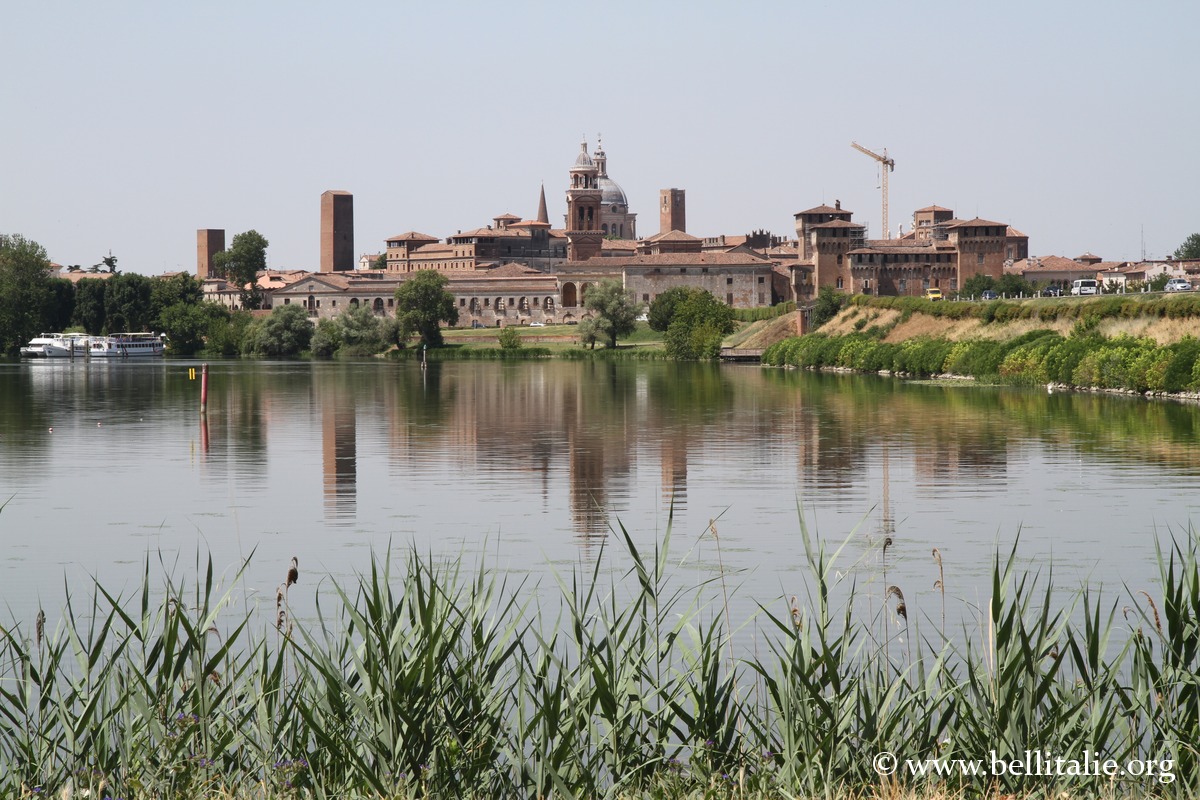
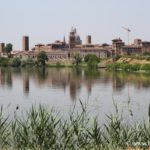
Access via the San Giorgio bridge to the north-east offers a superb view over Mantua, with the Ducal Palace and the castle dominating the waters of the lake.
In Mantua you discover remarkable monuments and squares, several churches, palaces and museums, largely inherited from the rule of the Gonzaga from 1328 to 1707 who made the city a jewel of the Renaissance.
First of all, let us mention the majestic Ducal Palace with its buildings such as the Castle San Giorgio, the refined Palazzo Te, the remarkable squares of Piazza Sordello with the Duomo and the Piazza Erbe with the Rotonda San Lorenzo, the Palazzo della Ragione, the Clock Tower astronomical and the beautiful Casa del Mercante.
The city centre is essentially pedestrian, with a limited traffic zone (ZTL). If you come by car, you can for example park in one of the two large free car parks: at the Campo Canoa on the other side of the lake, or on the other side of the city at the Piazzale Montelungo. From these, a free shuttle during the day takes you to the city centre.
The Mantua Literature Festival, more generally devoted to culture, bringing together writers from all over the world, at the beginning of September over 5 days with shows and concerts.
Monuments of Mantua
Below are the most remarkable places in Mantua. See also the dedicated page for more information To see in Mantua
If you see this after your page is loaded completely, leafletJS files are missing.
- The Ducal Palace of Mantua is a monumental complex between the Piazza Sordello and the Lower Lake, one of the largest in Europe, largely inherited from the Gonzaga who completed the central core (Palazzo del Capitano and Magna Domus), with palaces, courtyards, gardens, including of course the castle San Giorgio. The more than 500 rooms preserve Renaissance treasures including the frescoes by Pisanello.
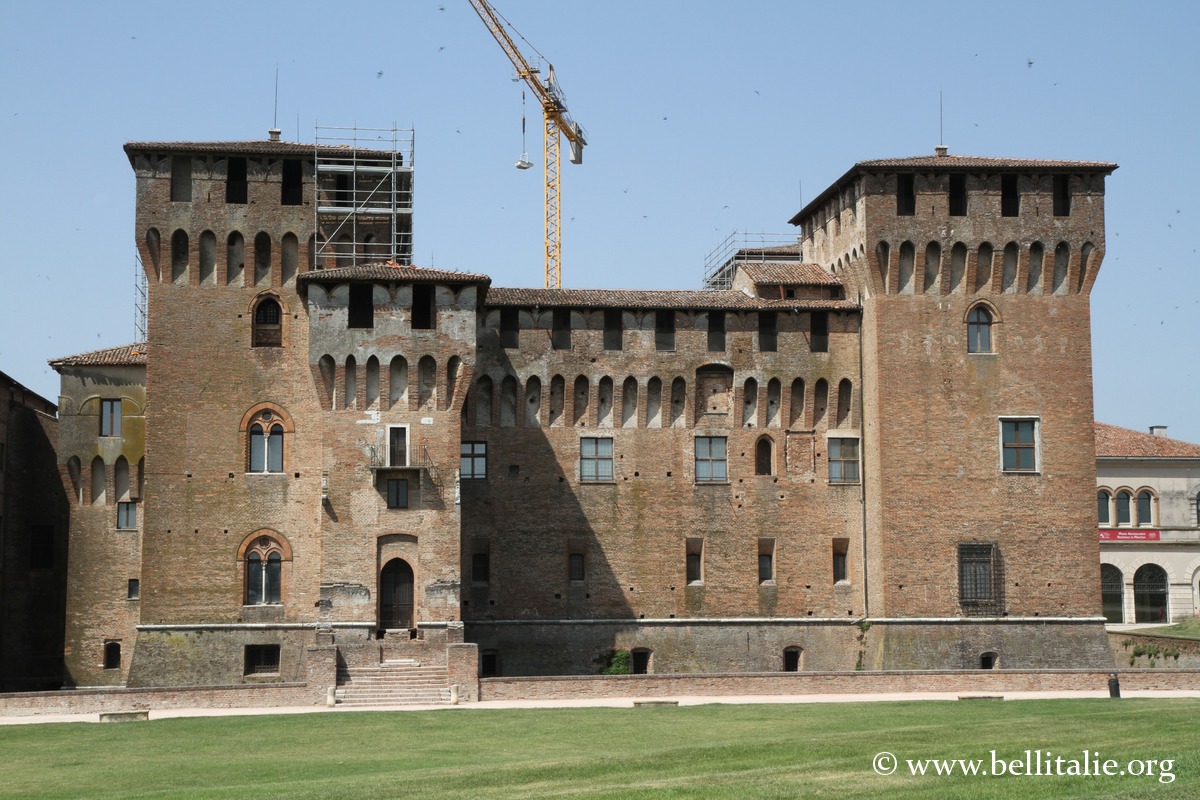
- The Castle Saint George, within the ducal palace, showing majestically from the San Giorgio Bridge, dates back to the late 14th – early 15th century, with its towers and its moat, its rooms with the prestigious frescoes by Andrea Mantegna in the Chamber of the Spouses.
- The elegant Basilica of Saint Andrew is the most important religious building in Mantua, from the Renaissance, built from the 15th to the 18th century, with a majestic interior.
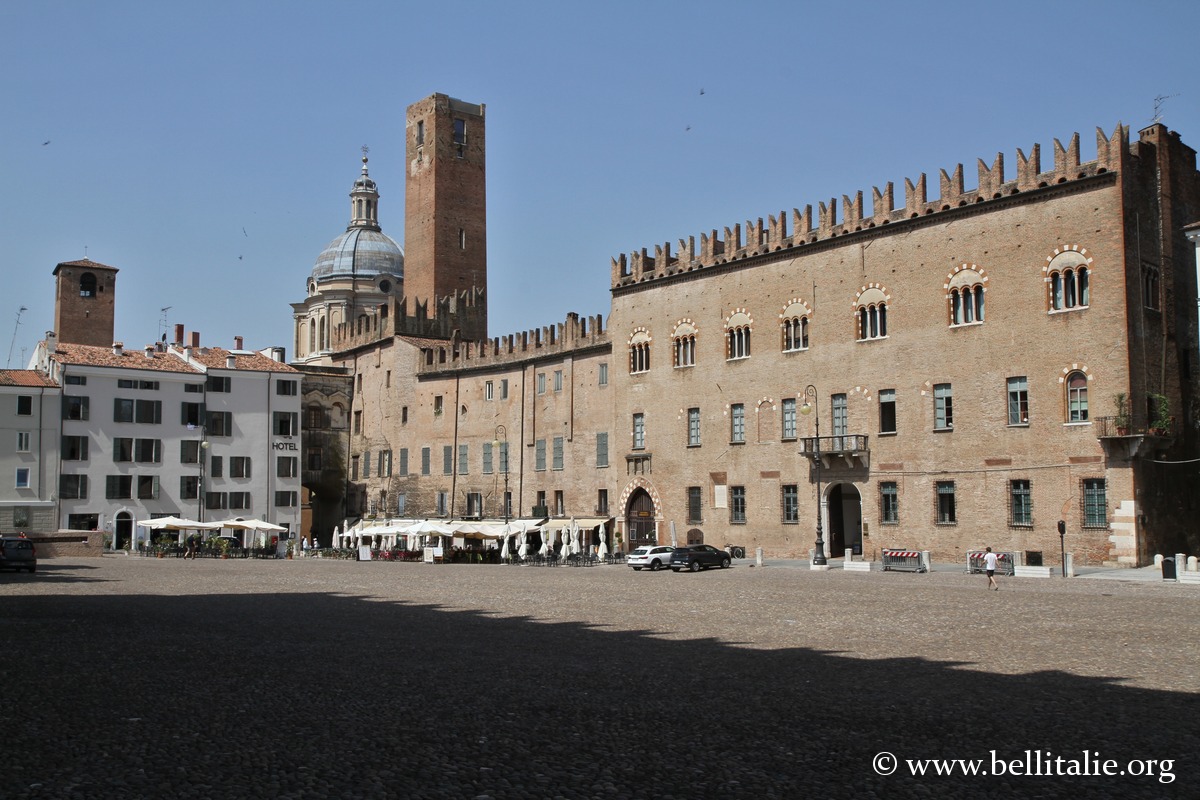
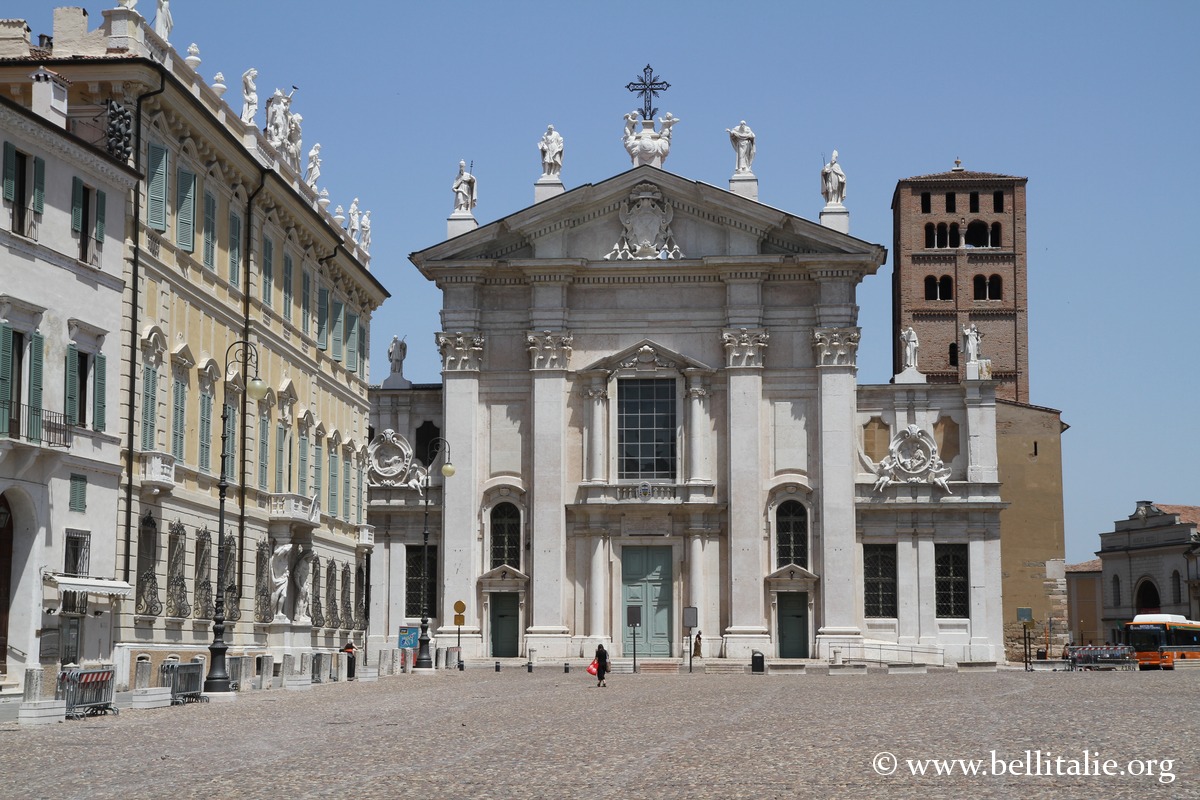
- The harmonious large and rectangular Piazza Sordello is the largest square in Mantua, surrounded by prestigious buildings, including buildings of the Ducal Palace, the Saint Peter’s Cathedral and its Romanesque bell tower, old palaces, then the Gabbia Tower and the Voltone de San Pietro, an old gate.
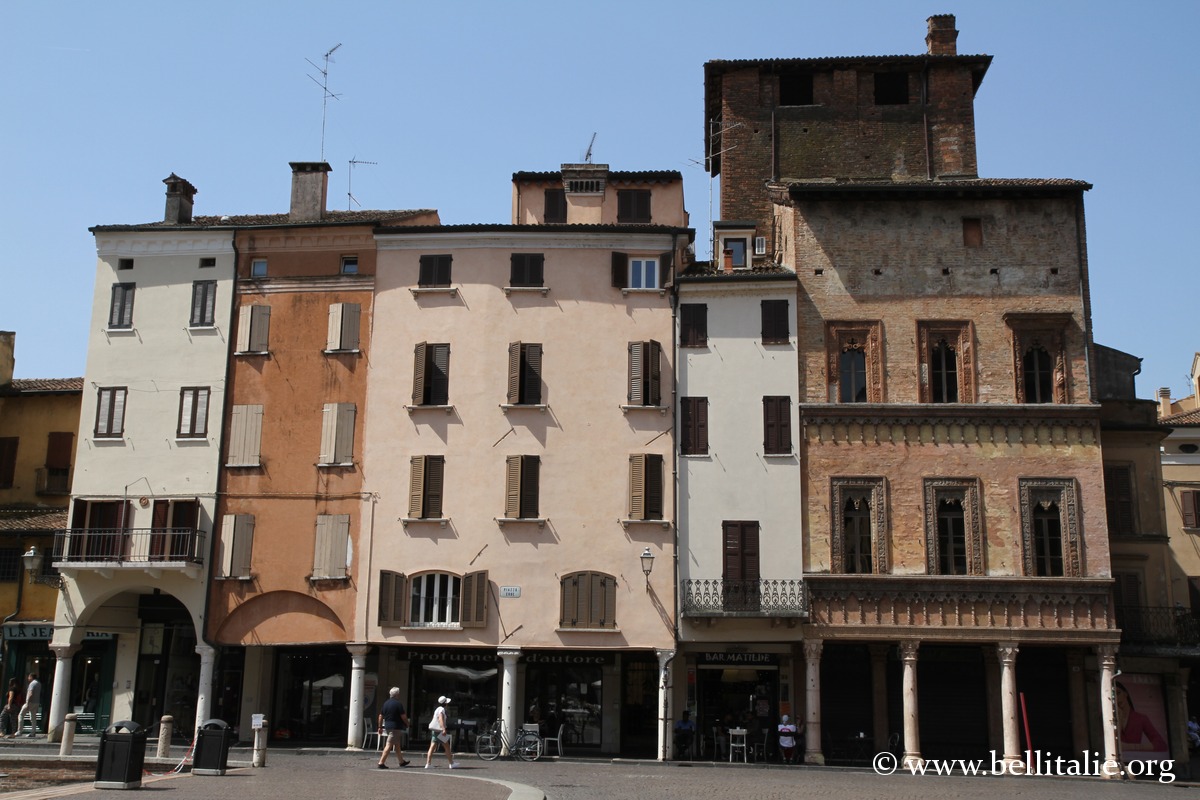
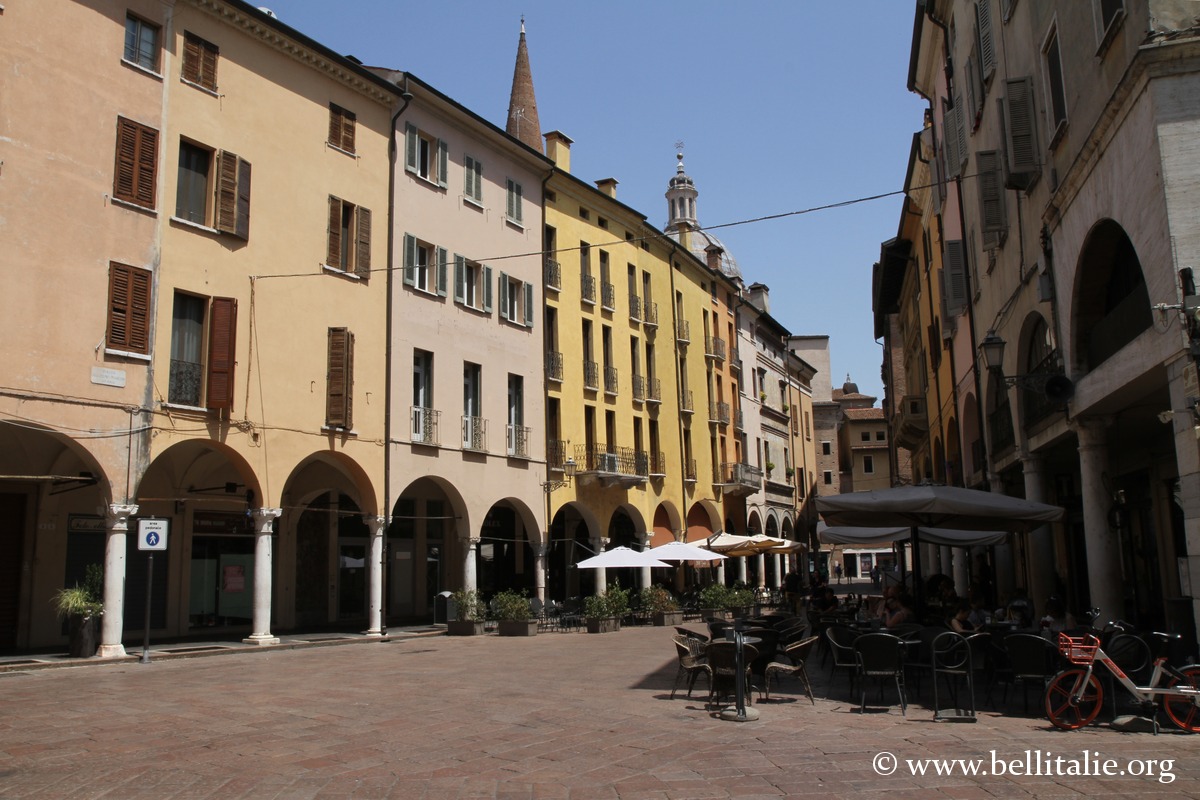
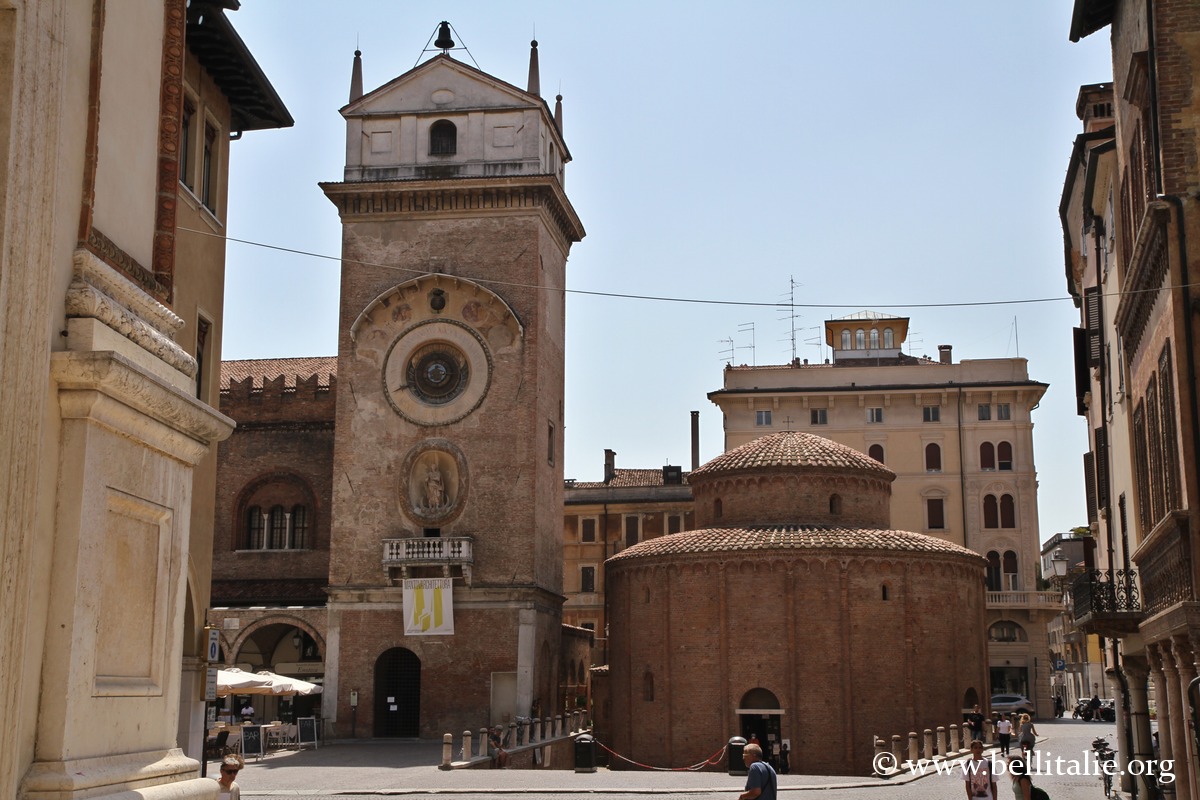
- The Piazza delle Erbe is quite small but charming with its arcades and its old buildings, including the Rotonda San Lorenzo, the Palazzo della Ragione, the tower with the Astronomical Clock, the Merchant’s House and the rear of the Broletto.
- The Rotonda San Lorenzo is the oldest church in the city, from the end of the 11th century. It is a Romanesque building of cylindrical shape, inspired by the Holy Sepulchre of Jerusalem.
- The beautiful Palazzo Te is a 16th-century palace created by Giulio Romano, with many rooms, such as the Chamber of the Giants with its impressive frescoes. It houses the Civic Museum of Mantua.
- The Palace of the Podestà, with its main facade on the square of the same name, dates from the 13th century, with the civic tower and the Portico dei Lattai.
- The Saint Peter’s Cathedral, of ancient origin, was rebuilt in the 16th century and keeps from the previous Gothic building a side facade, and a Romanesque bell tower.
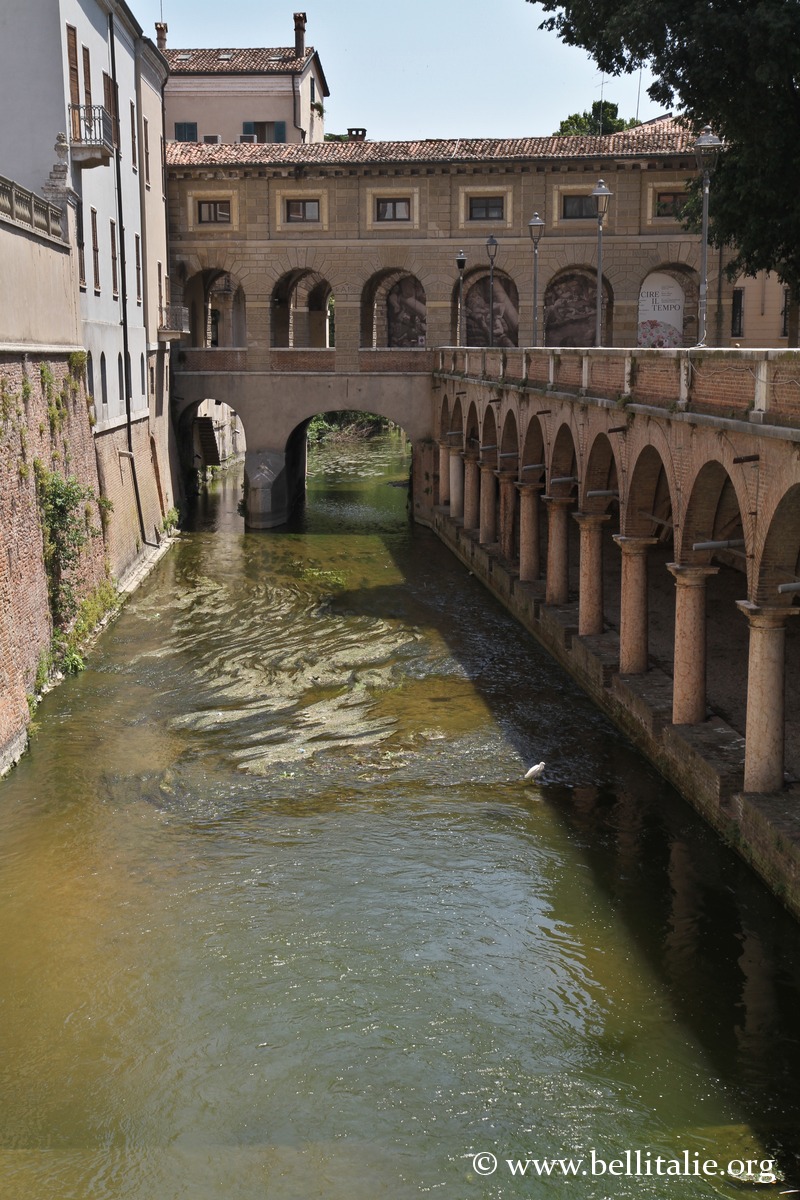
- The Loggia delle Pescherie is an emblematic site of Mantua, along a canal that crosses the city. This is where the fish arrived, next to a 16th-century market of which a portico remains.
11. The House of Mantegna from the 15th century
12. The Bibiena Theatre in the shape of a bell
13. The Archaeological Museum on the Piazza Castello
14. The Neoclassical Museum Palazzo D’Arco
15. To do and other places
– Boat trip on the lakes around Mantua
– Piazzetta Matilde di Canossa
– The public gardens
– Church of San Sebastiano
16. In the surroundings: Sabbioneta
Gallery
Gastronomy in Mantua
The cuisine of Mantua is considered substantial, based on meat, especially pork which is often the star of the table, braised or simmered, and on products of the land, often with squashes and pumpkins that grow in the surrounding plain, typical tortelli, the bigoli and agnolini pasta, right up to dessert specialities.
The court of the Gonzaga also had a « masalin » whose job was to make sausages and hams.
There are also rice fields of Mantua towards Veneto, from which Risotto alla Pilota is made, with pork sausage.
It is also a land of Lambrusco, of Parmigiano and Grana, and of mustard.
The typical cakes are the Sbrisolona made with almonds and the Monk’s Ring (Near Piazza Mantegna, the Tur dal Sucar pastry shop is one of the best known in Mantua).
Among the eateries let us mention a few: Osteria dei Ranari, via Trieste 11, in a traditional setting with typical cuisine, and of the same kind the famous Osteria dell’Oca opposite, the Osteria delle Quattro Tete, Vicolo Nazione 4, or also Bice La Gallina Felice.
Itinerary for one or two days
The Palazzo Te can take 3 hours, but it is worth it.
- Palazzo Te and Camera dei Giganti
- Loggia delle Pescherie
- Piazza delle Erbe, Basilica of Sant’Andrea and climb the Clock Tower
- Piazza Sordello and Duomo
- Ducal Palace and Castle of Saint George (single ticket €12.00)
- Historic centre
Information and map
- Wikipedia article: en.wikipedia.org
- Tourist portals: www.in-lombardia.it, www.turismo.mantova.it
If you see this after your page is loaded completely, leafletJS files are missing.


Comments