


This page complements the general presentation of Mantua, with the most interesting places to discover. Let us first mention the great Ducal Palace which brings together buildings from various periods, especially the Renaissance, such as the Castle of San Giorgio.
On the opposite side of the city stands the elegant Palazzo Te, and in the historic center, the large Piazza Sordello with the Duomo, palaces and buildings flanking the Ducal Palace, the Piazza Erbe with the Rotunda of San Lorenzo, the Palazzo della Ragione, the astronomical Clock Tower and the beautiful Casa del Mercante.
 Show interactive map
 1. Ducal Palace
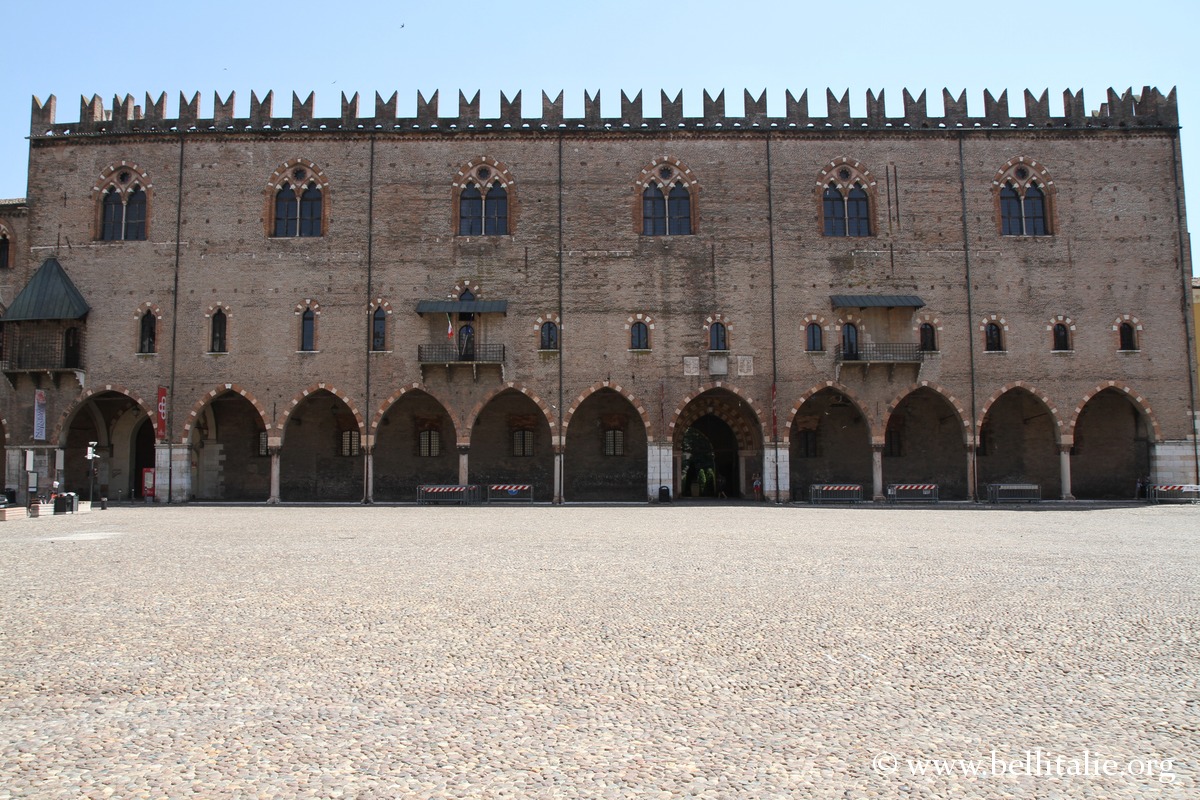
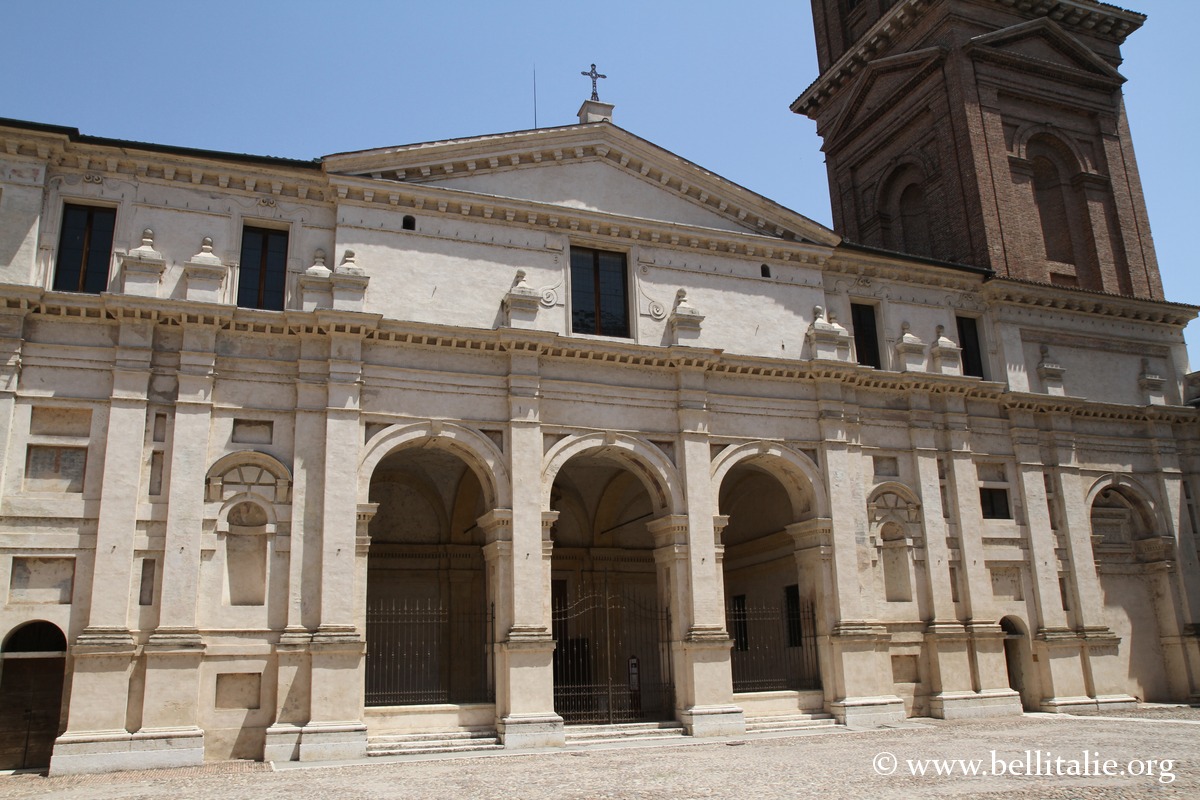 The Ducal Palace of Mantua is a monumental complex between Piazza Sordello and the Lower Lake, one of the largest in Europe, largely inherited from the Gonzaga of Mantua who ruled the city from 1328 to 1707, following their rivals the Bonacolsi, lords from 1272 to 1328. In the 16th century it brought together buildings including the castle and the monuments of the original nucleus formed by the Captain’s Palace (Palazzo del Capitano) and the Magna Domus which date back to the Bonacolsi around the Corte Vecchia.
The complex includes several squares, including Piazza Castello, Piazza Santa Barbara and Piazza Pallone. Between the courtyards, the gardens and more than 500 rooms, artistic treasures of the Renaissance can be discovered, in particular by Tintoretto, Titian, the court painter Andrea Mantegna, or Pisanello with a cycle of frescoes by Pisanello.
Castle of Saint George
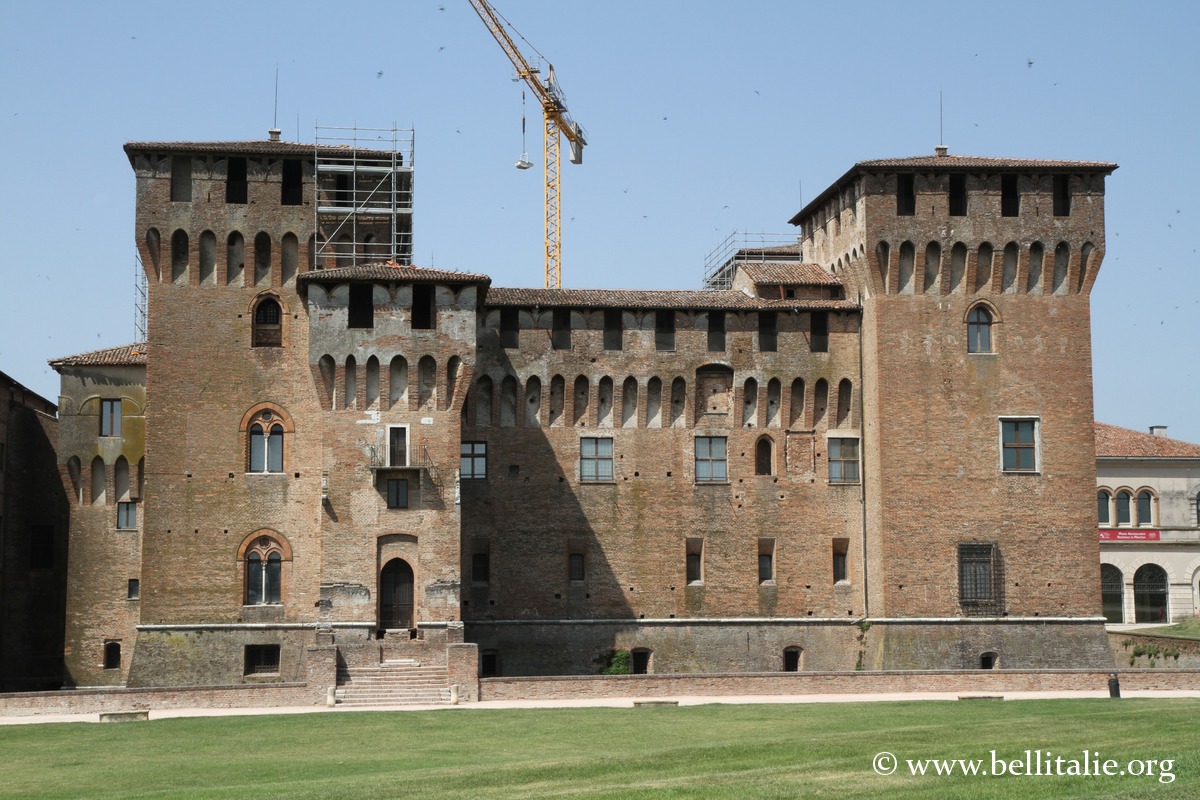
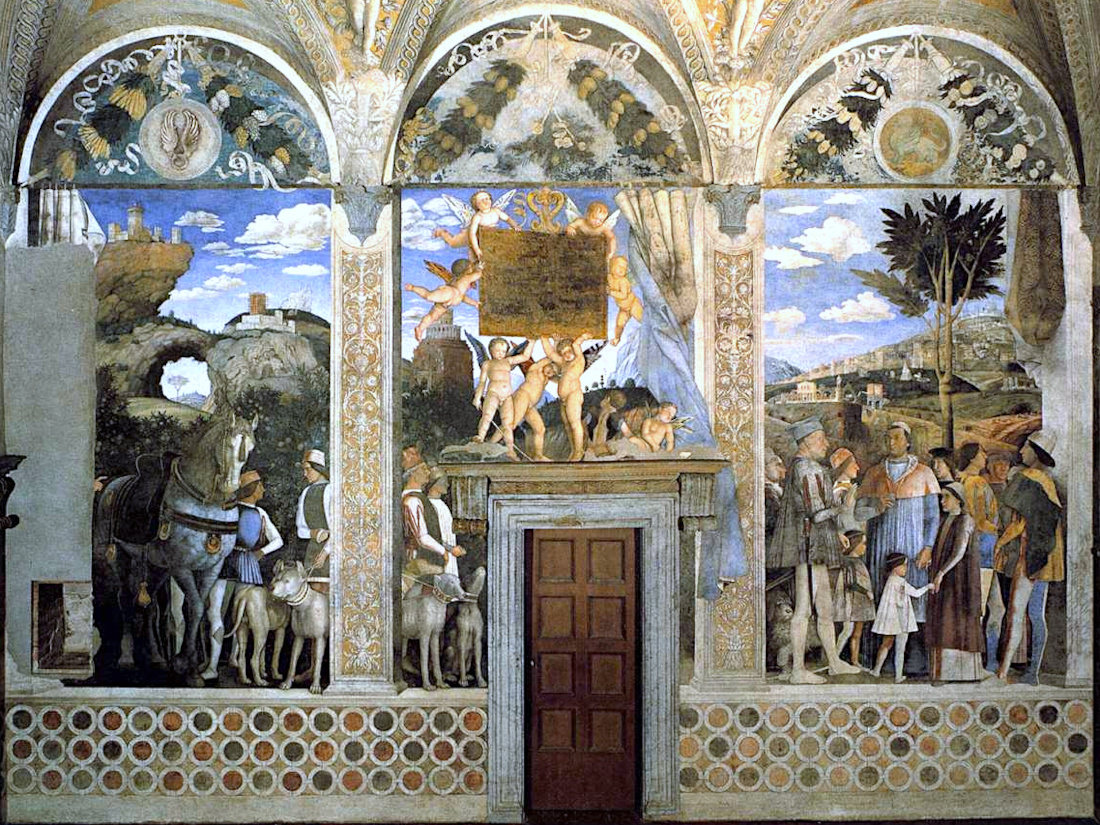
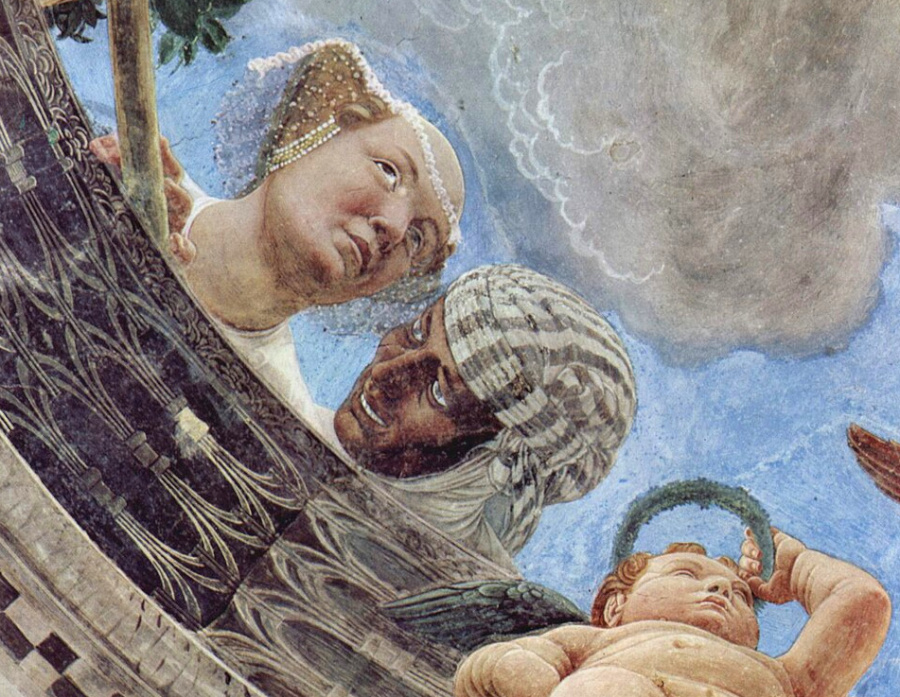
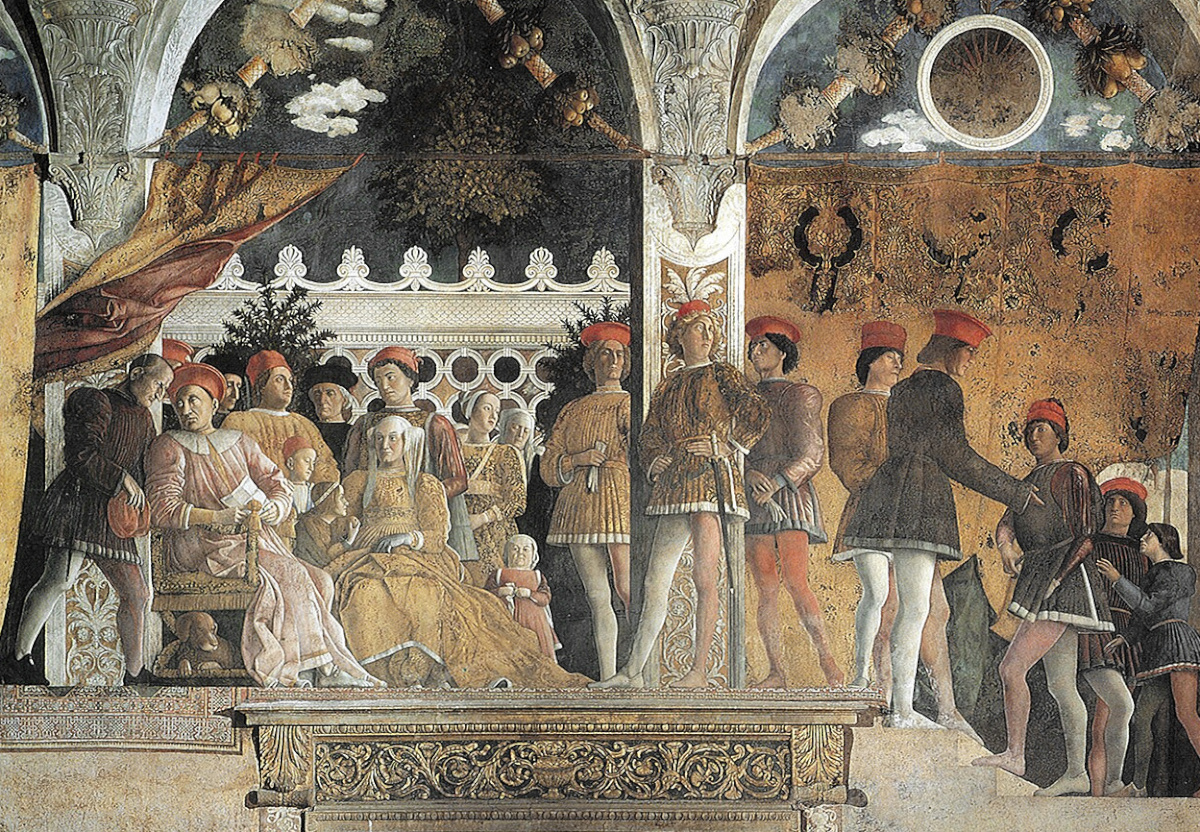
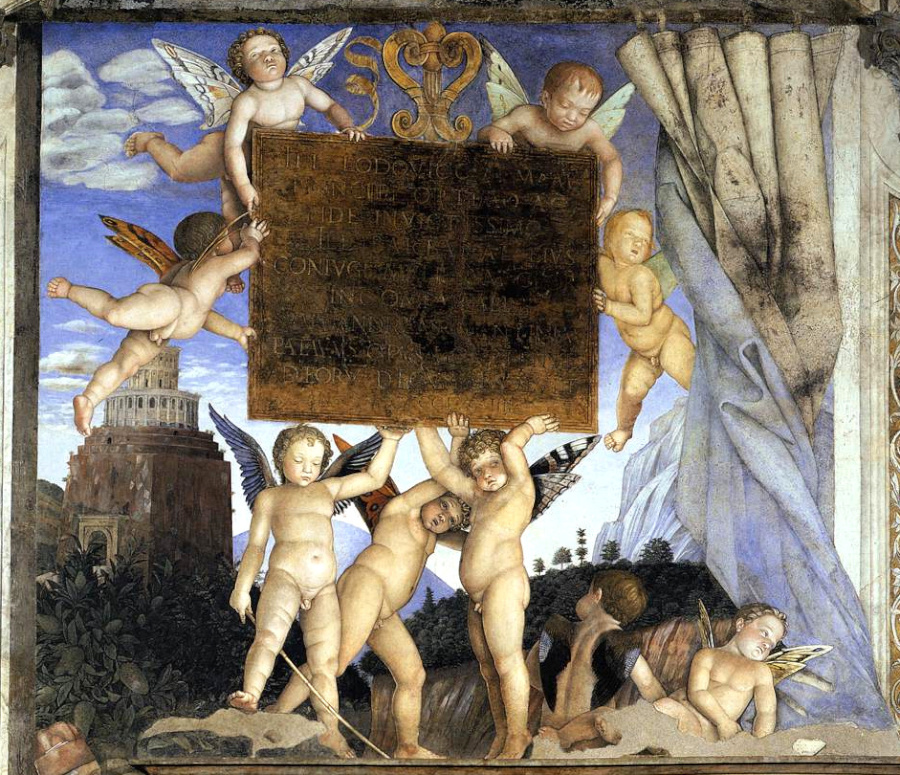
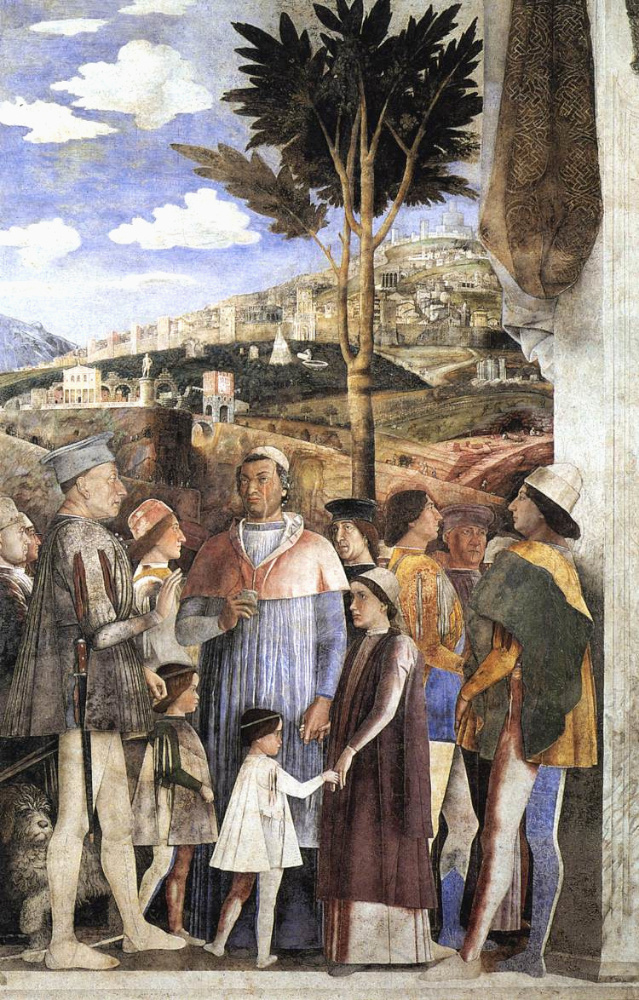
The 16th-century Castle of San Giorgio (see below) houses Mantegna’s Chamber of the Spouses.
In the apartments of the Domus Nova, the Hall of the Labyrinth has a coffered ceiling decorated with a golden labyrinth on a blue background with the repeated inscription “Maybe yes or no”. Many pieces of furniture and works have disappeared, when the Gonzaga had to go into exile, then after the passage of the Napoleonic armies. There nevertheless remain in particular the Gonzaga Family in Adoration of the Trinity by Rubens.
Piazza Castello is surrounded on three sides by Renaissance porticoes, with on the south side an exedra to enter the Castle of San Giorgio. On the scenographic and polygonal Piazza Santa Barbara is the facade of the Palatine Basilica, built between 1562 and 1572. On the Piazza del Pallone, the court played ball.
2. Castle of Saint George
 From the San Giorgio Bridge, the Castle of Saint George (Castello San Giorgio in Italian) displays itself majestically on the edge of the lake. Set within the Ducal Palace, it is a symbol of the power of the Gonzaga, dating from the late 14th to early 15th century.
It is a square structure with four corner towers surrounded by a moat, accessible through three doors with drawbridges.
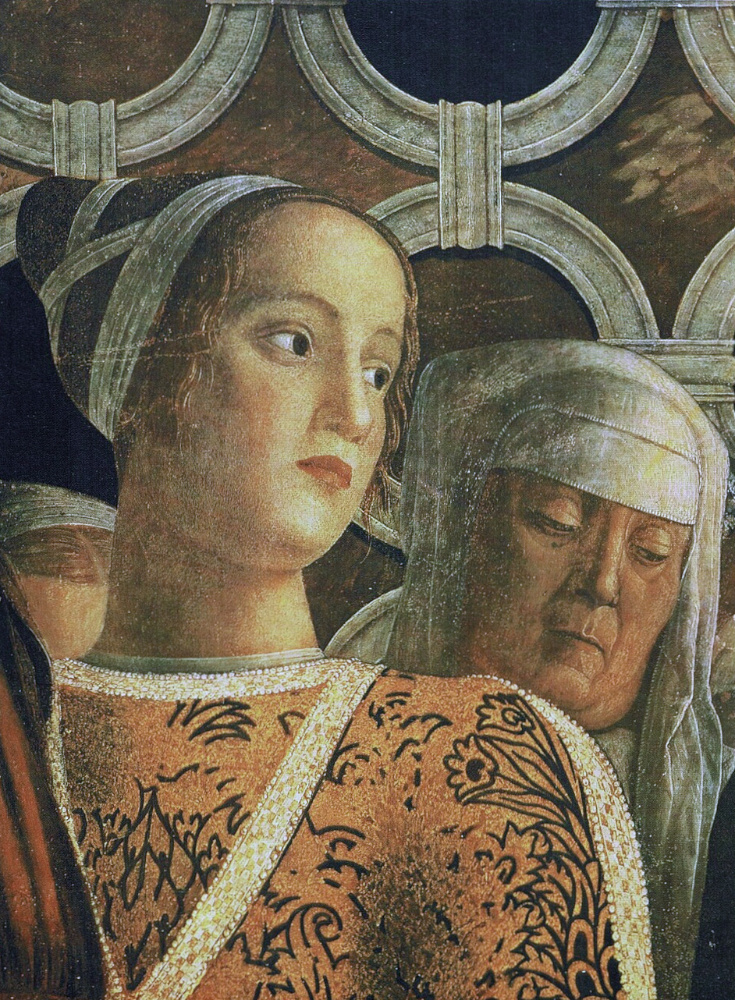
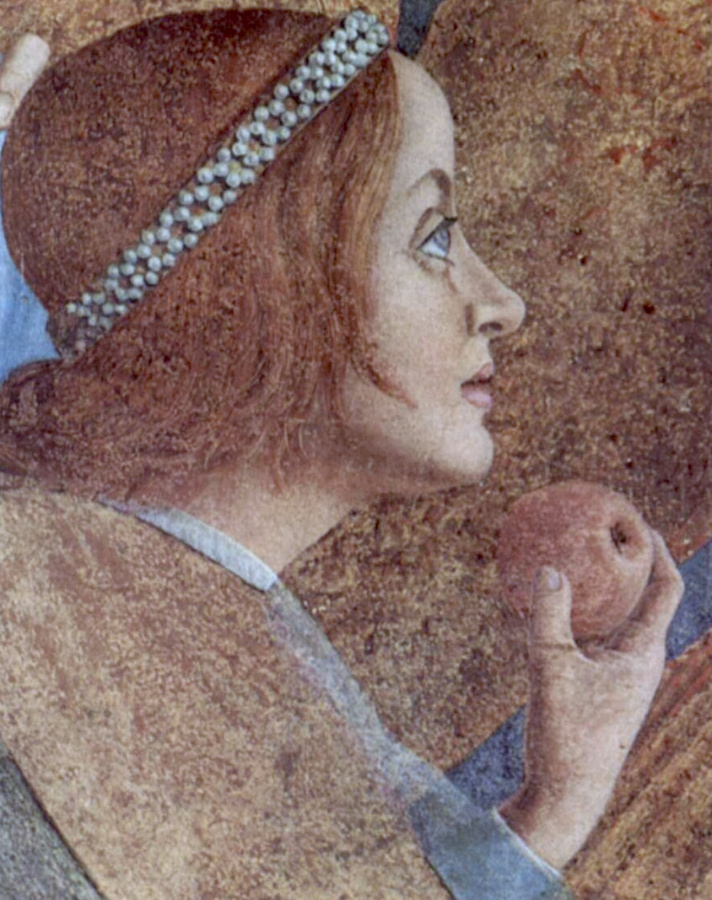
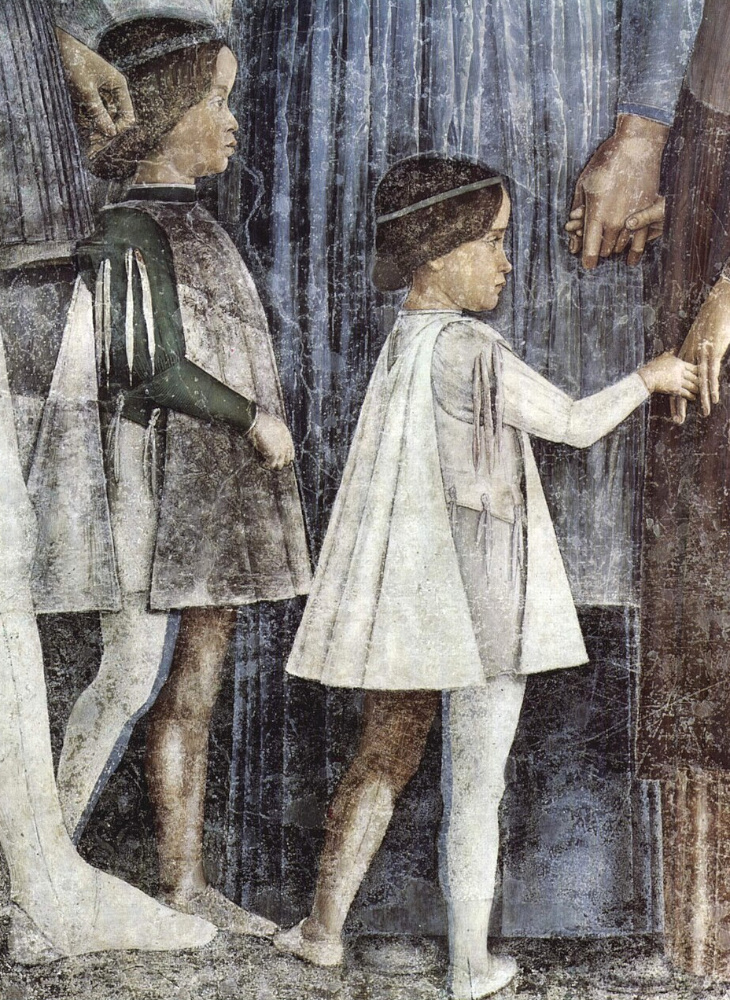
The interior preserves artistic and architectural testimonies, as in the Apartments of Isabella d’Este, the Sala dei Principi, the Sala dei Soli, the Gallery of the Months, or the Hall of the Zodiac. But the most prestigious work in Mantua is the fresco by Mantegna (1465-74) in the Chamber of the Spouses or “Camera Pica”, where the painter skilfully played with spaces and, using perspective, staged the figures of the Gonzaga family. On one wall, called the “court” wall, the members of the Gonzaga family are seen: Marquis Ludovico II and his wife Barbara of Brandenburg, their children and the secretary. The scene called the “meeting” celebrates the dynastic lineage, with Ludovico II Gonzaga, his son Francesco named cardinal, his brother Louis, and his nephew Sigismondo. On the west wall, in the background, an inaccurate representation of Rome is seen.
3. Basilica Sant’Andrea
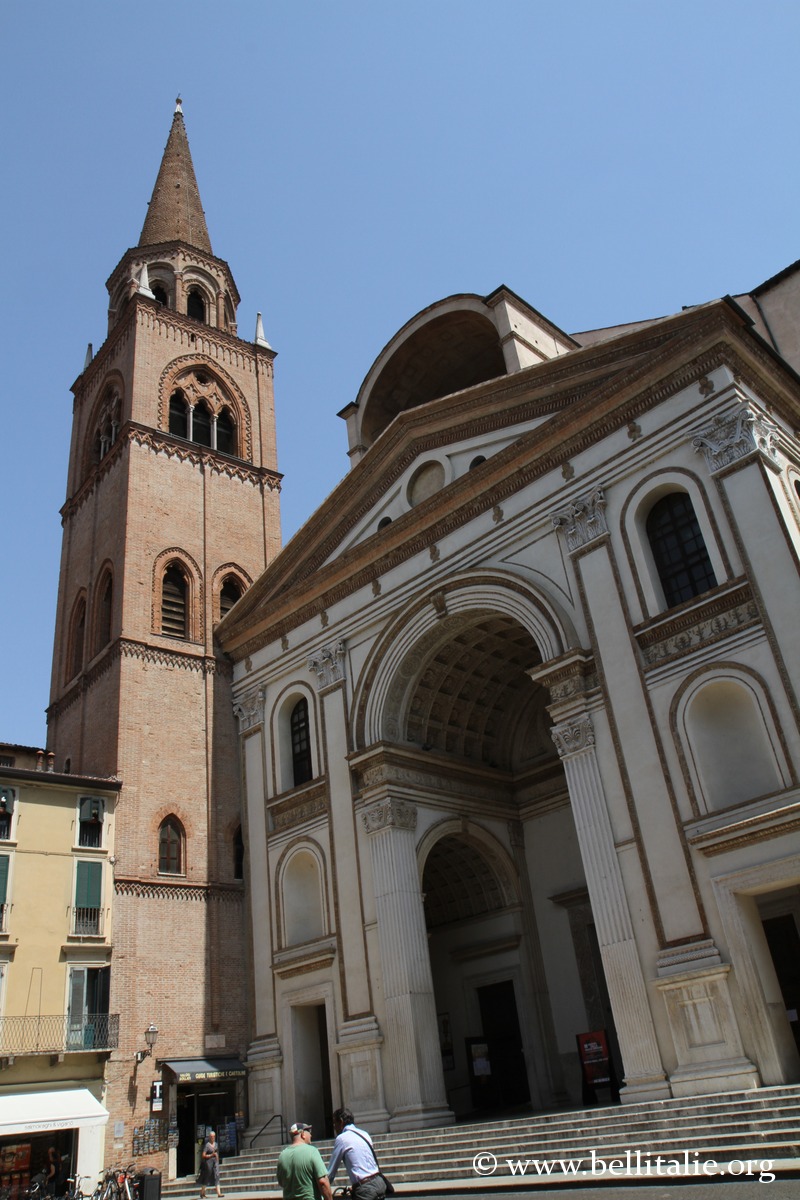
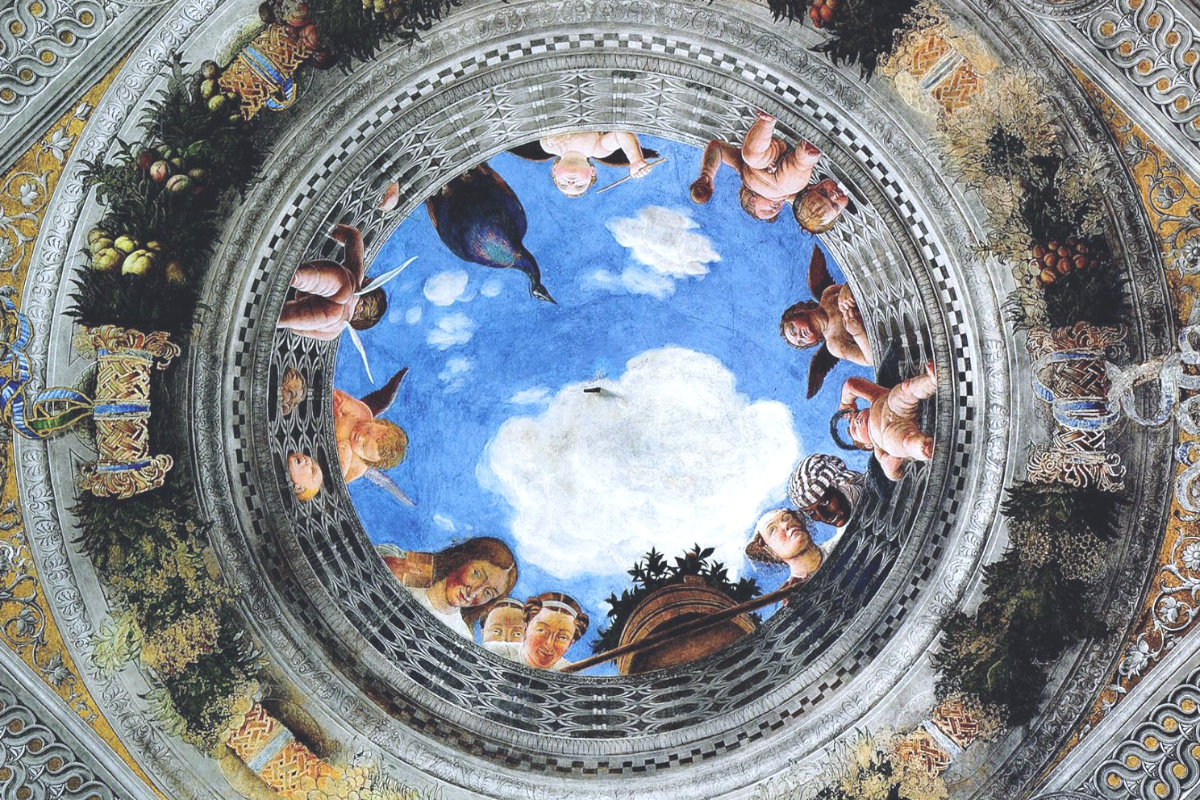
Facade of Saint Andrew
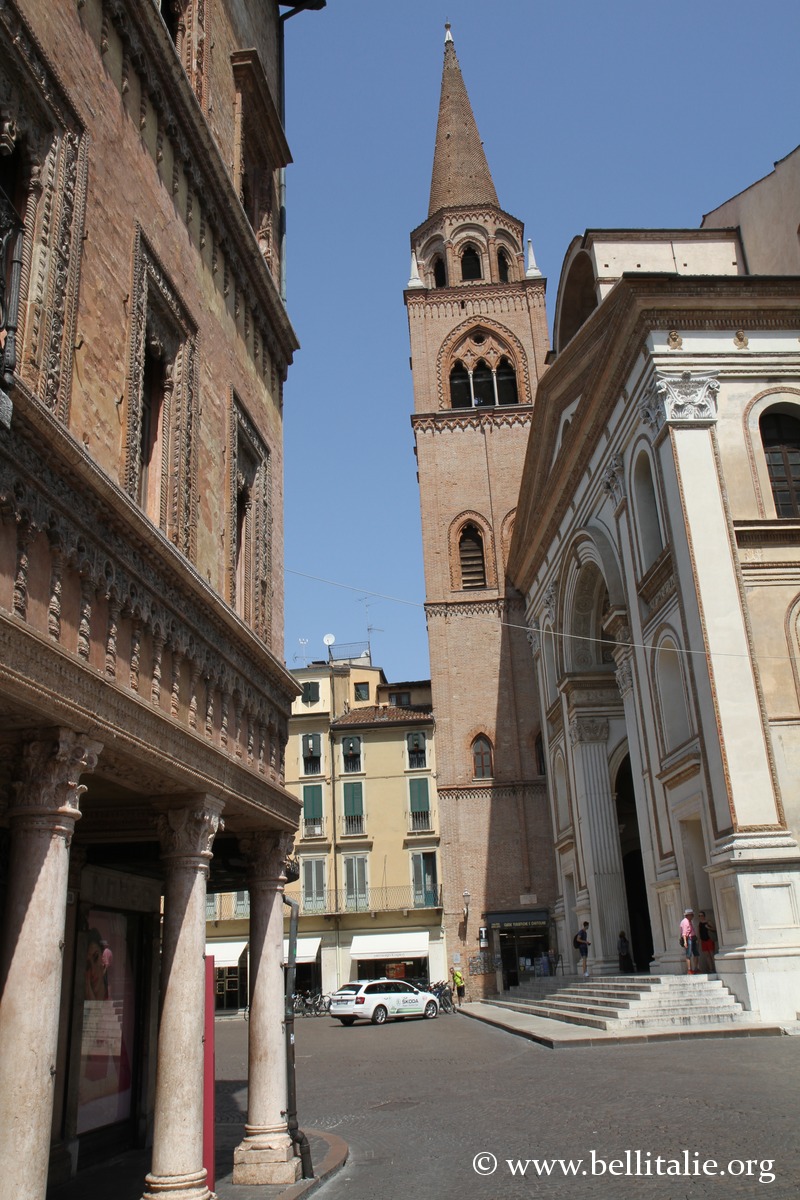
On the small Piazza Mantegna stands the elegant Basilica Sant’Andrea (Basilica of Saint Andrew in English) which is the most important church in Mantua and a significant testimony of the Renaissance, created by Leon Battista Alberti from 1472 with a dome by Filippo Juvarra added in the 18th century. It was built by demolishing the 11th-century Benedictine monastery.
The inclusion of the triumphal arch in the facade was a novelty for a sacred building.
Its vast interior in the shape of a cross is formed by a large nave covered with a barrel vault, with three large chapels on each side, with a crossing covered by the dome, with altars and works by artists such as Mantegna or Correggio.
According to tradition, the church preserves the earth with the blood of Christ that flowed at the foot of the cross when the Roman centurion Longinus pierced his side. The latter is said to have buried the urn in Mantua at his death in 37 AD, and nearly 800 years later the apostle Andrew indicated where to find it to the blind Adalbert.
A church was then built around the 10th century, and then the relic of Longinus’ bones was discovered in 1048.
The relics are kept in the 17th-century crypt.
4. Piazza Sordello
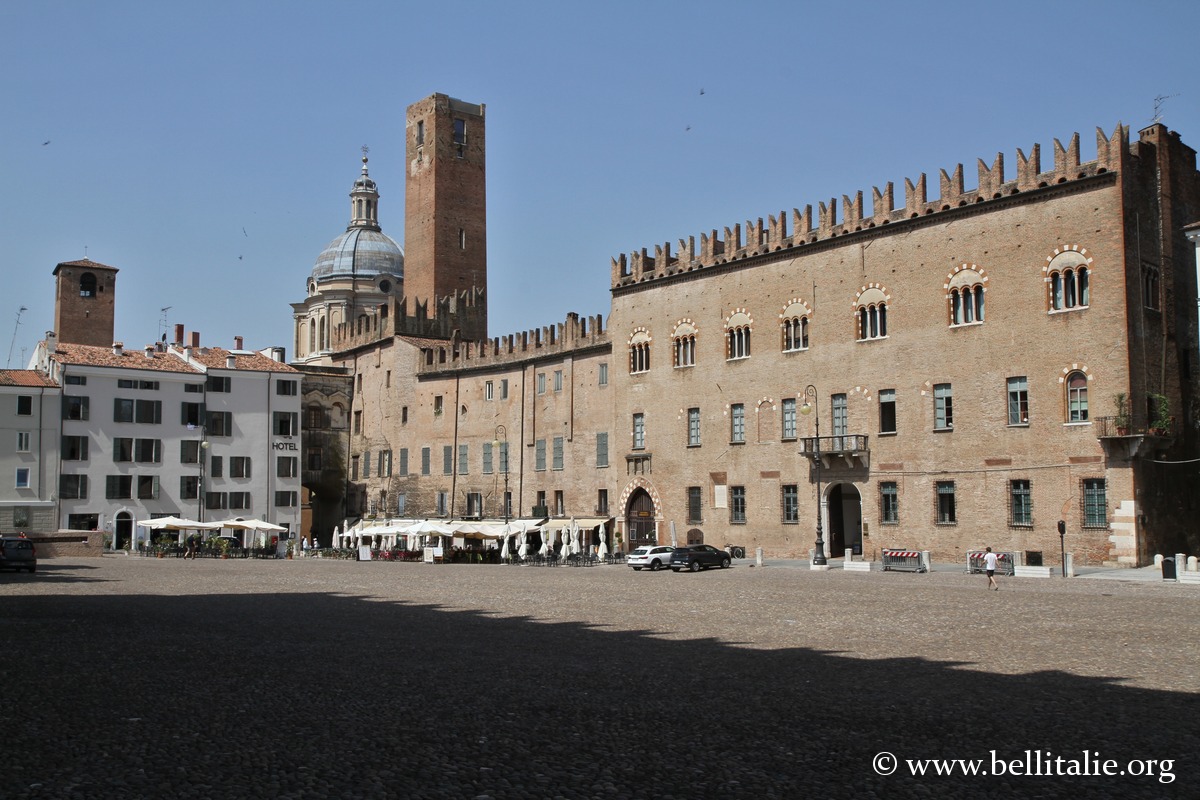
Piazza Sordello
The harmonious Piazza Sordello is an important square in Mantua and the largest, surrounded by prestigious buildings, some of them part of the Ducal Palace. It is dedicated to the troubadour poet Sordello, and was also long called Piazza San Pietro. It was laid out during the 14th century.
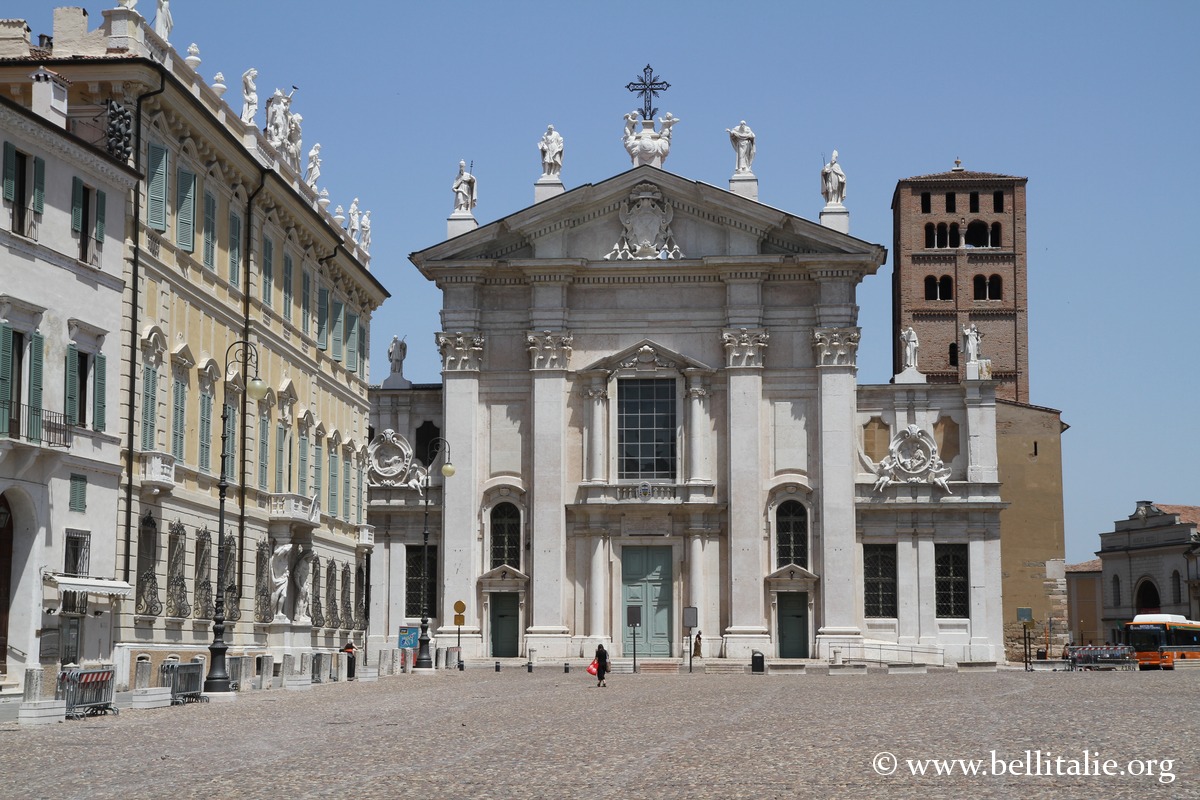
There is the Saint Peter’s Cathedral with its neoclassical facade where important members of the Gonzaga family are buried. Next to it stands the Tower, then the 18th-century Episcopal Palace with its two telamons, the Palazzo Ca’ degli Uberti with the suggestive Bonacolsi alley. The latter is in a late Gothic style with traces from the 14th century.
Then towards the south at the other end stand the Palazzo Castiglioni, the Palazzo Acerbi with the Torre della Gabbia and closing the square, the Voltone di San Pietro, one of the three ancient gates of the city, which allowed passage from the “Old Town”, domain of the Gonzaga, to the “New Town” or the communal town. On the facade of the tower facing via Cavour, at nearly 30 meters above the ground, hangs a beautiful cage two meters by one, installed by Duke William of Gonzaga to publicly display condemned prisoners.
On the eastern side of the square can be seen the Palazzo del Capitano and the Magna Domus, the original nucleus of the Ducal Palace.
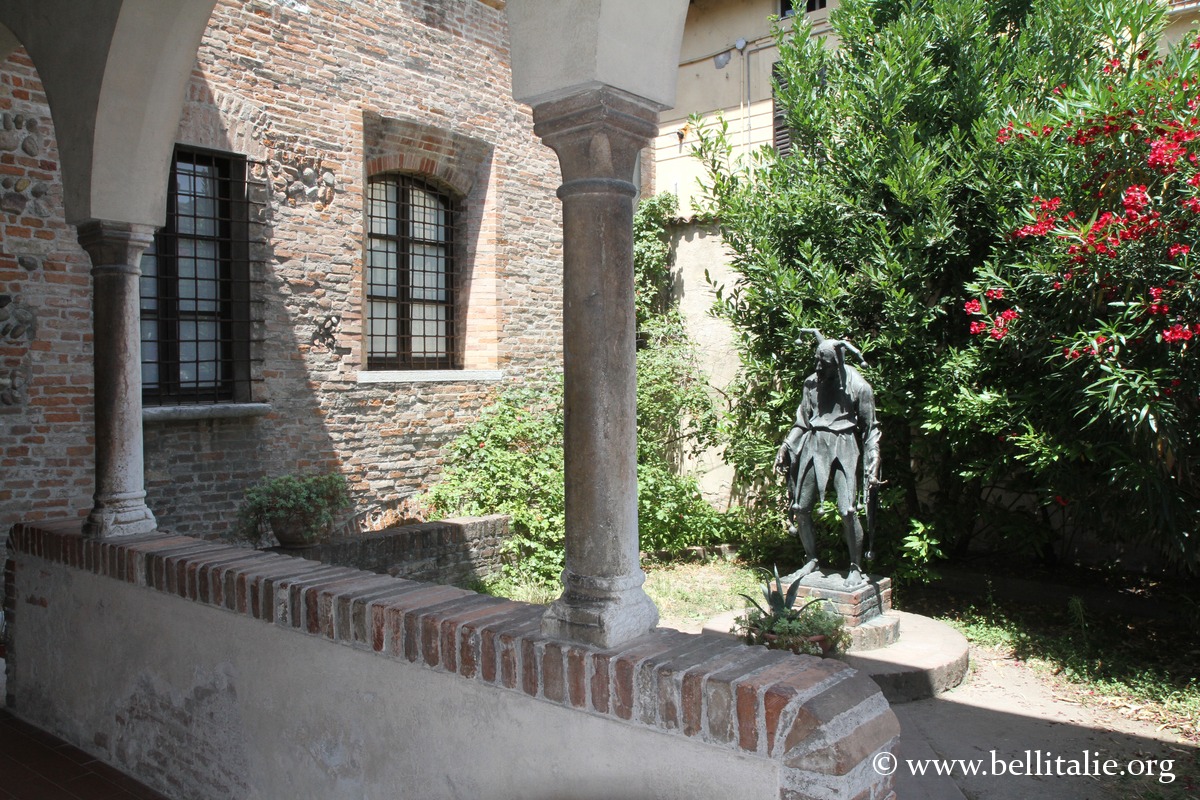
Behind the cathedral there is a very beautiful 15th-century house called Casa di Rigoletto with a small loggia and a garden where a statue of a jester placed here in 1978 recalls that it served as the setting for Verdi’s opera Rigoletto (today housing a tourist information office).
5. Piazza delle Erbe
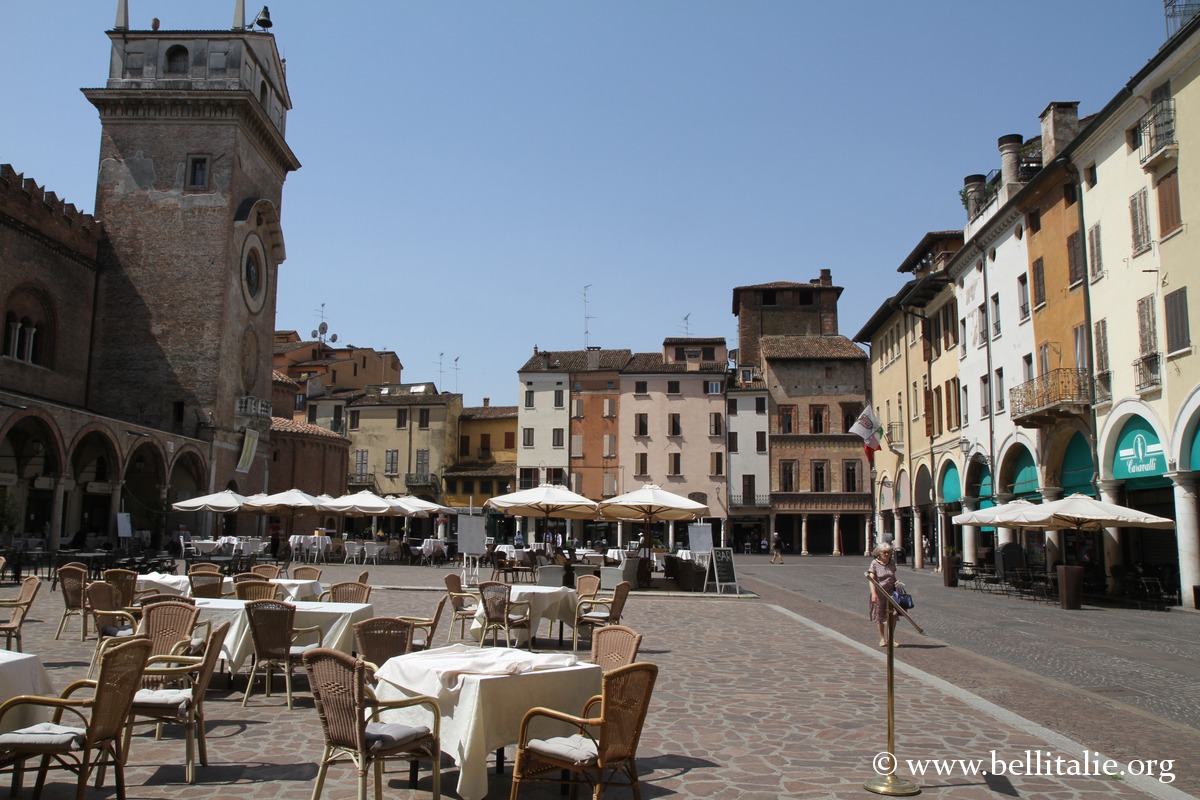
Piazza delle Erbe
The Piazza delle Erbe is one of the most beautiful squares in Mantua, whose name bears witness to its function as a market square, for fruit and vegetables in particular.
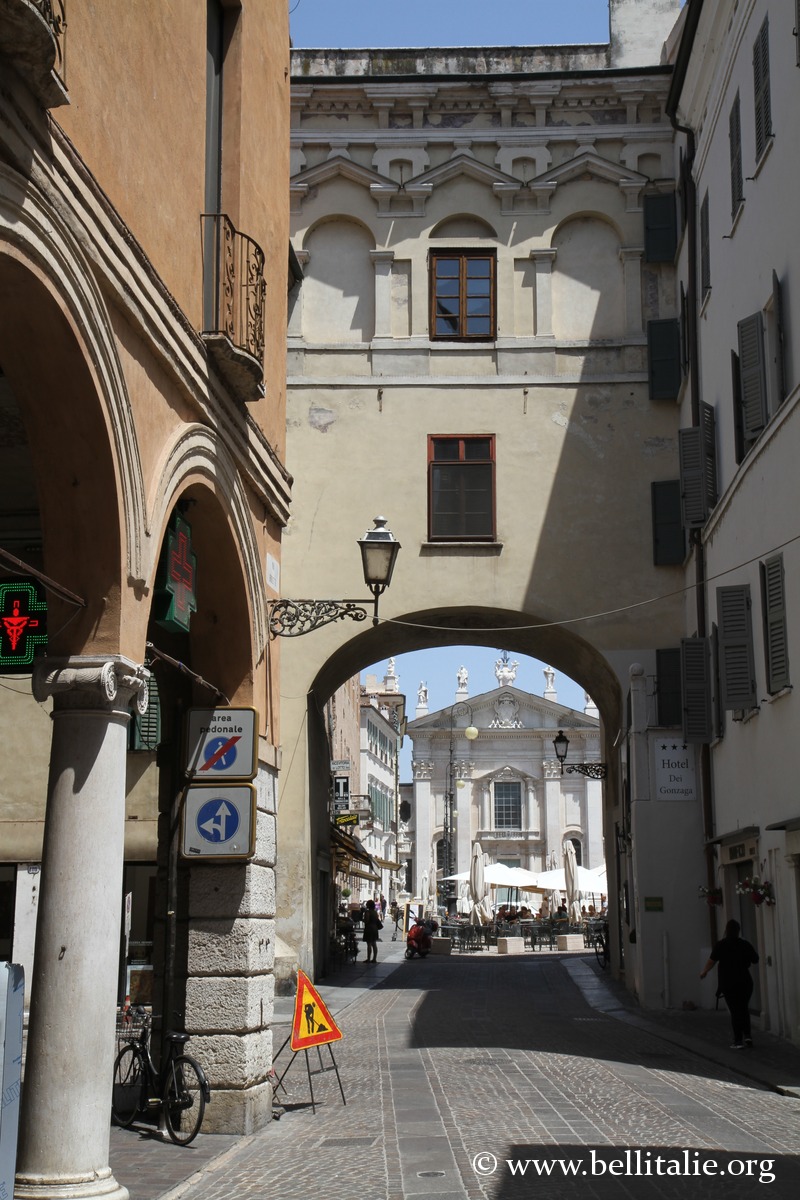
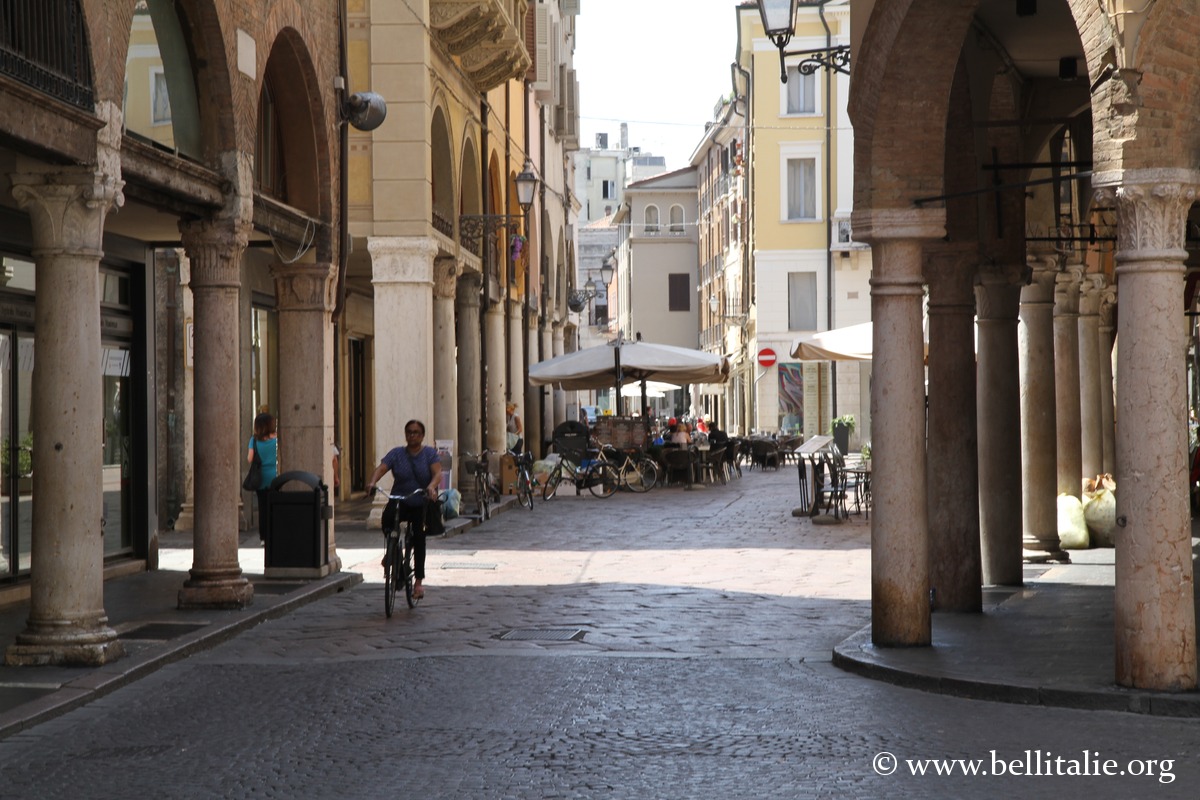
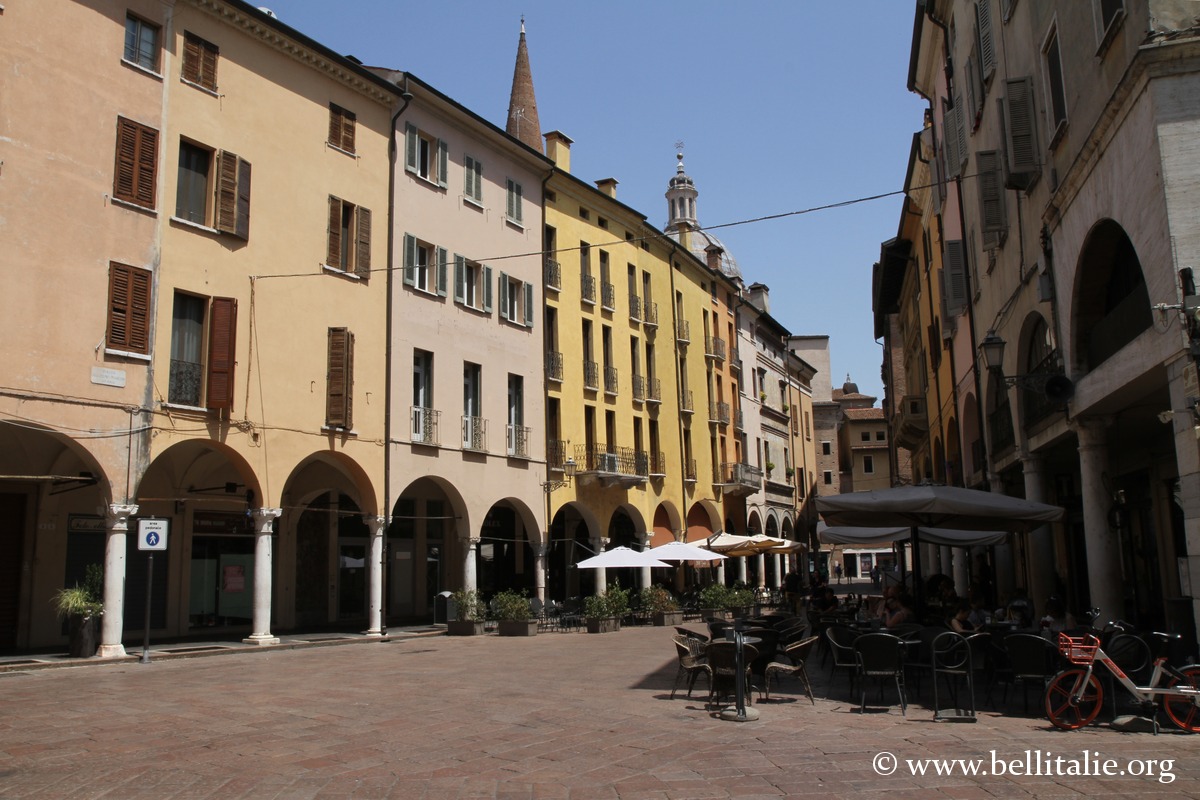
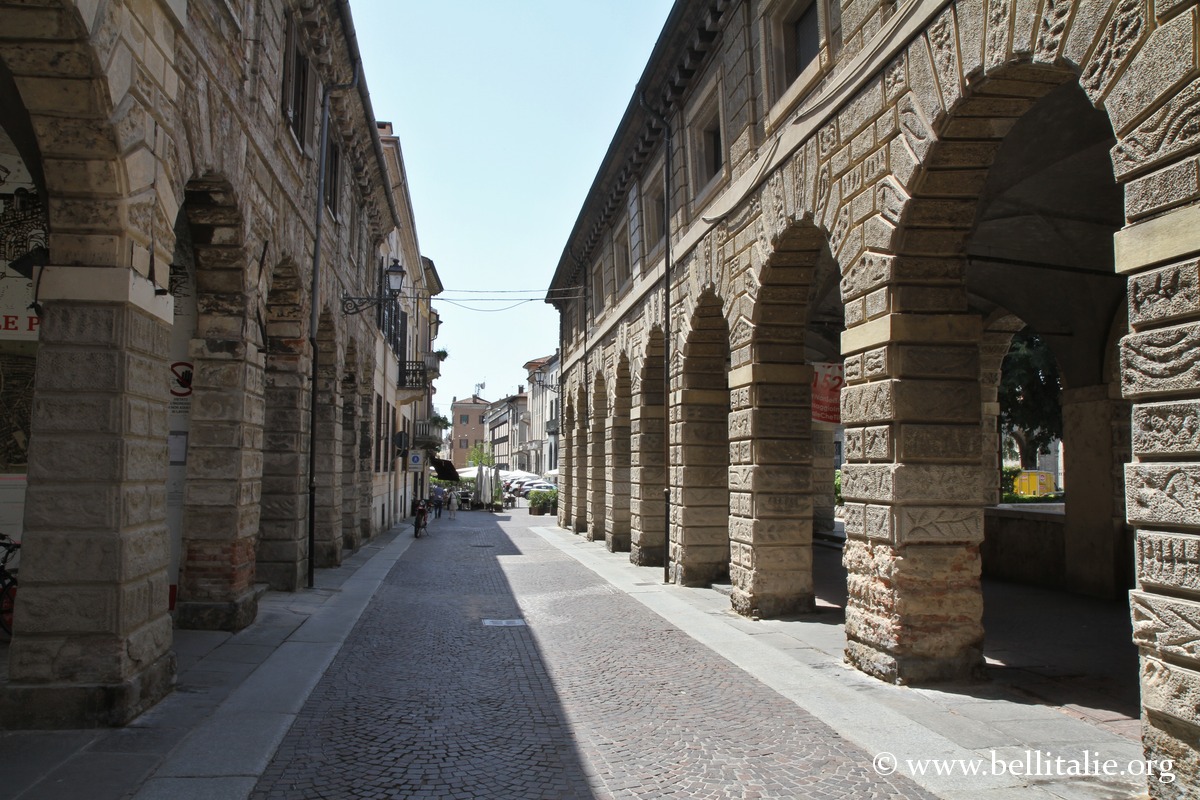
It is surrounded by buildings from several periods, with beautiful arcades in late Gothic and Renaissance style that also follow the pretty via Broletto from Piazza Sordello, with their shops, restaurants and bars.
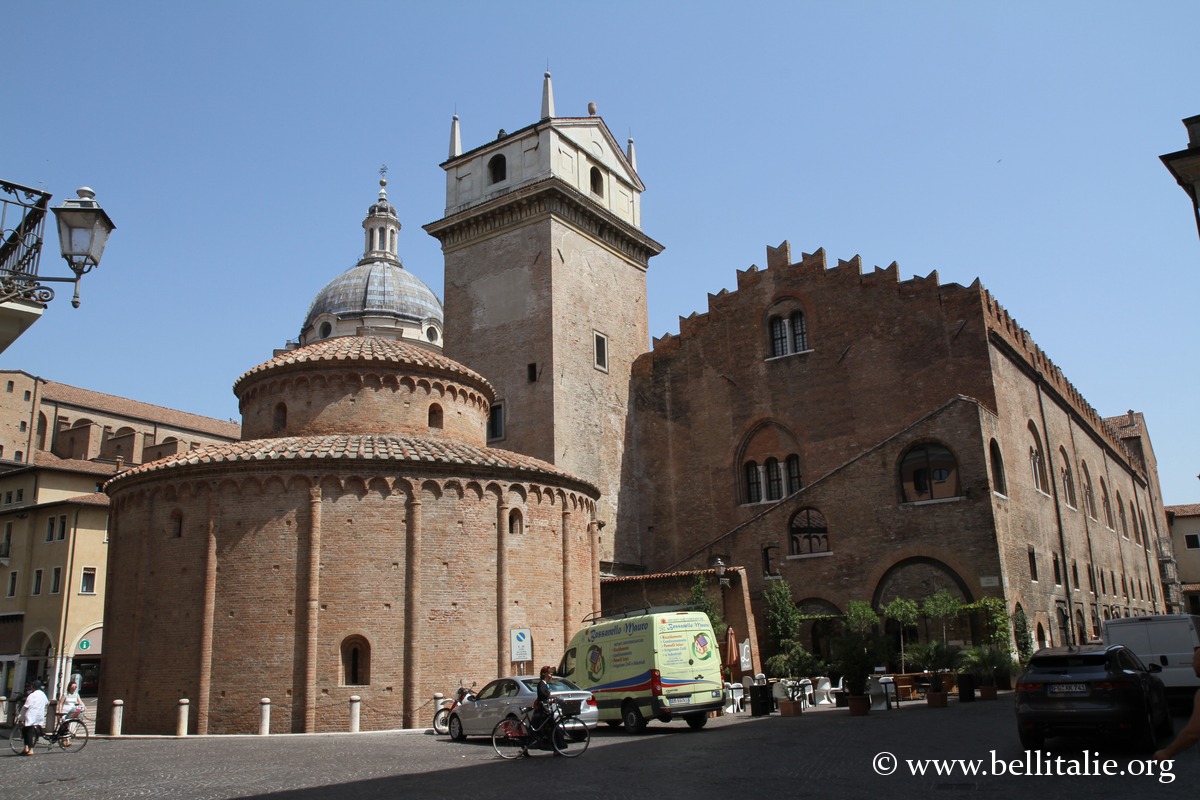
It is the heart of the city, a lively square where the curious Rotunda of San Lorenzo can be seen (see above), a church in the Lombard Romanesque style, and other interesting monuments such as the Palazzo della Ragione from 1250, the tower with the Astronomical Clock, the Merchant’s House (Casa del Mercante in Italian), and the rear of the Broletto (Palazzo del Podestà) which closes one side of the square (1227).
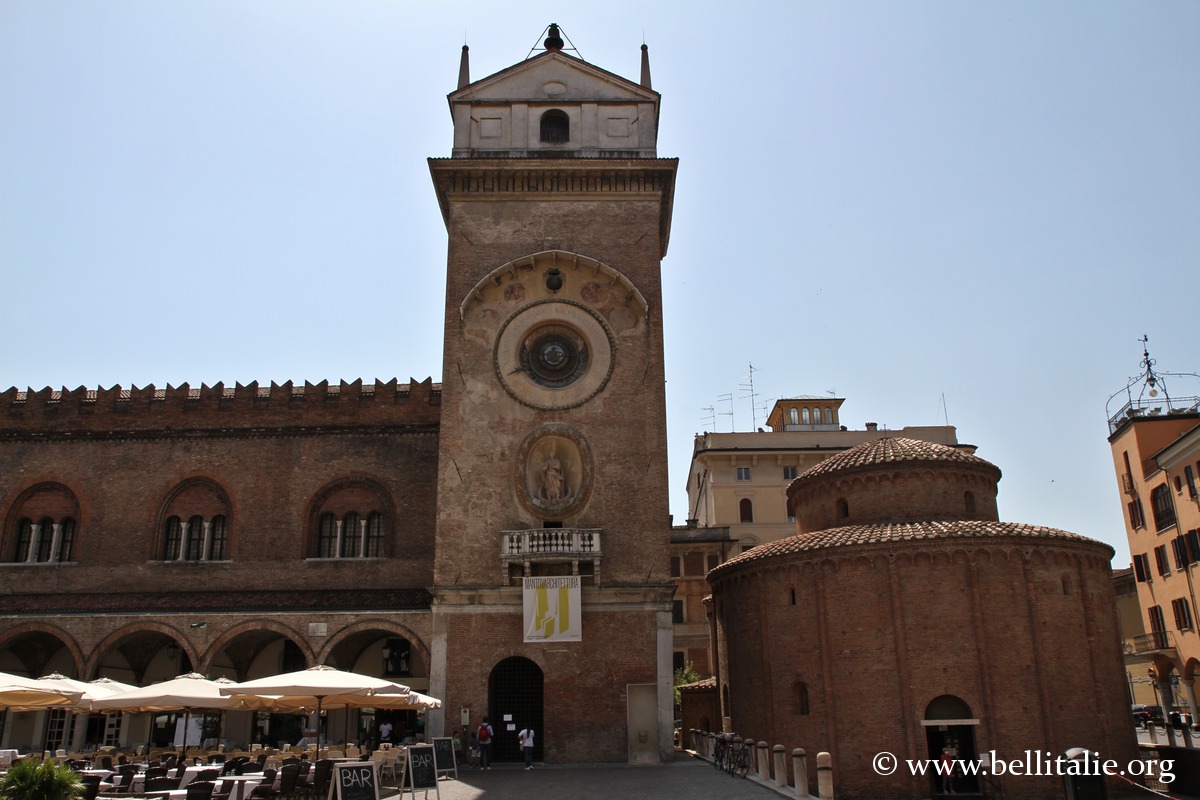
Clock Tower and Rotunda
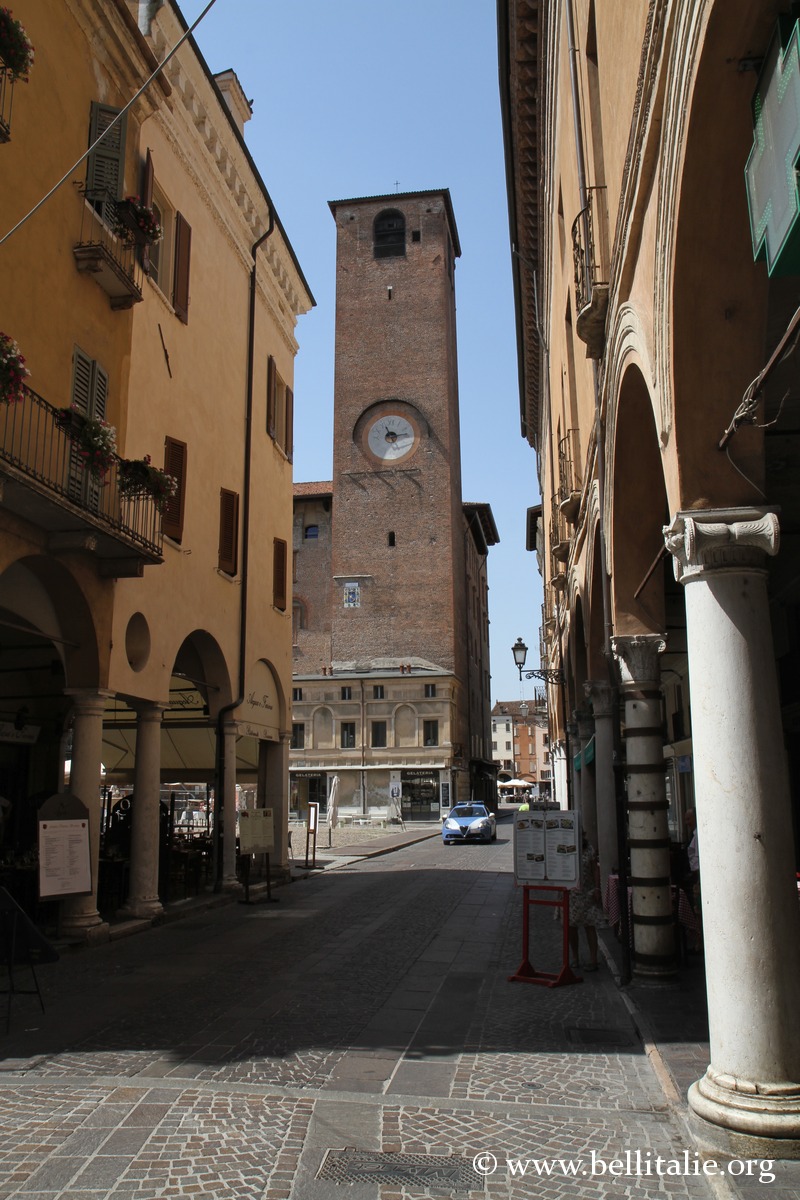
The Clock Tower dating from 1473 is at the corner of the Palazzo della Ragione, with an astronomical clock built by Bartolomeo Manfredi, mathematician and astrologer in the service of the Gonzaga, with its lunar phases, signs of the zodiac, and the position of the stars. It is recommended to climb the tower (closed on Mondays, ticket €3) to enjoy one of the most beautiful views of Mantua. The clock mechanism can also be seen there.
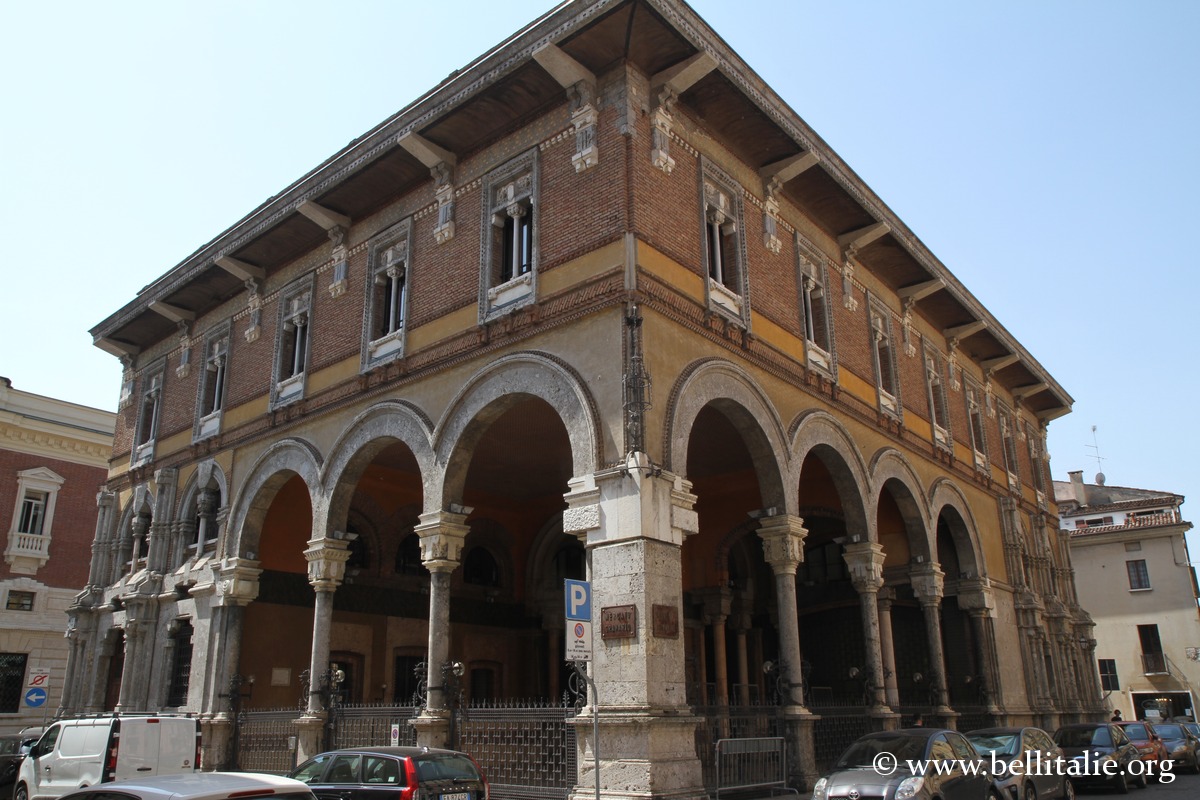
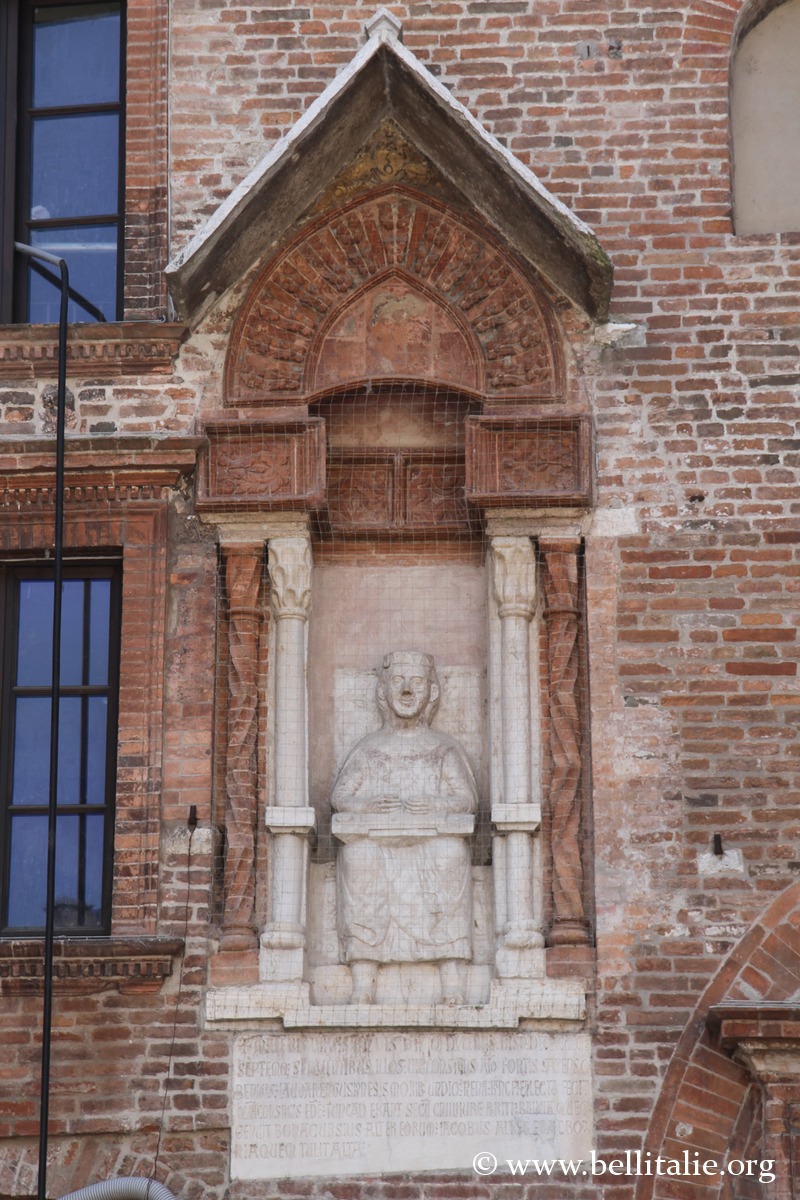
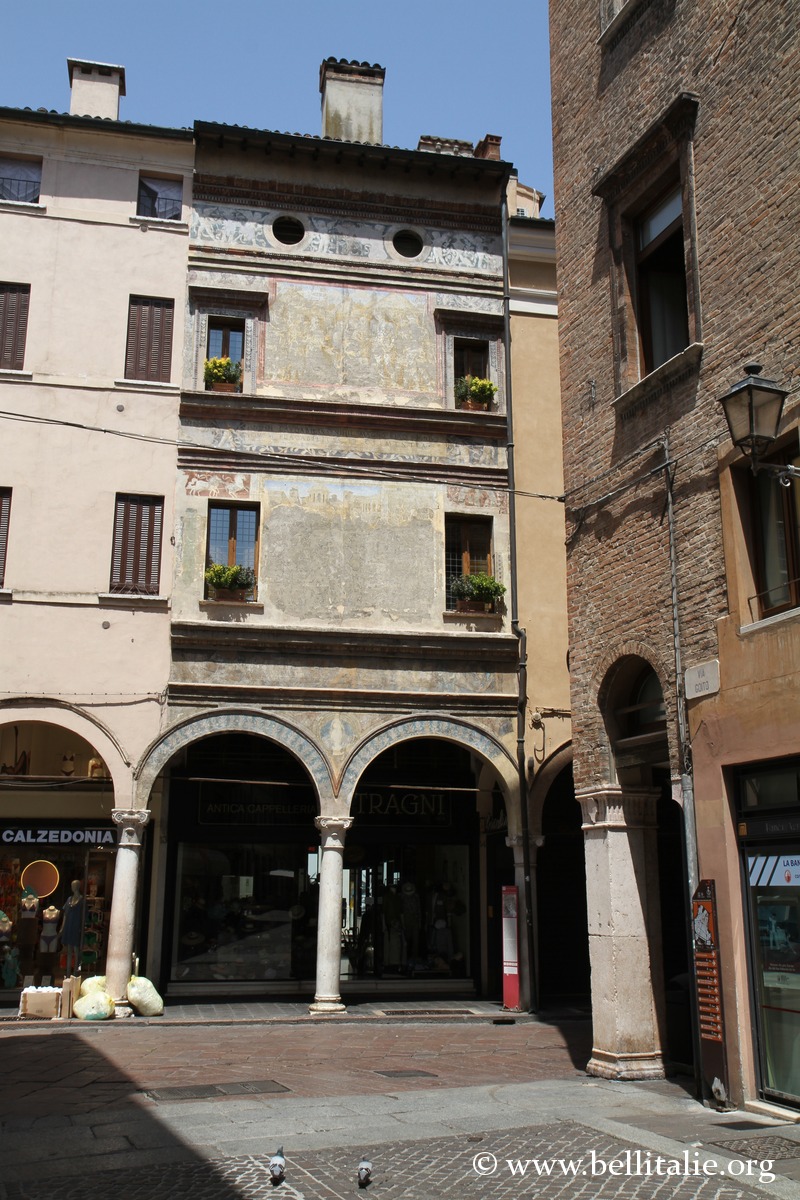
At a corner of the square, the Casa del Mercante is an interesting building with Gothic and oriental decorations in the Venetian style on its facade, of three floors, which was the house and workshop of the merchant Giovan Boniforte da Concorezzo. Under its porch supported by red marble columns, are carved the objects he sold: dishes and scales, and the dedication with the year of construction 1455.
6. Rotunda of San Lorenzo
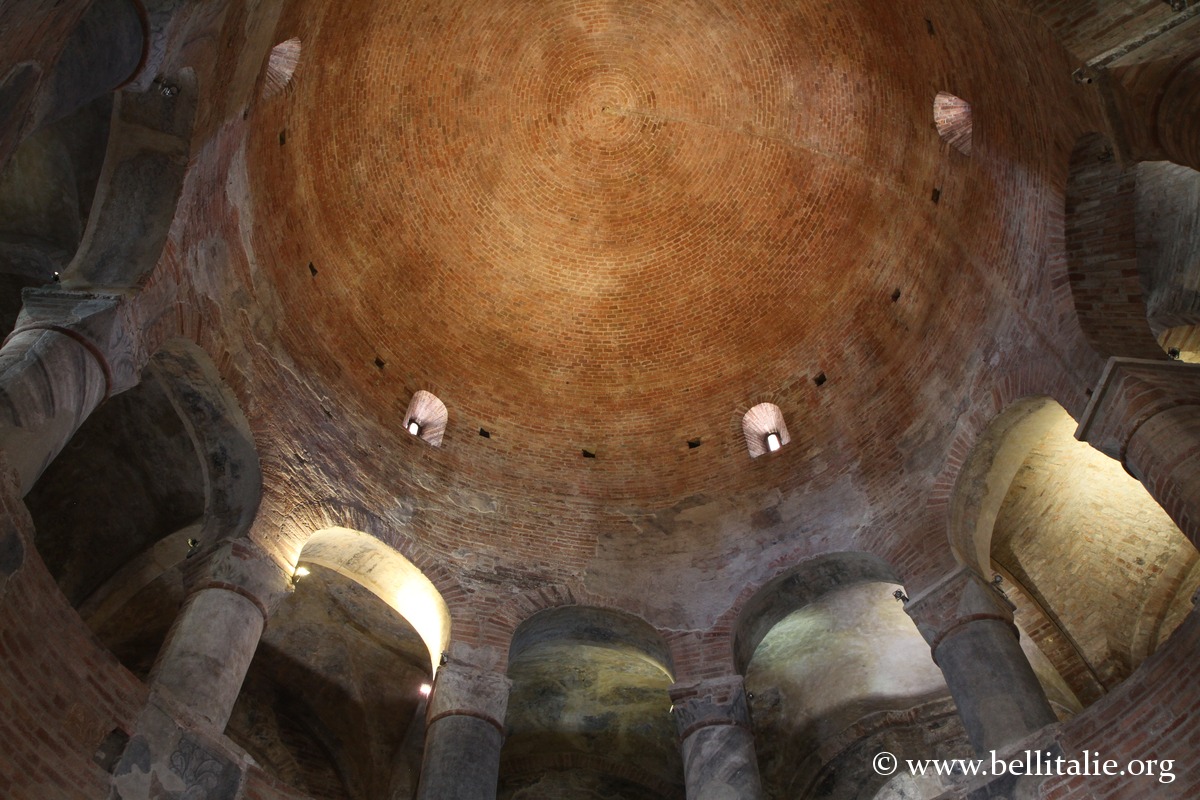
Rotunda of San Lorenzo
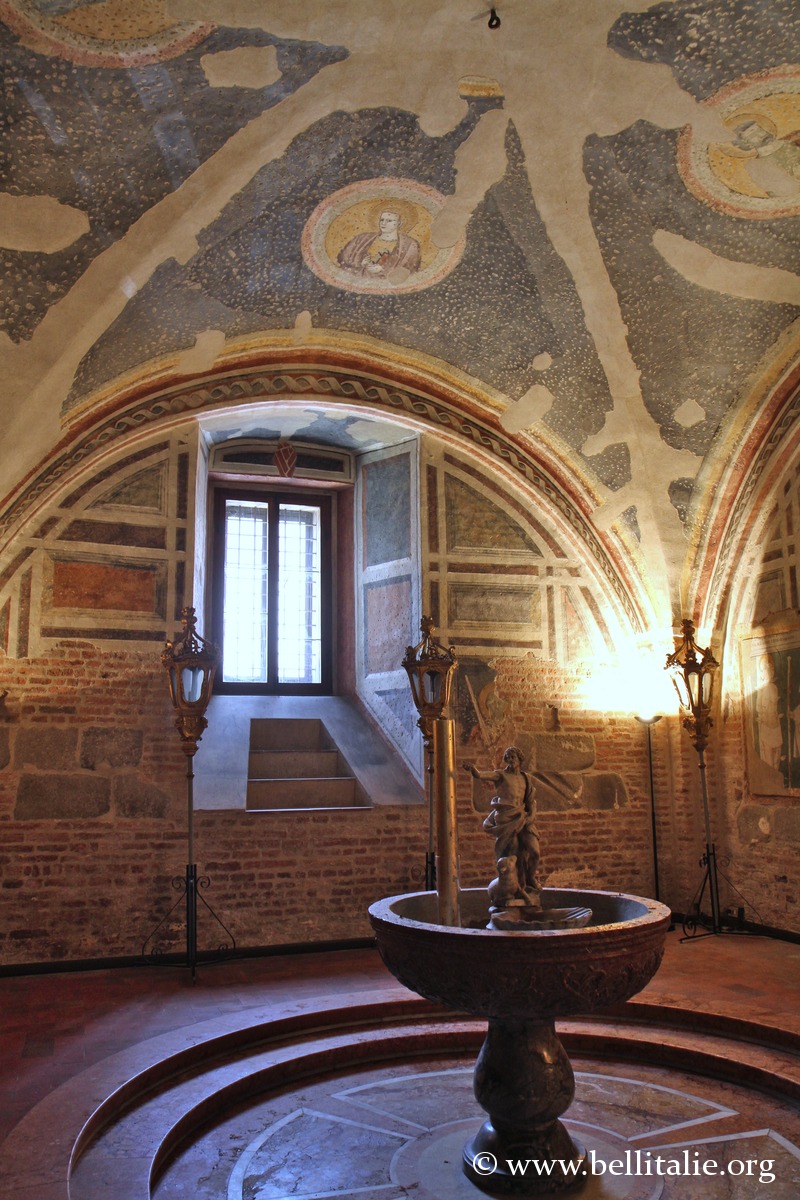
On the Piazza delle Erbe, the Rotunda of San Lorenzo is the oldest church in Mantua, from around the year 1082 under the rule of the Canossa. It is a Romanesque building with its cylindrical shape and a simple exterior, inspired by the Holy Sepulchre of Jerusalem.
The suggestive interior has a single ring-shaped nave on two levels, covered by a dome, with its eight columns and its ambulatory.
It was entirely decorated with frescoes from the 11th and 12th centuries, of which only a few portions remain.
In 1926 it was consecrated again after a period of abandonment as a warehouse and the demolition of the many houses that leaned against it. The dome was rebuilt.
7. Palazzo Te
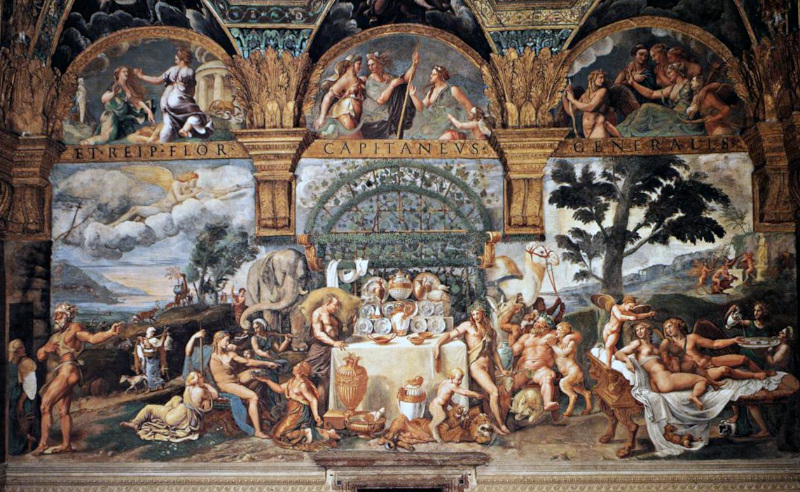
Hall of Amor and Psyche
The Palazzo Te is the most famous work of the Italian architect Giulio Romano (Giulio Romano), a pupil of Raphael, built from 1524 for Federico II Gonzaga, to replace a small manor house built at the beginning of the 16th century. It is located more than a kilometer from the center of Mantua. The canals once formed here the island of Tejeto.
It is a remarkable palace, between the facades, the exedra, and its many rooms, including the Hall of Amor and Psyche, the Hall of the Horses, and above all the Chamber of the Giants with its impressive cycle of frescoes, depicting the battle between Jupiter and the giants who wanted to take the place of the gods.
The palace houses the Civic Museum of Mantua.
8. Palazzo del Podestà and Piazza Broletto
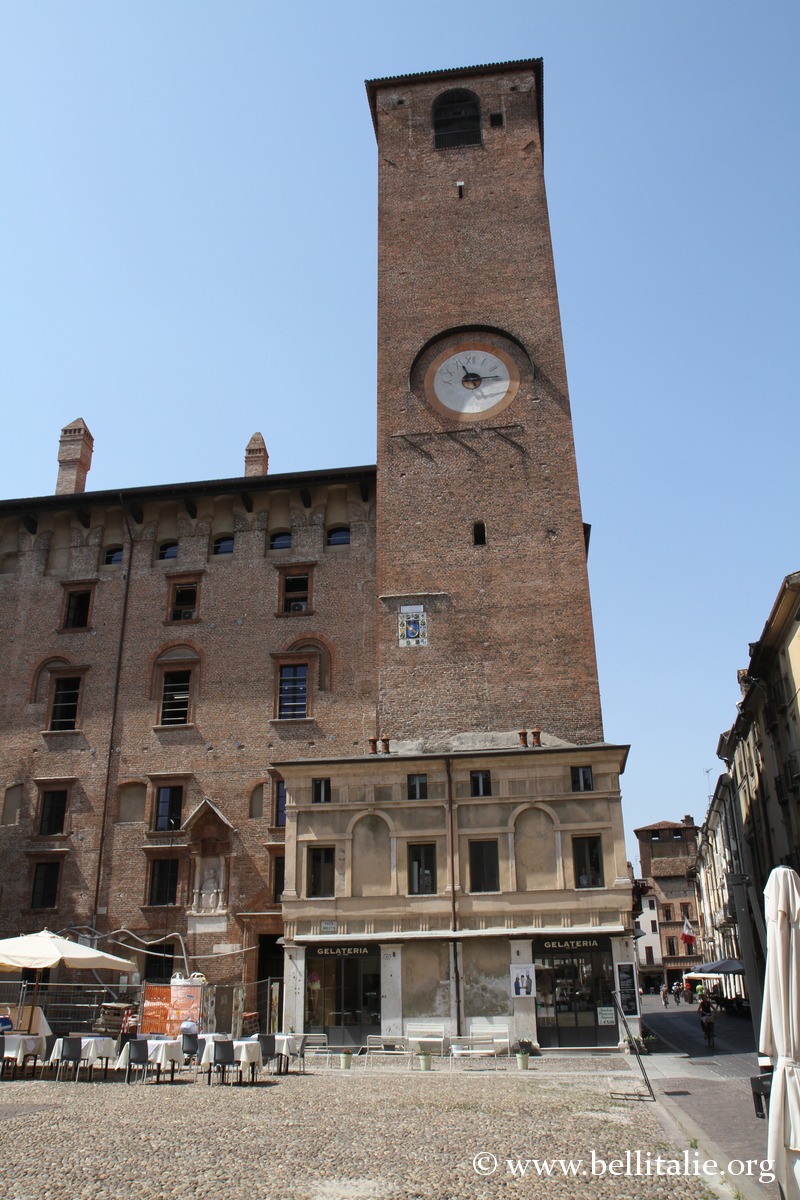
Broletto
Also called Broletto, the Palazzo del Podestà was built in 1227 and was the seat of the city government in the communal era. The main facade overlooks Piazza Broletto, and the rear facade overlooks Piazza delle Erbe.
On the right side stands the civic tower which served as a prison and at its base is the Portico dei Lattai.
On the square laid out at the end of the 12th century, there is also the arch of the Arengario and the Palazzo del Massaro.
9. Saint Peter’s Cathedral
The Saint Peter’s Cathedral houses the tombs of the most prestigious members of the Gonzaga family. Overall Baroque, its exterior retains traces of several periods: a Romanesque bell tower, a late Gothic side, and a neoclassical facade.
An initial structure probably existed in the early Christian era, and of the Romanesque building destroyed by fire there remains the bell tower. Francesco I of Mantua had a new Gothic-style facade built at the end of the 14th century by the Venetian brothers Dalle Masegne.
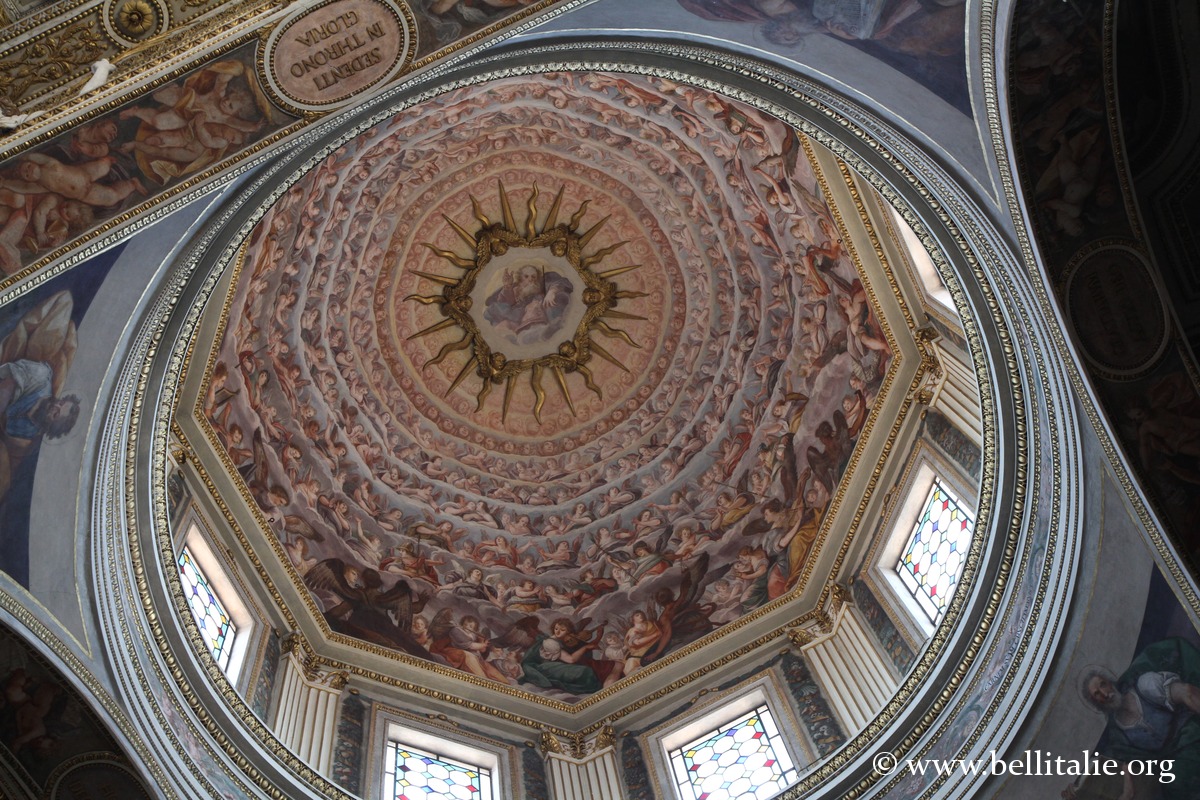
Dome
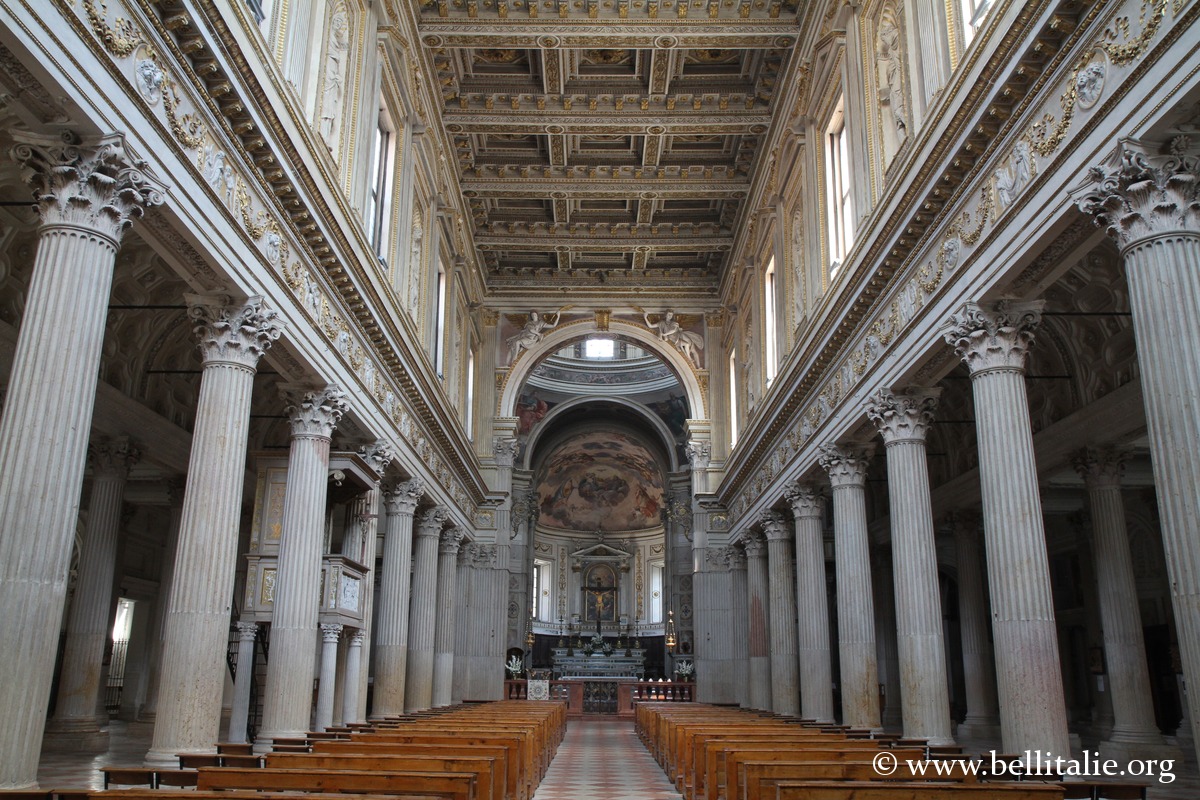
After another fire in 1545, Giulio Romano completely redid the interior while preserving the facade, inspired by the Constantinian basilica of Saint Peter in Rome, which was about to be destroyed. The great nave divided into 5 by thirty-two columns was created.
The altarpieces were made by local artists in the 16th century. It preserves several Renaissance frescoes.
The extraordinary dome was decorated with frescoes in 1605, with plenty of angels in the nine celestial choirs on their way to God the Eternal Father.
The Gothic facade was replaced between 1756 and 1761 by a Baroque facade in Carrara marble. Only one of the brick side facades of the Gothic building remains, with walled-up pointed arches.
10. Loggia delle Pescherie
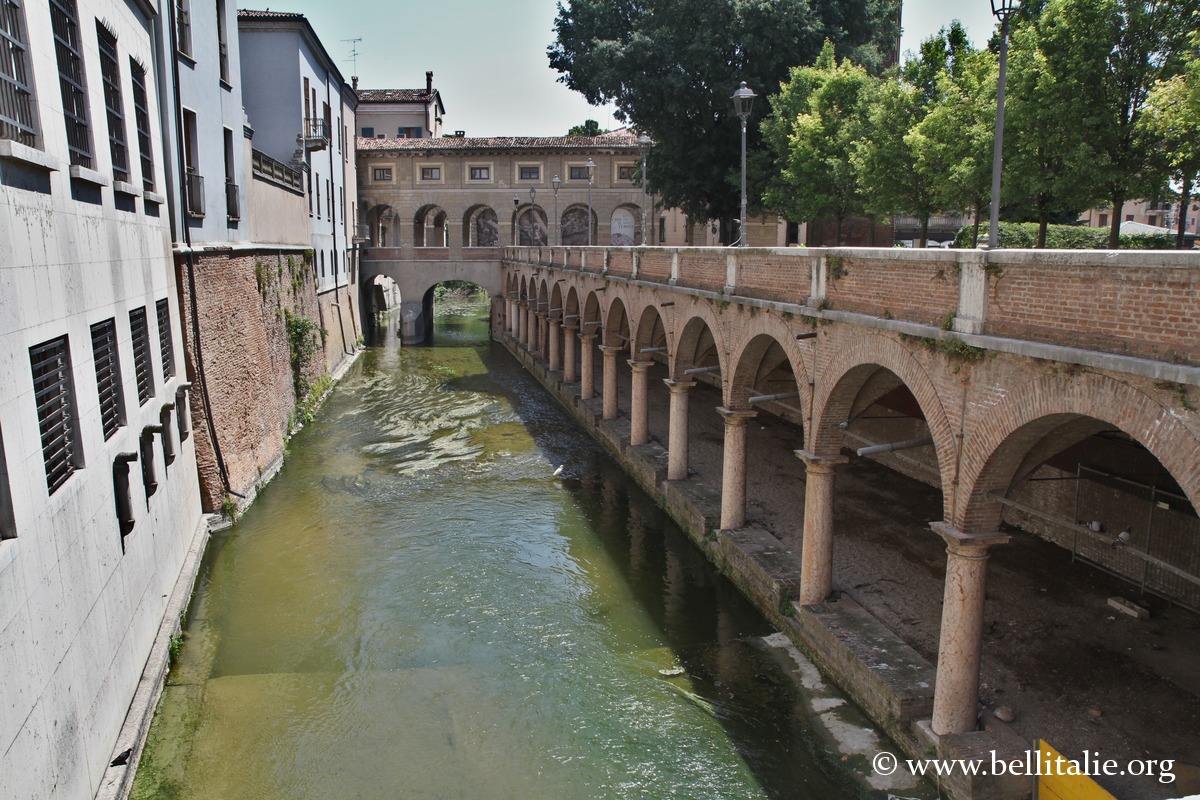
Pescherie
Mantua had more canals in the past, Montesquieu having referred to it as “a second Venice”.
The Rio canal which crosses the city, open over a large part, passes by the Loggia delle Pescherie, one of the most characteristic and remarkable places in Mantua. This is where the fish caught in the Po and in the lakes of Mantua arrived.
Next to it was the fish market, built in 1536 on a design by the architect of Palazzo Te, Giulio Romano, of which only a long row of columns with the portico now serving as a pedestrian passage remains.
The food market of the Lungorio is held here on Saturdays.
Other places
11. Casa di Mantegna
The Casa di Mantegna, court painter of the Gonzaga, was created by the artist who painted the Chamber of the Spouses of the ducal palace, in 1476. The square palace is organized around a majestic circular courtyard.
It can be visited freely, and sometimes the house hosts exhibitions.
12. The Bibiena Theatre
Officially named Teatro Scientifico di Bibiena, the small theater was designed and built between 1767 and 1769 by the Parma architect Antonio Galli Bibiena. It hosted scientific meetings, and in addition to theatrical performances, shows and concerts, it is still the seat of the Accademia Nazionale Virgiliana di Scienze, Lettere e Arti, the oldest and most prestigious cultural institution in Mantua.
The classical facade is by Piermarini, and the bell-shaped interior has several levels of wooden boxes. Two months after its inauguration, on January 16, 1770, it hosted Mozart, then 14 years old, for a piano concert.
13. Archaeological Museum
The National Archaeological Museum is located on Piazza Castello, where Neolithic, Etruscan, Celtic, Roman and Renaissance materials from the territory of Mantua are exhibited.
14. Museum of Palazzo D’Arco
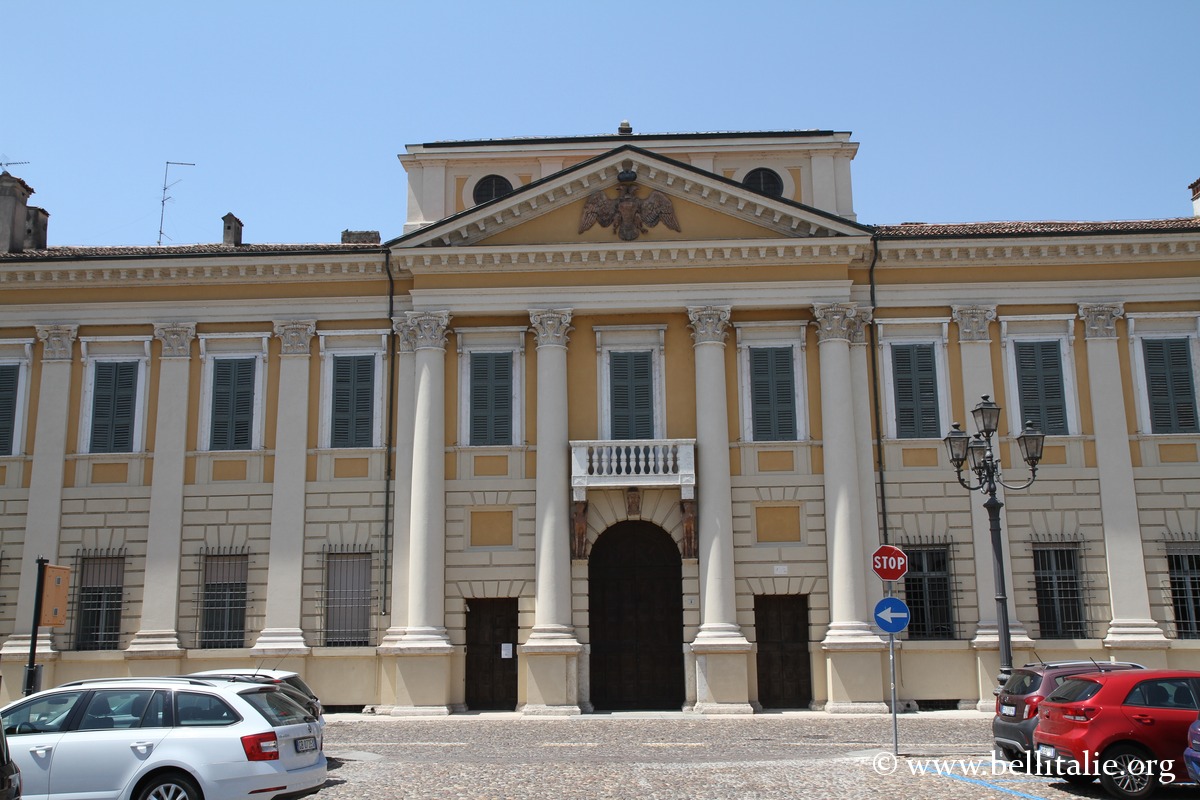
Palazzo d’Arco
The neoclassical Palazzo D’Arco belonged for several centuries to the D’Arco family, and today houses a small remarkable museum. On the visit route can be seen the original furniture and objects left by the family.
In the 24 rooms, there are paintings, some of them painted by famous artists such as Annibale Carracci, Bernardino Luini, Lorenzo Lotto, Tintoretto, Van Dyck, Rubens.
In the Palazzina del Falconetto there is a cycle of frescoes attributed to the Veronese painter Giovan Maria Falconetto.
The visit ends with the Natural History Museum with fossils, stuffed animals, and instruments of Count Luigi d’Arco, who was a naturalist and botanist.
15. Church of San Sebastiano
The Temple of San Sebastiano, designed by Leon Battista Alberti, was located just outside the walls, on the way to the marshy area of the Te, near the Gonzaga stables. It was probably intended to become a family temple. It now serves as a local pantheon.
It was built between 1460 and 1529, remodeled in the 17th and early 20th century while it was abandoned, adding the two access staircases on the facade. The original 15th-century staircase is under the side loggia.
The building is austere and solemn, on two levels, each with its own access. The upper one recalls a classical temple with a broken lintel, a tympanum and the arch. The interior is in the shape of a Greek cross with a central square and three apses.
16. To do and other places
- Boat excursion on the lakes around Mantua, as far as Governolo where there is the lock with the Po, and San Benedetto.
- Casa di Giulio Romano
- Near the Palazzo Te, on the graceful Piazzetta Matilde di Canossa is the Oratory of the Madonna del Sismo, a small Baroque-style church built in 1754, the Palazzo di Canossa with a very beautiful facade, and a pretty steel kiosk from the late 19th century.
- The public gardens where there is also the tombstone of Agnese Visconti, wife of Francesco Gonzaga, beheaded by him at only 23 years old on the Piazza Giardino.
- The Mantua Literature Festival, more generally devoted to culture, bringing together writers from around the world, at the beginning of September over 5 days with shows and concerts.
Gallery
Map of places
 Show interactive map
 Information
- Wikipedia article: en.wikipedia.org
- Tourist portals: www.in-lombardia.it, www.turismo.mantova.it



Comments