


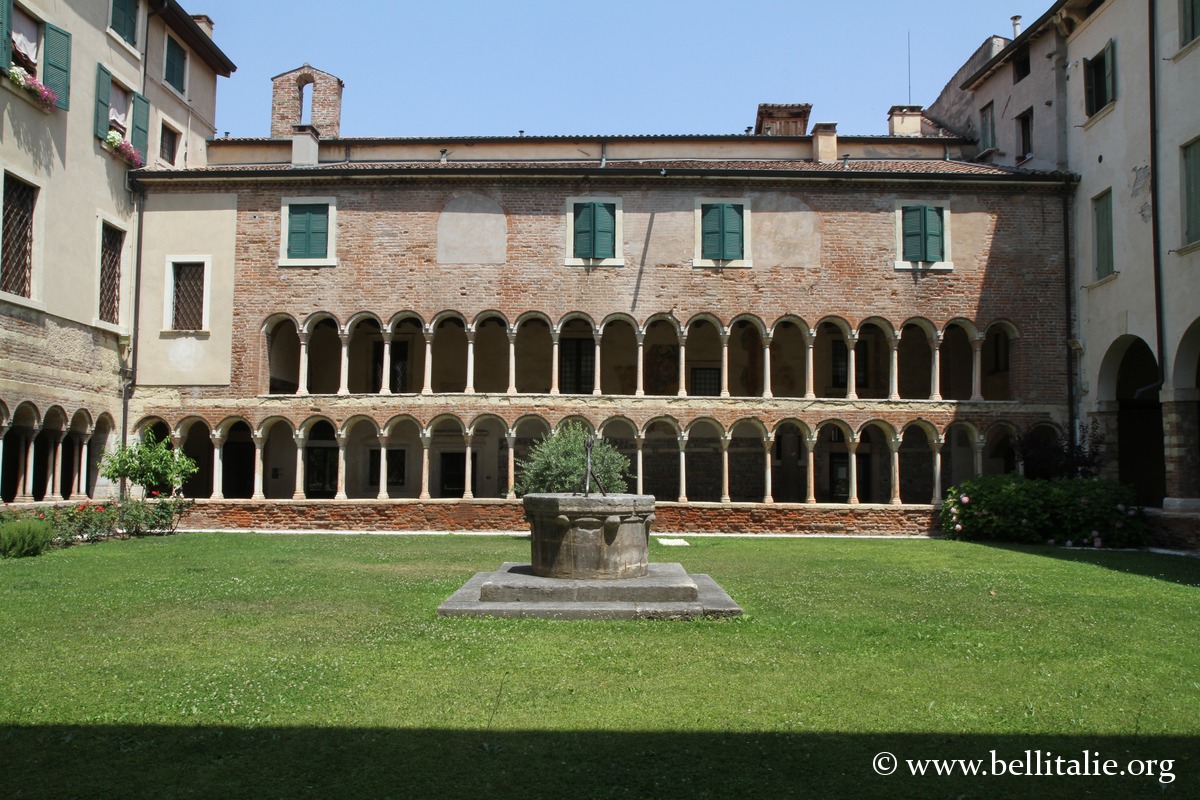
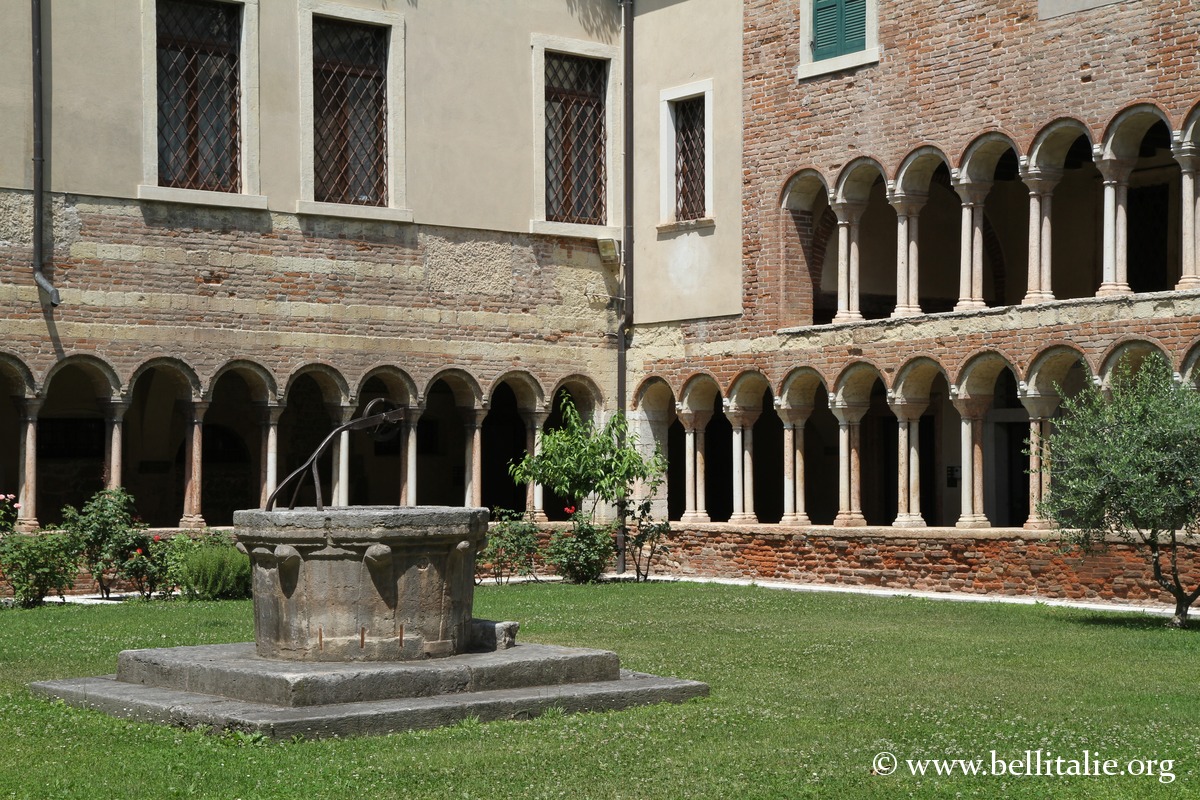
Originally, an early Christian basilica was built in this area on the site of ancient Roman villas with private baths. Today’s Santa Maria Matricolare complex also includes, besides the cathedral, the Church of Sant’Elena (Saint Helena), the Cloister of the Canons, the bishop’s palace, the chapter library, the canonical museum and the Baptistery of San Giovanni in Fonte.
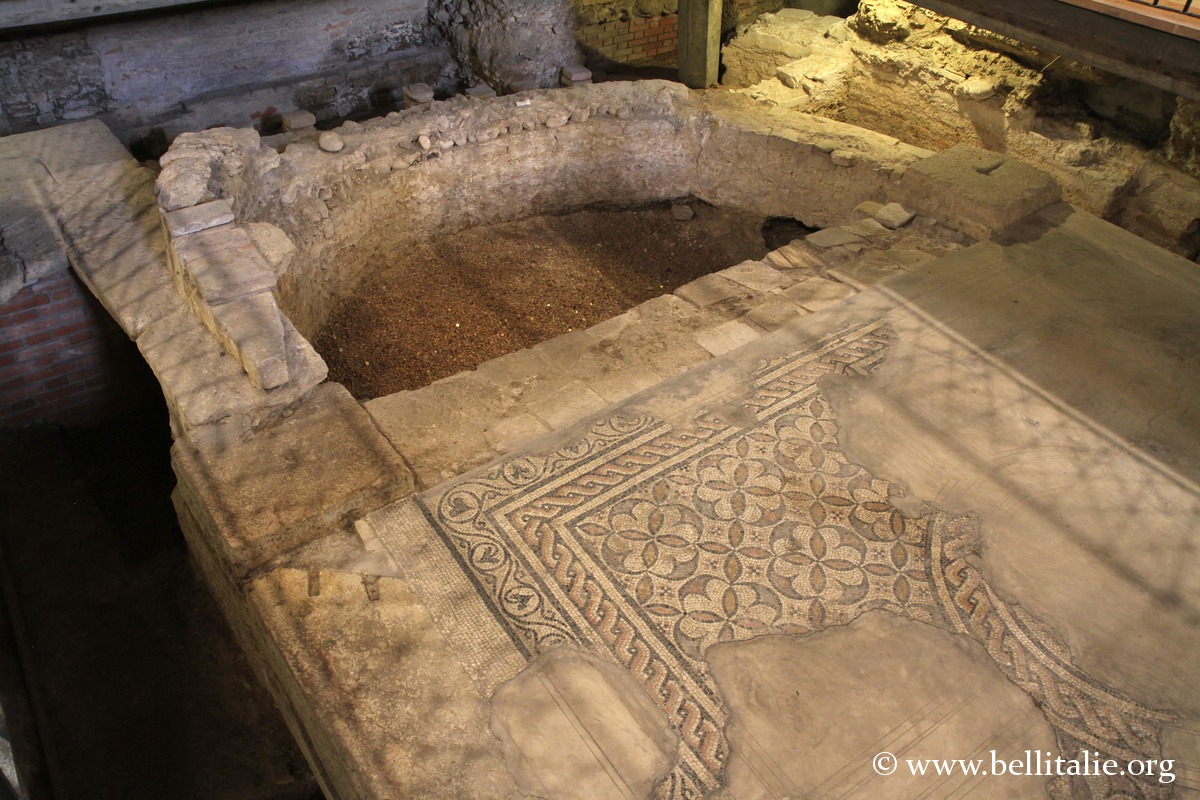
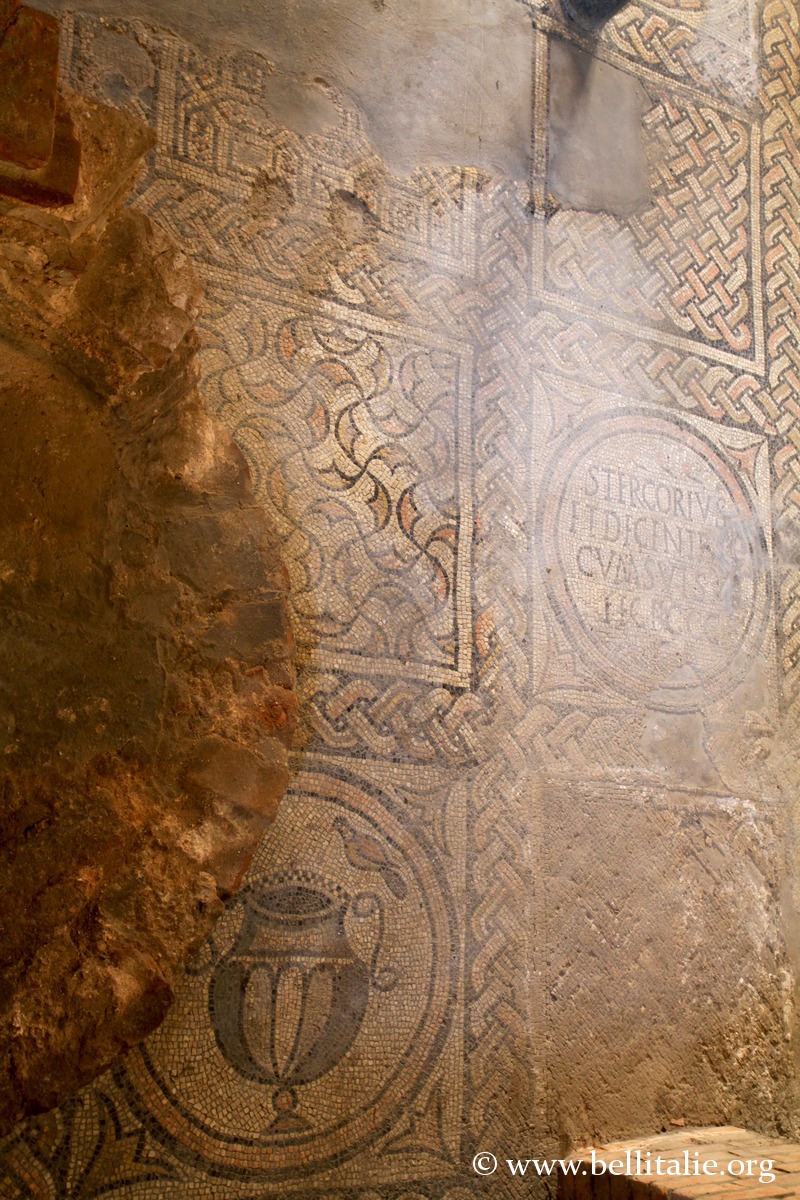
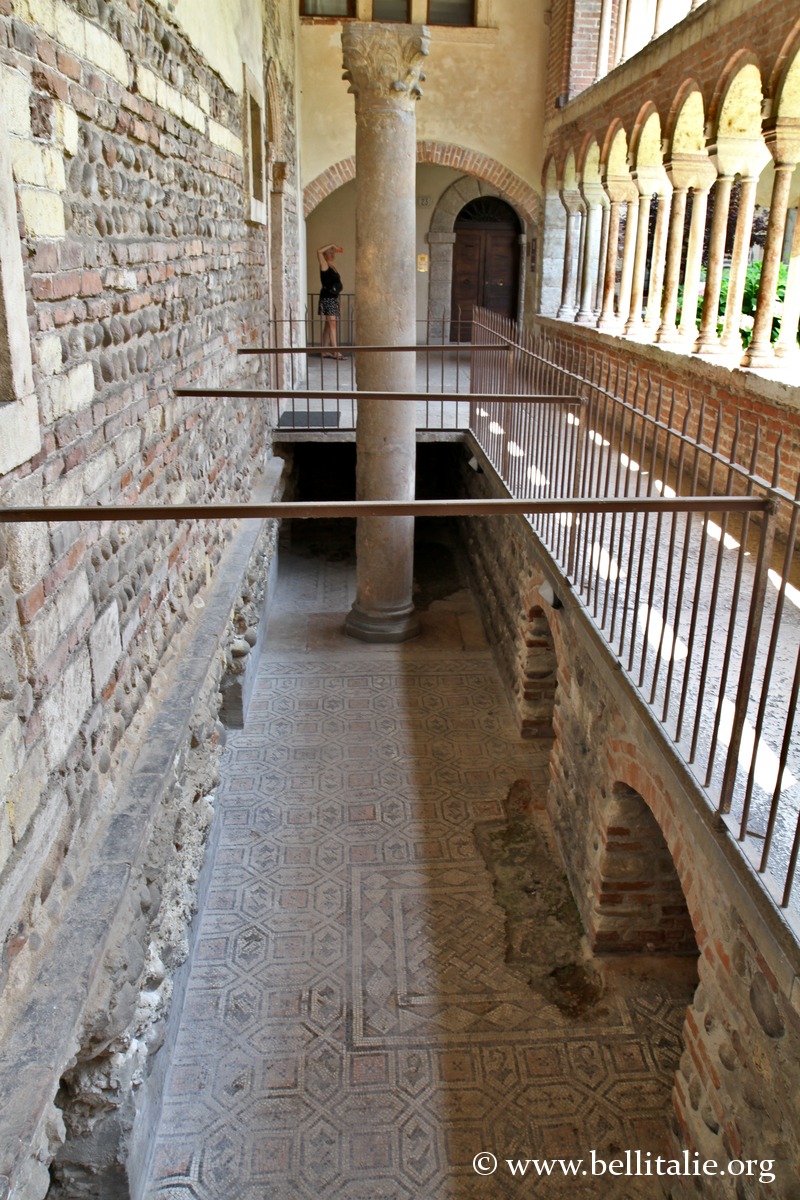
We thus find architecture from several eras, with Romanesque, Gothic and Renaissance styles, including works of great value such as the 12th-century marble baptismal font or the 16th-century Assumption of Mary by Titian. Mosaics and ornaments from the earliest basilicas are displayed in the cloister and beneath the Church of Saint Helena.
Historical aspects
The first early Christian basilica stood at the site of the Church of Sant’Elena, consecrated by San Zeno, bishop of Verona between 362 and 380, and quickly enlarged a few decades later. The latter collapsed around the 7th century. The cathedral was then moved further south, rebuilt between the 8th and 9th centuries. This new church was severely damaged by the earthquake of 1117. It was subsequently restored, then fitted with the two Romanesque porches in the 12th century.
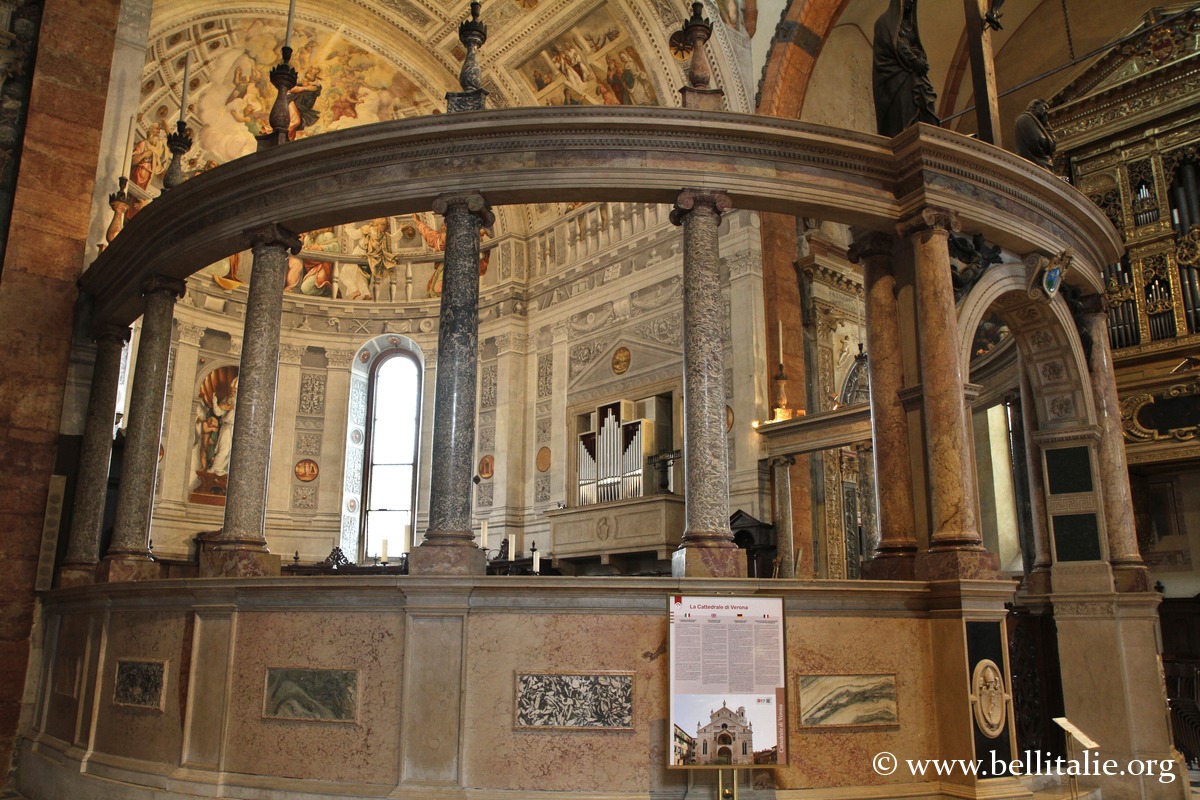
The interior was entirely renovated between the mid-15th and mid-16th centuries, with the construction of side chapels and the insertion of the semicircular screen.
Baptistery of San Giovanni in Fonte
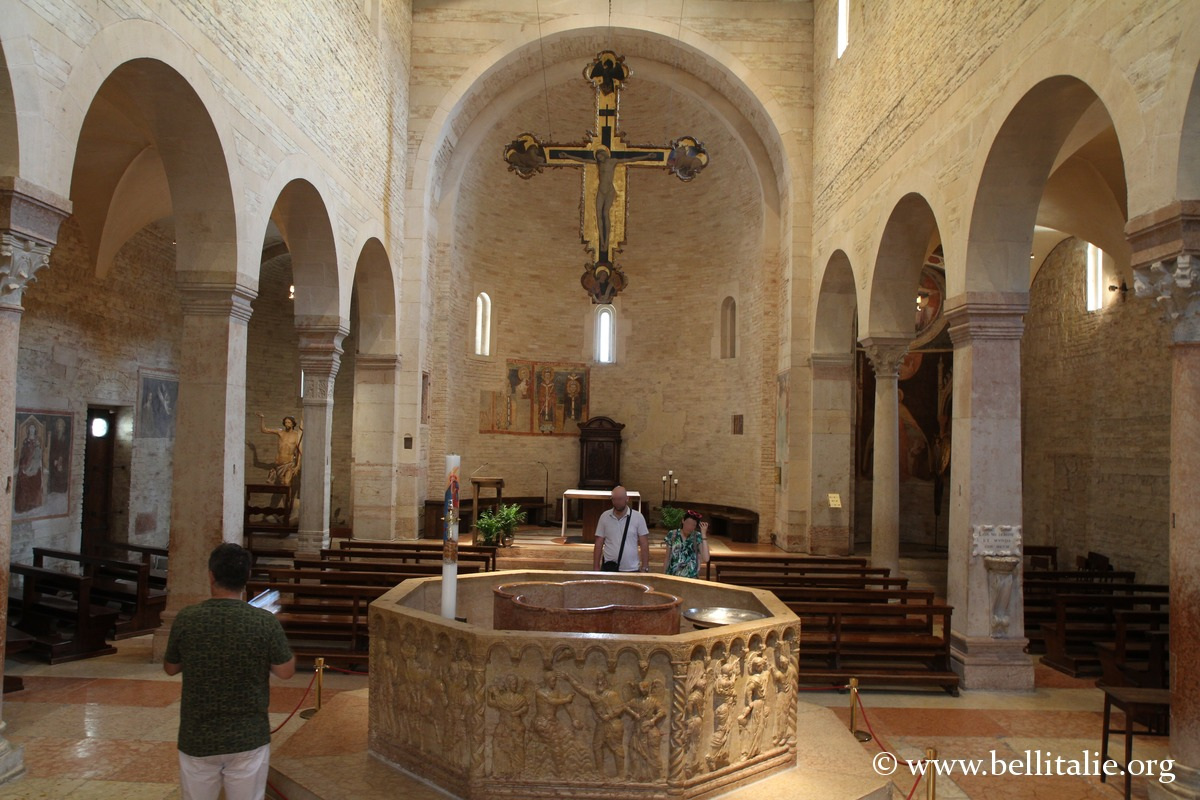
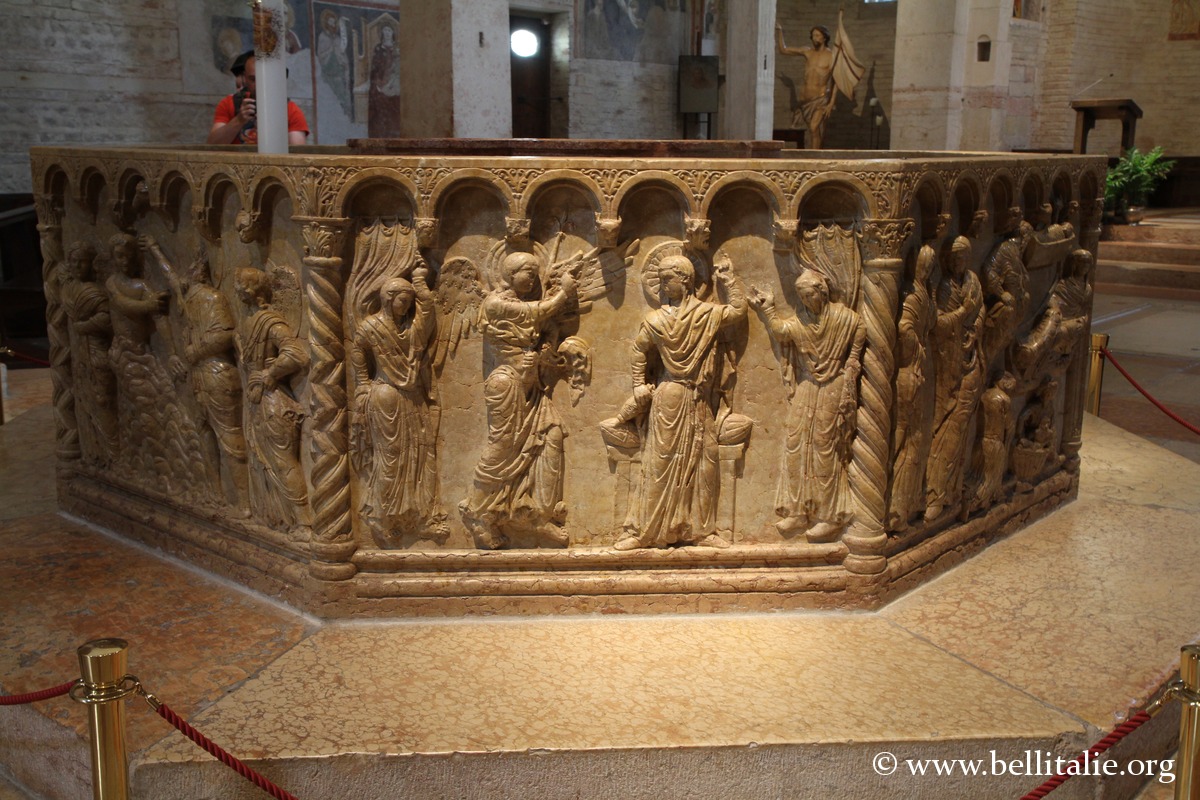
Dating back to the Lombard era, probably to the 7th or 8th century, the baptistery of San Giovanni in Fonte was rebuilt in 1123 in the Romanesque style, with a structure alternating stone and brick and with three naves, an unusual layout for this kind of building.
The superb octagonal baptismal font is attributed to Brioloto and dates from the late 12th century, each basin carved from a single block of marble and depicting scenes from the Gospels on its eight faces.
Portions of 13th- and 14th-century frescoes remain. On the counter-facade, a Baptism of Christ from 1568 can be seen, and there is a Madonna and Child by Giovanni Caroto.
Atrium of Santa Maria Matricolare
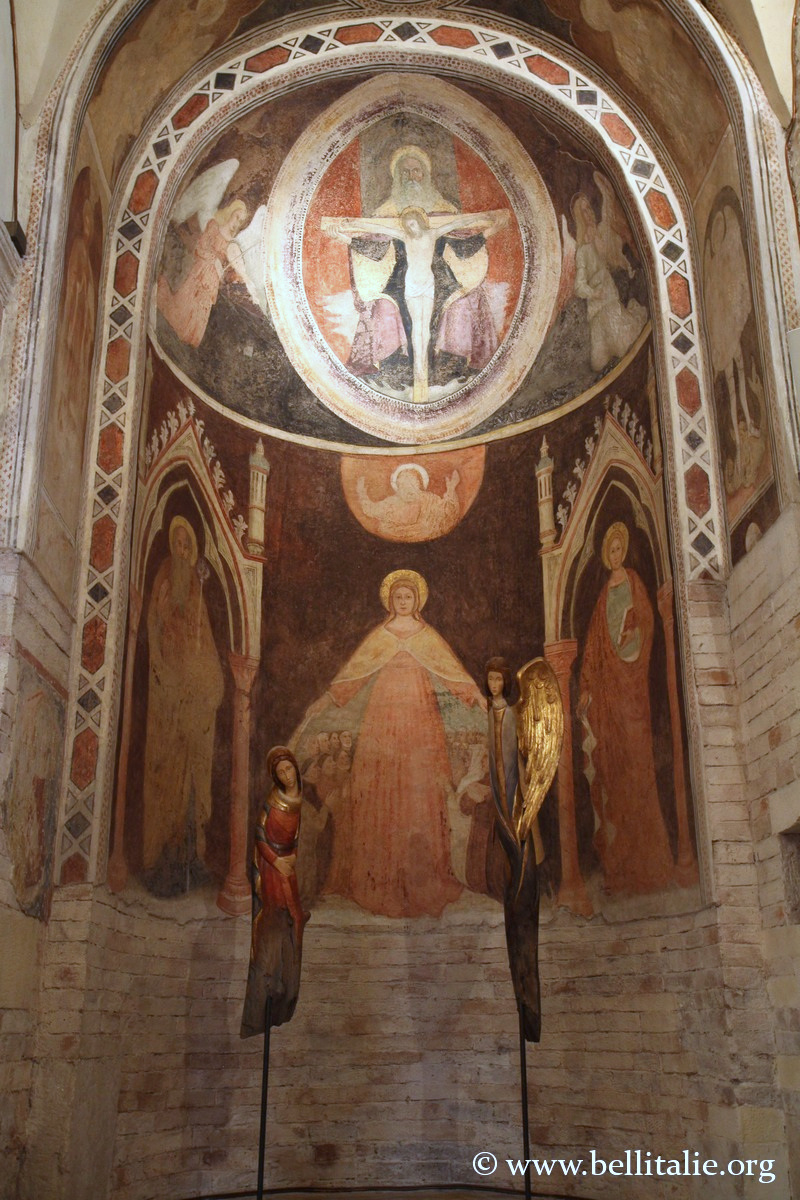
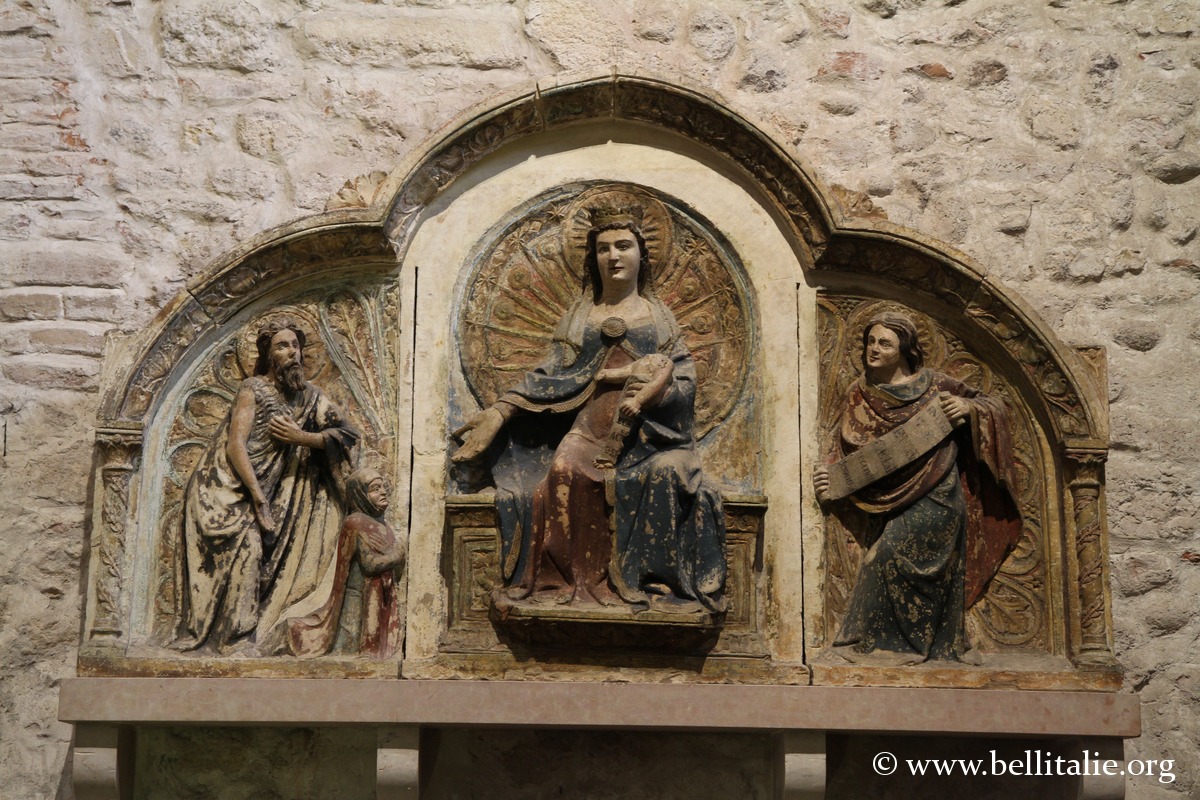
This atrium was a passage between the cathedral and the Church of Sant’Elena, delimited by pillars, with six 11th–12th-century columns supporting the vaults, tombs in the floor, a 14th-century triptych, and in front of the apse a suspended bone !
Church of Sant’Elena
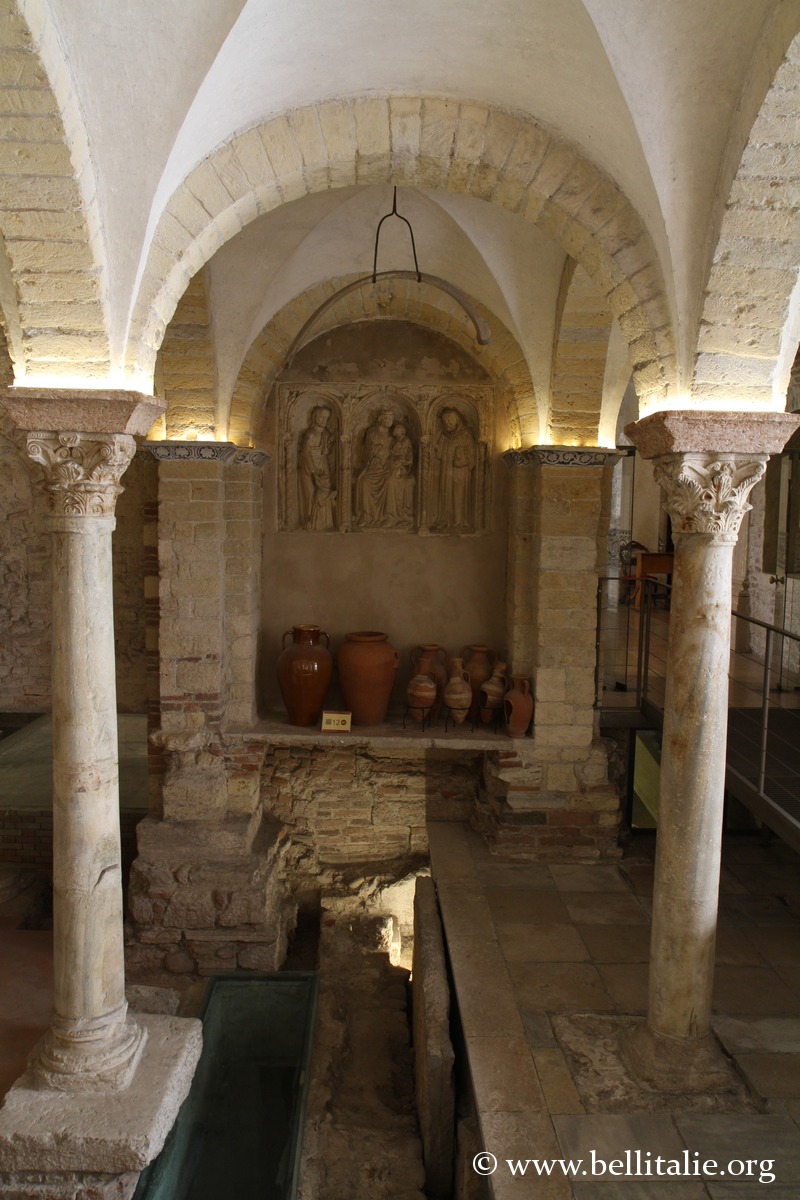
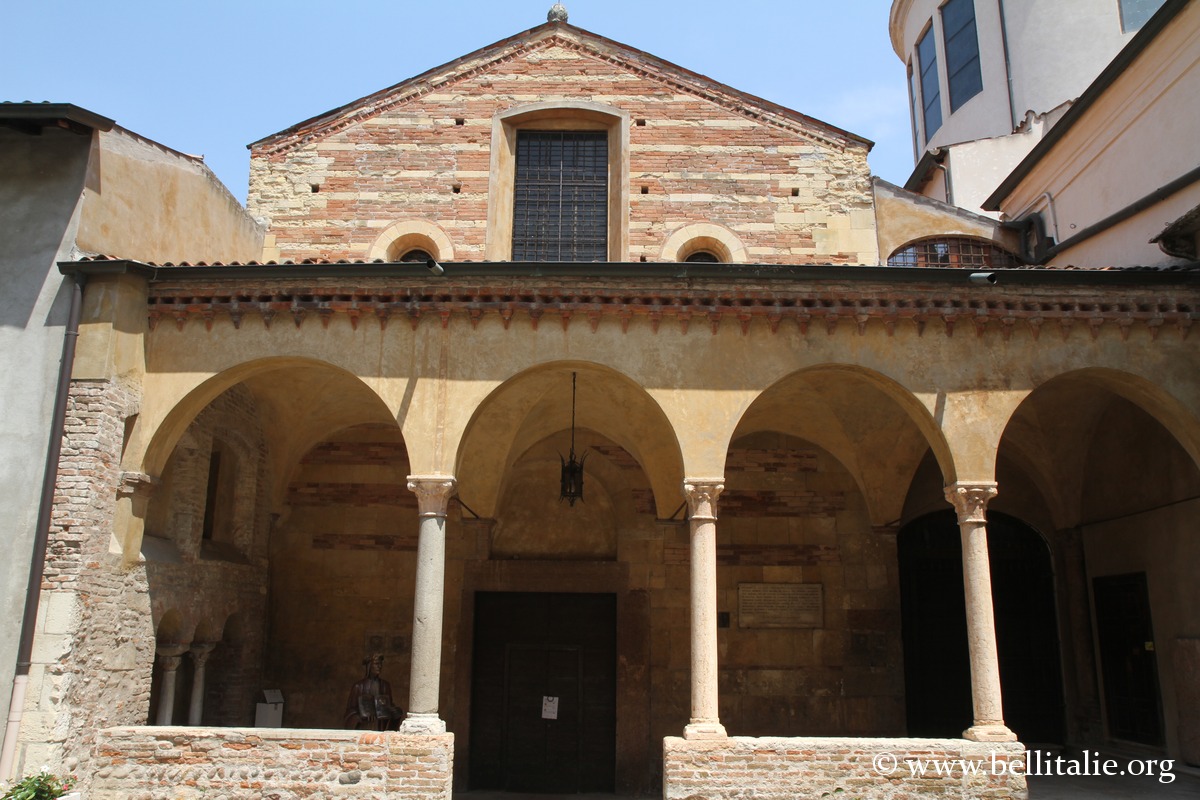
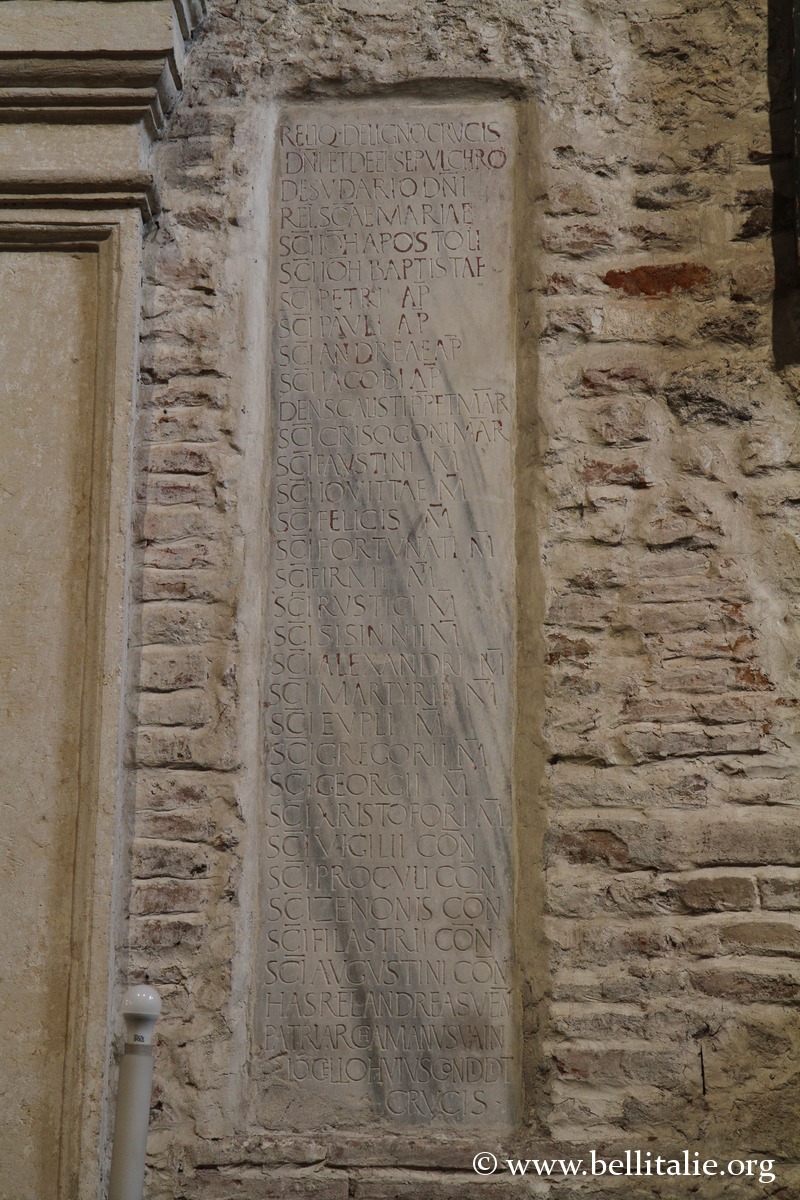
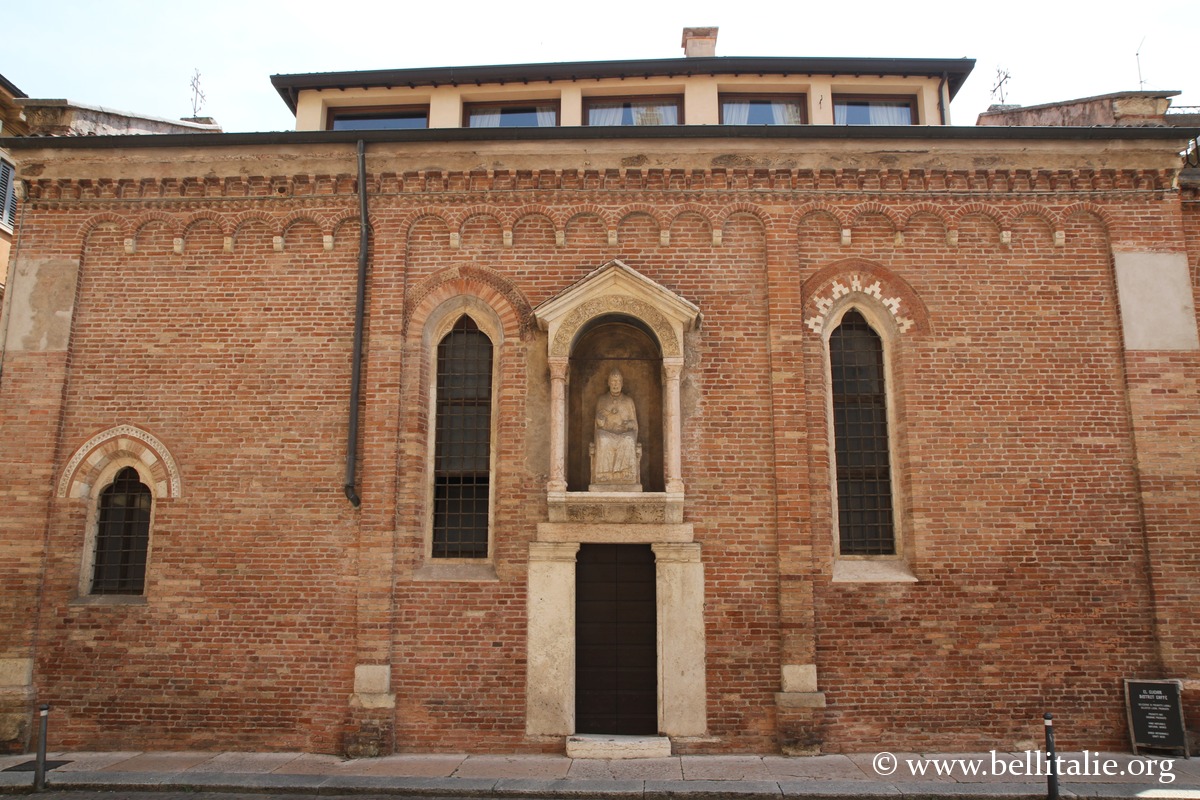
Dedicated to Saints George and Zeno, the Church of Saint Helena in Verona (Sant’Elena in Italian) was built in the 9th century over the remains of the two ancient early Christian basilicas, restored in the 12th century, with a 15th-century wooden choir. Some areas reveal excavations with the remains of the ancient basilicas. In the apse one can see those of the first basilica from the late 4th century, while remains of the apse of the second from the 5th century are found near the entrance. It also preserves a fine carved 14th-century triptych and a 9th-century epigraph with the list of the church’s relics.
Cathedral of Santa Maria Assunta
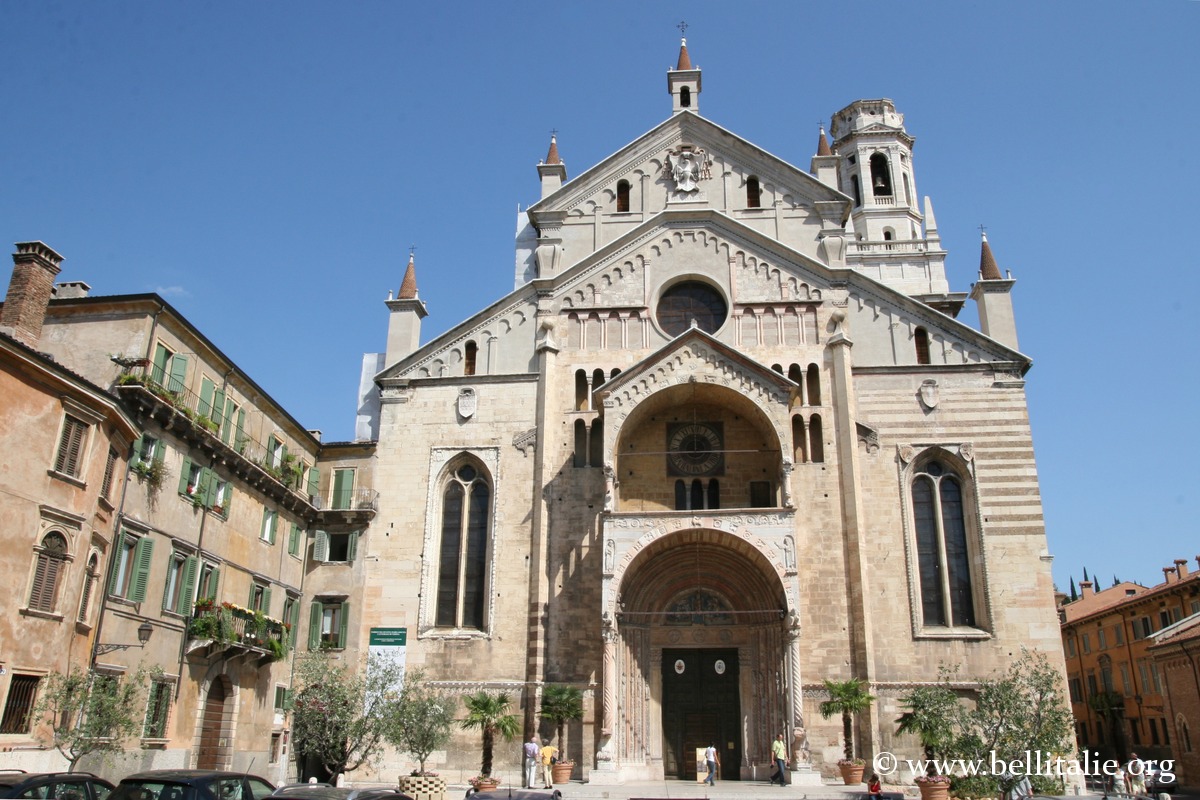
The Basilica of Santa Maria Assunta, built in the 12th century and consecrated in 1187, replaced two early Christian buildings, the last of which was destroyed by an earthquake in 1117.
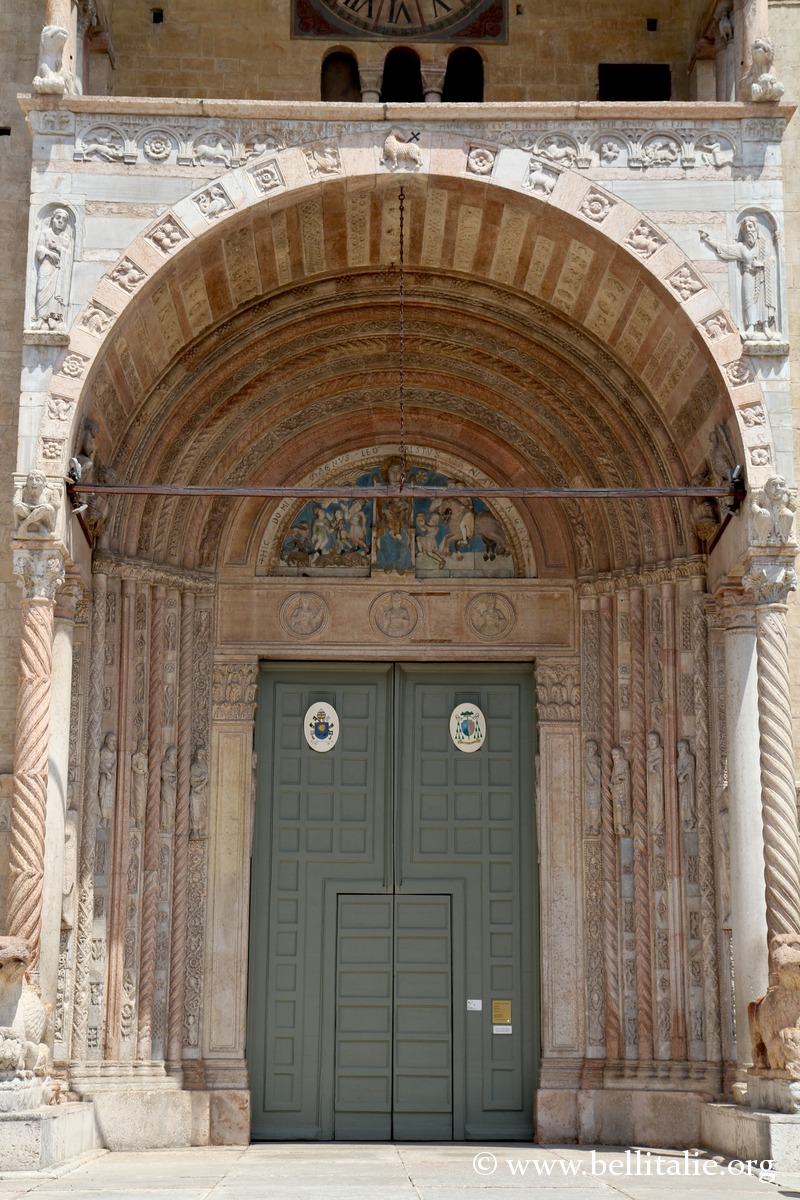
Subsequently remodeled, it has a facade partly Romanesque with the porch, masonry in tuff and brick and the 12th-century apse, and partly Gothic with 14th-century windows, and a Baroque upper section from the 17th century.
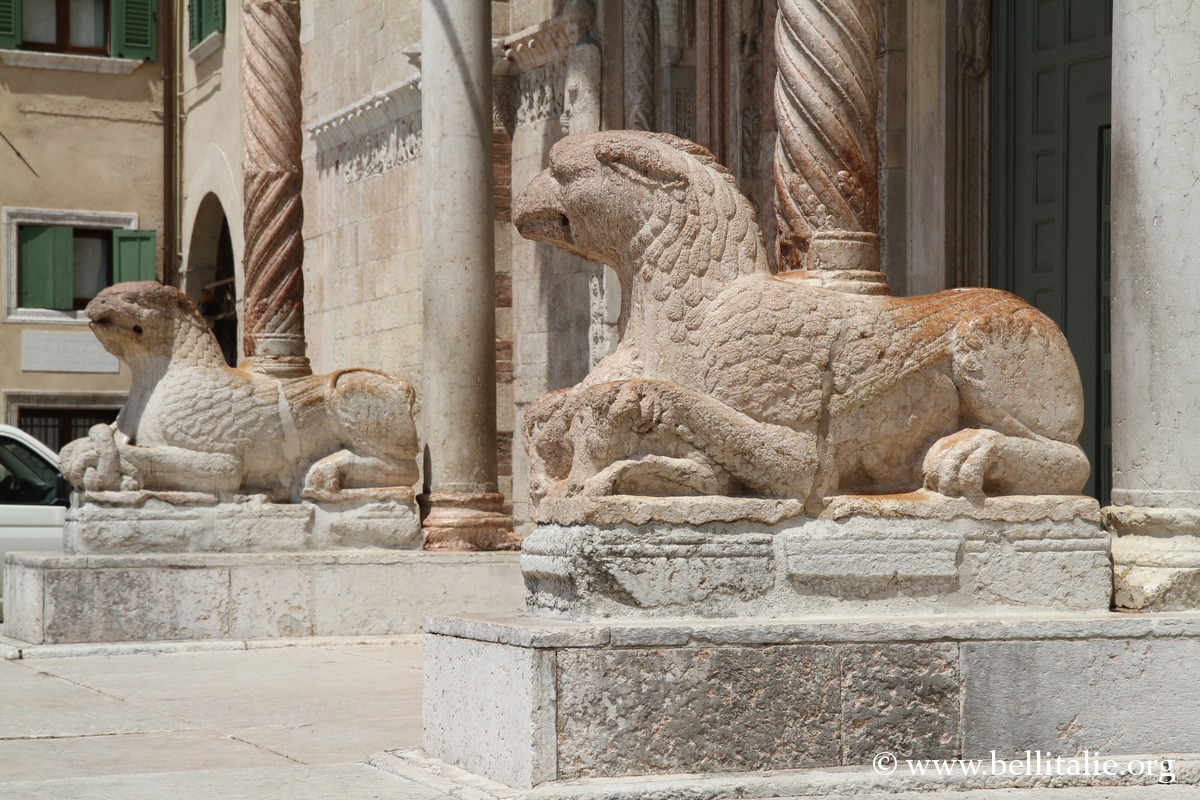
The gable porch, dating from 1139 and made by Nicholaus, has two superimposed protiri whose columns rest on griffins. It is adorned with sculptures. In the tympanum can be seen the images of Saint John the Evangelist and Saint John the Baptist. On each side would be the paladins Roland and Oliver.
On the lintel are represented the three theological virtues: Faith, Charity and Hope.
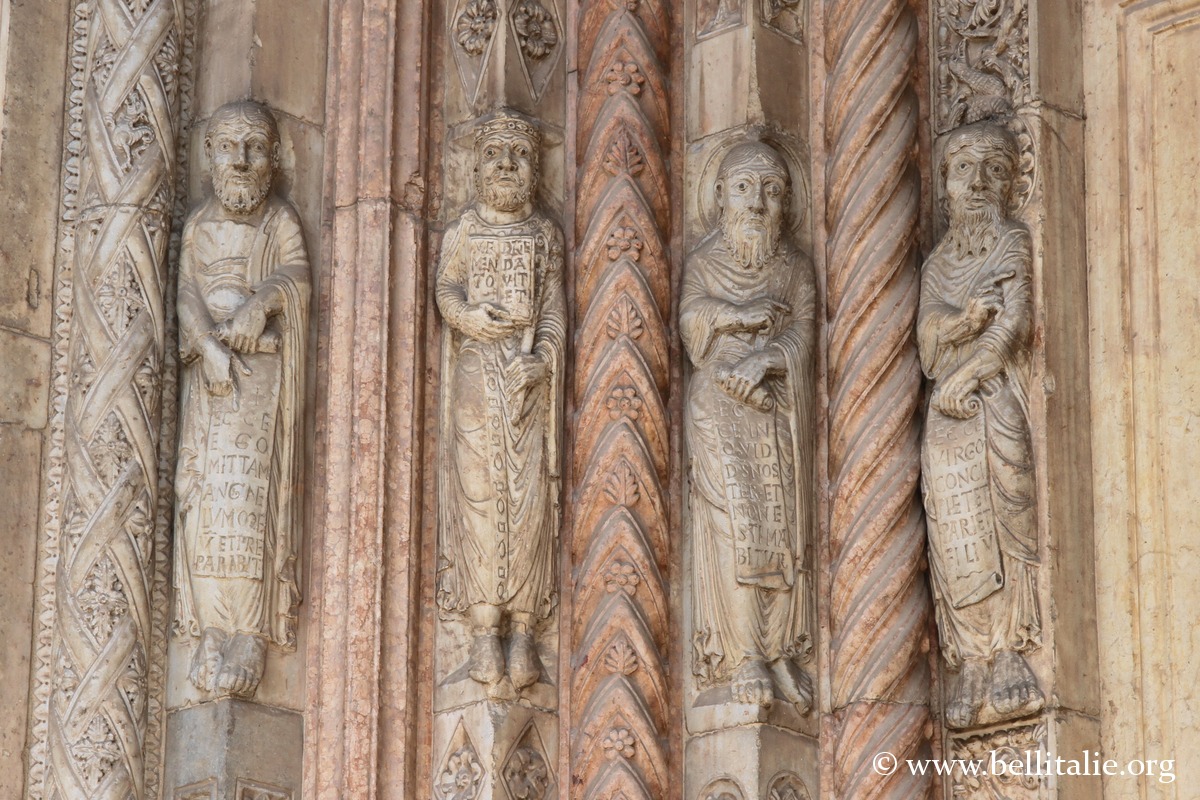
On the jambs are represented ten prophets, and the symbols of the evangelists can be seen on the vault, and above the door a Madonna and Child, the Adoration of the Magi and the Annunciation to the Shepherds.
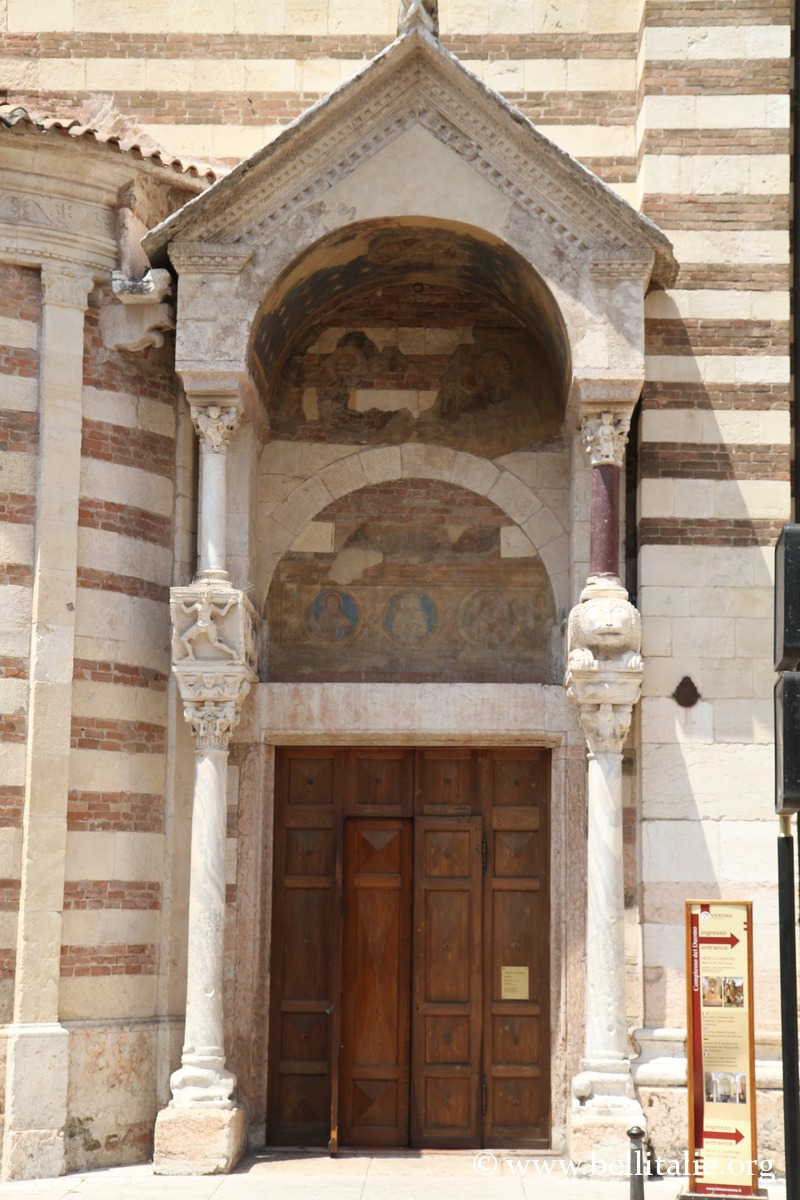
On the south side there is a side porch in the Lombard style from the early 12th century. The bell tower is accessible by reservation, a staircase leading to the top. It was begun in the 16th century and left unfinished.
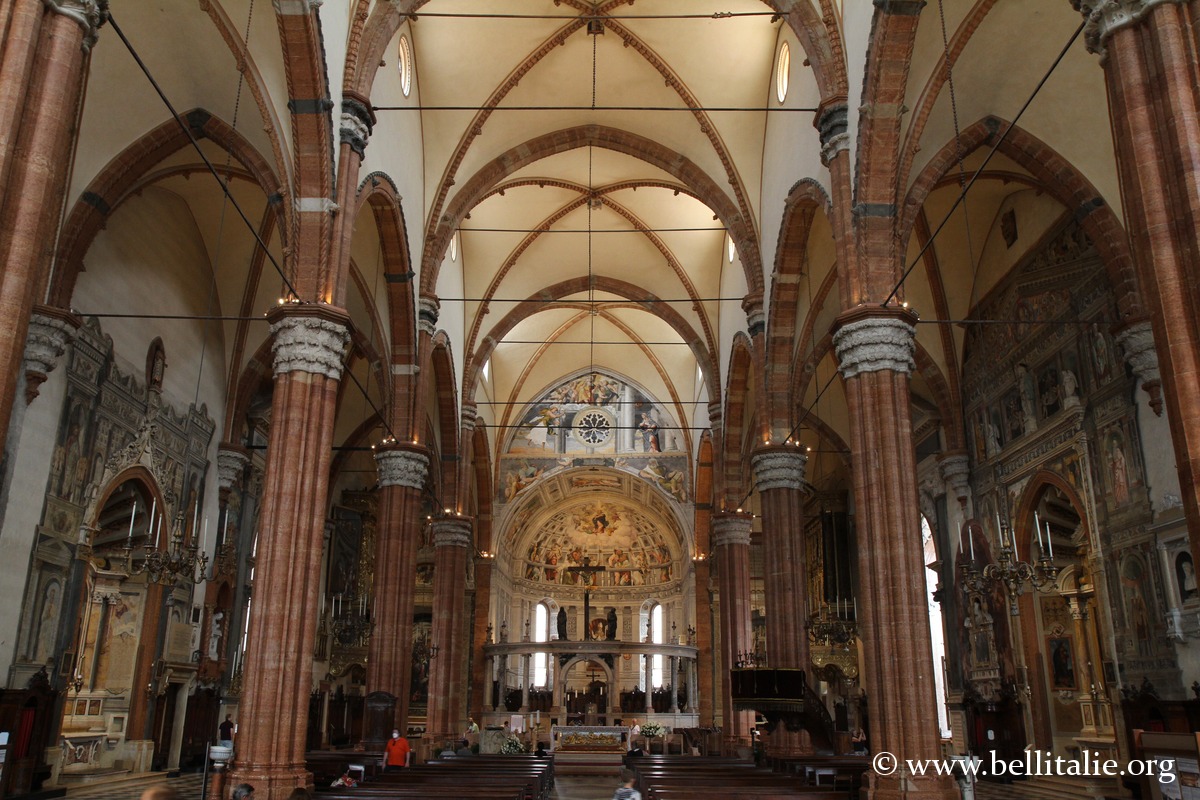
The interior appearance dates back to the 15th-century renovation, with its nave and columns of red Verona marble supporting Gothic arcades.
On the counter-facade can be seen the Nichesola Monument, a work by Iacopo Sansovino on the left, and a monumental clock.
The nave houses numerous altars, called chapels here. While there are two true chapels: that of the Madonna del Popolo facing the Memo Chapel.
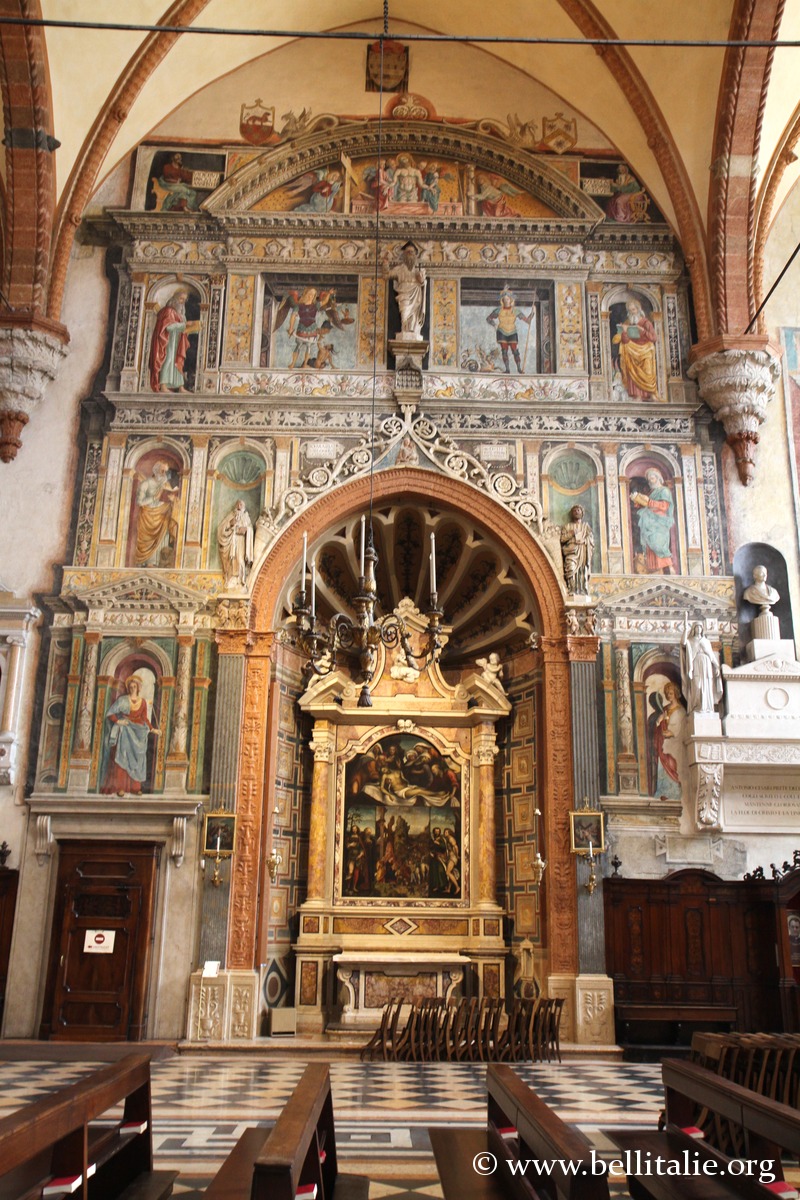
Some altars are framed by 15th-century frescoes.
In the Cartolari Nichesola Chapel there are 15th-century frescoes, and it was renovated around 1530 by Jacopo Sansovino, with the famous altarpiece of the Assumption by Titian on the altar painted in 1555.
In the apse, the semicircular screen by Michele Sanmicheli dates from 1534 and the frescoes, also from 1534, were executed by Francesco Torbido after a cartoon by Giulio Romano with the Assumption of Mary, her birth, the Presentation at the Temple, Isaiah and Ezekiel, etc.
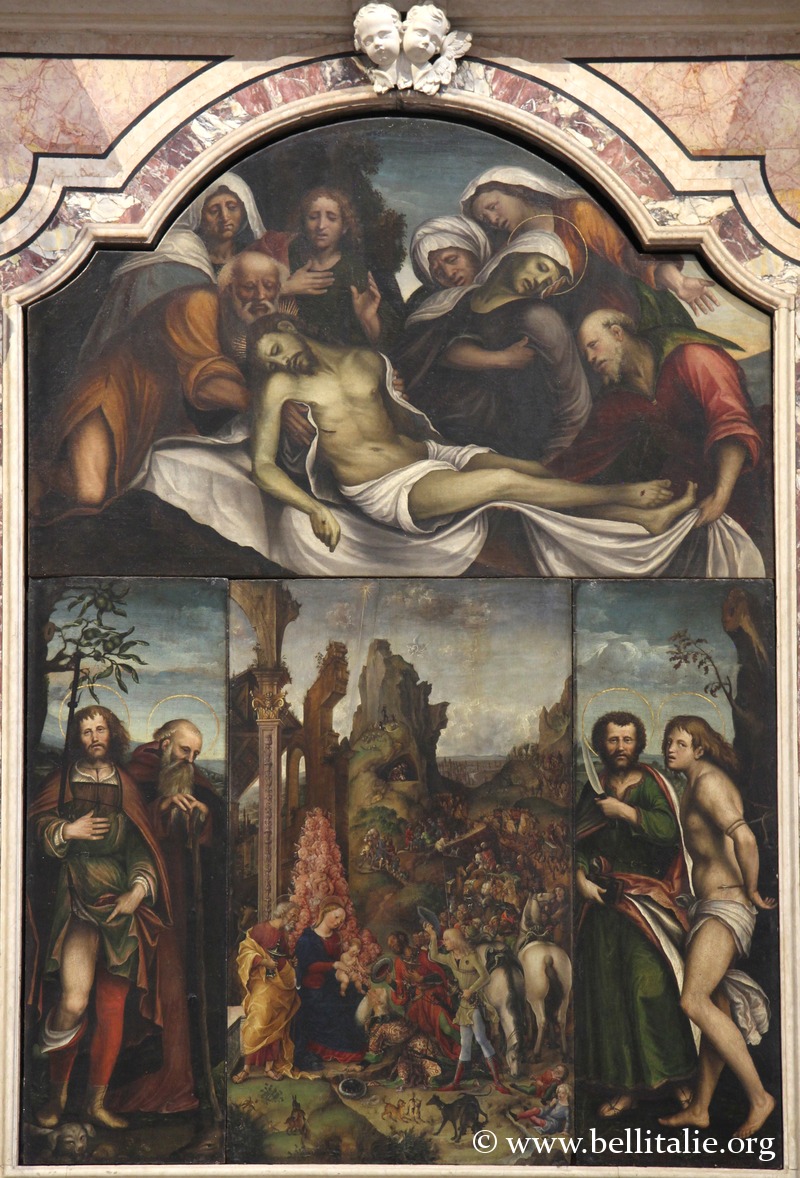
Among others, in the Calcasoli Chapel can be seen frescoes by Falconetto from 1503 and in the center the Adoration of the Magi by Liberale da Verona.
Information and sources
- Wikipedia article: en.wikipedia.org
- Chiese di Roma association website: www.chieseverona.it
- Tourism portals: www.turismoverona.eu
Map
If you see this after your page is loaded completely, leafletJS files are missing.


- What to see in Verona
- History of Verona
- Verona Arena
- Piazza delle Erbe and Lamberti Tower
- Castelvecchio and Scaliger Bridge
- Piazza dei Signori in Verona
- Basilica of Sant’Anastasia
- Basilica of San Zeno
- Roman Theatre of Verona
- Church of San Fermo
- Museum of Frescoes and Juliet’s Tomb
- Church of Santa Maria in Organo
- Verona’s Monuments


Comments