


The beautiful city of Verona deserves at least a weekend to appreciate its cultural and architectural heritage. Below, we present the main sites that can be discovered there, ranked according to a more or less subjective interest.
See also further down the Interactive tourist map of Verona
See also the General presentation of Verona
1. Verona Arena
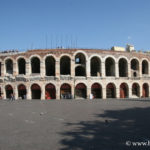
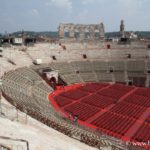
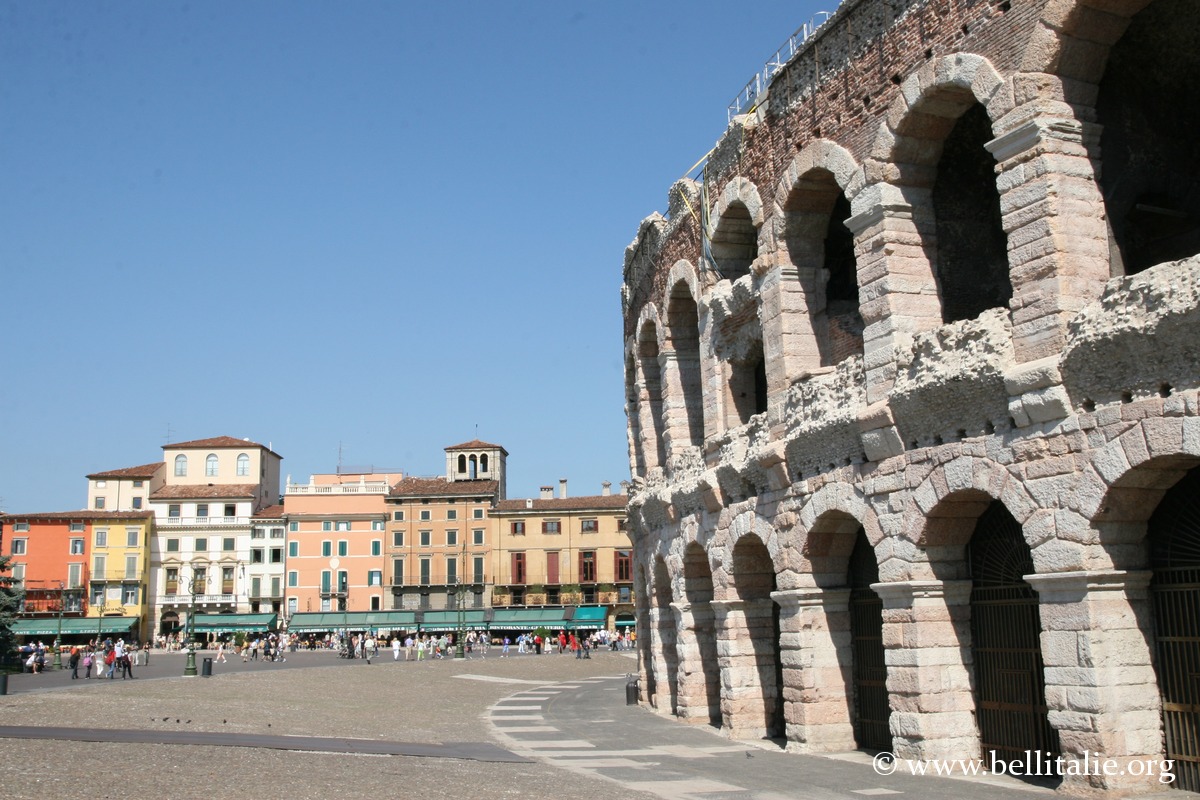 Built by the Romans in the 1st century BC, these large Roman arenas are the third largest Roman amphitheatre in Italy, which today can still hold up to 20,000 spectators, as during the summer operas.
Located on Piazza Bra, the building is well preserved, with a facade built of pink and white stones from Valpolicella. The interior is superb, and it is one of the most beautiful places to see in Verona.
2. Piazza delle Erbe
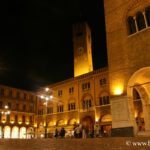
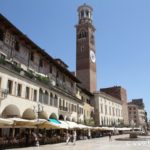
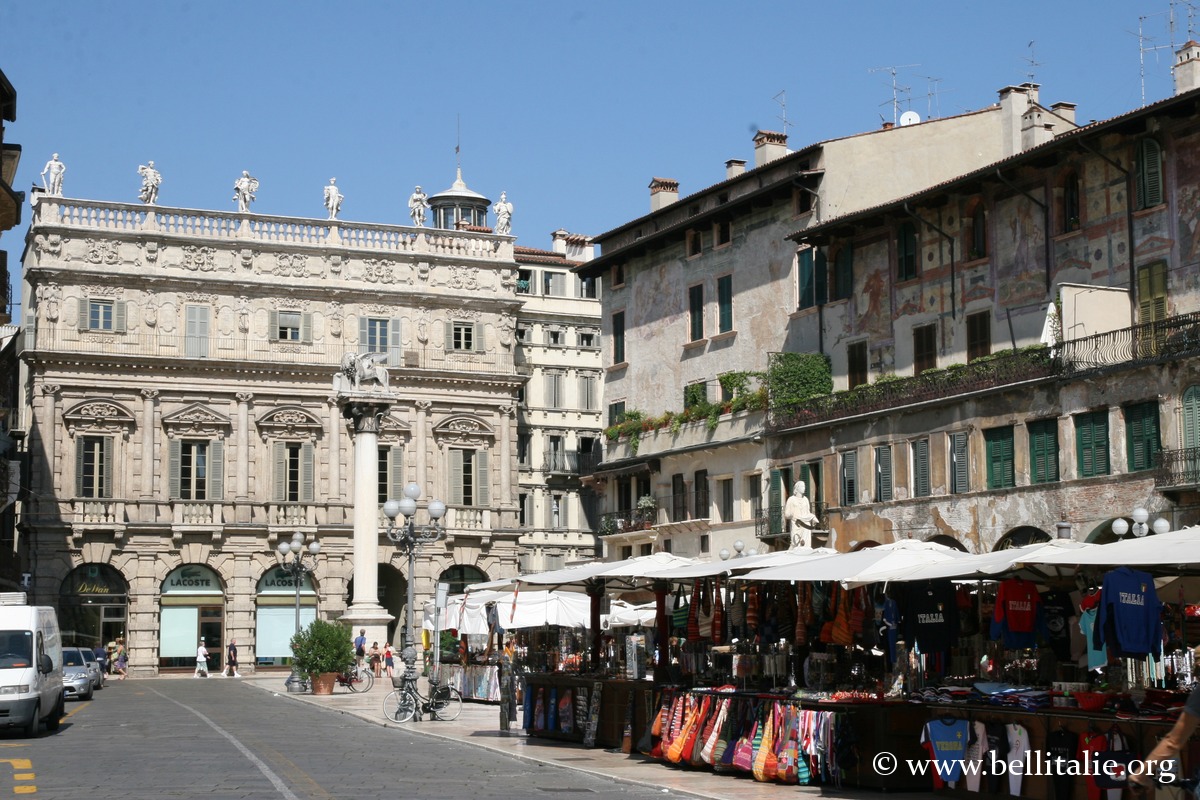 The Piazza delle Erbe is certainly one of the most beautiful Italian squares and also the oldest in Verona, since it partially corresponds to the Roman forum. For centuries it was the heart of the city where the market was held. There stands the medieval fountain of the Madonna Verona with its Roman statue, a 13th-century tribuna, a column topped by the Lion of Saint Mark, another small ancient column topped by a medieval aedicule, and beautiful palaces such as the Palazzo della Ragione with the tall Torre dei Lamberti, the Casa dei Mazzanti, or the Renaissance and Baroque Palazzo Maffei where the Roman Capitol once stood. It is also a very lively square, with bars and restaurants under its arcades.
3. Castelvecchio and Scaliger Bridge
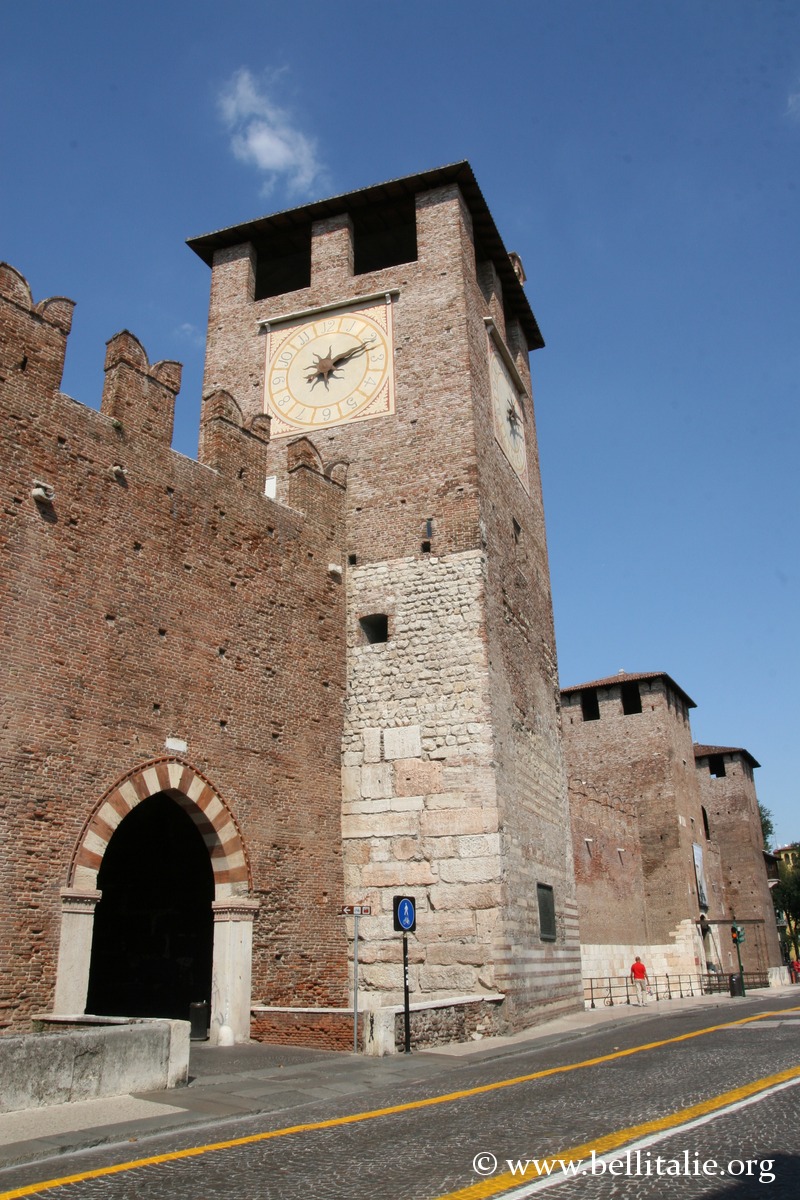 On the banks of the Adige, this defensive fortress built in the 14th century was also the princely residence of the Scaligeri. The Castelvecchio complex today comprises the large courtyard with the parade ground on one hand, and the palace on the other. It houses the municipal museum with its collections ranging from the Middle Ages to the modern era, via the Renaissance.
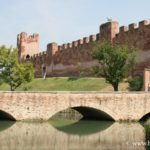
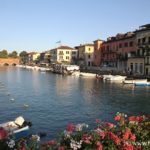
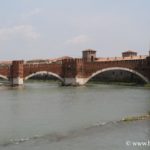
The Scaliger Bridge is the beautiful crenellated bridge that crosses the Adige. It was rebuilt in the 1950s with the stones of the 14th-century building that the Germans blew up during their retreat in 1945. Crossing it is also an opportunity for a lovely walk, with beautiful views of the city.
4. Piazza Bra
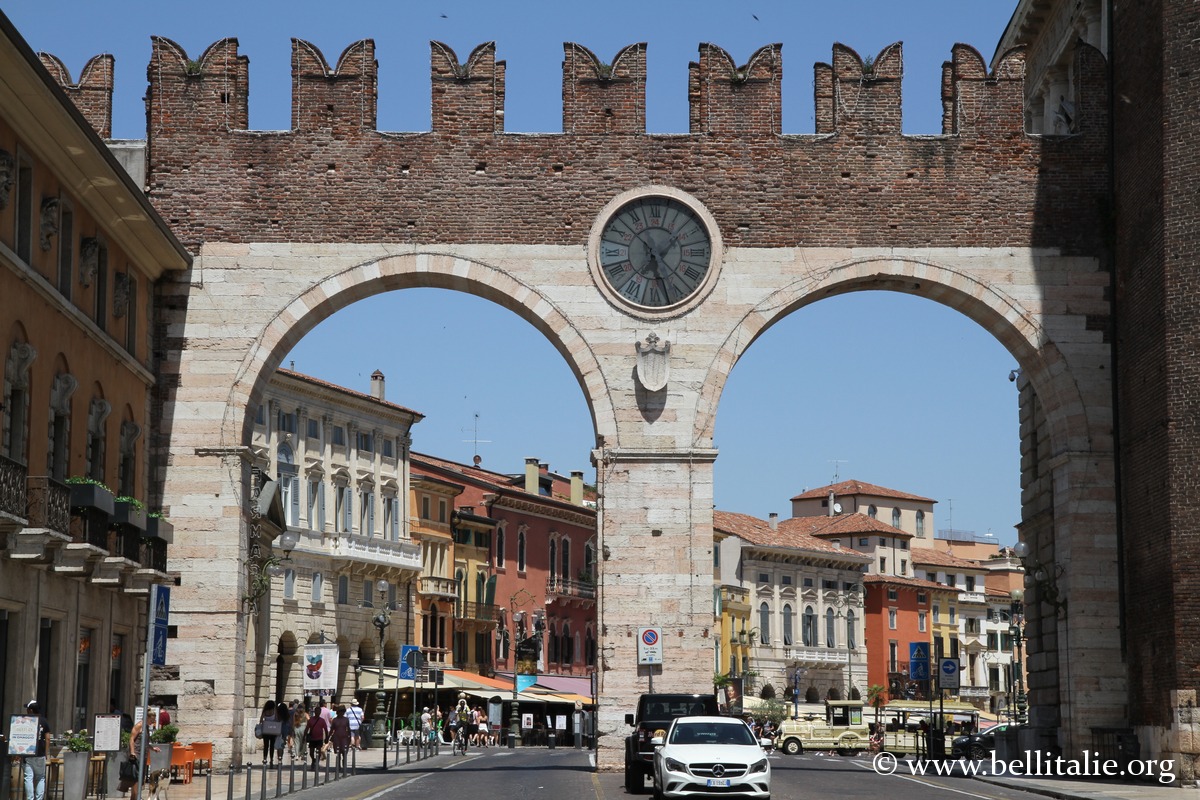 It is the largest square in the city, lined with cafes, restaurants and terraces along the Liston pavement paved with pink Valpolicella marble.
Its name comes from the German breit, which means “wide”. It is largely occupied by the arena, and around it stand monuments and palaces such as the neoclassical 19th-century Palazzo Barbieri, seat of the Town Hall, 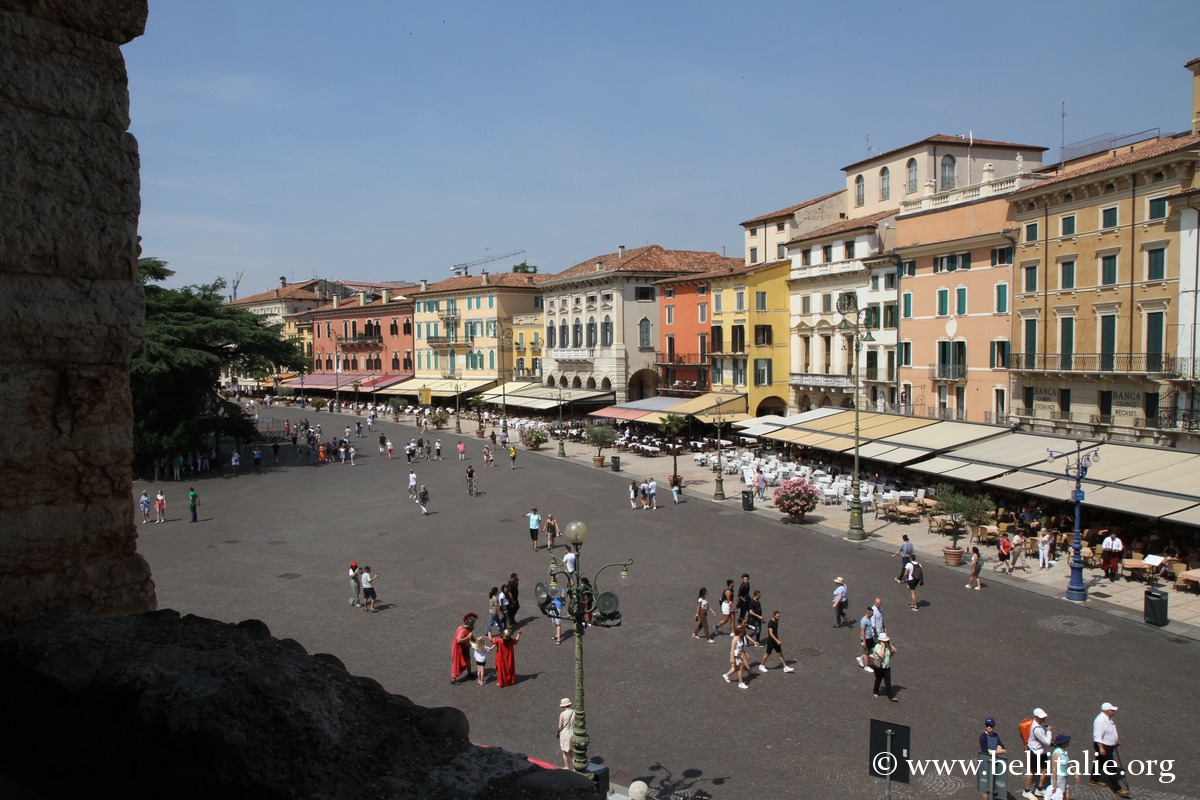 the Palazzo Gran Guardia (17th-19th century) with its large portico that hosts exhibitions, the Museo Lapidario Maffeiano, or the Porta Bra with its clock which was the passage through the old city wall.
In the western part, there is a statue dedicated to Victor Emmanuel II celebrating the annexation to Italy in 1855, and the Fountain of the Alps, symbol of the twinning with Munich.
Major events are held there, such as the beautiful Christmas market.
5. Torre dei Lamberti
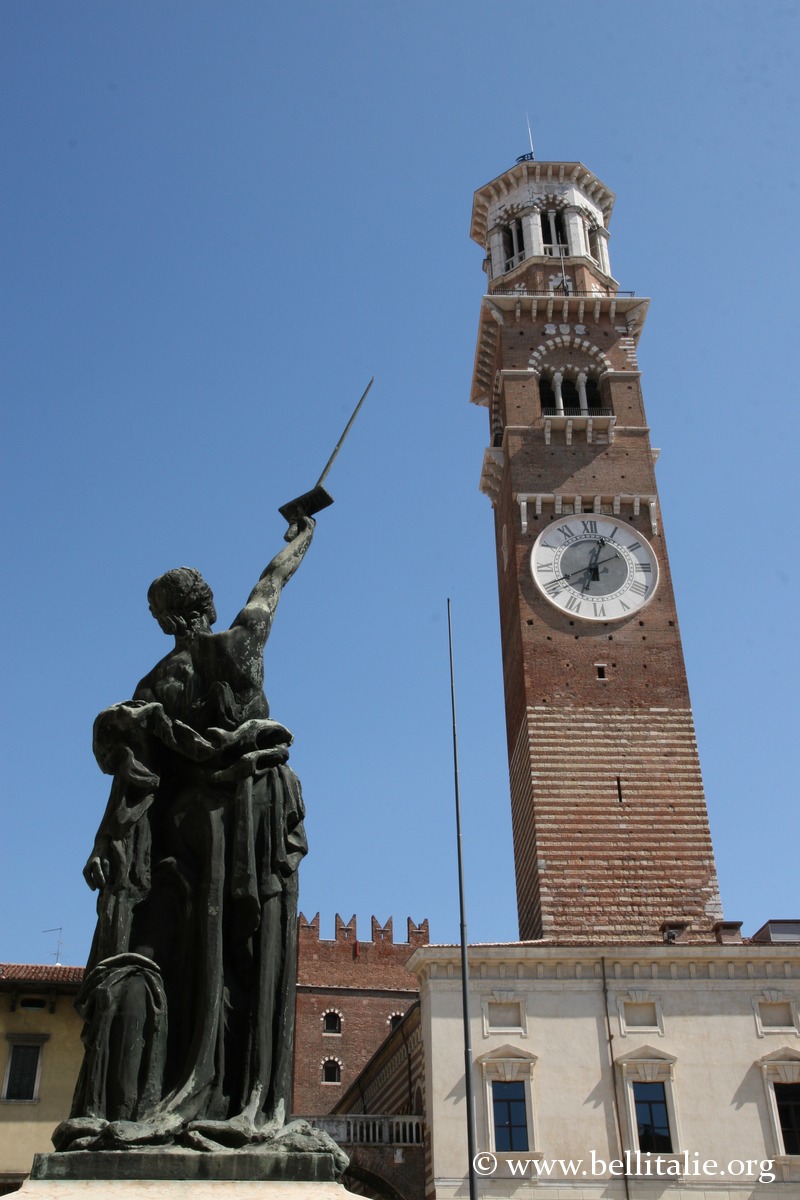 Towering over Piazza delle Erbe with its 84 metres of height, the Torre dei Lamberti which is integrated into the Palazzo della Ragione is the tallest tower in Verona. The terrace can be reached by an elevator or by the 368 steps, to enjoy the superb view.
When it was built in the 12th century it measured only 34 metres. It was in the 15th century that it was rebuilt after a collapse and crowned with its octagonal bell tower.
6. Piazza dei Signori
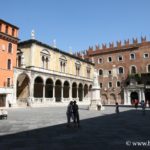
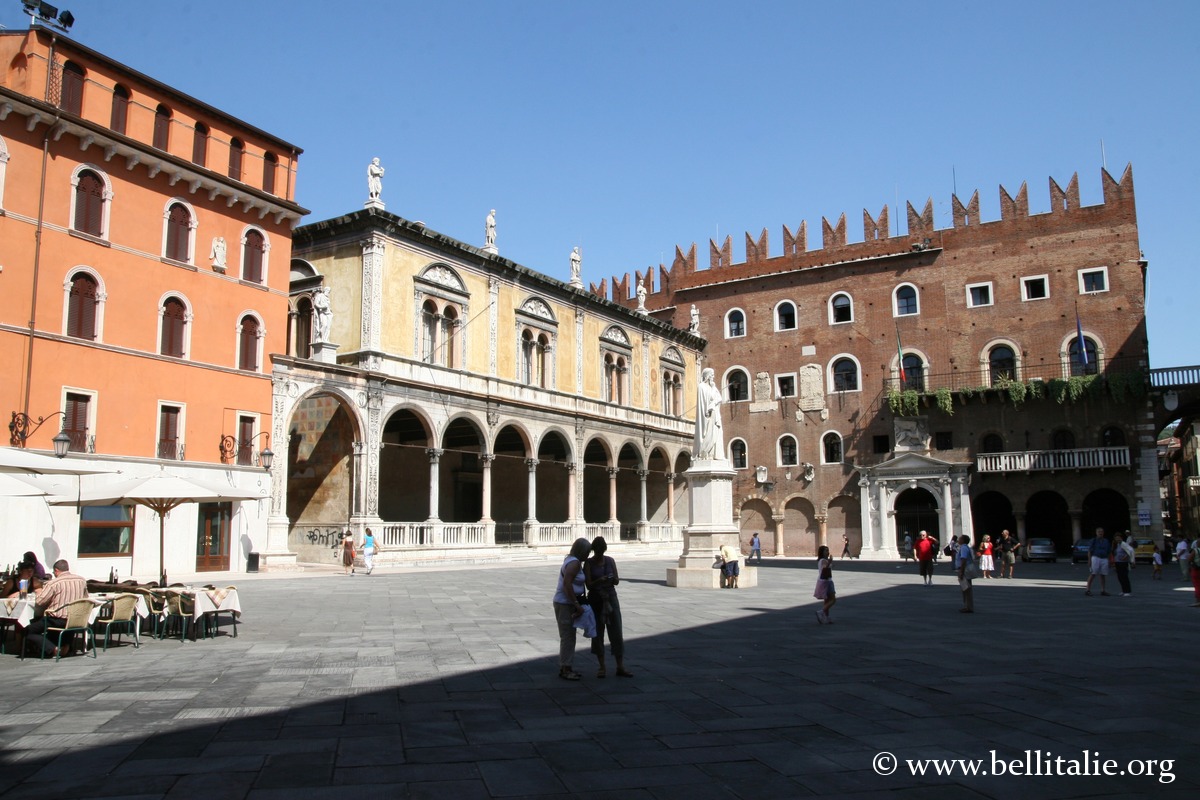 Close to Piazza delle Erbe, the Piazza dei Signori is also known as Piazza Dante because of the statue representing the poet. This beautiful rectangular square is framed by superb palaces originating from the Middle Ages, which were the first lordly residences of the city, including the Palazzo della Ragione (late 12th century), the Palazzo di Cansignorio or (remodelled, of which the tower remains from the Middle Ages), the Palazzo del Podestà (14th-15th century), the Loggia del Consiglio of the palace of the same name (15th century), and the church of Santa Maria Antica with the Scaliger Tombs.
7. Basilica of Saint Anastasia
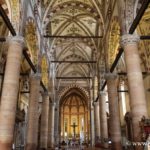
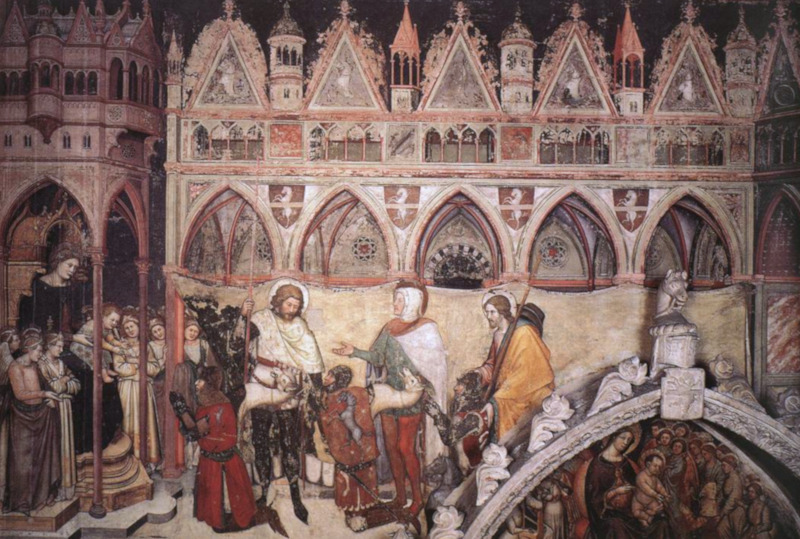 Among the four churches to see in Verona, the Basilica of Saint Anastasia is a Dominican church of medieval origin that stands on a small square. It is a beautiful Gothic building with its beautiful portal and a majestic interior whose central nave is supported by powerful columns. It houses important works of art, including beautiful altars and superb frescoes such as the one in the Pellegrini Chapel with Saint George and the Princess by Pisano.
8. Verona Cathedral
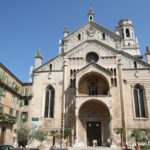
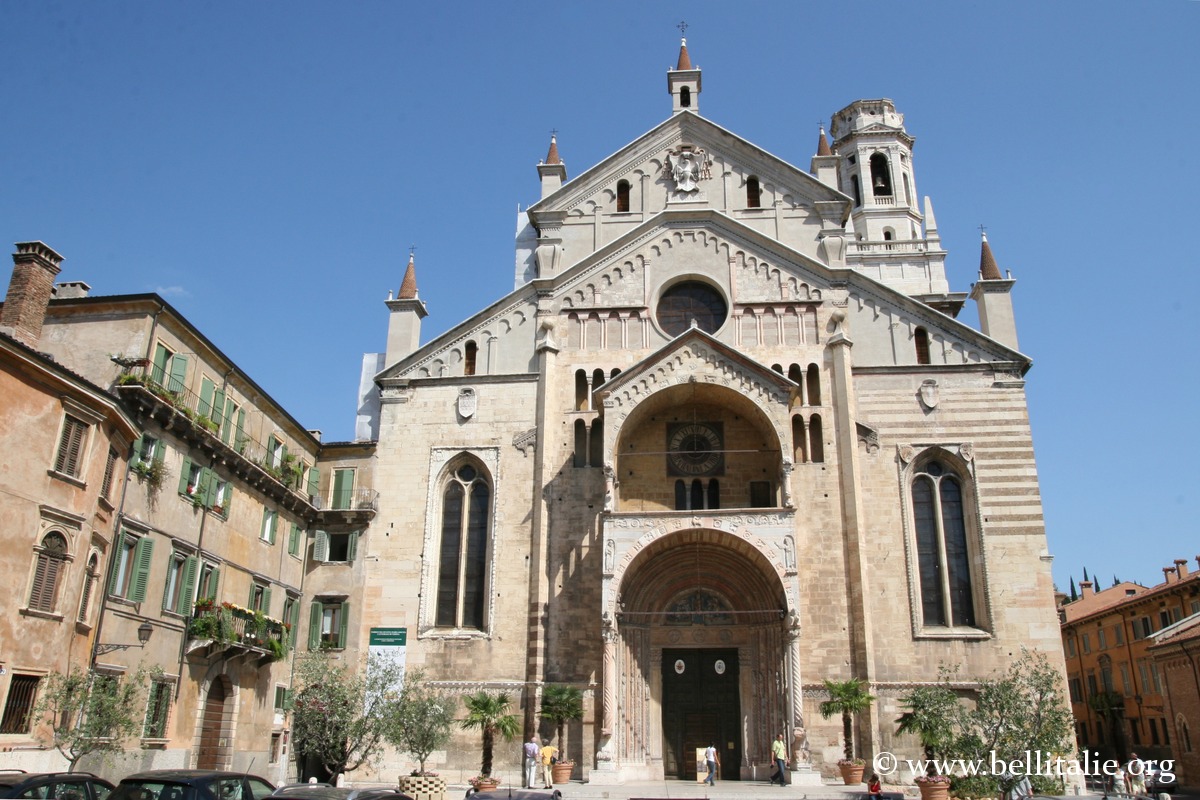 An early Christian basilica was built in this area on ancient Roman villas with private baths. The current complex of Santa Maria Matricolare includes, besides the cathedral, the church of Sant’Elena, the Cloister of the Canons, the baptistery of San Giovanni in Fonte, the bishop’s palace and the library. It features Romanesque, Gothic and Renaissance styles, with works of great value such as marble baptismal fonts and the altarpiece by Titian from 1555 depicting the Assumption of Mary.
9. Basilica of San Zeno
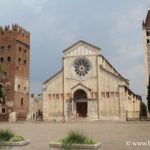
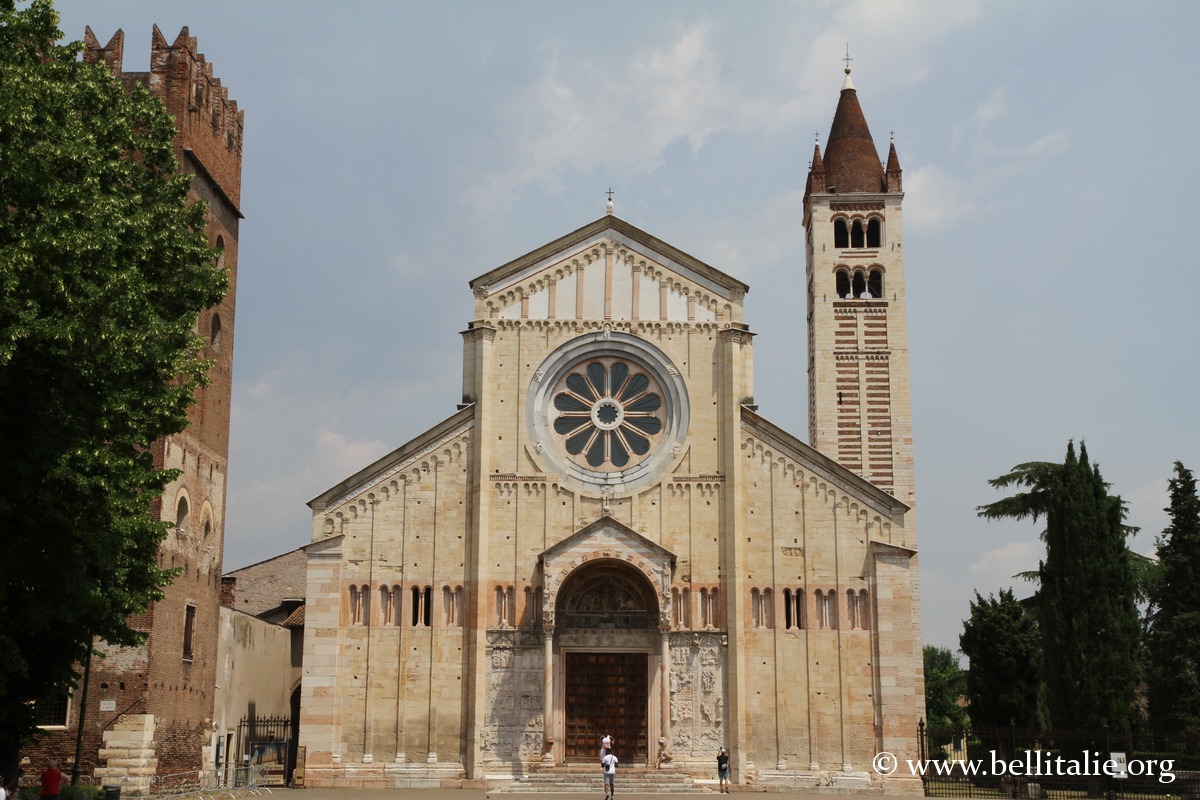 Just outside the historic center, the Basilica of San Zeno Maggiore, dedicated to the 4th-century bishop of Verona, is probably the most interesting religious building in the city with its Lombard Romanesque architecture. One can admire in particular the beautiful facade with the superb rose window and the porch, the beautiful luminous cloister, or inside the remarkable altarpiece with the triptych by Mantegna (15th century).
10. Roman Theatre and Archaeological Museum
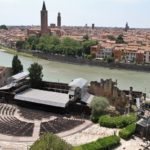
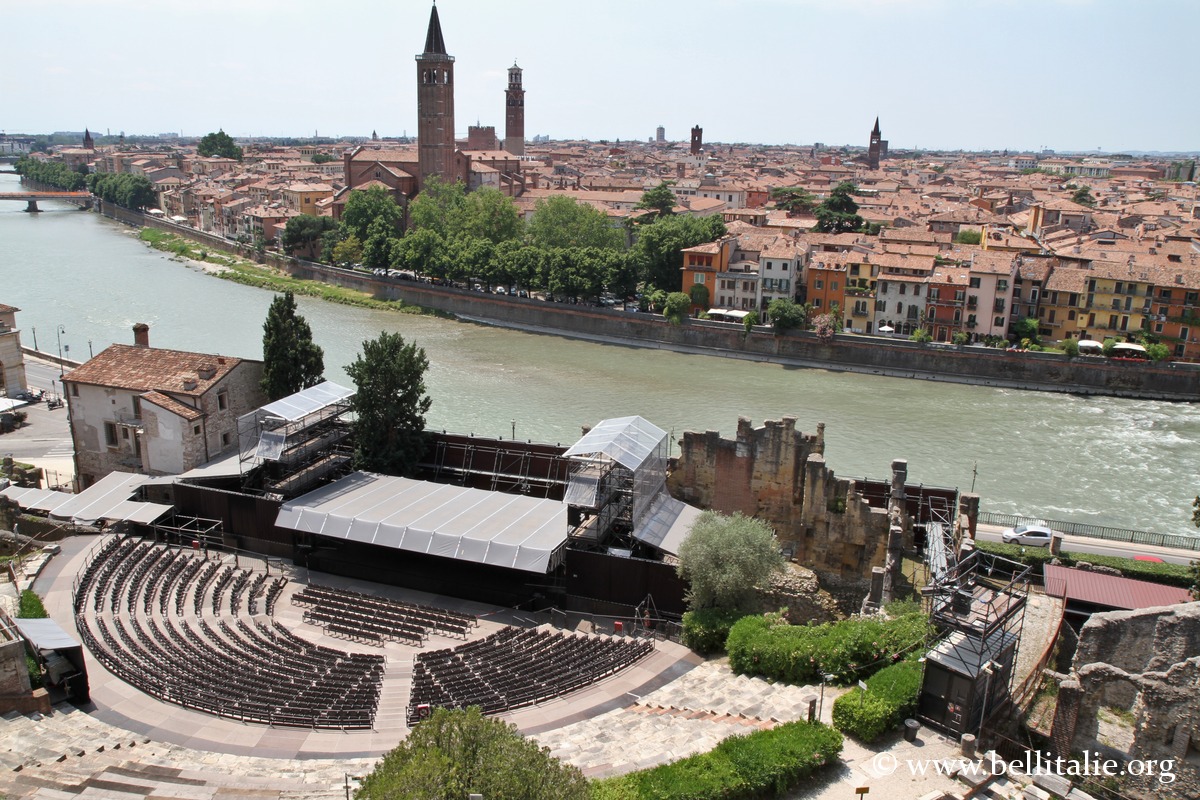 The Roman theatre of Verona was built in the 1st century BC on the banks of the Adige, not far from the Stone Bridge on the other side of the river from the historic center, in the Veronetta district at the foot of the San Pietro hill. Substantial remains (cavea, tiers, arcades, boxes) evoke its past majesty. It is associated with the archaeological museum housed in an old Jesuit convent.
11. Church of San Fermo
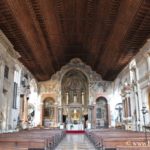
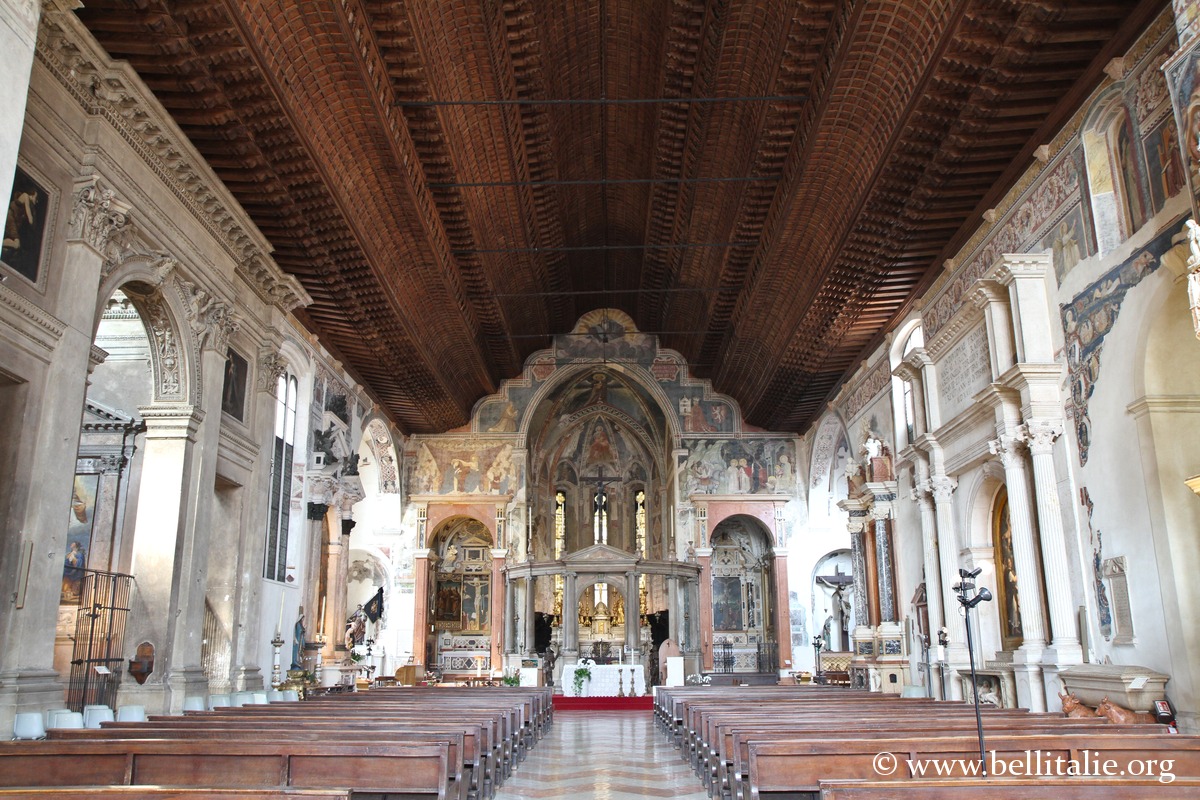 Near the Adige and the Navi Bridge, the church of San Fermo Maggiore dates back to the 5th century, dedicated to the brothers Firmus and Rusticus killed in this area in 304 AD.
It has a refined Gothic style dating from the Franciscans of the 13th-14th centuries, with its spires and pinnacles and whose vast interior space is covered by an astonishing false wooden ceiling shaped like an overturned boat hull. But it also has a remarkable lower church in Romanesque style dating from the Benedictine era of the 12th century, with its four naves.
12. Porta Borsari
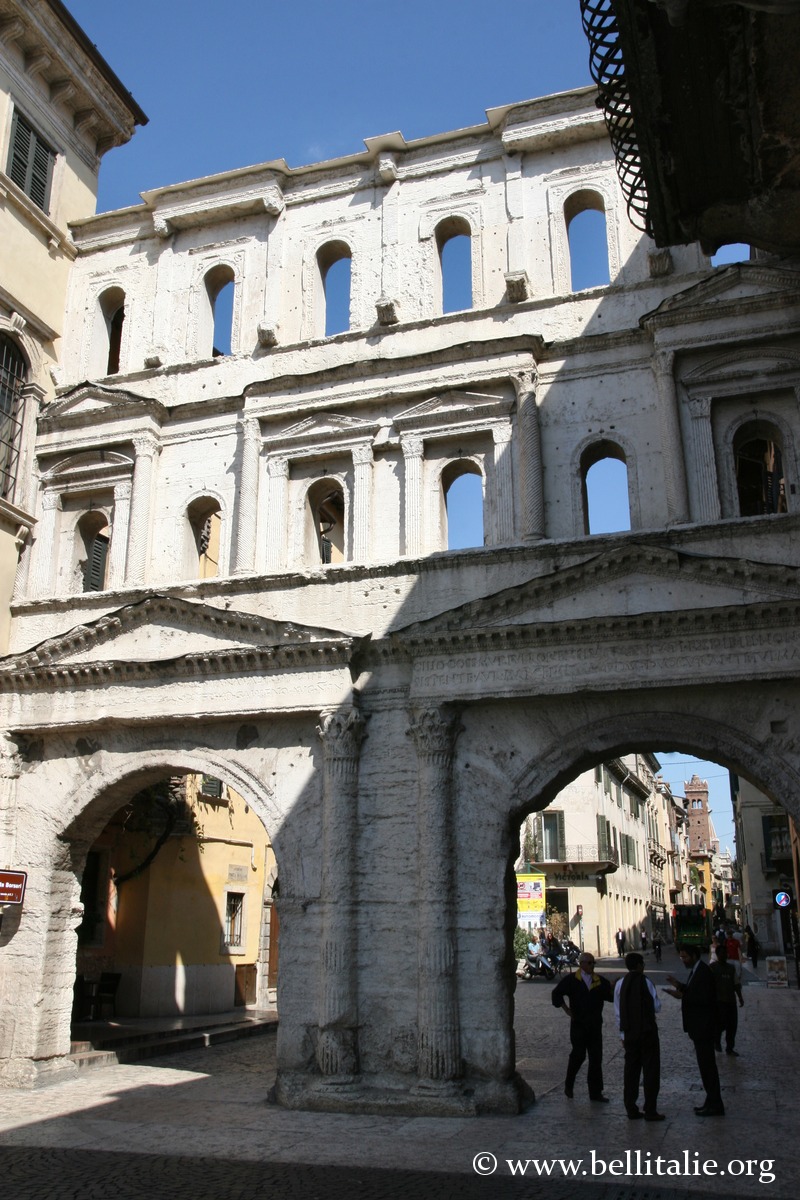 This beautiful Roman gate was one of the main entrances to the fortified Roman city, where the Via Postumia arrived, continuing with the artery of the Decumanus (east-west axis), built in the 1st century BC and remodeled under the Empire, when it was called Porta Iovia (Gate of Jupiter) due to a nearby temple dedicated to Jupiter. It bears an inscription dated 265 AD, commissioned by the emperor Gallienus to mark the enlargement of the walls.
The name of Porta Borsari refers to the “Bursari”, the guard soldiers who controlled the entrances to the city and collected episcopal taxes.
13. Juliet’s House
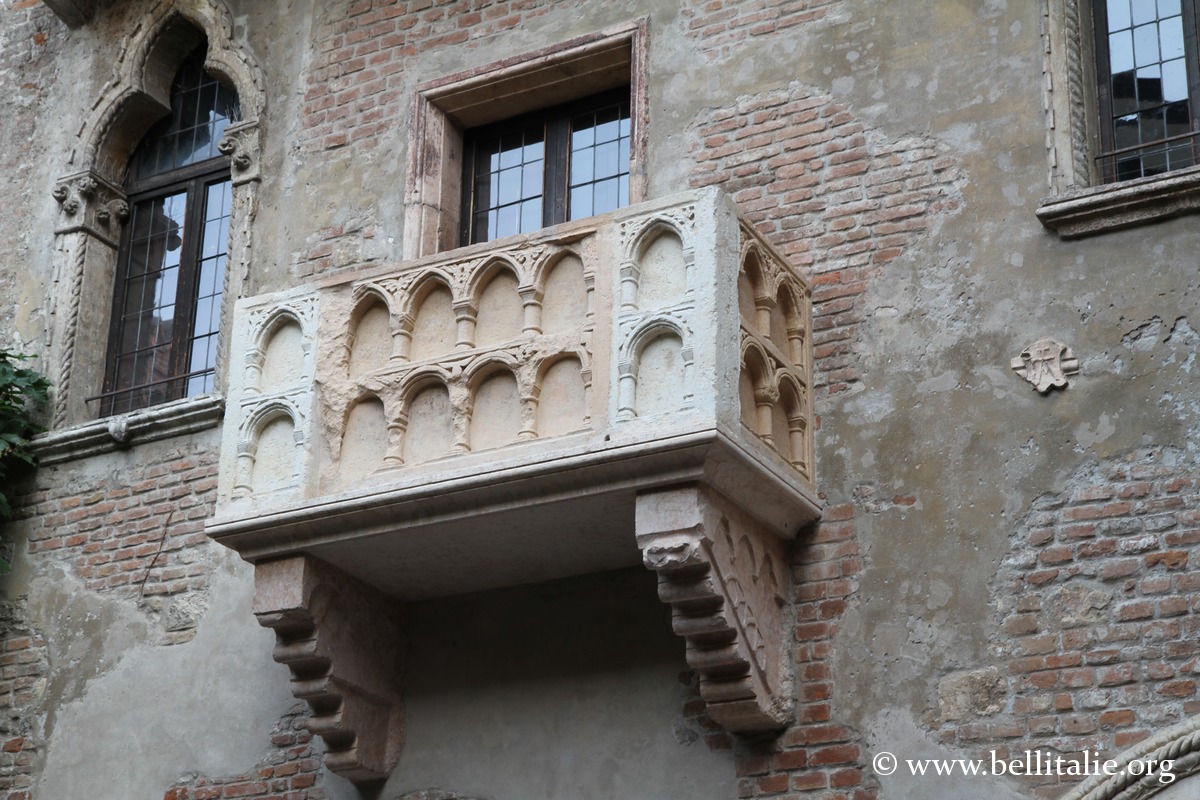 The legendary birthplace of the Shakespearean character Juliet (Giulietta Capuleti) is located in a beautiful medieval palace, with the equally legendary balcony in the courtyard. However, this balcony and the beautiful medieval-inspired decorations were actually added in the 1930s.
The interior preserves engravings and objects from the medieval and Renaissance periods, as well as the “bed of Juliet” and costumes created for Franco Zeffirelli’s 1968 film. This 13th-century palace is in the Veronese Gothic style. In the courtyard, a bronze statue of Juliet
offers a breast to the caress of tourists, because according to a legend, touching it would bring love and fertility.
14. Scaliger Tombs
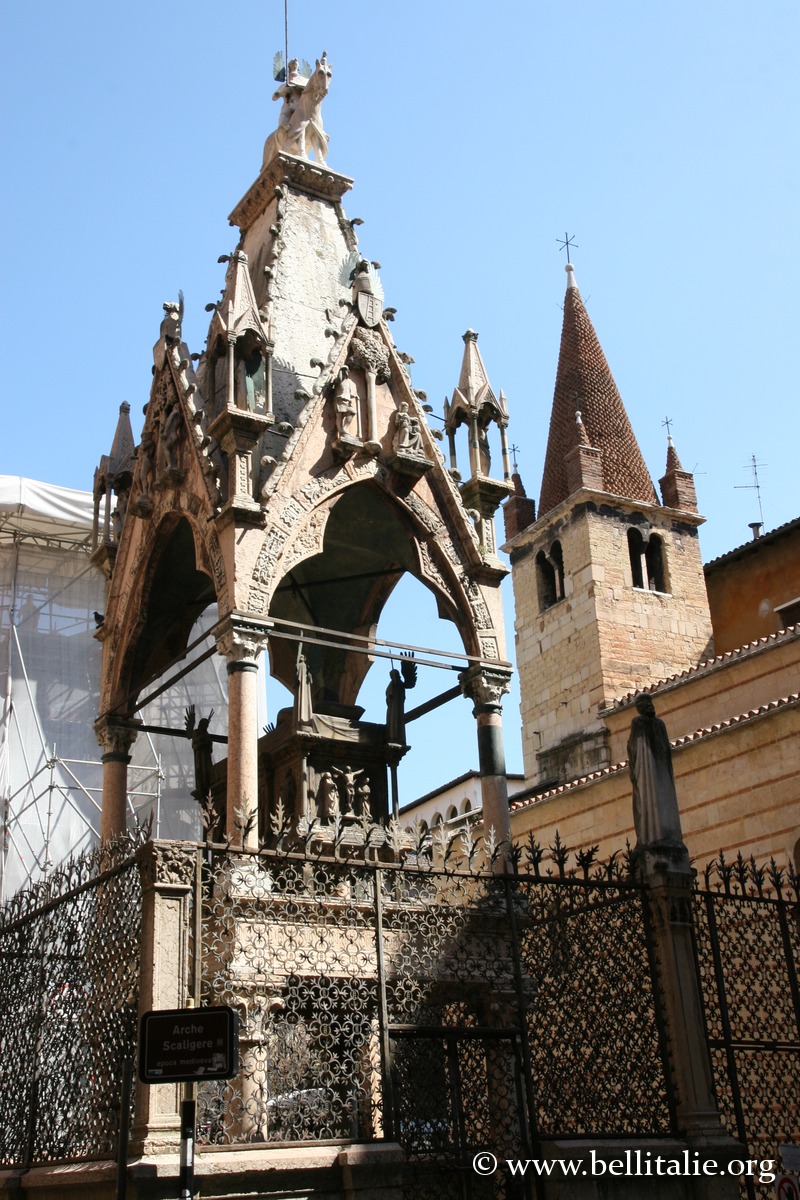 In the courtyard of the church of Santa Maria Antica, the Scaliger Tombs are remarkable Gothic constructions from the 14th century, mausoleums of members of the Della Scala family (or Scaligeri), including that of the great lord Cangrande, to whom Dante dedicated the Divine Comedy, and those of Mastino II and Cansignorio.
15. Museum of Frescoes and Juliet’s Tomb
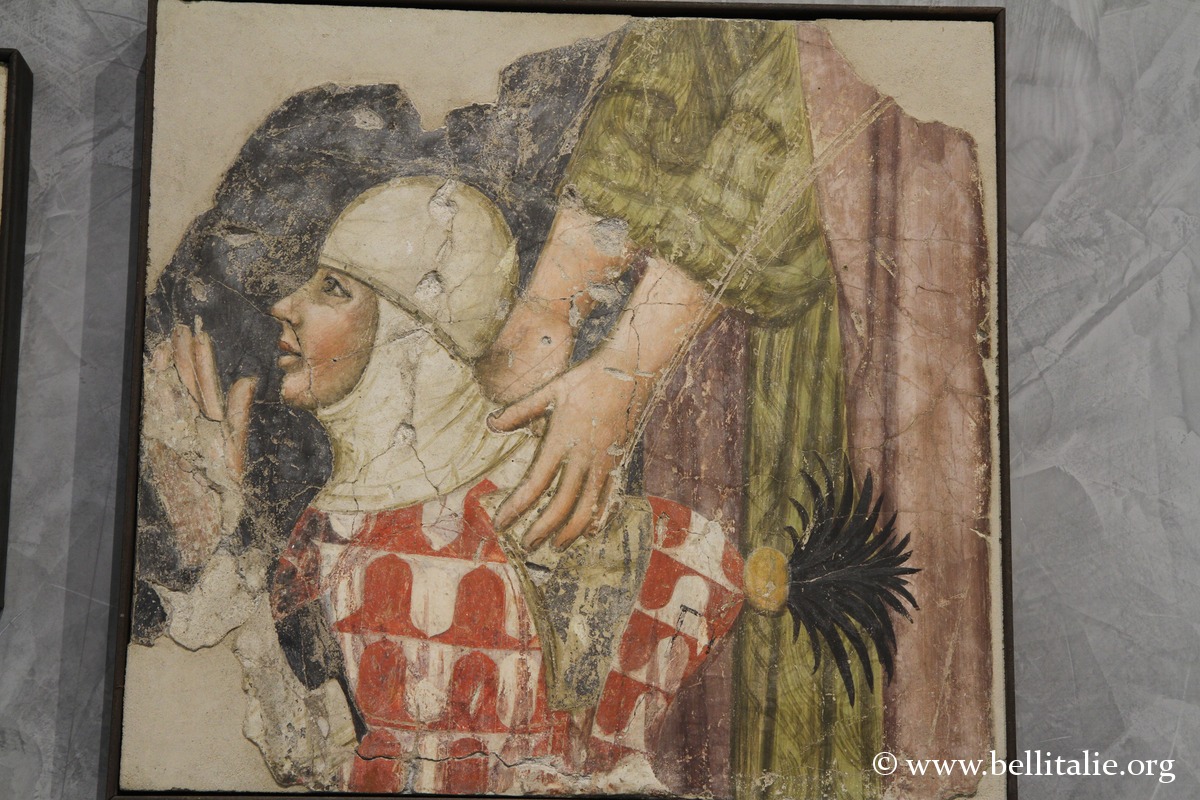 Housed inside the former convent of the Franciscan Sisters, the Museum of Frescoes preserves important frescoes from the facades of churches or houses of the city, painted between the 10th and 16th centuries.
In the underground crypt, a sarcophagus is said to be the Tomb of Juliet, that of the legendary Shakespearean character Juliet (Giulietta Capuleti).
16. Via Mazzini
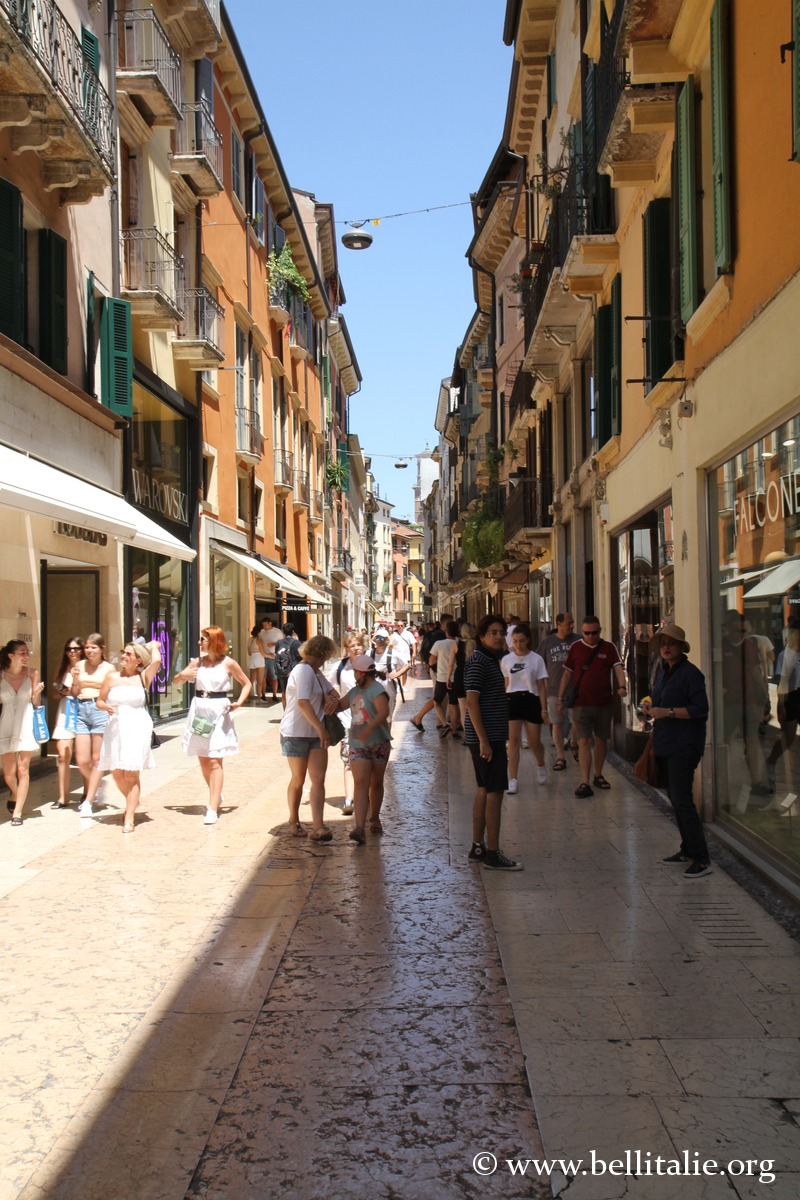 Via Mazzini is a long pedestrian street, connecting Piazza Bra to Piazza delle Erbe, and the shopping street with luxury boutiques, connecting Piazza Bra to Piazza delle Erbe. A portion dates back to the 14th century, and in places one finds elements from the Roman era.
17. Giusti Garden
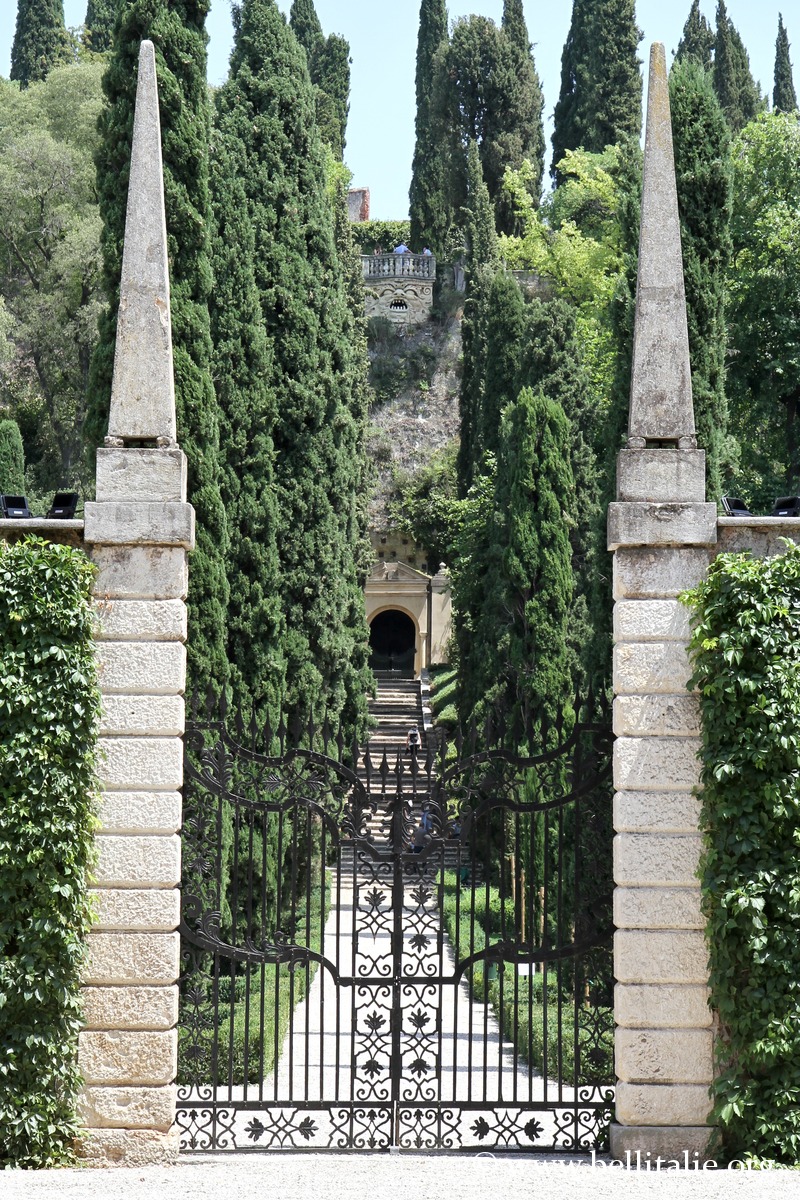 The Giusti Garden is a beautiful 16th-century Italian garden, with its hedge-lined paths, greenery, flowers, Roman remains, fountains, and pools with statues. The private palace opens on certain occasions.
The most remarkable areas are the west and east. There you can see a pool with a fountain and its dolphins, a statue of Minerva, a statue of Apollo, etc.
On the eastern side, there is a small fountain of red Verona marble, a hedge maze.
18. Stone Bridge and bridges of Verona
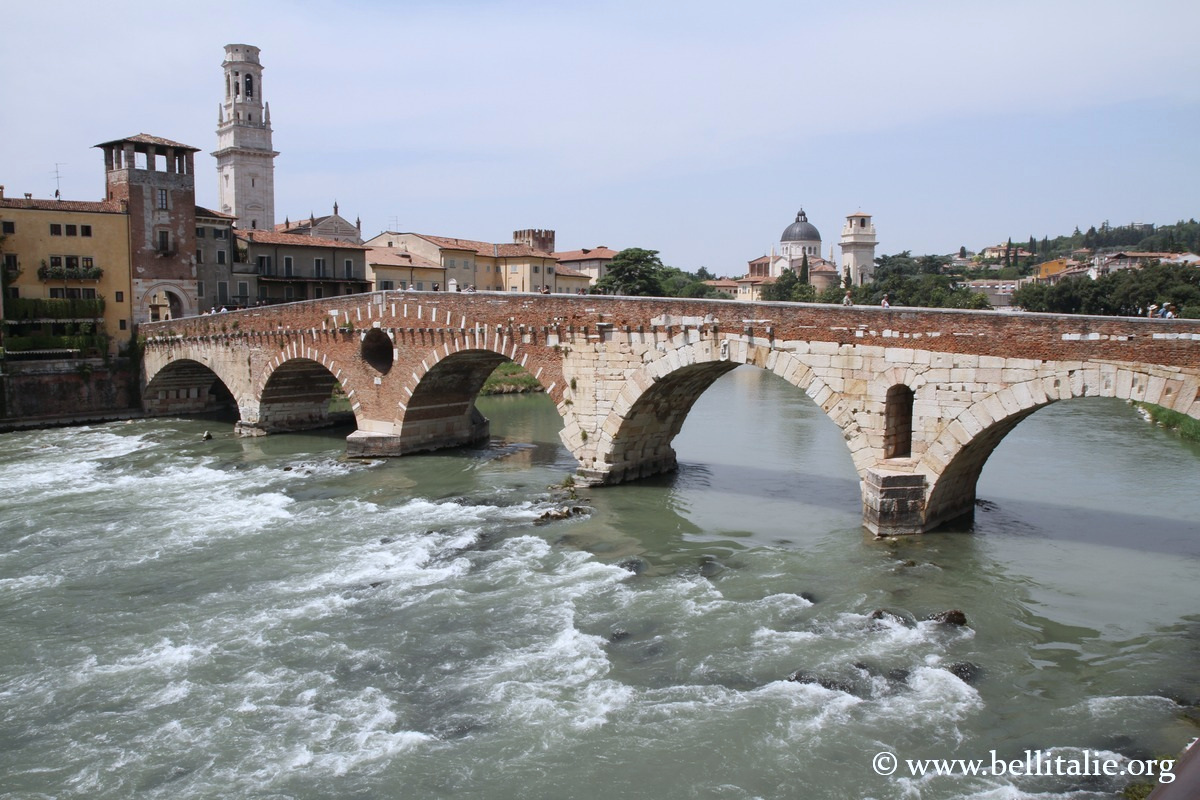 The city of Verona is cut in two by the Adige, a river now crossed by seven bridges. These were all rebuilt after being mined by the Germans during their retreat in the Second World War.
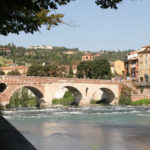
The oldest of Verona’s bridges is the Stone Bridge. It dates back to Roman times (1st century BC) and led from the city center with the via Postumia to the theater on the San Pietro hill. It was faithfully rebuilt to the original using the stone blocks and bricks thrown into the riverbed by the explosion. With its five arches, its length is 95 meters. It had been reworked several times, such as in 1298 when the defensive tower was added. The two white stone arches are Roman, while the next two in brick date from a reconstruction in 1520, and the last arch dates from 1298.
The other emblematic bridge of the city is the Scaligero Bridge facing Castelvecchio. Built in the second half of the 14th century with 3 unequal arches, it was also rebuilt with original stones and bricks recovered from the bottom of the river.
Others
19. Maffeiano Lapidary Museum
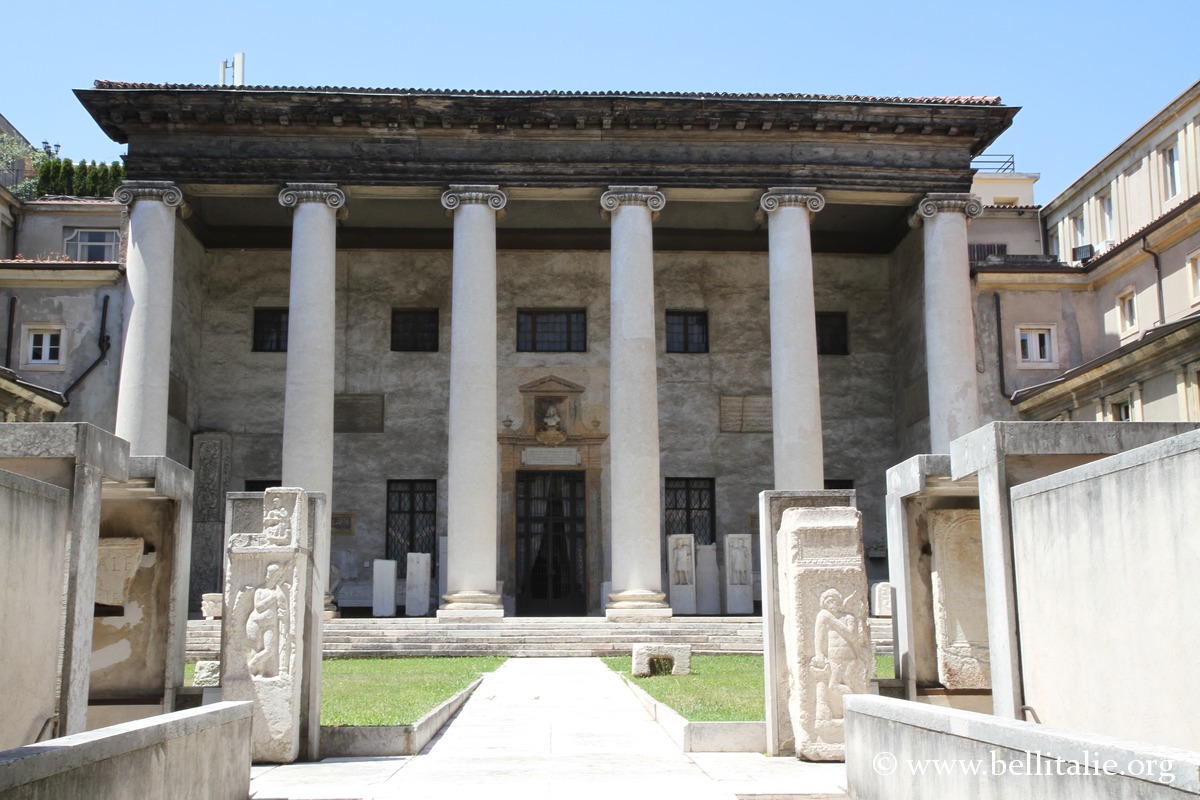 The Maffeiano Museum is one of the oldest public museums in Europe, founded in 1745, which preserves 650 pieces of tombstones, epigraphic material and engravings from various periods, including Etruscan, Roman or other, with inscriptions in Greek, Latin, Arabic or Hebrew.
In particular, in the courtyard, with a chronological itinerary, there are some milestone columns, stelae and other objects. The rooms are organized by theme, containing statues and objects.
20. Natural History Museum
Housed inside the beautiful Renaissance Palazzo Pompei, it is an interesting natural history museum founded in 1861 which preserves one of the most important collections in Europe with nearly 3 million pieces. Part of it is exhibited in its 16 rooms, each section of which covers one of the varied themes: botany, geology, paleontology, prehistory and zoology.
There you can see amazing animals, including a basilisk, and discover ancient rituals and beliefs.
21. Via Cappello and Porta Leoni
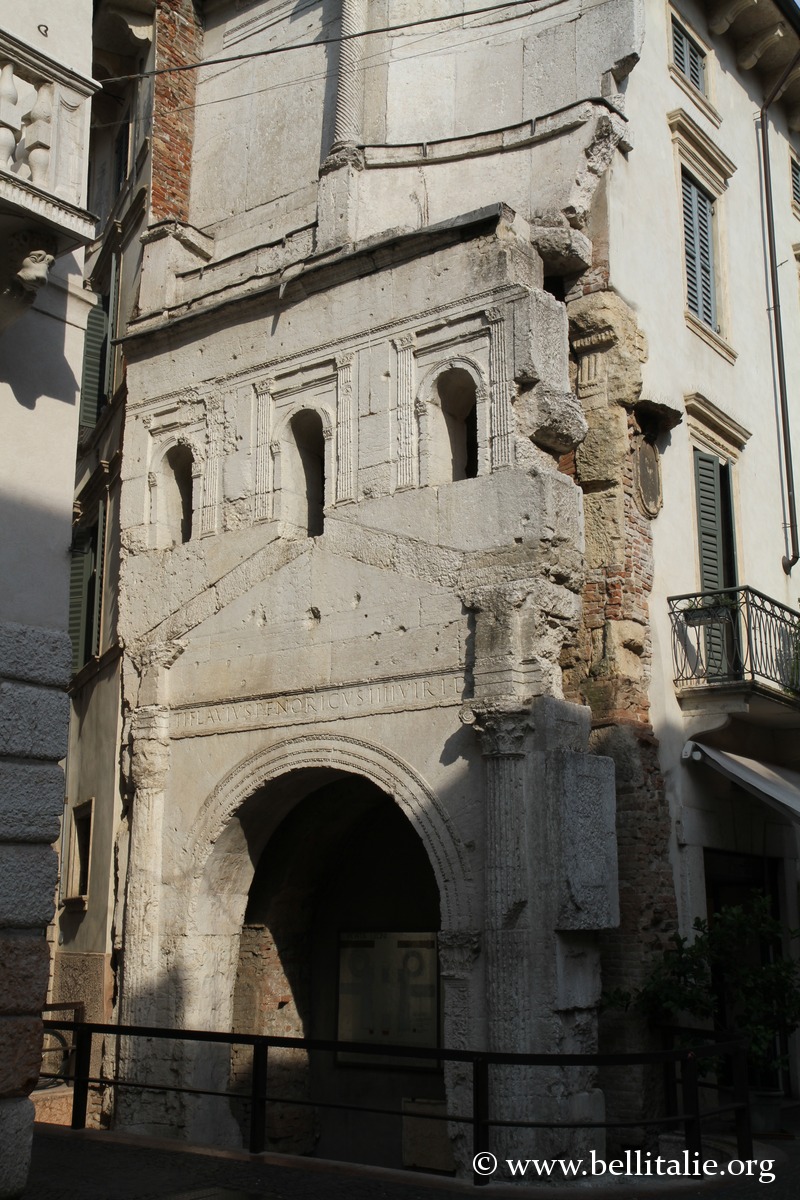 Via Cappello is the ancient Roman cardo maximus (north-south axis), which is accessed through the Porta Leoni, of which a well-preserved part remains. This dates back to the Roman republican era, and was reworked under the empire. Nearby remain the vestiges of one of the two defensive towers.
22. Arch of the Gavi
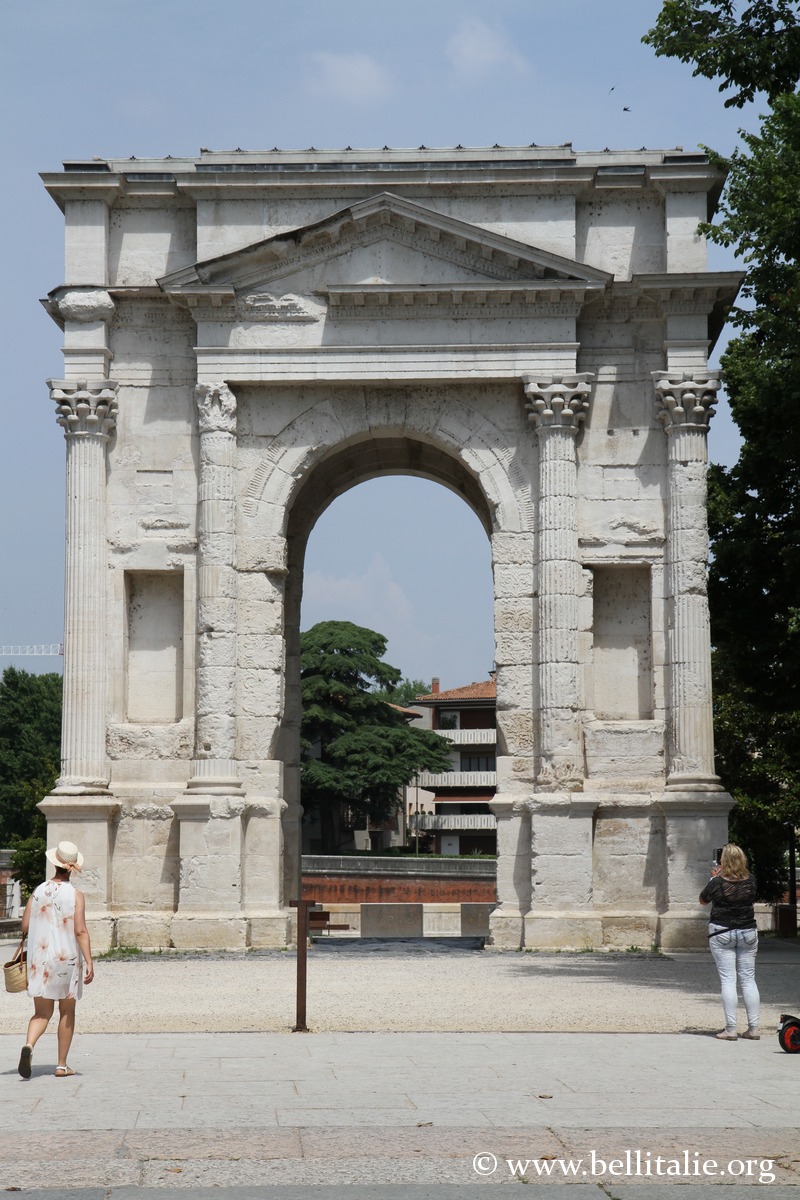 This Roman arch dating from the middle of the 1st century, near Castelvecchio, was located on the Via Postumia. It is one of the rare Roman arches intended to celebrate a private family, in this case the Gens Gavia. Located outside the Roman walls, it was incorporated into the communal enclosure in the Middle Ages.
It was rebuilt in 1932 near the original site after its demolition by the Napoleonic armies in 1805.
23. Via Sottoriva
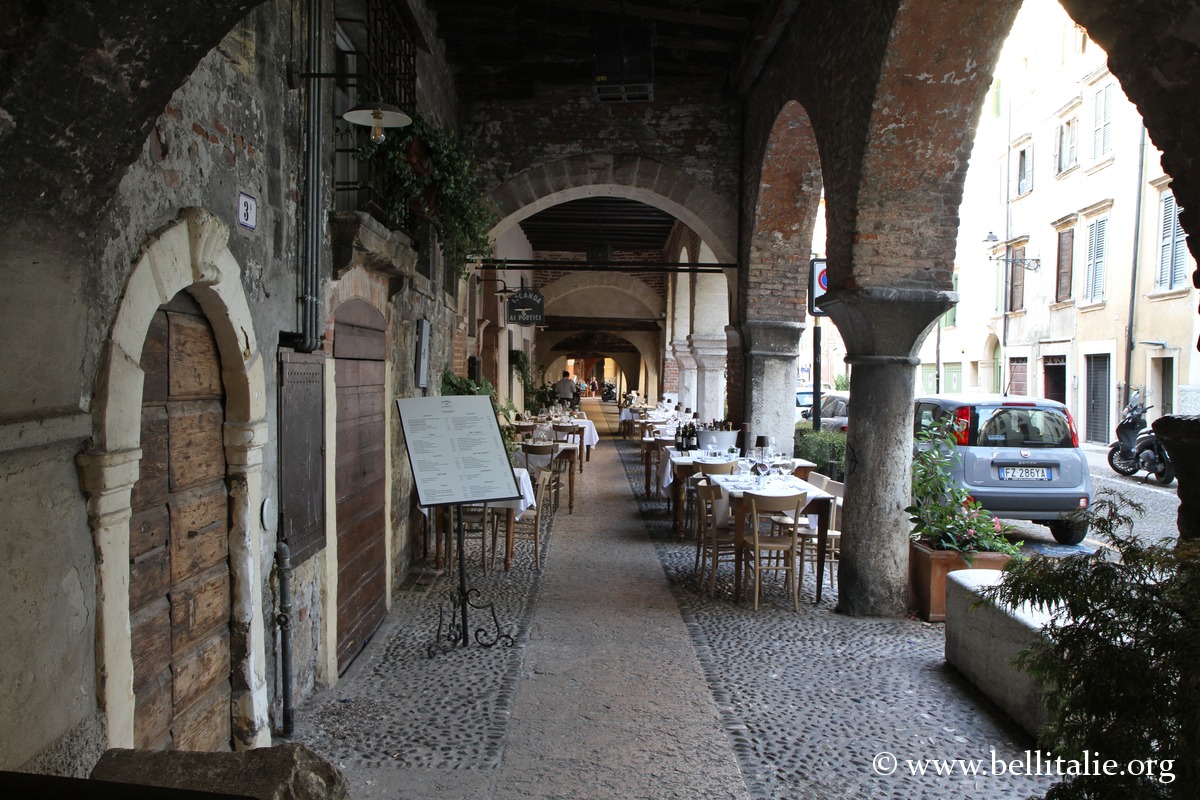 Via Sottoriva is one of the most characteristic streets in Verona, having kept its past appearance with one side lined by its arcades and some medieval houses, linking the church of Santa Anastasia to the north and the Pescheria square to the south.
24. Church of Santa Maria in Organo
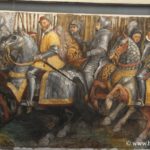
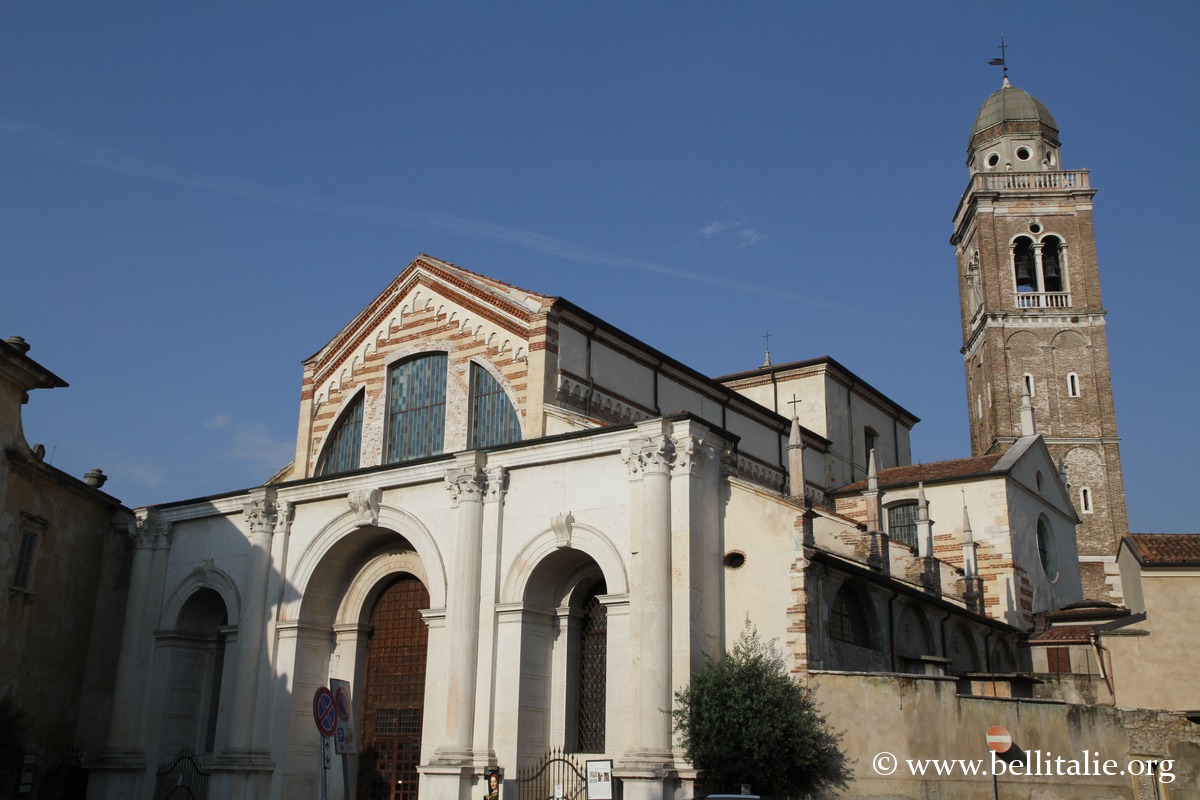 The church of Santa Maria in Organo, on the left bank of the Adige, comes from a Benedictine abbey founded in the 7th century. The Olivetan Benedictines arrived in the 15th century and undertook numerous works, then in the 16th century the bell tower, the small cloister and the chapter house were built. During this period Fra’ Giovanni da Verona created the superb wood inlays that decorate the choir and the sacristy, among the most beautiful and most complex in Italy, of great symbolic richness, illustrating ideas and theology, and even old views of the city. This choir is certainly one of the most beautiful works to see in Verona.
25. Church of San Giovanni in Valle
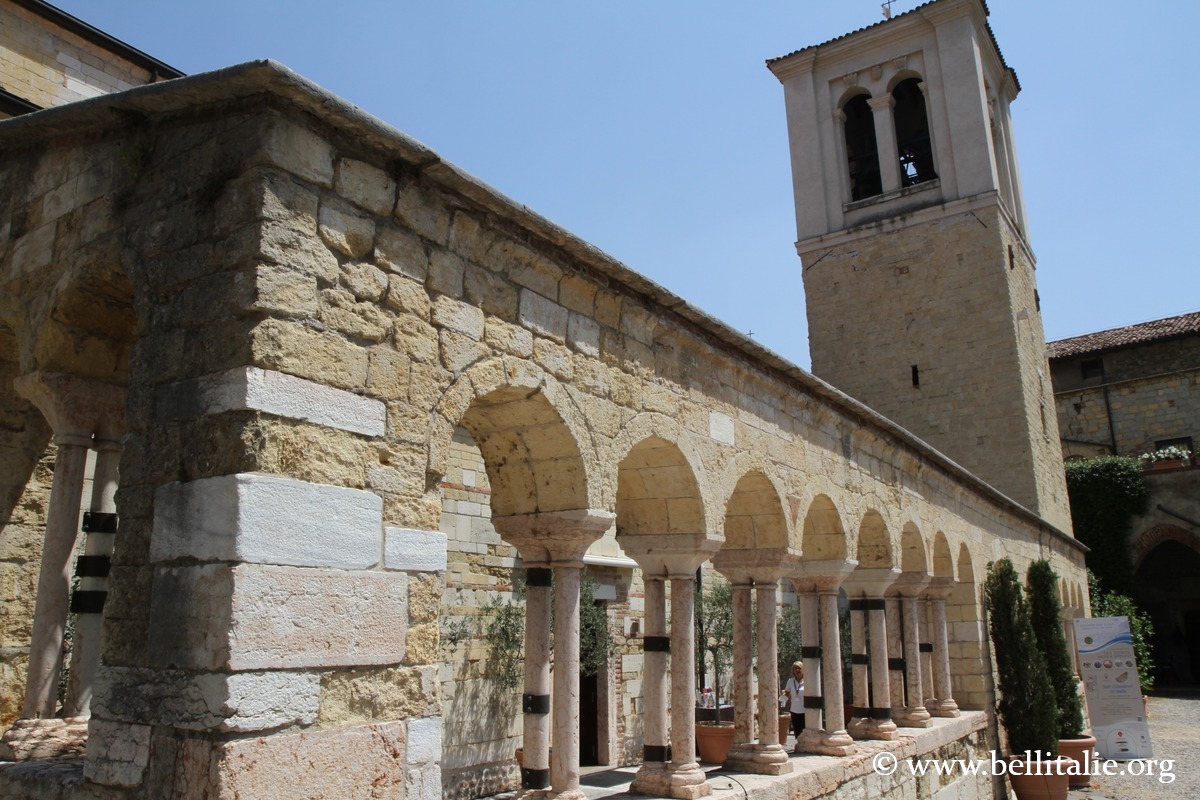 This pretty Romanesque church dates back to the Lombard era of the 7th-8th centuries, on the site of an ancient temple, with a Lombard castrum. It was rebuilt in Romanesque style in the 12th century with a church, the cloister and the collegiate church. The building was enlarged in the 14th century, and was subsequently restored only after the bombings of 1945. The bell tower is half Romanesque, half Renaissance.
 The interior with its beautiful capitals preserves frescoes from the 12th and 14th centuries from the school of Martino and of Altichiero.
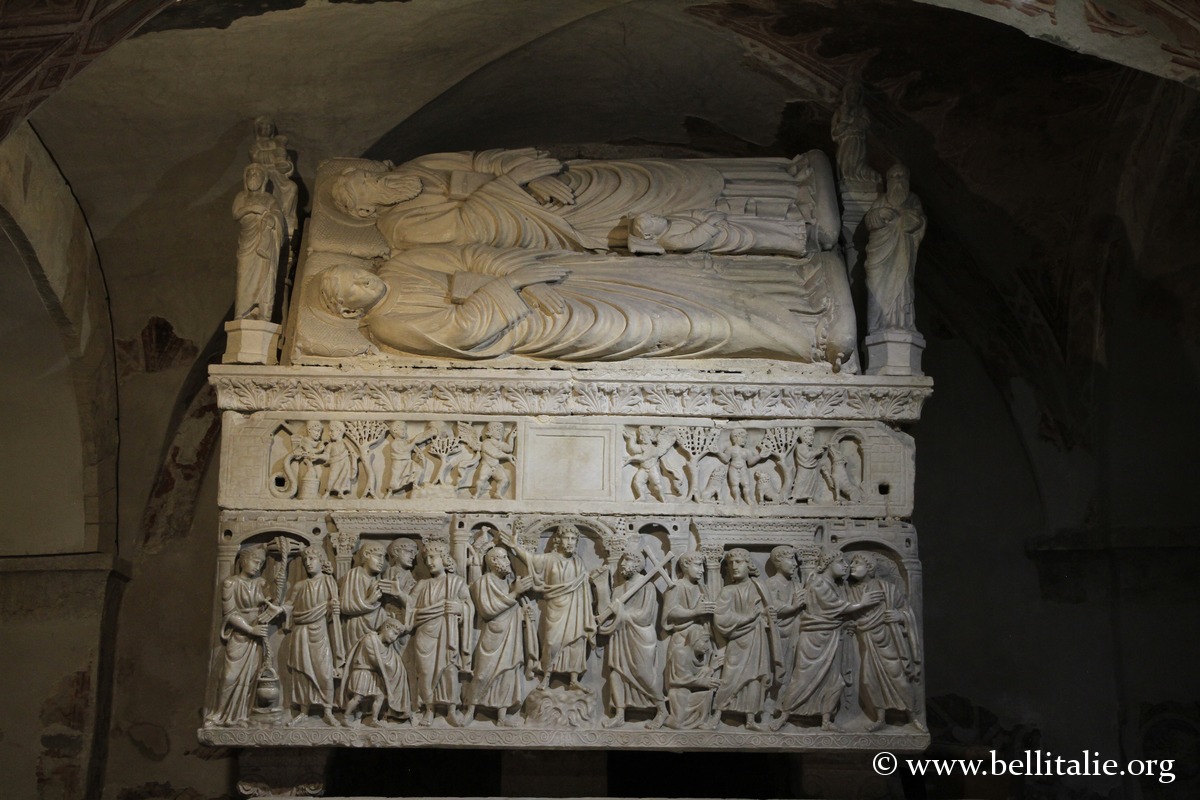
The crypt, partly dating back to the first church, houses two ancient sarcophagi, one from the 3rd century of Roman times with two spouses carved on top forming a roof, figures of philosophers transformed into saints, etc. The other is said to contain the bodies of the apostles Simon and Jude Thaddeus from the 4th century, as well as remains of 15th-century frescoes.
26. Romeo’s House
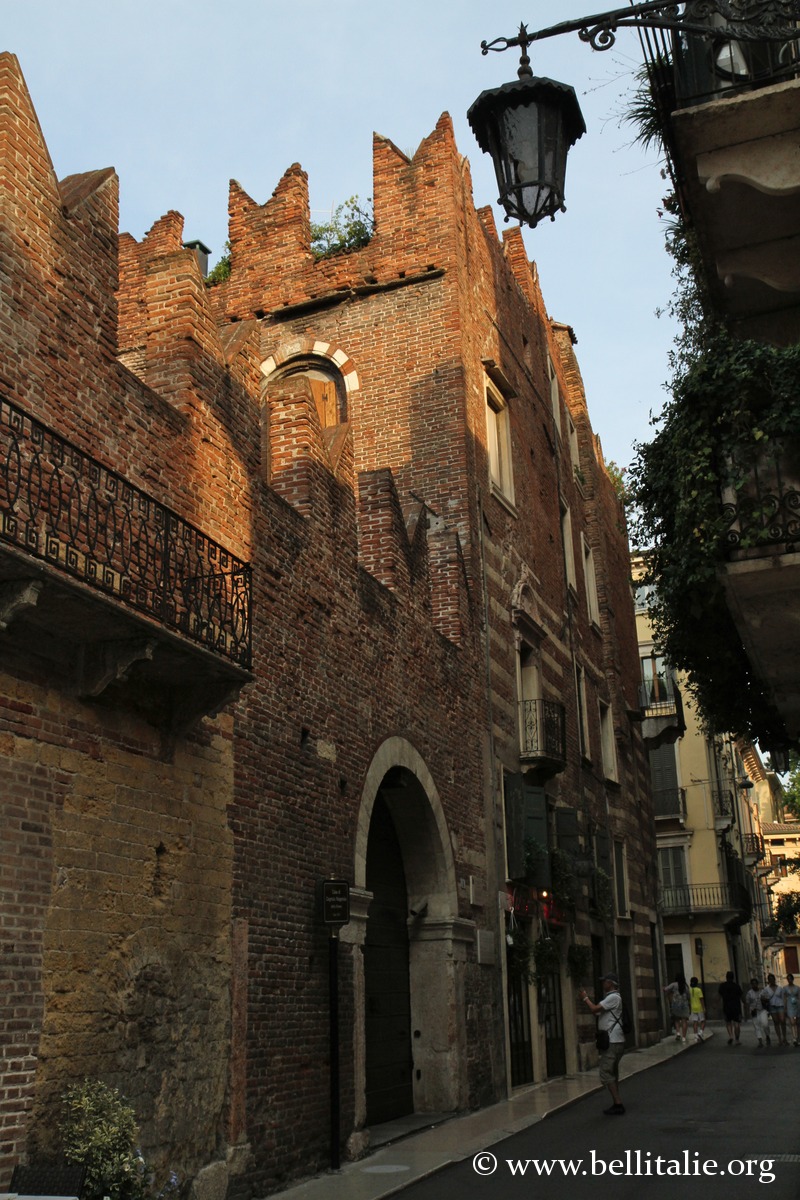 The house of the Montecchi, also called Casa di Romeo is a palace with a fortified appearance with its battlements and its keep, which belonged to the Montecchi family, banished from the city in 1320 by Cangrande della Scala. Being private, this house can only be seen from the outside.
27. Castel San Pietro
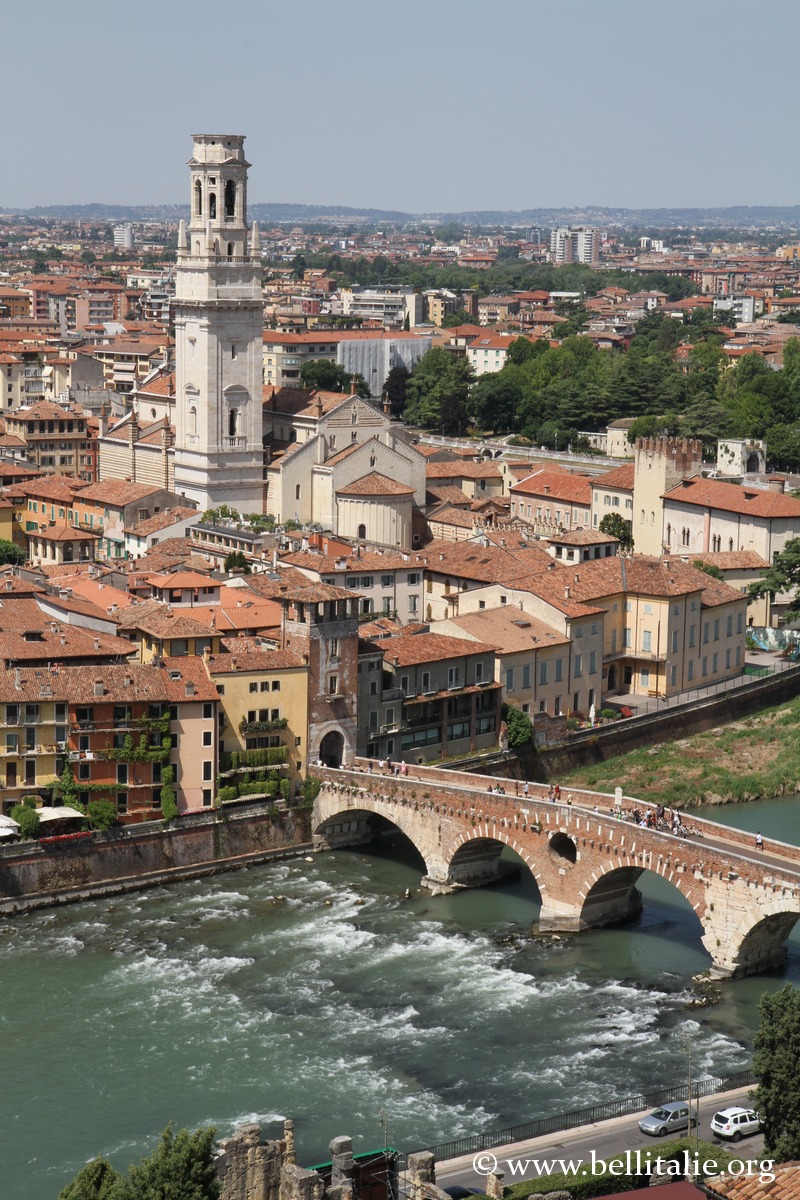 From the hill of Castel San Pietro you can enjoy the beautiful panorama over Verona, which you can reach by the stairs, on the occasion of a nice walk, or by the funicular.
It is also the site of a barracks built by the Austrians in the middle of the 19th century, in place of the late 14th-century castle that encompassed an early Christian church dedicated to Peter the apostle. The Napoleonic armies blew everything up in 1801.
28. Walls, gates and bastions
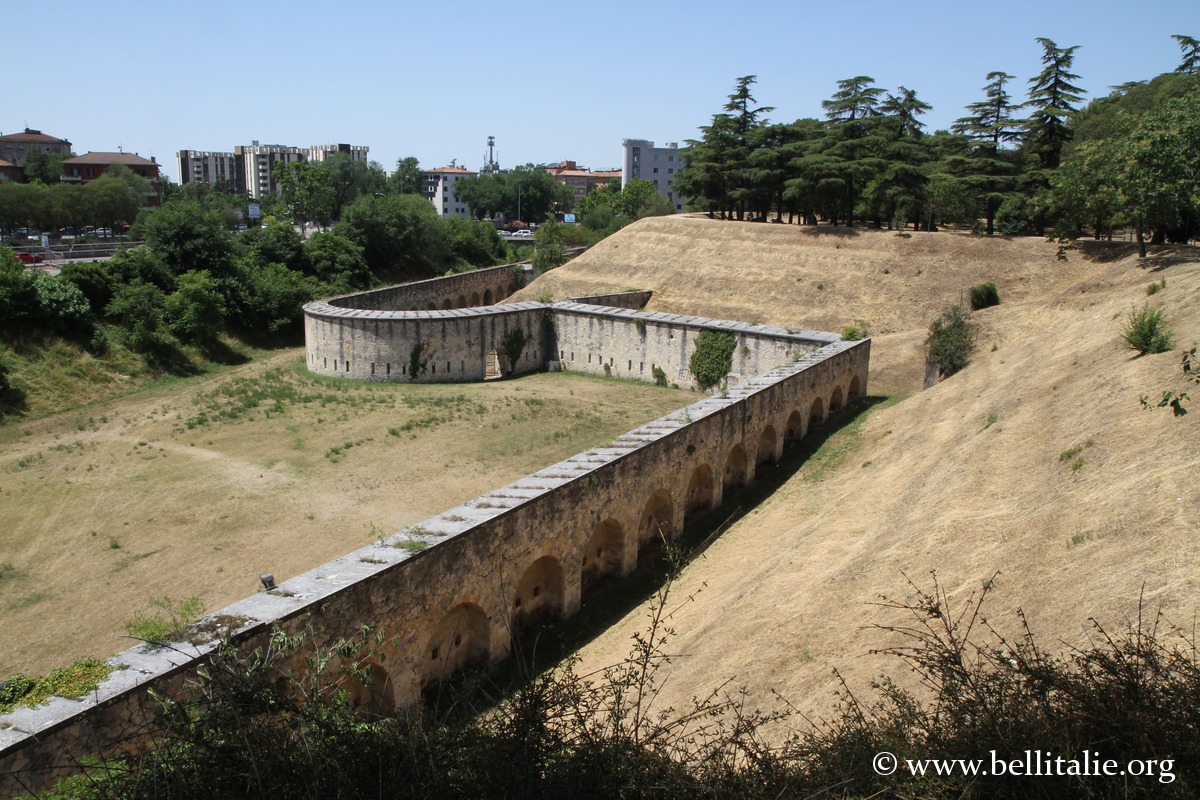 The park of the walls runs alongside for 9 kilometres the great crenellated enclosure with towers and moats, built in the 14th century by Cangrande della Scala, reinforced in the 16th century by the Venetians with bastions.
It has kept beautiful gates, including the Porta Palio which was built in the 16th century by Sanmicheli, in the extension of the ancient Via Postumia, not far from the Porta Nuova by the same architect.
29. Palazzo Maffei
The Palazzo Maffei, on the Piazza Erbe, dates back to the 17th century and is one of the most elegant in Verona. It houses superb works of art, more than 350 works gathered over nearly 50 years by the collector Luigi Carlon, from the ancient to contemporary art, including paintings, sculptures or period furniture.
A section is dedicated to 20th-century painting with masterpieces by masters such as Giacomo Balla, De Chirico, Morandi, and also Magritte, Duchamp and Picasso.
A section is devoted to art objects with furniture, oriental vases, glass and ceramics.
From the terrace you can enjoy a lovely view over the Piazza delle Erbe.
30. Church of Santo Stefano
Built on an ancient Roman temple dedicated to Isis, the basilica of Santo Stefano was consecrated in 421, and housed for four the burials of the bishops of Verona.
The interior is adorned with frescoes by 14th-century masters including Giacomo da Riva and Martino and from the Renaissance such as Brusasorzi, Caroto, Farinati and Battista Del Moro.
The apse has elements from the early Christian era and the early Middle Ages.
The crypt dates back to the 10th century, with its groin vaults and four central columns in granite of Egyptian origin.
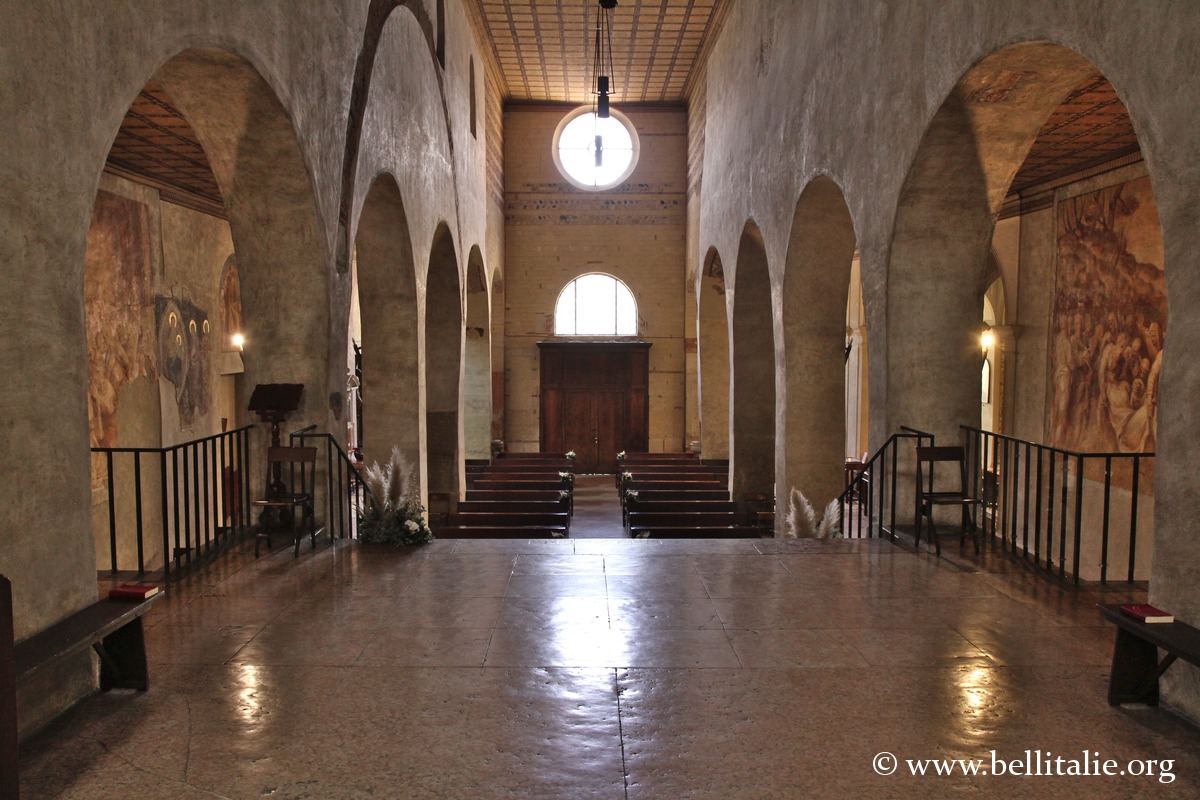
31. Church of San Lorenzo
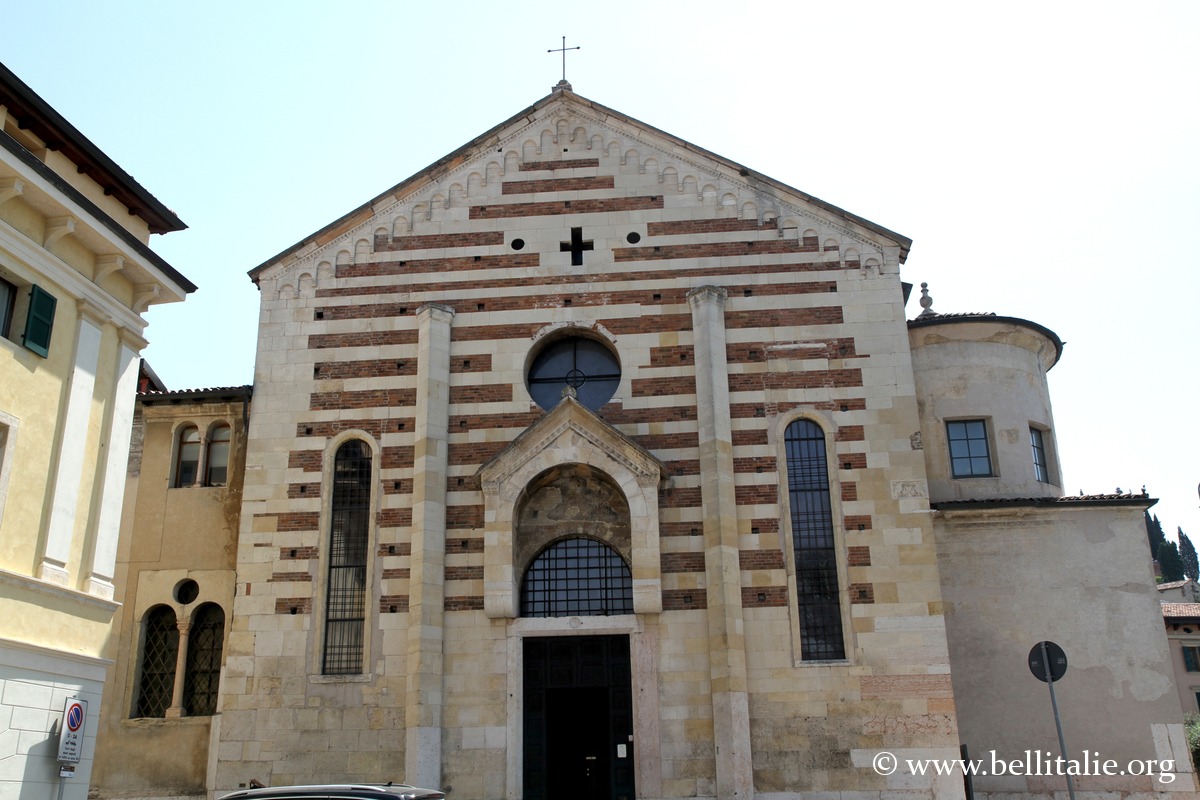
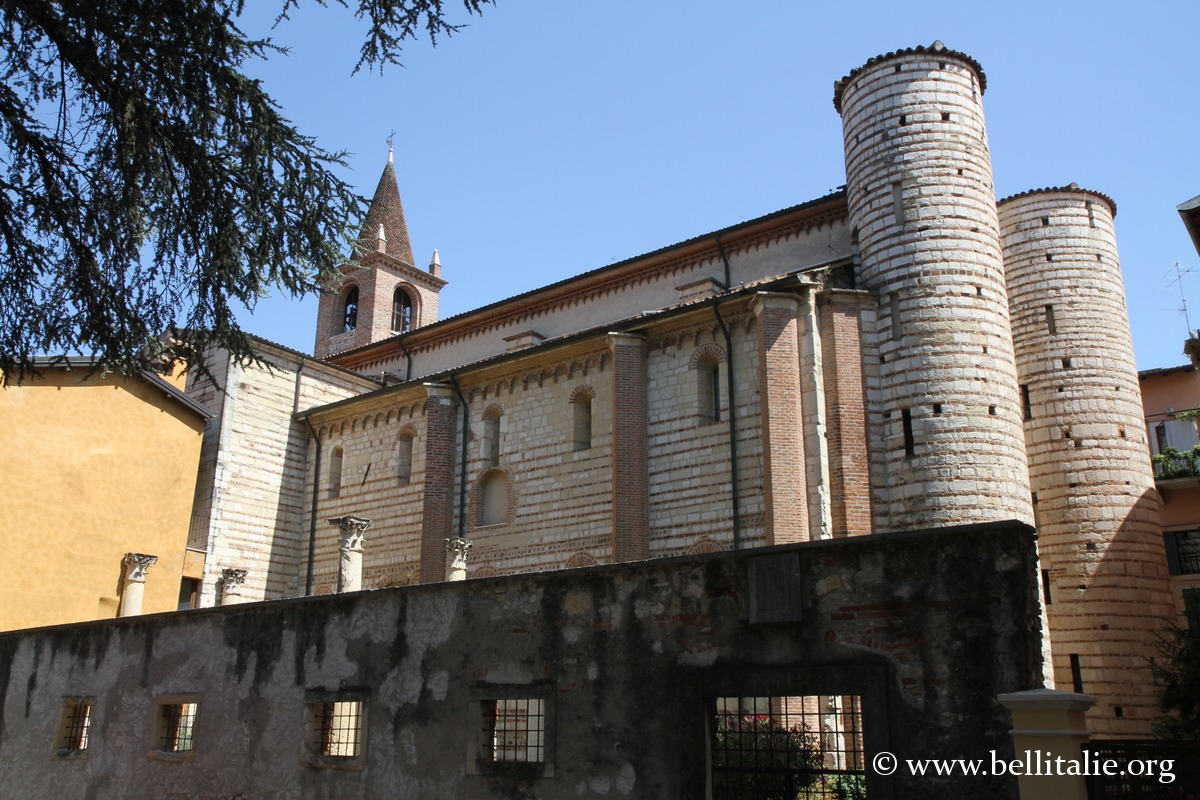 The Romanesque church of San Lorenzo which dates from the beginning of the 12th century was built in place of an ancient early Christian basilica. It was heavily restored in the 19th and 20th centuries.
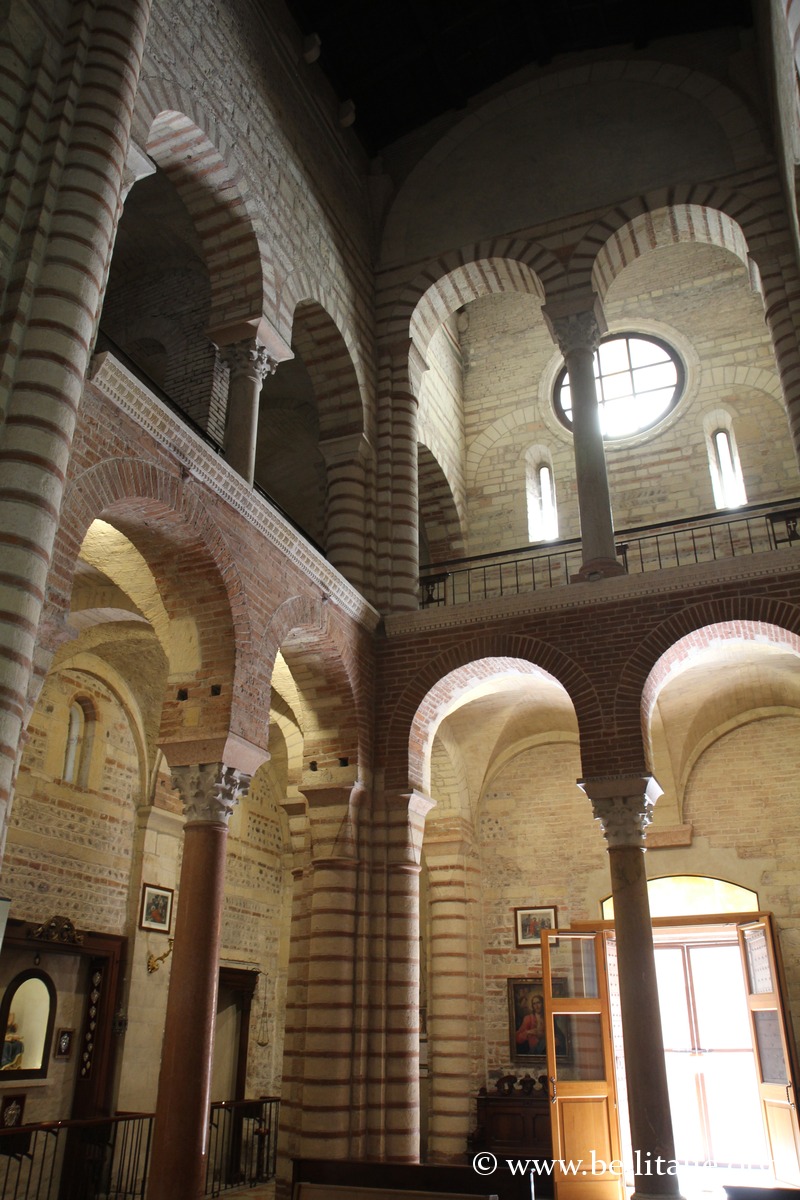 Its construction is typical of Veronese Romanesque with alternating bands of ochre tuff and red bricks. The protiro and the bell tower which was rebuilt date back to the 15th century.
The façade is framed by two unusual large cylindrical towers where staircases lead to the upper gallery.
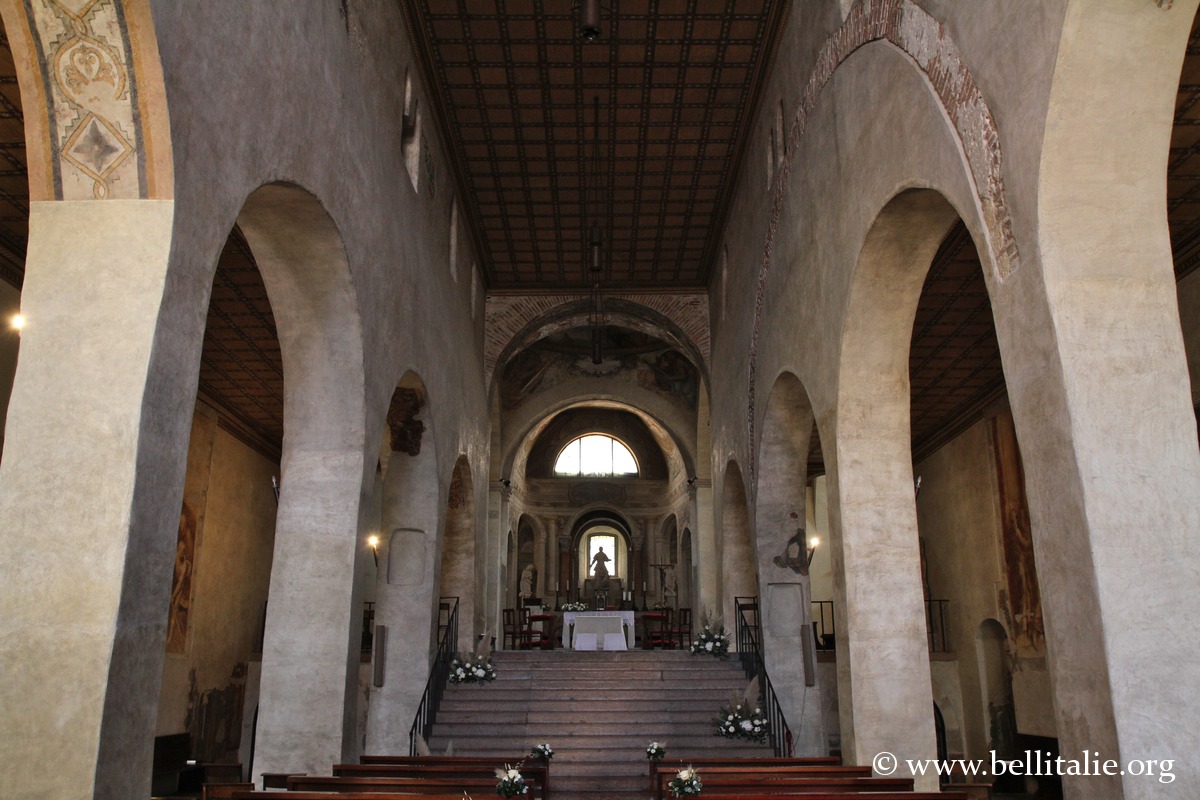
The interior has three naves with, above the side naves, the matronei, with loggias.
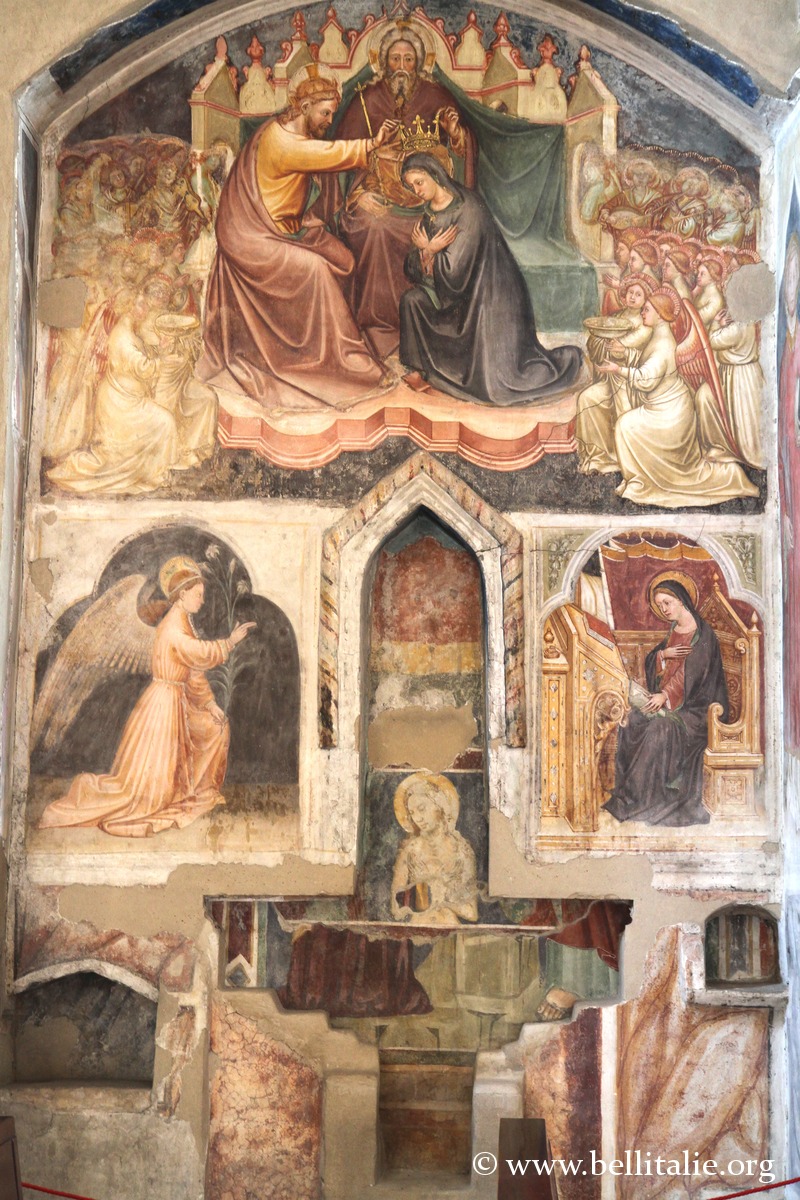
It preserves remarkable fragments of frescoes from the 13th and 14th centuries.
32. Church of Santissima trinita in Monte Oliveto
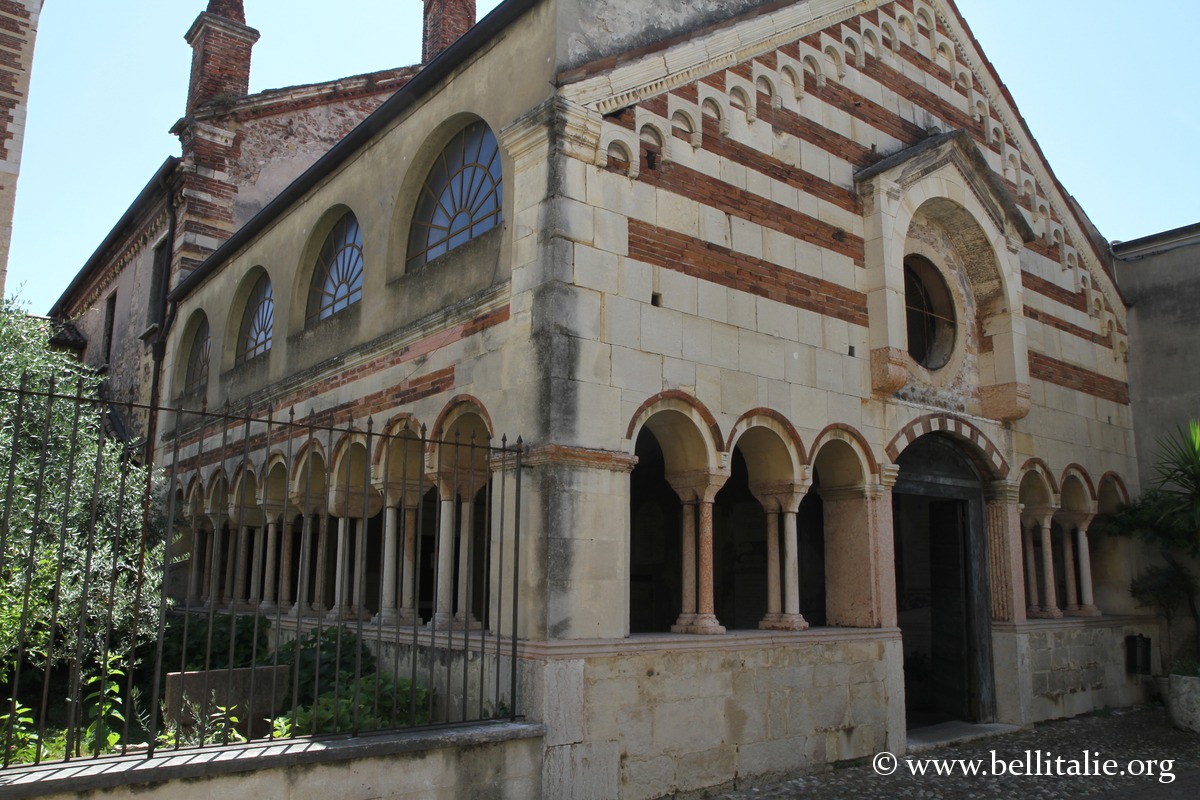 Built from 1073 by the Vallombrosan monks on an ancient church, the church of the Santissima Trinità had to be renovated after the earthquake of 1117, like many monuments of Verona. The abbey served as a prison from 1536 and was falling into ruins in the 19th century. A large part of the monastery, including the cloisters, was destroyed by the bombing of 6 April 1945.
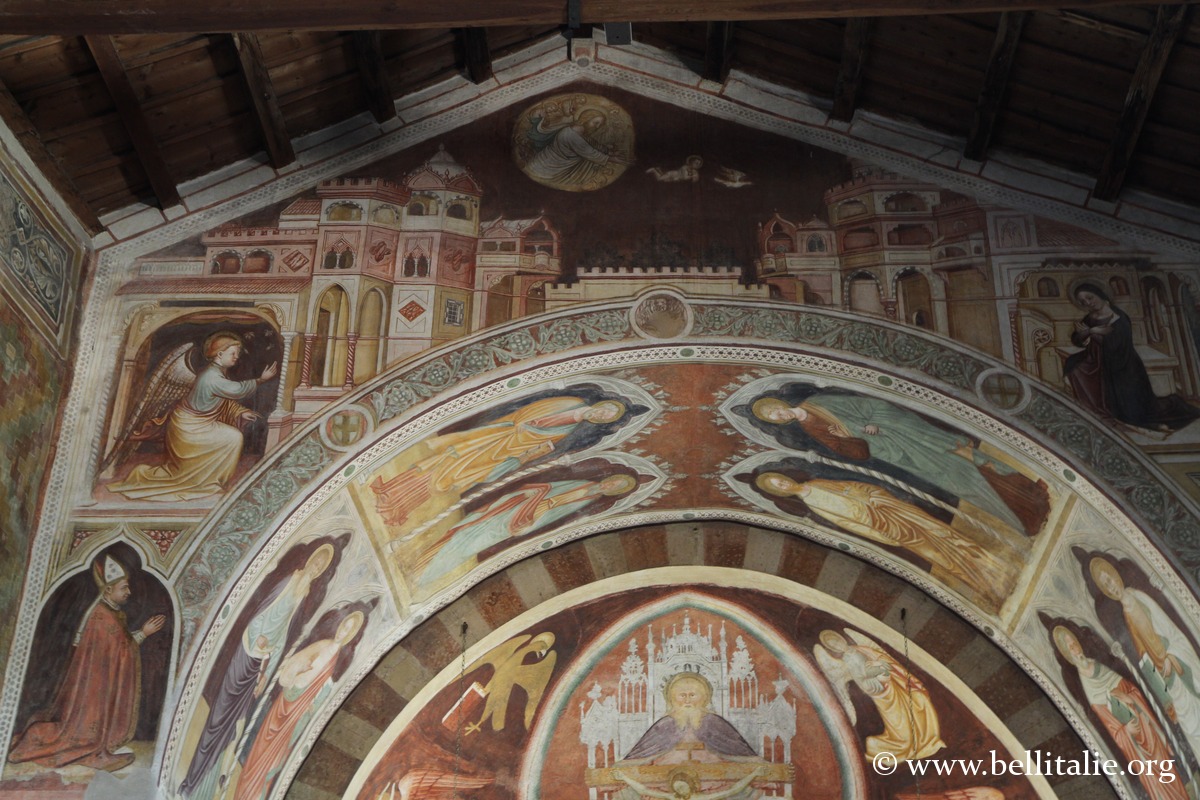 Its façade, like the bell tower, is in Romanesque style, alternating stone and brick, preceding a 16th-century atrium with double columns.
The interior has a single nave, often renovated, mixing various architectural periods, including the enlargement in the 16th century. Among the most remarkable remains of paintings are those of the father and son Brusasorzi, a fresco by Martin of Verona on the triumphal arch of the late 14th century.
33. Convent San Bernardino
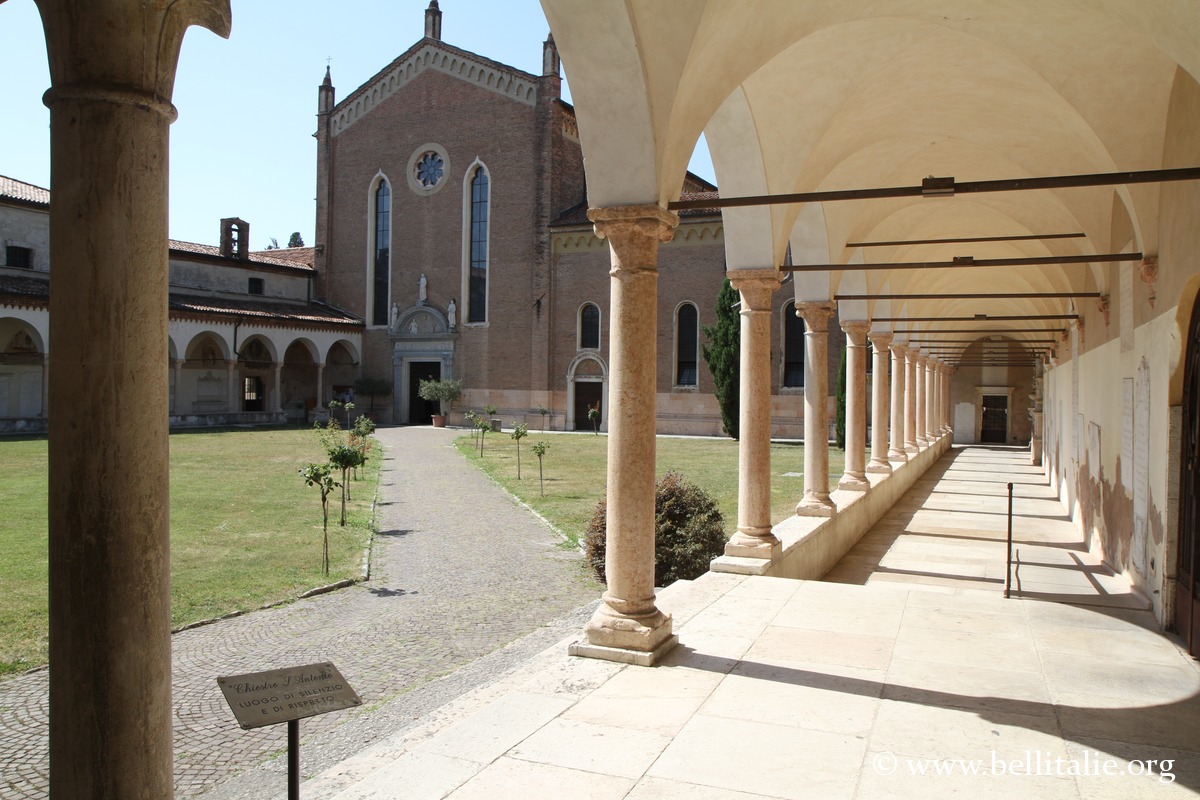 The convent complex of Saint Bernardino was built from 1452, two years after the canonisation of Bernard of Siena, a Franciscan preacher who came to Verona from 1422.
Largely looted, the convent changed purpose in the 19th century, serving as a hospital, cemetery, warehouse and college.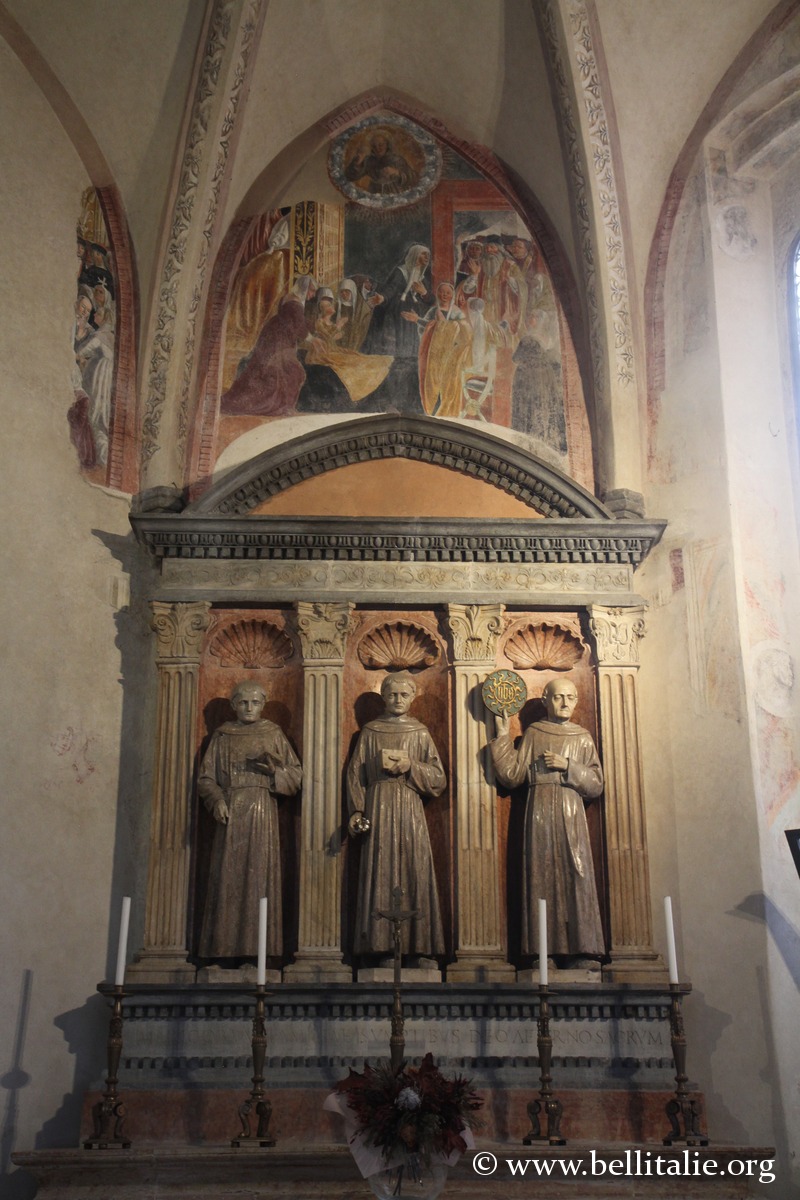 The complex, in Gothic Renaissance style with Baroque elements, comprises four cloisters, including the major cloister of Saint Anthony which precedes the church, with its decorated lunettes. The sober church was entirely built in brick, it has a beautiful 15th-century portal.
Inside there is a beautiful Baroque altar, the chapel of the pilgrims by Michele Sammicheli, and other rich chapels.
Map of the sites to see in Verona
 Show interactive map
 Information and sources
- Website of the municipality of Verona on the internet
- Wikipedia article on Verona
- Tourist portals: www.veneto.eu, www.visitverona.it
- History of Verona
- Verona Arena
- Piazza delle Erbe and Lamberti Tower
- Castelvecchio and Scaliger Bridge
- Piazza dei Signori in Verona
- Basilica of Sant’Anastasia
- Verona Cathedral Complex
- Basilica of San Zeno
- Roman Theatre of Verona
- Church of San Fermo
- Museum of Frescoes and Juliet’s Tomb
- Church of Santa Maria in Organo
- Verona’s Monuments


Comments