


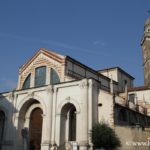
The Basilica of Sant’Anastasia (Basilica Sant’Anastasia in Italian) is a Dominican church and the largest in Verona, a Gothic building of medieval origin, which stands on a small square near the Stone Bridge and the Adige. On this square can be seen the church of San Giorgetto, and to the left of the façade, one enters the inner courtyard of the music conservatory through an arch surmounted by the tomb of Guglielmo da Castelbarco, podestà of Verona, and the first example of this style of tomb which later inspired the Scaliger Tombs.
History and description
It was originally a temple built by Theodoric the Great, and dedicated to Saint Anastasia who was a virgin martyred during the persecutions of Diocletian, around 304 AD.
The church was rebuilt between 1280 and 1400, designed by the Dominican friars, being dedicated to Saint Peter of Verona. This latter Dominican preacher and inquisitor lived from 1205 to 1252, and was known for his fight against the Cathars.
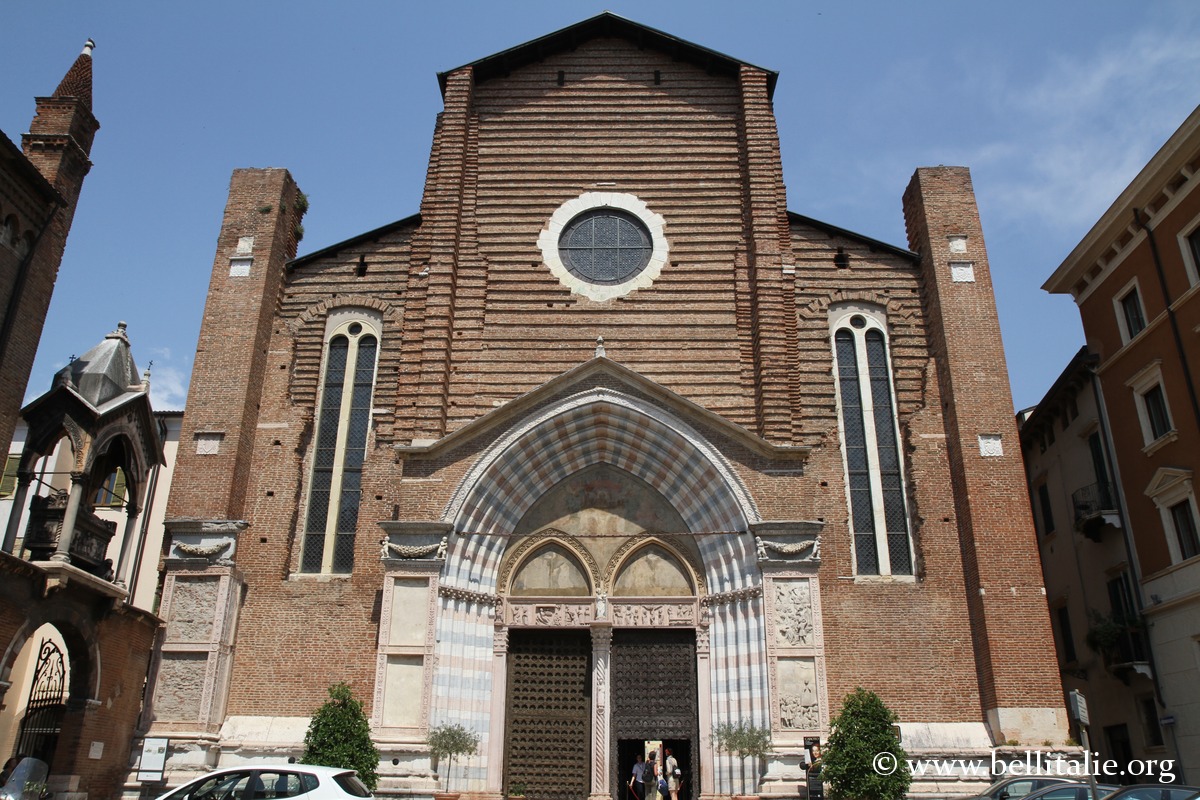
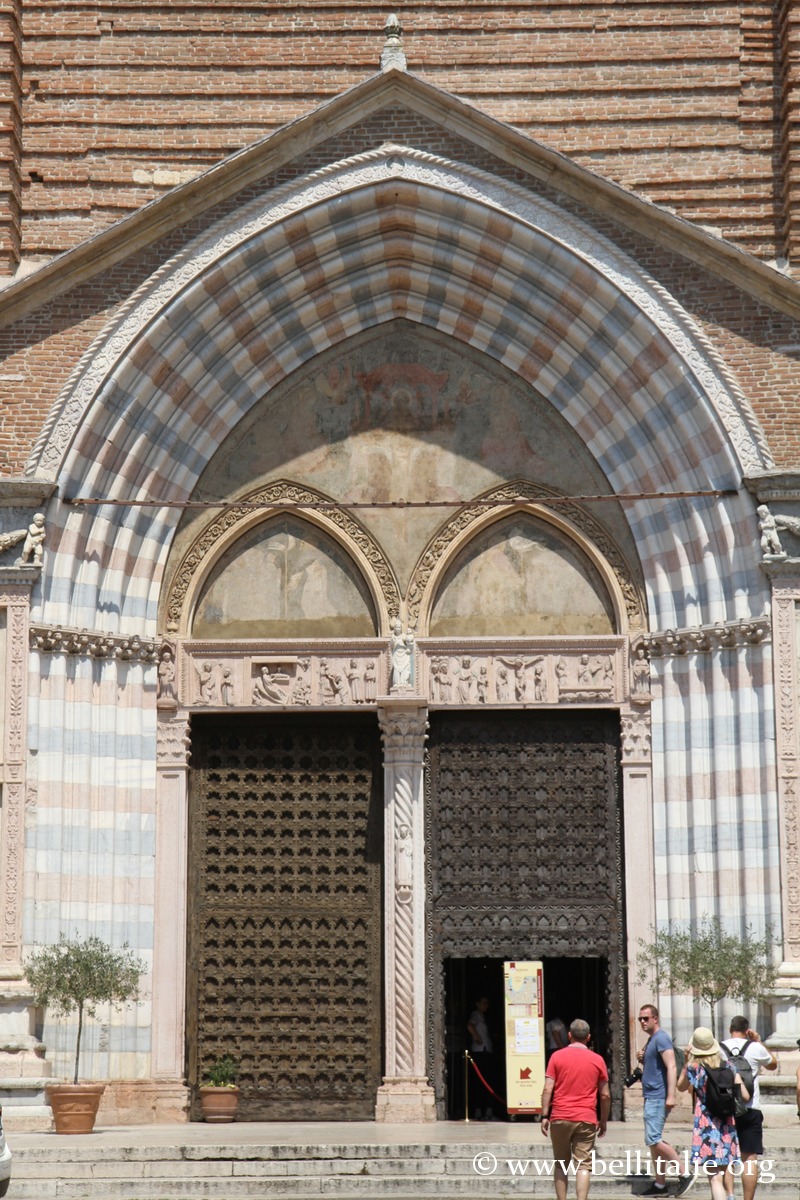
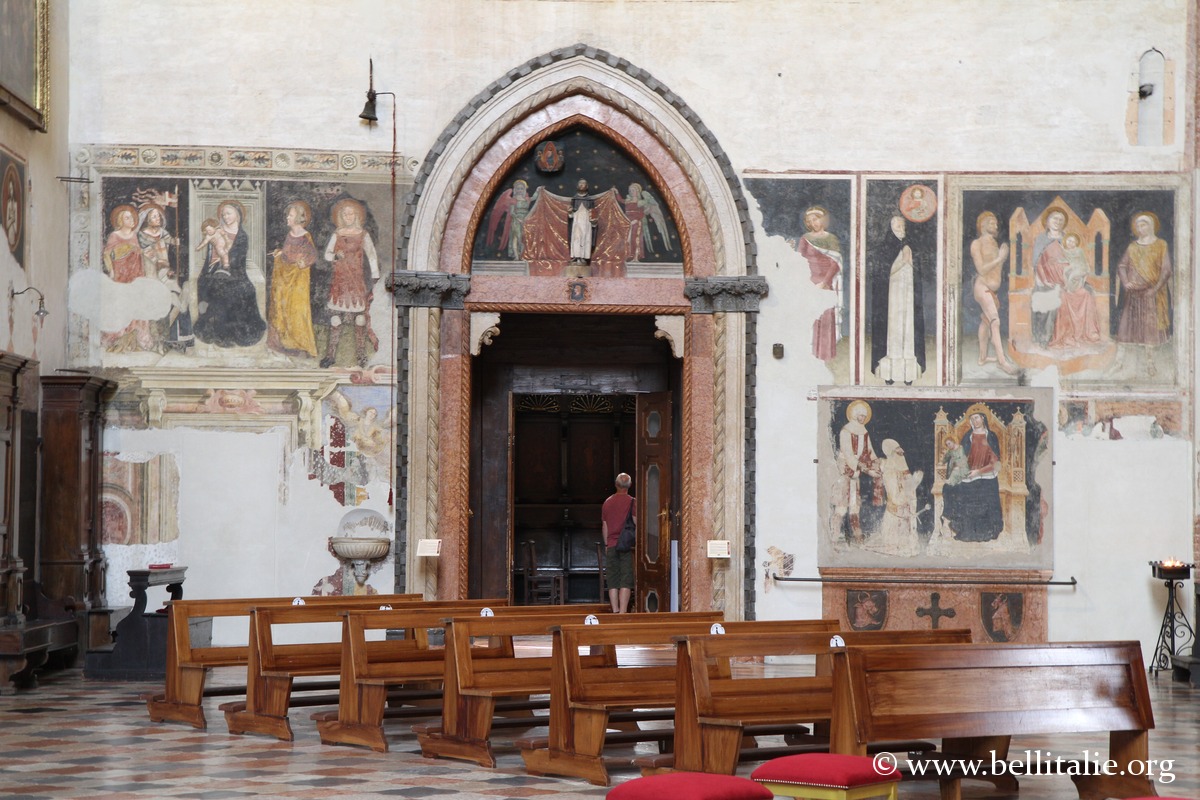
This Gothic basilica has a brick façade which remained unfinished, without having been covered in marble as was planned. On the other hand, its beautiful 15th-century portal is set within the Gothic structure of 1330, with tricolour marbles, the arches with three lunettes containing representations of the Holy Trinity flanked by Saint Joseph and the Virgin. In the two smaller lunettes can be seen the bishop leading the people and Saint Peter of Verona leading the friars. The arch is decorated with six scenes from the life of Jesus. The bell tower reaches 72 metres in height.
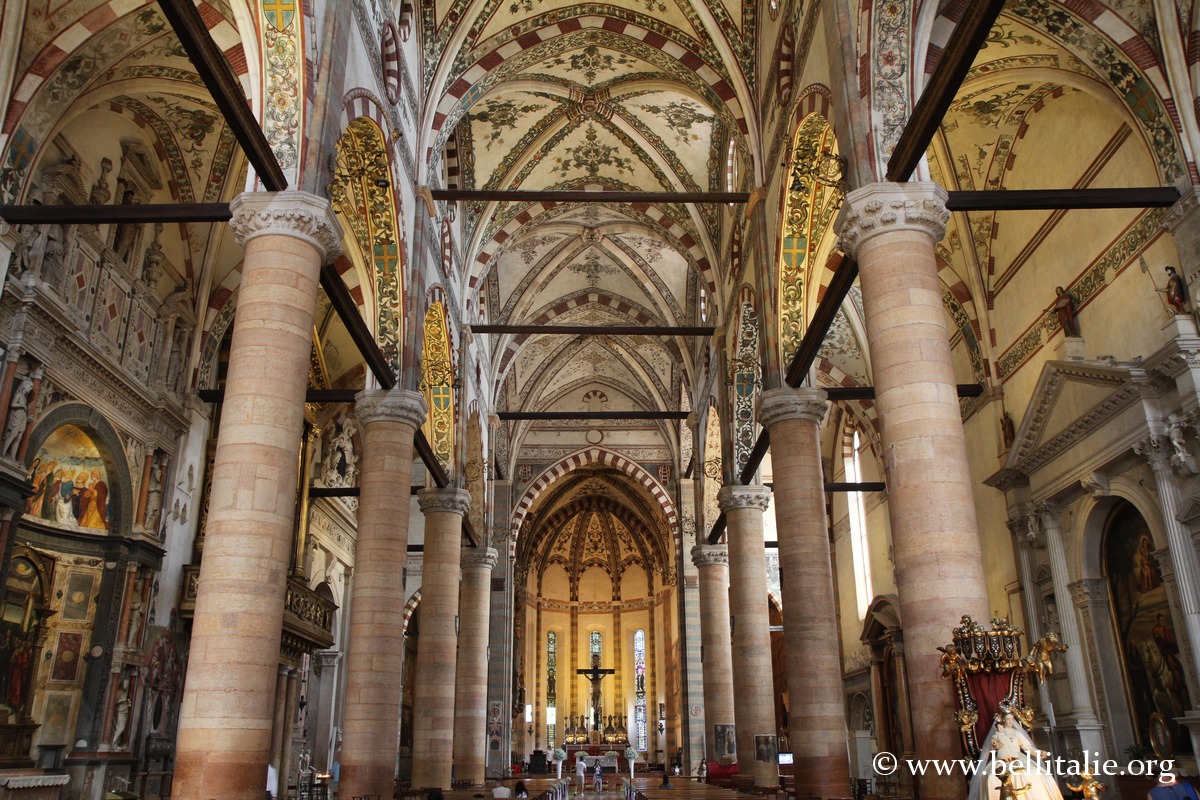
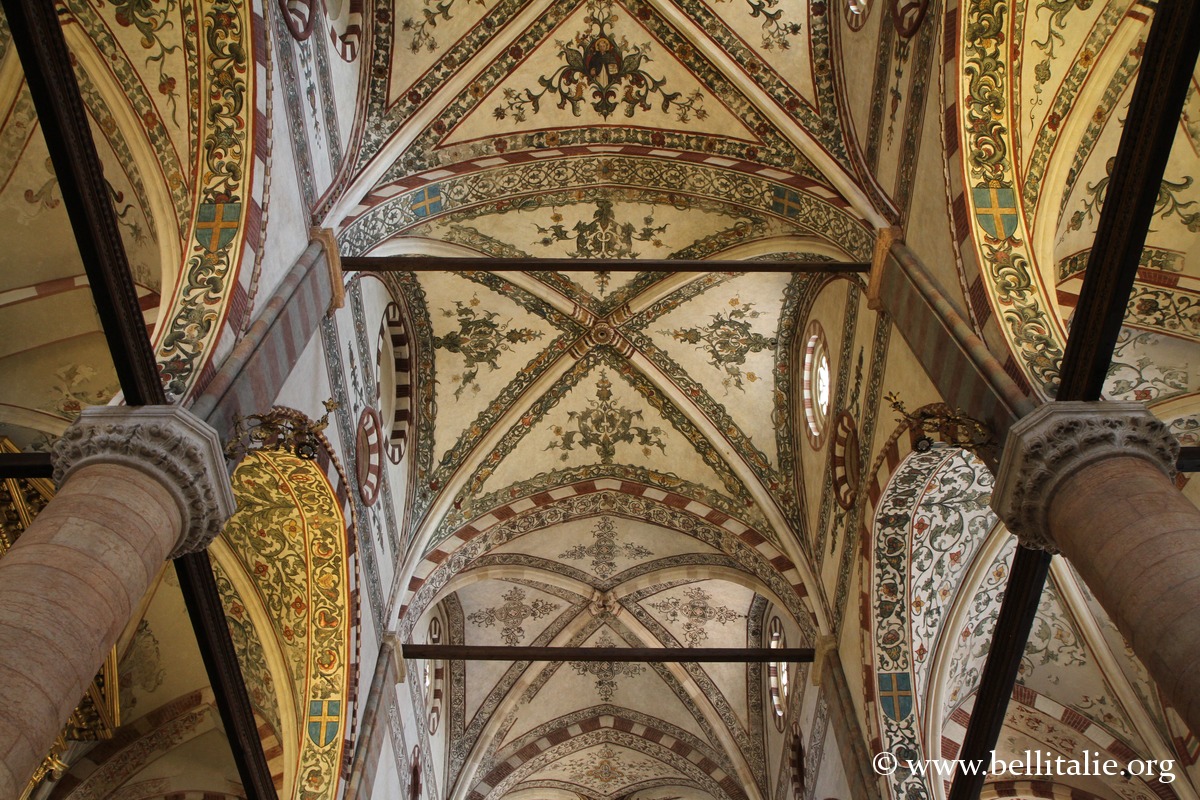
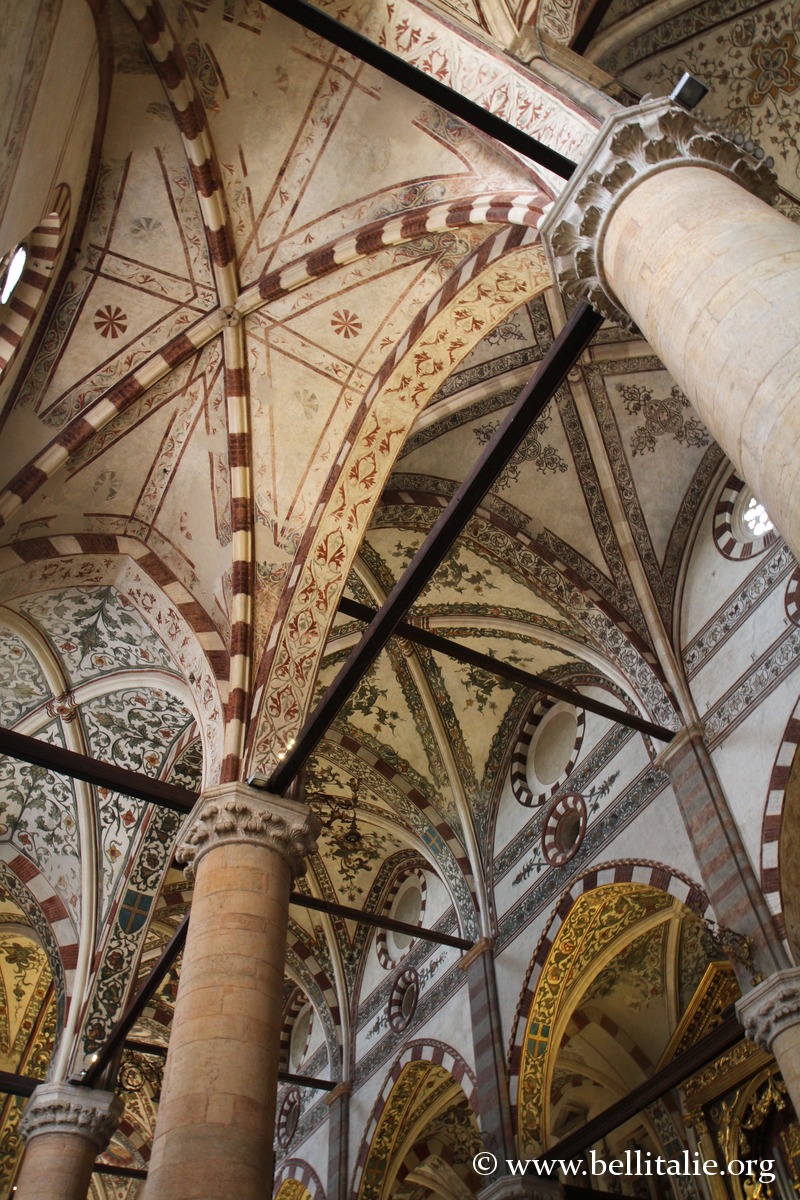
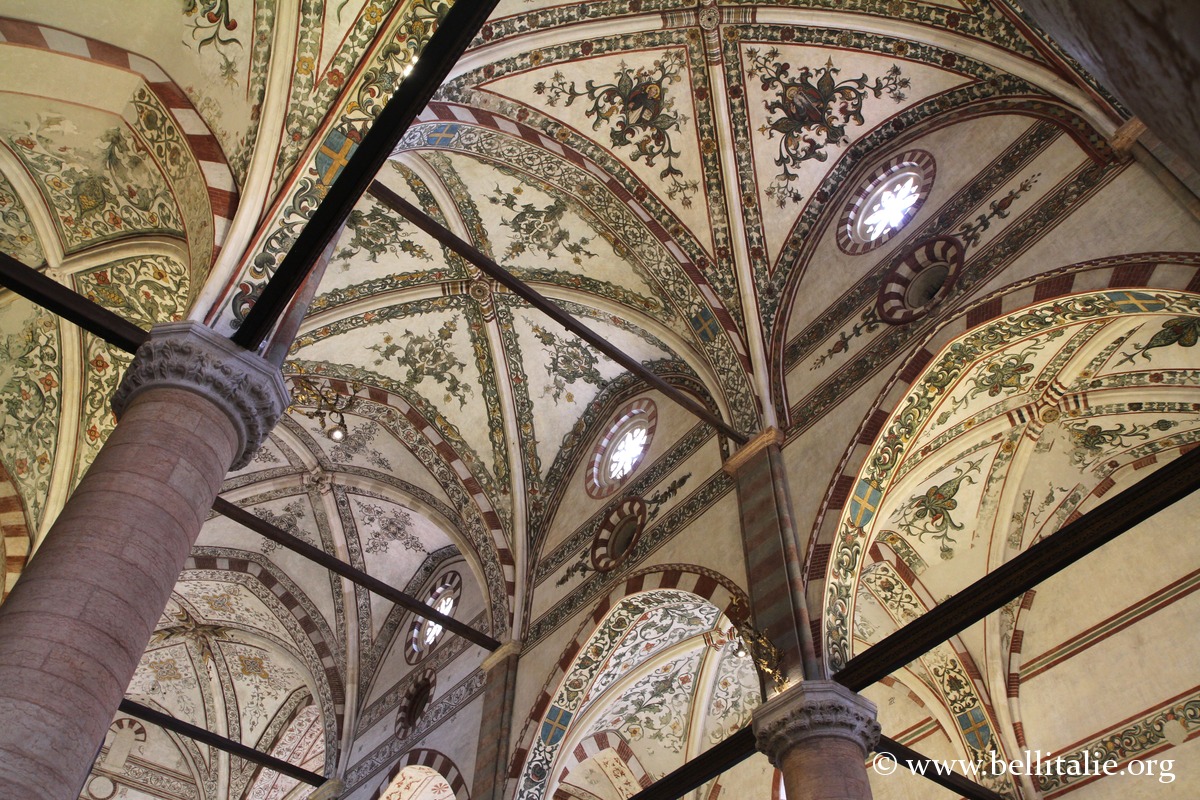
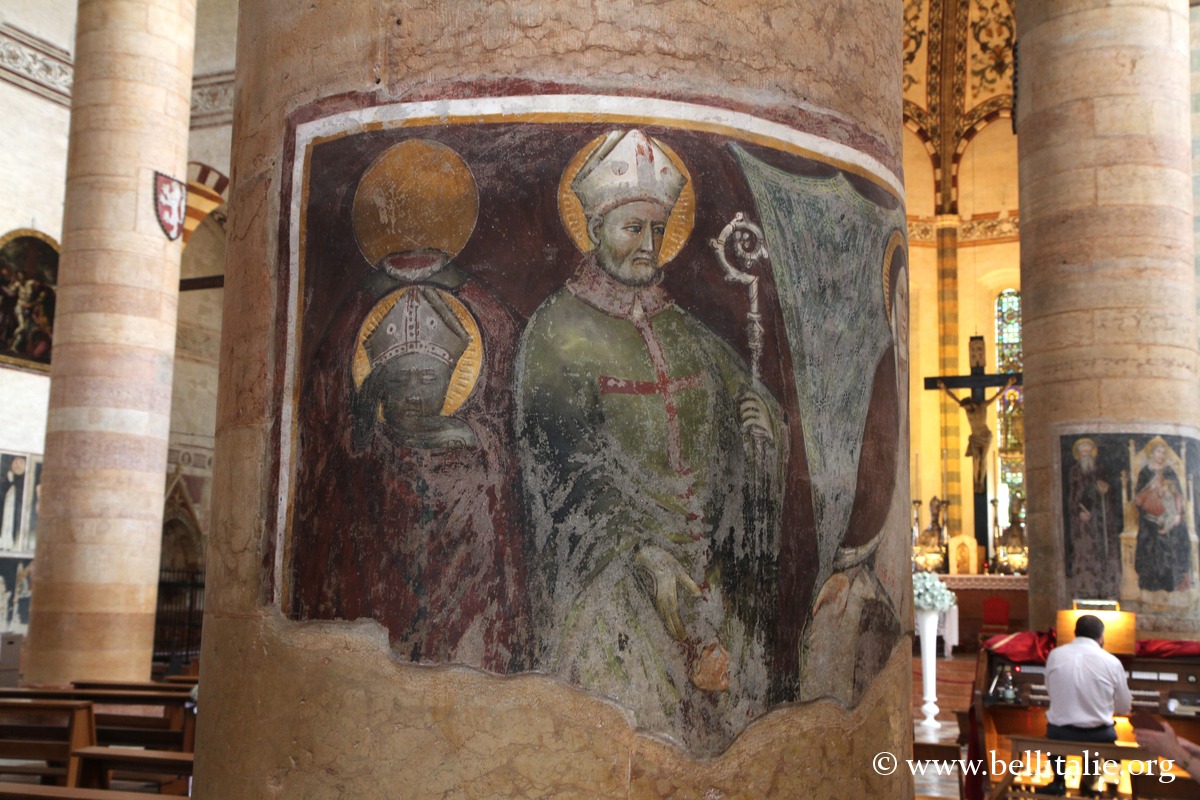
The interior with its three naves covered with cross vaults is majestic, whose central nave is supported by 12 powerful columns of white and red Verona marble with Gothic capitals.
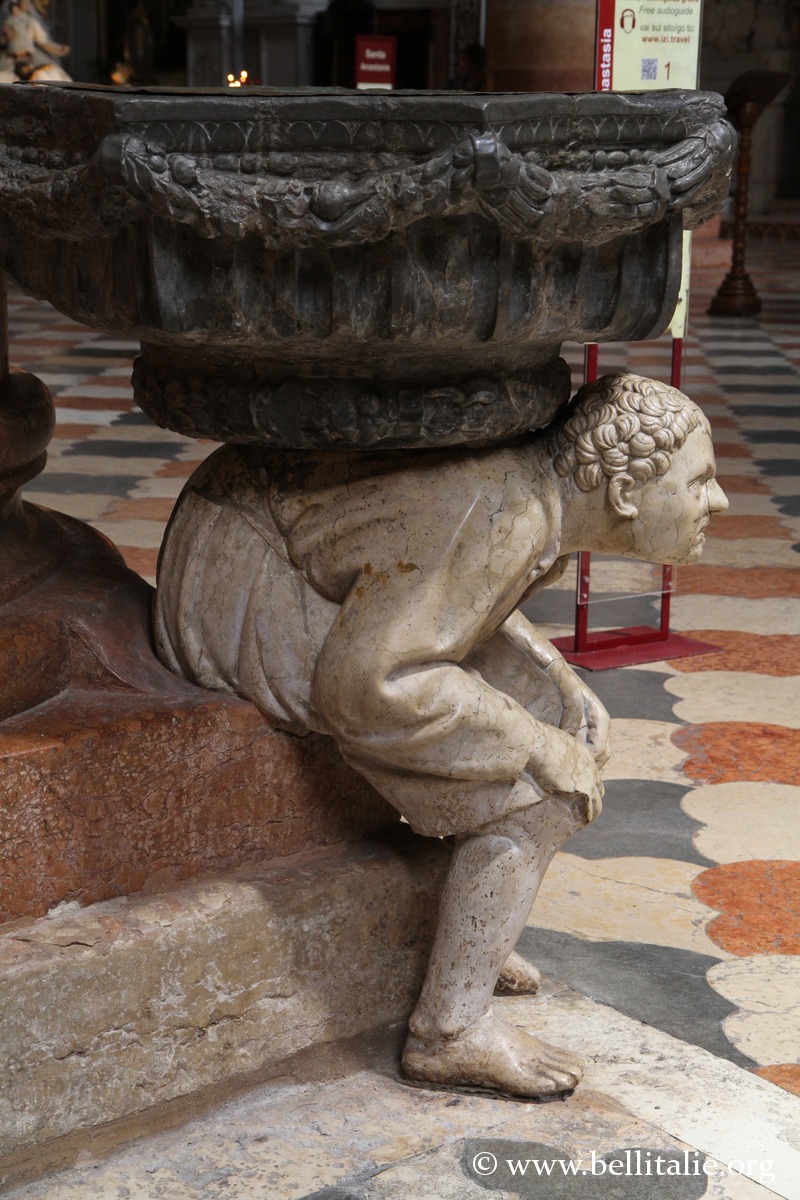
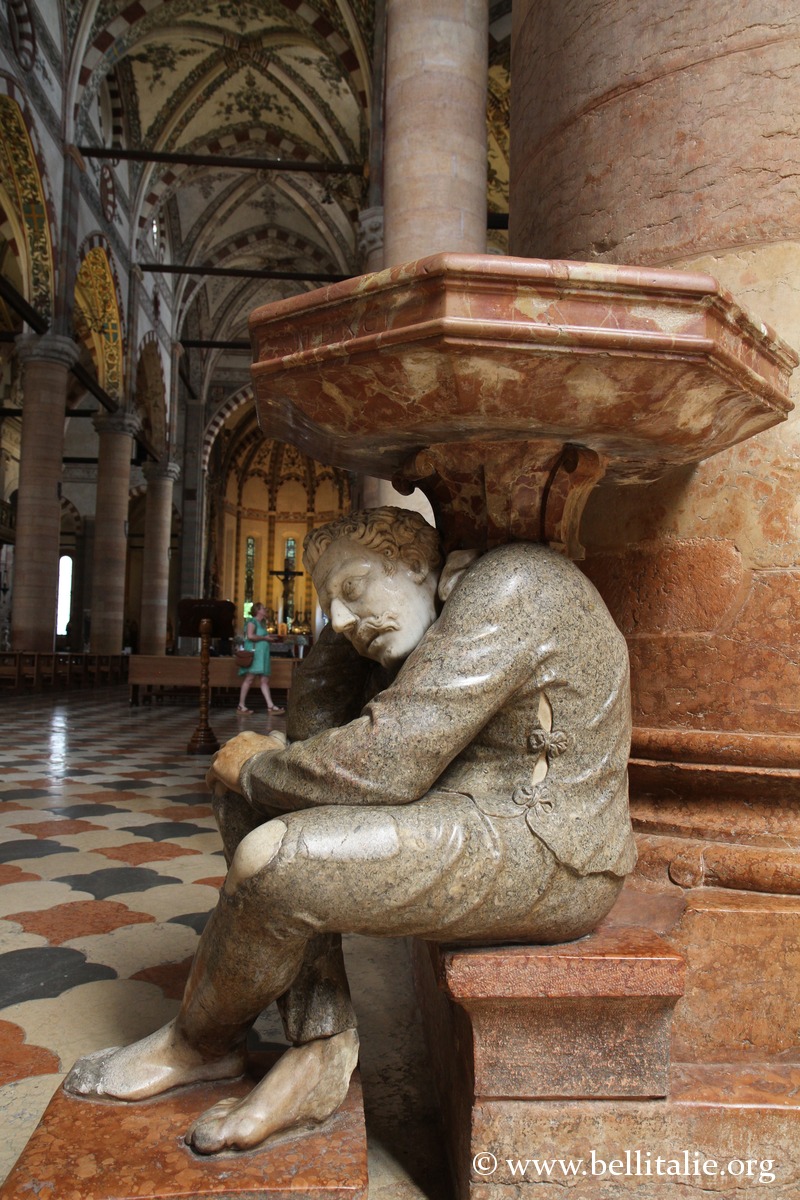
At the foot of the first two columns sit two hunchbacks with a holy water stoup on their backs, installed around the late 16th century. The one on the right is attributed to the eldest son of the famous Paolo Veronese, Gabriele Caliari. In local tradition they symbolise the effort of the poor to contribute to the construction of the church, and touching their hump is said to bring good luck.
Its pavement has remained unchanged since 1444 with its three colours white and black (recalling the Dominican monks) and red (recalling the martyrdom of Saint Peter of Verona)
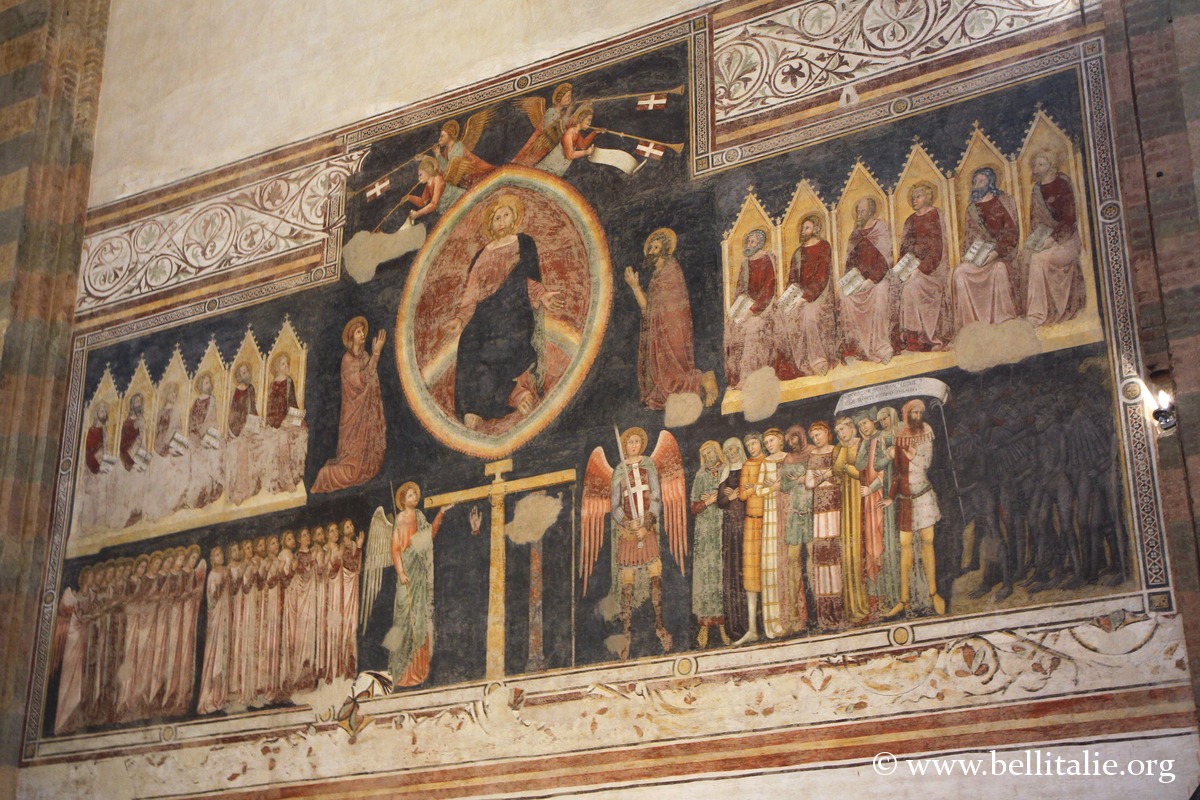
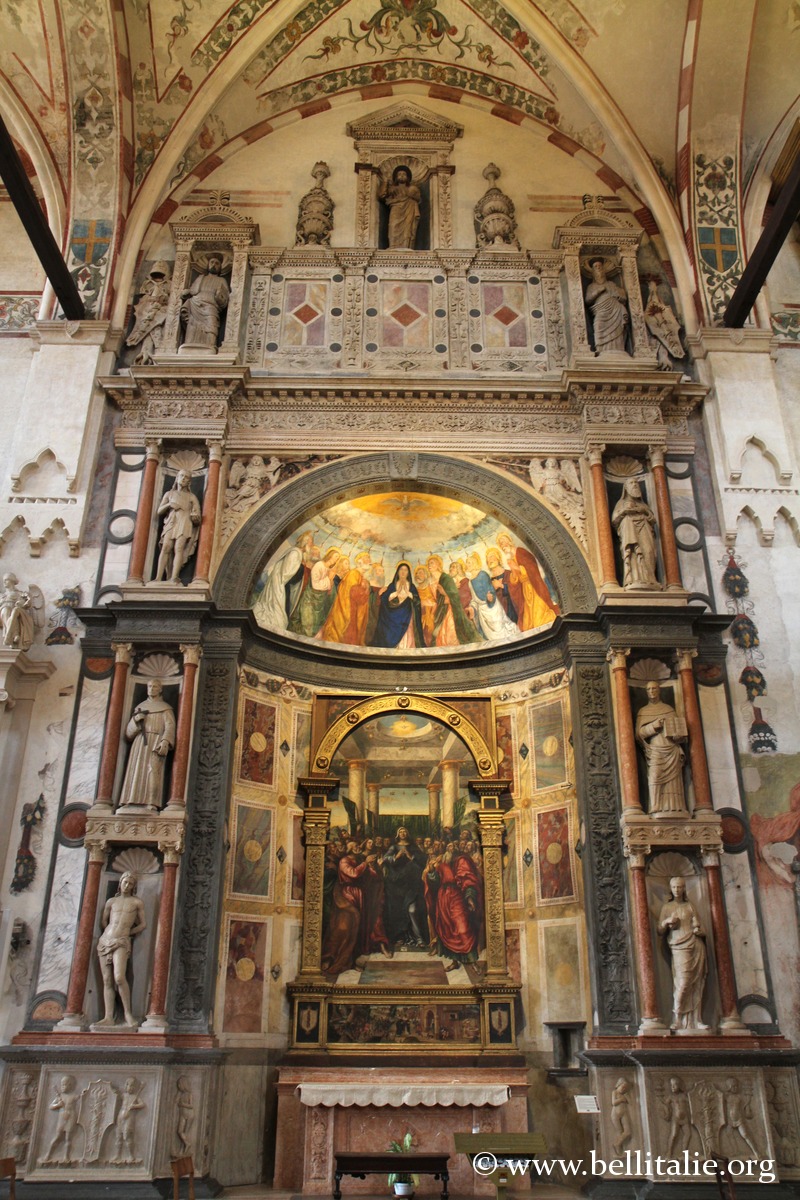
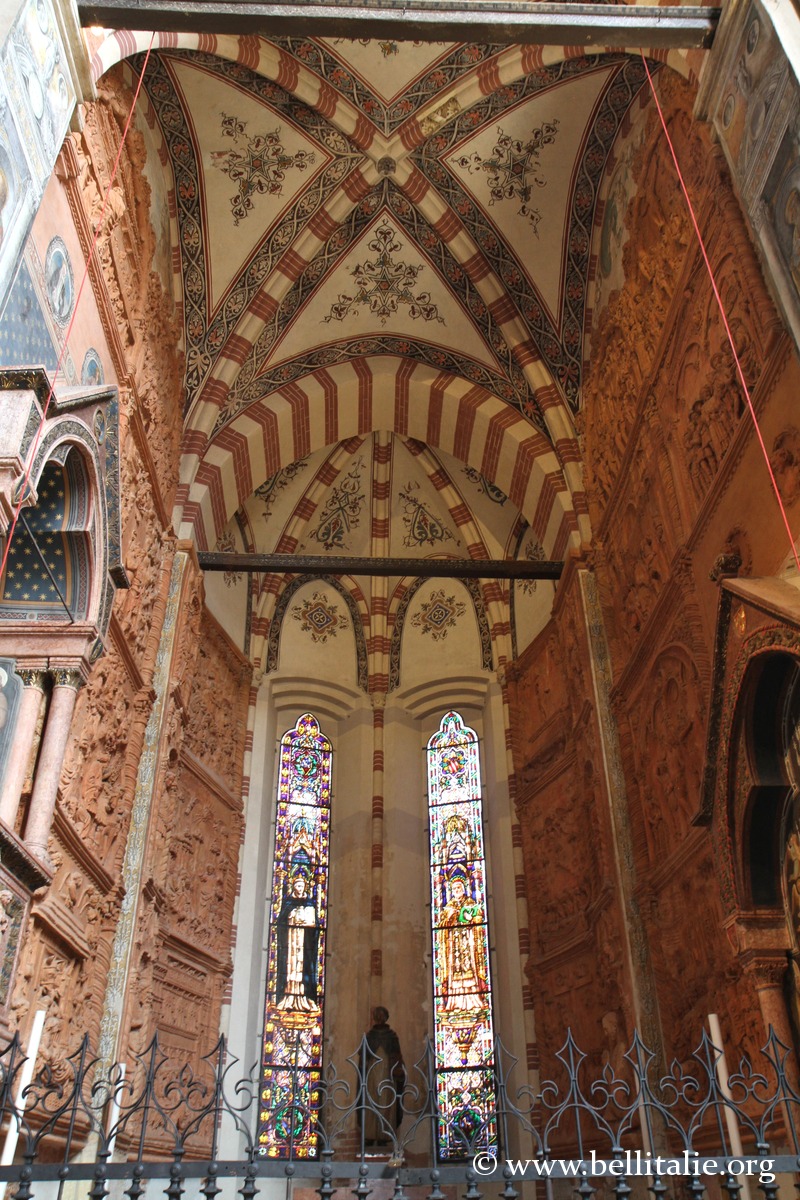
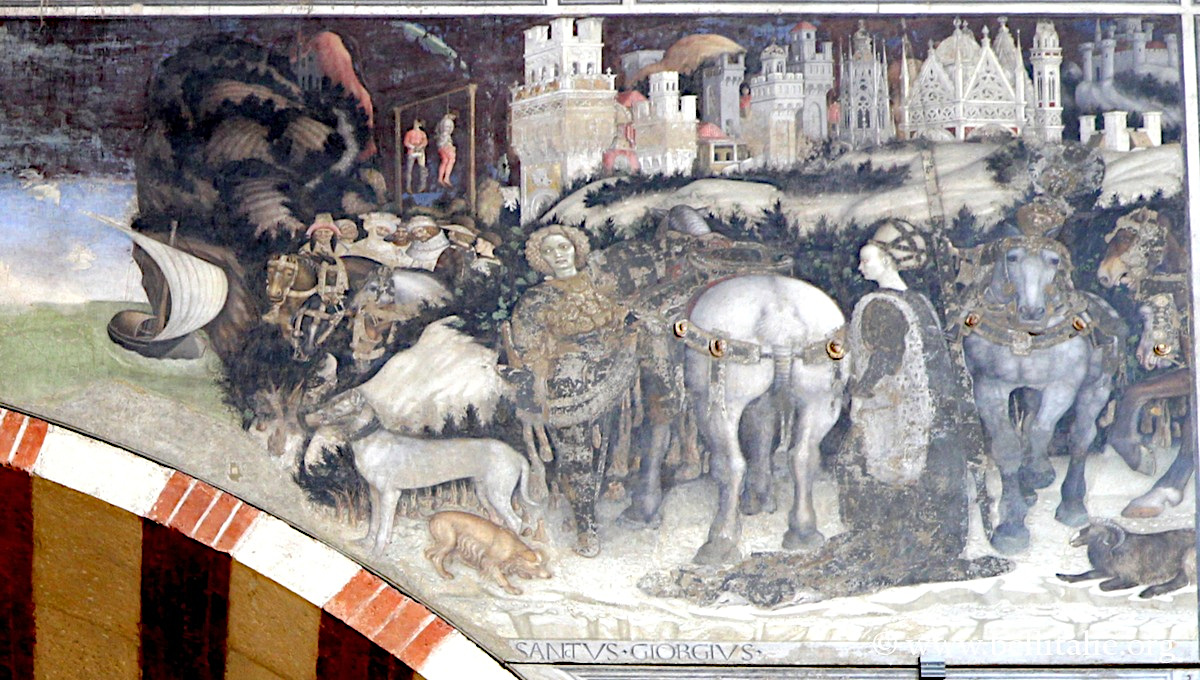
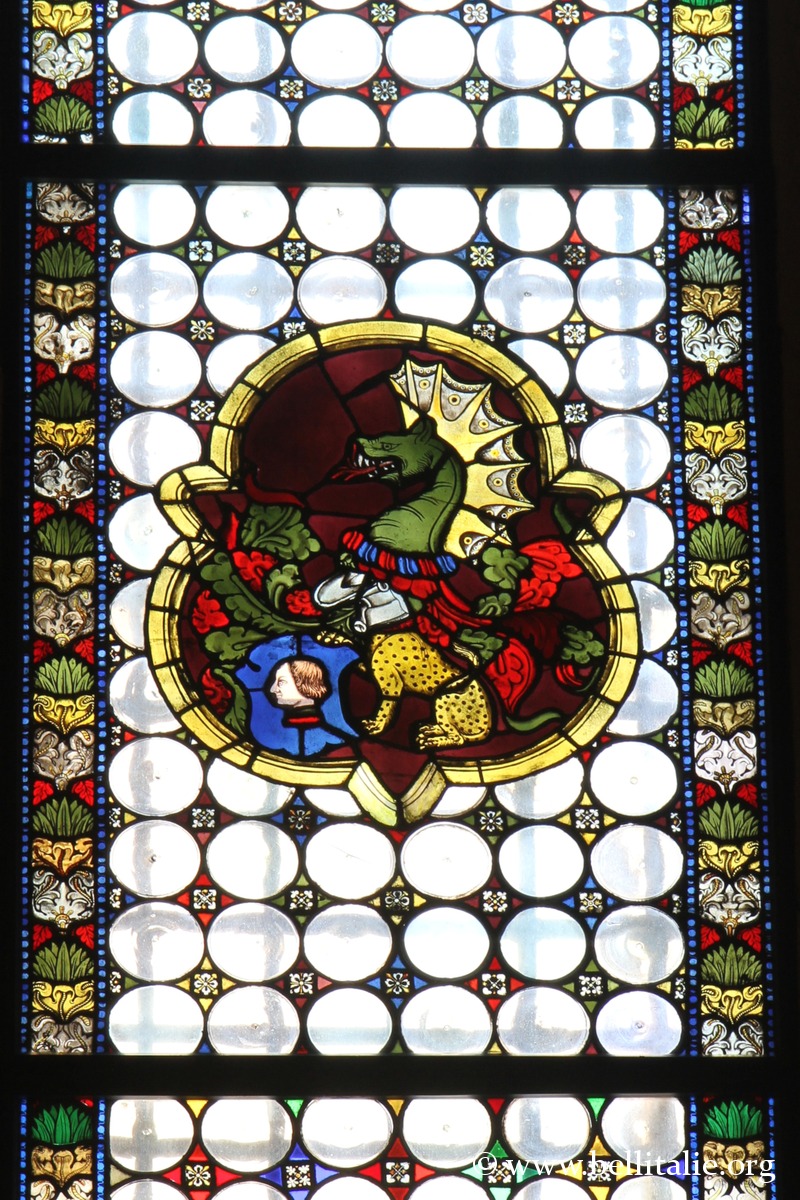
It houses important works of art, with beautiful altars and superb frescoes, as in the Pellegrini Chapel whose painting on the arch was made by Pisanello between 1433 and 1438. A part was unfortunately lost due to rainwater seeping in from the roof. It illustrates in a fairy-tale style the story of Saint George who must save the princess from the dragon.
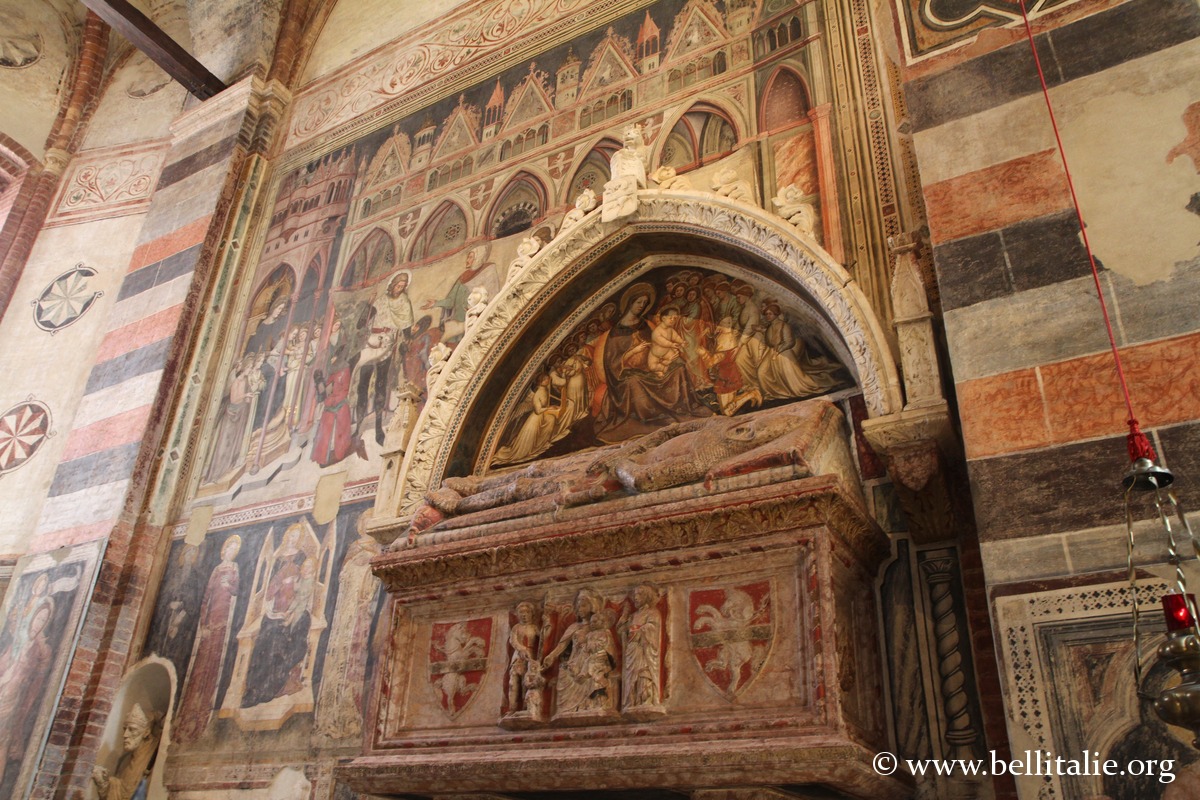
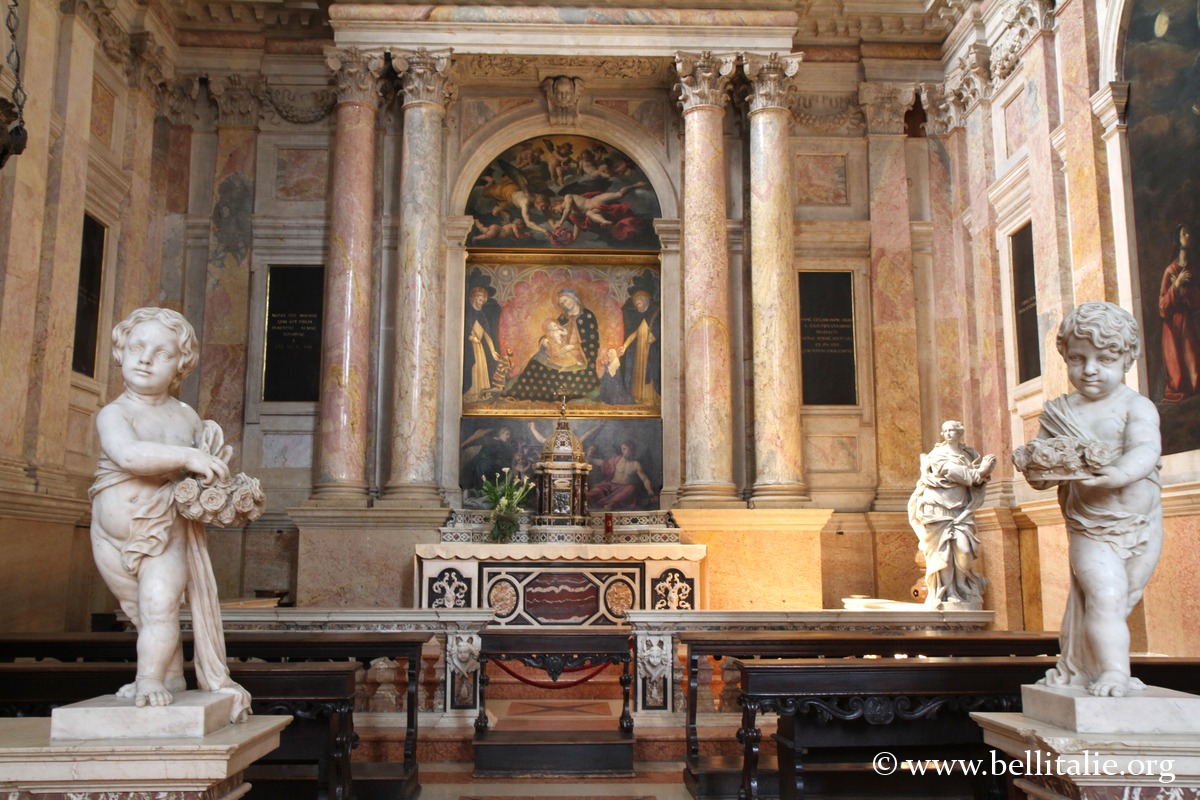
The Cavalli Chapel was painted in the second half of the 14th century by Altichiero, with many details including the knights of the Cavalli family who are presented by the saints to the Virgin.
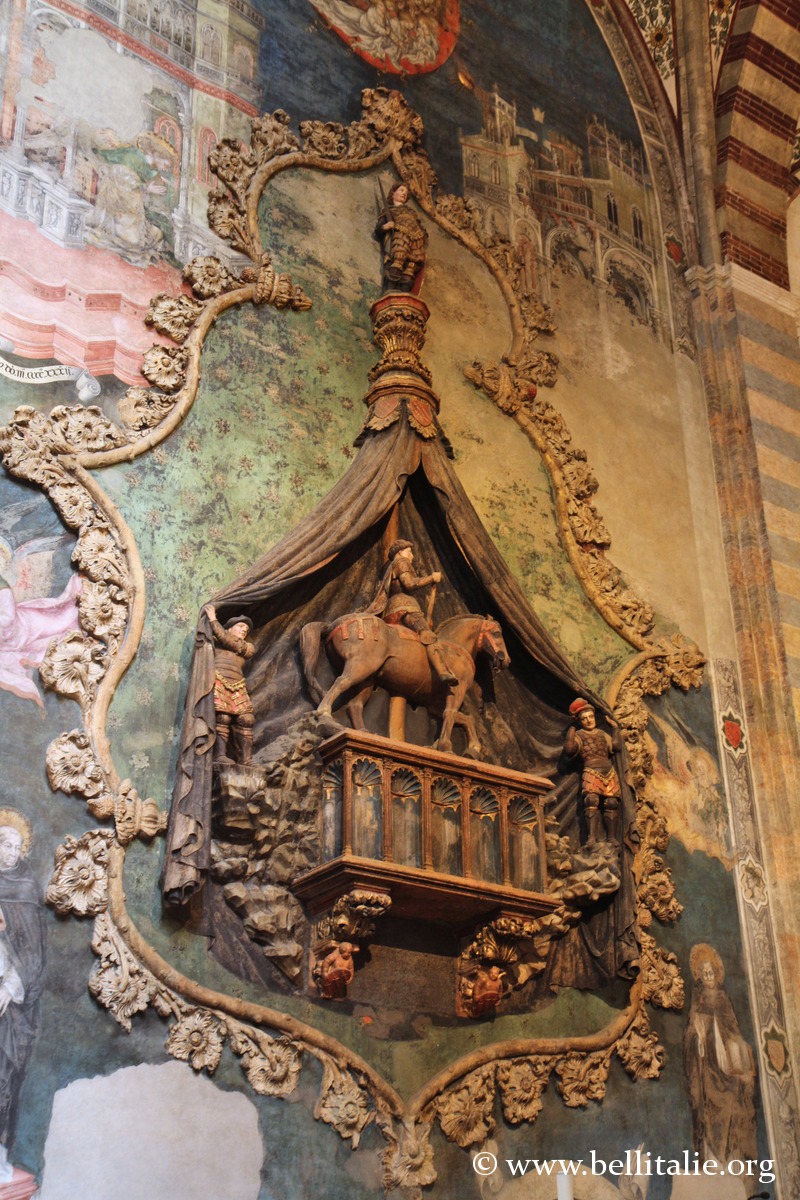
The statue of Cortesia Serego (1432), who died in combat in 1386 leading the troops of Antonio della Scala, shows him on his horse with sword in hand, between two armourers who draw back draperies and above the Archangel Michael drawing his sword.
For its excellent acoustics, it often hosts concerts of sacred music.
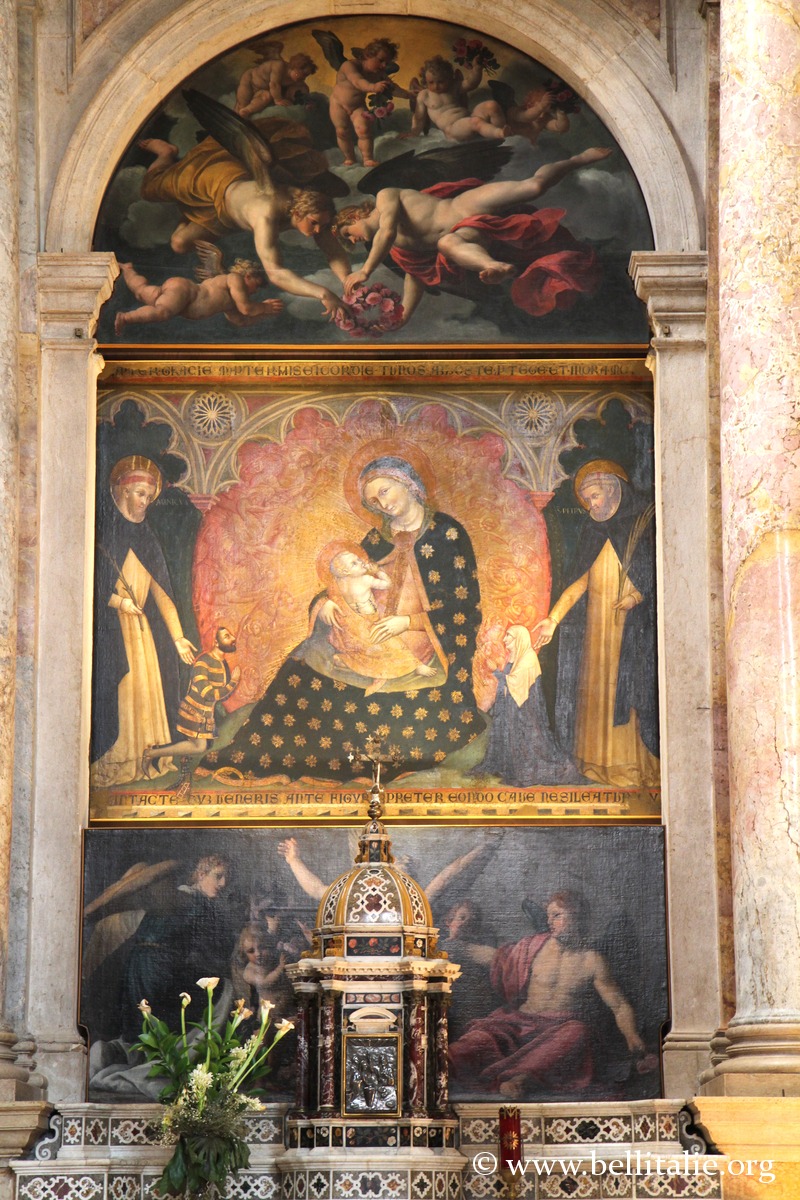
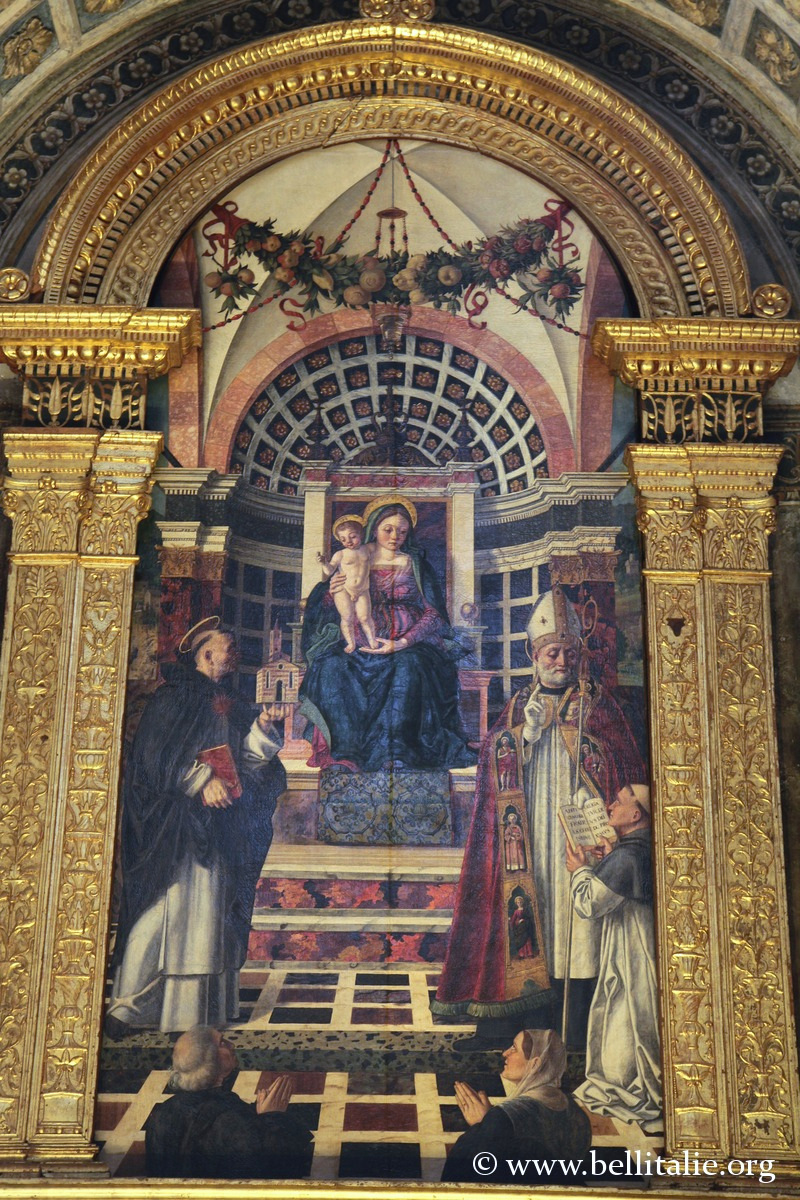
by Lorenzo Veneziano
Information
- Wikipedia article: en.wikipedia.org
- Website of the Chiese di Roma association: www.chieseverona.it
- Tourist portals: www.turismoverona.eu
Map
If you see this after your page is loaded completely, leafletJS files are missing.
- What to see in Verona
- History of Verona
- Verona Arena
- Piazza delle Erbe and Lamberti Tower
- Castelvecchio and Scaliger Bridge
- Piazza dei Signori in Verona
- Verona Cathedral Complex
- Basilica of San Zeno
- Roman Theatre of Verona
- Church of San Fermo
- Museum of Frescoes and Juliet’s Tomb
- Church of Santa Maria in Organo
- Verona’s Monuments


Comments
Comments in other languages
Satisfied to have found the photos. I was looking for. The site is well made, the images are well taken and essential