


Main museums
Brera Picture Gallery
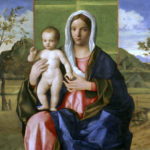
Housed in the Baroque palace of Brera, the Brera Picture Gallery holds one of the most important art collections in Italy.
The Caffè Fernanda, inspired by the 1950s, was recently inaugurated between the rooms of the Picture Gallery on the first floor of the Palace.
→ Read the page about the Brera Picture Gallery
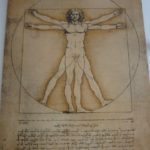
National Museum of Science and Technology Leonardo da Vinci
The National Museum of Science and Technology Leonardo da Vinci is the largest museum in Italy devoted to science and technology, housed in a former monastery and dedicated to the great master Leonardo who lived in Milan.
→ Read the page about the Leonardo da Vinci Museum
Sforza Castle Museums
The Musei del Castello, gathers within the Milanese fortress the Museum of Ancient Art (art from the 4th to the 16th century), the Picture Gallery (painting from the 13th to the 18th century), the Prehistory-Protohistory and Egypt sections of the Museum of Archaeology, the Museum of Musical Instruments, the Museum of Decorative Arts and a Museum of Furniture.
→ Also read the article about the Sforza Castle
GAM Modern Art Gallery at Villa Bonaparte
The Modern Art Gallery is housed in the palace of the Royal Villa (or Villa Bonaparte), facing the municipal public garden
→ Also read the paragraph about the GAM of Milan and the official website
Municipal Museum of Archaeology
The archaeological museum of Milan, in the spaces of the convent of Saint Maurice, has sections on Roman Milan, on local, Greek, Etruscan, Roman and early medieval archaeology and that of the Gandhara region, with a route passing through ancient remains
→ Read the article devoted to the Municipal Archaeological Museum of Milan and the sections at the Sforza Castle
Ambrosian Library and Picture Gallery
The Ambrosian Picture Gallery is an important museum of the city, with more than 2000 works including paintings, sculptures and art objects, linked in particular to three great masters: Leonardo da Vinci with the collection of sheets from his Codex Atlanticus, Raphael with the preparatory drawing of the School of Athens ; and Caravaggio with the Basket of Fruit
→ See the paragraph about the Ambrosian Library and Picture Gallery and the official website
20th Century Museum
400 selected works of 20th-century Italian art, housed in the Museo del Novecento in the Palazzo dell’Arengario facing Piazza del Duomo
→ See the paragraph about the 20th Century Museum of Milan and the official website
Museum of the Risorgimento
Within the 18th-century Palazzo Moriggia, the Museum of the Risorgimento retraces this period of Italian history that led to the unification of the country, with paintings, sculptures, drawings, prints, weapons and relics telling the story of the city between Napoleon Bonaparte’s first campaign in Italy (1796) and the annexation of Rome to the Kingdom of Italy (1870).
It is housed in the Palazzo Moriggia, designed in 1775 by the architect Giuseppe Piermarini
→ See the Museum page on the city website
Other museums and palaces
House museums: Bagatti Valsecchi Museum, Poldi Pezzoli Museum, the Casa Museo Boschi di Stefano and the Villa Necchi Campiglio.
Museum of the Last Supper
The museum of the Cenacolo Vinciano is located in the refectory of the convent of Santa Maria delle Grazie, where Leonardo da Vinci painted the Last Supper.
→ Read the page about Leonardo da Vinci’s Last Supper and Santa Maria delle Grazie
Museum of Ancient Art
Works from the 5th to the 16th centuries, including sculptures, statues and frescoes, located within the museums of the Sforza Castle.
→ See the paragraph about the Museum of Ancient Art of the Sforza Castle and the official website
Bagatti Valsecchi House Museum
House museum in the Renaissance atmosphere of the 15th-16th centuries, including a singular collection of fireplaces. It is a creation of the two brothers Giuseppe and Fausto Bagatti Valsecchi in the late 19th century to transform their palace into one of the noble palaces of 16th-century Lombard style, with furniture, period objects, sculptures, weapons, goldsmith work and tapestries, as well as works of art such as Saint Justine by Giovanni Bellini, Saint John the Baptist by Bernardino Zenale, etc
→ See the official website
Museo del Duomo
This beautiful museum showcases the many elements of the cathedral’s construction.
→ See the section about the Duomo Museum and the official website
Boschi Di Stefano House Museum
The Casa Museo Boschi Di Stefano, open since 2003, offers a journey through 20th-century Italian art by exhibiting nearly 300 rotating works among the more than two thousand works in the collection. The house retains its 1930s layout. The route goes from the early 20th century to the late 1960s, including works by Fontana, Carrà, De Chirico, Boccioni, etc
→ See the official website
Gallerie d’Italia in Milan
Overlooking Piazza della Scala, the Gallerie d’Italia in Milan bring together, in addition to temporary exhibitions, the collections of two foundations (Intesa Sanpaolo banking group and Cariplo Foundation), in the 18th-century Palazzo Anguissola Traversi and the 19th-century Palazzo Brentani, with two routes. “From Canova to Boccioni” presents among others 200 works of the Italian 19th century, such as sculptures by Canova.
The section “Cantiere Novecento” tells the story of 20th-century Italian art, through for example works by Boccioni (Three Women), Balla, de Chirico (The Mannequins), etc.
→ See the official website gallerieditalia.com
Diocesan Museum
Museum inaugurated in 2001 by the Archdiocese of Milan to house the Christian treasures of the diocese, installed around the cloister of the basilica of Sant’Eustorgio, coming from several sites and churches, with its library and living spaces
→ See the official website www.museodiocesano.it
Museum of Natural History
It is one of the most important museums of this kind in Italy, with mineralogy, zoology, palaeontology and botany sections, with stuffed animals, fossils, dinosaurs, reconstructions, in particular a 20-metre whale skeleton, and a model of a flying reptile 70 million years old.
→ Also read the paragraph about the Museum of Natural History and see the official website
Museo San Siro Inter & Milan
The first and only museum in Italy installed in a stadium, the San Siro Museum displays all kinds of objects belonging to two of the most successful teams in the Italian Football Championship: A.C. Milan and F.C. Internazionale (Inter): historic shirts, photos, shoes, tickets and a trophy display case. San Siro is the largest stadium in Italy and the third in Europe
→ See the official website
Poldi Pezzoli House Museum
The Poldi Pezzoli house museum, a stone’s throw from La Scala, was opened in 1881 in the house of Gian Giacomo Pezzoli, an important 19th-century collector. Its interest lies not only in the works exhibited, with more than 5000 works (paintings, sculptures, weapons, carpets, jewellery, fabrics, dishes, furniture, watches, etc) but also in the palace itself, whose Baroque staircase and numerous rooms, devoted to periods ranging from the Middle Ages to the 18th century, include the armoury.
Among the paintings there are masterpieces by Botticelli, Piero della Francesca, Bellini, Mantegna, Canaletto, Tiepolo, and the famous Portrait of a Lady by Piero del Pollaiolo.
→ See the official website
Studio Museum Francesco Messina
The Francesco Messina Studio-Museum preserves 80 sculptures (bronze, terracotta, marble, wax) and 26 works on paper chosen from among the most precious of the Sicilian artist Francesco Messina, in the former church of San Vito
→ See the official website
La Scala Theatre Museum
Adjacent to the theatre, the La Scala Theatre Museum (Museo Teatrale alla Scala) preserves a collection of paintings, musical instruments, costumes and objects linked to opera, including the original scores of the great Italian operas. It was created from the purchase of the prestigious collection of theatre objects of the antiquarian Jules Sambon.
→ See the official website
Museum of Fashion and Costume – Palazzo Morando
In the fashion district and its shop windows, the Palazzo Morando is of 16th-century style, with its elegant arcades, mosaic floors and sumptuous interiors.
In 2010 it became the seat of the Museum of Fashion and Costume of the city of Milan, then having the art gallery with the picture gallery and rooms that house sumptuous and precious period garments, with fabrics, clothes and accessories.
→ See the official website
MUDEC – Museum of Cultures
The MUDEC – Museum of Cultures is a large exhibition and events space, created in 2015 from an industrial archaeology recovery operation, inserting square elements, clad in zinc and glass, and notably a cloud-shaped vault.
The collection brings together more than 7,000 pieces of artworks, everyday objects, fabrics and musical instruments from all the continents of the world, the main ethno-anthropological heritage of the municipality of Milan, mainly from collections from the Far East, Africa and pre-Columbian America, from the first centuries before our era up to the 20th century.
→ See the official website www.mudec.it
Pietà Rondanini-Michelangelo Museum at the Sforza Castle
Space at the Sforza Castle, within the Musei del Castello, dedicated to the unfinished work of Leonardo da Vinci
→ See the section about the Pietà Rondanini-Michelangelo Museum and the official website
Picture Gallery at the Sforza Castle
Within the Musei del Castello, at the Sforza Castle
→ See the section of the Picture Gallery of the Sforza Castle and the official website
Museum of Decorative Arts at the Sforza Castle
The Museum of Decorative Arts is located within the Musei del Castello in the Sforza Castle.
→ See the section about the Museum of Decorative Arts of the Sforza Castle and the official website
Museum of Furniture and Wood Sculpture at the Sforza Castle
→ See the section about the Museum of Furniture at the Sforza Castle and the official website
Museum of Musical Instruments at the Sforza Castle
→ See the Museum of Musical Instruments and the official website
Luigi Rovati Foundation Art Museum
The recent Luigi Rovati Foundation Art Museum brings together antiquities and contemporary art, with more than 200 works including vases, ex-votos, cinerary urns and Etruscan bronzes exhibited alongside masterpieces by Lucio Fontana, Arturo Martini, Pablo Picasso and Andy Warhol.
The historic 1871 palace, on Corso Venezia, is marked by the four telamons on its façade, facing the Indro Montanelli Gardens
→ See the official website
Modern museums
MEET Digital Culture Center
The MEET, is the International Centre for Art and Digital Culture of Milan, inaugurated in 2020. It is the home of digital culture, with innovative ideas and projects, through physical and virtual experiences, exhibition routes, conferences, workshops and themed masterclasses. It is in contact with creators and companies, to promote digital culture applied to art, design, science and education.
Its Immersive Room is an immersive room equipped with 15 projectors offering extremely bright 4K images, for continuous projection on three walls. The Theater is an auditorium-cinema with three projection surfaces and spaces configurable according to the installations
→ See the official website
WOW Spazio Fumetto
The Wow Spazio Fumetto is a space inaugurated in 2011 by the Fossati Foundation devoted to events and exhibitions around comics. It is the home of comics in Milan, which allows artists, publishers, enthusiasts or the curious to deepen their knowledge of comics, even in its contemporary production. It offers a free-access library with 9000 items and a specialised bookshop.
It hosts permanent and temporary exhibitions, cultural events, screenings and workshops.
The premises were built in 1926 as a bus depot, then bought by Motta in 1960 to produce confectionery, until 1985.
→ See the official website
MIC Interactive Cinema Museum
The MIC, Interactive Cinema Museum, explores the world of cinema, from the Lumière Brothers’ reels to the most innovative 3D and 4D techniques. The visitor is involved in the behind the scenes of cinema, being able to do their own dubbing, add sound to a film, produce a cinema poster, with augmented reality devices and touch applications.
The cinema hall screens educational films, and one can discover the sets of films shot in Milan. The museum also preserves more than 35,000 films at a temperature of 10 degrees and constant humidity.
→ See the official website
Contemporary Art Museums
GAM, inside the Villa Reale
The Modern Art Gallery is housed in the palace of the Royal Villa (or Villa Bonaparte), facing the municipal public garden.
→ See the section of the GAM of Milan and the official website
The Italian Design Museum – Triennale
The Triennale Design Museum is the most important Italian museum dedicated to design, in the building of the Triennale Milano. It presents in a permanent installation a selection of the most emblematic and representative pieces of Italian design, among the 1600 objects in the Triennale collection.
On the ground floor of the palace, the works are organised in chronological order, accompanied by the context in which each work was conceived, including archive materials with photographs, advertising campaigns and original packaging.
→ See the official website triennale.org
BASE Milano
Vast space inaugurated in 2012 in the former industrial spaces of Ansaldo, devoted to world cultures, a “multifunctional cultural centre” intended to produce social innovation and spread culture between the arts, businesses and technology, a creative centre with an international atmosphere, as well as a centre for research, experimentation and production
The building was constructed between 1904 and 1923 for a mechanical company, bought in the 1960s by Ansaldo to host the production of locomotives and railway and tram carriages, disused since the 1970s.
→ See the official website
Fabbrica del Vapore
Devoted to children, the former locomotive and tram factory hosts creative events.
The steam factory is a large exhibition space and a hub dedicated to creativity, located between the monumental cemetery and the Chinatown district.
This complex is a conversion of the former tram and steam locomotive factory, which hosts in particular young people, with also exhibitions and shows (theatre, design, fashion, dance, cinema, photography). In the large courtyard, on the second and last Saturdays of the month, the Earth Market is held, with organic, zero-km and Slow Food certified food.
→ See the official website
Pirelli Hangar Bicocca
The Pirelli Hangar Bicocca is an industrial space painted dark blue inside and silver outside, with free admission, with exhibitions and training related to contemporary art, including the permanent exhibition known as “The Seven Heavenly Palaces” by Anselm Kiefer: seven imposing towers weighing 90 tonnes each, 14 to 18 metres high, in reinforced concrete and containers.
It is in the former hangars of the Ansaldo group, where coils for the electric motors of trains were produced.
→ See the official website
PAC Pavilion of Contemporary Art
The PAC Padiglione di Arte Contemporanea, inaugurated in 1979, is one of the first Italian examples of an exhibition space designed specifically for contemporary art, Italian and international.
It hosts exhibitions by established and lesser-known artists, educational activities, events and conferences related to the themes addressed in the exhibitions.
→ See the official website
ADI Design Museum Compasso d’oro
The ADI Design Museum, inaugurated in 2021, is one of the largest museums in Europe dedicated to design: 5000 square metres of exhibition space that hosts all the award-winning pieces of the Compasso d’Oro Award.
It constantly renews its content, with new acquisitions regularly added to the historic pieces of the permanent collection, i.e. more than 2000 objects awarded since 1954.
The place was an industrial area from the 1930s, with the conversion of a tram depot and an electricity distribution facility.
→ See the official website
MUBA Children’s Museum
The Rotonda della Besana, built in the 17th century as a cemetery, has at the centre of the circular portico the deconsecrated church of San Michele, used as a Children’s Museum, with an exhibition space.
→ See the official website
Prada Foundation
The Prada Foundation, founded in 1993, is dedicated to the promotion of culture and contemporary art. The new museum space was inaugurated in 2015 by transforming a distillery from the 1910s.
The 19,000 square metres host exhibitions including the permanent collection of contemporary art, and events. The nine-storey Tower, a geometric structure of glass and concrete with irregular shapes, dominates the four-storey Haunted House covered in gold leaf, and the vast central space of the two-storey Podium.
→ See the official website www.fondazioneprada.org
Science, nature and technology museums and places
National Museum of Science and Technology Leonardo da Vinci
The National Museum of Science and Technology Leonardo da Vinci is the largest museum in Italy devoted to science and technology, housed in a former monastery and dedicated to the great master Leonardo who lived in Milan.
→ Read the page about the Leonardo da Vinci Museum
Municipal Aquarium
The Municipal Aquarium of Milan (Aquario Civico di Milano) is one of the oldest aquariums in the world, created in 1906, in an Art Nouveau pavilion within Sempione Park which is the only building remaining from the complex built for the 1906 international exhibition, with more than a hundred species of fish, crustaceans, turtles or others from the Mediterranean, the Red Sea and Italian fresh waters. An educational route is devoted to the water cycle and fishing.
→ See the official website
Municipal Museum of Natural History
It is one of the most important museums of this kind in Italy, with mineralogy, zoology, palaeontology and botany sections, with stuffed animals, fossils, dinosaurs, reconstructions, in particular a 20-metre whale skeleton, and a model of a flying reptile 70 million years old.
→ Also read Museum of Natural History and the official website
Ulrico Hoepli Planetarium
The Ulrico Hoepli Planetarium of Milan was inaugurated in 1930, in a building located in the gardens of Porta Venezia (Indro Montanelli Gardens), eequipped with a large dome.
→ See the official website
Brera Astronomical Observatory Museum
The Brera Astronomical Observatory (OAB) is the oldest scientific institution in Milan and forms part, together with the Library, the Academy, the Botanical Garden and the Picture Gallery, of the large Brera complex. The observatory has been based at the Palazzo Brera since 1762 under the impulse of Father Lagrange, who professionalised astronomical research in Milan.
Since the 1920s it has been linked to the Merate observatory near Lecco.
It preserves precious historical archives, an ancient library of nearly 30,000 volumes and a modern library with more than a thousand books.
Two domes have been renovated, the “Zagar” dome and the “Schiaparelli” dome, used for conferences, congresses and workshops.
→ See the official website
Brera Botanical Garden
Hidden in the Brera district, behind the Picture Gallery, is the Botanical Garden of Milan. It was founded in 1775 by Empress Maria Theresa of Austria in place of a garden of the Jesuit Fathers.
Admission is free, it covers 5000 m², with flower beds, exotic species and large trees, including two giant Gingko Biloba dating back to its foundation, and a 30-metre-high lime tree.
→ See the official website
Information
- Tourist portals: museidimilano.it, www.yesmilano.it
- Downloadable documents: museum guide, map of Milan with the museums
- What to see in Milan
- Itinerary ideas for visiting Milan
- Milan Cathedral
- Sforza Castle of Milan
- Victor Emmanuel II Gallery in Milan
- The Last Supper and Santa Maria delle Grazie
- Milan’s La Scala
- Basilica of Sant’Ambrogio in Milan

- Piazza dei Mercanti and Medieval Milan
- Selection of hotels and luxury hotels in Milan
- Leonardo da Vinci Museum of Science and Technology
- Brera Art Gallery
- Basilica of San Lorenzo, Milan
- Navigli District and Canals of Milan
- San Maurizio al Monastero Maggiore in Milan
- Milan Civic Archaeological Museum
- Basilica of Saint Nazarius in Milan
- Other Renaissance and Baroque monuments
- Neoclassical, 18th and 19th centuries in Milan
- The Museums of Milan
- Shopping, the Fashion Quadrilateral and Markets in Milan
- Squares and other sites of Milan





Comments