


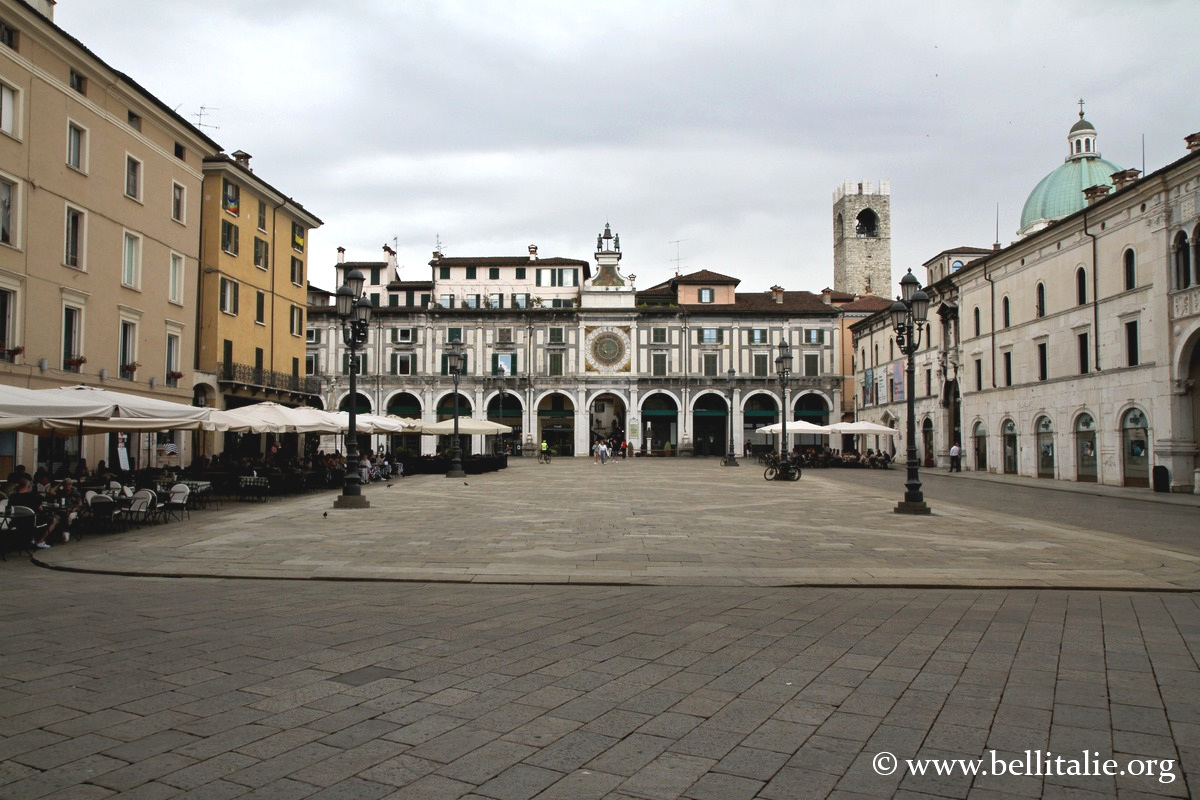
la Piazza Loggia, also called Piazza Vecchia, is probably the most beautiful square in the city. It features a variety of architecture, marked in particular by the Renaissance and the Venetian occupation.
For centuries it has been one of the hearts of Brescian life, and still is today with its cafés and shops.
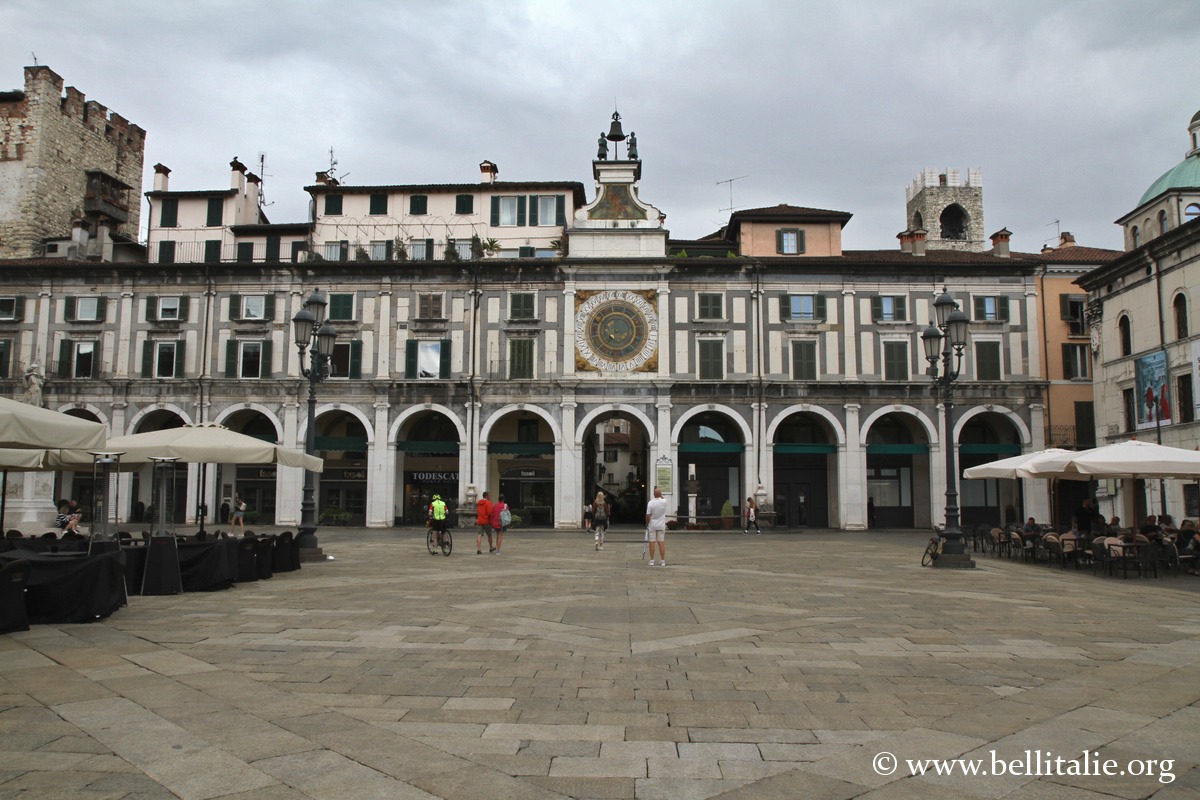
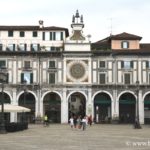
It was laid out in the 15th and 16th centuries with its rectangular shape surrounded by a series of historic buildings, including the Renaissance arcades with the Clock Tower.
On the western side, the lovely Palazzo della Loggia in 16th-century marble, today the seat of the town hall, is crowned by a Renaissance-style dome.
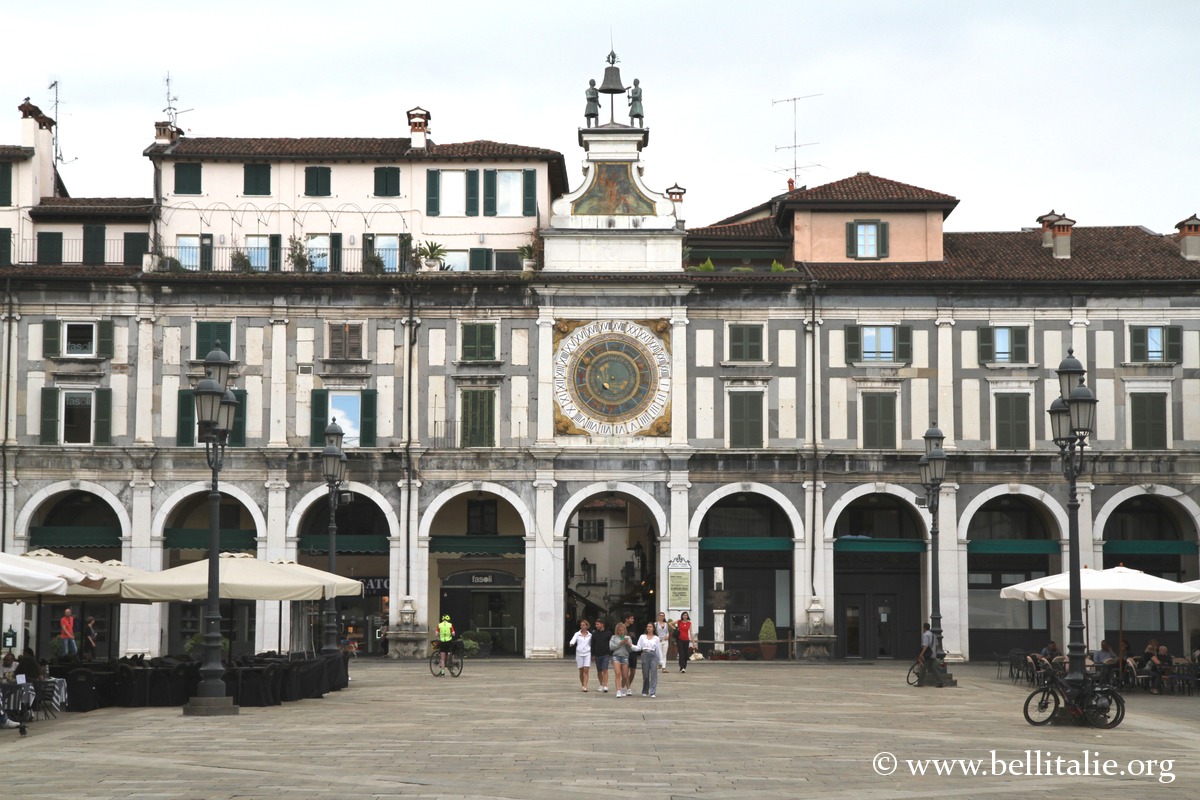
On the opposite eastern side, in the middle of the Renaissance arcades with their shops, the Clock Tower was built in 1540 with its two automata striking the hours.
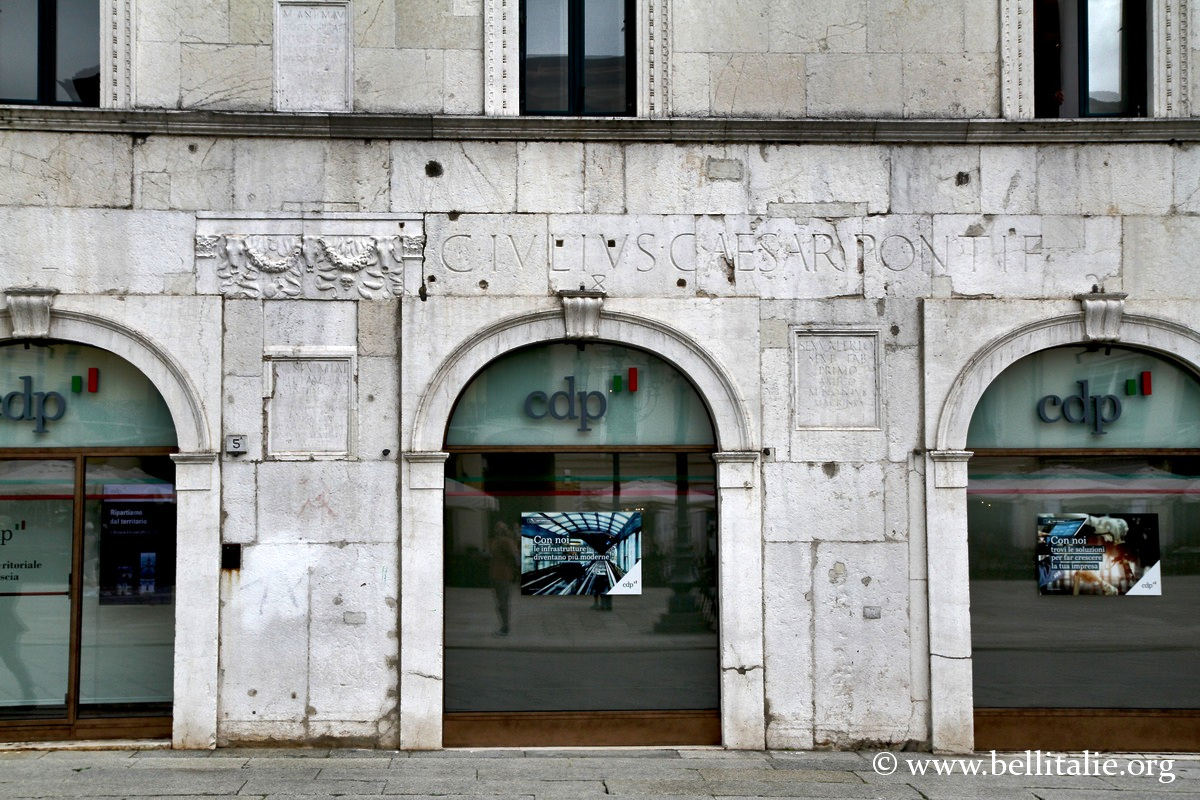
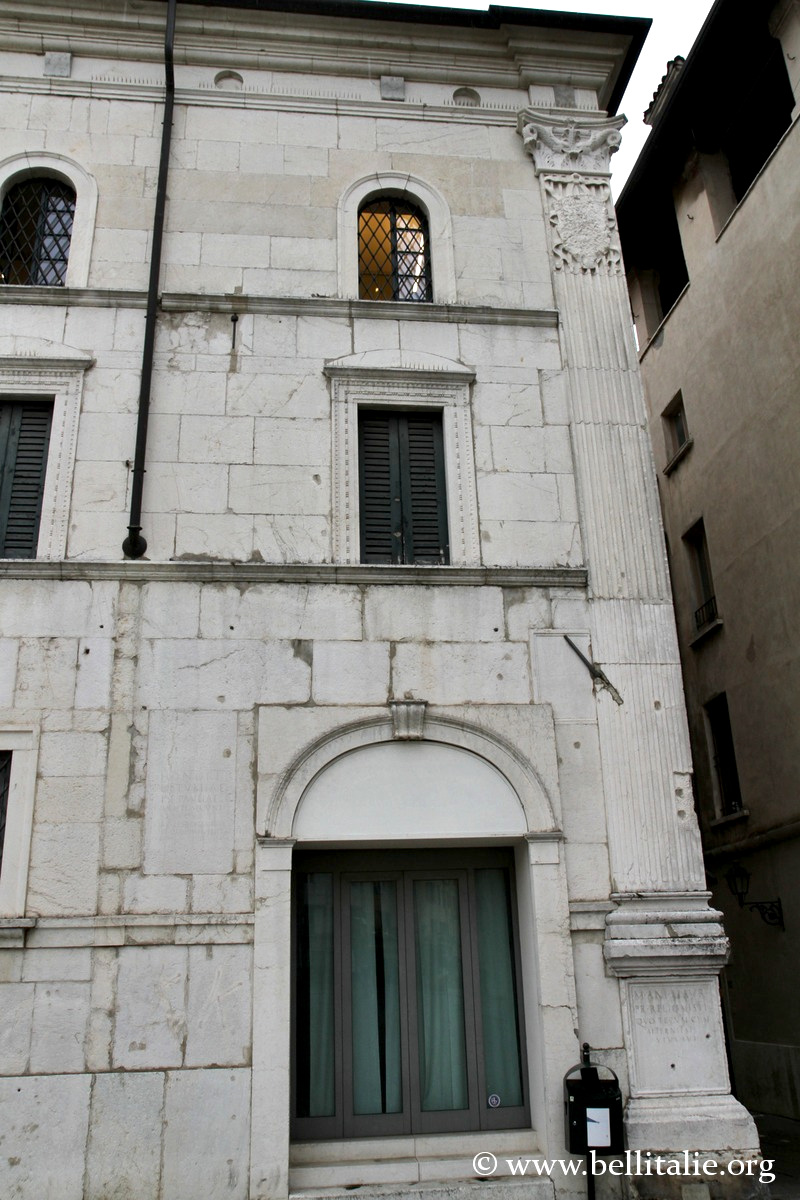
On the southern side are the old palace of the Monte di Pietà from the end of the 15th century with its Roman inscriptions embedded in the façade, and beside it the new palace
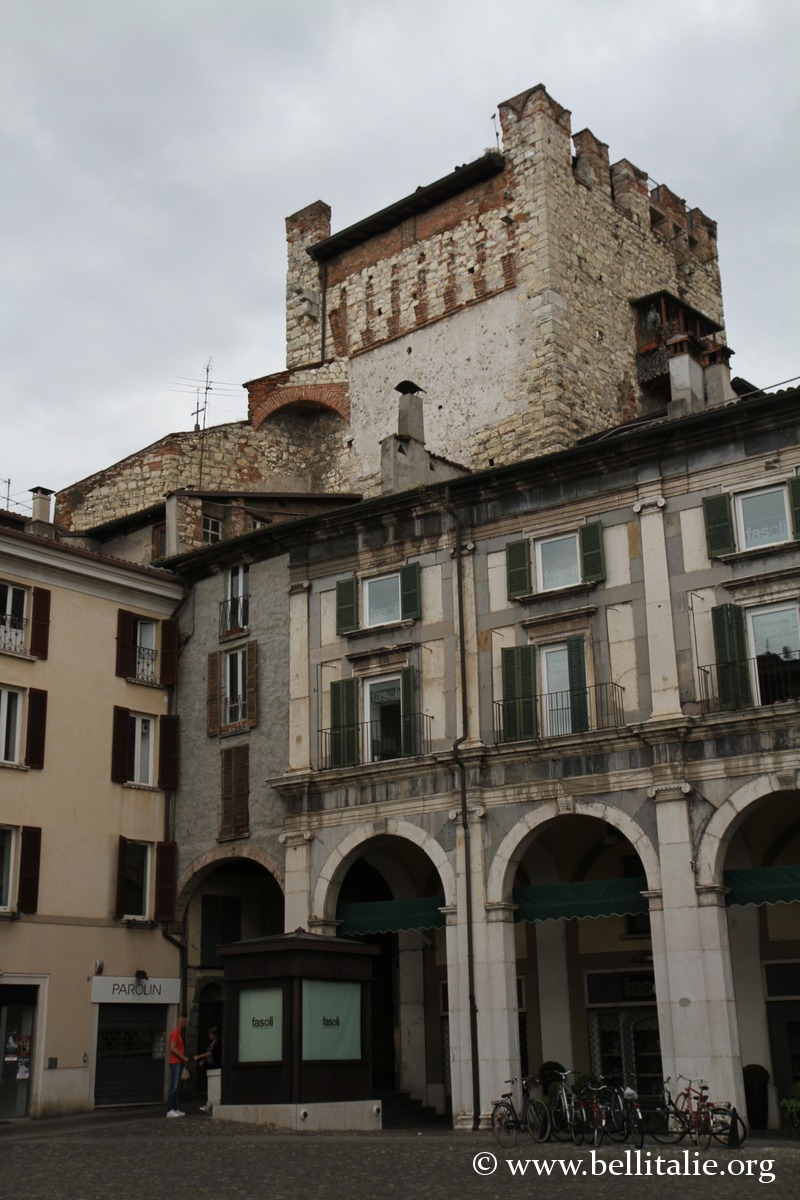
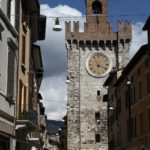
On the north-eastern side stands the Porta and Torre Bruciata from the Roman walls, and opposite the monument Bella Italia, donated by Victor Emmanuel II in memory of the dead of the Ten Days of Brescia in 1849 during the Risorgimento, when the Brescians rose up against the Austrians (see the Ten Days of Brescia).
The Loggia
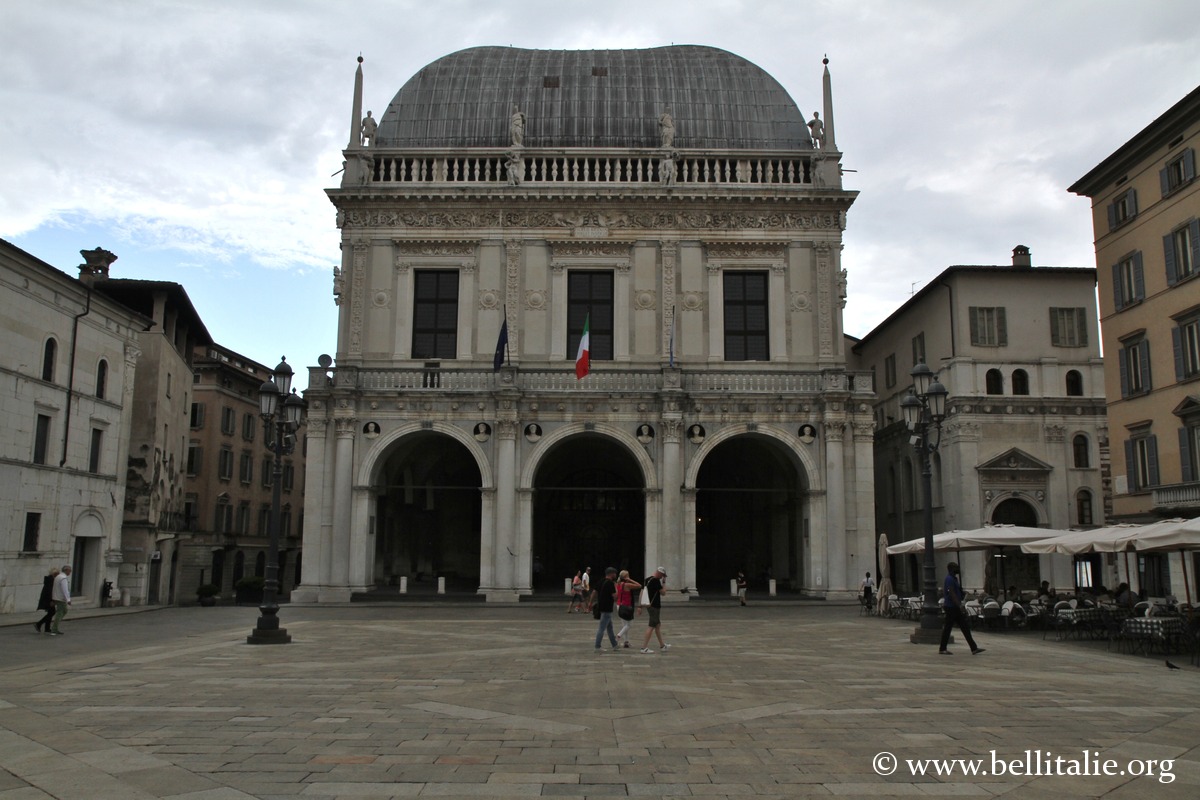
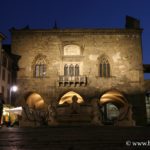
On the western side, the lovely Palazzo della Loggia in marble crowned by a Renaissance-style boat-hull dome, is today the seat of the town hall. It replaced the old loggia that dated from the 1430s, built between 1492 and 1570 with the participation of many artists and architects, first Tommaso Formentone then da Coirano, Palladio, Sansovino, etc.
The palace has a large portico at the lower level with cross vaults, reached through three large round arches supported by Corinthian-style pillars.
The façade is richly decorated with its marbles, capitals, pilasters, busts and heads of emperors. The majestic portal designed by Stefano Lamberti in 1552 is flanked by two side niches with fountains by Nicolò da Grado.
The upper part dates from the 16th century. It is adorned with pilasters framing three large windows above the lower passageways.
The ship-hull roof of 1914 replaced the late-Baroque attic built in 1769 by Luigi Vanvitelli, reproducing identically the original roof that was destroyed in 1575 by a devastating fire.
Inside, a monumental neo-Renaissance staircase from 1902 leads to the upper floor and to the “Salon vanvitelliano”.
The Lodoiga
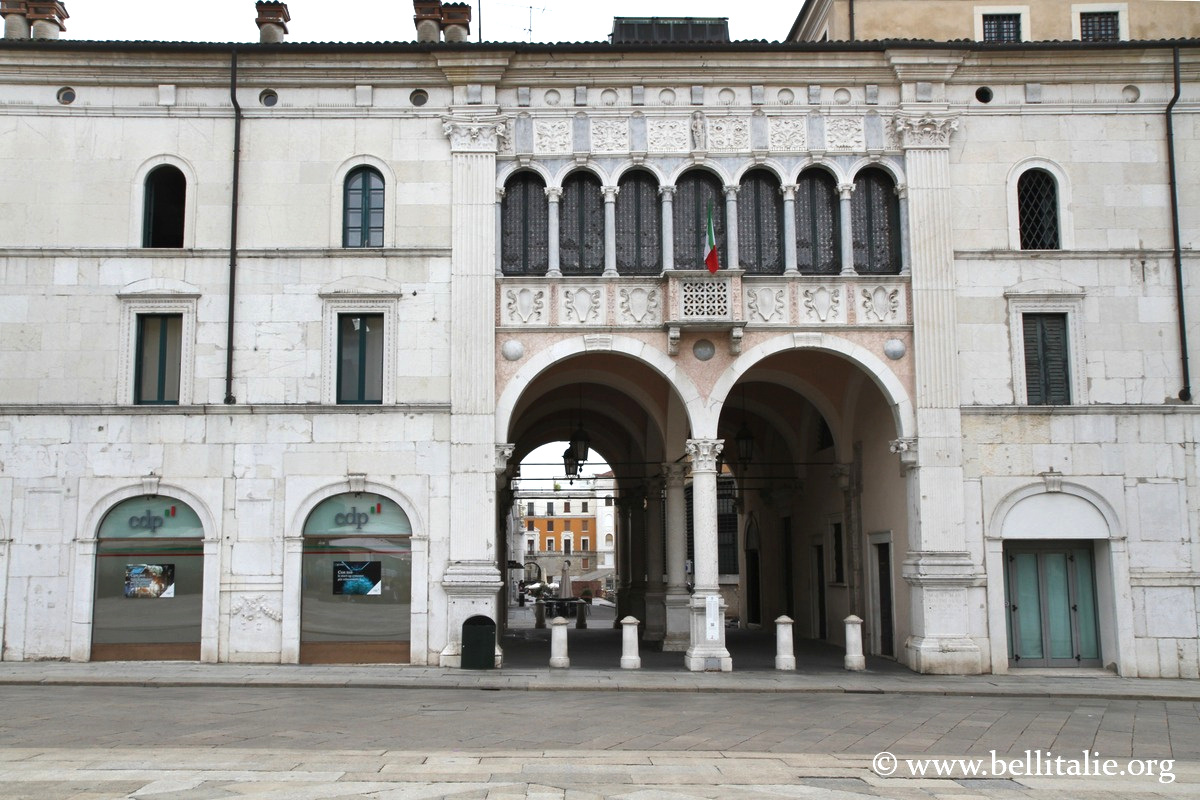
the Lodoiga is a statue sculpted in the 16th century whose history is controversial, which was moved several times and has been located since 2011 under the portico of the Loggia.
It served as the city’s “talking statue”, with inhabitants attaching poems, political criticism or often sarcastic messages to it, particularly in the Napoleonic era.
This statue was probably originally intended to adorn the façade of the Palazzo della Loggia, with statues planned by Jacopo Sansovino to accompany the balustrade.
Monte di Pietà
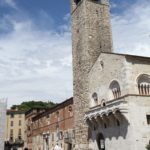
On the southern side are the two Monte di Pietà, the old and the new palace, the former having been built between 1484 and 1489 with a façade on which remarkable Roman inscriptions and tombstones emerge, used for its construction.
Arcades and Clock Tower
On the eastern side of the square, the monument with its two-tone white and grey façade has a portico with Ionic-style columns and is topped by two storeys with architraved windows. This building, originally part of the 14th-century citadel of the viscounts, was designed by Lodovico Beretta and built in 1595, incorporating the Clock Tower (1540-1550), equipped with its mechanical clock with its astronomical dial and its two copper automata, the “Tone and Batista”, which strike the hours.
On 28 May 1974, during an anti-fascist demonstration by trade unions and workers, the square was the scene of a neo-fascist terrorist attack, killing eight people and injuring around a hundred. Under the clock portico a stele was installed in memory of these victims.
Information
- Wikipedia articles: Piazza della Loggia (in Italian)
- Tourism portals: www.in-lombardia.it, www.visitbrescia.it
Map
If you see this after your page is loaded completely, leafletJS files are missing.


Comments