


See also below the Tourist Map of Pavia
1. Certosa di Pavia
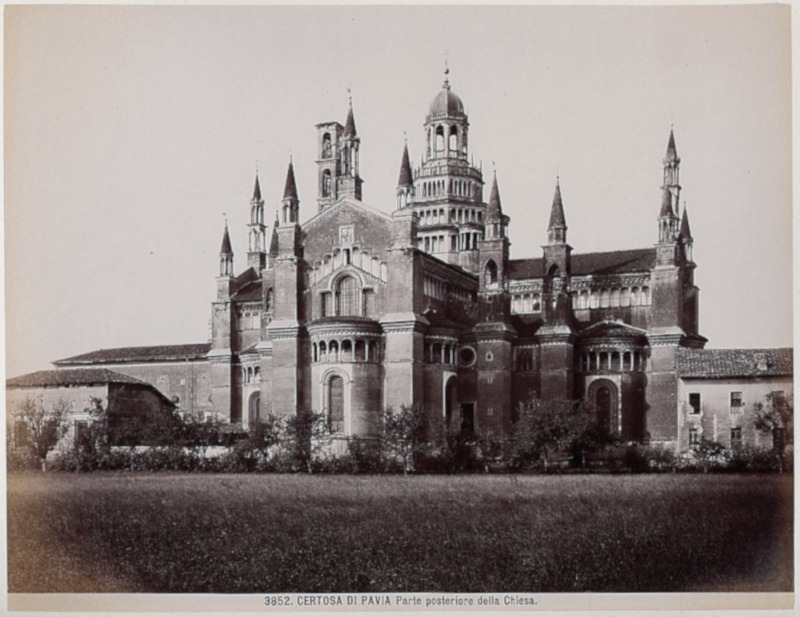 The Certosa di Pavia, located 8 km north of the center, was founded in 1396. It is the most important late Gothic monument in Italy and one of the finest buildings of the Renaissance.
Its origin dates back to the wish of Gian Galeazzo Visconti to erect a family mausoleum here. The construction of a monastery entrusted to the Carthusians spanned from the end of the 14th century, in the late Gothic period, to be partially completed under the Sforza around 1474 during the Renaissance, and finished in the early 16th century.
Its facade with the abundant Renaissance-style decoration, mixing polychrome sculptures, is striking, typical of Lombard architecture.
The Gothic interior houses the tomb of Gian Galeazzo Visconti, but also those of Ludovico Sforza il Moro and his wife Beatrice d’Este (the latter two being empty). Many works of art are preserved there, such as a polyptych by Perugino, altarpieces by Bergognone and Pinturicchio, the Madonna and Child by Guercino, etc.
The two cloisters are also remarkable, with the cells and the arcades. A museum preserves casts and works of art.
2. Basilica of San Michele
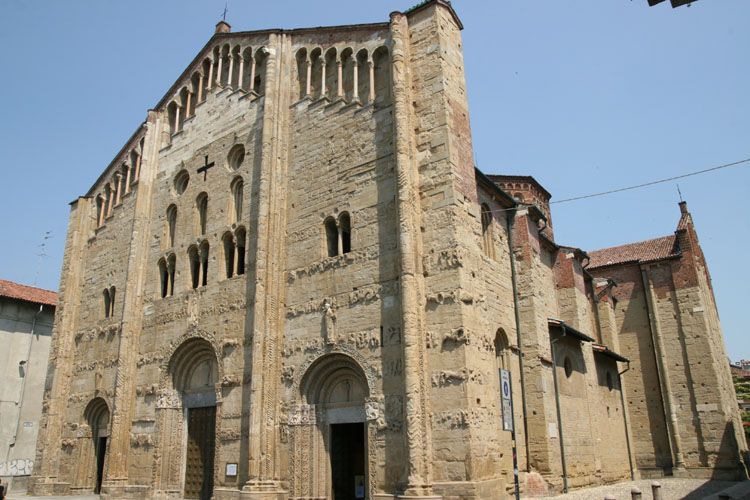
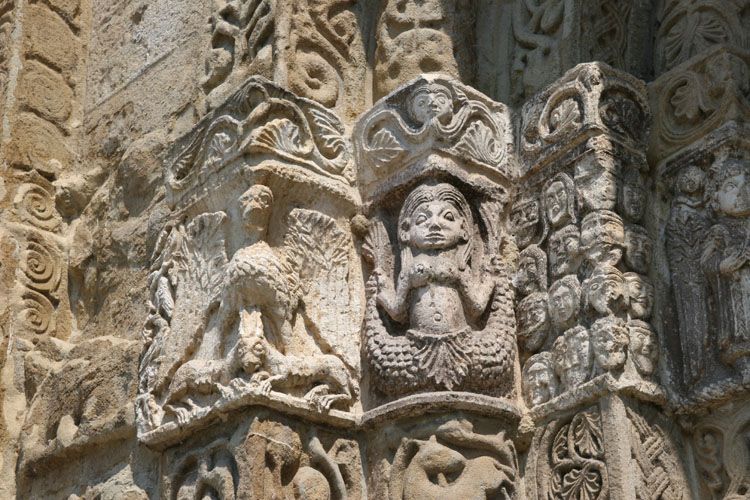
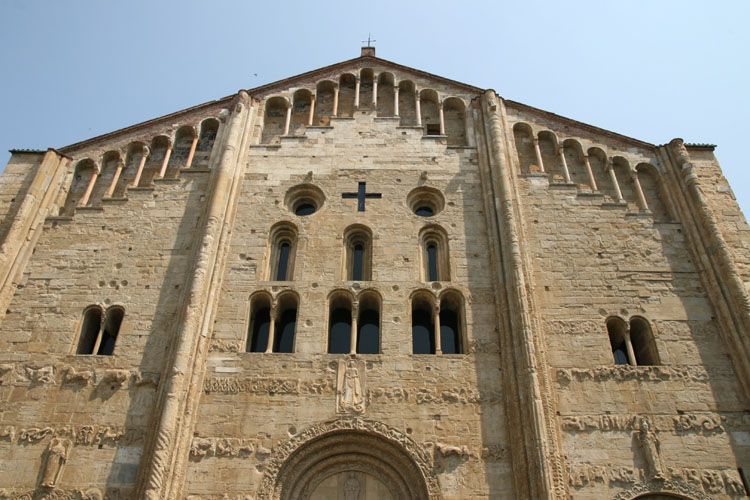
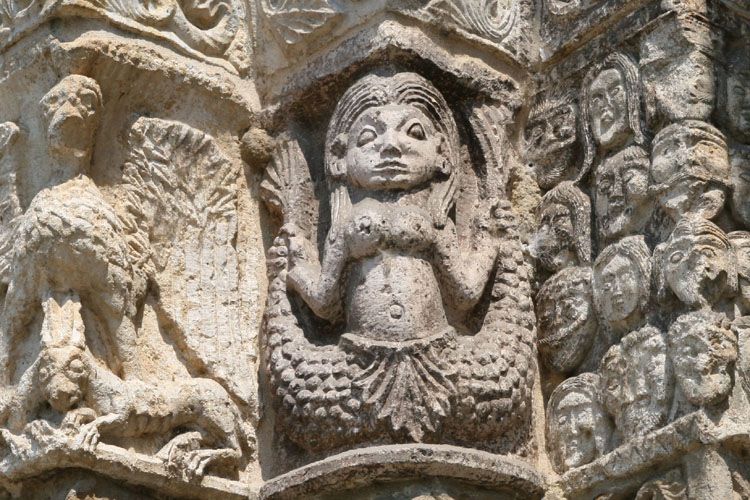
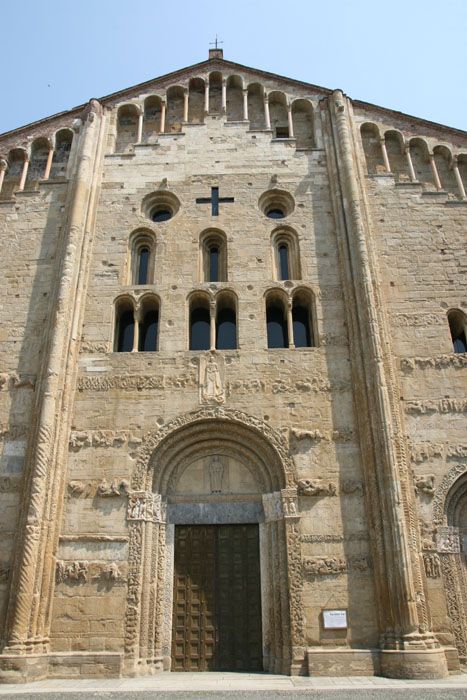
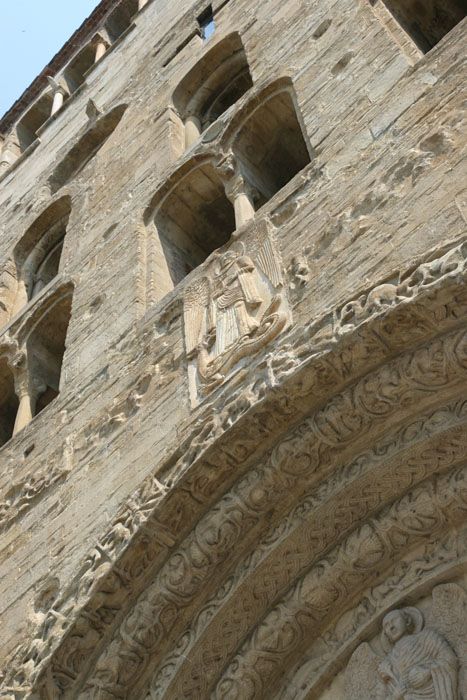
The basilica San Michele Maggiore (Saint Michael Major in English) is a remarkable example of Lombard Romanesque religious architecture. It was built on the site of an older church, in the 11th and 12th centuries.
It is the most beautiful religious building in the center of Pavia along with San Pietro in Ciel d’Oro, which was the site of numerous coronations, including that of King of Italy of Emperor Frederick I Barbarossa in 1155.
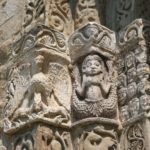
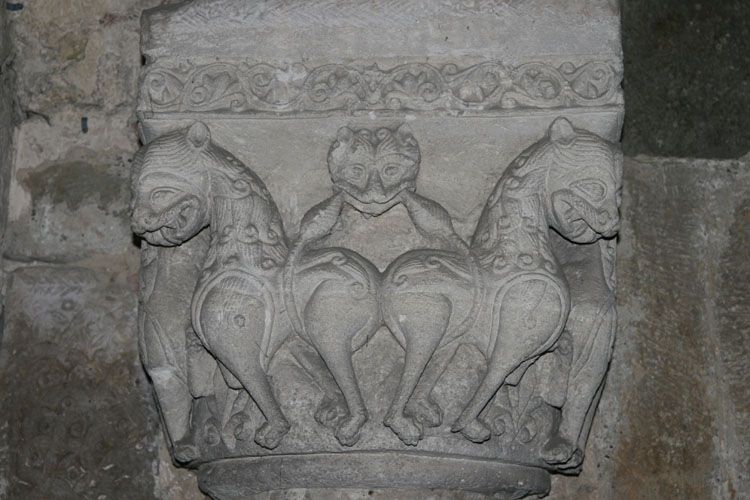
One of its major features is the use of ochre sandstone for its decorative sculptures, instead of terracotta. Due to the friability of this stone, the rich exterior decorations have deteriorated over time.
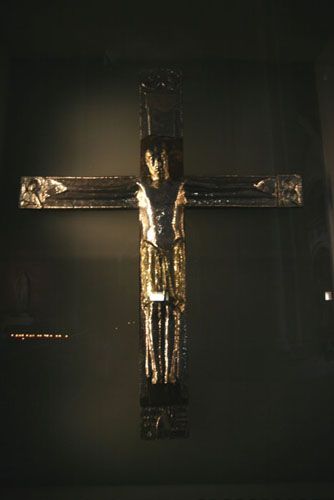
Behind its sober and elegant facade, the interior preserves among other works a beautiful crucifix over 2 meters tall covered in silver leaf, dating from the 10th century.
-
- Basilica San Michele,
-
- Basilica San Michele,
-
- Basilique Saint-Michel
-
- Basilique Saint-Michel
-
- Basilica di san michele maggiore
-
- Basilique Saint-Michel Majeur
-
- Basilica di san michele maggiore
-
- Crucifix (Xe siècle)
-
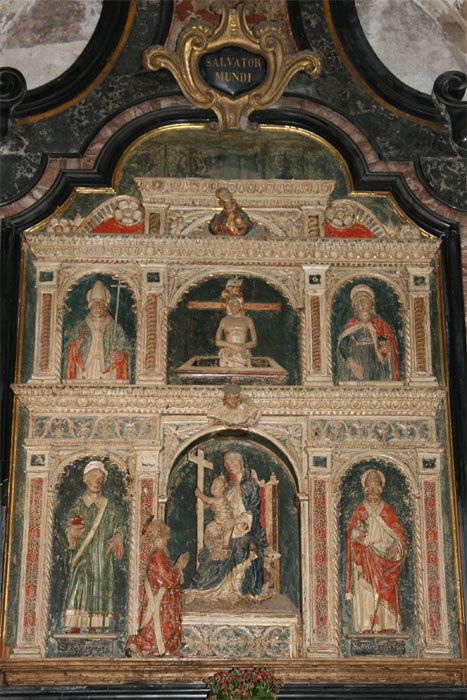
- Polyptyque (XVe siècle)
3. Basilica of San Pietro in Ciel d’Oro
The basilica San Pietro in Ciel d’Oro was founded by the Lombards in the early 6th century, and rebuilt in the 12th. It houses the tomb of Saint Augustine under a very beautiful arch in the chancel, and that of the Lombard king Liutprand (died in 744), who had brought the saint’s relics there from Sardinia to protect them from Saracen attacks.
Of Lombard origin, it was rebuilt in Romanesque style. In the 9th century, the basilica was an important cultural center, with its scriptorium where texts were copied, and a school of grammar and rhetoric.
The Ark of Saint Augustine is a Gothic marble masterpiece of the 14th century, with the urn and the statue of the saint, decorated with 150 statues representing angels, saints and bishops, and panels that tell the life of Saint Augustine.
The crypt preserves the bones of Severinus Boethius, executed here in 525 by the Ostrogothic king Theodoric.
4. Pavia Cathedral
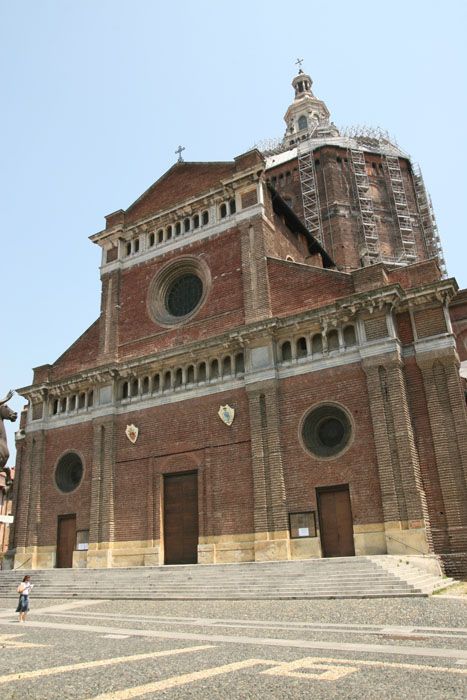
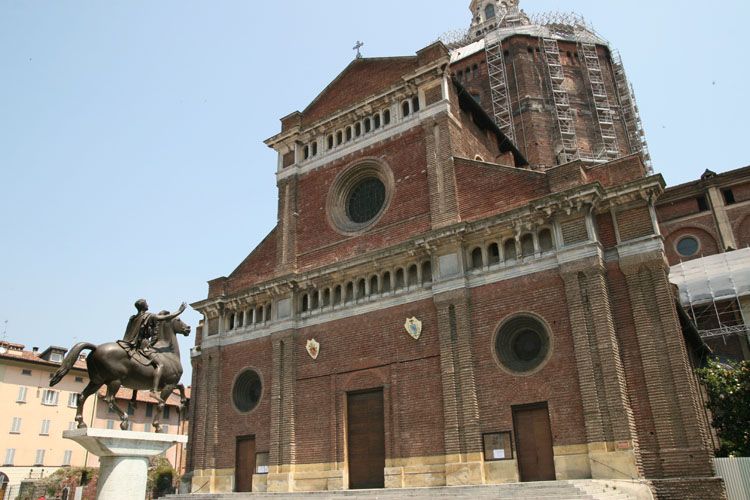
The construction of the cathedral began under the Sforza in 1488 but was finished many centuries later. The central octagonal dome, 97 meters high, is the third largest in Italy, after those of St. Peter’s Basilica in Rome and the Florence Cathedral.
The interior preserves relics of the crown of thorns of Christ that were reportedly found in 327 by Helena, the mother of Constantine, and the crypt houses the tomb of Saint Syrus, first bishop and patron of Pavia.
After a deadly collapse in 1989, the church was closed until 2012.
-
- Cathédrale
-
- Cathédrale
5. Visconti Castle
The Visconti Castle of Pavia was originally in 1360 a hunting and leisure residence, under the lordship of Galeazzo II Visconti, at the time of the construction toward Milan of the Naviglio Pavese canal, and where a large park extended as far as the Certosa.
It is above all a grandiose palace, more than a defensive building, marked by late Lombard architecture.
It houses the Civic Museums, hosted in rooms adorned with precious frescoes dating from the Visconti and Sforza periods, with a rich picture gallery.
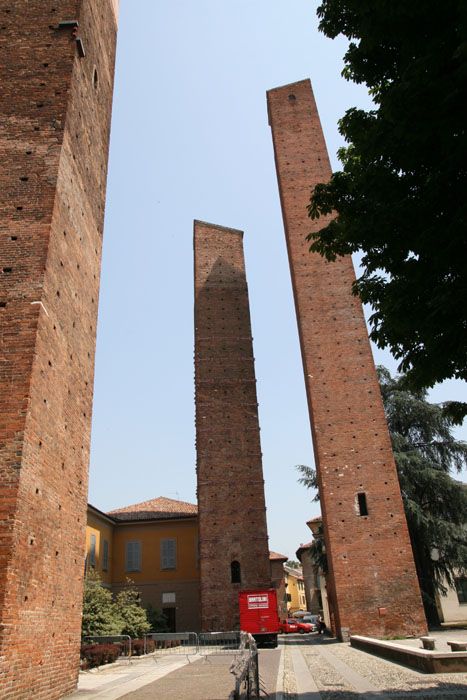
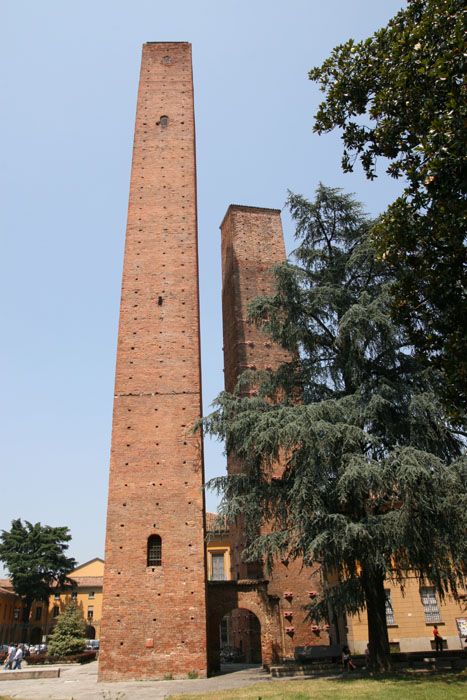
6. Medieval Towers
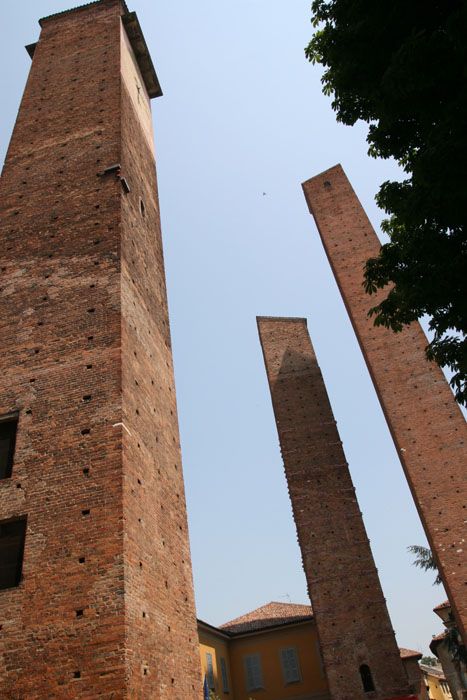
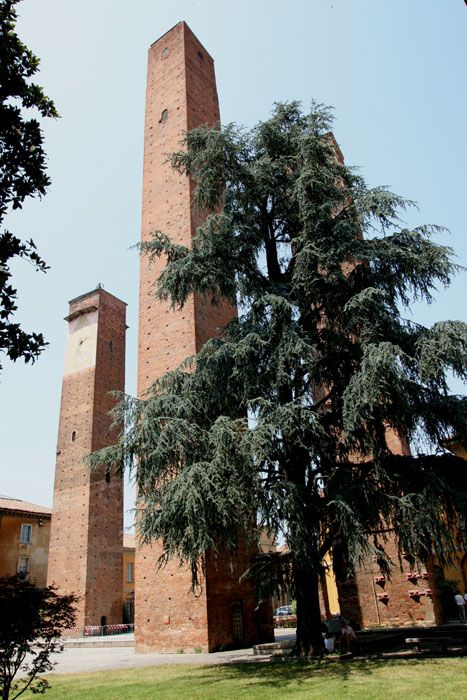
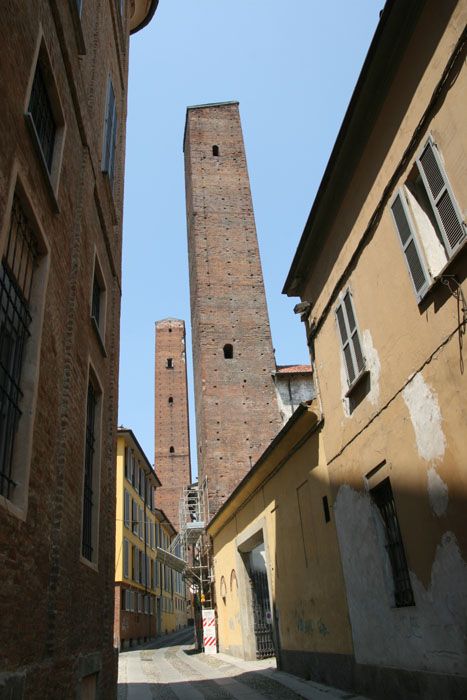
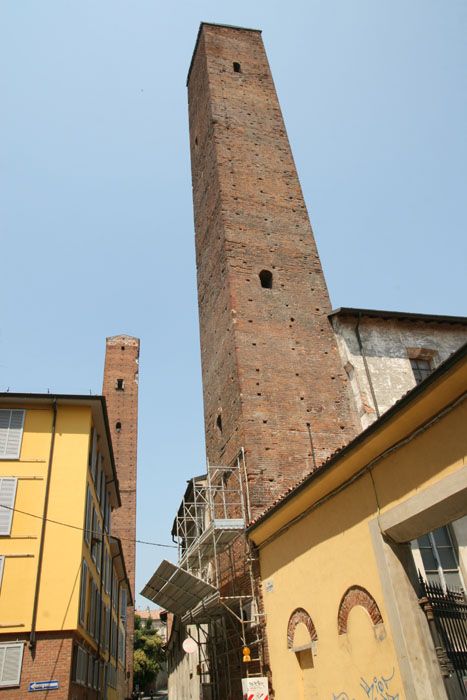
Five medieval towers remain in Pavia, a legacy of the 11th and 12th centuries, an era when Pavia was called the “city of a hundred towers”.
These strange towers seem to have been primarily marks of prestige, being uninhabited and without defensive loopholes. Three are in the university area with the tallest at 51 meters, Piazza Leonardo da Vinci, and two are in Via Luigi Porta.
-
- Tours médiévales
-
- Tours médiévales
-
- Tours médiévales
-
- Tours médiévales
-
- Tours médiévales
-
- Tours médiévales
7. Covered Bridge and Borgo Ticino
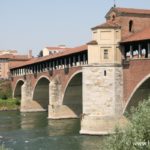
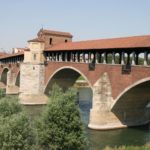
The covered bridge connects the city center to the picturesque district of Borgo Ticino, crossing the Ticino, a tributary of the Po.
A bridge already existed here in Roman times, modified in the Middle Ages when it was nicknamed the “Devil’s Bridge”, a legend linking it to its construction. The bridge collapsed and was rebuilt in 1344, then covered in the 16th century.
The current bridge, 200 meters long with 5 arches and a small chapel in the center, is entirely covered. It was rebuilt after the bombing of World War II according to 14th-century designs.
Borgo Ticino is a small village with its colorful houses, where one is greeted by the bronze sculpture of a laundress recalling that fishermen, boatmen and washerwomen once lived here.
It is today a small quiet district with a few restaurants, a promenade along the river. Its 12th-century church Santa Maria in Betlem bears witness to the passage of the Via Francigena.
-
- Pont couvert
-
- Ponte Coperto
8. Broletto and Piazza della Vittoria
The Piazza della Vittoria (or Piazza Grande) is one of the main squares of Pavia, and close to the Duomo. The Broletto was for centuries the most important palace of Pavia, built in the Middle Ages as the Palace of the bishop San Damiano in the 12th century, later becoming the seat of communal power, and today the seat of the University Institute. The palace houses the Madonna del Broletto who from a window of the building can see the inhabitants and protect them.
On the square one also finds the former church of Santa Maria Gualtieri, or the Red House known as Domus rubea.
9. San Teodoro
Behind a Lombard brick facade, the church of San Teodoro which dates back to the end of the 12th century preserves a magnificent cycle of frescoes on the life of San Teodoro, made in 1514, and the fresco by the painter Bernardino Lanzani “La vista di Pavia”, which is an aerial view of the city.
10. University of Pavia
Founded in 1361, the University of Pavia is one of the oldest in Europe. It owes its fame to several Nobel Prize winners who studied or taught there, such as Alessandro Volta, Carlo Rubbia, Giulio Natta or Camillo Golgi.
It is worth a visit, for its buildings, its courtyards, its cloisters, its botanical garden, etc.
It is the green lung of Pavia, north of the center along a tributary of the Ticino, between fields, meadows and woods, and a botanical trail.
In the surroundings
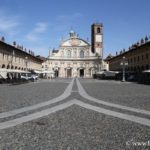
40 km west of Pavia, Vigevano has one of the most beautiful squares in Europe dating from the Renaissance and designed by Leonardo da Vinci, and the superb Sforza Castle.
Along the Po valley, one encounters some extraordinary castles, including that of Chignolo Po, 30 km to the east, nicknamed the “Lombard Versailles”, and that of Belgioioso, an aristocratic residence 15 km to the east.
The Zavattarello Castle, from the 10th century, is located nearly 50 km to the south, near the Hermitage of Saint Albert of Butrio, a Romanesque abbey in the foothills of the Apennines, south of the Po valley.
Map
 Show interactive map
 Information
- Wikipedia article: en.wikipedia.org
- Tourist portals: www.visitpavia.com, www.in-lombardia.it


Comments