


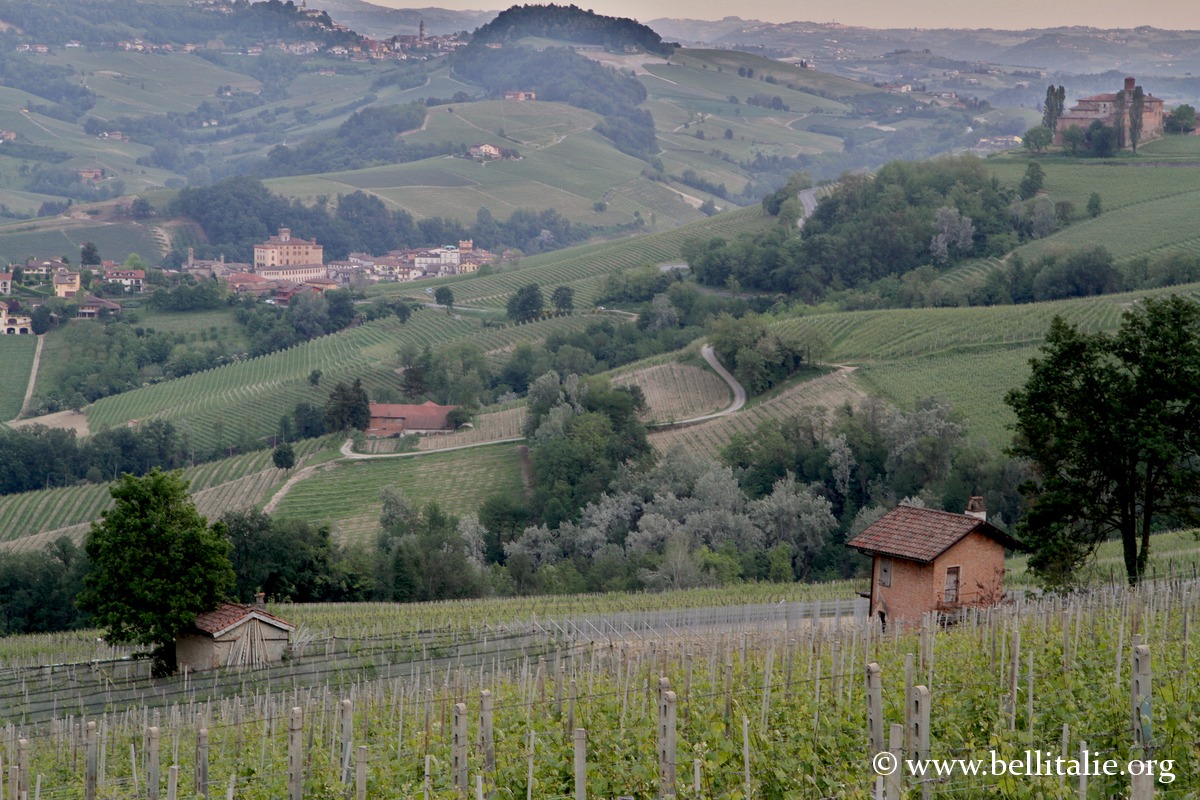
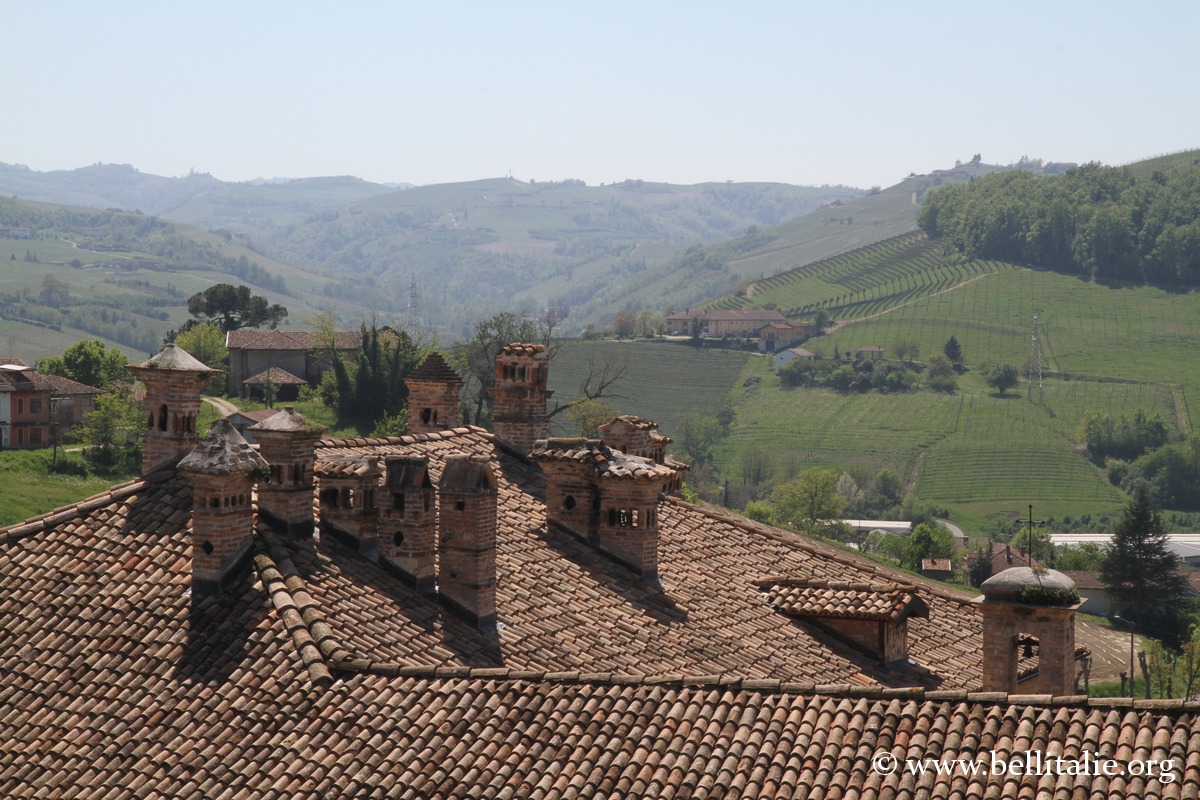
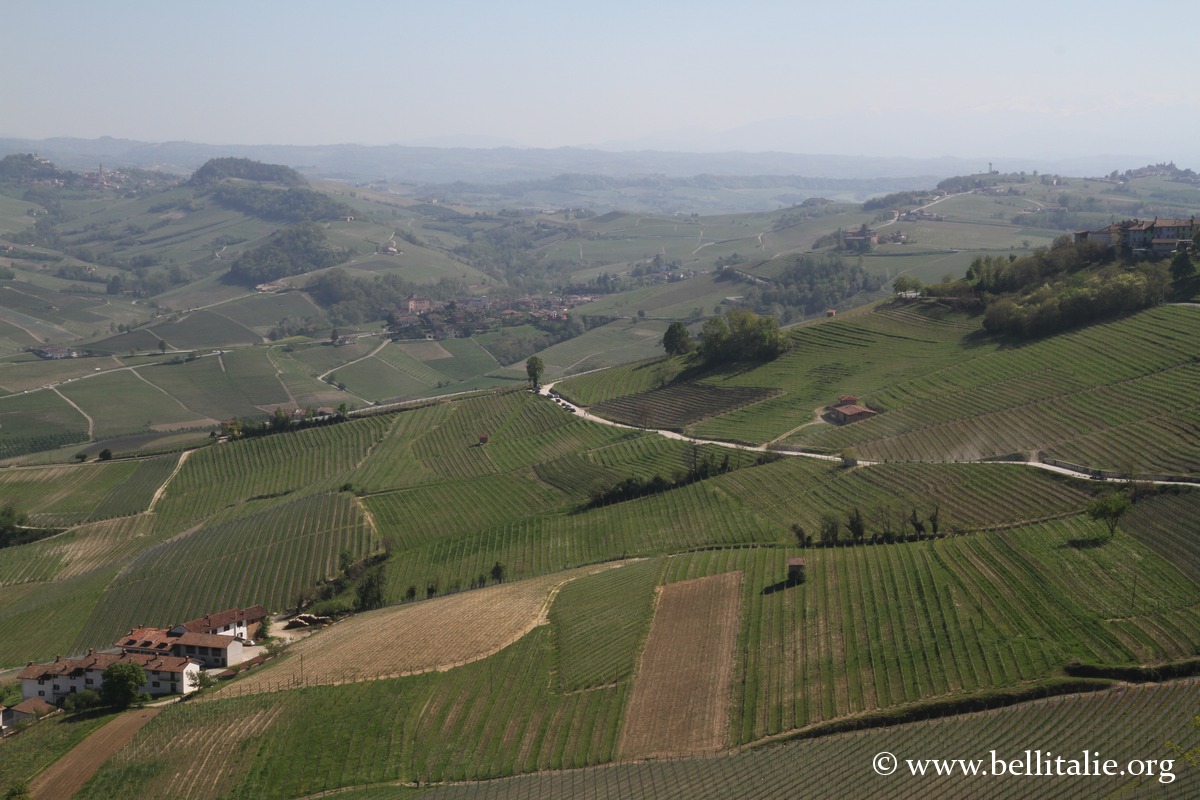
Listed as a UNESCO World Heritage Site along with Roero and Monferrato, the territory of the Langhe is a land of crafted wines, associated with its highly distinctive landscape. Winding roads snake between hills covered in vineyards whose summits are crowned with small villages and castles.
This region of the province of Cuneo is nevertheless close to Turin, about 60 km away. It is possible to discover it in a single day, but several days are recommended, to appreciate its gastronomy and charming places, such as the main town of Alba, which is also the capital of the white truffle, the small villages such as Barolo, Serralunga d’Alba, Barbaresco or Monforte d’Alba, or the magnificent Castle of Grinzane Cavour. Extended stays are even worthwhile to enjoy a variety of activities, to taste and eat well, to do nothing and relax. Moreover, there is no shortage of charming establishments and spas, nor of wine bars, trattorias and small museums dedicated to food and wine and to the territory.
The Langhe actually designate, in addition to the region near Alba – known as Bassa Langa at less than 600 metres of altitude – , the Alta Langa, on the borders of Liguria where the altitude rises, which combines more forests and hazelnut groves, and the Langa Astigiana south of Asti, with Roccaverano and its Robiola.
Alba
Capital of the Langhe, Alba was a powerful Roman colony, nowadays a small town that is a good base for discovering the region. It is appreciated in particular for its gastronomy, famous for its Truffle Fair, between October and November, dedicated to the local white truffle.
Its historic centre is a legacy of the Middle Ages, preserving towers from that era. It hosts many cafés, restaurants and shops.
Villages and places
Barbaresco
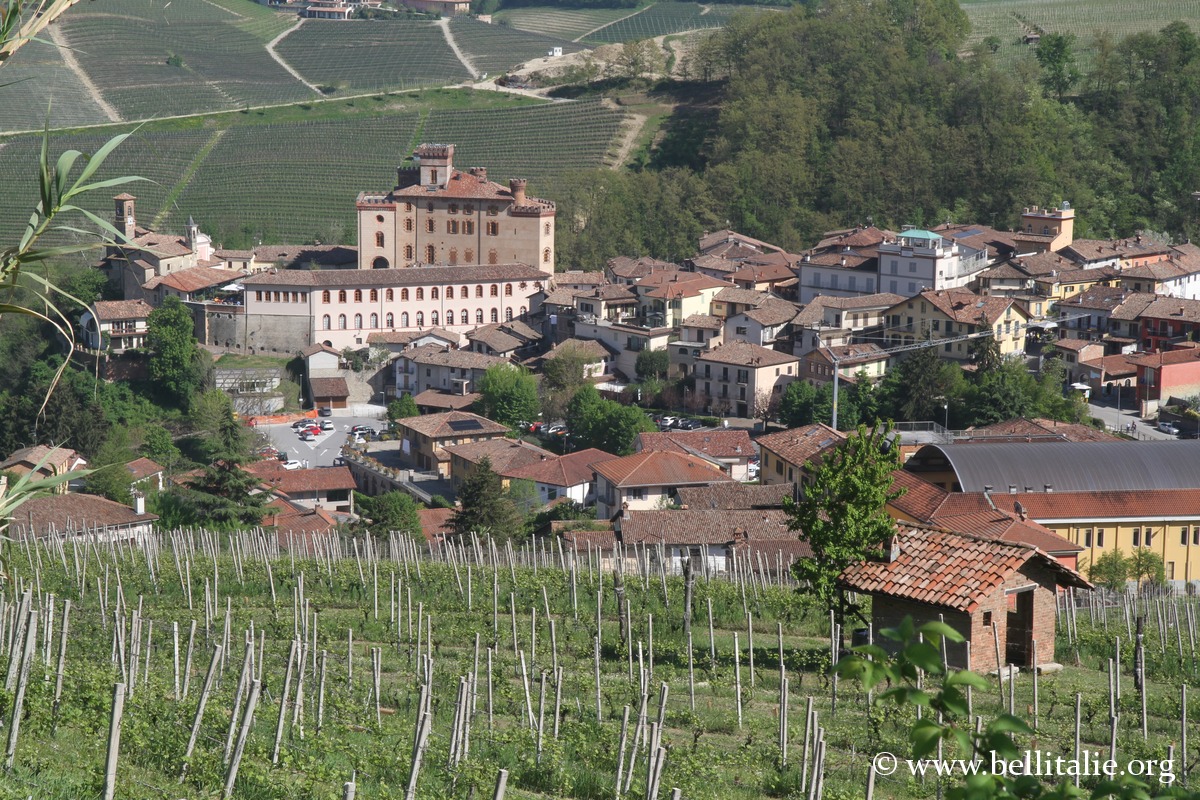
A few kilometres north of Alba, another prestigious wine of the Langhe bears the name of the medieval village of Barbaresco. It dominates the Tanaro with superb views from its old 36-metre-high tower, reaching as far as the peaks of the Alps. The regional Wine Shop of Barbaresco can be visited, as can historic cellars.
Neive
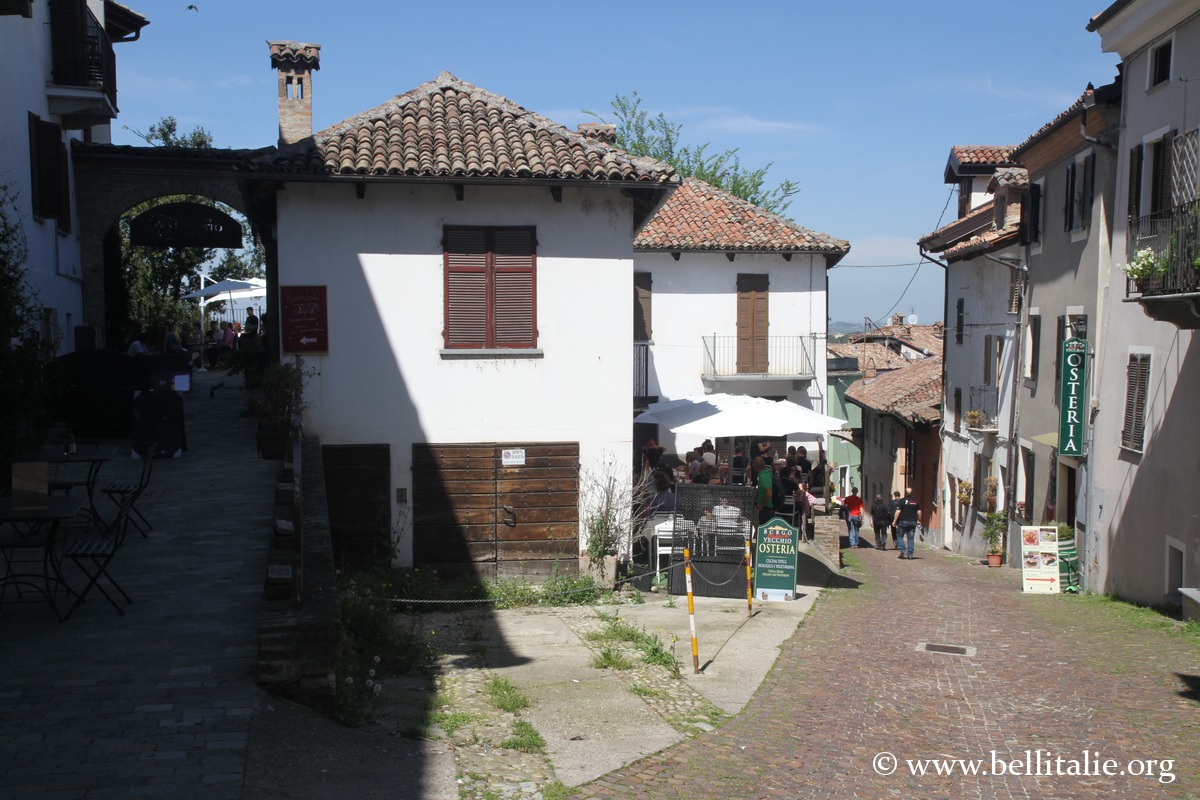
A few kilometres from Alba and close to Barbaresco, Neive is a charming little village with its medieval street that spirals up to reach the old town and its long central square, as well as views over the hills.
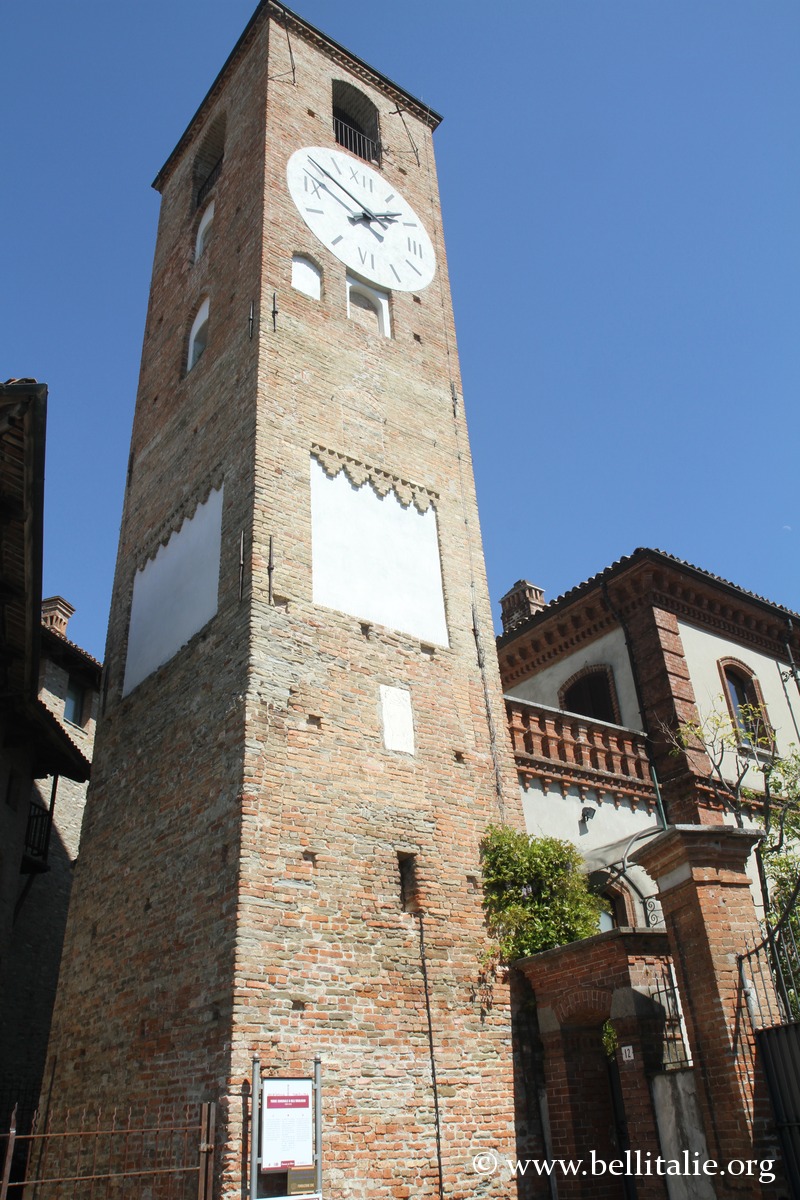
It preserves medieval buildings such as the Clock Tower and the Fortified House of the Counts Cotti di Ceres, several 18th-century palaces such as the Palazzo del Comune, the Palazzo dei Conti de Castelborgo and the Palazzo Borghese, beneath which are infernot, the typical cellars of the Langhe.
Grinzane Cavour
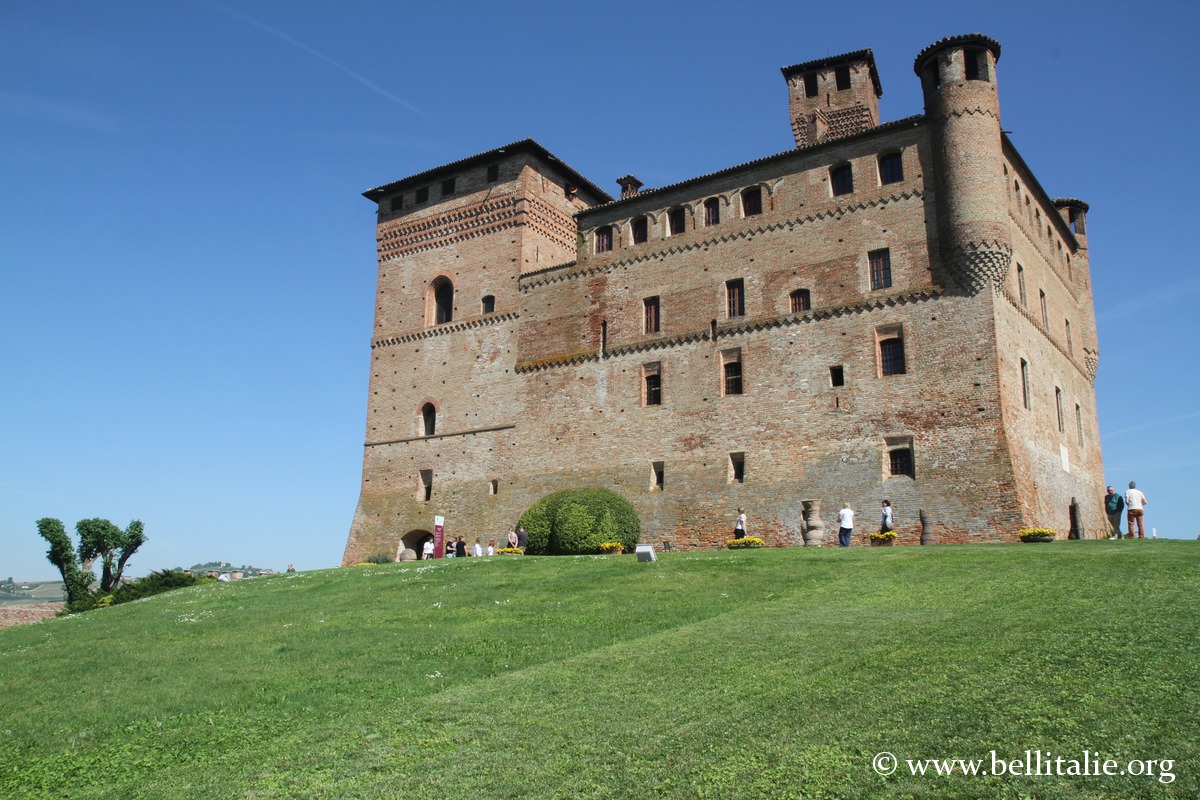
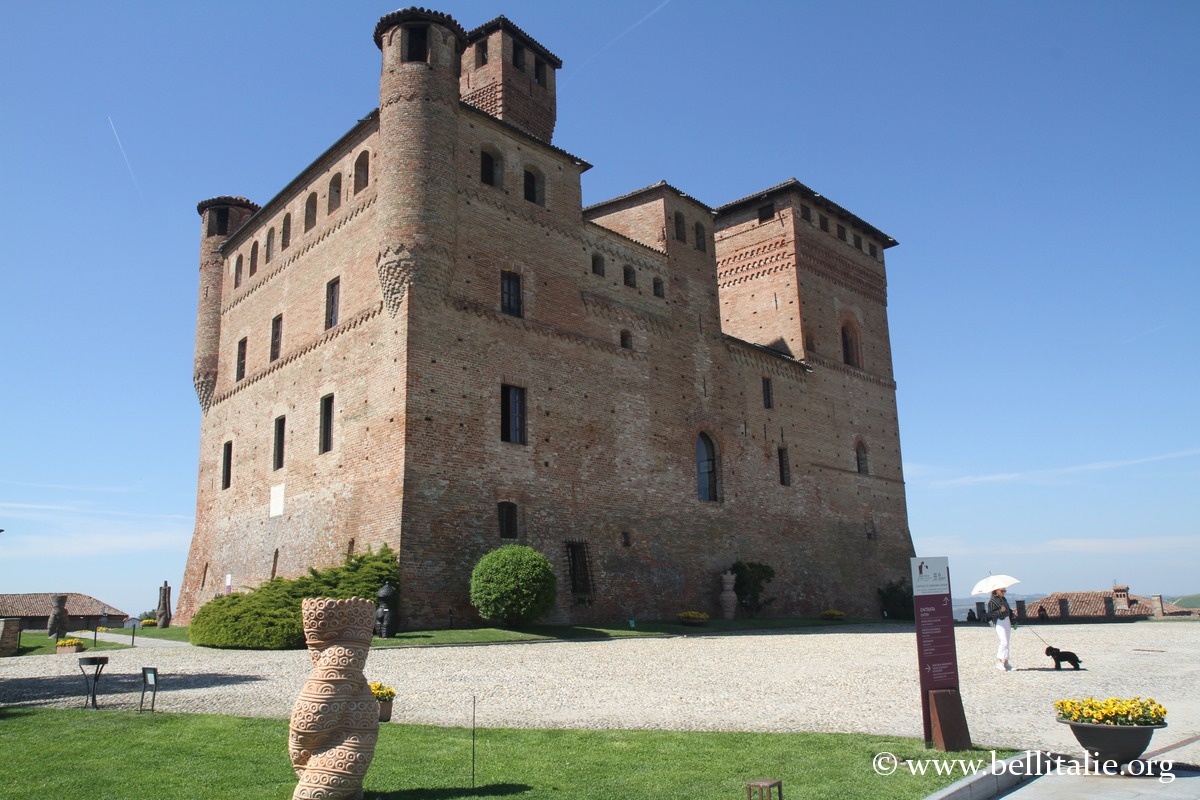
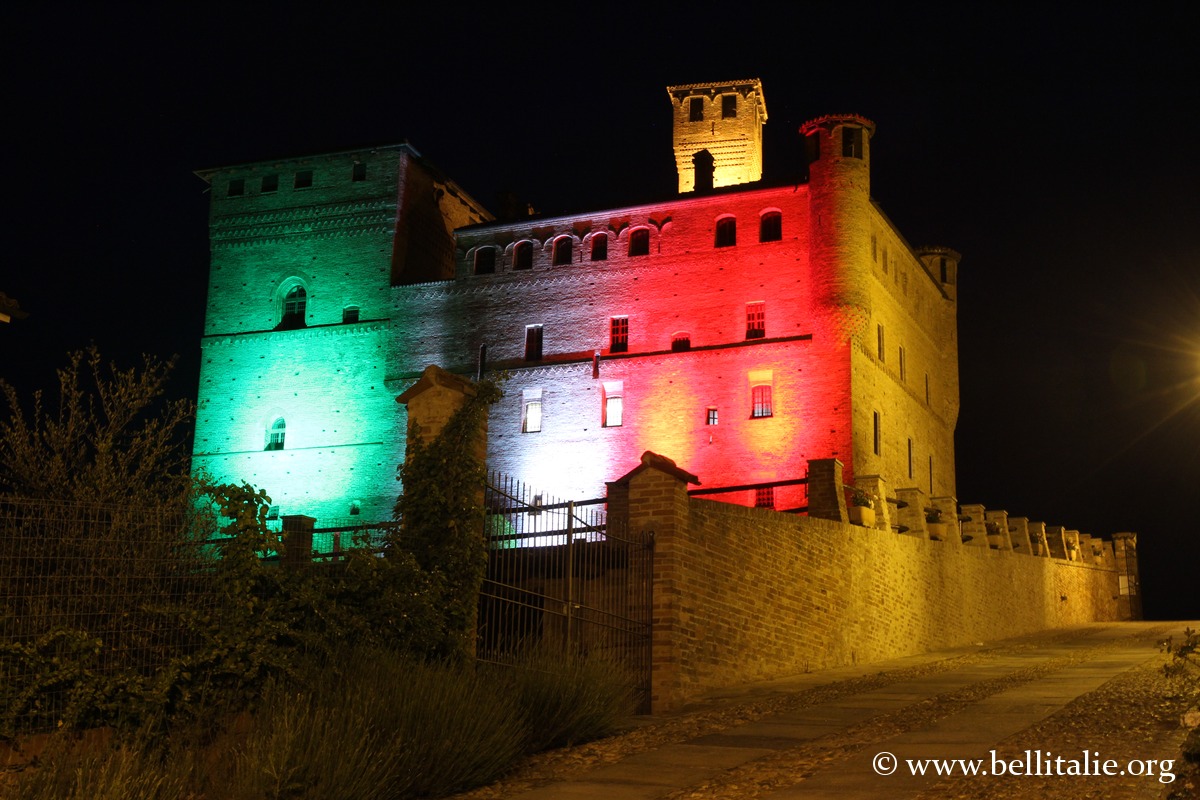
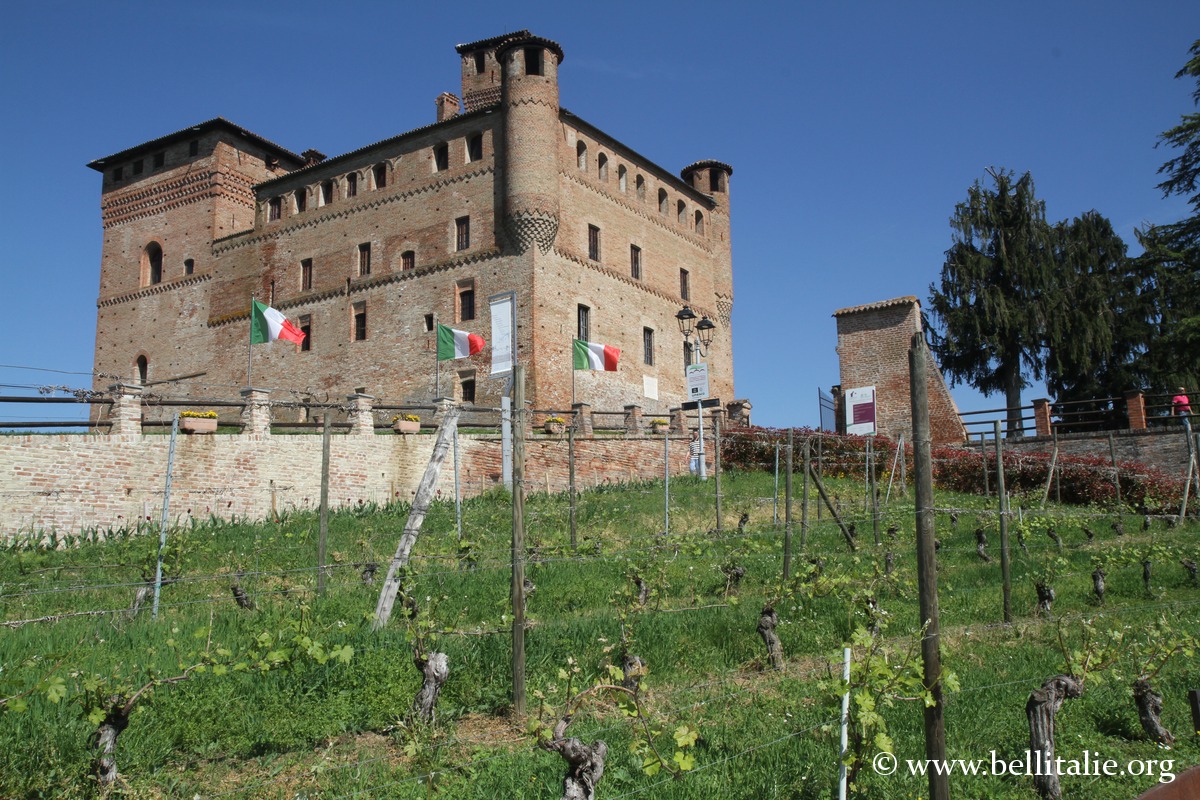
The Castle of Grinzane Cavour is the most emblematic of the Langhe, close to beautiful historic wine estates. It stands proudly on a hill and today houses the Wine Museum, the Enoteca Regionale Cavour, the Ethnographic Museum and Souvenirs of the Count of Cavour, as well as a restaurant.
Built in the 12th century, it was considerably restored in 1961. Every year the “World White Truffle of Alba Auction” is held there.
La Morra
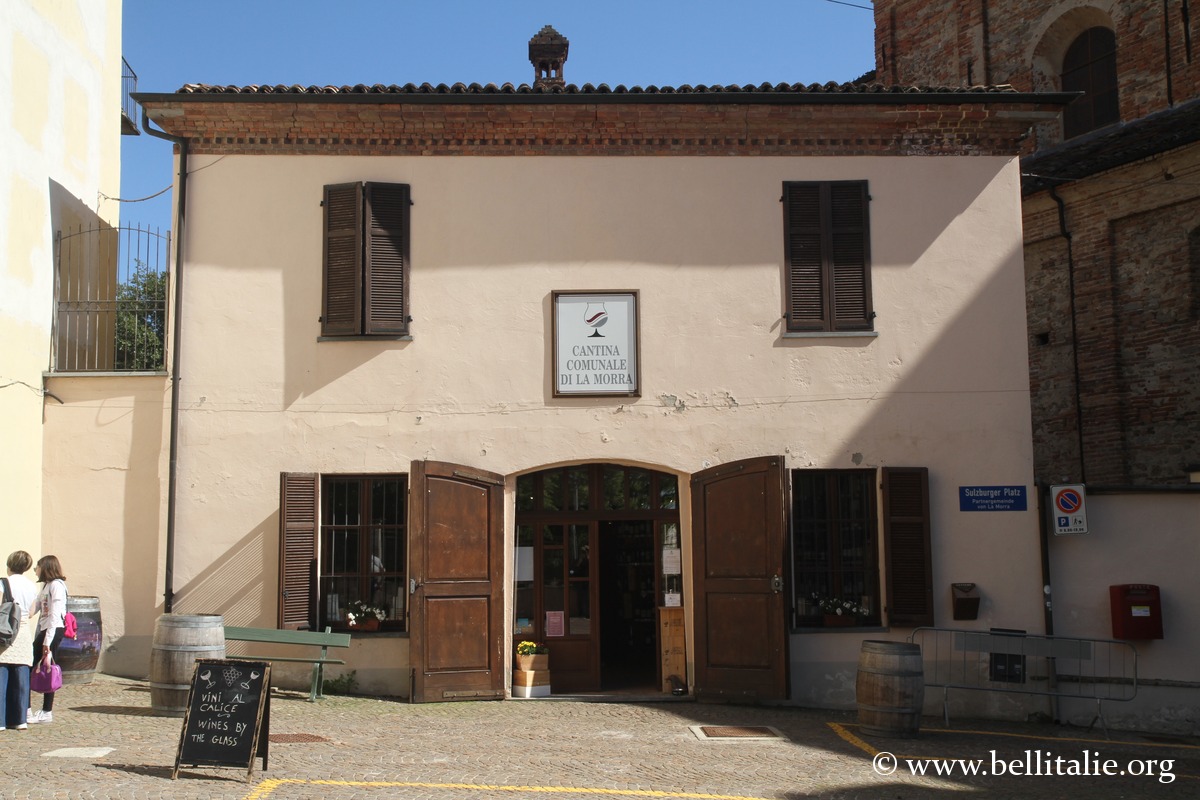
La Morra is a small village that has a superb viewpoint over the hills of the Langhe as far as the Ligurian Alps, at the tower of Piazza Castello. Along its charming alleys are restaurants. The 18th-century Palace of the Marquises of Barolo houses the Municipal Cellar where one can taste and buy the wines of local producers.
Two kilometres away, the Chapel of the Brunate is the most colourful church in Italy, painted in the 1990s, which is located on the Ceretto estate (La Cantina Ceretto is part of the Grand Wine Tour). There is also a photogenic hundred-year-old cedar of Lebanon.
On the road between La Morra and Grinzane Cavour, one can sit on the Large red Bench.
Barolo
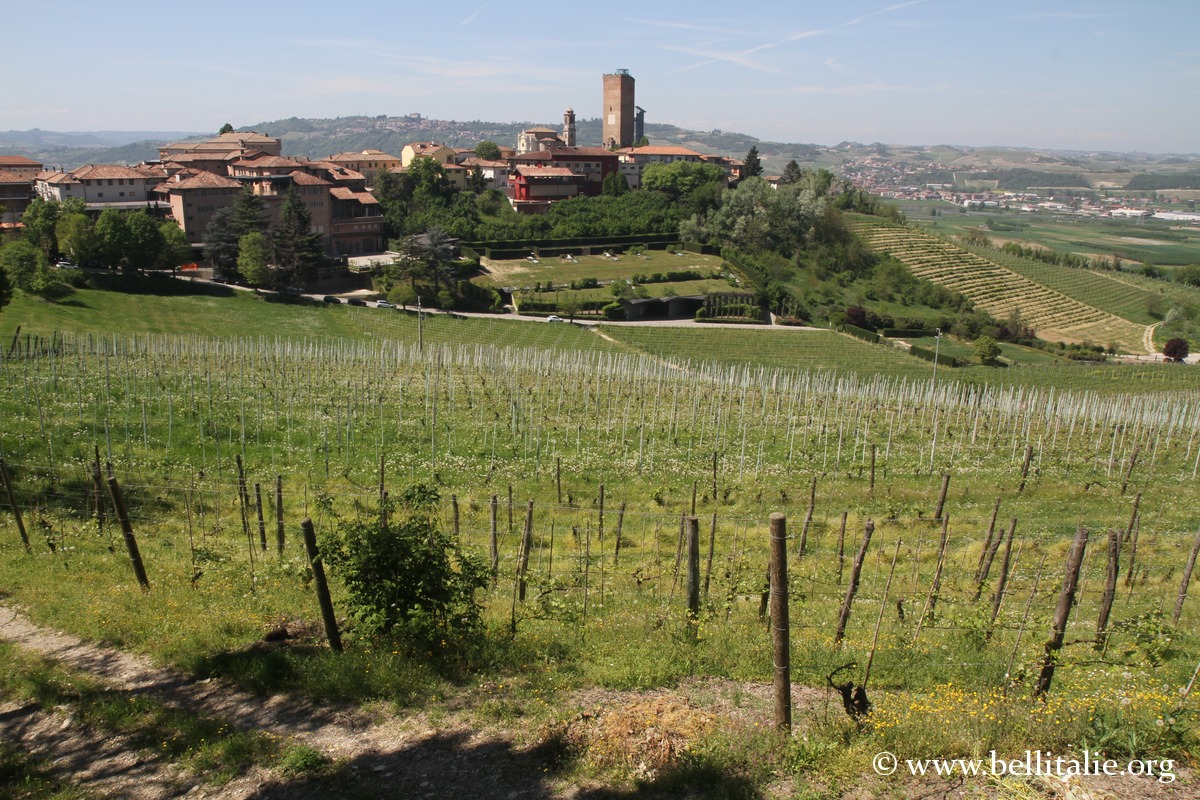
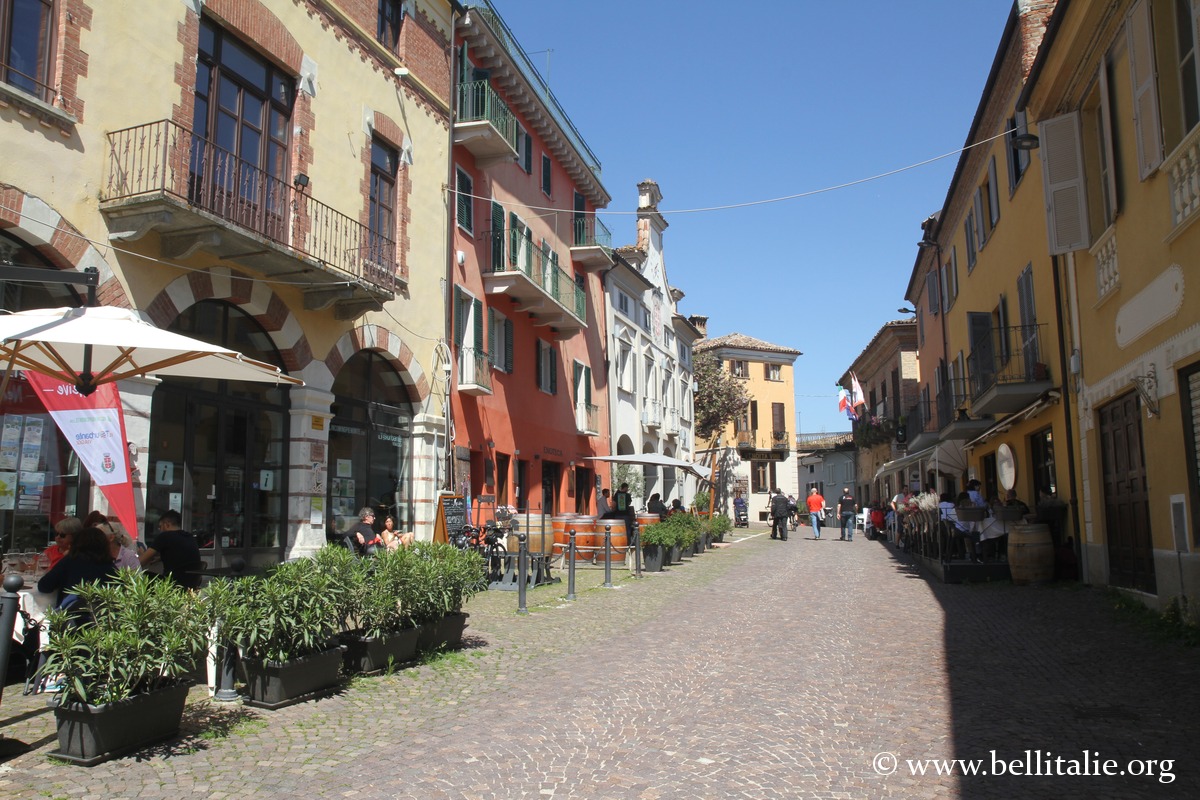
Barolo is a small village and the heart of the vineyards of the Langhe, famous for its prestigious wine produced from the Nebbiolo grape. Unlike the other villages, it is located in a basin and not on a height. There is no shortage of wine bars, bistros and trattorias, and one can discover its historic cellars (for example in this one …), or the castle of the marquises Faletti di Barolo, named after the bankers who bought these lands in the 13th century, which houses the WiMu wine museum, and opposite it the curious corkscrew museum (Cavatappi) installed in an old cellar.
In summer, the town comes alive by hosting the Collisioni Festival, which combines music and literature.
The surroundings are called “Langa del Barolo”, with the lands of the municipalities of Castiglione Falletto, Diano d’Alba, La Morra, Monforte d’Alba, Novello and Serralunga d’Alba.
Serralunga d’Alba
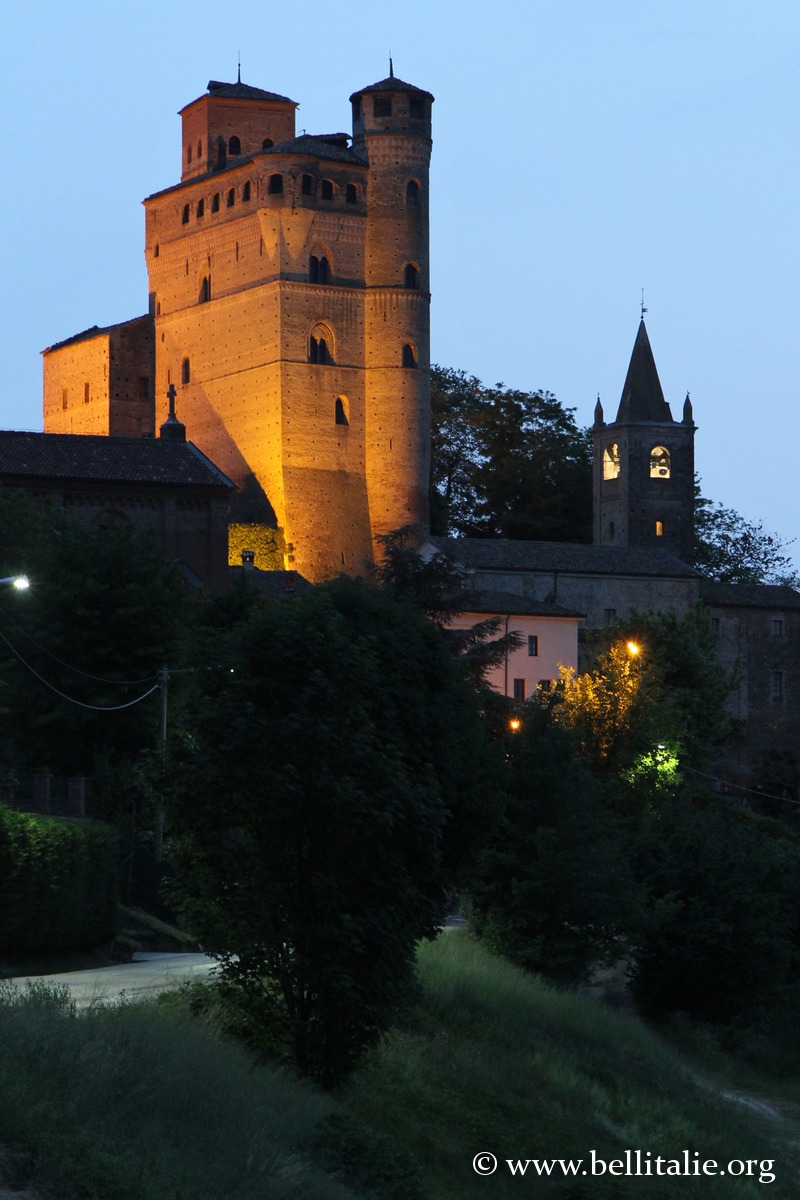
Perched on a hill, the medieval village of Serralunga d’Alba is dominated by a massive castle built in the 14th century by the Falletti family as a fortress. It is one of the most beautiful castles of the Langhe, whose towers have the particularity of being heterogeneous, both in shape and in height.
Towards the south-east of Alba, this is the land known as that of the four wines: Barbaresco, Barbera, Moscato and Dolcetto.
Monforte d’Alba
Not far south of Barolo, Monforte d’Alba is another charming village with its medieval alleys, where on the square of the Vecchia Chiesa is the Horszowski Auditorium. It hosts many concerts and events, such as in July with the Monfortinjazz festival. Its Palazzo Scarampi was erected on ruins in the 18th century. In the lower town is the Gothic church of the Madonna della Neve.
Santo Stefano Belbo
Santa Stefano Belbo is the birthplace of Cesare Pavese, a famous Italian writer, with nearby the 5 * Relais San Maurizio.
Cherasco
Cherasco is between the Langhe and the Roero, whose culinary speciality is snails, with many antique shops, including a famous antiques market every year, and beautiful monuments.
Charming stays and hotels
The Langhe have a reputation for offering charming and luxurious establishments, often providing excellent dining and a rich wine cellar :
- Château de Guarene
Superb Relais & Château 5* in a sublime 18th-century aristocratic residence dating back to the Middle Ages, with excellent restaurant and wine cellar
In Guarene, north of the Langhe, from about €600 per night for a couple - Relais San Maurizio
5* luxury estate in a superb setting, excellent restaurant and remarkable wine cellar
Near San Stefano Belbo east of Alba, from about €450 per night for 2 - La Ribezza Boutique Hotel
Pretty 5* in an elevated position with quality service
In Monforte d’Alba, approx. €350 + /night for 2 - Villaggio Narrante – Le Case dei Conti Mirafiore
Superb setting in the heart of the hills of the Langhe and their vineyard for this high-quality 4* establishment
Near Serralunga d’Alba, from about €250 /night for a couple - Villaggio Narrante Cascina
Superb 4 * in the middle of the vineyards of the Langhe, very good facilities, pool and spas
Near Sorano, approx. €500 + /night for 2
Wines and gastronomy
The originally marine soil, the climate and the know-how are the drivers of the quality of the wines of the Langhe. Its production covers several denominations, including DOC and DOCG wines such as Barolo above all, the king of the Langhe, but also Barbaresco, Barbera (Alba), Dolcetto (Alba and Dogliani), Furmentin (Cossano Belbo), Nebbiolo, Pelaverga. But Pinot Noir and Chardonnay are also used in the Alta Langa, the Alta Langa DOCG.
There are many producers’ cellars where you can taste local products and wines.
You can book a wine cellar visit or a gastronomic itinerary with GetyourGuide:
Gastronomy is often enhanced with the white truffle of Alba, accompanying for example local pasta, risottos, but also meat or eggs.
The hazelnut is also a local production in the spotlight, symbol of the village of Cortemilia with its hazelnut tart.
Several cheeses are also produced, with Roccaverano and Murazzano.
As in the rest of the province of Cuneo, the typical dishes are the Piedmontese mixed fry (frittura mista), the braised beef in Barolo (brasato al barolo, beef stew), the tagliolini pasta with butter, the carpaccio all’albese (veal carpaccio), the veal with tuna sauce, the stuffed agnolotti (ravioli), the bagna cauda (a type of anchovy sauce), or the vegetable flan, and for desserts the bonet (amaretto flan) or the hazelnut tart.
Itineraries and points of interest
- The Romantic Road (“Strada romantica” in Italian) crosses the Langhe and Roero, 130 kilometres long with eleven stages, marked by panoramic and natural sites, monuments and stories, or local products.
- In 2009, the giant benches were devised by Chris Bangle (“Big Bench” in English), nearly two metres high, placed in panoramic spots, where you sit as if you were a child. They are found in the countryside, near Clavesana, Farigliano, Piozzo, Carrù and Vezza d’Alba.
- An itinerary is dedicated to two writers in two villages, Cesare Pavese and Beppe Fenoglio, in Santo Stefano Belbo and San Benedetto Belbo respectively.
- One sees here and there in the middle of the vineyards the ciabòt, small constructions, which were originally made of wood, serving as shelters for tools and refuge during bad weather.
Events
The Langhe are especially beautiful in autumn, with the warm colours of the foliage.
- Alba hosts two important events each year, the White Truffle Fair (October) and the Palio degli Asini (Palio of the Donkeys) on the first Sunday of October with parades.
- Barolo hosts the Collisioni Festival, during four days of concerts by international artists.
- In Dogliani, the first weekend of May sees the TV Festival, and on 23 and 24 December the living nativity for almost 50 years.
- In the castle of Grinzane Cavour, the second Sunday of November sees the famous auction of the white truffle of Alba (Asta del Tartufo Bianco d’Alba).
- Cortemilia hosts in the second half of August the Hazelnut Festival with a traditional parade and its throwing of hazelnuts.
Map of the Langhe
 Show interactive map
 Sources and information
- Tourist portals: viaggi.corriere.it, www.guidatorino.com
- Others: fr.wikipedia.org
- What to see in Piedmont
- Turin
- Saint Michael’s Abbey, La Clusa
- Lake Maggiore
- Susa Valley and Chisone Valley
- Susa
- Lake Orta
- Cuneo and Surroundings
- The Langhe
- Montferrat
- Roero and surroundings
- Asti
- Alba
- Domodossola and Val d’Ossola
- Valsesia
- Sanctuary of Mount Oropa
- Saluzzo and surroundings
- Usseaux and Fenestrelle Fort
- Casale Monferrato
- Vercelli
- Ivrea, Canavese and Biellese
- Novara


Comments