


Before Napoleon Bonaparte, the road through the Cenischia Valley was the preferred passage between the Susa Valley and Turin towards France, via the Mont Cenis Pass. It is a beautiful Alpine valley, with several waterfalls in particular, the old staging-post town of Novalaise and the nearby Benedictine abbey.
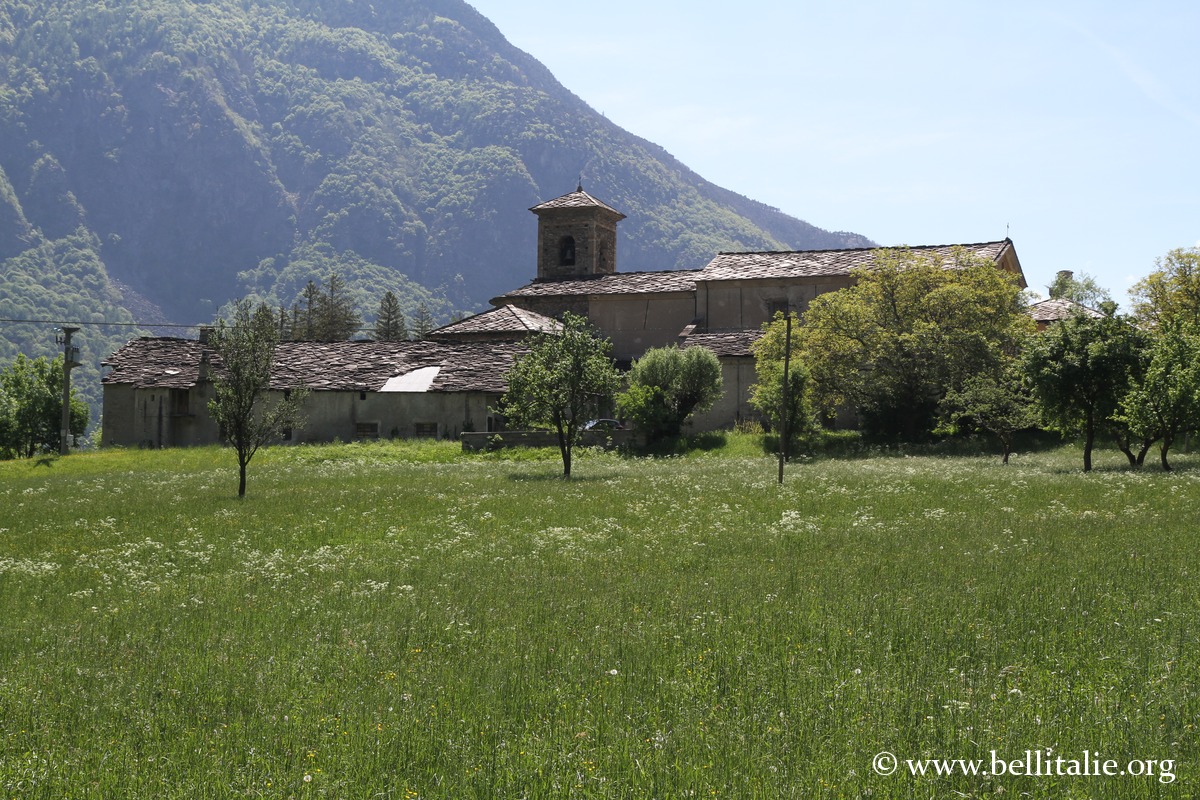
Benedictine Abbey of Novalaise
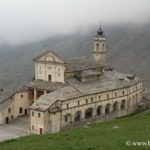
The Benedictine abbey, located 1.5 km from the village of Novalaise, was founded in 726 AD by the rector Abbo, who was later appointed Count of Provence by the Frankish king Charles Martel. It is said to have hosted Charlemagne several times. In 906 the monks fled just before the abbey was pillaged by the Saracens who had arrived via Montgenèvre. Reduced to a priory, the monastery was rebuilt in the 18th century.
Three orders existed there alongside that of Saint Benedict, including that of Columbanus from the north, and that of Basil from Cappadocia. The brotherhood of the order is ensured by its strict rules. They elect their abbot, who remains so for life, and the monk who chooses to enter does so for life as well. Besides the copying of books, the order also has a tradition of welcoming travellers.
The abbey preserves admirable 11th-century frescoes in the Sant’Eldrado Chapel (one of the four chapels located in the park) with scenes from the lives of Saint Eldrado and Saint Nicholas. A museum preserves remains from excavations and a book restoration workshop. The church dedicated to Saints Peter and Andrew was built in the 18th century and preserves some frescoes from the previous 11th-century building.

Novalaise
The village of Novalaise was for a long time a staging post on the road to France, as the terminus of the carriage road coming from Turin, before the mule track leading to the Mont Cenis Pass. Pilgrims, merchants and soldiers passed through there, and many hotels could accommodate them, such as the one currently named Casa degli Affreschi with coats of arms painted on its façade (of Savoy and other states). Such murals are characteristic of Novalaise, found in particular near the Santo Stefano church with the 18th-century painted squares representing the seven virtues, the seven vices, and at the bottom medieval tortures evoking the torments of hell.
Also remarkable are the Écu de France hotel with its woodwork, the paintings of the Plahe de Marón (Chestnut Square) where the porters called “marrons” offered passage to France by mule, carriage and sled.
Let us mention the 13th-century Saint-Étienne church with lovely works from several periods (15th-century polyptych, paintings from the Caravaggio school, precious reliquary). The Chapel of the Blessed Sacrament houses the museum of Alpine religious art.
Several charming waterfalls are accessible nearby: including Rio Claretto or Marderello la Coda di Cavallo near the Benedictine abbey.


Information
- Official website: www.abbazianovalesa.org
- Wikipedia articles: fr.wikipedia.org/wiki/Abbaye_de_la_Novalaise, fr.wikipedia.org/wiki/Abbaye_de_la_Novalaise
Map
If you see this after your page is loaded completely, leafletJS files are missing.
- What to see in Piedmont
- Turin
- Saint Michael’s Abbey, La Clusa
- Lake Maggiore
- Susa Valley and Chisone Valley
- Susa
- Lake Orta
- Cuneo and Surroundings
- The Langhe
- Montferrat
- Roero and surroundings
- Asti
- Alba
- Domodossola and Val d’Ossola
- Valsesia
- Sanctuary of Mount Oropa
- Saluzzo and surroundings
- Usseaux and Fenestrelle Fort
- Casale Monferrato
- Vercelli
- Ivrea, Canavese and Biellese
- Novara




Comments