


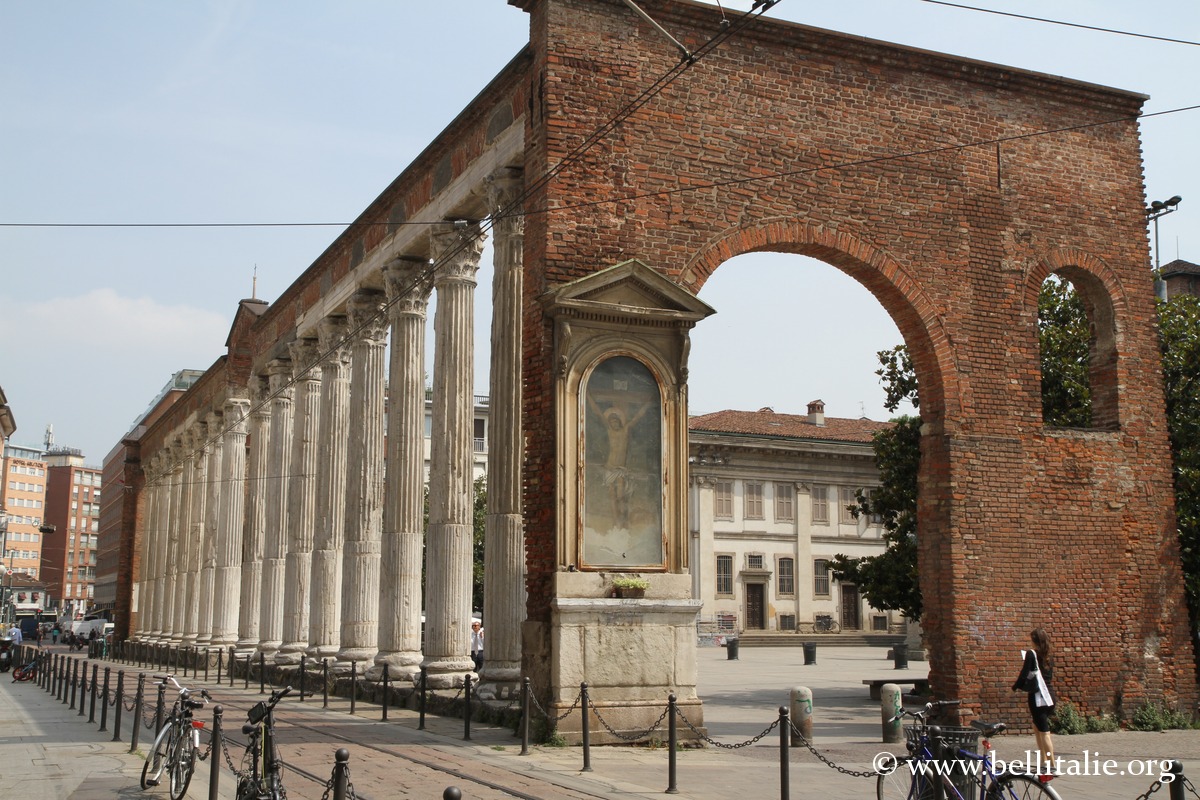
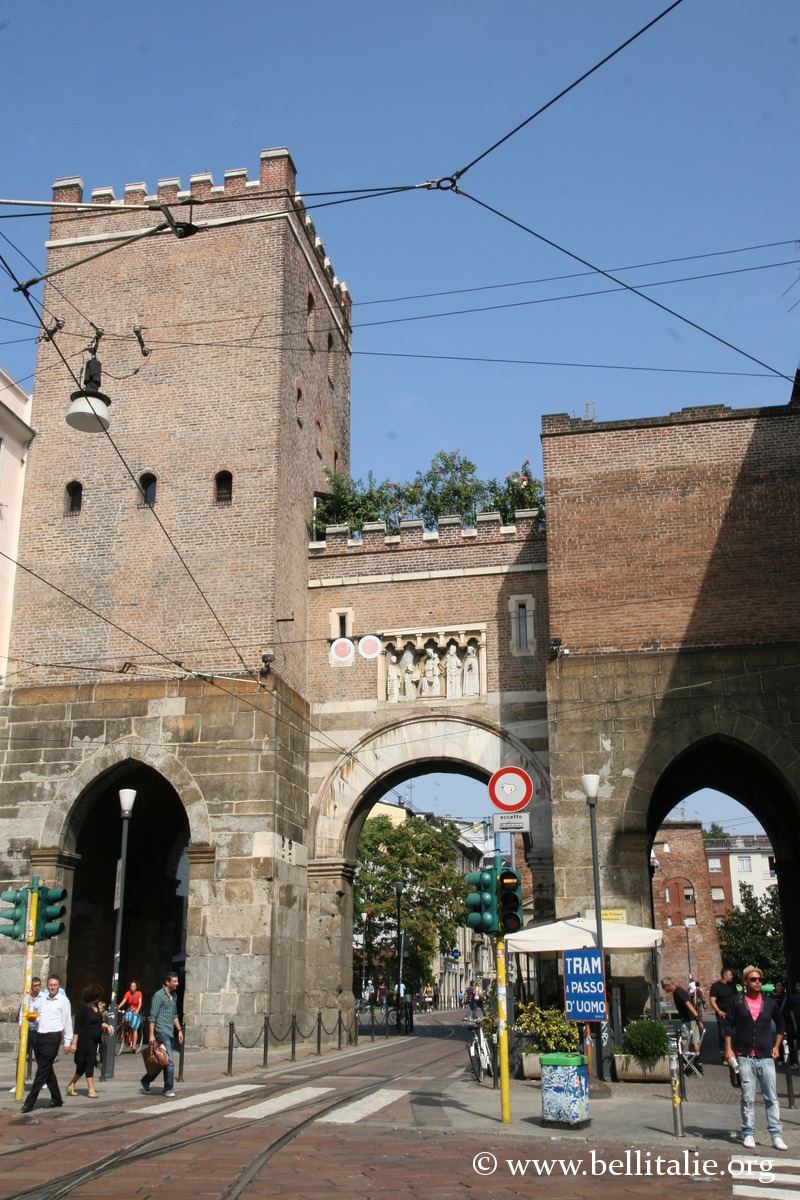
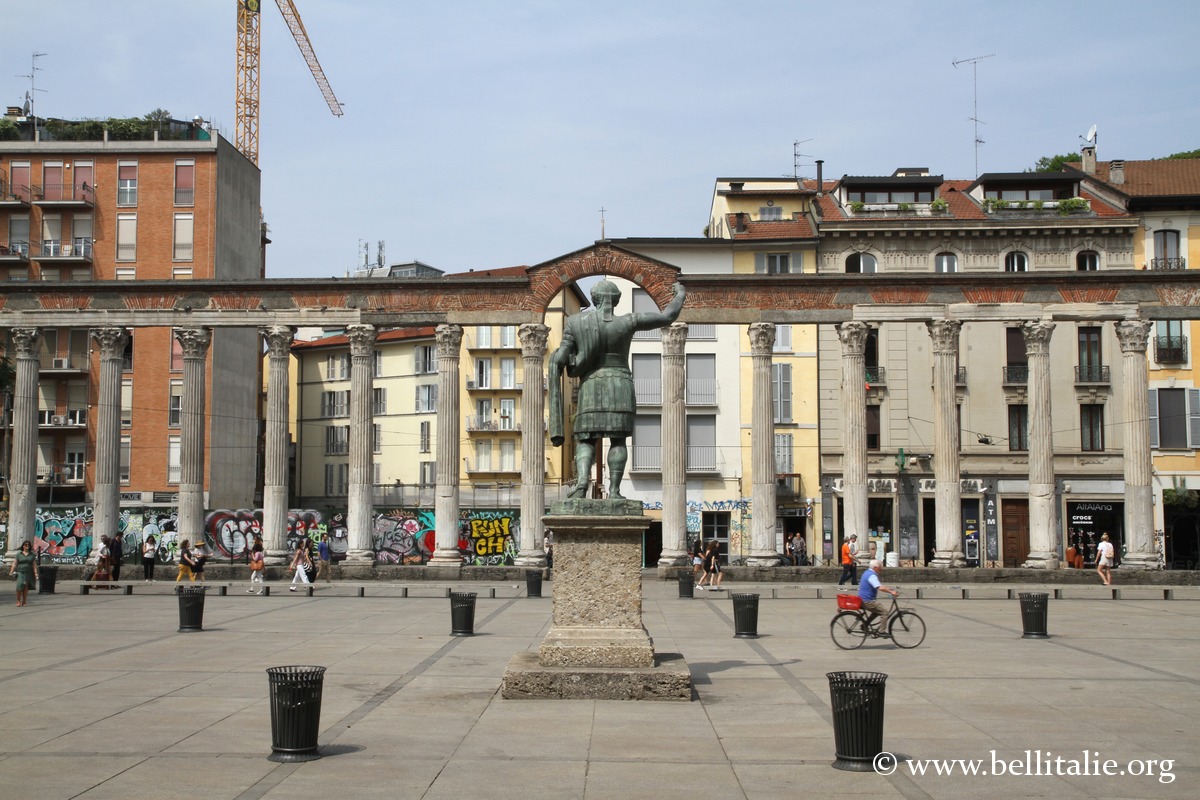
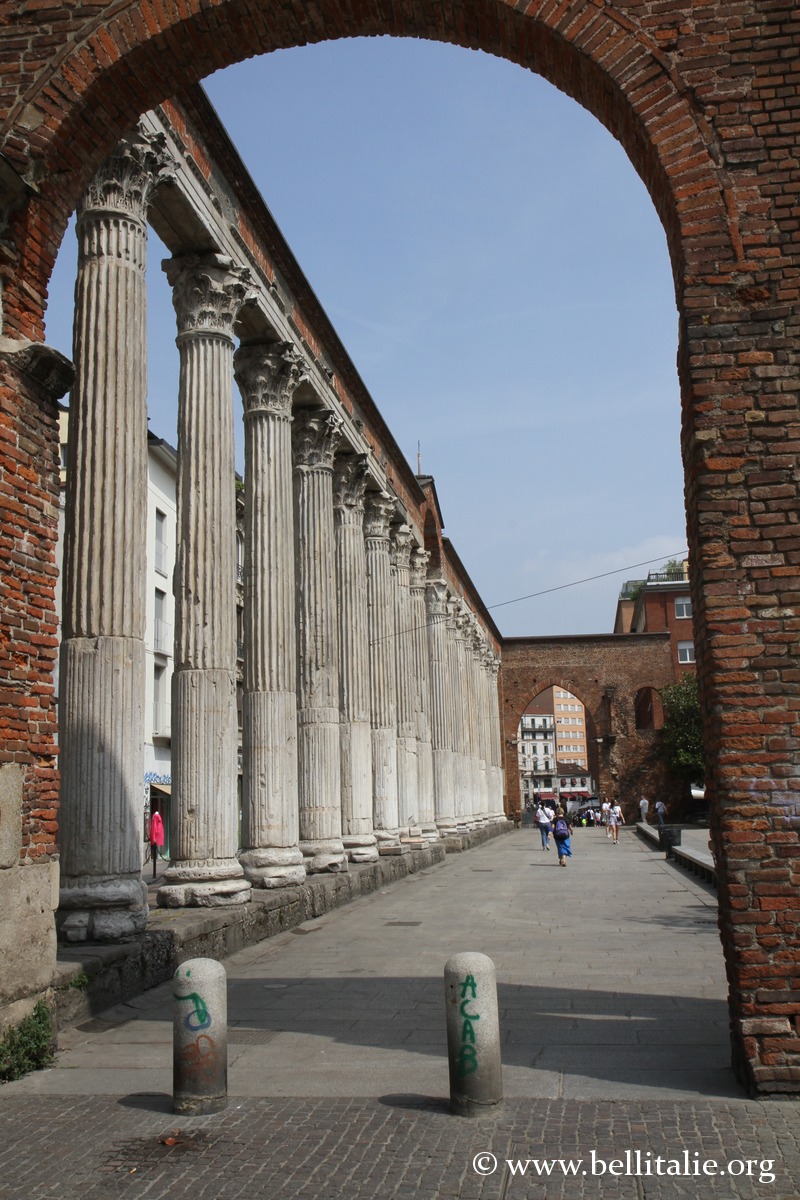
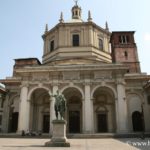
Near the ancient original medieval gate of Porta Ticinese from the 12th century, stand ancient columns facing the forecourt of the Basilica of San Lorenzo, Milan. In the centre stands a statue of Emperor Constantine, commemorating his Edict of Milan which granted freedom of worship to Christians in 313. It is in fact a 20th-century copy of a 4th-century statue kept at St John Lateran in Rome.
The Piazza Vetra behind the basilica was a place of execution for those condemned as witches. At this spot the statue of Saint Lazarus was erected.
The basilica
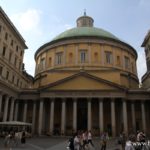
The Basilica of San Lorenzo, Milan (Basilica San Lorenzo Maggiore alle Colonne), dedicated to Saint Lawrence of Rome, was built between the year 390 and 410 AD, in late Roman times, probably on the site of a Roman amphitheatre
It was the influential bishop Ambrose of Milan, who became the city’s patron saint, who was behind its founding, as with three other basilicas in the city: San Nazaro, San Simpliciano and Sant’Ambrogio, the most imposing of the four.
It was originally designated as a palatine basilica, being close to the Roman imperial palace of Mediolanum (Milan).
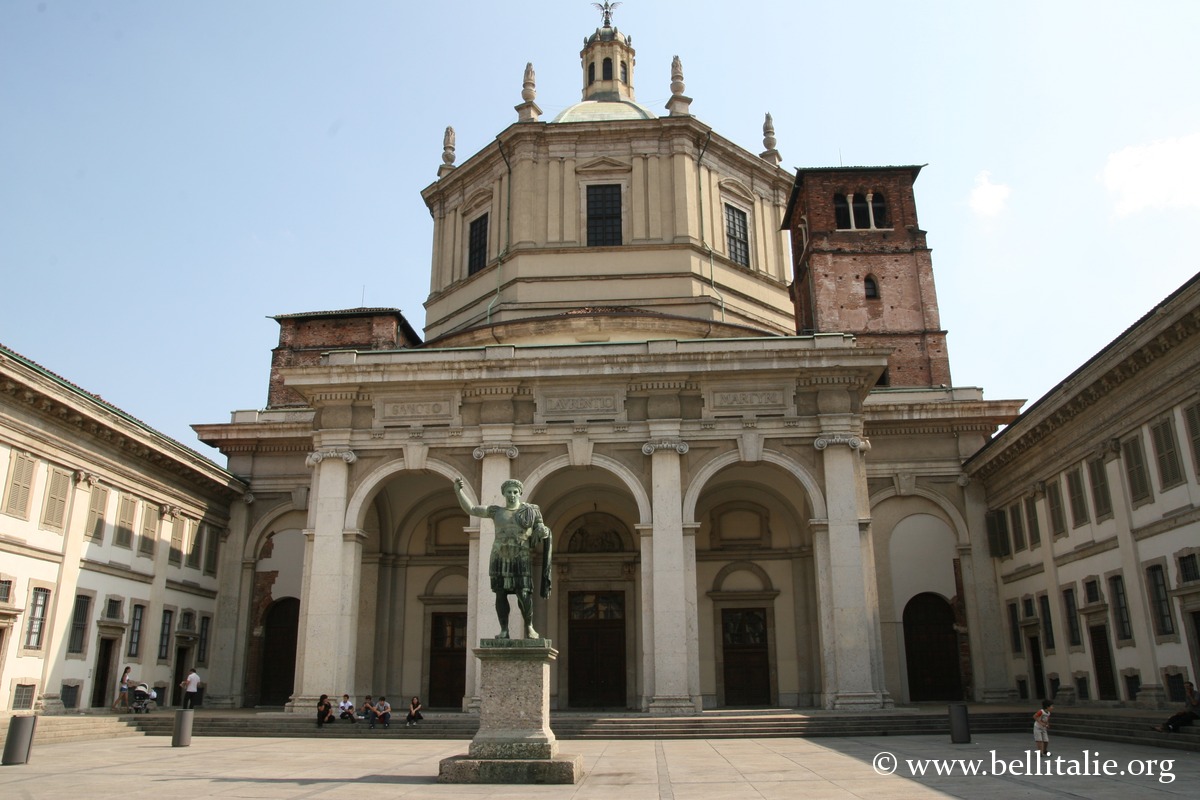
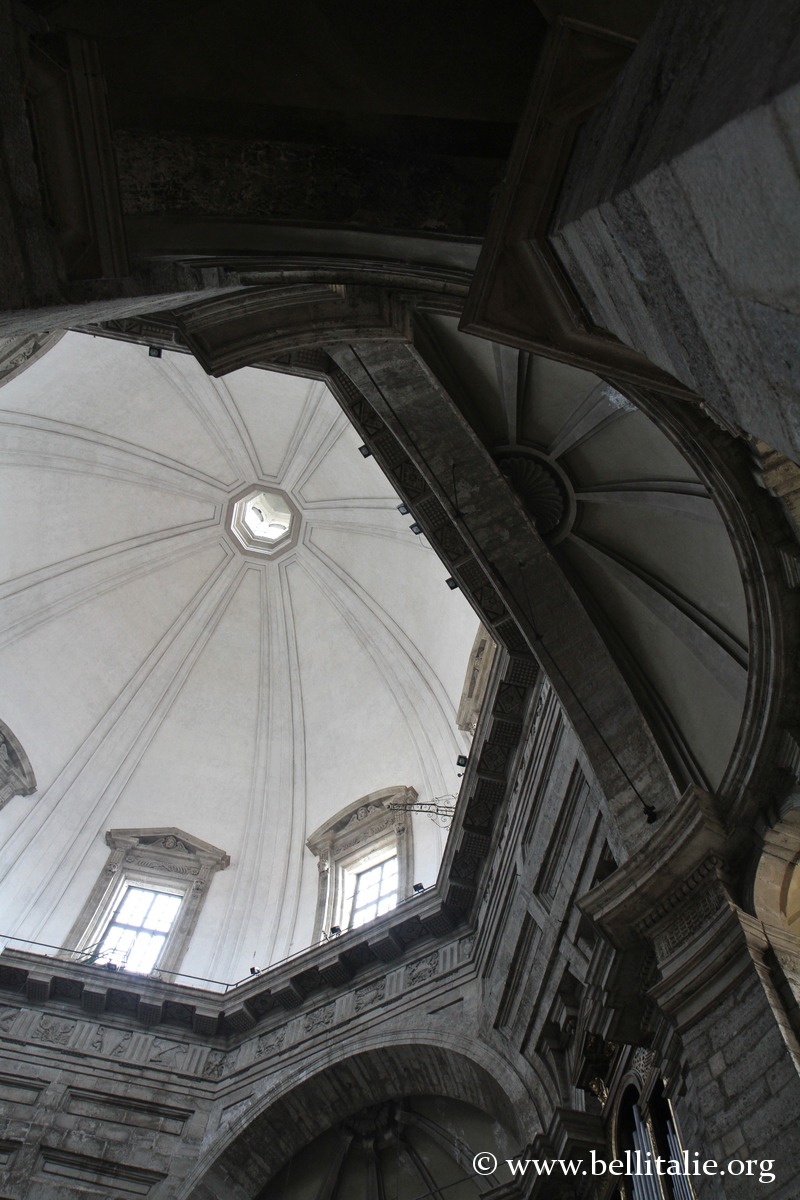
The building was rebuilt in the 12th century in Romanesque forms, after the collapse of the great dome in 1103, and in the 16th century, notably by Martino Bassi. The current façade dates from 1894.
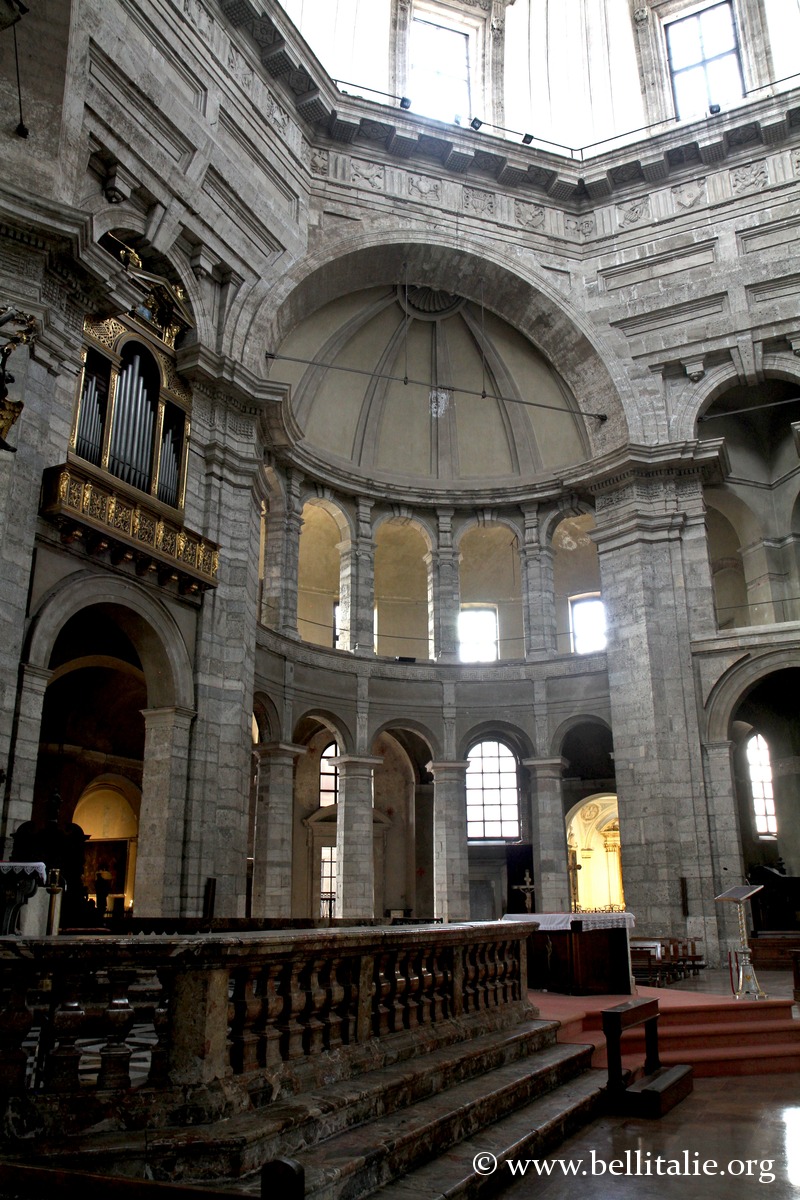
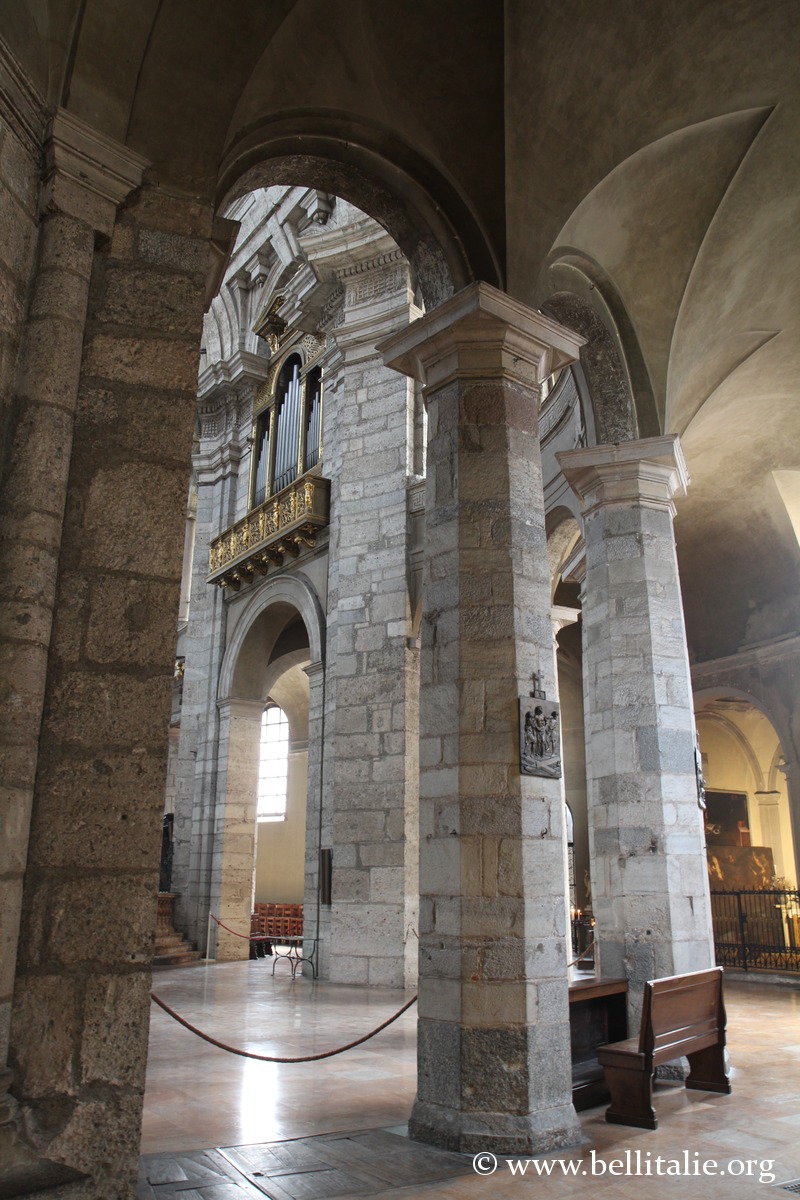
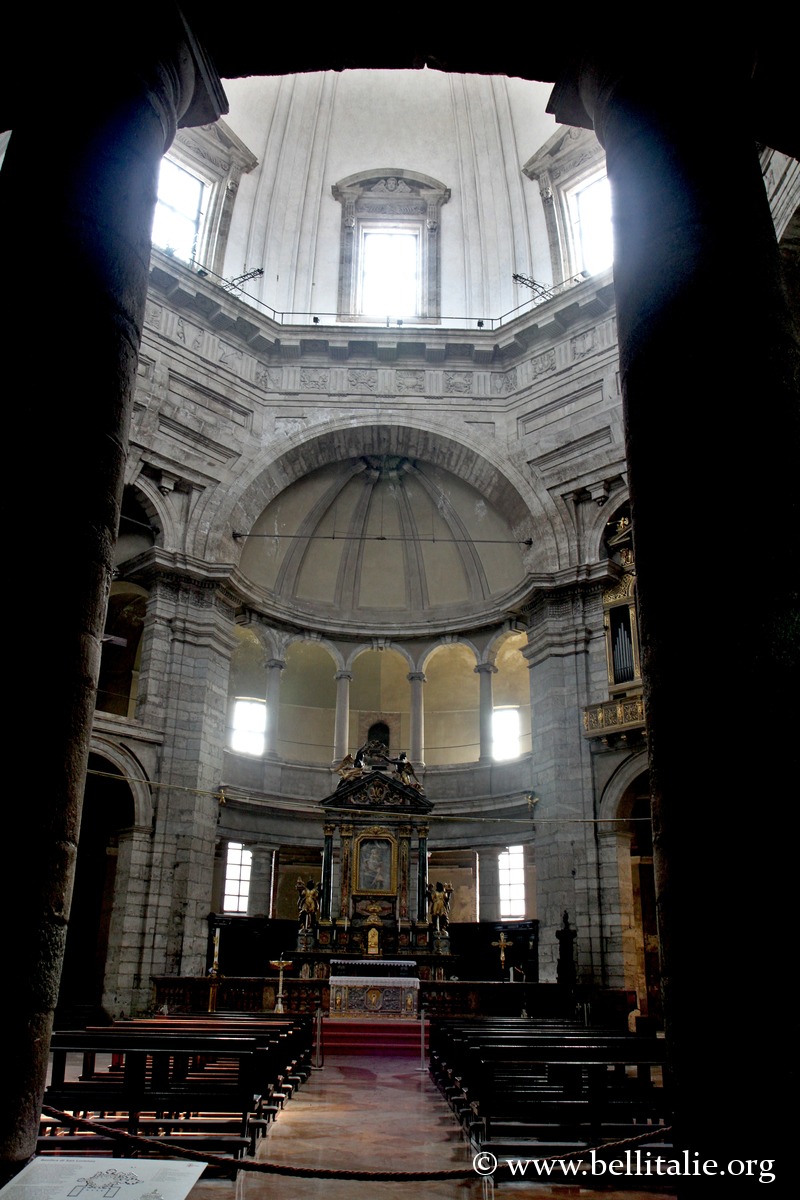
The building has nevertheless kept its original layout from Roman times, with a square central body covered by an immense dome, and a succession of superimposed circles. During the Renaissance, great architects came to study the structure supporting the monumental dome, such as Bramante and Leonardo.
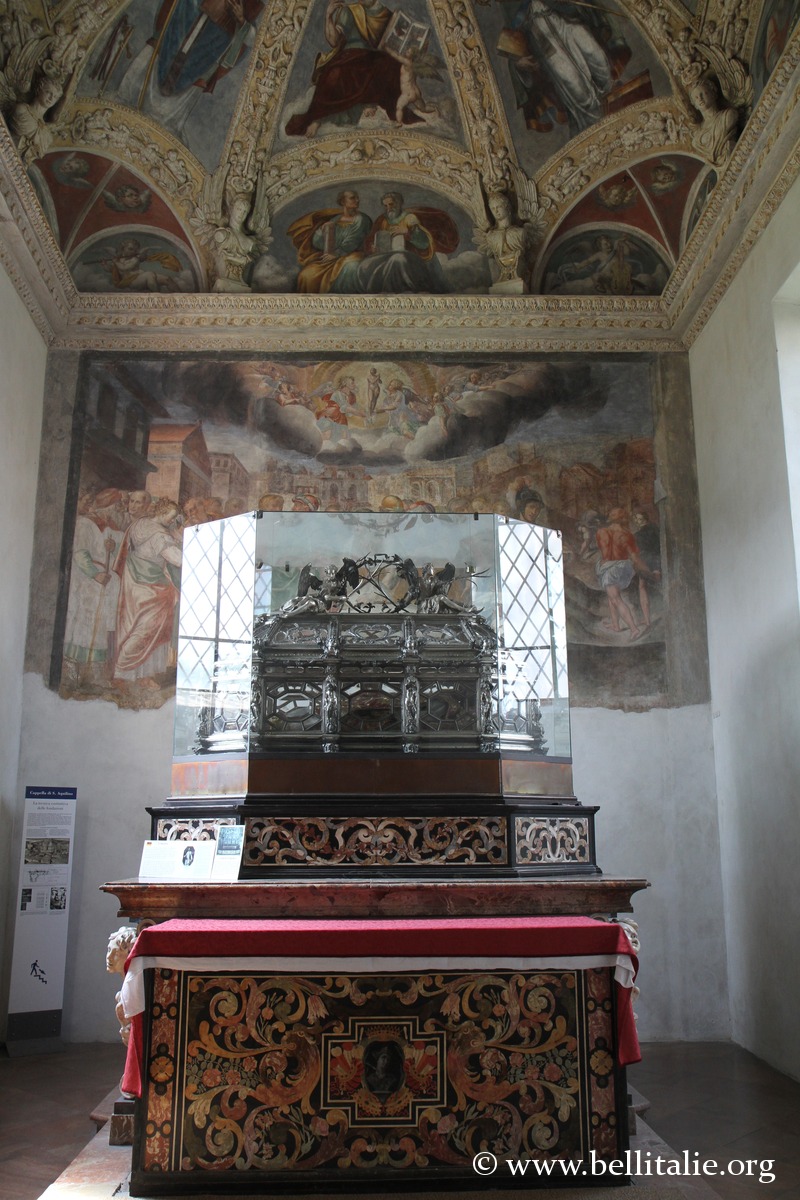
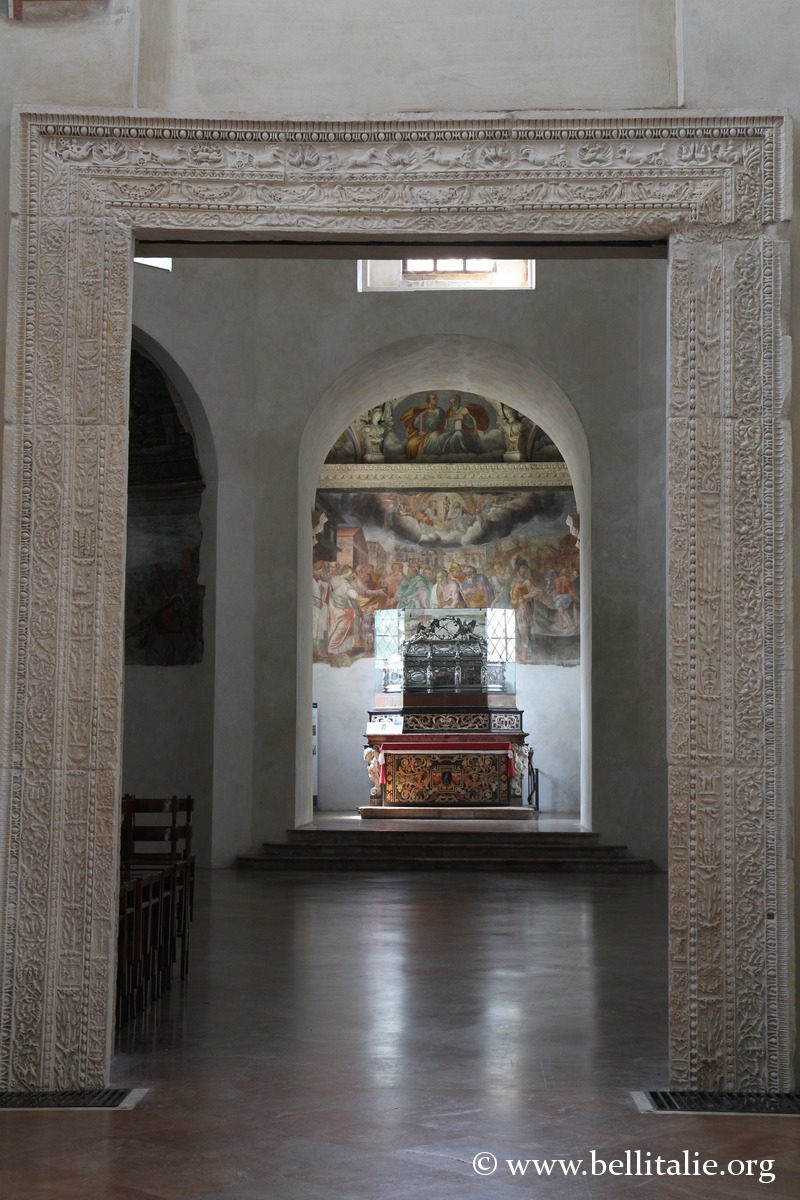
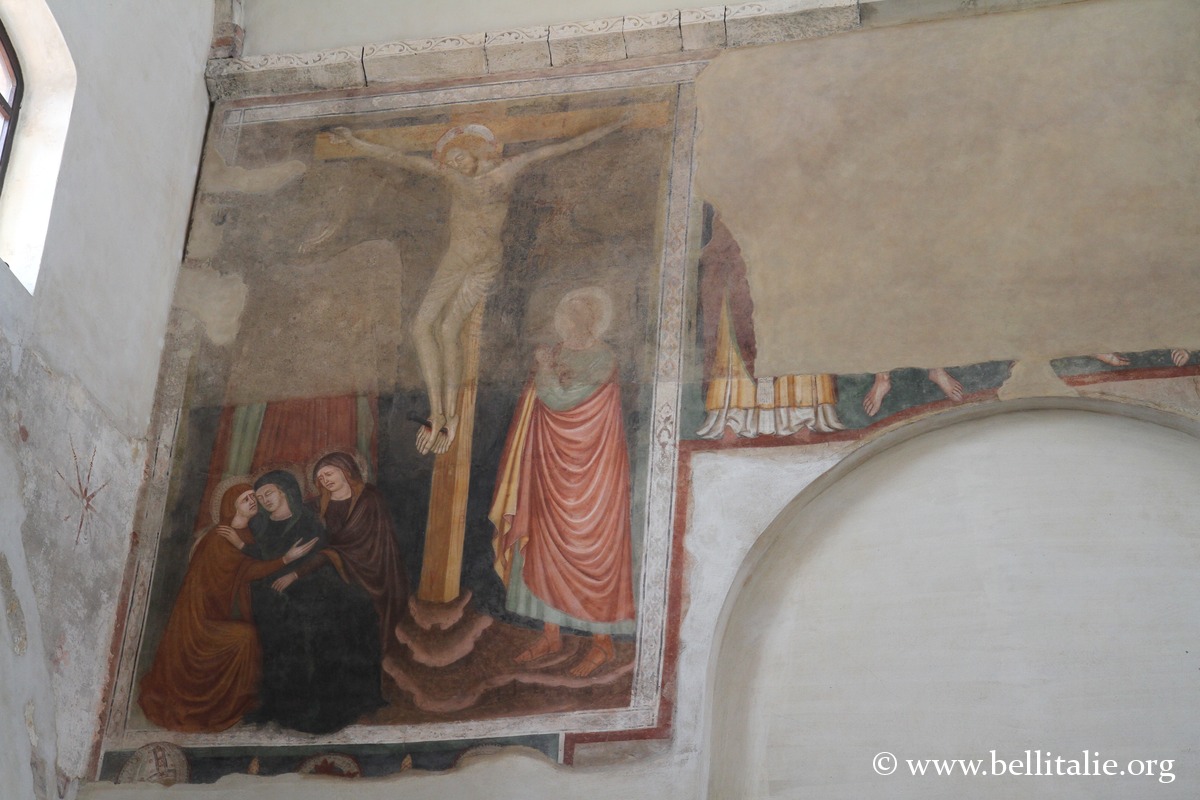
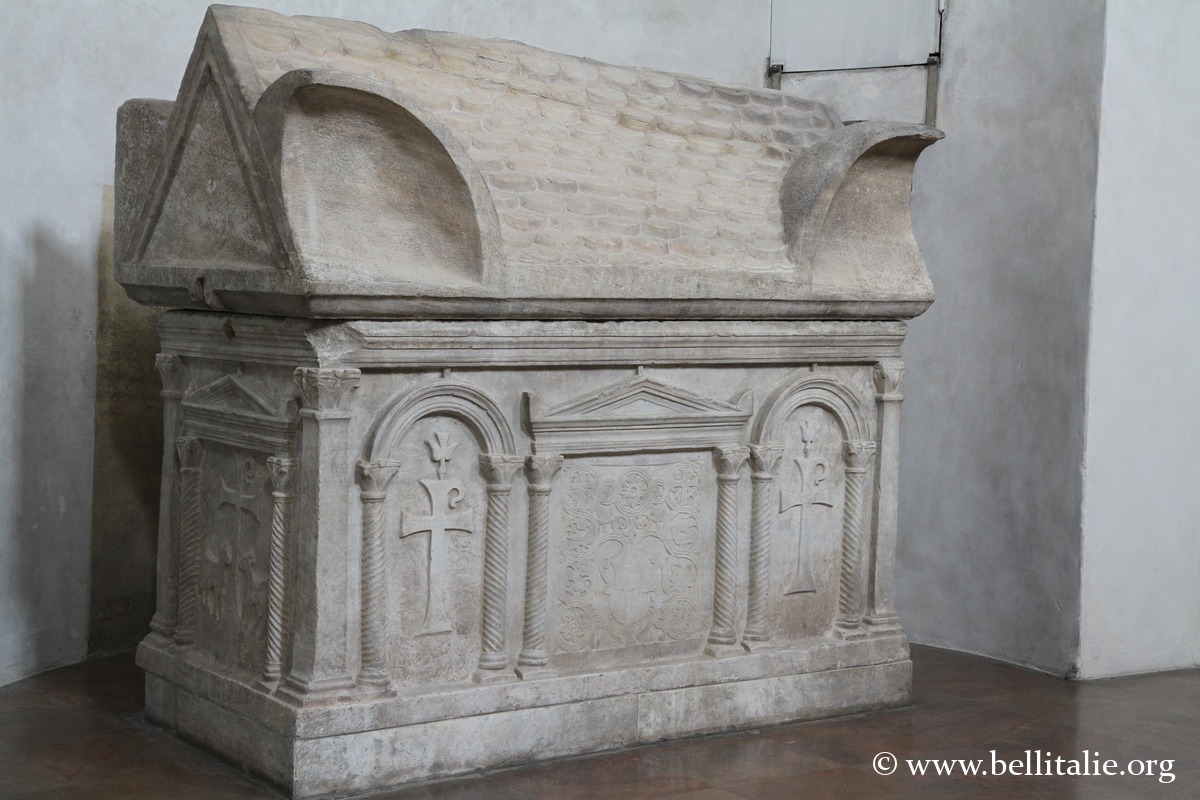
Four apses border the central square, incorporating an ambulatory all around, with pierced triangular pilasters and exedrae. From the ancient early Christian basilica, the Sant’Aquilino Chapel (Saint Aquilinus) and the Sant’Ippolito Chapel (Saint Hippolytus) have come down to us.
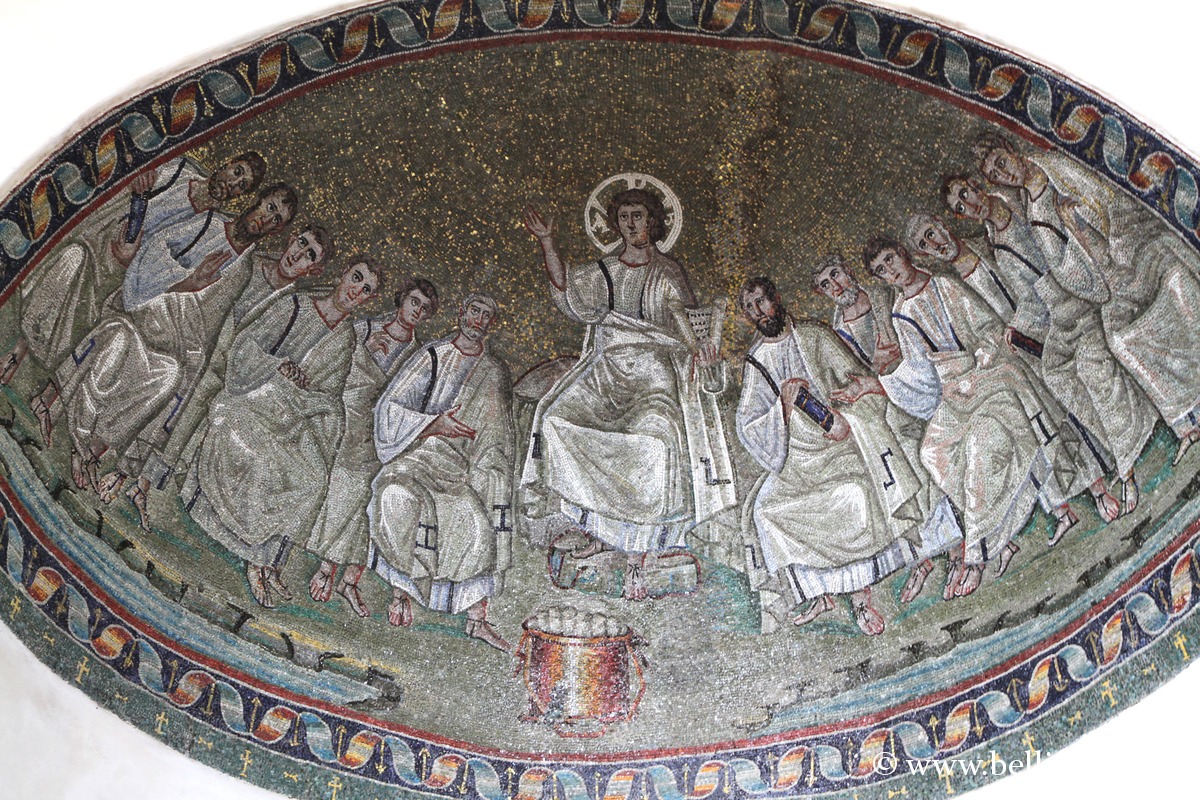
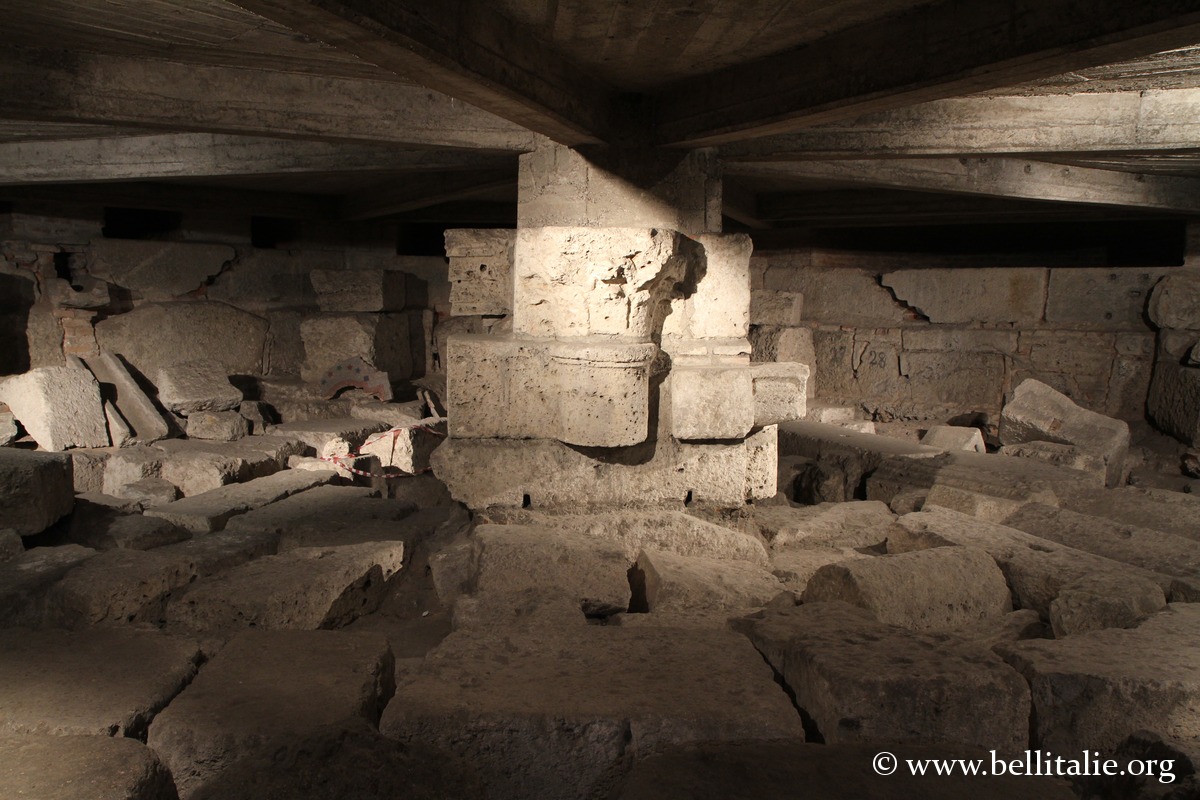
Among the many remains ancient and early Christian, are the precious 4th-century mosaics in the octagonal chapel Sant’Aquilino, and in the basement are stones from the foundations of the Roman amphitheatre.
Otherwise the vaults were painted by Carlo Urbini
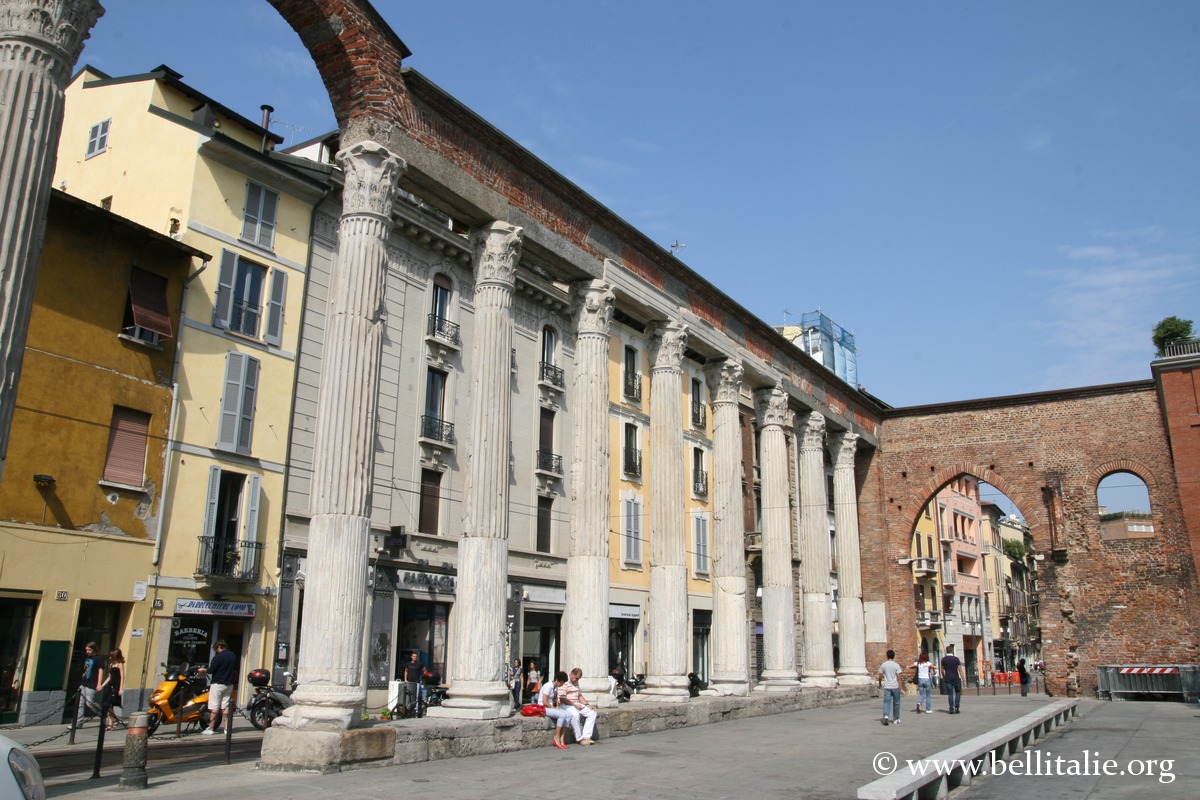
San Lorenzo Columns
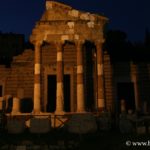
These sixteen Corinthian marble columns, taken from an ancient building, were arranged as they are today during the construction of the basilica, from elements such as bases, column shafts, capitals or fragments of architrave, the oldest of which date back to the 2nd century AD.
Centre of the Porta Ticinese district, and close to the Navigli, they are also a meeting place, close to many bars and trendy venues.
Map
If you see this after your page is loaded completely, leafletJS files are missing.
Information
- Wikipedia page: en.wikipedia.org
- Tourist portals: www.yesmilano.it
- What to see in Milan
- Itinerary ideas for visiting Milan
- Milan Cathedral
- Sforza Castle of Milan
- Victor Emmanuel II Gallery in Milan
- The Last Supper and Santa Maria delle Grazie
- Milan’s La Scala
- Basilica of Sant’Ambrogio in Milan

- Piazza dei Mercanti and Medieval Milan
- Selection of hotels and luxury hotels in Milan
- Leonardo da Vinci Museum of Science and Technology
- Brera Art Gallery

- Basilica of San Lorenzo, Milan
- Navigli District and Canals of Milan
- San Maurizio al Monastero Maggiore in Milan
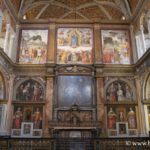
- Milan Civic Archaeological Museum
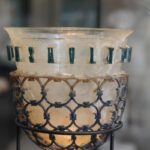
- Basilica of Saint Nazarius in Milan
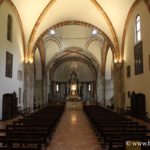
- Other Renaissance and Baroque monuments
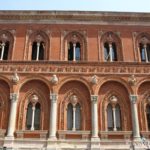
- Neoclassical, 18th and 19th centuries in Milan
- The Museums of Milan
- Shopping, the Fashion Quadrilateral and Markets in Milan
- Squares and other sites of Milan






Comments