


The Leonardo da Vinci National Museum of Science and Technology (in Italian Museo Nazionale Scienza e Tecnologia Leonardo da Vinci) in Milan, dedicated to the painter and scientist Leonardo da Vinci, is the largest museum of science and technology in Italy, inaugurated in February 1953.
Occupying the premises of the former San Vittore al Corpo monastery dating back to the 16th century, the museum is very vast with seven main sections, including aviation, navigation, railways, telecommunications, space conquest, automobiles and of course the section dedicated to Leonardo da Vinci.
It is one of the largest documentations and collections dedicated to technical and scientific evolution, which can require several days of visits depending on one’s interests.
The first floor dedicated to Leonardo da Vinci is generally visited first, followed by the outdoor pavilions dedicated to rail and air transport, then the ground floor devoted to the history of energy, mining and metallurgical industries, and land transport.
Museum sections
The seven main sections:
- Materials
- Transport: air, rail, maritime, submarine (including the Toti submarine)
- Energy (including the Regina Margherita thermal power plant)
- Communication
- Leonardo da Vinci, Art and Science
- New frontiers
- Science for young people
Each section has workshops, particularly for children and young people.
The materials section concerns the life cycle of modern products, from raw materials to recycling. Sections are devoted to chemical manufacturing, polymer and synthetic materials. The metals section illustrates the techniques of extracting and processing metals, presenting the first electric arc furnace used for steel smelting, invented in 1898.
In the air transport section are exhibited several aircraft, including a replica of the Farman 1909 and an original Macchi MC 205 V used by the Italian military aeronautics during the Second World War. There are also modern military aircraft such as an Italian Fiat G.91, a North American F-86K and a Republic F-84F Thunderstreak.
The rail transport section is installed in a pavilion of the 1906 Exhibition with the reconstruction of the facade of a late 19th-century station. Also exhibited are vehicles from the 19th and 20th centuries with a spotlight on the historic public transport of Lombardy.
The maritime transport section presents the bridge of the transatlantic liner Conte Biancamano and the training ship Ebe from 1921. There is also a torpedo and a mine dating from the Second World War.
The submarine section exhibits the Toti-class submarine Enrico Toti, built by the Italian navy in 1967.
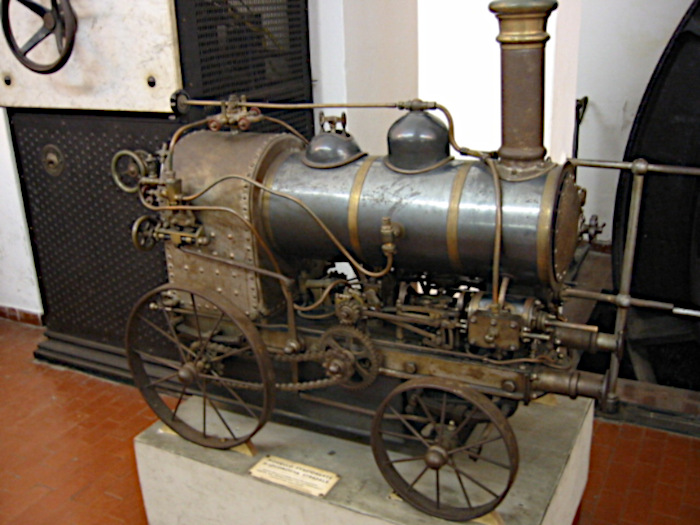
The energy section is dedicated to energy sources and transformation machines, with the presence of the Margherita thermoelectric power plant from 1895 and a section dedicated to the oil industry, including petrochemicals.
The communication section is divided into three parts. The Astronomy part exhibits ancient astronomical and topographic instruments, including two celestial and terrestrial globes from the 17th century, a Salmoiraghi refracting telescope and a Foucault pendulum.
The Telecommunications part explores all forms of communication of the modern era, from the telegraph to wireless telephony, from radio to television, with a focus on the technical history of Italian television.
The Sound section exhibits the technologies of recording and reproducing sound from the 19th century to the present day.
The Leonardo da Vinci, Art & Science section is divided into several parts. One collection consists of jewelry and precious objects, stones, gems and metals, including gold and ivory.
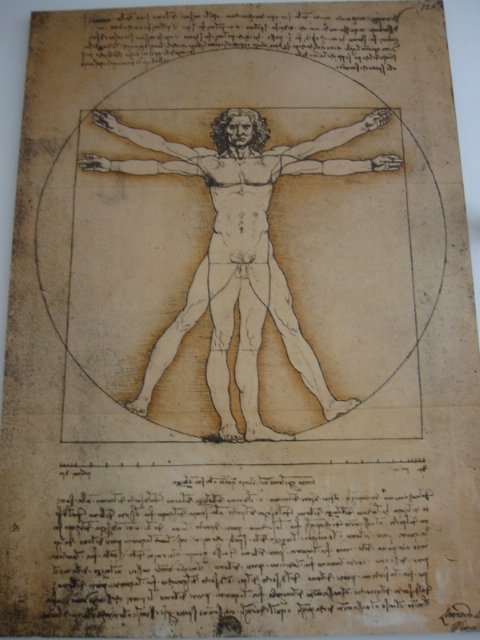
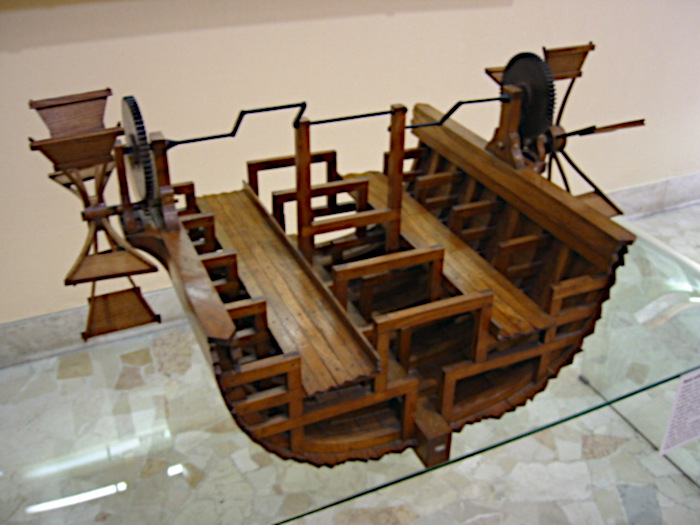
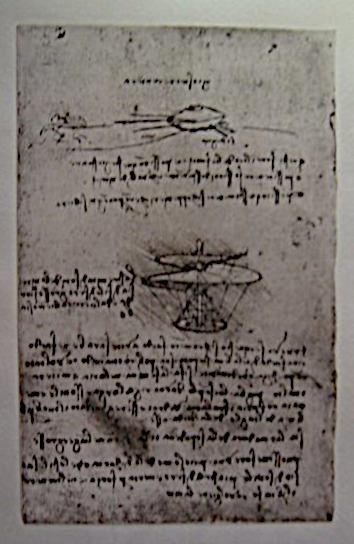
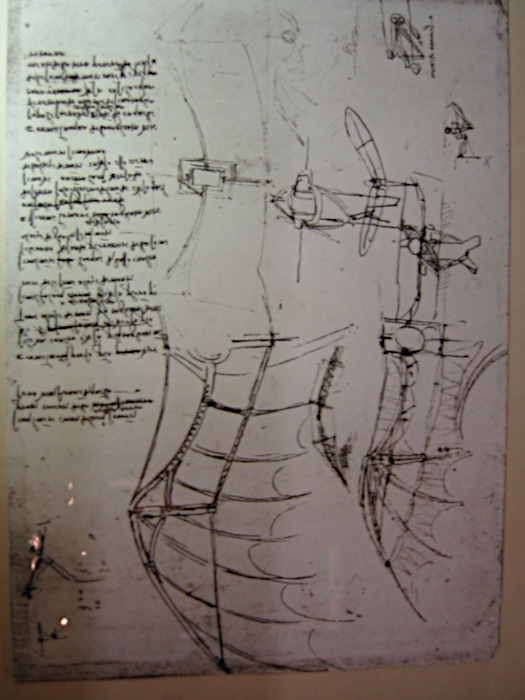
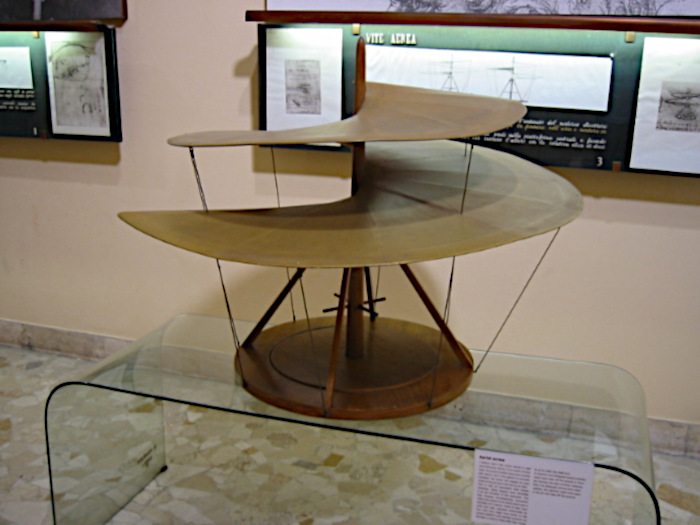
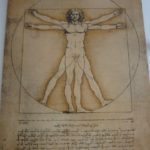
The Leonardo da Vinci section exhibits numerous machines reproduced from Leonardo da Vinci’s drawings, including a hydraulic saw, a spinning machine, a flying machine and a tank. The models that result from reinterpretation are accompanied by the inventor’s drawings.
The clockmaking collection exhibits the evolution of clockmaking, with several pendulum clocks, old clocks, watches and bell-tower mechanisms.
The musical instruments section presents instruments from the 17th to the 20th century, as well as the reconstruction of the workshop of a 17th-century luthier.
Map
If you see this after your page is loaded completely, leafletJS files are missing.
Information
- Wikipedia page: en.wikipedia.org
- Official website: www.museoscienza.org
- What to see in Milan
- Itinerary ideas for visiting Milan
- Milan Cathedral
- Sforza Castle of Milan
- Victor Emmanuel II Gallery in Milan
- The Last Supper and Santa Maria delle Grazie
- Milan’s La Scala
- Basilica of Sant’Ambrogio in Milan

- Piazza dei Mercanti and Medieval Milan
- Selection of hotels and luxury hotels in Milan
- Leonardo da Vinci Museum of Science and Technology
- Brera Art Gallery
- Basilica of San Lorenzo, Milan
- Navigli District and Canals of Milan
- San Maurizio al Monastero Maggiore in Milan
- Milan Civic Archaeological Museum
- Basilica of Saint Nazarius in Milan
- Other Renaissance and Baroque monuments
- Neoclassical, 18th and 19th centuries in Milan
- The Museums of Milan
- Shopping, the Fashion Quadrilateral and Markets in Milan
- Squares and other sites of Milan



Comments