


The Dominican sanctuary of Santa Maria delle Grazie is inscribed on the UNESCO World Heritage list, as a jewel of the Renaissance, preserving in particular the famous and evocative Last Supper by Leonardo da Vinci painted in the refectory of the convent, the Cenacle.
Visits to the Last Supper are regulated to preserve the integrity of the painting, with 25 people at a time for 15 minutes. Reservations must be made well in advance.
Next to the church, behind the Palazzo delle Stelline, are the Orti di Leonardo where grew the vineyard that Duke Ludovico il Moro entrusted to Leonardo da Vinci. The great Tuscan master indeed lived for more than 20 years in Milan, where he produced several paintings and devised numerous hydraulic machines and new weapons.
On the night of 15 August 1943, Anglo-American bombers struck the church and the convent. The refectory was destroyed, but some walls were saved, including that of the Last Supper, which had been specially reinforced.
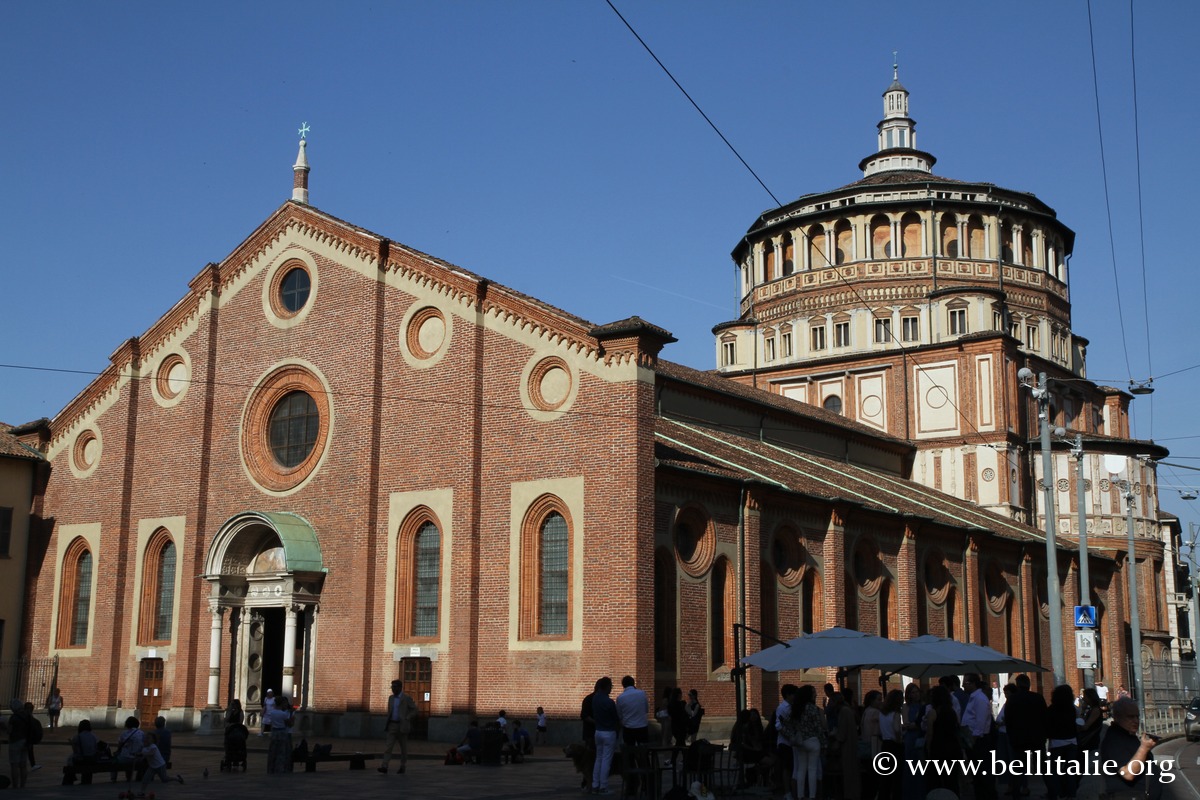
Basilica
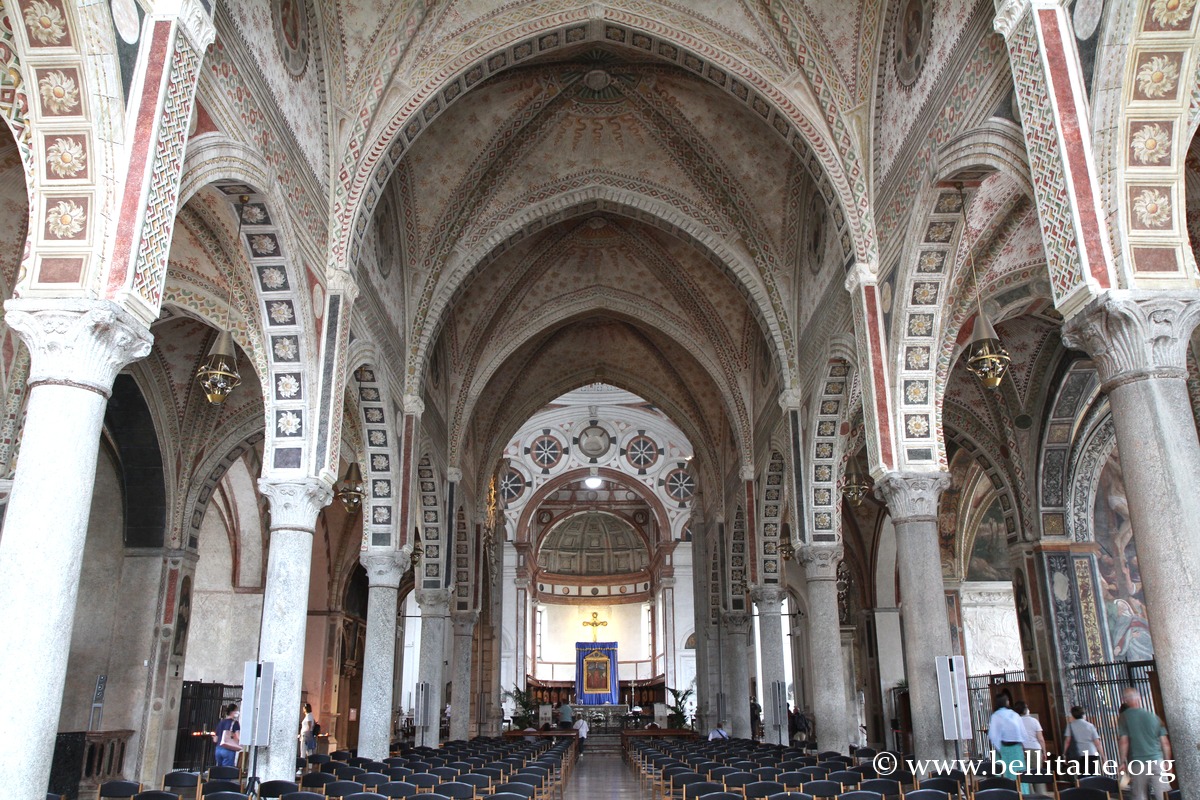
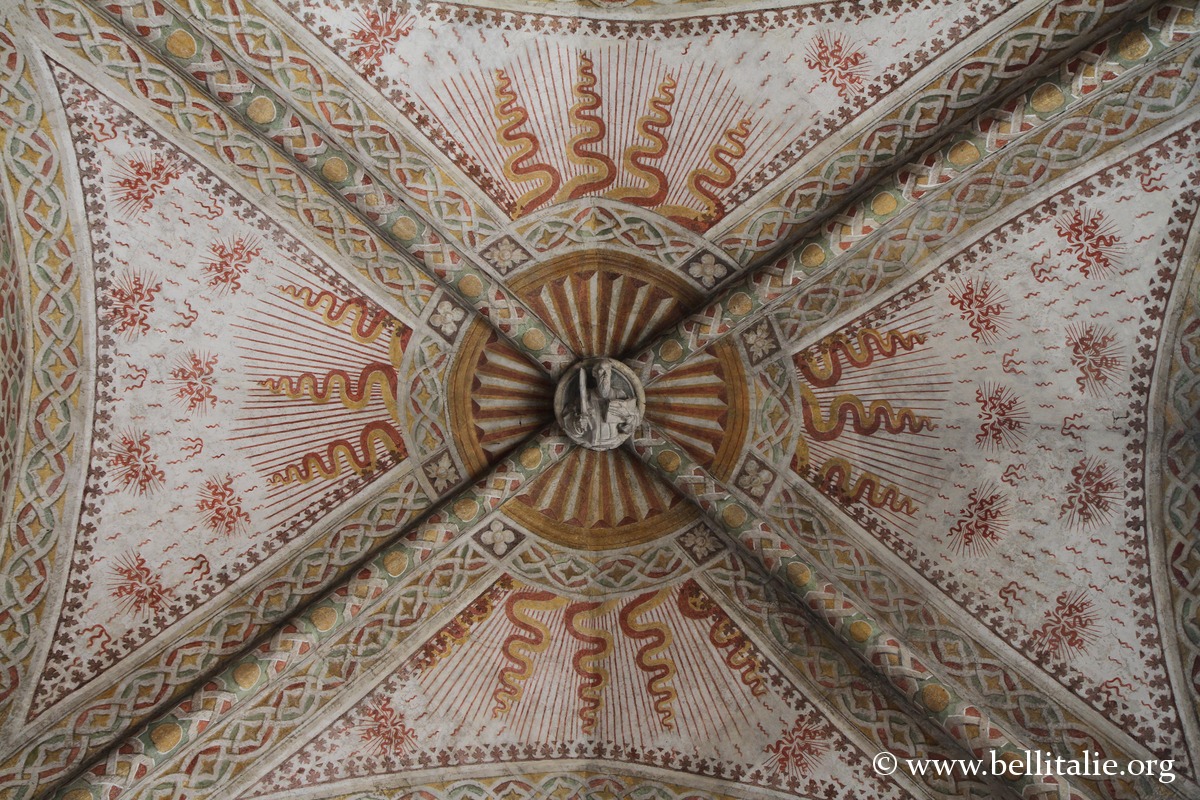
The Duke of Milan Francesco Sforza, ordered in 1463 the construction of a convent for the Dominicans, with a church on the site where stood a small chapel dedicated to the icon Santa Maria delle Grazie. The works were directed by the architect Guiniforte Solari, the most famous in the city at the time, then by the equally famous Donato Bramante, to be completed around 1492.
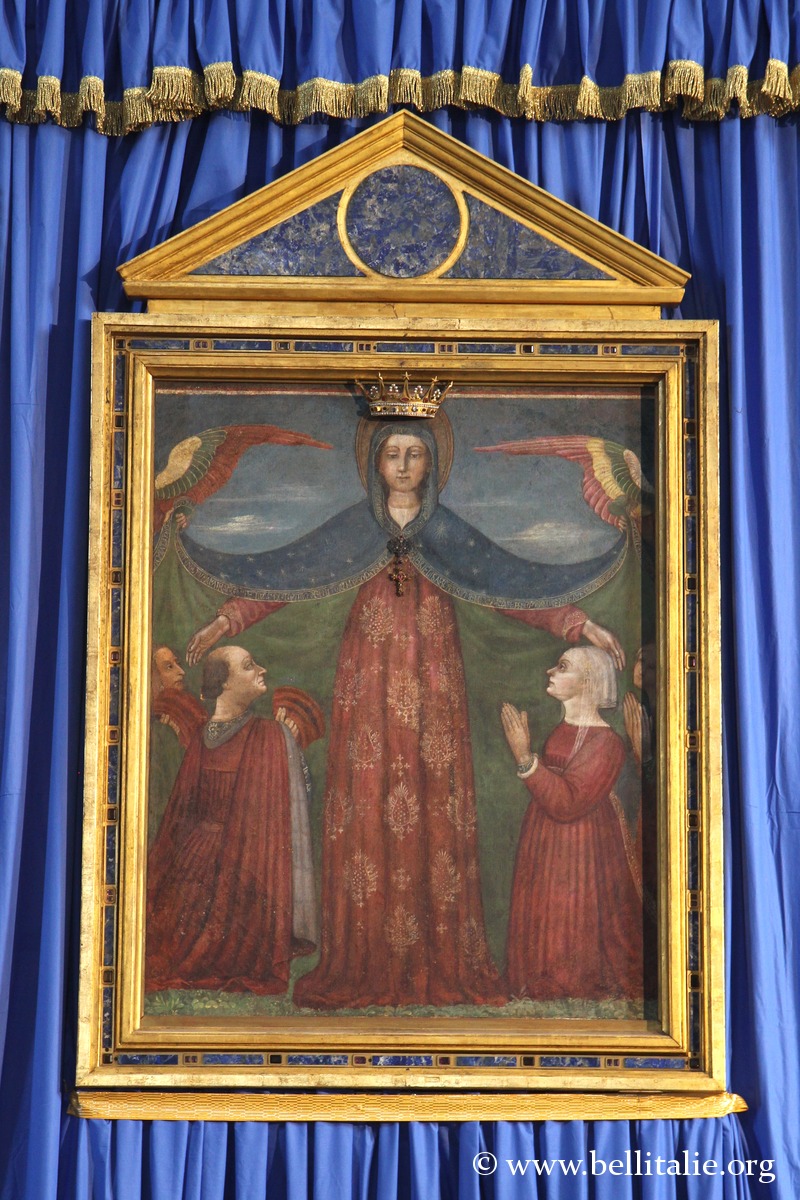
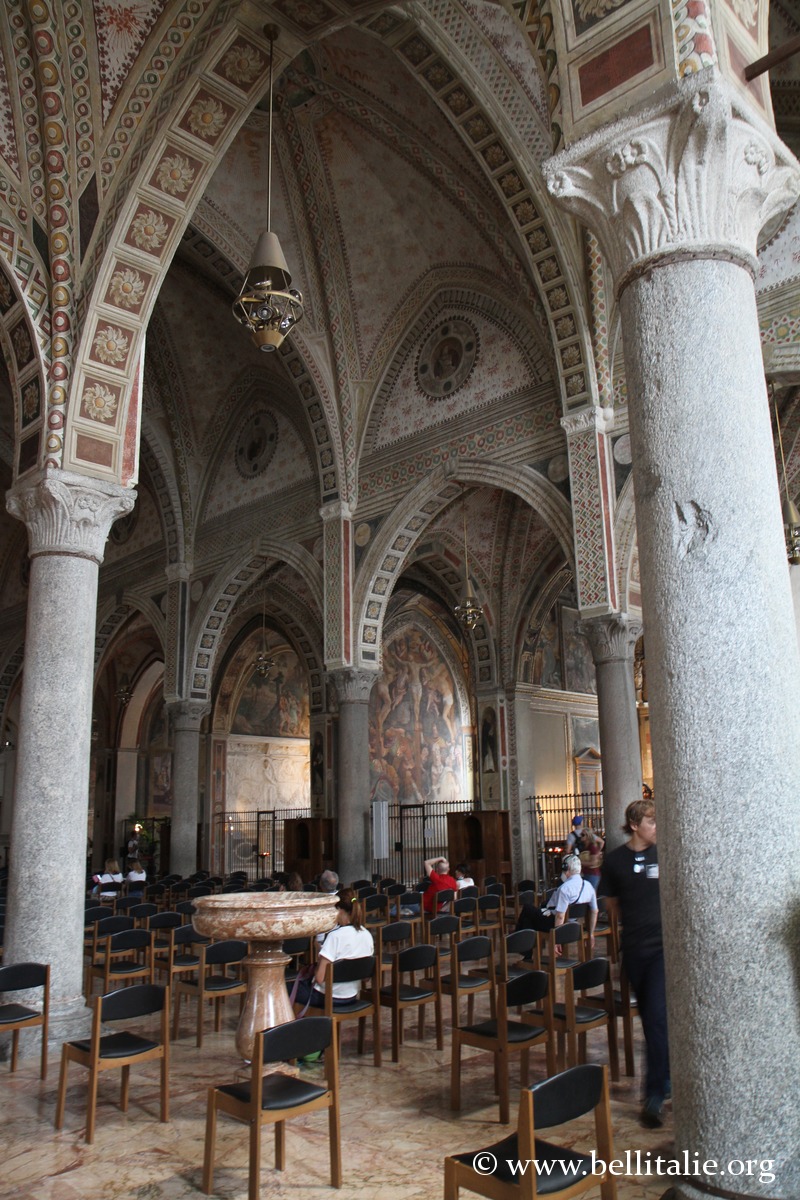
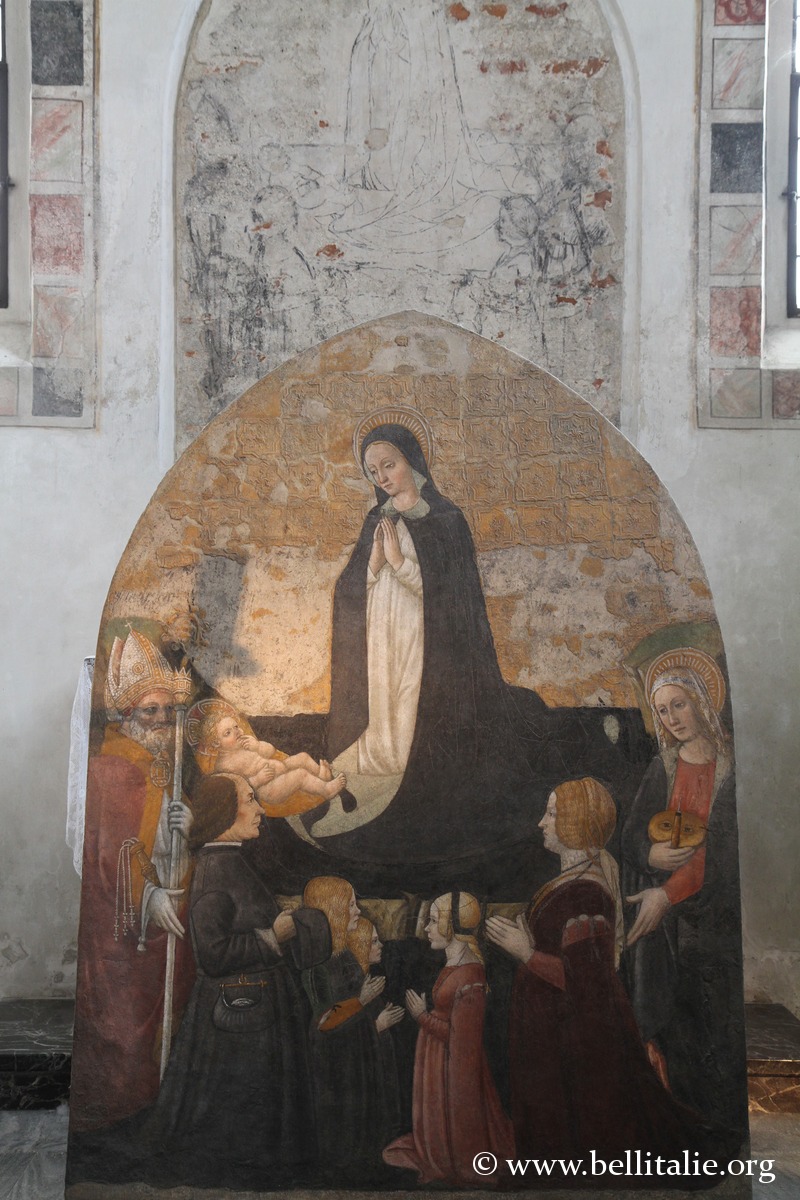
The oldest part of the church is Gothic, with the chapel dedicated to the Virgin of the Rosary on the left side, intended to house the miraculous 15th-century image that was venerated during the plagues of the 16th and 17th centuries.
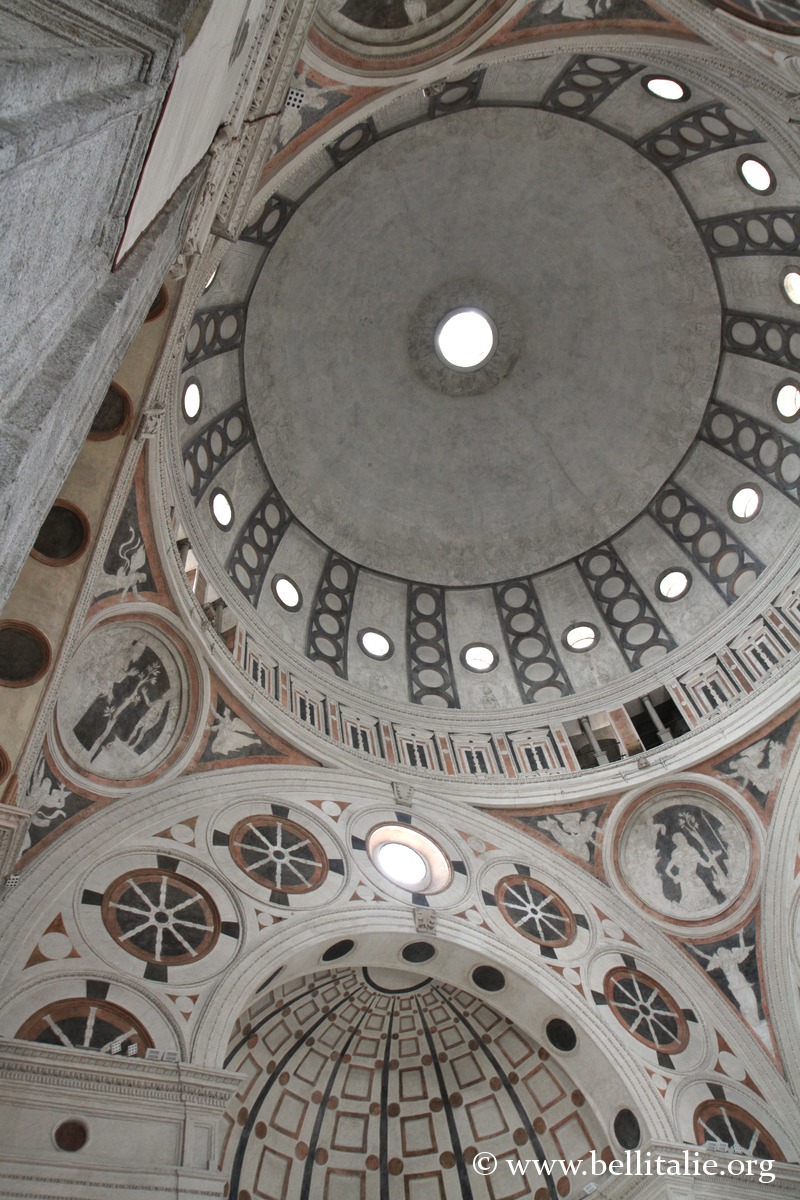
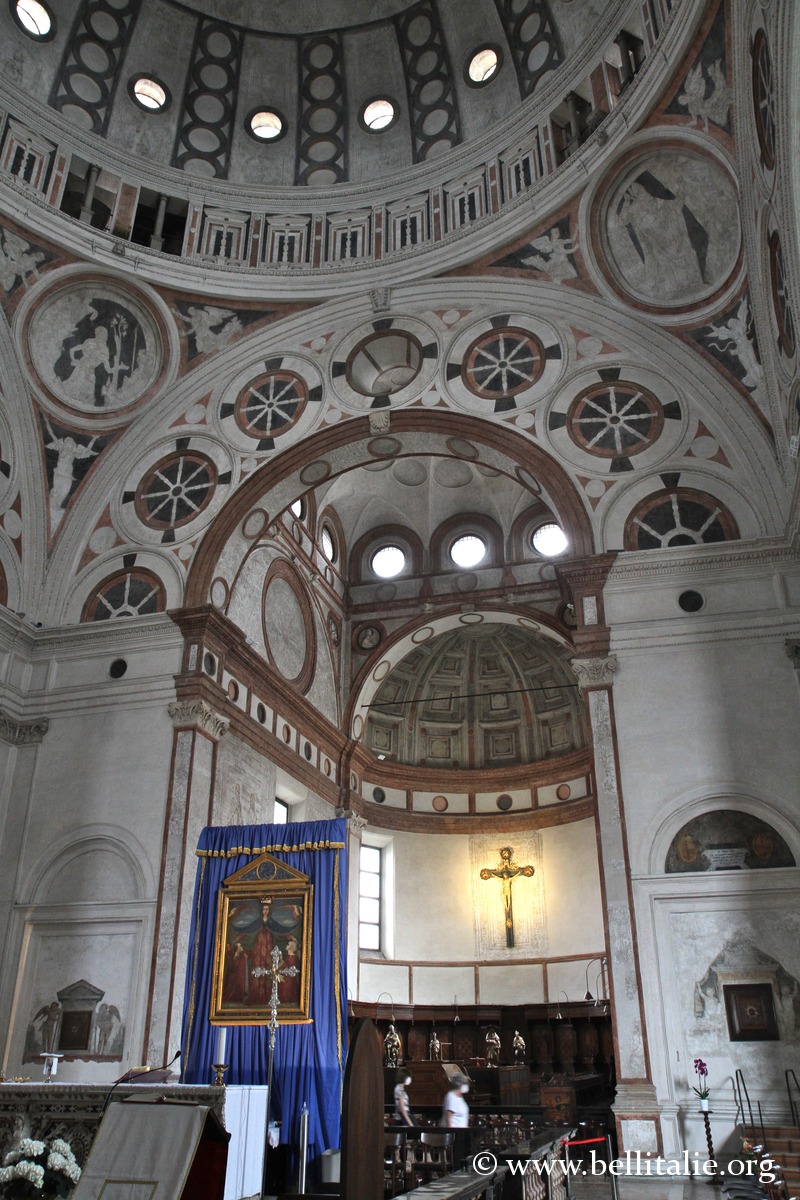
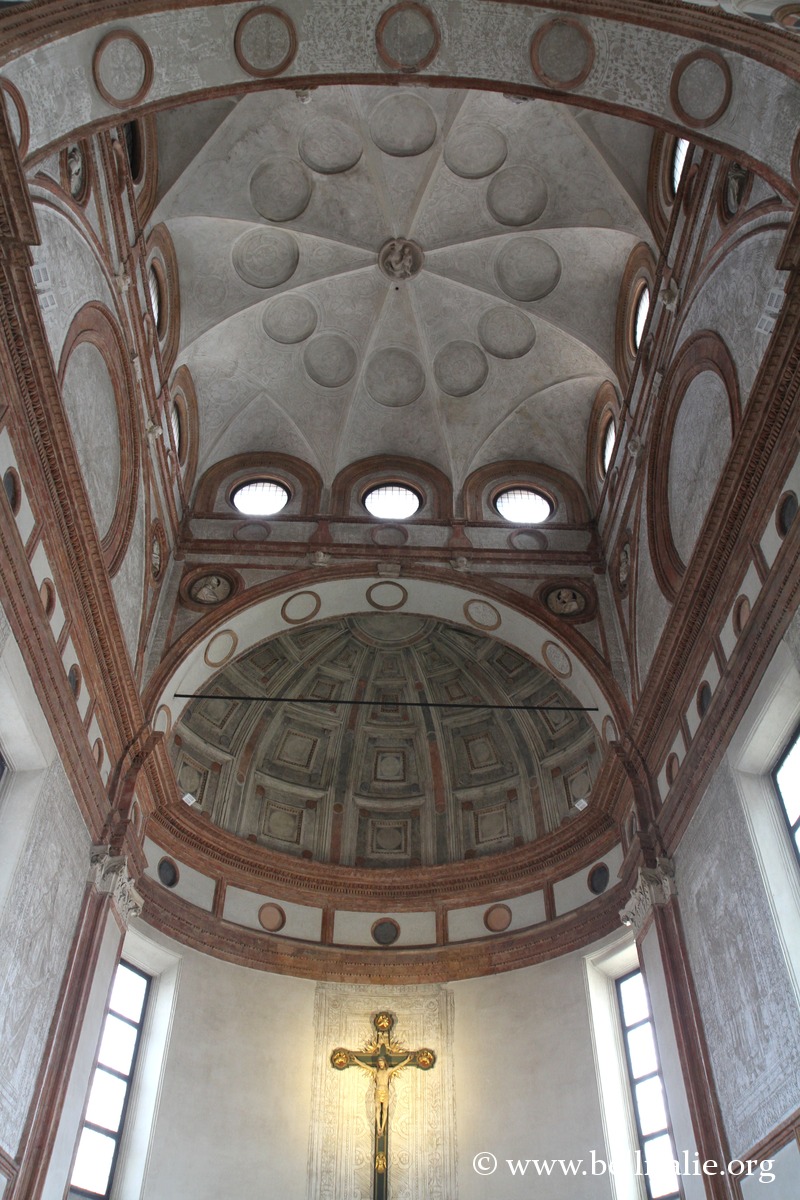
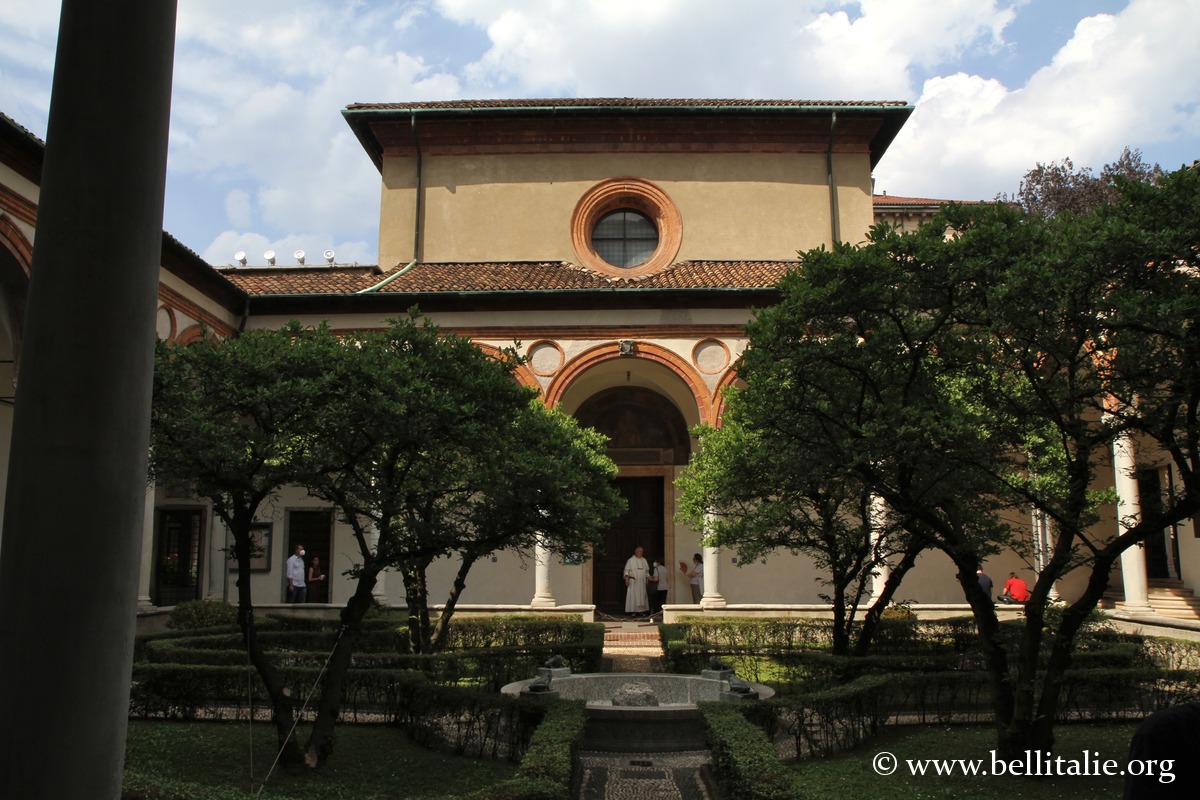
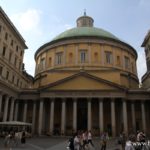
Ludovico il Moro had Bramante rework Solari’s building to create a vast work in the Renaissance style, first with the portal, then the splendid tribuna, where Bramante innovated by creating a building as a single block, eliminating naves and chapels, to form the cubic space topped by a dome.
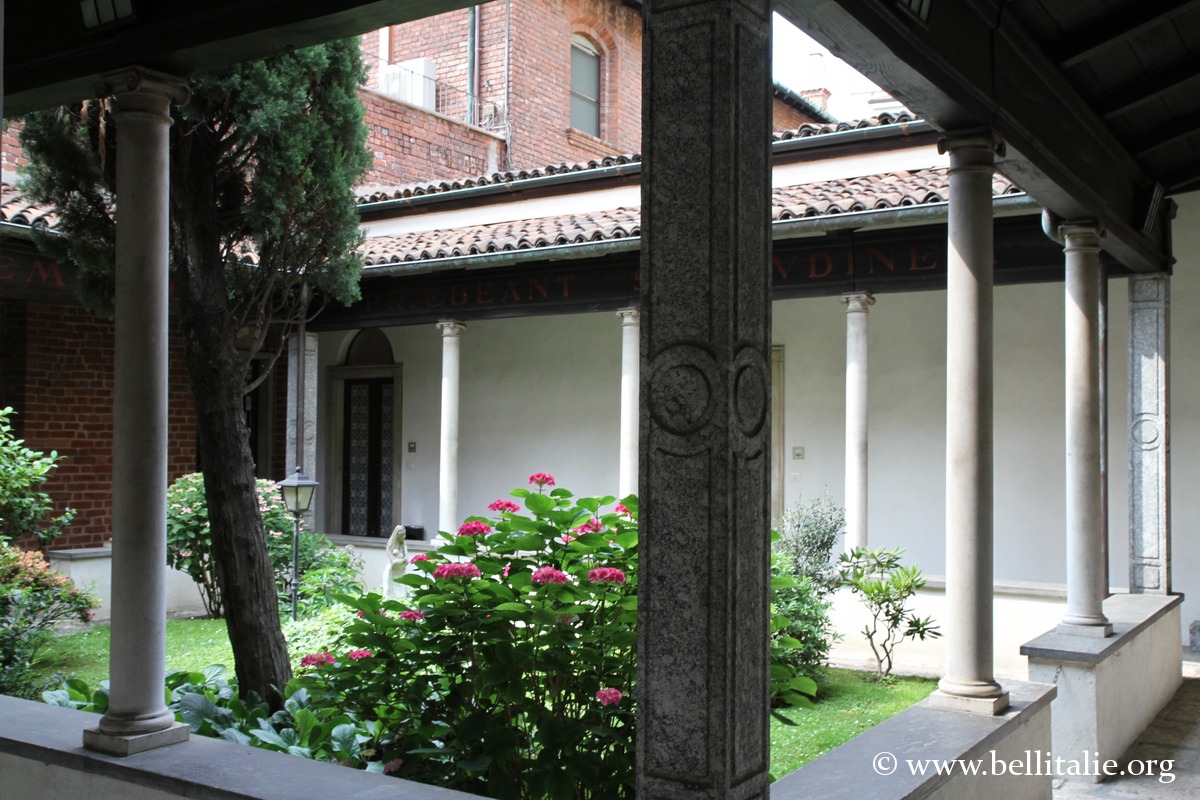
The cloister is also characteristic of the Renaissance.
The chapels were prized by the great Milanese families for their burials, then decorated by great artists, including the chapel of Saint Catherine which preserves sculptures by Antonello da Messina, the chapels of the Adoring Virgin and of the Holy Crown decorated with frescoes by Gaudenzio Ferrari, and artworks by Caravaggino or Cerano.
The chapel on the right housed the Crowning with Thorns by Titian taken to Paris by the French at the end of the 18th century, currently in the Louvre.
A door gives access to the small cloister attributed to Bramante
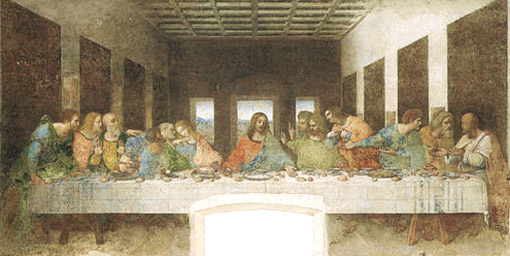
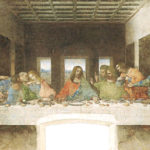
The Last Supper by Leonardo da Vinci
Last Supper
Leonardo da Vinci to paint The Last Supper on a wall of the convent’s refectory called Cenacolo, between 1494 and 1498, under the lordship of Ludovico Sforza (known as the Moor).
The site is accessible via the Museo del Cenacolo Vinciano, whose entrance is on the church square, to the left of the basilica’s facade. Reservations must be made well in advance, often several months, as the visit takes place in small groups for a maximum duration of 15 minutes.
On a wall of the rectangular room, the work depicts the Last Supper, where Jesus is placed at the center of the table among the apostles, during the Thursday supper, where he announced that he would soon be betrayed by one of them. In reaction to these words, the apostles are depicted with varied reactions: disbelief, fear, surprise, etc.
The apostles were meant to appear seated next to the brothers of the convent who took their meals there. The scene is made even more realistic by the details of the dishes and utensils, but also by the use of light and perspective, with the light entering through the windows at the back through which the countryside can be seen.
The Last Supper is considered one of Leonardo’s major works. In order to create this large painting, measuring 8.80 by 4.60 meters, the master used an original technique, painting on plaster, which unfortunately was the cause of its rapid deterioration and required restoration several times.
The work was partially recovered after painstaking restorations, sometimes innovative, which lasted from 1977 to 1999.
On the opposite wall, the Crucifixion is decorated with frescoes by the Lombard painter Giovanni Donato da Montorfano in 1495.
Thus, the initial episode and the final episode of the Passion of Christ are represented in the same place.
Gallery
Information
- Wikipedia page: en.wikipedia.org
- Official website: legraziemilano.it, cenacolovinciano.org
- Tourism portals: www.yesmilano.it
Map
If you see this after your page is loaded completely, leafletJS files are missing.
- What to see in Milan
- Itinerary ideas for visiting Milan
- Milan Cathedral
- Sforza Castle of Milan
- Victor Emmanuel II Gallery in Milan
- The Last Supper and Santa Maria delle Grazie
- Milan’s La Scala
- Basilica of Sant’Ambrogio in Milan
- Piazza dei Mercanti and Medieval Milan
- Selection of hotels and luxury hotels in Milan
- Leonardo da Vinci Museum of Science and Technology
- Brera Art Gallery
- Basilica of San Lorenzo, Milan
- Navigli District and Canals of Milan
- San Maurizio al Monastero Maggiore in Milan
- Milan Civic Archaeological Museum
- Basilica of Saint Nazarius in Milan
- Other Renaissance and Baroque monuments
- Neoclassical, 18th and 19th centuries in Milan
- The Museums of Milan
- Shopping, the Fashion Quadrilateral and Markets in Milan
- Squares and other sites of Milan


Comments