


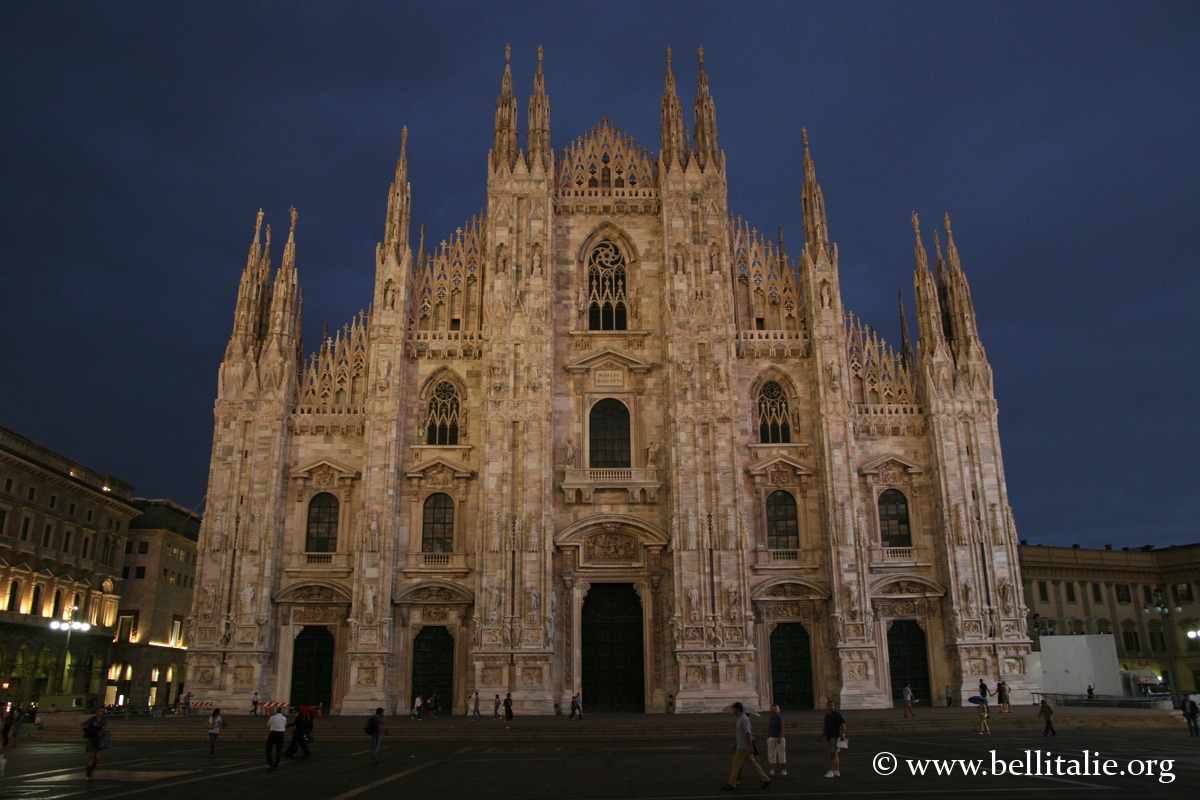
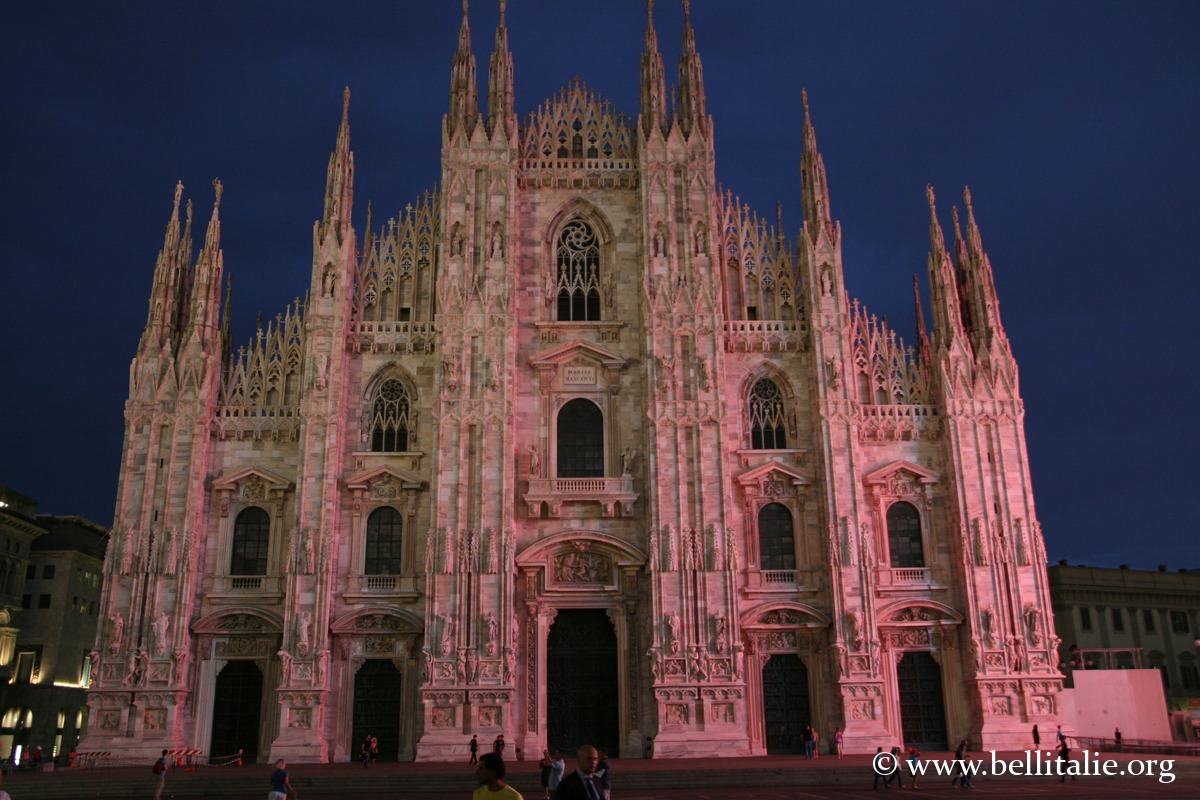
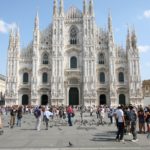
The magnificent Gothic Cathedral of Milan (whose precise name is Duomo Santa Maria Nascente), and sometimes referred to as the “marble hedgehog”, is the emblematic building of the City.
Brief history
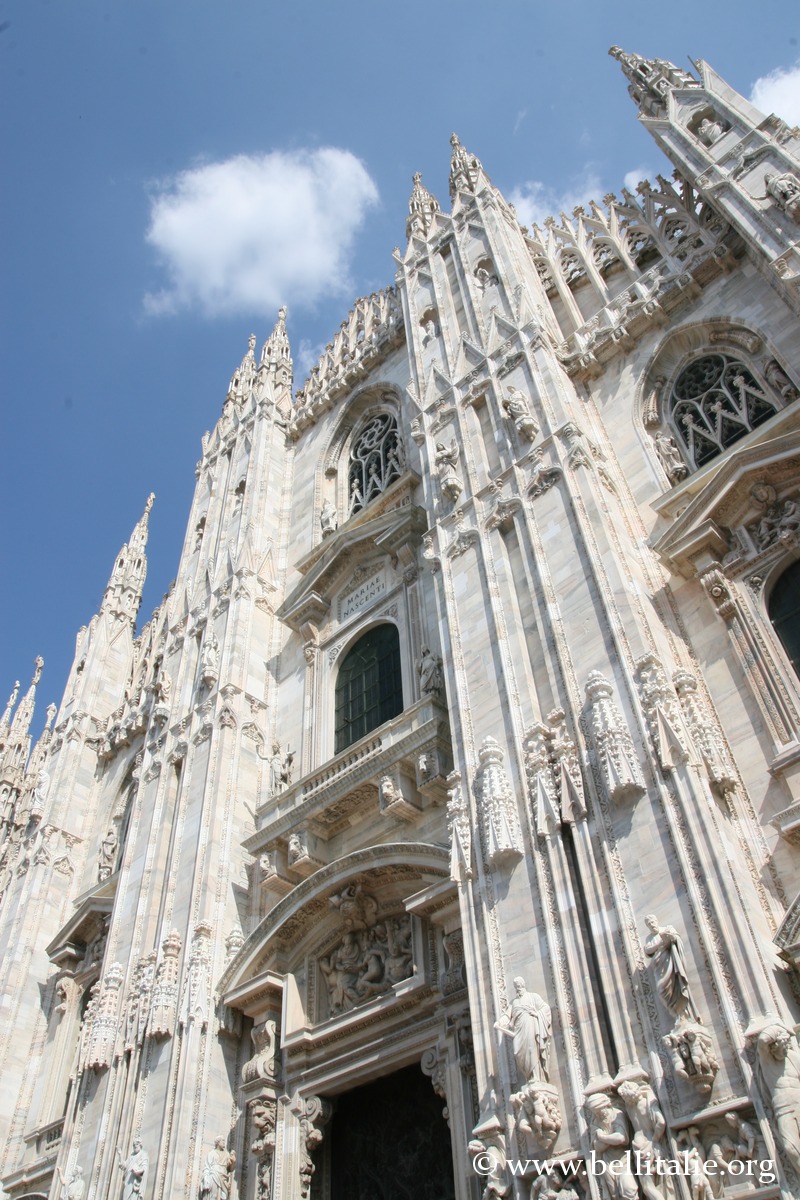
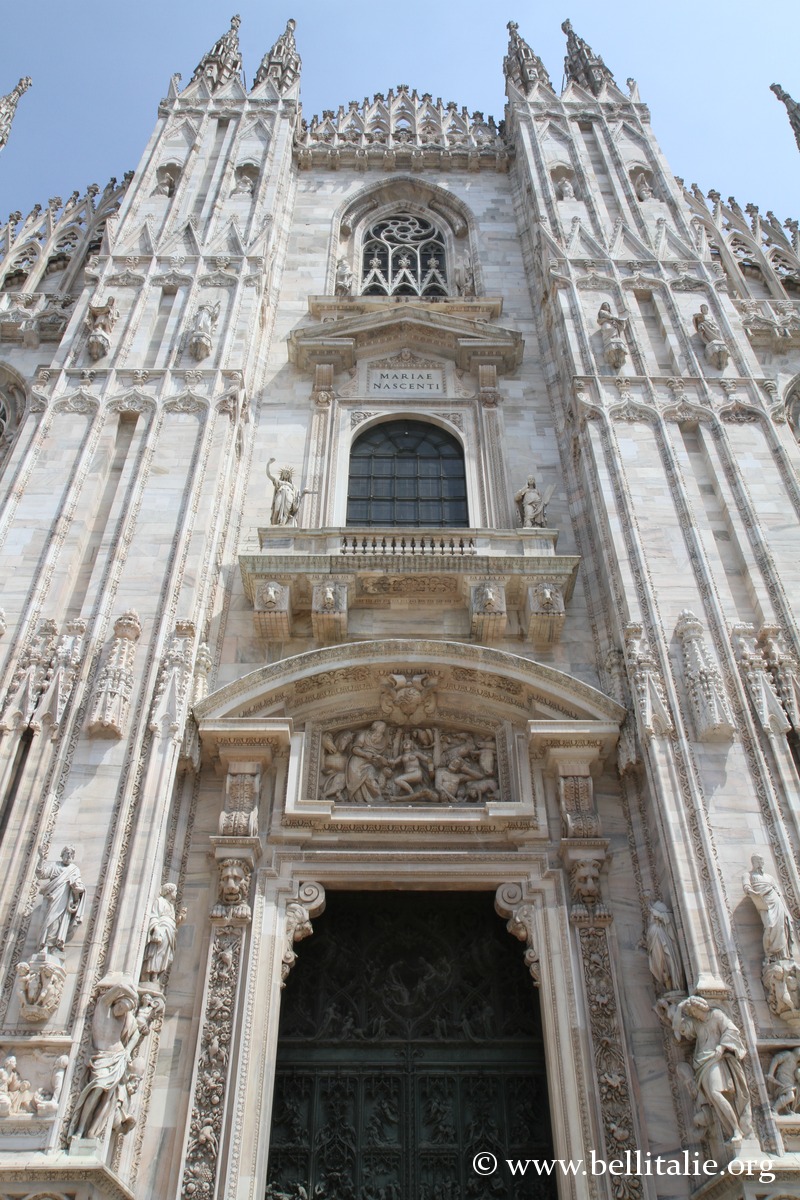
This cathedral was built on the site where a first church already existed in the 5th century AD. Its long construction spanned more than five centuries. Probably begun in 1386 – as indicated by an engraved stone – under Gian Galeazzo Visconti, it was still not completed when Napoleon passed through at the beginning of the 19th century, despite the latter’s pressure. The emperor nevertheless had himself crowned King of Italy there on 26 May 1805. The Gothic-Baroque façade begun at the beginning of the 16th century, covered in white marble and adorned with thousands of statues, was only completed in 1813.
The most recent bronze door dates from 1965. The Milanese saying that describes an endless task as “as long as the construction of the Duomo” is easy to understand.
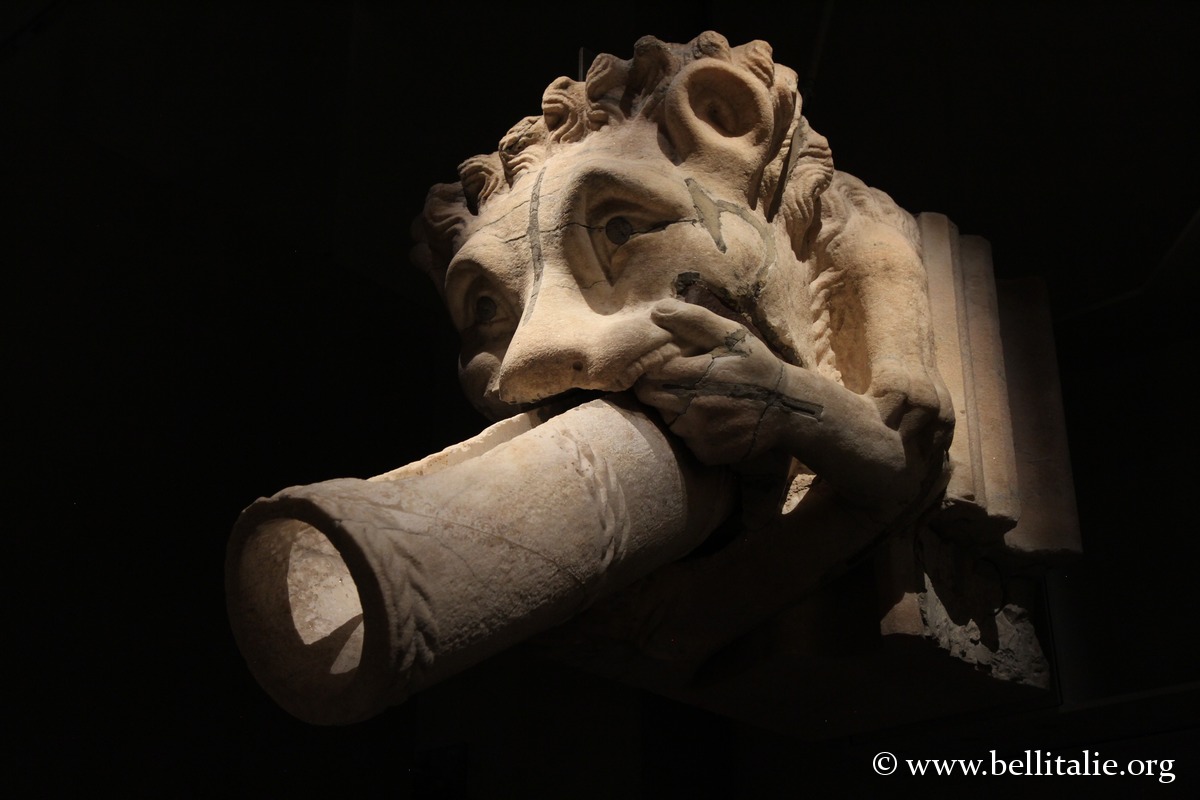
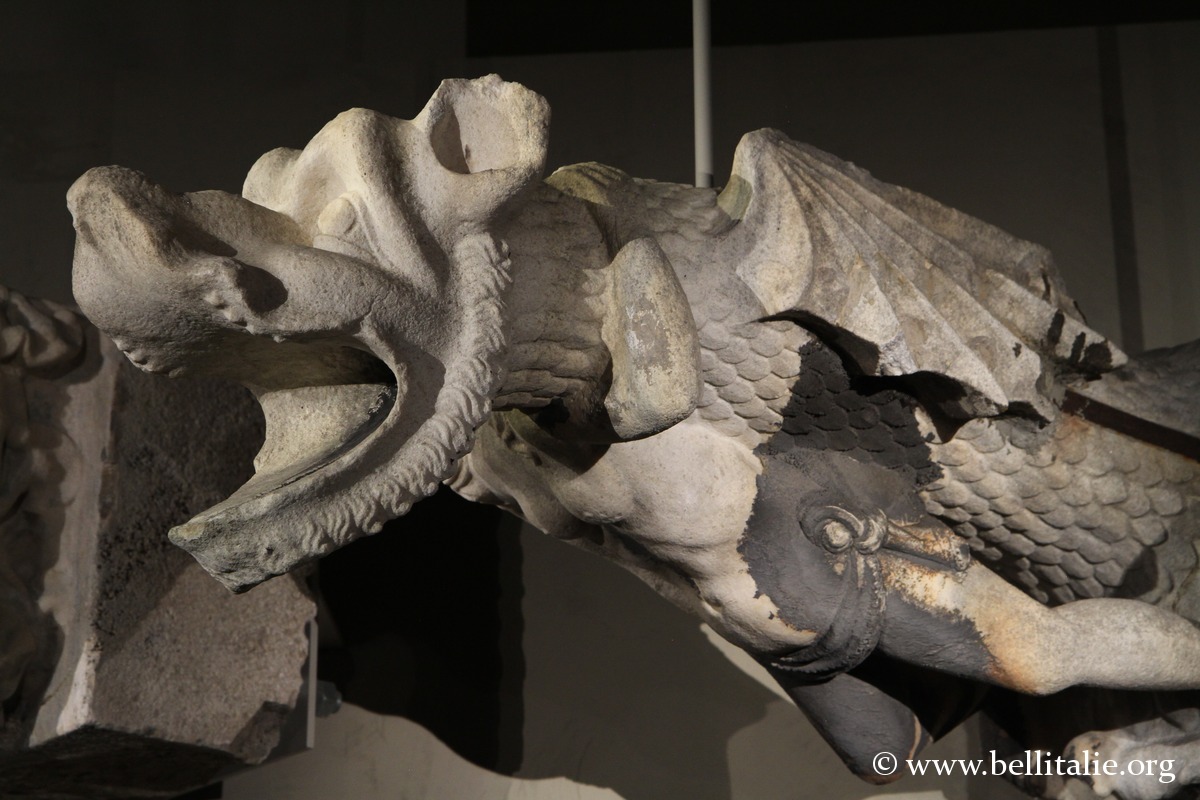
A legend about its history tells that the Devil appeared to Gian Galeazzo Visconti offering to spare his life in exchange for the construction of an immense church containing many of his images, as attested by the presence of 96 satanic gargoyles.
The marble stones for the construction were brought from Lake Maggiore by boat, via the Ticino river, then the Naviglio Grande canal, to the Santo Stefano basin which was dug between the hospital and Santo Stefano.
Description and architecture
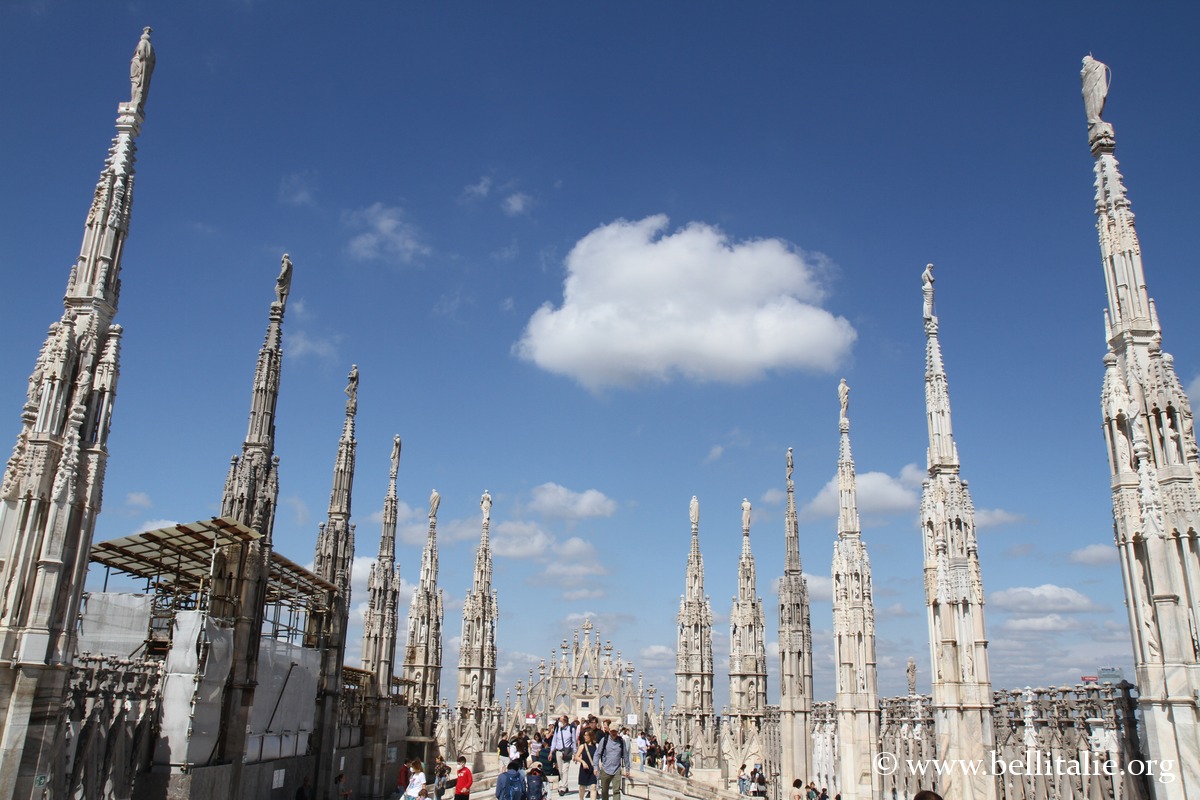
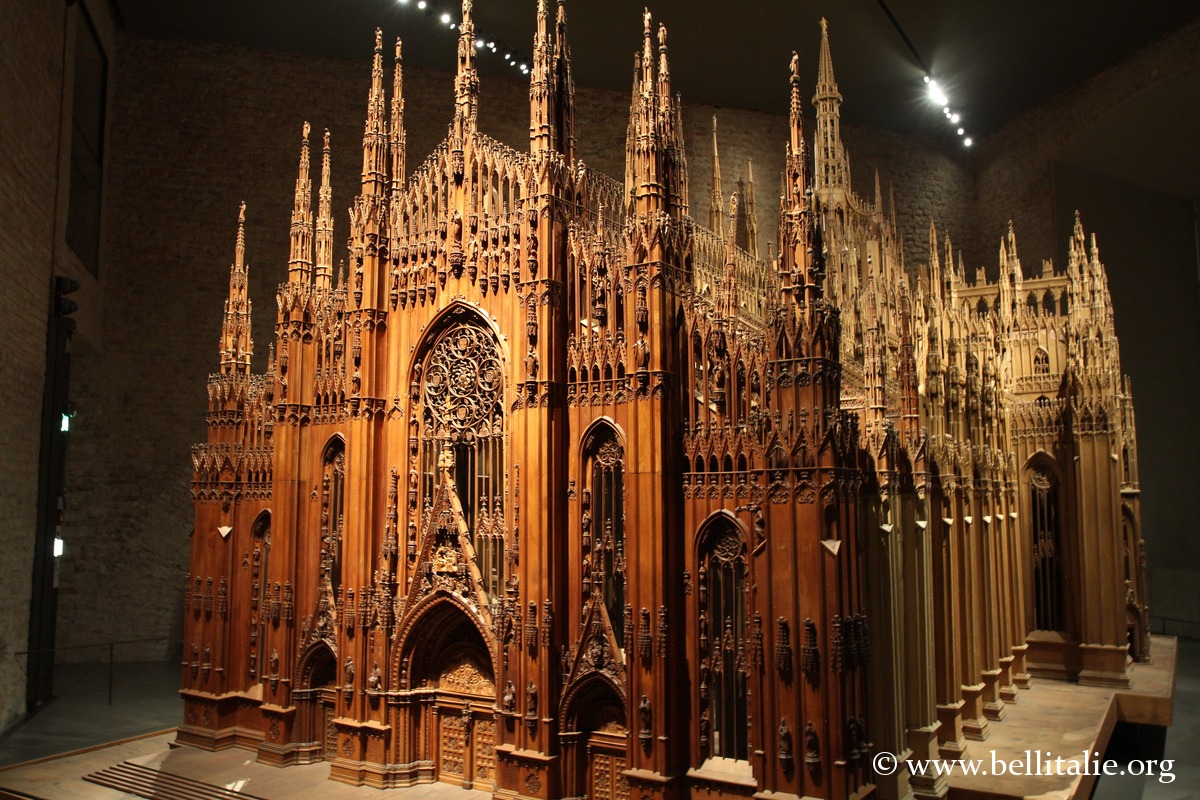
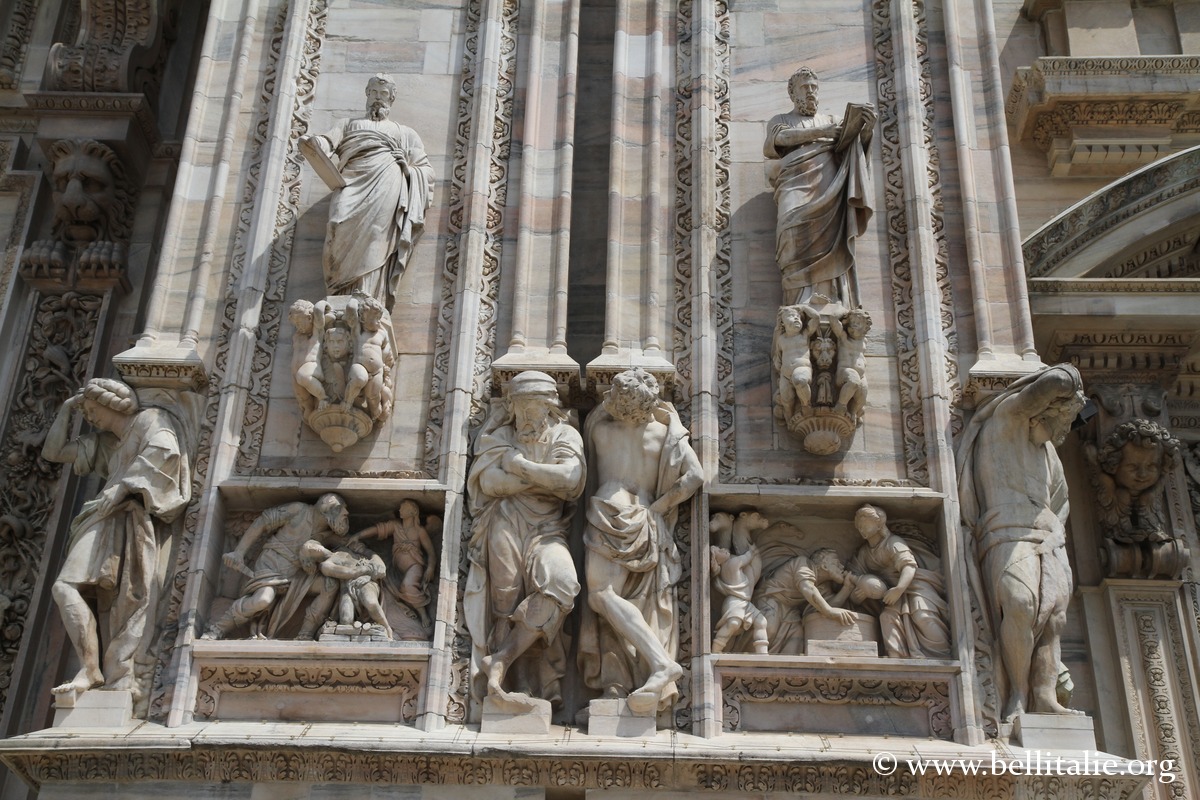
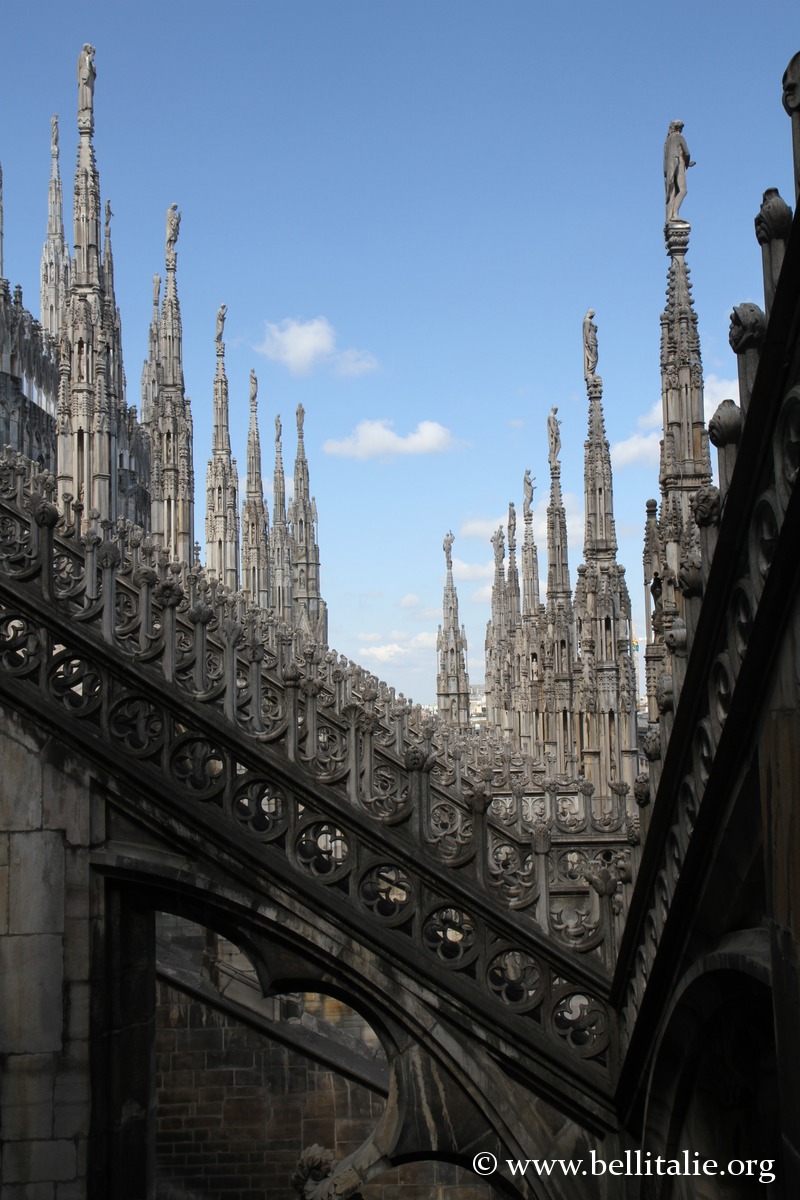
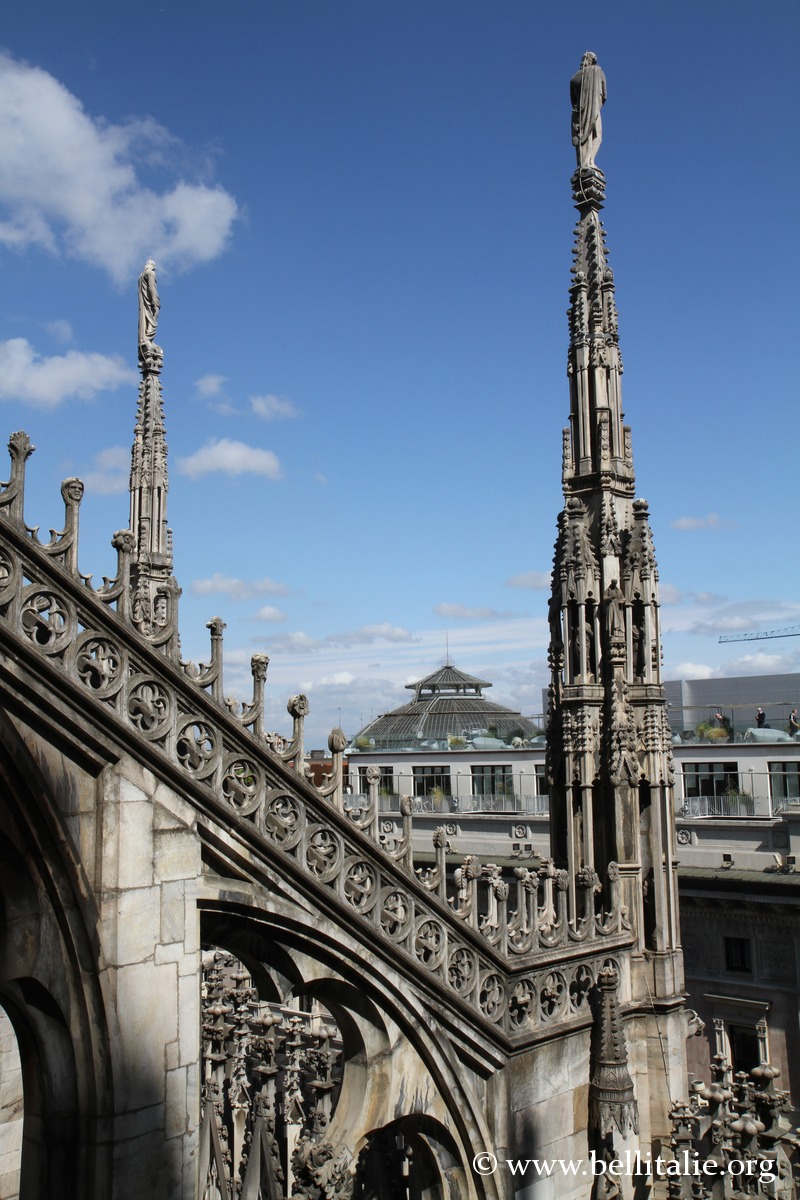
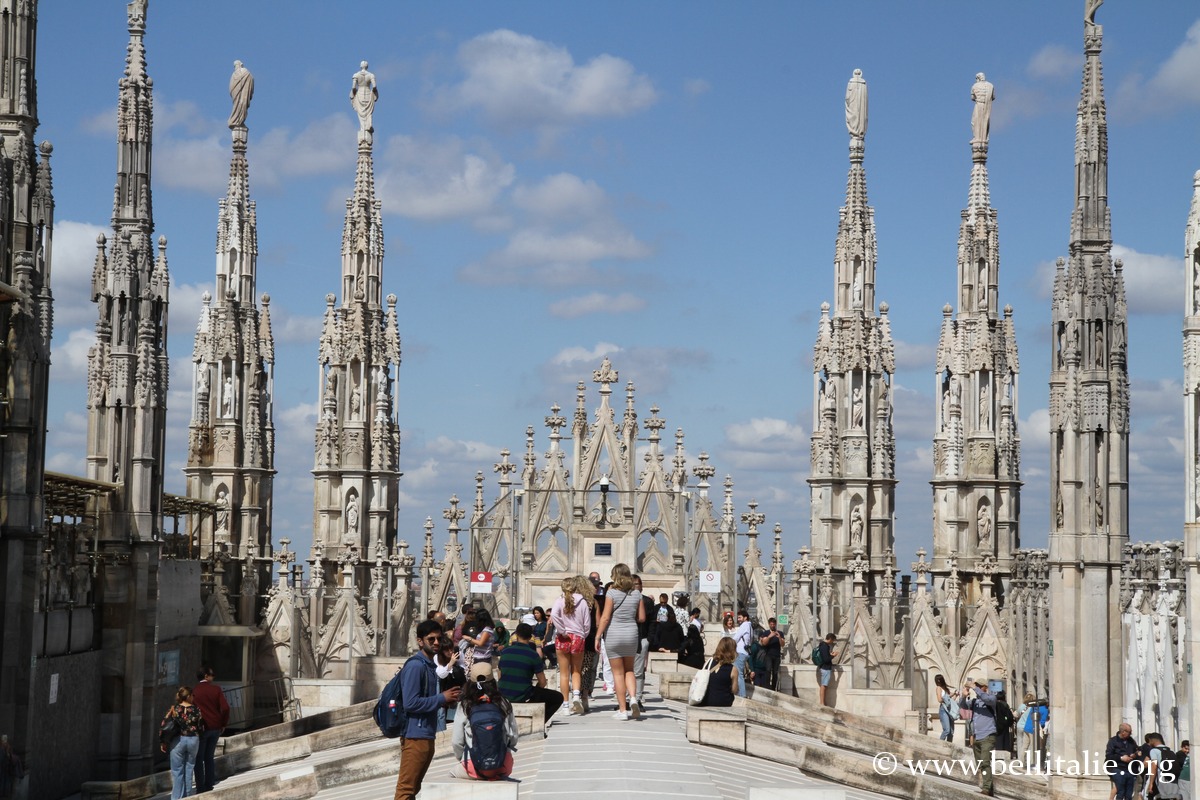
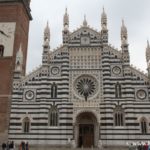
Milan Cathedral is one of the largest and tallest cathedrals in the world, 157 metres long and 92 wide, the third by surface area after St Peter’s in Rome and Seville. The spire, also of marble, was erected in 1769 and bears the Madonnina, a 4-metre copper statue, which dominates the city from its height of 108 metres. 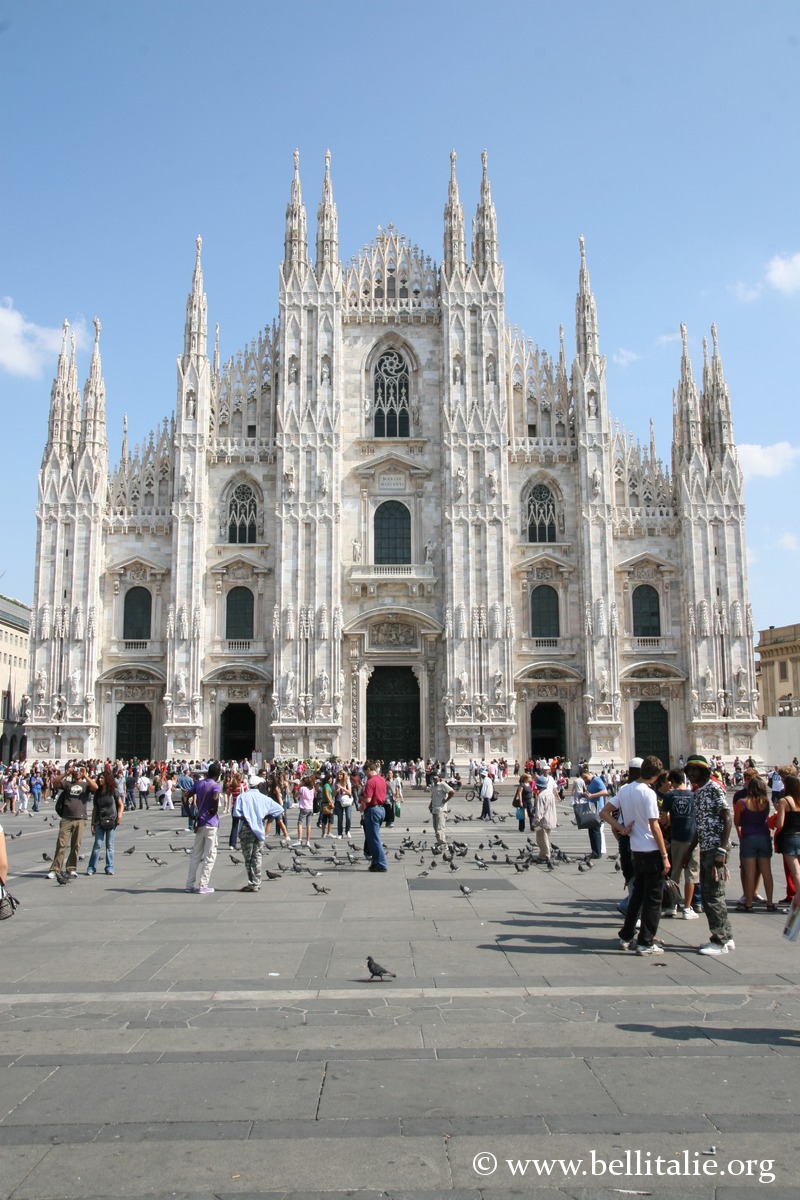 The exterior bristles with 136 spires and is adorned with 2,000 marble statues, blending the styles of different periods, but above all Lombard Gothic.
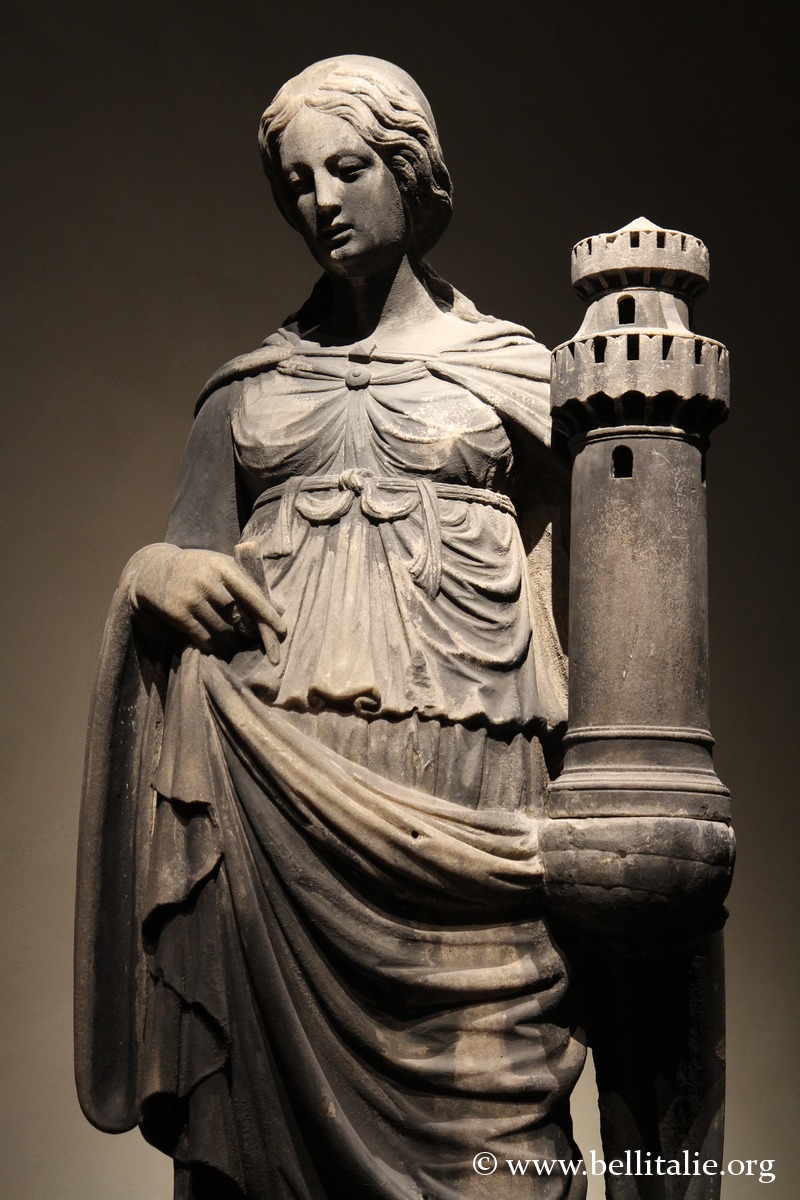
Surprisingly, among the multitude of statues, alongside prophets and martyrs, there are secular figures, such as Dante Alighieri, King Victor Emmanuel II, and even from the first half of the 20th century with Arturo Toscanini or the boxer Primo Carnera.
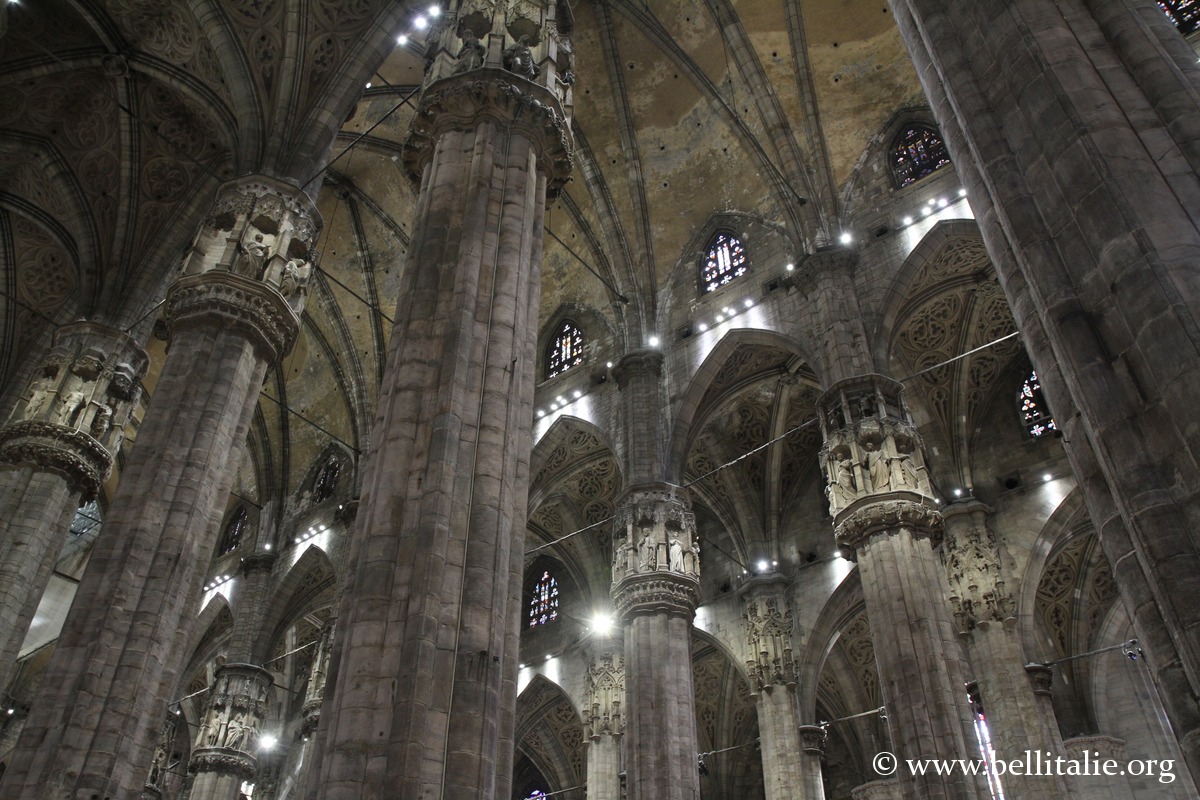
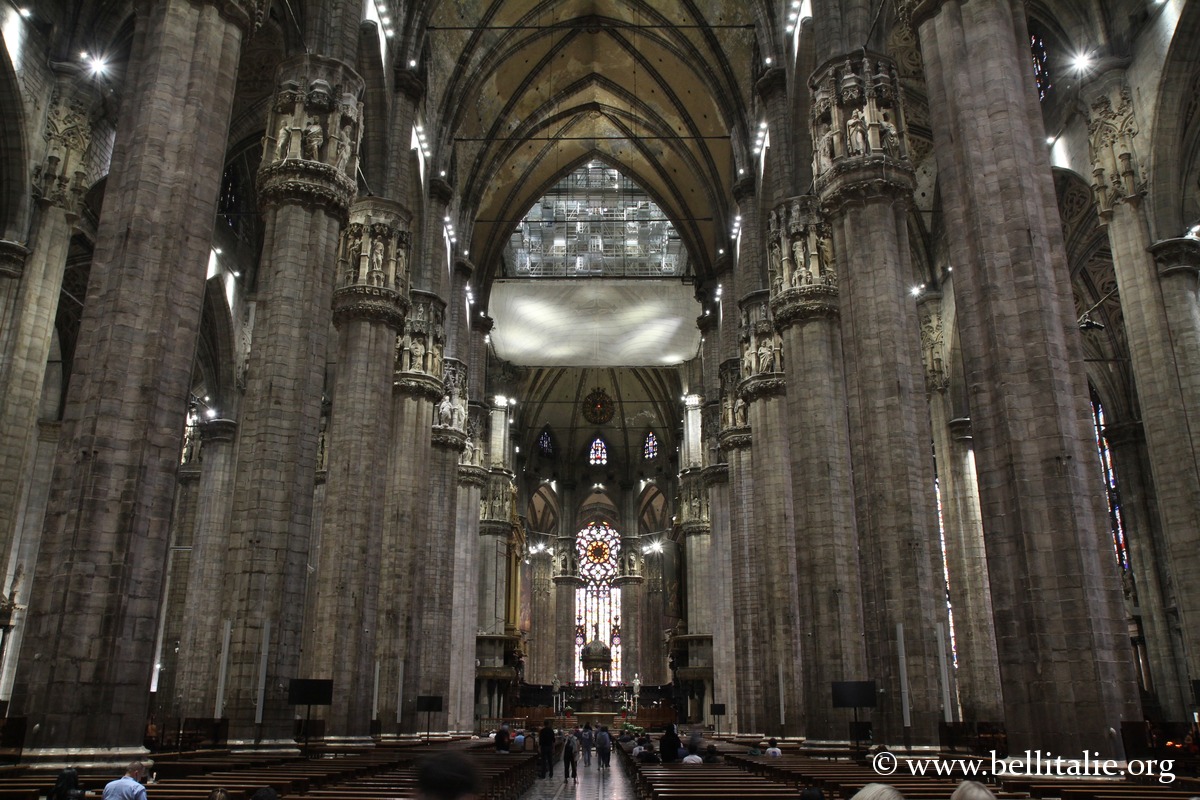
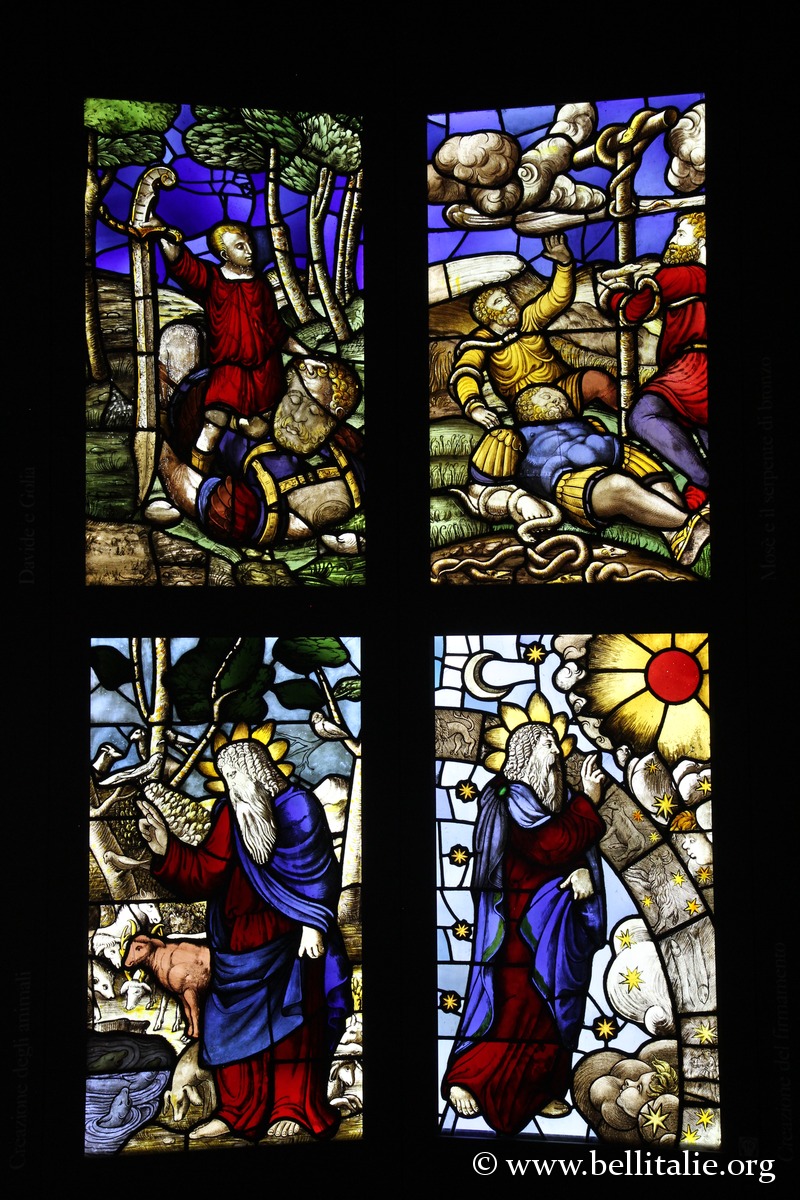
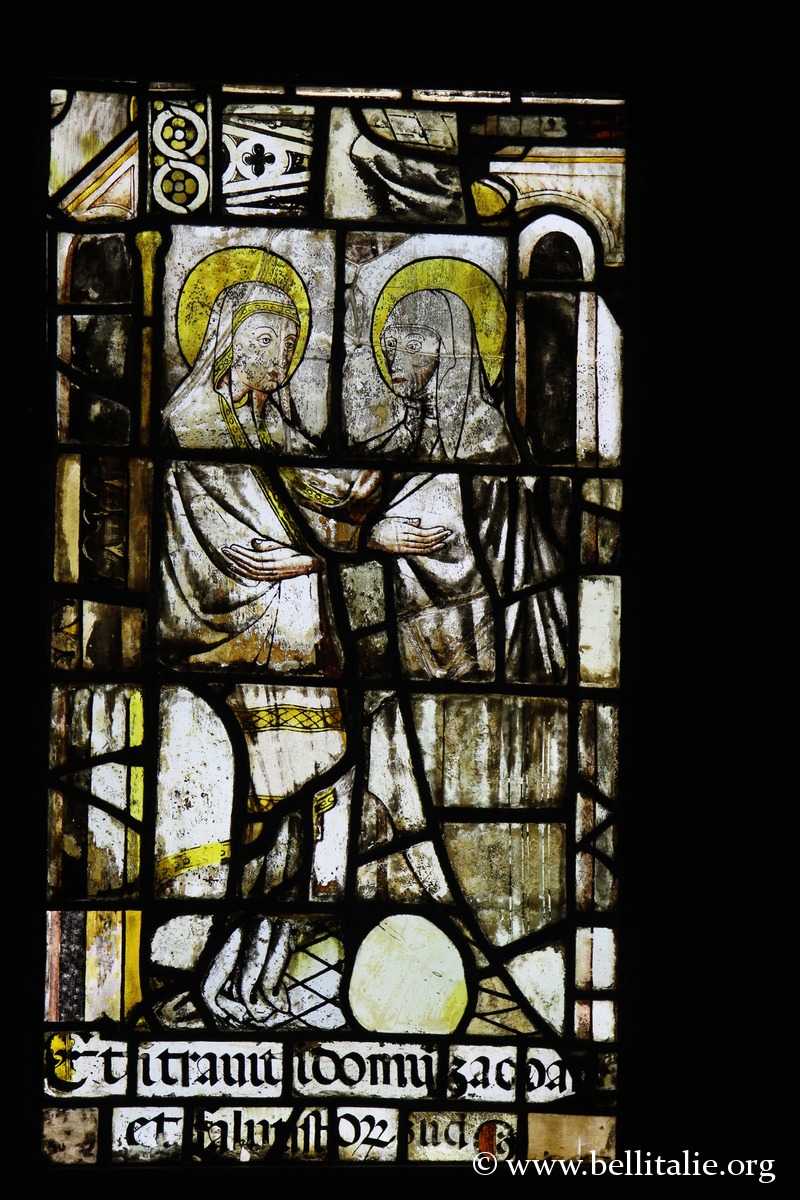
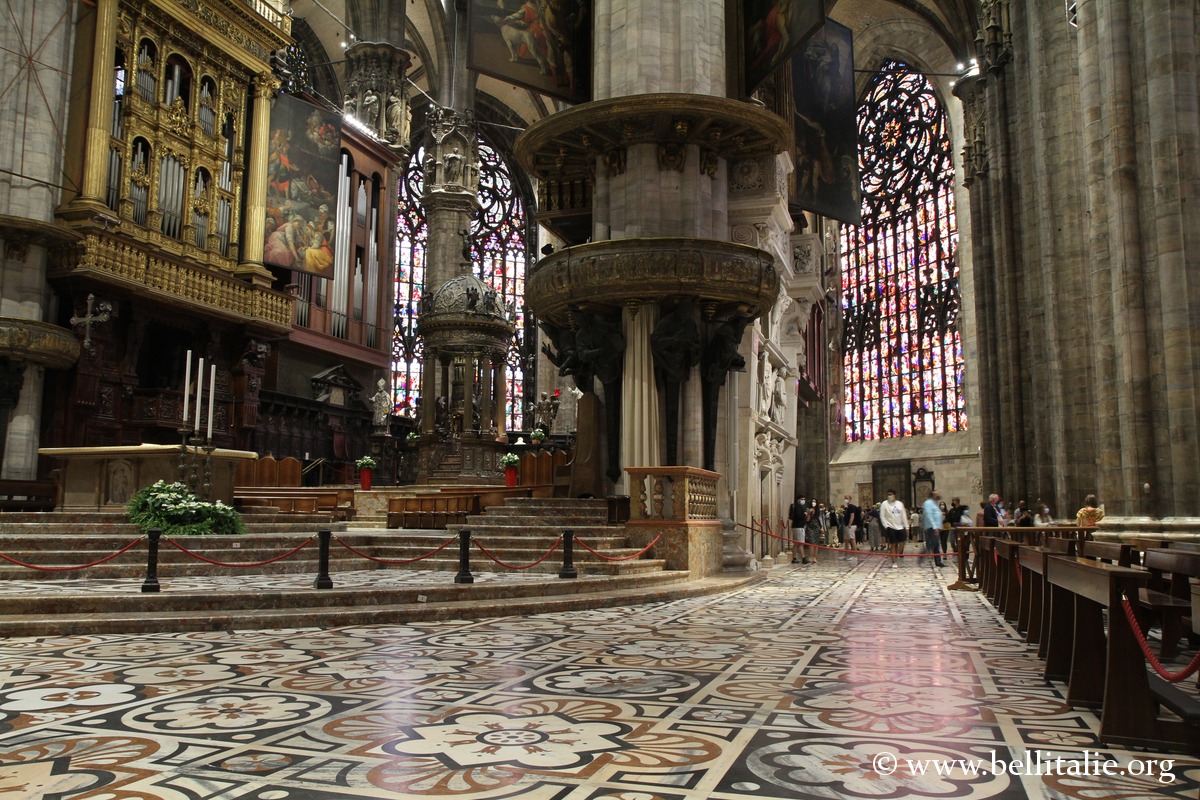
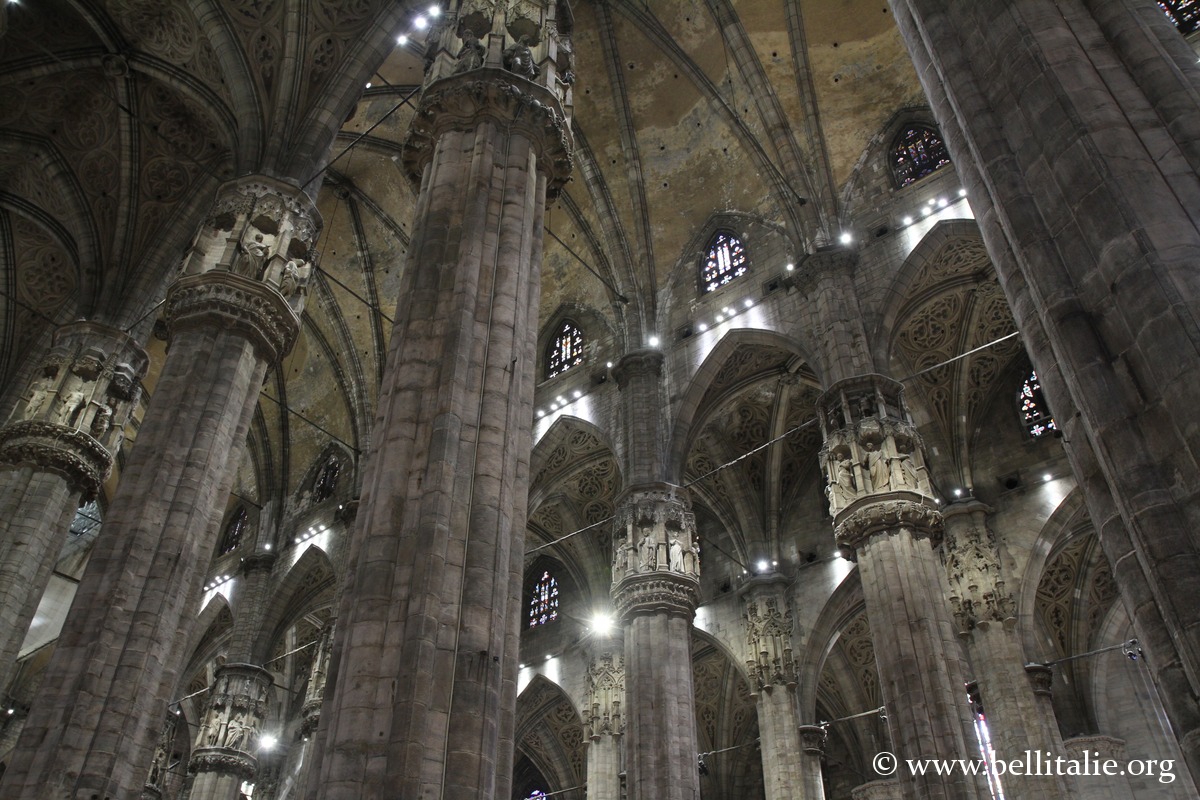
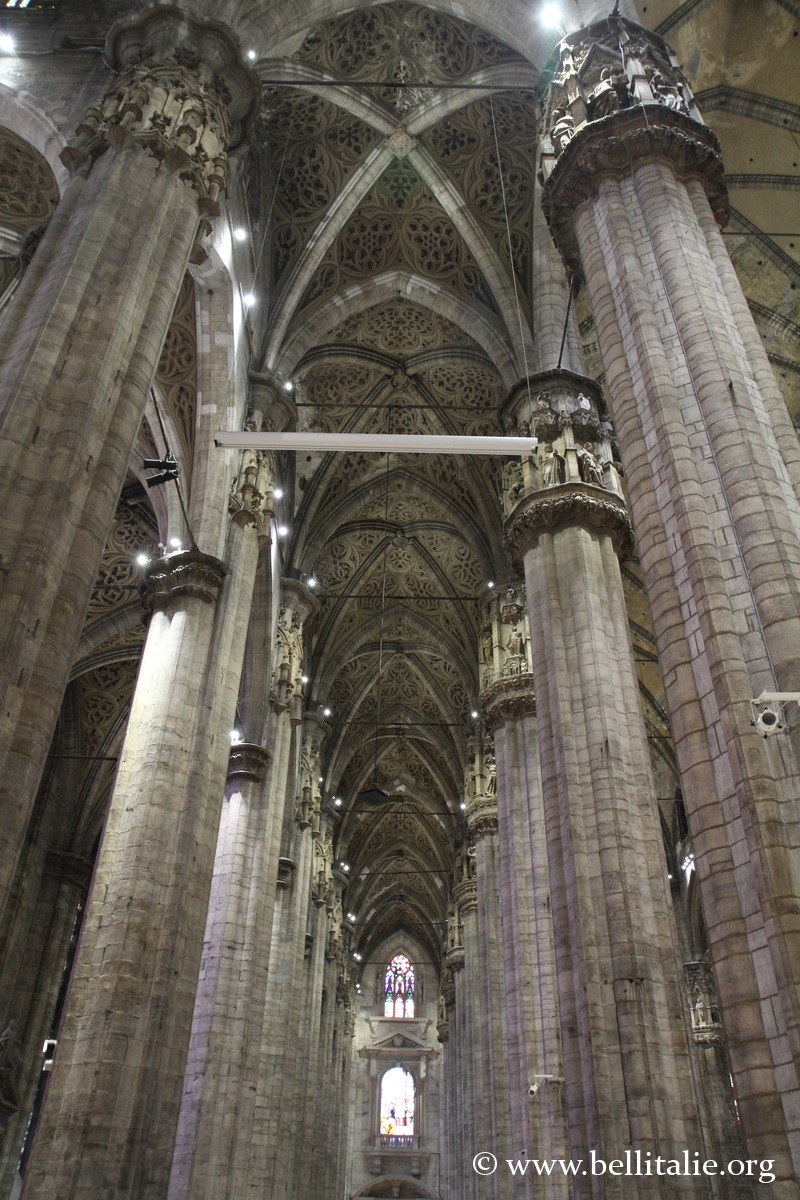
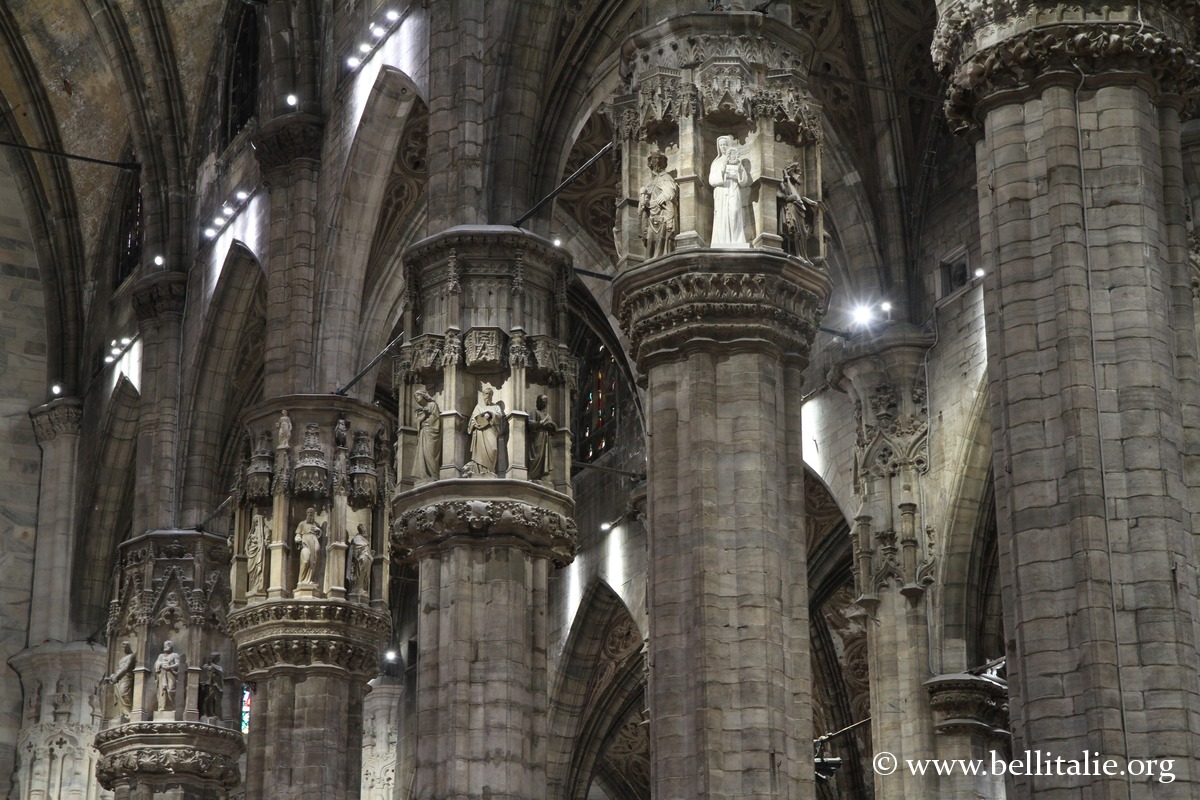
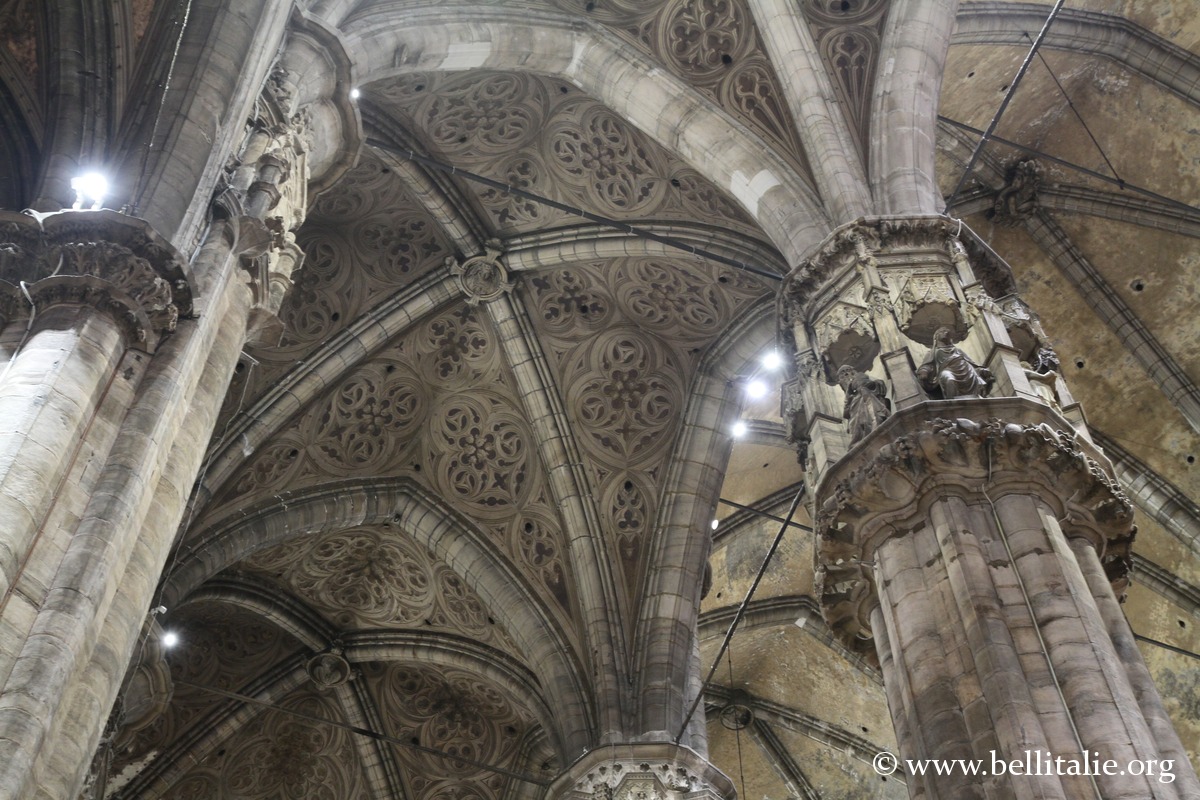
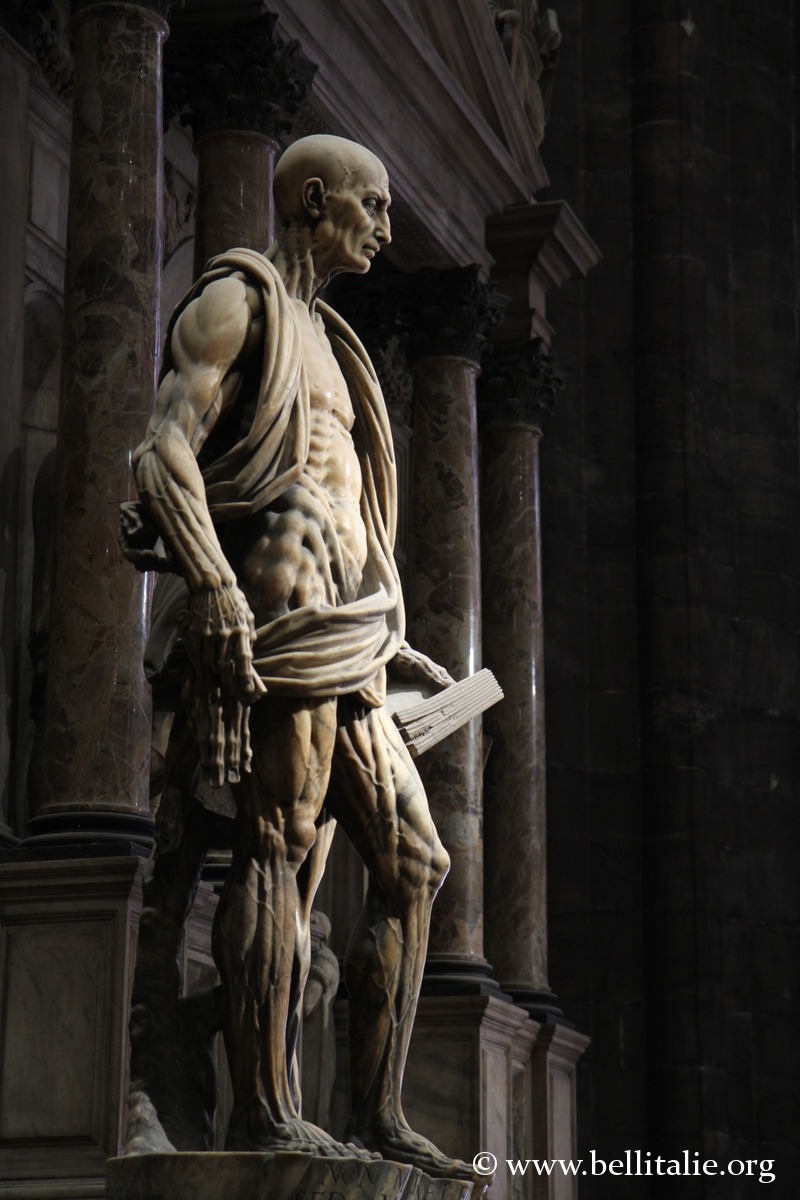
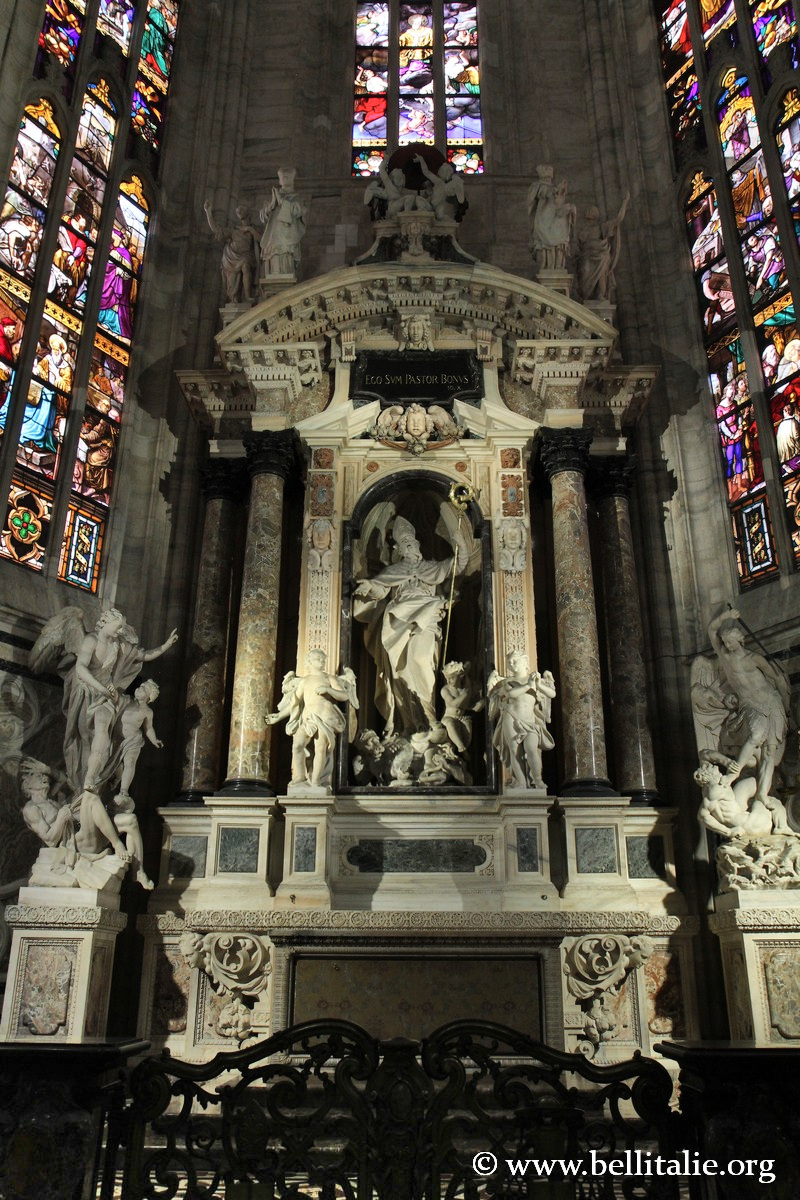
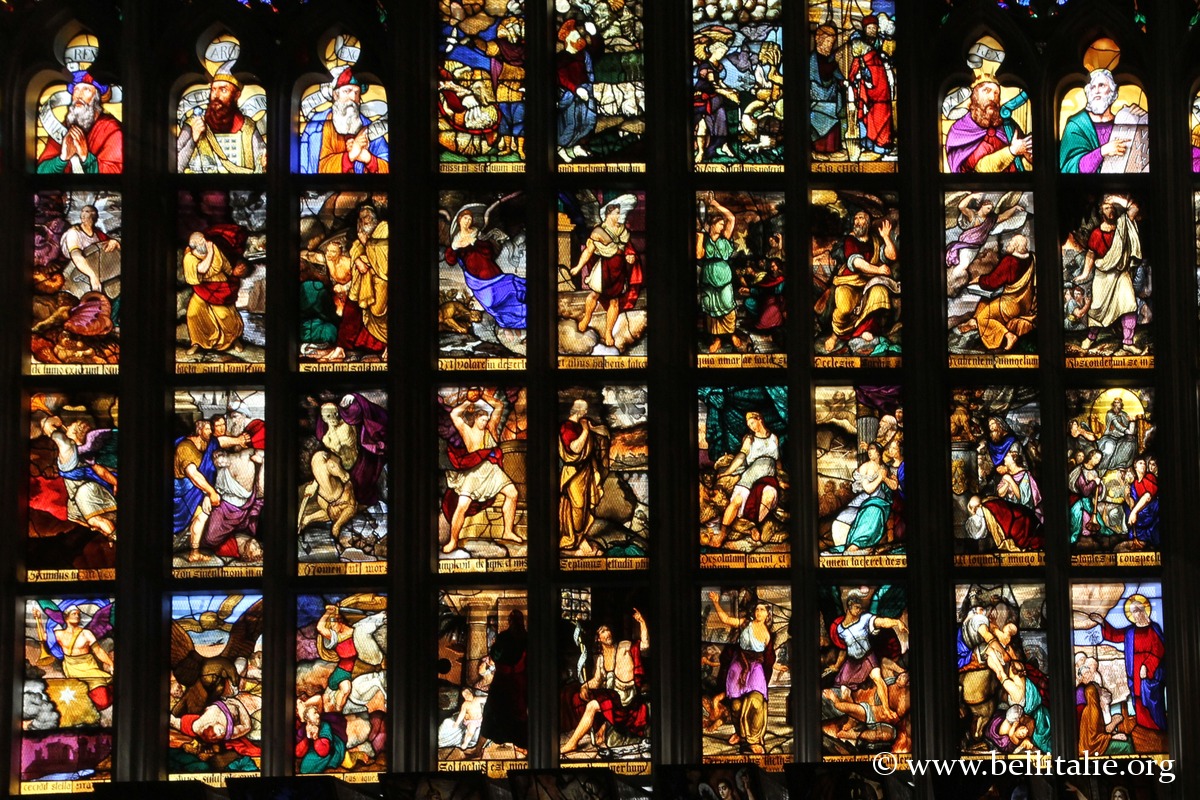
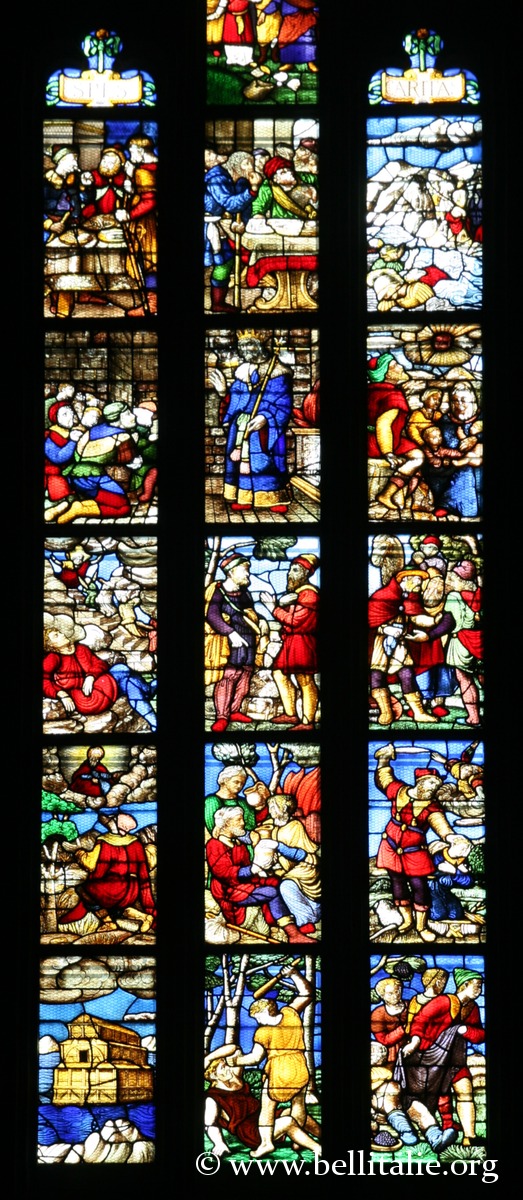
The immense Gothic interior impresses with the great height of its five naves, supported by 52 large columns, which are illuminated by stained glass windows, the oldest of which date back to the 15th century. Treasures abound between the columns, each of which is dedicated to a week of the year, with hundreds of statues, sarcophagi and tombs of archbishops, the crucifix by Leonardo da Vinci, or the superb candelabrum Trivulzio Gothic of the 13th century in bronze. Suspended above the main altar is kept the relic of the Holy Nail of the Cross. It also houses, for example, the tomb of Gian Giacomo Medici by Leone Leoni (1563), a walnut choir, a sundial, or a crypt of San Carlo del Richini from 1606 with the urn preserving the remains of Charles Borromeo.
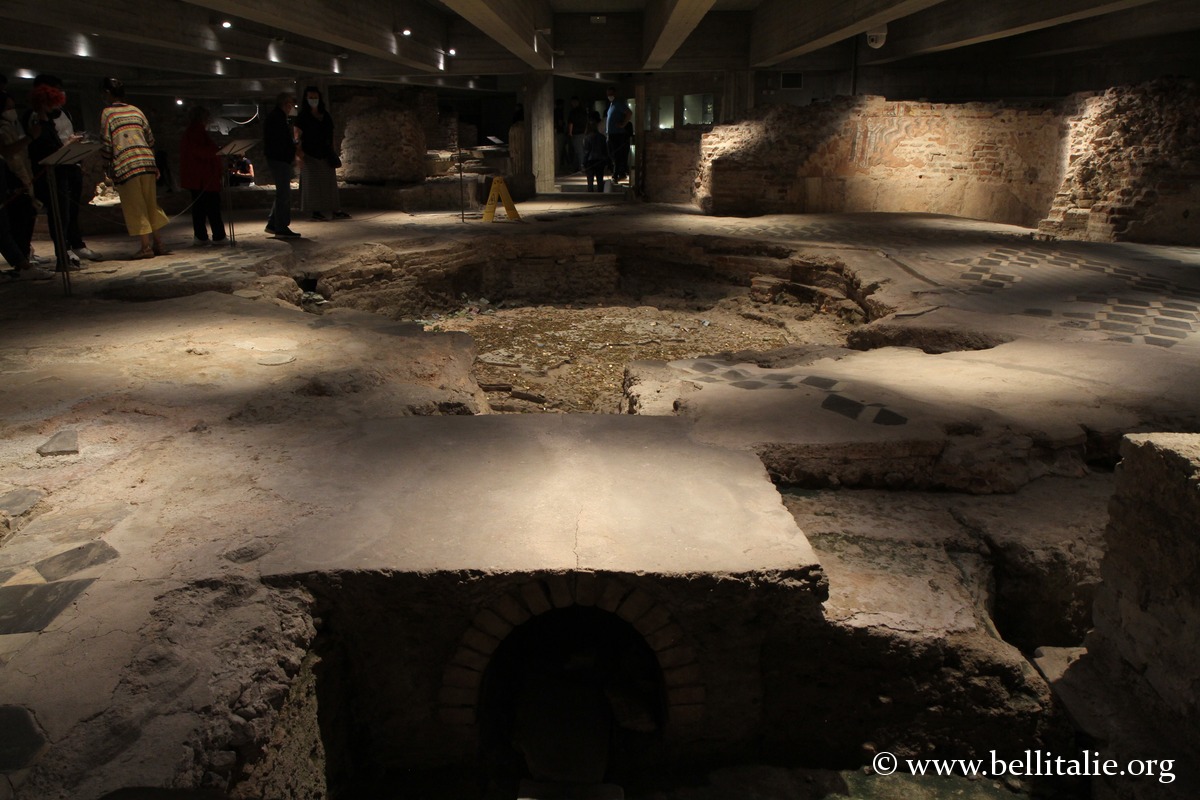
One can access the underground areas where archaeological remains of the original basilica of Santa Tecla are kept.
Visit and terrace
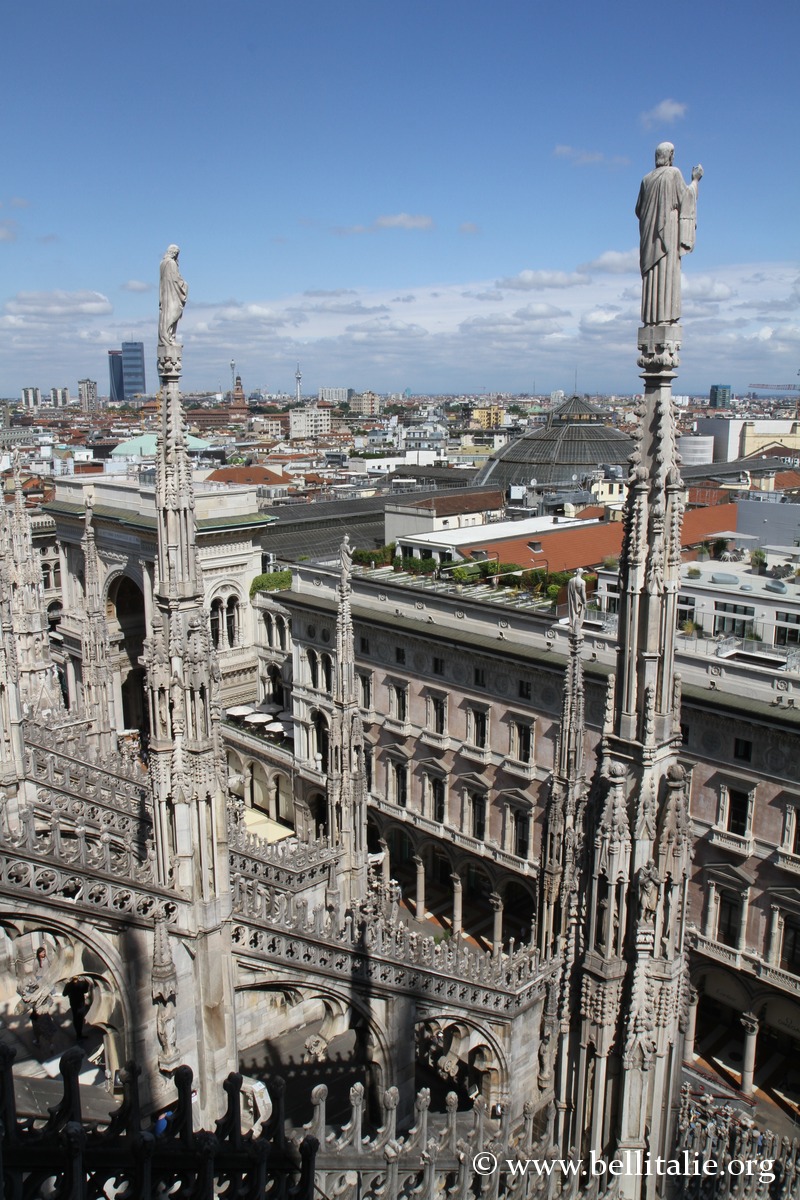
Nearly 4 million visitors come to discover the building every year, and sometimes the queue is particularly long. However, the visit would be incomplete without a tour of the terrace, with a unique view over the city between the tall spires and the marble sculptures. You can choose to go up by the stairs or by the lift, at different prices.
Duomo Museum
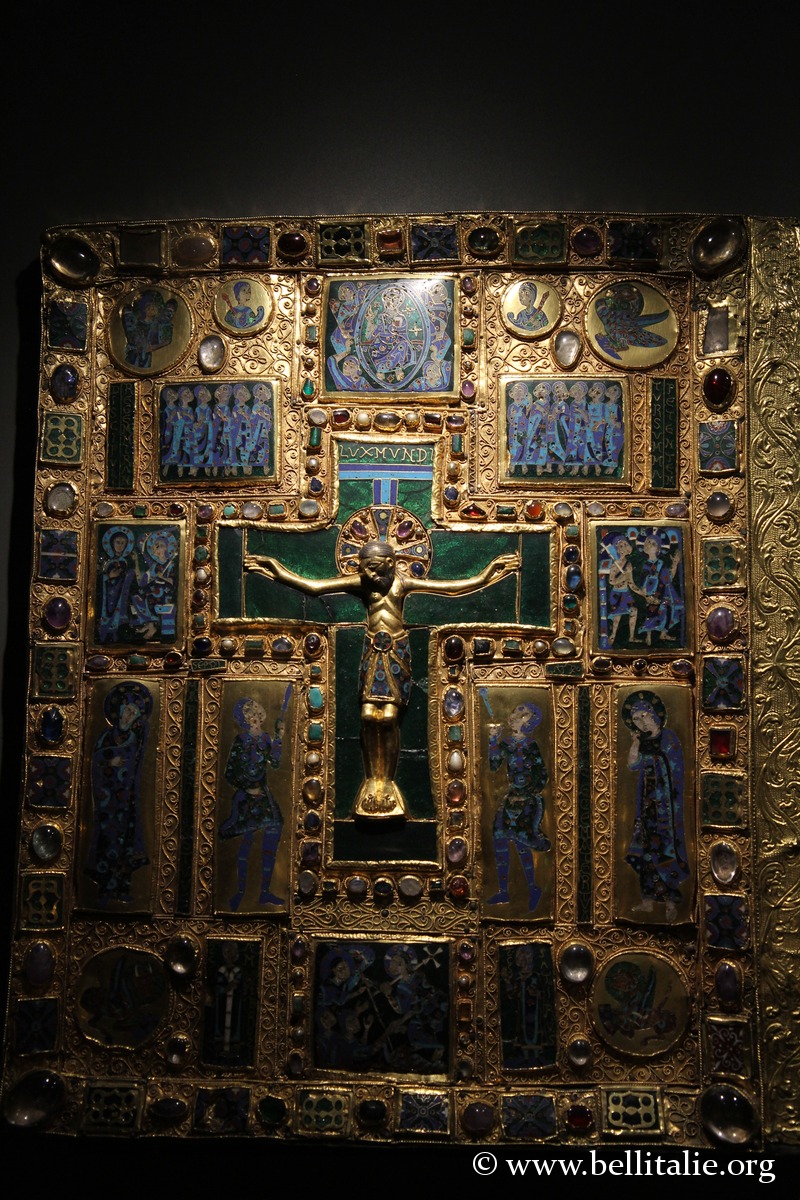
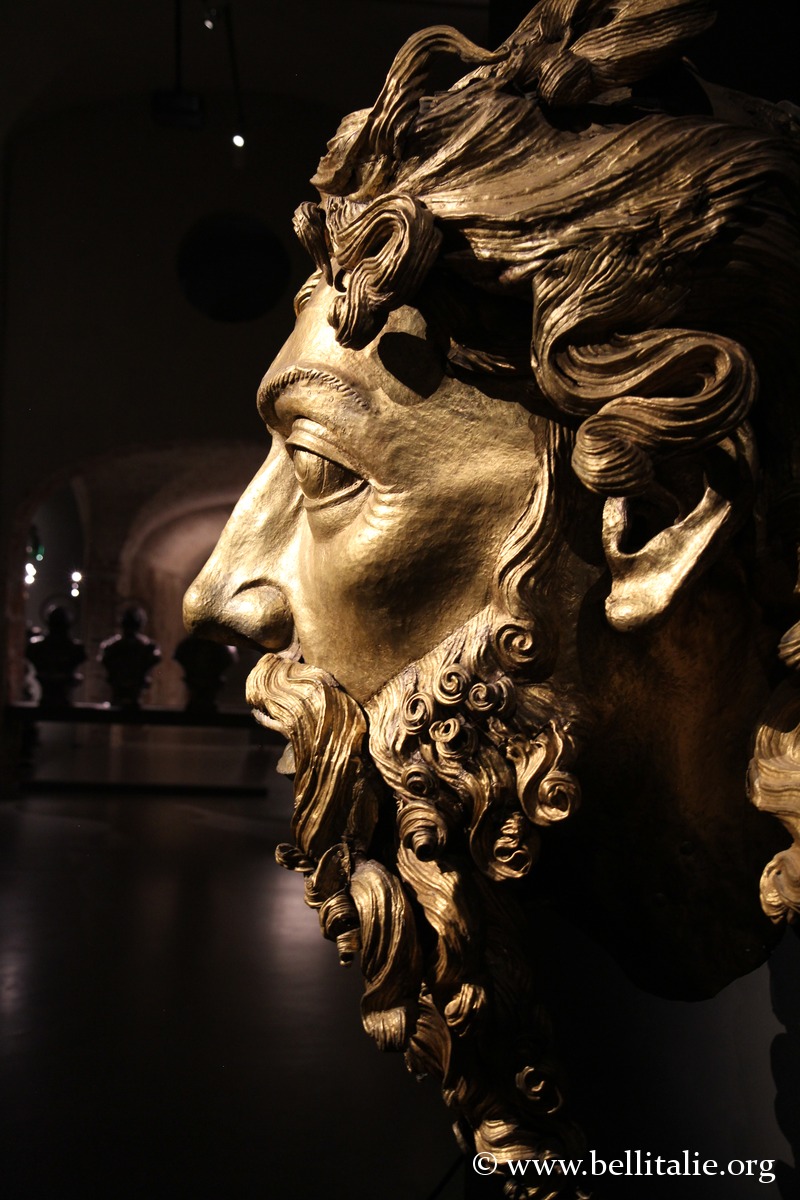
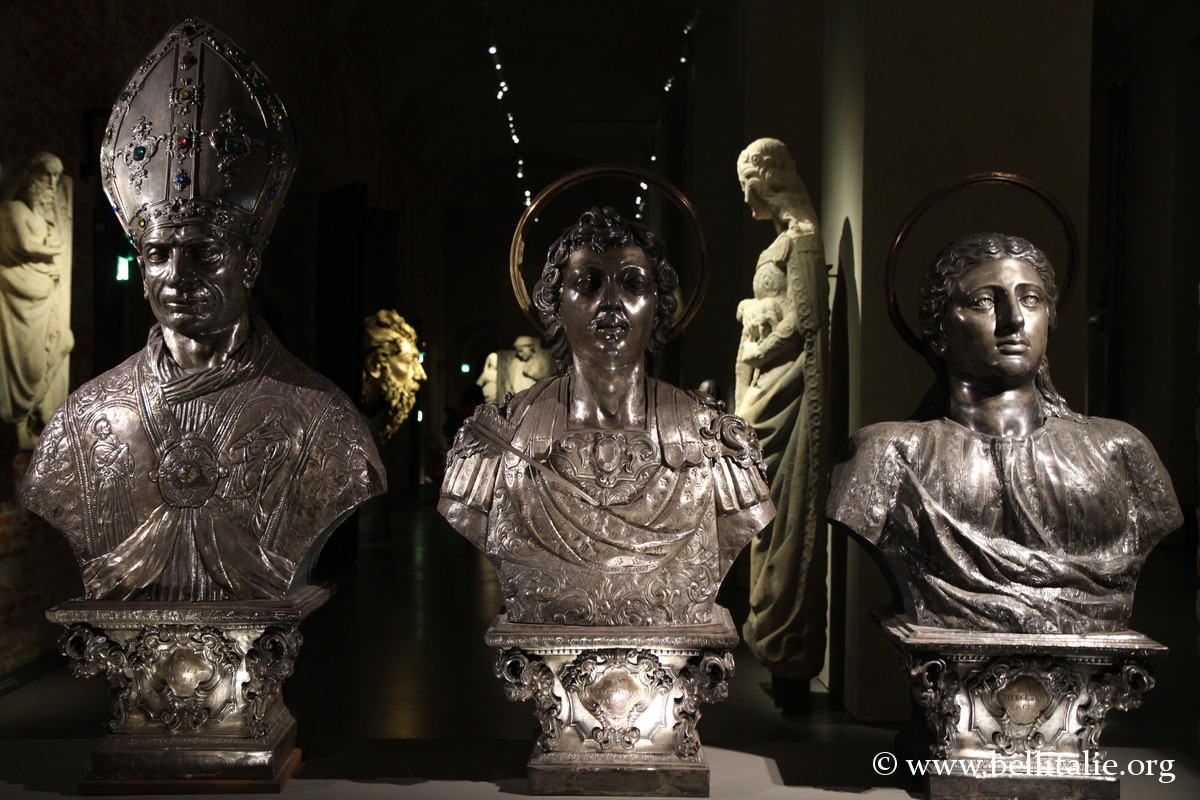
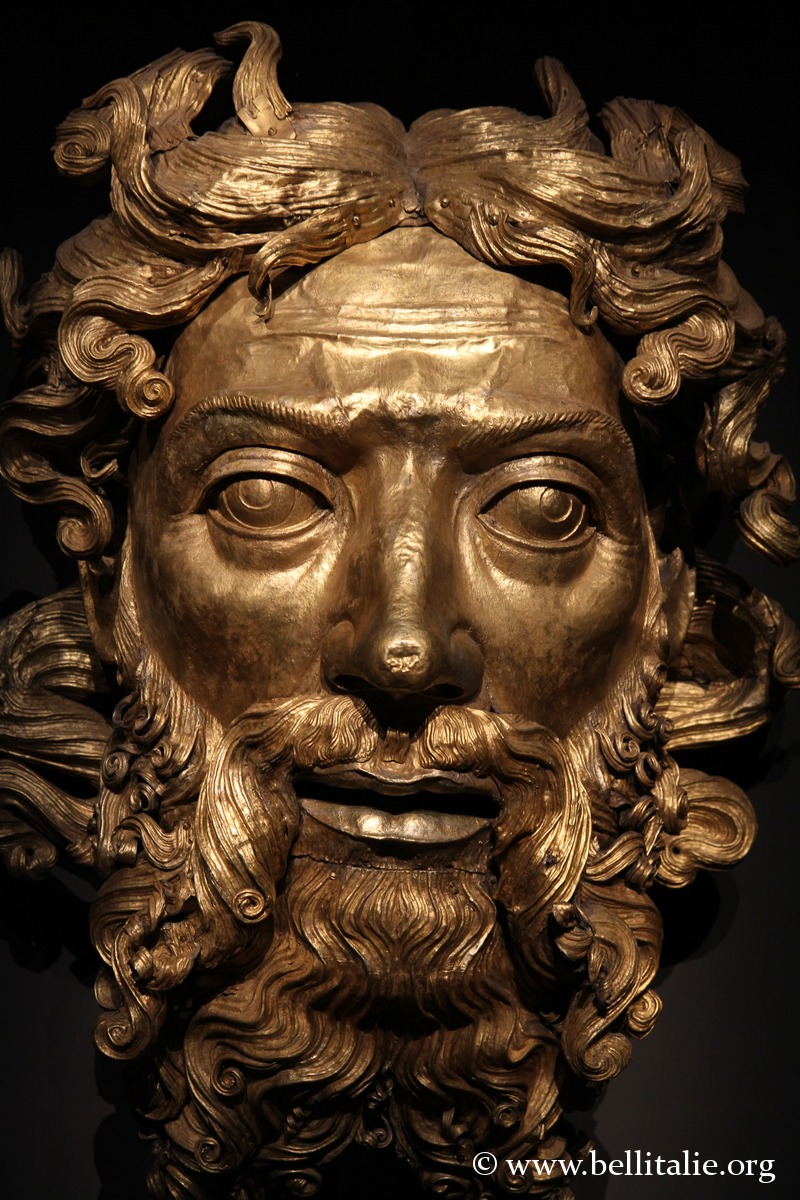
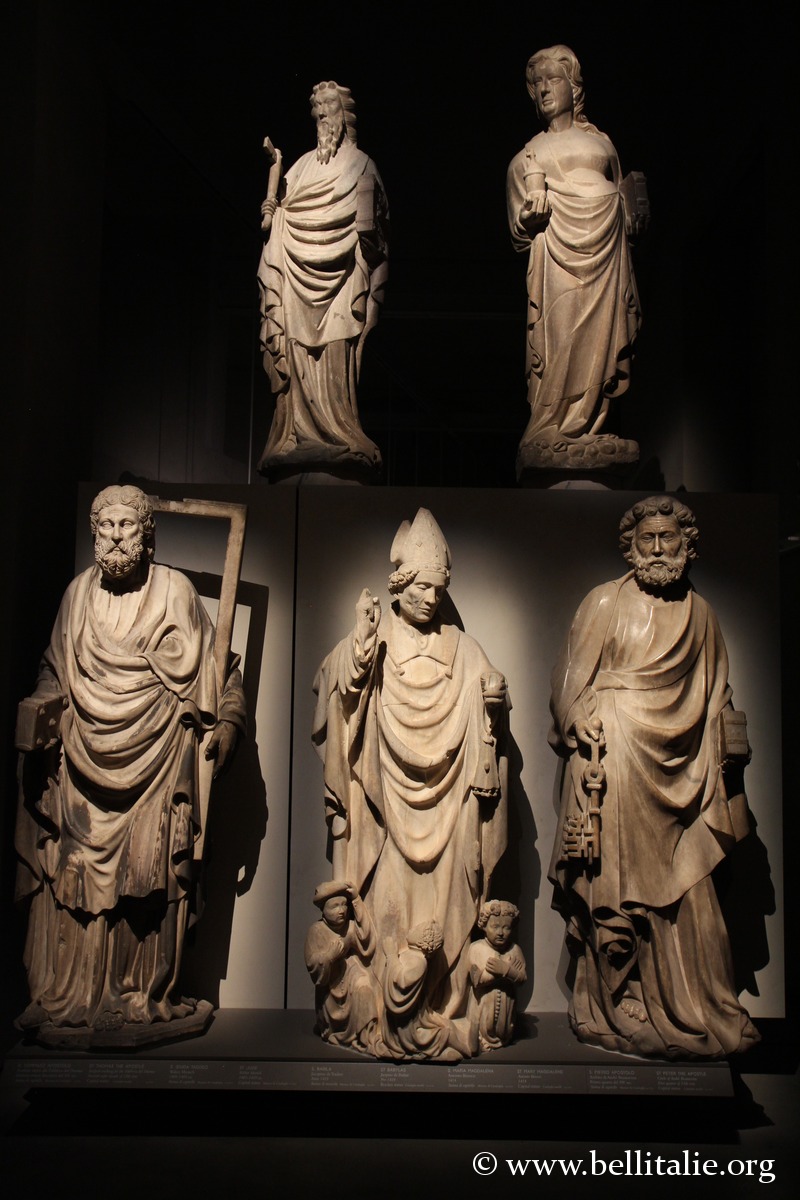
The Duomo Museum (Museo del Duomo) accessible near the Duomo in the Royal Palace complex is very interesting as it documents the construction of the building, with statues or stained glass windows that can be discovered up close under beautiful lighting, sacred objects and relics.
Gallery
Information
- Wikipedia page: en.wikipedia.org
- Official website: www.duomomilano.it
- Tourist portals: www.yesmilano.it
Map
If you see this after your page is loaded completely, leafletJS files are missing.
- What to see in Milan
- Itinerary ideas for visiting Milan

- Milan Cathedral
- Sforza Castle of Milan
- Victor Emmanuel II Gallery in Milan
- The Last Supper and Santa Maria delle Grazie
- Milan’s La Scala
- Basilica of Sant’Ambrogio in Milan

- Piazza dei Mercanti and Medieval Milan
- Selection of hotels and luxury hotels in Milan
- Leonardo da Vinci Museum of Science and Technology
- Brera Art Gallery
- Basilica of San Lorenzo, Milan
- Navigli District and Canals of Milan
- San Maurizio al Monastero Maggiore in Milan
- Milan Civic Archaeological Museum
- Basilica of Saint Nazarius in Milan
- Other Renaissance and Baroque monuments
- Neoclassical, 18th and 19th centuries in Milan
- The Museums of Milan
- Shopping, the Fashion Quadrilateral and Markets in Milan
- Squares and other sites of Milan





Comments