


Most of the places to discover in Bergamo are located in the upper town, known as the città alta, around the Piazza Vecchia and the Piazza Duomo, with their medieval and more recent buildings, both public and religious, inside an exceptionally well-preserved Venetian wall. For a visit to the upper town, read the article Visiting the upper town of Bergamo, and also see below the Tourist map of Bergamo
1. Piazza Vecchia
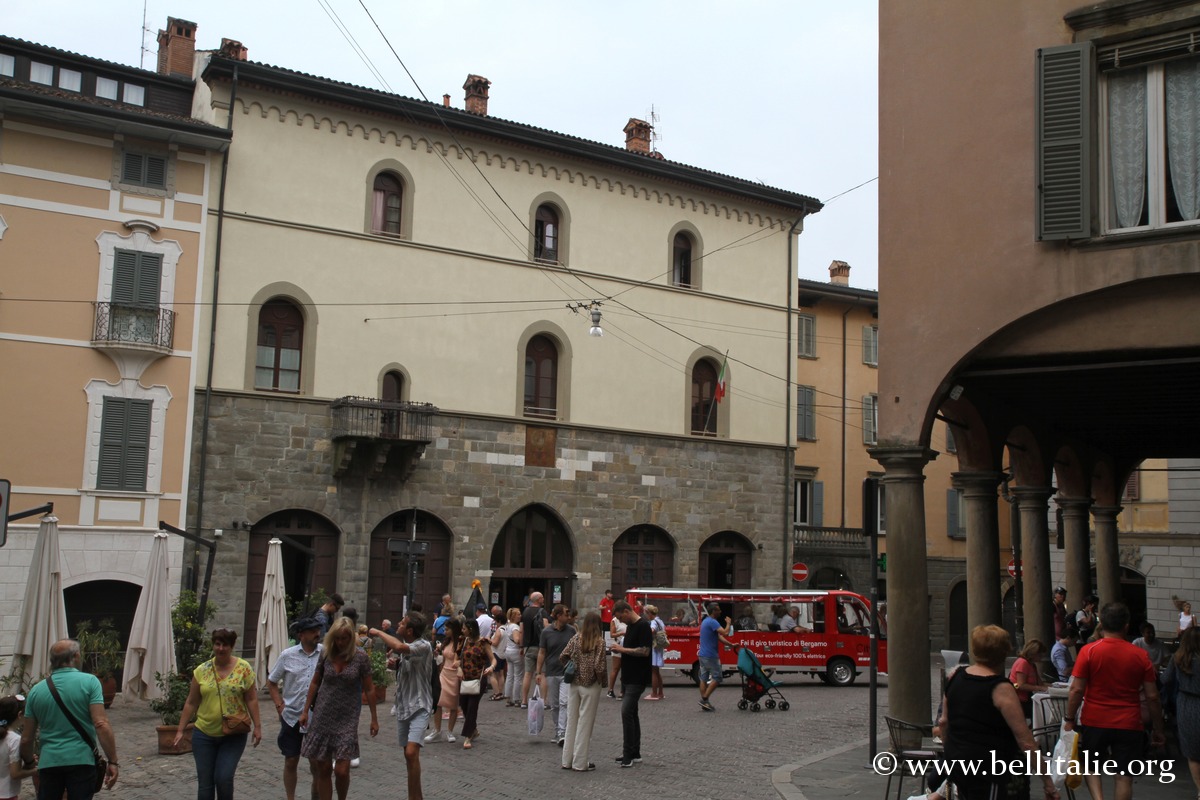
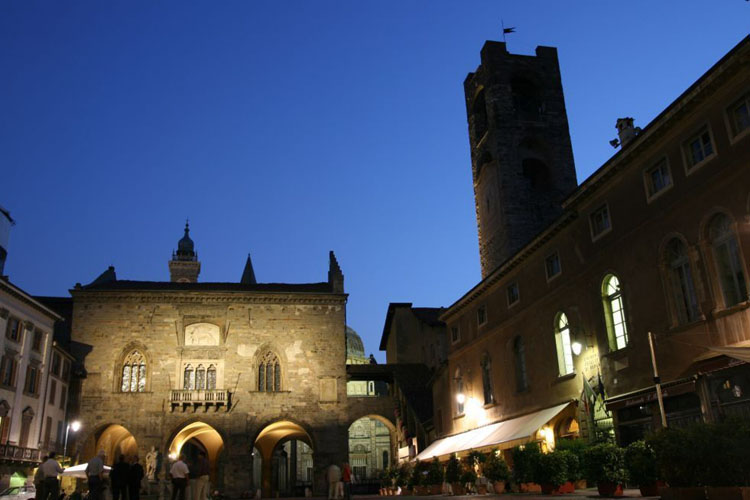 The beautiful square of the Piazza Vecchia is the heart of the upper town of Bergamo, separated from the Piazza Duomo by the portico of the Palazzo della Ragione.
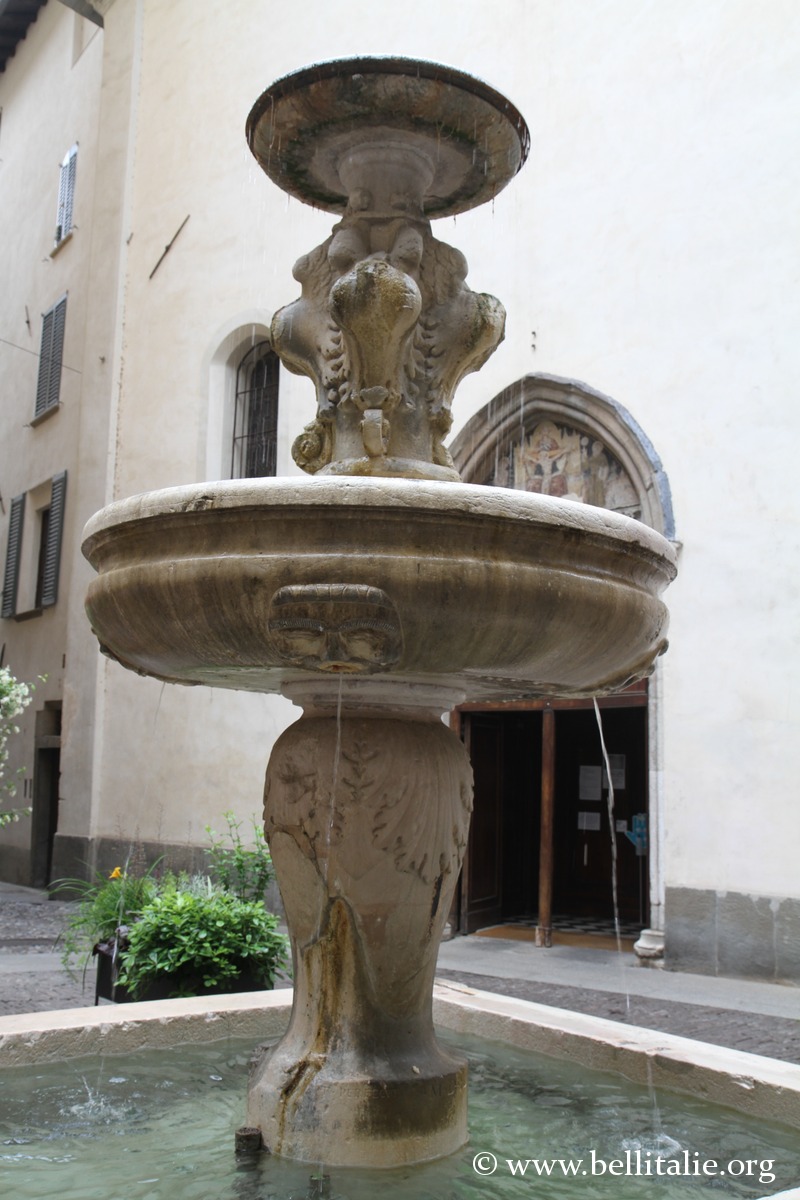
In the centre is the Contarini Fountain, and it is surrounded by the Palazzo della Ragione facing it, the bell tower known as the Campanone, the Palazzo del Podestà and the Angelo Mai Library housed in the Palazzo Nuovo (see the article on the Piazza Vecchia).
2. Palazzo della Ragione
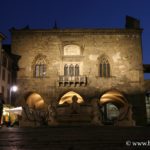
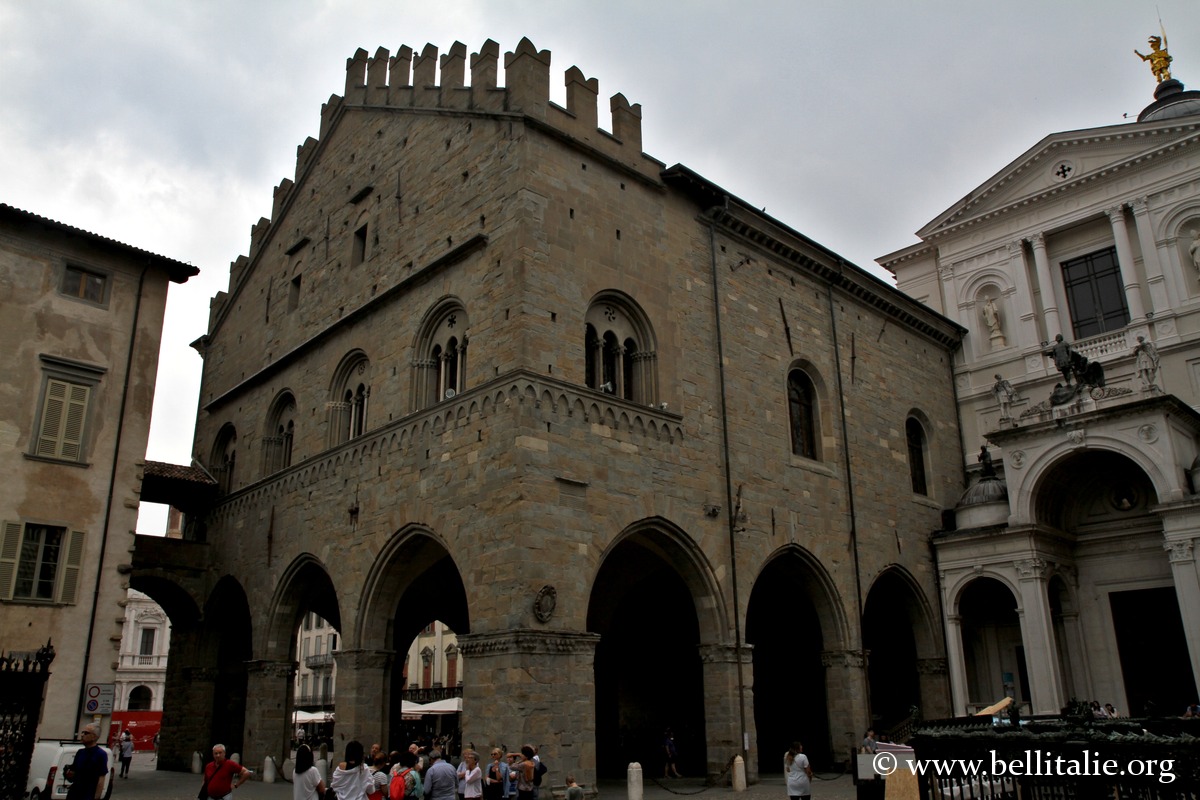 The Palazzo della Ragione is the oldest civil palace in Bergamo, built at the end of the 12th century in the era of the first Lombard communes that developed within the Holy Roman Empire.
In the 15th century it was transformed into a courthouse when the Venetians arrived. Its current appearance dates from a reconstruction in 1540. Under the portico separating the Piazza Vecchia from the Piazza del Duomo, a sundial was installed in 1798. On the first floor is the splendid Sala delle Capriate with its balcony overlooking the square, and a collection of frescoes recovered from the city and its surroundings. Visiting the palace is free, except during exhibitions (see also the article on the Piazza Vecchia).
3. Torre Civica and Palazzo del Podestà
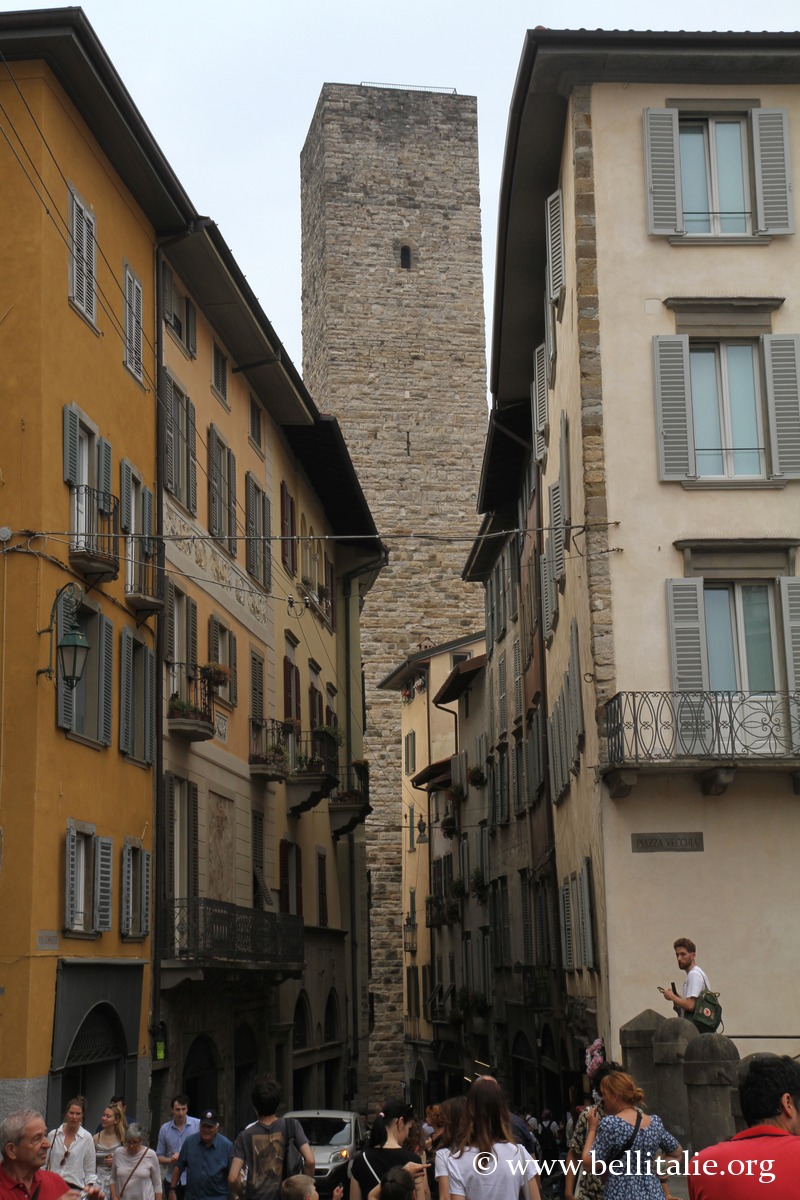
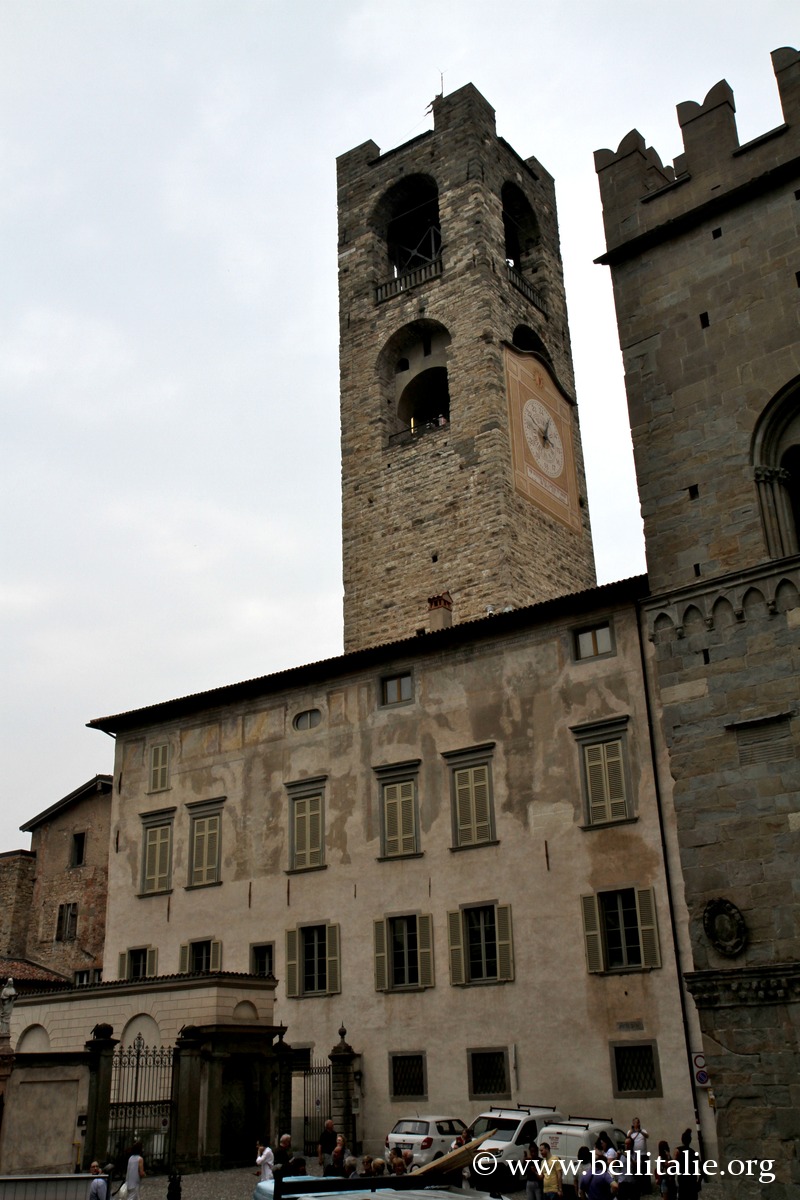 The Torre Civica which dominates the Piazza Vecchia, is 53 metres high, erected towards the end of the 11th century. Its bells ring at 10 pm, as they have for 350 years, to recall the closing of the gates of the Upper Town. Like the adjoining Palazzo del Podestà it was built by the Suardi-Colleoni. Originally measuring 38 metres in height, it was raised by the city in the 16th century with the addition of the floor for the bells and the clock. You can climb it to enjoy a beautiful view over the monuments of Bergamo.
The adjoining Palazzo del Podestà was often remodelled and today houses a museum on the history of Bergamo. Bramante had painted seven philosophers on its facade, of which the only surviving fragment is in the Palazzo della Ragione (see the article on the Piazza Vecchia).
4. Basilica of Santa Maria Maggiore
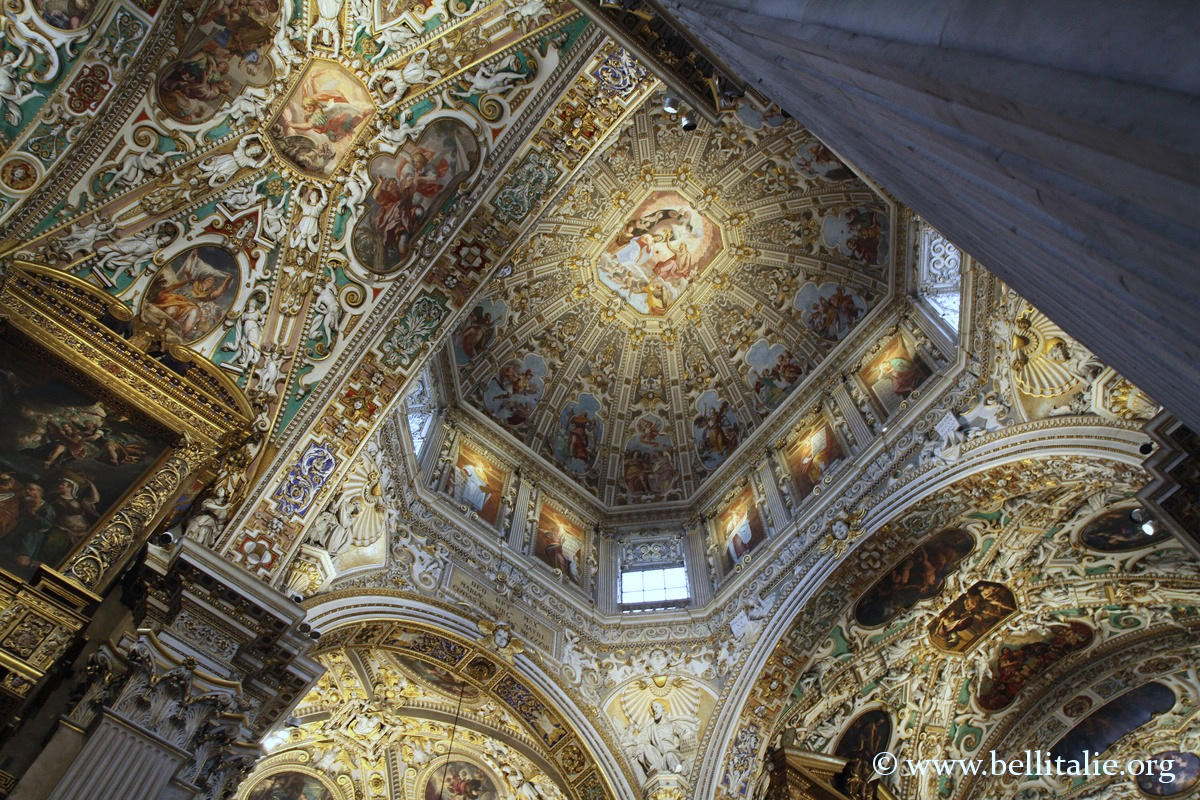 On the Piazza Duomo, the church of Santa Maria Maggiore is the most important religious building in Bergamo, built from the 12th century onwards.
The sober Romanesque facade has no portal; you enter through one of the four beautiful side doors, including the \”portal of the red lions\” on the north side and the \”portal of the white lions\” on the south.
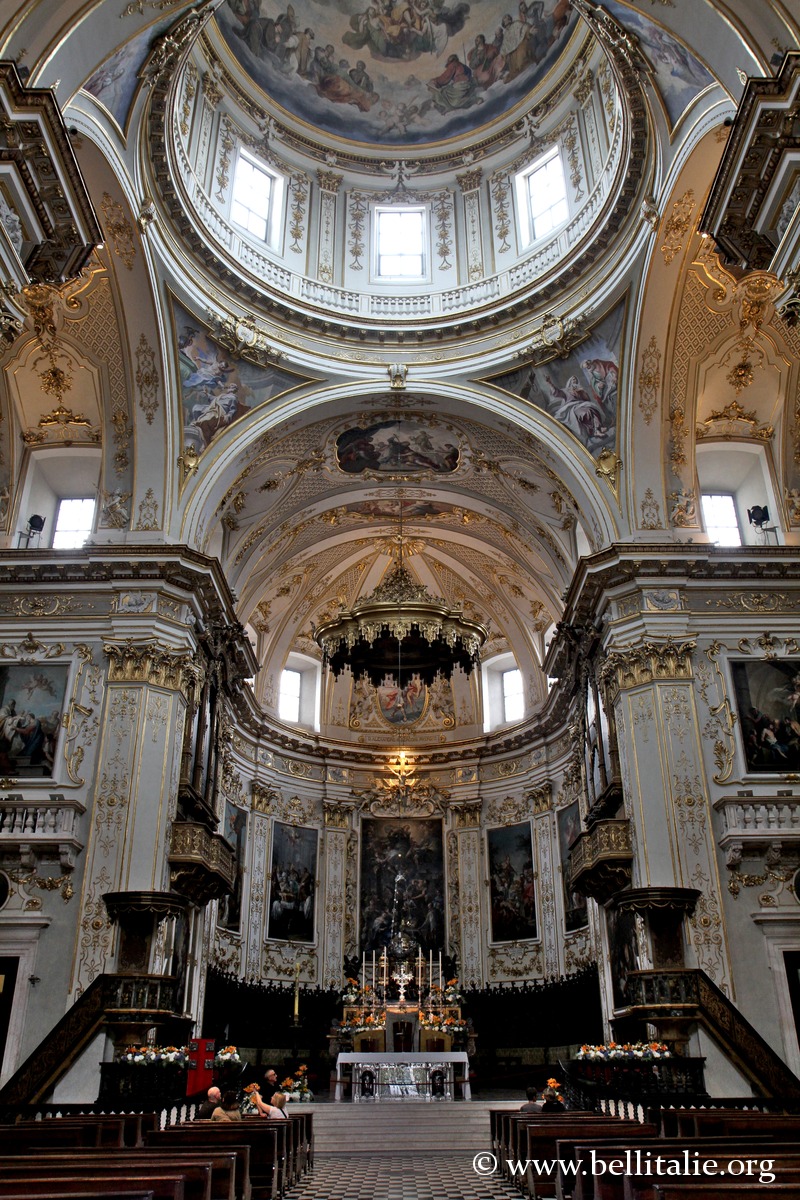
The interior is adorned with beautiful Baroque decorations with paintings, stuccoes and tapestries, by artists such as Luca Giordano, remarkable funeral monuments, and above all a choir with 16th-century marquetry designed by Lorenzo Lotto (see the article on the Basilica of Santa Maria Maggiore).
5. Colleoni Chapel
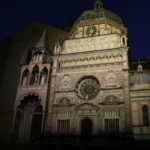
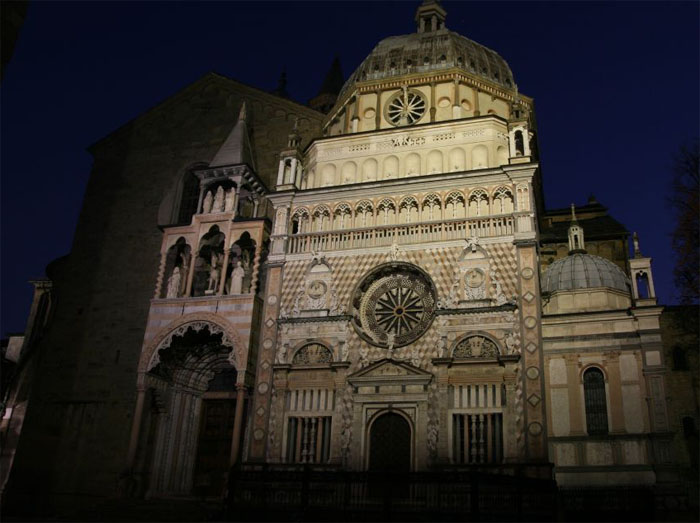 Adjoining the basilica, the Colleoni Chapel is a major work of the Italian Renaissance, built between 1470 and 1476 at the initiative of the mercenary captain Bartolomeo Colleoni to make it his mausoleum.
The facade is very beautiful, with polychrome diamonds and the rose window flanked by niches with the busts of Caesar and Trajan. Inside, the Sarcophagus of Colleoni stands out with its equestrian statue in gilded wood, as do the frescoes of the dome by Tiepolo (see the article on the Basilica of Santa Maria Maggiore).
6. Carrara Academy
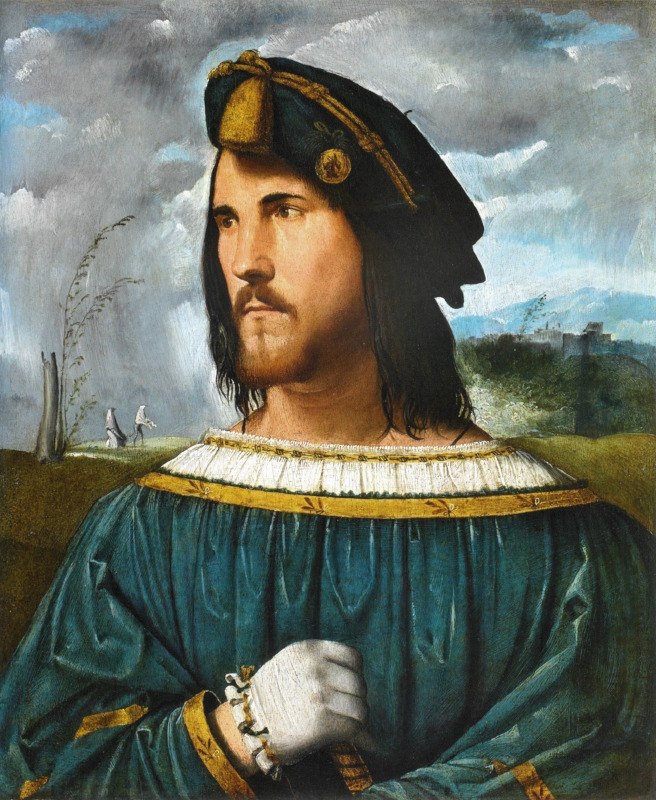
Portrait of Cesare Borgia (Melone)
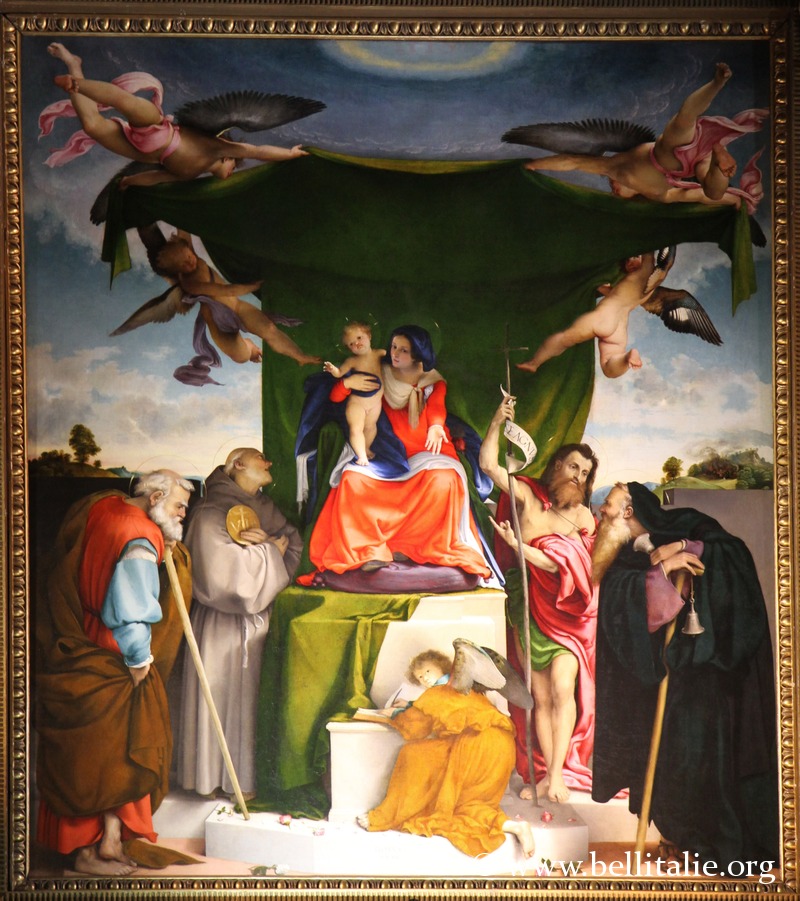
The Carrara Academy is an important Italian museum, located in the lower town. Since 1793 it has gathered paintings from the Venetian, Lombard and Tuscan schools, dating from the 15th to the 18th centuries, with masterpieces by artists such as Pinturicchio, Ghirlandaio, Bellini, Raphael (Saint Sebastian), Titian (Madonna and Child), Gozzoli, Lotto, Rubens, Tiepolo or Canaletto.
7. Venetian wall
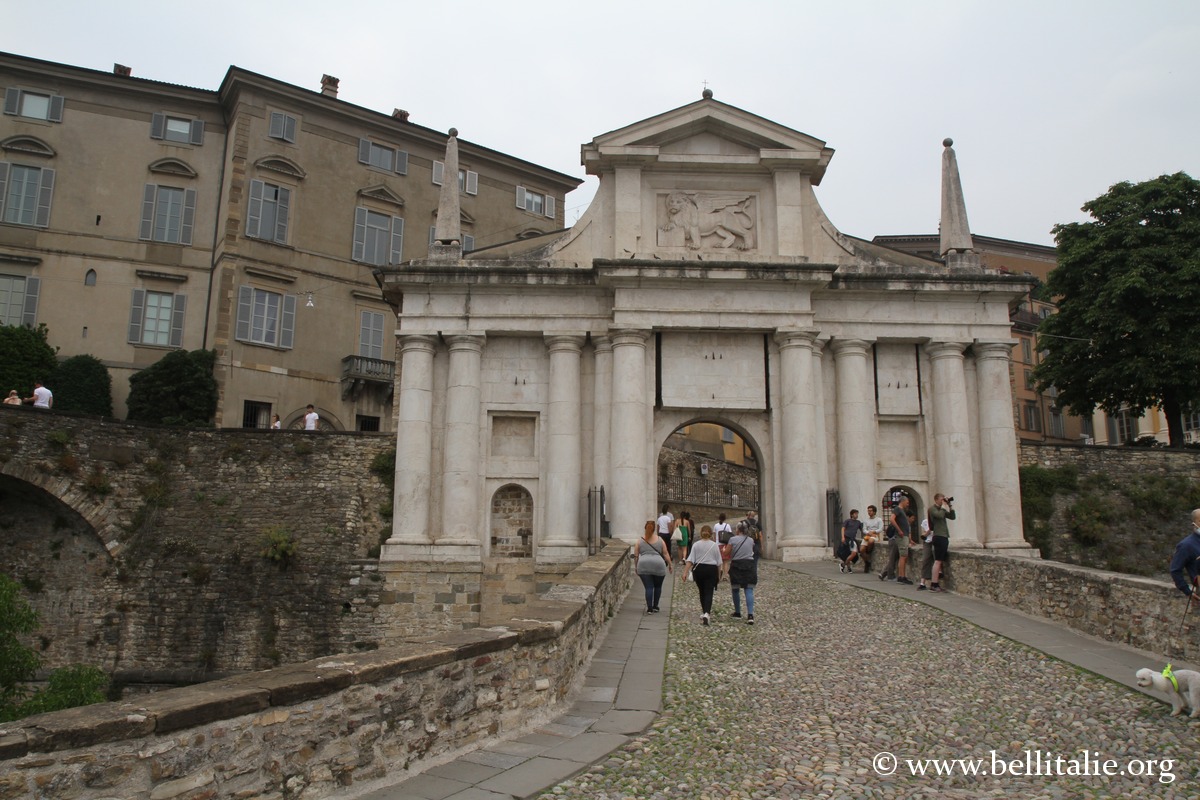
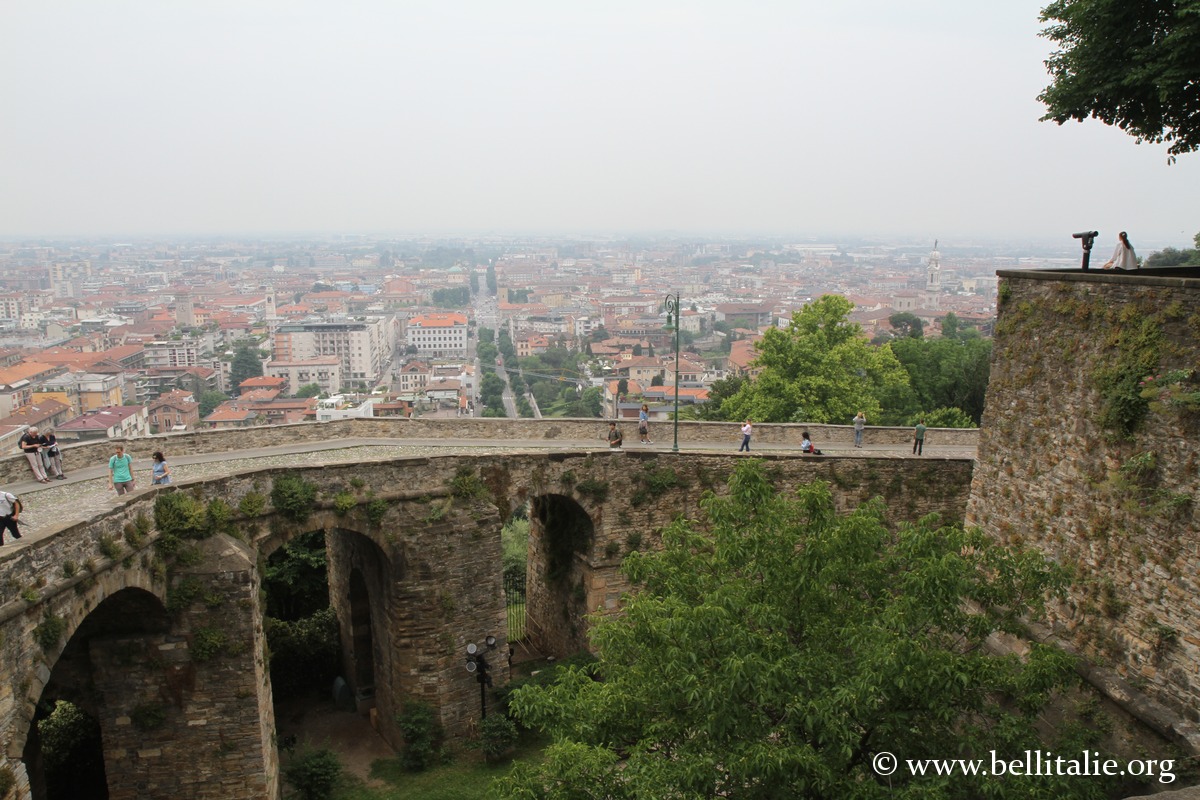
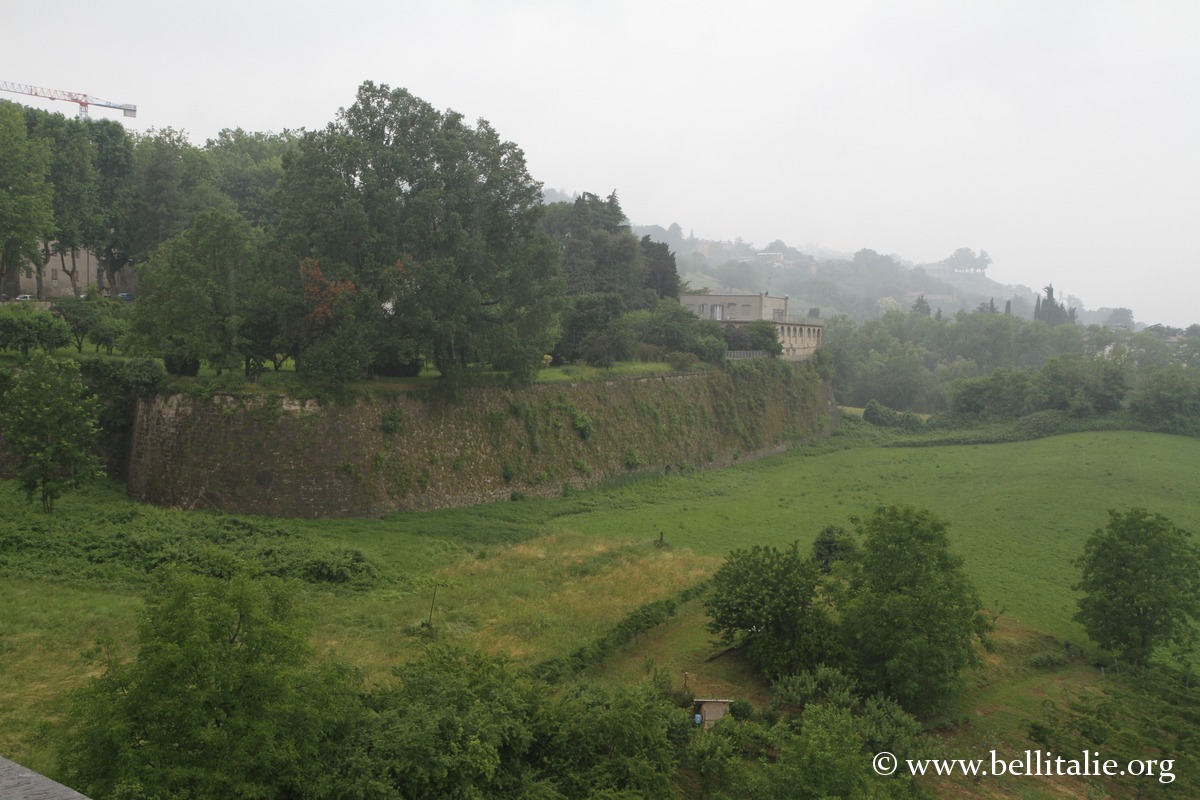
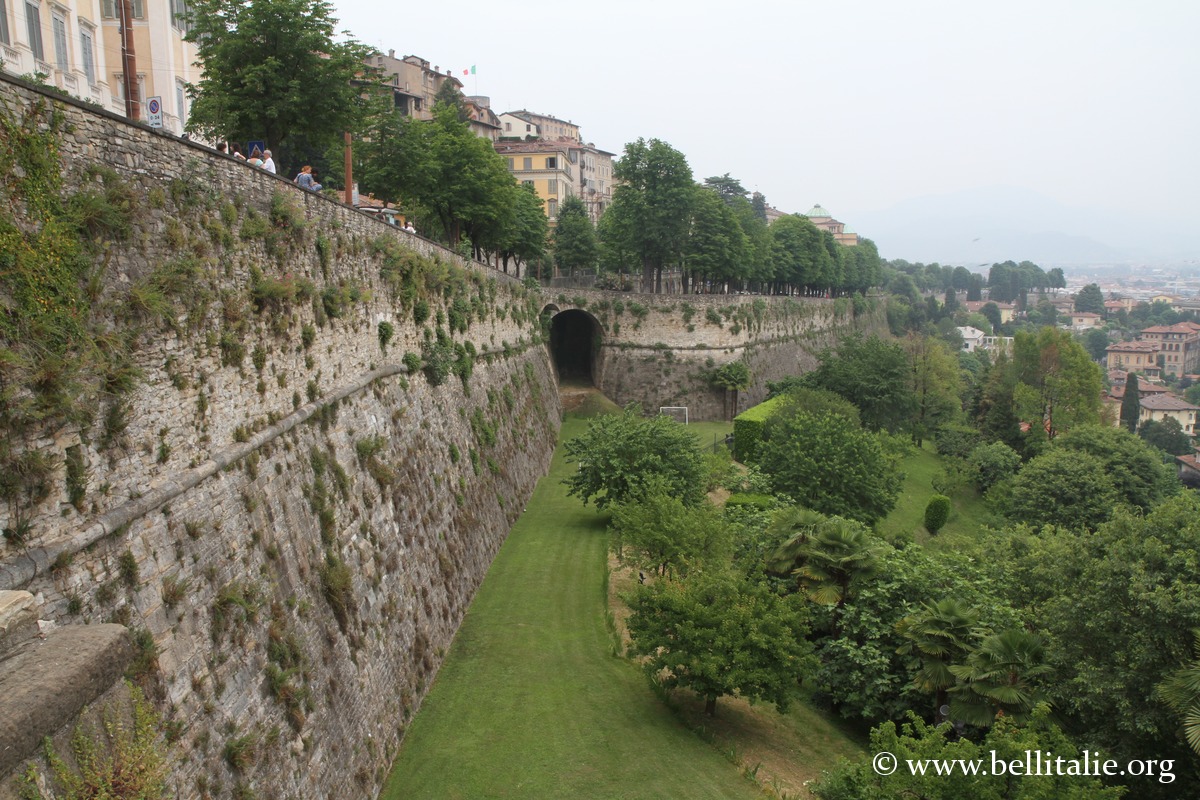 This wall 6 kilometres long protects the città alta of Bergamo. It was built by the Venetians in 1561 on an ancient Roman wall. On that occasion the latter destroyed many houses and above all two churches, which earned them several excommunications that they superbly ignored. Walks along the wall are quiet and pleasant, passing by the four gates, such as the beautiful Porta San Giacomo, or that of Colle Aperto at the western end, to that of Porta Sant’Agostino in the east.
8. Visconti Citadel
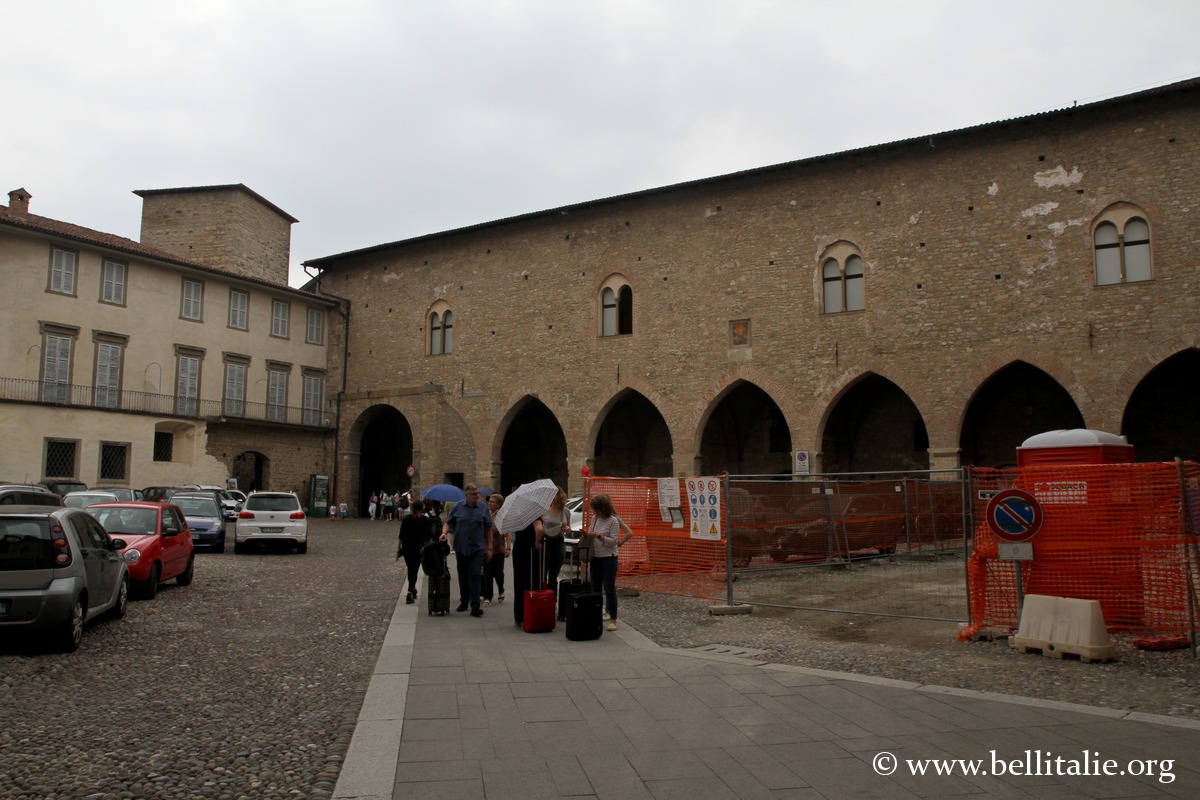 A fortified citadel is located in the very centre of Bergamo, built by the Visconti to assert the power of the Dukes of Milan who controlled Bergamo from 1332 to 1428.
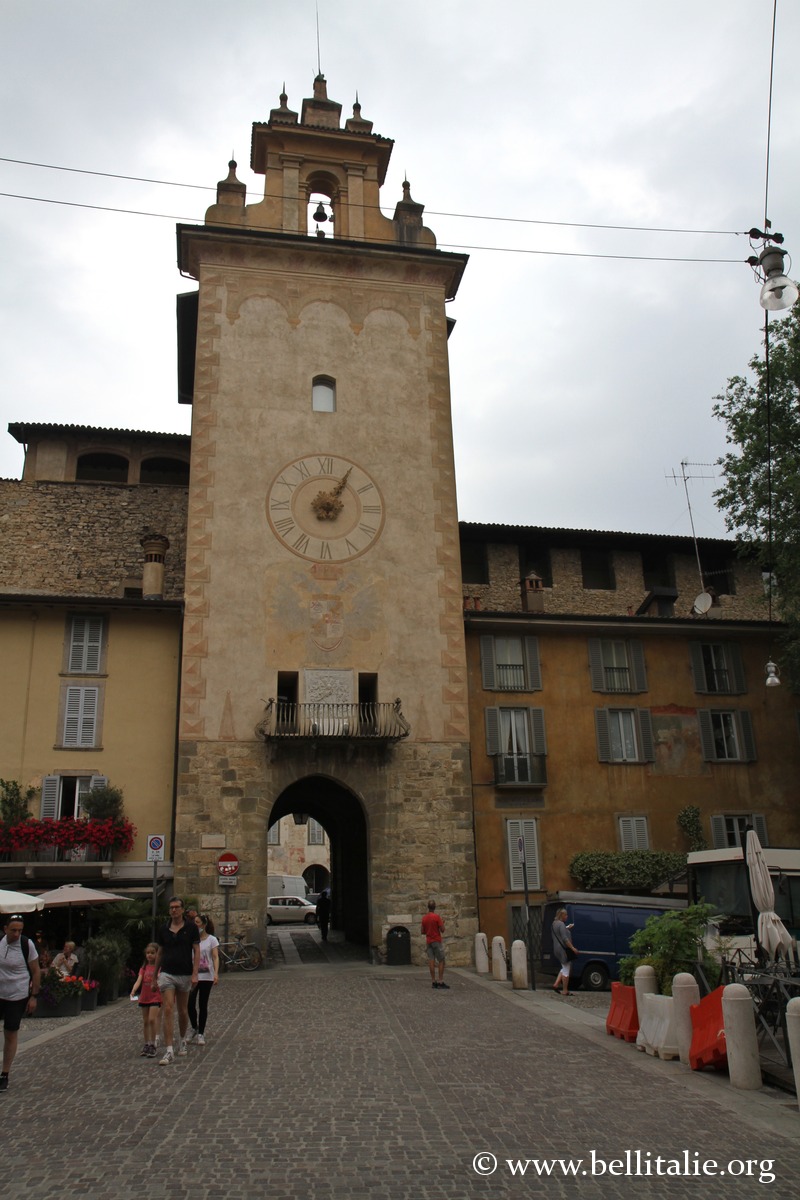
Today in the centre is the Piazza della Citadella, laid out in 1379 as the courtyard of the military lodgings. It is accessed through the Torre della Campanella, near an old medieval postern that crossed the old medieval wall, with Roman paving stones, and porches with Romanesque vaults. On the west side the La Crotta garden is a lovely quiet spot. On the north side of the square, the Torre d’Adalberto has an entrance located halfway up. The latter served as a prison and was nicknamed \”the tower of Hunger\”.
Around the current Piazza della Citadella are the Municipal Archaeological Museum and the Natural Science Museum.
9. Rocca di Bergamo
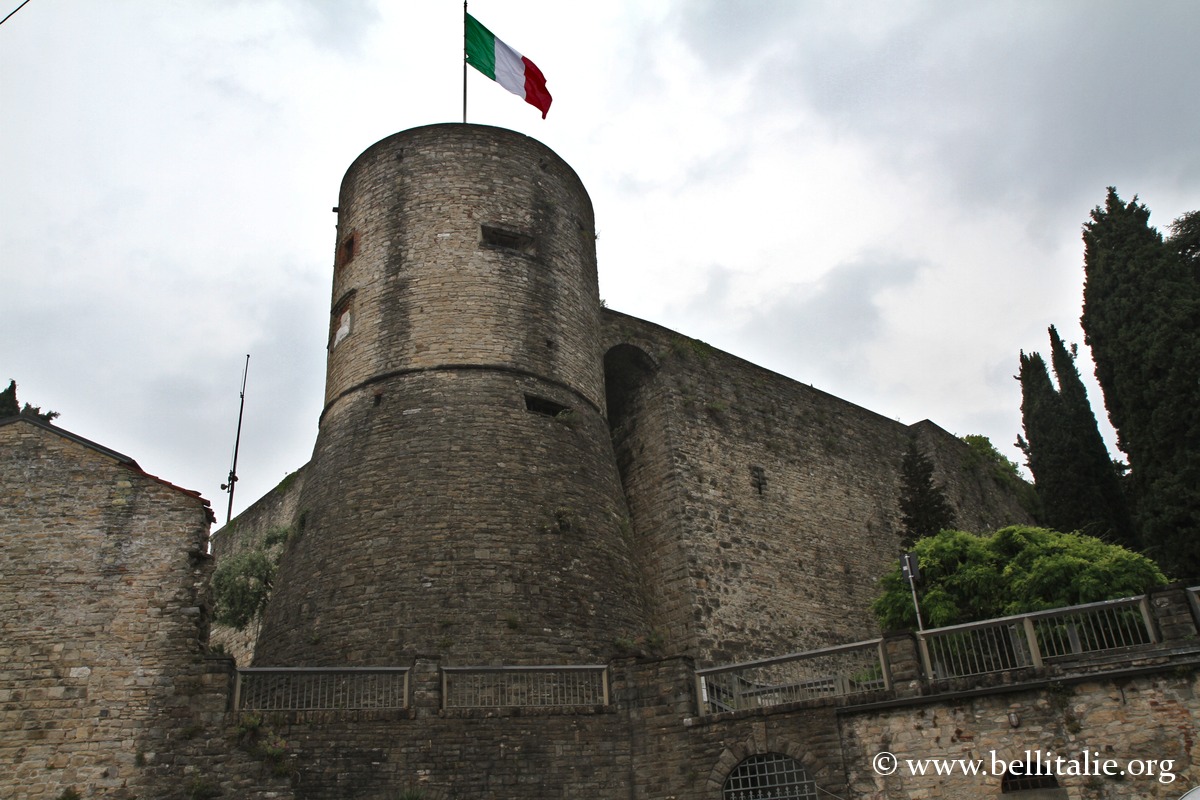
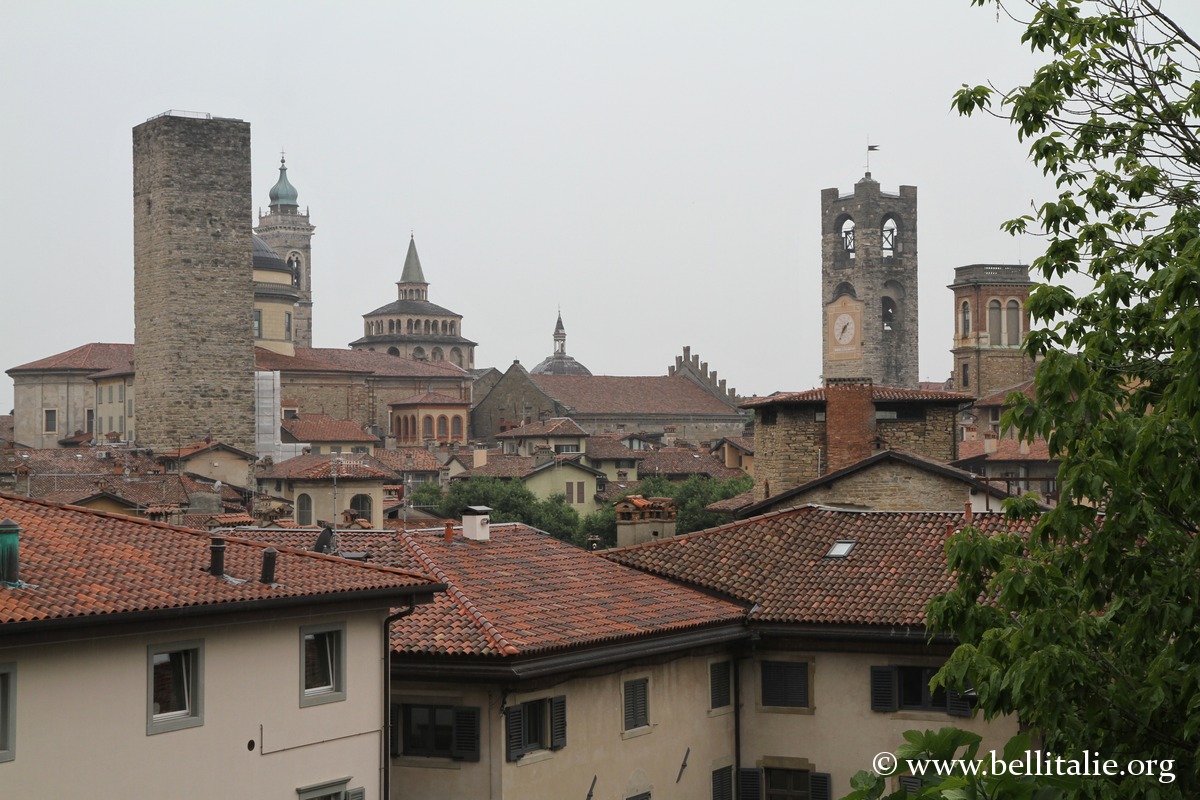 The Rocca di Bergamo is located on the hill of Sant’Eufemia, on the eastern side of the upper town, dominating the lower town and the valley. From there you enjoy a very beautiful view over the upper town, its roofs and towers, as well as the surroundings.
This imposing castle preserves one of the sections of the city’s historical museum. In the small park you can see old cannons and memorials from the First World War.
10. Curiosities of Bergamo
- Funicular
There are two funicular lines, one installed at the end of the 19th century linking the lower town of Bergamo to the Piazza delle Scarpe of the upper town (città alta), then the other between the upper town and Mount San Vigilio.
11. Other sites
- Visit to the città alta : Piazza del Mercato delle Scarpe, Piazza Mercato del Fieno, Gombito tower, old washhouse, via Colleoni, city gates, etc.
- Lower town of Bergamo. The lower town originally brought together old villages, was redeveloped from the end of the 19th century, with neoclassical buildings, the Sentierone, the Porta Nuova, but also pleasant little streets on the eastern side.
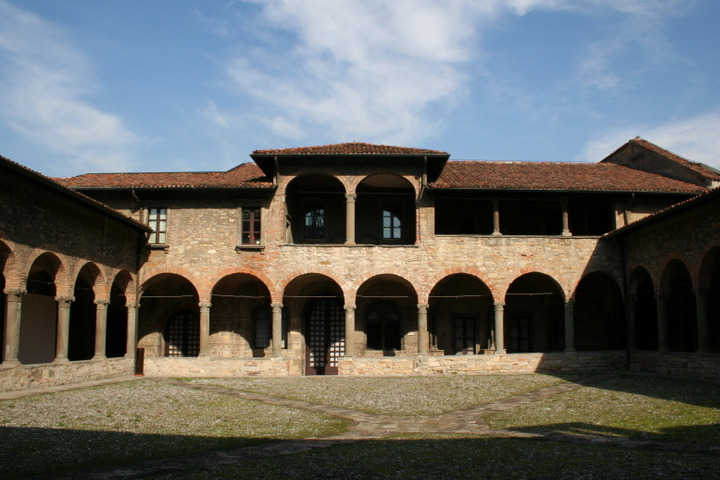
 The old Saint Francis convent (Covento San Francesco) with its charming old cloisters, and which preserves very beautiful frescoes.
The old buildings have been included within the network of the \”museum of the stories of Bergamo\”.- The Lorenzo Rotta botanical garden, near the citadel
- The underground passages : inside the wall, and the old cisterns
- The San Vigilio Castle is perched on a hill, from which you can enjoy a very beautiful view over the old city of Bergamo. It can be reached on foot or by taking the funicular.
- Around the west of Bergamo, you can stroll along the stairways called Scorlazzino and Scorlazzone, paths that were used by peasants to reach the historic centre.
- Archaeological Museum and Natural Science Museum (Piazza della Citadella)
- The GAMeC, the Gallery of Modern and Contemporary Art, housing in particular the works of the Bergamasque sculptor Manzù.
- Park, Sant’Agostino gate and sanctuary, at the foot of the upper town, to the east, near the Carrara Academy.
Map
 Show interactive map
 What to eat in Bergamo
Beware of Bergamasque cuisine. It is best to tackle a meal with an empty stomach, with the traditional polenta, a peasant tradition brought back into fashion. It can accompany most dishes, rabbit, game, anchovies, etc.
The local pasta is called casoncelli, stuffed with beef, raisins, Parmesan, etc.
Several products stand out among the local specialities, such as cured meats and cheeses: Taleggio, Gongorzola, Grana Padano, Provolone Valpadana, Quartirolo Lombardo, Salva Cremasco.
The local wines come from the Lands of the Colleoni.
In pastry, the polenta ed osei is made with sponge cake, chocolate, rum and hazelnuts.
Gallery
Information
- Wikipedia article: en.wikipedia.org
- Tourist portals: www.visitbergamo.net


Comments