


Saint Nazarius of Brolo (San Nazaro in Brolo in Italian) is one of the four basilicas founded by Saint Ambrose, the bishop of Milan between 382 and 386 AD on the via Mediolanum that connected the city to Rome. It has the particularity of preserving a large part of its imposing original structure. It is also one of the main Early Christian testimonies in Milan, and the first Latin-cross church in the West.
It is preceded by the Trivulzio Chapel, mausoleum of the 16th-century condottiere.
It was originally dedicated to the holy apostles, and with the discovery in 395 of the remains of Saint Nazarius, its dedication was changed.
According to legend, Nazarius was persecuted in the 1st century AD under Nero, on his return from Gaul where he had preached the Gospel, and beheaded with the young Celsus in Milan, near the Porta Romana. Christians then immediately stole the bodies, to bury them in a secret place that was revealed centuries later by God to Ambrose.
Description and visit
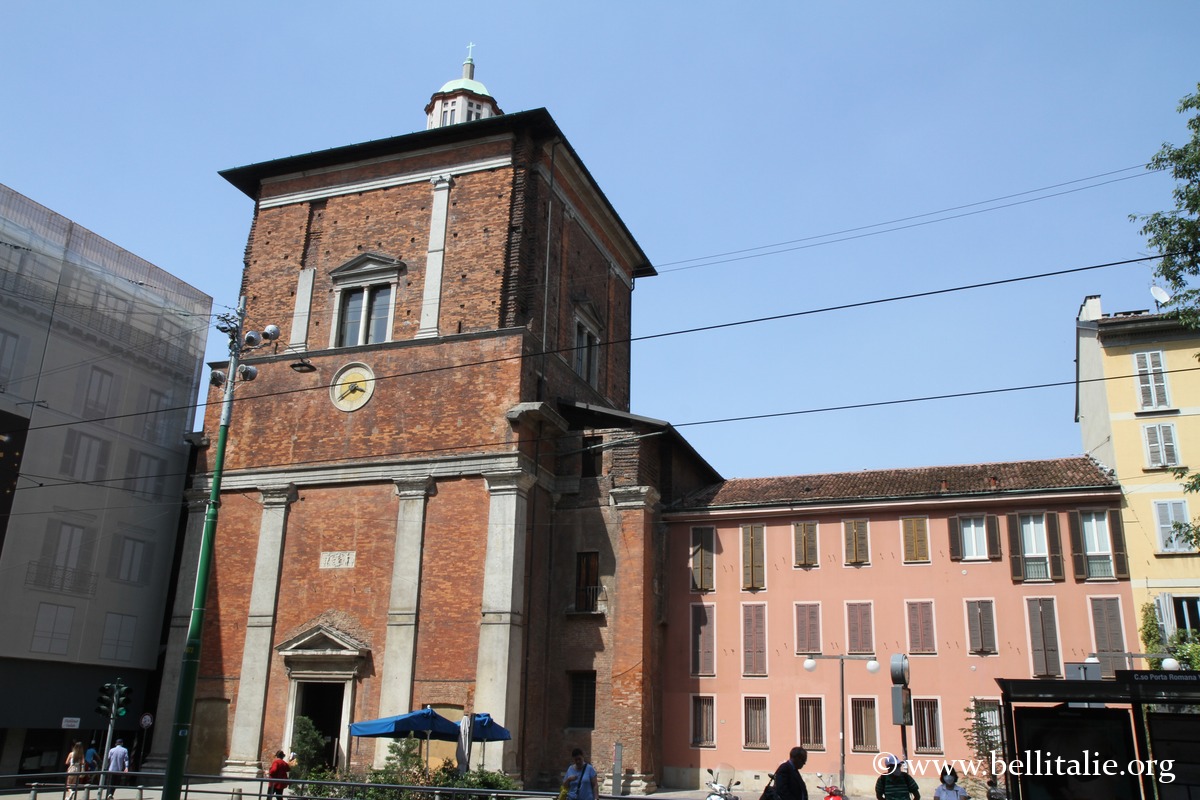
The current imposing facade on the street dates from the renovation of the Trivulzio Chapel from 1512, carried out by Bramantino and which has since served as the entrance vestibule into the basilica. This chapel, leaning against the Early Christian facade, was the mausoleum of the family of Gian Giacomo Trivulzio, marshal of King Louis XII of France. The facade is rectangular in brick with cornice and marble pilasters, a triangular pediment. A bas-relief depicts the Trivulzio coat of arms, flanked by the arms of Bartolomeo Colleoni (on the left) and of Gonzaga (on the right).
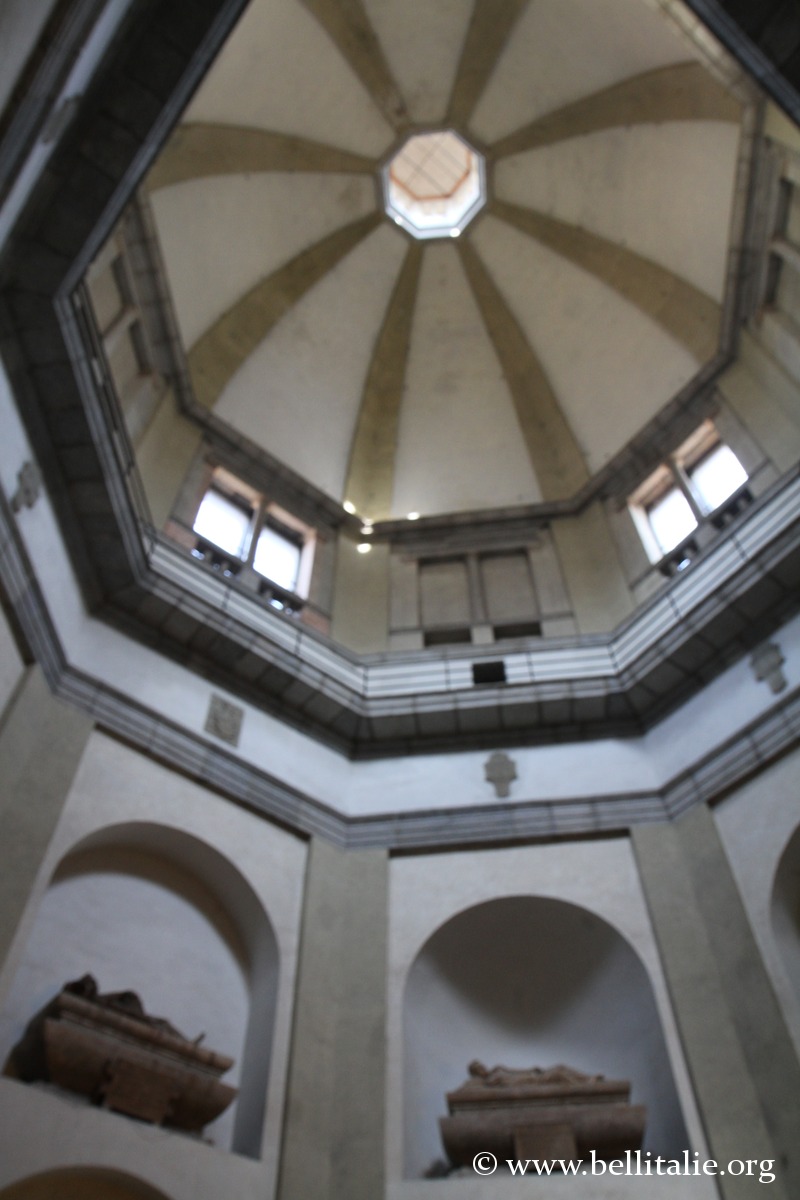
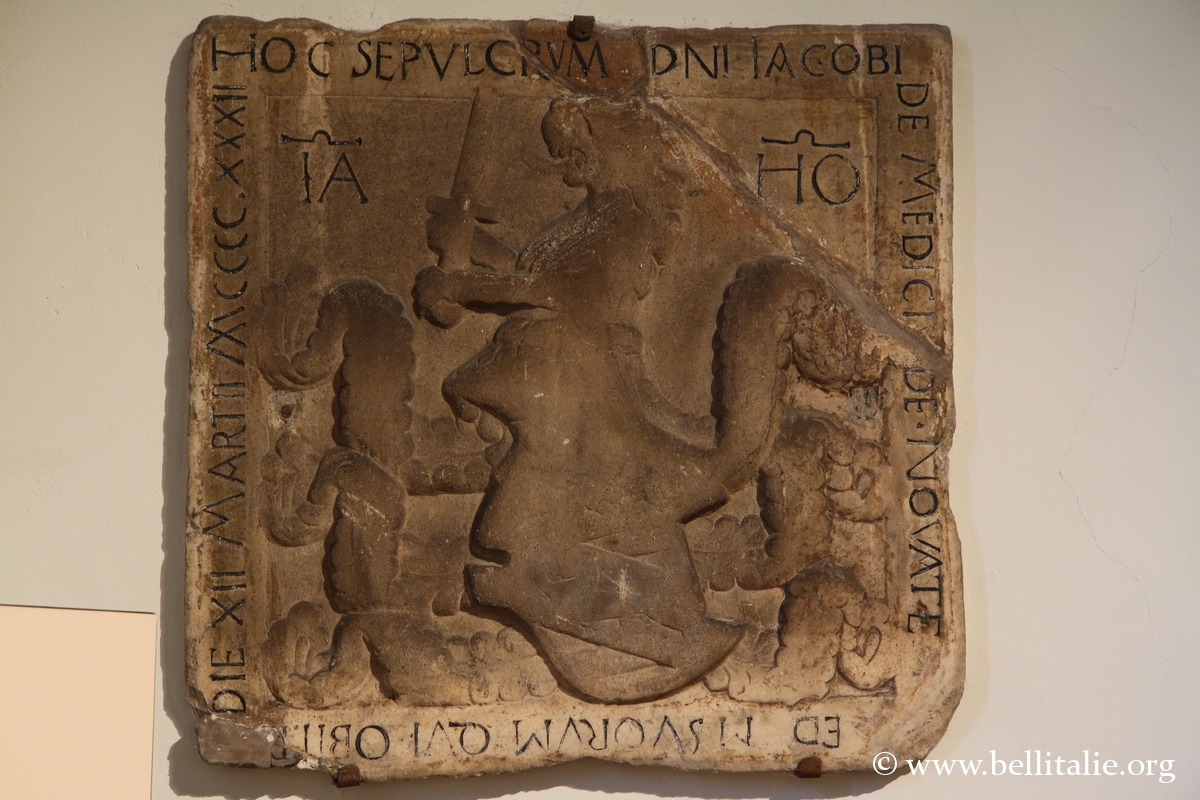
In the Trivulzio Chapel, Gian Giacomo Trivulzio is buried between his two wives.
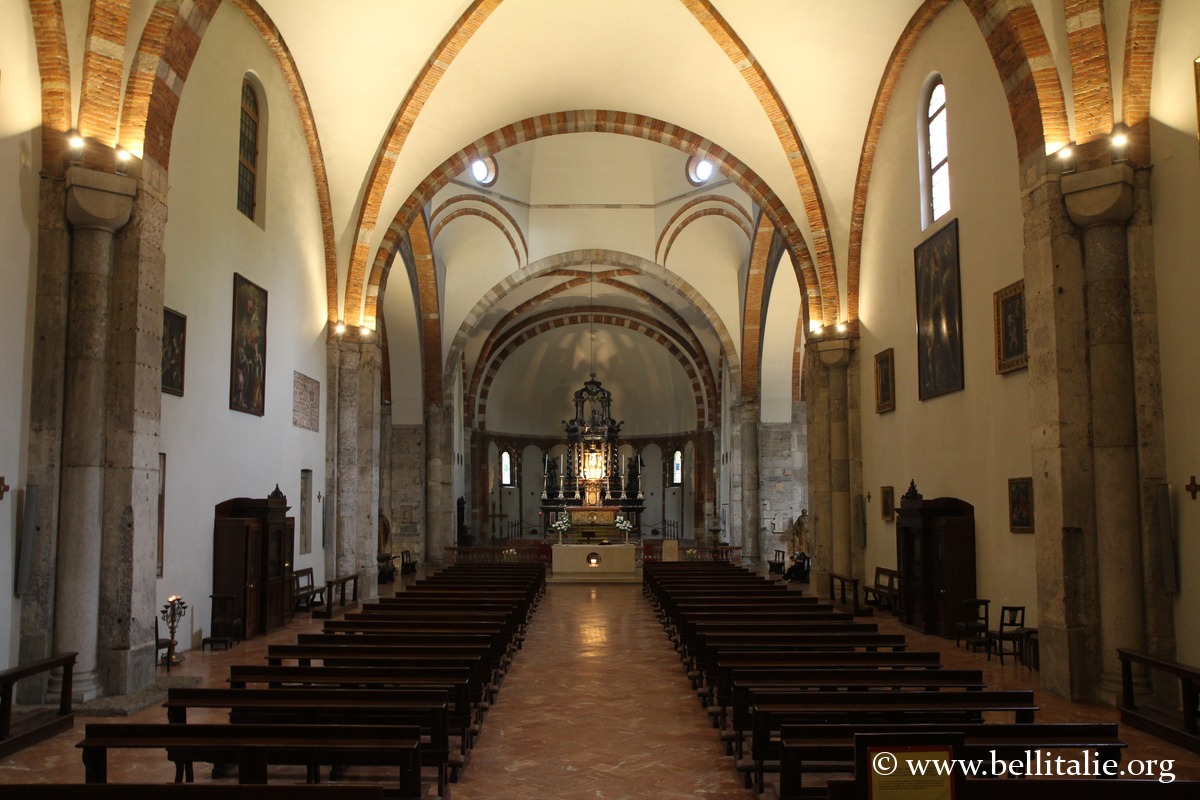
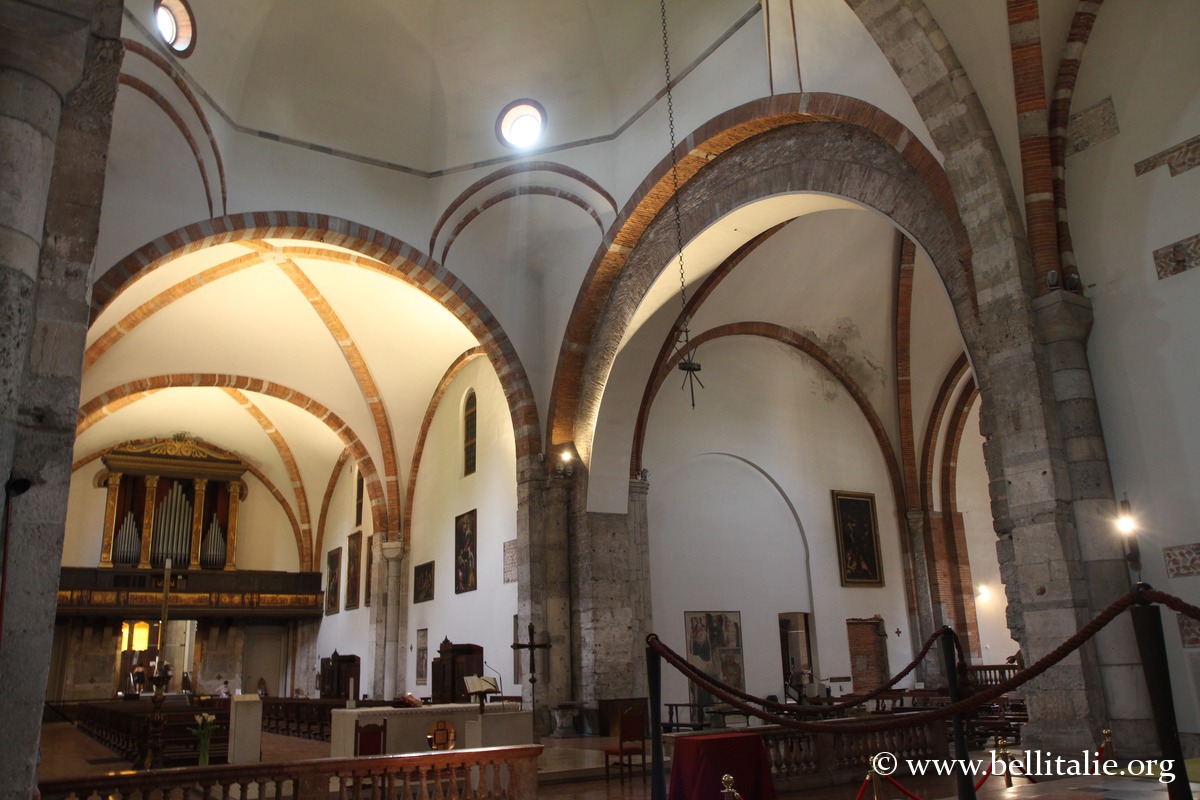
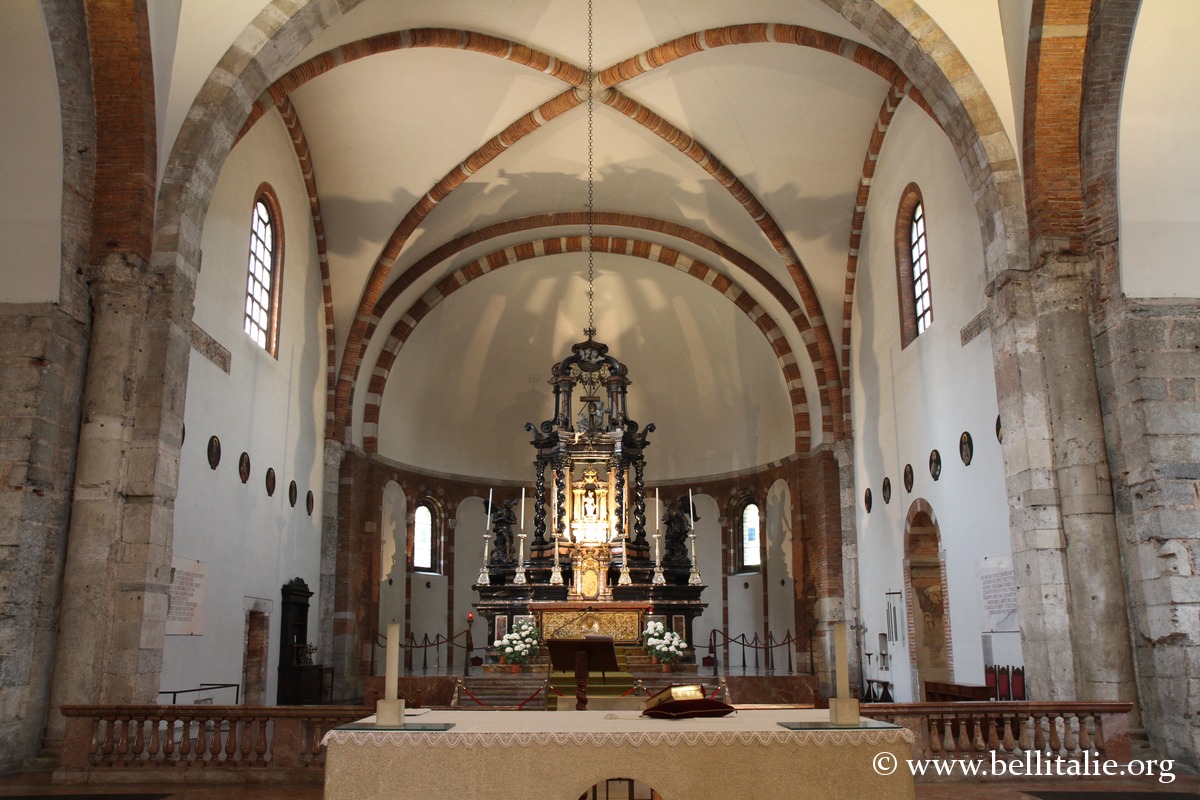
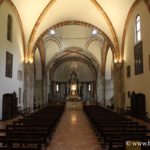
One enters the basilica through the portal of the wall of the Trivulzio Chapel. The interior is a vast structure, composed of a crossing between a Latin cross and a Greek cross. The nave is formed by two bays covered with a vault about 25 meters high. The choir has a Baroque-style marble altar.
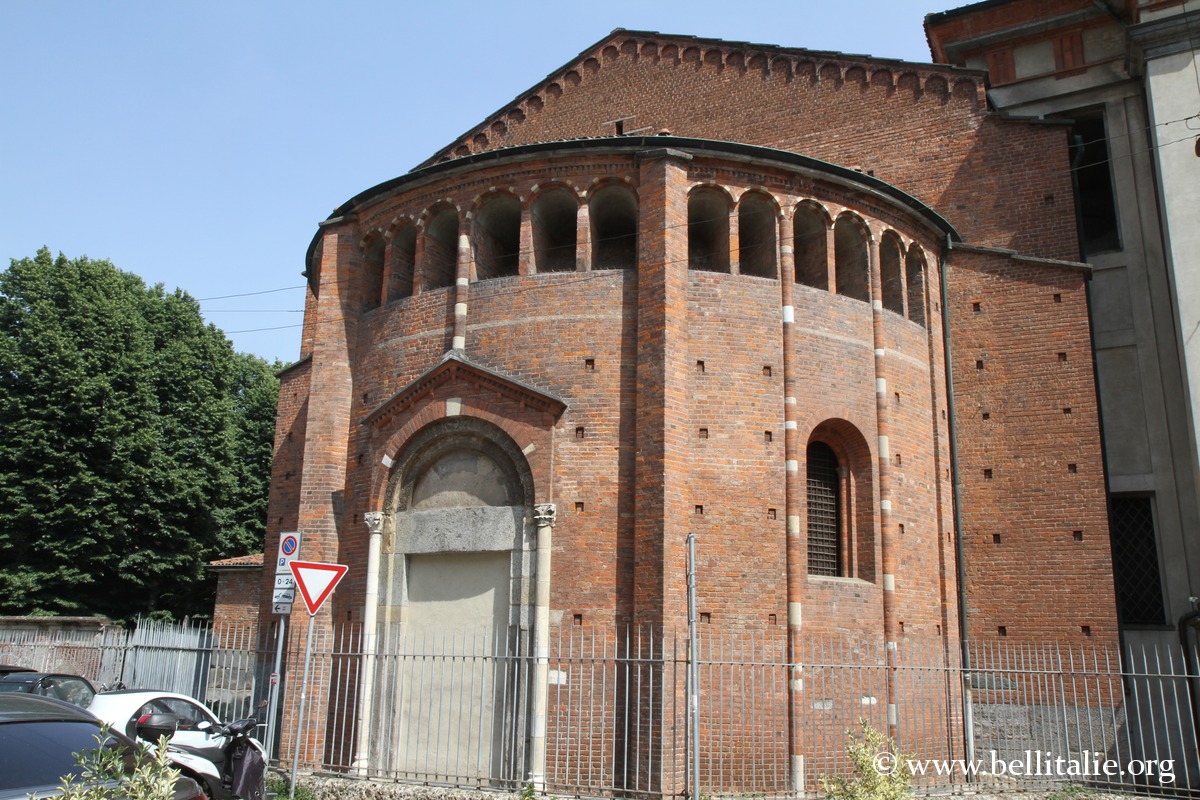
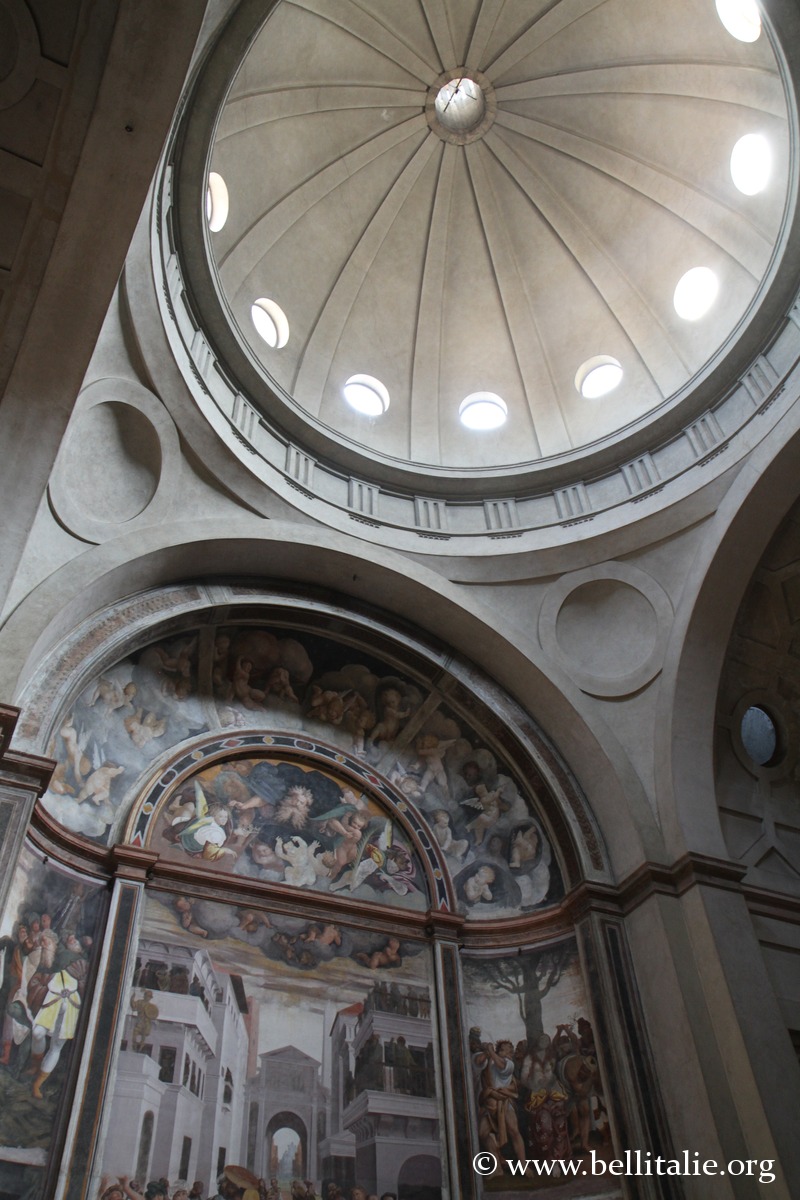
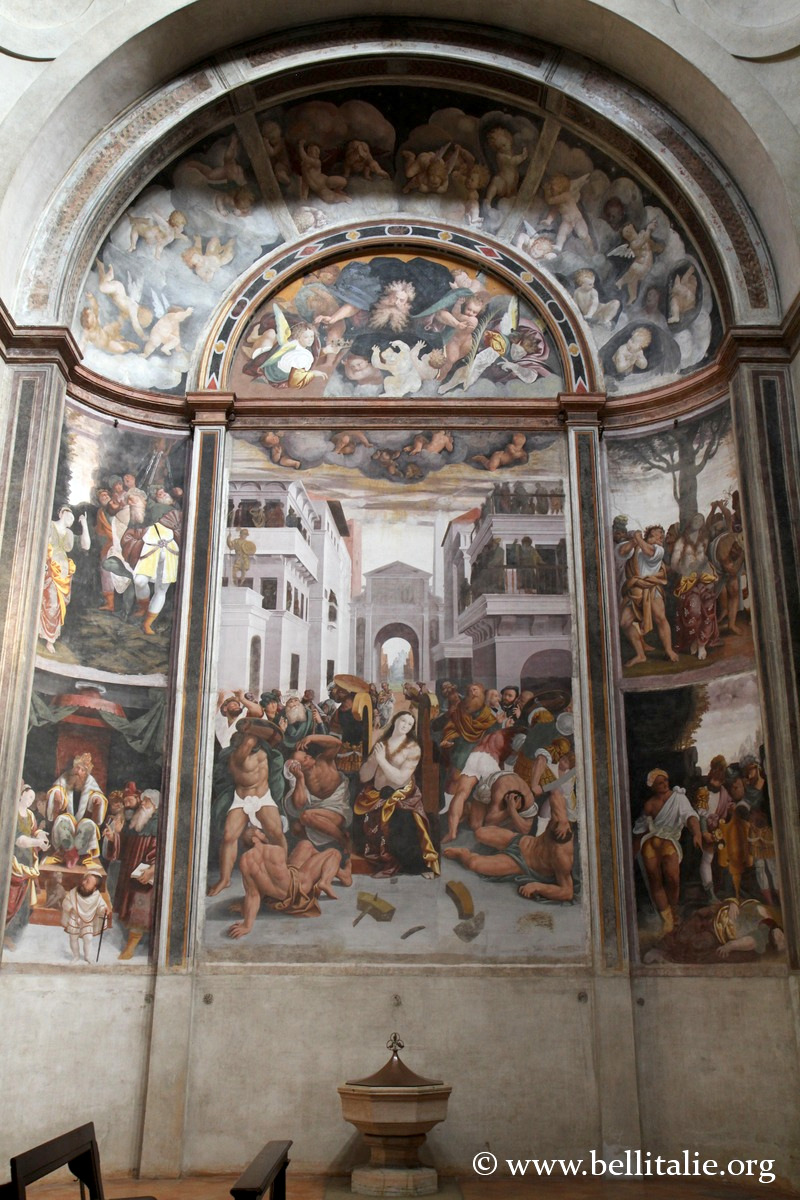
The left transept forms a large apse, with the Chapel of Saint Catherine made by Antonio da Lonate (1456-1541) inspired by the works of Bramante with a dome with cylindrical drum and a conical roof.
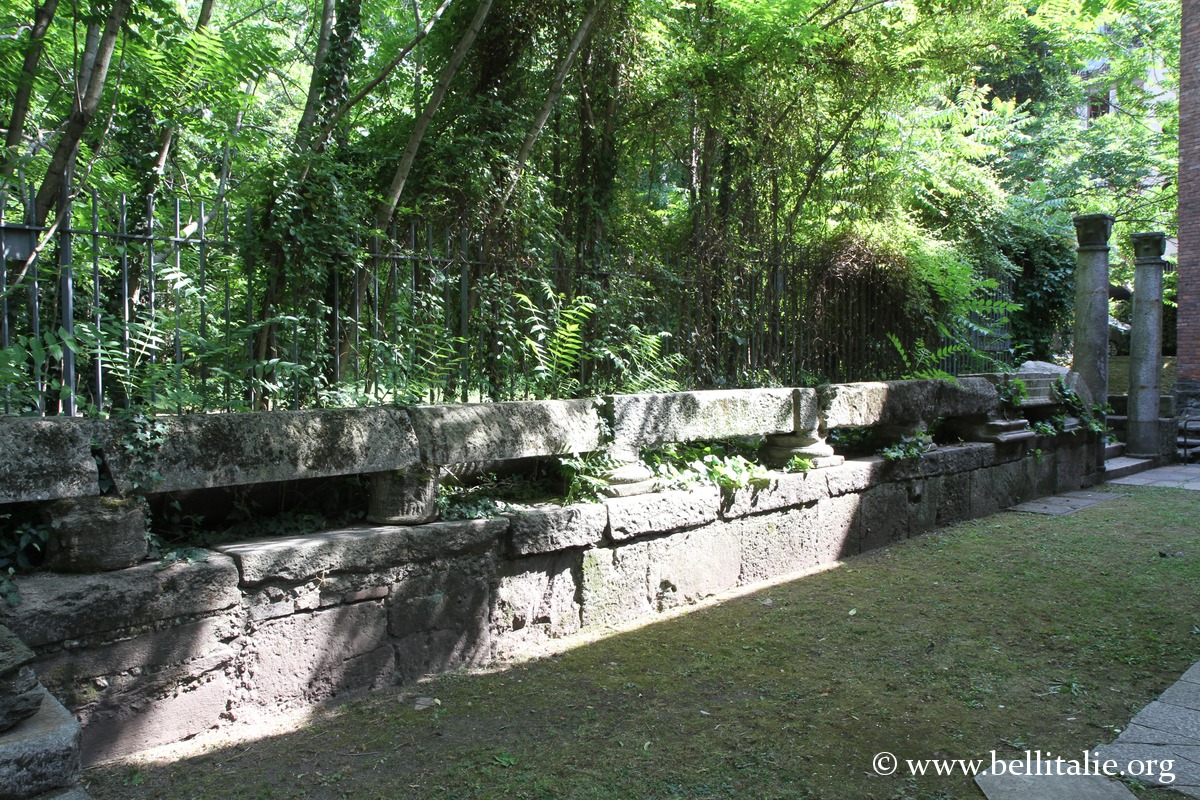
An archaeological area preserves amphorae and Roman materials.
The church is adjoining the large building of the Ospedale Maggiore of Milan, designed by the famous architect Filarete.
Information
- Wikipedia page: en.wikipedia.org
- Tourist and cultural portals: milanoarcheologia.beniculturali.it, www.museionline.info
Map
If you see this after your page is loaded completely, leafletJS files are missing.
- What to see in Milan
- Itinerary ideas for visiting Milan

- Milan Cathedral
- Sforza Castle of Milan
- Victor Emmanuel II Gallery in Milan
- The Last Supper and Santa Maria delle Grazie
- Milan’s La Scala

- Basilica of Sant’Ambrogio in Milan

- Piazza dei Mercanti and Medieval Milan
- Selection of hotels and luxury hotels in Milan
- Leonardo da Vinci Museum of Science and Technology
- Brera Art Gallery
- Basilica of San Lorenzo, Milan
- Navigli District and Canals of Milan
- San Maurizio al Monastero Maggiore in Milan
- Milan Civic Archaeological Museum
- Basilica of Saint Nazarius in Milan
- Other Renaissance and Baroque monuments
- Neoclassical, 18th and 19th centuries in Milan
- The Museums of Milan
- Shopping, the Fashion Quadrilateral and Markets in Milan
- Squares and other sites of Milan





Comments