


The Basilica of Sant’Ambrogio (Basilica Sant’Ambrogio in Italian) is the second most important religious building in the city, dedicated to the influential bishop of Milan who officiated there in the 4th century AD and had the first basilica built here.
History
The basilica of Sant’Ambrogio in Milan (Sant’Ambrogio in Italian) is dedicated to the 4th-century bishop of Milan (374-397), who became the city’s patron saint. The latter’s spiritual influence was significant, to such an extent that in the diocese of Milan, Mass is still celebrated today according to the Ambrosian rite.
Ambrose was also behind the construction of the first basilica, between 379 and 386, called Basilica Martyrum (basilica of the Martyrs), which was dedicated to the martyrs Gervasius and Protasius.
It is therefore one of the oldest churches in Milan. After its reconstruction at the end of the 11th century, it greatly influenced Lombard Romanesque architecture. It was often modified over time, but has retained great architectural value. Half destroyed by the bombings of 1943, it was subsequently rebuilt.
Visit and description
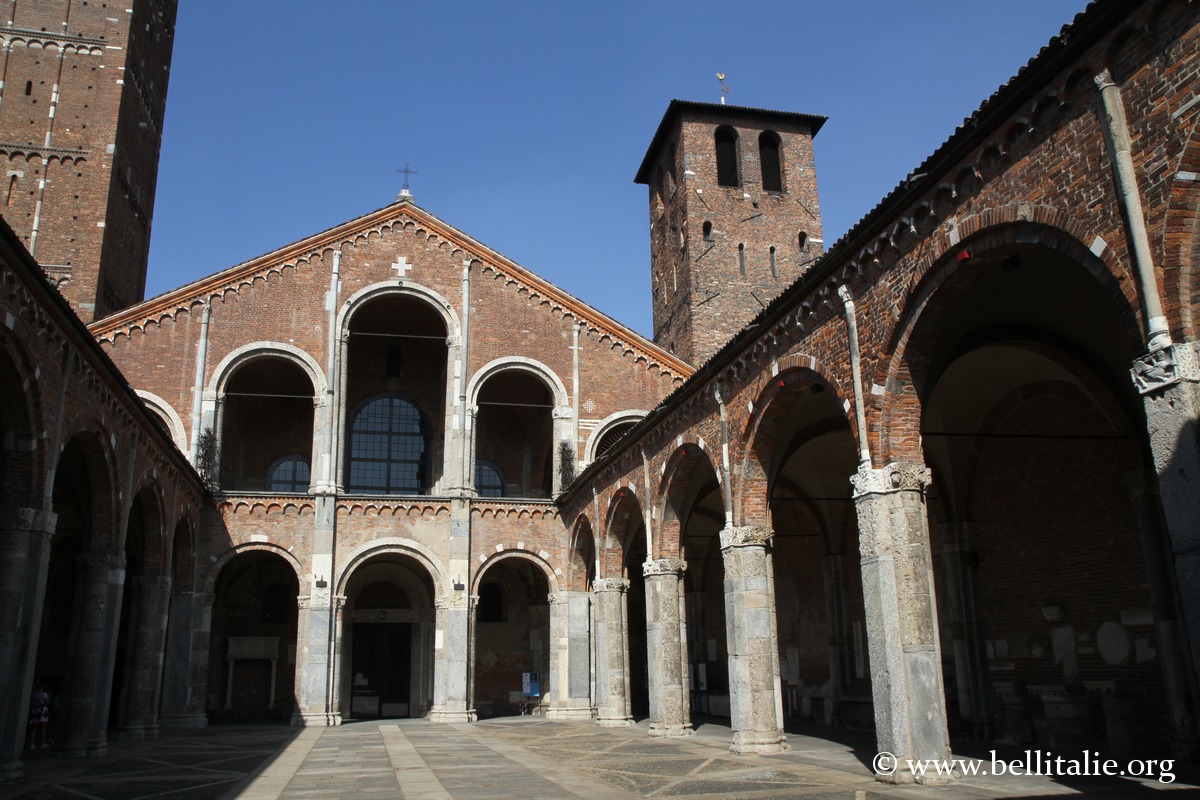
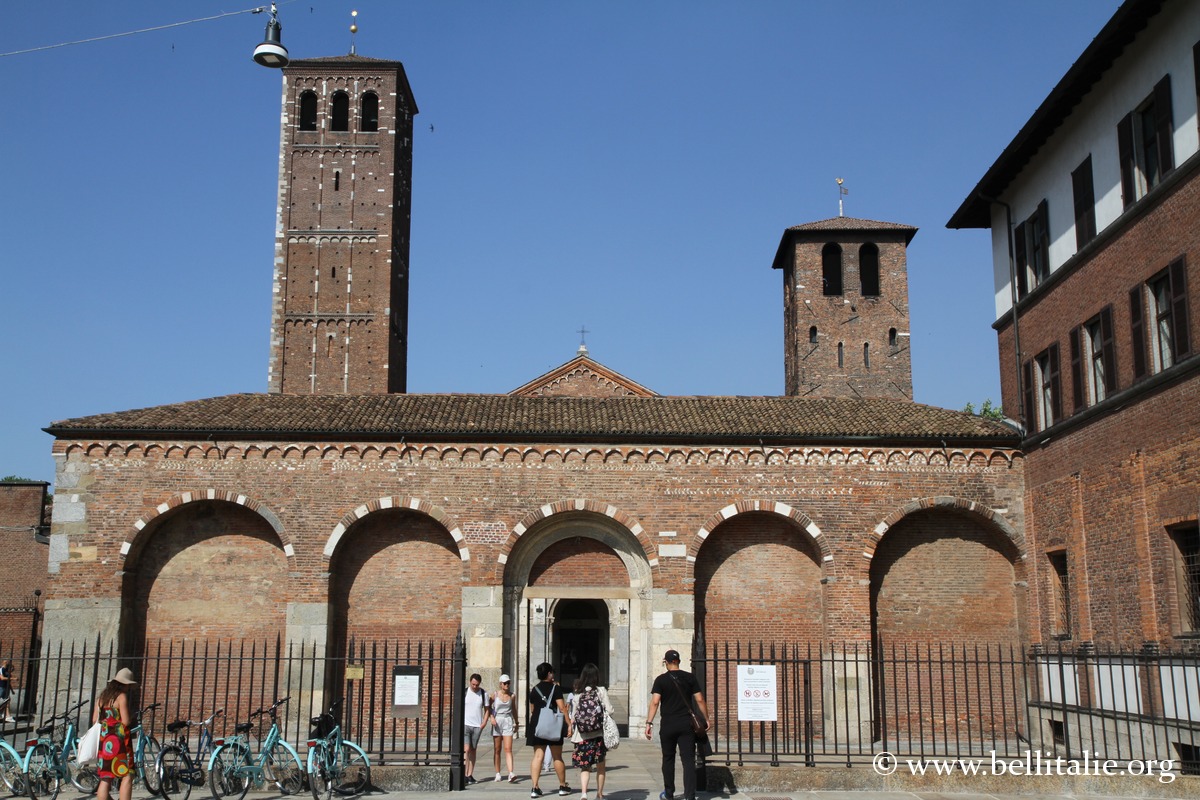
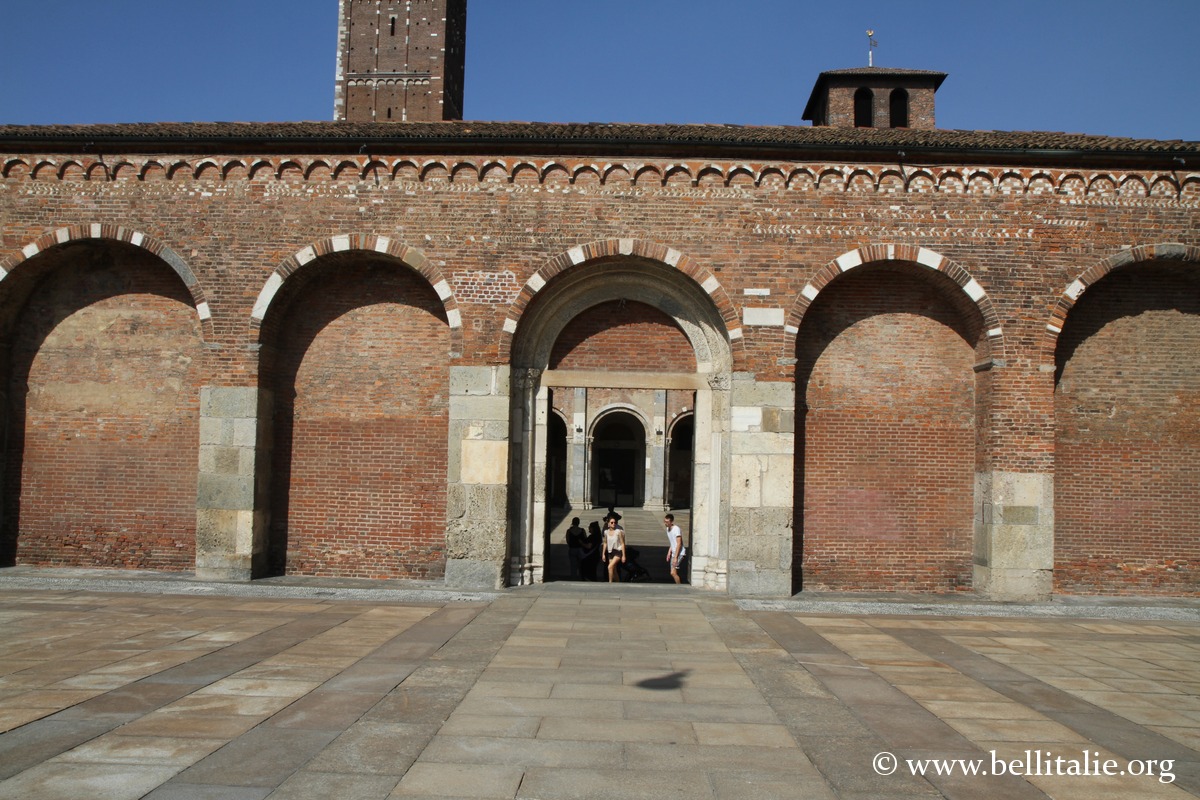
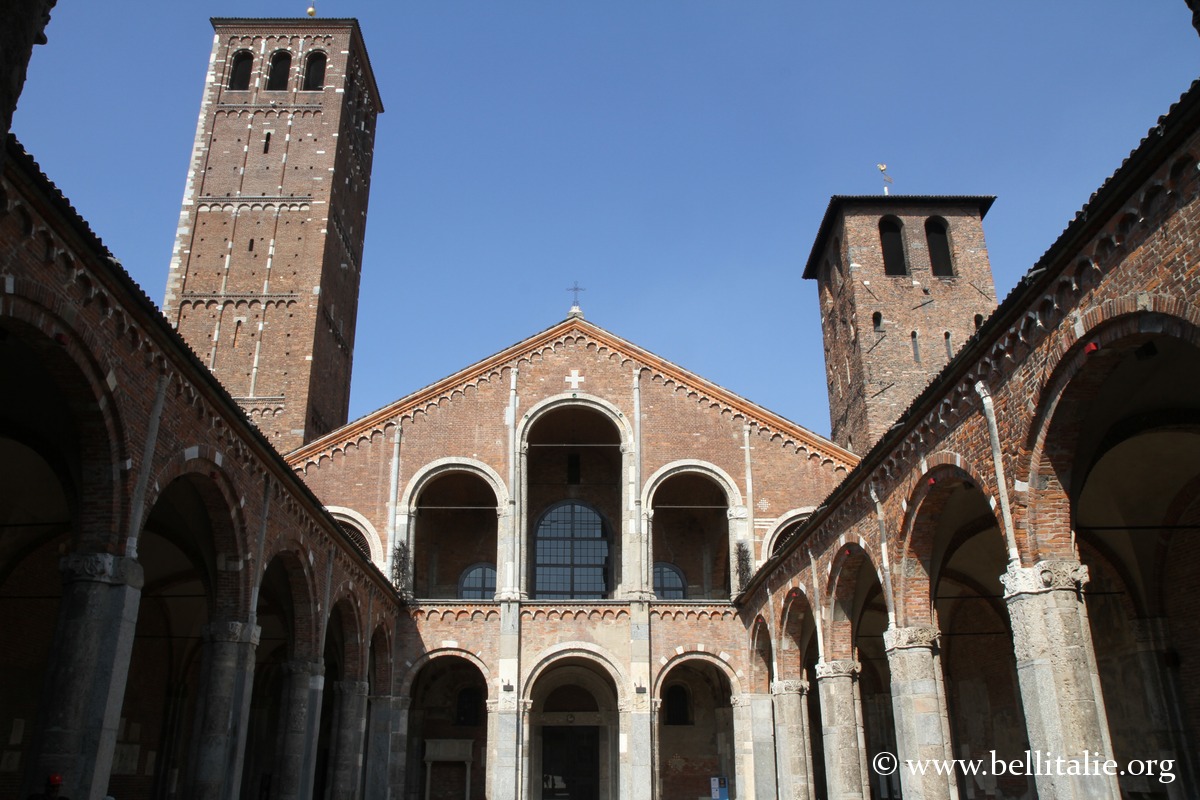
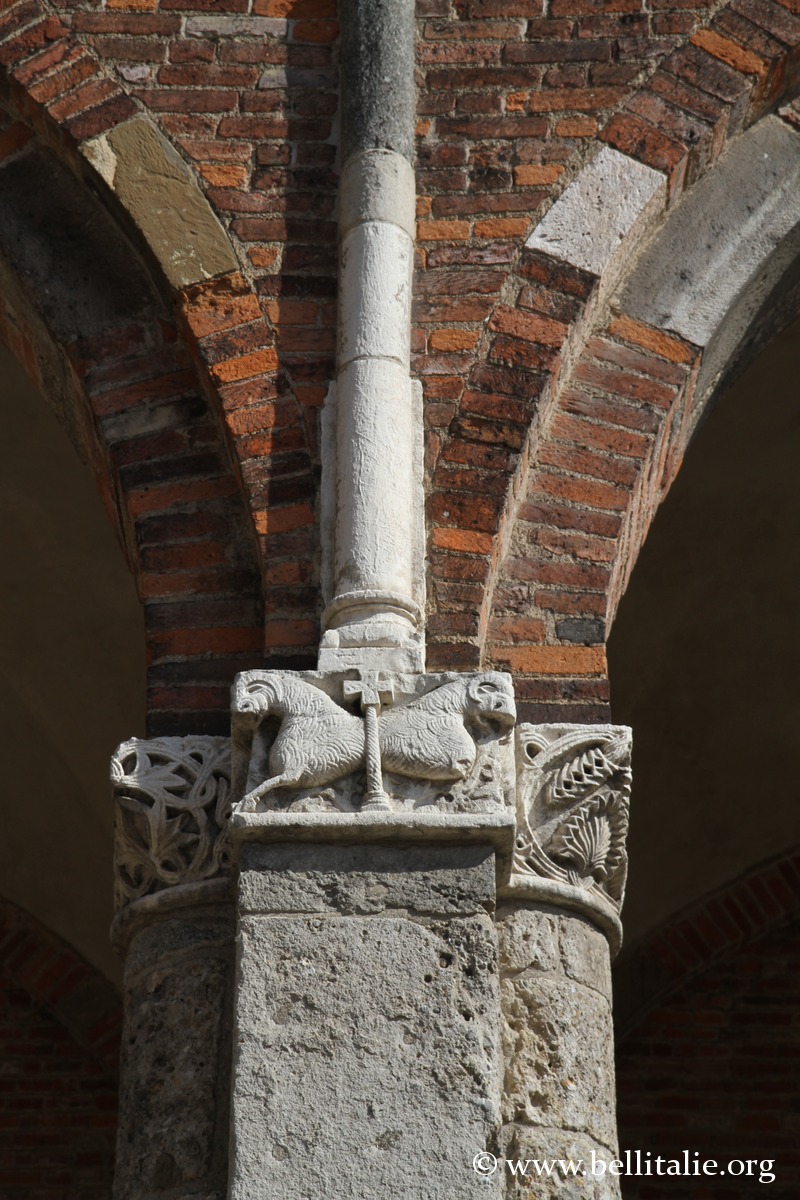
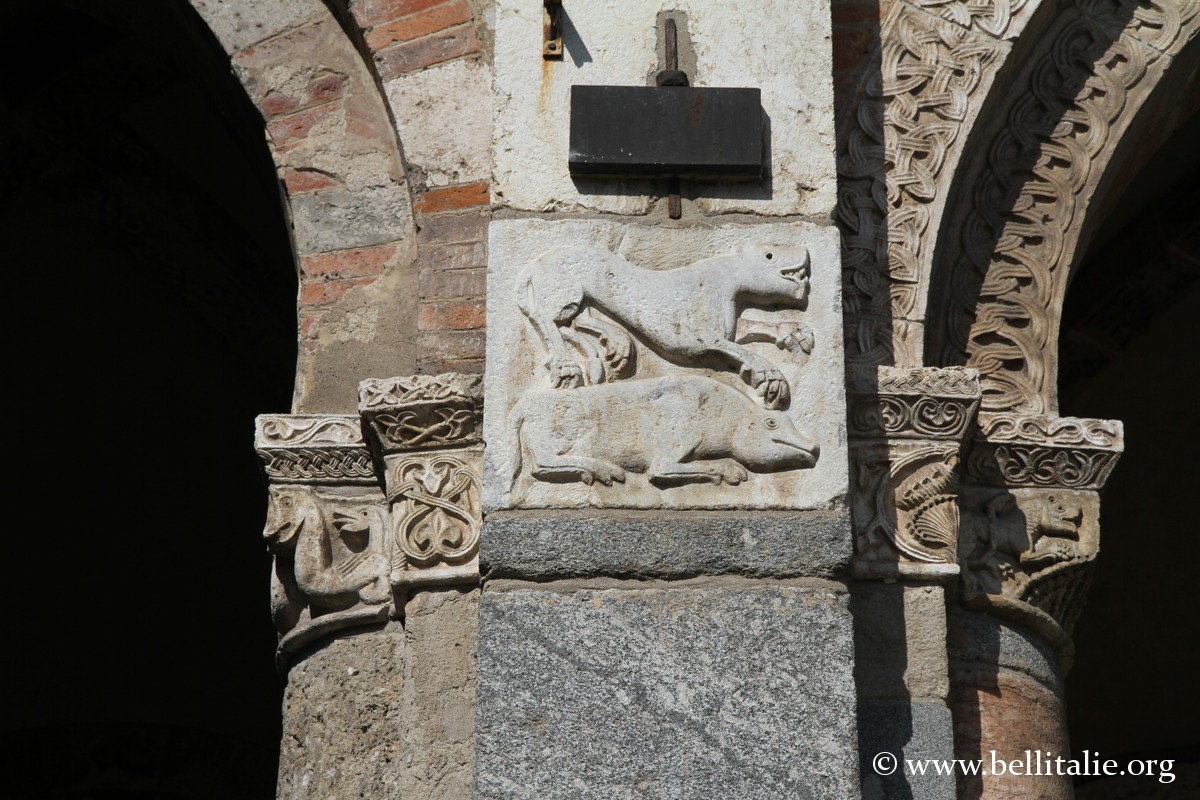
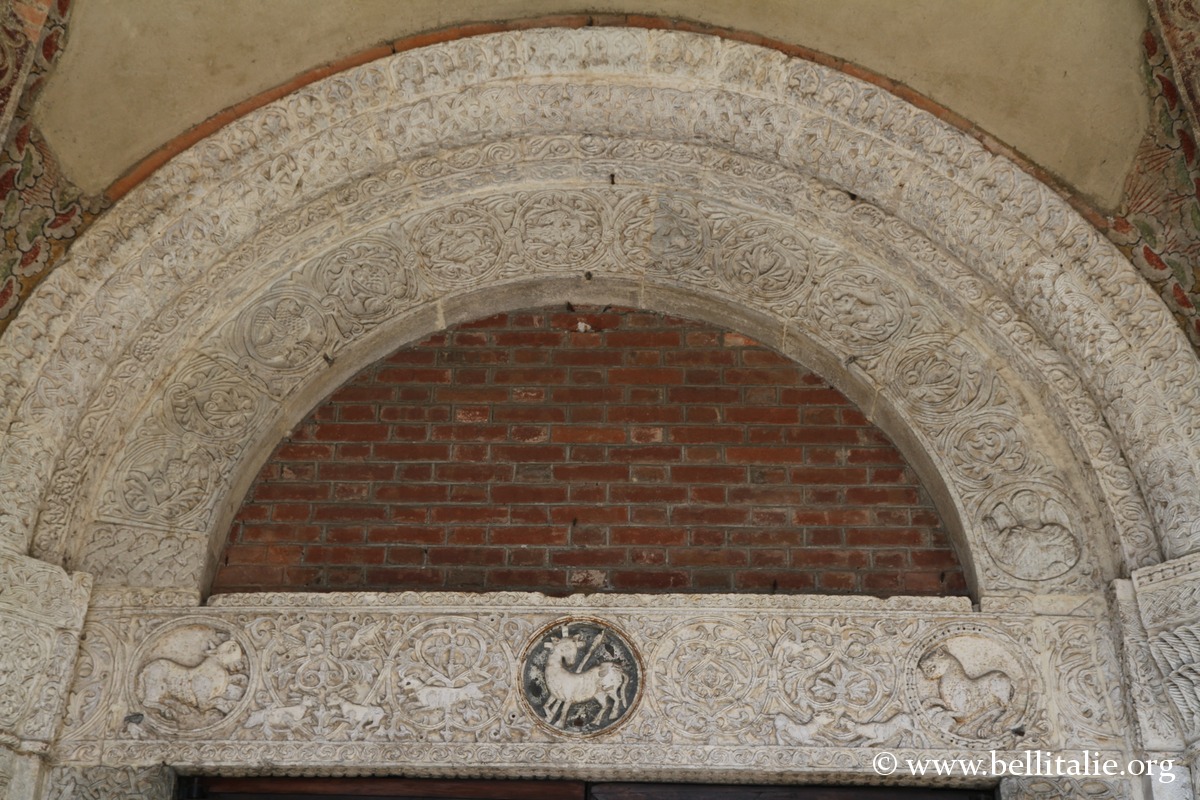
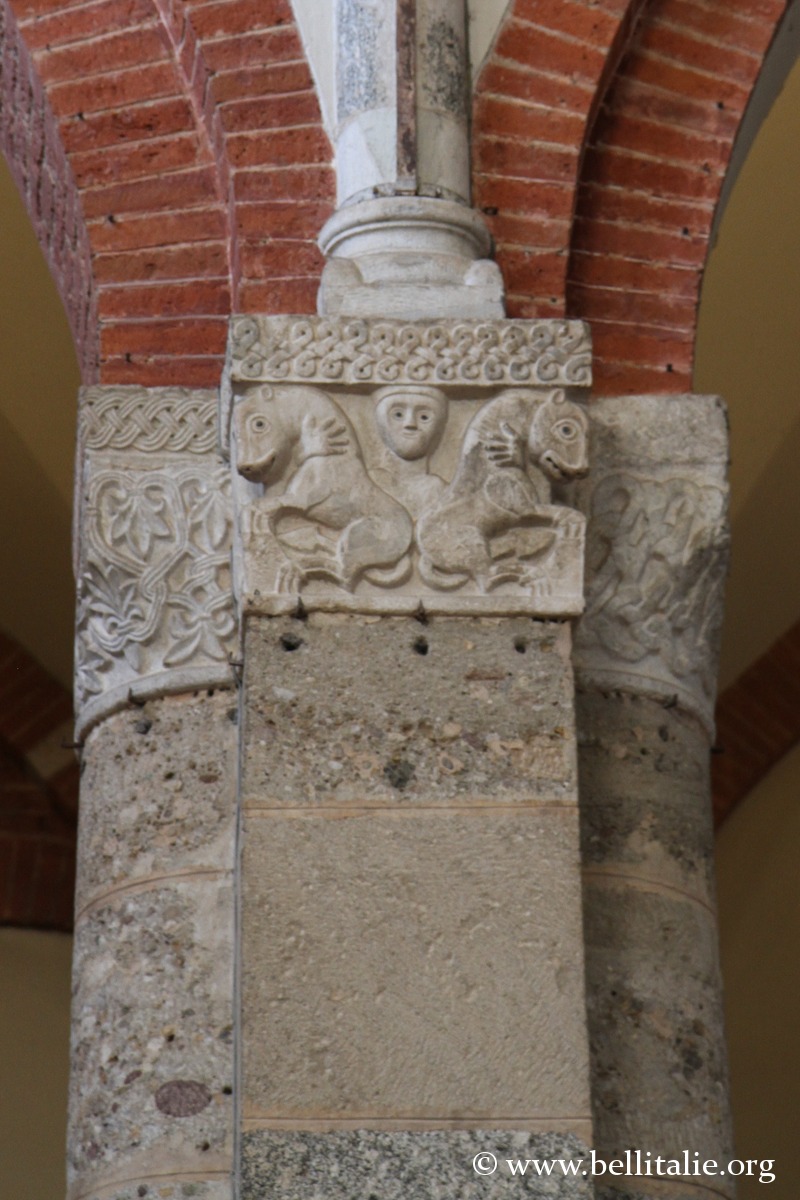
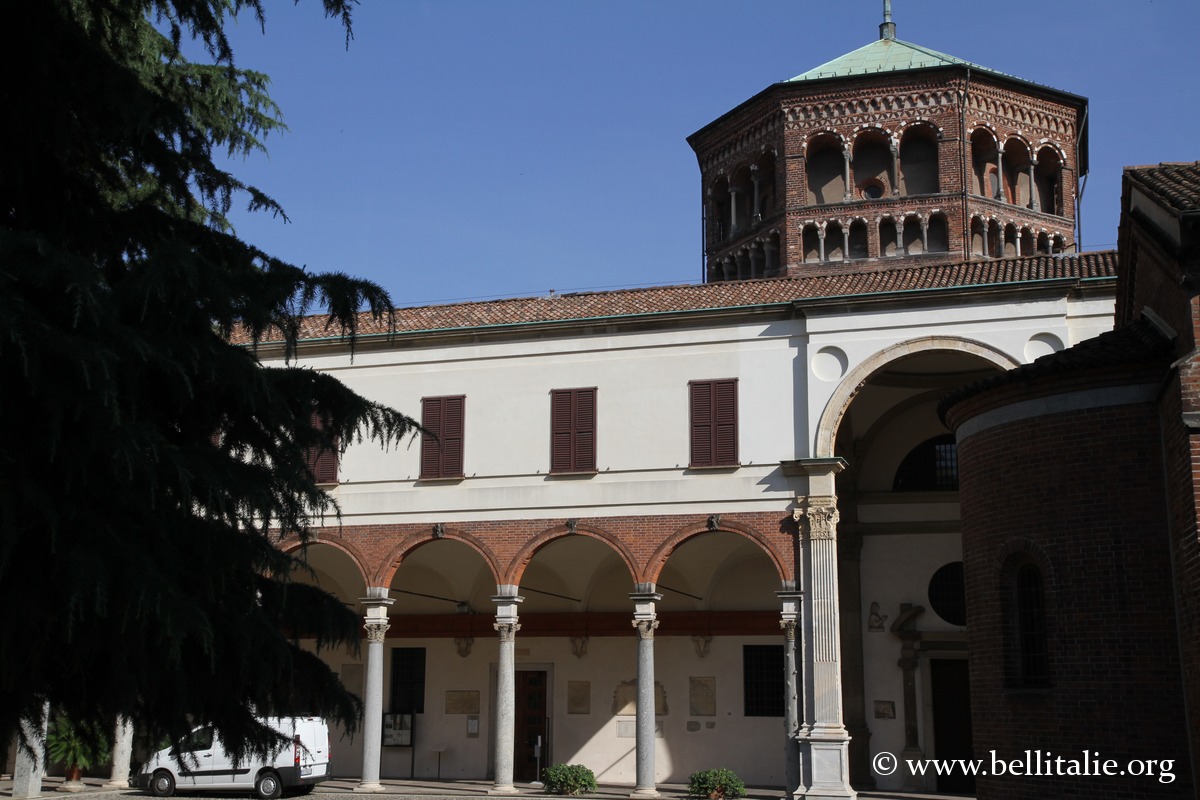
The present building is essentially in the Romanesque style. It is preceded by a charming quadriportico with very fine capitals, with the superb atrium of Anspert.
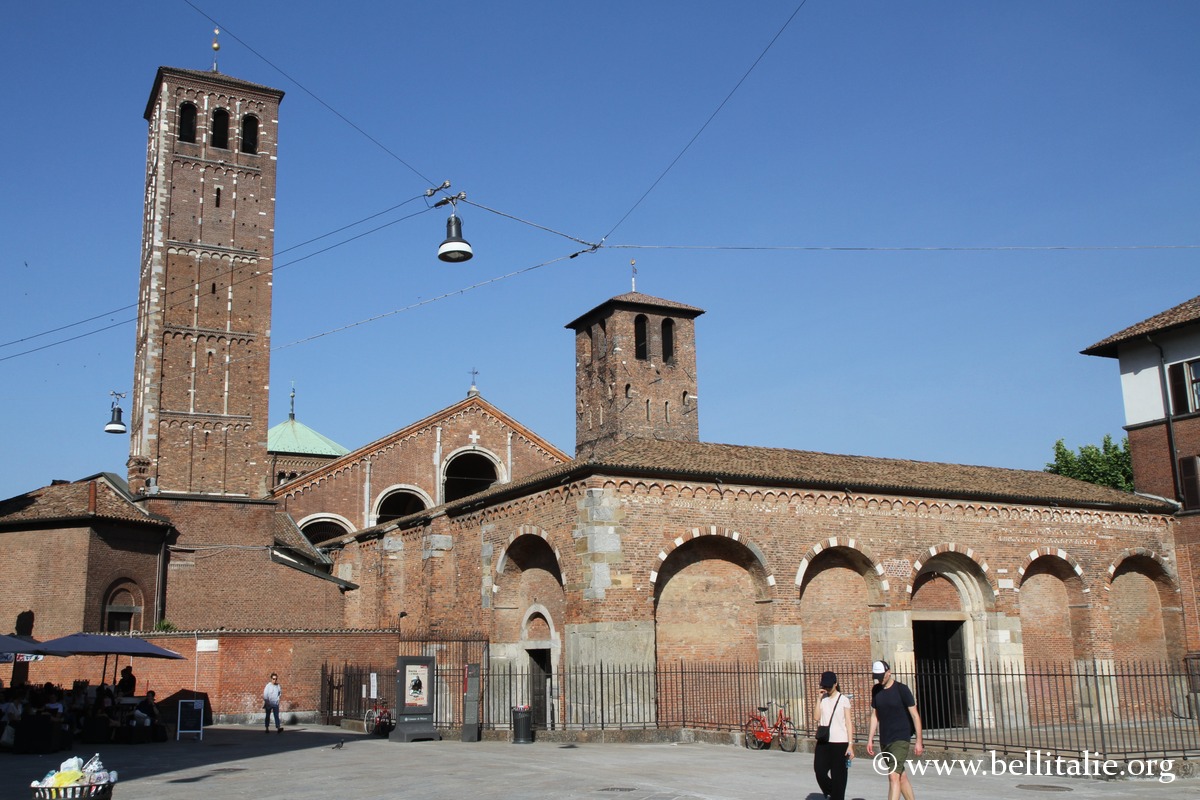
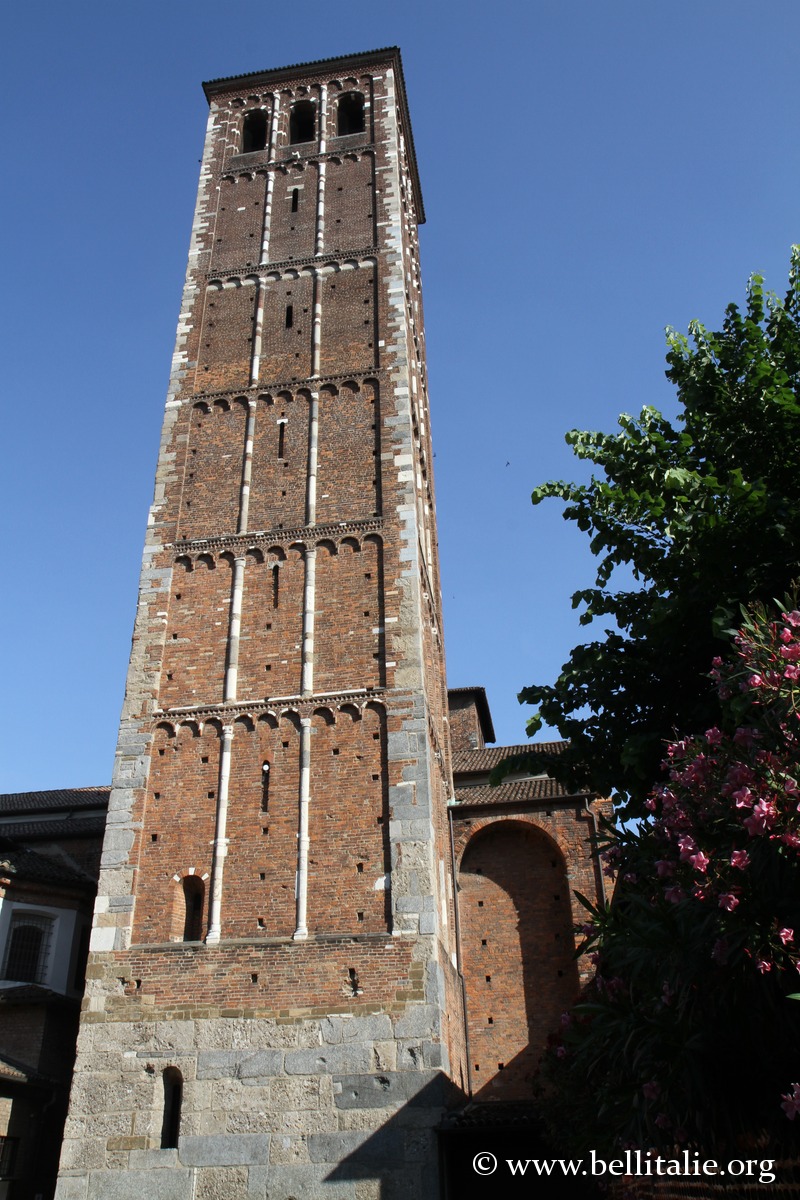
The two bell towers are of different periods. The taller one, the “canons’ bell tower”, was erected in the 12th century, with the last two storeys added in 1889. The smaller one, called the “monks’ bell tower”, was built by the Benedictines in the 9th century.
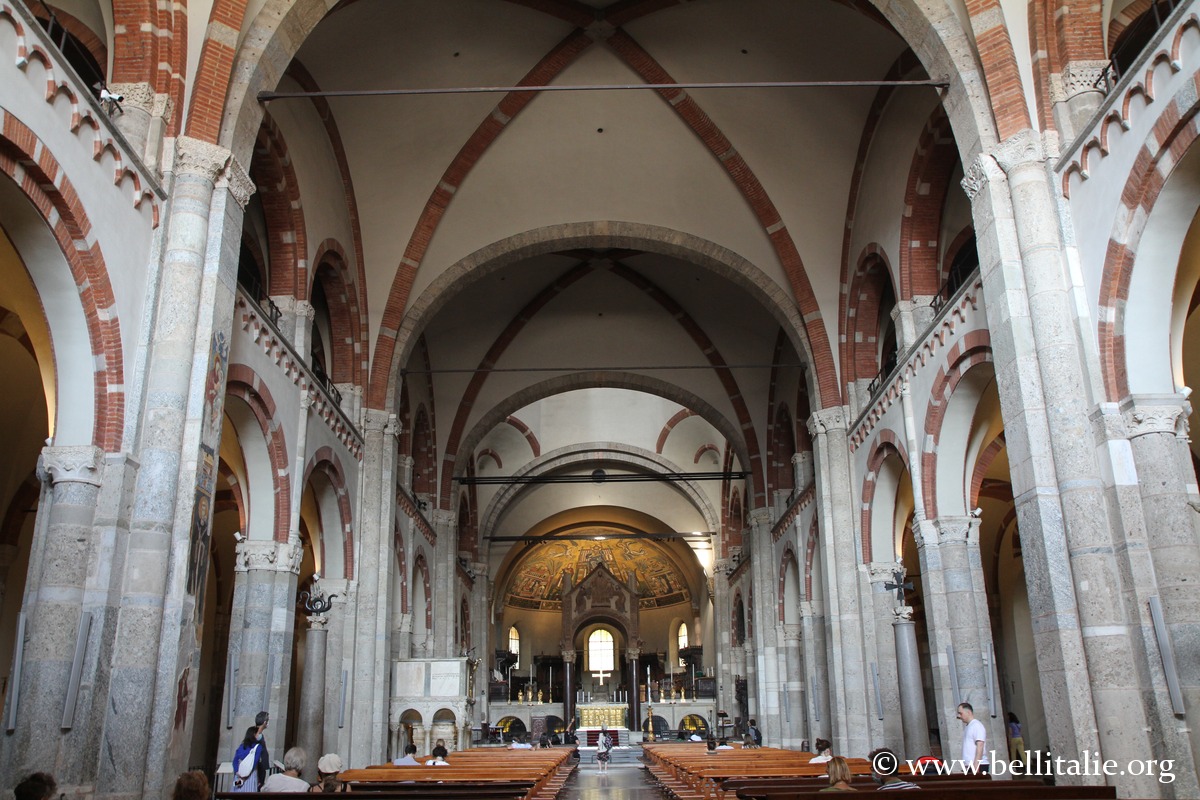
The interior consists of three naves ending in three apses, divided into four bays covered with cross vaults.
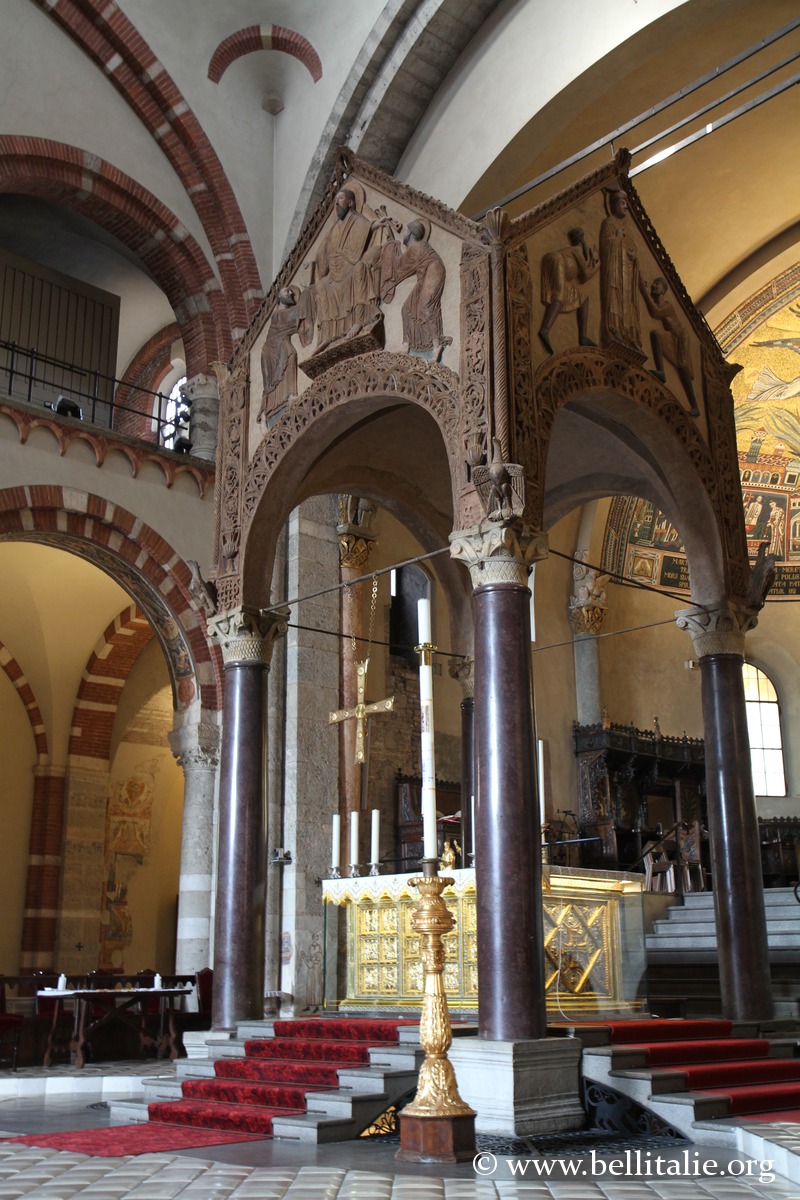
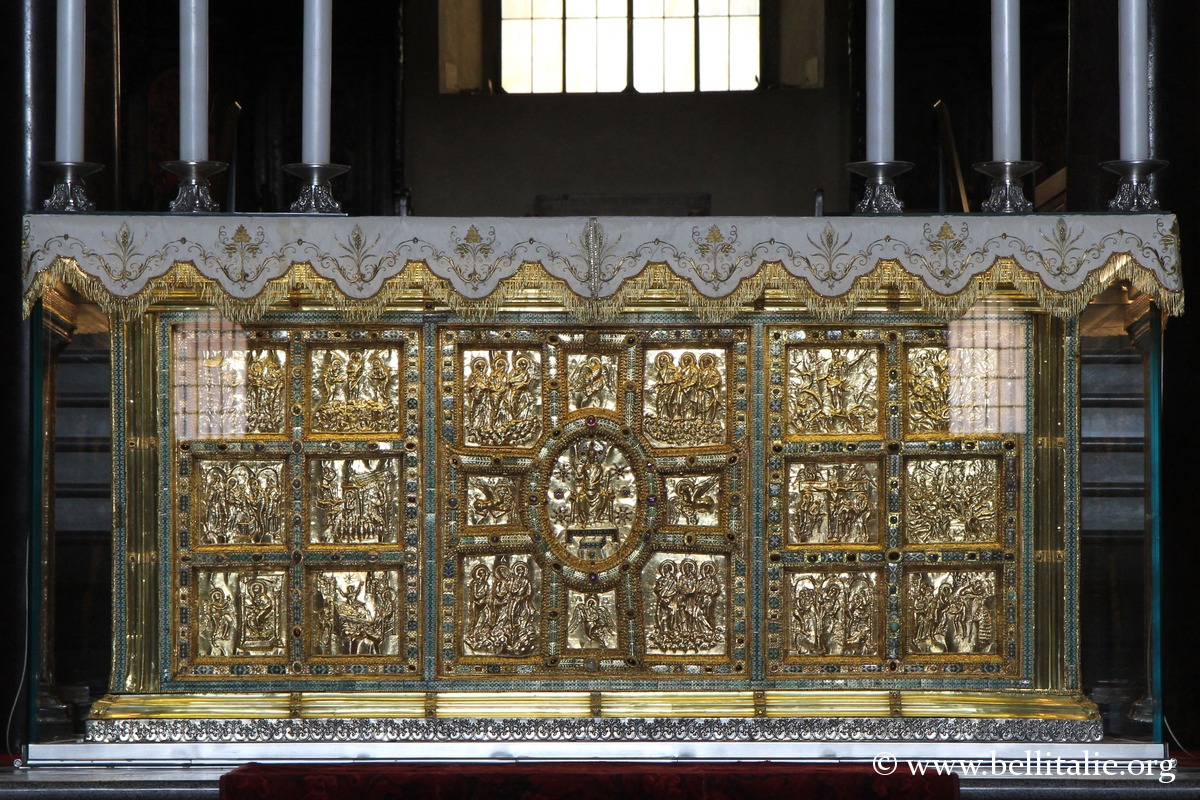
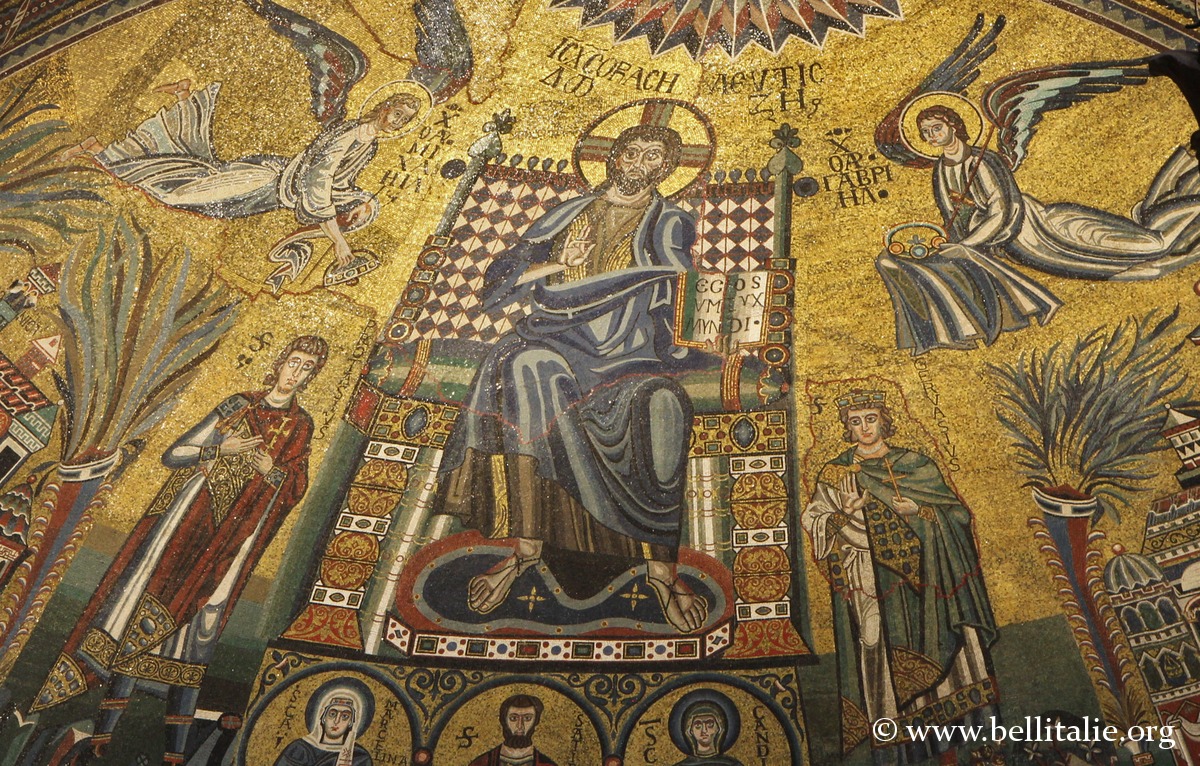
In the chancel, the stucco ciborium in the Lombard-Byzantine style of the 10th century protects the precious 9th-century high altar, decorated with gold, silver and precious stones, with scenes from the life of Christ on the front, and scenes from the life of Saint Ambrose on the back. The beautiful mosaics of the apse, from the 6th and 8th centuries, depict in particular the Redeemer between Saints Gervasius and Protasius.
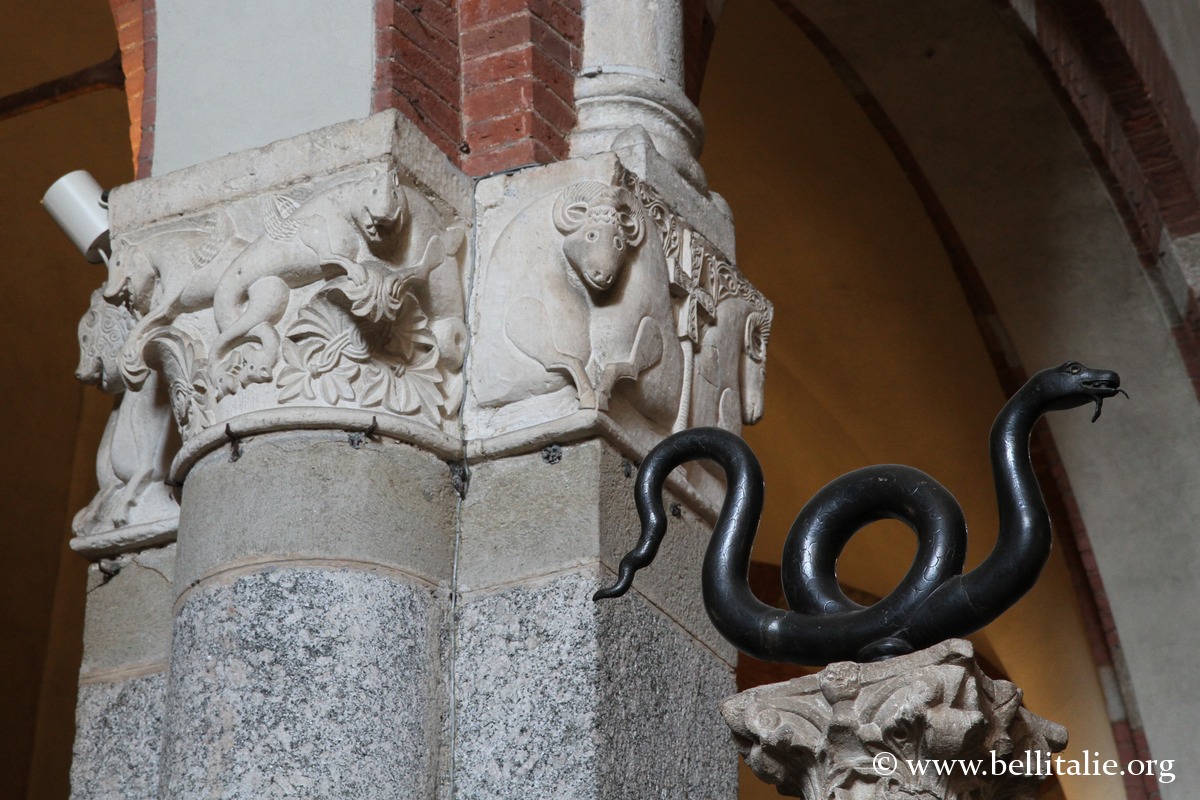
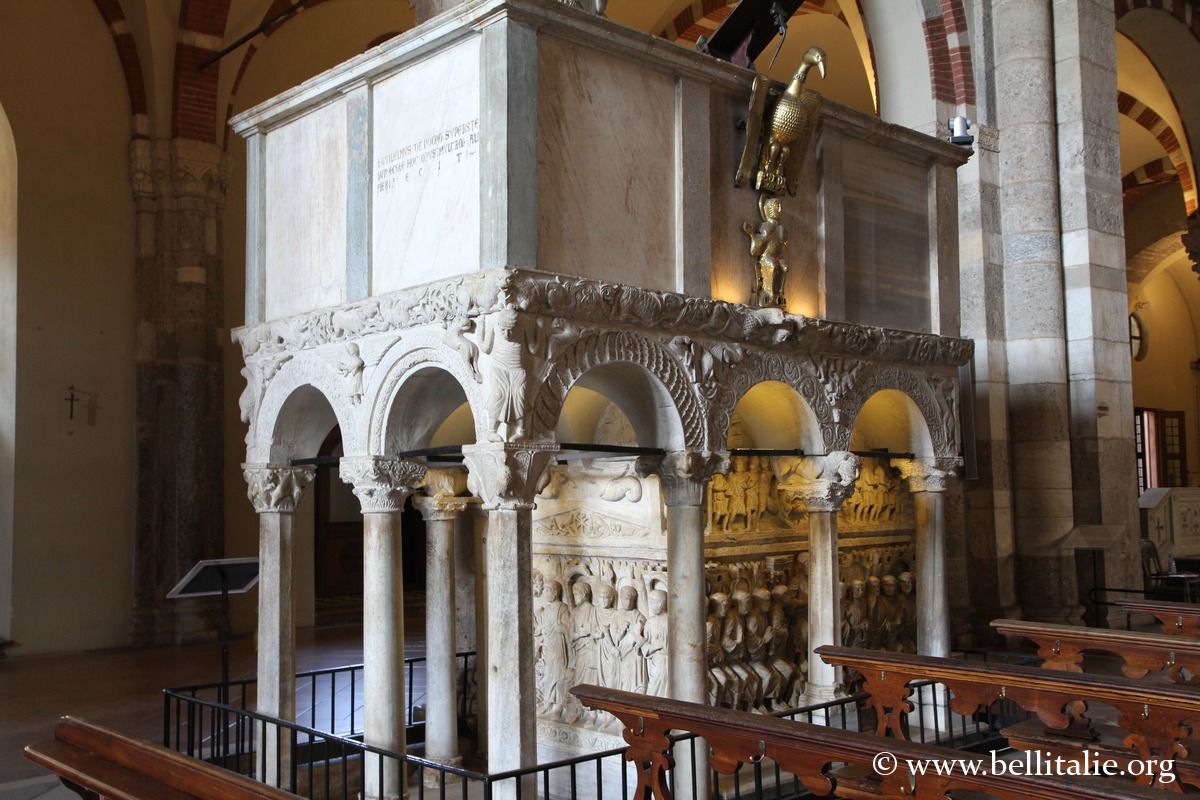
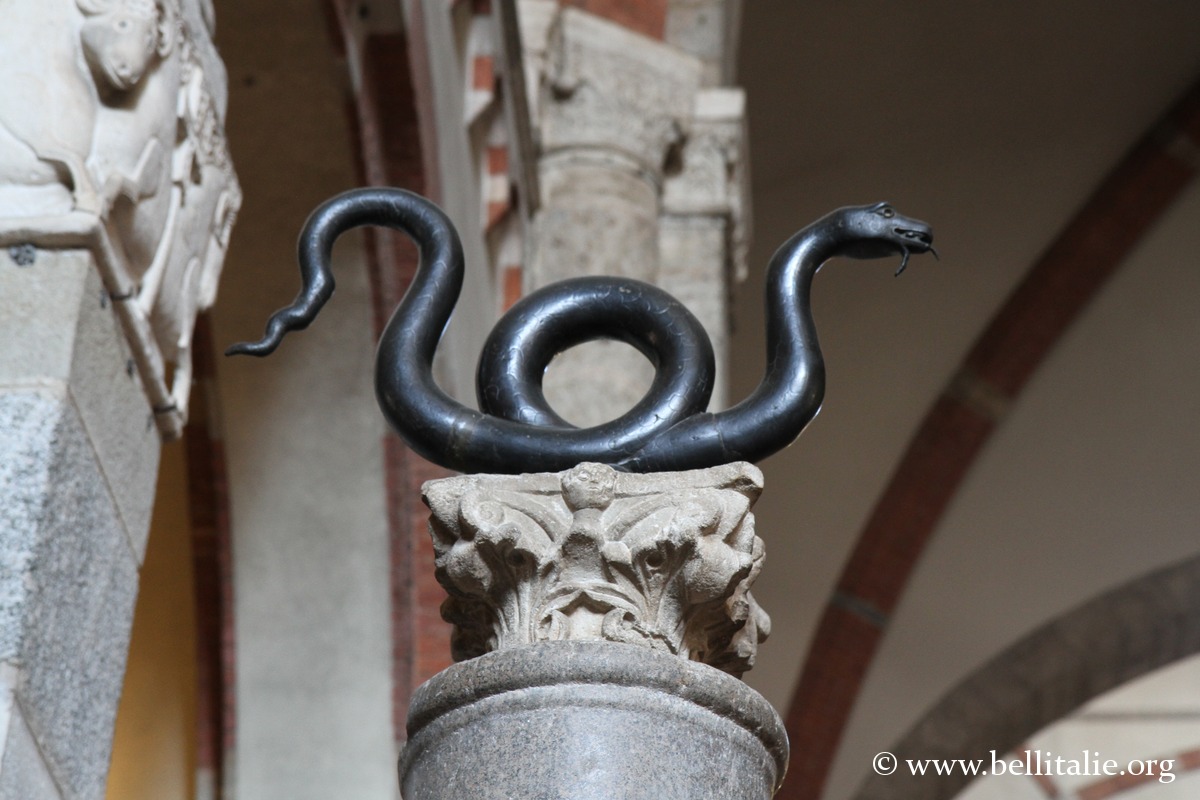
On a Roman column rests an original bronze sculpture, known as the “serpent of Moses”, of which a legend claims that the descent of the serpent from the column will herald the end of the world. Among the many works of art preserved in the church, a beautiful sarcophagus dates from the late Roman Empire.
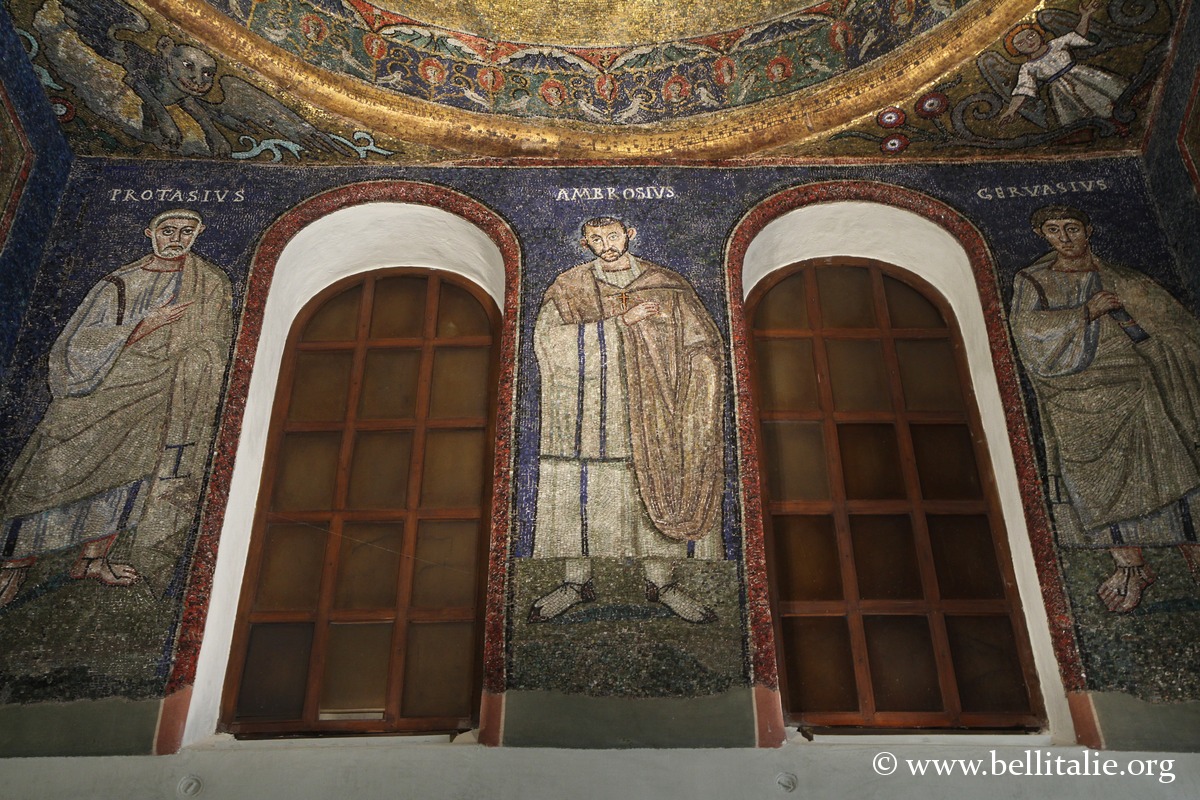
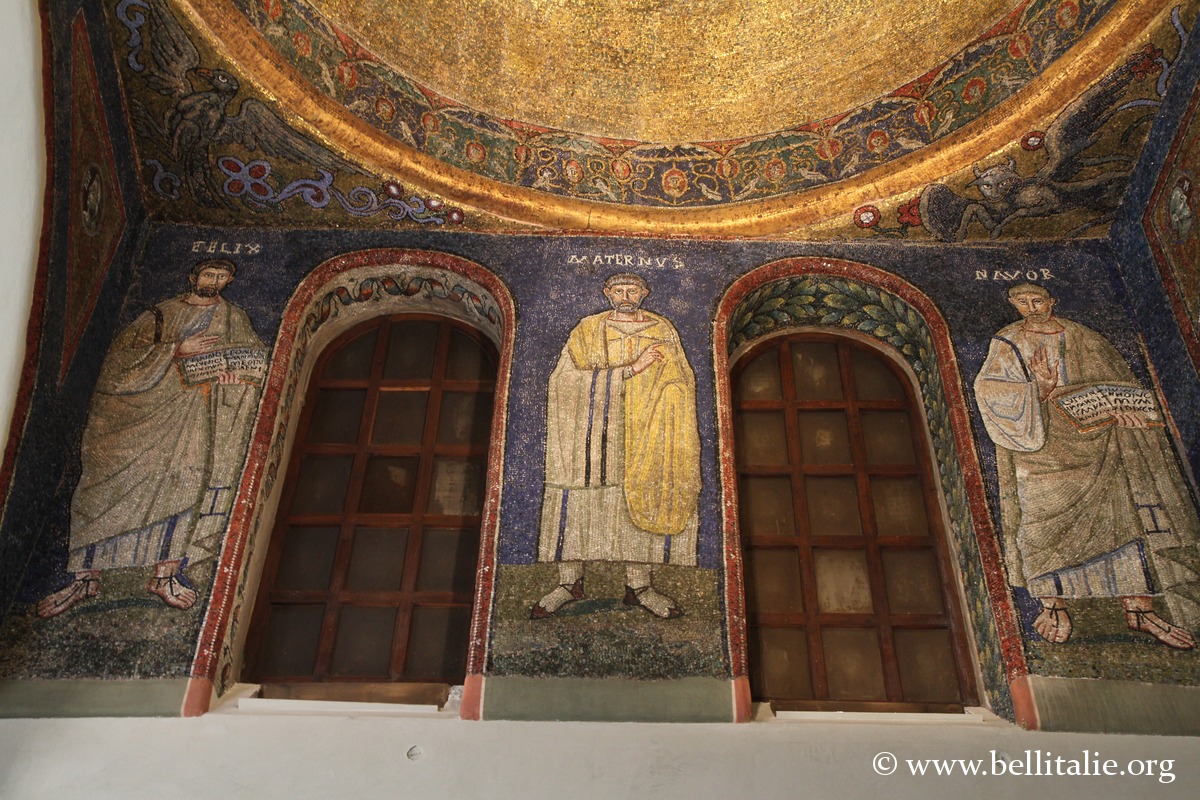
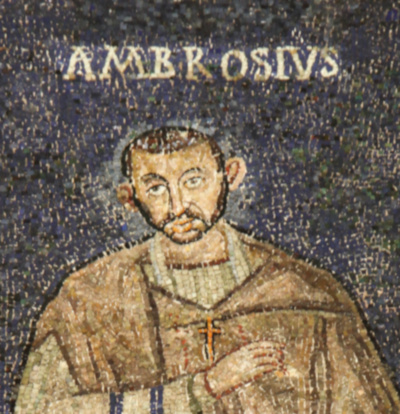
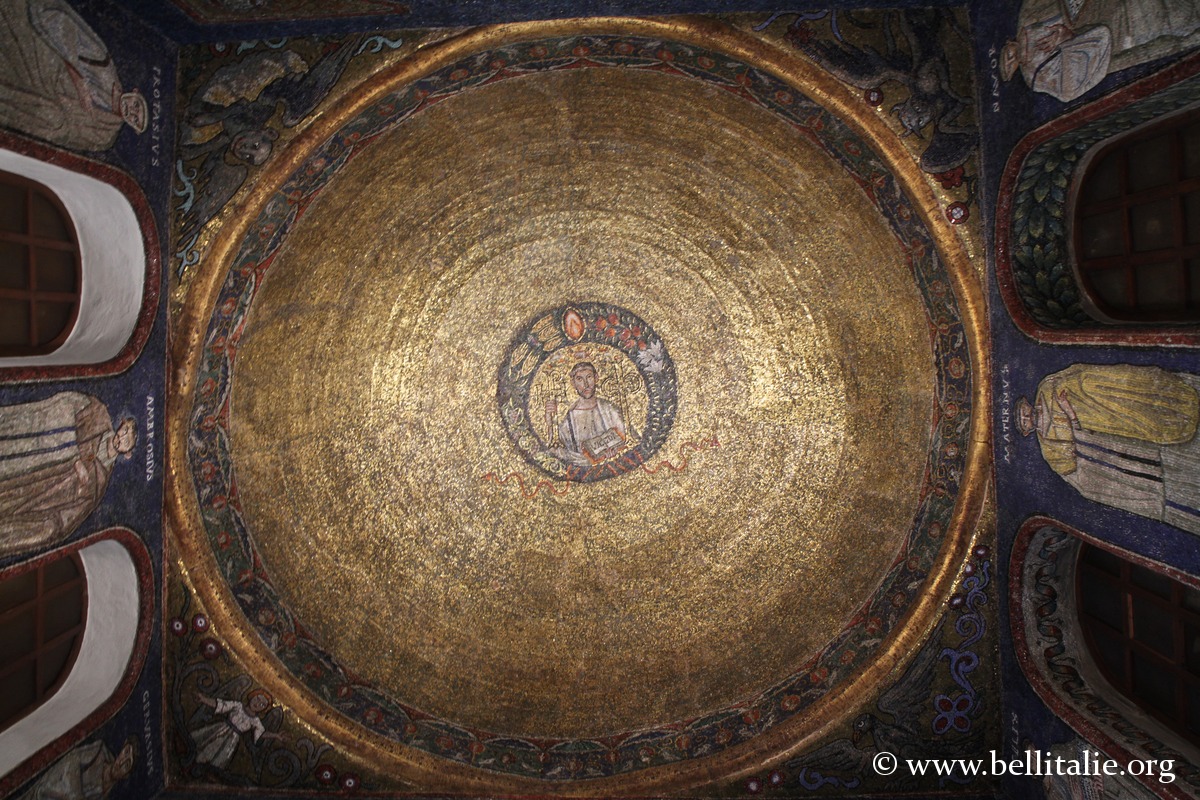
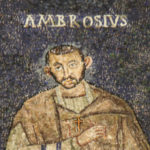
Originating from the Ambrosian basilica, the 4th-century chapel of San Vittore in Cielo d’Oro is the finest evidence of the first church, with its walls of paleochristian mosaics, including a bust of Saint Victor the Moor (or Saint Victor of Milan) on the vault, and the oldest known representation of Bishop Ambrose, whose face is of an impressive realism.
The hypogeal crypt houses the tombs of several saints, including Ambrose since 397, and those of the martyrs Gervasius and Protasius
Map
If you see this after your page is loaded completely, leafletJS files are missing.
Information
- Wikipedia page: en.wikipedia.org
- Official website: www.basilicasantambrogio.it
- Tourism portals: www.yesmilano.it
- What to see in Milan
- Itinerary ideas for visiting Milan
- Milan Cathedral
- Sforza Castle of Milan
- Victor Emmanuel II Gallery in Milan
- The Last Supper and Santa Maria delle Grazie
- Milan’s La Scala
- Basilica of Sant’Ambrogio in Milan
- Piazza dei Mercanti and Medieval Milan
- Selection of hotels and luxury hotels in Milan
- Leonardo da Vinci Museum of Science and Technology
- Brera Art Gallery
- Basilica of San Lorenzo, Milan
- Navigli District and Canals of Milan
- San Maurizio al Monastero Maggiore in Milan
- Milan Civic Archaeological Museum
- Basilica of Saint Nazarius in Milan
- Other Renaissance and Baroque monuments
- Neoclassical, 18th and 19th centuries in Milan
- The Museums of Milan
- Shopping, the Fashion Quadrilateral and Markets in Milan
- Squares and other sites of Milan



Comments